Antique Glass Goblets

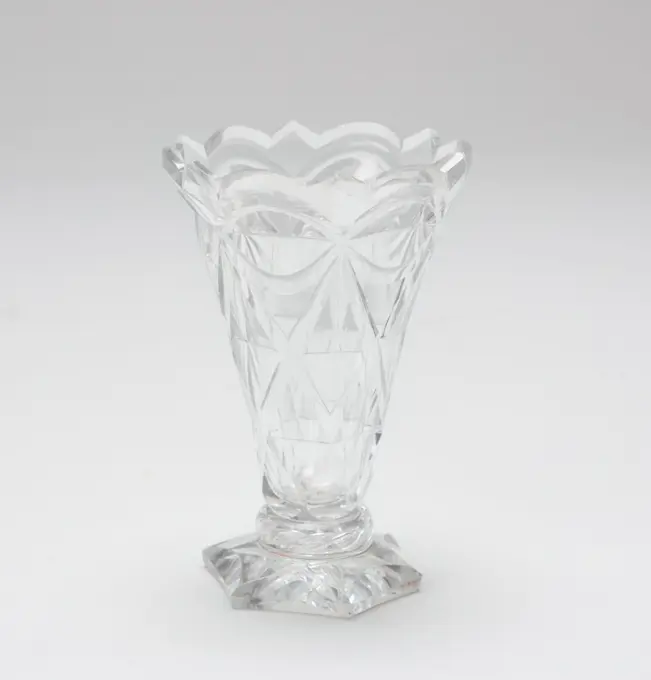
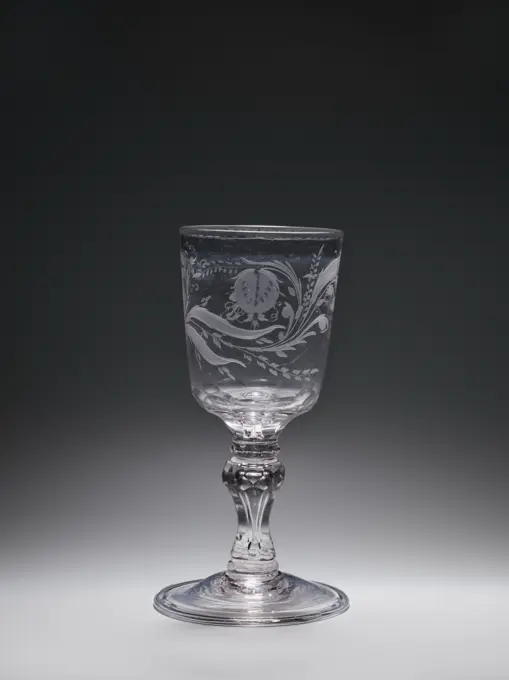
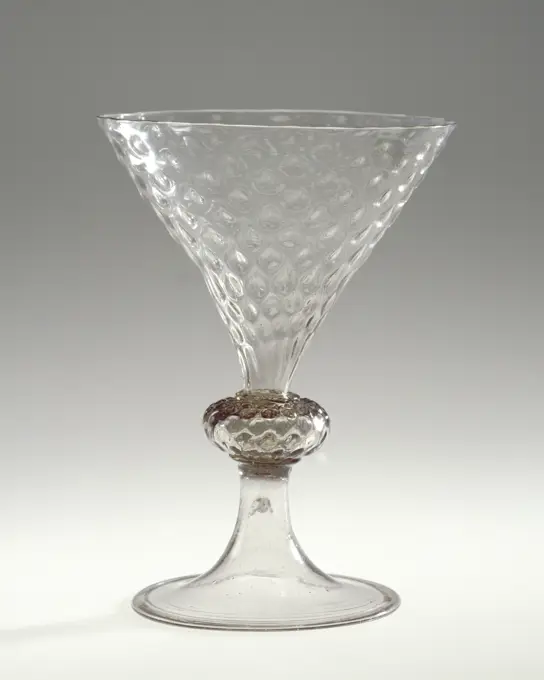
A collection of elegantly designed glass goblets from historical periods, featuring intricate engravings and fine detailing.
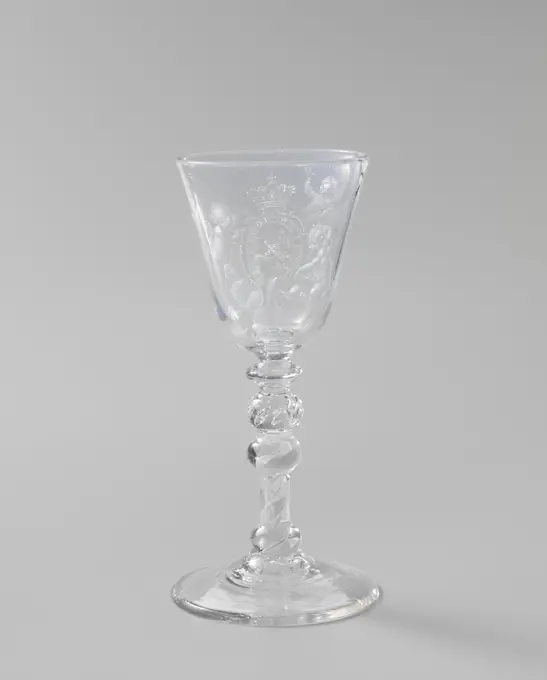
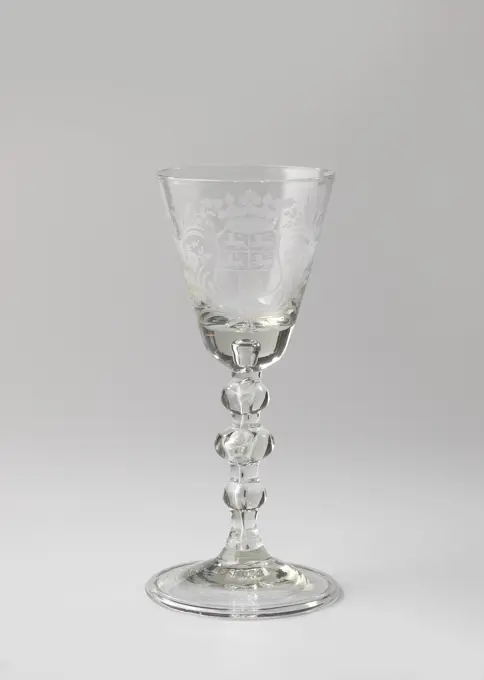
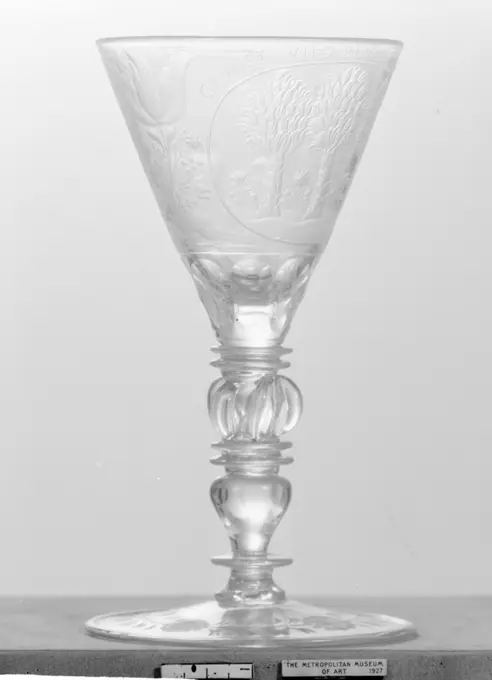
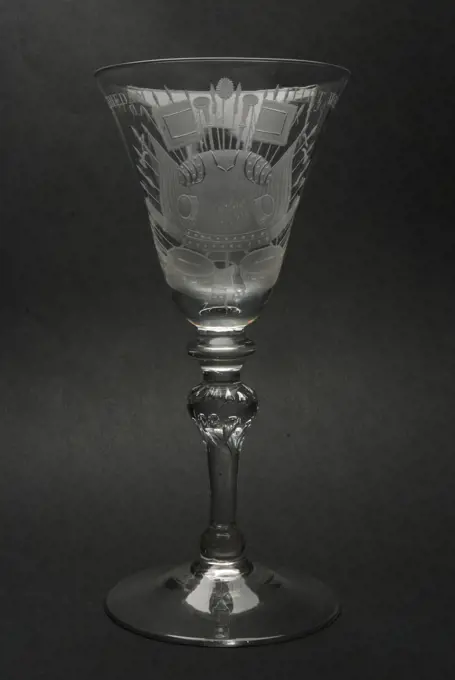
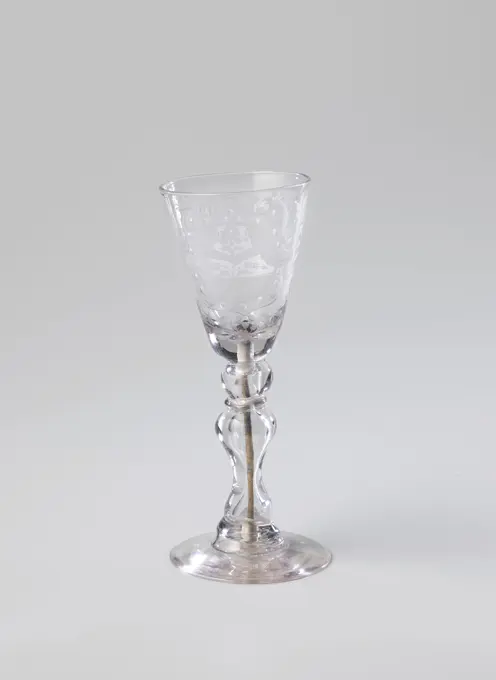
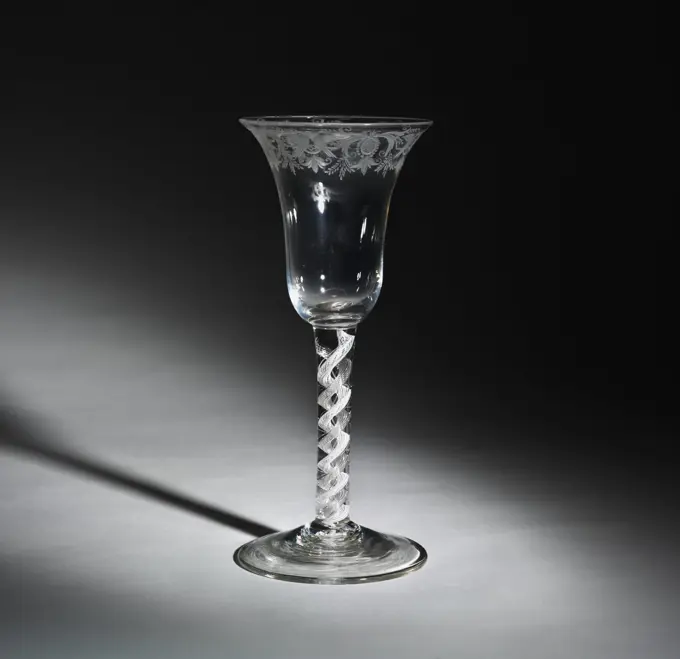
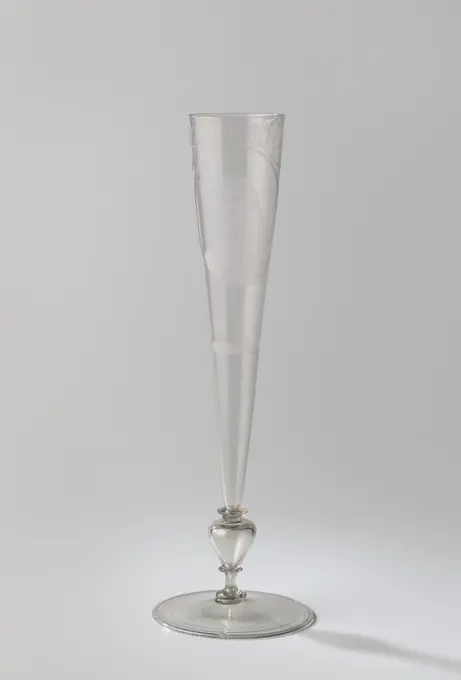
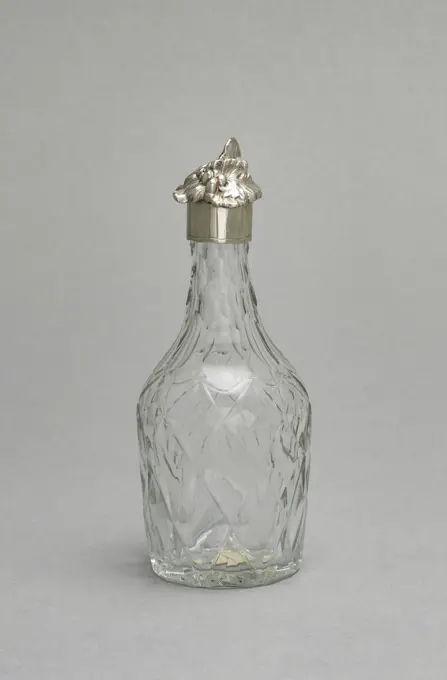
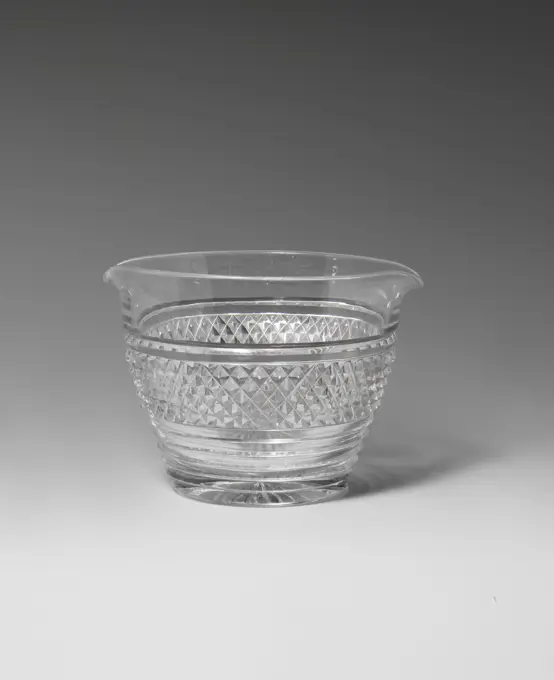
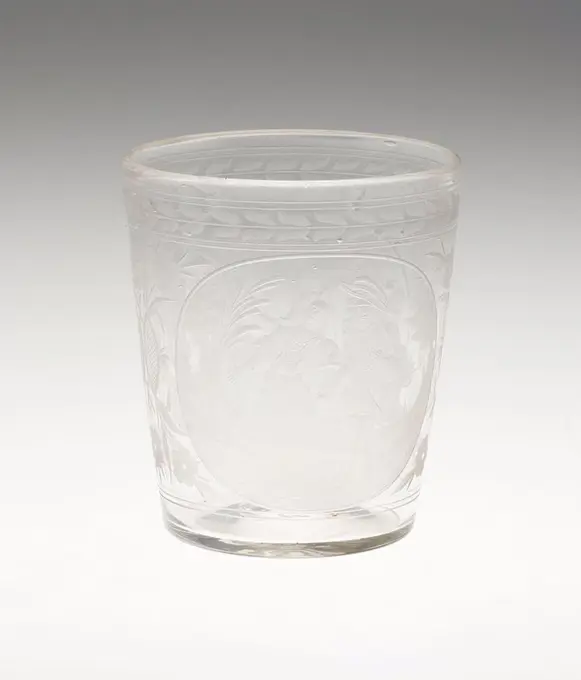
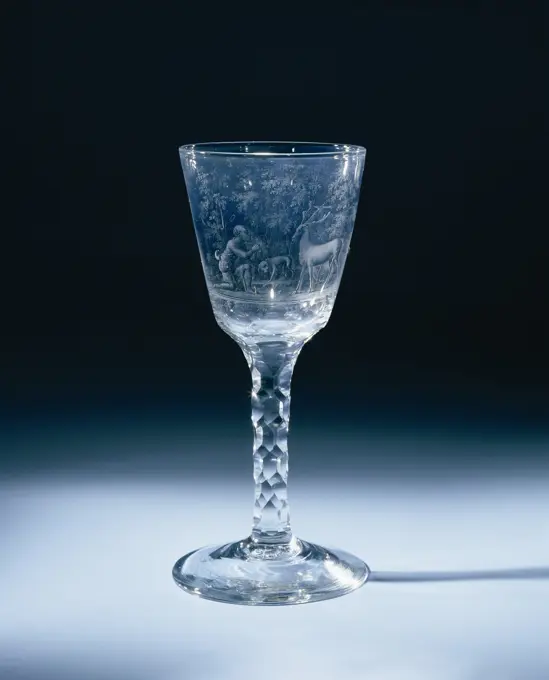
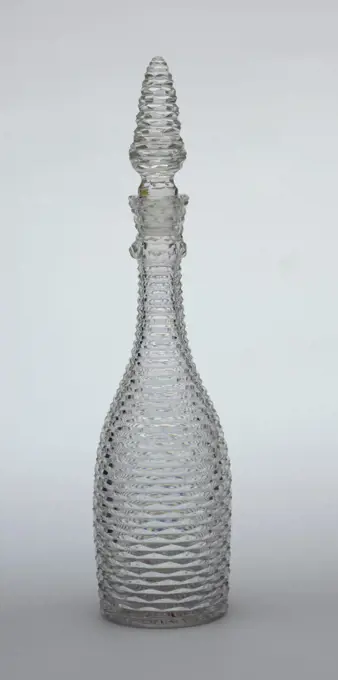
Wine glass with the arms of William V, anonymous, c. 1765 - c. 1780 Conical foot. Balus -shaped trunk with a white spiral around a double white spiral, three knots, one of which is bubbles inserted with a wreath. Conical chalice rounded at the bottom. On the chalice the coat of arms of Stadholder Prince Willem V (1748-1806) in an oval coat of arms of Rococo-Voluten with the Order of the Garter Band and the text Honi soit Qiu Mal Y Pense. As shield carriers two putti on clouds. A third putto flies from the right behind the shield, holding a branch up. glassblower: EnglandThe Hague glass glassblowing Conical foot. Balus -shaped trunk with a white spiral around a double white spiral, three knots, one of which is bubbles inserted with a wreath. Conical chalice rounded at the bottom. On the chalice the coat of arms of Stadholder Prince Willem V (1748-1806) in an oval coat of arms of Rococo-Voluten with the Order of the Garter Band and the text Honi soit Qiu Mal Y Pense. As shield carriers t
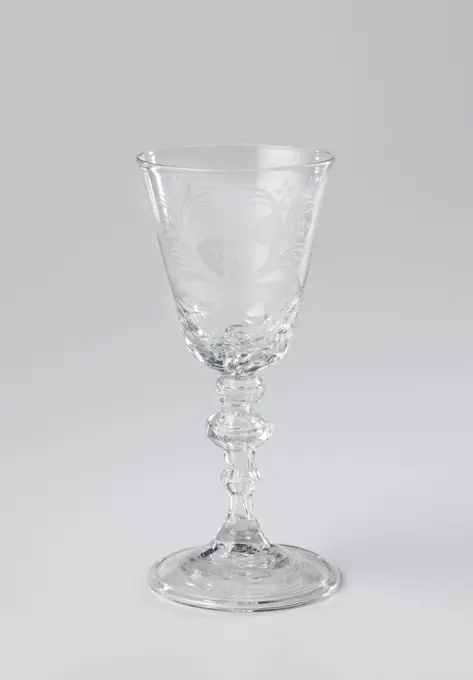
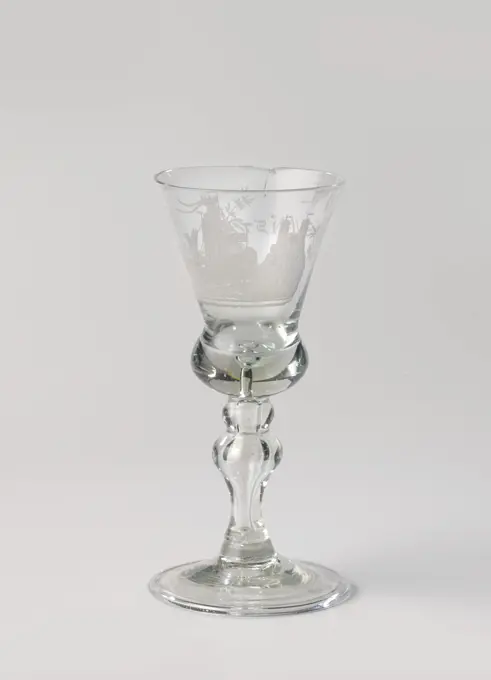
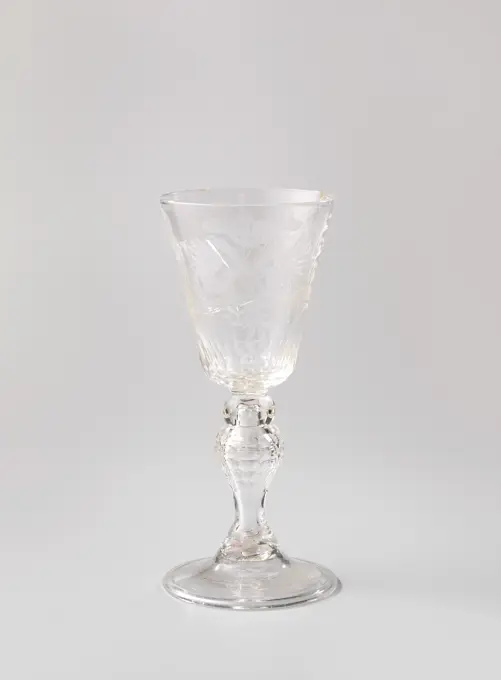
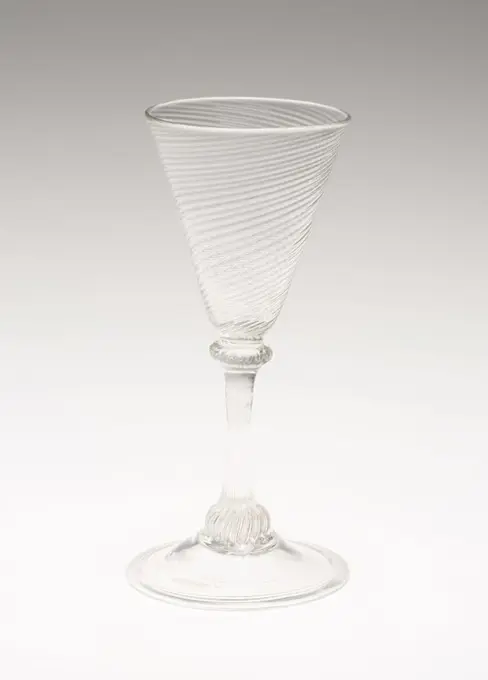
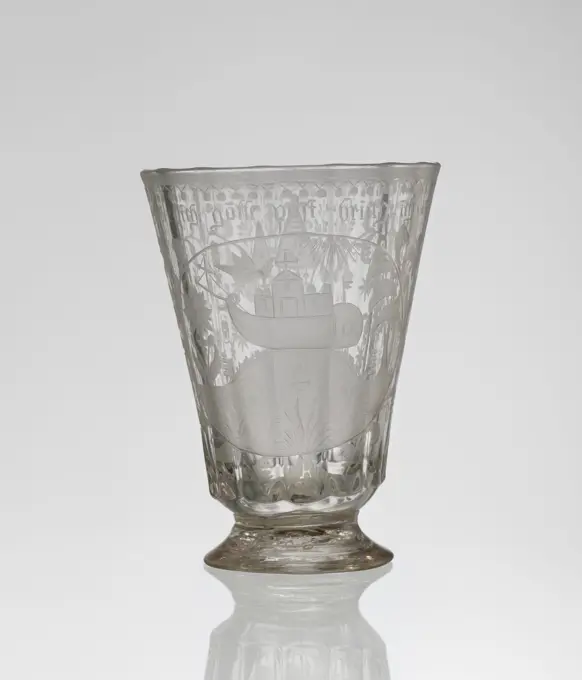
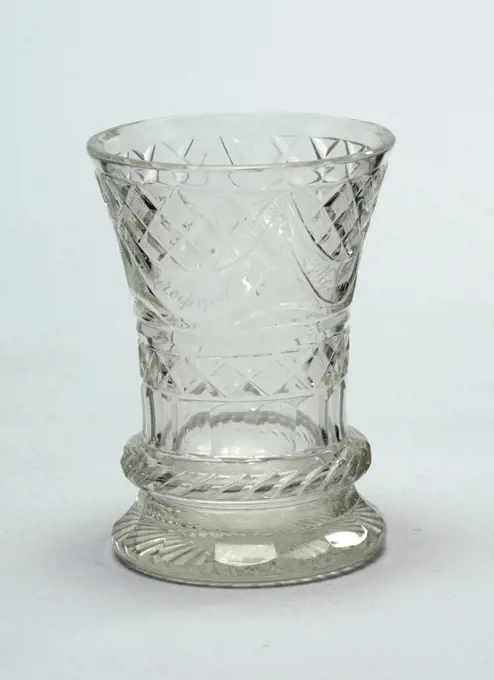
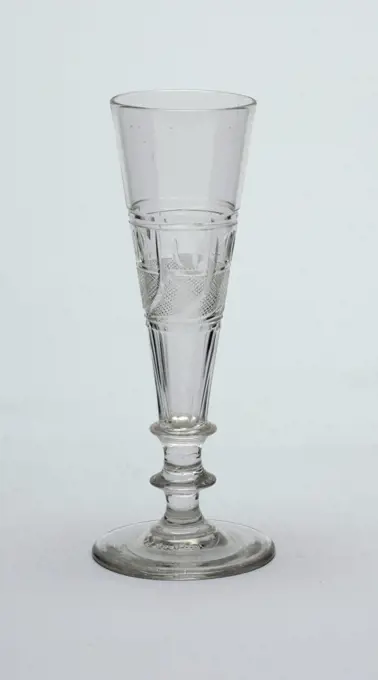
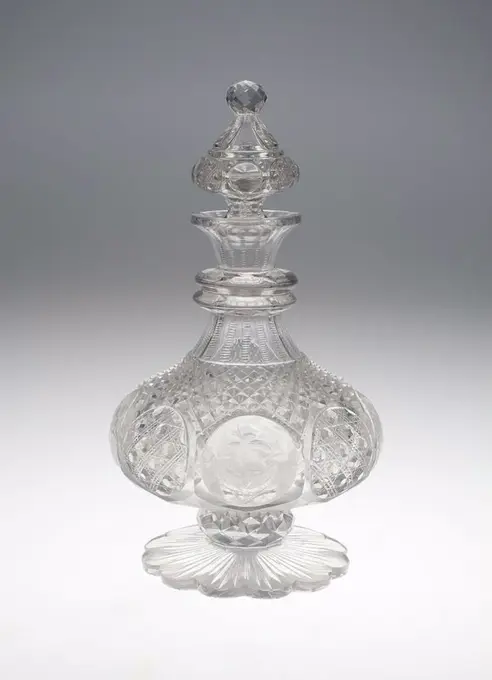
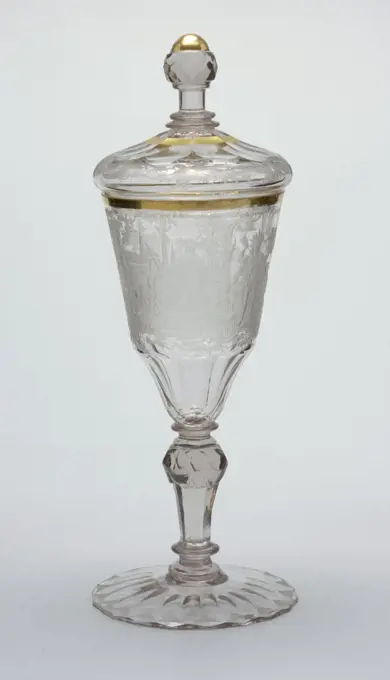
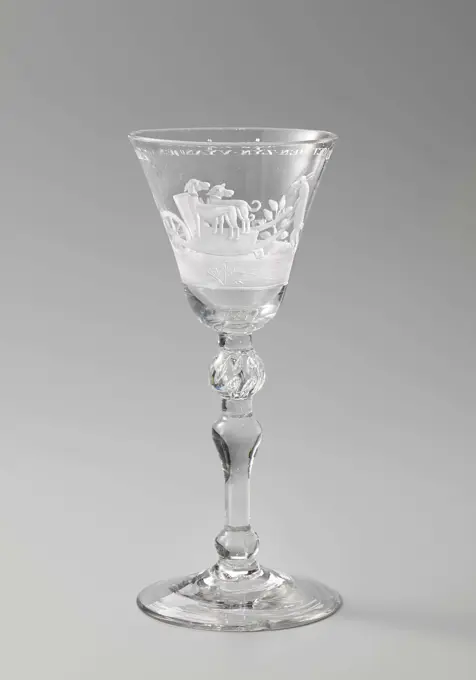
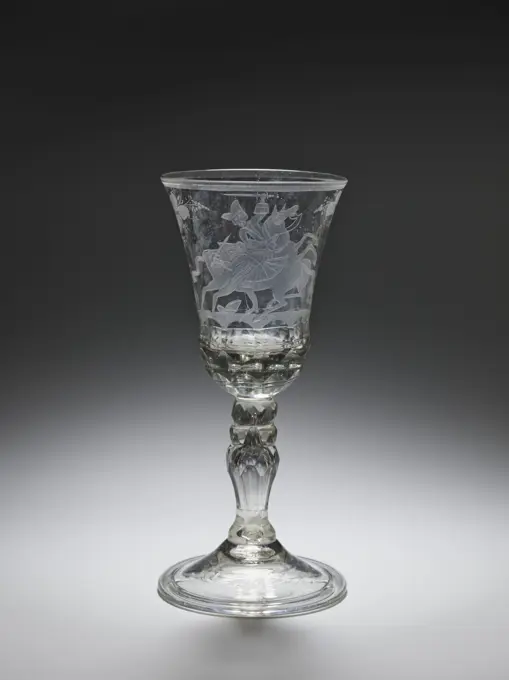
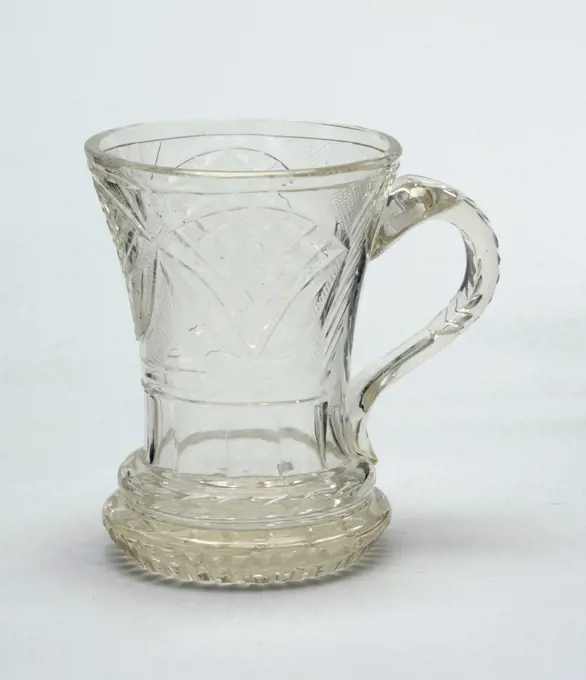
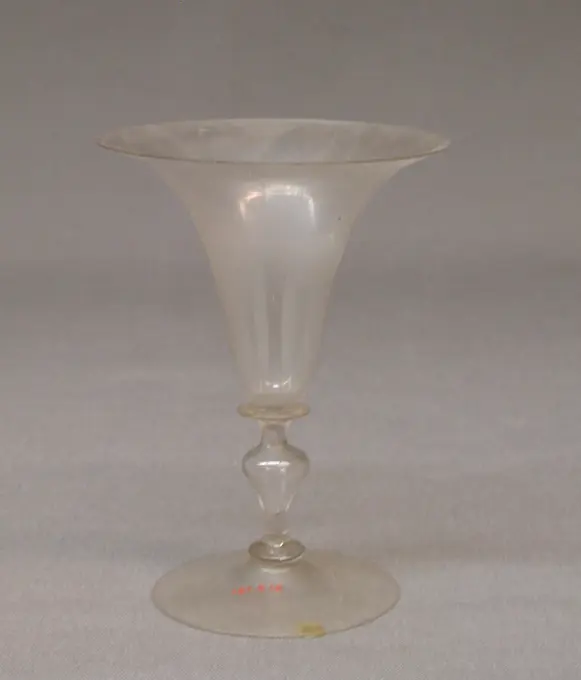
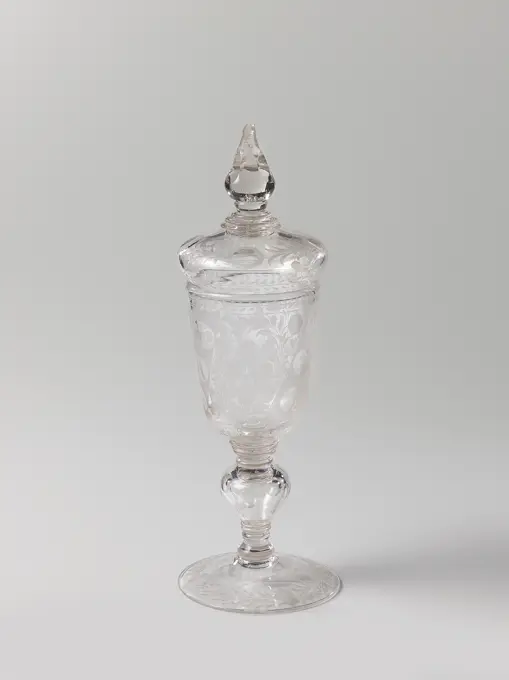
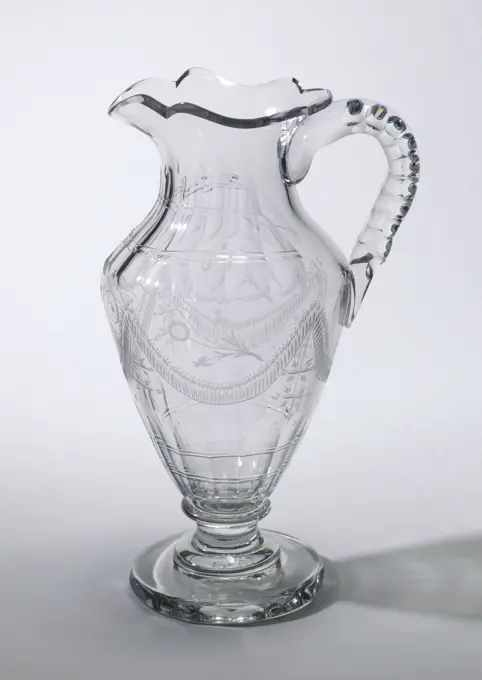
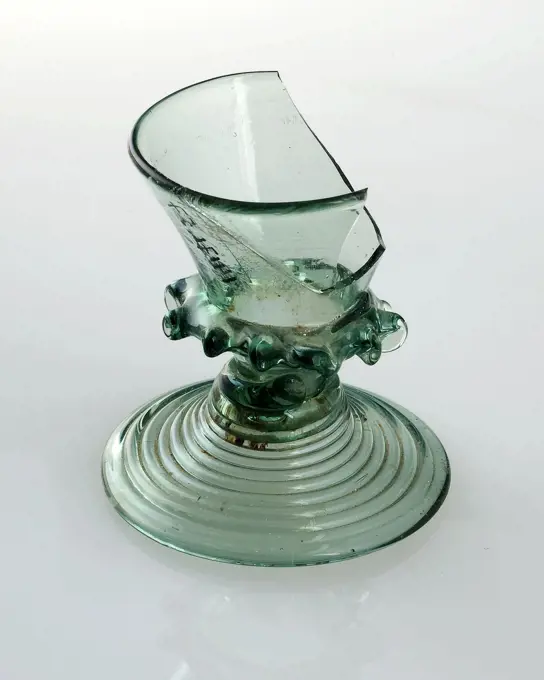
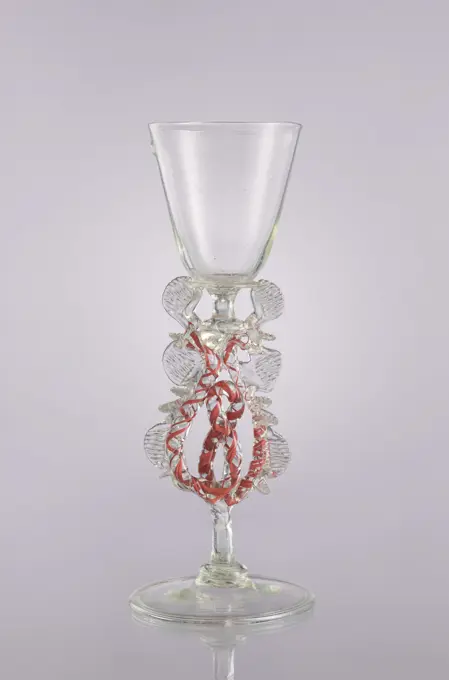
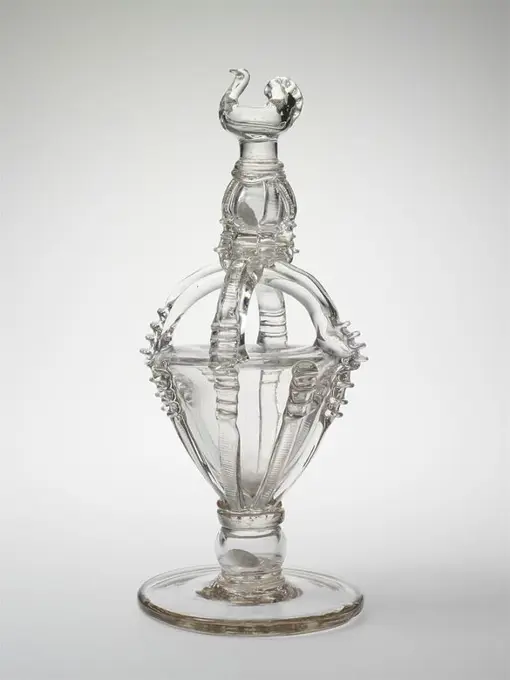
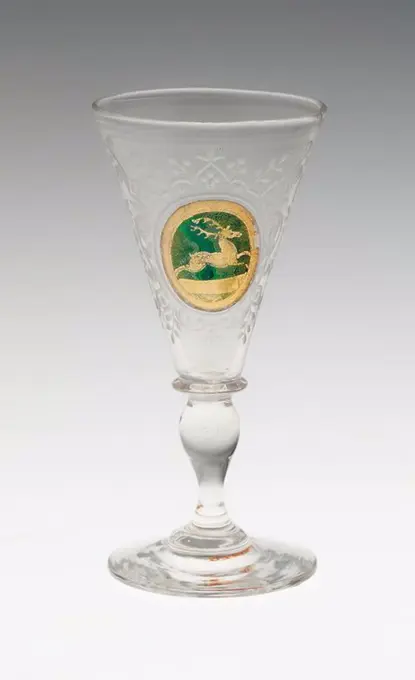
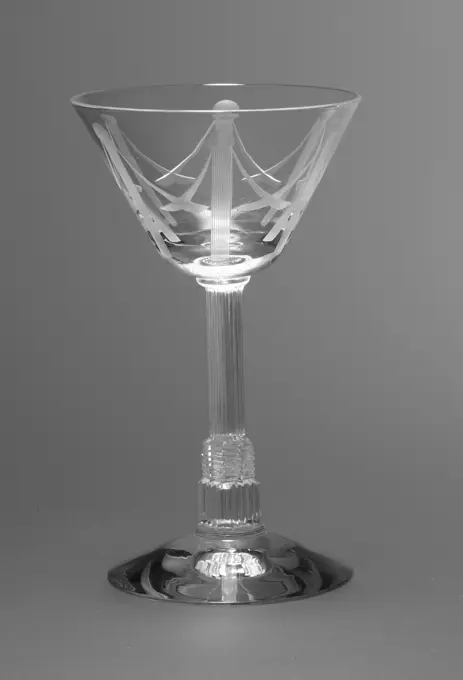
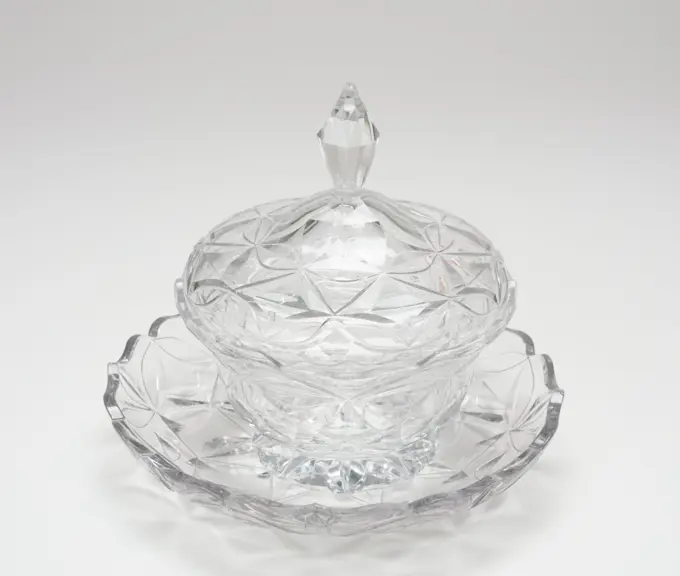
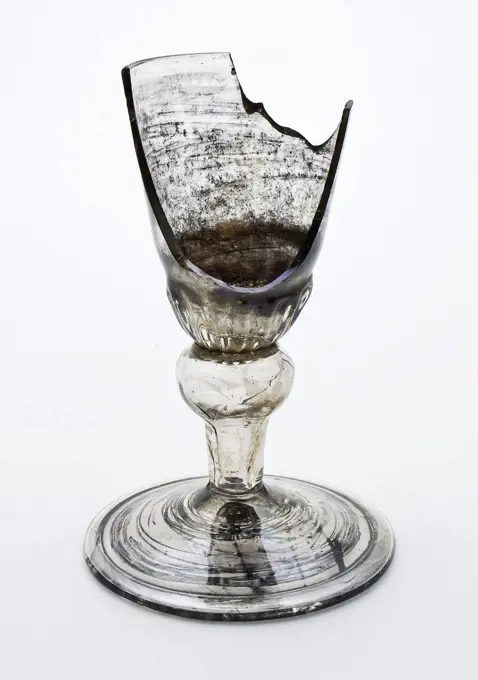
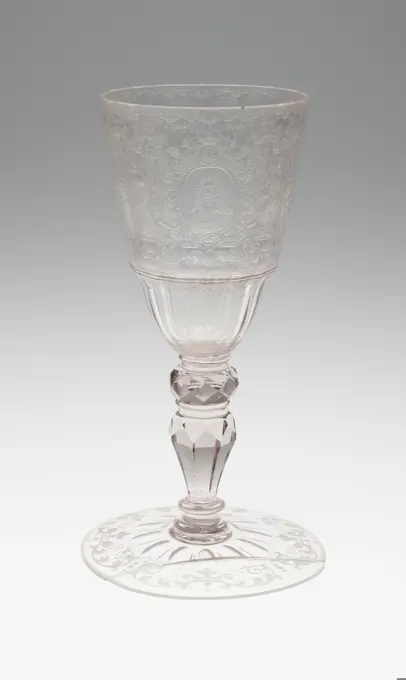
Goblet 1735-1745 Bohemia. Glass . Christopher Gottfried SchneiderKelkglas with the weapon of Middelburg. Kelkglas of clear, colorless glass. With conical foot. The baluster-shaped strain with five knots, air bubbles and a double band air bubbles. Bell-shaped chalice. On the chalice, together on two symmetrical leaf refines with a flower celk, the crowned weapon of Middelburg flanked by two climbing lions. The name of the city is engraved under the weapon.Bokaal with two collapsed hands and inscription, Anonymous, c. 1725 - c. 1750 Bokaal with facets sharpened baluster tribe in three sections. On the chalice two hands in one strayed above two hearts surrounded by palm branches and appropriate four -line verse: Live long united two/ in prosperity peace and loves sy your well -being/ until the end of your days. glassblower: GermanyNorthern Netherlands glass grinding / glassblowing Bokaal with facets sharpened baluster tribe in three sections. On the chalice two hands in one strayed above two hearts surrounded by palm branches and appropriate four -line verse: Live long united two/ in prosperity peace and loves sy your well -being/ until the end of your days. glassblower: GermanyNorthern Netherlands glass grinding / glassblowingJar with a whaling and the inscription: Dewall/ Viesvans, c. 1725 - c. 1750 Bokaal with an engraved performance of the whaling with the inscription: Dewall/ Viesvans. glassblower: GermanyNorthern Netherlands glass glassblowing Bokaal with an engraved performance of the whaling with the inscription: Dewall/ Viesvans. glassblower: GermanyNorthern Netherlands glass glassblowingGoblet 1755-1765 Russia. Blown and cut glass with engraved decoration . St. Petersburg Glass Factory (Maker)Bokaal with the weapon of Willem IV, Anonymous, c. 1733 - c. 1750 Bokaal with conical foot with turned edge. Baluster tribe with four knots with air bubbles. On the conical chalice the crowned weapon of Prince William IV (1711-1751) with the order of the garter and Honi soit qui mal y Pense in capital letters. On both sides of the weapon a branch of flowers and leaves. glassblower: GermanyNorthern Netherlands glass glassblowing Bokaal with conical foot with turned edge. Baluster tribe with four knots with air bubbles. On the conical chalice the crowned weapon of Prince William IV (1711-1751) with the order of the garter and Honi soit qui mal y Pense in capital letters. On both sides of the weapon a branch of flowers and leaves. glassblower: GermanyNorthern Netherlands glass glassblowingCup with Prussian eagle and monogram i.e.p., anonymous, c. 1750 Large cup with baluster tribe with cut facets as well as the underside of the chalice on which Prussian eagle with monogram i.e.p. And a weapon trophy on the opposite side.  glass Large cup with baluster tribe with cut facets as well as the underside of the chalice on which Prussian eagle with monogram i.e.p. And a weapon trophy on the opposite side.  glassWine Glass. Possibly Europe. Date: 1700-1750. Dimensions: 13.9 cm (5 1/2 in.). Glass. Origin: Europe. Museum: The Chicago Art Institute, Chicago, USA.Wine glass with the arms of William V, anonymous, c. 1765 - c. 1780 Conical foot. Balus -shaped trunk with a white spiral around a double white spiral, three knots, one of which is bubbles inserted with a wreath. Conical chalice rounded at the bottom. On the chalice the coat of arms of Stadholder Prince Willem V (1748-1806) in an oval coat of arms of Rococo-Voluten with the Order of the Garter Band and the text Honi soit Qiu Mal Y Pense. As shield carriers two putti on clouds. A third putto flies from the right behind the shield, holding a branch up. glassblower: EnglandThe Hague glass glassblowing Conical foot. Balus -shaped trunk with a white spiral around a double white spiral, three knots, one of which is bubbles inserted with a wreath. Conical chalice rounded at the bottom. On the chalice the coat of arms of Stadholder Prince Willem V (1748-1806) in an oval coat of arms of Rococo-Voluten with the Order of the Garter Band and the text Honi soit Qiu Mal Y Pense. As shield carriers tWine glass with an Allegory of Friendship. translation of inscription: FriendshipFour Continents, Honeycomb-cut and engraved glass, Short, wide chalice, engraved with Asia, holding a bow; Europe with cornucopia and banner with the coat of arms of the House of Habsburg and the eight Electors; Africa in sun hat, seated on crocodile; America with feather skirt and headdress, arrow and coral, attended by elephant. Baluster stem with circular cut, and air bubble. Foot engraved with flowers., 1680-90, glasswares, Decorative Arts, Standing cup, Standing cupSling glass with bell -shaped calyx, anonymous, c. 1750 - c. 1775 Sling glass with flat foot and trembled stem. In the stem Opening White Slingers around White network spiral. Bell -shaped chalice England glass glassblowing Sling glass with flat foot and trembled stem. In the stem Opening White Slingers around White network spiral. Bell -shaped chalice England glass glassblowingGlass; Non -like Lona Huta; 1744 (1744-00-00-1744-00-00);Bokaal with the coat of arms of the city of Rotterdam, Anonymous, c. 1725 - c. 1750 Bokaal with flat base with turned around. Baluster tribe with three knots and an elongated bubble. Conical chalice with massive bottom. On the chalice the crowned weapon of the city of Rotterdam. glassblower: Low CountriesNorthern Netherlands glass glassblowing Bokaal with flat base with turned around. Baluster tribe with three knots and an elongated bubble. Conical chalice with massive bottom. On the chalice the crowned weapon of the city of Rotterdam. glassblower: Low CountriesNorthern Netherlands glass glassblowingWine Glass 1755-1785 England. Glass, blown and stipple engraved .Egg Cup 1830-70 American With the development of new formulas and techniques, glass-pressing technology had improved markedly by the late 1840s. By this time, pressed tablewares were being produced in large matching sets and innumerable forms. During the mid-1850s, colorless glass and simple geometric patterns dominated. Catering to the demand for moderately-priced dining wares, the glass industry in the United States expanded widely, and numerous factories supplied less expensive pressed glassware to the growing market. At the Exhibition of the Industry of All Nations at New Yorks Crystal Palace in 1853, for example, the New England Glass Company exhibited 130 pieces of one design, "consisting of bowls, tumblers, champagnes, wines, and jelly glasses." This object belongs to one such service. Although the glass manufactory is not known, the glassware is very typical of the large services that were very popular with Americas middle class in the nineteenth century.. Egg Cup 3515Slinger glass with bell-shaped chalice. Slinger glass with flat foot and straight trunk. In the trunk opask white garlands around winding, white network spiral. Bell-shaped chalice.Prism, Pressed glass, Series of vertical ridges on goblet., mid-19th century, glasswares, Decorative Arts, Goblet, GobletRibbed Grape, Pressed glass, Grape and vine decoration embedded into thin vertically ridged pattern on goblet., mid-19th century, glasswares, Decorative Arts, Goblet, GobletWine glass. Culture: American. Dimensions: 4 7/8 in. (12.4 cm); Diam . 2 7/8 (7.3 cm). Manufacturer: Jersey Glass Company of George Dummer (1824-1862). Date: 1824-35. Museum: Metropolitan Museum of Art, New York, USA.Goblet. Germany, Schleswig. Date: 1725-1735. Dimensions: 12.9 x 6 cm (5 1/16 x 2 3/8 in.). Glass. Origin: Schleswig. Museum: The Chicago Art Institute, Chicago, USA.beaker, glass, Beaker-shaped body, flared towards top, flared base; cut with wide flutes bottom, a projecting hatched ring above, bands of flutes and strawberry diamonds above that, at top a wide band of swags engraved with an inscrip- tion, strawberry diamonds and fine diamonds above; rayed flutes on bottom., Bohemia, ca. 1827, glasswares, Decorative Arts, beakerNo. 176 Dessert Wine Glass; Designed by Ludwig Lobmeyr (Austrian, 1829 - 1917); Manufactured by J. & L. Lobmeyr GmbH (Austria); Austria; mouth-blown crystal, hand-cut and polishedCup;  1920-39 (1920-00-00-1939-00-00);Joke with a three-master and the inscription: "" "wave of our homeland. Bagic of bright, colorless and red glass, with a engraved representation of a three-master and the inscription: t''been van our homeland. In the trunk red threads.No. 132, Professor Josef Storck, Austria, 1830 - 1902, J. & L. Lobmeyr GmbH, Vienna, Austria, founded ca. 1935, Meyr's Neffen, Adolf, Mouth-blown crystal, facet-cut and polished, Mouth-blown crystal champagne flute, facet-cut and polished (without engraving)., Austria, 1870, glasswares, Decorative Arts, Champagne flute, Champagne fluteWineglass late 17th century possibly German, Nuremberg. Wineglass. possibly German, Nuremberg. late 17th century. Glass. GlassCelery vase 1820-30 Possibly Bakewell, Page & Bakewell The cut decoration on this vase and on the nearby decanter and compote is a variation on the strawberry diamond-and-fan pattern, the most popular cut-glass pattern in the United States in the early nineteenth century. All of these pieces emulate the richly cut tablewareof the Anglo-Irish tradition.. Celery vase 1501Goblet 1775-1799 Spain. Glass .Chalip glass with rosettes and ornaments, anonymous, c. 1400 - c. 1950 Light conical foot. Facetted baluster tribe with three discs and an elongated bubble. Scolded and engraved rosettes and ornaments on the conical chalice.  glass grinding / glassblowing Light conical foot. Facetted baluster tribe with three discs and an elongated bubble. Scolded and engraved rosettes and ornaments on the conical chalice.  glass grinding / glassblowingKelkglas with four embedded coins. Kelkglas on light vaulted foot with beaten edge. Stem constructed from four hollow nodi, separated by discs. Enclosed in the Nodi silver coins from George II from the years 1739, 1746, 1740 and 1746. Bell-shaped chalice.Foot, trunk and part of the chalice of a chalice glass, anonymous, c. 1400 - c. 1950   glass   glass. Ball of bright, colorless glass. Sell and stem with facets, on which surrounded by attributes and figures on one side the arm of William IV, Prince of Orange and on the other side of Friesland and Monogram PVR (Prince of Orange).Goblet 1830-70 American With the development of new formulas and techniques, glass-pressing technology had improved markedly by the late 1840s. By this time, pressed tablewares were being produced in large matching sets and innumerable forms. During the mid-1850s, colorless glass and simple geometric patterns dominated. Catering to the demand for moderately-priced dining wares, the glass industry in the United States expanded widely, and numerous factories supplied less expensive pressed glassware to the growing market. At the Exhibition of the Industry of All Nations at New Yorks Crystal Palace in 1853, for example, the New England Glass Company exhibited 130 pieces of one design, "consisting of bowls, tumblers, champagnes, wines, and jelly glasses." This object belongs to one such service. Although the glass manufactory is not known, the glassware is very typical of the large services that were very popular with Americas middle class in the nineteenth century.. Goblet. American. 18Glass, from a syllabub set, 1750-1780, Unknown Anglo-Irish, 4 x 2 7/8 x 2 7/8 in. (10.16 x 7.3 x 7.3 cm) (approximately), Lead and non-lead glass, England or Ireland, 18th centuryGoblet engraved with militaria and The well-being of the Krygsraad of Schiedam, wine glass drinking glass drinking utensils tableware holder lead glass glass, gram free blown and shaped radgraving polishing goblet wineglass in clear colorless lead pane Pontil mark under round hollow ascending foot On massive convex knot inverted balustersteam ('light baluster') with two rows of trapped air bubbles (lower teardrop and top convex) to flattened knot. Trumpet-shaped chalice widening upwards with the wheel engraved representation of armor surrounded by various military attributes such as spears, hardened sabers, cannons, muskets, banners, trumpets and drums All around the top of the text: THE WELCOME OF DEN KRIJGSRAAD VAN SCHIEDAM THE WELCOME OF DEN KRIJGSRAAD VAN SCHIEDAM militia serving Schiedam militariaSweetmeat glass with cover ca. 1750 Irish, probably Dublin. Sweetmeat glass with cover. Irish, probably Dublin. ca. 1750. Glass. GlassToasting Glass To the Prosperity of Siparipabo, anonymous, c. 1725 - c. 1750  The glass is funny. The trunk consists of two parts; A so-called Three-Ringed Knob above an elongated reverse baluster with a inserted bubble and a basic button. The glass is on a vaulted foot. Occasional glass with a radgravure of a plantation (the sugar plantation siparipabo) and the text: t prosperity of siparipabo. One scene shows a resting slave -made woman under a tree and a slave -made man with a shovel and a bundle of sugar cane. The other scene shows the house of the plantation owner, the sugar mill and the shelters for the slavish men and women. glassblower: Europemaker: Netherlands lead glass glassblowing / engraving plantation. slavery; serfs and the enslaved. hut, cabin, lodge SurinameKelkglas with gold-plated trim along the mouth edge. Vaulted foot. Balustro the trunk with two nodi. Funnel-shaped, rugged on the bottom. A gold punched piping along the top edge.Vase. Culture: American. Dimensions: 9 1/8 x 4 1/4 in. (23.2 x 10.8 cm). Maker: George Duncan and Sons (1874-1891). Date: ca. 1878-90. Museum: Metropolitan Museum of Art, New York, USA.Cup; Non -like Lona Huta; 2. PO. 18th century (1750-00-00-1800-00-00);Decanter, 18th-19th century, 7 3/4 x 3 1/4 x 3 1/4in. (19.7 x 8.3 x 8.3cm), Glass, United States, 18th-19th centuryGoblet (Kelchpokal).Chalip glass with two collapsed hands and the inscription: De God Vriontschap, Anonymous, c. 1725 - c. 1750 Vaulted foot. Baluster tribe with three knots, a disc and an elongated bubble. Conical chalice with rounded soil. On the chalice an engraved representation of two collapsed hands within a cartouche and inscription. The "God," Vriont/ Schap. The trunk is not original and is attached to the chalice with a metal pen. glassblower: GermanyNorthern Netherlands glass glassblowing Vaulted foot. Baluster tribe with three knots, a disc and an elongated bubble. Conical chalice with rounded soil. On the chalice an engraved representation of two collapsed hands within a cartouche and inscription. The "God," Vriont/ Schap. The trunk is not original and is attached to the chalice with a metal pen. glassblower: GermanyNorthern Netherlands glass glassblowingCup; The czech republic; End of the 17th century (1680-00-00-1700-00-00);Standing cup 1700-1750 German, Nuremberg. Standing cup. German, Nuremberg. 1700-1750. Glass. Glassflute, glass, Tall narrow flute on double spool stem wide flat foot; cut with vertical flat plates bottom, above with twisted panels of fine diamonds and facets., Pittsburgh, USA, 19th century, glasswares, Decorative Arts, fluteDecanter with Stopper. Baccarat Glassworks; French, founded 1764. Date: 1881-1891. Dimensions: H. 26.4 cm (10 3/8 in.). Glass. Origin: Lunéville. Museum: The Chicago Art Institute, Chicago, USA. Author: Baccarat Glassworks.Four Continents, glass, gold leaf, (a) Flaring chalice cut at the bottom and engraved with the figures of the Four Continents between rocaille columns. Asia with crescent sceptre and camels; Europe with globe and sceptre; Africa in feather skirt and headdress, with monkey and elephant; America in feather skirt, collar and headdress, with lion, crocodile and camel. Cut, short baluster stem and foot. (b) Cover, engraved with scrolls, and a cut knob, gilt, like rim of cup., 1750-70, glasswares, Decorative Arts, Covered Goblet, Covered GobletGoblet (Pokal). Georg Schwanhardt; German, active mid-17th century; Nuremberg, Germany. Date: 1655-1665. Dimensions: 37 × 15.1 cm (14 9/16 × 5 15/16 in.). Glass and silver. Origin: Nuremberg. Museum: The Chicago Art Institute, Chicago, USA.. translation of inscription: Thus.should.one.do.good.to.ones.enemiesGoblet, c. 1725-1750. England, 18th century. Glass; diameter: 8 cm (3 1/8 in.); overall: 18.5 cm (7 5/16 in.).Cup; Non -like Lona Huta; 3. W. 18th century (1750-00-00-1775-00-00);Mug, glass, Beaker form, sides flared towards top; cut with 3 arched panels filled with strawberry diamonds and blazes, band of flat fluting and raised ring with blazes below; thick foot cut with vertical fluting sides and straw- berry diamonds; notched loop handle., 1820-30, glasswares, Decorative Arts, MugRoemer with four rows of braam buds. Large grummer with inserted bottom on high, conical, spun base from a wire. Inserted soil. The convex chalice as a whole blown up with the trunk, which is busy with four rows of small bram buds. The transition from the chalice to the trunk indicated by a ribbed wire.Wineglass ca. 1727-30 French. Wineglass 186307Flute Glass, early 1600s. Germany, Thuringia, early 17th century. Glass; diameter: 10.4 cm (4 1/8 in.); overall: 33 x 6.7 cm (13 x 2 5/8 in.).Flute glass with a portrait of Willem III, Anonymous, c. 1650 - c. 1675 Conical foot with turned around. Balus -shaped trunk with three discs. High, funnel -shaped chalice. On the Kelk, in an oval medallion, the portrait of Stadholder Prince William III (1650-1702) is engraved under the inscription 'Prince.d.orange'. On the other side a truncated tree, from which a young lot with orange apples sprout. glassblower: Low CountriesNorthern Netherlands glass glassblowing Conical foot with turned around. Balus -shaped trunk with three discs. High, funnel -shaped chalice. On the Kelk, in an oval medallion, the portrait of Stadholder Prince William III (1650-1702) is engraved under the inscription 'Prince.d.orange'. On the other side a truncated tree, from which a young lot with orange apples sprout. glassblower: Low CountriesNorthern Netherlands glass glassblowingCruet Stand (Bottle), 1700s(). France, bottle and cover old, but probably not original, 18th Century(). Silver and glass; overall: 17.5 cm (6 7/8 in.).Salt 1845-1855 Bristol. Glass .Wine Rinser 1818 Pellatt & Green William Bayard (1761-1826) commissioned this table service (2008.594.1-.53) in 1818 for his daughter Harriet (1799-1875) and her husband Stephen Van Rensselaer IV (1789-1868) from Pellatt & Green, Londons premier glasshouse. The fine lead glass and deep Regency cutting would have created a brilliant sparkle in their candlelit dining room, in Albany, New York. The set originally included dozens of drinking glasses, for claret, ale, and champagne, as well as decanters, wine coolers, tumblers, and finger glasses, all “elegantly cut in diamonds & Rings” according to the surviving bill of sale (2008.594.54a,b). In addition to its elegance and quality, the service is extremely rare in its documentation to the specific American family who owned it and to the English glasshouse that made it.. Wine Rinser 20247Beaker. Bohemia, Czech Republic. Date: 1725-1735. Dimensions: 9.8 × 8.9 cm (3 7/8 × 3 1/2 in.). Glass. Origin: Bohemia. Museum: The Chicago Art Institute, Chicago, USA.Bokaal with a maternity room and the inscription: Geluck with De Jong Bornen, c. 1725 - c. 1750 Bokaal of clear, colorless glass with engraved representation of a childbed and the inscription: Geluck with the Iong/ Birthen. glassblower: GermanyNorthern Netherlands glass glassblowing Bokaal of clear, colorless glass with engraved representation of a childbed and the inscription: Geluck with the Iong/ Birthen. glassblower: GermanyNorthern Netherlands glass glassblowingChampagne Glass 1795-1805 Bohemia. Glass .Chalice glass with optically blown ribs and barley grain pattern, anonymous, c. 1700 - c. 1725 Chalice glass on low, slightly curved foot. Hollow, Balustrian tribe. Funnel -shaped chalice rounded at the bottom, blown in the mold, the lower half in ribs, the upper in a barley grain pattern France glass glassblowing Chalice glass on low, slightly curved foot. Hollow, Balustrian tribe. Funnel -shaped chalice rounded at the bottom, blown in the mold, the lower half in ribs, the upper in a barley grain pattern France glass glassblowingCup; Non -like Lona Huta; 1. W. 18th century (1700-00-00-1725-00-00);Puzzle or "surprise" goblet 17th century German. Puzzle or "surprise" goblet. German. 17th century. Glass. GlassDecanter with Stopper, 18th-19th century, 8 3/8 x 3 x 3in. (21.3 x 7.6 x 7.6cm), Glass, United States, 18th-19th centuryGlassQuart decanter 1850-70 American With the development of new formulas and techniques, glass-pressing technology had improved markedly by the late 1840s. By this time, pressed tablewares were being produced in large matching sets and innumerable forms. During the mid-1850s, colorless glass and simple geometric patterns dominated. Catering to the demand for moderately-priced dining wares, the glass industry in the United States expanded widely, and numerous factories supplied less expensive pressed glassware to the growing market. At the Exhibition of the Industry of All Nations at New Yorks Crystal Palace in 1853, for example, the New England Glass Company exhibited 130 pieces of one design, "consisting of bowls, tumblers, champagnes, wines, and jelly glasses." This object belongs to one such service. Although the glass manufactory is not known, the glassware is very typical of the large services that were very popular with Americas middle class in the nineteenth century.. Quart decantDecanter 1820-30 Apsley Pellatt. Decanter 21202Vase with engraved text on the bottom: "March 8, 1930 to my dear brother Anton .......", Carel Begeeer, c. 1918 - c. 1919 Oval, irregularly shaped vase of silver, widening body on curved foot. Engraved on the bottom of the bottom: March 8, 1930 to my dear brother Anton after the difficult year 1929 C.J.A. Begeer Fecit 1918. Voorschoten silver (metal) Oval, irregularly shaped vase of silver, widening body on curved foot. Engraved on the bottom of the bottom: March 8, 1930 to my dear brother Anton after the difficult year 1929 C.J.A. Begeer Fecit 1918. Voorschoten silver (metal)MugBowl late 18th-early 19th century Continental European. Bowl. Continental European. late 18th-early 19th century. Glass. GlassChalip glass with a representation of the Holy Hubertus Kniing for the deer, Anonymous, c. 1775 - In or Before 1798 Conical foot. Straight, faceted strain. Funnel -shaped chalice rounded at the bottom. On the chalice, in a forest, St. Hubertus, kneeling for the deer with a crucifix in the antlers. A dog in the background. glassblower: EnglandNorthern Netherlands glass grinding / glassblowing Conical foot. Straight, faceted strain. Funnel -shaped chalice rounded at the bottom. On the chalice, in a forest, St. Hubertus, kneeling for the deer with a crucifix in the antlers. A dog in the background. glassblower: EnglandNorthern Netherlands glass grinding / glassblowingMug 1865-75 American. Mug. American. 1865-75. Pressed glass. Made in United StatesWineglass second half 16th century Italian, Venice (Murano) During the Renaissance, Venetian glassmakers, working on the island of Murano, were celebrated across Europe for their fine and sparkling work. Called cristallo” emulating the clarity of rock crystal, in the hands of the most skilled glassblowers the medium could be delightfully manipulated, variously stretched paper-thin flat, or playfully twisted, or blown into molds with spectacular patterns.. Wineglass. Italian, Venice (Murano). second half 16th century. Glass. GlassBokaal, with sunflowers, berries and circles. Hollow baluster-shaped strain with button and seven discs. Fruits and sunflowers between tires on the chalice. Foot with garlands. The strain consists of two parts that are screwed together.Candlestick of silver with octagonal foot and octagonal baluster -shaped trunk and candle holder. With engraved rocaillem motifs., Louis de Haan (Possible), 1752 Silver candlestick. The foot is octagonal and in the flat top is a round floor. The baluster -shaped trunk is octagonal as well as the candle holder. Foot, tribe and candle holder are engraved with rocaille motifs. Rotterdam silver (metal) Silver candlestick. The foot is octagonal and in the flat top is a round floor. The baluster -shaped trunk is octagonal as well as the candle holder. Foot, tribe and candle holder are engraved with rocaille motifs. Rotterdam silver (metal)Ewer (Ireland); glass; 30 x 19 x 14 cm (11 13/16 x 7 1/2 x 5 1/2 in.); Bequest of Walter Phelps Warren; 1986-61-143Tumbler 1825-30 Bakewell, Page & Bakewell The greyhound was a popular motif on French glass of the early nineteenth century. One visitor to the Bakewell factory in 1828 admired the Pittsburgh version, observing that, though it was not an inch in length, [the greyhound was perfect and entire.” The two hearts on a pedestal, another French element, suggest that such tumblers were given as tokens of affection.. Tumbler 9036Fragment green (toy) Chalice glass with drop edge under the center of the glass, drinking glass drinking utensils tableware holder toys relaxing device ground discovery glass h 4,5, archeology Rotterdam City Triangle Pakkenbrug Playing new port archaeological find in the soil Rotterdam Nieuwe Haven 2nd cesspool (square)Beaker ca. 1731 Ludolf Lüders. Beaker 206237Candlestick ca. 1760 British. Candlestick. British. ca. 1760. Glass. GlassWinged glass. Niderlandy, creatorKelkglas with the weapons of the water board of the exchanging locks of Kennemerland and West Friesland and the Stuyling family. Vaulted foot. Baluster-shaped strain with buttons. The conical chalice has a rounded soil. The vaulted lid has a button with a bond with air bubbles and a peak. On the chalice the crowned weapon of the exchanging locks of Kennemerland and West Friesland, worn by three putti floating in the middle of clouds. On the other side the arm of the Stuyling family sijns from Alkmaar, surrounded by flower branches.Cup with flower drinks. Bottom and stand ring optically blown into star-shaped ribs. Cylindrical body with flower drinks in white, black and blue.Bank. Culture: American. Dimensions: H. 10 1/4 in. (26 cm). Maker: Possibly Boston & Sandwich Glass Company (American, 1825-1888, Sandwich, Massachusetts). Date: 1833-50.The hollow knop below the bird finial on this bank contains a five-cent American silver piece dated 1833. A ten-cent coin of the same date lies in the hollow stem. As is typical of glass of eastern Massachusetts origin, the form and style of decoration suggest an English antecedent. Museum: Metropolitan Museum of Art, New York, USA.Wine Glass. Bohemia, Czech Republic. Date: 1725-1735. Dimensions: 11.4 × 5.7 cm (4 1/2 × 2 1/4 in.). Glass. Origin: Bohemia. Museum: The Chicago Art Institute, Chicago, USA.Slinger glass with slightly flared chalice, anonymous, c. 1750 - c. 1775 Slinger glass with conical foot and straight trunk. In the trunk, white spirals around white network spiral. Conical chalice with rounded soil. England glass glassblowing Slinger glass with conical foot and straight trunk. In the trunk, white spirals around white network spiral. Conical chalice with rounded soil. England glass glassblowingDecanter and stopper, Cut blown glass, Bottle-shaped body with slender, ringed, neck. All-over decoration of chevrons in narrow horizontal bands. Stopper is conical with the same decoration., Waterford, Ireland, 1801-50, glasswares, Decorative Arts, Decanter and stopperWing glass, anonymous, c. 1800 - c. 1900 Conical foot. Hollow, baluster -shaped trunk with two wings on both sides with a pinched comb ornament. High, violet, funnel -shaped, chalice rounded at the bottom. Venice glass glassblowing Conical foot. Hollow, baluster -shaped trunk with two wings on both sides with a pinched comb ornament. High, violet, funnel -shaped, chalice rounded at the bottom. Venice glass glassblowingDrinking Glass. Italy, Venice, circa 1550-1650. Furnishings; Serviceware. GlassGlass;  1. W. 19th century (1801-00-00-1825-00-00);Goblet. England. Date: 1815-1835. Dimensions: H. 14.6 cm (5 3/4 in.). Glass. Origin: England. Museum: The Chicago Art Institute, Chicago, USA.Goblet, Malmaison” Pattern. Designer A. Douglas Nash, American, 1881-1940 Manufacturer: Libbey Glass Manufacturing Company, American, 1919-1935Covered Beaker 1815-1825 Bohemia. Glass .Sweetmeat compote with cover and plate, 18th-19th century, 7 1/2 x 6 x 6 in. (19 x 15.24 x 15.24 cm) (covered bowl)1 1/2 x 8 5/8 x 8 5/8 in. (3.81 x 21.91 x 21.91 cm) (underplate), Glass, England, 18th-19th centuryFragment of the foot, trunk and part of the calyx goblet, drinking glass drinking utensils tableware holder soil find glass, cm). Bottom of chalice about 1.0 cm blown out in mold with 14 grooves further smoothly ascending to edge archeology Rotterdam City center Stadsdriehoek Oudehaven archaeological find in the soil Oude Haven 1979 - 1980.Covered Friendship Goblet (Pokal) 1725-1735 Schleswig. Glass .