Antique Keys and Locks

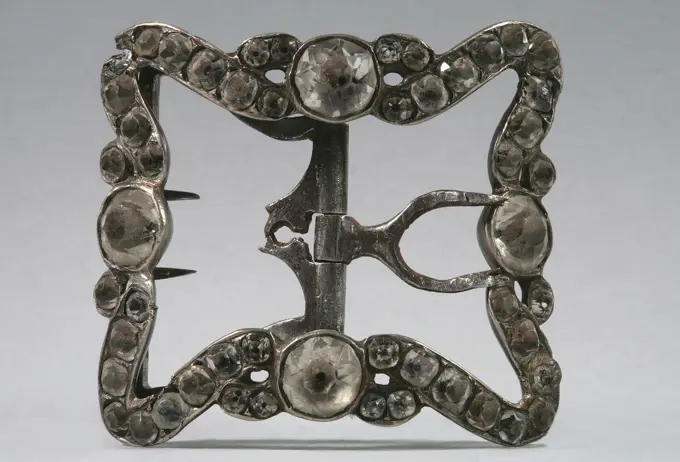
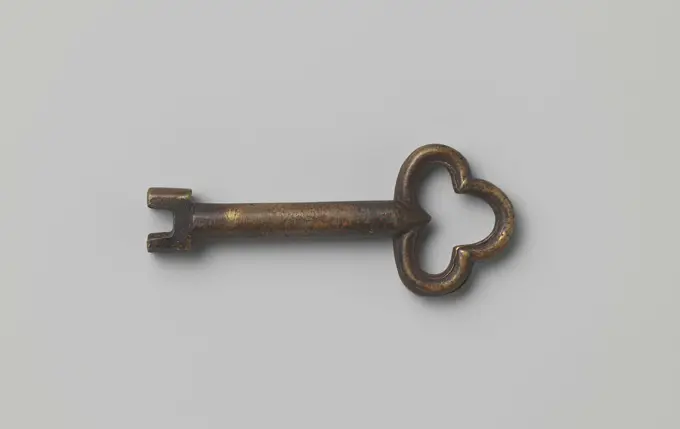
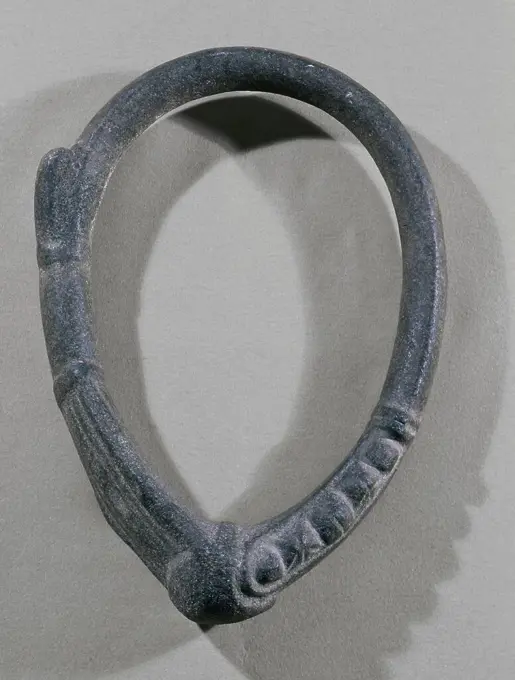
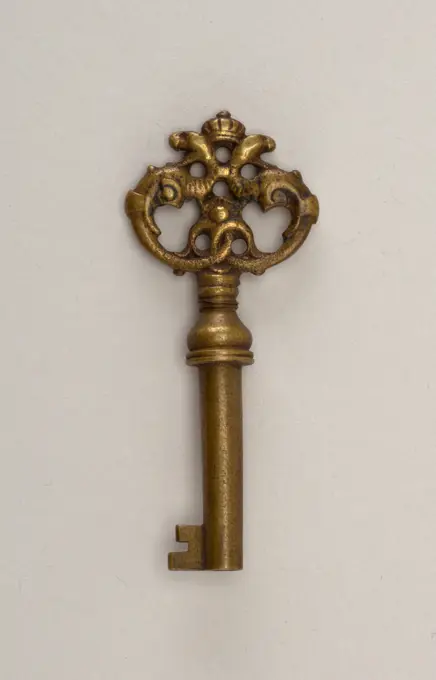
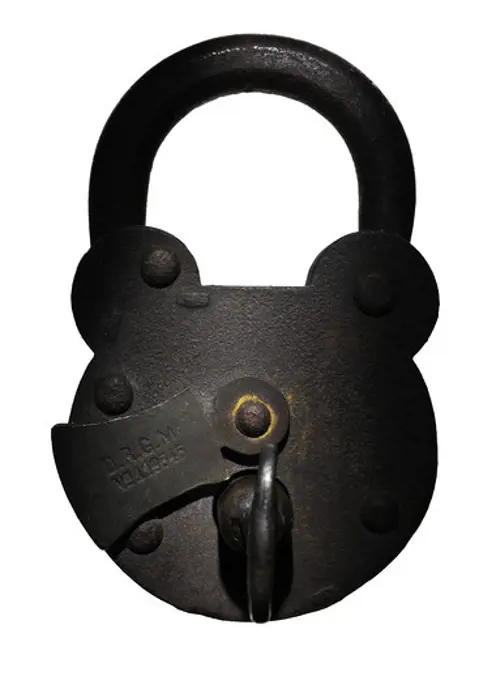
A collection of iron keys and locks from various historical periods. Detailed designs showcasing craftsmanship and vintage elements.
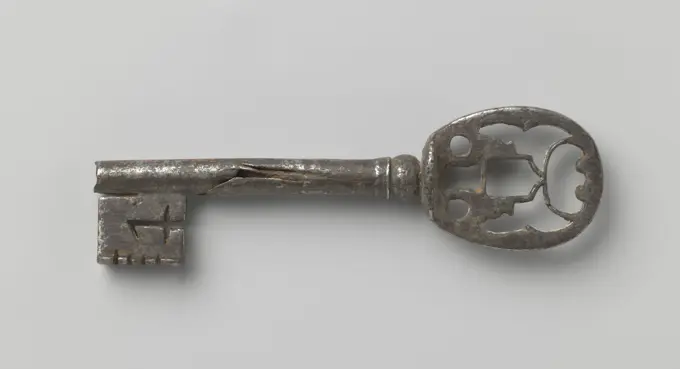
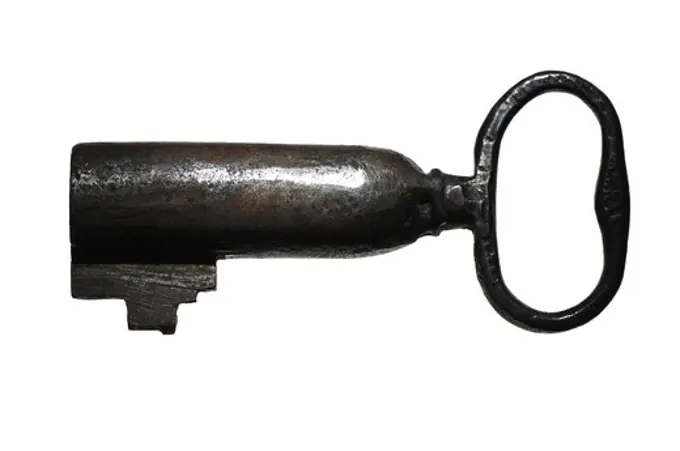
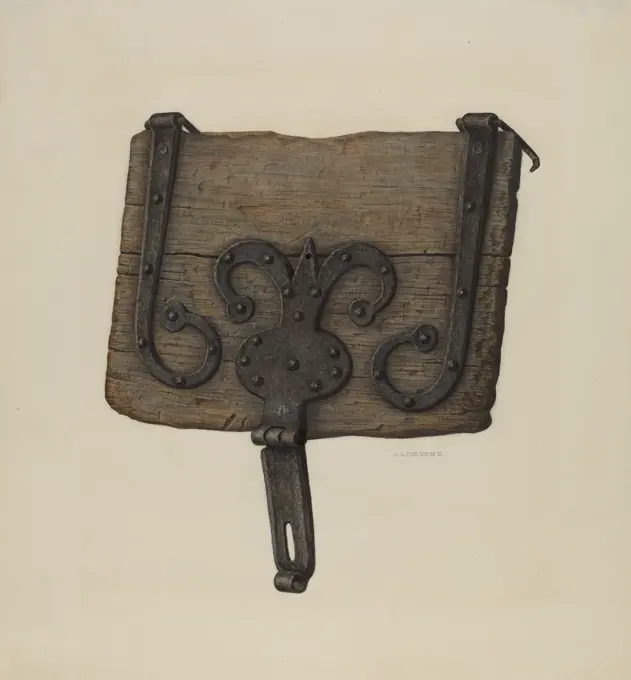
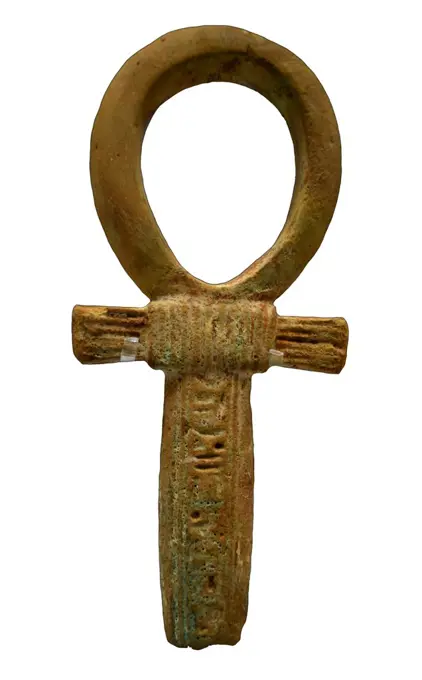
Pipe key, c. 1500 - c. 1600 Pipe key with egg -shaped openwork handle consisting of leaf vines. It is placed on an oval disk, which again rests on a bullet and after a profiling turns into the shaft. The shaft cracked lengthwise. France iron (metal) Pipe key with egg -shaped openwork handle consisting of leaf vines. It is placed on an oval disk, which again rests on a bullet and after a profiling turns into the shaft. The shaft cracked lengthwise. France iron (metal)
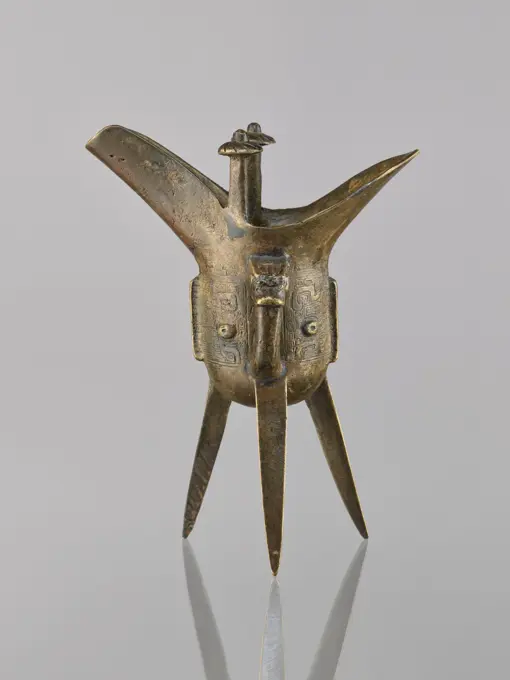
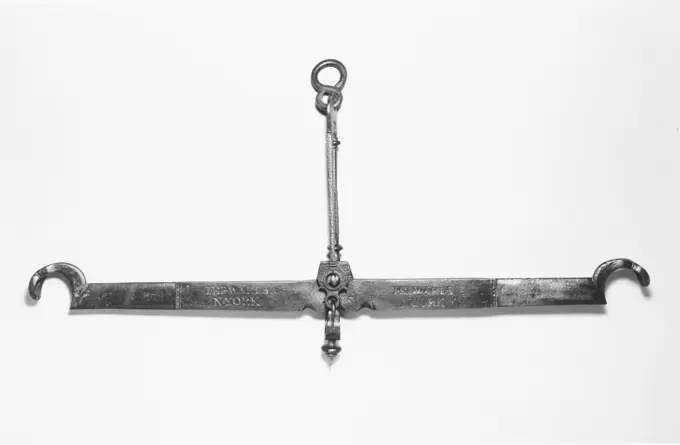
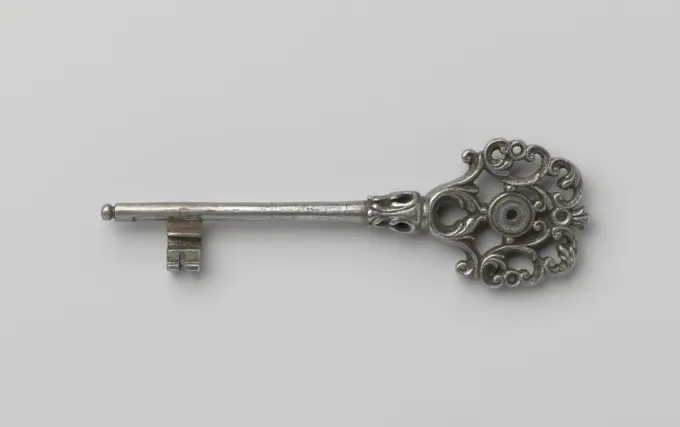
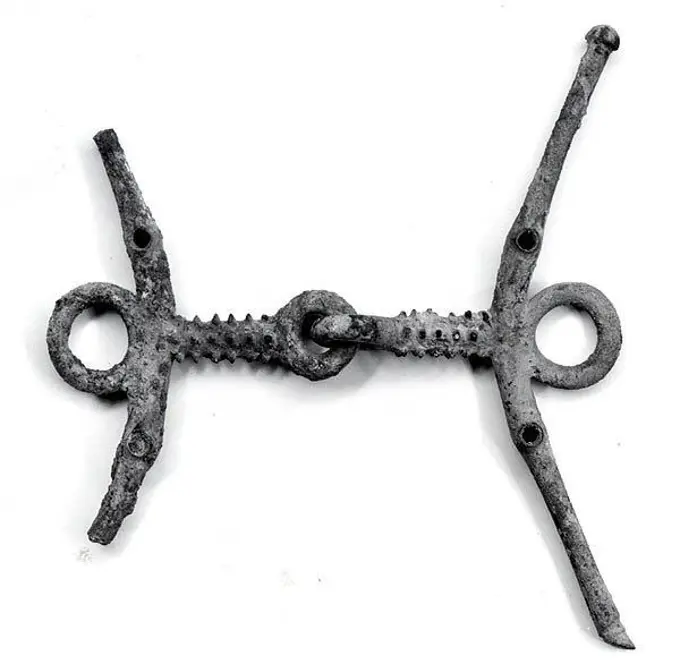
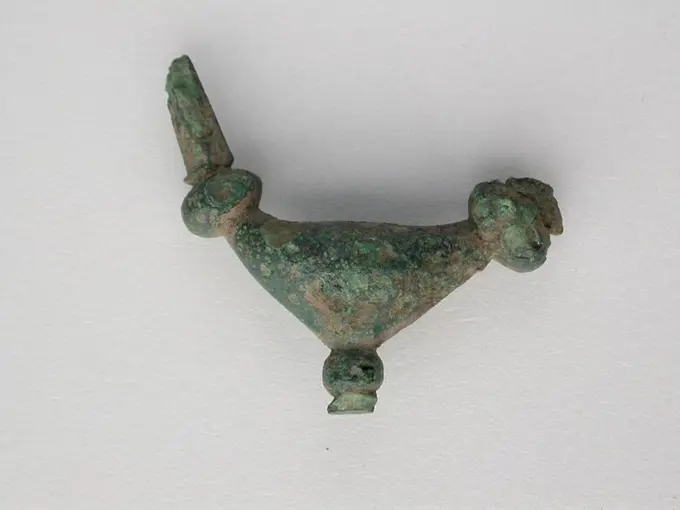
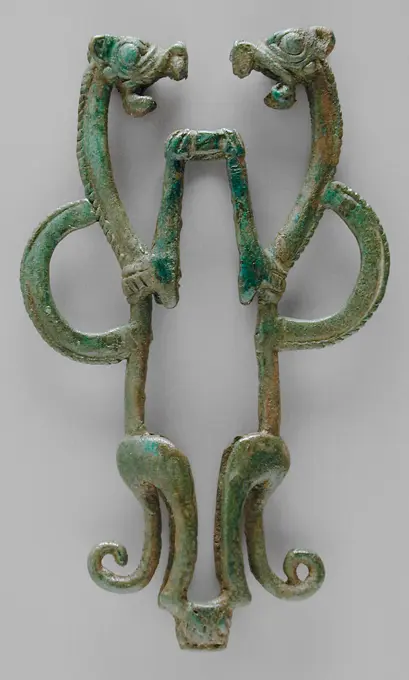
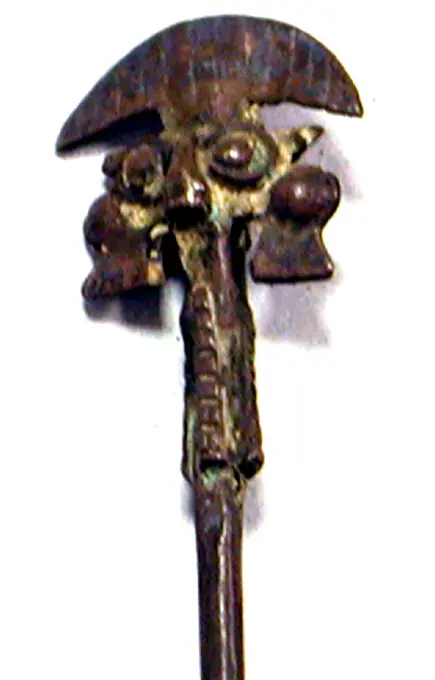
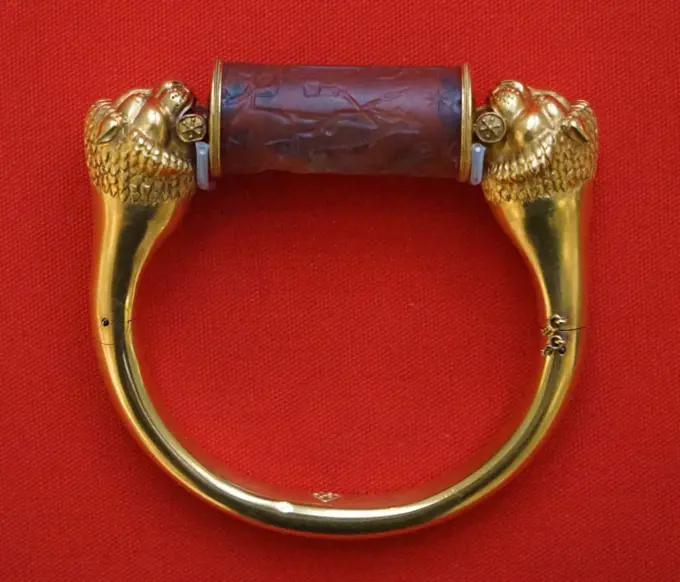
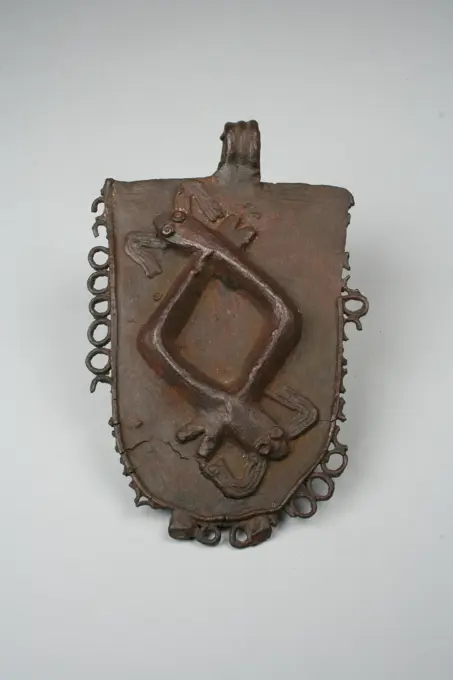
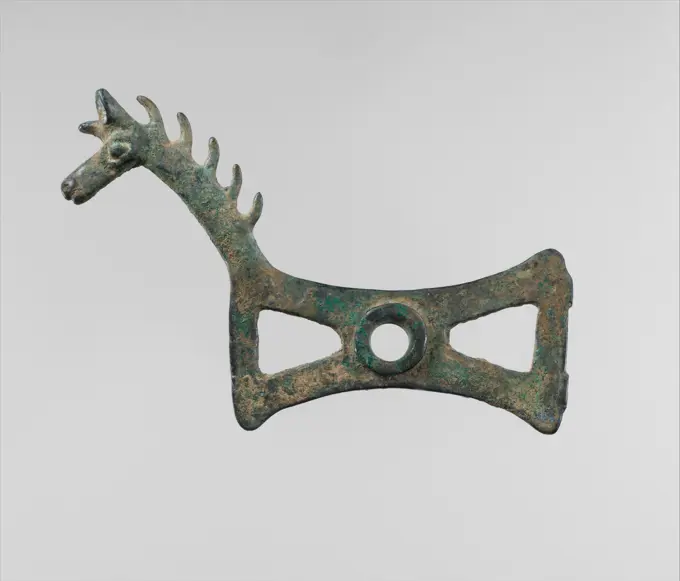
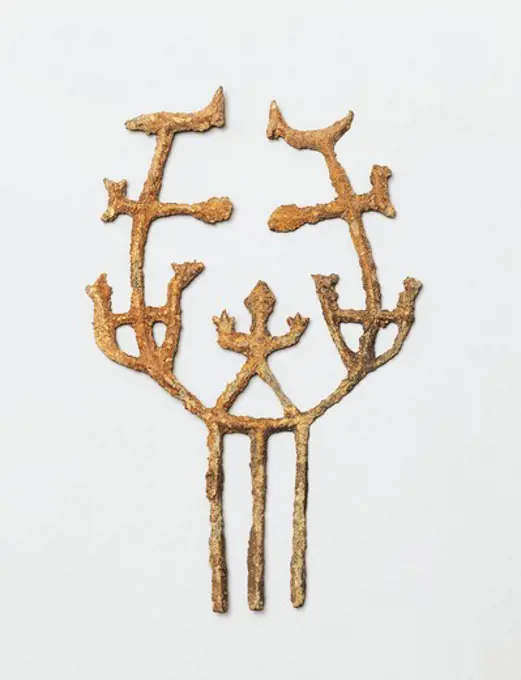
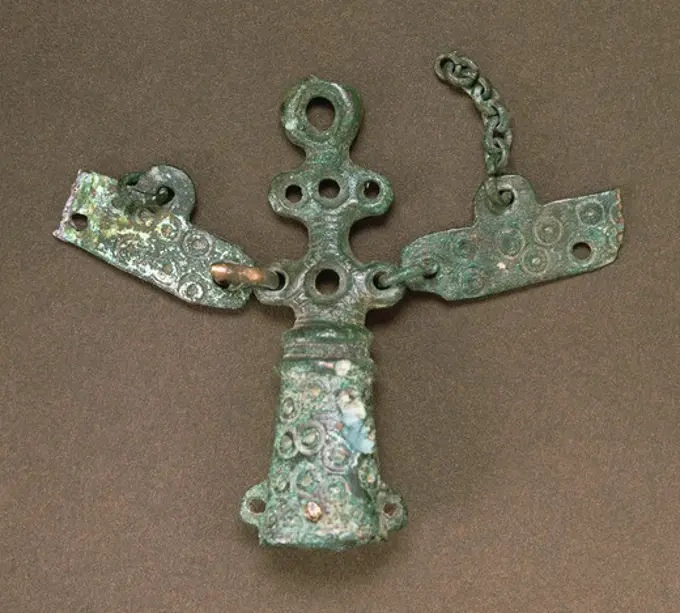
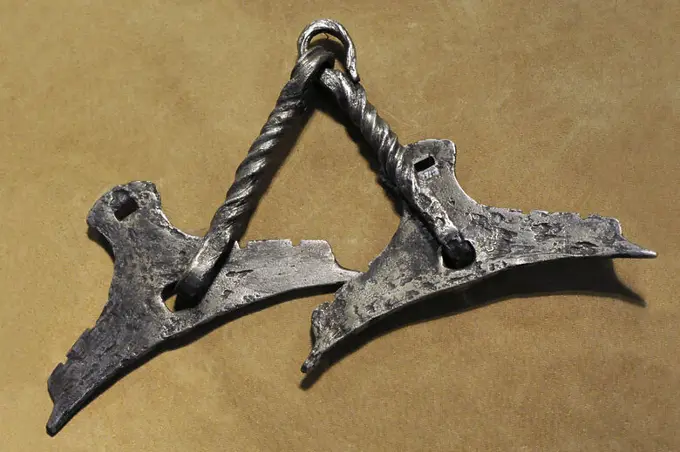
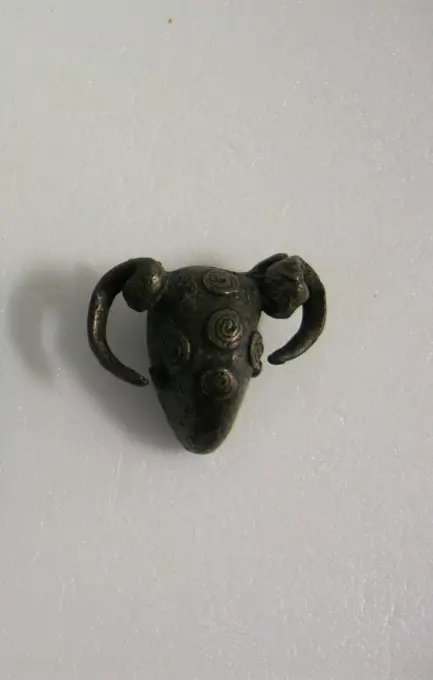
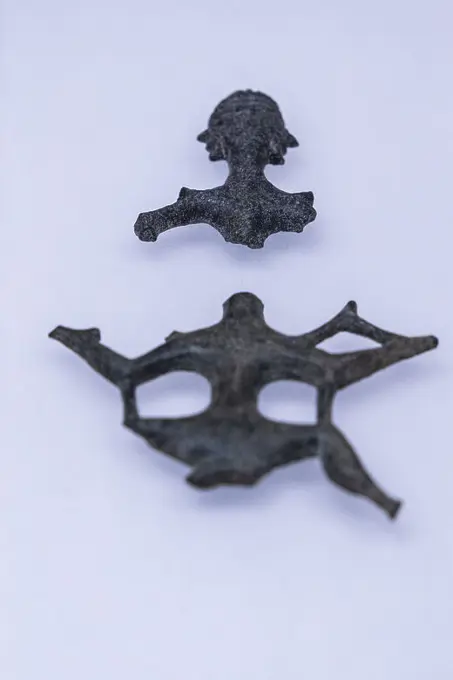
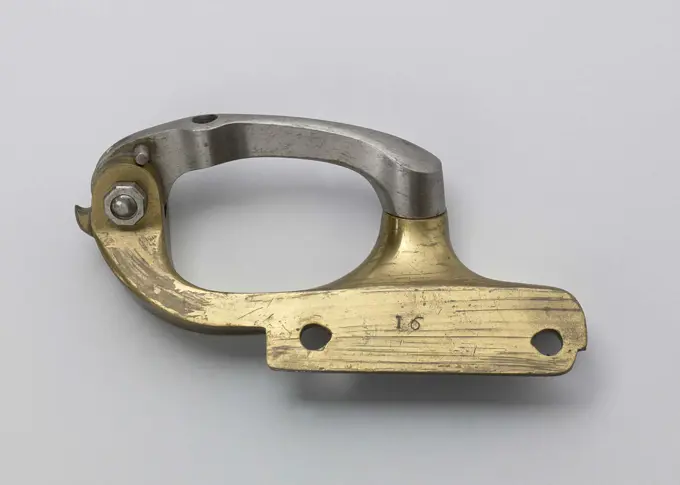
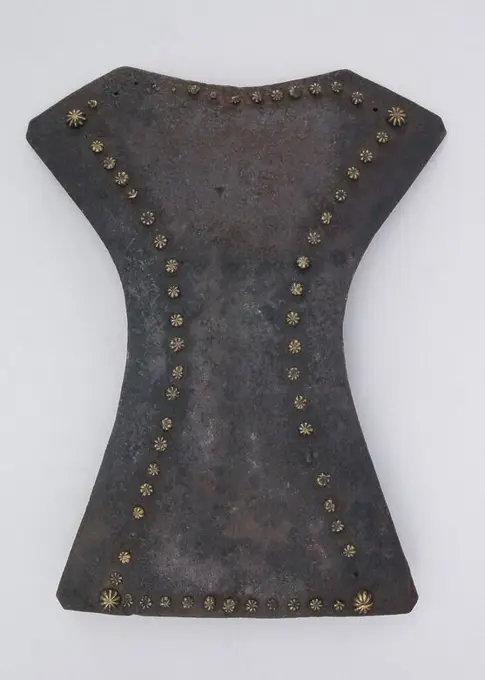
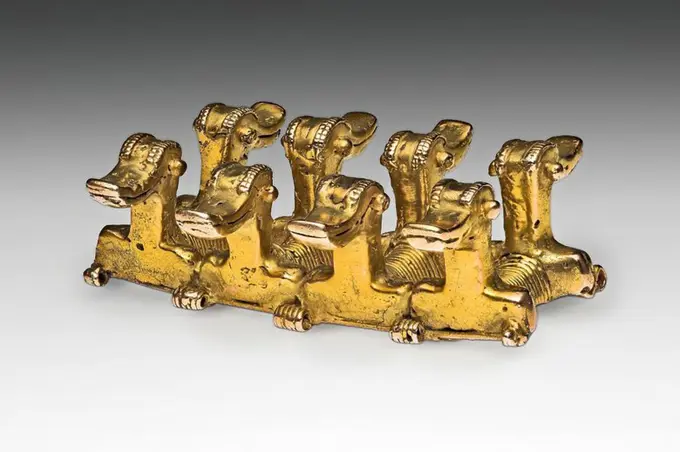
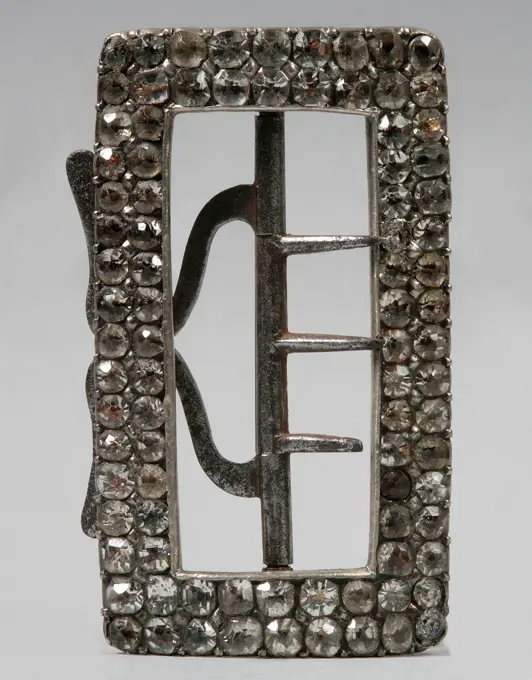
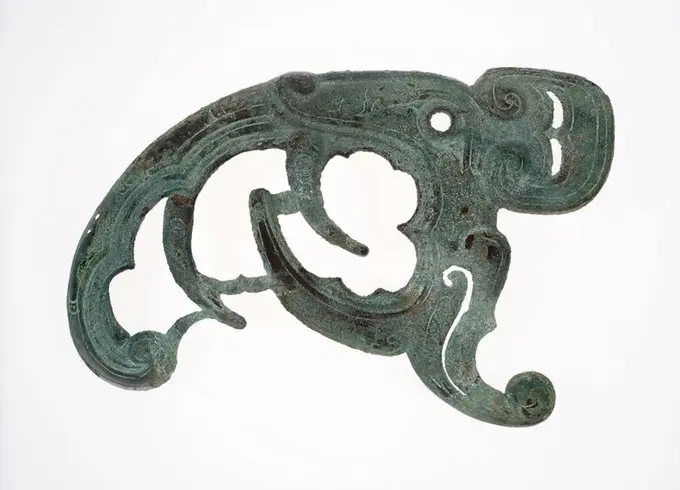
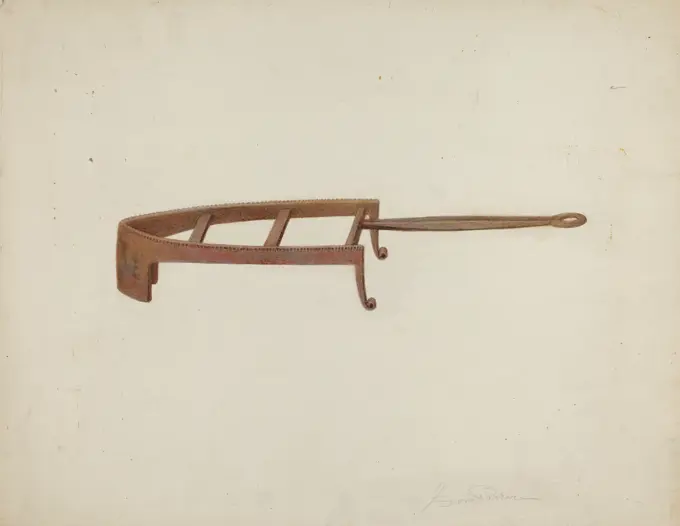
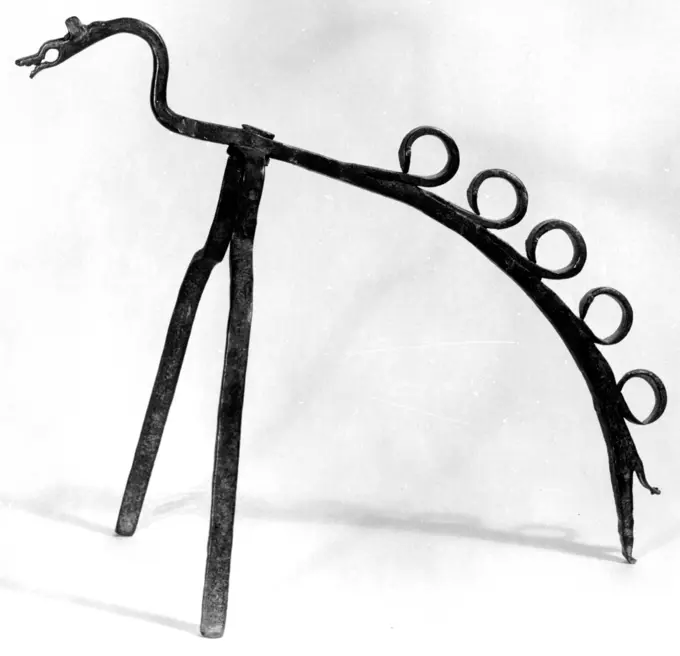
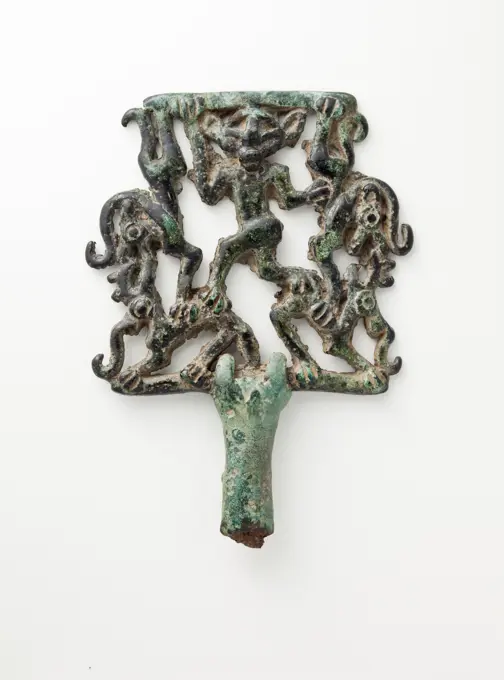
Sword Guard (Tsuba). Culture: Japanese. Dimensions: H. 3 in. (7.6 cm); W. 2 7/8 in. (7.3 cm). Date: 18th century. Museum: Metropolitan Museum of Art, New York, USA.Earring 6th-7th century Langobardic or Byzantine () Fashionable in Italy for at least a century before the arrival of the Langobards, earrings of the “basket” variety, like the many shown in this case, quickly became part of Langobardic women’s dress.. Earring 469000Hand guard, Hiroyoshi, 1800 - 1850 Oval tsuba with at the front in relief and Iroe Takazogan an eagle who plunges down; At the rear, a small monkey hides in a rock; Signed "Hiroyoshi". Japan copper (metal). gold (metal). silver (metal) Oval tsuba with at the front in relief and Iroe Takazogan an eagle who plunges down; At the rear, a small monkey hides in a rock; Signed "Hiroyoshi". Japan copper (metal). gold (metal). silver (metal)Lead wreath. Culture: Greek, Laconian. Dimensions: Height: 1 1/8 in. (2.9 cm). Date: 6th-5th century B.C..Archaic bronze statuettes from Sparta include representations of youths wearing similar wreaths or headdresses. Museum: Metropolitan Museum of Art, New York, USA.Loop .Slot plate decorated with leaf motifs, anonymous, 1600 - 1800 Open worked lock plate made of iron iron. The underside starts with a reversed three -sheet, which turns into a targeted leaves and a chalice motif, in which the keyhole is applied with an excellent picture underneath. Above it two S-Voluten around a leaf with a round opening in the middle. The top is crowned with a three -leaf.  iron (metal). tin (metal) forging / engraving Open worked lock plate made of iron iron. The underside starts with a reversed three -sheet, which turns into a targeted leaves and a chalice motif, in which the keyhole is applied with an excellent picture underneath. Above it two S-Voluten around a leaf with a round opening in the middle. The top is crowned with a three -leaf.  iron (metal). tin (metal) forging / engravingFragments of a cart or chariot, loops ca. 500-480 B.C. Etruscan Large collection of bronze and iron attachments once belonging to a chariot.. Fragments of a cart or chariot, loops 253013 Etruscan, Chariot fragments, loops, ca. 500480 B.C., Bronze, Other (length G1): 3 7/16in. (8.8cm) Other (length G2): 3 5/16in. (8.4cm) Width: 15/16 in. (2.4 cm). The Metropolitan Museum of Art, New York. Fletcher Fund, 1929 (29.131.3g1g2)Jue vessel;  19th century () (1801-00-00-1900-00-00);Sword Guard (Tsuba) 17th century Japanese A tsuba is a sword guard and part of a sword mounting. It is mounted between the swords blade and grip to protect the users hands.. Sword Guard (Tsuba) 34910Fragment of copper batter from the wreck of the East Indians Hollandia, 1700 - in or before 1743 fragment Varied parts or fragments; unidentified and miscellaneous parts or fragments; plate, flat, rectangular, with 2 rectangular holes, 2 circular holes and 2 holes fitted with fragm of pointed wire, circular in section. Netherlands copper (metal)   SecondKey; 1904-21-7Door lock;  k. XVII - 1 after. 18th century (1729-00-00-1729-00-00);Steeksleutel.Spanner with three-proof handle.COLLAR O CINTURON DE PIEDRA PARA USOS CEREMONIALES. Location: MUSEO DE AMERICA-COLECCION. MADRID. SPAIN.An old key, Sweden.Zoomorphic Brooch 100-300 Roman Small brooches, often in whimsical animal forms, were worn both by Roman soldiers stationed in the provinces and by the native population. Though brooches in these forms appear throughout the Roman world, the distribution of finds and the archaeological remains of workshops suggest that the major centers of production were Britain and Gaul.. Zoomorphic Brooch 475394Scales 1802-16 John Edwards. Scales. American. 1802-16. Iron. Made in New York, New York, United StatesPalanquin Ring. Cambodia, 12th century. Furnishings; Accessories. Copper alloyKey; 1909-2-267Key. Key whose handle consists of a side-side naked women's and men's figure, touching each other.Brass or bronze closure of belt with three eyes, remnant of batter, buckle belt part clothing accessory clothing soil find bronze copper metal, Copper or bronze belt buckle Consisting of large elongated eye above two small eyes. In between, flower figure with round heart. Remainder of leather fittings in one eye curled-up piece of thick copper wire archeology Rotterdam railway tunnel attaching fastening taking along belt Ground discovery: railway tunnel Rotterdam.Lock, Hasp, Key (Spain); ironKey, c. 1700 - c. 1800 Key whose grip -formed handle has three openings and is crowned by a crochet -shaped protrusion.  iron (metal) Key whose grip -formed handle has three openings and is crowned by a crochet -shaped protrusion.  iron (metal)Key, c. 1800 Key with oval eye and heavily profiled shaft decorated with cord and leaf motif.  silver (metal) Key with oval eye and heavily profiled shaft decorated with cord and leaf motif.  silver (metal)Spoon with round bowl and flattened, hexagonal handle, spoon cutlery soil find tin metal, cast Round bowl rat tail flat hexagonal handle straight end of stem. Large tin mark on the transition from the stem to the leaf Front bin smashed unclear brand: flower archeology Rotterdam rail tunnel food Soil discovery: rail tunnel Rotterdam.Key, c. 1400 - c. 1950 Key whose handle consists of acanthus fillets that enclose a round -profiled disk, partly of copper. This shows a hole in the middle, in which something seems to have been confirmed in the past. The bump ring shaped by four down -hanging leaf leaves is open. The thin shaft runs past the narrow S-shaped beard and ends in a button.  iron (metal) Key whose handle consists of acanthus fillets that enclose a round -profiled disk, partly of copper. This shows a hole in the middle, in which something seems to have been confirmed in the past. The bump ring shaped by four down -hanging leaf leaves is open. The thin shaft runs past the narrow S-shaped beard and ends in a button.  iron (metal)Tree Morazz to know about (déeux). Bronze, China, Iv-Iie s. to. J.-C. Par musée musée malée. Asian art, Chinese art, bronze, Asian civilization, Chinese civilizationVAINA TIPO MONTE BERNORIO DECORADA CON NIELADOS DE LA NECROPOLIS DE TRASQUIJA DEL CASTRO DE LA OSERA. HIERRO AJUAR. (DEPOSITO: MUSEO ARQUEOLOGICO NACIONAL).Loop .HEBILLA VISIGODA-AÑO 550-BRONCE Y GRANATES. Location: MUSEO ARQUEOLOGICO DE CATALUÑA. Barcelona. SPAIN.Metal fittings from the east India wreck 't flying heart. Two fragments, a copper cartoon and a ring. Metal strip.Bliżej Kultury unknownFragment Screw plate of a musket from the wreck of the East Indians Hollandia, Anonymous, 1700 - in Or Before 1743  Fragm, right wing, side plate. Netherlands copper (metal)   SecondBOKEK;  XVII century (1630-00-00-1700-00-00);Axe Head 12th-15th century Ecuador. Axe Head 315299Powder Flask 1550-1575 Italy. Wood, leather, embossed, molded and tooled, and iron .Horse bit with attached cheekpieces ca. 6th-4th century B.C. Achaemenid This is a bronze bit for a horse. Two spiked bars, called canons, are liked by loops; these form the bit itself. Each canon is connected to a curved cheekpiece with a loop for the reins. One of the cheekpieces is intact, and its ends are decorated with a knob and a horses hoof.Fifteen bits, including this one, were excavated in the Treasury at Persepolis, the capital of the Achaemenid Persian Empire, along with a variety of other pieces of military equipment. The spikes on this bit are especially cruel, and suggest a military function, as they would permit near absolute control on the part of the rider. Indeed, horses were an important aspect of Persian military power, and were thus often displayed in Achaemenid art, such as on the reliefs of Apadana at Persepolis.. Horse bit with attached cheekpieces 324042Big loop. Surmounted by a ring on which two animals stand. LURISTAN. 1000-750 BC. J-C. Paris, Cernuschi museum. 35175-1 Ring, bronze, large loop, animalFibula (leech type). Greek; Thessaly. Date: 800 BC-700 BC. Dimensions: 4.0 x 4.4 x 1.2 cm (1 5/8 x 1 3/4 x 1/2 in.). Bronze. Origin: Thessaly. Museum: The Chicago Art Institute, Chicago, USA. Author: ANCIENT GREEK.Standard Finial. Iran, Luristan, Luristan bronzes, circa 1350-800 B.C.. Architecture; Architectural Elements. Bronze, castWall Bracket for a Lamp 6th century Byzantine This bracket is fashioned to resemble the stem of a vine.Round flat hanging lamps, or polycandela, were lit by oil-filled glass vessels hung from the round holes in their designs. Paul the Silentiary in 563 described the effect of huge hanging lamps that lit the great church of Hagia Sophia in Constantinople: Thus is everything clothed in beauty…no words are sufficient to describe the illumination in the evening: you might say that some nocturnal sun filled the majestic church with light.”. Wall Bracket for a Lamp. Byzantine. 6th century. Cast copper alloy. Metalwork-Copper alloyMax Unger, Scale, 1939 ScaleBrooch -Ornament China. Ornament. China. Gold and pearls. Song dynasty (960-1279). JewelryShaft-hole Axehead. Iran, Luristan, circa 2100-1750 B.C.. Arms and Armor; axes. Bronze, castShield-top spoon 1656 Dutch, Hoorn. Shield-top spoon. Dutch, Hoorn. 1656. Silver. Metalwork-SilverWatchFob.  Maker: S. J. S., working c. 1910Prick Spur 13th century German The prick spur was the first type of spur to be invented, and it consists of a goad or prick, more or less pointed, connected to side arms or a heel plate. The earliest spurs were probably simple thorns attached at the back of the heel, before they started to be made out of metal in antiquity. Prick spurs were the main type of spurs used in the Middle Ages until the mid-14th century, when they were supplanted by rowel spurs, which appeared in Europe a century before and with which they had cohabitated for a time. As a knights status was closely related to his horse, spurs became one of the symbols of chivalry, and one of the tokens given to him during his knighting.. Prick Spur. German. 13th century. Iron alloy. Equestrian Equipment-SpursCeremonial ax China. Ceremonial ax 49578Austin L Davison, Conestoga Wagon Tool Box Lid, c 1938 Conestoga Wagon Tool Box LidLoop.Belt buckle. Two Spins, A and B.Belt Buckle with Struggling Animals 6th-7th century Visigothic. Belt Buckle with Struggling Animals 468710Sign in the form of a branch, out of vessels. Mannheimer., 1600 - 1699 An iron sign, formed, from a horizontal lying branch that turns horizontally in the middle and on the wall side into a small and at the end into a large half -bow. The horizontal part is pierced by one, lower -sitting small branch. Both branches are decorated with flowers and end in a chalice. Coming from the collection of Dr. F. Mannheimer. Italy iron (metal) gilding An iron sign, formed, from a horizontal lying branch that turns horizontally in the middle and on the wall side into a small and at the end into a large half -bow. The horizontal part is pierced by one, lower -sitting small branch. Both branches are decorated with flowers and end in a chalice. Coming from the collection of Dr. F. Mannheimer. Italy iron (metal) gildingSweden, Blekinge, Blekinge, Karlskrona, Karlskrona, external marina (depicted, town).Sweden, Blekinge, Blekinge, Karlskrona, Karlskrona, External War Gogs (depicted, City)Textile Ornament 14th-15th century Chimú. Textile Ornament 308753An old wrench isolated on whitePilgrim's Badge 14th-16th century French. Pilgrim's Badge. French. 14th-16th century. Lead. Metalwork-LeadAlbert Levone, Pa German Patch Box, 1935 1942 Pa. German Patch BoxLarge Ring with Figural Decoration 500 B.C.-A.D. 300 Vietnam (North, Highlands). Large Ring with Figural Decoration. Vietnam (North, Highlands). 500 B.C.-A.D. 300. Bronze. Bronze and Iron Age period. JewelryBliżej Kultury unknownSilver Pin 15th-16th century Inca. Silver Pin 315619Lady Layard's Jewellery: bracelet. Mesopotamian. Belonged to Lady Enid Layard.An old padlock.Natural horn, Gummarus van Engelen, in or after c. 1850 On the cup engraved 'G. van Engelen / Ainé à Lierre '. The cup is lacquered red. Leaf and floral motifs were then painted with gold paint. Want to wound with green cord. Lier copper (metal) On the cup engraved 'G. van Engelen / Ainé à Lierre '. The cup is lacquered red. Leaf and floral motifs were then painted with gold paint. Want to wound with green cord. Lier copper (metal)Copper clasp, small size, round with angel, decorated with grooves, buckle fastener component soil find copper brass metal, cast drawn whipped Copper buckle. Small size round model without middle style with only sting. Decorated with grooves on one side. Other side is flat archeology Rotterdam City Triangle Botersloot Binnenrotte leather clothing belt close Soil discovery Rotterdam Binnenrotte behind the Botersloot.Waist Pendant: Two Mudfish 16th-19th century Edo peoples At its origins, the centralized city-state of Benin was founded by Edo-speaking peoples. The accounts by official court historians and descriptions provided by visitors evoke a vibrant cultural center continually redefined by its leadership through shifting internal and external power dynamics. According to oral tradition, circa 1300, Edo chiefs are reputed to have reached out to the leader of neighboring Ife, Oranmiyan, to establish a new divinely sanctioned royal dynasty. Since then, the investiture of Benins rulers to the title of obas has conferred upon them at once a role of chief priest officiating in important religious ceremonies and presiding over an elaborate structure of palace officials. During the fifteenth century reign of Oba Ewuare, Benins armies were formed and the fortification of its capital with a massive wall undertaken. In parallel, delegations of Portuguese traders assiduously sought to secure exclusive cKościek Elazna from the collection of Roman Szewczykowski, in the collections of the National Museum in Warsaw from 1918 - a general view;  around 1920-1922 (not after 13.05.1922) (1918-00-00-1922-00-00);Lead wreath 6th-5th century B.C. Greek, Laconian Small flat votive figurines of cast lead have been found in great quantities at the ancient sanctuaries of Laconia; over one hundred thousand, dating from the seventh century B.C. to the Classical period, were dedicated to the goddess Artemis Orthia in Sparta.. Lead wreath 251728 Greek, Laconian, Lead wreath, 6th5th century B.C., Lead, Height: 1 in. (2.6 cm). The Metropolitan Museum of Art, New York. Gift of A. J. B. Wace, 1924 (24.195.162)Horse bit cheekpiece in form of a horse ca. 8th-7th century B.C. Iran. Horse bit cheekpiece in form of a horse 324736Belgium, Brussels, Bronze comb decorated with human figurePrehistory, Italy, Iron Age. Pendant.Hinge. .History of Latvia. Middle Ages. Iron embouchure required for riding a horse. From the collection of the Latvian National Costume Museum. 12th-13th centuries. Latvian War Museum. Riga. Latvia.Goldweight Ram's Head, 19th-20th century, 1 1/4 x 1 1/2 x 3/8 in. (3.18 x 3.81 x 0.95 cm), Brass, Ghana, 19th-20th centuryBrooch van Gilded Metal in the form of an airplane, 1940 Brooch made of gilded metal in the form of an airplane. With enameled circles in red, white and blue (symbol of Dutch bombers) with a hook closure. Netherlands metal. Brooch made of gilded metal in the form of an airplane. With enameled circles in red, white and blue (symbol of Dutch bombers) with a hook closure. Netherlands metal.Silver buckle 2nd title.fragments of a bronze horse bridle and decoration with a human figure of two riders, 5th century BC, Aznalcollar, Iberian culture, Iberian Museum of Jaén, Andalusia, Spain.Key; 1909-2-235Gun Lock (percussion). Percussion lock with brass house and iron hammer. The house must be mounted in the longitudinal direction on the right-hand side against the lock hardener with two bolts. The hammer revolves around her axis between two cheeks and has a hole in the shaft for the retraction rope. He ended up at a corner on the impact pipe that is put in a hole in the house (the anvil); The flame leaves the house on the other side and ends up in the pan.Lamp in Form of Four Pointed Star. Egyptian. Date: 301 AD-700 AD. Dimensions: 4.5 × 12.1 × 11.4 cm (1 3/4 × 4 3/4 × 4 1/2 in.). Steatite. Origin: Egypt. Museum: The Chicago Art Institute, Chicago, USA. Author: Ancient Egyptian.steel door key for cylinder lock isolated on white backgroundMetal shackles isolated on the whiteBrigandine Plate. Culture: Italian. Dimensions: H. 9 1/2 in. (24.1 cm); W. 7 in. (17.8 cm); Wt. 1 lb. 9.6 oz. (725.7 g). Date: 1400-1450. Museum: Metropolitan Museum of Art, New York, USA.William Frank, Bullet Mold, c 1940 Bullet MoldRetro cartoon with texture. Isolated on White.Pendant in the Form of Four Double-Headed Figures with Long Beaks, Possibly Ducks. Coclé; Venado Beach, Coclé province, Panama. Date: 500 AD-1000. Dimensions: L. 8.3 cm (3 1/4 in.). Cast gold. Origin: Panama. Museum: The Chicago Art Institute, Chicago, USA.Decorative Door Boss And Nail; wrought ironLoop. 2 rows of very small brilliant cut stones mounted on a single strip.Pair of Plaques with Profile Animal Heads. China. Date: 1027 BC-221 BC. Dimensions: 30.2 × 22.4 × 0.2 cm (11 7/8 × 8 13/16 × 1/6 in.). Bronze. Origin: China. Museum: The Chicago Art Institute, Chicago, USA.Key, c. 1800 - c. 1900 Four gathering keys, the shafts of which were drilled to the four figures of the card game. The keys are numbered on the key breast by Middel van Putjes.  iron (metal) Four gathering keys, the shafts of which were drilled to the four figures of the card game. The keys are numbered on the key breast by Middel van Putjes.  iron (metal)Cora Parker, Flat Iron Stand, c 1940 Flat Iron StandGun Sight. Brass design or visor. This large, consisting of two vertical rods between which a visor slides up and down. On one side, the rod has a scale ranging from 4 to 14; Moreover, it has a scale from 4 to 8 against the side of the rods. It has a trape-shaped base with which it was put on the neck ring at the collar. With a rope to a ring it was bound to the bundle. It belonged to a 15 cm houwitzer, long old model.Currency, 20th century, 9 x 3 5/16 x 2 1/4 in. (22.86 x 8.41 x 5.72 cm), Copper, Nigeria, 20th centuryFaience Ankh with the Cartouche of Malenaqen 551 B.C. From the Napatan Period. The inscription on the reverse refers to the New Year.Gear wheel after heat treatment close-up, isolated on a white background Gear wheel after heat treatment close-up, isolated on a white background Copyright: xZoonar.com/OleksandrxKostiuchenkox 8911886Spit Bracket 16th century Spanish () Although Spanish, particularly Catalan, iron working had reached a level of great artistry by the late Middle Ages, many ordinary household objects continued to be wrought in the traditional and less refined fashion, as is the case with this support for a spit (once part of a pair). It is amusing, however, and its maker demonstrated great inventiveness in transforming the scaly fins of its arched back into rings through which the spit could be inserted at gradual intervals. If contemporary illustrations accurately reflect the normal operation of the roasting spit, it was the fate of some poor knave to sit by the fire, endlessly turning the spit, which was sometimes provided with a handle. By the fifteenth century, a number of more sophisticated mechanical devices had been devised. These included a series of disks set at an angle about the fire and driven in a circle by its heat, which, in turn, transmitted the rotary motion, through a series of cogPoincon.Openwork Pinhead. Iran, Luristan, Luristan bronzes, Iron Age II-III (circa 1000-650 B.C.). Jewelry and Adornments; pins. BronzeS-Shaped hook with two dragon-headed finials, made from cast brass and gold damascening. Dated 16th Century