Antique Keys and Locks

A collection of iron keys and locks from various historical periods. Detailed designs showcasing craftsmanship and vintage elements.
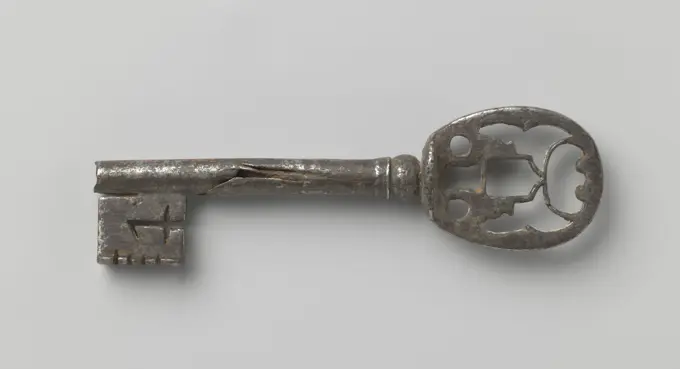
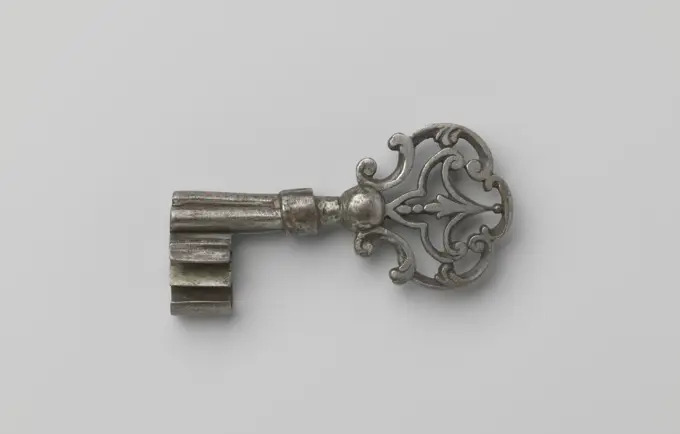
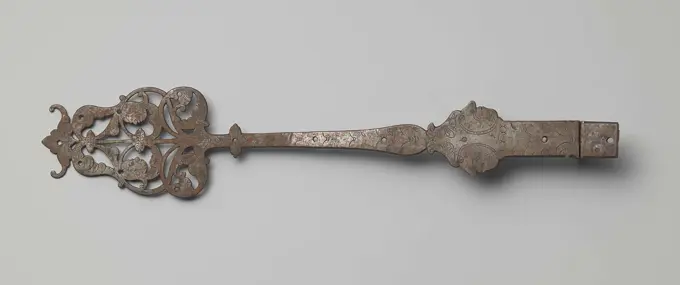
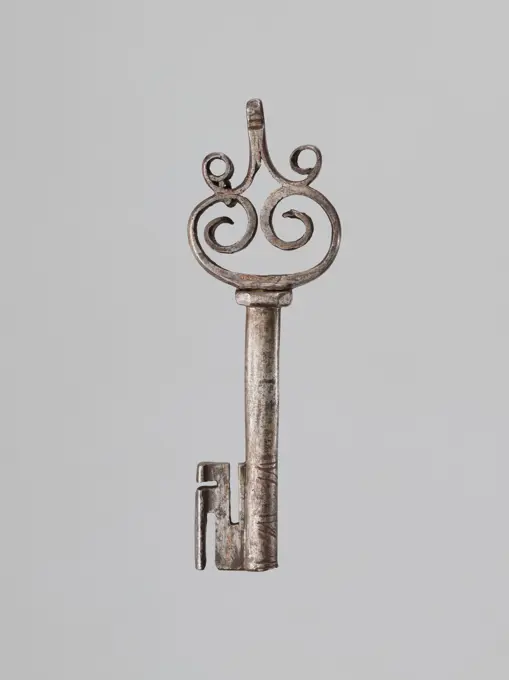
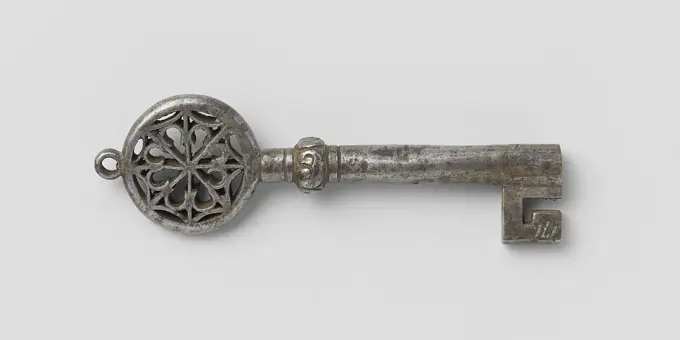
Pipe key, c. 1500 - c. 1600 Pipe key with egg -shaped openwork handle consisting of leaf vines. It is placed on an oval disk, which again rests on a bullet and after a profiling turns into the shaft. The shaft cracked lengthwise. France iron (metal) Pipe key with egg -shaped openwork handle consisting of leaf vines. It is placed on an oval disk, which again rests on a bullet and after a profiling turns into the shaft. The shaft cracked lengthwise. France iron (metal)
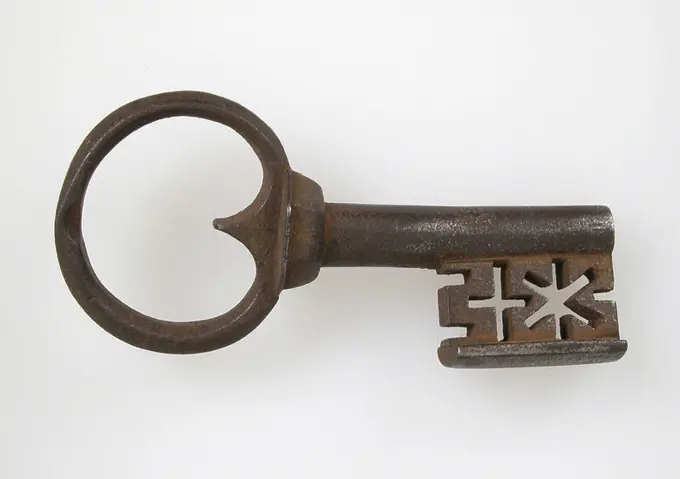
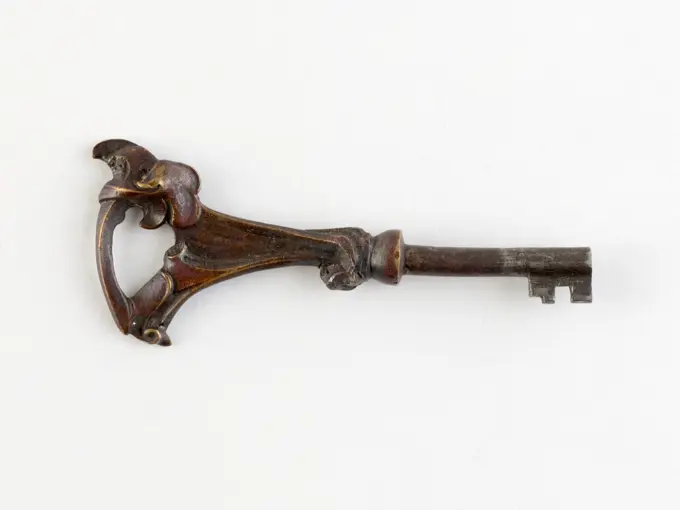
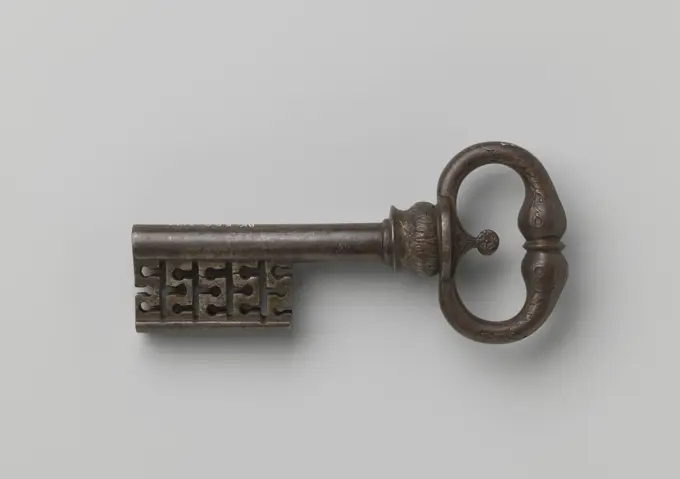
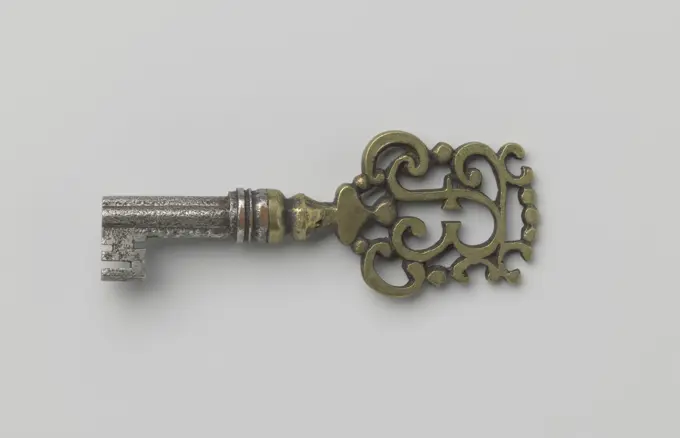
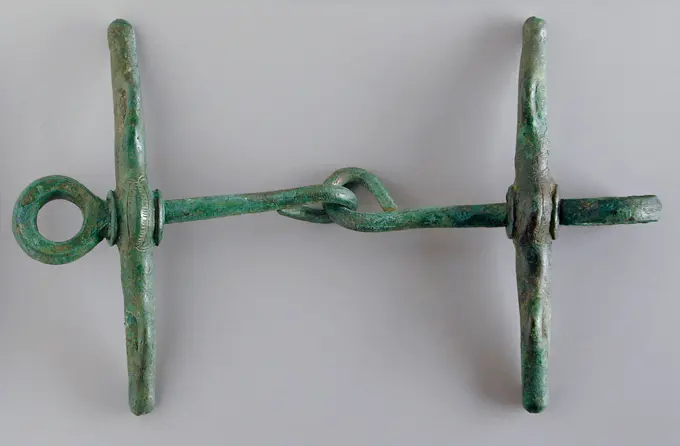
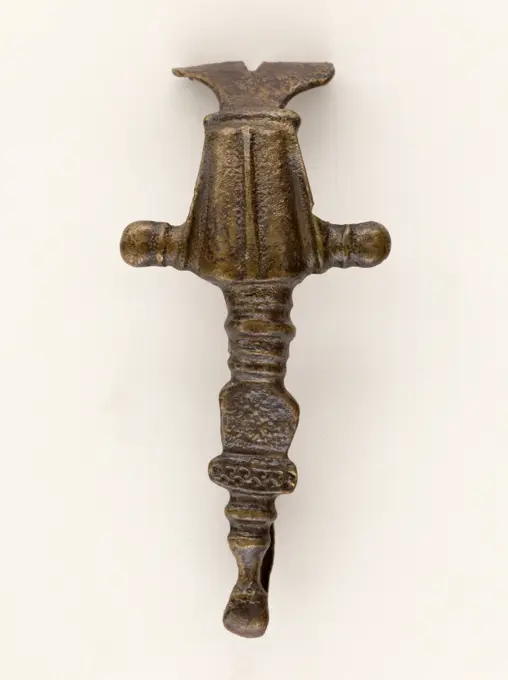
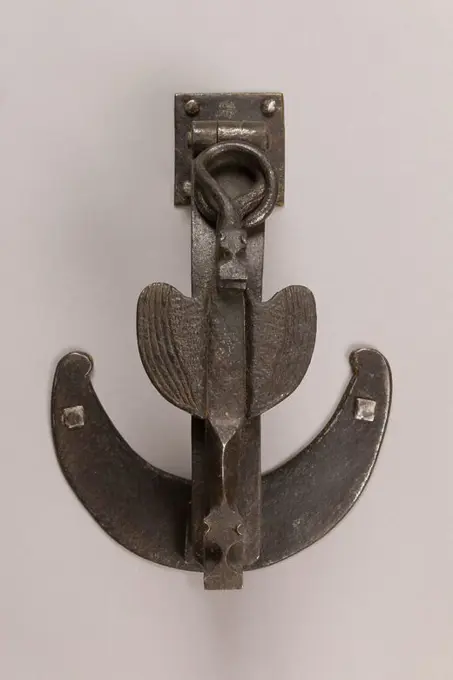
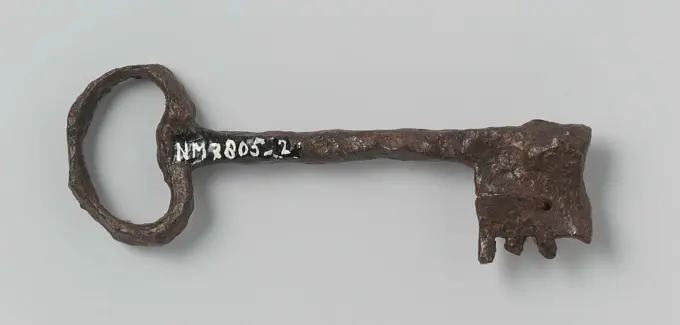
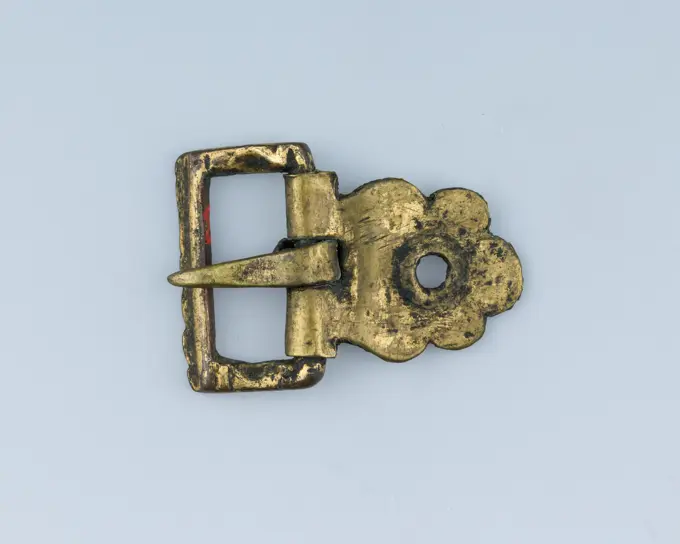
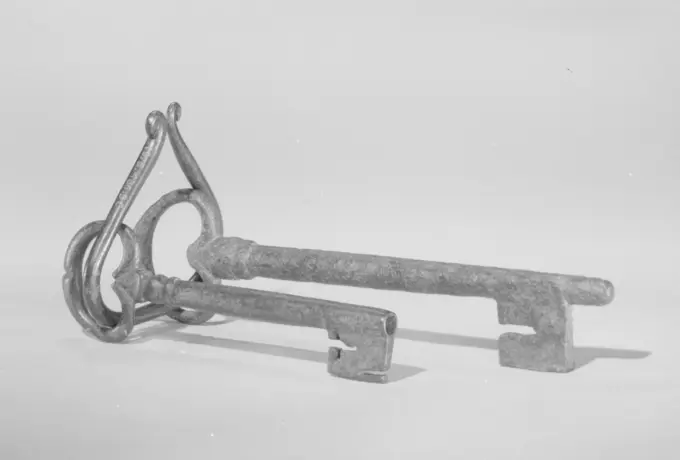
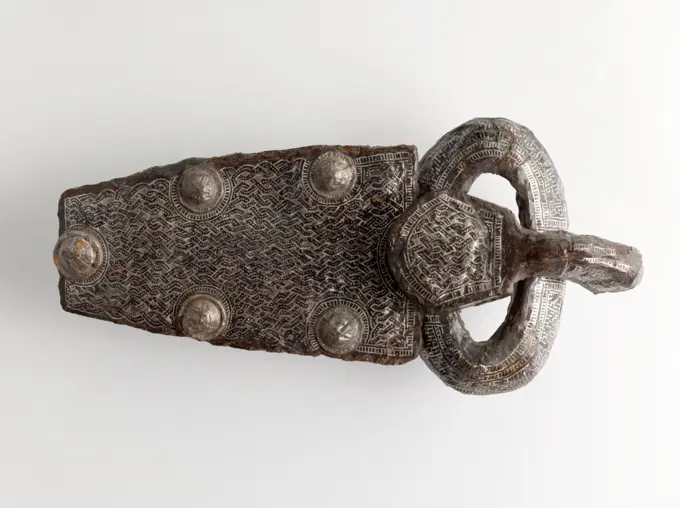
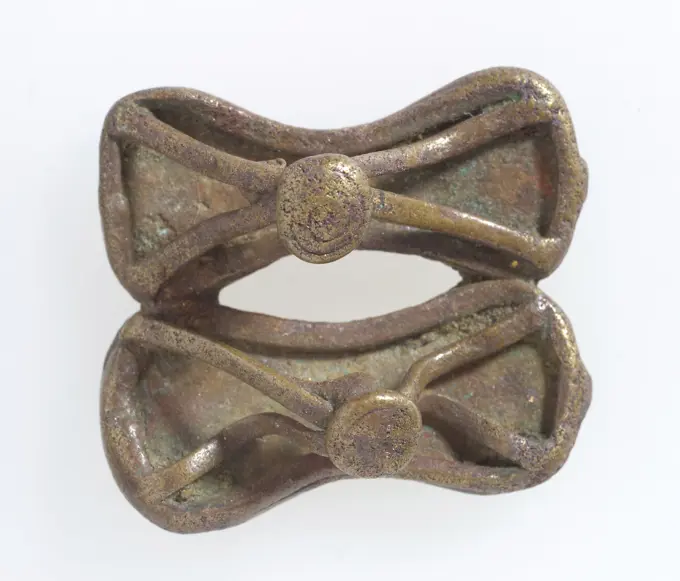
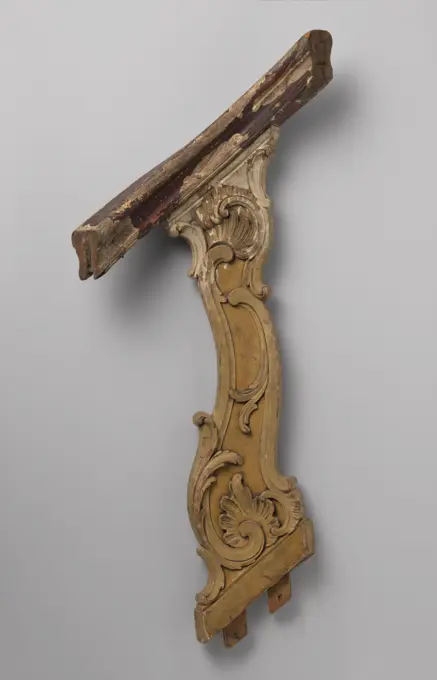
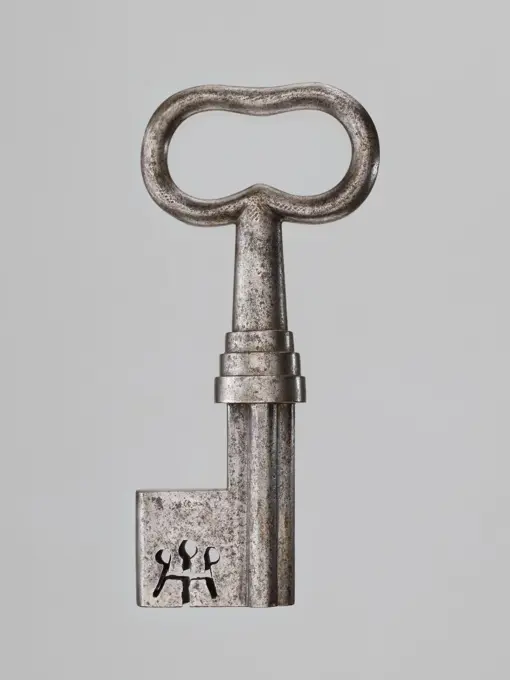
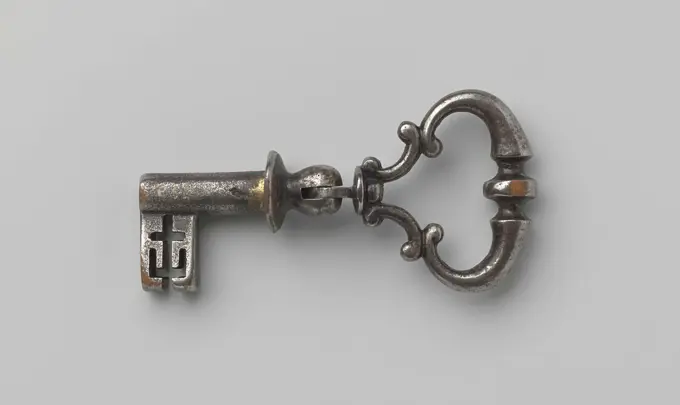
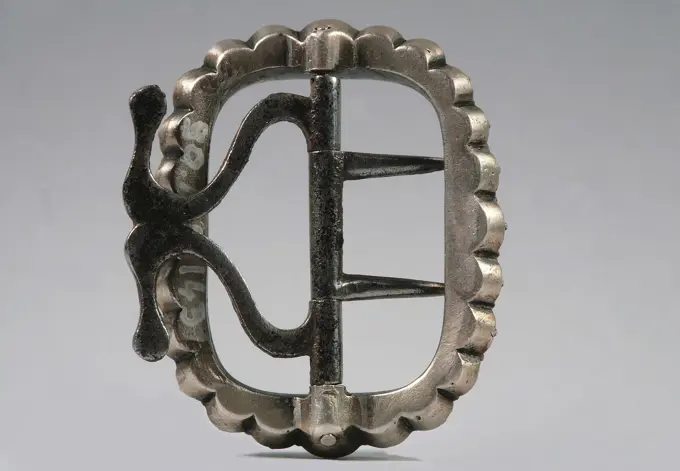
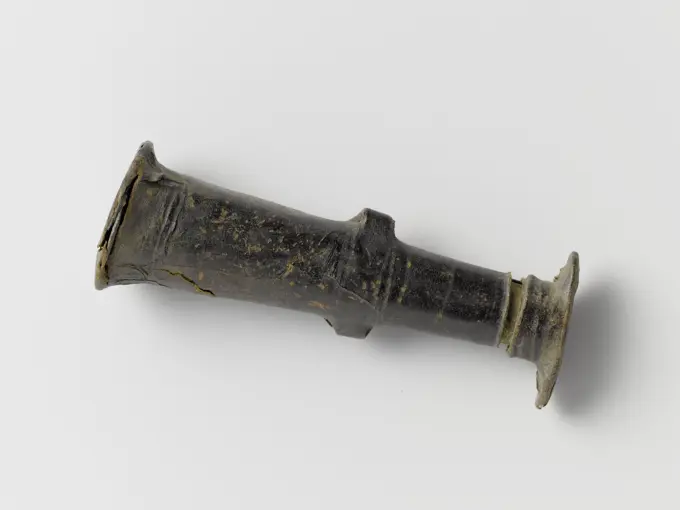
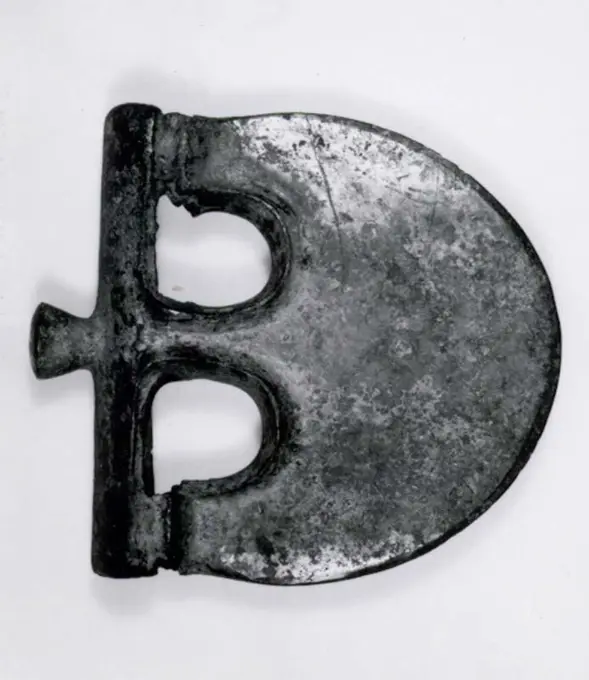
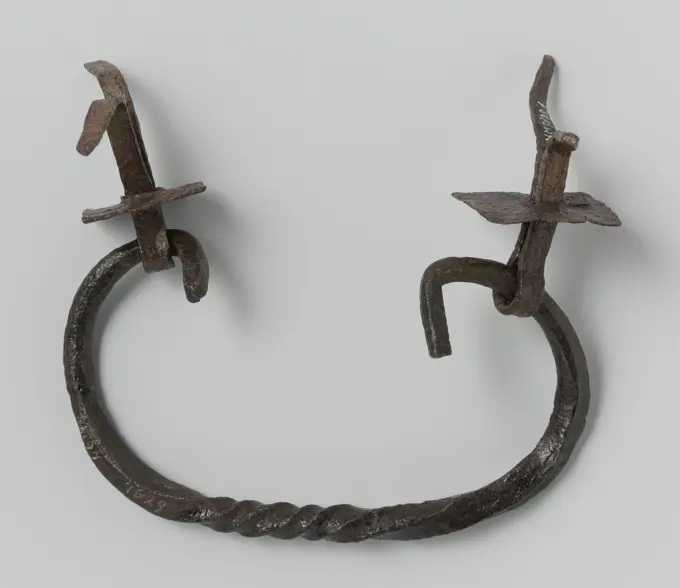
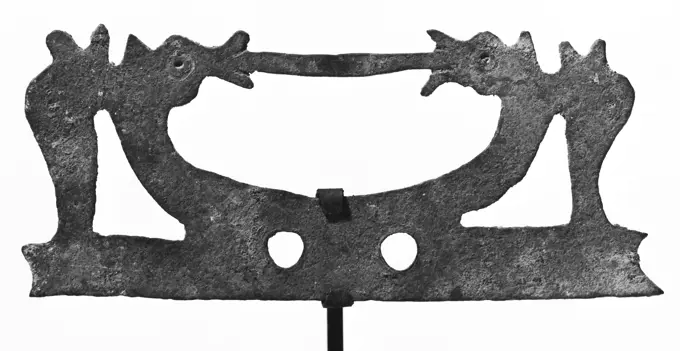
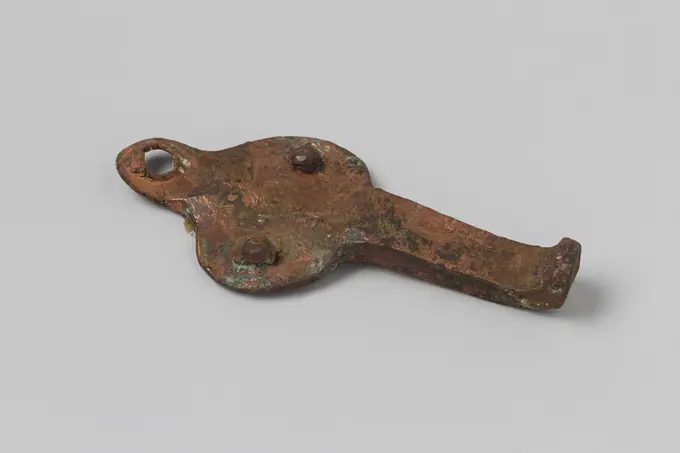
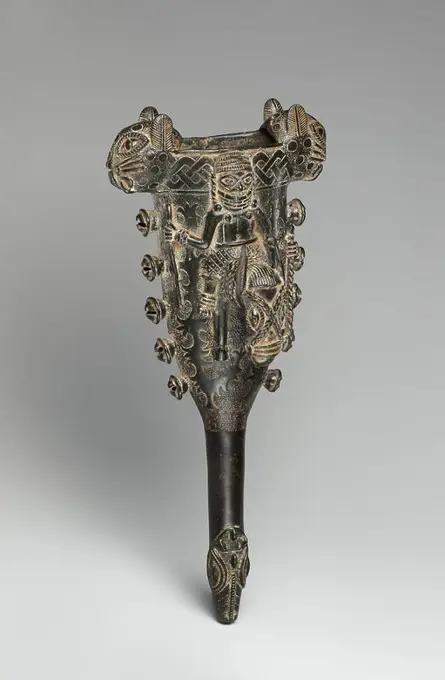
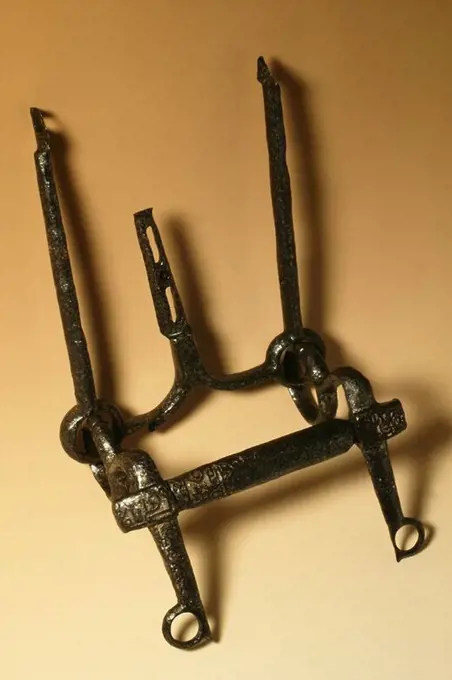
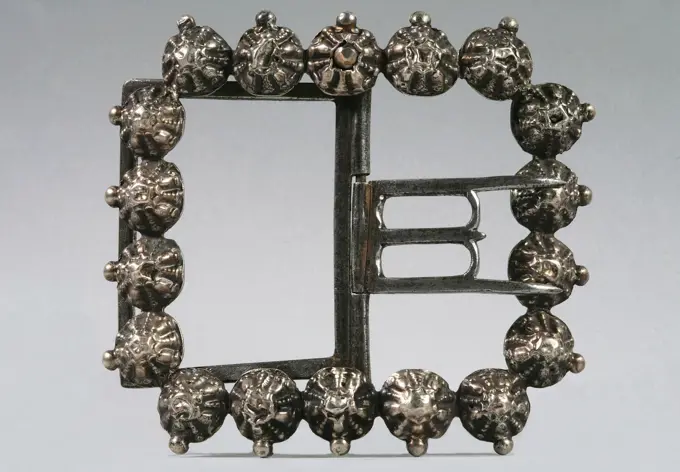
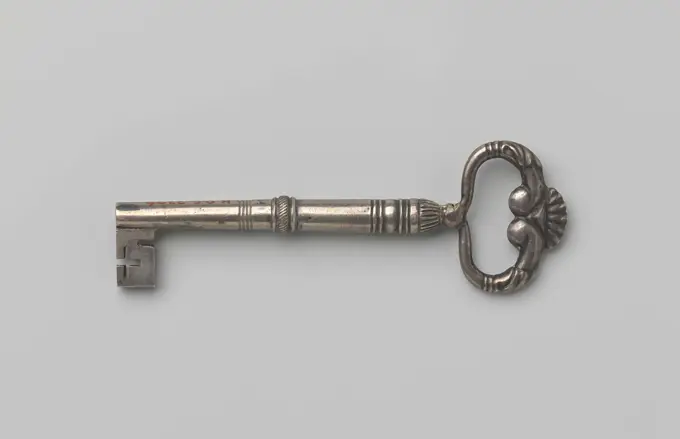
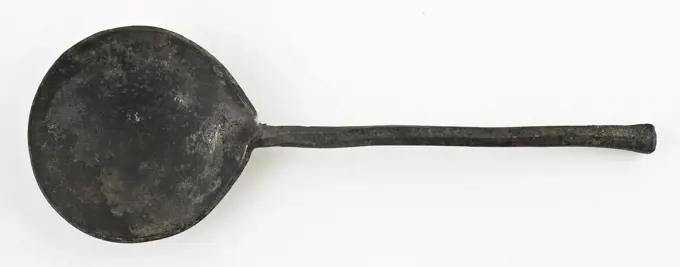
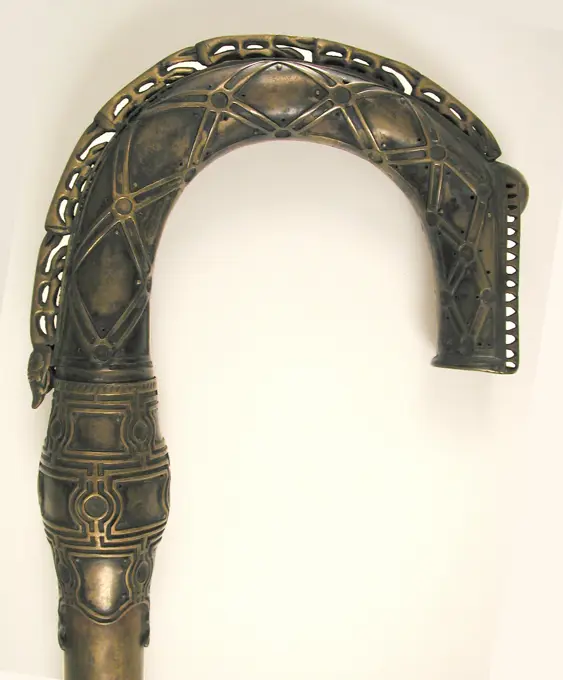
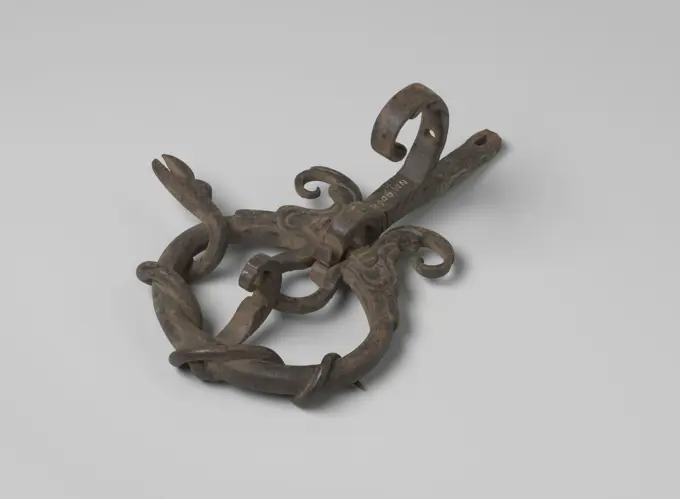
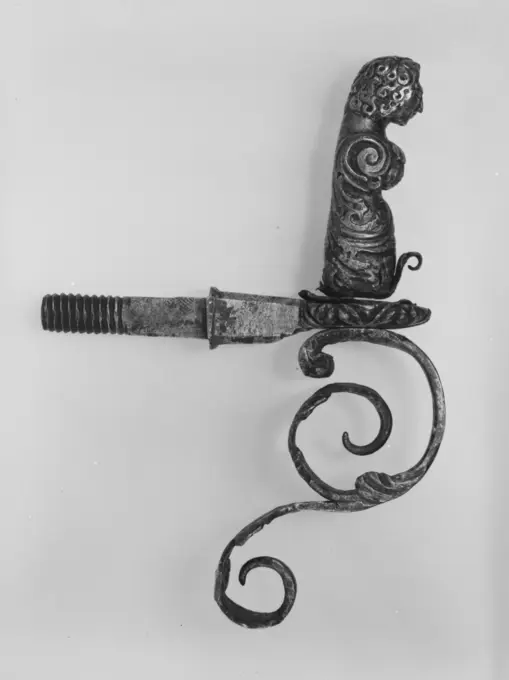
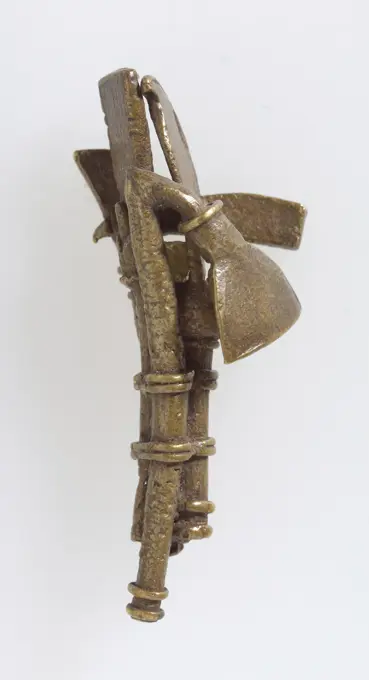
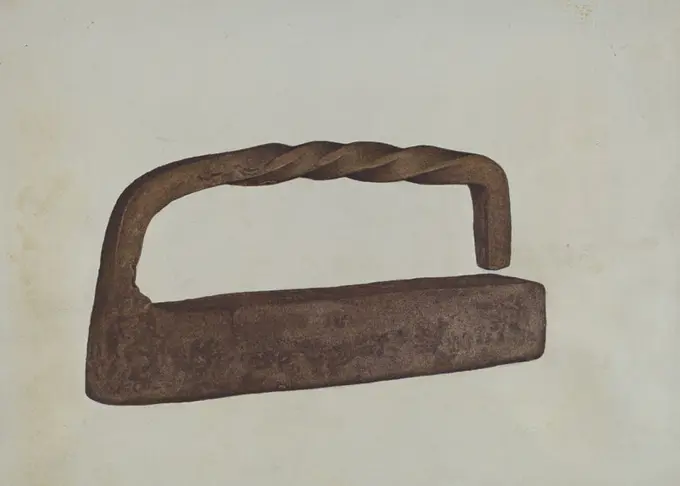
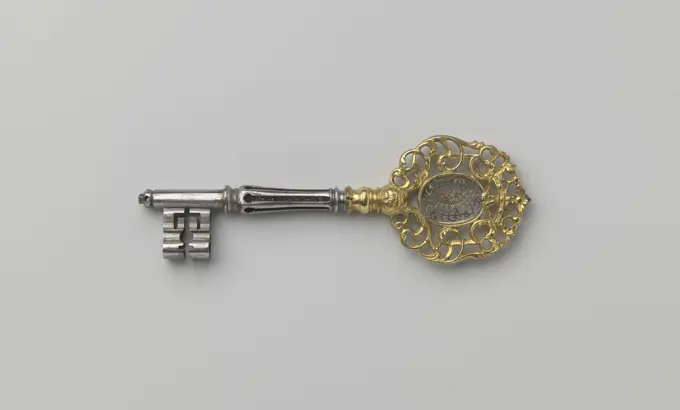
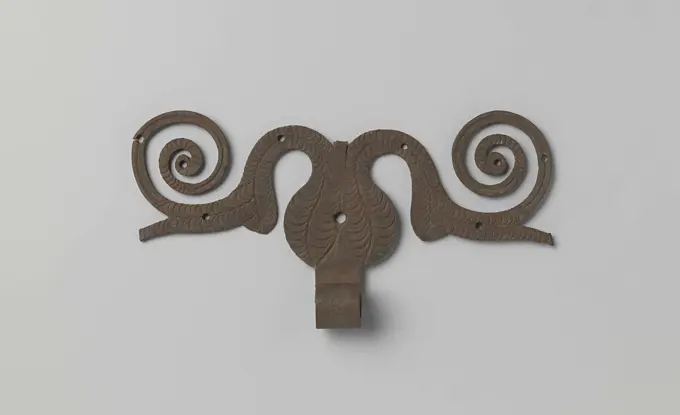
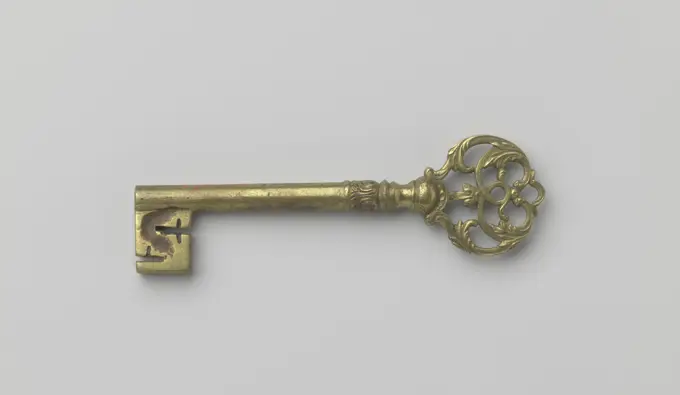
Knip, anonymous A sorner single cut. A sorner single cut.Key, c. 1500 - c. 1600 Key with three -step eye, crowned by a button. The shaft is baluster -shaped and ends in a button.  iron (metal) Key with three -step eye, crowned by a button. The shaft is baluster -shaped and ends in a button.  iron (metal)Key, c. 1600 - c. 1699 Key with diamond -shaped eye. This is grooved by lines; who cut each other on the corners.  iron (metal) Key with diamond -shaped eye. This is grooved by lines; who cut each other on the corners.  iron (metal)Key; 1917-10-2An staggered single cut.Key. Culture: German. Dimensions: Overall: 5 3/16 x 2 3/8 x 1 1/4 in. (13.1 x 6.1 x 3.2 cm). Date: 15th-16th century.The decoration of Gothic iron locks and keys was often elaborate and of the highest standard of workmanship. The motifs were frequently drawn from Gothic architecture, reproducing on a miniature scale complicated tracery patterns and even tiny statuettes. A number of these tiny locks were compound, with some of the mechanisms concealed from view, and required two or even three keys used in sequence to open them. It has been suggested that the greatly expanded use of locks on doors, or coffrets and other types of storage chests was a result of the increasing urbanization of life and the new emphasis on material wealth and private ownership which developed in the late Middle Ages. Museum: Metropolitan Museum of Art, New York, USA.Pipe key, c. 1500 - c. 1600 Pipe key with egg -shaped openwork handle consisting of leaf vines. It is placed on an oval disk, which again rests on a bullet and after a profiling turns into the shaft. The shaft cracked lengthwise. France iron (metal) Pipe key with egg -shaped openwork handle consisting of leaf vines. It is placed on an oval disk, which again rests on a bullet and after a profiling turns into the shaft. The shaft cracked lengthwise. France iron (metal)Key of Speyk, Anonymous, 1820 - 1831  Key; Simple final part on one side of Steel, upper part of the oval ring; Bit rusty. (Been confirmed to cardboard where it is written on the back: Van Speyk)  iron (metal)Hector Guimard (1867-1942). "Key". Bronze. 1909-1911. Museum of Fine Arts of the City of Paris, Petit Palais. 74618-22 Art Nouveau, bronze, key, key, decoration, metalKey 1st-7th century Roman. Key 462948Key, c. 1400 - c. 1950 Key with handle consisting of sheets of S-Voluten. The capital is ball -shaped and the key breast a round high disc. There is an S-shaped beard on the cloverleaf-shaped, drilled short shaft.  iron (metal) Key with handle consisting of sheets of S-Voluten. The capital is ball -shaped and the key breast a round high disc. There is an S-shaped beard on the cloverleaf-shaped, drilled short shaft.  iron (metal)Snaffle Bit 4th-5th century Italian, Lombardy The snaffle bit is the simplest type of horse bit, and has an effect on the bars (part of the horses jaw without teeth) and the corners of the lips. The mouthpiece consists of two square-section canons, half in bronze, half in iron, articulated in the center. The side rings retain the pear-shaped tabs with rivets used for hanging the bit from the bridle and one remaining simple straight tab on one side for attaching one of the reins.This bit is said to have been found in Lodi Vecchio, in Lombardia. Similar bits have also been discovered in 4th-5th century tombs in Crimea, possibly indicating the presence of Eastern riders in the Italian peninsula at this time, or at least any connection with Eastern equestrian cultures.. Snaffle Bit. Italian, Lombardy. 4th-5th century. Copper alloy (bronze), iron alloy. Lodi Vecchio. Equestrian Equipment-BitsKey, c. 1600 - c. 1699 Captured key whose eye is formed by two-entertaining C-Voluten, at the bottom of a rosette and above each in a cross-shaped thickening, a tilted disk, at the bottom of a rosette and above each. The handle rests on a heavy, also citized with acanthus leaf. The beard has a tear -shaped occupation. France iron (metal) Captured key whose eye is formed by two-entertaining C-Voluten, at the bottom of a rosette and above each in a cross-shaped thickening, a tilted disk, at the bottom of a rosette and above each. The handle rests on a heavy, also citized with acanthus leaf. The beard has a tear -shaped occupation. France iron (metal)Pipe key, c. 1700 - c. 1800 Pipe key whose handle is formed by the monogram F.B. The cloverleaf shaft is drilled cross -shaped. Handle of copper, shaft and beard of iron.  iron (metal). copper (metal) Pipe key whose handle is formed by the monogram F.B. The cloverleaf shaft is drilled cross -shaped. Handle of copper, shaft and beard of iron.  iron (metal). copper (metal)Iron key with oval eye, hollow key handle and cruciform beards in beard, key iron value soil find iron, hand forged Key with oval eye (handle) hollow keysteel with thickening in the middle cruciform bones (horizontal vertical and diagonal) in key beard and symmetrical keyhole cross section archeology Rotterdam City Center Stadsdriehoek Delftsevaart hang-en-sluitwerk The object was excavated and found at the partial reclamation of the Delfsevaart for the purpose of making the lift over the Vaart in the summer of 1928.Key, c. 1800 - c. 1900 Key with circular eye in which there are five rings of five crosses.  iron (metal) Key with circular eye in which there are five rings of five crosses.  iron (metal)Adze ca. 1250-900/800 B.C. Iran. Adze 324164Horse Bit. Iran, Luristan, Luristan bronzes, circa 1000-650 B.C.. Tools and Equipment; horse trappings. Bronze, castKey 15th century German The decoration of Gothic iron locks and keys was often elaborate and of the highest standard of workmanship. The motifs were frequently drawn from Gothic architecture, reproducing on a miniature scale complicated tracery patterns and even tiny statuettes. A number of these tiny locks were compound, with some of the mechanisms concealed from view, and required two or even three keys used in sequence to open them. It has been suggested that the greatly expanded use of locks on doors, or coffrets and other types of storage chests was a result of the increasing urbanization of life and the new emphasis on material wealth and private ownership which developed in the late Middle Ages.. Key 468848Candle holder. Rotatable arm with two candle holders, from brass.Fibula. Copper alloy. Gallo-Roman. Paris, Carnavalet museum. 51463-2 Staple, copper alloy, attachment, Gallo-Roman time, fibula, Gallo-RomanPin from the wreck of the East Indies Hollandia, Anonymous, 1700 - in Or Before 1743  Tools and instruments, sewing and sailmaking, pin; fragm: fragm of shaft with bow: bow, id. NG 1980-27H3265. Netherlands copper (metal)   SecondKey 15th century German The decoration of Gothic iron locks and keys was often elaborate and of the highest standard of workmanship. The motifs were frequently drawn from Gothic architecture, reproducing on a miniature scale complicated tracery patterns and even tiny statuettes. A number of these tiny locks were compound, with some of the mechanisms concealed from view, and required two or even three keys used in sequence to open them. It has been suggested that the greatly expanded use of locks on doors, or coffrets and other types of storage chests was a result of the increasing urbanization of life and the new emphasis on material wealth and private ownership which developed in the late Middle Ages.. Key 468828Door Knocker. Culture: Spanish. Dimensions: as installed: 8 7/16 × 5 15/16 × 3 11/16 in. (21.4 × 15.1 × 9.4 cm). Date: 15th century. Museum: Metropolitan Museum of Art, New York, USA.Pipe key, c. 1500 - c. 1600 Pipe key whose bean -shaped eye on the top is decorated by three leafy dots and a side by six smashed pits. Vertical grooves have been applied over the beard.  iron (metal) Pipe key whose bean -shaped eye on the top is decorated by three leafy dots and a side by six smashed pits. Vertical grooves have been applied over the beard.  iron (metal)Ceremoniesleutel, , c. 1400 - c. 1950 Ceremony key whose eye is formed by wrinkled hoses leaning on a wide quadrangular surface with roset below and above closed by a profiled border. Solid, quadrangular beard with four rectangular short teeth placed on it. Rome bronze (metal) Ceremony key whose eye is formed by wrinkled hoses leaning on a wide quadrangular surface with roset below and above closed by a profiled border. Solid, quadrangular beard with four rectangular short teeth placed on it. Rome bronze (metal)Purpose, c. 1400 - c. 1950   iron (metal)   iron (metal)Luckenbooth brooch -Deurgengsel van vertind ijzer, versierd met graveringen en narrenkoppen.Door mixture of tinned iron decorated with engravings. The batter is as follows from the hinge: a right start; a nod with two trend heads looking outside; Narrow baluster-shaped rod, showing some leaf motifs to the end, which curls like volutes. In the middle of it two narrows look at each other. The whole ends in a pointed leaf with two curling tendrils on either side thereof.Fragmentary Fibula. UnknownKEY with four tongues of which one has broken off.key with four tongues or which one Has leg demolished.Buckle dated 1530 German. Buckle. German. dated 1530. Brass. Miscellaneous-Buckles & OrnamentBelt Buckle and Plate 7th century Frankish. Belt Buckle and Plate 465045 Frankish, Belt Buckle and Plate, 7th century, Iron, silver and copper inlay, Overall: 5 5/16 x 2 5/8 x 13/16 in. (13.5 x 6.6 x 2.1 cm). The Metropolitan Museum of Art, New York. Gift of J. Pierpont Morgan, 1917 (17.191.330)Two keys and key ring 16th-17th century probably Italian. Two keys and key ring. probably Italian. 16th-17th century. Wrought iron. Metalwork-IronBoucle plate. Silver damaquine iron. 7th century (second half). Paris, Carnavalet museum. Silver, damquine iron, or ancient orGoldweight Pair of Sandals, 19th-20th century, 1/2 x 1 1/8 x 1 1/8 in. (1.27 x 2.86 x 2.86 cm), Brass, Ghana, 19th-20th centuryBelt buckle, 4th-3rd century BCE, 2 3/8 x 2 5/8 in. (6.03 x 6.67 cm), Bronze, China, 4th-3rd century BCEBaluster with stabbed C and S-Voluten, Anonymous, c. 1740 - c. 1760 S-shaped baluster with stabbed C and S-Voluten with rocaille shells. Northern Netherlands wood (plant material) S-shaped baluster with stabbed C and S-Voluten with rocaille shells. Northern Netherlands wood (plant material)Key;  XVIIw. (1601-00-00-1700-00-00);Pewter belt hanger or belt hook with one-piece hook lip, decorative function, belt clothing accessory clothing soil find tin metal, archeology Rotterdam City Center Stadsdriehoek Spaarbankstraat Markt Binnenrotte Soil discovery Inner rotte between former Spaarbank and Markthoek Spaarbankstraat.Key;  19th century (1801-00-00-1900-00-00);Pipe key. Pipe key with a square open capiteel and grip, consisting of a descending C-voltage, in which an eye hangs on the top.Brooch -Screw - handle;  1st half 19th century (1800-00-00-1840-00-00);The Amsterdam apothecary and art collector Emmanuel Vita Israël. He donated his collection, comprising keys dating from Roman antiquity to the 19th century, to the Koninklijk Oudheidkundig Genootschap (Royal Antiquarian Society) in 1937. Vita Israël claimed that his key collection had grown more or less by accident: being one of the few collectors of keys, dealers automatically made their way to him.Betel NutCutterPin from the wreck of the East Indies Hollandia, Anonymous, 1700 - in Or Before 1743  Tools and instruments, sewing and sailmaking, pin; fragm of shaft with bow, id. NG 1980-27H3265. Netherlands copper (metal)   SecondBrooch -Pijpsleutel.Pipe key "Venetiasech Model" with copper rose in the grip awarded by an eye. The heavy shaft is profiled at the top.Pijpsleutel.Pipe key whose shaft and handle are connected by a hinge. The handle consists of a disk from where two small rescuised C-Volutes rises. These contributed a downward and in the middle, profiled large C-voltage. The key chest is disk-shaped.Crossbow Brooch 4th century Late Roman. Crossbow Brooch 464885 Late Roman, Crossbow Brooch, 4th century, Bronze-gilt, Overall: 2 13/16 x 1 15/16 x 1 1/8 in. (7.1 x 4.9 x 2.8 cm). The Metropolitan Museum of Art, New York. Gift of J. Pierpont Morgan, 1917 (17.191.189)Loop .Contractor ..Pipe key. Pipe wrench whose round handle consists of stretched half mowing, above an eye with a button in collateral. There is a rebellion on the ball-shaped capital. The round key chest is deeply grooved.Applique, wood covered with gesso, painted and gilded - iron pricket, straight-sided applique/single bracket with small ornamentation of foliage, originally one of a pair, Italy, ca. 1780, Decorative Arts, AppliqueMusketmaat, complete with the exception of strings, anonymous, c. 1590 - c. 1596  Musket size, comletet with the exception of string and torn leather.  brass (alloy). leather soldering / striking (metalworking)  Nova Zembla. Saving HuysKeyhole fittingAxe head ca. late 3rd millennium B.C.. Axe head 324943Handle, oval and twisted with two lissen of a box, anonymous, c. 1590 - c. 1596 chest. fragment Handle, oval in shape and twisted with two ires of a box. The lissen are loose.  iron (metal) forging  Nova Zembla. Saving HuysKey with Hook. UnknownLoop. Charançon, import from countries subject to the same regime as in FranceDouble key with two beards, c. 1600 - c. 1699 Double key with two beards that are attached to both sides of the two ends of the baluster -shaped shaft.  iron (metal) Double key with two beards that are attached to both sides of the two ends of the baluster -shaped shaft.  iron (metal)Belt Buckle 7th century Frankish Belts were important features of early medieval dress. Not only did they serve the practical function of holding weapons and tools, but their fittings, which could vary in terms of material, decoration, and size, were also highly visible indicators of rank and status. Iron buckles, many imposing in size, were worn by both men and women. Their intricate decoration was achieved by squeezing narrow twisted strips of silver into patterns engraved on the surface of the prefabricated iron pieces. A complete belt would have consisted of a buckle, a counter plate that was placed opposite the buckle, and sometimes a rectangular plate placed in the middle of the belt at the back for decoration.. Belt Buckle 465060 Frankish, Belt Buckle, 7th century, Iron, silver, niello, garnet, Overall: 6 11/16 x 3 3/8 x 13/16 in. (17 x 8.5 x 2 cm). The Metropolitan Museum of Art, New York. Gift of J. Pierpont Morgan, 1917 (17.191.343)Door knocker. A door knocker.Plaque; Dorset, Britain; 4th - 5th century; Bronze; 3.8 × 3.9 cm (1 1,2 × 1 9,16 in.)Key, 1200 - 1300 Key with round eye, round shafts and massive beard.  bronze (metal) Key with round eye, round shafts and massive beard.  bronze (metal)Sliced leg of a packaging from the wreck of the East India Hollandia. Container, leg, revised; (1) Straight, Slightly tapering, Rectangular in Section, Three-Loboot Upper End (C.6L), 3 Rivets (One Missing).Key, c. 1600 Key of which the eye consists of two C-Voluten, which split together, which split at the bottom and end up at the top of a thickening thickening, a disk between itself. The volutes are placed on a spherical capital. The drilled shaft is triangular.  iron (metal) Key of which the eye consists of two C-Voluten, which split together, which split at the bottom and end up at the top of a thickening thickening, a disk between itself. The volutes are placed on a spherical capital. The drilled shaft is triangular.  iron (metal)Bell (Ekure). Culture: Edo. Dimensions: 14 15/16 × 6 11/16 × 4 3/16 in. (37.9 × 17 × 10.6 cm). Date: early 19th-mid 19th century.Elaborate hand bells like this one are extremely rare, especially with equestrian depictions symbolizing male achievement. Such a bell was probably made for a lesser member of the royal entourage as it is a single, not double bell and is made of brass not ivory. The bell is clapperless so its ring (pitch g1 -g above middle c) is produced by striking its outer surface when it is used at annual courtly ceremonial functions to assist in repelling evil spirits. The unusually elaborate decoration of the bell and handle includes small crotal bells vertically aligned along the edges border, a leopard head (symbol of royal power) flanking each side of the oval mouth, and an interlaced pattern filling band at lip. The front is dominated by a horse and rider in relief-his left hand holding a staff, his right holding the reigns, the horse's neck and head emerge from thMortar 12th century. Mortar 452673Pistol from the wreck of the East India Hollandiah. Pistol, stock with fitting; Fragm, Wood Stock, Trigger, Barrel and Lock Missing; Butt cap ID. NG 1980-27H3473, Side Plate ID. NG 1980-27H3472, Trigger Guardid. NG 1978-54H1651.BOCADO DE CABALLO. Nº INV. LI-IN-51. MUSULMAN. (EXPOSICION :ARTE ISLAMICO ESPAÑOL)(DEPOSITO: MUSEO PARROQUIAL DE LIETOR).Silver buckle. Local for works from 1838; unidentifiable master's punch. Big patterns of balls type bumps in picardySilver spiral ca. 1600-1050 B.C. Cypriot Of plain wire, one turn.. Silver spiral. Cypriot. ca. 1600-1050 B.C.. Silver. Late Bronze Age. Gold and SilverBuckle dated 1575 Italian. Buckle. Italian. dated 1575. Steel. Miscellaneous-Buckles & OrnamentHanden van Vertind iron with rank motifs, anonymous, 1600 - 1800 Handen of Vertind iron. At the bottom a large, round opening of a hinge. From there, two symmetrical rank motifs originate, which splits towards the end in two. On both sides a slender ends in a spiral shape.  iron (metal). tin (metal) Handen of Vertind iron. At the bottom a large, round opening of a hinge. From there, two symmetrical rank motifs originate, which splits towards the end in two. On both sides a slender ends in a spiral shape.  iron (metal). tin (metal)Pipe key. Pipe key whose oval eye is formed by two volutes that are closed above by a shell. The long shaft has been profiled.Wall support for Paintings Tang, 1885 - 1899  Wall support for painting tongs. Casted in two halves in the form of an open lion's pussy, ending in oak leaves on a profiled plinth, with supported supports of uneven length. Traces of gilding are still present on the object.  cast iron castingGoldweight Ladder, 19th-20th century, 1 3/4 x 5/8 x 3/16 in. (4.45 x 1.59 x 0.48 cm), Brass, Ghana, 19th-20th centuryVintage Eastman Kodak junior ball socket, India, Asia Copyright: xAnilxDave/DinodiaxPhotoxRectangular buckle with middle post, sting and baffle plate, buckle fastener part soil find copper brass metal, fitting plate, casted brass rectangular buckle archeology Rotterdam Kralingen-Crooswijk Kralingsche Bos Kralingse Plas Soil discovery: Kralingse Plas.Pewter spoon, round bowl and hexagonal handle, marked, spoon cutlery soil find tin metal, cast Drop-shaped tray handle. At the rear, the regular hexagonal handle extends into short needle on the tray. The stem has trumpet-shaped end crowned rose (smashed front box) archeology Rotterdam City Triangle Kralingen-Crooswijk Struisenburg Admiralty quay food Soil discovery: Admiraliteitskade.Crozier of Dysert O'Dea early 20th century (original dated 7th century) Irish. Crozier of Dysert O'Dea 463157Sleutel.Key with baluster shaped shaft passing past the dual beard. The round eye is cracked on the side.Oxus Treasure- gold object in shape of an antelope deer. PERSIA- IRAN.Sword Guard (Tsuba). Culture: Japanese. Date: ca. 1615-1868. Museum: Metropolitan Museum of Art, New York, USA.Door beater, c. 1400 - c. 1950 A door beater. Winding snake. Netherlands (possibly) metal A door beater. Winding snake. Netherlands (possibly) metalDoor handle or bracket ca. 1500 Italian. Door handle or bracket. Italian. ca. 1500. Iron, tinned. Metalwork-IronGoldweight Bundle of Tools, 19th-20th century, 7/8 x 13/16 x 2 1/8 in. (2.22 x 2.06 x 5.4 cm), Brass, Ghana, 19th-20th centuryTailor's Iron. Dated: c. 1938. Dimensions: overall: 22.1 x 31 cm (8 11/16 x 12 3/16 in.). Medium: watercolor, graphite, and colored pencil on paper. Museum: National Gallery of Art, Washington DC. Author: Herndon Hightower.Curb Bit 1475-1550 Europe. Iron .Key with crowned monogram, 1675 - 1700 Beautifully processed key of iron, the top completely gilded. Initials covered with crown, contained between ornaments.  iron (metal) gilding Beautifully processed key of iron, the top completely gilded. Initials covered with crown, contained between ornaments.  iron (metal) gildingCrossbow Fibula. Culture: Late Roman. Dimensions: Overall: 3 3/16 x 2 1/16 x 1 1/16 in. (8.1 x 5.2 x 2.7 cm). Date: ca. 350-380. Museum: Metropolitan Museum of Art, New York, USA.Pair of HarnessDecorations, Bronze , cast, 4 1/2 in. (11.4cm), China, Chinese, Eastern Zhou dynasty (770-221 B.C.E.), Tools andEquipmentKey, anonymous A key. A key.Hengsel van vertind ijzer met rankmotieven.Handle handle handle. At the bottom of a large, round opening of a hinge. From there, two symmetrical ran motifs, which split into the end. On both sides a rank ends in a spiral shape.Loop.Handle 7th-6th century B.C. Cypriot. Handle. Cypriot. 7th-6th century B.C.. Bronze. BronzesPenannular Brooch. Culture: Irish. Dimensions: Overall: 1 13/16 x 4 x 1/2 in. (4.6 x 10.1 x 1.2 cm)Pin: 4 x 1/2 x 3/8 in. (10.1 x 1.2 x 1 cm)Ring: 1 13/16 x 1/4 in. (4.6 x 0.7 cm). Date: 6th-7th century. Museum: Metropolitan Museum of Art, New York, USA.Key, 1700 - 1750 Key with handle formed from leaf voltuten, resting on a random bullet. The latter is attached to a shaft that is decorated at the top with leaf wreath between profiles.  copper (metal) Key with handle formed from leaf voltuten, resting on a random bullet. The latter is attached to a shaft that is decorated at the top with leaf wreath between profiles.  copper (metal)