Antique Knives and Tools

A selection of historical knives with wooden handles and archaeological significance, showcasing rustic design and aged materials.
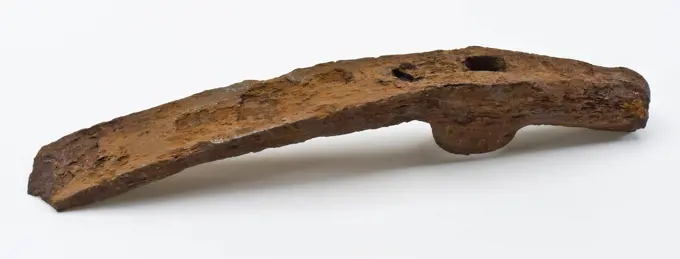
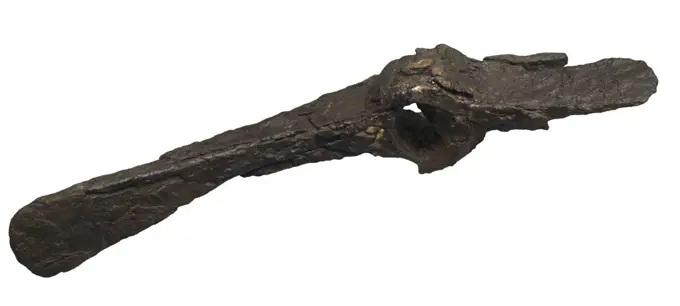
Carpenter's drawbar with drawbar on one side and hammer on the other side, carpenter drawbar drawbar tool kit ground find iron metal, forged drawbar. Narrow long blade Hammerhead with octagonal cross-section. Tube for the seat of the handle with half-rounded sides archeology Rotterdam rail tunnel wood working carpenter craft shipbuilding Soil discovery: rail tunnel Rotterdam.
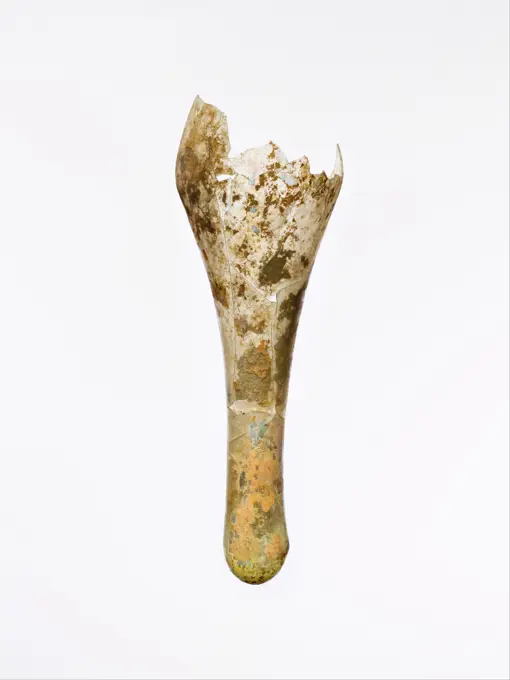
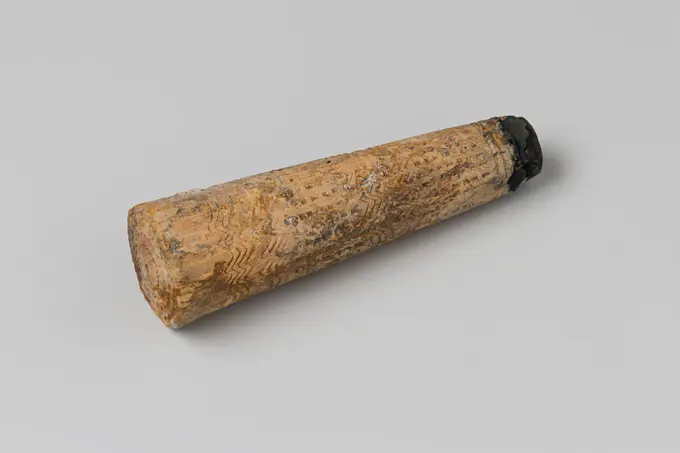
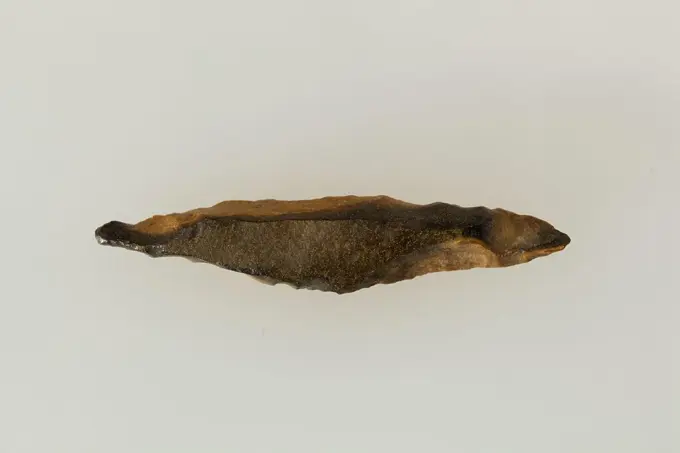
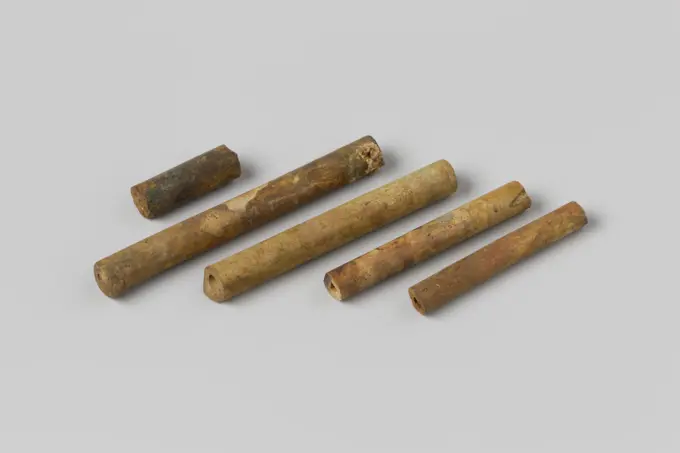
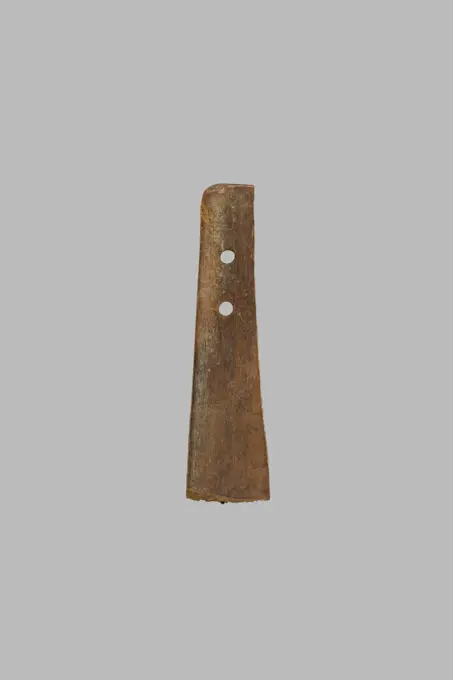
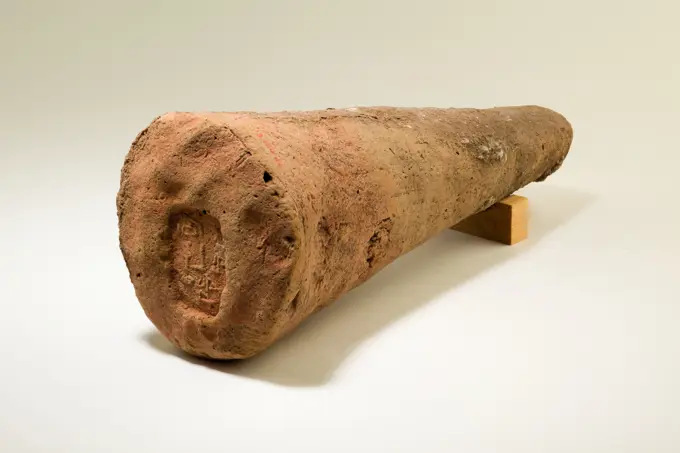
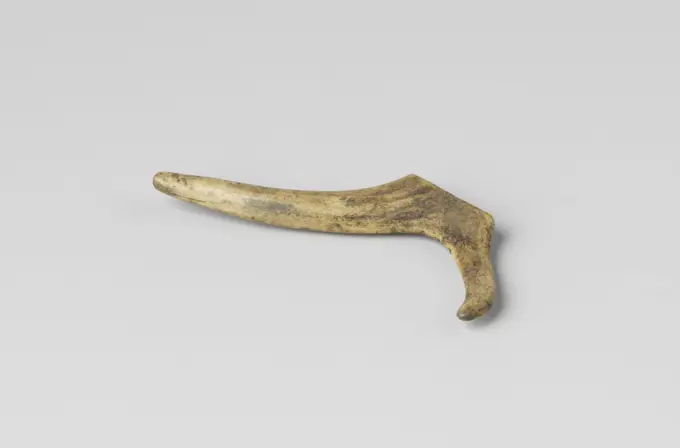
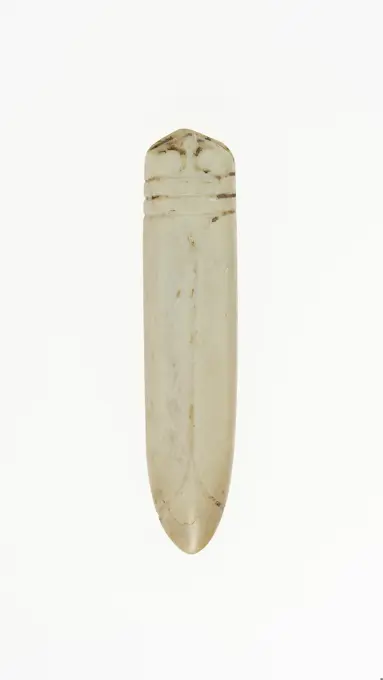
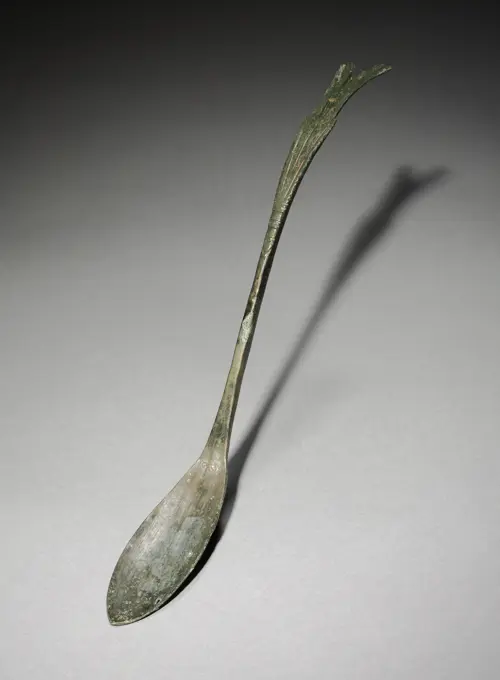
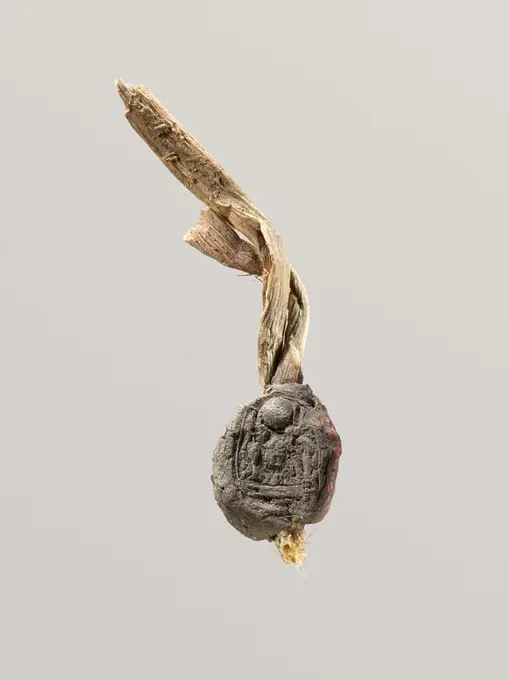
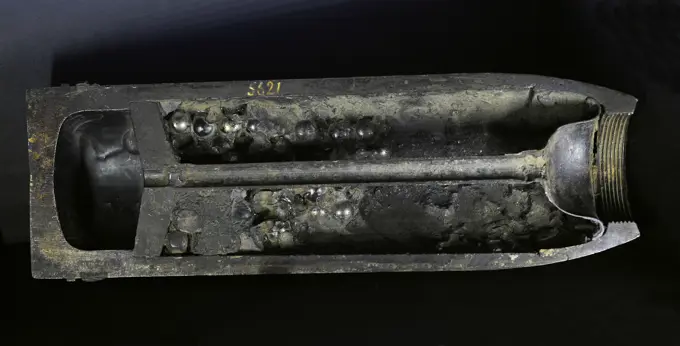
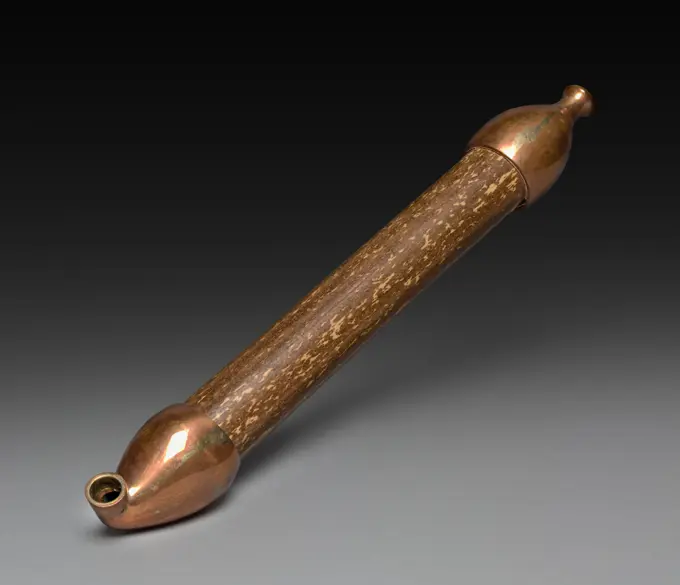
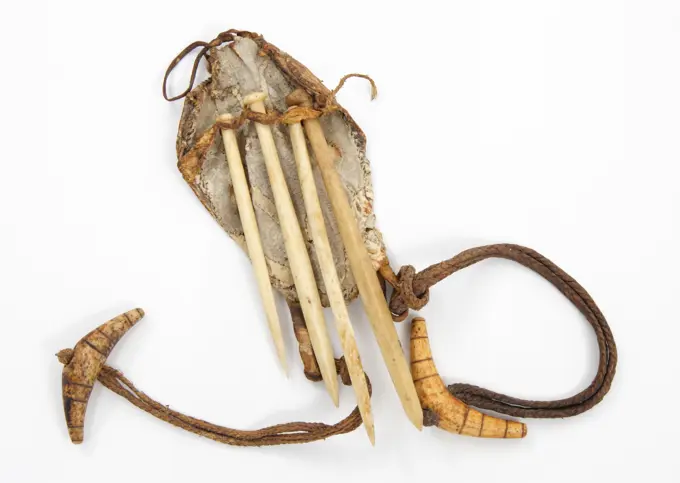
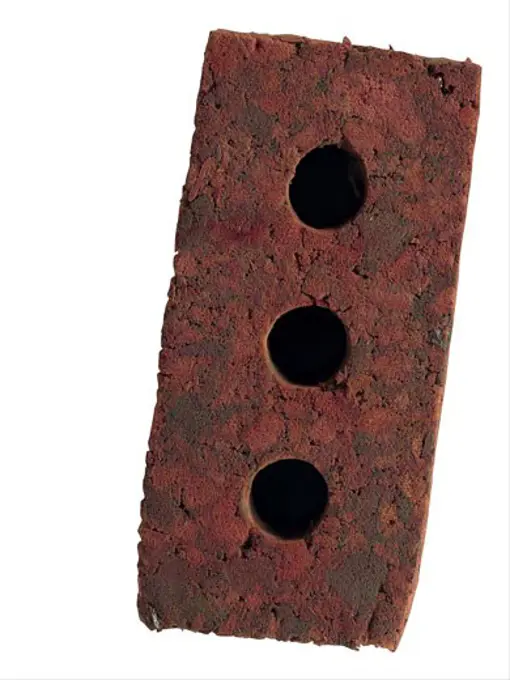
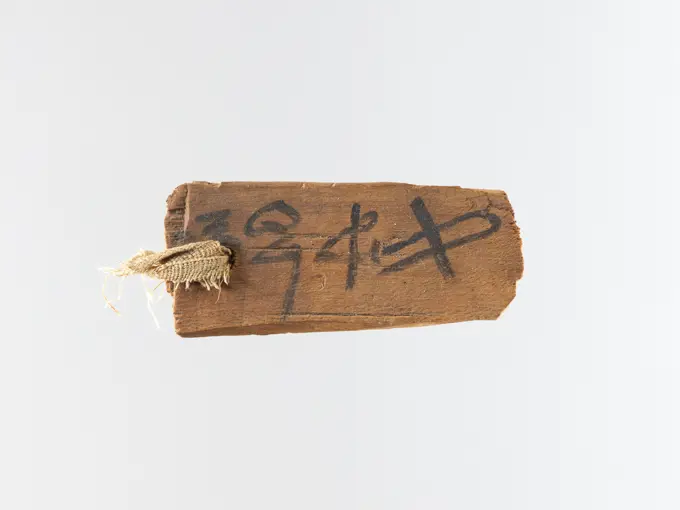
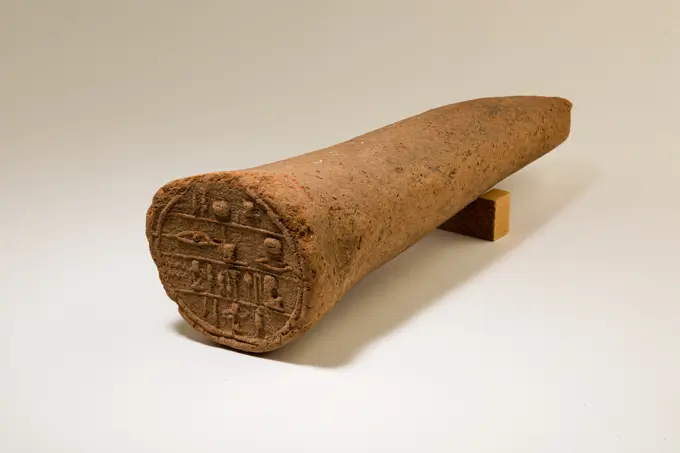
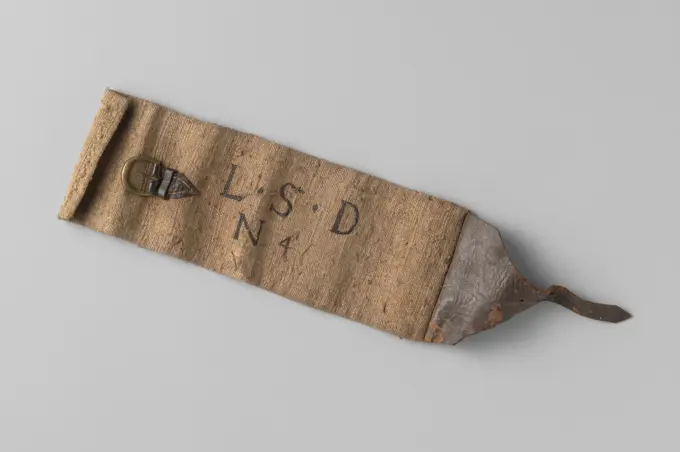
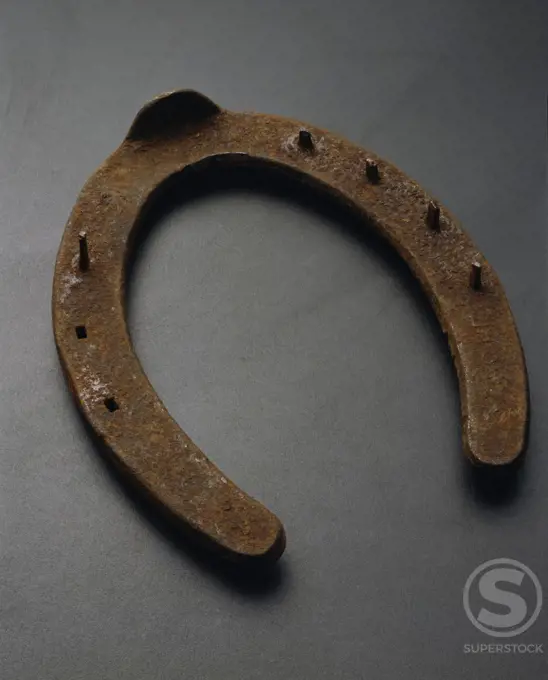
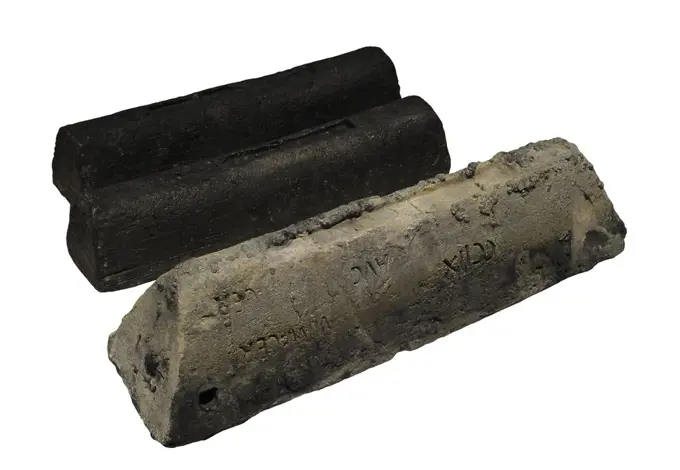
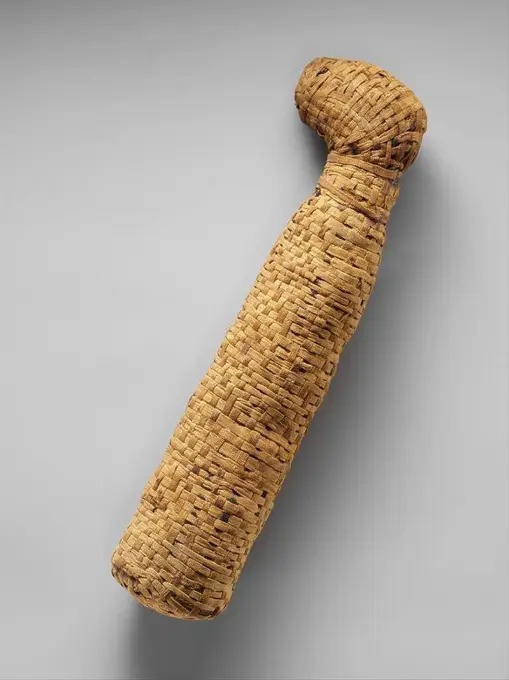
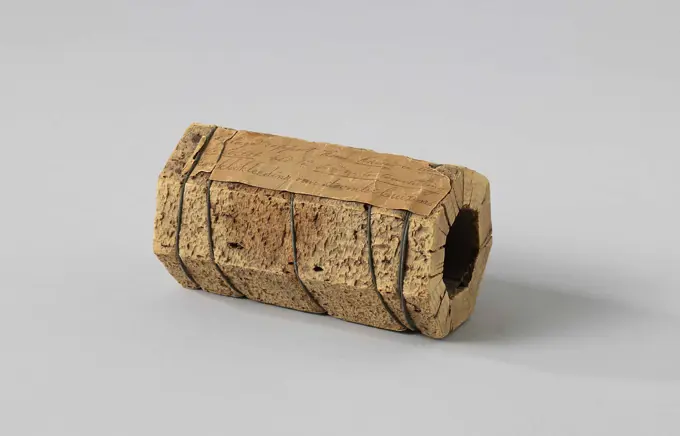
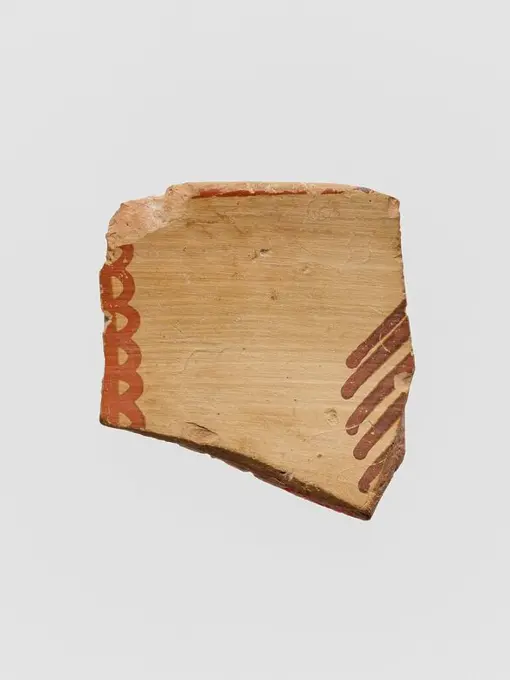
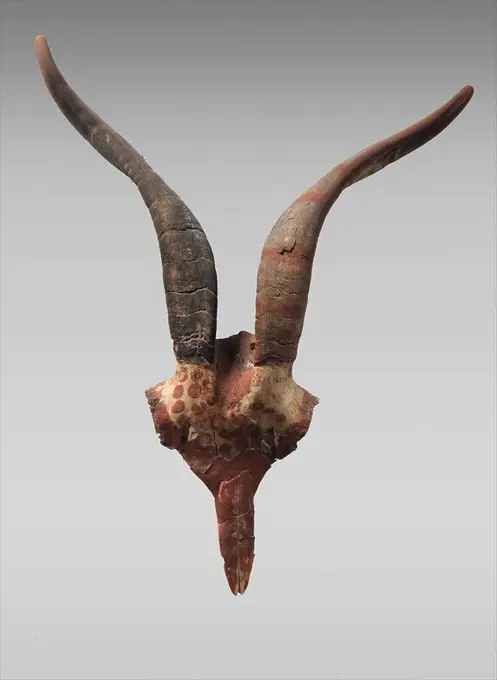
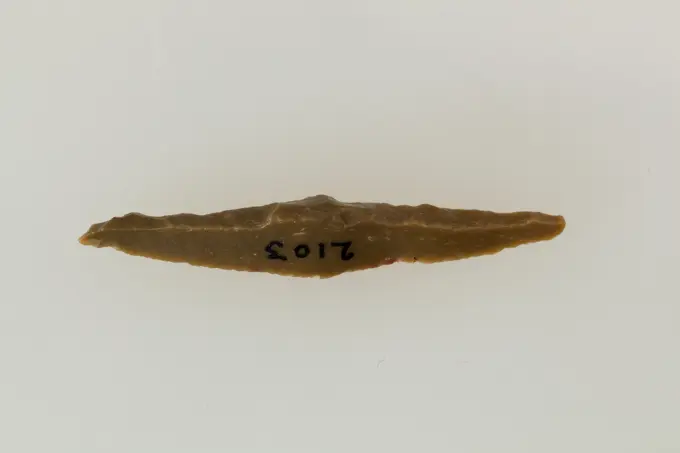
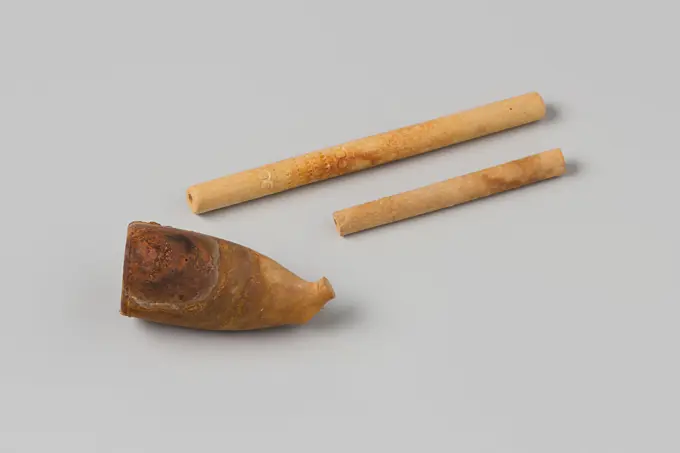
Brass instrument fragment from the wreck of the East Indiaman Hollandiaship, anonymous, 1700 - in or before 1743 wind instrument Wind instrument; fragment of bell of horn or trumpet; circular strip, broken, engraved lineair decoration and inscription (S)ATHLER IN LEIPZIG. Leipzig copper (metal)   SecondFitting in candle shape with electricity wire, 1750 Fitting has probably been part of the wall arm. Northern Netherlands (possibly)Netherlands (possibly) copper (metal) Fitting has probably been part of the wall arm. Northern Netherlands (possibly)Netherlands (possibly) copper (metal)Glass fusiform bottle fragment 3rd-4th century A.D. Roman Colorless with pale greenish yellow tinge.Fusiform body, curving in and then expanding slightly to thick, rounded bottom.Broken and repaired fragment, missing top half of body and rim; few bubbles; dulling and many patches of deep, iridescent weathering. Soil encrusted on interior.. Glass fusiform bottle fragment 239657Iron pick. From Castro de A Cida de Borneiro (Cabana de Bergantinos, La Coruna province, Galicia, Spain). Late Iron Age. Archaeological and History Museum (San Anton Castle). A Coruna, Galicia, Spain.Knife lift from the wreck of the East Indiesman Hollandia.knife, Handle, Cylindrical: tapering; ID. NG 1979-403H, Ferrule, ID. NG 1980-27H426.Tool. Date: ca. 3850-2960 B.C.. Museum: Metropolitan Museum of Art, New York, USA.Fragments Pipe stems from the wreck of the East Indians Hollandia, Anonymous, 1700 - in Or Before 1743  Pipe, stem; fragments, decoration id. NG 1980-27H501 inscription GVSCHUT, GOUDA. Netherlands pipe clay   SecondVascular firing stand ceramic;  VI-XIV century (501-00-00-1400-00-00);ceramics, gift (provenance), stands, art of IslamFragment of a mummy label Roman Period 30 B.C.-A.D. 364 View more. Fragment of a mummy label. 30 B.C.-A.D. 364. Wood. Roman Period. From Egypt, Middle Egypt, Oxyrhynchus (Bahnasa), EEF excavations 1904-05Funerary Cone of the Steward Abekh ca. 1550-1295 B.C. New Kingdom. Funerary Cone of the Steward Abekh 559205Rod of an antler, found in 1724 during work in the Hillegommerbeek, Anonymous, Before 1724 antler (material) Rod of a Reegewei. Netherlands horn (animal material)   HillegomBronze sickles and knifeGlass Fragment 14th century European. Glass Fragment. European. 14th century. Pot metal glass. Glass-StainedLead rolling from the wreck of the East Indians' t Vliegend Hart ,, 1700 - 1735 lead Tubes rolled plates. Most are black-gray, a single is silver gray. Two roles are marked. Lead role, roll or lead. Middelburg lead (metal)Door Bolt Third Intermediate Period (Kushite) ca. 712-660 B.C. or later View more. Door Bolt. ca. 712-660 B.C. or later. Wood. Third Intermediate Period (Kushite). From Egypt, Upper Egypt, Thebes, Khokha, Tomb MMA 830-A, MMA excavations. Dynasty 25 or laterCicada pendant 1300 BCE-900 BCE China. Jade .FRESH SALSIFY (tragopogon porrifolius) AGAINST WHITE BACKGROUNDStrigil blade Roman, Cypriot. Strigil blade 244348Hunting gunpowder unknown labelCover belonging to a hanging roll, anonymous, c. 1900 - c. 1990 Hoes of purple silk daamast, belonging to a hanging roll. With Chinese characters on the inside. China silk Hoes of purple silk daamast, belonging to a hanging roll. With Chinese characters on the inside. China silkPUNTAS DE LANZA DE HIERRO Y PLATA VIKINGAS.Fragment tobacco pipe. Fragment tobacco pipe with a horn and flower branch. Of the excavations at the Hofstede Arentsburg 1827-1831 under the supervision of professor Reuvens.Fragment Messenheft and copper from the wreck of the East Indians Hollandia, Anonymous, 1700 - in or before 1743 fragment Knife, handle, cylindrical: tapering; fragm, id. NG 1979-403H. Netherlands wood (plant material). copper (metal)   SecondSpoon with Fish-Tail Design, 918-1392. Korea, Goryeo period (918-1392). Bronze; overall: 26.5 cm (10 7/16 in.).Seal Impression Attatched to a Fiber Tie from Tutankhamun's Embalming Cache. Dimensions: Seal and tie: L. 12 cm (4 3/4 in.)Seal: L. 2.5 cm (1 in.); W. 2 cm (13/16 in.). Dynasty: Dynasty 18. Reign: reign of Tutankhamun. Date: ca. 1336-1327 B.C..This mud sealing has similar to that on 09.184.262. Museum: Metropolitan Museum of Art, New York, USA.Messen Lifts from the wreck of the East Indians Hollandia, Anonymous, 1700 - in Or Before 1743  Knife, handle, cylindrical: tapering; id. NG 1979-403H, ferrules, id. NG 1980-27H426. Netherlands wood (plant material). copper (metal)   SecondCarving; wood, paintedFragment ca. 1150-ca. 1250 European or Middle Eastern. Fragment 694273Fragment Pijpensteel from the wreck of the East Indians Hollandia, Anonymous, 1700 - in Or Before 1743  Pipe, stem; fragments, decorated. Netherlands pipe clay   SecondFirst World War (1914-1918). Cross-section of a shrapnel grenade. Germany. Latvian War Museum. Riga. Letonia. Lid of tobacco box from the wreck of the East Indians Hollandia, Anonymous, 1700 - in Or Before 1743 lid Tobacco box; fragm, lid, eroded, oval, plain, hinge damaged, fits to NG 1979-208H937. Netherlands copper (metal)   SecondFragment pipe head. Fragment pipe head. Of the excavations at the Hofstede Arentsburg 1827-1831 under the supervision of professor Reuvens.Celtic civilization, Austria. Artifacts: miner shoe and signal horn. From the saltmine at Hallstatt.Glass perfume bottle 2nd-3rd century A.D. Roman Colorless with pale blue green tinge.Rim folded out, over, and in, and flattened on top, with inner lip forming partial constriction to mouth; slightly funnel-shaped, cylindrical neck, with tooling marks around base; piriform body; thick, rounded bottom.Broken in many pieces, but rim and neck, and bottom remain complete; many bubbles; deep pitting and iridescent weathering; some gritty encrustation on interior.. Glass perfume bottle 239672Nail (England)TongsFragment of blowjobs, pipe heads and pipe stems from the wreck of the East India. The flying heart. One earthen pipeline whose head is damaged and the handle has been broken down (unreadable heel mark). Three heads with heel brand Gerkoonde 67 without stem and three broken heads with the same heel brand. Fourteen pieces of stem.Harpunen mit flachem Querschnitt Flat-lined harpoons, Arenaza cave, Galdames, Arkeologi Museoa, Museo Aqueologico, Bilbao, Bizkaia, Pais Vasco, Spain Copyright: xZoonar.com/Tolox 22846516Tobacco Pipe, early to mid-1800s. Japan, Edo period (1615-1868). Bamboo and copper; overall: 27 cm (10 5/8 in.).Handle from the wreck of the East Indians Princesse Maria, Anonymous, 1682 - 1686  Copper symmetrical, curved handle, thickening in the middle. Netherlands copper (metal)Toolbox -Mummy label Third Intermediate Period-Late Period ca. 1070-343 B.C. View more. Mummy label. ca. 1070-343 B.C.. Wood. Third Intermediate Period-Late Period. From Egypt, Upper Egypt, Thebes, Southern Asasif, Tomb of Meketre (TT 280, MMA 1101), later use, MMA excavations, 1920Funerary Cone of the Inspector of Scribes Ineni ca. 1550-1295 B.C. New Kingdom. Funerary Cone of the Inspector of Scribes Ineni 559221Bracelet made of coarse linen with leather buckle, marked: lsd.n.4. Bracelet made of coarse linen with leather buckle, marked: lsd.n.4.Wood texture in concretion from the wreck of the East Indied Flying Heart. The concretion has a print of wood. Concretion.Animal mummy from Egypt. Dated 300 BCDark brown insole. Brunette insole with impression ribbon.Ornament, Wreath; wood, gildedPart of a brick with rope print from the wreck of the East Indians' t Vliegend Hart, Anonymous, 1700 - 1735 brick (clay product) Part of a rectangular, yellow -brown brick with rope print. Brick.  brick (clay product)Close-up of a horseshoeHands. Culture: Cambodia. Dimensions: H. 7 3/4 in. (19.7 cm); W. 4 in. (10.2 cm). Date: 10th century. Museum: Metropolitan Museum of Art, New York, USA.Sole of leather shoe with flat nose and with sewing holes along edges, sole shoe footwear clothing part soil find leather, archeologyLead ingot. Found in a wrecked ship off the coast of the ancient city of Allon (Villajoyosa), coming from the mines of Linares-La Carolina, in Sierra Morena (Andalusia, Spain). The IMP GER AVG countermarks indicate that it was imperial property and the CCIIX countermark, its weight, 208 pounds (68 Kg). 1st century AD. Pecio Bou Ferrer. Villajoyosa (Alicante province, Valencian Community, Spain). National Archaeological Museum. Madrid. Spain.Gold hilt plate and collar from the Staffordshire Hoard. Dated 6th CenturySkeins Of Yarn (Scotland (Yarn)); Dyed by Deerfield Society of Blue and White Needlework (American, 1896-1926) (United States); linenElement of aHeaddressThin ring of copper or bronze, irregular in shape, ring ornament clothing accessory clothing soil find bronze copper metal, Thin ring of copper or bronze Very irregular in shape. Possibly decorated or heavily damaged archeology Rotterdam rail tunnel adorn connections Soil discovery: Railway tunnel 1988-1993.Twelve Arrows. Culture: Tibetan. Dimensions: L. 29 1/2-30 1/2 in. (74.9-77.5 cm) each. Date: 16th-18th century. Museum: Metropolitan Museum of Art, New York, USA.Sacred animal mummy of a cat. Dimensions: H. 34.4 cm (13 9/16 in.); W. 9.5 cm (3 3/4 in.); D. 5.6 cm (2 3/16 in.). Date: ca. 400 B.C.-100 A.D..Animal cults The Egyptians considered certain individual animals to be living manifestations of a god, such as, since earliest times, the Apis bull . Those individuals were duly mummifed when they died and buried for eternal life, then replaced by another single living manifestation. During the first millennium BC, many multiples of animals associated with certain gods were specially raised in temple precincts as simultaneous avatars of that god and then mummified in large contingents and deposited in catacombs for eternal life. The ancient perception of these multiples, the evolution of the practice in this direction, and variations within the practice are not easily accessible to us. But the hundreds of thousands of often elaborately prepared animal mummies found in catacombs and other locales testify to its ancient resonance. Animal mummieSAINTE MAURE CHEESE, A FRENCH CHEESE MADE FROM GOAT'S MILKSample of Cork Insulation for Steam Pipes. Round metal tube with a cork upholstery, resulting in a sieving tube. The cork segments are held together with iron wire. This monster comes from the World Exhibition in Paris in 1867.A collection of objects that relates to the velvet industry in Naarden, Anonymous, 1735 - 1774 A collection of objects that relates to the velvet industry in Naarden. Among other things, fabrics, rinsing and velvet cutters.  wood (plant material). copper (metal). iron (metal). yarn   Naarden A collection of objects that relates to the velvet industry in Naarden. Among other things, fabrics, rinsing and velvet cutters.  wood (plant material). copper (metal). iron (metal). yarn   NaardenBound Enemy. Egypt, Middle Kingdom - Late Period (2061 - 333 BCE). Sculpture. Plaster, paintedSheet, linen mark, medium spin, medium weave. Dimensions: L. 492 cm (193 11/16 in); w. 125 cm (49 3/16 in). Dynasty: Dynasty 18. Reign: reign of Thutmose II-Early Joint reign. Date: ca. 1492-1473 B.C.. Museum: Metropolitan Museum of Art, New York, USA.Hammered Copper Half Dome 8th-mid-16th century Peru; north coast (). Hammered Copper Half Dome 309027Batik Tool, from a set of eight, 3 1/8 x 7/16 x 3/16 in. (7.94 x 1.11 x 0.48 cm), Metal, bamboo, string, ChinaTusk from a wild boar, found in 1724 when working in the Hillegommerbeek. Curve sliply split tusk from a wild boar.TutankhamunÍs sandal decorated with bound prisoners and sema-tawy symbols by Ancient Egypt  / The Egyptian Museum, Cairo/ 14th cen. BC/ Egypt/ Papyrus/ Applied Arts/ ObjectsKris Sheath Parts and Mounts 16th-19th century Javanese. Kris Sheath Parts and Mounts 660026Pottery Flute and Rattle late 15th century Mexican. Pottery Flute and Rattle 501843Karte von Panama auf rostigem Metall - Map of Panama on rusty metal Karte von Panama auf rostigem Metall - Map of Panama on rusty metal Copyright: xZoonar.com/lantapixx 10407542Arrowheads, needles, hooks and harpoons. Culture: Japan. Dimensions: W. 3/8 in. (1 cm); L. 2 1/2 in. (6.4 cm). Museum: Metropolitan Museum of Art, New York, USA.Pipe and fragments. Pipes. An intact Earthen Goudse Pijp with the heel brand crowned ws and decoration on the handle. Nine pieces stem, two with decorations.Box in the Form of Asparagus (lid), c. 1765. Possibly by Sceaux Factory (French, active 1748-66). Tin-glazed earthenware (faience) with enamel decoration; overall: 6.4 x 17.8 x 8.3 cm (2 1/2 x 7 x 3 1/4 in.).chewed on pencilHandles for bronze and iron tools, found in East Yorkshire. Dated 9th CenturyA closeup image of a gloved hand of an individual In the image, we see a closeup of a hand adorned with a glove, offering a detailed perspective Copyright: xZoonar.com/FernandoxGenzorx 21921583Handle 8th-9th century. Handle 448738Terracotta rim fragment with curvilinear motifs. Culture: Mycenaean. Dimensions: Other: 2 1/4 x 2 1/8 in. (5.7 x 5.4 cm). Date: ca. 1400-1300 B.C..Rim fragment with curvilinear design. Museum: Metropolitan Museum of Art, New York, USA.fish tail and heat smoked fish tail and head isolated on white Copyright: xZoonar.com/RuslanxNassyrovx 3886613jute ropes with knot isolated on white backgroundBucranium. Dimensions: h. of skull 16 cm (6 5/8 in); w. of antlers 28 cm (11 in). Dynasty: Dynasty 14-17. Date: ca. 1640-1550 B.C.. Museum: Metropolitan Museum of Art, New York, USA.Fragment blowjob from the wreck of the East Indieschief Hollandia. Pipe, bowl, healermark illegible; fragment.Ribbon of cream -colored mesh of 15 meters, c. 1900 - c. 1915 Ribbon of cream -colored mesh for 15 meters. Nijmegenfrance silk. Ribbon of cream -colored mesh for 15 meters. Nijmegenfrance silk.old rusty horseshoe on a wood backgroundDrum 19th century Native American (Hopi, Shosonean family). Drum 501207Miniature Litter Section 11th-late 15th century Chimú or Chancay. Miniature Litter Section 309217Marijuana Joint on Black Background, Cannabis, Weed JointSet of Pendants Ending in a Bull's Head, 185-72 BC. India, Sunga Period (185-72 BC). Gold repoussé with granulation;Comb ca. 1295-1070 B.C. New Kingdom, Ramesside. Comb 551958Assorted sticks arranged by a child during Nature PlayScored Poppy Seed PodsTool ca. 3850-2960 B.C. Predynastic Period. Tool. ca. 3850-2960 B.C.. Flint. Predynastic Period. From Egypt, Fayum, camp II (CII), BSAE/Caton-Thompson excavations, 1924-26Fragments of pipe heads and pipes from the wreck of the East Indians' t Vliegend Hart, WS, 1700 - 1735  Four heads, two of which are with a piece of stem, from earthen Goudse pipes with heel brand ws, blue -white. 33 pieces of stem most blue -white in color. Fragments of Bowls and Stems. Gouda pipe clayItaly, Marche, Novilara, Picene warrior, funerary trousseauBlowjob head and fragments blowjobs from the wreck of the East India hollandia.pipe, Bowl, Heelmark: Crowned 82; No HSM.Papyrus Lid from Tutankhamun's Embalming Cache ca. 1336-1327 B.C. New Kingdom. Papyrus Lid from Tutankhamun's Embalming Cache. ca. 1336-1327 B.C.. Papyrus fiber. New Kingdom. From Egypt, Upper Egypt, Thebes, Valley of the Kings, Embalming Cache of Tutankhamun (KV 54), Davis/Ayrton excavations, 1907-08. Dynasty 18BOMBA DE MANO BREDA FABRICADA EN ITALIA. Location: PRIVATE COLLECTION. Laguardia. ALAVA. SPAIN.Skin Working Tools, Eskimo Art, USA, Washington DC, Smithsonian Institution (National Museum of Natural History)