Antique Knives and Tools

A selection of historical knives with wooden handles and archaeological significance, showcasing rustic design and aged materials.
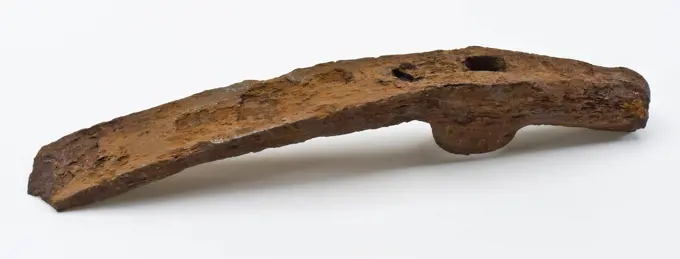
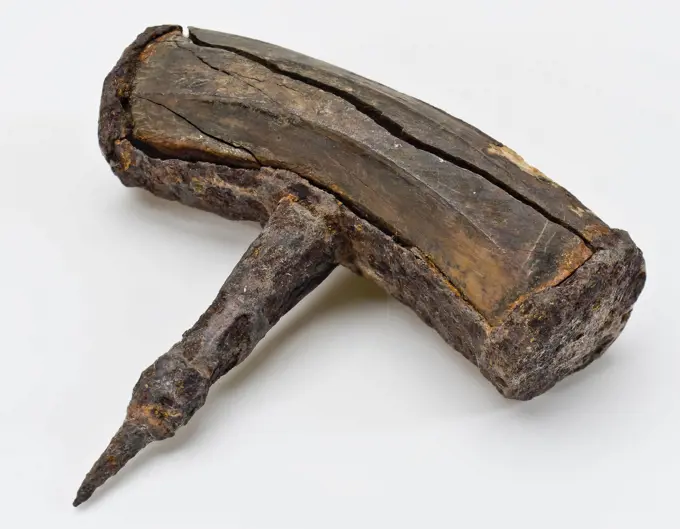
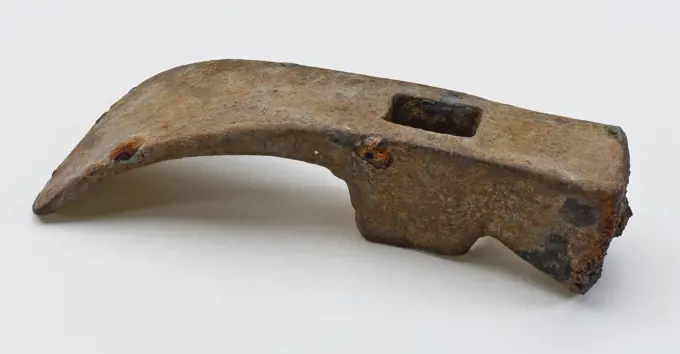
Carpenter's drawbar with drawbar on one side and hammer on the other side, carpenter drawbar drawbar tool kit ground find iron metal, forged drawbar. Narrow long blade Hammerhead with octagonal cross-section. Tube for the seat of the handle with half-rounded sides archeology Rotterdam rail tunnel wood working carpenter craft shipbuilding Soil discovery: rail tunnel Rotterdam.
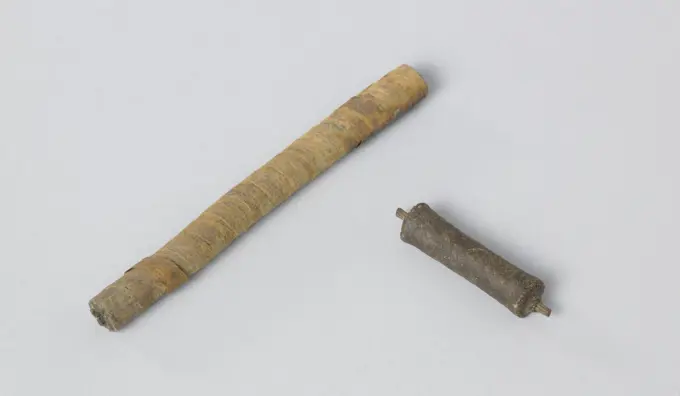
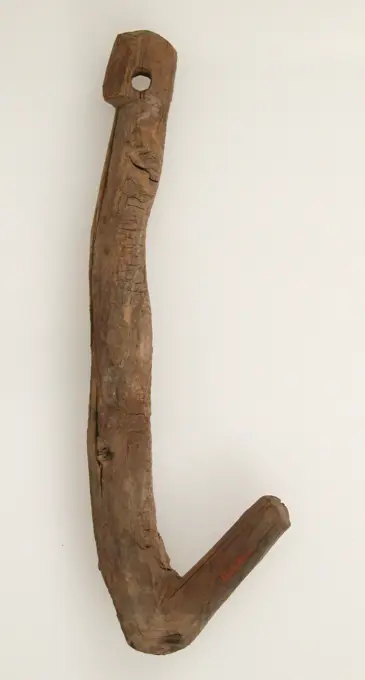
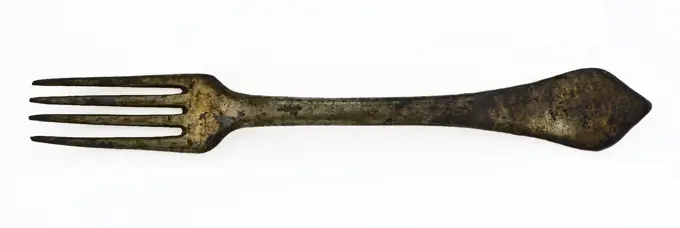
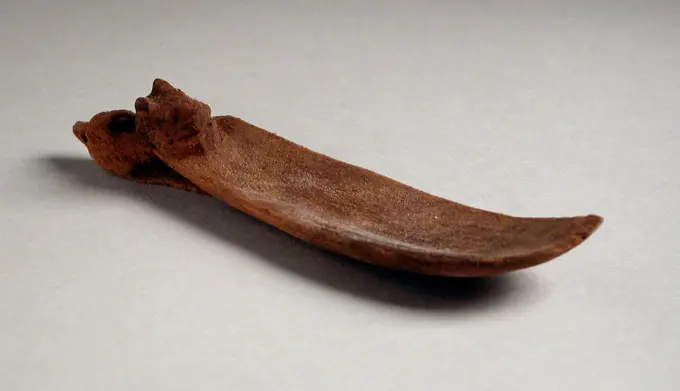
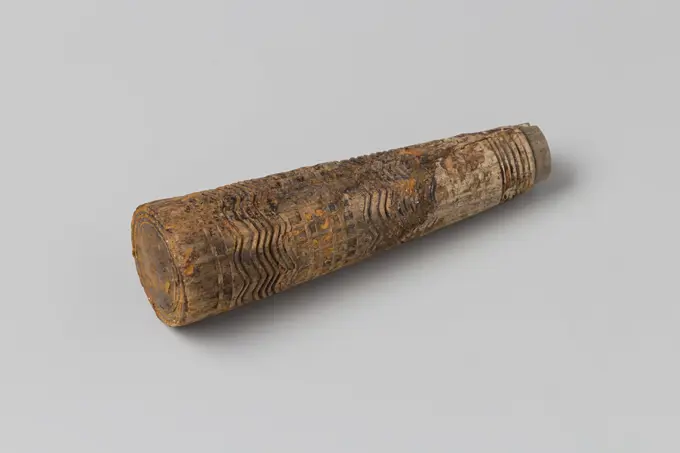
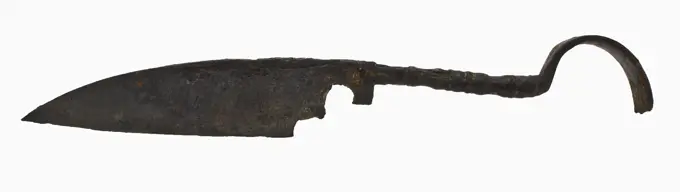
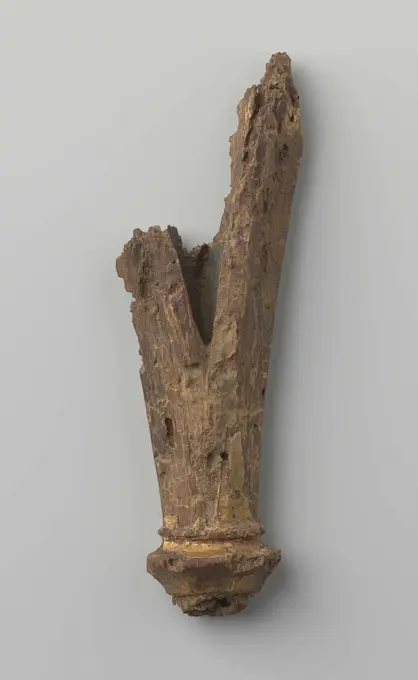
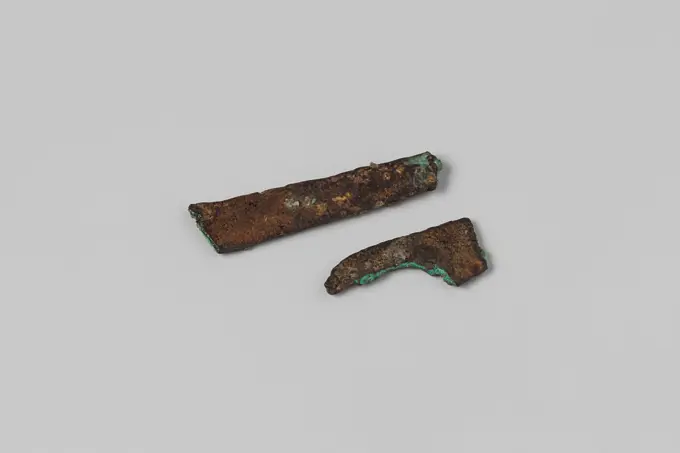
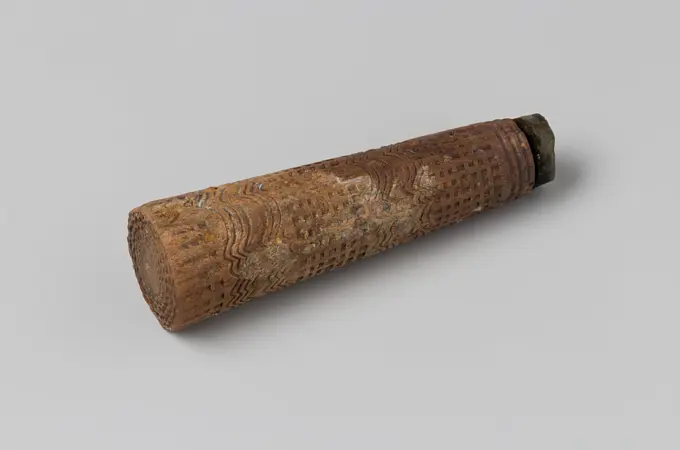
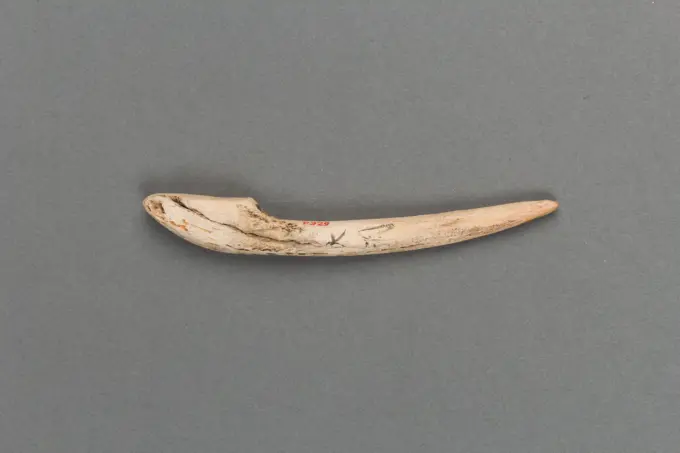
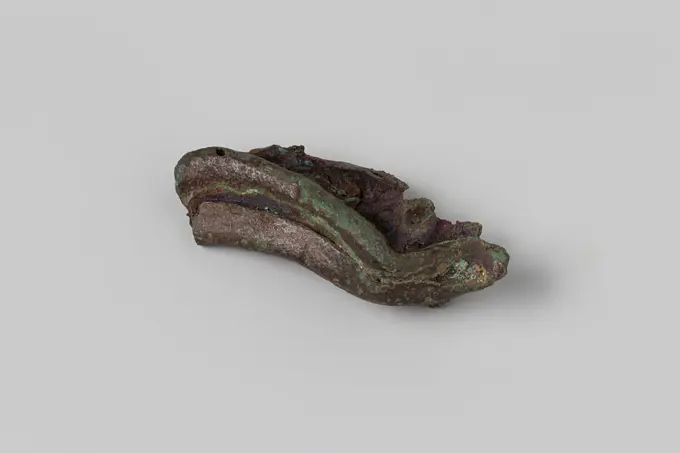
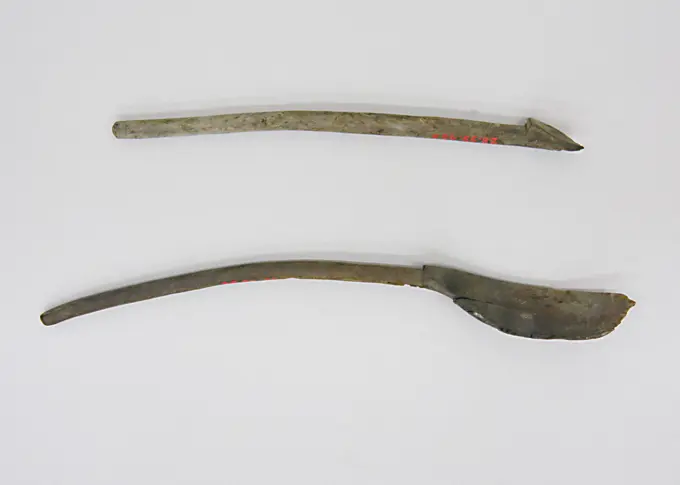
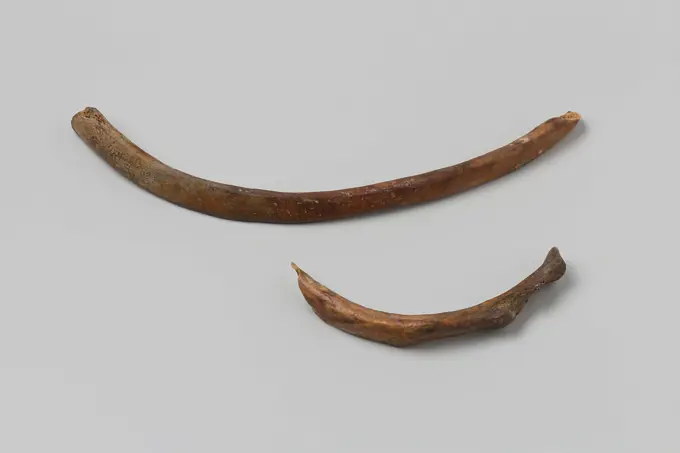
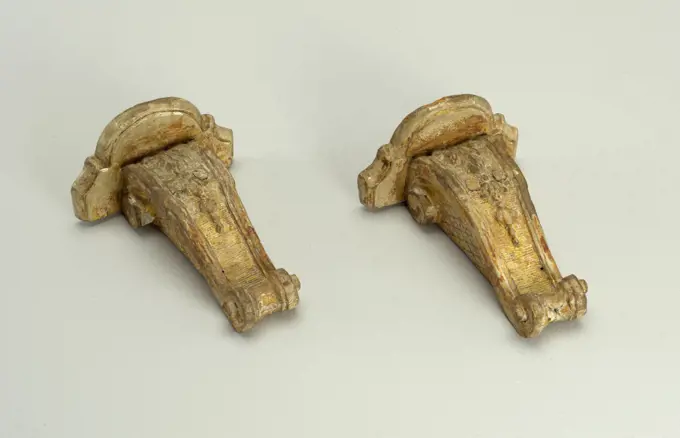
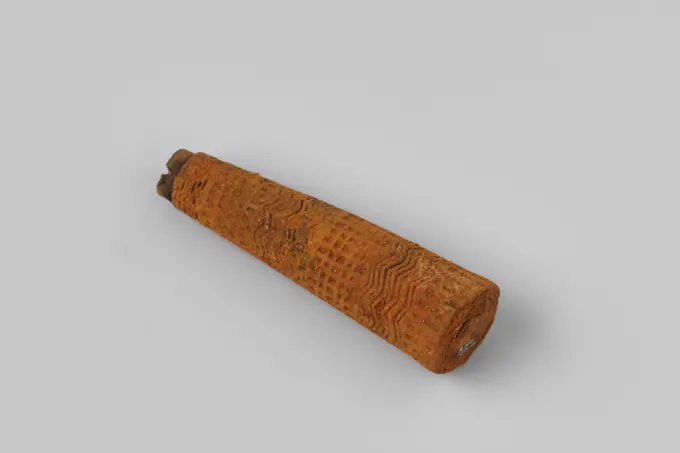
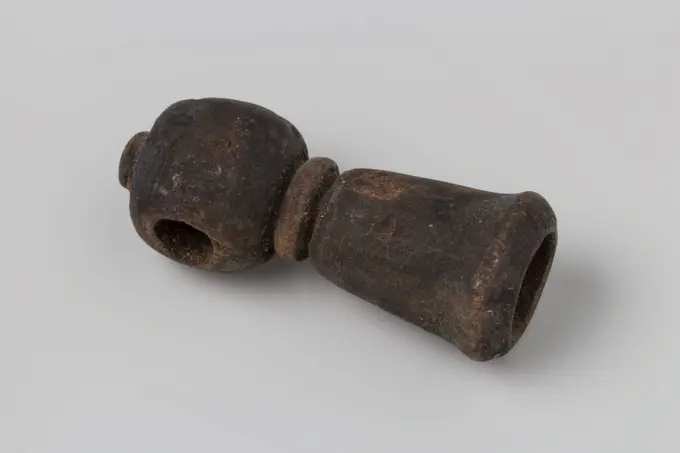
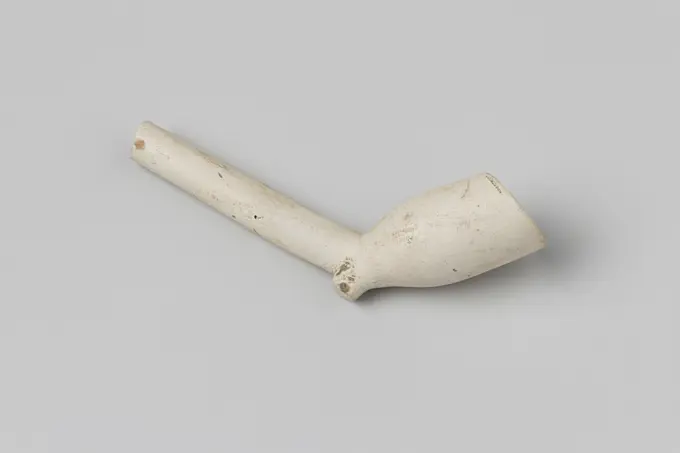
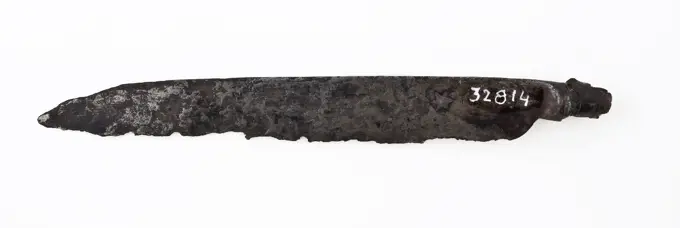
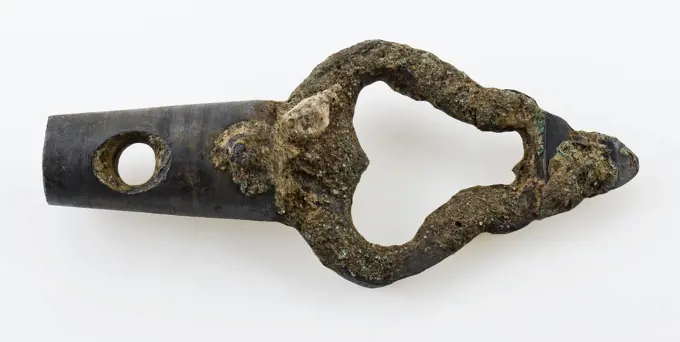
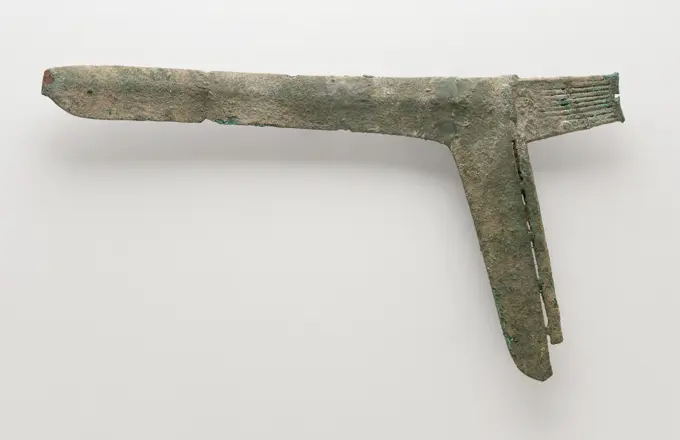
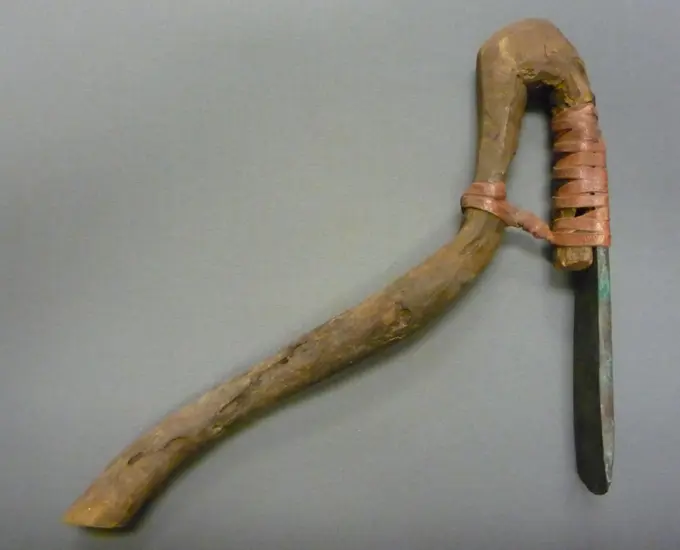
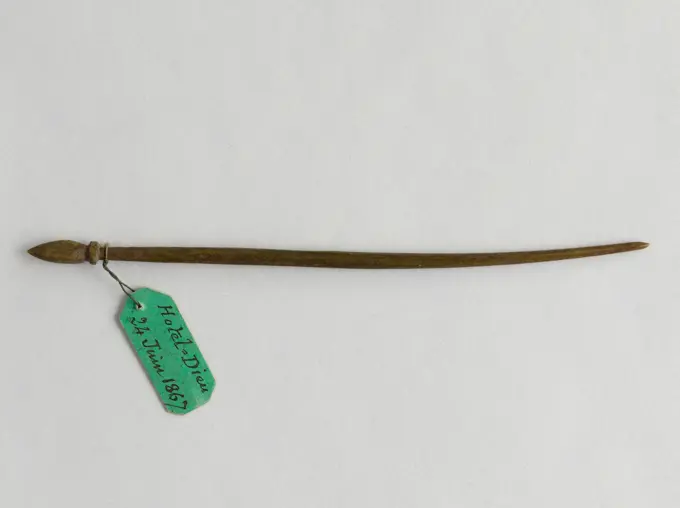
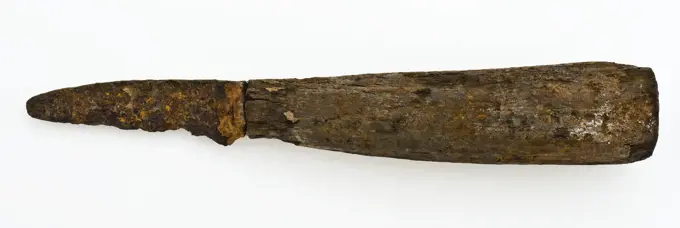
Knife with short blade and wooden handle, knife cutting tool soil find iron wood metal, Short blade with forged lifting guard narrowed angel that runs to end of handle. Confirmed by means of turned-down sting and hood archeology Rotterdam rail tunnel cutting food Soil discovery: rail tunnel Rotterdam.Knife lift from the wreck of the East Indiesman Hollandia.knife, Handle, Cylindrical: tapering; ID. NG 1979-403H.Messenheft from the wreck of the East Indians Hollandia, 1700 - in or before 1743  Knife, handle, cylindrical: tapering; id. NG 1979-403H, ferrules, id. NG 1980-27H426. Netherlands wood (plant material)   SecondBow -Excerpt of copper from the wreck of the East Indians Hollandia, 1700 - in or before 1743 fragment Varied parts or fragments, unidentified and miscellaneous parts or fragments; fragm. Netherlands copper (metal)   SecondIron with Gold Terminals second half of the 8th-second half of the 10th century Indonesia (Java). Iron with Gold Terminals. Indonesia (Java). second half of the 8th-second half of the 10th century. Iron bar with gold. Central Javanese period. MetalworkFragment Glass Steel From the Wreck of the East Indians Hollandia, Anonymous, 1700 - In Or Before 1743  Varied parts or fragments, shafts; fragm, broken; flat in section, slightly in tapering, spatula-shaped slightly curved end. Netherlands glass   SecondKnife with narrow blade and hexagonal wooden handle, has knife cutlery soil find iron wood metal, archeology foodDoor knocker with woman figure ending in dolphin head. An iron-driven door knocker, representing a woman, ending in a dolphin head.Carpenter's drawbar with drawbar on one side and hammer on the other side, carpenter drawbar drawbar tool kit ground find iron metal, forged drawbar. Narrow long blade Hammerhead with octagonal cross-section. Tube for the seat of the handle with half-rounded sides archeology Rotterdam rail tunnel wood working carpenter craft shipbuilding Soil discovery: rail tunnel Rotterdam.Sample of Telegraph Cable for Mines, anonymous, 1865 - 1875 telegraph cable. sample Copper wire of seven threads in a thick insulating layer of a black plastic and paper. unknown copper (metal). paper.Lifting Hook 580-640 Coptic. Lifting Hook. Coptic. 580-640. Wood. Made in Thebes, Byzantine Egypt. Woodwork-MiscellanyAwl with curved handle, awl tool equipment soil finds iron metal bone wood, cut forged Prime Angle pin with sharp point. Bent handle of wood or bone archeology Rotterdam pricking stringing make holes leather worker Soil discovery Rotterdam.Klem uit het wrak van de Oost-Indiëvaarder Hollandia. Clamp; eroded; straight timber, curved upper side, flat underneath, rectangular ends, with 3 circular holes, on underside rectangular central notch.Fork with four teeth and flat handle with diamond-shaped end, fork cutlery soil find tin metal, cast Fork with four teeth handle end triangular Reverse handle struck mark: angel with in the right hand sword standing in an oval archeology Rotterdam rail tunnel food Soil discovery, Rotterdam rail tunnel.Wooden Spoon Fragment with Forepart of a Crouching Lion. Egypt, New Kingdom (1569 - 1081 BCE). Furnishings; Serviceware. WoodSweatwoman (attributed title). Bronze. Carnavalet museum, history of Paris.Wooden Steel from the wreck of the East Indies Hollandia, Anonymous, 1700 - in Or Before 1743  Varied parts or fragments, shafts; eroded; sim. 80H934. Netherlands wood (plant material)   SecondMessenheft from the wreck of the East Indians Hollandia, Anonymous, 1700 - in Or Before 1743  Knife, handle, cylindrical: tapering; id. NG 1979-403H, ferrules id. NG 1980-27H426. Netherlands wood (plant material)   SecondFile, flat without notch. Fly, flat and without handle, exhibits parallel rows of sharp notches on both sides.Pin, eyelet type. Pin, eyelet type 244255Material sample -Fragment of drilling iron, flattened on one end and at the other end with slot. Fragment of a drill, a slot (like a guts) on one end (like a gout) and rectangular to the other end.Fragments or parts from the wreck of the East Indians Hollandia, Anonymous, Before 1743 fragment. part Varied parts or fragments, bar(-shaped) fragments; squashed, bent, eroded; circular in section; tapering, both ends flattened: possibly handle fragm. Netherlands copper (metal)   SecondTest piece with balein. Test piece with balein; One of the short sides is serrated.Decorative batter from the wreck of the East India Hollandia. Fitting, decorative fitting or fragment; Strip, flat, straight, relieved multiple-dreeded pattern.Ballastlood from the wreck of the East Indians Hollandia, Anonymous, 1700 - in or Before 1743  Ingot; (1) sim. 70-267H, bent (80l, 16w, 6.8h, underside 14w), corroded, no marks visible. Netherlands lead (metal)   SecondArrowheads, needles, hooks and harpoons. Culture: Japan. Dimensions: W. 1/2 in. (1.3 cm); L. 2 1/4 in. (5.7 cm). Museum: Metropolitan Museum of Art, New York, USA.Knife lift from the wreck of the East Indiesman Hollandia.knife, Handle, Cylindrical: tapering; ID. NG 1979-403H, Ferrules, ID. NG 1980-27H426.Dagger of the Hallstatt Culture. Iron Age. Decorative Arts. SWITZERLAND. Bern. Bernese Historical Museum. Proc: SWITZERLAND.Hifts. Lift with loose prime (4-b); two loose (degraded) pieces; Circuit in the lifting, at thickest point decorated with two stripes.Perforated corner. Neolithic. Size and polishing. Coming from: Menilmontant. Paris, Carnavalet museum. Age Polie Pierre, Piedy, Neolithic corner, tool, polishing, prehistory, prehistoric, sizeFragments of copper from the wreck of the East Indians Hollandia, 1700 - in Or Before 1743 fragment Varied parts or fragments; unidentified and miscellaneous parts or fragments. Netherlands copper (metal)   SecondMessenheft from the wreck of the East Indians Hollandia, Anonymous, 1700 - in Or Before 1743  Knife, handle, cylindrical: tapering; id. NG 1979-403H. Netherlands wood (plant material)   SecondWide, curved blade of chopping knife with narrowed hook, on end of hook, chopping knife knife cutting tool soil find iron metal, forged Heavy blade of chopper. Wide and rather thick blade with curved end Narrowed angel with bent hooked end archeology Rotterdam rail tunnel cutting food food preparation nutrition slaughter meat loaves soil find: rail tunnel Rotterdam.Fish net needle. Dimensions: l. 8.5 cm (3 3/8 in). Dynasty: Dynasty 19-20. Date: ca. 1295-1070 B.C.. Museum: Metropolitan Museum of Art, New York, USA.Lifting squeeze shear, pinch cutter scissors cutting tool soil find iron metal, archeology Rotterdam cut Soil discovery Rotterdam.Kraagsteen uit het wrak van de Oost-Indiëvaarder Hollandia. Constructional elements, bracket; knee-shaped: rectangular in section, straight reverse, stepped flat upper end, front curving, tapered downward, broken off, pierced, concreted; id., stepped end broken off, rectangular hole.Messenheft from the wreck of the East Indians Hollandia, Anonymous, 1700 - in Or Before 1743  Knife, handle, cylindrical: tapering; id. NG 1979-403H. Netherlands wood (plant material). copper (metal)   SecondPrinting Roller (USA); Produced by F. E. James Co.; wood, brass, felt; 55 cm (21 5/8 in.) diam. 13 cmQuiver -Messchede. Wooden meschede with a pewter or drawstring (inlay) for two knives, one of which is fast.Kuipers drawbar with wide drawbar and heavy hammer rear, coopers drawbar drawbar tool equipment ground find iron metal, forged Drawbar with curved top and heavy hammer head. Hammer head with large face flat top and slanted bottom. Tube with rectangular hole for seat stalk Kuipersdissel archeology Rotterdam rail tunnel wood processing craft cooper cooper cooper barrel tubing Soil discovery: rail tunnel Rotterdam.Spatula Roman. Spatula 250612 Roman, Spatula, Bronze, Other: 6 11/16 in. (17 cm). The Metropolitan Museum of Art, New York. Rogers Fund, 1917 (17.230.79)Model of a Scribes Palette and Tablet ca. 2051-1981 B.C. Middle Kingdom Wooden models (such as 20.3.11) can include figures of scribes. This model scribes palette and tablet might have belonged to such a figure.. Model of a Scribes Palette and Tablet 545286Fragment blowjob from the wreck of the East India Hollandia.Pipe, Bowl, Healmar: Fish, Flounder; Fragm, 2HSM1.4.Messchede, 1700 - 1800 Wooden knife with a pewter or tough batter (insert) for two knives, one of which is stuck.  wood (plant material). tin (metal). lead (metal) Wooden knife with a pewter or tough batter (insert) for two knives, one of which is stuck.  wood (plant material). tin (metal). lead (metal)Fragment of earthenware handle, glazed, double wavy edge, handle fragment soil find ceramic earthenware glaze lead glaze, w 6.4 hand turned hand shaped glazed fried Fragment of handle or ear Long curved shape decorated with an outstretched ridge over the top amid two wavy lines on the sides. Sloppily attached to the top of an unknown object Red shard entirely covered with lead glaze. Three outstretched holes under the adhesion colander archeology Rotterdam Stadscentrum Stadsdriehoek Mariniersweg indigenous earthenware carry the Mariniersweg 1983 foundations.Fragment (from the altar cabinet); (possibly) belonging to the retable of Soest ..Knife lift from the wreck of the East Indiesman Hollandia.knife, Handle, Cylindrical: tapering; ID. NG 1979-403H, Ferrules, ID. NG 1980-27H426.Fragment of buyer from the wreck of the East India Hollandia.parts or artifacts; eroded fragments: Materials; Copper.Conical brass tube with hole in side wall, artifact soil found brass metal, Hollow tapered pipe with hole in the side wall. Possible part of spigot or cuff for reinforcement of wood archeology Rotterdam rail tunnel Soil discovery: trajectory Rotterdam rail tunnel.Sample or stem. Sample of Heatons steel, made of medium iron. It is a rod with square diameter of ½ English thumb, the ends aborted or torn.Bar of a deer from a deer found in 1724 when working in the Hillegommerbeek. Rod of an antler from a deer. The points of the crown are partly demolished.Shofar, anonymous, c. 1600 - in or before 1897 musical instrument. wind instrument. horn. shofar Sjofar in use at the Jewish worship, a (usually) decorated Ramshoorn. This horn is only slightly sanded, yellow -brown in color and in the shape of a pipe. Netherlands (possibly) horn (animal material)Bracelet with lion mask terminals ca. 8th-7th century B.C. Iran. Bracelet with lion mask terminals 322566Ritual wine scoop with monster heads and a dragon..Knife lift from the wreck of the East Indiesman Hollandia.knife, Handle, Cylindrical: tapering; ID. NG 1979-403H, Ferrule, ID. NG 1980-27H426.With rubber stuffed form of handle in concrete from the wreck of the East Indied Flying Heart. The concretion has ever formed around a kind of round tube. The object could have been from metal, wood, but also of fiber. A rubber casting has been made. In the event that the object has been of metal, it has probably been a handle of, for example, a bucket.Harpoon head Japan The Jmon period is the earliest period in Japanese history, lasting from roughly 14,000 to 300 BCE. The Jmon people were primarily hunter-gatherers, hunting land animals and gathering vegetables and nuts on the land as well as hunting and fishing at sea. Harpoon heads such as this one testify to the importance of seafood in the diets of some Jmon communities, especially those close to the sea. Fish bones found at Jmon archaeological sites indicate that the Jmon hunted fish not only close to the shore but also farther out in the open sea, where larger fish could be caught. There is even evidence that the Jmon ate pufferfish, a poisonous fish considered a delicacy in modern Japan.. Harpoon head. Japan. Bone. Final Jmon period (ca. 1000-300 B.C.). BoneFragment of buyer from the wreck of the East India Hollandia.parts or artifacts; eroded fragments: Materials; Copper.Spoons (2) dated 1270 possibly French, possibly German. Spoons (2). possibly French, possibly German. dated 1270. Wood. MiscellaneousFragment of a musket size. Musketmaat, fragment consisting of brass underside with earphones and cord. The cap is missing. Default description musketmaat: brass with leather covered. Equipped with two eyelets on the side to by doing a cord with which the lid was held and the size was hung on the bone core. A muskettle walker had twelve powder buds and a bag with bullets. The powder buds contain a carefully disposed amount of gunpowder for one shot.Snow knife -Human ribs from the wreck of the East Indied Flying Heart. Two pieces of human rib. Human Remains.Bracket, wood, carved and gilded, Italy, late 18th century, Decorative Arts, BracketMessenheft from the wreck of the East Indians Hollandia, Anonymous, 1700 - in Or Before 1743  Knife, handle, cylindrical: tapering; id. NG 1979-403H, ferrules id. NG 1980-27H426. Netherlands wood (plant material)   SecondWooden object from V.O.C. ship De 'Witte Leeuw', Before 1613 object Wooden object. Possibly button rod button. Consisting of a tapered part and a sphere with a button connected by a ring, everything cut out of one piece. A hole on the bottom and a hole in the sphere.  wood (plant material)   Sint-HelenaFragment of a tobacco pipe ...Hammered Copper Claw Ornament 8th-mid-16th century Peru; north coast (). Hammered Copper Claw Ornament 309004Blade of knife, narrow with pointed end, blade knife cutlery soil find steel metal, archeologyHufeisen old rusty horseshoe in front of white background copyright: xzoonar.com/simonevoigtx 2224043Copper stopper with harp-shaped handle, stop closure part soil find bronze copper metal, cast sawn Gray metal stop Conical pin with bore hole and small pin as end stop Handle in the shape of harp archeology tap faucet holder barrel beer wineFragment Messenheft from the wreck of the East Indians Hollandia, Anonymous, 1700 - in or before 1743 fragment Knife, handle, cylindrical: tapering; id. NG 1979-403H. Netherlands wood (plant material)   SecondGrabbed hurt from the wreck of the East Indians' t Vliegend Hart ,, 1700 - 1735  Handle from an hilt of a white weapon consisting of a round wooden core, opposing vertically by TweeStreeng's copper wire. Of the diagonal three -string copper wire, only a print is visible. Middelburg copper (metal). wood (plant material)Adze ca. 1550-1295 B.C. New Kingdom. Adze. ca. 1550-1295 B.C.. Wood, bronze or copper alloy, leather. New Kingdom. From Egypt, Upper Egypt, Thebes, Deir el-Bahri, Temple of Hatshepsut, forecourt, Foundation Deposit 5 (E), MMA excavations, 1923-24Halberd. Thailand, Ban Chiang culture, 300 B.C. - 150 A.D.. Arms and Armor; halberds. Copper alloyClamps from the wreck of the East Indians Hollandia, Anonymous, 1700 - in or Before 1743  Terminals; id. 75-52H1447, eroded. Netherlands copper (metal)Funerary Cone of the Steward Abekh ca. 1550-1295 B.C. New Kingdom. Funerary Cone of the Steward Abekh. ca. 1550-1295 B.C.. Pottery. New Kingdom. From Egypt, Upper Egypt, Thebes, Asasif, 17-18th Dynasty Cemetery, near tomb 2, MMA excavations, 1912-13. Dynasty 18Adze ca. 1550-1295 B.C. New Kingdom. Adze. ca. 1550-1295 B.C.. Wood, bronze or copper alloy, leather. New Kingdom. From Egypt, Upper Egypt, Thebes, Deir el-Bahri, Temple of Hatshepsut, forecourt, Foundation Deposit 3 (C), MMA excavations, 1923-24Fragments Steel van Fork or Spoon from the wreck of the East Indians Hollandia, Anonymous, 1700 - in Or Before 1743 spoon Cutlery, fragment: stem of fork or spoon; fragm, trifid end. Netherlands tin (metal)   SecondLancer point (title awarded). Bronze. Carnavalet museum, history of Paris.Clothes buckle on leather double-layered belt, buckle fastener component soil find copper brass leather metal total, Rectangular bracket with middle post with angel (). Angel sticks to learning fragment, archeology Rotterdam to confirm rail tunnel Soil discovery: rail tunnel Rotterdam.Arrowheads, needles, hooks and harpoons Japan These implementsan arrowhead, fishhooks, needle, and harpoonwere skillfully carved from bone, a material worked by Japanese artisans since Paleolithic times. They were found in the Obara Shell Mound at Ofunato Bay in Iwate Prefecture. According to information gleaned from shell mounds, or middens, the people of the J?mon period relied on a variety of strategies to obtain food. The large number of fishhooks, fashioned with and without barbs, together with the rich array of marine remains found in these rubbish heaps since very early times indicate that some fifty species of fish and shellfish constituted an essential dietary staple. Toggle-head harpoons, a later innovation, facilitated the hunting of sea mammals. Attaching a line to the toggle allowed the hunter to draw in his prey once the toggle had broken away from the harpoon shaft. Further evidence gathered from these refuse dumps suggests that the J?mon people also relied heavily on Greece, Sarmacja, Olmia, V The beginning of the 4th century BC, Dolphin money, AE MintHair pin. Gallo-Roman. Bone. Paris, Carnavalet museum. Archaeological vestige, bone, hair and gallo-Roman time, Gallo-Roman, Gallo-Roman period, Hairpin, object, object, bone, outfit, archeological vestige, toiletSotck exchange. XIXth. GAL1960.63.4Roman horseshoe from the Archaeological site of Complutum in Alcalá de Henares ( Madrid ). SPAIN.Mesheft with ornament and initials embossed, handle knife cutlery soil find copper brass metal, poured beaten Copper blade lifting Hole in round back. On the lower side narrow narrow elevation BV (smashed top) archeology Rotterdam City center Stadsdriehoek Schielandshuis Korte Hoogstraat food cutting Soil discovery: Gallery garden Schielandshuis 1985.Pair of Clappers. Egypt, New Kingdom, 1550-1070 BCE. Tools and Equipment; musical instruments. WoodMessenheft from the wreck of the East Indians Hollandia, Anonymous, 1700 - in Or Before 1743  Knife, handle, cylindrical: tapering; fragm, id. NG 1980-27H512a. Netherlands wood (plant material). metal   SecondFragments Pipe stems from the wreck of the East Indians Hollandia, Anonymous, 1700 - in Or Before 1743  Pipe, stem. Netherlands pipe clay   SecondBlowjob head and fragments blowjobs from the wreck of the East Indieschief Hollandia.Pipe, Bowl, Healmar: Coat of Arms of the City of Amsterdam; Fragm, 1HSM2.Cinnamon, cinnamon sticks, dried bark of the Ceylon cinnamon tree, spice, medicinal plantWhetstone of Baki ca. 1504-1447 B.C. New Kingdom. Whetstone of Baki. ca. 1504-1447 B.C.. Stone. New Kingdom. From Egypt, Upper Egypt, Thebes, Asasif, Tomb of Neferkhawet (MMA 729), east chamber, Burial of Baki (III), in coffin, bundle by feet, MMA excavations, 1935-36. Dynasty 18, earlyBroken pin from the wreck of the East Indians Hollandia, Anonymous, 1700 - in Or Before 1743  Tools and instruments, sewing and sailmaking, pin; fragm, bow, id. NG 1980-27H3265. Netherlands copper (metal)   SecondBlowjob from the wreck of the East Indieschief Hollandia. Pipe, Bowl Without: Stamped Decoration.Musket size fairly complete, only the strings are missing. Musketmaat, fairly complete, consisting of cone-shaped copper van with lid and (goat) leather upholstery. The string are missing.Knevel from the wreck of the East Indians Hollandia, Anonymous, 1700 - in Or Before 1743 toggle Knevel. Toggle; (1) sim. NG 1980-27H684, (4.1l), centre more bulbous (centre 2d, ends 1d), square hole through centre (0.3 x 0.3). Netherlands bone (material)   SecondFragment of a Stem of a Flower Indonesia (Kalimantan) ca. 8th century View more. Fragment of a Stem of a Flower. Indonesia (Kalimantan). ca. 8th century. Bronze. Sculpture