Antique Lace and Textile Fragments

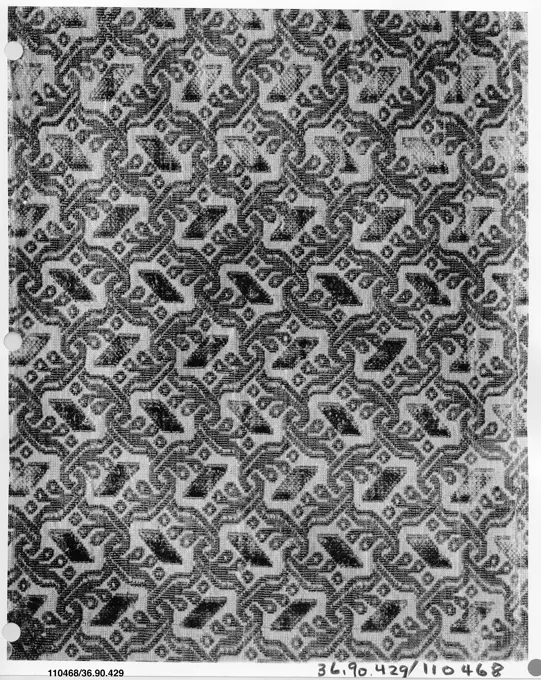
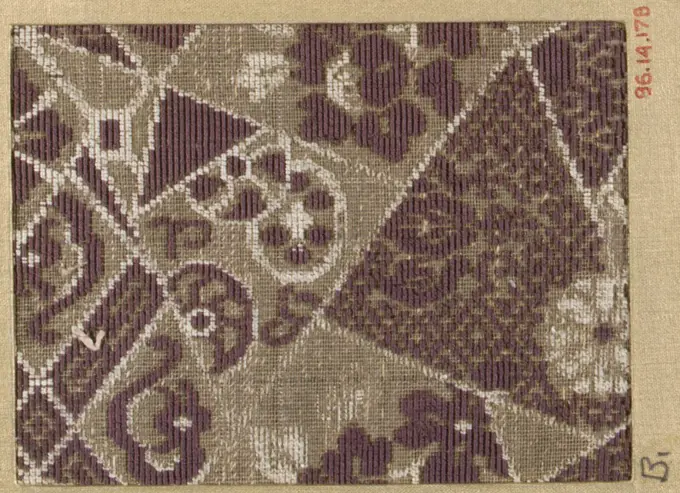
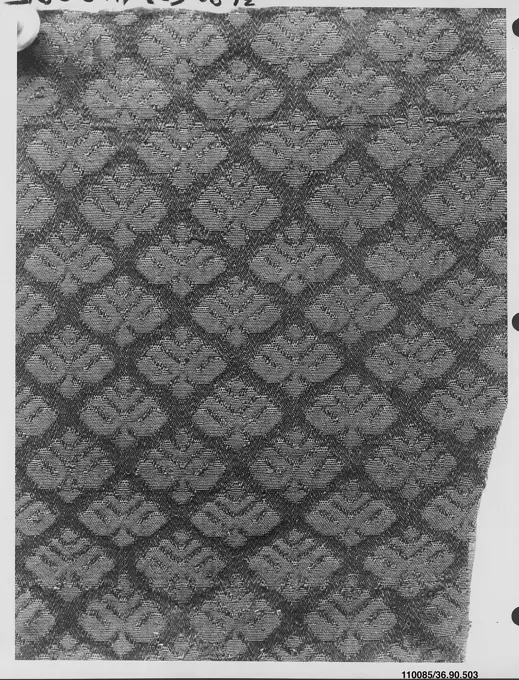
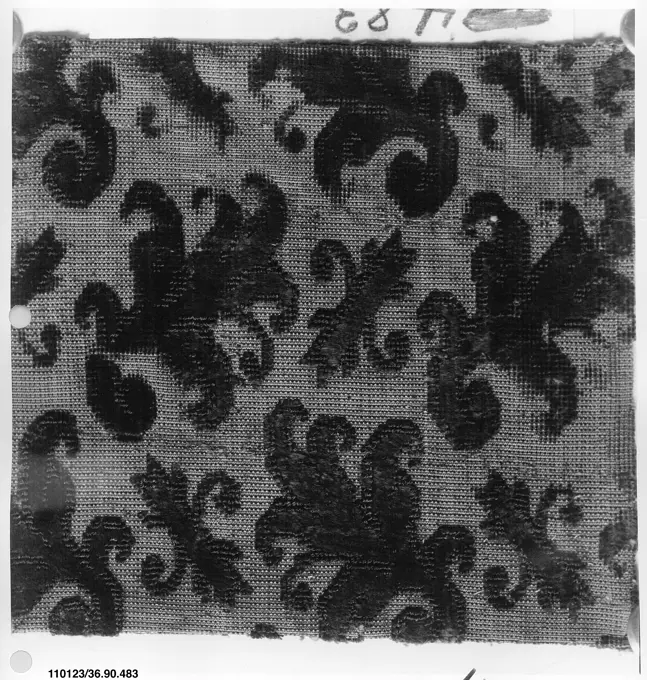
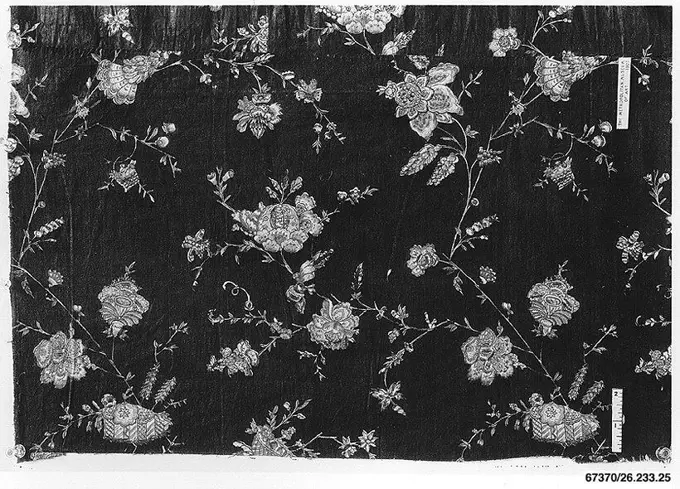
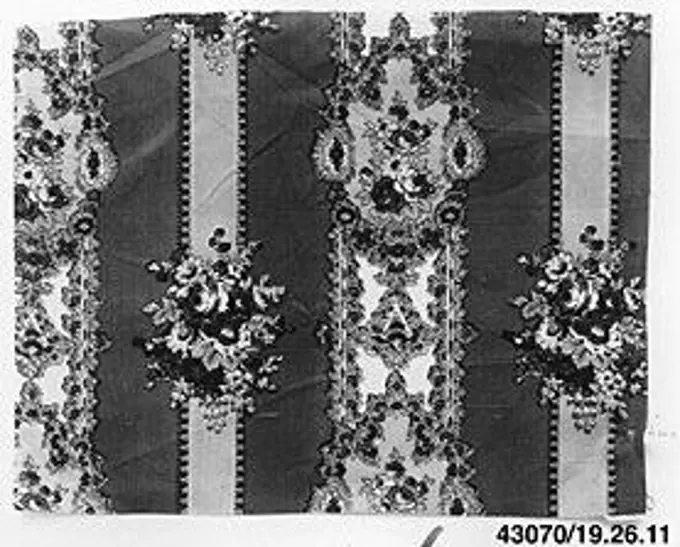
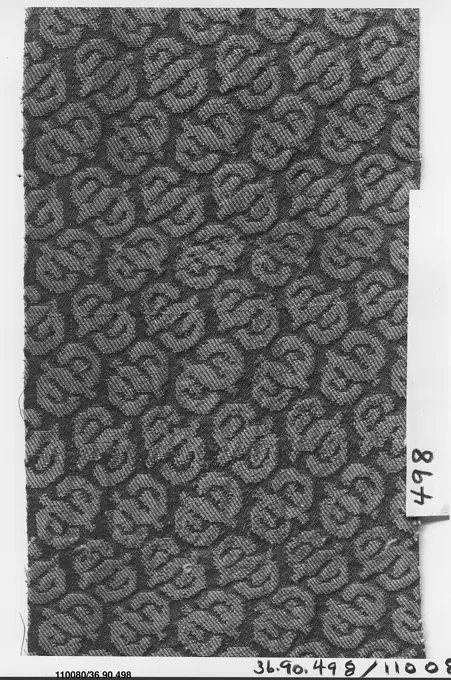
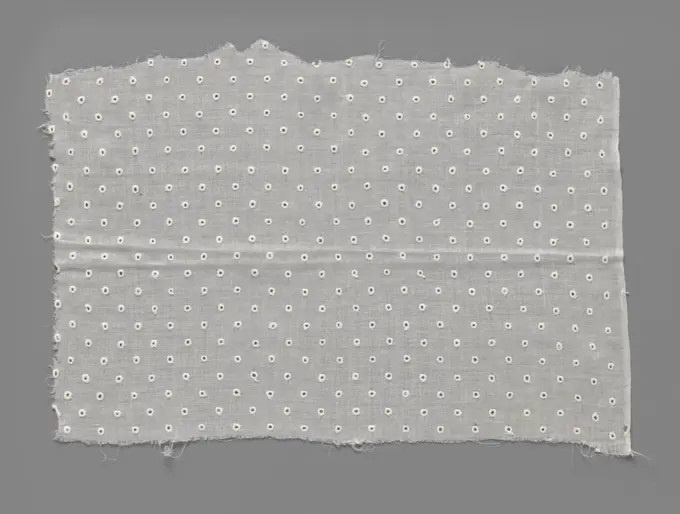
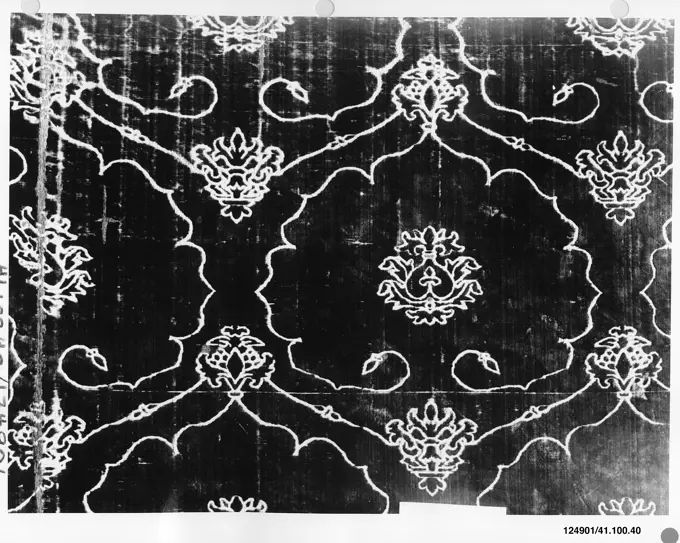
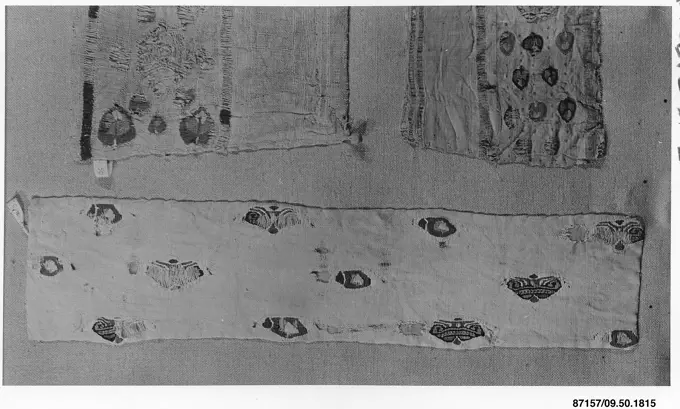
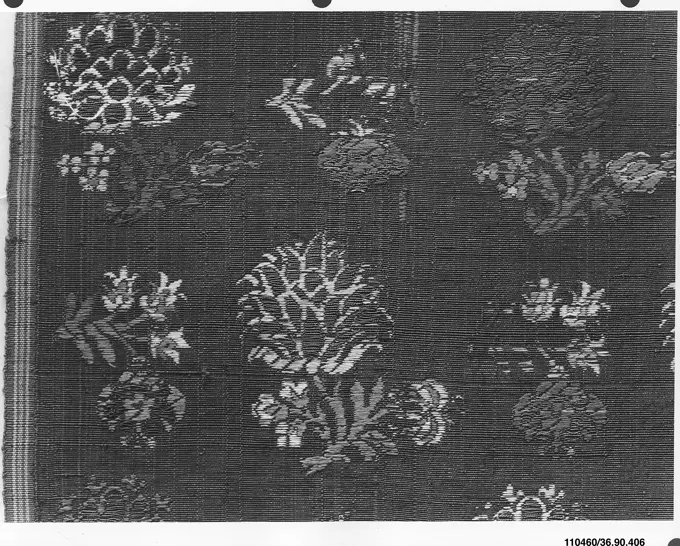
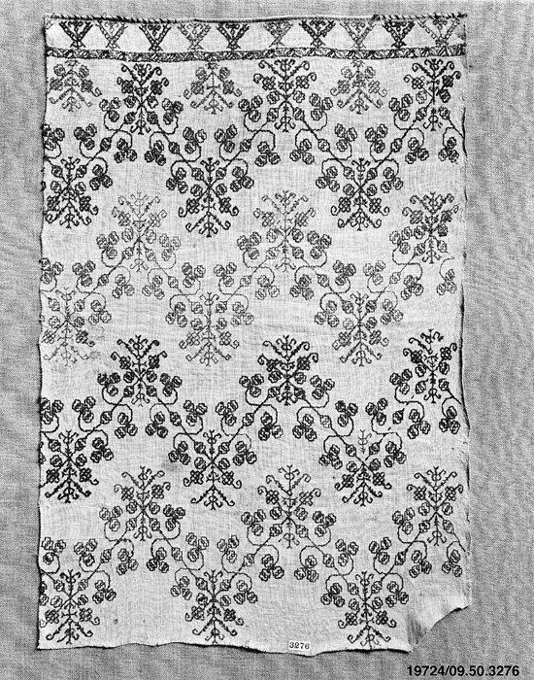
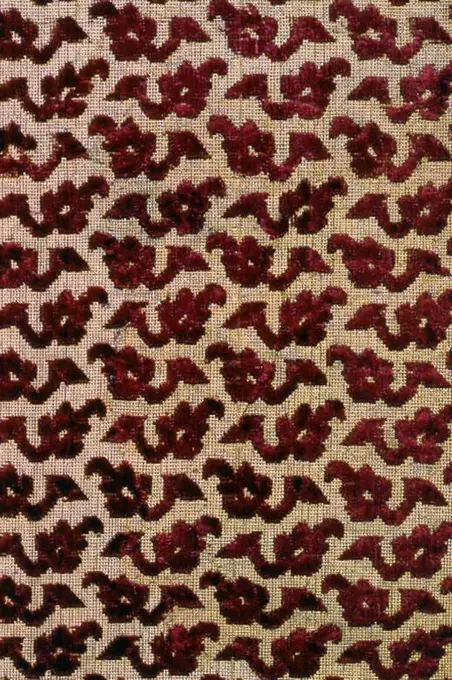
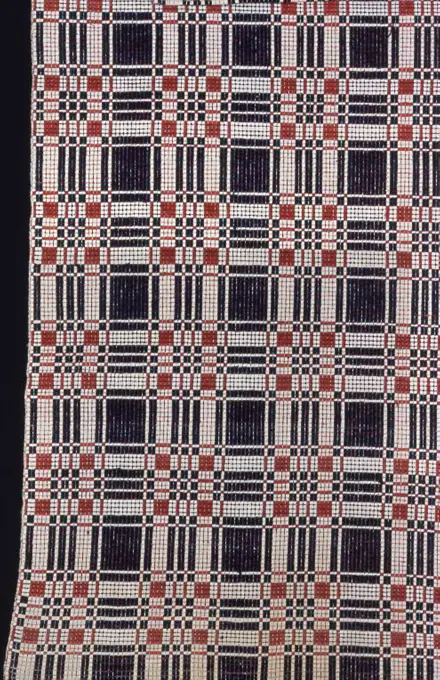
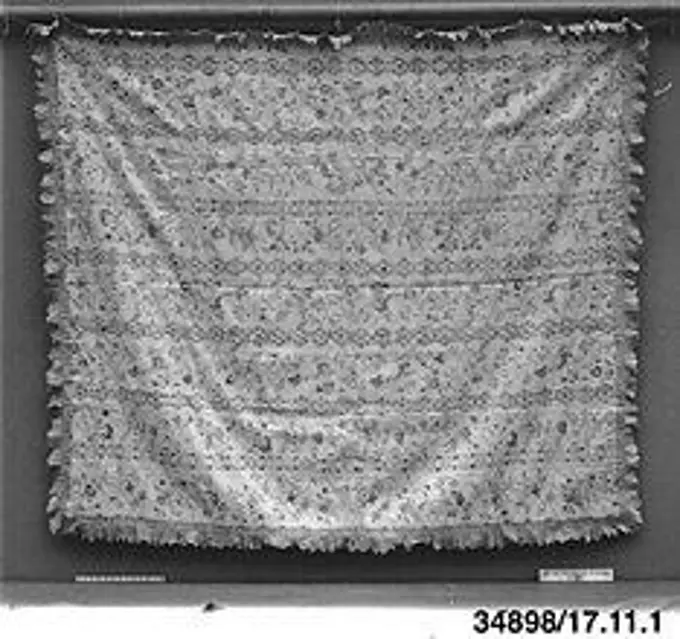
A collection of intricate textile fragments and lace pieces from various centuries, featuring floral and geometric patterns in silk and linen, showcasing historical craftsmanship.
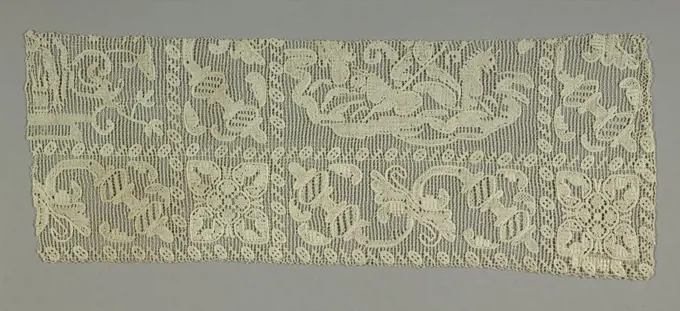
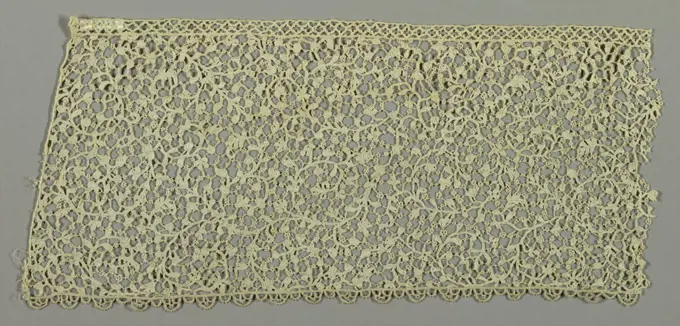
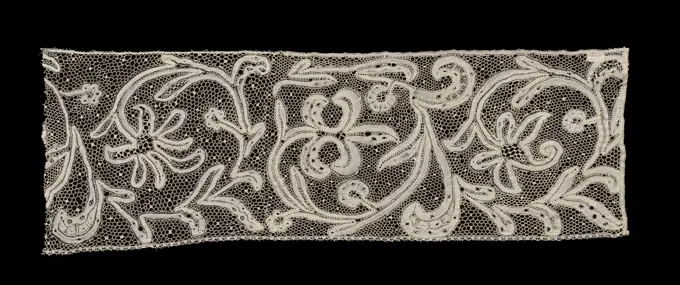
Fragment, Medium: linen Technique: needlework on hand knotted net, Fragment with a pattern showing Saturn and Neptune., Italy, 17th century, lace, Fragment
Kloskant scarf with thrown twigs, anonymous, c. 1860 - c. 1870 Black bobbin scarf: Chantilly side. A long rectangle has a mesh stock, on which a four -sided symmetrical, closed pattern is of stripped berry branches and mosies. Large sculptures are formed by an edge of oak leaves, small scoops by a wingerd leaf. Inside are different types of flower branches above a horizontal C-Volut or leaning on the ends of two small cs, which connect the large C-volutes. Belgium (possibly) silk bobbin lace Black bobbin scarf: Chantilly side. A long rectangle has a mesh stock, on which a four -sided symmetrical, closed pattern is of stripped berry branches and mosies. Large sculptures are formed by an edge of oak leaves, small scoops by a wingerd leaf. Inside are different types of flower branches above a horizontal C-Volut or leaning on the ends of two small cs, which connect the large C-volutes. Belgium (possibly) silk bobbin lacePiece 18th century possibly Italian. Piece. possibly Italian. 18th century. Silk on cotton. Textiles-EmbroideredPiece 16th-17th century Italian. Piece 223531Fragment, Medium: linen Technique: needlework on hand knotted net, Fragment with a pattern showing Saturn and Neptune., Italy, 17th century, lace, FragmentTextile Fragment 16th century. Textile Fragment. 16th century. Silk and metal thread. Attributed to Turkey. Textiles-WovenPiece 18th-19th century Japan. Piece 65904Finished piece early 17th century Spanish. Finished piece 219935Piece 1760-80 Old Ford. Piece 229242Piece 18th century () French. Piece 224273Textile Fragment early 19th century. Textile Fragment 443037Sampler 19th century German or Austrian. Sampler 228165Piece ca. 1760 British, probably. Piece. British, probably. ca. 1760. Linen, block printed and resist-dyed. Probably made in EnglandShawl ca. 1830 British. Shawl 102643Woven silk with lace design. Culture: Italian. Dimensions: L. 12 x W. 9 3/4 inches (30.5 x 24.8 cm). Date: first half 17th century. Museum: Metropolitan Museum of Art, New York, USA.Piece 1760-70 French. Piece 223321Piece 16th-17th century Italian. Piece 223605Piece 16th-17th century Italian. Piece 223585Piece 1775-80 French. Piece 221855Piece mid 18th century Italian. Piece 227479Piece 16th century possibly French. Piece 226753Bedcover Made 1775-1825 Spain. .Piece 16th-17th century Italian. Piece 223566Coverlet Made 1820-1825 United States. Cotton and wool, plain weave with supplementary patterning wefts ( summer and winter ); two loom widths joined .Sample ca. 1840 French, Mulhausen. Sample 220003Barkcloth Fragment (Kapa) 19th century Hawai'i. Barkcloth Fragment (Kapa) 310425Piece 16th-17th century Italian. Piece 224426Cover early 19th century. Cover 443068Quilt Cover (Futon) early 19th century Japan. Quilt Cover (Futon) 70388Piece 17th century Italian. Piece 223600Pieces (4) 17th century Portuguese. Pieces (4) 221507Strip or metrage of linen or cotton with openwork circles of lace bobbins, anonymous, c. 1825 - c. 1835 Strip or metrage made of natural linen or cotton with lace bobbins: English embroidery. The embroidery consists of staggered rows of openwork circles. The whole strip has been edited. The fabric is not finished on the edges, one of the short sides is the fringes of the fabric. Netherlands (possibly) linen (material). cotton (textile) Strip or metrage made of natural linen or cotton with lace bobbins: English embroidery. The embroidery consists of staggered rows of openwork circles. The whole strip has been edited. The fabric is not finished on the edges, one of the short sides is the fringes of the fabric. Netherlands (possibly) linen (material). cotton (textile)Ruffle fragment, Medium: linen Technique: needle lace, Ruffle fragment of very fine floral scrolls connected by brides with wheels and picots., Italy, 17th century, lace, Ruffle fragmentPiece 19th century China. Piece 69814Piece late 16th-early 17th century Italian. Piece 219364Fragment possibly French 19th centuryGalloon 17th century French or Italian. Galloon 214115Piece 18th century French. Piece 215545Stole (Portugal); agave (plant fiber); 1987-93-1Panel, Medium: silk embroidery on cotton foundation Technique: embroidered in chain, cretan, and buttonhole stitches on plain weave, Rectangular panel with deep border at each end with tall flowering sprays; field of coin dots. Embroidered in brilliant red silk floss on undyed cotton., India, late 19th century, embroidery & stitching, PanelCope 15th century Italian. Cope 226568Piece. Culture: French. Dimensions: 6 x 11 1/2 inches (15.2 x 29.2 cm). Date: 1775-1800. Museum: Metropolitan Museum of Art, New York, USA.Panel 18th century China. Panel. China. 18th century. Silk; lined with silk. Qing dynasty (1644-1911). Textiles-WovenFragment. France. Date: 1801-1825. Dimensions: 21 1/4 in.; repeat: 6 3/4 in. (research card). Origin: France. Museum: The Chicago Art Institute, Chicago, USA.Piece. Culture: French. Dimensions: 16 x 17 inches (40.6 x 43.2 cm). Date: 18th century. Museum: Metropolitan Museum of Art, New York, USA.Fragments, Medium: silk Technique: cut supplementary warp pile (velvet) printed with gilt dots, Dark brown velvet with cut pile is embossed with small gilt dots., France, possibly 18th century, printed, dyed & painted textiles, FragmentsTextile Fragment 5th-6th century. Textile Fragment 445846Handkerchief Made 1840-1849 England. Linen, plain weave; pulled thread work embroidered with cotton in back, buttonhole, double and overcast stitches; embroidered with cotton in back, eyelet, padded overcast and padded satin stitches; French knots; edged with cotton, bobbin straight lace .Coverlet Made 1825-1835 United States. Cotton and wool, plain weave with supplementary patterning wefts (overshot); one loom width .Piece 1680-1700 Italian. Piece 223508Fragment 17th century Italian. Fragment 217866Millefleurs ground with two armorial medallions. unknown c. 1540 Tapestry Dimensions: H 4'10" x W 11'4" Tapestry Materials/Techniques: unknown Culture: Flemish Weaving Center: unknown Ownership History: French & Co. received from Parish Watson (profits to be divided), invoiced 3/31/1925; returned, 10/10/1926.Bobbin Lace Edging, 18th century. Italy, Milan, 18th century. Lace, bobbin: linen; average: 15.3 x 56 cm (6 x 22 1/16 in.).Fragment 16th century Italian. Fragment 230116Brocade 18th century. Brocade 447410Piece 16th century Italian. Piece 216677Piece 1760-70 French. Piece 220539Piece 1775-1800 French. Piece 220556Fragment late 17th century Flemish. Fragment 212883Five Fragments Made 1601-1625 Italy. Silk and gilt-metal strip, plain weave with supplementary facing wefts and supplementary pile warps forming cut and uncut voided velvet .Shawl 1860s American or European. Shawl 123233Bobbin Lace Fragment of a Flounce, 18th century. Flanders, 18th century. Lace, bobbin: linen; average: 56 x 18.8 cm (22 1/16 x 7 3/8 in.).Altar Cloth 17th-18th century Japan. Altar Cloth 68337Five Fragments. Italy. Date: 1601-1625. Dimensions: a: 101.6 x 57 cm (40 x 22 1/2 in.)b: 99.4 x 57 cm (39 1/8 x 22 1/2 in.)c: 100.3 x 54 cm (39 1/2 x 21 1/4 in.)d: 82 x 53.9 cm (32 1/4 x 21 1/4 in.)e: 18 x 54 cm (7 1/8 x 21 1/4 in.)Repeat: 2.8 x 3.5 cm (1 1/8 x 1 1/4 in.). Silk and gilt-metal strip, plain weave with supplementary facing wefts and supplementary pile warps forming cut and uncut voided velvet. Origin: Italy. Museum: The Chicago Art Institute, Chicago, USA.Coverlet Made 1839 Maryland. Cotton and wool, plain weave with plain interlacings of secondary binding warps and supplementary patterning wefts (tied double cloth) and main warp and extended supplementary patterning weft cut fringe; possibly woven on loom with Jacquard attachment; two loom widths joined . Jonathan Garber (Weaver)Dress panel late 18th century possibly French. Dress panel 226567Coverlet Made 1820-1824 United States. Cotton and wool, plain weave with supplementary patterning wefts (overshot); two loom widths joined .Bedspread 1788-90 Chinese, for French market. Bedspread 219859Front doublure.. Brantôme, Pierre de Bourdeille, seigneur de (d. 1614). bindings (gathered matter components), Book covers. 1882. Spencer Collection. BookbindingPiece 18th century French. Piece 224339Piece 18th century Japan. Piece 71800Piece 16th century French. Piece 223191Piece 18th century () possibly Italian. Piece 224236Fragment. Dimensions: 3 15/16 in. high 3 15/16 in. wide (10 cm high 10 cm wide). Date: 6th century. Museum: Metropolitan Museum of Art, New York, USA.Embroidered darning sampler 1823 Dutch or Belgian. Embroidered darning sampler 228087Length 19th century Japan. Length 70231Textile, Medium: linen Technique: supplementary looped wefts in plain weave foundation, One panel from a bedcover. Pattern produced by widely spaced heavy loops. In the center is a panel with geometric shapes flanking the cross and both ends are patterned by a diagonal arrangement of small diamonds. One selvage remains., Spain, 18th-19th century, woven textiles, TextileAlmost square wrap in ivory color, with spreading motif of embroidered sides red-pink flowers on green steel, anonymous, c. 1780 - c. 1800 Almost square wrap of cotton crepe in ivory color, with spreading motif of embroidered sides pink flowers on green leaves. India (possibly) whole: Cotton (textile). Decoration: Silk embroidering Almost square wrap of cotton crepe in ivory color, with spreading motif of embroidered sides pink flowers on green leaves. India (possibly) whole: Cotton (textile). Decoration: Silk embroideringAttic Red-Figure Rhyton or Kantharos Fragment (comprised of 2 joined fragments). Attributed to Euthymides (Greek (Attic), active 515 - 490 B.C.)Piece 18th-19th century Japan. Piece 66805White House furniture and furnishings. White House furnishings. Antique lace. White House, Washington, D.C.Piece 18th century () possibly Italian. Piece 224232Brocade Textile, 1600s. Italy, 17th century. Brocade; silk and metal; overall: 38.1 x 27.9 cm (15 x 11 in.).Panel. France. Date: 1775-1800. Dimensions: 58.9 × 54.8 cm (23 1/8 × 21 5/8 in.). Silk, plain weave with supplementary patterning warps, supplementary patterning wefts and self-patterning ground wefts. Origin: France. Museum: The Chicago Art Institute, Chicago, USA.Piece late 16th-early 17th century Italian. Piece 227131Fragment. Dimensions: 12 in. high 7 11/16 in. wide (30.5 cm high 19.5 cm wide). Date: 5th-6th century. Museum: Metropolitan Museum of Art, New York, USA.Large Syringa Made 1864-1884 London. Silk, satin weave, self-patterned by reversing of faces; edged with cotton and silk, plain weave with supplementary pile warps forming cut solid velvet; and silk and cotton, braid of plain weave with extended weft loops . Edward William Godwin (Designer)Sketchbook William Trost Richards (American, 1833-1905). Sketchbook, 1867. Bound sketchbook with drawings in graphite on beige, moderately thick, smooth textured wove paper, Closed: 3 5/8 x 5 1/4 in. (9.2 x 13.3 cm).  Richards was a prolific artist who, as a leading member of the American Pre-Raphaelites, embraced the Ruskinian principle of truth to nature. Sketching outdoors played a significant role in his quest for accuracy of representation. Throughout his long career and extensive travels, he seems to have always carried a sketchbook with him, filling the pages with drawings of the places he encountered. The Brooklyn Museum owns more than twenty-five of Richardss sketchbooks, including the ones on view here. Serving as pictorial diaries of his journeys, they also demonstrate the variety of his working methods, ranging from quickly rendered outlines to carefully modulated tonal compositions to finished color studies. American Art 1867Back doublure.. Dumas, Alexandre (1802-1870 ). bindings (gathered matter components), Book covers. 1894. Spencer Collection. BookbindingTextile Fragment 3rd-4th century. Textile Fragment 443375Piece 16th-17th century Italian. Piece 223432Retro metal ornament Retro metal ornament made in 3D graphics Copyright: xZoonar.com/StanislavxRishnyakx 2929555Cover. Culture: Greek or Portuguese. Dimensions: L. 84 x W. 34 inches213.4 x 86.4 cm. Date: late 16th century. Museum: Metropolitan Museum of Art, New York, USA.Fragment. Dimensions: 6 5/16 in. high 4 3/4 in. wide (16 cm high 12 cm wide). Date: 5th-6th century. Museum: Metropolitan Museum of Art, New York, USA.Piece. Culture: Italian. Dimensions: L. 8 7/8 x W. 2 3/8 inches (22.5 x 6.0 cm). Date: 16th-17th century. Museum: Metropolitan Museum of Art, New York, USA.Sample Book (France); Company: T. Th. Clerc fils & Cie.; medium (samples): wool, cottonNapkin made of linen with peel pattern, c. 1400 - c. 1950 White Linnamasten napkin with peel pattern, brand is crown and 36. Northern Netherlands (Possible) linen (material) White Linnamasten napkin with peel pattern, brand is crown and 36. Northern Netherlands (Possible) linen (material)Piece 18th-19th century Japan. Piece 65845Covered bottle early 18th century Italian (Venice). Covered bottle 460737Reverse hollow frame (pair with 1975.1.2080) ca. 1710 Italian, Sicily. Reverse hollow frame (pair with 1975.1.2080). Italian, Sicily. ca. 1710. Poplar. FramesLeaf with spreading pattern of flower pattern with point stock, anonymous, 1800 - 1900  Leaf with spreading pattern made of theat with three flowers with point stock.  paper. paint (coating). block printing (relief printing process) ornament derived from plant forms