Antique Lace Borders

Delicate antique lace bands and borders crafted from linen, showcasing detailed patterns and intricate designs from the 17th to 19th centuries.

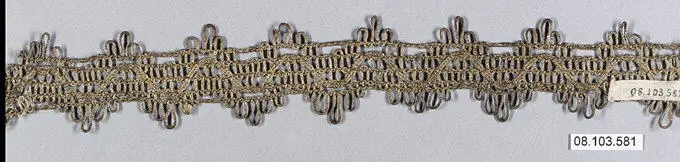
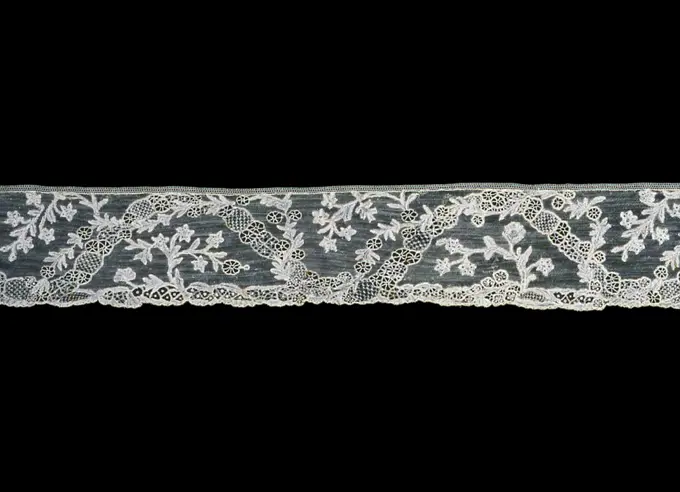
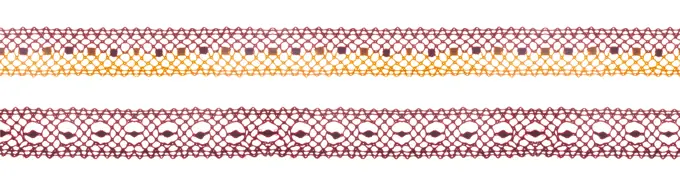
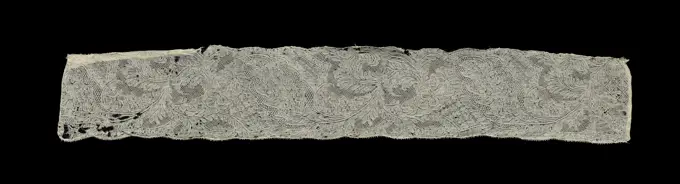
Border, Medium: linen Technique: bobbin lace, Mechlin style, Mechlin border with the upper part showing floral sprays and leaf ornaments with little squares sprinkled over the field. The lower part has an openwork band with medallions and a scalloped border of pendant flowers., Belgium or France, early 19th century, lace, Border
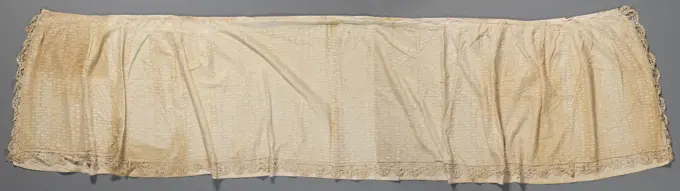
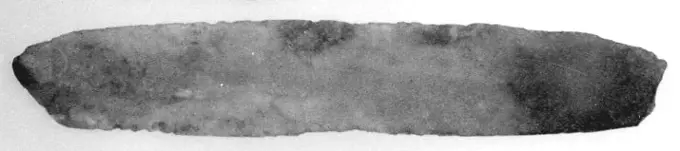
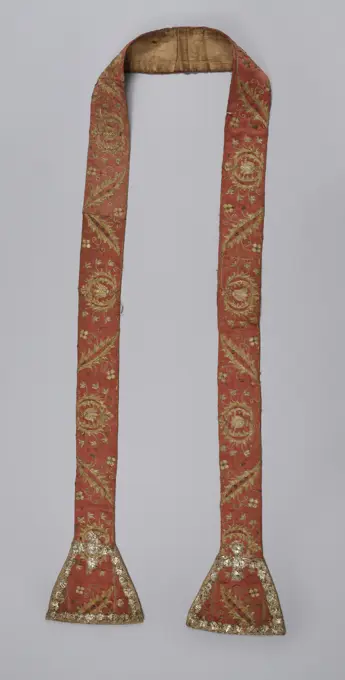
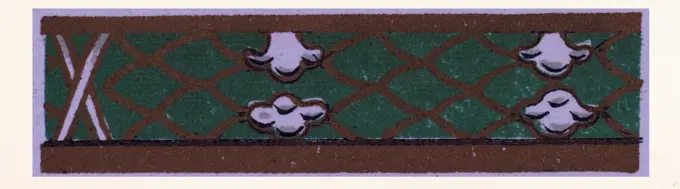
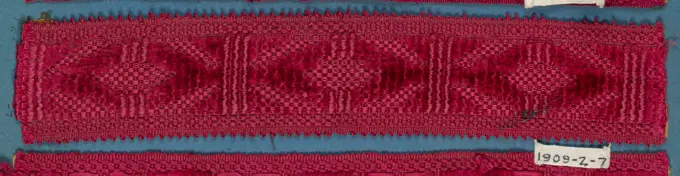
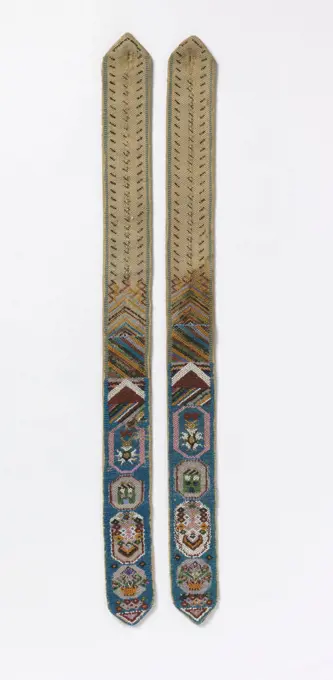
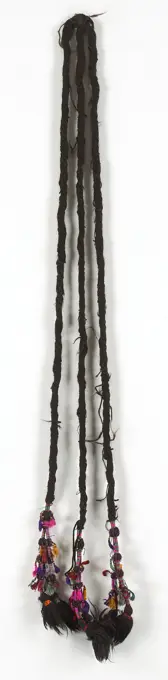
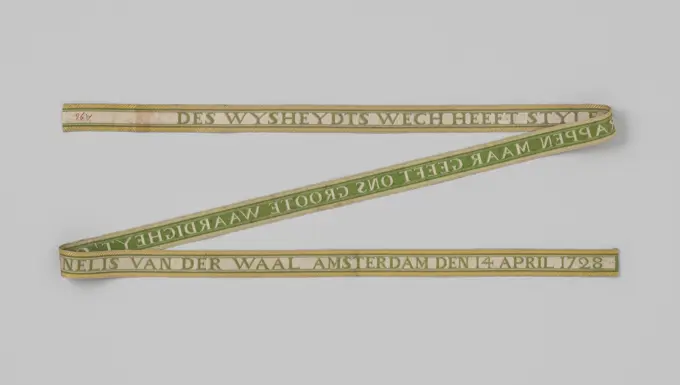
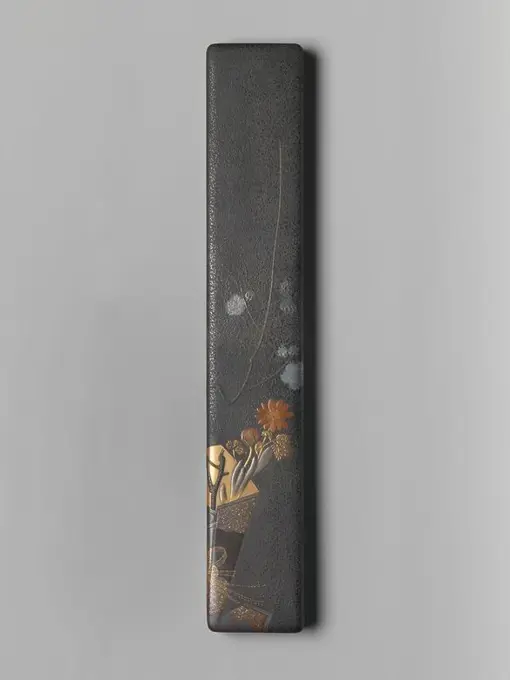
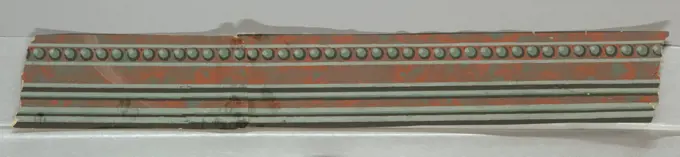
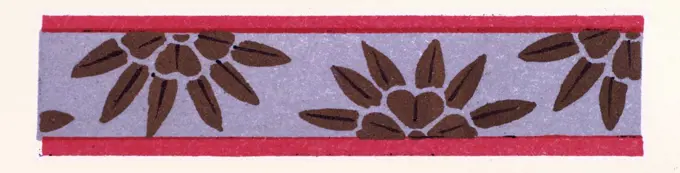
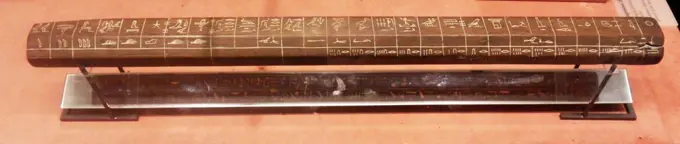
Galloon 17th-18th century Italian or French. Galloon 214078Galloon 17th-18th century probably European. Galloon 213869Toilet tablecloth, strip of machining and finished with Belgian () Climbing side. Strip of a dressing table cover, from side. The strip (lamp line) is sewn into pleats on a cotton band with copper hooks and rings in the middle. The pattern has windows filled in vertical and horizontal direction.Stole ca. 1720 Italian, Venice. Stole 227798Border, 18th-19th century, 37 1/2 x 3 1/8 in. (95.25 x 7.9 cm), Silk; passementerie, 18th-19th centuryTrimming Made 1850-1900 China. White gauze, embroidered strips . Han-ChineseBorder, Block-printed and flocked, Central light brown flock stripe bordered above and below by white stripes overlaid by light brown flock lattice design., England, ca. 1860, Wallcoverings, BorderBand, Medium: wool Technique: plaited (oblique interlacing), Plaited band in dark red with dark green center on a black ground., Peru, 300-100 BC, woven textiles, BandBorder, Block-printed on handmade paper, Three bands of varied patterns and sizes. The top band has a continuous row of dotted squared alternating with smaller dots, contained between two stripes. The wide middle band consists of feathers alternating with willow-like branches. The bottom band of chain links is bracketed by three stripes above and below. Printed in green, grey, orange, and white on a black ground., H# 665, France, 1815-30, Wallcoverings, BorderBorder 16th-17th century Southern German. Border 217957Needlepoint (Reticella) Lace Edging for Sheet, 18th century. Italy, 18th century. Lace, needlepoint: linen; overall: 74 x 275.6 cm (29 1/8 x 108 1/2 in.).Galloon 17th-18th century Unknown. Galloon 213810Trimming, Medium: silk Technique: woven, Yellow trimming fragment in a geometic design based on lozenge forms., France, 19th century, trimmings, TrimmingBorder (Belgium); linenWampum belt -Border (Italy); linenFringe; silkChatelaine ca. 1890 American. Chatelaine. American. ca. 1890. enamelTrimming (France); silkGalloon 17th-18th century Unknown. Galloon 213811Bracelet from copies of coins: 2 Centesimi, 1798, Republic of San Marino unknownValence (For a Bed) Made 1701-1800 Cyprus. Linen, plain weave; embroidered with silk in Montenegrin cross stitches .Ribbon, Medium: silk, cotton Technique: plain weave, White ribbon with ornamented stripes., USA, late 19th century, woven textiles, RibbonBlade ca. 1295-1070 B.C. New Kingdom, Ramesside. Blade. ca. 1295-1070 B.C.. Flint. New Kingdom, Ramesside. From Egypt, Memphite Region, Lisht North. Dynasty 19-20Maniple, embroidered, red unknownPatriottenlint, anonymous, 1750 - 1800 ribbon (material) Ribbon with light green lanes on the edges and white lane with motifs in the middle. Palm tree with a hat on one side and an oval shield on the other and a naked man's figure with a shield on which two lions, and in his lifted hand a blue band with the inscription: Vive La Liberte (6 times repeated). The whole on plant motifs. Netherlands silk printingBridal wedding sash, 1800s. Morocco, Fez. Lampas, warps dyed on the loom: silk; overall: 396.8 x 38 cm (156 1/4 x 14 15/16 in.). Elaborate wedding sashes woven in Fez, Morocco, are distinctive for their multiple colors, designs, and uses. Folded lengthwise, they are wrapped around the waist so that the colors and designs coordinate with the attire worn during and after a wedding. Typically, the colors vary on each half whereas the designs are the same. Luxury textiles with elaborate patterns were woven on large looms called drawlooms that automatically repeated designs. The weaver operated the structure, inserting horizontal wefts, while the drawboy activated the programmed pattern. However, this wedding sash has ten programmed designs, which required considerable expertise.Fringe (Spain); silkTrimming (France); silkSuspenders 1880-99 American. Suspenders 175558Stole, embroidered, red  pomegranate motif unknownFigurative Border, c. 1800-1899. Russia, 19th century. Part (non-continuous) bobbin lace (tape lace); overall: 22.9 x 386.1 cm (9 x 152 in.).Fragment (USA); cottonNijugo Gen 19th century Asano Tōshichi. Nijugo Gen 502129Band, Medium: linen Technique: bobbin lace (continuous tape), 19th century, lace, BandBell Pull (Fragment) Made 1801-1900 Paris. .Band with Various Fantastic Creatures and Vegetal Patterns, 19th century. Italy, 19th century. Needle lace, filet/lacis (knotted ground and darned in two directions); bleached linen (est.); overall: 24.7 x 316.5 cm (9 3/4 x 124 5/8 in.). The reversed and backward orientation of many of the squares in this band of lace suggests that this was not their original layout. They were most likely taken apart and later joined back together in a disoriented manner.Piece 18th century China. Piece 71662Pair of pilasters first quarter 18th century French. Pair of pilasters. French. first quarter 18th century. Carved and painted oak. WoodworkBorder (France); block-printed on handmade paper; 66.5 x 7 cm (26 3/16 x 2 3/4 in.)Renaissance ornamentTrimming (France); silkTrimming, Medium: silk Technique: cut supplementary warp pile (velvet), Trimming fragment in a design of alternating squares of green and ivory in cut velvet., France, 19th century, trimmings, TrimmingArch shaped tapestry for above a window, from the Grotesken series by Sigismund August of Poland. Upper and sides straight, bottom hollow-cut. Festoten of flowers and fruits are hung to lion masks on the middle fond. The angular festons come from horns of abundance, stopped by a sitting woman. Linkd woven "no 10 d", right in the top edge a wevers brand.Border (from Woman's Garment) Made 1875-1900 China. .Fragment; silk, metallicFragment; linen; 1946-42-41Border, Block-printed and flocked on machine-made paper, A simple band of rosettes with a flocked background. Printed in dark brown flocking, tan and yellow., H# 1, France, 1860-80, Wallcoverings, BorderCopper Chisel with Monkey Head before 15th century Peruvian. Copper Chisel with Monkey Head 315630Two Fragments of a Copestone. India, Uttar Pradesh, Mathura region (), circa 50 B.C.-A.D. 5. Sculpture. Mottled red sandstoneBorder Made 1760-1769 Flanders .Fob 1840-50 French. Fob. French. 1840-50. metal, enamelTextile Fragment 6th-7th century. Textile Fragment 444292Pair of suspenders, Medium: cotton, linen, glass Technique: knitted, beaded, Pair of mens suspenders. Knitted coarse cotton with glass beads showing geometric patterns, houses. military medals and florals. Lined with linen., USA, late 19th century, costume & accessories, Pair of suspendersTrimming (France); silkHeadpiece, c. 1940, 35 in. (88.9 cm) (object part, two strands), Wool, silk, beads, Syria, 20th centuryPiece 18th century Japan. Piece 71230Trim, border, 18th-19th century, 36 x 5 in. (91.44 x 12.7 cm), Silk; passementerie, 18th-19th centuryLuxury gold reel ribbon badge Royalty Free Vector ImageLarge Cloth, c. 1100-1400. Peru, North Coast, Chimú Culture, 12th-15th century. Plain cloth with overlaid tapestry-like decoration; cotton and wool; overall: 142.3 x 33 cm (56 x 13 in.).Color lace ribbons isolated shot Pink and yellow lace ribbons isolated shot ,model released, Symbolfoto Copyright: xZoonar.com/AndreyxGuryanovx 14350723 ,model released, Symbolfoto ,property releasedDissertation tape of green silk with silver and gold brochure; with inscription, anonymous, 1728 Dissertation tape of green silk with silver and gold browed. Inscription: des Wysheydts Wech has style stairs. But gives our great WaARDIGHEYT Cornelis van der Waal Amsterdam 14 April 1728. Netherlands (possibly) geheel: silk. silver thread. Dissertation tape of green silk with silver and gold browed. Inscription: des Wysheydts Wech has style stairs. But gives our great WaARDIGHEYT Cornelis van der Waal Amsterdam 14 April 1728. Netherlands (possibly) geheel: silk. silver thread.Sampler (Germany); cotton, paperBorder; 28.5 x 11.5 cm (11 1/4 x 4 1/2 in.)Bands, Medium: linen, horsehair Technique: needle lace with ground of loop & twist with twist return, Point d'Alençon style with a design of detached buds and borders of sprays of leaves and flowers within scallops of picot cordonnet., Alençon, France, early 19th century, lace, BandsPiece French 18th centuryTextile (France); silkUsed paintbrush on white backgroundGalloon 18th century French. Galloon 213909Poem Card (Tanzaku) Box with Flower Bouquet. Artist: Style of Shibata Zeshin (Japanese, 1807-1891). Culture: Japan. Dimensions: H. 7/8 in. (2.2 cm); W. 2 3/8 in. (6 cm); L. 14 1/2 in. (36.8 cm). Date: 19th century. Museum: Metropolitan Museum of Art, New York, USA.Fringe, Medium: silk Technique: woven, Red and white fringe with a patterned heading and a red and white thread skirt. Red threads are longer than the white., Italy, 16th century, trimmings, FringeTextile Fragment 17th-18th century. Textile Fragment 454571Border, Borders, polished colors. All with beading, some marbleized., France, 1860-1900, Wallcoverings, BorderLivery band, Medium: wool, linen Technique: supplementary raised wool warp in linen plain weave foundation (velvet), Livery band of the Teding van Berkhout family of the Netherlands. Blue and white diamonds on red and yellow chevron stripes., Netherlands, late 18th century, woven textiles, Livery bandRibbon, early 20th century, 360 x 2 11/16 in. (914.4 x 6.83 cm), Silk; printed, Switzerland, 20th centuryOld bronze artwork frame isolated on white background, antique decoration, vintage framework, fashionable interior detailSword knife hilt with plant motif, anonymous, c. 1750 - c. 1900 Kozuka, decorated in relief with four leaves and a seed box. Japan iron (metal) Kozuka, decorated in relief with four leaves and a seed box. Japan iron (metal)Fringe, Medium: gilt foil on a silk core Technique: woven, Gold fringe with a plain-woven heading and a scalloped edge of looped threads., Italy, 19th century, trimmings, Fringezipper with blue seam isolated on white background zipper with blue seam isolated on white background Copyright: xZoonar.com/AlexanderxDrechselx 7876037Fringe (Italy); gilt foil on a silk coreSampler (Spain); Embroidered by Ysabel Gonzalez; silk, cotton; Warp x Weft: 122.6 x 7 cm (48 1/4 x 2 3/4 in.); Bequest of Gertrude M. Oppenheimer; 1981-28-450Fragment, Medium: silk Technique: cut and uncut supplementary warp pile (velvet) on satin ground, Narrow fragment of red cut and uncut velvet. Design (only a portion remains) of large vertically repeated group of flowers and foliage. Design in cut pile, ground in uncut pile. Details in the white satin foundation fabric., France, late 17th-early 18th century, woven textiles, FragmentTextile; silkTrimming (France); silkGlass Fragment. Culture: French. Dimensions: Overall: 4 1/2 x 13/16 in. (11.5 x 2 cm). Date: 12th-14th century. Museum: Metropolitan Museum of Art, New York, USA.Glass Fragment 16th century French (). Glass Fragment. French (). 16th century. Colorless glass. Glass-StainedFragment 19th century German. Fragment 228619Border Fragment with Birds and Flowers, 100 BC-700. Peru, South Coast, Nasca style (100 BC-AD 700). Camelid fiber, cross-knit looping (reversible); overall: 5.8 x 14 cm (2 5/16 x 5 1/2 in.).Collar, 1920-1930, 41 x 4 1/2 in. (104.14 x 11.43 cm), Silk or cotton; needlework, Uzbekistan, 20th centurySword knife hilt with flying sparrows, anonymous, c. 1800 - c. 1900 Decorated with a formation of flying sparrows (Suzume) in gold, silver and enamel (Cloisononne). Japan gold (metal). silver (metal). Decorated with a formation of flying sparrows (Suzume) in gold, silver and enamel (Cloisononne). Japan gold (metal). silver (metal).Bobbin Lace Fragment of a Barb, early 18th century. Belgium, Binche, early 18th century. Lace, bobbin; average: 8.6 x 51.8 cm (3 3/8 x 20 3/8 in.).Trimming (France); silkStrip 17th century Italian, Abruzzi and Calabria. Strip 217125Pair Of Suspenders (USA); cotton, glass, ceramic beadsLivery Trimming (possibly Spain); silkRibbon Made 1801-1900 France. Silk, plain weave with supplementary four-color pile warps forming cut solid velvet .Fragment 17th century Italian. Fragment 214862Chinese ornamentSash 19th century Russian. Sash 173712Cubit (ruler) of Maya, Belonging to Minister of Finance of King Tutankhamun 18th Dynasty