Antique Lace Borders

Delicate antique lace bands and borders crafted from linen, showcasing detailed patterns and intricate designs from the 17th to 19th centuries.

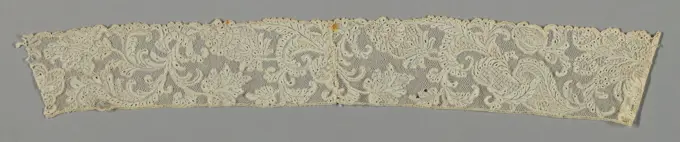
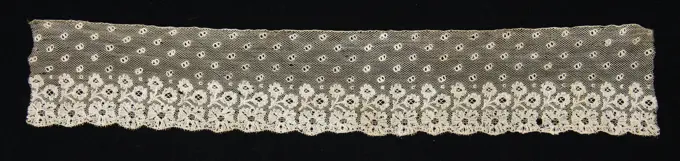
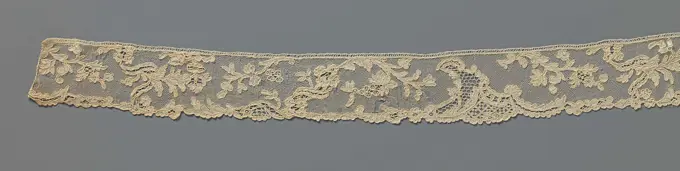
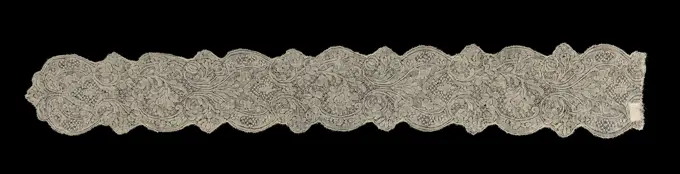
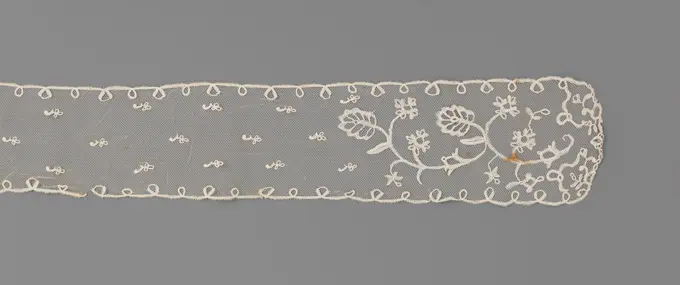
Border, Medium: linen Technique: bobbin lace, Mechlin style, Mechlin border with the upper part showing floral sprays and leaf ornaments with little squares sprinkled over the field. The lower part has an openwork band with medallions and a scalloped border of pendant flowers., Belgium or France, early 19th century, lace, Border
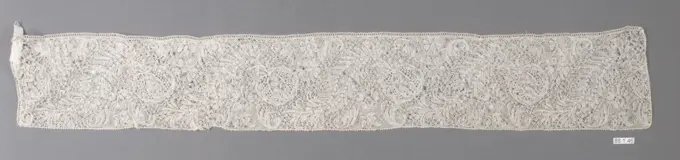
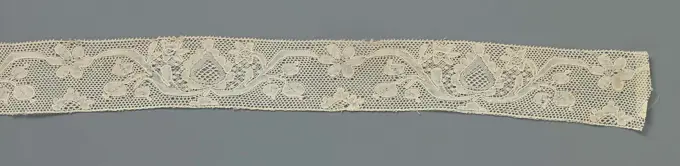
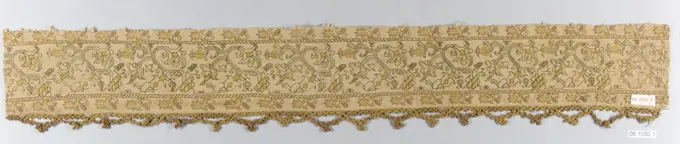
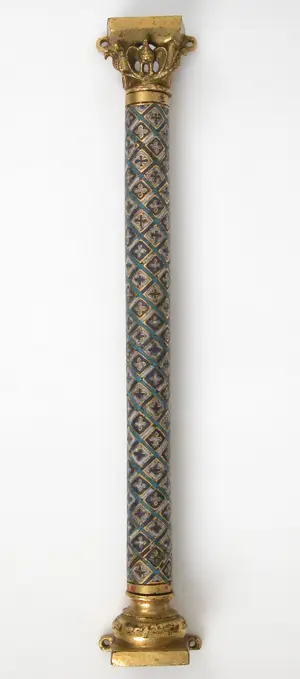
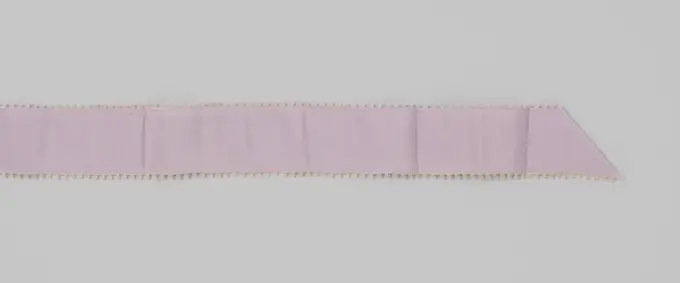
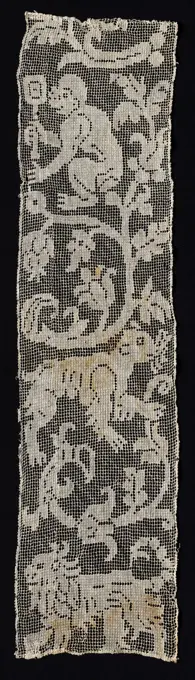
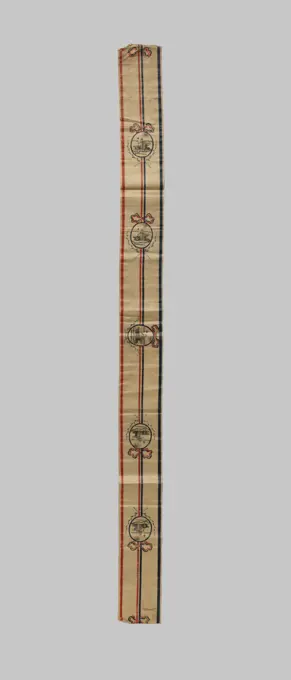
Band; linen; Bequest of Marian Hague; 1971-50-293Lace, 1800s, Mechelen, maker unknown. Gift of Mrs G. Acland Allen, 1955.Border, Medium: linen Technique: bobbin lace, discontinuous tape, 17th century, lace, BorderStrip of needle side with four different split flower branches, anonymous, c. 1750 - c. 1770 Strip of natural-colored needle side: Alençon side. Repetitive motif with an alternation of four different, split flower branches on a fine hexagonal mesh ground with transfers. The flower branches spring alternately from a cartouche along the lower edge and from the top of the strip. Fullwork with recesses and limited filling with decorative land in the larger flowers and in the cartouches. Contour lines with relief of feston stitches. The top is trimmed with a border bobbin. Faint scalloped bottom edge with a flower garland, finished with delicate picots. Alençon linen (material) Alençon Lace Strip of natural-colored needle side: Alençon side. Repetitive motif with an alternation of four different, split flower branches on a fine hexagonal mesh ground with transfers. The flower branches spring alternately from a cartouche along the lower edge and from the top of the strip. Fullwork with recesBorder, Medium: linen Technique: bobbin lace, Mechlin style, Mechlin border with the upper part showing floral sprays and leaf ornaments with little squares sprinkled over the field. The lower part has an openwork band with medallions and a scalloped border of pendant flowers., Belgium or France, early 19th century, lace, BorderCeintuur ribbon of gold brocade with Paisley motif, anonymous, c. 1920 - c. 1930 Ceintuur ribbon of gold brocade with Paisley motif. France (possibly) . Ceintuur ribbon of gold brocade with Paisley motif. France (possibly) .Band; linenMiser's Purse (possibly France); silk, steel beadsGalloon 18th century French. Galloon. French. 18th century. Silk and cotton. Textiles-TrimmingsStrip bobbin with connected ovals along the underside, anonymous, c. 1850 - c. 1870 Strip of natural -colored bobbin, Lille side. The repeating pattern consists of connected ovals along the underside. Above the ovals a fine diamond -shaped Maas soil, the tuler land, has been applied. The ovals are made in linen battle, with thicker and shiny threads. The top is straight. The ovals form shells along the bottom, which are finished with picots. Lille linen (material) bobbin lace / Lille lace Strip of natural -colored bobbin, Lille side. The repeating pattern consists of connected ovals along the underside. Above the ovals a fine diamond -shaped Maas soil, the tuler land, has been applied. The ovals are made in linen battle, with thicker and shiny threads. The top is straight. The ovals form shells along the bottom, which are finished with picots. Lille linen (material) bobbin lace / Lille laceKloskant intermediate mate with zigzag line, anonymous, c. 1600 - c. 1624 Piles of natural -colored bobbin side. The pattern consists of a zigzag line in a mesh ground. The fullwork with which the very narrow line has been realized is made in linen battle with openwork edges. Top and bottom of the strip are straight. The short sides are finished with a zoompje. The intermediate facility comes from or intended for bedding. Friesland (possibly) linen (material) bobbin lace Piles of natural -colored bobbin side. The pattern consists of a zigzag line in a mesh ground. The fullwork with which the very narrow line has been realized is made in linen battle with openwork edges. Top and bottom of the strip are straight. The short sides are finished with a zoompje. The intermediate facility comes from or intended for bedding. Friesland (possibly) linen (material) bobbin laceBand, Medium: linen Technique: bobbin lace, 19th or 20th c, Du Puy, France, 19th century, lace, BandShawl fragment, 19th century, 21 9/16 x 1 7/16 in. (54.77 x 3.65 cm) (irregular), Wool; woven fabric, Iran, 19th centuryStole made of Persian fabric brocaded with gold unknownInsertion late 17th-early 18th century Flemish. Insertion 212522Edging early 18th century French. Edging 222831Border, Medium: linen Technique: bobbin lace (Valenciennes diamond ground), Rings and dots forming lozenges on diamond mesh; border slightly scalloped., France, 19th century, lace, BorderStrip of gold side with fan and cross between crossing threads, anonymous, c. 1700 - c. 1799  Strip bobbin, gold side. The repeating pattern is formed by two bundles of three side -by -side gold threads, which cross each other and thus make a surface distribution of different forms. In the surfaces, motifs have been made in shape, including a cross a fan, rectangles and V-shapes. The motifs and the top edge are made with thinner filé threads. At the top and bottom of the strip are more or less straight finished. The motifs are partly connected by a Maas soil, a lace-hole stroke grid.  . bobbin laceBobbin Lace Lappet, 18th century. Belgium, Binche, 18th century. Lace, bobbin: linen; average: 120.7 x 9 cm (47 1/2 x 3 9/16 in.).Strook kloskant met pot of schaal met dennenappel.Strip natural colosside, Paris side. The repetitive and symmetrical pattern consists of a pot or bowl of a low foot, in which a large pine cone or drip-shaped motif is located. The edges of the pots are decorated with a few flowers, papumers and leaves. The successive pots are connected by a rosette flower. The motifs are connected by a Maas soil, a Paris soil. The full work is largely made in linen stroke with few recesses and with thicker contour wires. The center of the pine cone is partly made in slurbase. Different ornamental grounds have been applied including a snowflakes soil. The top and bottom of the strip are straight finished, the underside with picots.Galloon 18th century French. Galloon 213366Passementerie 17th century Spanish. Passementerie 221566Border, Medium: linen Technique: needle lace, Needle lace with a design of twisting vines and grapes. Commonly called 'Point d'Argentan', France, 18th century, lace, BorderFragment, Medium: silk Technique: cut and uncut supplementary warp pile (velvet), Narrow fragment (portion of belt with buttonhole at one end) of uncut 'droguet' velvet. Narrow stripes of pale orchid pile in lozenge-shape alternating with minute blossoms of green, rose and browns on white silk foundation., France, mid-late 18th century, woven textiles, FragmentBobbin Lace Lappet, 18th century. France, Valenciennes, 18th century. Lace, bobbin: linen; average: 52.1 x 9.9 cm (20 1/2 x 3 7/8 in.).Band, Medium: linen Technique: needle lace, Band of Point de Venise à Rose with serpentine floral sprays outlined by cordonnet and connected by bars with picots. Solidly worked areas are interspersed with decorative fillings stitches known as gaze quadrillée and portes., France, 1670-90, lace, BandTextile 13th century European. Textile 468146Border Made 1810-1830 Flanders. Cotton and linen, bobbin straight lace of a type known as Mechlin with a Mechlin mesh ground .Strip 17th-18th century Dutch. Strip 212427Strip 16th century Italian or Greek, Rhodes. Strip 213000Sample, Orinoka Mills, (Philadelphia, Pennsylvania, USA), light brown warp and gold/beige weft, USA, ca. 1910, woven textiles, SampleBorder 18th century French. Border 223080Strip of batist with whitework between founded holes and finished on two sides with machine side, anonymous, c. 1850  Strip of natural batist with whitework. Between the embroidered Korenaren, two elongated ovals have always been opened and festonated in a vertical direction. Top and bottom are finished with a wrinkled strip of mechanical side: Machinal Valenciennes side. Netherlands linen (material). batiste embroideringBorder, Medium: linen Technique: bobbin lace (Valenciennes ground), 18th century, lace, BorderFragment of the lace;  18th century (1701-00-00-1800-00-00);Strook naaldkant met rocaille-motief en bloemtakken met linten.Strip natural-colored coniferous lace: Alençon side. Pattern with flour branches, occasionally wrapped with ribbons, on a fine hexagonal maas soil. Between the branches an asymmetrical rocaille motif, filled with various ornamental grounds. The top is finished with a border clamping side. The underside is finished with a picoted slip edge, which comes from a pattern of lying leaves and flowers and some spaces filled with ornamental soils.Bobbin Lace Lappet and Edging for Cap, 18th century. France, Valenciennes or Flanders, 18th century. Lace, bobbin: linen; average: 10.2 x 158.7 cm (4 x 62 1/2 in.).Border, Medium: linen Technique: bobbin lace, Bobbin lace entre deux, floral vine; early 18th century Binche, early 18th century, lace, BorderTrimming, Medium: silk, silver thread Technique: woven, Design of triangles and diagonal bands with a leaf pattern in white with silver threads., Italy, 19th century, trimmings, TrimmingFragment of the lace;  XVIII-XIX century (1701-00-00-1900-00-00);Fragment, Medium: linen Technique: bobbin lace (Valenciennes ground), Angular bands and disks in groups of three., 18th century, lace, FragmentBorder, Medium: linen Technique: bobbin lace, Mechlin style, Straight border of Mechlin lace with a design of small dots sprinkled over the field, and a border of detached motifs showing two leaves, above a row of semi-circles., Belgium or France, early 19th century, lace, BorderGalloon early 19th century French. Galloon 213954Two hat slips (barbes) of needle side, anonymous, c. 1750 - c. 1800 Two pussy slips of needle side. The pattern consists of flower and leaf vines and loose sprinkling flowers. The scalloped edge is trimmed with picots. France linen (material). Alençon Lace Two pussy slips of needle side. The pattern consists of flower and leaf vines and loose sprinkling flowers. The scalloped edge is trimmed with picots. France linen (material). Alençon LaceSari Made 1875-1900 India. Fine white silk with gold design .Border, Technique: bobbin lace, Bobbin lace border, floral borders; early 19th century Point de Paris., early 19th century, lace, BorderEdge (Belgium); linen; Bequest of Marian Hague; 1971-50-419Piece 18th century Japan. Piece 71150Capslip (barbe) and a forehead strip of Binchekant, Anonymous, c. 1725 - c. 1750 Hats slip (barbe) and a forehead strip of binchekant, linen. The pattern has large flowers and feathered leaves. The edges are slightly sculpted and provided with picots. West-Europa linen (material) Binche Lace Hats slip (barbe) and a forehead strip of binchekant, linen. The pattern has large flowers and feathered leaves. The edges are slightly sculpted and provided with picots. West-Europa linen (material) Binche LaceLoper.Runner of wool, machine knotted, pink necklace. Dessin: Midfield: Pink stars with a white center on a light pink fond. Edge: Meander in dark pink on a white fond. Origin: see BK-1998-41-a. With BK-1998-41-B / C from Chamber Lord.Flounce. Date/Period: 18th century. Flounce. Medium: linen. Technique: bobbin lace, discontinuous tape. Author: UNKNOWN.Border, Medium: linen Technique: needle lace, Venetian point in low relief with various needlemade stitches and picots. Design of scrolling stem with leaves and flowers., Venice, Italy, 17th century, lace, BorderBand, Medium: linen Technique: bobbin lace, discontinuous tape like, 17th century, lace, BandRibbon (France); 1914-2-1-aNeedlepoint (Venetian Rose Point) Lace Edging, late 17th century. Italy, Venice, late 17th century. Lace, needlepoint; average: 8.3 x 189.2 cm (3 1/4 x 74 1/2 in.).Fragment of the lace;  19th century (1801-00-00-1900-00-00);Stola of gold brocade with flower pattern, so -called "bizarre" design, c. 1706 - c. 1707 Stola of gold brocade with flower pattern, so -called "bizarre" design. In the widened ends decorated with frills, two Andreas crosses from gold thread are embroidered. A strip of side around the neck. France (possibly) silk Stola of gold brocade with flower pattern, so -called "bizarre" design. In the widened ends decorated with frills, two Andreas crosses from gold thread are embroidered. A strip of side around the neck. France (possibly) silkColonnette from a Reliquary Shrine ca. 1175-1200 German. Colonnette from a Reliquary Shrine 467716Collar 1700-1945 American or European. Collar 119267Band (Italy); linenLila Ripszijde ribbon, trimmed with picots, anonymous, c. 1400 - c. 1950 Lila Ripszijde ribbon, trimmed with picots. West-Europa silk. Lila Ripszijde ribbon, trimmed with picots. West-Europa silk.Trimming, Medium: silk, metallic thread, metal strips Technique: twill weave, Design in twill weave with flat strips of metal in the center and at the borders., Italy, 17th century, trimmings, TrimmingBand 3rd-4th century. Band 445941Strip Machine side with fan patterns that form the scrap edge, anonymous, c. 1850 - c. 1899 Strip of natural -colored machine side. The repeating pattern consists of torchon -like fan patterns that, connected to the widest points, form the scrap edge. The impellers touch almost at the top of the very narrow strip and are connected by a machine -founded. France (possibly) cotton (textile) Strip of natural -colored machine side. The repeating pattern consists of torchon -like fan patterns that, connected to the widest points, form the scrap edge. The impellers touch almost at the top of the very narrow strip and are connected by a machine -founded. France (possibly) cotton (textile)Bobbin Lace Lappet, 1730s. Belgium, Binche . Lace, bobbin: linen; average: 9 x 54.6 cm (3 9/16 x 21 1/2 in.).Border, Medium: linen Technique: bobbin lace, Mechlin style, N. Europe, 1850-1900, lace, BorderNeedle sheath late 18th century Italian. Needle sheath. Italian. late 18th century. Wood and metal. Textiles-Methods and MaterialsOrnament (Dagger sheath). Beham, Barthel, 1502-1540. 1501 - 1600. Bink, Jacob, approximately 1500-1569. Prints. The Miriam and Ira D. Wallach Division of Art, Prints and Photographs: Print CollectionFragment of a Band with Vines Surrounding a Monkey, Lion, and an Unidentified Four-Legged Animal, 16th century. Italy, 16th century. Needle lace, filet/lacis (knotted ground and darned in two directions); bleached linen (est.); overall: 20.1 x 80.5 cm (7 15/16 x 31 11/16 in.). Most surviving pieces of figural lace are horizontal, making the vertical orientation of this band unique. The monkey, lion, and perhaps lioness or other feline are not native to Italy and represent exoticism and the notion of increasing international exchange at the time.Edging, Medium: linen Technique: bobbin lace, continuous braid like, Narrow lace in design of rectangles with edge of points., Venice, Italy, 19th century, lace, EdgingPiece 18th century () European. Piece 225149Patriottenlint, , 1775 - 1800 ribbon (material) Ribbon on which the same medallion painted five times, lying twice on the left, once upright in the middle, lying right on the right side twice. On top of the edge, a blue runs under a red and a red-white-blue track in the middle. Green branches underneath the medallions of red-white-blue bows underneath. On the medallion the standing virgin with freedom hat for a cannon (left), pillar on the right with a lying lion on the right. At the top right an eye with rays. Inscription. Netherlands silkGimp 17th century French. Gimp 213741Trimmimg, Medium: linen Technique: bobbin lace, peasant style, Band with continuous diamonds and looped fringe edge in blue and natural linen., possibly Russia, 19th century, lace, TrimmimgTrimming (Spain)Border, Medium: raffia Technique: plain weave, pieced, pom-poms, Natural, brown, and rust-red strips of plain woven raffia stitched together on long edges, finished with buttonhole embroidery and raffia pompoms., Democratic Republic of the Congo, late 19th century, trimmings, BorderFringe (Italy); silk, linenBarbe 18th century Flemish. Barbe 220048Ribbon, Medium: silk, cotton Technique: plain weave, Neutral-colored ribbon with pink and green scroll design., USA, late 19th century, woven textiles, RibbonBand; silk, metallic yarnsTrimming, Medium: silk Technique: woven, Red, green and yellow trimming fragment in a design of leaves and diagonal lines between borders of diagonal blocks., France, 19th century, trimmings, TrimmingTrimming (France); 1909-2-168Shoulder Cloth(Limar)Strikdas from application side on machine tulle, anonymous, c. 1890 Application side on machine tulle with a picot edge. The applications consist of pieces of bobbin side with a single needle stitch. The Strikdas is barbreed with ranks with stylized flowers and large palm -like leaves on the ends. The soil is littered with three leaf motifs and an edge of loops. Brussels . bobbin lace Application side on machine tulle with a picot edge. The applications consist of pieces of bobbin side with a single needle stitch. The Strikdas is barbreed with ranks with stylized flowers and large palm -like leaves on the ends. The soil is littered with three leaf motifs and an edge of loops. Brussels . bobbin laceGrants with 2 flowing. 1840/1860. GAL2010.6.108Textile Fragment, 1800s. Japan, 19th century. Silk; overall: 68.6 x 11.5 cm (27 x 4 1/2 in.).Lace, 1800s, maker unknown.Belt  -Piece 18th-19th century Japan. Piece 66745Fragment of a Tiraz, 1100s. Egypt, Fatimid period, 12th century. Tabby ground with inwoven tapestry ornament; linen and silk; overall: 5 x 43 cm (1 15/16 x 16 15/16 in.).Trimming (France); silkGalloon 18th century French. Galloon 225030Edging 16th century Italian. Edging 212365Half of a Compass. UnknownMolding; wood, carved; 1917-12-4Strip of needle side with dots, anonymous, c. 1750 - c. 1799 Strip of natural-colored needle side: Alençon side. Regular pattern of dots, formed by circular mosquito with cordon, on a fine hexagonal mesh ground. The pattern on the underside consists of one fine round flower with a rader picot in the heart interspersed with ovals. The stalks of the flowers point vertically up and curl at the end. The ovals are filled with a decorative land, alternately with and without (rader) picots. The Maas soil between the flowers and ovals is finer than the Maas soil with dots above it. The top is trimmed with a border bobbin. At the bottom, a bow edge connects the flowers and ovals described above. unknown linen (material) Alençon Lace Strip of natural-colored needle side: Alençon side. Regular pattern of dots, formed by circular mosquito with cordon, on a fine hexagonal mesh ground. The pattern on the underside consists of one fine round flower with a rader picot in the heart interspersed with ovBand; medium:warp; silk. wefts; silk, linenTrimming (France); silkTrim, horizontal band, 18th-19th century, 19 x 3 in. (48.26 x 7.62 cm), Cotton; passementerie, 18th-19th centuryEdging 17th century Italian, Venice. Edging 229969