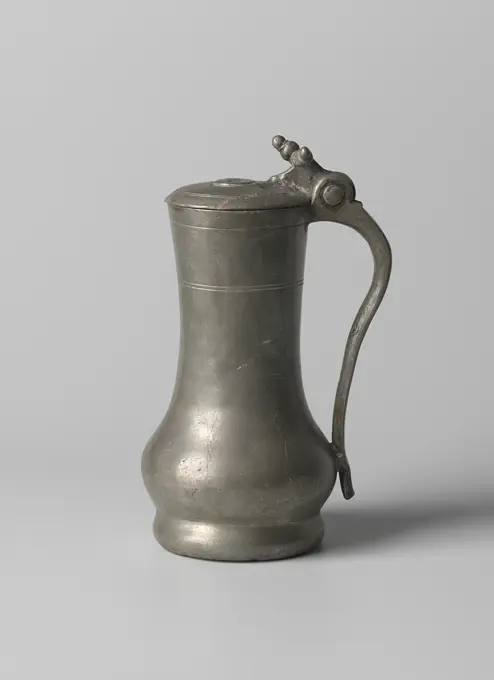
Antique Silverware and Pitchers

Collection of vintage silver creamers and pitchers with intricate designs and detailing from various historical periods, reflecting luxury craftsmanship.
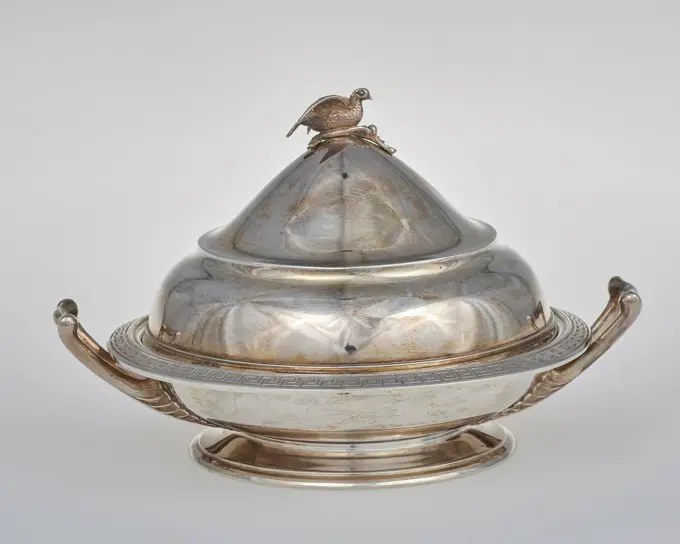
Covered butter dish, 19th century, Gorham Manufacturing Company, Providence, Rhode Island, 1865-1967, 5-3/4 x 8-5/16 x 7 in. (14.6 x 21.1 x 17.8 cm), Coin silver, United States, 19th century
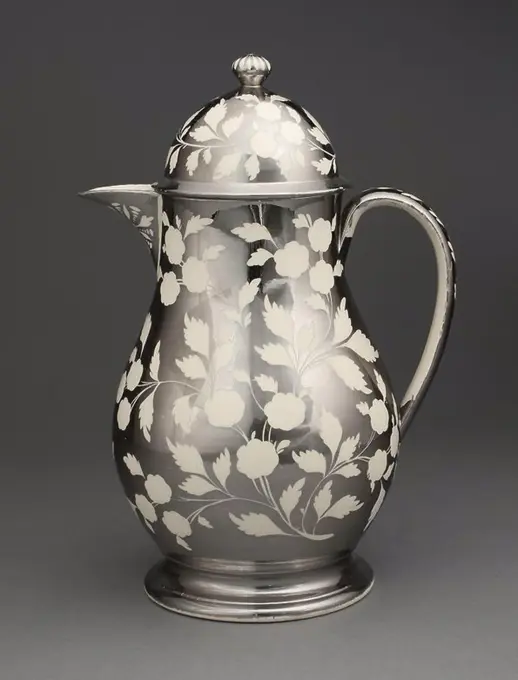
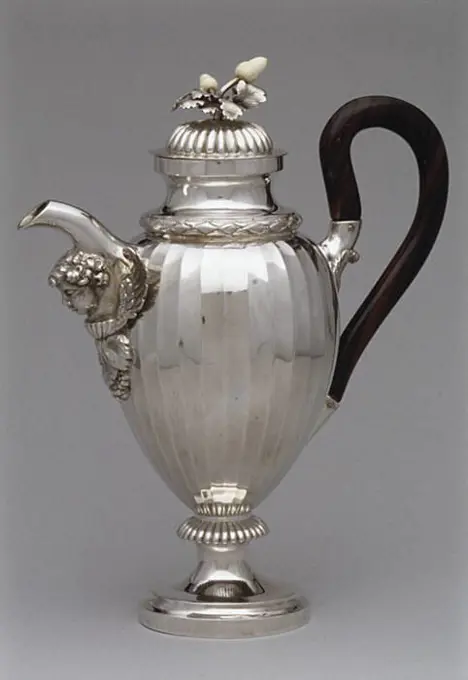
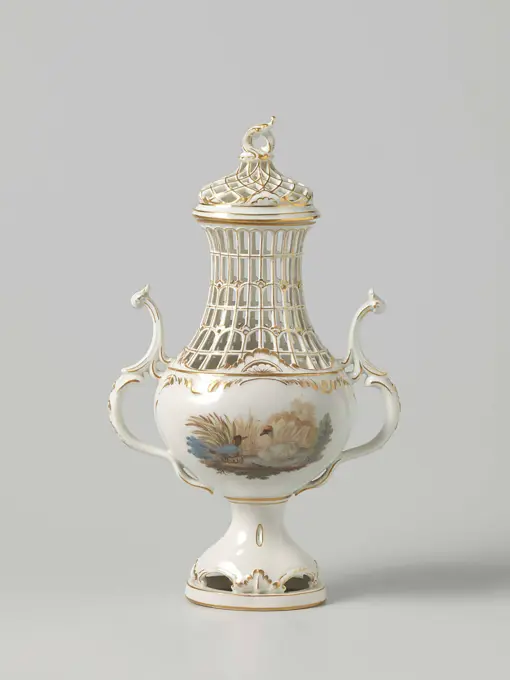
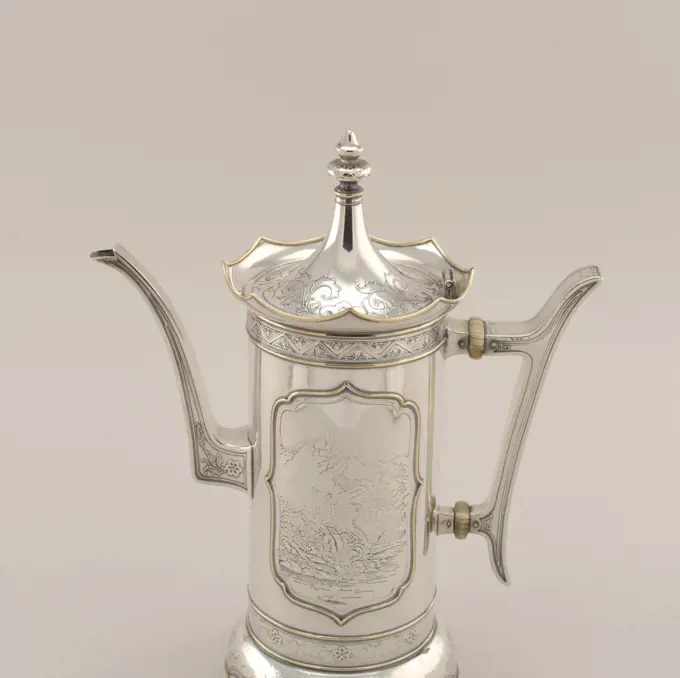
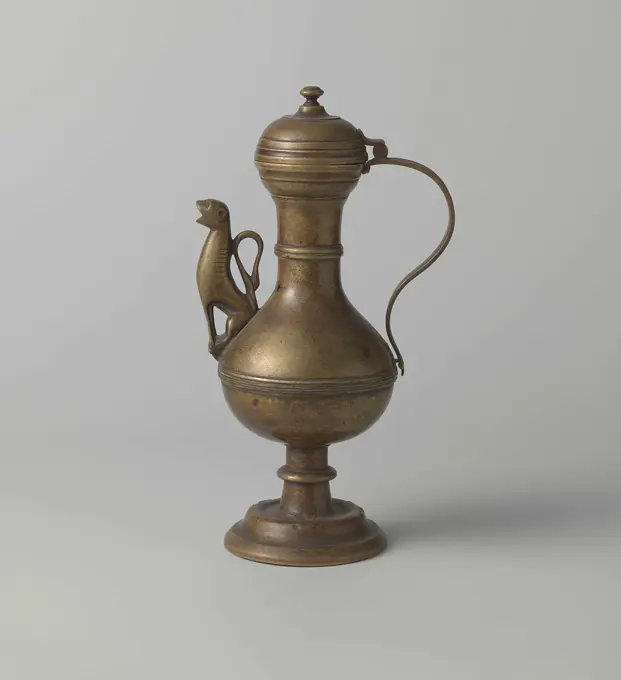
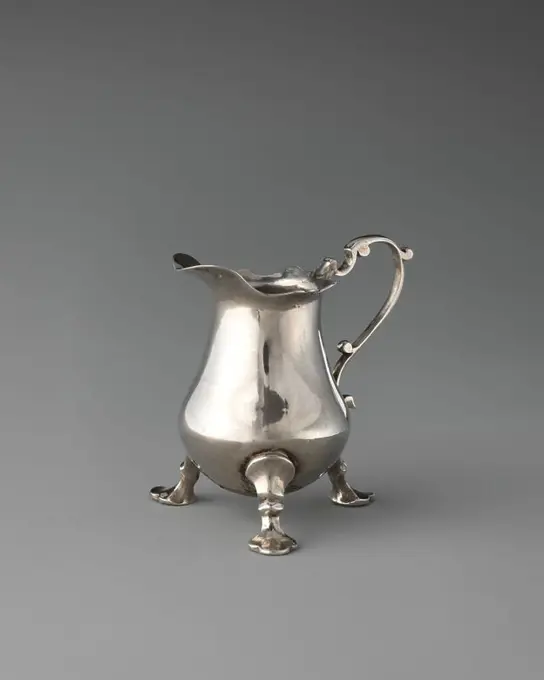
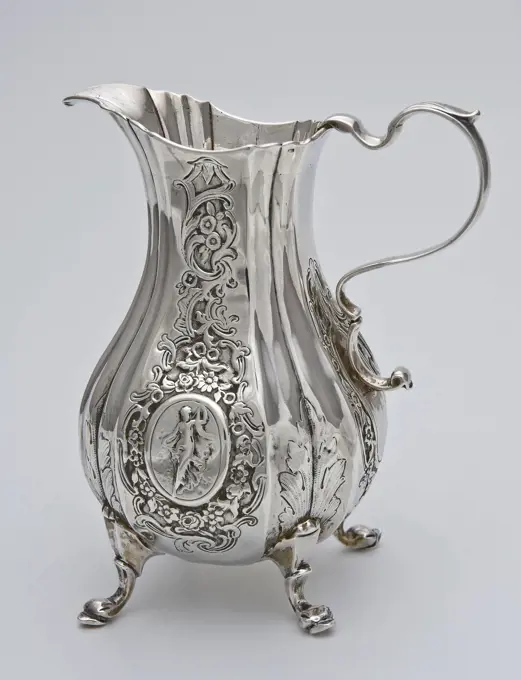
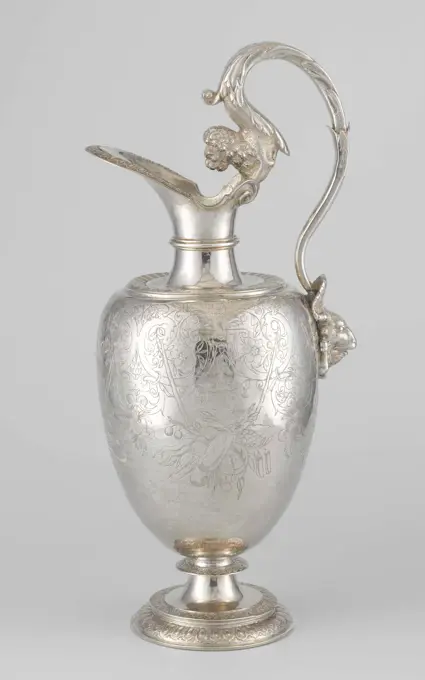
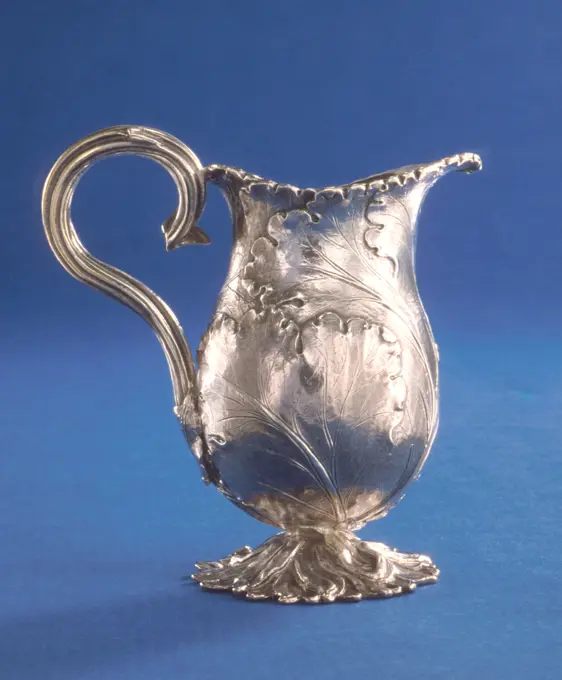
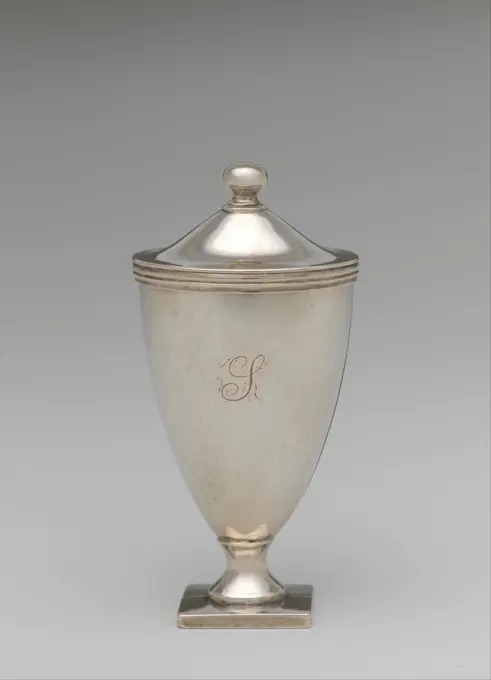
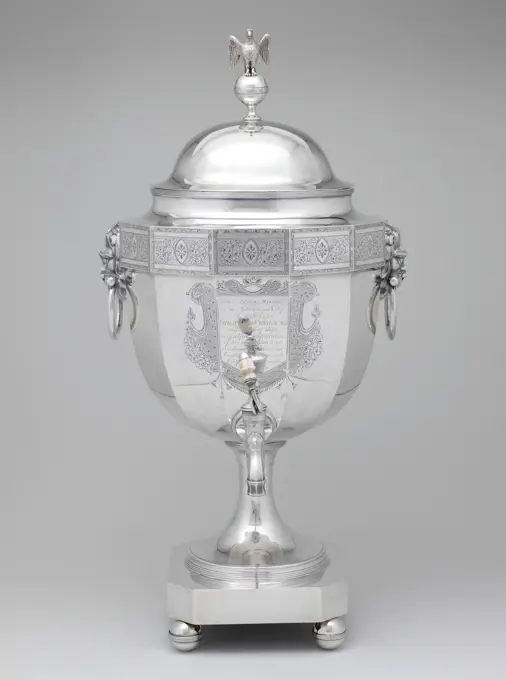
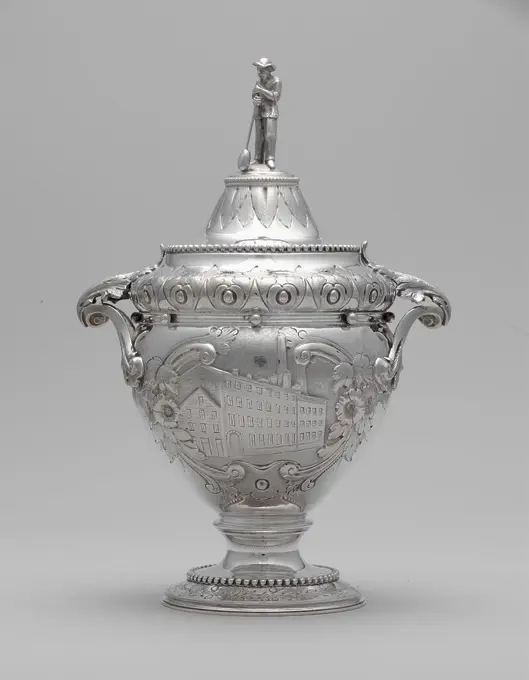
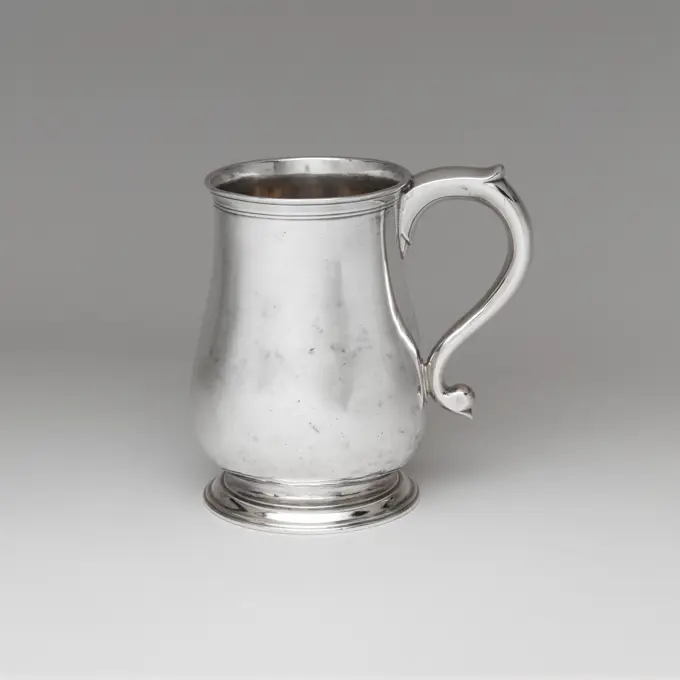
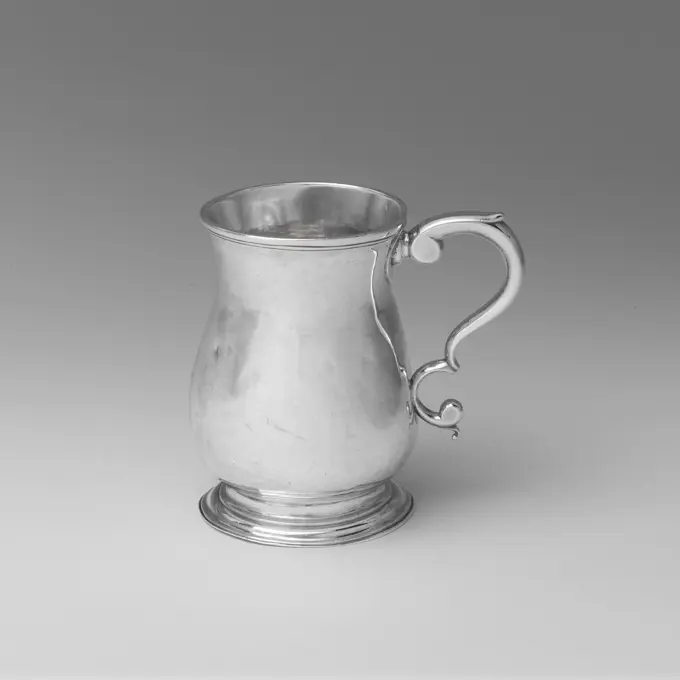
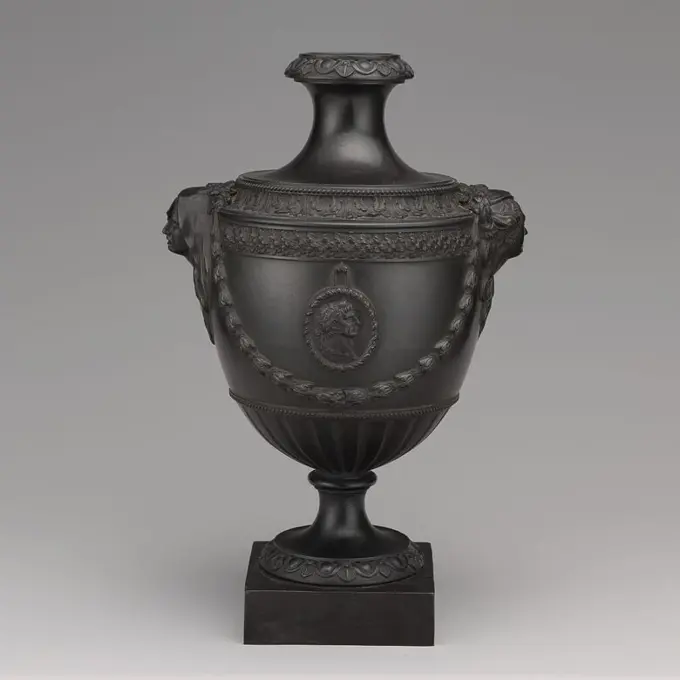
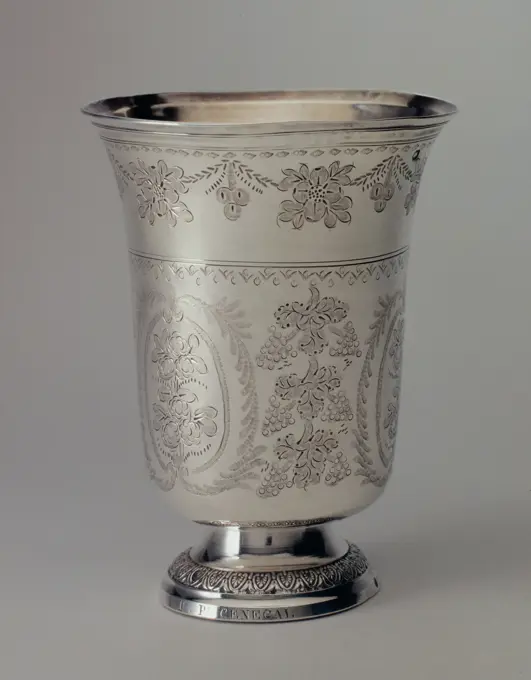
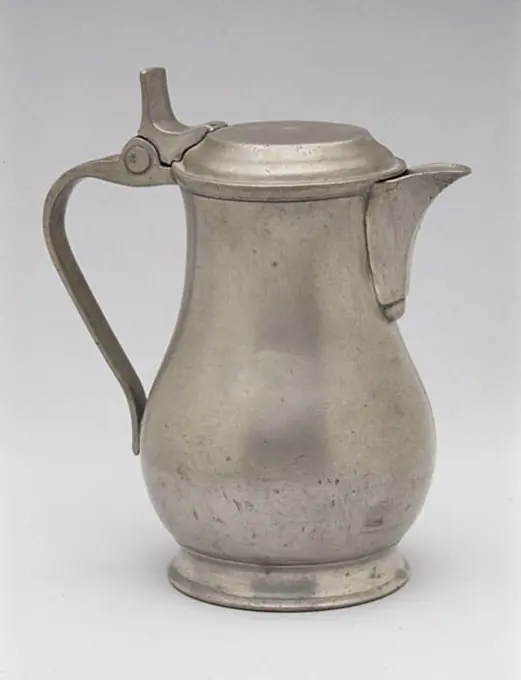
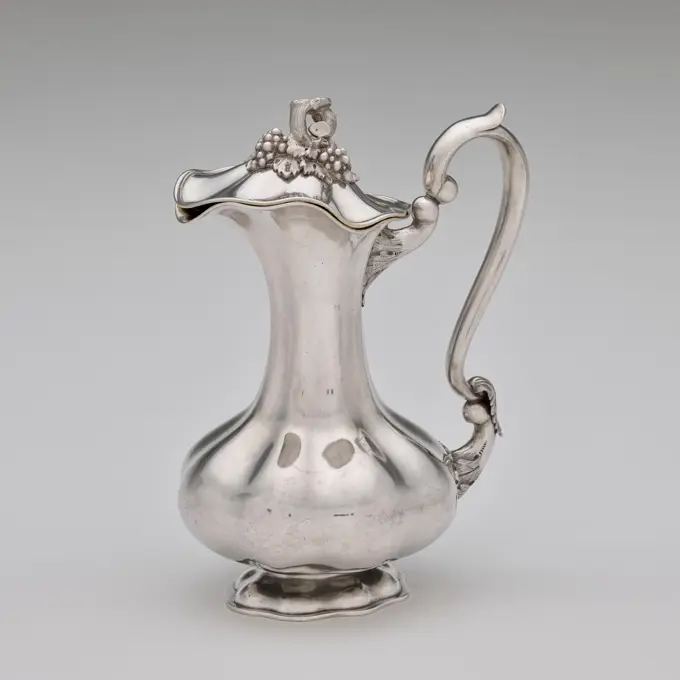
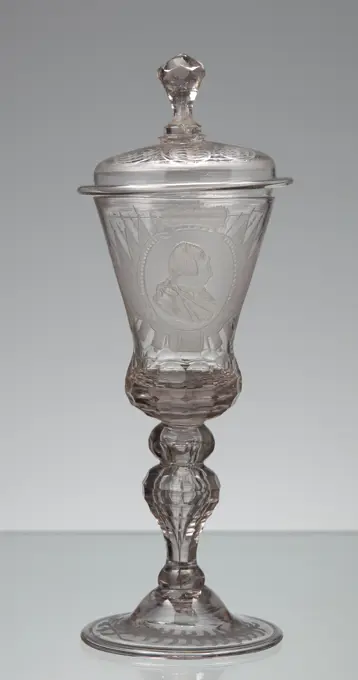
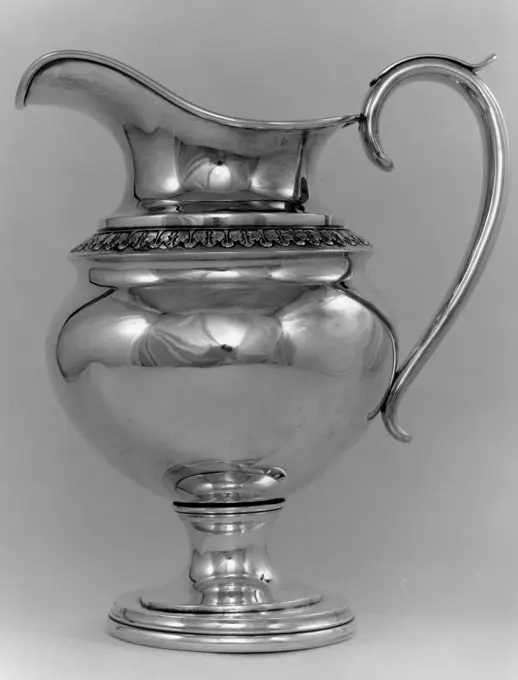
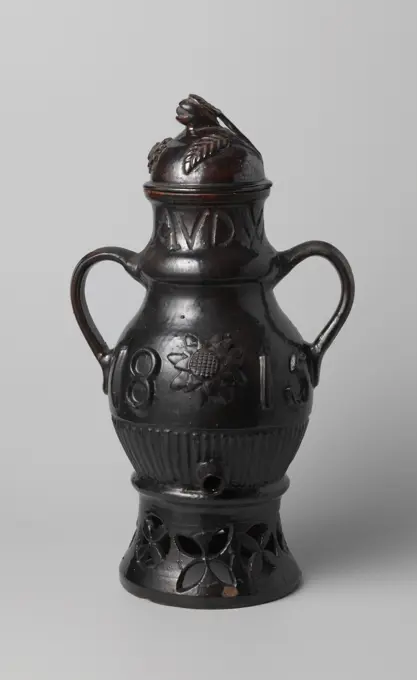
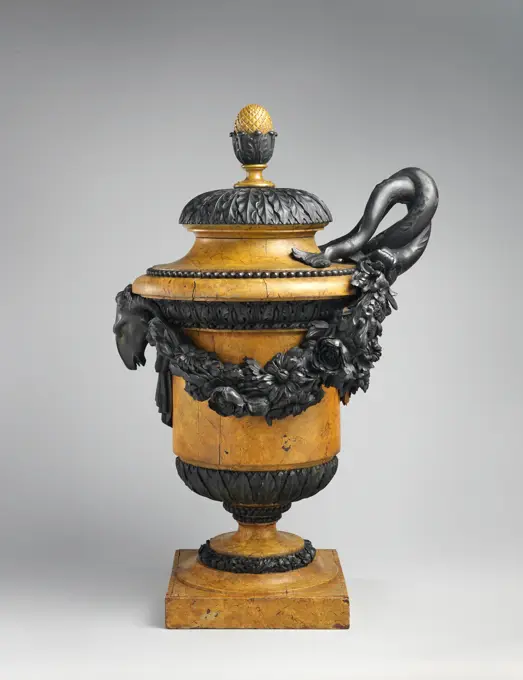
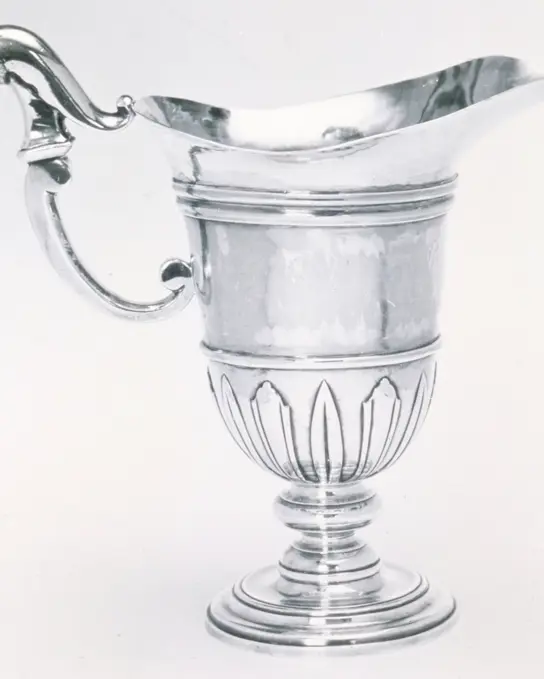
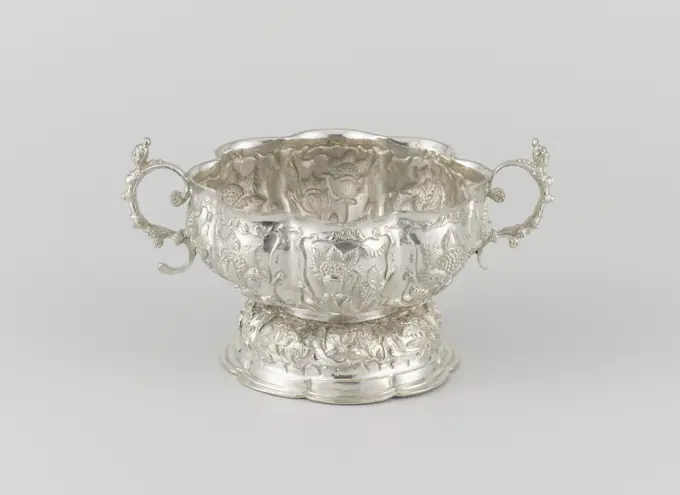
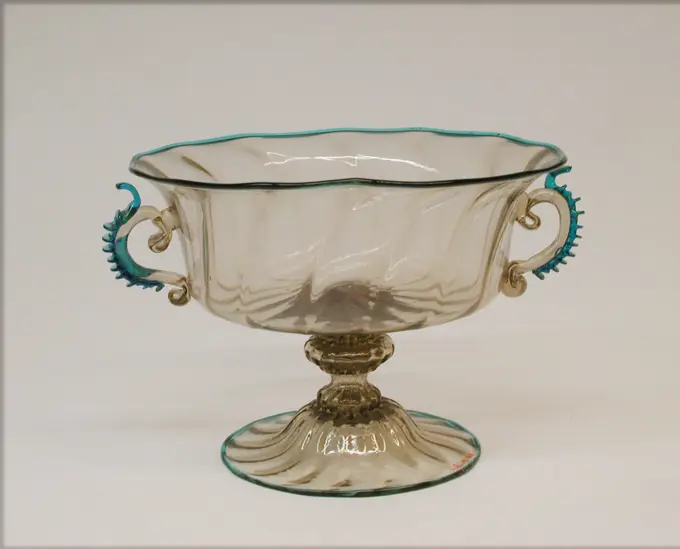
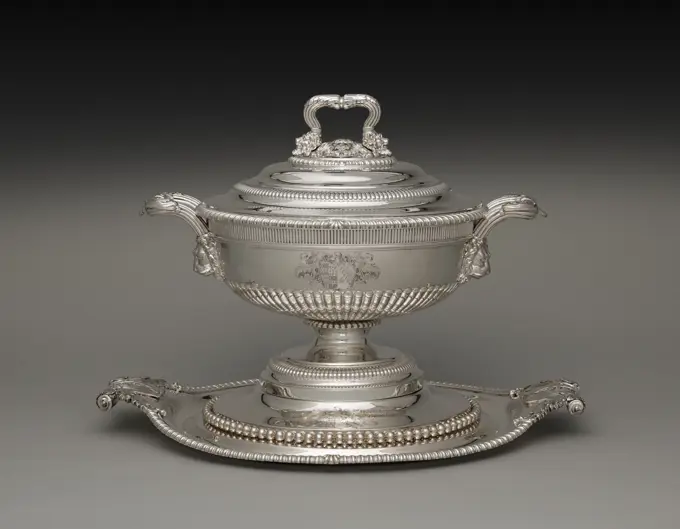
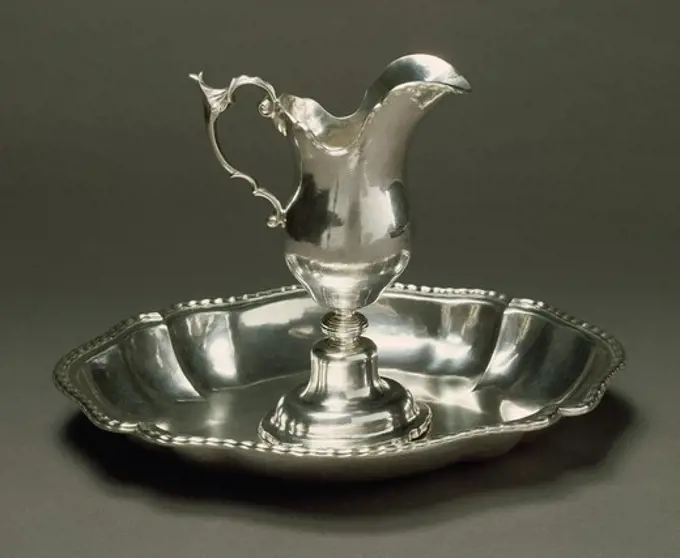
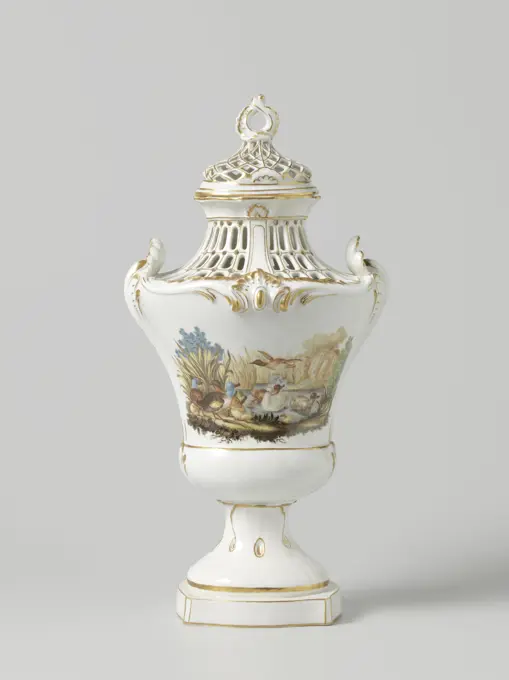
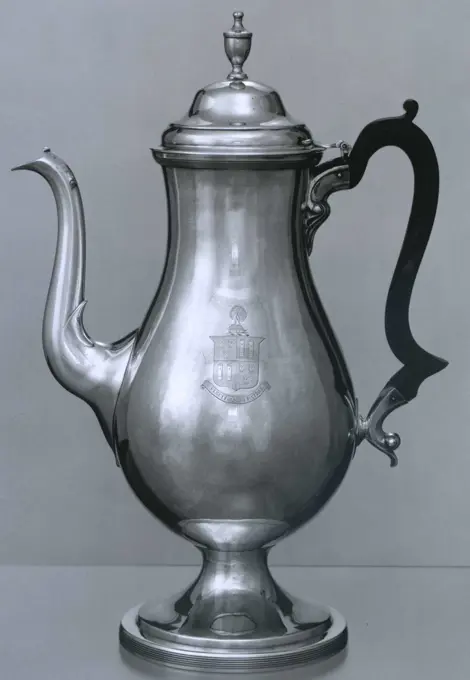
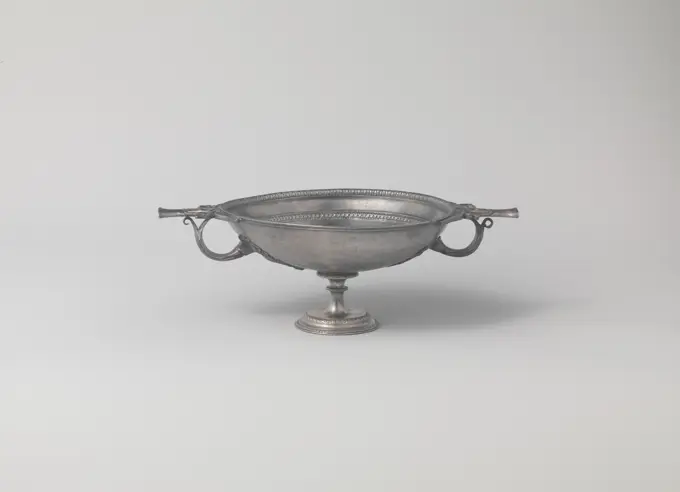
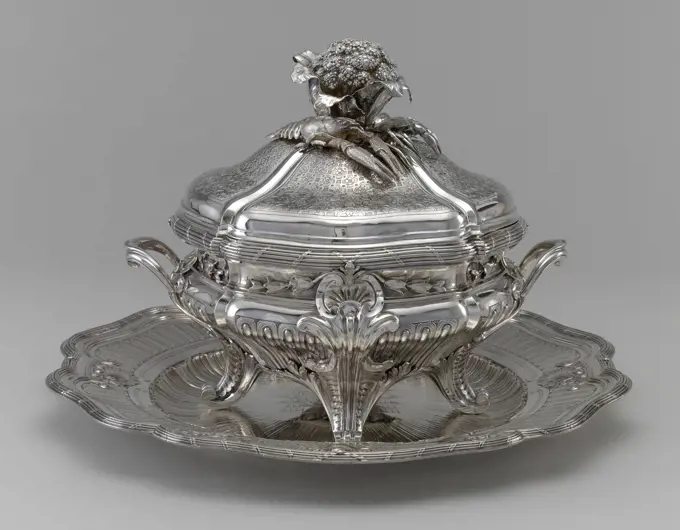
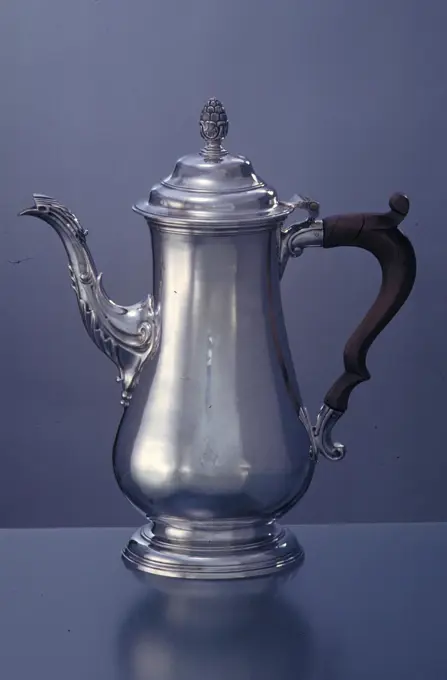
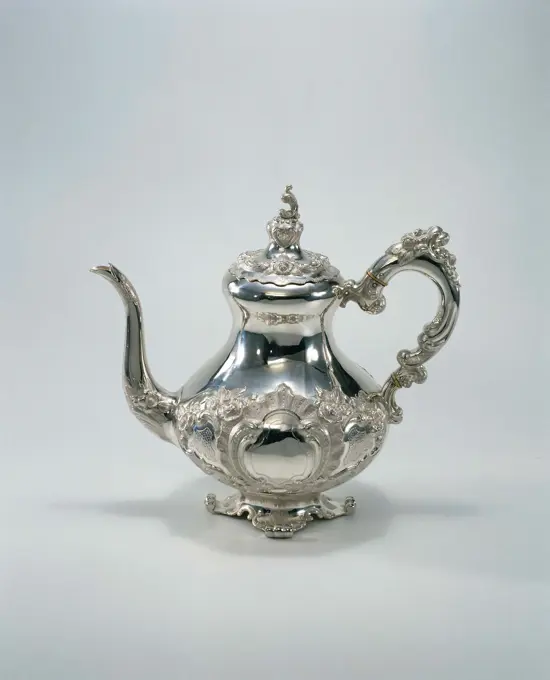
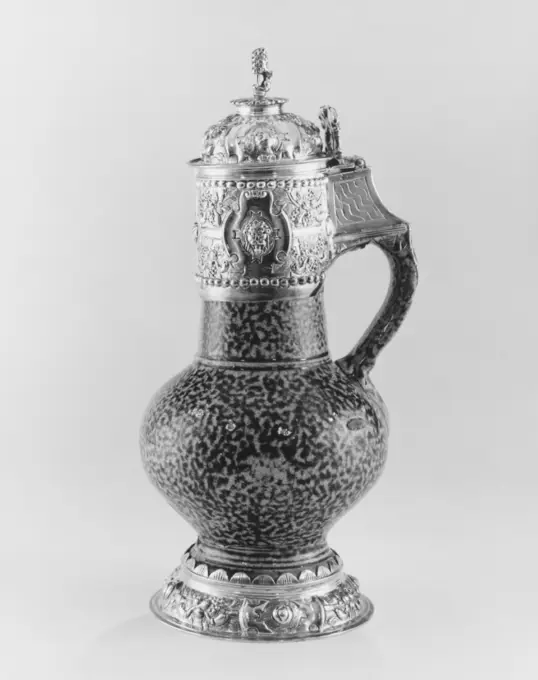
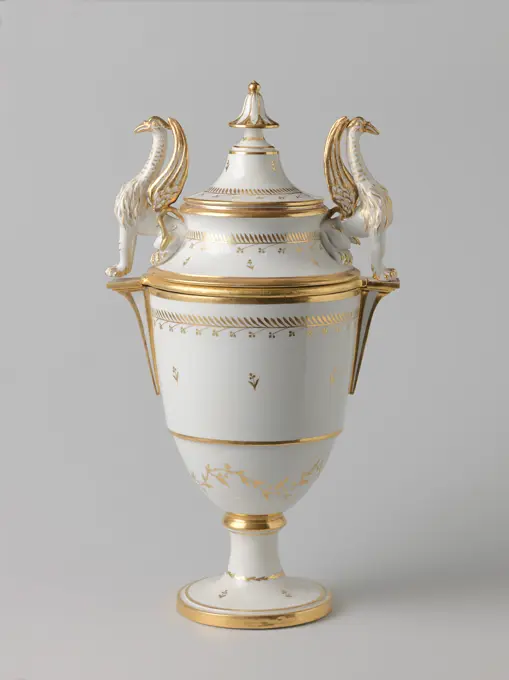
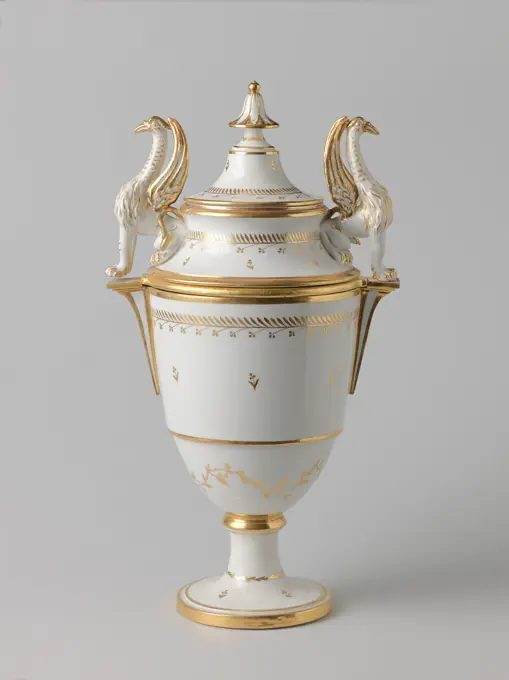
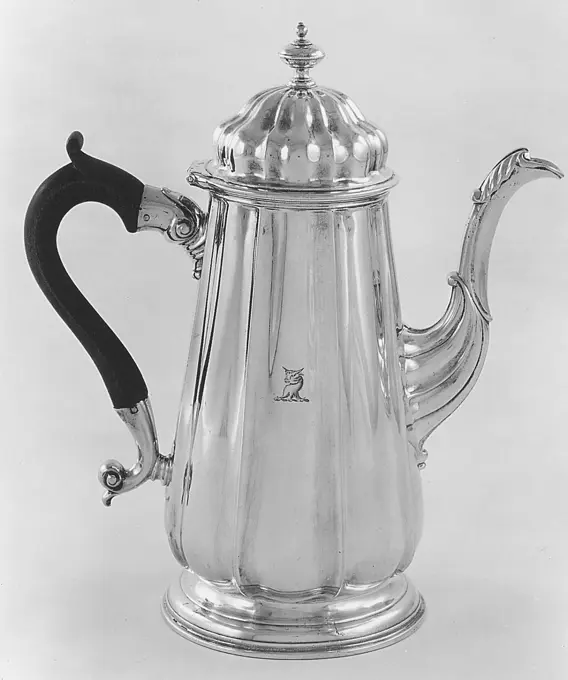
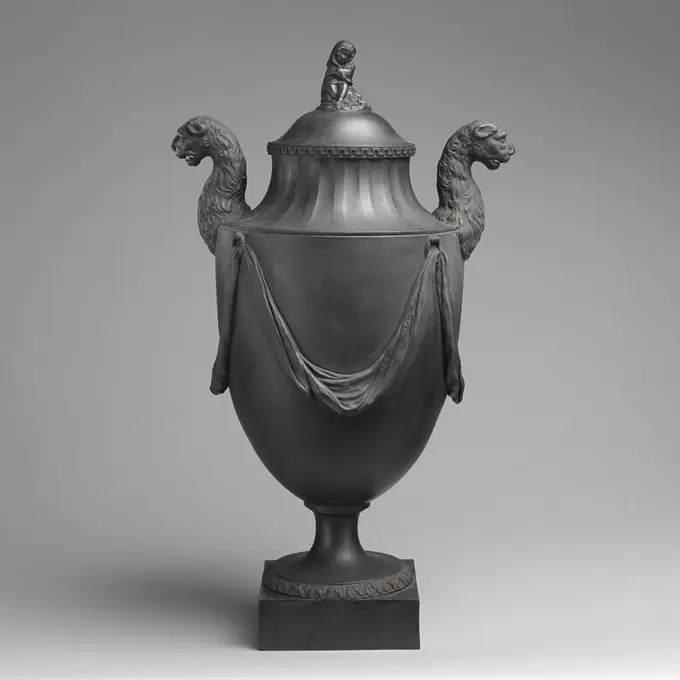
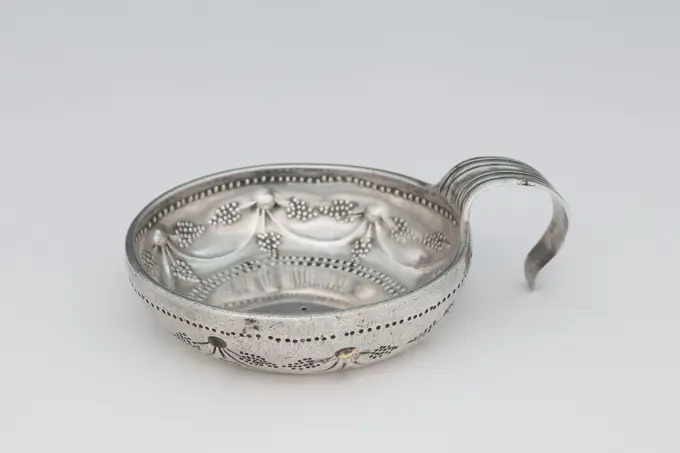
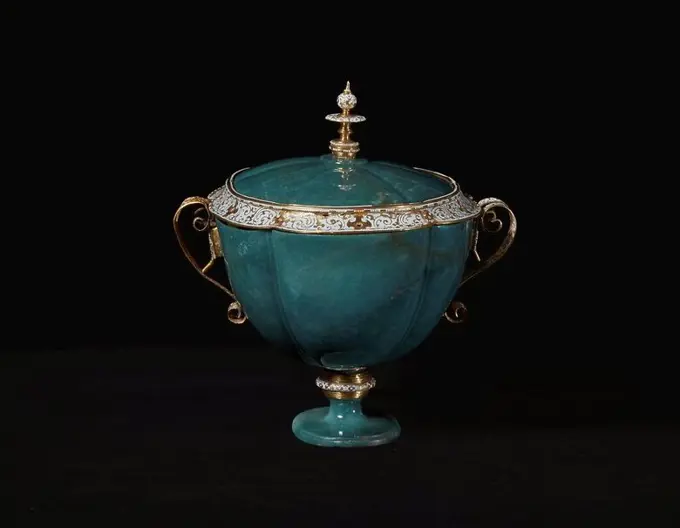
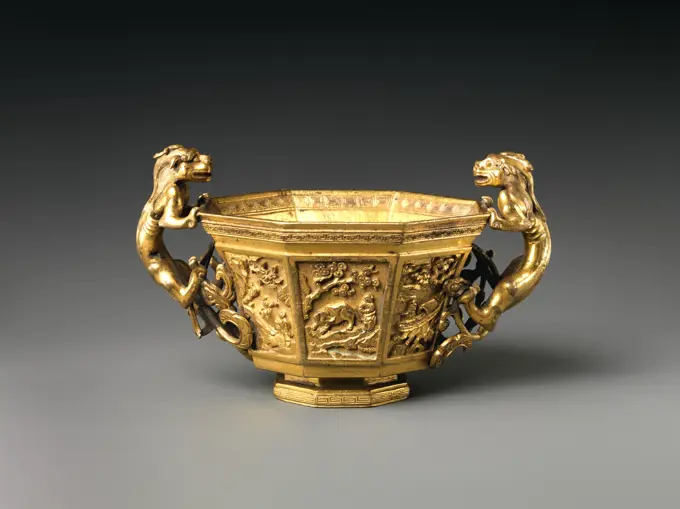
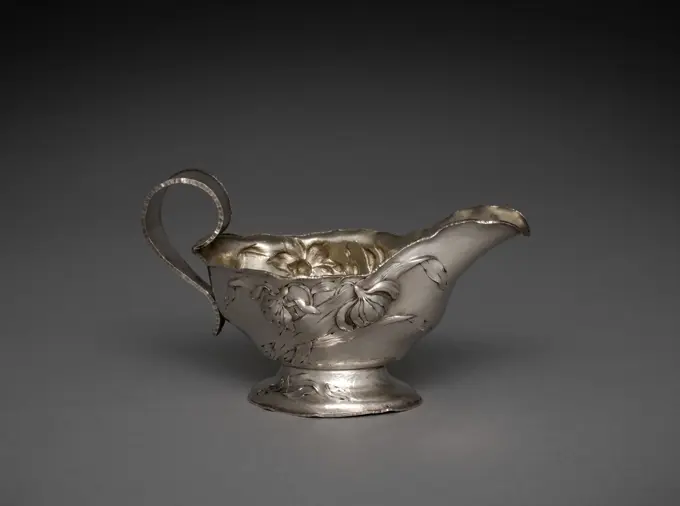
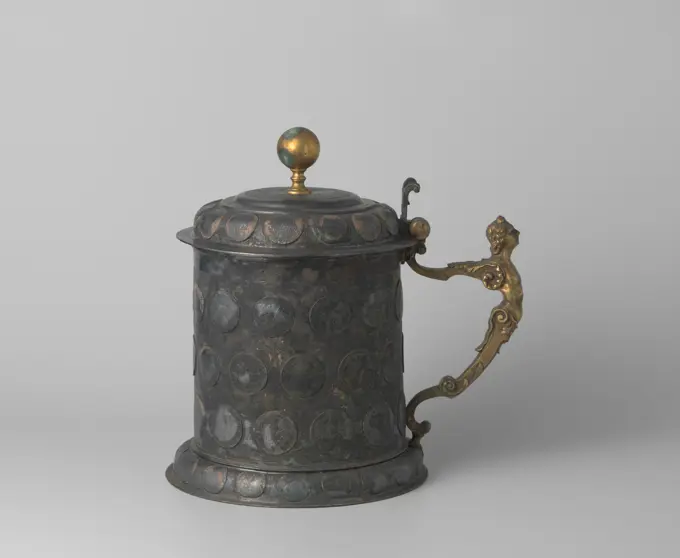
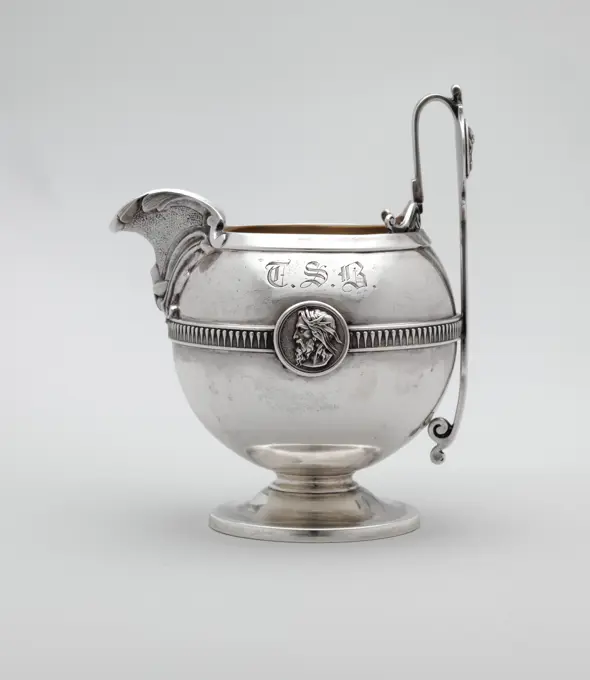
Creamer ca. 1865 Gorham Manufacturing Company The mid-nineteenth century witnessed an efflorescence of creativity in the American silver industry, fueled by the burgeoning middle classs increasing demand for refined luxury goods. Silversmiths devoted considerable time and creative energy to generating an endless variety of new designs and patterns. During the 1860s and 1870s silver flatware ornamented with portrait medallions inspired by antique coins and cameos enjoyed widespread popularity, with virtually every American silversmith producing their own proprietary "medallion" pattern. Gorham Manufacturing Companys designer George Wilkinson patented a medallion flatware pattern in 1864, and the quantity and variety of surviving silver in this pattern attest to its success. Medallions from this flatware pattern ornament the tea set as well as a toast rack (.4) and goblet (.5) in the American Wings collection. Although the three pieces match, they are an assembled set; the teapot is e. Ampoule with a hinged, bold lid and rest on a round foot with flat bottom edge. The base is made up of a brooch and a nurse, rejuvenating part. Along the basic part run on the bottom and at the top semicircular lists. The rejuvenating portion is articulated by a flat ring. The body has a convex belly and a straight wall. Pofiled lists along the middle of the wall and along the top. On one side is a triangular spout, on the other side a ear in the form of a volute. The thumbs of thumbs rest has the shape of a wide-oriented letter. On the lid a letter is engraved above the spout. On one specimen the letter A, on the other the letter V.Pitcher Retrifteryer, Johan Godlieb (17.. 18 ..)Vase 19th century Byzantine. Vase 468769Jug with Cover. England, Staffordshire. Date: 1810-1820. Dimensions: H. 19.1 cm (7 1/2 in.). Lead-glazed earthenware with lustre decoration. Origin: Staffordshire. Museum: The Chicago Art Institute, Chicago, USA.Coffeepot 1823-24 Alois Simpert Eschenlohr Early in the nineteenth century it became the custom to produce pots for coffee and hot milk en suite, and this piece was acquired together with its matching, smaller milk pot (1996.436.2a, b). Eschenlohr, who became a master silversmith in 1824, has taken a simple Neoclassical form and enlivened it with a playful contrast of surface effects, decorative details, and materials. A cherub's head emerges from a cluster of grapes beneath the spout, the cover is topped by a trio of ivory acorns, and the dark smoothness of the handle complements the light-catching fluting of the body. Few works are known by Eschenlohr, who shows himself here to be a masterful and witty designer.. Coffeepot 237244Paul de Lamerie, Two-Handled Cup and Cover, 1730/31, silver.Group of vases. Two of the vases in this group bear the mark of the Porceleinfabriek aan den Amstel, the successor of the Loosdrecht porcelain factory. Just as the factory at Loosdrecht had earlier bought up the stock and moulds of its predecessor in Weesp, so did the factory in Ouderkerk aan de Amstel take over the inventory of Loosdrecht.Coffeepot, Sweetser Co., New York, Silver, gold, ivory, Cylindrical form with applied gold edges and chased with elaborate Chinese landscapes; long curving spout, square in section; shaped handle with ivory insulators. Tapering conical lid with stepped knop., ca. 1915, metalwork, Decorative Arts, CoffeepotCovered butter dish, 19th century, Gorham Manufacturing Company, Providence, Rhode Island, 1865-1967, 5-3/4 x 8-5/16 x 7 in. (14.6 x 21.1 x 17.8 cm), Coin silver, United States, 19th centuryCan with spout in the shape of a lion. The can be composed of the following parts: the foot, the trunk (in two halves), the neck, the handle, the hinge section, which replaces the thumb trust, the lid, the button (cast), the spout (cast and topcized) . The round hull stands on a high round base that widens below. The hull has a belly with the same diameter as the foot, and a high narrow neck, which exists upward something. On the convex lid, a profiled round button is applied to the elevated center. The edges of neck and lid are not obliquely profiled inwards. The spout has the shape of a lion. The handle that swallowed out and slightly inside has a small one-case hinge at the top and ends in a three-leaf at the bottom. Foot, trunk, neck and lid are decorated with coarse profiled ribs. The thumbs rest is missing. Handle, thumb trust and lid knob are riveted.Miniature cream jug. Culture: British, London. Dimensions: Overall: 2 1/8 × 2 1/4 in. (5.4 × 5.7 cm). Maker: Possibly by John Le Sage (British, active 1718-43). Date: 18th century. Museum: Metropolitan Museum of Art, New York, USA.Silver milk jug on legs, milk jug be crockery holder silver, molded (paws ear medallion) Pear shaped body lobed with two narrow pegs above each of the four horseshoe-shaped legs s-shaped ear broken in lower curl scalloped top edge wide lip bottom underside (smashed) serve before serving Fortuna dairy. Servants would go around with ewers and basins at the beginning and end of formal dinners. Water waspoured from the ewer over the hands of the distinguished guests, and the dirty water was caught in the basin. This ewer and basin were the property of Vlissingen. The citys coat of arms - a crowned bottle - and its motto are engraved in the centre of the basin.No maker's mark, Cream Jug, probably 1746/47, silver.Ewer (one of a pair) possibly 1778-92 Attributed to Church Works. Ewer (one of a pair). British, Staffordshire. possibly 1778-92. Black basalt (stoneware). Attributed to Church Works (Hanley, Staffordshire). Ceramics-PotteryNutmeg Grater 1775-ca. 1800 American. Nutmeg Grater 16309Pitcher ca. 1805 Jesse Churchill. Pitcher 9774Tea or hot water urn 1799 John McMullin The yellow fever epidemics of 1793 and 1798 devastated the city of Philadelphia, killing thousands and forcing many to flee what was then the nations capital and largest city. Among those who remained behind to tend the stricken was Dr. Philip Syng Physick, “the father of American surgery.” For his exceptional dedication and self-sacrifice, the board of managers of the City Hospital presented him with these two magnificent pieces of silver—a tea tray and a hot-water urn—fashioned in the Neoclassical style, with bright-cut paterae and floral festoons. Each piece is engraved with the dedicatory inscription “From the Board of Managers of the Marine & City Hospitals to Philip Syng Physick, M.D., this Mark of their respectful approbation of his voluntary and inestimable services as Resident Physician at the City Hospital in the Calamity of 1798.”. Tea or hot water urn 20422Wrought-silver pitcher (aiguiere casque)Sugar bowl. Culture: American. Dimensions: 9 1/16 x 6 1/4 in. (23 x 15.9 cm). Maker: Wood and Hughes (1845-99). Date: 1862-63.Presented to Christian Dorflinger upon his retirement from the Long Island Flint Glass Works in 1863, this service (2006.90.1-4) is ornamented with meticulously chased scenes of the glassworks itself. The sugar bowl is ornamented with an image of the exterior of the factory building. The finials, cast in the form of glassblowers, also reference Dorflinger's trade. Dorflinger was one of the most successful nineteenth-century American glassmakers, operating several factories in Brooklyn before his retirement. He later established a thriving glasshouse in White Mills, Pennsylvania. The Museum has two important glass items from Dorflinger's Brooklyn period: an 1859 presentation vase (1988.391.1) and an 1861 compote (1972.232.1) made for President and Mrs. Abraham Lincoln. Museum: Metropolitan Museum of Art, New York, USA.Cann 1740-50 William Swan. Cann 5368. The wine fountain and the cooler, used to rinse ones hands and wine glasses, formed the decorative centrepiece of a lavish buffet. These were presented to Cornelis Schrijver in gratitude for his heroic naval deeds, alluded to by the reliefs with trophies of arms, fish, shells and sea gods.Inkstand.  Maker: Harvey Lewis, American, active ca. 1805-28Patron: Elizabeth Willing Powel, American, 1743-1830Honorand: Sophia Harrison Otis, American, 1798-1874Cann ca. 1750 Joseph Moulton. Cann 5356. Can with lid of gold-plated silver, on a round foot. The vessel is cylindrical with a smooth spout and a handle that is formed by 2 C volutes. The can be decorated with flowers and leaves. On the front a mirror monogram with the letters Eavb (Elisabeth van Nassau Beverweerd).Cann.   Maker: Bartholomew Le Roux II, American, 1717-1763 Engraver: Joseph Leddell, Sr., American, ca. 1690-1754Pair of urns. Culture: British, Hanley, Staffordshire. Dimensions: Height (each): 9 5/8 in. (24.4 cm). Maker: John Neale. Date: 1778-80. Museum: Metropolitan Museum of Art, New York, USA.AJLC Berger. "Cup". Money. 1811-1819. Museum of Fine Arts of the City of Paris, Petit Palais. 74382-17 Money, silverware, gobletPitcher.   Maker: John & James Cox, American, active ca. 1817-53Tankard, 1715-1720. John Edwards (British). Silver; with handle: 17.3 x 16.1 cm (6 13/16 x 6 5/16 in.).Flagon 1840-60 French, Lille. Flagon 207855Wine jug onion with cover; Malcz, Karol (1797-1867); 1864 (1864-00-00-1864-00-00);Sheffield plate coffee pots in Adam style, with wooden handlesEwer, anonymous, c. 1550 - c. 1570 Can from rock crystal with a high -placed ear. Gold frame with black and white enamel. Decorated with rank ornament and a frieze palm tabs in matt sharpening. France gold (metal). Can from rock crystal with a high -placed ear. Gold frame with black and white enamel. Decorated with rank ornament and a frieze palm tabs in matt sharpening. France gold (metal).Przeszo Przyszoci unknownCover of a teapot with a gothic arcade decoration, Perche, c. 1800 - c. 1899 Cover of a porcelain teapot, painted in underly glaze blue and on the glaze gold. Decorated with a gothic arch decoration against a blue background. Pointed lid button. Saint-Yrieix-la-Perche porcelain. glaze. cobalt (mineral). gold (metal) painting / gilding / vitrification Cover of a porcelain teapot, painted in underly glaze blue and on the glaze gold. Decorated with a gothic arch decoration against a blue background. Pointed lid button. Saint-Yrieix-la-Perche porcelain. glaze. cobalt (mineral). gold (metal) painting / gilding / vitrificationJ. B. Jones & Company, Pitcher, c. 1835, silver.Pitcher, embossed and poly-chromed, brown and green, England, 18th-mid-19th century, ceramics, Decorative Arts, PitcherA can with a lidCoffee pan of dark brown glazed earthenware, Anonymous, 1815 Coffee pan with two ears, from dark brown glazed pottery. The coffee pot is on a fixed, openwork foot. Dated with open numbers: 1815. Kraast the letters AVDW. Netherlands earthenware vitrification Coffee pan with two ears, from dark brown glazed pottery. The coffee pot is on a fixed, openwork foot. Dated with open numbers: 1815. Kraast the letters AVDW. Netherlands earthenware vitrificationNeoclassical vase (one of a pair) 1780-85 French One of a pair (see 07.225.13b), this ornamental vase on its marbleized stand can be seen in historic photographs of Georges Hoentschels showroom in Paris. The inscription and accession number on the pedestal were added after J. Pierpont Morgan gave the Hoentschel collection to the Metropolitan Museum.. Neoclassical vase (one of a pair) 209194Teapot.   Maker: McMullin and Black, active ca. 1811 - 1813Helmet-shaped ewer, 1709, Formerly attributed to Nathaniel Lock, English, 10 1/2 x 10 1/4 x 6 in. (26.67 x 26.04 x 15.24 cm), Silver, France, Queen AnnePrzeszo Przyszoci Drent wheets, Philipp jakob v (1677 1742)Water bowl, anonymous, 1680 Silver water bowl. The bowl, of which foot and barrel are eight -lobed, is decorated with driven flowers in relief, ombo and separated by dry and hard lobe ornament. On both sides an S-shaped ear on which a head with high hairstyle. Batavia silver (metal) Silver water bowl. The bowl, of which foot and barrel are eight -lobed, is decorated with driven flowers in relief, ombo and separated by dry and hard lobe ornament. On both sides an S-shaped ear on which a head with high hairstyle. Batavia silver (metal)Galvanoplastic reproduction of a drinking jug with lid with performances of mythological figures. Galvanoplastic reproduction of a drinking jug with lid with driven and hammered representation of Mercury and other mythological figures surrounded by leafwork and fruits. The button of the lid is formed by a bird (missing). Gold plated.Louis-Constant de la Boissière. "Cup". Money. 1783-1784. Museum of Fine Arts of the City of Paris, Petit Palais. 74381-25 Money, silverware, gobletBowl 17th century Italian, Venice (Murano) During the Renaissance, Venetian glassmakers, working on the island of Murano, were celebrated across Europe for their fine and sparkling work. Called cristallo” emulating the clarity of rock crystal, in the hands of the most skilled glassblowers the medium could be delightfully manipulated, variously stretched paper-thin flat, or playfully twisted, or blown into molds with spectacular patterns.. Bowl. Italian, Venice (Murano). 17th century. Glass. GlassBowlKraantjeskan, Hendrik Duller, c. 1776 - c. 1811 Kraantjeskan on three legs bent out. The button of the lid is a flower, the button of the tap is also a flower. The handle is rectangular and at the bottom. The Kraantjeskan is marked: stk. = Amsterdam, Mt. = Hendrik Duller. Amsterdam silver (metal) Kraantjeskan on three legs bent out. The button of the lid is a flower, the button of the tap is also a flower. The handle is rectangular and at the bottom. The Kraantjeskan is marked: stk. = Amsterdam, Mt. = Hendrik Duller. Amsterdam silver (metal)Covered Tureen on Stand, 1812. Paul Storr (British, 1771-1844). Silver; overall: 35.2 x 43.2 cm (13 7/8 x 17 in.). Silver fulfilled a prominent role in projecting wealth, status, power, and ritual in British life during the 1600s and 1700s. Elaborate forms such as this tureen, with its lionhead finials, acanthus leaves, and fluted detailing, not only represented wealth in its sheer silver weight but also provided royal and aristocratic owners a surface for displaying engraved coats of arms. The arms of the High Sheriff of Yorkshire, Timothy Hutton and his wife Elizabeth Chaytor of Spennithorne Hall in northern England are engraved on this tureen and stand by Paul Storr, one of the most prominent London silversmiths of the period.Silversmith's art, Germany, 18th century. Silver ewer and basin. Augsburg, around 1775.Two-handled cup 1729-30 Robert Pilkington. Two-handled cup 208971Cup with Gilded-Silver Mounts 1375-1400 French or Italian Originally, a second cup would have been inverted on top of this one.. Cup with Gilded-Silver Mounts. French or Italian. 1375-1400. Rock crystal, silver, silver-gilt, enamel. Lapidary Work-CrystalGroup of Vases, Manufactuur Oud-Loosdrecht, 1784 Vase of porcelain. The neck and lid are open. Painted with ducks in a pond on one side, a landscape on the other. Loosdrecht porcelain Vase of porcelain. The neck and lid are open. Painted with ducks in a pond on one side, a landscape on the other. Loosdrecht porcelainSampson Bennett, Teapot, 1735/36, silver.probably Boston and Sandwich Glass Works, Cream Pitcher, c. 1826-40, colorless lead glass.Measure. Culture: French, Normandy. Dimensions: 5 3/4 × 3 1/2 in. (14.6 × 8.9 cm). Date: 18th century. Museum: Metropolitan Museum of Art, New York, USA.Coffeepot.   Maker: John Vernon, American, active 1787-1816Coffeepot, c. 1755, Alexander Petrie, American, (Charleston, South Carolina), active 1735 - 1775, 10 1/4 x 9 3/8 x 4 5/16 in. (26.04 x 23.81 x 10.95 cm), Silver, wood, United States, 18th century, Tea was the hands-down favorite hot drink in Britains North American colonies, partly because coffee, which had to be ground, required more effort to brew. But for wealthy households with servants or enslaved labor, serving coffee could be a subtle show of wealth and social station. That may have been one reason the original owners of this pot commissioned it. The silversmith, Alexander Petrie, worked in in Charleston, South Carolina.. This tobacco box has features associated with two different styles. The curved shape and pierced lower border with rocailles (the foamy’ forms) are typical of the Rococo. The vertical grooves (fluting) on the box and the lid, the laurel wreaths and the precisely rendered flowers of the finial, by contrast, are part of the Neoclassical repertory. Many objects, including furniture, were made in such a hybrid style.Skyphos ca. 325-300 B.C. Greek, South Italian, Apulian. Skyphos 253588 Greek, South Italian, Apulian, Skyphos, ca. 325300 B.C., Terracotta, H. 14.76 cm. Diameter w/ handles 23.5 cm.. The Metropolitan Museum of Art, New York. Bequest of May Blackstone Huntington, 1938 (39.148.17)Silver drinking cup 1st century B.C.-1st century A.D. Roman These cups are an unusual variant among silver vessels of the Republican period, combining as they do Hellenistic Greek elements (the handle palmettes) with Roman traits (the form of the handles as well as the treatment of the interiors of the bowls).. Silver drinking cup 255980Lidded Tureen, Liner and Stand (one of a pair); Thomas Germain (French, 1673 - 1748 (master 1720)); Paris, France; 1744 - 1750; Silver; 28.4 × 34.9 × 28.3 cm (11 3,16 × 13 3,4 × 11 1,8 in.)Coffeepot.   Maker: Samuel Minott, American, 1732-1803Inner box of blue glass, Nathanael Teuter, 1805 Inner box of blue glass. Amsterdam glass Inner box of blue glass. Amsterdam glass. The coffee pot has a loose bell-shaped lid, awarded by a full-shaped button, a curved spout and an ear-built ear, which is decorated at the top of high reliefs with flowers, and in which two ivory rings are included. The pear-shaped body rests on a vaulted stand ring with four claw-like legs. On the front and back of the body there is an empty cartouche, surrounded by symmetrically applied seed beads, foamy motifs and C and S volutes. These motifs are also applied to the lid. The base of the spout is decorated with flowers, the foot with C-Volutes.Teapot and lid, Silver, ivory, Round body, plain round stepped foot and neck; long curved bamboo-shaped spout; looped bamboo-shaped handle; flat domed lid, hooked bamboo-shaped finial; répoussé bamboo pattern on body, with shield engraved 'ACML'; lid has répoussé bamboo and acanthus leaf pattern., China, 1865-85, metalwork, Decorative Arts, Teapot and lidCovered Vase 1795-1805 England. Glass .Chamberstick (one of a pair) 1816-17 William Elliott. Chamberstick (one of a pair) 236148Sugar bowl and creamerset.   Maker: Samuel Williamson, American, 1772-1843silver tea service piece, 19th century, cathedral museum, Mdina, Republic of Malta, Europe.Wine Fountain 1713. Used to rinse wine glasses before they would have been brought to guests at the dining table.Jug ca. 1580-90 C. Eston. Jug. British, Exeter. ca. 1580-90. Stoneware, silver parcel-gilt. Metalwork-Silver In CombinationBin of Kastanjevaas decorated with griffins. Bake from Kastanjevaas with ears in the form of griffins.Kastanjevaas decorated with griffins. Kastanjevaas decorated with griffins.John Fossey, Coffeepot, 1737/38, silver.Vase with cover. Culture: British, Etruria, Staffordshire. Dimensions: Height: 16 3/4 in. (42.5 cm). Factory: Wedgwood and Bentley (1760-80). Date: 1769-80. Museum: Metropolitan Museum of Art, New York, USA.Silversmith's art, Germany, 18th century. Silver tureen with plate marked Bernhard Heinrich Weyhe. Augsburg, 1759-1761.Silversmith's Art, Italy 19th century.  Silver, oval bowl.Czarka; YtySse, Jean-Joseph X; 1735-1737 (1735-00-00-1737-00-00);Workshop of the Miseroni / 'Heliotrope drinking vessel with cover and gold handles'. Ca. 1610. Enamel, Bloodstone, Gold. Museum: Museo del Prado, Madrid, España. Author: TALLER DE LOS MISERONI.Coffee Service. Gorham Manufacturing Company; American, founded 1831; Providence, Rhode Island. Date: 1900. Dimensions: Coffee pot: 27.9 × 18.4 cm (11 × 7 1/4 in.); Sugar bowl: 8.3 × 15.9 cm (3 1/2 × 6 1/4 in.); Cream jug: 12.4 × 10.8 cm (4 7/8 × 4 1/4 in.); Tray: 31.1 cm (12 1/4 in.) square. Silver. Origin: Providence. Museum: The Chicago Art Institute, Chicago, USA.Galvanoplastic reproduction of a drinking jug with roller and leafwork. Galvanoplastic reproduction of a drinking jug driven, hammered and engraved with roller and leafwork. Gold plated.Teapot, spherical, with cracks on the spout, Benten, 1849 firm The constricted foot rests on the base, which has a light convex wall. The printed Bolle Vat shows a large round opening in the top, in which the loose lid fits. The lower part of the S-shaped bent spout is decorated with large knots. The upper silver rose of the C-shaped bent rosewood ear is decorated with a leaf volute. Cable edges run around the base and around the opening. The light vaulted lid has a twisted mushroom -shaped button of walnut, which is crowned by a small silver cap. Amsterdam silver (metal). rosewood (wood). walnut (hardwood) The constricted foot rests on the base, which has a light convex wall. The printed Bolle Vat shows a large round opening in the top, in which the loose lid fits. The lower part of the S-shaped bent spout is decorated with large knots. The upper silver rose of the C-shaped bent rosewood ear is decorated with a leaf volute. Cable edges run around the base and around the opening. The lCup, purple red fond with golden piping and ear. Cup of porcelain, part of a coffee set, with purple red fond and golden piping and ear. On top of a broad golden trim in which engraved leaf drink. No brand.Octagonal cup with dragon handles 17th century China This cup is extraordinary both for its design and fine casting. Each panel presents a different legendary story conveying auspicious wishes of traditional values.. Octagonal cup with dragon handles. China. 17th century. Gilt bronze. late Ming (1368-1644)- early Qing (1644-1911) dynasty. MetalworkSauce Boat and Tray, c. 1890. Barbour Silver Company (American), attributed to William Christmas Codman (British, 1839-1921). Silver; overall: 11.4 x 19.7 x 9.8 cm (4 1/2 x 7 3/4 x 3 7/8 in.).Cann.   Maker: Samuel Minott, American, 1732-1803Ice Cream Cooler. Vienna State Porcelain Manufactory; Austrian, 1744-1864. Date: 1804. Dimensions: H. 39.8 cm (15 11/16 in.). Hard-paste porcelain and enamel decoration. Origin: Vienna. Museum: The Chicago Art Institute, Chicago, USA. Author: Du Paquier Porcelain Manufactory.Cream jug 17th century Flemish. Cream jug 193296Milk Jug 1815-1825 Paris. Hard-paste porcelain, polychrome enamels, and gilding . Denuelle Porcelain Manufactory (Manufacturer)Tankard.   Maker: Nicholas Roosevelt, American, 1715-1769French Cacheke. French Cacheke.Hot WaterUrn.   Maker: William Holmes, British, 1760-1800Galvanoplastic reproduction of a drinking jug in which German Daalders. Galvanoplastic reproduction of a drinking jug in which neutical German Daalders have been deployed; with engraved and driven band work ornament; The handle is formed by a half-man. Partially plated.Jug of tin with lid. Jug of tin. There is a convex belly on the stand ring, which permeates a narrow, cylindrical neck. The lip edge is decorated with two profiled tires. The lid is slightly vaulted and has a raised circle in the middle. The thumb trust is formed by two fucks, one of which is facing the side. Through a one-day hinge, the thumb trust runs over in the handle, which bends slightly down at the bottom.Pitcher. England, Staffordshire. Date: 1810-1820. Dimensions: H. 29.2 cm (11 1/2 in.). Lead-glazed earthenware with lustre decoration. Origin: Staffordshire. Museum: The Chicago Art Institute, Chicago, USA.Teapot.   Maker: Paul Revere, American, 1735-1818