Antique Swords and Sheaths

Display of historical weaponry including decorative swords and sheaths, featuring unique designs and materials reflecting their origins.
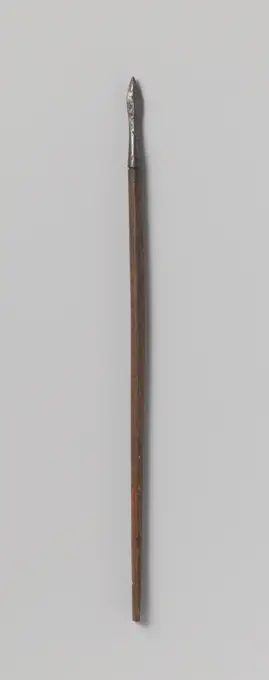
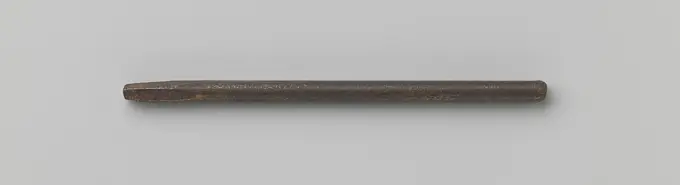
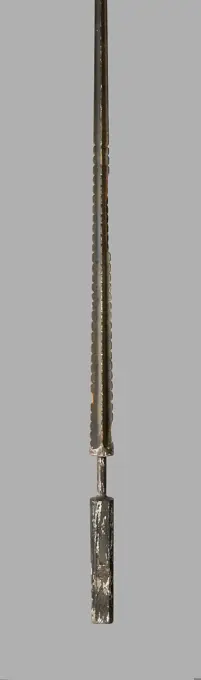
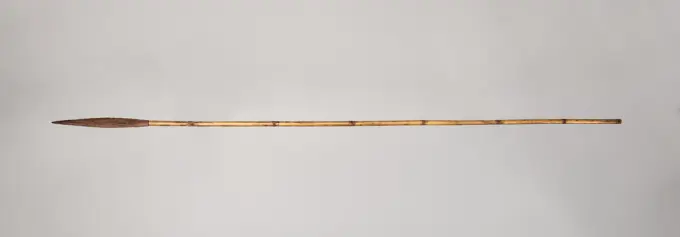
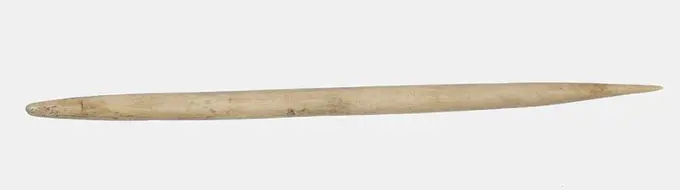
War leg, anonymous, 1476 - 1500  War leg from the arsenal of the PatroUlus church in Soest in Westphalia. Wooden shaft with wrought iron point. The wooden springs are missing. Westphalia (possibly) Point: Iron (Metal). Arrow: Wood (Plant Material) cutting / forging  Soest (Utrecht). Westphalia
War leg, anonymous, 1476 - 1500 War leg from the arsenal of the PatroUlus church in Soest in Westphalia. Wooden shaft with wrought iron point. The wooden springs are missing. Westphalia (possibly) Point: Iron (Metal). Arrow: Wood (Plant Material) cutting / forging Soest (Utrecht). Westphalia
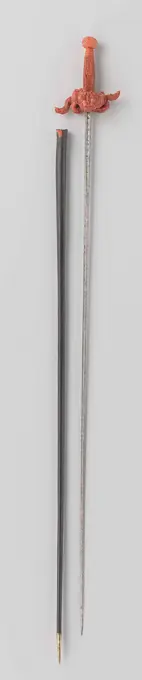
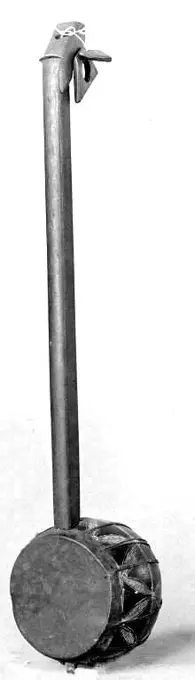
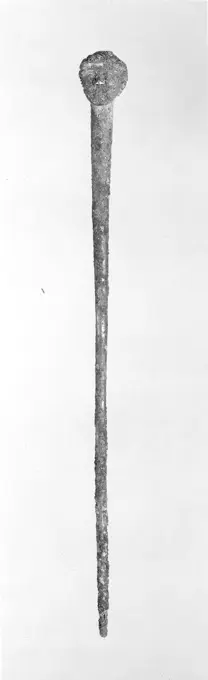
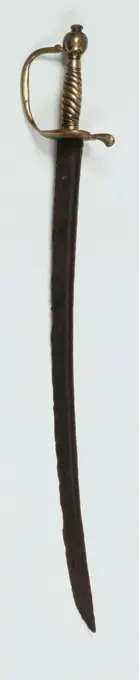
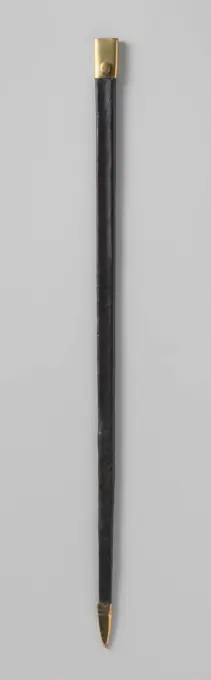
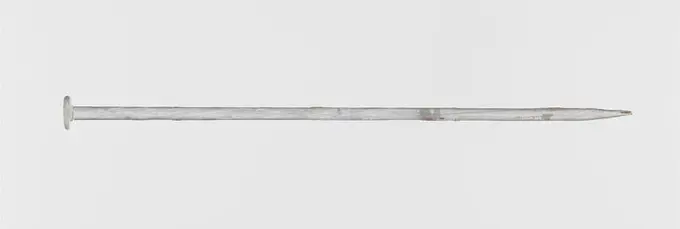
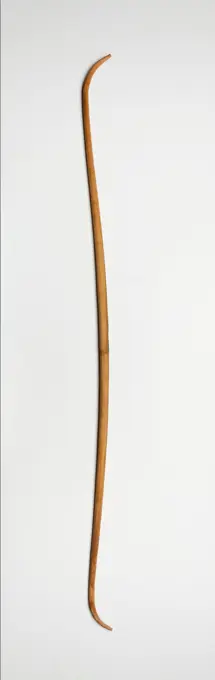
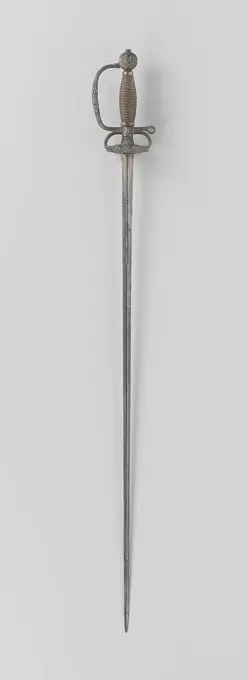
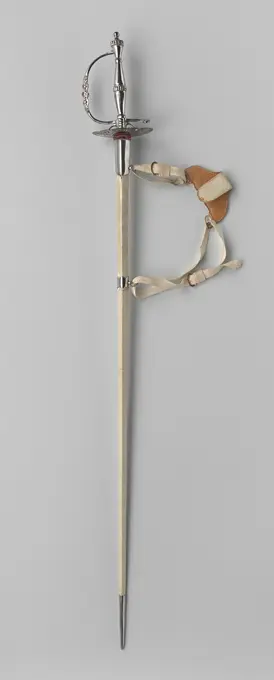
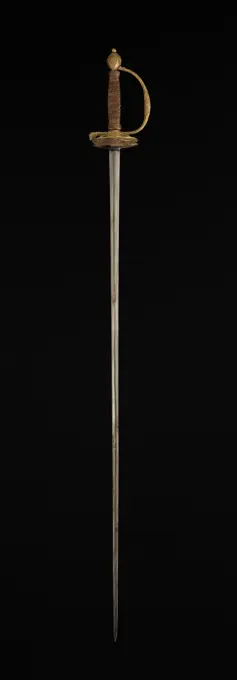
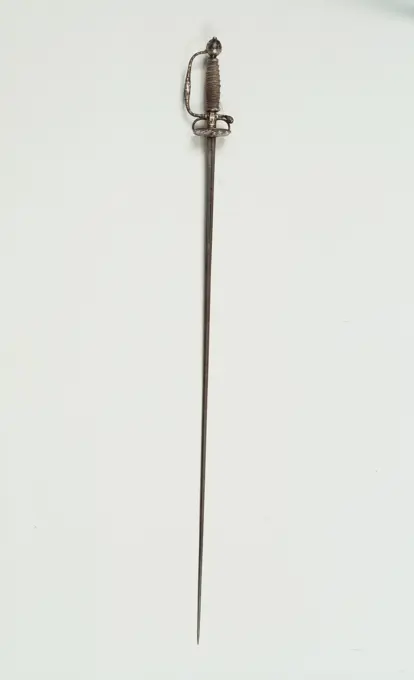
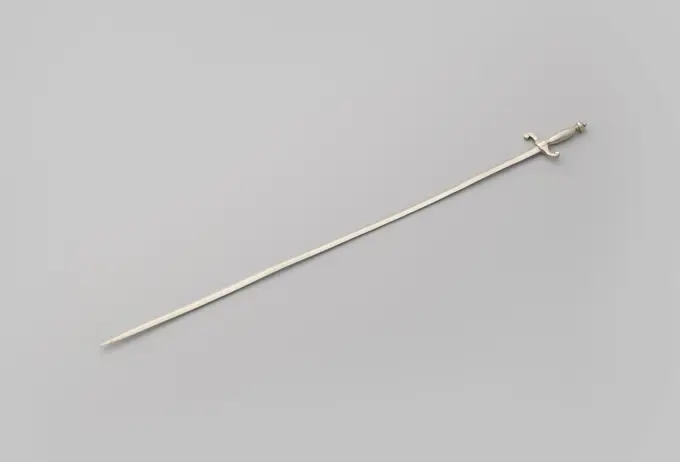
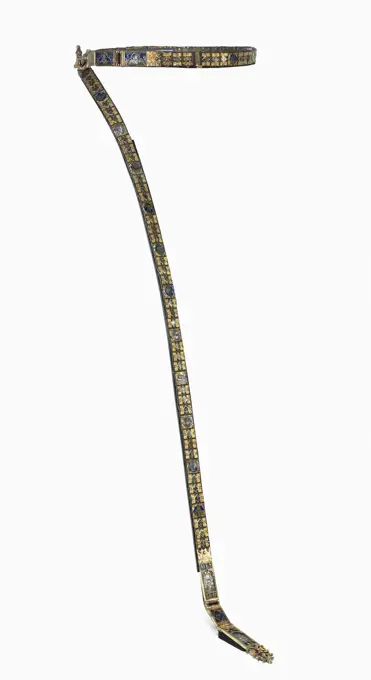
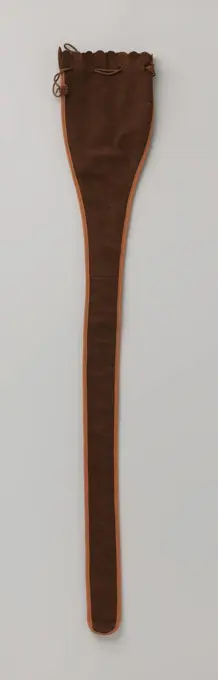
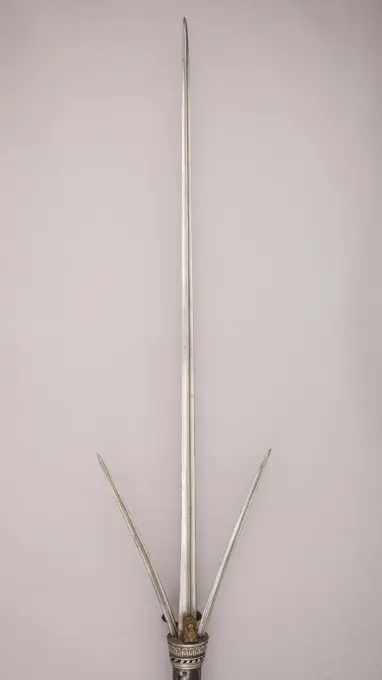
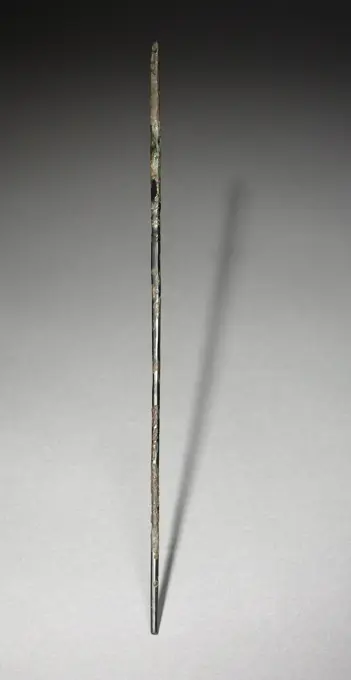
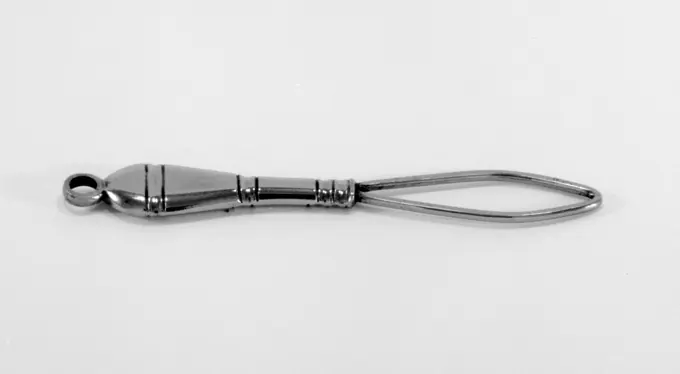
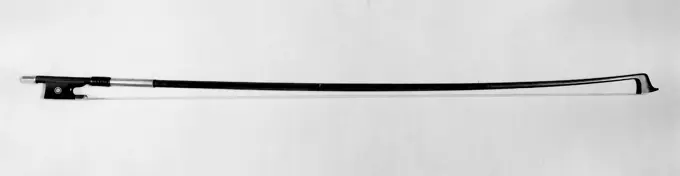
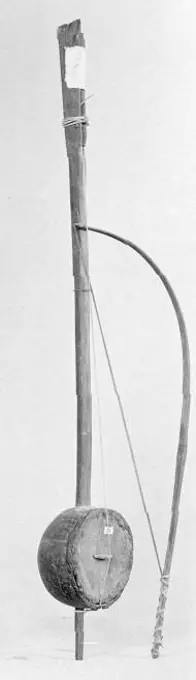
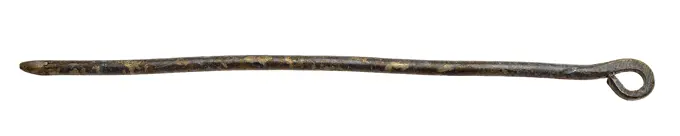
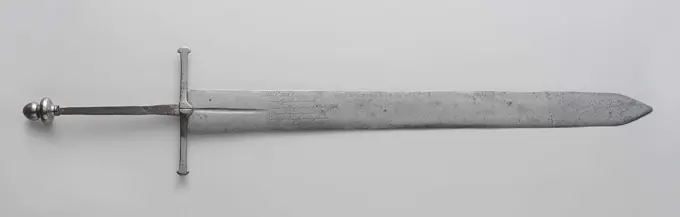
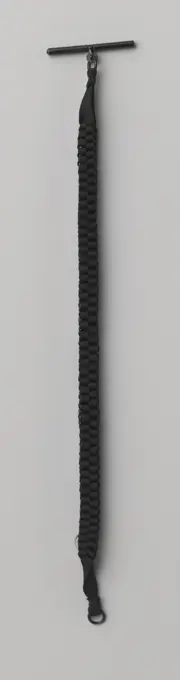
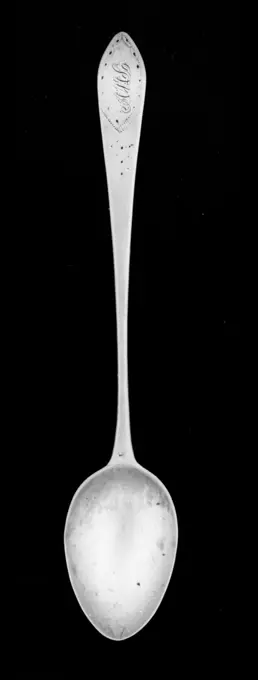
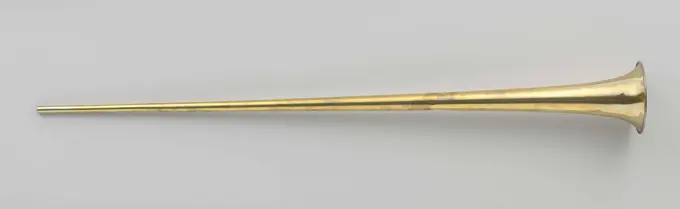
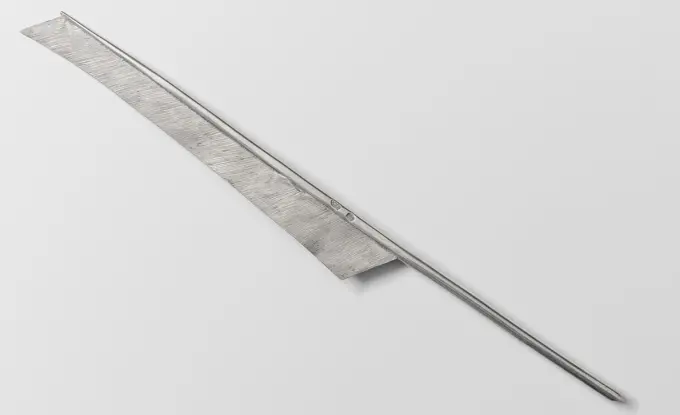
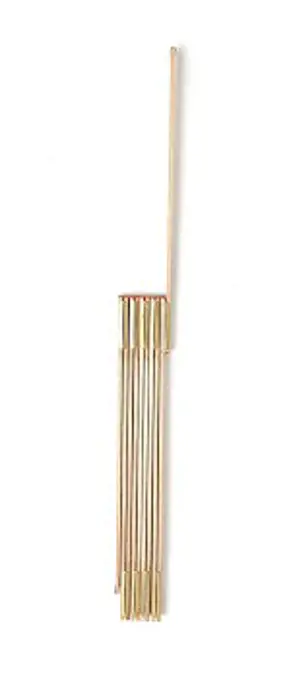
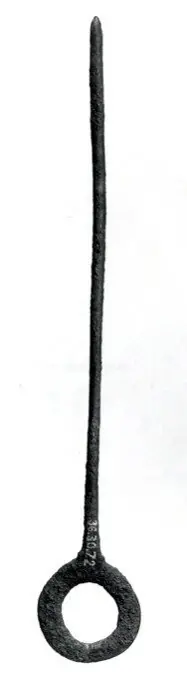
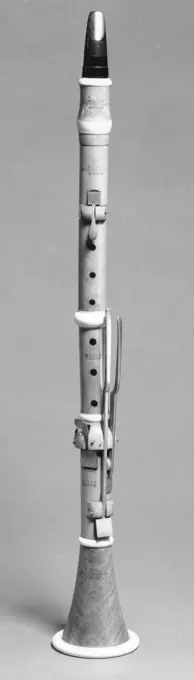
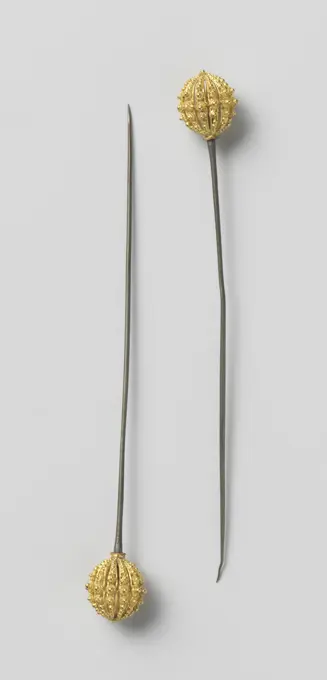
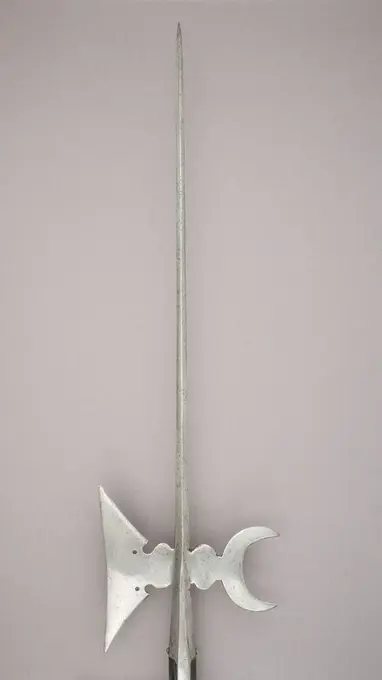
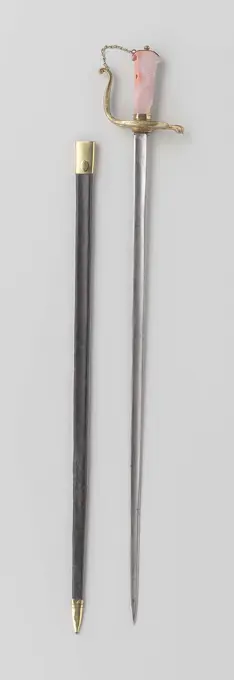
Hartsvanger met schede van Cornelis Tromp.Hartsvanger with sheath of Cornelis Tromp. A Hartschaper with Geelkoperen het Pointilled small ornaments are applied. The handle is of one piece of agate. The agate is broken. Clothing with broad back. No brands or inscriptions. Probably the hole is missing a gold-plated fist chain that the pearl rod with the handle cover. With leather sheath with copper fittings (not in the arrangement).Kama kanjarWalking stick of Johan van Oldenbarnevelt.Only one of the various walking sticks said to have been used by Oldenbarnevelt on the morning of hisbeheading can actually be genuine. If there is one with a good claim to authenticity, then it is this one. It wasonce the property of Oldenbarnevelts son Reynier.Rapier of Michiel de Ruyter.In 1675 Michiel de Ruyter was presented with this rapier with a blood-coral hilt by the Marqués de los Vélez, Spanish Viceroy of Naples. De Ruyter and his fleet had foiled an imminent attack by the French fleet in the Bay of Naples. The equestrian figure on the hilt is a reference to the name De Ruyter (The Cavalryman or Rider).Guenbri late 19th century possibly Algeria. Guenbri. possibly Algeria. late 19th century. Coconut shell. Algeria. Chordophone-Lute-plucked-unfrettedPin terminating in a male head ca. 1st century A.D. Parthian or Kushan. Pin terminating in a male head 327524Sabel van het tweede regiment Waldeck.Sable with copper hilt, consisting of button, twisted handle, front bracket, heart shaped baffle plate, half pearl rod. On the underside of the baffle plate is engraved: '2 tere! GE Deck B-no 48'. Crooked blade with trench.War leg, anonymous, 1476 - 1500  War leg from the arsenal of the PatroUlus church in Soest in Westphalia. Wooden shaft with wrought iron point. The wooden springs are missing. Westphalia (possibly) Point: Iron (Metal). Arrow: Wood (Plant Material) cutting / forging  Soest (Utrecht). WestphaliaSchede of heart catcher with Schemer of Cornelis Tromp.Leather Sheath With Copper.Hartsvanger, Puttelaar (II), Anthony VAN, 1735 - 1750 hunting hanger Heart catcher or hunting sword. The hilt of cast yellow buyer is silver -plated and completely fitted in relief decoration as a classic warrior on a prancing horse, where the helmeted head of the warrior with a turban -like helmet forest forms the rag button; The fist bracket has a thickening in the middle on which a female naked is depicted on one side and on the other a bearded male nude; There is a martial trophy on the parent block; The hanging bump plate is decorated with a classic warrior on a martial trophy flanked by curly acanthus leaves. The two -time blade has an oval cross -section and is equipped with a short groove, etched with the name and address of the sword sweeper. Amsterdam brass (alloy). silver (metal) casting / etching riding a horse, ass, or mule; rider, horseman. the soldier; the soldier's lifeGamba Bow 18th century Unknown. Gamba Bow 503599Glass pin. Culture: Roman. Dimensions: 4 3/8 × 1/8 in. (11.2 × 0.3 cm)Diameter (diameter of head): 1/4 in. (0.7 cm). Date: 1st century A.D..Colorless.Circular cross section; upper end tooled into a flat disk; lower end tapering to a point.Intact; striations and a few pinprick bubbles; pitting and weathering. Museum: Metropolitan Museum of Art, New York, USA.Sheaths to the Sabel of Maarten Harpertszn. Tromp, Anonymous, 1650 - 1700 sheath Leather sheath with engraved silver frame.  frame: Silver (Metal). Schede: Leather engraving ornaments ~ artBow ca. 1492-1473 B.C. New Kingdom. Bow. ca. 1492-1473 B.C.. wood. New Kingdom. From Egypt, Upper Egypt, Thebes, Sheikh Abd el-Qurna, Tomb of Senenmut (TT 71), below, deposit of bows and arrows, MMA excavations, 1935-36. Dynasty 18Sierdegen.The hilt has been alternated with iron in stripes with praise in high relief and a recurring decoration element in the form of a climbing lion flanked by chaloidal prainmesh in a triangle; The wooden handle is wound (restored) with rotated iron wire and has two iron rings on either side. The blade is two-sided and has a hexagonal section; The narrow middle plane is equipped with a channel with a signature.Key of a money box.key or a cash box.RapierHouwer met vuursteenpistool.Combination of a hack and a flint gun. The Iron Holed is embossed with praise and a dolphin; The baffle plate has outsourced ornaments including Acanthus leaves; The location has the shape of the handle of a gun. The curved blade is in the top embossed with leaf drinks and engraved on the outside with an emblem consisting of an arm that emerges from a cloud with a falchion and underneath the text Concordia Res Parvae Crescunt above branched praise; On the carrying side a man with a hat with the text Credens Pro Nobis Quis Consientius and branched praise. The slot of the gun is attached to the outside of the hack; The loop has a ring at the back and at the trump, where the loop is mounted on the hack.Halberd 16th century Flemish. Halberd 32789Sierdegen met stalen gevest en drie concave zijden.Ornamental segments with steel hilt and three concave sides, in part with gold in addition; Signature: S & J Solingen. With white buckle. Possible court clothing.PitchChisel on whiteIron peak, c. 1599 - c. 1899  Iron peak on a stick. The blade of the peak has the shape of a triangle, in the middle a roared middle bone which extends to the tip. The blade has a short narrow neck and then broadens cylindrical -shaped where a rivet holds the shaft and the blade together. There is a slight bending in the shaft. Netherlands (possibly) kling: iron (metal). schacht: wood (plant material)   NetherlandsPartisan ca. 1550 Italian. Partisan 26204Lance for Joust or Quintain Course Made 1710-1720 Dresden. Iron, wood, and paint .Key 306-30 B.C. Ptolemaic Period. Key. 306-30 B.C.. Iron. Ptolemaic Period. From Egypt, Upper Egypt, Thebes, Dra Abu el-Naga, Carnarvon/Carter excavationsHorn late 19th century African. Horn 501087in oman     the sky of   lantern    and   abstract illuminationDegen, Anonymous, c. 1680 sword Iron Statesiedegen. Red: button with lying and standing figures, front bridge with, among other things, a man and female figures. Grabbing with braided silver thread. Half pare bar. One side ricasso: man and female figure. Other side two men, a figure in beating. Furthermore, donkeyhoef. Shock plates on both sides decorated with, among other things, drinking and smoking scenes. On either side of the blade the inscription: x xx x in x Toledo x xx x. Spain (possibly) kling: iron (metal). gevest: silver (metal)   SpainEar probe Cypriot The sharp end of the ear probe was used to instill liquids into the ear. A large ball of wool saturated with the liquid medicament was wrapped around the middle of the probe. By squeezing the wool, the liquid was directed down the shaft of the instrument and into the ear.. Ear probe 244370Pair of spears 18th century French. Pair of spears. French. 18th century. Wood. WoodworkSleges in the form of a Degen, Johannes Schiotling, 1791 Silver meats, in the form of a sword. Amsterdam silver (metal) Silver meats, in the form of a sword. Amsterdam silver (metal)Fork; Rossdeutscher & Reisig (Wrocław 19th century (1800-00-00-1810-00-00);Belt for a Lady's Dress, c. 1375-1400. Italy, Siena, 14th century. Basse-taille enamel and gilding on silver, silver thread, gilt-silver buckle, cast and chased; overall: 236.5 x 2.9 x 0.6 cm (93 1/8 x 1 1/8 x 1/4 in.).Brown cloth, anonymous, c. 1825 - c. 1850 Brown cloth. Solingen cloth Brown cloth. Solingen clothKick at Singalese cannon or Lewuke's cannon, anonymous, 1745 artillery accessories  Sri Lanka wood (plant material)Gore Melanesian (Aoba Island, Vanuatuan) late 19th century View more. Gore. Melanesian (Aoba Island, Vanuatuan). late 19th century. bamboo. Aoba island, Ambae, Vanuatu. Aerophone-Blow Hole-end-blown flute (vertical)Minteki (笛 ) late 19th century Japanese. Minteki (笛 ) 501962Maker's mark TH, probably Thomas Hoare, Skewer, 1807/8, silver.Walking Stick Belonging to Lieutenant Admiral Jan Corneliszoon Meppel (1609-1669).Rotting or walking stick of rattan with decorated button, eye, neck and point. On the neck a silver band with inscription "On / Jan Corneliszoon Meppel / Lieutenant Admiraal / van Holland and Westvrisland / 1659". On the button a engraved portrait with the image of Lieutenant-Admiraal Jan Corneliszoon Meppel (1609-1669) and along the text "Gift of the State". The brass point is decorated with geometric motifs.socket wrench tool isolated on whiteerson carrySopila Eastern European (Croatian) late 19th century View more. Sopila. Eastern European (Croatian). late 19th century. Wood, metal. Balkan Peninsula, Jurandvor, Croatia (former Yugoslavia). Aerophone-Reed Vibrated-double reedSTOP fork; Klinkosch, Josef Carl von (1822-1888); 1872-88 (1890-00-00-1890-00-00);Staff Weapon ca. 1585 Italian. Staff Weapon. Italian. ca. 1585. Steel, iron, bronze, pigment. Shafted WeaponsA crutch for Willem Barentsz, anonymous, c. 1597  Stick or walking stick with a handle at right angles and a semi -circular leg (flat side, convex side on the bottom). A piece of rope is wrapped around the handle. The stick was probably made during the wintering for a weakened member of the expedition.  wood (plant material). rope cutting  Nova Zembla. Saving HuysYeah - Opatat to fish; Lapunow, Yakow (Fl. 1899-1903), W Adimirow, Niko Aj Gawri Wowicz (Fl. 1898-1917); 1888 (1888-00-00-1888-00-00);Yeah - Opatat to fish; Lapunow, Yakow (Fl. 1899-1903), W Adimirow, Niko Aj Gawri Wowicz (Fl. 1898-1917); 1888 (1888-00-00-1888-00-00);Arrow, Before 1922. Philippines. Reed shaft with metal tip; average: 90.9 cm (35 13/16 in.).Arrow, Before 1922. Philippines. Bamboo shaft, wood tip; average: 104.1 cm (41 in.).MaceCommand Staff, before 1853, 48 13/16 x 3 1/2 x 2 3/16 in. (123.98 x 8.89 x 5.56 cm), Wood, obsidian, shell, Rapa Nui (Easter Island), 19th centuryCartoon metal color antique ink pen vector setChopstick, 918-1392. Korea, Goryeo period (918-1392). Bronze; overall: 24.5 cm (9 5/8 in.).fishing floats isolated on a white background. fishing floatsside view of electric guitar isolated on white backgroundViolin Bow late 18th century French Description: Transitional type, round brazilwood stick, silver and black leather wrapping, Cramer tip with trapezoidal mortise, later ivory headplate, ebony liner, head reinforced by ivory spline, ivory frog with flat ivory guide with fences, cylindrical ivory button with shallow ornamental groove, hand-cut screw threaded to tip.. Violin Bow 503367Mop with brush semi flat color vector object. Floor cleaning tool. Home hygiene. Full sized item on white. Chores simple cartoon style illustration for web graphic design and animation. Mop with brush semi flat color vector objectEssstäbchen mit Stäbchenablage, Draufsicht. 3D-Rendering isoliert auf weißem Hintergrund Chopsticks with chopstick rest, top view. 3D rendering isolated on white background Copyright: xZoonar.com/natatravelx 22872107Lacer () (part of a set) 1848-49 Russian The firm of Nicholls & Plincke was founded by members of the relatively large community of English silversmiths and craftsmen working in Saint Petersburg. After 1840 it was one of the most important retailers of luxury items before Carl Fabergé overshadowed all competitors. Several contemporary Saint Petersburg newspapers praised the high-quality products of the magasin anglais Nicholls & Plincke.According to the donor's family tradition, this rare set with more than fifty items bearing the monogram CMI was "originally made for and used by Colin Macrae Ingersoll [1819-1903, when he accompanied his father, Ralph Isaacs Ingersoll [1788-1872, to the Court of Czar Alexander II of Russia, where the latter served President [James Knox Polk [1795-1849 as Minister Plenipotentiary from 1846 to 1848.. The family story has always been that [the set and case were made for stagecoach travel in Russia."Plain silver objects—like the ewer and the cup of tViolin Bow mid-19th century French Description: Round pernambuco stick with octagonal handle, silver and black leather wrapping, French tip with trapezoidal mortise, ivory headplate, replacement ebony liner, ebony frog with Vuillaume guide and rounded edges, silver ferrule and heelplate, mother-of-pearl slide and eyes, octagonal ebony button with two broad silver bands.. Violin Bow 503403Sword 1805-7 Hart and Wilcox. Sword 8037Steel meat hook STOP fork; Gumpert, Georg Heinrich (Fl. 1850-1893); 2. PO. 19th century (1800-00-00-1810-00-00);Fragment 18th century French. Fragment. French. 18th century. Wood. WoodworkEusunai late 19th century Bornean. Eusunai. Bornean. late 19th century. Coconut shell, wood, rattan. Borneo. ChordophoneBow, 1800s. India. overall: 59.1 cm (23 1/4 in.).Key 306-30 B.C. Ptolemaic Period. Key. 306-30 B.C.. Iron. Ptolemaic Period. From Egypt, Upper Egypt, Thebes, Dra Abu el-Naga, Carnarvon/Carter excavationsRoll paper towels on the bushing vertically isolated on white backgroundMetal locking pin with tip and curved part (eye), pin fastener part soil find copper metal, rod metal with pointed end and tip as eye bent Lock pin archeology Rotterdam confirming rail tunnel Soil discovery: trajectory Rotterdam rail tunnel.PitchBow -Weaving tool. Dimensions: l. 18 cm (7 1/16 in). Dynasty: Dynasty 19-20. Date: ca. 1295-1070 B.C.. Museum: Metropolitan Museum of Art, New York, USA.Cornetto in A early 17th century possibly French. Cornetto in A. possibly French. early 17th century. Wood, leather. France. Aerophone-Lip Vibrated-trumpet / tromboneExecutioners sword used to behead Oldenbarnevelt.While this is certainly an executioners sword, it is highly doubtful whether it was used to behead Johan van Oldenbarnevelt. The provenance of this murderous weapon goes back no further than the 18th century. It was in the possession of the poet Frans Greenwood around 1745. He probably had his own verse engraved on it, dedicated to ‘the innocent hero, poor wretched Oldenbarnevelt.Comb for eyebrows and eyelashes. Makeup tool. Flat style. Vector.Chatelaine of black in a square braided yarn, c. 1880 - c. 1900 Chatelaine of black in a square braided yarn. Europe yarn. textile materials. metal braiding Chatelaine of black in a square braided yarn. Europe yarn. textile materials. metal braidingA screw isolated on whiteBenjamin Barzillai, Tea Spoon, c. 1790, silver.clean packing aluminium. net design of packaging made of aluminium. For foodKoperen natuurtrompet.Copper wind instrument consisting of a thin straight tube that ends in a wide selection. The nozzle is missing.Silver Price Pen, Jonas Bagelaer (attributed to), c. 1710  Price pins of silver in the form of a hedged goose feather. To the right of the shaft the beards are cut away, the top is cut diagonally. Haarlem silver (metal)Wooden ruler isolated on whitePin ca. 5th-7th century A.D. Sasanian or Islamic. Pin. Sasanian or Islamic. ca. 5th-7th century A.D.. Copper. late Sasanian-early Islamic. Iran, Qasr-i Abu NasrClarinet in C ca. 1825 Edward Riley The invention of the clarinet at the beginning of the eighteenth century is attributed to Johann Christoph Denner. By the 1760s, it had become part of the orchestra and during the nineteenth and twentieth centuries, this highly versatile instrument spread to nearly all forms and styles of music making including military and concert bands, jazz, klezmer and a variety of world music traditions. Before the development of fully mechanized key systems in the second half of the nineteenth century, clarinets were built in a wide range of different keys because the instrument functioned best in its home key or those closely related to it. Clarinets in different keys also have subtly different timbres or tone colors. With the advent of modern key systems, B-flat and A clarinets are the only instruments needed to play in all keys.Because of its ability to play chromatically before brass instruments gained this capability through the adoption of the valve, the Black silk rip ribbon, anonymous, c. 1400 - c. 1950 Black silk rip ribbon. West-Europa silk Black silk rip ribbon. West-Europa silkTea Spoon 1770-1800 Possibly Joshua G. Davis. Tea Spoon 8436Threading a needleSuppose hair needles, anonymous, c. 1824 - c. 1840 A bunch of hair needles of gold. Made in filigrein. Netherlands gold (metal) filigree A bunch of hair needles of gold. Made in filigrein. Netherlands gold (metal) filigreeKnitting sewing symbol needlework icon vector pin needle barretteYeah one hundred; Malcz, Karol (1797-1867), Gerlach (Warsaw; 1760-), Silver Products Factory K.F. Malcza (Warsaw; Sreber label; 1828-1864); 1825-52 (1852-00-00-1852-00-00);Halberd. Culture: Italian. Dimensions: L. 8 ft. 7 1/4 in. (262.3 cm); L. of head 31 1/2 in. (80 cm); W. 9 1/4 in. (23.5 cm); Wt. 4 lbs. 14 oz. (2210 g). Date: ca. 1540. Museum: Metropolitan Museum of Art, New York, USA.Admiraal de Ruyter was presented with this diamondstudded commanders baton, as well as several other gifts, in 1676 by the Spanish Viceroy of Naples. At the time the Dutch and Spanish fleets were engaged together against the French in the Mediterranean. Two months later, on 22 April, De Ruyter was hit by a French cannon during fighting off Messina. He died a week later of his wounds.Pin for a Hat (laket), Early 1900s. Africa, Democratic Republic of Congo, Kuba peoples, Early 20th century. Metal; Titled Kuba men and prominent women wear the laket, a small ornate dome-shaped hat. An essential fashion item of adult men in good social standing, it focuses special attention on the head as a significant marker of individual identity, ethnic affiliation, status, and role in society. This prestige object is secured on the crown of the head with a nine-and-a-half-inch metal pin that pierces through the hat onto a clump of hair. The laket is made from raffia palm fiber coiled into threads and woven in two alternating patterns and contrasting light and dark (dyed) wefts. There are two examples of the laket: the plain type with the flat top, and the more elaborate type called the laket mishiing.ScissorsBottle A.D. 2nd-6th century Coptic Period. Bottle. A.D. 2nd-6th century. Glass. Coptic Period. From Egypt, Memphite Region, Lisht South, tomb of Senwosretankh, debris, MMA excavations, 1932-33Aerial view of a woman in Cretto di Burri monument line of the white monument in Sicily, Italy.Attic Black-Figure Band Cup Fragment. UnknownNeedle case 17th century possibly Italian. Needle case. possibly Italian. 17th century. Bronze. Textiles-Methods and MaterialsSamuel Parmalee, Tea Spoon, c. 1780, silver.