Antique Tables and Cabinets

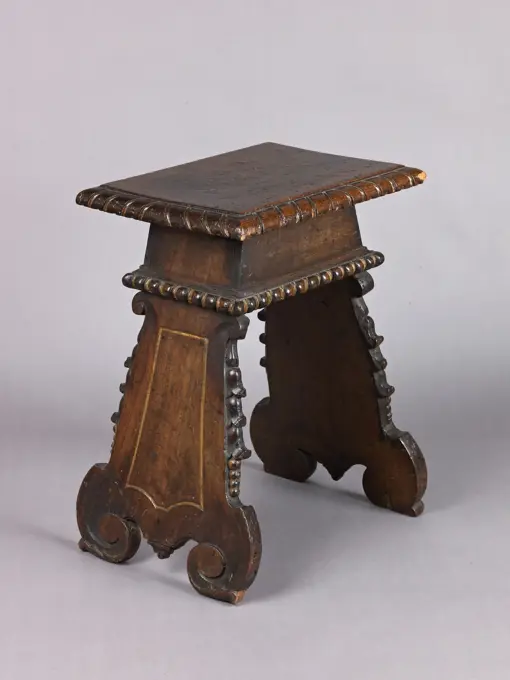
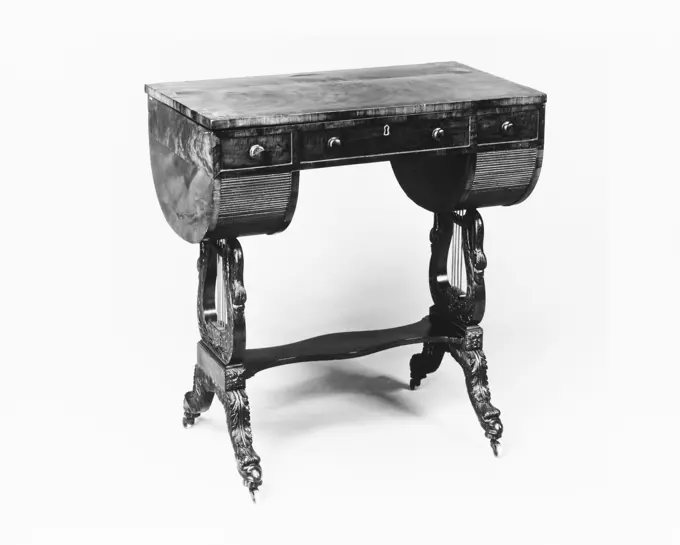
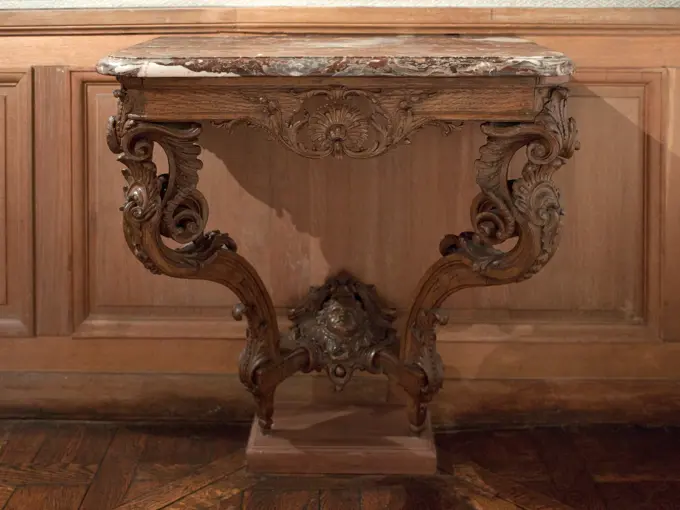
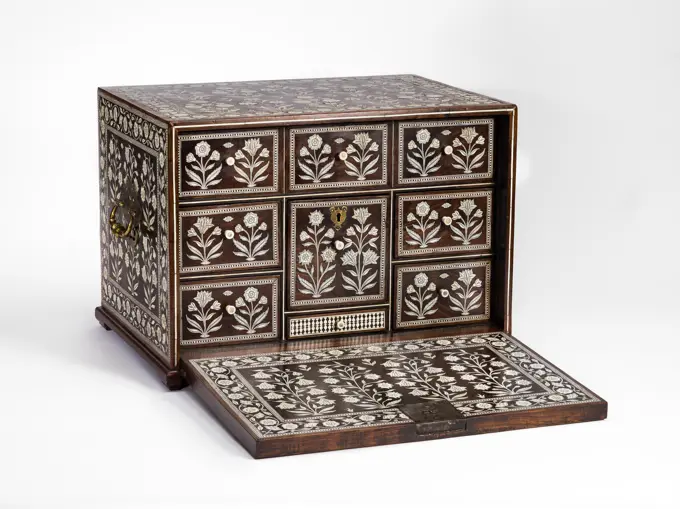
Elegant wooden tables and cabinets showcasing intricate designs and historical craftsmanship, featuring ornate details and rich finishes.

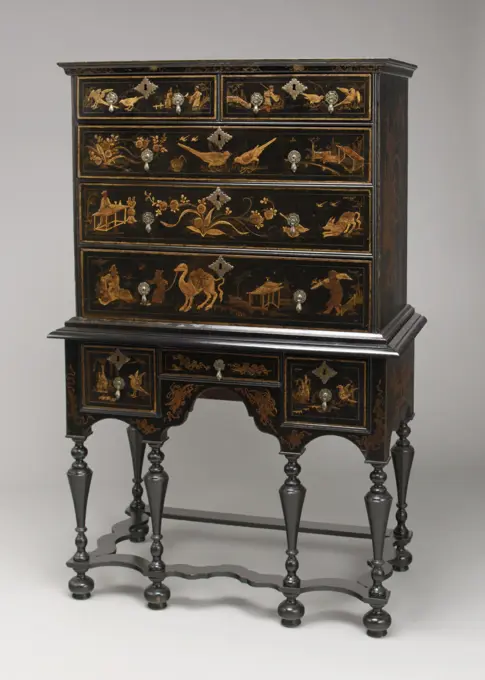
Table resting on three legs with table top and intermediate leaf of red-brown stained marble, Louis Majorelle, c. 1895 - c. 1905 Round table of mahogany and thuyahout resting on three legs. The three curved legs are inside and are caught in Veguld bronze batter over the entire length. The batter shows stylized Moresak vendors. The table top is made of red-brown stained marble and caught in a wooden frame. Under the table top, between the three legs, there is a second leaf of red-brown-spotted marble caught in a wooden frame. The wood from both the frames and the legs is cut into wide flowing parts.  mahogany (wood). marble (rock). bronze (metal). plywood. Round table of mahogany and thuyahout resting on three legs. The three curved legs are inside and are caught in Veguld bronze batter over the entire length. The batter shows stylized Moresak vendors. The table top is made of red-brown stained marble and caught in a wooden frame. Under the table top, between the three legs, there is a
Table resting on three legs with table top and intermediate leaf of red-brown stained marble, Louis Majorelle, c. 1895 - c. 1905 Round table of mahogany and thuyahout resting on three legs. The three curved legs are inside and are caught in Veguld bronze batter over the entire length. The batter shows stylized Moresak vendors. The table top is made of red-brown stained marble and caught in a wooden frame. Under the table top, between the three legs, there is a second leaf of red-brown-spotted marble caught in a wooden frame. The wood from both the frames and the legs is cut into wide flowing parts. mahogany (wood). marble (rock). bronze (metal). plywood. Round table of mahogany and thuyahout resting on three legs. The three curved legs are inside and are caught in Veguld bronze batter over the entire length. The batter shows stylized Moresak vendors. The table top is made of red-brown stained marble and caught in a wooden frame. Under the table top, between the three legs, there is a
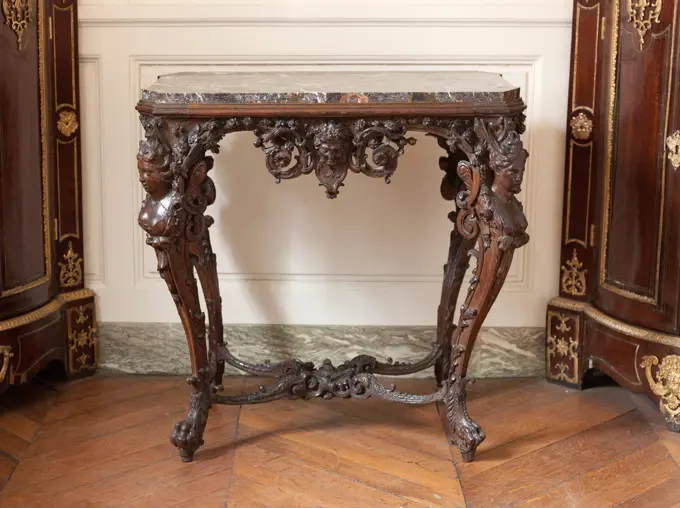
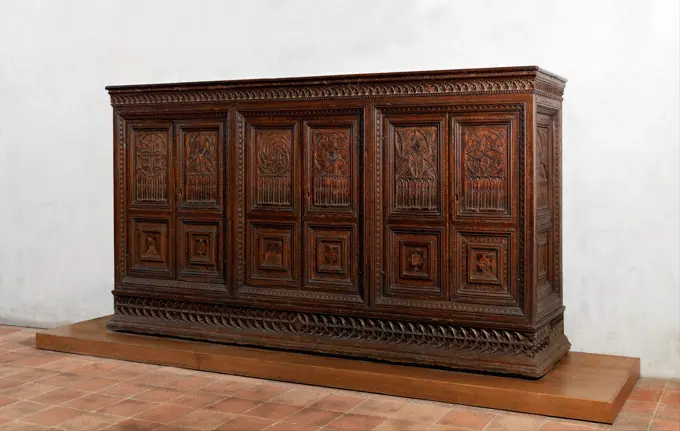
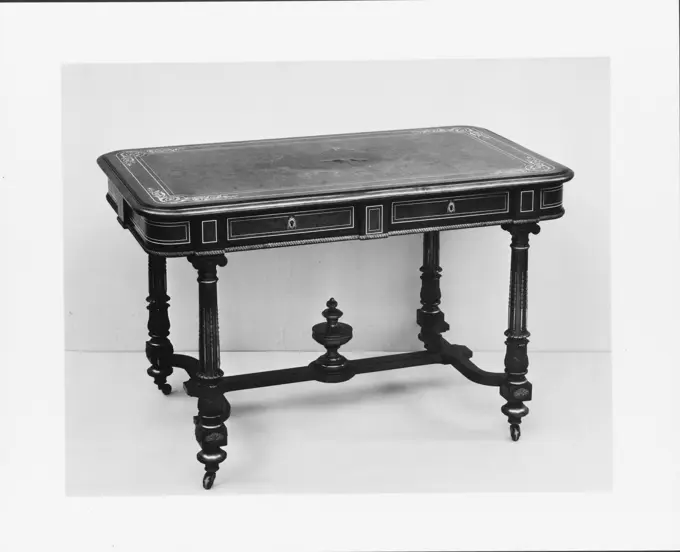
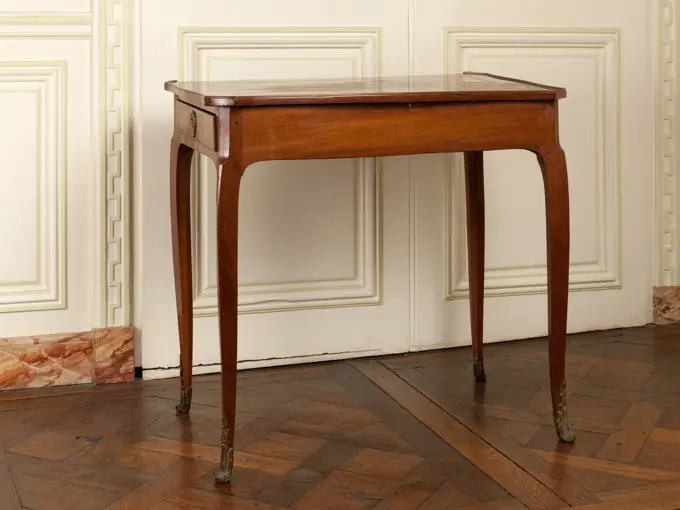
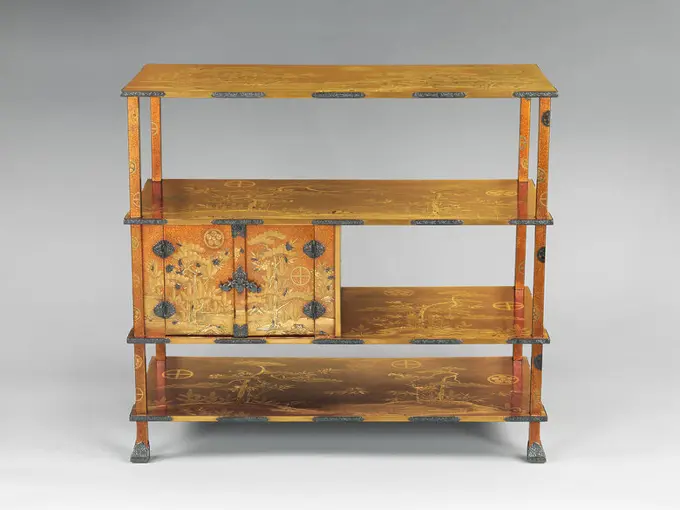
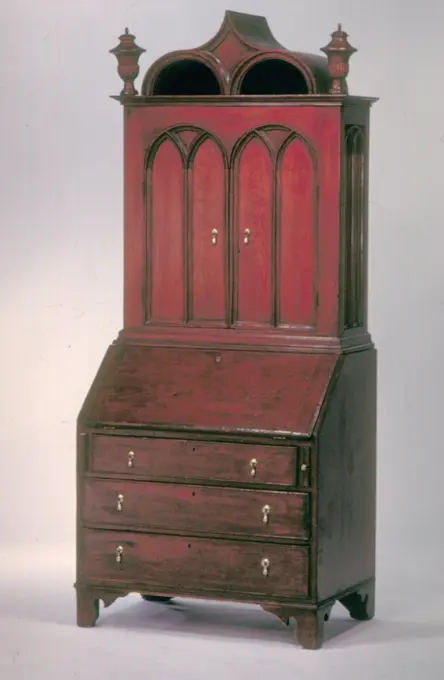
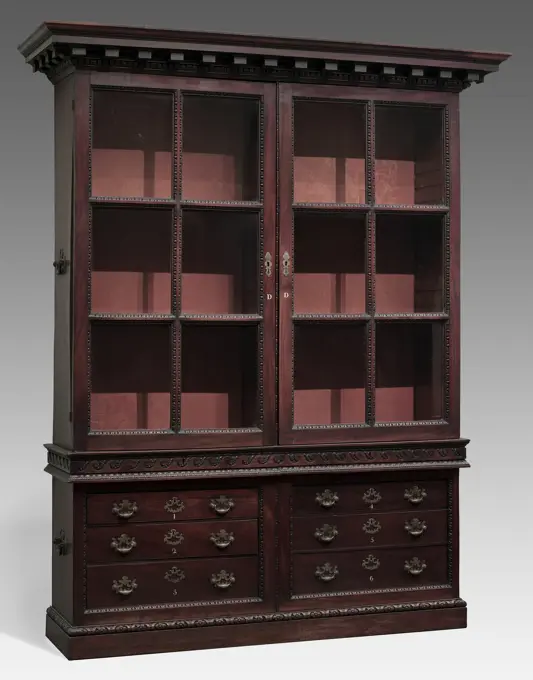
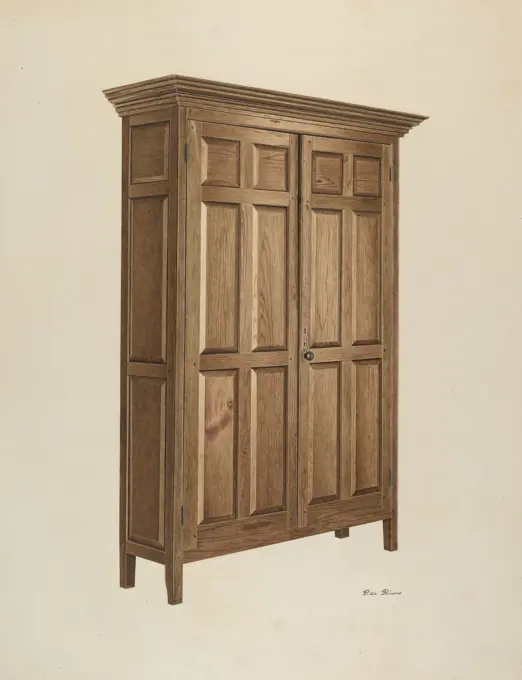
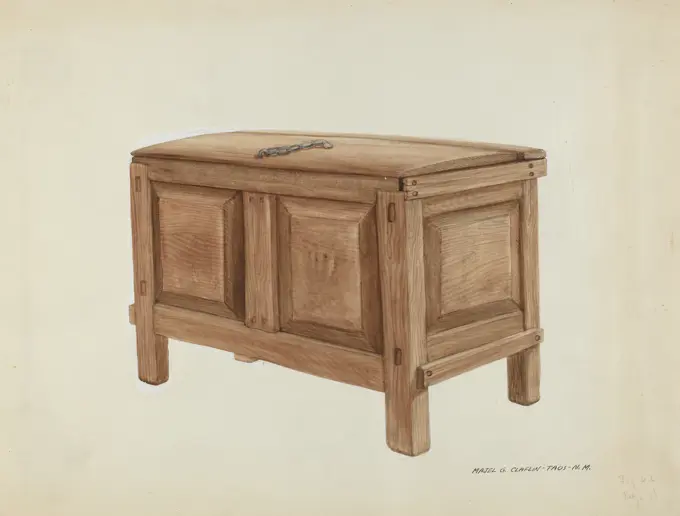
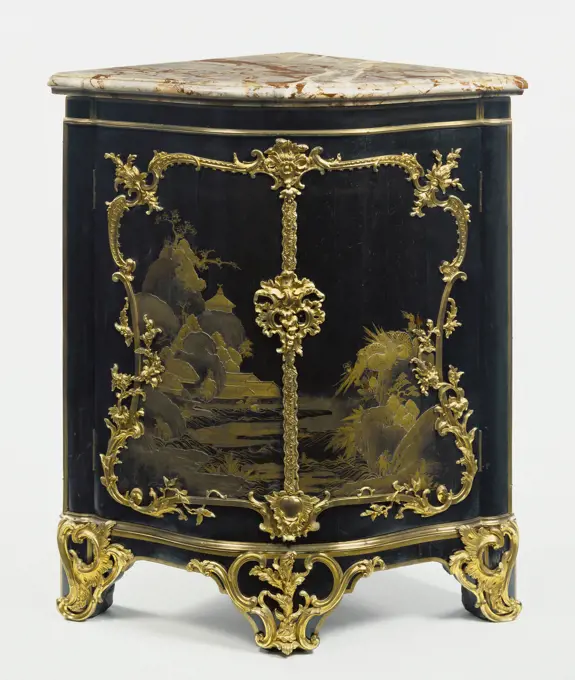
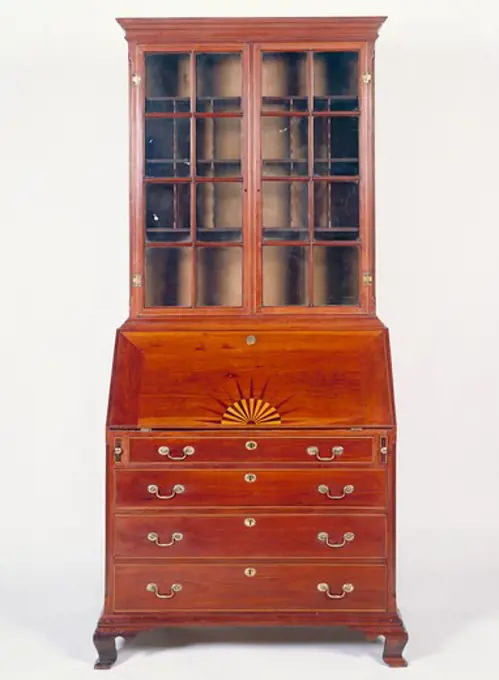
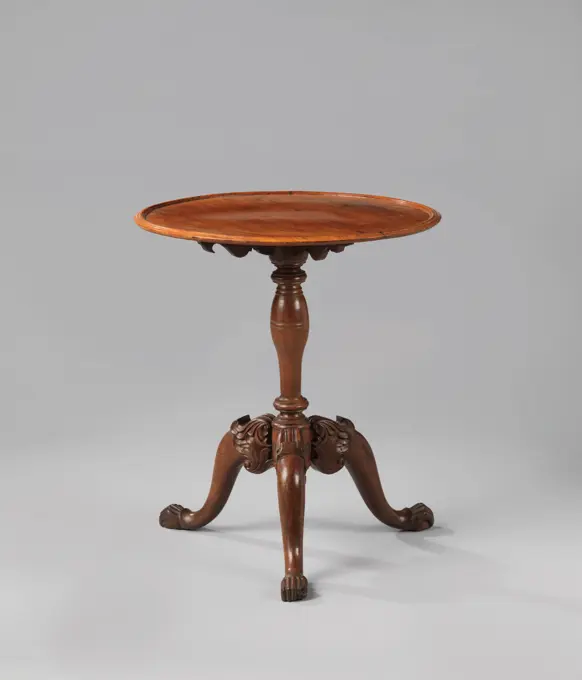
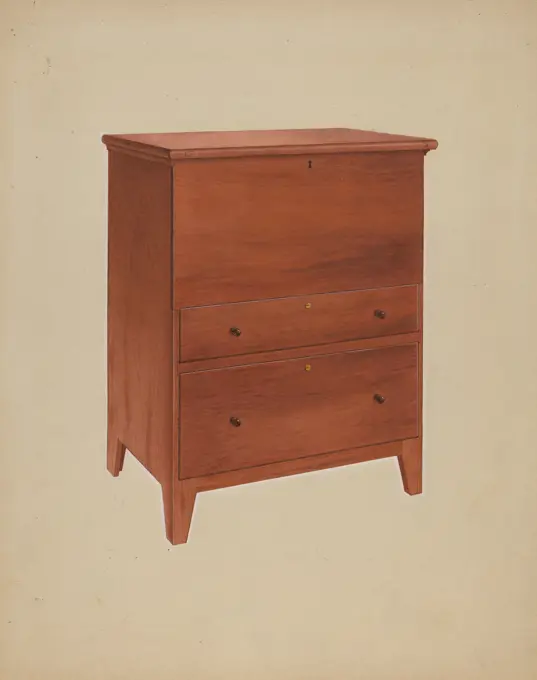
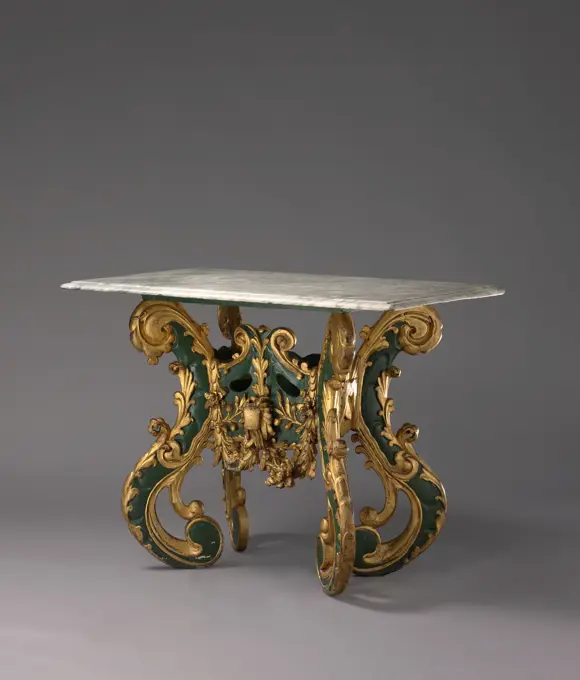
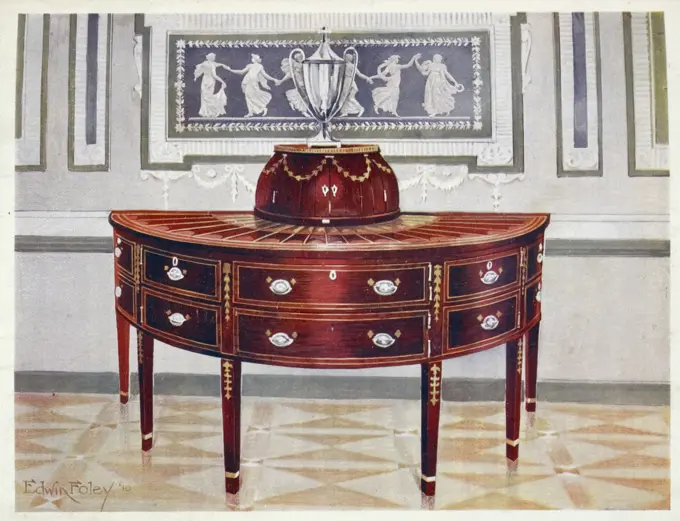
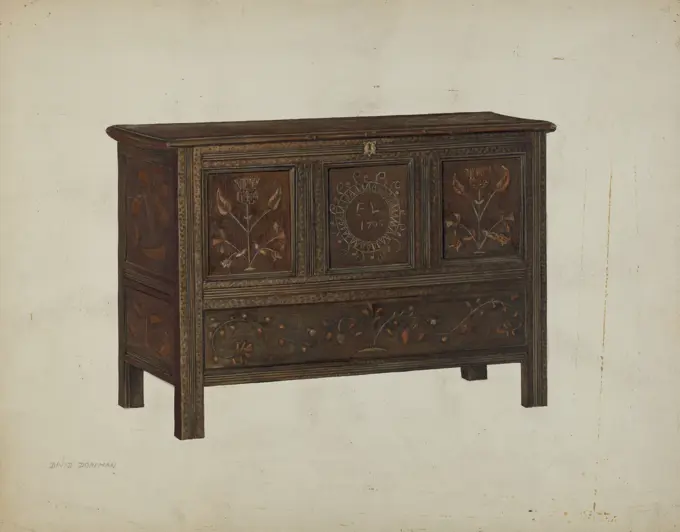
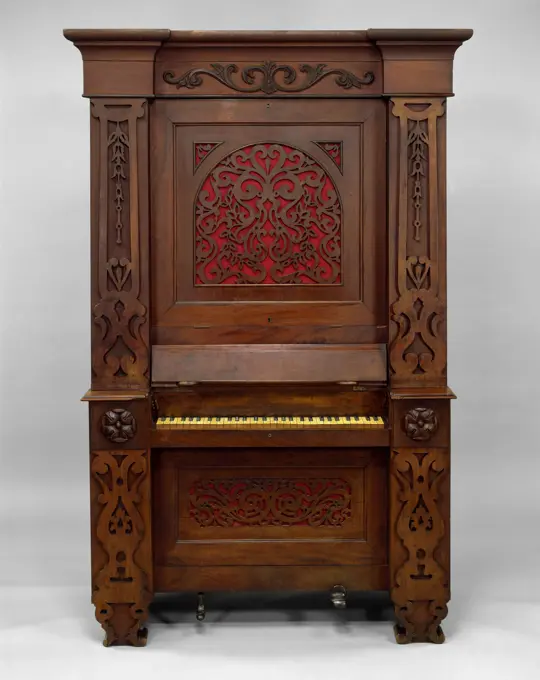
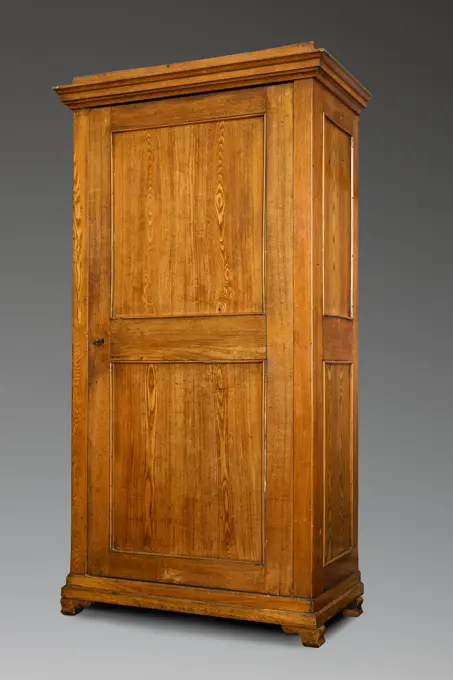
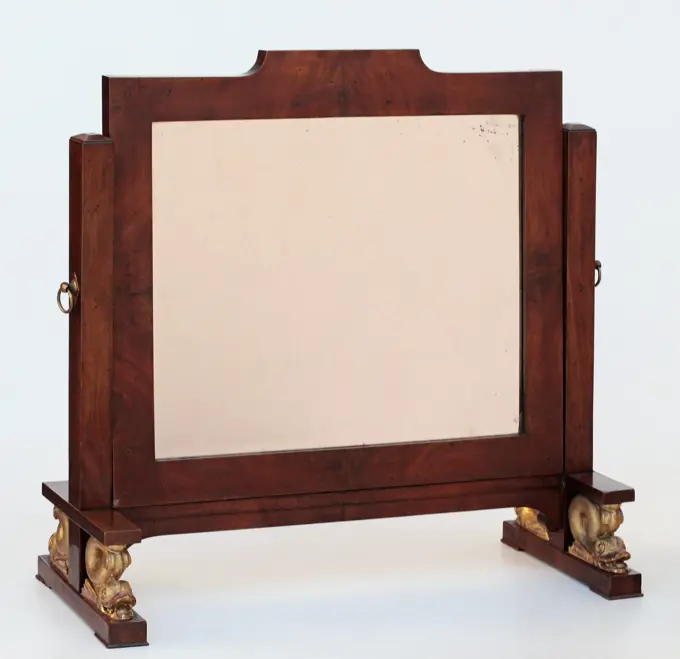
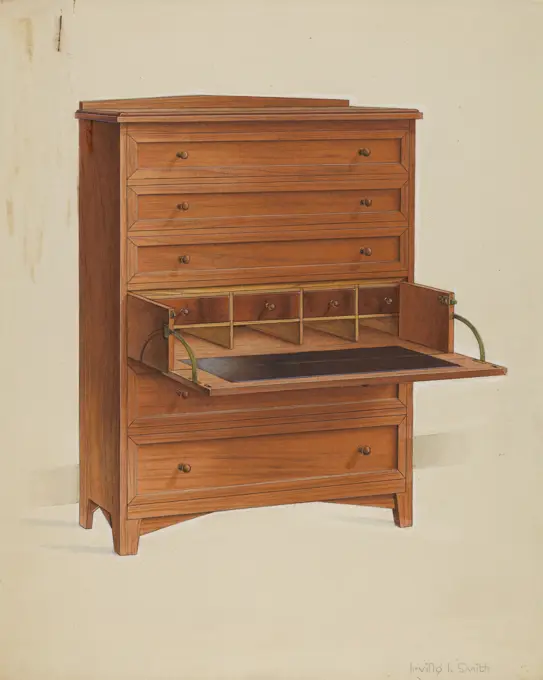
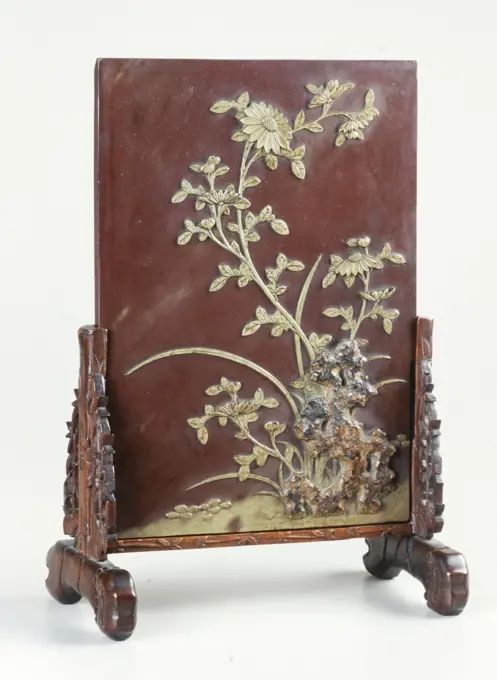
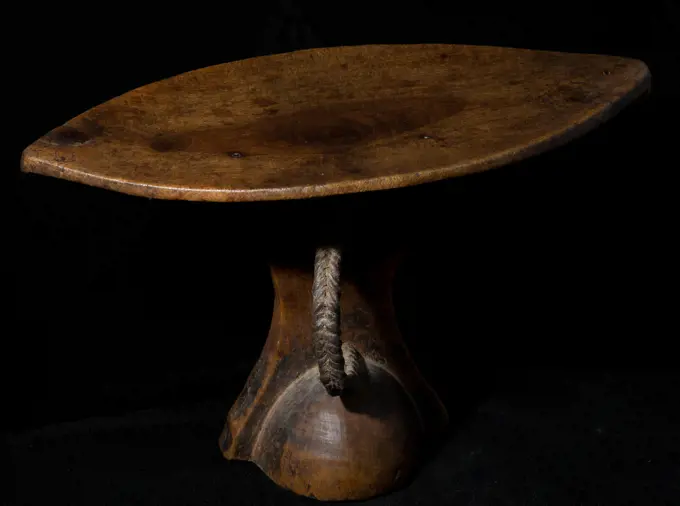
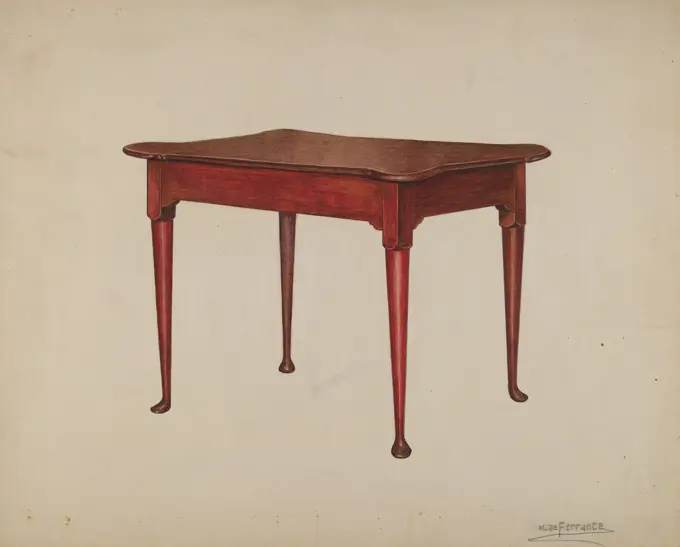
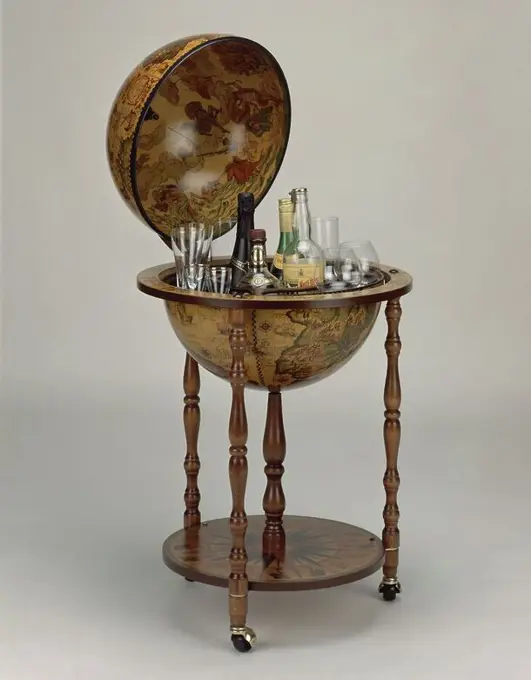
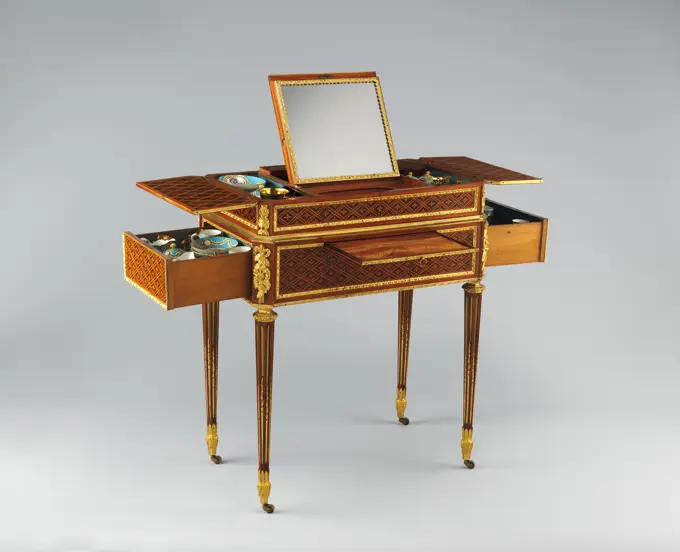
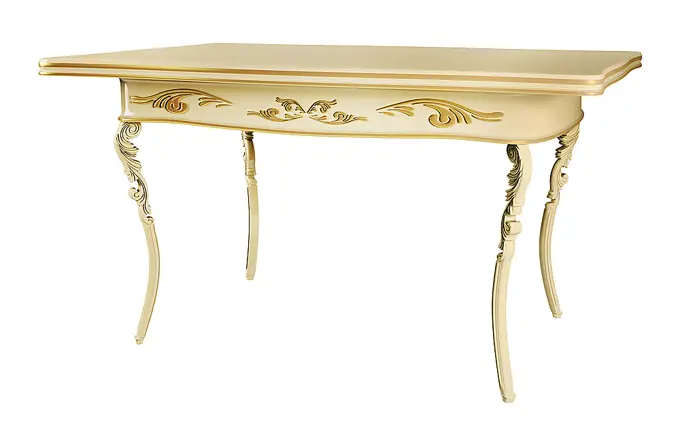
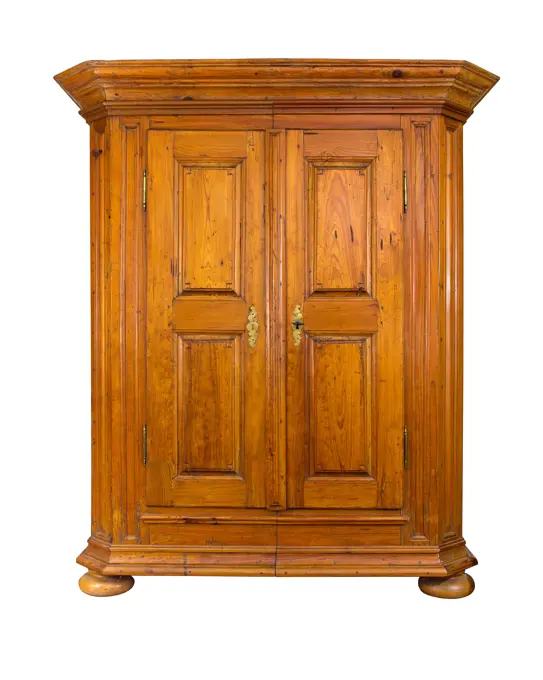
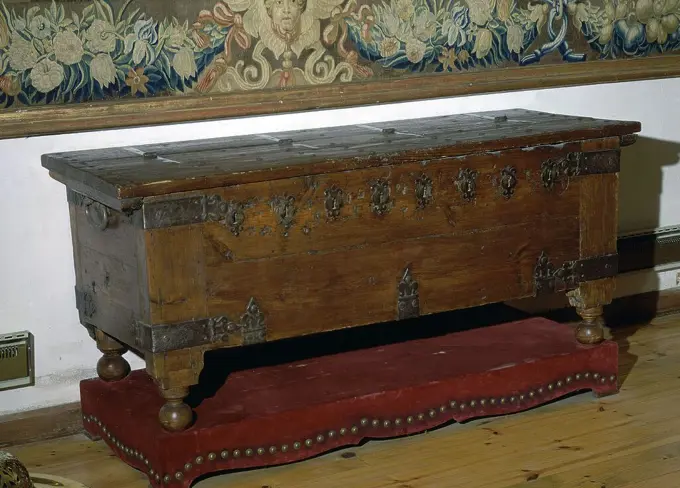
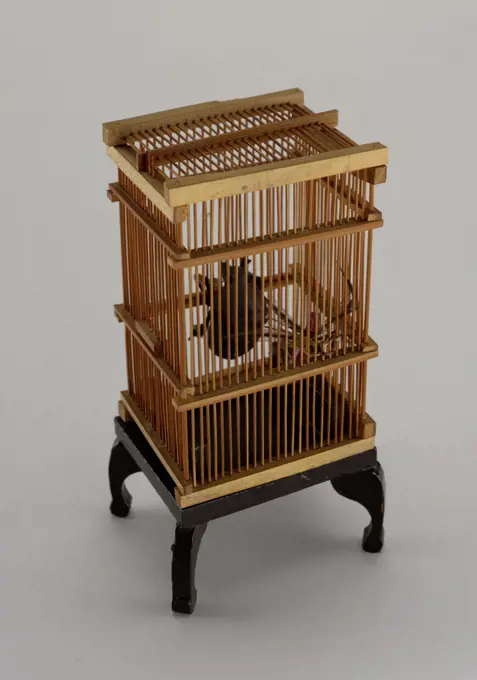
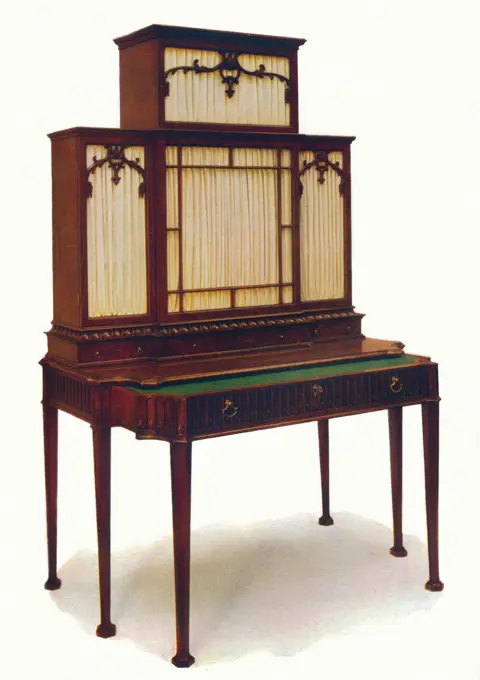
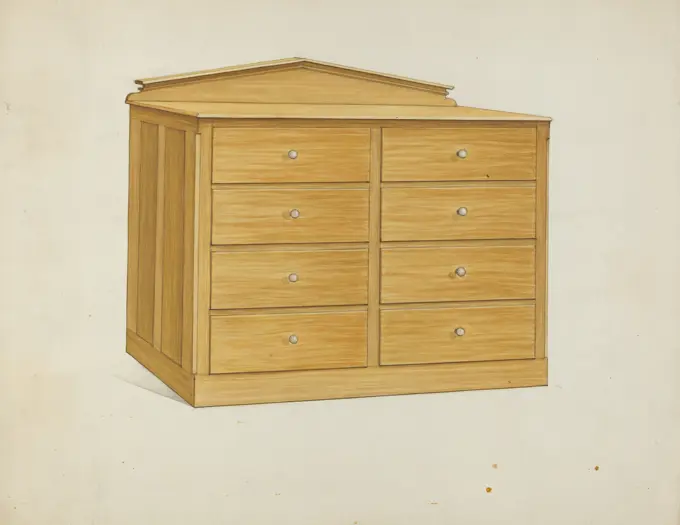
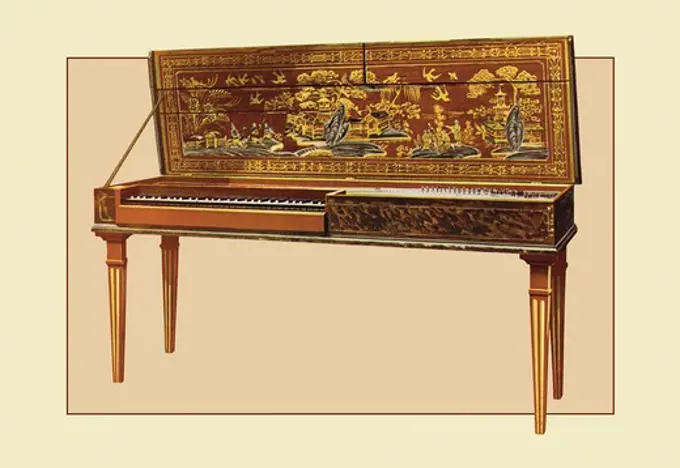
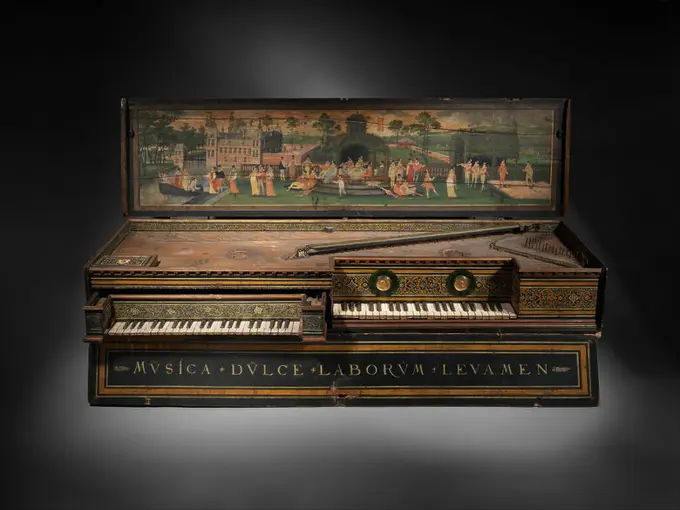
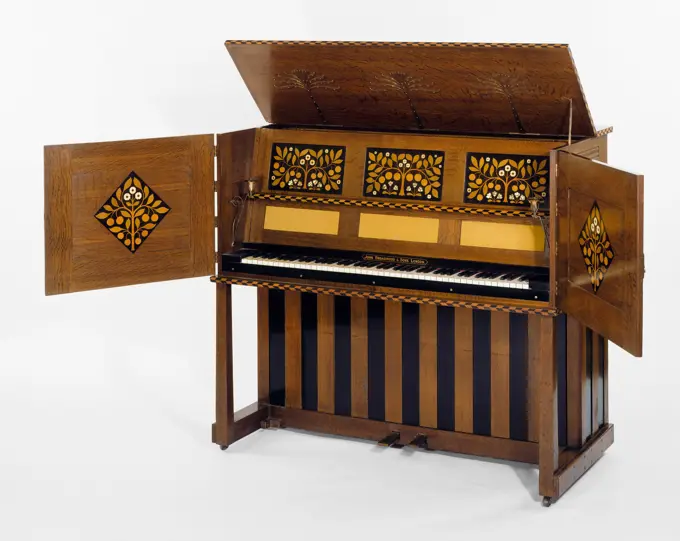
High chest of drawers 1710-30 American Japanning, a Western imitation of lacquerwork, became fashionable in the colonies after 1700. A stylish surface treatment in which motifs of vaguely Far Eastern origin were raised, gilded, and varnished, japanning was applied to standard furniture forms and, when bright and new, must have produced a dazzling effect. Here the motifs are arranged on a solid black ground in a relaxed, undulating pattern in which people, animals, oversize flowers, and tiny pavilions happily coexist. A new form introduced in the colonies in the 1690s at the same time as the early Baroque styleknown in America as the William and Mary stylethe high chest of drawers was the most prestigious piece of furniture in the early eighteenth century. Built in separate upper and lower sections, it was characterized in this period by a skirt and stretchers enlivened by curves and turned legs and feet on which bulbous shapes were boldly juxtaposed to narrow tapers. One of the earliChest withDrawersMedium table. Carnated marble oak, 1701. Paris, Carnavalet museum. 77639-16 Women's bust, chene sculpt, regence, levanto marble, marker, furniture, foot, medium table, 18th century, wood, furnitureCredenza 1440-50 Italian The credenza was originally a functioning sideboard intended for the preparation and serving of food, but it evolved in the late Middle Ages into a display for expensive plates and other vessels and was thus often draped in luxurious fabrics. Whereas most medieval furniture has suffered from use and climate over the centuries, this credenza is unusually well preserved. It has been attributed to the brother Lorenzo (1425-1477) and Cristoforo Canozi (ca. 1426-1491) from Lendinara, in northern Italy, and associated with their early style. The piece is decorated with a total of eight panels. The top two-thirds of each panel contains a circular form resembling a rose window, with a row of intricate lancets below; square fields, each covered with rectilinear patterns in intarsia, occupy the bottom thirds of the panels. The six panels that form the front face are divided into three pairs of doors, each opening into a two-shelf interior where dishes could be stored.. CTable 1860-72 Léon Marcotte French. Table. American. 1860-72. Walnut, amboina pine, maple, poplar, ash, cherry, hornbeam. Made in New York, New York, United StatesShaker Kitchen Table. Dated: c. 1936. Dimensions: overall: 27.5 x 35.3 cm (10 13/16 x 13 7/8 in.) Original IAD Object: 66" long; 30" high; 29" wide. Medium: watercolor and graphite on paper. Museum: National Gallery of Art, Washington DC. Author: Ray Holden.Chest of Drawers. Dated: c. 1938. Dimensions: overall: 37 x 45.1 cm (14 9/16 x 17 3/4 in.) Original IAD Object: none given. Medium: watercolor, colored pencil, pen and ink, and some heithtening on paperboard. Museum: National Gallery of Art, Washington DC. Author: ARTHUR JOHNSON.Anonymous. Table to write. Building: fir and oak for the belt; Placing from Jatoba (Courbaril), feet and set in solid jatoba; Ornaments in gilded bronze, 1715. Paris, Carnavalet museum. 77642-6 Bronze Dore, Chene, Courbaril, Jatoba, Marquetry, Mobilier, Placing, Fir, Lock, Regency style, Table to write, drawer, 18th century, wood, furnitureShelf for Cosmetic Boxes (Kurodana) with Crests of the Matsudaira and Shimazu Families. Culture: Japan. Dimensions: H. 27 9/16 in. (70 cm); W. (top shelf) 30 5/16 in. (77 cm); D. (top shelf) 14 15/16 in. (38 cm). Date: early 19th century.The shelf consists of four levels supported by upright staves in the four corners that end in splayed feet. A portion of the second shelf is enclosed by a cabinet with a pair of hinged doors. All of the lacquered surfaces are embellished with gold and silver takamaki-e (relief sprinkling), hiramaki-e (flat sprinkling), togidashimaki-e (burnished sprinkling), cut-out gold and silver foil application (kirikane) and silver inlay on a gold nashiji (pear-skin) ground (Fig. 1a). The shelf is further ornamented with finely decorated silver fittings that feature the two family crests (Fig. 1b). The combination of the gold nashiji background and the rich decorative details indicate the highest social status, close to that of the shogun family.The most promineDesk with laterbookcase. Maker, possibly by: John HamblySmall table. unknown, authorBookcase 1745-1755 England. This imposing bookcase is one of a set of four designed for Rokeby Park in County Durham, England. Rokeby was the home of Sir Thomas Robinson, an amateur architect, and the form of these bookcases relates directly to designs that he drew up himself.Rokeby Park was built in 1725ñ30 and further decorated around the middle of the 18th century, but it literally rests on ancient history, as the land was once the site of a Roman encampment. The house is in the Palladian tradition it was influenced by the work of the 16th-century Venetian architect Andrea Palladio, who was in turn inspired by Classical architecture, specifically the formal temple designs of the Greeks and Romans. This classicism carries over into the bookcase in the horizontal borders at the cornice and above the drawers; they are carved with egg-and-dart motifs, ultimately derived from ancient Greek architecture, and Vitruvian scroll borders, named for the ancient Roman architect Vitruvius.BookcasBureau Cabinet, 1705-20. Laquered softwood. Made in EnglandRosa Rivero, Wardrobe, c 1942 WardrobeMajel G Claflin, Grain Chest, c 1937 Grain ChestConsole Table.Console Table, Giovanni Battista Piranesi (After), c. 1769 The furniture rests on five stretched S-shaped bokke legs, decorated with leaf work with hanging flower festivities on the tops of the lion heads with open mules. On the Frisian above each lion's head there is a palmet, flanked by curling Acanthus magazine, which sprouts from two leaf stems on either side of the lion heads. Above the points of contact of the wings of the lions, flower -ranging beef skulls have been installed on the Frisian. Rome linden. gilding (material) gilding The furniture rests on five stretched S-shaped bokke legs, decorated with leaf work with hanging flower festivities on the tops of the lion heads with open mules. On the Frisian above each lion's head there is a palmet, flanked by curling Acanthus magazine, which sprouts from two leaf stems on either side of the lion heads. Above the points of contact of the wings of the lions, flower -ranging beef skulls have been installed on the Frisian. Rome lindenETA  around 1830 (1825-00-00-1835-00-00);Bernard Gussow, Pembroke Table (Drop Leaf), 1935 1942 Pembroke Table (Drop Leaf)Card Table. Culture: American. Dimensions: 28 1/4 x 35 5/8 in. (71.8 x 90.5 cm). Maker: Attributed to Anthony G. Quervelle (1789-1856). Date: 1825-30. Museum: Metropolitan Museum of Art, New York, USA.Corner Cupboard; Bernard II van Risenburgh (French, after 1696 - about 1766, master before 1730); Japan; about 1740; Oak and maple veneered with amaranth, cherry, and sycamore maple. set with panels of black Japanese lacquer on Japanese arborvitae and painted with vernis Martin; gilt-bronze mounts; sarrancolin marble top; 99.4 x 88.3 x 61.3 cm (39 1,8 x 34 3,4 x 24 1,8 in.)Luxury gold plated kitchen table and chairs in baroque style. luxurious kitchen tableChippendale Cherry Secretary/Bookcase Antique Furniture Pierre Roussel, Small Table, c. 1760, wood and gilded bronze.BenchTable 1700-1750 American. Table 8051Table. unknown, authorMiniature Chest. Dated: c. 1940. Dimensions: overall: 44.5 x 54.6 cm (17 1/2 x 21 1/2 in.) Original IAD Object: 17 3/4"wide; 19 1/4"high; 9"deep. Medium: watercolor, colored pencil, gouache, and graphite on paper. Museum: National Gallery of Art, Washington DC. Author: Frank Gray.Table, 1868-1912. Japan, Meiji period (1868-1912). Lacquer; overall: 22.3 x 33 x 33 cm (8 3/4 x 13 x 13 in.).Table with all-round leaf on baluster-shaped trunk with three S-shaped legs that end in a fist shape, anonymous, c. 1700 - c. 1800 Small table with an all -rounded round leaf. The baluster-shaped tribe is worn by three streams-grouped s-shaped legs. The legs end at the bottom in a fist form and at the top, stabbed leaf work forms the transition to the trunk. Traces of red paint are visible on the legs. Indonesia wood (plant material). padouk (wood). teak (wood). paint (coating) Small table with an all -rounded round leaf. The baluster-shaped tribe is worn by three streams-grouped s-shaped legs. The legs end at the bottom in a fist form and at the top, stabbed leaf work forms the transition to the trunk. Traces of red paint are visible on the legs. Indonesia wood (plant material). padouk (wood). teak (wood). paint (coating)John W Kelleher, Shaker Chest of Drawers, c 1938 Shaker Chest of DrawersShaker Small Table. Dated: c. 1936. Dimensions: overall: 27.9 x 22.9 cm (11 x 9 in.) Original IAD Object: 24 1/2" high; 27" wide; 19" deep. Medium: watercolor and graphite on paperboard. Museum: National Gallery of Art, Washington DC. Author: Alfred H. Smith.Table. Artist: After a design by Henry Flitcroft (British, Twiss Green, Cheshire 1697-1769 Hampstead). Culture: British. Dimensions: Overall: 35 3/4 × 68 1/4 × 34 1/2 in. (90.8 × 173.4 × 87.6 cm). Maker: Attributed to Matthias Lock (British, London ca. 1710-ca. 1765 London). Date: ca. 1740-45.The front is carved with a mask of Hercules draped with the skin of the Nemean lion. The table corresponds to a drawing by Lock in the Victoria and Albert Museum. Several similar tables are known (Wentworth Woodhouse, Yorkshire; Shugborough Hall, Staffordshire; and Temple Newsam House, Leeds. Museum: Metropolitan Museum of Art, New York, USA.Cabinet, Charles-Guillaume Diehl, c. 1867 - c. 1880 Cupboard with different types of wood inlaid Paris construction:. veneer: Mahogany (Wood). veneer: Birch (Wood). veneer: Rosewood (Wood). veneer: PurpleHeart (Wood). veneer: Kingwood (Wood). veneer: Maple (Wood). veneer: Pear (Wood). Batter: Bronze (Metal) inlay (process) Cupboard with different types of wood inlaid Paris construction:. veneer: Mahogany (Wood). veneer: Birch (Wood). veneer: Rosewood (Wood). veneer: PurpleHeart (Wood). veneer: Kingwood (Wood). veneer: Maple (Wood). veneer: Pear (Wood). Batter: Bronze (Metal) inlay (process)Table - Folding Top. Dated: c. 1940. Dimensions: overall: 48 x 40.5 cm (18 7/8 x 15 15/16 in.) Original IAD Object: 28 1/2"high; 34 1/2"long; 16 3/4"wide closed.. Medium: watercolor, colored pencil, and graphite on paper. Museum: National Gallery of Art, Washington DC. Author: Harold Oldfield.Frank Gray, Coal Stove, c 1940 Coal StoveBuffet with drawers and doors decorated with letter panels and other gothic decorations. With sliced monogram DVS, Kunsthandel E.J. van Wisselingh, c. 1910 - c. 1918 Buffet with rebellion of Coromandelhout inlaid with walnut, ivory and brass, the blind work of oak, with two drawers above four doors and two smaller drawers in the corner styles. Decorated with letter panels and with gothic and other decorative motifs. In the rebellion, the cut monogram DVS for mr. Th.G. Dentz van Schaick. Amsterdam wood (plant material). padouk (wood). mahogany (wood). ivory. leather. brass (alloy). blindwerk: oak (wood) gilding Buffet with rebellion of Coromandelhout inlaid with walnut, ivory and brass, the blind work of oak, with two drawers above four doors and two smaller drawers in the corner styles. Decorated with letter panels and with gothic and other decorative motifs. In the rebellion, the cut monogram DVS for mr. Th.G. Dentz van Schaick. Amsterdam wood (plant material). padouk (wood). mahoganyTable with marqueterie and porcelain plaques, anonymous, c. 1820 - c. 1835 Table decorated with marquetery of multiple woods, porcelain and gilded bronze. The round table top with gallery rests on a trunk with a pedestal with three volutes, placed on a round leaf, resting on three conical -channeled legs. The top is decorated with two large, between which six small circles; All with gold -plated bronze tires and filled with porcelain plaques, which show flower bouquets with blue edges on white soil. The rules and the lower leaf carry windows marquetery. Paris wood (plant material). rosewood (wood). oak (wood). purpleheart (wood). boxwood. ebony (wood). porcelain. bronze (metal) gilding Table decorated with marquetery of multiple woods, porcelain and gilded bronze. The round table top with gallery rests on a trunk with a pedestal with three volutes, placed on a round leaf, resting on three conical -channeled legs. The top is decorated with two large, between which six small circles; AllChair. unknown, authorAltar table, 17th-18th century, Unknown Japanese, 8 1/4 × 21 3/4 × 12 1/2 in. (20.96 × 55.25 × 31.75 cm), Black and red lacquer, Japan, 17th-18th centuryCommode. Culture: German, Franconia. Dimensions: 32 1/2 x 50 x 25 1/4 in. (82.5 x 127 x 64.1cm). Date: ca. 1765.The undulating lines of the front and sides suggest that its creator had seen the swell-fronted painted or lacquered commodes made in Venice in the mid-eighteenth century. The carved motifs are thought to have been carried out in the studio of Ferdinand Tietz (1708-1777). He is known to have provided large stone figures for the gardens of Seehof Castle, whence came this piece. Museum: Metropolitan Museum of Art, New York, USA.Tabletop of wall table, anonymous, c. 1655 - c. 1675 Marble table bath of the table of painted walnut on four overhoeks placed S-shaped legs, decorated with acanthus leaf and lobe ornament and connected by rules. Netherlands marble (rock) Marble table bath of the table of painted walnut on four overhoeks placed S-shaped legs, decorated with acanthus leaf and lobe ornament and connected by rules. Netherlands marble (rock)Center Table, 1600s. China, Ming dynasty (1368-1644) - Qing dynasty (1644-1911). Huali (ptero-carpus indicus Burmese or East Indian Rosewood); overall: 82.5 x 94 cm (32 1/2 x 37 in.).Furniture around the turn of the century 1900, Semi-circular mahogany sideboard and knife-box. Inlaid and banded with satinwood, mahogany, and ebony (1911) .Writing Casket, c. 1525. Workshop of Severo da Ravenna (Italian, c.1496-c.1543). Bronze; overall: 16 x 21.3 x 14 cm (6 5/16 x 8 3/8 x 5 1/2 in.). The interior is divided into four compartments for storing writing implements and sand for blotting.David Dorfman, Pa German Chest, c 1940 Pa. German ChestChamber Organ 1852 William Crowell British American The chamber organ is a moderately-sized piped organ. It typically has a single manual, a limited number of stops, and a limited pedalboard or no pedals at all. It is generally intended for use in small chapels, in homes, or other intimate rooms. As it is capable of long sustained tones, it is sometimes preferable to harpsichord as a continuo instrument in chamber ensembles. Such instruments might also be used in small churches, like those found in small towns and villages throughout the United States in the nineteenth century. Chamber organs were largely usurped by reed organs after the middle of the century. The builder of this chamber organ, William Crowell, along with his brother Samuel, were members of a small community of around half a dozen organ builders in Mont Vernon, New Hampshire whose work was all closely related. This beautiful chamber organ has elements of both Empire and Roccoco design styles. Technical description: CabShaker Cabinet. Dated: 1935/1942. Dimensions: overall: 34.2 x 28.2 cm (13 7/16 x 11 1/8 in.) Original IAD Object: 92 1/2" high; 53 5/8" wide; 20" deep. Medium: watercolor, graphite, and pen and ink on paper. Museum: National Gallery of Art, Washington DC. Author: William Paul Childers.Pa. German Table. Dated: c. 1941. Dimensions: overall: 33.8 x 48.9 cm (13 5/16 x 19 1/4 in.) Original IAD Object: 26" high; 42" long, 24" wide. Medium: watercolor and graphite on paper. Museum: National Gallery of Art, Washington DC. Author: Carl Strehlau.Accessory caseEasel and Portfolio Stand ca. 1880 American. Easel and Portfolio Stand. American. ca. 1880. Walnut, ebonized wood, marquetry of lighter woods, brass. Made in Philadelphia, Pennsylvania, United StatesWardrobe;  1860-1880 (1860-00-00-1880-00-00);Bronisław (1887-1983), Bronisław (1887-1983)-collection, krystall, gift (provenance)Mirror (psych);  1810-1820 (1810-00-00-1820-00-00);Méyet, Leopold (1850-1912), Méyet, Leopold (1850-1912)-collection, gift (provenance), dolphins, empire (style)TeaTableCassone. UnknownIrving I Smith, Secretary, 1937 SecretaryFireworks. Fireworks made of gold-plated beech wood, with extension blade. The screen rests on low S-shaped trestle feet and has a window with rocaille motifs and flower branches. New () Made at Tapisserie (BK-16675-2).Stool (pair with 1975.1.2003) possibly 16th century Italian. Stool (pair with 1975.1.2003) 461483Chest ofdrawersPotted plant in a container on a wooden deskLibraryTableTable;  1790-1810 (1790-00-00-1810-00-00);gift (provenance)Antique wooden small almira, Jodhpur, Rajasthan, India Copyright: xSafatxAli/DinodiaxPhotoxWorktable 1823 Michael Allison. Worktable. American. 1823. Mahogany, tulip poplar. Made in New York, New York, United StatesPiano Forte. Dated: c. 1936. Dimensions: overall: 22.6 x 28.6 cm (8 7/8 x 11 1/4 in.) Original IAD Object: 67 1/2" long; 32 1/8" high; 22 1/8" wide. Medium: watercolor, graphite, and pen and ink on paperboard. Museum: National Gallery of Art, Washington DC. Author: Ferdinand Cartier.Chest -. Tea table, decorated with marquetery of satin, rosewood and violet wood and mahogany on oak core. Oval leaf, upright openwork edge and square rejuvenating legs on copper dopfoot. The marquetry decoration consists on the legs and on the houses above from geometric patterns and on the rules, on contrasting fields, from distant flower cages with a rosette in the middle. On the leaf is a border with windows, in which rosettes, inlaid.John Dieterich, Sideboard (Hepplewhite), 1935 1942 Sideboard (Hepplewhite)Tilt-top Tea Table. Culture: American. Dimensions: 27 1/2 x 19 x 14 1/2 in. (69.9 x 48.3 x 36.8 cm). Date: ca. 1800. Museum: Metropolitan Museum of Art, New York, USA.Anonymous. Console. Carnated marble oak, around 1720. Paris, Carnavalet museum. 77640-2 Chene, console, Louis XV time, rancid marble, marquetry, mask, furniture, ornament, regence style, head, face, 18th century, furniture, plateFall-Front Cabinet. India, Gujarat or Pakistan, Sindh, circa 1650-1670. Furnishings; Furniture. Rosewood inlaid with ivory; brass fittingsFerdinand Cartier, Chest, c 1939 ChestTable Screen and Stand, 12 9/16 x 8 3/4 x 5 1/8in. (31.9 x 22.2 x 13cm), Duan stone, ChinaAfrica, Kenya, tribal art, Turkana headrestCupboard late 15th century British. Cupboard 463378Mario De Ferrante, Card Table, 1935 1942 Card TableGLOBO TERRAQUEO REALIZADO EN 1578 REUTILIZADO COMO BOTELLERO.unknown (unknown), work name: Kaappi, not dating, oak, special category: furnitureCombination table ca. 1775 Martin Carlin French The principal occupation indeed of a French Lady is her Toilet. Elizabeth Seymour Percy, Duchess of Northumberland, diary entry for June 9, 1770The daily ritual of dressing and grooming was taken very seriously in France, and it was not unusual for an aristocratic lady to receive visitors, who could even be called upon to assist her. Special pieces of furniture were designed for the toilette, such as this elegant marquetry table signed by Martin Carlin, which is more versatile than most dressing tables. The upper section can be removed to serve as a bed table, as it has its own short legs. It is fitted with an adjustable mirror that can be reversed to form a book rest. A shallow drawer is provided in front, and the lidded compartments on either side are used for the storage of toilet articles. The lower section is a fullsize table with a marble top, pull-out shelves in front and back, and drawers on both ends holding equipment for dressiJoan Busquets i Jané / Cama, siglo XX. Colección privada.Desk, by Sicily workmanship, 18th Century, wood inlaid. Italy, Sicily, Palermo, Private Collection. Detail. Desk writing-table table furniture fittings design furnishings inlay decoration ornate carving decor ornament drawing coats of arms geometric motif.Antique Table isolated over white 3d renderbaroque wooden cabinet baroque wooden wardrobe Copyright: xZoonar.com/BorisxZerwannx 7006181ARCON DE MADERA CON OCHO CERROJOS. Location: CASA MUSEO UNAMUNO. SALAMANCA. SPAIN.Arqueta de Joan Busquets i Jané.Siglo XX.M.A.D.B.Convenient ". Building: Oak; Placing: Ronceux mahogany; gilded bronze; white marble. XIXth century. Paris, Carnavalet museum. 72593-42 Ronceux mahogany, Bati Chene, Dore bronze, white marble, marble, furniture, plating, 19th century, dresser, furniturePorseleinkast, anonymous, c. 1770 - c. 1775 Porcelain cabinet glued with root nut wood on an oak core, divided into an upper and upper cabinet. The chassis has three drawers on the front and a scalloped sill, decorated with yellow copper batter in the form of a vase with a chassis. The sides have sham loads. The upper cabinet has two doors on the front, each with six with scalloped rods and a decorated middle style. The hood has a cornice with S and C-shaped curves and a crest with rocaille motifs. Netherlands wood (plant material). oak (wood). walnut (hardwood). metal. copper (metal). glass Porcelain cabinet glued with root nut wood on an oak core, divided into an upper and upper cabinet. The chassis has three drawers on the front and a scalloped sill, decorated with yellow copper batter in the form of a vase with a chassis. The sides have sham loads. The upper cabinet has two doors on the front, each with six with scalloped rods and a decorated middle style. The hood has a cornice wiCricket cage and base, Rattan, bamboo, lacquered wood (base); fiber, paper, silk thread, feathers (imitation insects), Upright rectangular cage (a) with two parallels and concealed door; attached by small brads to black lacquered wood base (b) with cabriole legs set at angles. Inside cage, imitation black beetle and winged insect (dragon fly) attached to bars., Japan, late 19th century, containers, Decorative Arts, Cricket cage and baseBUREAU A CILINDRE-MESA ESCRITORIO DE MARIA LECZINSKA MUJER DE LUIS XV HACIA 1740. Location: MUSEO LAZARO GALDIANO-COLECCION. MADRID. SPAIN.Dentistry equipmentCricket Cage And Base (Japan), late 19th century; rattan, bamboo, lacquered wood (base); fiber, paper, silk, feathers (imitation insects)'Chippendale Mahogany Secretaire Bookcase', mid 18th century, (1930). Creator: Unknown.Ray Holden, Shaker Chest of Drawers, c 1936 Shaker Chest of DrawersQuillwork Shadowbox ca. 1817 Myra Bates (Willcutt). Quillwork Shadowbox 19055Giraffe (upright) Piano. Buchholtz, Fryderyk (Warszawa ; wytwórnia fortepianów ; ca 1815-ca 1846), instrument factoryTall shrine-shaped 'canopic' box Ptolemaic or Roman Period 4th century B.C.-1st century A.D. On the front side of the box the main scene depicts a king in a white crown offering to Osiris who is followed by the deceased, while on the rear a falcon with spread drooping wings and heraldic cobras on either side is shown. The two side vignettes are the ones that clearly indicate the purpose of the box: on one side of the box appear two shrines in which kings or a king and a figure with a disc on its head offer to the Sons of Horus Hapy (baboon head) and Imsety (human head); on the other side of the box the two shrines enclose figures offering to the Sons of Horus Duamutef (jackal head) and Qebesenuef (falcon head). Blanks are left where texts would have been filled in. Such boxes where the Sons of Horus figure prominently are understood to function either as containers for the viscera since canopic jars have gone out of use, or to hold materials from the embalming process respected becauseClavichord, Renaissance Musical Instrumentsstack of four classic wooden drawers isolated on white backgroundDouble Virginal. Culture: Flemish. Dimensions: Width: 71 3/4 in. (182.2 cm)Depth: 19 1/2 in. (49.5 cm). Maker: Hans Ruckers the Elder (Flemish, Mechelen ca. 1545-1598 Antwerp). Date: 1581.This double virginal is the earliest known instrument by Hans Ruckers, who founded a dynasty that dominated Flemish harpsichord building for a hundred years.Double virginals consist of a large instrument (called "the mother"), with its keyboard placed off-center, and a small virginal ("the child"), tuned an octave above that of the large instrument and stored in the space next to its keyboard. Either instrument may be played by itself, or the small virginal may be removed from its space and placed on top of the larger one. When this is done, the keys of the "child" are activated when those of the "mother" are played, thereby causing both instruments to sound at once, in octaves.The rectangular shape is typical of Flemish virginals. When not in use, the front panel swings up to conceal the keyboardsManxman Pianoforte Made 1897 England. A product of the Arts and Crafts movement in England, the Manxman Pianoforte represents an innovative solution to the somewhat awkward form of the upright piano. Motivated by the shoddy results of industrial mass production, the movement advocated the recognition of furniture and decorative arts as works of art. Here the celebrated English architect and designer Mackay Hugh Baillie Scott created an object that is both cleverly functional and aesthetically pleasing. When opened, the lid and doors of the strikingly decorated cabinet act as acoustical sounding boards. Revealed inside is the musical instrument itself, along with a profusion of exquisite handcrafted metalwork, including candleholders fixed to the sides of the case. The overall design, like the keyboard, is a study in contrasts of light and dark; the lower sectionís alternating pattern echoes the pianoís keys. A Manxman is an inhabitant of the Isle of Man, and the term derives from Scott