Antique Tables and Cabinets

Elegant wooden tables and cabinets showcasing intricate designs and historical craftsmanship, featuring ornate details and rich finishes.

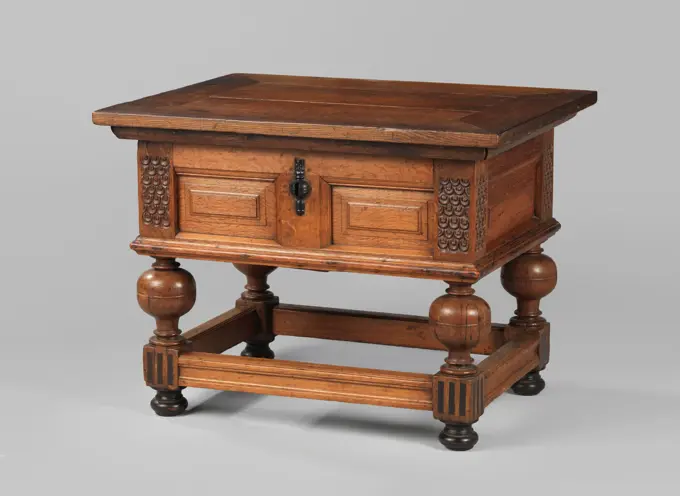
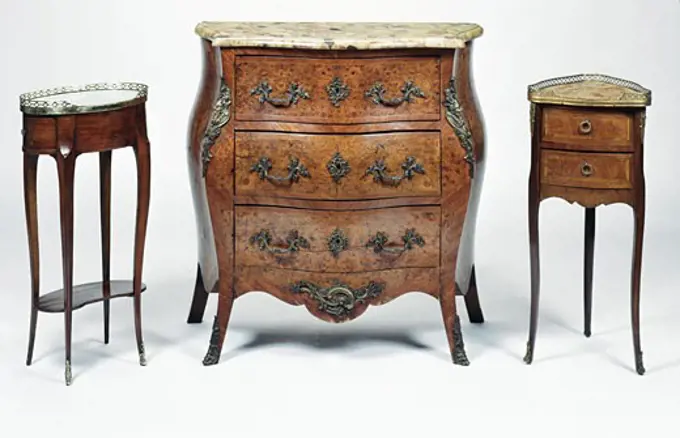
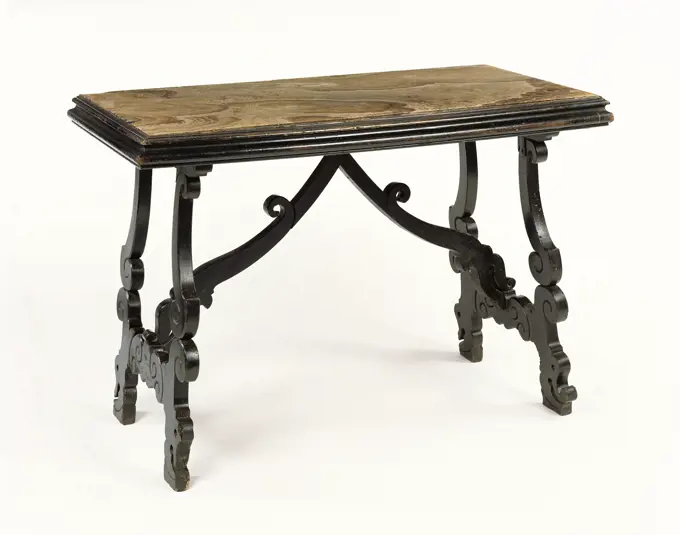
Table resting on three legs with table top and intermediate leaf of red-brown stained marble, Louis Majorelle, c. 1895 - c. 1905 Round table of mahogany and thuyahout resting on three legs. The three curved legs are inside and are caught in Veguld bronze batter over the entire length. The batter shows stylized Moresak vendors. The table top is made of red-brown stained marble and caught in a wooden frame. Under the table top, between the three legs, there is a second leaf of red-brown-spotted marble caught in a wooden frame. The wood from both the frames and the legs is cut into wide flowing parts.  mahogany (wood). marble (rock). bronze (metal). plywood. Round table of mahogany and thuyahout resting on three legs. The three curved legs are inside and are caught in Veguld bronze batter over the entire length. The batter shows stylized Moresak vendors. The table top is made of red-brown stained marble and caught in a wooden frame. Under the table top, between the three legs, there is a
Table resting on three legs with table top and intermediate leaf of red-brown stained marble, Louis Majorelle, c. 1895 - c. 1905 Round table of mahogany and thuyahout resting on three legs. The three curved legs are inside and are caught in Veguld bronze batter over the entire length. The batter shows stylized Moresak vendors. The table top is made of red-brown stained marble and caught in a wooden frame. Under the table top, between the three legs, there is a second leaf of red-brown-spotted marble caught in a wooden frame. The wood from both the frames and the legs is cut into wide flowing parts. mahogany (wood). marble (rock). bronze (metal). plywood. Round table of mahogany and thuyahout resting on three legs. The three curved legs are inside and are caught in Veguld bronze batter over the entire length. The batter shows stylized Moresak vendors. The table top is made of red-brown stained marble and caught in a wooden frame. Under the table top, between the three legs, there is a
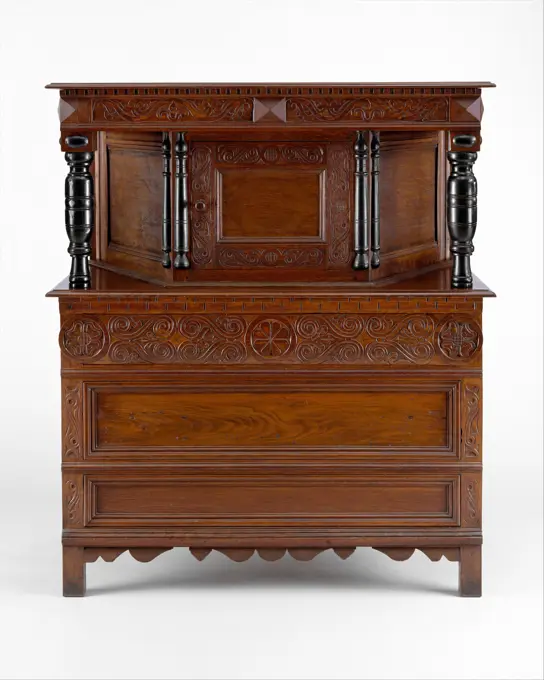
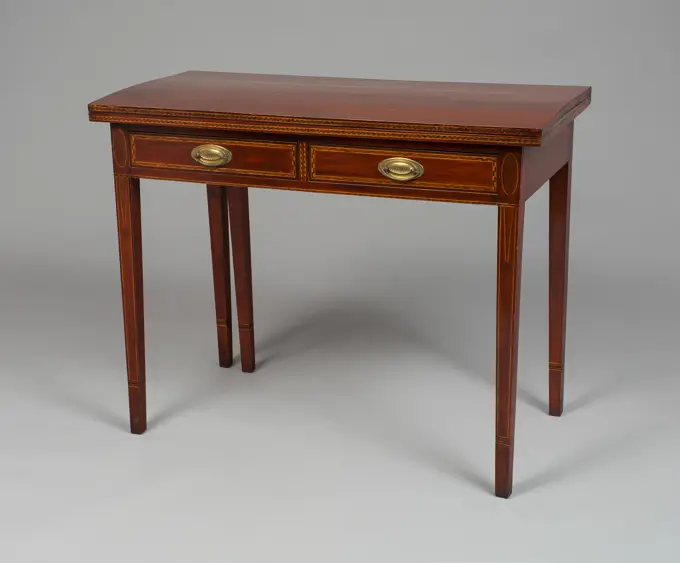
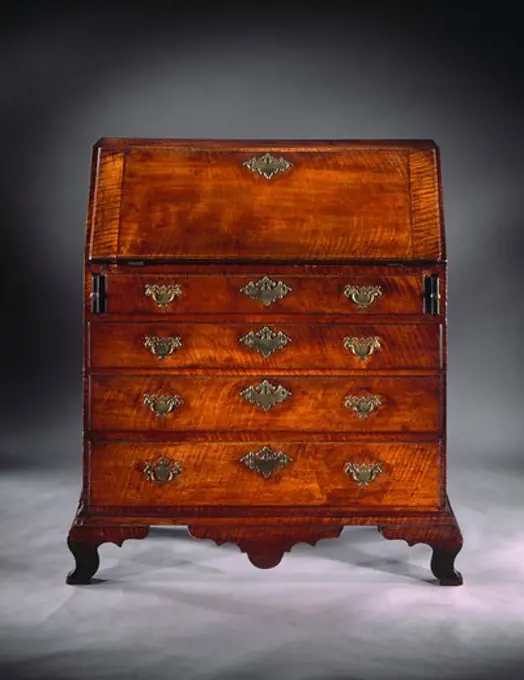
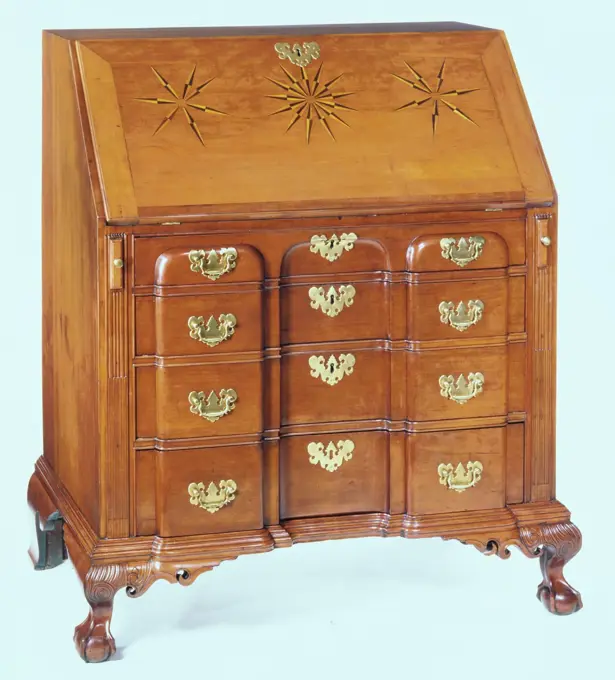
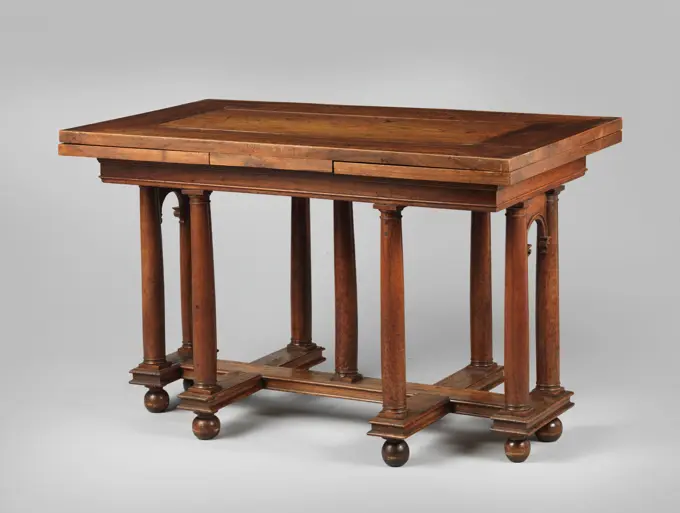
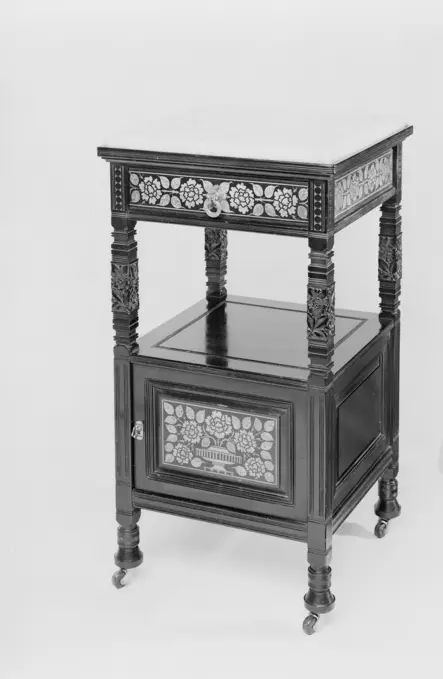
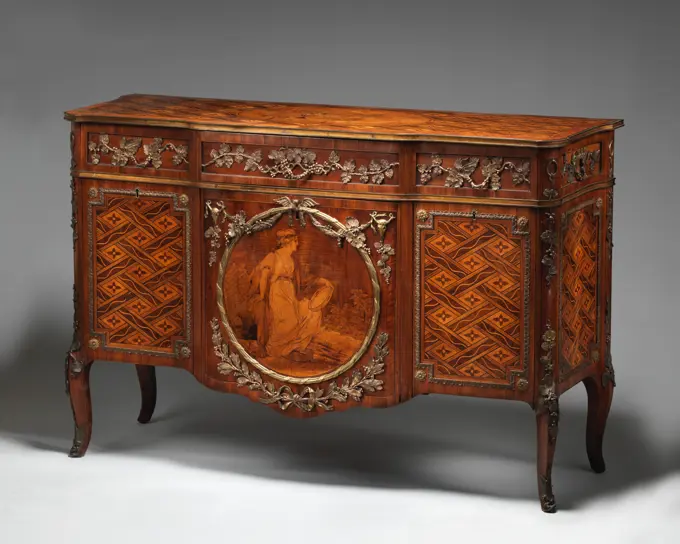
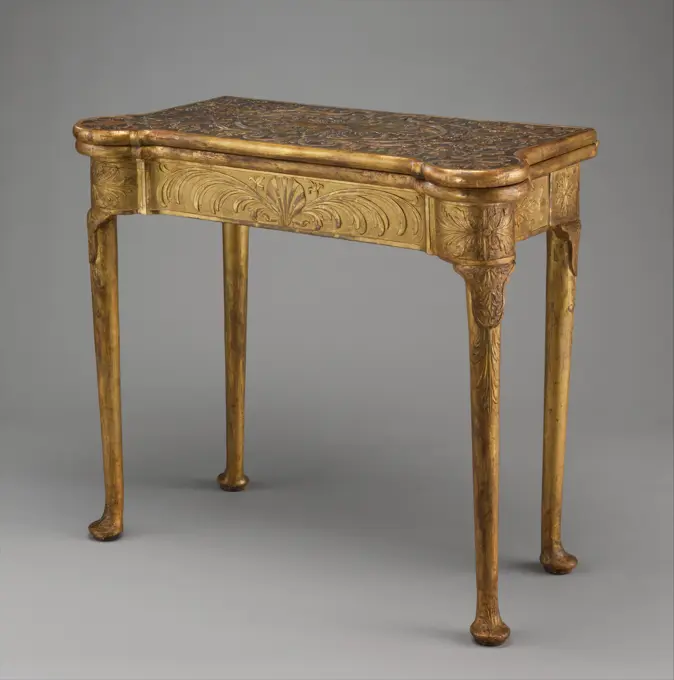
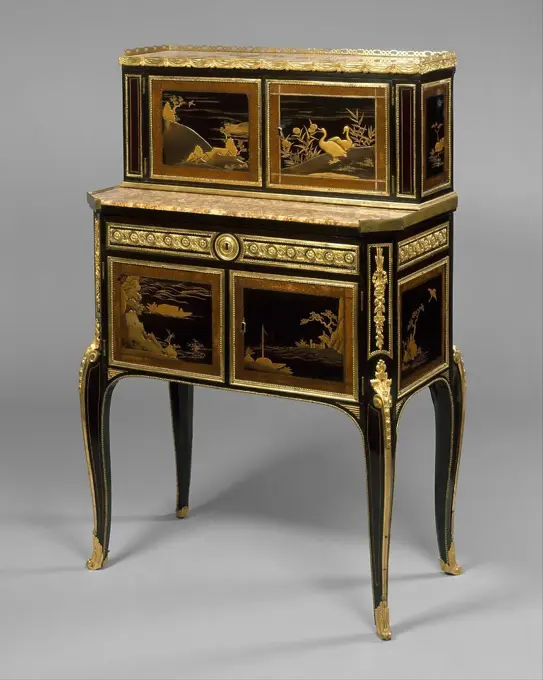
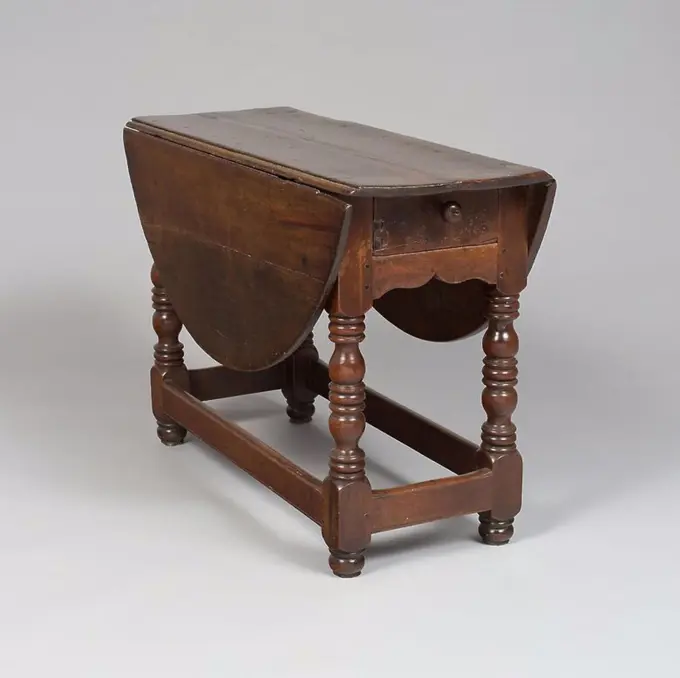
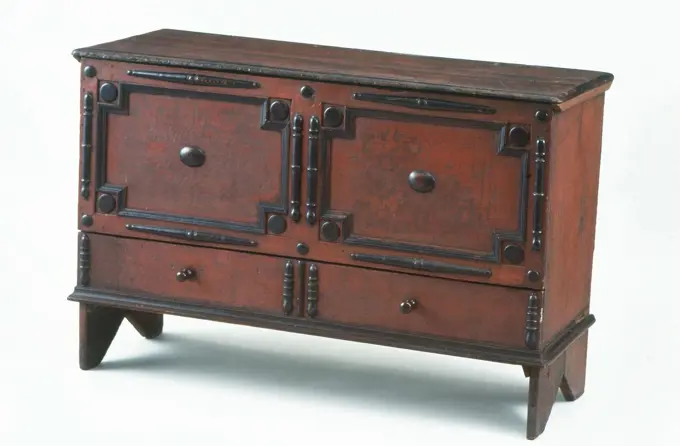
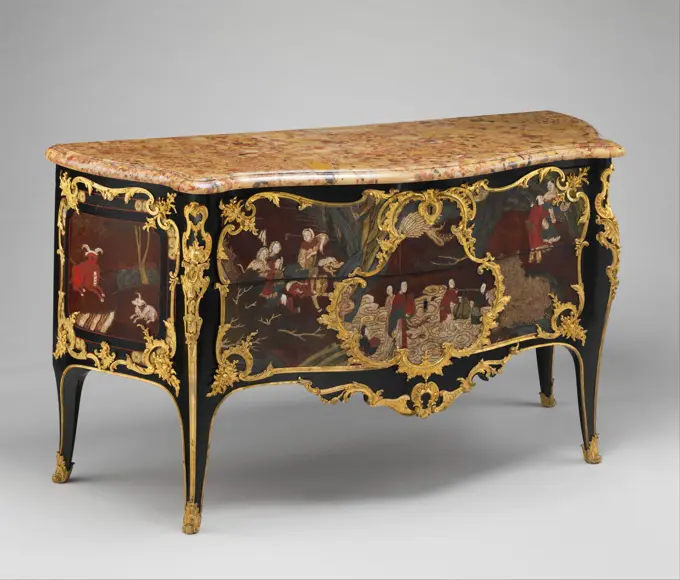
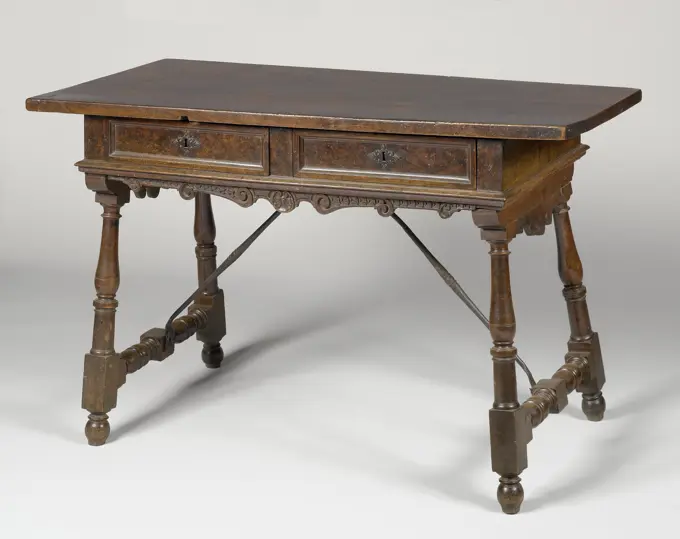
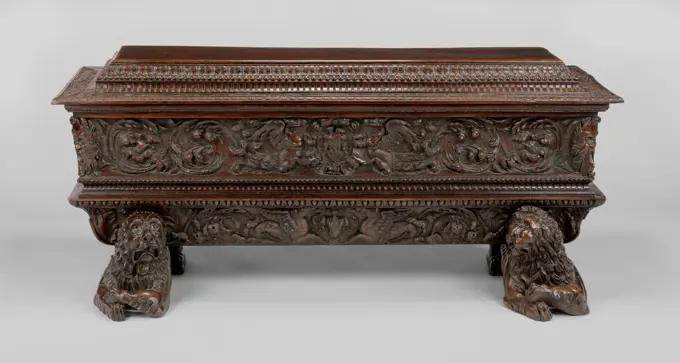
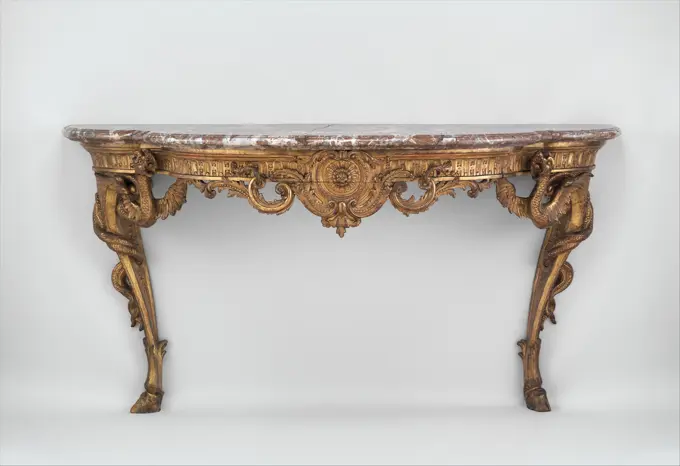
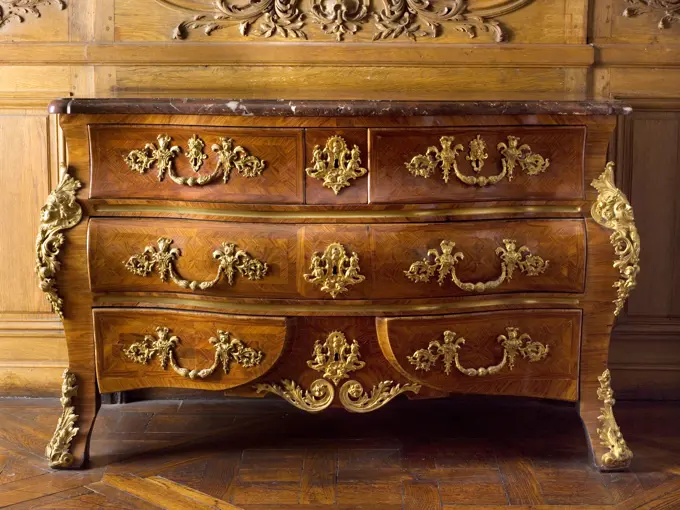
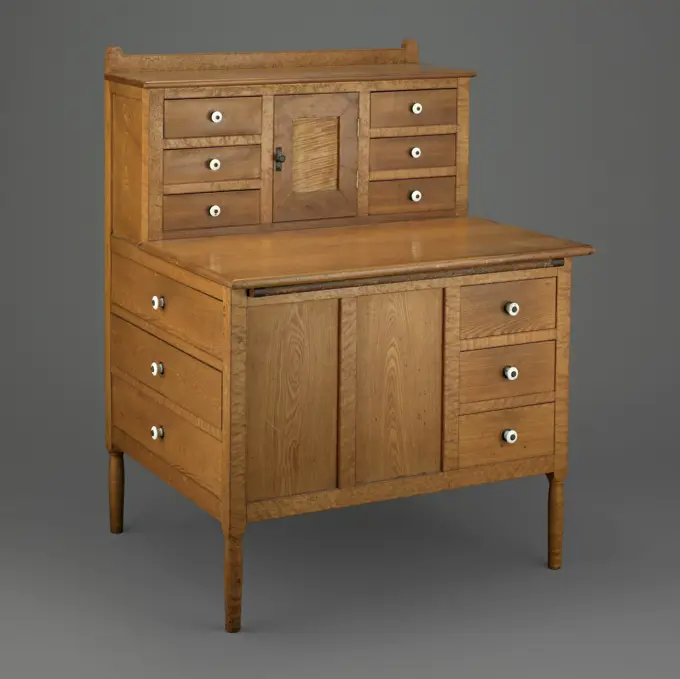
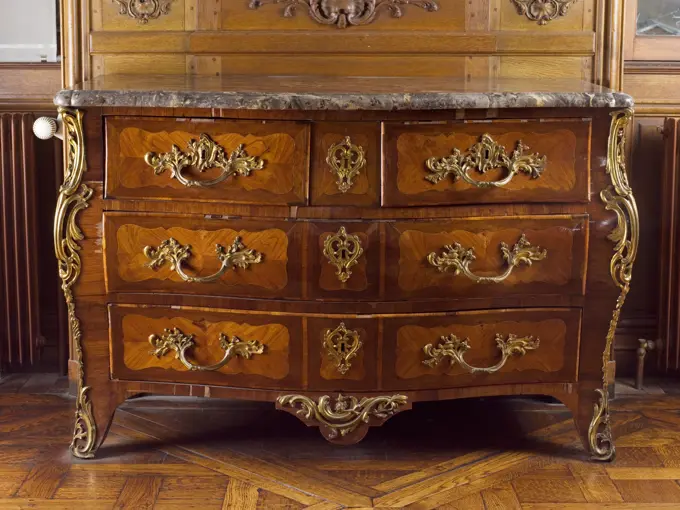
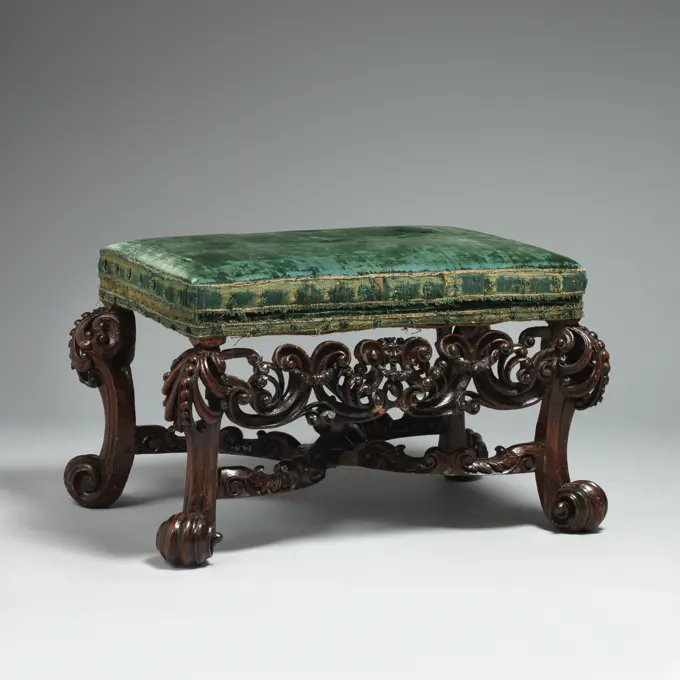
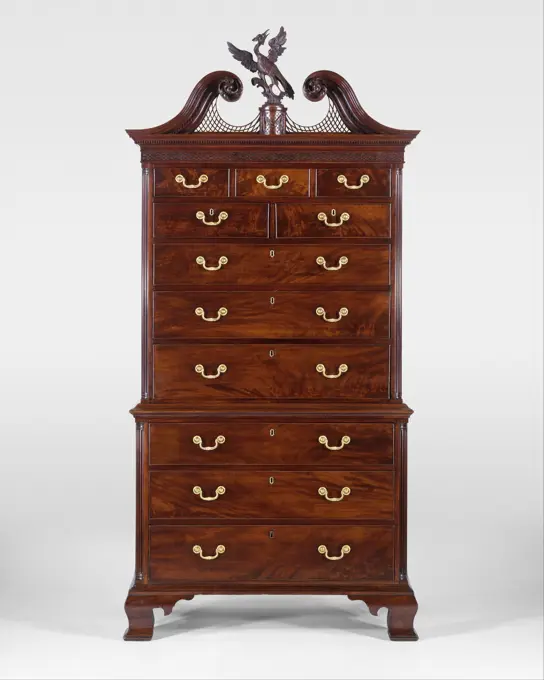
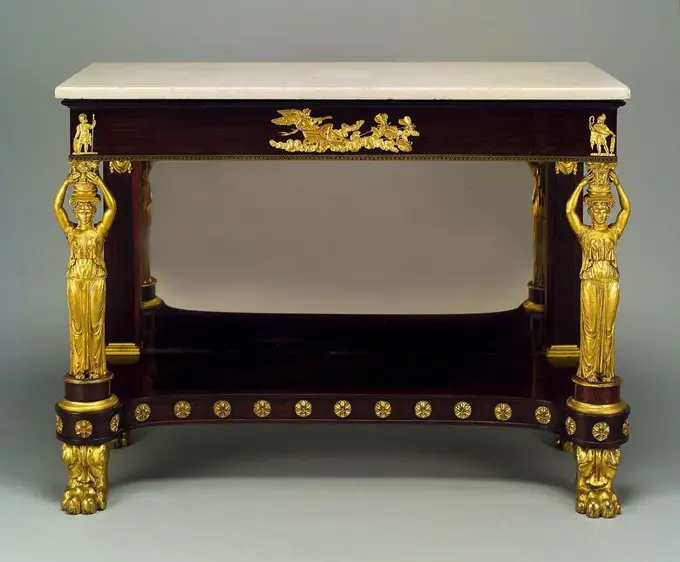
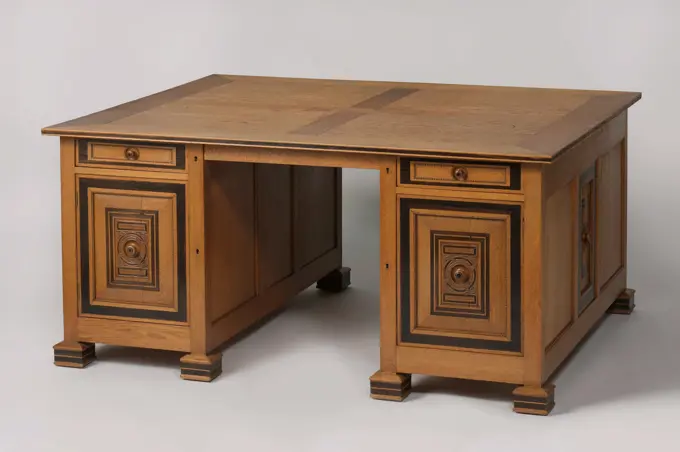
Payed table of which the corner styles above the legs are scaled with coins, anonymous, 1640 - 1660 Oak paid table, inlaid with rosewood. The ball legs rest on flat bobbins and are connected by standing profiled rules at the height of the houses, with ebbenhouten cannelures. Under the sliding leaf there is a beveled rule, including the box section on the plinth. The long sides show two flat cushion panels; The short shows one. The corner styles above the legs are scaly with coins. The leaf is in absentia listed around a midfield of three parts. Northern NetherlandsNetherlands wood (plant material). oak (wood). rosewood (wood). ebony (wood) Oak paid table, inlaid with rosewood. The ball legs rest on flat bobbins and are connected by standing profiled rules at the height of the houses, with ebbenhouten cannelures. Under the sliding leaf there is a beveled rule, including the box section on the plinth. The long sides show two flat cushion panels; The short shows one. The corner styles aboCupboard 1675-1700 American. Cupboard 2964Book Stand and Chest (Pegam) with Scholar and Arhat (Enlightened Buddhist Teacher)Table of mahogany, made for professor peel .. Meagle table, manufactured for professor Pel. On label under leaf: designed by Lion Cachet belongs to Jubilee Album for Professor Pel that to the Ned. Institute for Medicine has been handled.Cabinet. This is a so-called boogkast (arched cabinet), named for the large arches on the doors and sides. This onestands out for its Auricular-style decoration, a style of ornament that reached full expression in the work ofsilversmiths, among them Johannes Lutma. The fluid ornaments were carved in oak with exceptional skill inboth the arches and the masks in the frieze.Stool British first quarter 17th century View more. Stool. British. first quarter 17th century. Oak. Woodwork-FurnitureTable resting on three legs with table top and intermediate leaf of red-brown stained marble, Louis Majorelle, c. 1895 - c. 1905 Round table of mahogany and thuyahout resting on three legs. The three curved legs are inside and are caught in Veguld bronze batter over the entire length. The batter shows stylized Moresak vendors. The table top is made of red-brown stained marble and caught in a wooden frame. Under the table top, between the three legs, there is a second leaf of red-brown-spotted marble caught in a wooden frame. The wood from both the frames and the legs is cut into wide flowing parts.  mahogany (wood). marble (rock). bronze (metal). plywood. Round table of mahogany and thuyahout resting on three legs. The three curved legs are inside and are caught in Veguld bronze batter over the entire length. The batter shows stylized Moresak vendors. The table top is made of red-brown stained marble and caught in a wooden frame. Under the table top, between the three legs, there is a Chest with Drawers 1670-1700 American. Chest with Drawers 2039Table with pull leaves; Oak with ebony. Table of oak, decorated with ebony. The furniture has paws that exhibit thick pear-shaped sections with houses and connected by a double Y-shaped cross. The rules have a twisted ebony drip. Ebben tires are applied to the houses of the legs, the support pieces and in the magazine. The table has two pull leaves and crib screws at the top of the legs and on the cross.Pier Table 1829-35 Joseph Meeks & Sons American By the early 1830s, simpler Grecian-style furniture with rich mahogany and rosewood veneers and exuberant scrolled supports characterized a new direction in American furniture. Popular in the nation's drawing rooms through the 1840s, pier tables like this one were invariably displayed in tandem with a tall, gilded looking glass to create the effect of a continuous mirrored surface that extended the space of the interior and reflected light back into the room.. Pier Table. American. 1829-35. Mahogany veneer, mahogany, pine, ash, black marble and silvered glassTray top table. unknown, creatorCabinet, decorated with marquetery in different types of wood. On the doors with ribbons hung medallions in which on the left a sailing ship and on the right musical instruments., Anonymous, 1775 - 1800 Cabinet glued with mahogany on an oak core, decorated with marquetery in different types of wood. The furniture consists of a lower and upper cupboard. The base cabinet has three drawers and tranquility on conical -canling legs. The corner styles of the upper cabinet, in the form of Corinthian columns, have brass baseings. Both doors have hung in ribbons in Marqueterie with a sailing ship on the left and with musical instruments. The hood has a tympanum with stabbed branches and a bow. Northern Netherlands wood (plant material). oak (wood). mahogany (wood). ebony (wood). maple (wood). rosewood (wood). copper (metal) Cabinet glued with mahogany on an oak core, decorated with marquetery in different types of wood. The furniture consists of a lower and upper cupboard. The base cabinet has Card Table c 1805-1815 Rutland. Birch, white pine, rosewood, walnut, maple, and mahogany . Artist unknownPenant table with two half oval-shaped marble blades with gallery. Penant table glued with rosewood and satin wood on oak core. Half-oval, white-marble top rests on four square styles, placed on conical, with gold-plated bronze rings. Decorated legs. The styles are connected by a half oval leaf at the height of the legs and they carry fittings consisting of gold-plated bronze, plates, sunflowers and buttons articulated. The rule exhibits satin, outlined panels. Top and bottom, largely wear a gallery.Table glued with rosewood on oak core with leaf and pull leaves in Marqueteria. Table glued with rosewood on an oak core and with solid rosewood paws. The legs are vase-shaped and connected by a double Y-shaped cross. The cross is deposited by Ebbobel lists at the top. The houses and rules show low cushion panels with rosewood mirrors inside Ebbobels. The furniture has two pull leaves, which, as well as the large leaf, in Marqueteria of rosewood and pink wood () Are decorated.Chippendale Slant-Top Desk Antique Furniture CONSOLA FRANCESA - SIGLO XIX. Location: PRIVATE COLLECTION. MADRID. SPAIN.TableDressingtableSide table ca. 1730-50 Irish. Side table 192781Frame with two drawers and a door on the sides. Marqueter dialing with windows, rosettes and braid and middle two pigeons, flower work, bow, torch and arrow cooker .. oak dresser glued with multiple wood types, with gold-plated bronze rocaille fittings and marble leaves. The front contains two drawers; The sides each contain a door. The stretched S-shaped overhoeks placed corner styles with batter over the legs. Of the scalloped undercuts, the middle is a large batter. The marqueteria consists of windows with rosettes, framed by braid tires; The center panel shows two to each other flying pigeons, flower work, bow, torch and arrow sleeve.Pouillard, Mahogany Empire armoire with secretary, desk standard furniture interior design wood mahogany oak brass leather, On top oblique writing drawer middle drawer in which writing surface with storage space under shelf four legs and columns brass fittings Engraved in the lock of the upper section Pouillard Rue d'Hauphine Hôtel de Mouy Empire Dr. Max J. FriedländerTable. This table was meant to be placed against a wall. Such tables usually had a mirror hung above them and candlestands on both sides. Often there was also a matching cabinet with similar floral marquetry decoration. All the furniture in a room would thuscreate a decorative unity.Console table. unknown, authorSmall Table with Figure in a Landscape. Ryukyu Islands, about 1750-1900. Furnishings; Furniture. Black lacquer on wood core with gold-leaf painted decoration (hakue in Japanese)Desk 1769 Benjamin Burnham Inscribed: This Desk was maid in the / year 1769 Buy Benjn Burnham, / that sarvfed his time in Felledlfey [Philadelphia” this is the best documented and most ambitious of all Connecticut desks. Oddly enough, there is no apparent Philadelphia influence. Rather, the desk borrows motifs from Massachusetts (the inlaid compass stars and blocked front) and New York (the claw-and-ball feet in front and bracket feet in back).. Desk 544high resolution picture of a vintage desktopSheraton Card Table, c. 1810, 29 3/4 x 36 1/8 x 17in. (75.6 x 91.8 x 43.2cm), Mahogany, maple and pine, United States, 19th centurySideboard wardrobe;  1620-1640 (1632) (1620-00-00-1640-00-00);WorktableNuthout table with nine columns in the form of Tuscan columns, anonymous, c. 1550 - c. 1600 Table of walnut with nine columns in the form of Tuscan columns, which rest on a double-cross-shaped-shaped pedestal on twisted balls. The table rule has been treated as a simply profiled architraaf. The columns on the short sides are connected to consoles by arches. The table has two draft sheets. The midfield of the top is from elm wood. France wood (plant material). walnut (hardwood). beech (wood). elm (wood) Table of walnut with nine columns in the form of Tuscan columns, which rest on a double-cross-shaped-shaped pedestal on twisted balls. The table rule has been treated as a simply profiled architraaf. The columns on the short sides are connected to consoles by arches. The table has two draft sheets. The midfield of the top is from elm wood. France wood (plant material). walnut (hardwood). beech (wood). elm (wood)Tafel, Godefroy Dester, 1775 - 1800 Table decorated with marquetery of pink, satin and olijvehout and other types of wood on oak core. The piece of furniture rests on four legs that are rejuvenating, which in Marqueterie show satin lanes with bells at the top. The rules have diamond -shaped marqueterie with rosettes; The leaf a braid motif with rosettes. At the front there is a drawer with writing sheet, covered with green silk, and with compartments with ink pot and sand spreader. A gallery on top of the leaf on the back and sides. France wood (plant material). oak (wood). rosewood (wood). maple (wood). bronze (metal). silk gilding Table decorated with marquetery of pink, satin and olijvehout and other types of wood on oak core. The piece of furniture rests on four legs that are rejuvenating, which in Marqueterie show satin lanes with bells at the top. The rules have diamond -shaped marqueterie with rosettes; The leaf a braid motif with rosettes. At the front there is a drawer with wrDressingTableChest ofDrawersChest of Drawers c 1800-1810 Portsmouth. Although the serpentine front and bracket feet of this chest recall the Rococo style of the previous century, the string inlay, the use of contrasting veneers, and the style of the stamped-brass drawer pulls clearly place this chest in the neoclassical or Federal style. Boardman brought this style to Portsmouth, New Hampshire, after having apprenticed in Salem, Massachusetts, an important cabinetmaking center in Federal America. The chest retains much of its original finish and all of its original brass hardware.. Mahogany, oak, eastern white pine, and brass . Langley Boardman. Nut-timber table on four pairs, connected by crossers, legs that, as well as exercise, have home and articulation. The legs carry a rule. In the middle of both muses a forged iron rod is attached, connected to the underside of the window of the window. Under the rule a bar is attached to the front, with a palm with and two volutes in the middle. Two drawers slide in the rule, a lock plate in the front plate glued with root nutwood. Frosted leaf.High chest ofdrawersCupboard with two doors and three drawers, glued with mahogany. On the doors a central oval shell motif., Anonymous, 1780 Oak cupboard with upper cupboard, glued with mahogany. The conical legs and the corner styles, with fluted half -columns with copper basement and Corinthian capital, are placed overhoeks. The three drawers of the base cabinet carry gilded copper batter in the form of vases with hanging garlands. These drawers and the two doors of the upper cabinet carry rectangular and square fields marked by tires with herringbone pattern; A central oval shell motif on the doors. Scalloped underrinkt with attachment. Northern Netherlands wood (plant material). oak (wood). mahogany (wood). satinwood (wood). ebony (wood). copper (metal). gilding (material) inlay (process) / gilding Oak cupboard with upper cupboard, glued with mahogany. The conical legs and the corner styles, with fluted half -columns with copper basement and Corinthian capital, are placed overhoeks. The three drawersLibrary bookcase. unknown, creatorTable withDrawersDesk 1710-30 American. Desk 3132Night Table ca. 1880 Herter Brothers. Night Table. American. ca. 1880. Cherry. Made in New York, New York, United StatesAntique Louis XV style bombe commode, corner table and gueridonWriting Table (Bureau plat). Attributed to Charles Cressent (French, 1685 - 1768, master 1719)Dresser;  around 1750 (1740-00-00-1760-00-00);Small table. unknown, authorAlfred H Smith, Chest with Drawer, c 1937 Chest with DrawerOval Table with FallingLeavesOval table with falling leaves 1715-40 American This oval table with falling leaves is trim and light in weight and ideally suited to a variety of functions in an early eighteenth-century interior. The design of its legs and stretchers with opposed ogee balusters centered on a ring, exemplifies the standard turned vocabulary characteristic of William and Mary-style Boston and Boston-inspired tables of this form.. Oval table with falling leaves 3909Chest-on-chestModel 412 Stool; Designed by Otto Wagner (German, 1803 - 1861); Manufactured by J. & J. Kohn; Austria; cut, assembled and stained beech wood, brassIsadore Goldberg, Lowboy, c 1953 LowboyCommode (part of a set) ca. 1772 Marquetry medallion attributed to Christopher Fuhrlogh Fuhrlohg, a Swedish-born cabinetmaker, trained in Paris before moving in 1767 to London, where he made marquetry decorated furniture strongly influenced by French transitional forms. Sets of three commodes are extremely rare in eighteenth-century English furniture; this is the only known set by Fuhrlohg. The central medallion, showing a seated muse, is based on The Triumph of Venus by Angelica Kauffmann (1741-1807).. Commode (part of a set). British. ca. 1772. Marquetry of various woods, bronze and gilt-bronze mounts. Woodwork-FurnitureSide Table. England. Date: 1740-1750. Dimensions: 75.6 × 102.2 × 51.4 cm (29 3/4 × 40 1/4 × 20 1/4 in.). Mahogany table with marble top. Origin: England. Museum: The Chicago Art Institute, Chicago, USA.Table; Tuscany (probably), Italy; 17th century; Ebonized walnut with an inset  flowering  alabaster (alabastro fiorito) top; 82 x 125 x 65.3 cm (32 5,16 x 49 3,16 x 25 11,16 in.)Auxiliary table. unknown, creatorCard table ca. 1720 British. Card table 202960Table with Snow LionsTable. Dated: c. 1936. Dimensions: overall: 35.7 x 24.4 cm (14 1/16 x 9 5/8 in.) Original IAD Object: 33"high; 36"long. Medium: watercolor, colored pencil, pen and ink, and graphite on paper. Museum: National Gallery of Art, Washington DC. Author: Lawrence Porth.Desk (bonheur du jour). Culture: French. Dimensions: 39 x 25 1/4 x 14 1/2 in. (99.1 x 64.1 x 36.8cm). Maker: Claude-Charles Saunier (French, 1735-1807). Date: ca. 1765-75. Museum: Metropolitan Museum of Art, New York, USA.Table. American; New York. Date: 1690-1730. Dimensions: 66 × 110.5 × 91.4 cm (26 × 43 1/2 × 36 in.). Cherry and sweetgum. Origin: United States. Museum: The Chicago Art Institute, Chicago, USA.Chest withdrawerCredence, 1904. Artist: Shirley Slocombe.Commode ca. 1740-45 Bernard II van Risenburgh This Commode or chest of drawers is stamped four times with the initials BVRB, indicating that it was the work of the cabinetmaker Bernard van Risenburgh ll who is particularly known for his exquisite pieces of furniture veneered with Asian lacquer. In most cases, the cabinetmaker used Japanese lacquer: here, however, the lacquer is Chinese, most likely derived from a large multi-leaf folding screen shipped to Europe via the Coromandel coast of southeast India. Carefully selecting pieces with an interesting pictorial decoration to use as veneer for both the drawers and the sides, the cabinetmaker would have been limited by the size of the lacquer. The fact that the screens panels are tall and narrow would explain why separate and unrelated figural groups are used on the commodes front. The square side panels show fantastic animals in a landscape setting and were likely not large enough to cover the entire area, necessitating a painted fraBlanket chest c 1660-1700 New England. Oak, pine, and maple . Artist unknownSewing Table. Dated: 1939. Dimensions: overall: 56.1 x 43 cm (22 1/16 x 16 15/16 in.) Original IAD Object: 30 1/2"high; top: 23 1/4"wide; 12 3/4"deep.. Medium: watercolor, colored pencil, pen and ink, and graphite on paperboard. Museum: National Gallery of Art, Washington DC. Author: Isidore Sovensky.Six-angled black polished neo baroque coffee table, coffee table table furniture interior design wood beech wood silk, Two sheets on top upholstery embroided with bird of paradise edge with short pompons neo baroqueTable of Notenhout, Anonymous, 1500 - 1600 Table of nuthout on four purple -wise, connected by a transverse sport, legs that, as well as the sports, house and articulation. The legs bear a rule. In the middle of the two underports, a forged iron rod is attached, connected to the underside of the center rule of the window. A bar is attached to the front under the rule, with a palmet and two volutes in the middle. Two drawers slide into the front rule, with a lock plate glued in the front board in the front board. Cross -leaf. Spain wood (plant material). walnut (hardwood). iron (metal) Table of nuthout on four purple -wise, connected by a transverse sport, legs that, as well as the sports, house and articulation. The legs bear a rule. In the middle of the two underports, a forged iron rod is attached, connected to the underside of the center rule of the window. A bar is attached to the front under the rule, with a palmet and two volutes in the middle. Two drawers slide into the front ruOne of a pair of Chests. Attributed to Antonio Maffei (Italian (Umbrian), died 1601, active about 1554)Console table ca. 1710-20 French Supported on one or two legs, console tables need to be attached to the wall for stability and are considered to be part of the interior decoration of a room. They were made by a special group of joiners, menuisiers en btiments (litt. building carpenters) responsible for the fixed elements in the interior such as paneling, pier glasses and console tables. Unlike other members of the guild, these craftsmen were not required to stamp their output and for that reason it is rarely known who created such works. The apron of this early eighteenth-century console table displays symmetrical carving which is centered on a rosette framed by two scrolling acanthus leaves. The tips of these large leaves playfully touch the wings of two scaled dragons, their tails wrapped around the tables cabriole legs which end in hoof feet. These fantastic creatures bear similarities to those regularly found in the compositions of the French sculptor Jean-Bernard Toro (1661-173. Cabinet on open chassis. Decorated with chinoiserieDriver Tomp. Placing of Violette Bois, around 1730. Paris, Carnavalet museum. Drump, furniture, veneer, violet, 18th century, wood, furnitureCorner cupboard of oak and cuba mahogany wood with vertically vaulted front, anonymous, 1775- 1800 Corner cupboard of oak and cuba mahogany wood with vertically vaulted front. The base cabinet rests on the front on claw legs and has wide, double sculpted corner styles and two doors. The right corner styles of the upper cabinet with doors carry consoles with vases and rams heads with garlands. The angular profile lists on all doors show medallions and vases, on the upper cabinet supplemented with garlands. In the middle, the hood is wearing a large medallion with bow and halfway rosettes with garlands. Northern NetherlandsAmsterdam (possibly) wood (plant material). oak (wood). mahogany (wood). copper (metal). metal Corner cupboard of oak and cuba mahogany wood with vertically vaulted front. The base cabinet rests on the front on claw legs and has wide, double sculpted corner styles and two doors. The right corner styles of the upper cabinet with doors carry consoles with vases and rams Sewing Desk c 1860-1870 New Hampshire. The Shakers, members of a Protestant sect who lived in celibate, agriculturally oriented communal cooperatives, are best known for their simple yet elegant furniture. By the mid-19th century, they gained a notable reputation for excellent craftsmanship, which enabled them to turn their cottage furniture industry into a major enterprise. The use of rectilinear lines, lack of ornamentation, and emphasis on function characterize simple and restrained Shaker furniture. This particular desk was intended to store sewing implements and provide a work surface for sewing endeavors. The replacement of the rear panel indicates that the desk may have been arranged back-to-back with an identical desk, a concept in keeping with the communal living and working environments central to the Shaker belief system.. Cherry, birch, ash and maple . ShakerDriver Tomp. Anonymous. Placing of Violette Bois, around 1730. Paris, Carnavalet museum. Violet wood, chest of drawers, furniture, veneer, 18th century, furnitureHigh Chest ofDrawersStool (one of a pair) ca. 1690 British This stool and its mate (58.166.2) were formerly at Drayton House, Northamptonshire, England.. Stool (one of a pair). British. ca. 1690. Walnut, velvet not original to the frame. Woodwork-FurnitureSideboard Table. Culture: American. Dimensions: 41 7/8 x 73 x 26 3/16 in. (106.4 x 185.4 x 66.5 cm). Maker: Attributed to Thomas Seymour (1771-1848). Date: 1805-10.The form of this sideboard does not follow any published designs exactly, but the general shape has many English precedents. A variety of techniques were employed for decorative impact. Of them, the most striking is the veneering of the tambour doors with alternating strips of light and dark woods--a pattern associated with desks and sideboards from the Seymour shop. Museum: Metropolitan Museum of Art, New York, USA.Cabinet, c. 1690. André-Charles Boulle (French, 1642-1732). Ebony, marquetry in metal and tortoise shell; overall: 101.3 x 117.6 x 50 cm (39 7/8 x 46 5/16 x 19 11/16 in.).Table. The two blank escutcheons were probably originally painted with the family coats of arms of a husband and his wife. The carved eagles may have had a heraldic significance as well.Pedestal Table 1805-1815 England. Mahogany with ebony and metal inlays, gilt bronze mounts . Thomas HopeChest-on-chest 1770-75 Attributed to Thomas Affleck This chest epitomizes the Chippendale style: classical architectural forms are dynamically juxtaposed with romantic, naturalistic ornament. On the basis of a 1772 entry in the ledger of William Logan, in whose family the chest descended, it has been attributed to the Scottish immigrant cabinetmaker Thomas Affleck and the carver James Reynolds.. Chest-on-chest 2028Hundred to game;  approx. 1800 (1796-00-00-1805-00-00);Gaming Table. Dated: 1940. Dimensions: overall: 45.7 x 56.6 cm (18 x 22 5/16 in.) Original IAD Object: none given. Medium: watercolor, colored pencil, and graphite on paperboard. Museum: National Gallery of Art, Washington DC. Author: M. Rosenshield-von-Paulin.Chest with drawer 1705 American Inscribed EL 1705,” this is one of six similar joined chests from Connecticut bearing dates between 1704 and 1706. The painted decoration on its three front panels echoes the carving of the sunflower” chests of Hartford County, which it also resembles in its form and construction.. Chest with drawer 2032DressingTableCardtablePier table. Culture: American. Dimensions: 36 x 49 1/2 x 22 in. (91.4 x 125.7 x 55.9 cm). Maker: Charles-Honoré Lannuier (France 1779-1819 New York). Date: 1815-19.The gilded caryatids on this example make it the most overtly Grecian of Lannuier's square pier tables. Based on the carved marble figures of the Erechtheum on the Acropolis in Athens, the caryatids were cast in lead and treated with a gilded surface. They may have been made in a mold taken from a French bronze lighting device of a type similar in quality to the imported bronze clocks that Lannuier is known to have sold in his store. The gilded surface of the paw feet, brass ornaments along the apron, and rosettes along the base complement the figures in a pleasing manner. Museum: Metropolitan Museum of Art, New York, USA.Shaker Wash Stand. Dated: c. 1936. Dimensions: overall: 28 x 35.7 cm (11 x 14 1/16 in.) Original IAD Object: 27" high; 30" long; 32" wide. Medium: watercolor and graphite on paper. Museum: National Gallery of Art, Washington DC. Author: Ray Holden.. Office ministore of oak with cupboards on the front and rear, closed with doors and then loading, which flank the open middle part. The cupboards rest on wide square feet with pickled piping of rosewood. The doors and drawers are caught within a framework of panels and contain piping of rosewood, a pearl edge and a carved button. In the middle of each door, a cut braided rosette is. On both sides of the desk are small doors with palisander wood, a pearl edge and a carved button in the middle. Above the open middle part there is a tray on both the front and rear. The table top consists of four panels surround by moldings.Pair of tables 18th century Possibly James Stuart. Pair of tables. British. 18th century. Mahogany, oil glazes. Woodwork-FurnitureDiningtable. Maker School of: John Goddard, American, 1723-1785Maker (hinges): W. SparrowIlazna box, key to the box;  End of the 18th century (1790-00-00-1800-00-00);Anonymous (n. - d.), Half -moon convenient (main title), 1780. Wood, black lacquer, gilded bronze, black marble. Petit Palais, Museum of Fine Arts of the City of Paris.Double Desk; Bernard II van Risenburgh (French, after 1696 - about 1766, master before 1730); Paris, France, Europe; about 1750; Oak veneered with tulipwood, kingwood and bloodwood; drawers of mahogany; gilt-bronze mounts; 107.8 × 158.7 × 84.7 cm (42 7,16 × 62 1,2 × 33 3,8 in.)Nesting Table. Culture: American. Dimensions: 27 x 14 1/2 x 20 1/4 in. (68.6 x 36.8 x 51.4 cm). Date: 1860-70. Museum: Metropolitan Museum of Art, New York, USA.Table of Coromandelhout and Ebony, inlaid with tin pieves, Carel Adolph Lion Cachet, 1920 Table of Coromandelhout and Ebony, inlaid with pewter piping. The edge of the round top consists of five equal segments with a rounded upper edge and a straight wall. Where the segments touch each other, they are shot out at the bottom. The five high legs with pewter piping are bent in half height, rest on bobbins and are connected by a leaf for a moment. The bottom leaf is invested with linoleum; The top shows symmetrically placed birds and curved lines of ebony, the space around it is expressed and filled with a white mass Northern Netherlands wood (plant material).. ebony (wood). chalk. tin (metal) Table of Coromandelhout and Ebony, inlaid with pewter piping. The edge of the round top consists of five equal segments with a rounded upper edge and a straight wall. Where the segments touch each other, they are shot out at the bottom. The five high legs with pewter piping are bent in half height, rPorch of oak wood decorated with ebony, anonymous, 1650 - 1700 The porch has also glued on the styles of pilasters, also with ebbs and crowned with an Ionian capital. With door (BK-NM-3114-2). Northern Netherlands oak (wood). ebony (wood) The porch has also glued on the styles of pilasters, also with ebbs and crowned with an Ionian capital. With door (BK-NM-3114-2). Northern Netherlands oak (wood). ebony (wood). Cassoni - chests used for storing expensive fabrics - had an important representational function. Owners could use them to show off their wealth and social standing. This was why such chests were often decorated with the family coat of arms. It is not known which familys arms are depicted on this chest.Table. unknown, creator