Antique Tables and Furniture

Elegant antique tables in diverse styles, highlighting intricate craftsmanship and design details, including writing and dressing tables from different historical periods.
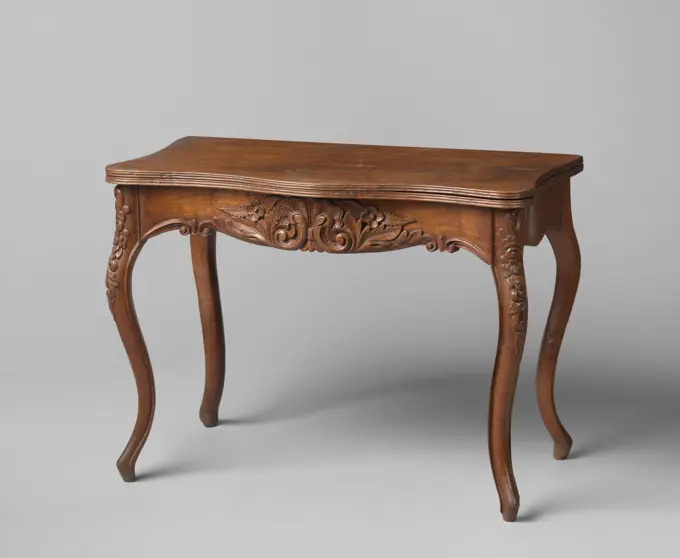
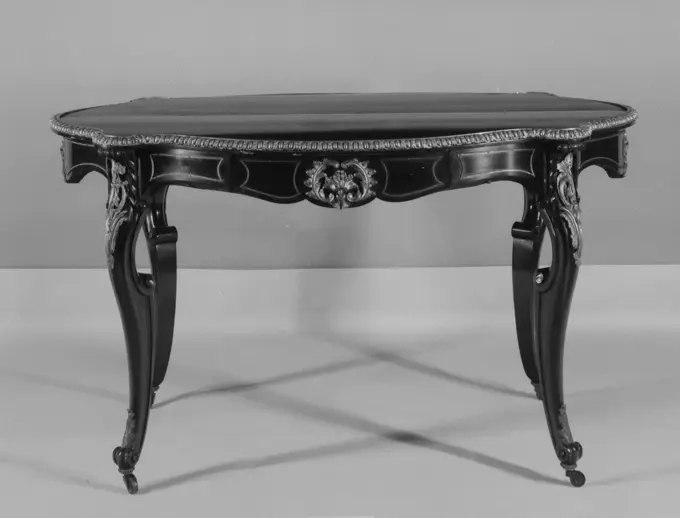
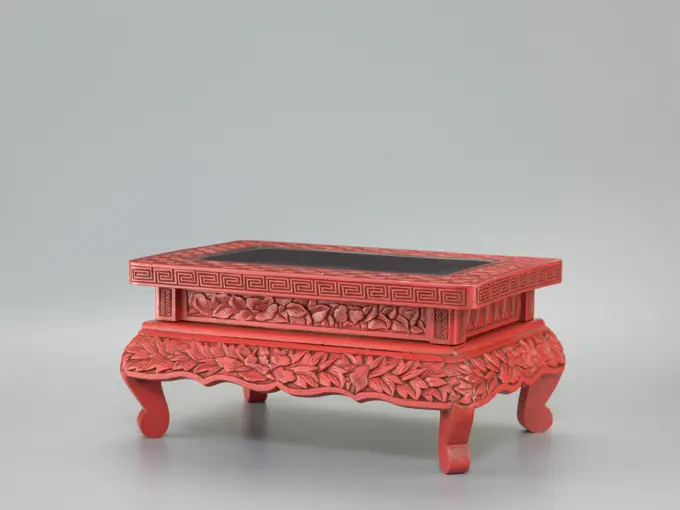
Playing table in Neo-Rococo style of djatihout, folding, anonymous, c. 1850 - c. 1875 Playing table in Neo-Rococo style of Djatihout, foldable. S-shaped curved legs, the front two sliced with a flour in the middle of leaf motifs, the front with a scalloped bottom edge, cut with a shell motif in the middle of flowers and leaves decorated volutes, the sides with a waved bottom edge, the waved, foldable leaf with ribbed sides. Dutch East Indies, The wood (plant material) Playing table in Neo-Rococo style of Djatihout, foldable. S-shaped curved legs, the front two sliced with a flour in the middle of leaf motifs, the front with a scalloped bottom edge, cut with a shell motif in the middle of flowers and leaves decorated volutes, the sides with a waved bottom edge, the waved, foldable leaf with ribbed sides. Dutch East Indies, The wood (plant material)
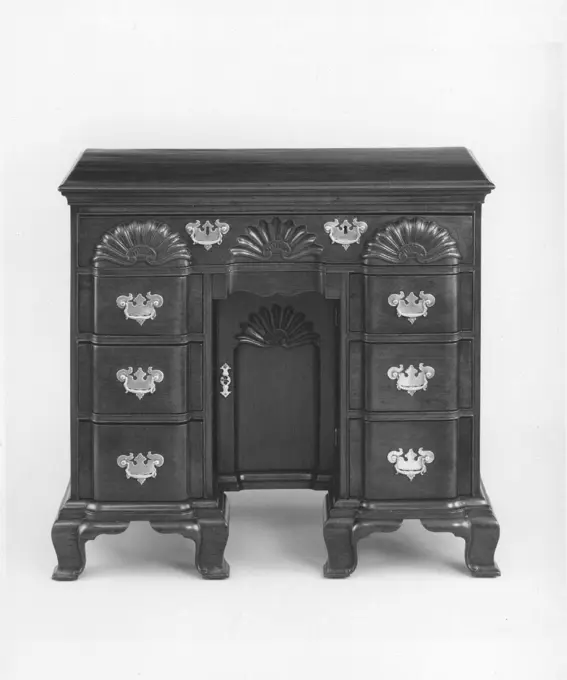
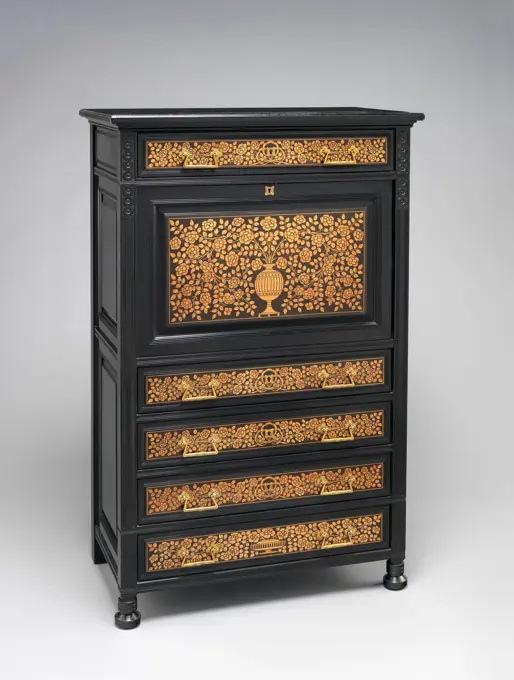
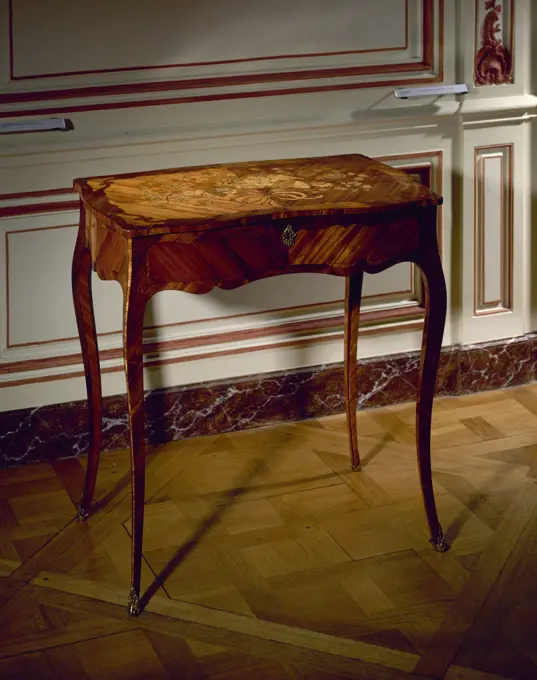
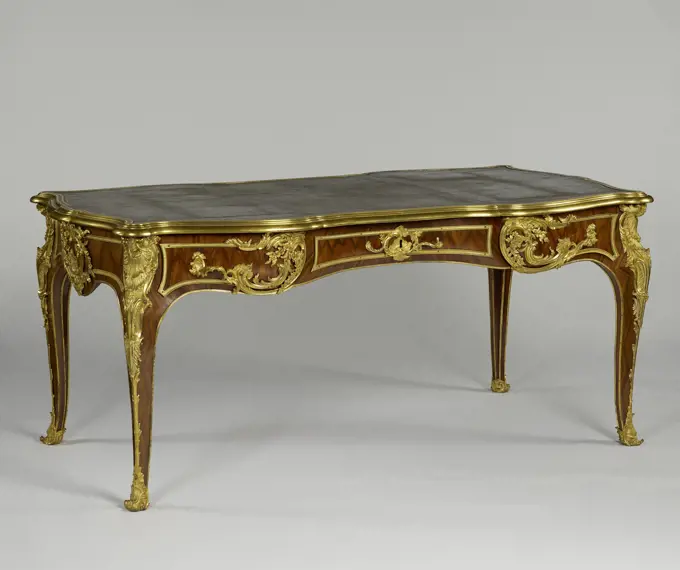
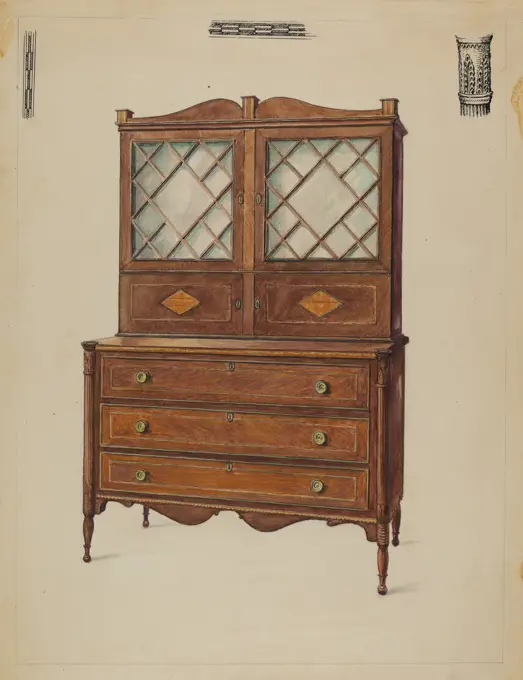
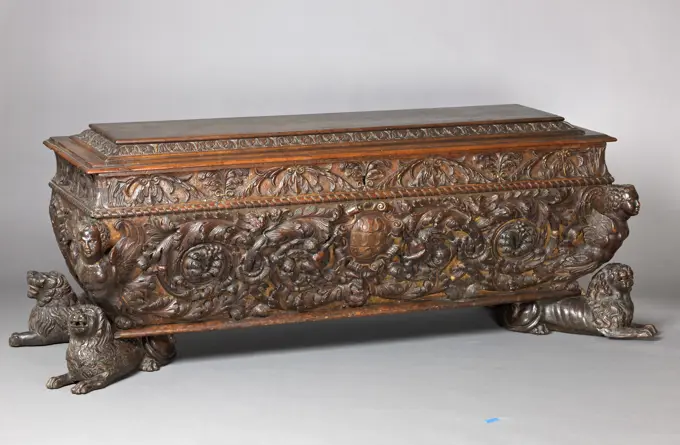
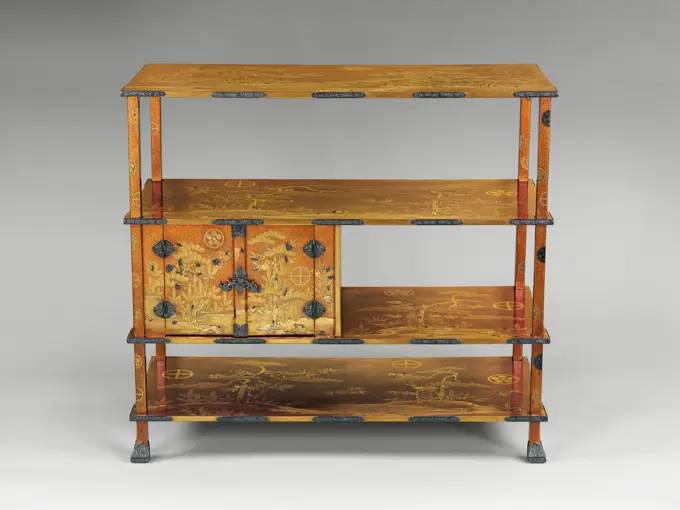
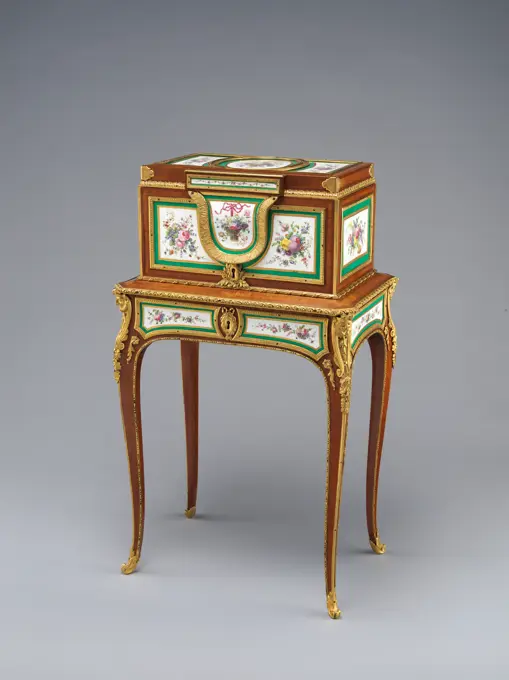
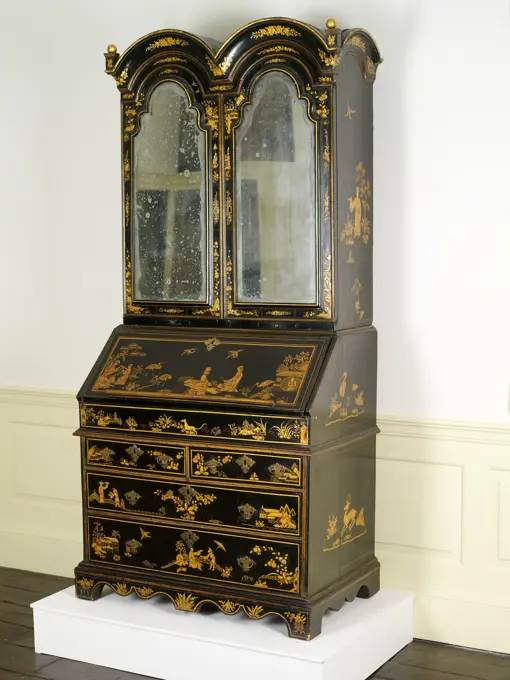
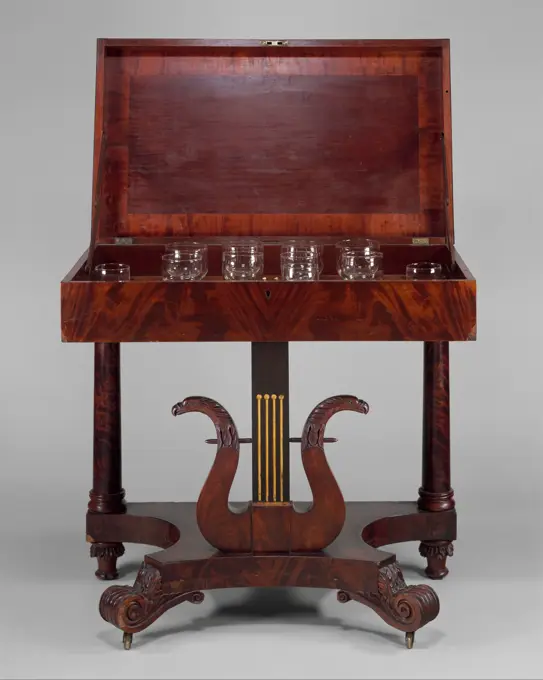
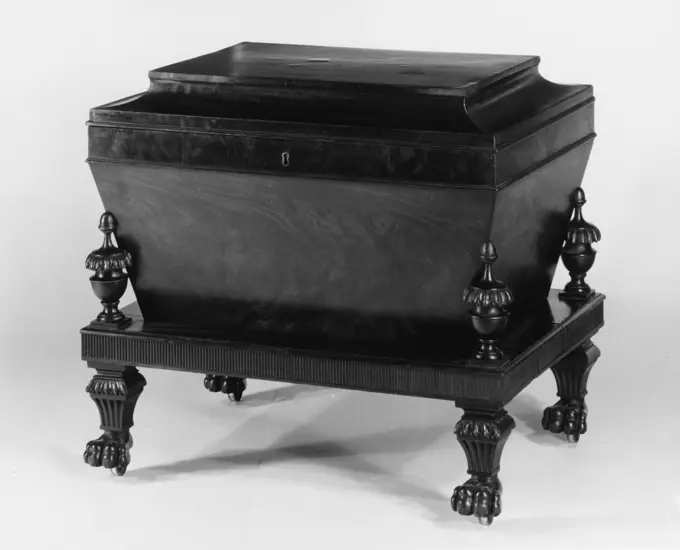
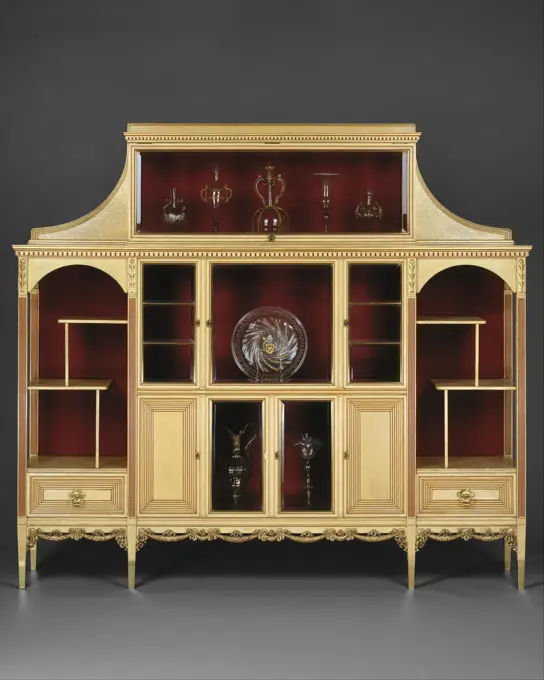
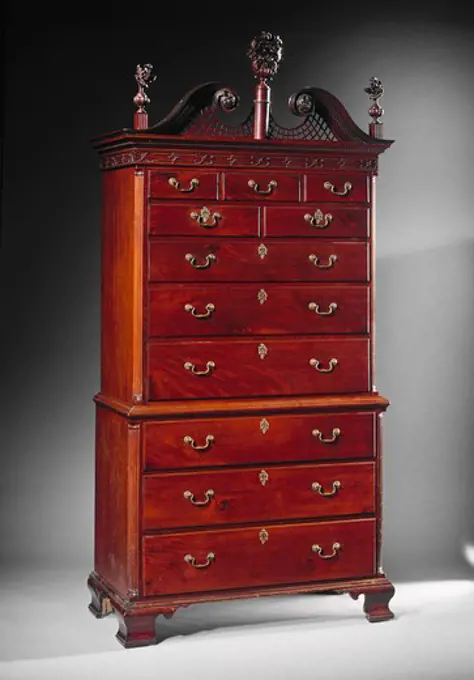
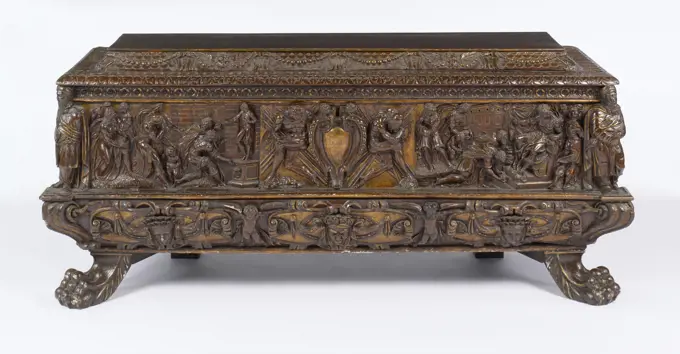
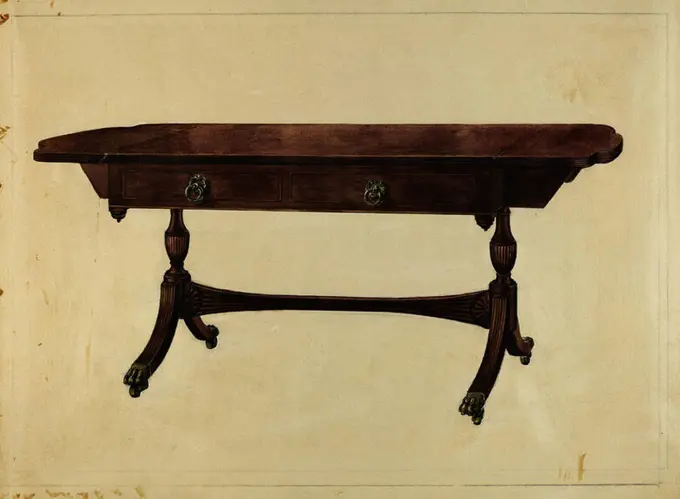
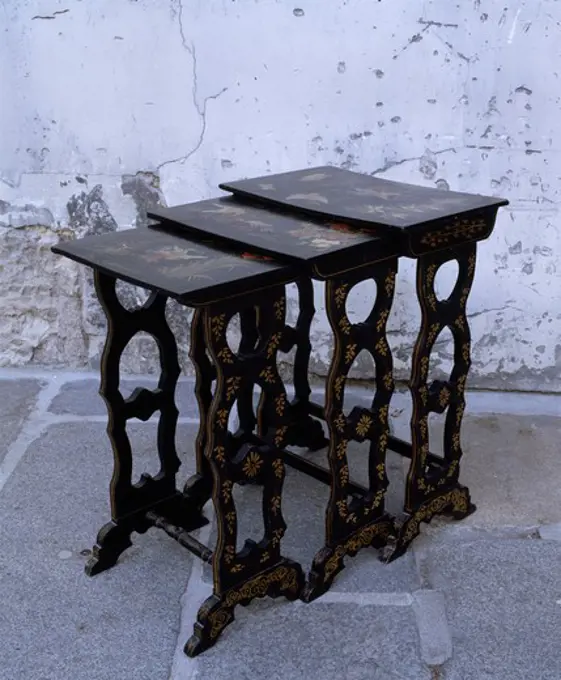
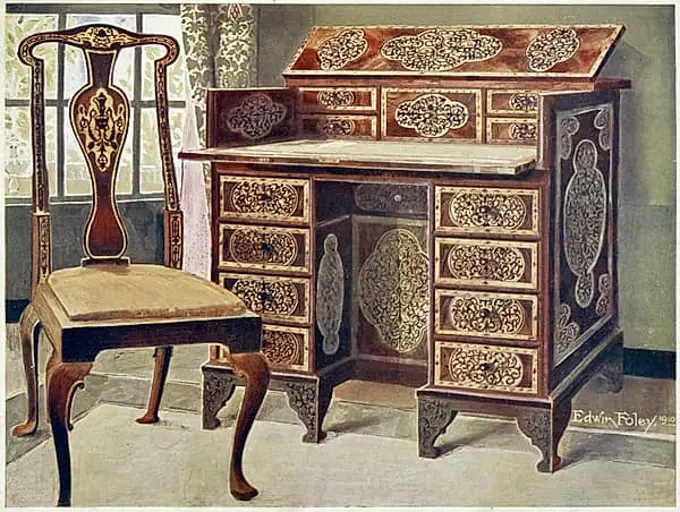
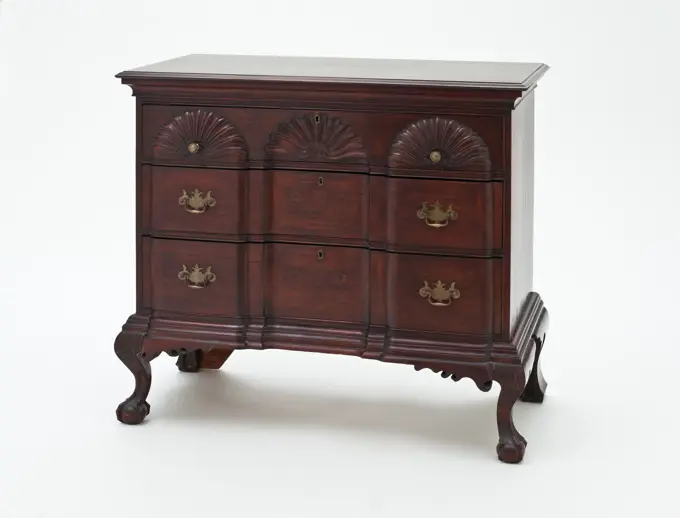
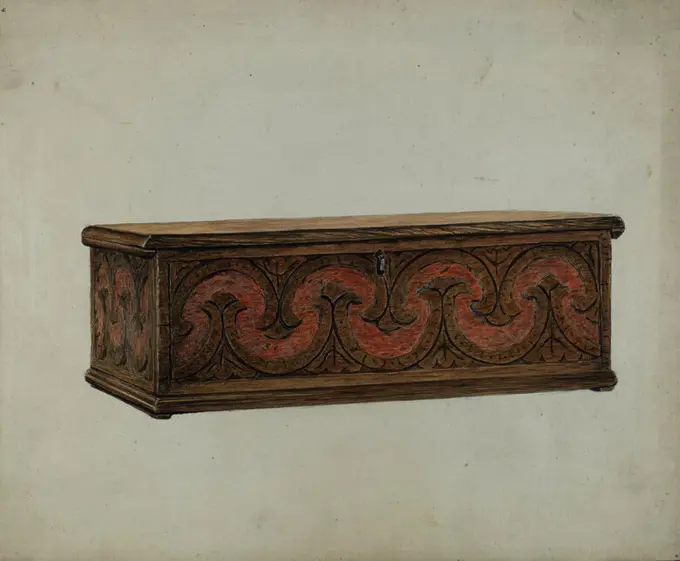
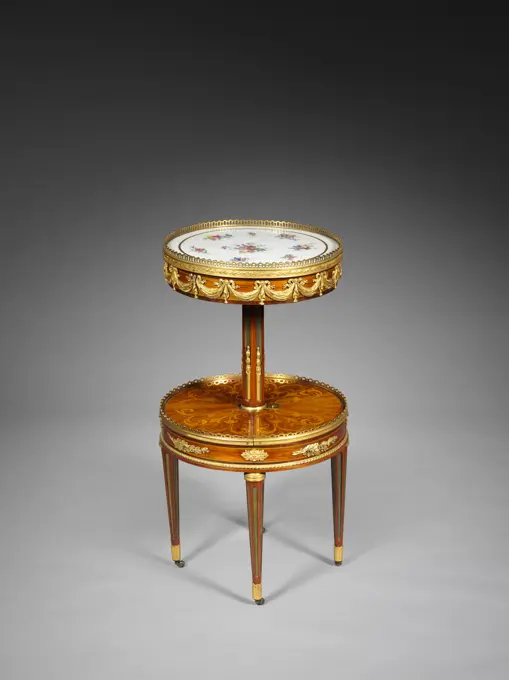
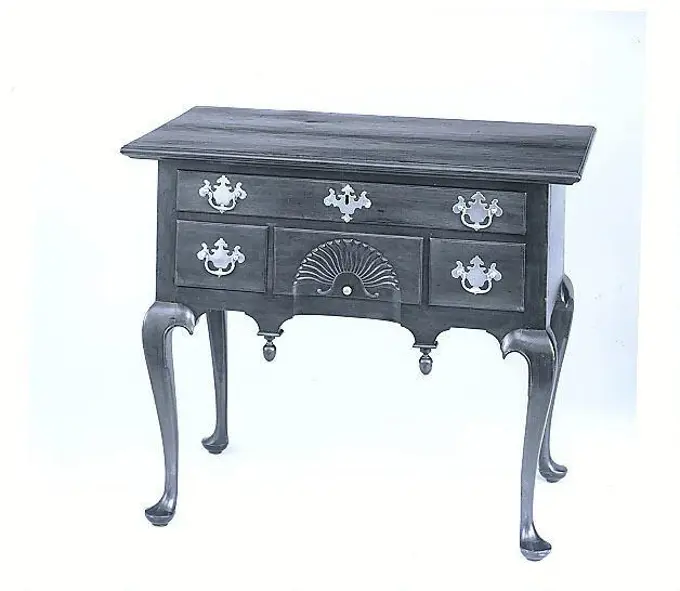
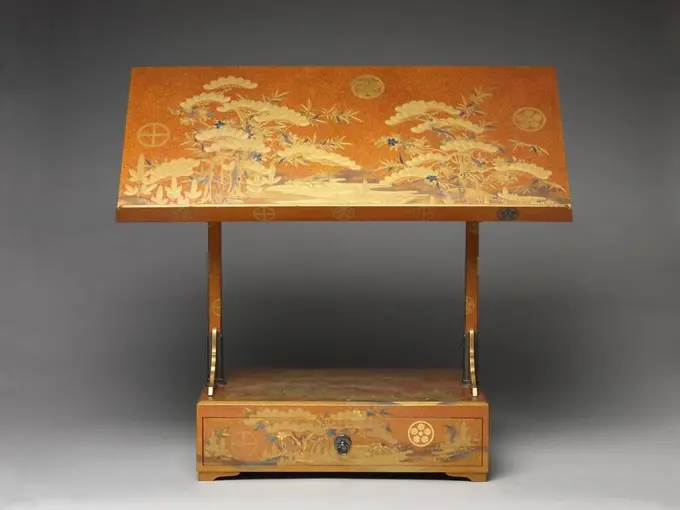
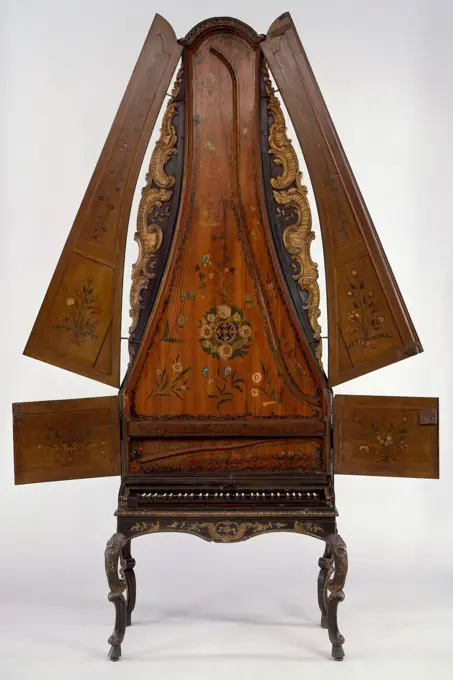
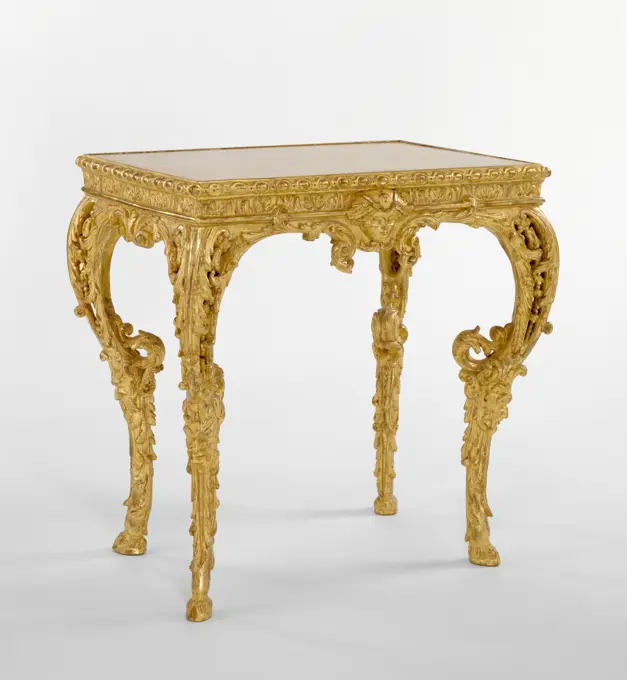
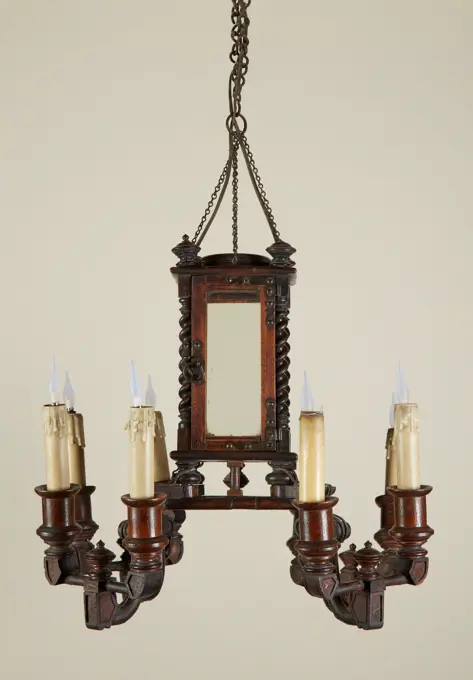
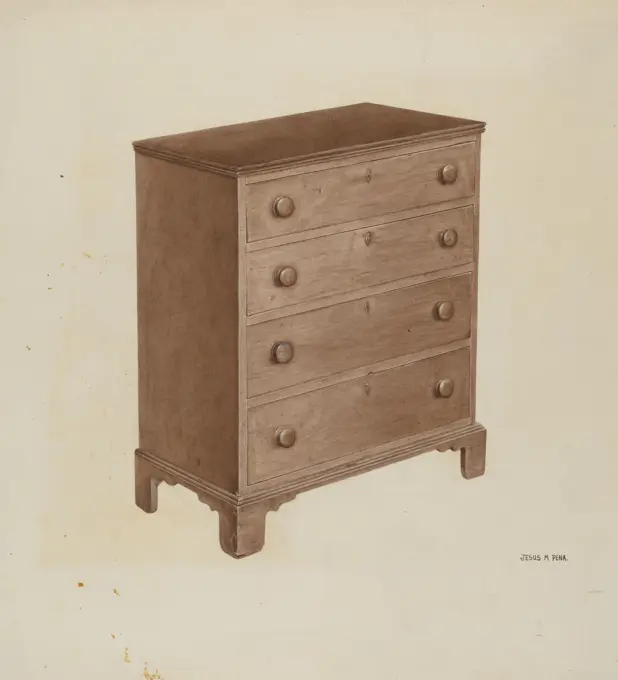
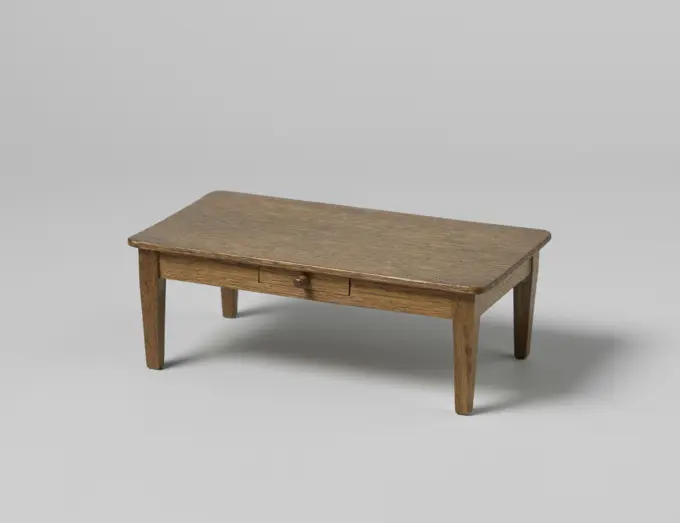
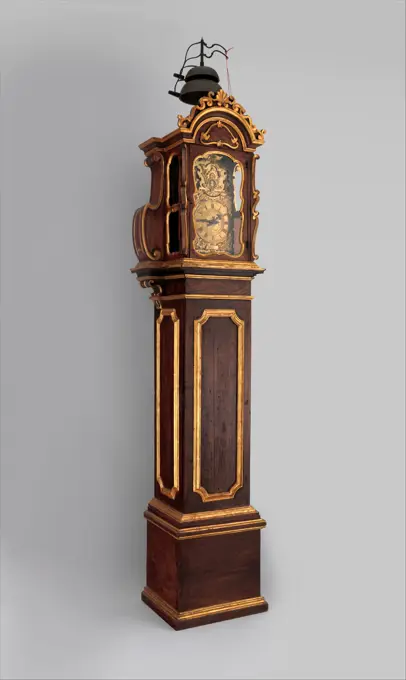
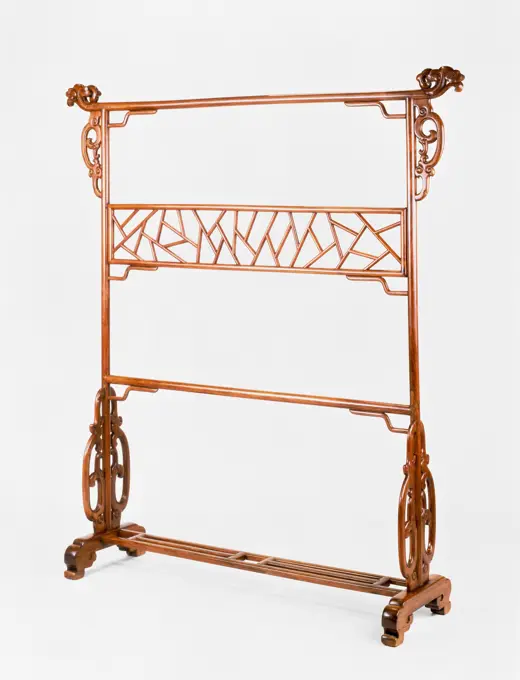
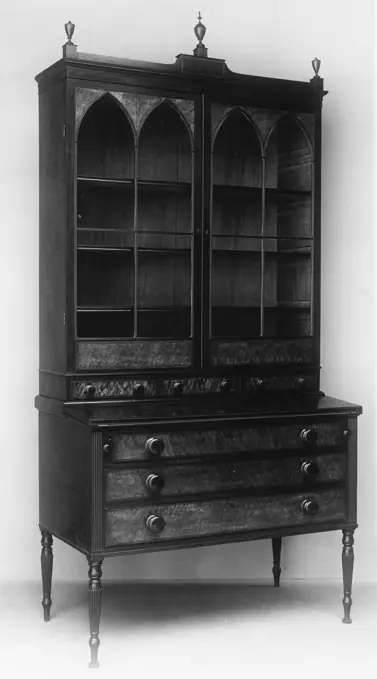
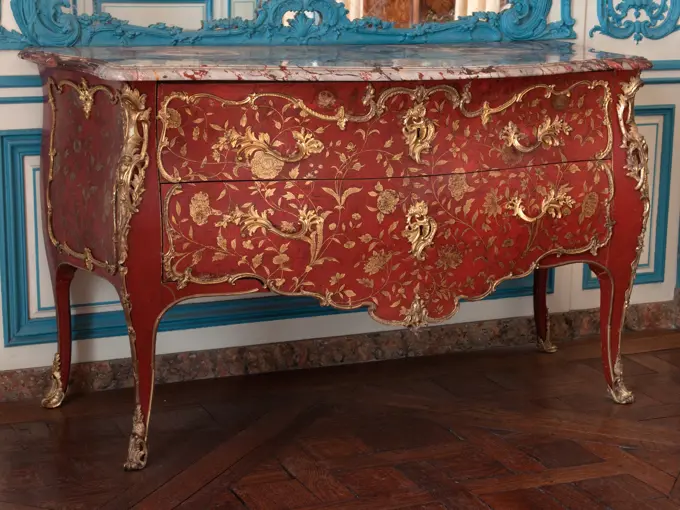
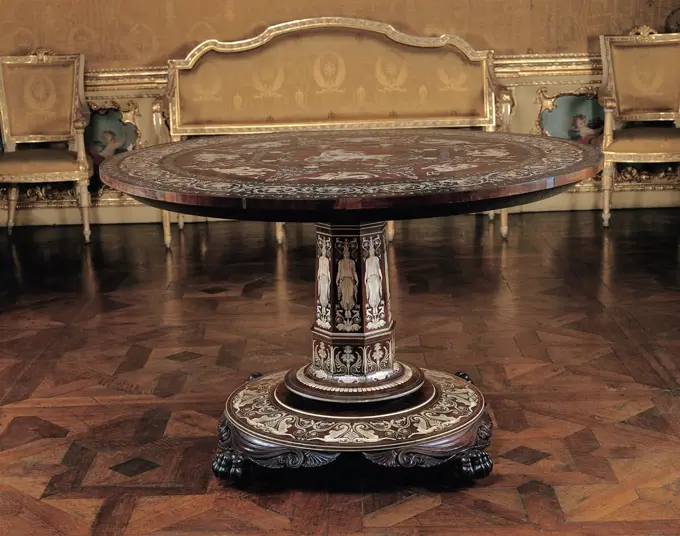
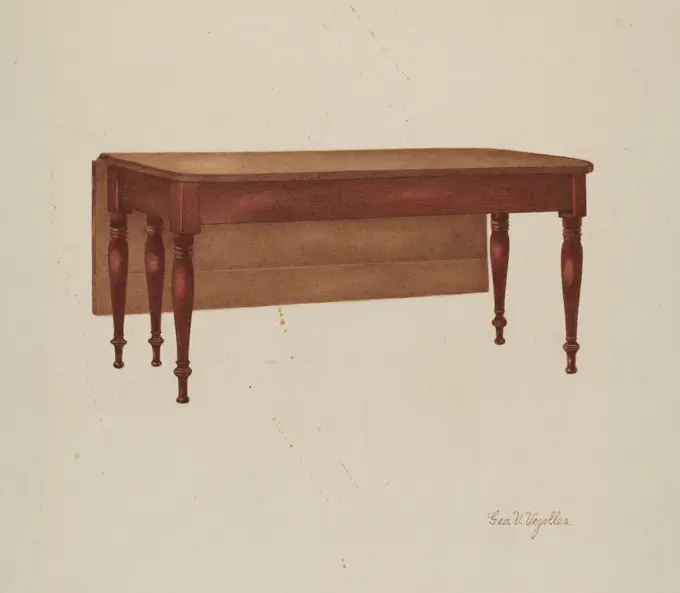
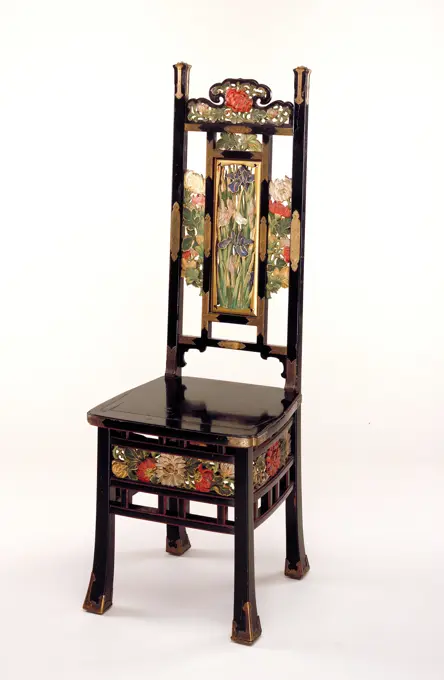
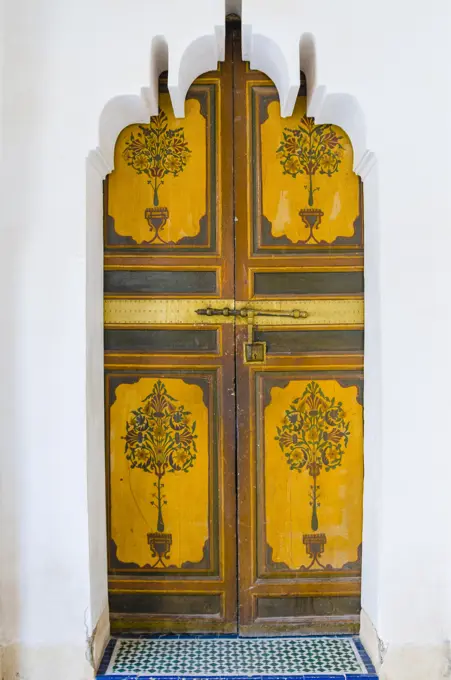
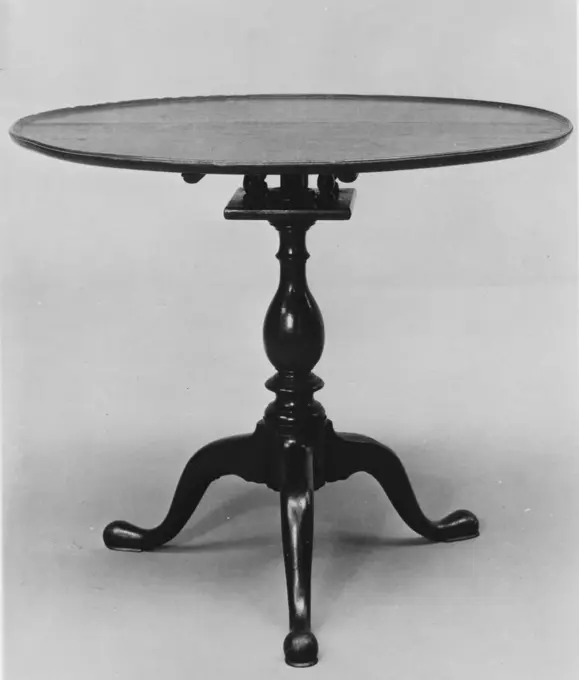
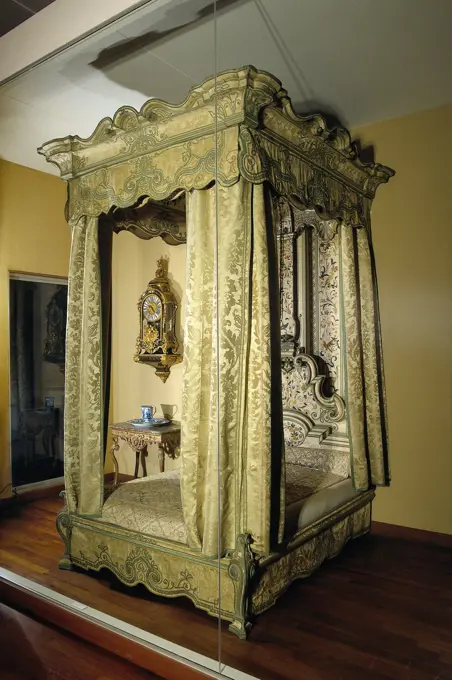
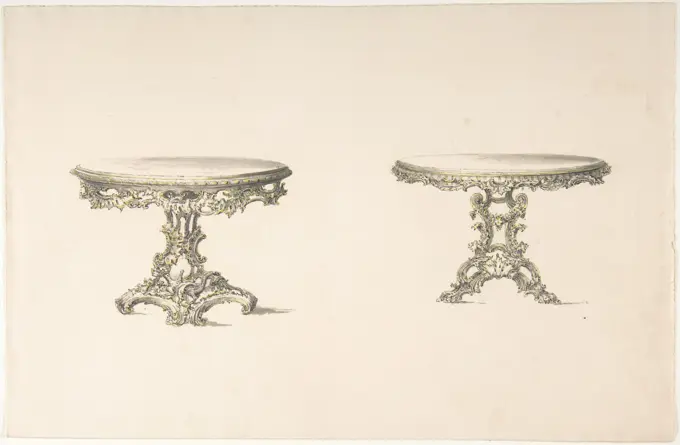
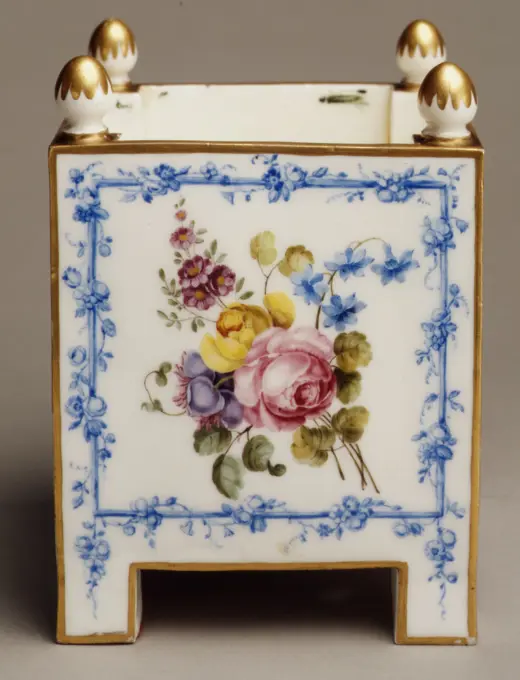
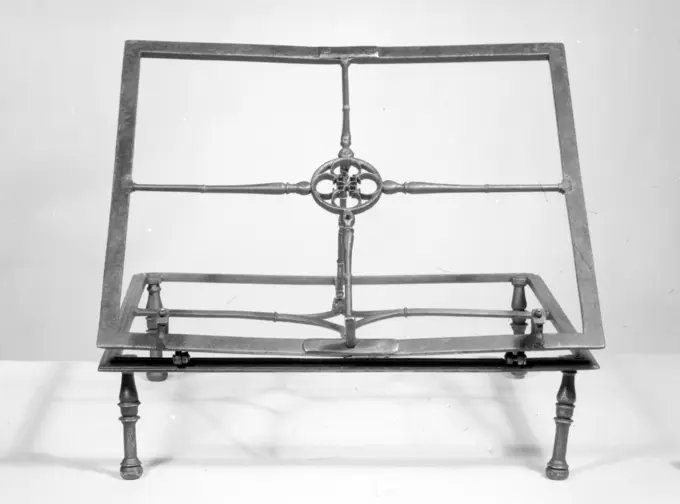
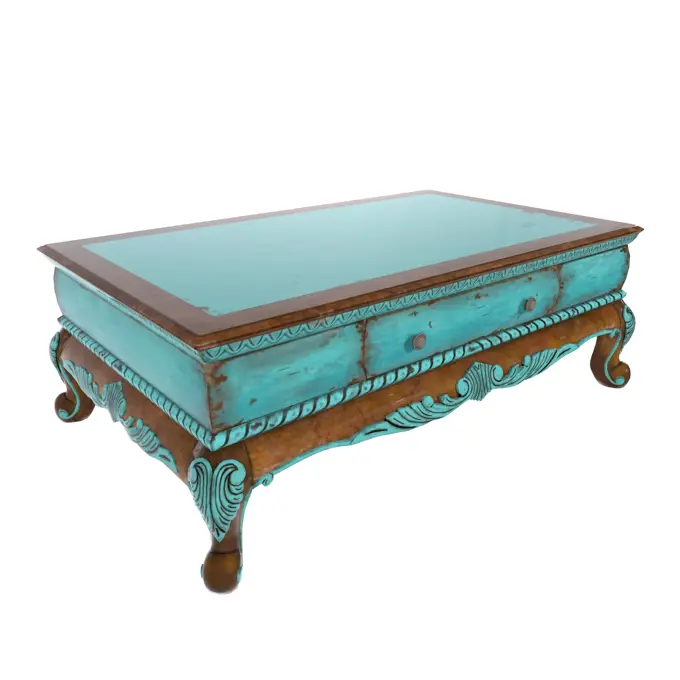
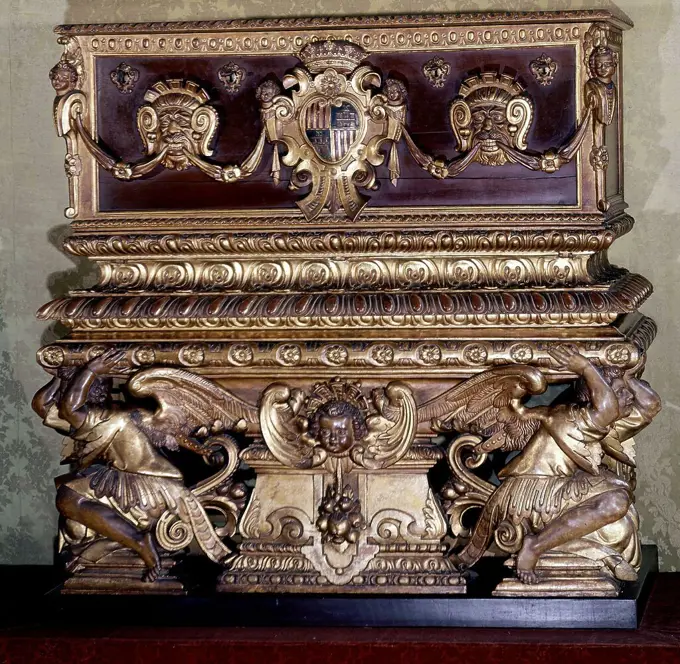
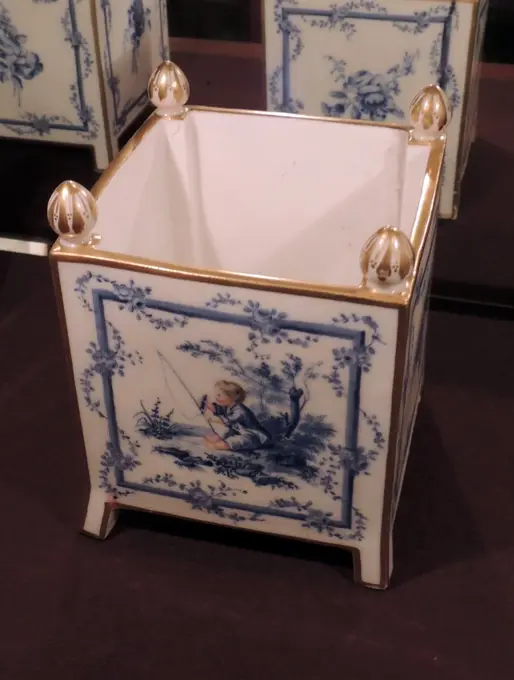
DavenportDeskBureauTableCabinet; Roussel, Pierre (1723-1782); around 1750 (1745-00-00-1760-00-00);Secretary from the Jay Gould House, New York City 1882 Herter Brothers Herter Brothers, one of the premiere cabinetmaking operations in New York City, made this desk in 1882 for the Fifth Avenue home of the New York financier Jay Gould (1836-1892). Gould commissioned the desk as a gift for his wife, Helen, to match their existing bedroom suite, also by Herter Brothers. This desk is a sophisticated example of Herter Brothers high Aesthetic design. The exuberant golden marquetry against the glossy black surface illustrates the influence of Eastern lacquerware, which strongly informed the Anglo-Japanese style popular during the period. The desk also acknowledges the eclecticism of contemporary design through its use of an eighteenth-century form, the fall-front secretary. It was constructed, however, in a simplified Eastlake, or reform, style and adorned with a symmetrical, stylized floral motif rooted in Near Eastern sources. The combination of these elements results in a piece true to Furniture decorated by Majorelle, vintage engraved illustration. Industrial encyclopedia E.-O. Lami - 1875Michael Riccitelli, Table (Occasional), 1938 Table (Occasional)Dresser;  4. W. 18th century (1776-00-00-1800-00-00);Frank Wenger, Settee, 1935 1942 SetteeAnonymous. Work table transformed into a writing table into oak, marquetry with floral decor, sliding plateau sheathed in leather, golden bronzes (closed overview, in the room, without bottom), around 1755. Paris, Cognacq-Jay museum. Bronze dore, oak, floral decor, decoration, leather sheath, marker, furniture, sliding tray, louis XV style, writing table, work table, transformation, transform, 18th century, wood, furnitureWriting Table (bureau plat); Attributed to Joseph Baumhauer (French, died 1772); Paris, France, Europe; about 1745 - 1749; Oak and ash carcass veneered with bloodwood; gilt bronze mounts; leather top; 78.9 × 181.3 × 100.6 cm (31 1,16 × 71 3,8 × 39 5,8 in.)Bernard Gussow, Secretary, c 1936 SecretaryCassone ca. 1550-80 (rebuilt, with extensive replacements) Italian (Rome or Siena). Cassone. Italian (Rome or Siena). ca. 1550-80 (rebuilt, with extensive replacements). Walnut, carved and partly gilded.. Woodwork-FurnitureShelf for Cosmetic Boxes (Kuro-dana) with Pine, Bamboo, Cherry Blossoms, and Crests of the Matsudaira and Shimazu Families early 19th century Japan This display shelf was created as one of the centerpieces of a wedding trousseau that probably included more than fifty lacquer accessories and pieces of furniture, thirty-one of which were acquired by The Met in 1910. It was commissioned to celebrate the marriage of Princess Taka (1809-1862), from the wealthy and influential Shimazu clan, and a son of the Matsudaira clan, which ruled over the Kuwana domain of Ise province (present-day Mie prefecture). The two family crests on the piecethe cross shape of the Shimazu and the stylized plum flower of the Matsudairasymbolize the union. The shelves, decorated with an unusual combination of auspicious symbols (pine, bamboo, and cherry blossoms), held mainly cosmetic boxes, including the utensils for tooth blackening (haguro), a custom of high-ranking women after their weddings.. Shelf for CosmePier ServingTableBench. Dated: c. 1939. Dimensions: overall: 29.2 x 36.8 cm (11 1/2 x 14 1/2 in.) Original IAD Object: 33 1/2"high; 26"from floor to arms. 19 1/2"high seat. Seat 32 1/2"deep. Medium: watercolor, colored pencil, and graphite on paperboard. Museum: National Gallery of Art, Washington DC. Author: Margery Parish.Jewel coffer on stand (petit coffre à bijoux) ca. 1775 Coffer attributed to Martin Carlin French Nine nearly identical coffers on stands are known (three in the Museum's collection) that are either stamped or attributed to Marin Carlin. Working in Paris, this successful German cabinet maker specialized in making small and elegant pieces for a fashionable and distinguished clientele. Between 1765 and 1778, Carlin made some eighty pieces of porcelain-mounted furniture.. Jewel coffer on stand (petit coffre à bijoux). French, Paris and Sèvres. ca. 1775. Oak veneered with tulipwood, sycamore, holly, and ebonized holly; thirteen soft-paste porcelain plaques; gilt-bronze mounts; velvet (not original). Woodwork-FurnitureCabinet (commode à vantaux) ca. 1813-25 François-Honoré-Georges Jacob-Desmalter French Jacob-Desmalter was the leading Empire furniture maker, and this cabinet is eloquent testimony that his graceful handling of large proportions did not lessen during the Restoration. The form of stamp was in use from 1815 to 1826.. Cabinet (commode à vantaux) 194568Bureau Cabinet, 1705-20. Laquered softwood. Made in EnglandDining Table. Dated: 1941. Dimensions: overall: 36.4 x 45.4 cm (14 5/16 x 17 7/8 in.) Original IAD Object: 28"high; 63 1/2"long; 60"wide. Medium: watercolor, colored pencil, and graphite on paper. Museum: National Gallery of Art, Washington DC. Author: Isidore Sovensky.Unknown, "Japanned" Bureau Cabinet, c. 1720, Oak, wood veneer (probably pear), pine; red and black pigments and varnish; areas of raised gesso; silvered, gilt, and painted decoration; brass..Grand Harmonicon 1825-30 After Francis Hopkinson Smith American. Grand Harmonicon 4138Settee. Dated: 1935/1942. Dimensions: overall: 22.9 x 29.1 cm (9 x 11 7/16 in.) Original IAD Object: 37"high, back; 76"wide; 24 1/2"deep. Medium: watercolor, gouache, colored pencil, and graphite on paperboard. Museum: National Gallery of Art, Washington DC. Author: Frank Wenger.Florence Choate, Pembroke Table, c 1940 Pembroke TableCrib van Mahoniehout, Anonymous, 1650 - 1700 Crib from mahogany () And rosewood, with a flinged columns, decorated with stuck braid tires, disc cords, laurel strips and rank friezes. The claw pieces on the long side are sculpted and stabbed with acanthus fillets, as well as the croses of main and foot ends. Six balusters wear a cover list on the head end. The basements of the corner styles show longer -leaking man figures and the corner styles are crowned with bulbs. The bed is on Vaaspoten. A bedbreak in the sky. With mattress. Northern Netherlands (possibly)Netherlands (possibly) wood (plant material). mahogany (wood). rosewood (wood). textile materials Crib from mahogany () And rosewood, with a flinged columns, decorated with stuck braid tires, disc cords, laurel strips and rank friezes. The claw pieces on the long side are sculpted and stabbed with acanthus fillets, as well as the croses of main and foot ends. Six balusters wear a cover list on the head end. The basements of the coPresentation casket 1867 Josef Ritter von Storck The presentation casket to Empress Elizabeth (1937-1898), wife of Emperor Franz Joseph, was made to contain 70 photographs, showing the stands of all the Austrian exhibitors at the Paris International Exposition in 1867. Elizabeth had intended to pay an official visit to the exhibition in order to admire the Austrian contribution, but was prevented by ill health from doing so, and the pictures were made as a souvenir.. Presentation casket 197737Cellaret 1810-20 American A case designed to hold bottles of wine or liquor, the cellaret, like the sideboard, was an essential piece of furniture in fashionable dining rooms of the early nineteenth century. Frequently, the cellaret would stand in an opening at the center of the sideboard and be wheeled up to the table for meals.. Cellaret. American. 1810-20. Mahogany, white pine, tulip poplar. Made in New York, New York, United StatesTable ca. 1860 Léon Marcotte French This table is part of a suite of Louis XVI-style furniture that John Taylor Johnston (1820-1893) purchased from the firm of Ringuet-Leprince and L. Marcotte in about 1856. This international firm had showrooms in both Paris and New York, and it is believed that at least some of the pieces of the suite were made in Paris for the New York commission. Johnston, a railroad executive and the first president of The Metropolitan Museum of Art, used the furniture in the music room of his residence at 8 Fifth Avenue. The suite (68.69.1-68.69.11, 68.165.1-68.165.6) includes two sofas, two armchairs, a table, two matching cabinets, a third large cabinet, six matching side chairs, a pair of lyre-back side chairs, and a firescreen. After Ringuet-Leprince retired in 1860, the firm became known as L. Marcotte and Company. Léon Marcotte was New York's most noted cabinetmaker and interior decorator during the 1860s.. Table 8084Cabinet ca. 1883 Attributed to Herter Brothers This drawing-room cabinet exemplifies the ivory and gold palette Herter Brothers favored in drawing rooms designed for their wealthy clients, such as Oliver Ames, industrialist and governor of Massachusetts, for whom this piece was made. Typical of Herter Brothers, this cabinet suggests a sophisticated amalgam of sources. It employs decorative elements derived from eighteenth-century Neoclassicism, such as the reeded columns, dentil moldings, and carved swags, while also referencing the contemporary arts of Japan in its asymmetrical side shelves and in the gold-flecked surface inspired by lacquerware.. Cabinet 16576Library cabinet;  1830-1840 (1830-00-00-1840-00-00);Chippendale Chest-On-Chest ca. 1770 Antique Furniture Cassone; Rome (), Italy; second half of 16th century; Parcel-gilt walnut; 74 x 166.1 x 61.6 cm (29 1,8 x 65 3,8 x 24 1,4 in.)Dresser (Spain); wood, walnutSecretary, c. 1780, 94 1/2 x 43 x 23 5/8 in. (240.03 x 109.22 x 60.01 cm), Mahogany, white pine, light wood inlay, and brass (handles), United States, 18th century, Unlike the more traditional style of desk and bookcase with a slant front, this example has a drawer that pulls out to reveal filing compartments and a writing surface. The berry rosettes crowning the broken pediment and the delicate diamond inlay on the center of the cornice were popular design motifs in the Salem, Massachusetts area.Sofa Table. Dated: c. 1939. Dimensions: overall: 22.2 x 29.5 cm (8 3/4 x 11 5/8 in.). Medium: watercolor, pen and ink, and graphite on paperboard. Museum: National Gallery of Art, Washington DC. Author: Francis Borelli.Source bed of pine, wallped with plain and velvet velvet; So-called Rosendaelbed. Source bed of pine, wallped with plain and velvet velvet. The four curtains cover the twisted styles. Leaves are arranged for the sunlight, which are deposited with brown velvet and passing. There are scallop pains under the rules and along the edges of heaven. Heaven has a head frame with a hollow curved fries and a cornice with volutes. The back has a sculpted center piece and attachment with a seven-pointed crown. From Castle Rosendael (Gelderland). An embroidered bedspread belongs to the four-poster bed.Shaker Ironing Table. Dated: 1935/1942. Dimensions: overall: 21.8 x 27 cm (8 9/16 x 10 5/8 in.). Medium: watercolor, graphite, and gouache on paper. Museum: National Gallery of Art, Washington DC. Author: Irving I. Smith.Nest of antique inlaid tablesFurniture around the turn of the century 1900, Writing desk with walnut inlays (1910, 1911), Walnut inlaid writing-table (1910Block-and-Shell Chest of Drawers. United States, Connecticut, possibly Colchester, circa 1770. Furnishings; Furniture. Cherry, chestnut, tulip poplar, pineCard and backgammon table. Culture: American. Dimensions: 28 5/8 x 35 x 33 5/8 in. (72.7 x 88.9 x 85.4 cm). Date: 1760-90.The upper playing surface of this rare tripletop gaming table is inlaid with patterns of backgammon and chess boards; the lower one is lined with baize for playing cards. Otherwise, the table is characteristic of a small group of New York card tables with bold serpentine fronts. Museum: Metropolitan Museum of Art, New York, USA.Small Carved Chest. Dated: c. 1939. Dimensions: overall: 22.7 x 27.7 cm (8 15/16 x 10 7/8 in.) Original IAD Object: none given. Medium: watercolor, colored pencil, graphite, and some heightening on paperboard. Museum: National Gallery of Art, Washington DC. Author: Ralph Boyer.Secretary Bookcase. Dated: c. 1936. Dimensions: overall: 35.5 x 27.7 cm (14 x 10 7/8 in.) Original IAD Object: 62 1/2"high, 39 1/2" wide. Desk depth 20 3/4".See d.s. for dets.. Medium: watercolor, gouache and colored pencil on paper. Museum: National Gallery of Art, Washington DC. Author: Rex F. Bush.Penant table of gilded wood on two S-shaped legs decorated with rocailles, Anonymous, 1750 Marble table top of Penanttafel made of gilded wood. Northern NetherlandsNetherlands wood (plant material) Marble table top of Penanttafel made of gilded wood. Northern NetherlandsNetherlands wood (plant material)Highboy. Dated: c. 1936. Dimensions: overall: 28.1 x 21.8 cm (11 1/16 x 8 9/16 in.) Original IAD Object: 60 3/4"high; 38 3/8"wide; 19 1/2"deep. Medium: watercolor, colored pencil, pen and ink and graphite on paper. Museum: National Gallery of Art, Washington DC. Author: Kurt Melzer.Worktable (Bureau de Toilette), c. 1755-1785. Martin Carlin (French, 1730-1785). Wood marquetry with gilt bronze mounts, Sèvres porcelain top; overall: 77.5 x 43.2 cm (30 1/2 x 17 in.).DressingTableLooking Glass 1800-1820 American. Looking Glass 4864Reading Stand with Design of Pine, Bamboo, and Cherry Blossom. Culture: Japan. Dimensions: H. 24 3/16 in. (61.4 cm); W. 26 7/16 in. (67.2 cm); D. 11 3/4 in. (29.8 cm). Date: 19th century.Well-born Japanese brides brought elaborate sets of household articles in gold- and silver-sprinkled lacquer to their new homes. Their trousseaux usually contained writing implements, tea utensils, toiletry articles, and equipment for such refined pursuits as incense games and the tea ceremony. Gold, which was carefully rationed by a sumptuary law specifying the permitted amount for various ranks, was lavishly expended on wedding sets. These ensembles were rarely used and, after being displayed at the wedding, were preserved in storerooms and handed down as heirlooms. The lacquer objects on display bear the Maeda and Shimazu family crests, probably those of the influential daimyo lords of the Kaga clan in Kanazawa and the Satsuma clan in Kagoshima. Museum: Metropolitan Museum of Art, New York, USA.Stand in the shape of a table;  1 PO. XVII century (1600-00-00-1650-00-00);Clavicytherium mid-18th century probably German Clavicytheria, or upright harpsichords, were made as early as the 15th century, but tall examples such as this date from the late Baroque era. Technical description: Case sides curved upward to arch at top, the side curves filled by carved, gilt wings; front enclosed by 2 pair of side-hinged doors, the upper pair wingshaped, the lower (below a horizontal batten) rectangular, all painted within with flowers, the upper doors fastened by a long pivoted lever and lower by latch and lock, a separate angled cover encloses keyboard, FF-f3, with ebony naturals, bone slips over accidental blocks, natural fronts stained and thrice notched, front 8' quilled, back 8' leathered, both operated by handstops at left of nut, nut and bridge irrationally curved on treble side of center, pinblock and soundboard painted with floral designs, painted and gilt wood rosette applied within floral wreath, jack rail also bears floral garland, jack guides leathered, Hundred;  1750-1760 (1750-00-00-1760-00-00);Table or Stand. UnknownBetty Jean Davis, Pa German Chest, 1935 1942 Pa. German ChestUtility Table. Dated: 1937. Dimensions: overall: 38.7 x 25.9 cm (15 1/4 x 10 3/16 in.) Original IAD Object: none given. Medium: watercolor, colored pencil, pen and ink, and graphite on paper. Museum: National Gallery of Art, Washington DC. Author: Henry Tomaszewski.Benjamin Gignac, Pair of Tea Canisters, 1747/48, silver.Writing cabinet with mirrors and on writing sheet Monogram PVA, Anonymous, 1753 Writing cabinet with mirrors, glued with root nut wood on an oak core. The furniture consists of a lower and upper cupboard. The base cabinet has three front loading. Above a slanted writing tray, behind which a door with a mirror, loading and an open compartment. The upper cabinet has two doors with mirrors. The corner styles wear Corinthian pilasters with a thermometer on the left and a barometer on the right. Under the crest a mirror in which an etched alliance weapon. On the writing sheet in Marketerie the Monogram P V A. Netherlands wood (plant material). oak (wood). cedar (wood). rosewood (wood). looking glasses Writing cabinet with mirrors, glued with root nut wood on an oak core. The furniture consists of a lower and upper cupboard. The base cabinet has three front loading. Above a slanted writing tray, behind which a door with a mirror, loading and an open compartment. The upper cabinet has two dooPlate warmer -Shaker Drop-leaf Table. Dated: c. 1936. Dimensions: overall: 28 x 22.6 cm (11 x 8 7/8 in.) Original IAD Object: 28 1/2" high; 26" wide. Medium: watercolor and graphite on paperboard. Museum: National Gallery of Art, Washington DC. Author: Howard Weld.Anonymous, four -branch chandelier with lantern (dummy title). House of Victor Hugo - Hauteville House.Jesus Pena, Chest of Drawers, 1935 1943 Chest of DrawersSewing Table 1843 James X. Smith. Sewing Table 10014Kitchen table with drawer, with rectangular leaves, on tapered square legs, anonymous, c. 1750 - c. 1800 Kitchen table made of oak; Rectangular leaves with rounded corners on tapered square legs, connected by wide rules under the leaf. In the middle of one of the long sides a drawer over the entire depth of the leaf, with the bottom of satin wood. Amsterdam (possibly) oak (wood). satinwood (wood) Kitchen table made of oak; Rectangular leaves with rounded corners on tapered square legs, connected by wide rules under the leaf. In the middle of one of the long sides a drawer over the entire depth of the leaf, with the bottom of satin wood. Amsterdam (possibly) oak (wood). satinwood (wood)Knee-hole Desk. Dated: c. 1937. Dimensions: overall: 37.9 x 50.6 cm (14 15/16 x 19 15/16 in.) Original IAD Object: 30 3/4"high; 37"wide; 16 1/2"deep. Medium: watercolor, colored pencil, gouache, and graphite on paperboard. Museum: National Gallery of Art, Washington DC. Author: Robert Stewart.Escabel del panteón de Comillas, 1878-1881. Author: ANTONI GAUDI.Michael Riccitelli, Wall table, c 1938 Wall-tableLongcase clock 1766 Clockmaker: Mario Gambelli The clock strikes hours and quarters on two bells, with the previous hour repeated at the first, second, and third quarter on the lower-pitched bell. The hours struck are one through six, registered four times a day, in a system that was current in Italy in the eighteenth century.. Longcase clock 205302DressingTableClothes Rack, 17th century, 71 1/2 x 65 x 17 3/4 in. (181.61 x 165.1 x 45.09 cm), Huanghuali hardwood, China, 17th century, The traditional Chinese house had no closets, but the Chinese clothes rack served as a temporary closet, allowing several layers of clothing to be shed or put back on with convenience. It also functioned as a way of displaying fashionable pieces of clothing. While a clothes rack was a common piece of furniture in the sleeping quarters of both men and women, only a few hardwood examples have survived. In spite of several old repairs, this stand has retained its extremely simple design. The top rail is decorated at each end with the ling-chih fungus of immortality and the central panel is comprised of the so-called 'cracked ice pattern.'Secretary Desk, John Phillip (Aberdeen, Scotland, 1817 - 1867)Desk and Bookcase 1800-1805 Attributed to Thomas Seymour. Desk and Bookcase 3160Tabernacle (Ecclesiastical Furniture). Dated: 1939. Dimensions: overall: 35.6 x 26.7 cm (14 x 10 1/2 in.) Original IAD Object: Height of box: 19"x13 1/2"deep x 17"wide. Medium: watercolor, colored pencil, and graphite on paper. Museum: National Gallery of Art, Washington DC. Author: William Kieckhofel.Pa. German Chest. Dated: c. 1940. Dimensions: overall: 38.3 x 50.9 cm (15 1/16 x 20 1/16 in.) Original IAD Object: 16" high; 18" wide; 34 1/4" long. Medium: watercolor, graphite, and colored pencil on paperboard. Museum: National Gallery of Art, Washington DC. Author: Samuel Philpot.Rabbit hutch with straw Rabbit hutch with straw isolated over white background Copyright: xZoonar.com/IvonnexWierinkx 16127798Irving I Smith, Cabinet, c 1937 CabinetPortrait of an unknown woman, Anonymous, 1895 - 1905 Photograph. visit card   paper. cardboard albumen print anonymous historical person portrayed - BB - womanMichael Riccitelli, Table (Tripod), 1935 1942 Table (Tripod)Sweden, Blekinge, Blekinge, Karlskrona, Karlskrona, external marina (depicted, town).Sweden, Blekinge, Blekinge, Karlskrona, Karlskrona, External War Gogs (depicted, City)Lazio Roma Rome Museo degli Strumenti Musicali9. Hutzel, Max 1960-1990 German-born photographer and scholar Max Hutzel (1911-1988) photographed in Italy from the early 1960s until his death. The result of this project, referred to by Hutzel as Foto Arte Minore, is thorough documentation of art historical development in Italy up to the 18th century, including objects of the Etruscans and the Romans, as well as early Medieval, Romanesque, Gothic, Renaissance and Baroque monuments. Images are organized by geographic region in Italy, then by province, city, site complex and monument.Buffetnis of painted pine, anonymous, c. 1750  Northern Netherlands wood (plant material). oak (wood). pine (wood)  Northern Netherlands wood (plant material). oak (wood). pine (wood)Door on the right, part of a buffetnis, anonymous, c. 1750  Northern Netherlands oak (wood)  Northern Netherlands oak (wood)Armario, 1784. Castell de Peralada.Anonymous. Red lacquer chest of drawers. Noyer, conifer, varnish, around 1750. Paris, Carnavalet museum. 50574-10 Conifre, gilding, red lacquer, furniture, walnut, varnish, chest of drawers, furnitureTable, by Capello Gabriele, 1842, 19th Century, mahogany wood, avory inlaid. Italy, Piemonte, Turin, Royal Palace. View inlaid round table ivory cabinet work phytomorphic motifs lion heads.George V Vezolles, Table (Dining), 1935 1942 Table (Dining)Mount (France); cast and gilt bronze mounted on carved wood blockCorner Cupboard 1750-90 American. Corner Cupboard 2269. This small casket is faced with costly ebony and ornamented with silver plates. Engraved on them are four classical gods representing the Four Seasons. A little mirror is fixed inside the lid. The front of the case can fold out, revealing three drawers in which valuables such as jewellery could be kept.Tea Table 1750-90 American. Tea Table 8282High-back Side Chair, late 19th century, Unknown Japanese, 47 1/2 x 16 3/4 x 16 1/4 in. (120.65 x 42.55 x 41.28 cm), Black lacquer, metal mounts, and inset gilt panels, Japan, 19th centuryAntique door in Bahia Palace, Marrakech, Morocco.Tea Table 1740-90 American. Tea Table 8274Four-poster bed, anonymous, c. 1715 - c. 1720 furniture Manteline hung with light green Zijddamast with a large flower. The frame is from pine, the inner bed of oak. Four curtains cover the styles. Lambrekijns hang under the rules and in the sky. Heaven has a main frame with a hollow bent Frisian and a cornice with volutes. The back wall has a middle part and is covered with Chinese silk with multi -colored embroidery. Netherlands wood (plant material). pine (wood). oak (wood). silk damask / embroidering ornament derived from plant forms Castle EerdeTray on the feet (kakeban);  19th century (1800-00-00-1900-00-00);Design for Two Round Tables with Foliate Rococo Style Carving early 19th century Anonymous, British, 19th century British. Design for Two Round Tables with Foliate Rococo Style Carving. Anonymous, British, 19th century. early 19th century. Pen and ink, brush and yellow wash or watercolorOld gramophone isolated on white background.Pair of flower pots (caisses carrés) 1760 Sèvres Manufactory French. Pair of flower pots (caisses carrés). French, Sèvres. 1760. Soft-paste porcelain. Ceramics-PorcelainLectern early 16th century Spanish Spanish ironmasters replaced the square-sectioned or twisted iron bar with the slender, rounded iron spindle in the early sixteenth century. Spindles were soon being used for everything from choir screens and window grilles to elegant lecterns for supporting books.. Lectern. Spanish. early 16th century. Wrought iron. Metalwork-IronHandmade turquoise coffee table with ornate woodwork and glass plate Handmade turquoise -colored coffee table with ornate woodwork and glass plateARCON DE INSACULACIONES. Location: AYUNTAMIENTO. Palma. MALLORCA. SPANIEN.18th century French Sevres porcelain at Upton House in the English county of Warwickshire. Sir Rushout Cullen purchased the estate and built the house for himself in about 1695. In 1927 the estate was acquired by Walter Samuel, 2nd Viscount Bearsted, who owed his fortune to the fact that his father Marcus Samuel was the founder of the oil company Shell. Lord Bearsted donated the house, gardens and art collection to the National Trust in 1948.