Antique Textiles and Fabrics

A collection of intricate woven textiles from various cultures, showcasing patterns, colors, and materials, including silk, linen, and metallic threads, with historical significance.

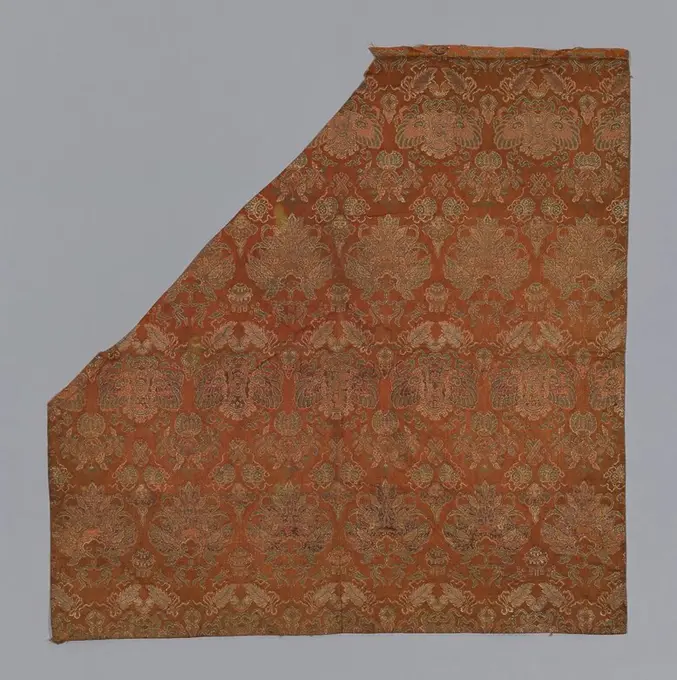
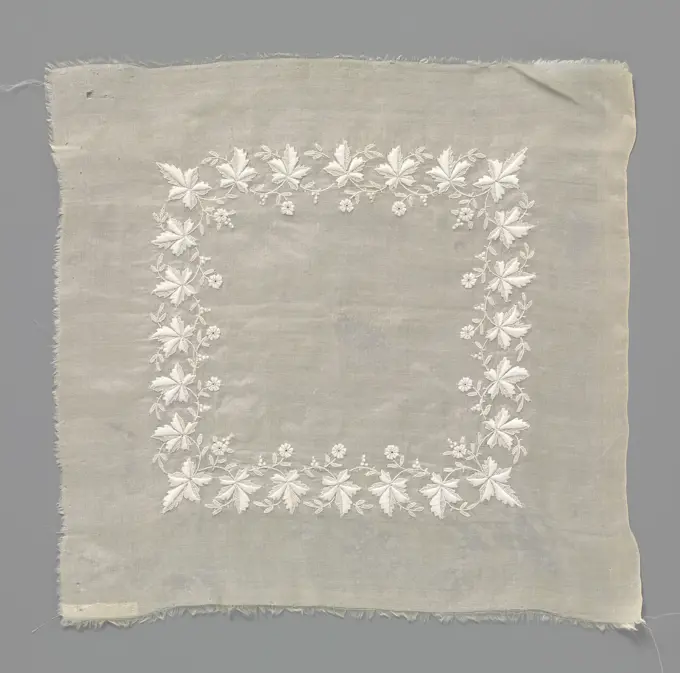
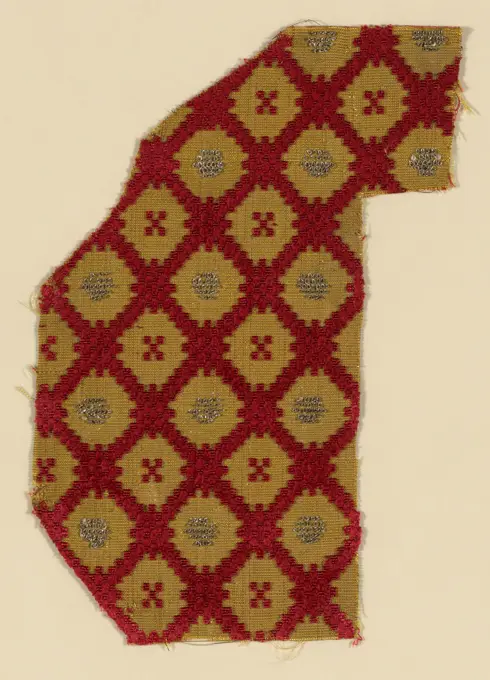
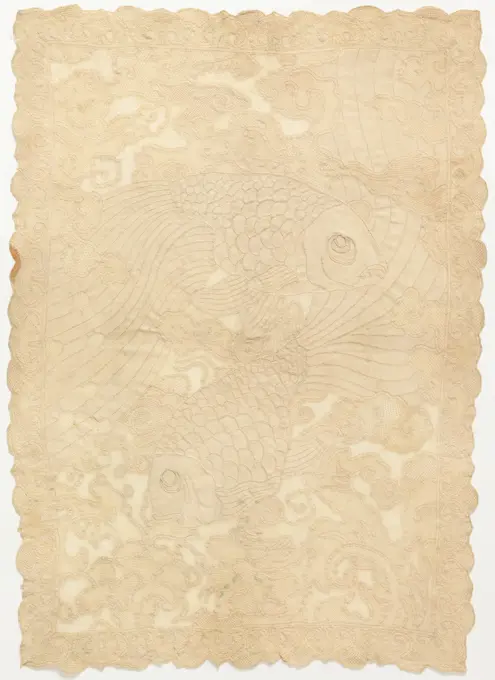
Square (USA); cotton
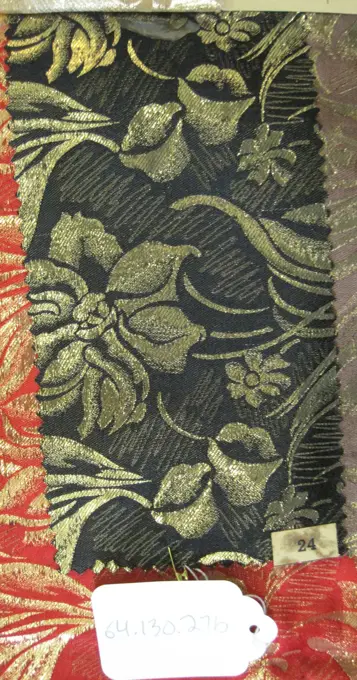
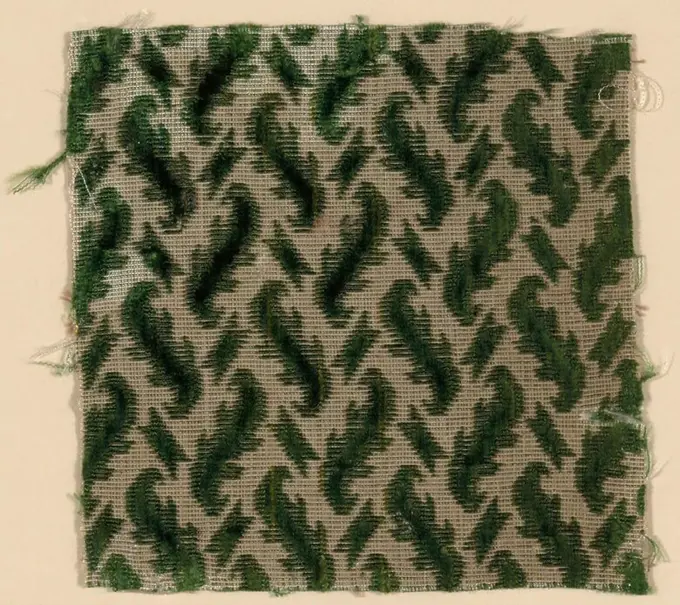
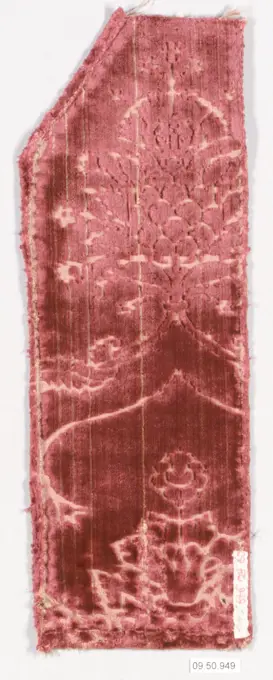
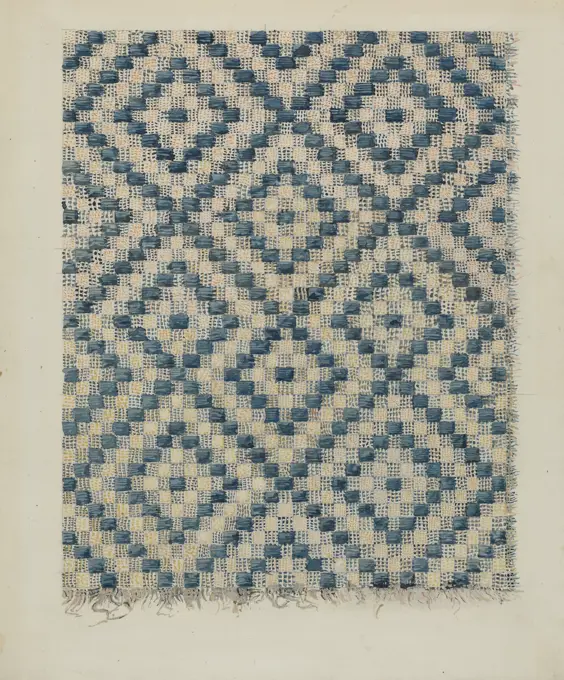
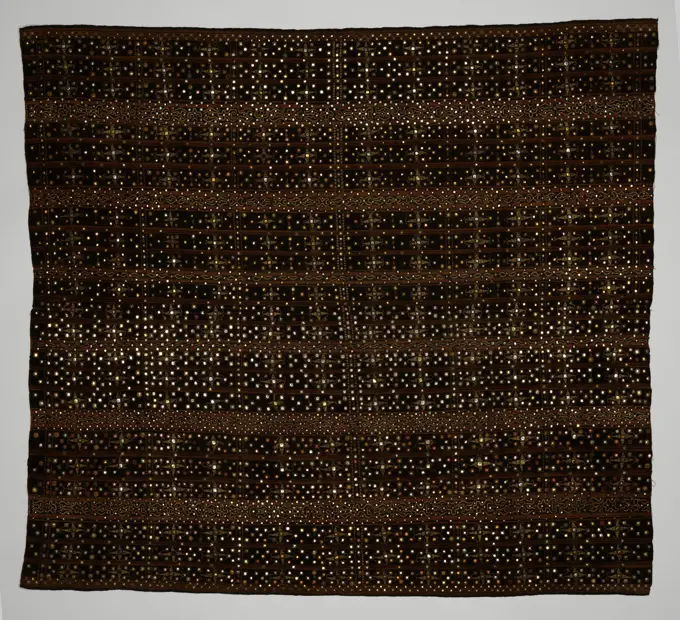
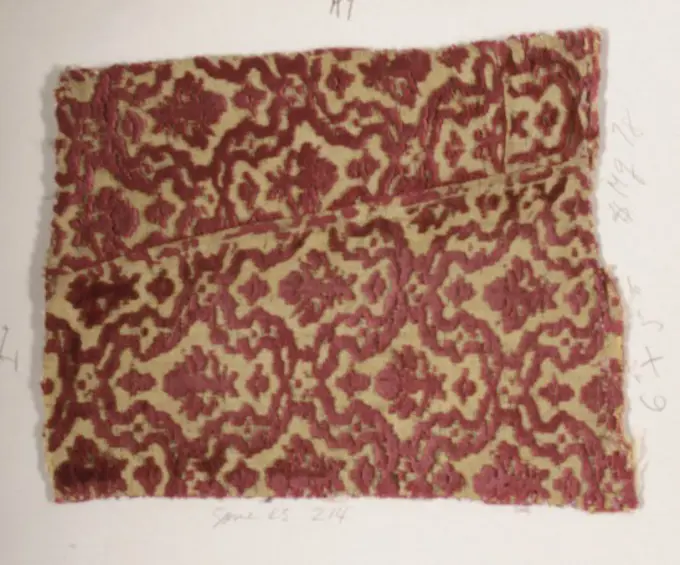
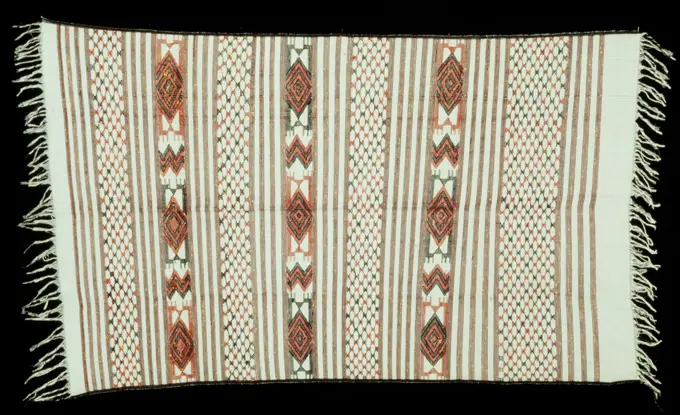
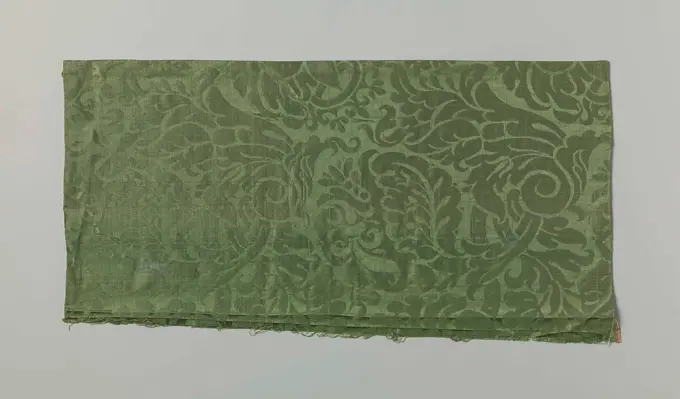
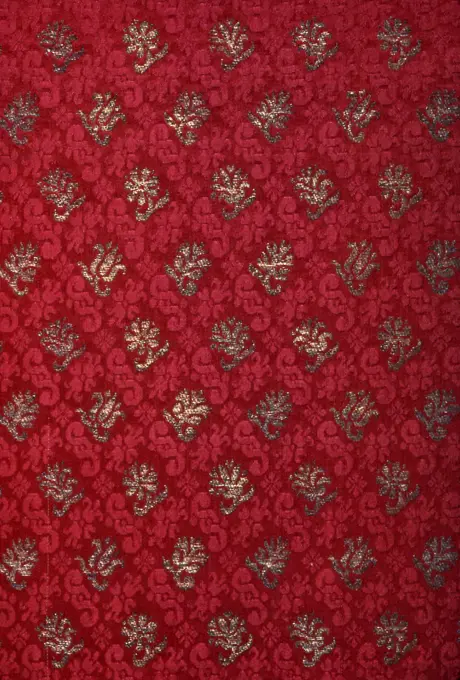
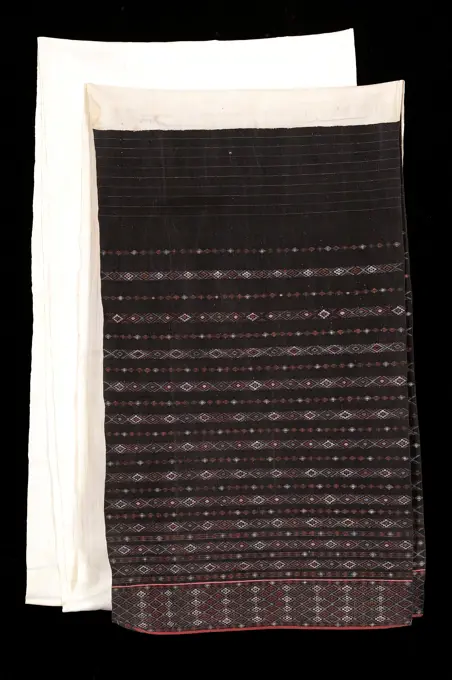
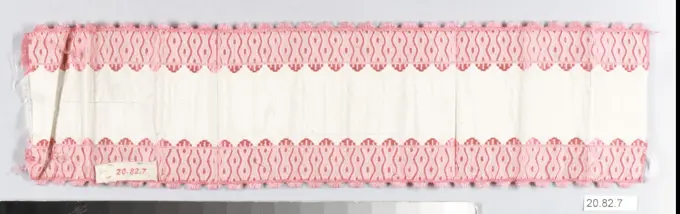
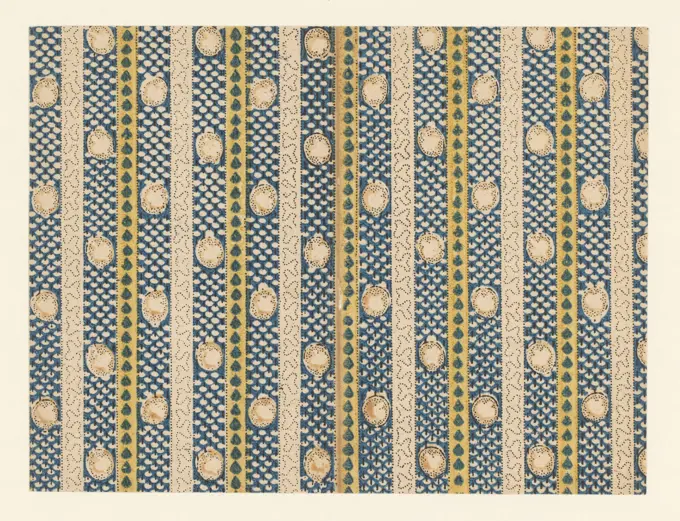
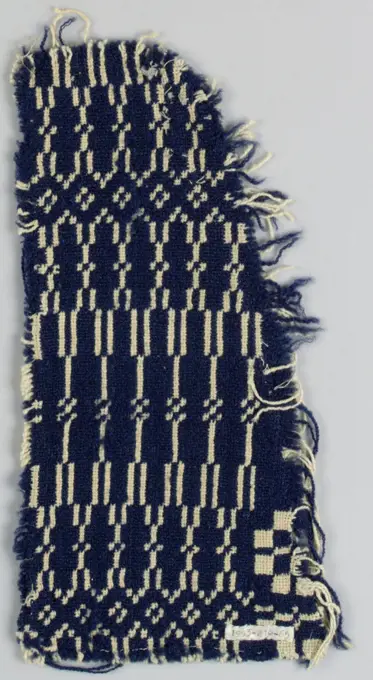
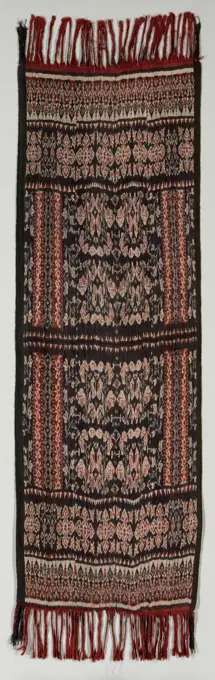
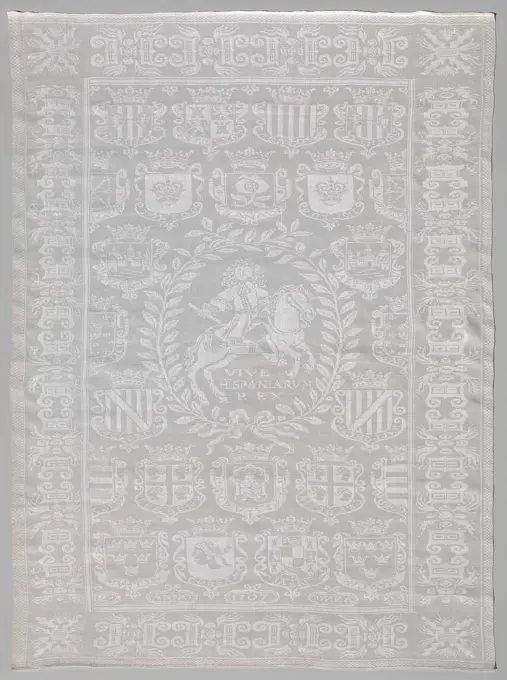
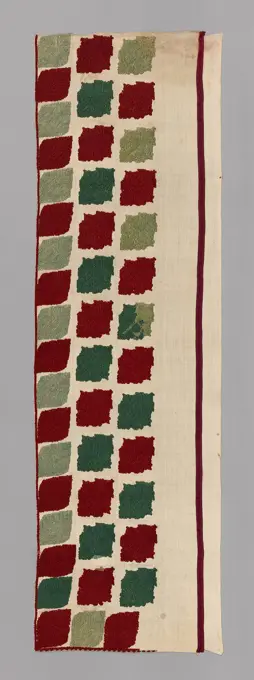
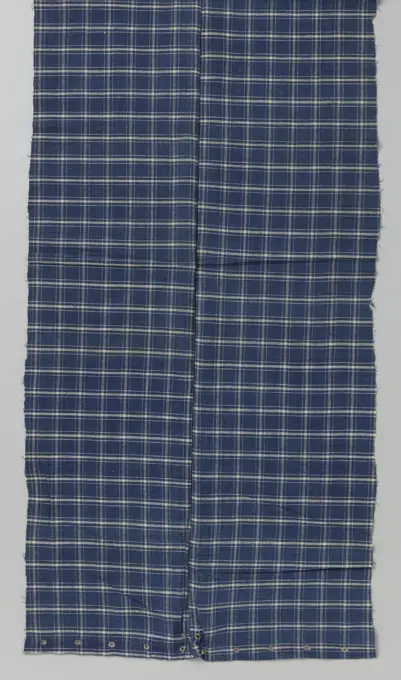
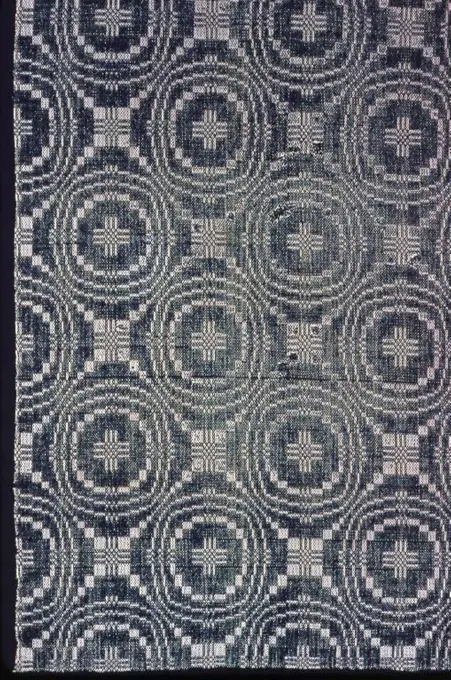
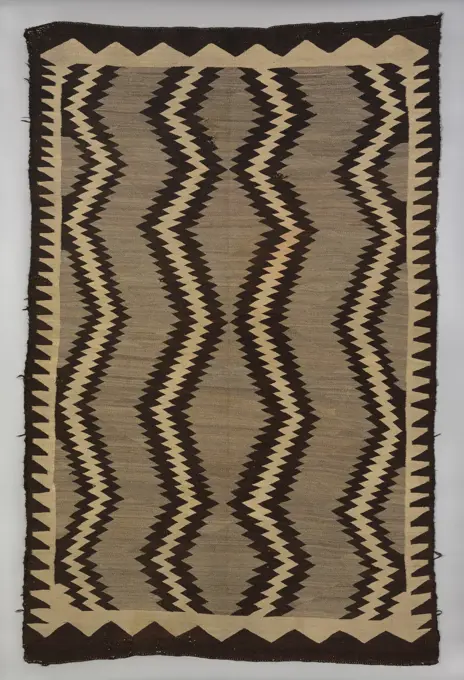
Fragment (From a Chasuble) Made 1750-1770 France. Silk; velvet cut, uncut, pile-on-pile, and voided; against warp-faced plain weave foundation .Napkin from white Linnamast ,, c. 1775 - c. 1816 White Linnamasten napkin with a pattern of a scattered fine flower branch, brand ws 36. Netherlands (possibly) linen (material) damask White Linnamasten napkin with a pattern of a scattered fine flower branch, brand ws 36. Netherlands (possibly) linen (material) damaskTextile, Medium: cotton Technique: block printed, Fragment of block printed cotton in green, brown and red on light brown ground. Pattern allover showing stylized floral bouquet., Jaipur, India, late 18th-early 19th century, printed, dyed & painted textiles, TextileWoman's wrapper (àdìrẹ ẹlé̩kọ) Yorùbá , unknown maker's mark. Woman's wrapper (àdìrẹ ẹlé̩kọ), 20th century. Commercial cotton cloth, synthetic indigo dye, 68 5/8 × 78 × 1/16 in. (174.3 × 198.1 × 0.1 cm).  Àdìrẹ is a Yorùbá textile whose patterns are made through resist dyeing. The àdìrẹ technique used to make this wrapper is àdìrẹ ẹlé̩kọ, wherein female artists paint cassava flour paste on fabric, preventing certain areas from soaking in blue indigo dye. This cloths name is Olókun, identifiable in part by the motif of a circular “stool” surrounded by “leaves.” As goddess of the sea, Olókuns domain is the source of wealth, lending the cloth the associated meaning “life is sweet.” Other àdìrẹ employ tie-and-dye techniques (àdìrẹ oníko), where raffia ties hold small stones or seeds in place to cover areas of the fabric during dyeing, resulting in àdìrẹ eléso patterns. One such àdìrẹ oníko was incorporated underneath a panel in the featured egúngún (see photograph). Arts of Africa 20th cTrimming (France); cotton, metallic threadBedcover (Amish Plain Quilt). United States, Ohio, Holmes County. Date: 1880-1900. Dimensions: 217.1 x 172.8 cm (85 1/2 x 68 in.). Cotton, plain weaves; pieced; backed with cotton, plain weave; cotton batting; quilted with cotton thread. Origin: Ohio. Museum: The Chicago Art Institute, Chicago, USA.Uchishiki (Altar Cloth). Japan. Date: 1775-1800. Dimensions: 67.3 x 67.3 cm (26 1/2 x 26 1/2 in.). Five sided piece of kinran, fancy compound satin, silk and gilt paper. Origin: Japan. Museum: The Chicago Art Institute, Chicago, USA.Lap batist met geborduurde vierkante lijst met wingerdblaadjes en rozetbloempjes.Steak colored silk with white embroidery. Square model. The embroidery is a square table with walled winger leaves. At the curved and inner-oriented stalks, a side branch has a side twig to each winger blade with one small rosette flower. The steak is not finished on one side along the edges because this is the self-side of the fabric.Stencil 19th century Japan. Stencil. Japan. 19th century. Paper, silk. StencilsFragment Made 1601-1625 Italy. Silk; velvet cut, uncut, and voided; with additional patterning wefts in gold and silver foil (cut strips wound around silk core); forming loops where required; against plain weave foundation .Table Mat (possibly China); silkRussian sash Unknown, Dani Manufaktura EarthlyCeiling Paper (USA); Manufactured by Maxwell & Co., S.A. (United States); machine-printed paper, liquid mica; 91 x 49 cm (35 13/16 x 19 5/16 in.)Panel, Medium: silk, metallic thread, cotton backing Technique: compound cut voided velvet cloth bordered with silk and metal compound satin and backed with cotton twill, Vertical rectangle. Red velvet background with all-over repeat of single blossom framed by long pointed leaves with serrated edges. Center of blossom border on each side of dark blue satin with cone design in coral silk and gold. Edges piped and faced with printed cotton. Backed with red cotton twill. Velvet portion of panel composed of several pieces carefully sewed together., Iran, 19th century, woven textiles, PanelNapkin with yacht scene .. Napkin of linen damask with a yacht in a park. Brand HC. The napkin belongs to five napkins (BK-1987-31-A to BK-1987-31-F).Textile Swatches Onondaga Silk Company, Inc. (1925-1981). Textile Swatches, 1948-1959. silk; metal, (a): 4 1/2 x 3 1/2 in. (11.4 x 8.9 cm).    1948-1959Piece 18th-19th century Japan. Piece 66334Fragment red silk tissue. Fragment interior textiles; Red silk with red-orange brochure in Jaquard tissue. The pattern has leaf drinks and volutes.Fragment. Italy. Date: 1601-1635. Dimensions: 12.3 x 12.4 cm (4 7/8 x 4 7/8 in.). Silk and silvered-metal strips, plain weave with supplementary pile warps forming cut and uncut voided velvet. Origin: Italy. Museum: The Chicago Art Institute, Chicago, USA.Piece 16th century Italian. Piece 216220FragmentElizabeth Valentine, Tablecloth, c 1936 TableclothTextile (Japan); cottonChair Seat Made 1701-1800 France. .Alois E Ulrich, Coverlet Fragment, c 1936 Coverlet FragmentDoek, Anonymous, 1900 - 1999 Cloth with stars. Sumatra textile materials embroidering Cloth with stars. Sumatra textile materials embroideringFragment 18th century Italian. Fragment 230071Piece 18th-19th century Japan. Piece 67537Wrapper, 20th century, 74 x 44 in. (188.0 x 111.8 cm)(w/o fringe), Cotton, lurex thread, Nigeria, 20th centuryPiece 18th-19th century Japan. Piece 67583Fragment groen zijdedamast.A fragment of green silk tissue with large leaf pattern. Note: Selling; 1) 0.6 cm 2) Not complete 0.4 cm, twill, 2 colorful 3 courts.Sample early 19th century French. Sample 219325Panel Made 1625-1675 Italy. Silk and gold gilt strip wound around a silk fiber core, satin weave with supplementary brocading wefts and self-patterned by reversing of faces .Loin Cloth, L.264 x W.18 in., Cotton, Myanmar (Burma)Silk fragment with a pattern of a multicolored spiral branch and wine red carnation on hard pink soil ,, 1745 - 1755 Silk fragment with Gros de Tours in the height of incomplete, symmetrical pattern: two bending over -plumy leaf branches in bright green, each make a spiral around a black stem of a carnation in wine red, pink and white (cut off). On the outside pearly, sliding chalice flowers, on the indoor sides of thin blue tifles that enclose window fields, on which green straw is. The stock is strewn in the same color with small motifs such as moths and diabolos. France (possibly) silk. Silk fragment with Gros de Tours in the height of incomplete, symmetrical pattern: two bending over -plumy leaf branches in bright green, each make a spiral around a black stem of a carnation in wine red, pink and white (cut off). On the outside pearly, sliding chalice flowers, on the indoor sides of thin blue tifles that enclose window fields, on which green straw is. The stock is strewn in the sameRibbon early 19th century possibly French. Ribbon 220664Cloth; Tapis. Cloth with stars.Band, Medium: silk embroidery on linen foundation Technique: embroidered in long-armed cross stitches on plain weave foundation Label: linen embroidered with silk in long-armed cross stitch, Linen band embroidered with red silk with a repeating alternation of two patterns. One is a mermaid and the other a bird and cornucopia, each flipped both vertically and horizontally. The bird and cornucopia portion of the design is taken from Vavassore's pattern book 'Esemplario di Lavori,' published in Venice in 1532., Greece, 18th-19th century, embroidery & stitching, BandFragment textiel, anonymous, 1711 - 1716 Textile fragment, embroidery on damask. Japan silk Textile fragment, embroidery on damask. Japan silkLeaf with job pattern with oval motif, scaly pattern and winding lines, anonymous, c. 1700 - c. 1850  Leaf with vertical job pattern with oval motif in scaly pattern and winding lines of points. Used as a cover.  paper. block printing (relief printing process) fantasy ornamentBorder or flounce 17th century Italian. Border or flounce 229972Fragment (France); linenLeaf with lanes of flowers with leaves, anonymous, 1900 - 1920 decorated paper   paper. ink  ornament derived from plant formsSkirt, 20th century, 42 x 32 in. (106.68 x 81.28 cm), Silk, cotton, Myanmar (Burma), 20th centuryTextile, China, 18th-19th century, woven textiles, TextileRibbon French 19th century View more. Ribbon. French. 19th century. Textiles-TrimmingsFragment; silkPiece 19th century Japan. Piece 65993Fragment, Medium: silk Technique: supplementary warp forming raised cut pile in plain weave foundation, Trellis pattern in bright green., 17th century, woven textiles, FragmentNapkin with helmet sign family clive between stripped flowers, anonymous, 1791 Napkin from white Linnamast with helmet sign from the Clive family, a griffin, between stripped flowers; edges with flower branches and pearl-guirandes. Marked with blue cross stitch "EBC 91". England (possibly) linen (material) damask Napkin from white Linnamast with helmet sign from the Clive family, a griffin, between stripped flowers; edges with flower branches and pearl-guirandes. Marked with blue cross stitch "EBC 91". England (possibly) linen (material) damaskFragment Made 1601-1635 Italy. Silk and silvered-metal strips, plain weave with supplementary pile warps forming cut and uncut voided velvet .Cover Made 1834 Hungary. linen, embroidery .Border or Ribbon. France. Date: 1820-1840. Dimensions: 92.1 × 4.5 cm (36 1/4 × 1 3/4 in.). Silk and cotton, two-faced, two-color complementary warp weave of warp-float faced twill weave with areas of complementary warp-floats and of warp-float faced twill weave with areas of twill weave, both with stripes of two color complementary warp weave; woven on a loom with Jacquard attachment. Origin: France. Museum: The Chicago Art Institute, Chicago, USA.Ritual Cloth(Sokong)Embroidered Handkerchief, late 19th century. Switzerland, late 19th century. Embroidery: linen; average: 34.3 x 33 cm (13 1/2 x 13 in.).Voorbord of a box, anonymous, c. 1750 - c. 1800 Frontboard of a box, exaggerated with brown leather on oak and decorated with nail ornament. This shows within two wide oval flower baskets with smells and rosettes on the corners. Five types of nails are used with smooth and rosette -shaped heads. Great Britain wood (plant material). oak (wood). leather Frontboard of a box, exaggerated with brown leather on oak and decorated with nail ornament. This shows within two wide oval flower baskets with smells and rosettes on the corners. Five types of nails are used with smooth and rosette -shaped heads. Great Britain wood (plant material). oak (wood). leatherHeadscarf. Headscarf with geometric motifs.Piece 18th century China or Japan. Piece. China or Japan. 18th century. Silk / Compound weave. Textiles-WovenCloth; Not until. Cloth with floral and geometric motifs.Costa Rica, Manuel Antonio. Batiks hanging along beach make for colorful souvenirs of Costa Rica.Schutblad for the book Pilips Pilips' light bulb factories 1891-1916, Theo Nieuwenhuis, 1916 print Five times the word 'Philips' in a geometric framework with plant motifs.  paper. pencil  ornament derived from plant forms EindhovenFragment; silkTextile (France), ca. 1855; cottonLinnamast napkin with a flower pattern, anonymous, c. 1690 - c. 1699 White Linnamasten napkin with a pattern of stripped flower branches, brand SH and 48 Wh. Netherlands (possibly) linen (material) damask White Linnamasten napkin with a pattern of stripped flower branches, brand SH and 48 Wh. Netherlands (possibly) linen (material) damaskCoverlet fragment, Medium: wool, cotton Technique: double cloth, Border fragment showing traditional linear geometric border. In very dark blue indigo-dyed wool with unbleached, undyed cotton., USA, 19th century, woven textiles, Coverlet fragmentTube Skirt, mid 20th century, 43 x 30 1/2 in. (109.22 x 77.47 cm) (Tubular, total circumference is 61'), Silk;, Myanmar (Burma), 20th centuryByzantine ornamentMan's Wearing Cloth, late 1800s - early 1900s. Indonesia, Roti , late 19th - early 20th century. Tabby weave, warp ikat; cotton; overall: 217.1 x 69.2 cm (85 1/2 x 27 1/4 in.).Flounce 17th century Flemish. Flounce 227701Napkin with London and Willem III, king of England. Napkin of Linnendamast with London and an English king. Midfield: Symmetrically doubled from bottom to top four scenes: 1 A cityscape with the tower and a text band with London. 2 Stadsware with the Joris Cross and a sword in a fairometer, circumference and held by two angels. 3 Horse is a king (Willem III) on a step pass, with scepter, crown, allon wig, cuff à bottes of the last quarter of the century. Above a text band with konig in England; On the Schlap a W. 4 a crowned coat of arms: 1 and 4 England, 2 Scotland, 3 Ireland. Standing and lying edges: single running rank with cherries and flowers; Beyond: Block edge. Corners: tilted out of the damask. Satin 5 binding.Coverlet Made 1825-1830 United States. Cotton and wool, 3 1 twill and 3 1 broken twill damask weave with main warp and extended ground weft fringe; two loom widths joined .Piece 19th century Japan. Piece 67464Fichu van Batist with lace -lid -lid -lid -sized lace and half medallions with rosette flower, anonymous, c. 1750 - c. 1780 Fichu of natural-colored batist who is on two sides and continuously in the tip ('the tip') is finished with partly recommended strips of bobbin: binche side. Square model that was folded like a triangle. Kant pattern: Rocailles and halved round medallions with rosette flower in the list. Zaanse regional. Binche linen (material). buckram. batiste bobbin lace / Binche lace / snowflake filling Fichu of natural-colored batist who is on two sides and continuously in the tip ('the tip') is finished with partly recommended strips of bobbin: binche side. Square model that was folded like a triangle. Kant pattern: Rocailles and halved round medallions with rosette flower in the list. Zaanse regional. Binche linen (material). buckram. batiste bobbin lace / Binche lace / snowflake fillingFragment Made 1801-1900 Morocco. Two bands of cotton, plain weave; embroidered with silk flossin back, Bosnian, chained border, double running, hem, and single faggot stitches; joined by buttonhole and singel feather stitches .Napkin with flower vase surrounded by edge pattern, anonymous, c. 1725 Linen Damas napkin with bleomen vase surrounded by 'lace pattern'. Satin 5 Binding. Flanders (Possible) linen (material) damask Linen Damas napkin with bleomen vase surrounded by 'lace pattern'. Satin 5 Binding. Flanders (Possible) linen (material) damaskSkirt, 20th century, 66 x 48 3/8 in. (167.64 x 122.87 cm), Cotton, Nigeria, 20th centuryValance (For a Bed) Made 1601-1800 Rhodes. Linen, plain weave; embroidered with silk in cross, four-sided, running, and padded satin stitches; inset of silk and cotton, warp-float faced satin weave self-patterned by ground weft floats and areas of twill interlacing .Tray Cloth or Cover Made 1701-1800 Turkey. embroidered in repeated tulips. .Fragment of a cotton beddentijk, anonymous, c. 1800 - c. 1950 Fragment of a cotton bedding, blue with a white window. Netherlands (possibly) cotton (textile) Fragment of a cotton bedding, blue with a white window. Netherlands (possibly) cotton (textile)Textile, Herman A. Elsberg, (American, 1869-1938), Medium: silk Technique: complex woven, Silk textile with crepe woven, blue ground has a staggered repeat of satin woven, large blue roses., Lyon, France, ca. 1915, woven textiles, TextileBanknote motif: band of lace-like lathe work ornament ca. 1824-42 Associated with Cyrus Durand American. Banknote motif: band of lace-like lathe work ornament 393955Napkin with flower vase surrounded by lace pattern. Linen Damaken Napkin with Bleomenvaas surrounded by 'lace pattern'. Satin 5 binding.Dress of red silk velvet with a satin lining., C. 1600 - c. 1700 A rug of red silk velvet, composed of eight pieces, one of which is with traces of stitching. On three sides surrounded by dark tinted gold-galon. Red Satin lining. Italy silk. satin. velvet (fabric weave). cotton (textile) A rug of red silk velvet, composed of eight pieces, one of which is with traces of stitching. On three sides surrounded by dark tinted gold-galon. Red Satin lining. Italy silk. satin. velvet (fabric weave). cotton (textile)Handkerchief third quarter 19th century French. Handkerchief 227116Fragment; woven; 1900-6-6-a,bCoverlet Made 1820-1825 United States. Cotton and wool, plain weave with supplementary patterning wefts ( summer and winter ) and main warp fringe .Tablecloth of cotton satin. Tablecloth of cotton, red, white and blue checkered and striped with at the ends.Samoa,1890-91. Artist: John La Farge, American, 1835-1910, M.A. (HON.) 1896Panel 16th century Italian. Panel. Italian. 16th century. Embroidered net. Textiles-LacesFragment silk tissue with multi -colored embroidery ,, c. 1700 Fragment white silk tissue with embroidery. The fabric has rows of white flower branches on which multicolored flower vines are embroidered. Germany silk embroidering Fragment white silk tissue with embroidery. The fabric has rows of white flower branches on which multicolored flower vines are embroidered. Germany silk embroideringTwo Fragments. Italy. Date: 1501-1600. Dimensions: a: 16.4 × 12.6 cm (6 1/2 × 5 in.) b: 15.5 × 13.7 cm (6 1/8 × 5 3/8 in.). Silk, warp-float faced satin weave with supplementary pile warps forming cut, uncut and voided velvet. Origin: Italy. Museum: The Chicago Art Institute, Chicago, USA.Textile (France); silkRunner, Medium: linen, silk Technique: embroidered on plain weave, Off-white runner with creamy white flowers outlined in yellow-green., USA, ca. 1907, embroidery & stitching, RunnerHanging Case 19th century China. Hanging Case. China. 19th century. Silk. Qing dynasty (1644-1911). Textiles-EmbroideredVeil 1855 American. Veil 117631Textile Swatches Onondaga Silk Company, Inc. (1925-1981). , 1948-1959. 52 worsted, 48 silk, 26 1/2 x 18 1/2 in. (67.3 x 47 cm).    1948-1959Textile Swatches Onondaga Silk Company, Inc. (1925-1981). , 1948-1959. Silk, possibly synthetic fiber, metal, a: 46 1/2 x 13 in. (118.1 x 33 cm).    1948-1959Textile Swatches Onondaga Silk Company, Inc. (1925-1981). , 1948-1959. silk; metal, 18 x 8 in. (45.7 x 20.3 cm).    1948-1959Blanket or Rug Made 1801-1900 United States. Wool, dovetailed tapestry weave; twined edges; (remnants of) corner knotted tassel . Navajo (Diné)Fragment Made 1801-1825 United States. .