Antique Textiles and Fabrics

A collection of intricate woven textiles from various cultures, showcasing patterns, colors, and materials, including silk, linen, and metallic threads, with historical significance.

Square (USA); cotton
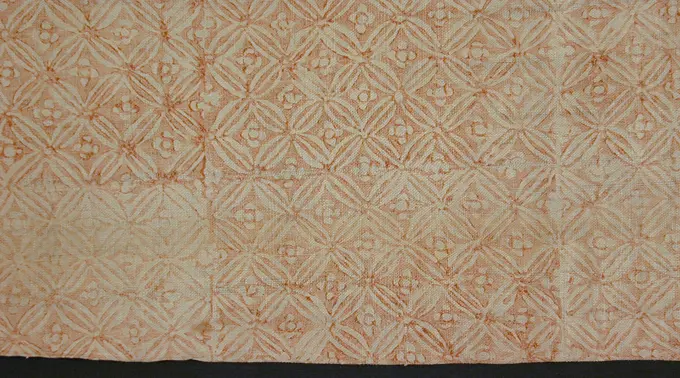
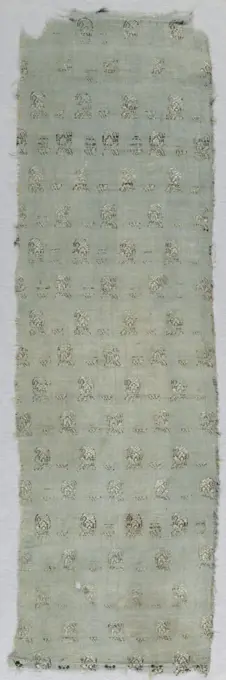
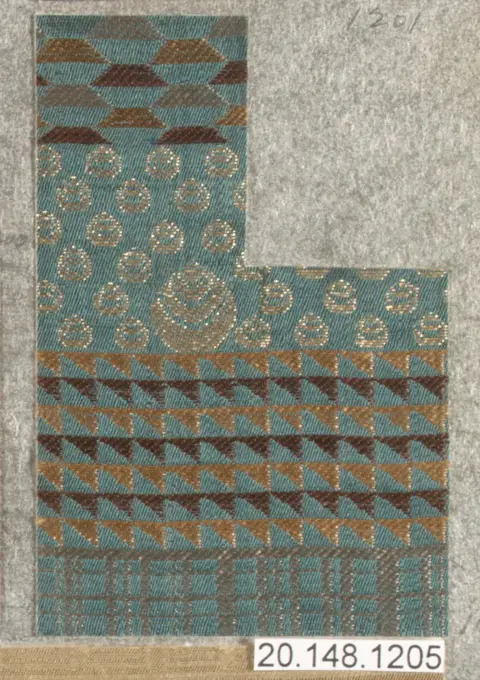
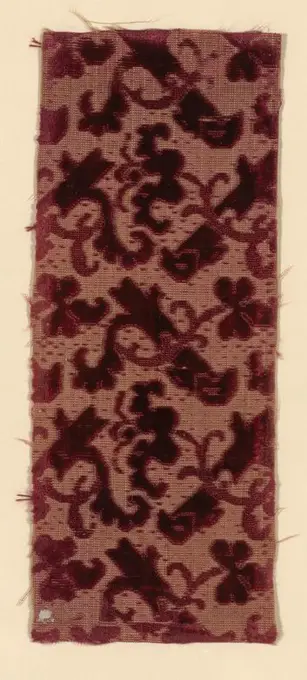
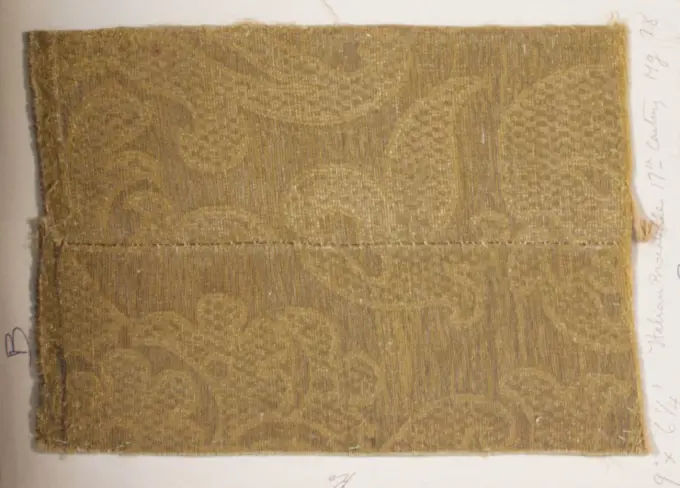
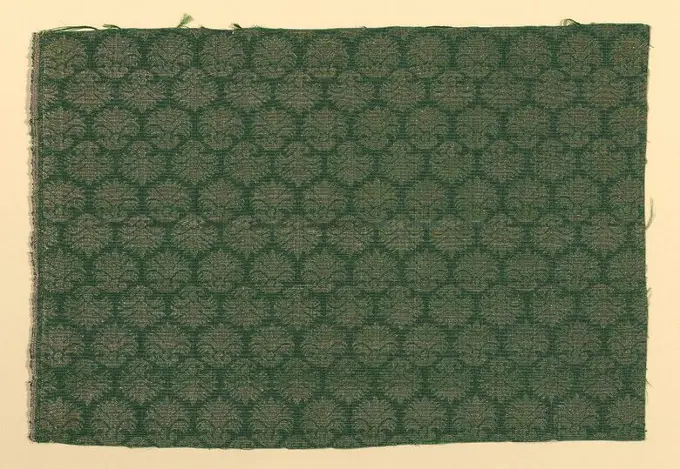
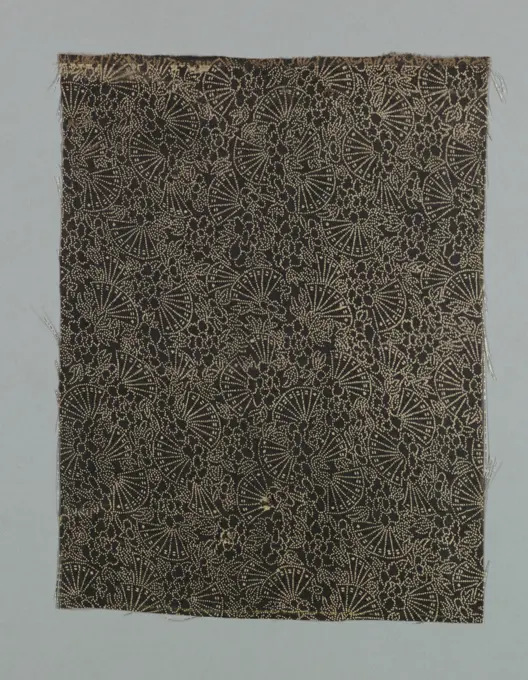
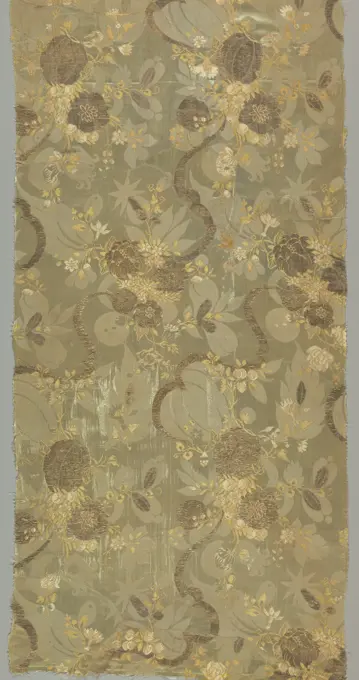
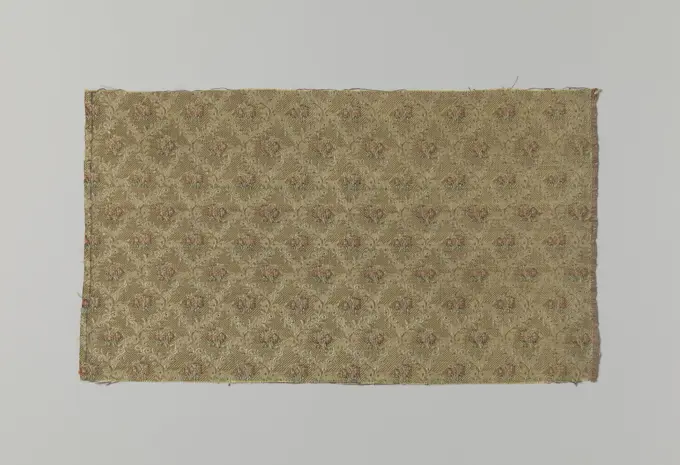
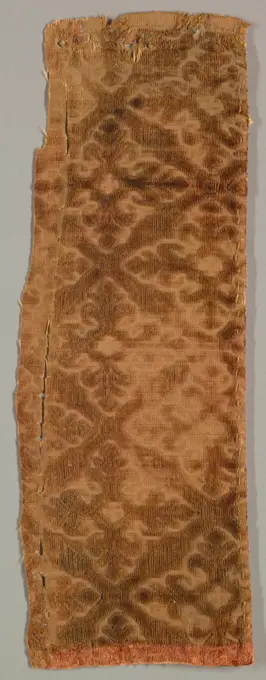
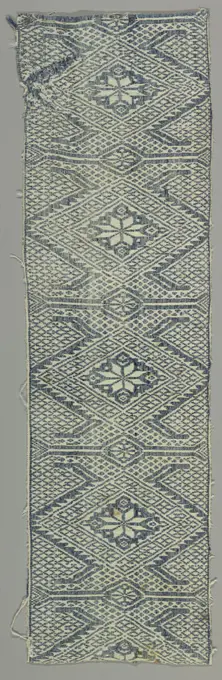
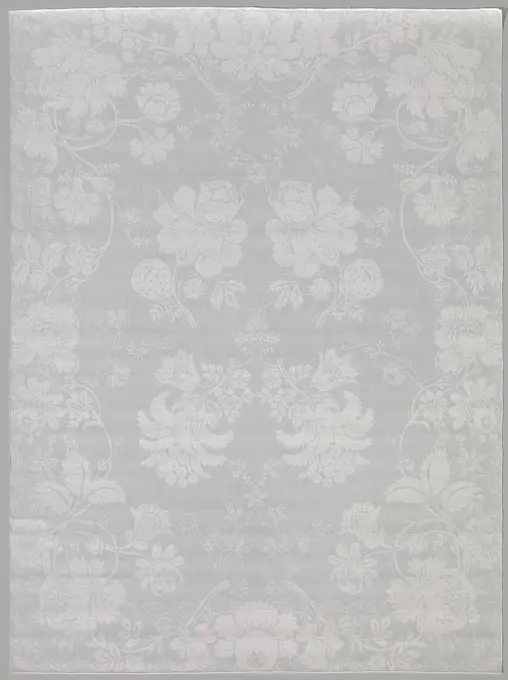
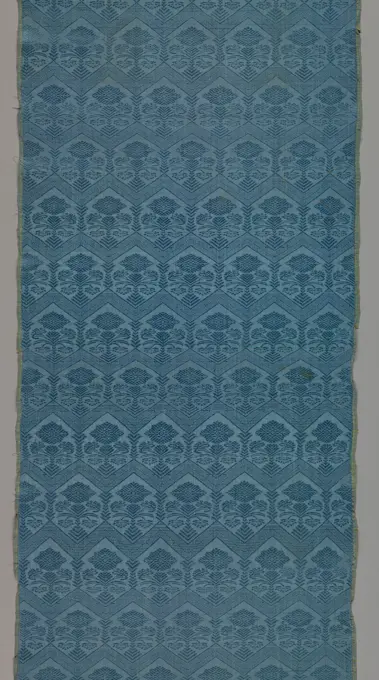
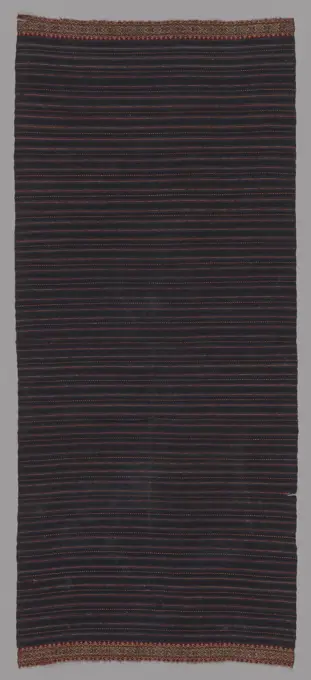
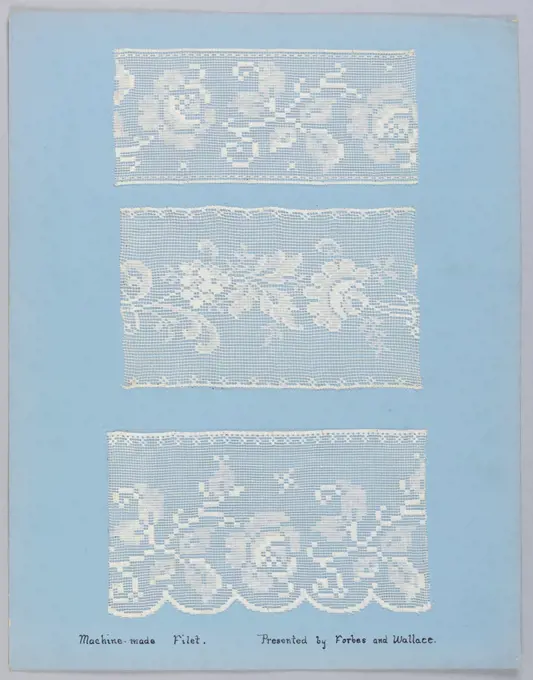
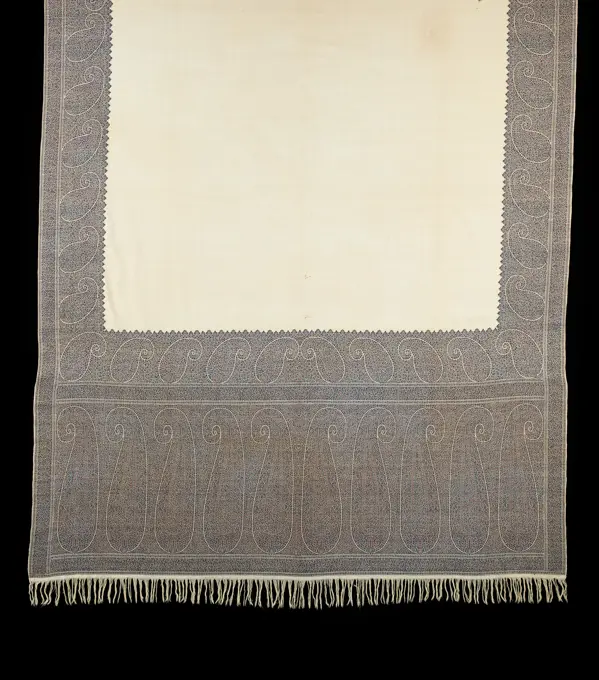
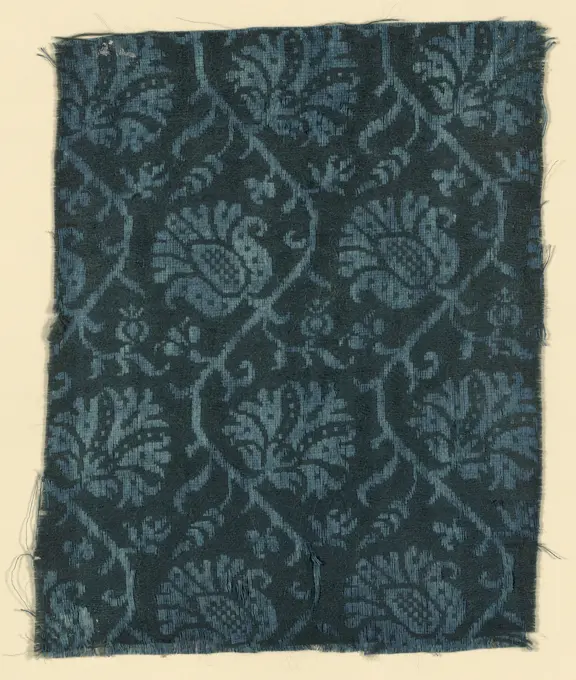
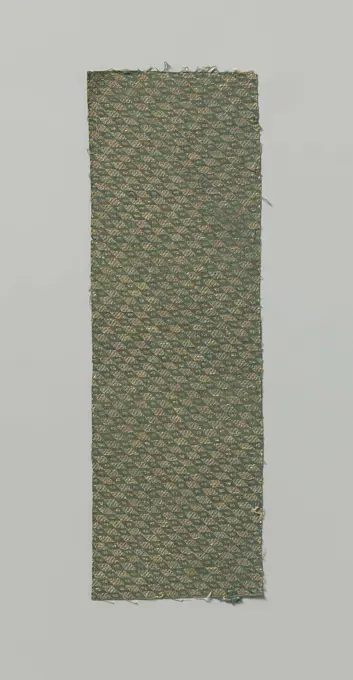
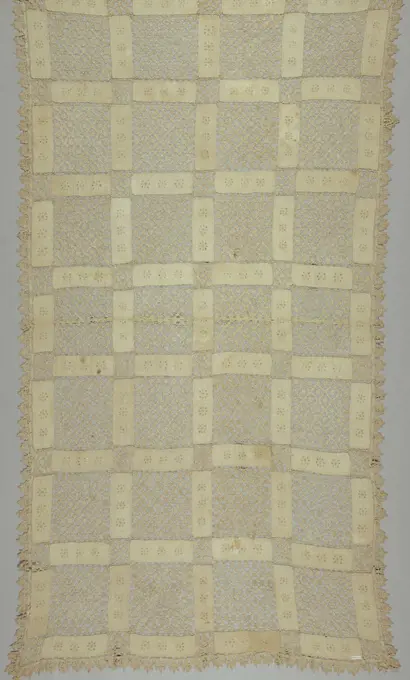
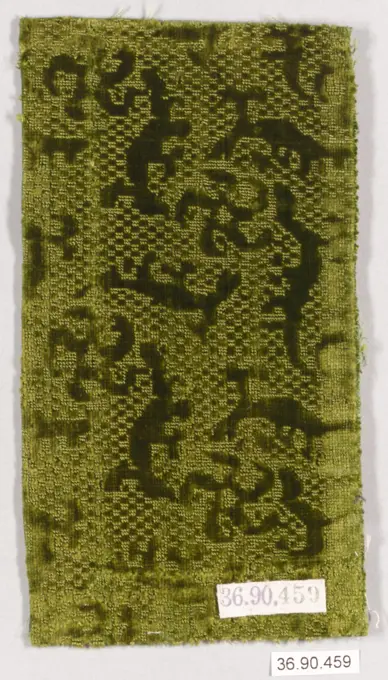
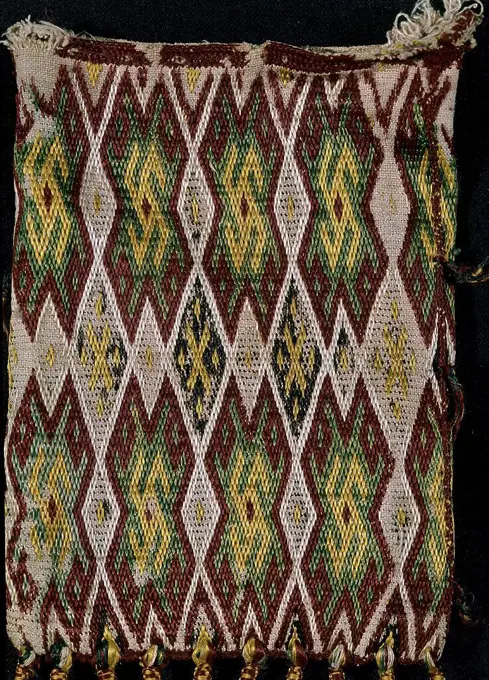
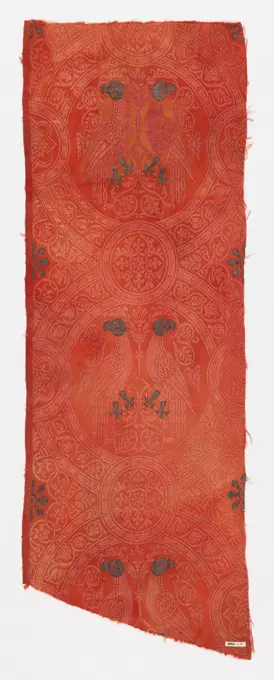
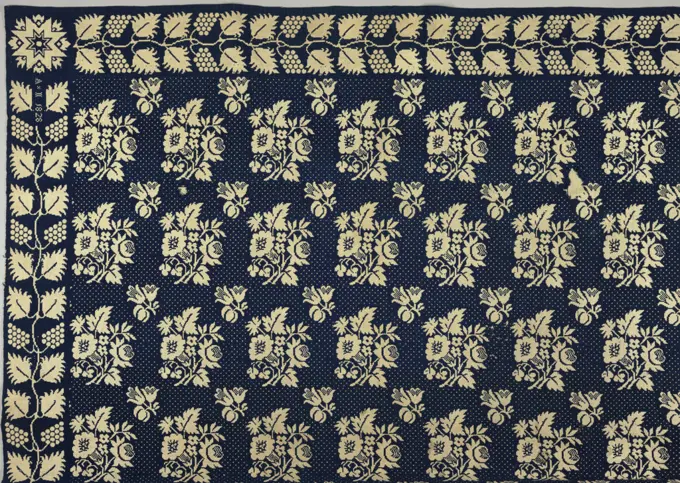
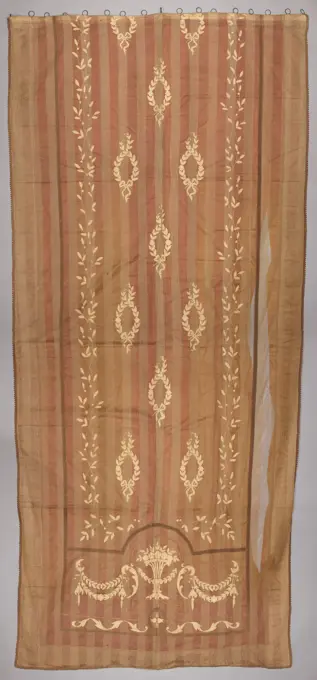
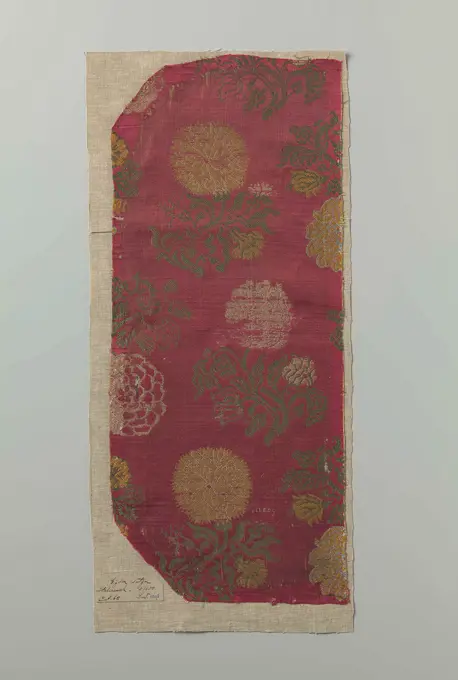
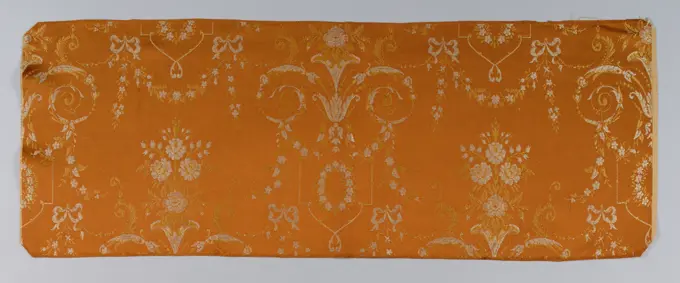
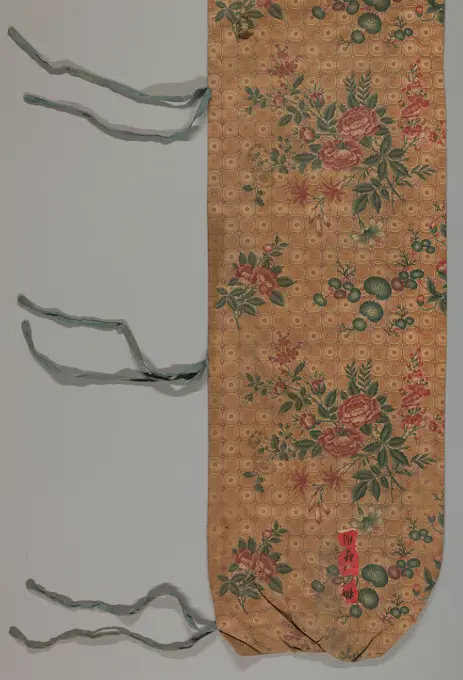
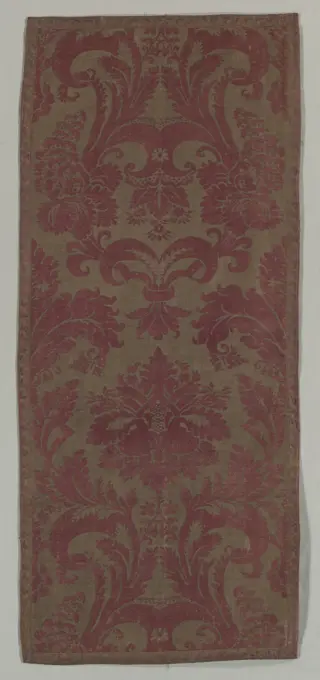
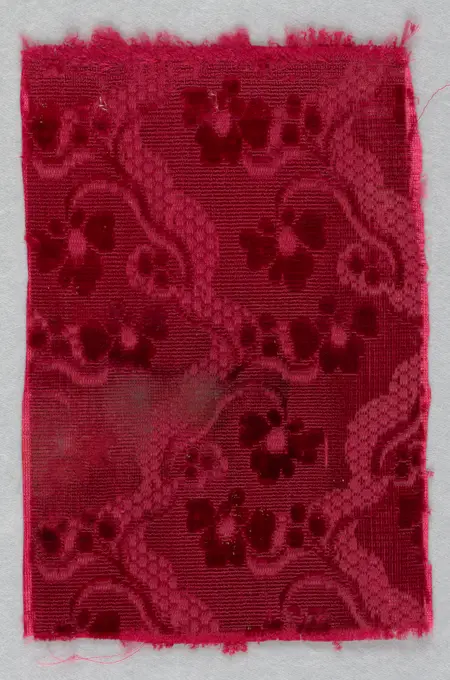
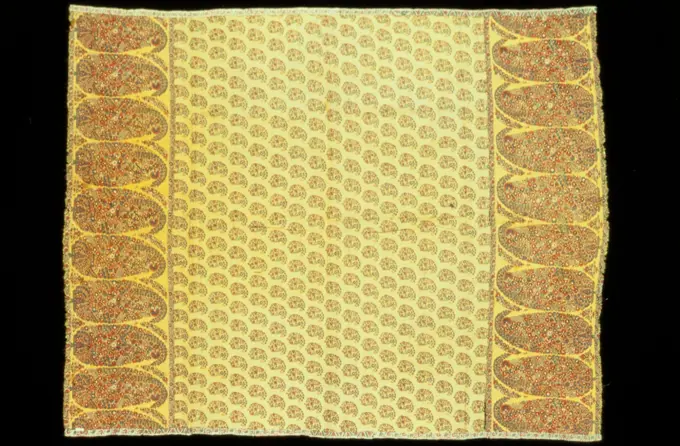
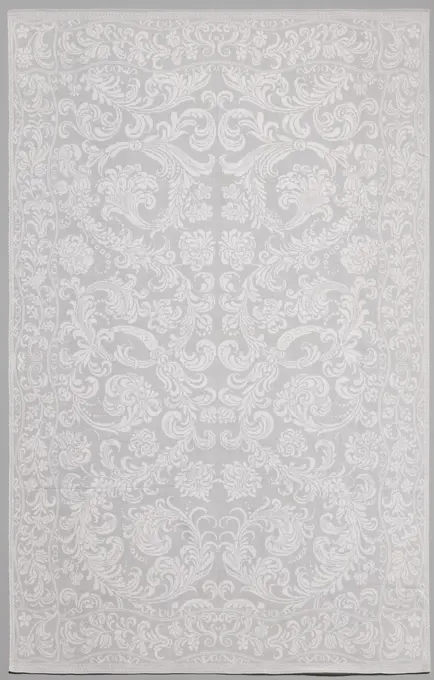
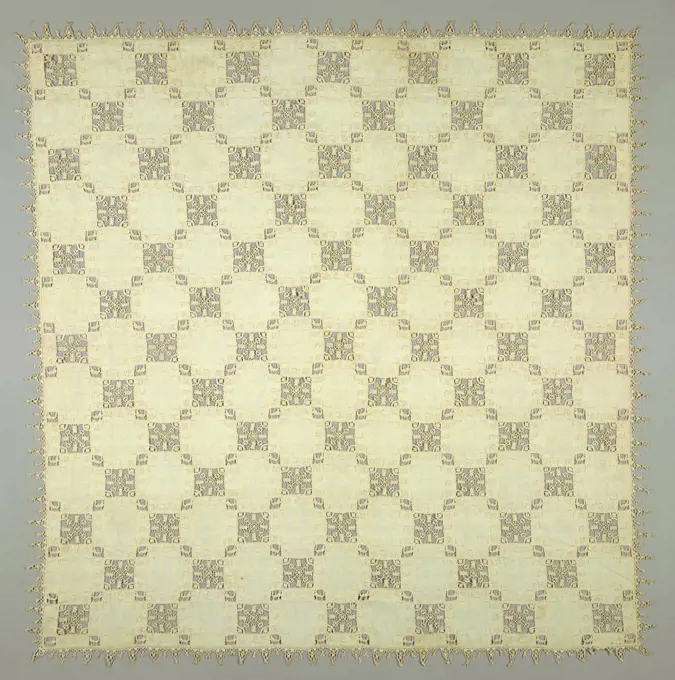
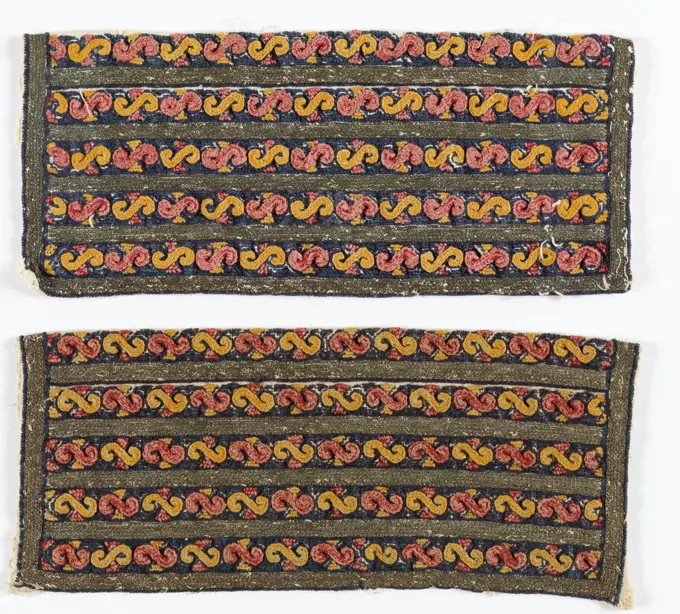
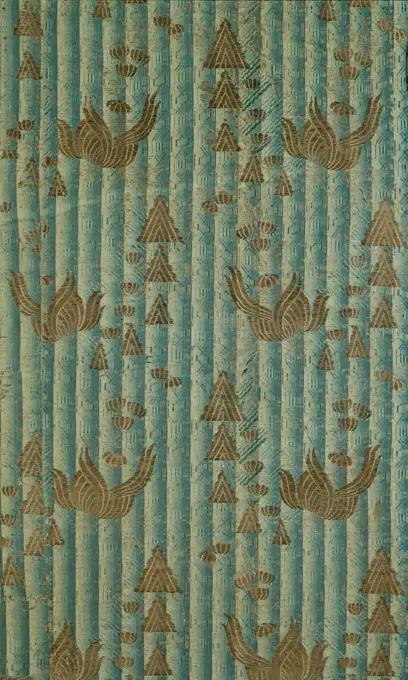
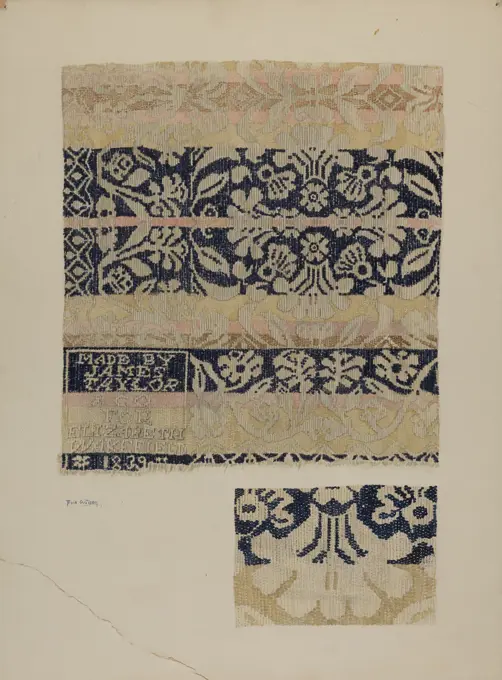
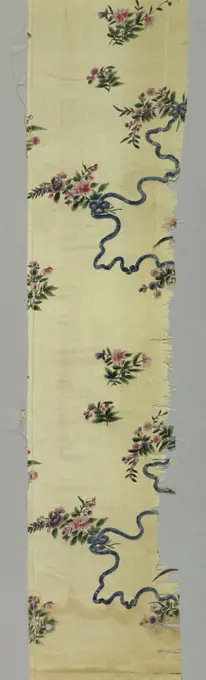
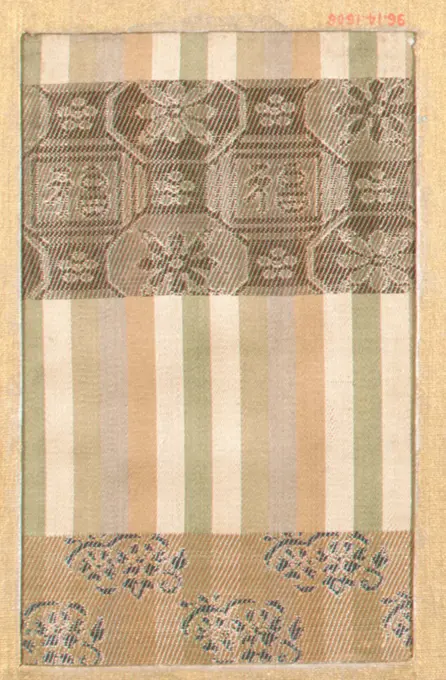
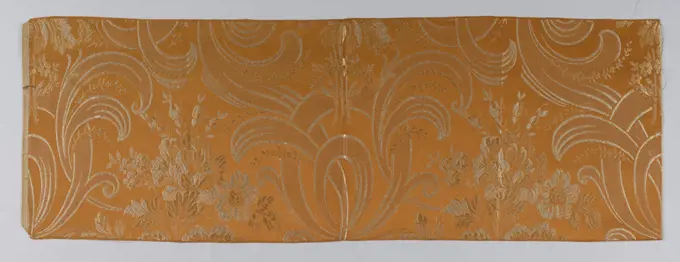
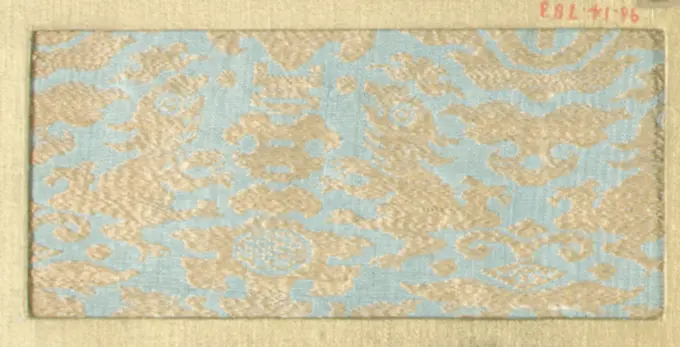
Piece 18th-19th century Japan. Piece. Japan. 18th-19th century. Silk. Textiles-WovenTextile, Medium: silk, metallic threads Technique: plain compound weave, Repeats of a floral design in tan on blue background. Border with flowers and animals in multicolored silk. Lined in red wool., Iran, 17th century, woven textiles, TextileTextile Length. Italy, probably Florence, 16th century. Textiles; textile lengths. Linen plain weave, blockprintedFragment, Medium: warp: silk, Weft; cotton, silk Technique: brocaded plain weave, Pale blue ground with powdered design., Near East, 19th century, woven textiles, FragmentPiece 18th century Japan. Piece 72191Fragment. Italy. Date: 1650-1700. Dimensions: 19.9 x 7.9 cm (7 13/16 x 3 1/8 in.). Linen and wool, plain weave with supplementary weft. Origin: Italy. Museum: The Chicago Art Institute, Chicago, USA.Shoulder Cloth(Limar)Fragment; silk, metallicFragment 17th century Italian. Fragment 230436Square (USA); cottonTextile, Medium: cotton Technique: plain weave, indigo dyed, resist applied with stencil (katazome), Three columns of lobed diamonds alternating with rosettes, in ivory on blue., Japan, 19th century, printed, dyed & painted textiles, TextileFragment. Italy. Date: 1625-1675. Dimensions: 34.6 x 50.4 cm (13 5/8 x 19 7/8 in.). Silk and silver gilt strips, warp-faced plain weave with supplementary patterning wefts. Origin: Italy. Museum: The Chicago Art Institute, Chicago, USA.Fragment (Dress Fabric) Made 1701-1800 Persia. tapestry stitch, silk .Fragment; silkTextile (Japan); silkFragment, Medium: silk Technique: supplementary warp raised in cut and uncut pile in plain weave foundation (velvet), Blue-green detached leaf motifs on beige foundation., 17th-18th century, woven textiles, FragmentFragment; silk; Bequest of Richard Cranch Greenleaf in memory of his mother, Adeline Emma Greenleaf; 1962-56-105Fragment Made 1650-1700 Italy. Brocaded silk .Fragment Made 1750-1775 France. Silk, cut, uncut, and voided velvet against satin weave foundation .Textile; silk, metallic yarnsNapkin ca.1600 German or Dutch. Napkin 14107Fragments (Italy); silkFragments, Medium: silk Technique: cut and uncut supplementary warp pile (velvet) in a woven foundation, Two small fragments of green velvet with cut and uncut pile on a cream-colored ground. Pattern is an intertwined lattice enclosing small-scale stylized plant design., Italy, 16th century, woven textiles, FragmentsExcerpt multi -colored silk tissue, anonymous, c. 1700 - c. 1799 An excerpt of green silk tissue with windows of flowers, white black, between which colored bouquets. NOTE: MEERSHIP; 0.5 cm, several impacts in one jump. France silk An excerpt of green silk tissue with windows of flowers, white black, between which colored bouquets. NOTE: MEERSHIP; 0.5 cm, several impacts in one jump. France silkPiece 18th-19th century Japan. Piece. Japan. 18th-19th century. Silk. Textiles-WovenFragment; silkVelvet Fragment, late 1500s - early 1600s. Italy, late 16th- early 17th century. Velvet (cut and uncut); silk; overall: 24.1 x 14.3 cm (9 1/2 x 5 5/8 in.).Cravat end, Medium: linen Technique: needle lace, 6-sided reworked grounds, An allover small-scale branching pattern giving the appearance of coral branches., France, 1690-99, lace, Cravat endFragment, Medium: linen, cotton Technique: plain weave with supplementary weft, Supplementary weft floating alternatively face to face forming a design of lozenges. Of a fabric type known as Perugia towels., Italy, 16th-17th century, woven textiles, FragmentFragments of a Chasuble, 1400-1420. Italy, beginning of the 15th century. Velvet (cut and voided); silk; average: 108 x 50.5 cm (42 1/2 x 19 7/8 in.).Napkin of Linnendamast with a flower pattern. Napkin of Linnendamast with a flower pattern. The napkin belongs to five napkins (BK-1973-177-A to BK-1973-177-F) and a tablecloth (BK-1973-176).Fragment, Medium: silk, metallic thread Technique: cut and uncut supplementary warp pile (velvet) in a woven foundation, Fragment of orange cut and uncut velvet in a white ground shot with silver thread has an alternating pattern of flower sprigs that intersect hooked barrettes., Italy, 16th-17th century, woven textiles, FragmentVelvet Fragment, early 1600s. Italy , early 17th century. Velvet (cut and uncut); silk; overall: 17.2 x 50.8 cm (6 3/4 x 20 in.).Band 5th-6th century. Band 445751Textile (Indonesia); silkTextile (France); silk; Warp x Weft: 113 x 50 cm (44 1/2 x 19 11/16 in.); 1953-20-5Corpse Covering or Shawl(Bidak)Sample book page, Medium: cardboard, linen, silk, metallic Technique: linen embroidery with ground cloth dissolved Examples of embroidery on net produced by the Schiffli machine Metallic embroidery on net Machine-made openwork in imitation of hand-embroidered net Mostly floral and a few geometric patterns, some designs described as 'Spanish' Imitation hand-made filet Machine filet Imitation filet crochet Ploven (burnt-out lace) Fancy curtain lace made on the Levers machines Real filet (handmade) next to Machine-made filet Spotted curtain nets, made chiefly at Nottingham, England and Caudry, France., Samples of machine-made openwork and several examples of hand made lace mounted on boards. They imitate hand-embroidered net, crochet, or needlepoint. All are floral patterns plus a few of early 1920's geometric style., 'Embroidered net' produced by the Schiffli Machine., USA, ca. 1910, sample books, Sample book pageTextile; Manufactured by Cheney Brothers (United States); silkBorder, Medium: linen Technique: bobbin lace, Mechlin style, Straight border of Mechlin lace with a design of buds sprinkled over the field, and a border of conventionalized ornament., Belgium, early 19th century, lace, BorderPiece 18th-19th century Japan. Piece. Japan. 18th-19th century. Silk. Textiles-WovenApron of edge embroidery on machine tulle with flower branches and a spreading pattern of wreath flowers. Fant of natural-colored edge embroidery on machine tulle, machine embroidery. Square model with a spreading pattern of wreath flowers. A semi-circular sculpture runs along the sides and bottom. There is a curved twig with leaves in each shell, from which one large egg-shaped flour releases. Along the bottom edge, a recurring pattern of one standing branch with various large and smaller egg-shaped flowers and leaves are over this sloping pattern. Along the top is a brush with a slot where a woven strap is through.Shawl 1840-49 French This very finely woven shawl is a good example of the refinement and skill of the French weavers in imitating the Indian and Persian shawls being imported at the time. In ways, the beauty of this woven shawl surpasses that of its inspiration and indicates how this style of outerwear was often considered an heirloom and handed down through generations.The shawl held a place as a high fashion accessory for a relatively large period between the end of the 18th century to the 1870s. These accessories were originally adopted by men with exposure to India and Persia through the Trading Companies. The changing fashions near the end of the 18th century brought a renewed interest in Indian and Persian shawls as a form of warmth over the thin muslins of fashionable Empire silhouette dresses. The shawls came in many designs which generally incorporated the boteh form. This form, which is mostly known as the paisley now, is an ancient Persian design based upon the tree of lifeServet van Pellendamast, 1800 - 1899 Pellendam napkin. Striped and checkered jobs cross each other. A diamond pattern in the areas. The edges are striped. The napkin belongs to a napkin with invnr. BK-1977-391-B. Netherlands (possibly) linen (material) Pellendam napkin. Striped and checkered jobs cross each other. A diamond pattern in the areas. The edges are striped. The napkin belongs to a napkin with invnr. BK-1977-391-B. Netherlands (possibly) linen (material)Piece 18th century Japan. Piece 71919Fragment Made 1601-1625 Europe. Linen and wool, plain weave; tied and free double cloth .Piece 18th-19th century Japan. Piece 66168Piece 18th-19th century Japan. Piece. Japan. 18th-19th century. Silk. Edo (1615-1868) or Meiji period (1868-1912). Textiles-WovenFragment oosterse textiel.Fragment oriental textile with a diamond pattern. The diamond pattern has golden and green windows. There is a small silver diamond in the green diamonds.Table cover, Medium: linen Technique: plain weave with cutwork, bobbin lace and filet (darned knotted net), Table cover made of small plain weave rectangles ornamented with eyelets and joined with pieces of lace and filet., France, 17th century, embroidery & stitching, Table coverPiece 18th-19th century Japan. Piece 67021Coverlet Unknown Made for Mary Keator 1829 This dark blue indigo wool and undyed white cotton double cloth coverlet is woven in one wide panel with two sets of warps and two sets of wefts, creating an identical pattern on both sides with the two colors reversed. It features six large floral medallions in the center, and edges are surrounded by a border of eagles, with stars and three leaf clovers above them. The eagles alternate with spired buildings and two Masonic columns surmounted by globes and the traditional Masonic square and compass symbol. In between the large motifs, there are tiny repeating figures of a goat, a man in a top hat, and a monkey in the traditional pose of the spinning monkey. The monkey and goat sit at the feet of the eagles on the narrow ends, and the small man appears at the bottom of the Masonic columns on the long ends. The name "MARY KEATOR" the woman for whom the coverlet was made, is woven four times across the head and foot ends of the coverlet, both forPiece 16th-17th century Italian. Piece 223561BOLSA DE LOS PEINES DE S RAMON. Location: CATEDRAL. RODA DE ISABENA. HUESCA. SPANIEN.Sleeve 5th-6th century China. Sleeve 73228Carpet Strip Made 1870-1900 United States. Wool, tied and free plain weave double cloth; woven on a loom with a Jacquard attachment .Fragment Made 1575-1600 Italy. Silk, plain weave with supplementary pile warps forming cut and uncut voided velvet .Textile; silk, metallicBorder 16th century Italian. Border 212269Coverlet, Medium: cotton, wool Technique: double cloth, Bedcover in blue and white, reversible double cloth. Pattern of stylized detached flower clusters; border of grape vine design. Star in corner. At one side the date 1828 woven in and letter A.H. () - second letter not complete., USA, 1828, woven textiles, CoverletPiece 18th-19th century Japan. Piece. Japan. 18th-19th century. Silk. Textiles-WovenFront of cotton tulle with tambourish. Front of lace: white tambourish on natural-colored machine tulle. The pattern has garlands of arches and olive branches, laurel wreaths and a flower pot, inside a soutache ornament. The display is finished on three sides with dot gallon and has copper rings along the top.Textile; silkFragment red bordered silk satin with floral motifs. Fragment of red silk with pattern in white, green and yellow from large flowers to alternately to the right and left bending leaf stems.Sample (USA); Manufactured by Orinoka Mills (United States); 1989-80-58Blades jewelry with leaf pattern, anonymous, c. 1850 - c. 1950 decorated paper Fragments of blades decorative paper printed with a pattern of blades and berries. Four fragments printed in brown, two printed in gray.  paper  foliage, tendrils, branches ~ ornamentTextile; cotton and silkTunic Fragment 7th-9th century Wari. Tunic Fragment 308092Textile Swatches Onondaga Silk Company, Inc. (1925-1981). , 1948-1959. Wool blend, a: 22 x 17 in. (55.9 x 43.2 cm).    1948-1959Carpet Fragment (USA); woolFragment of a silk sash unknownReproduction of a Florentine Velvet, mid 20th century. Mariano Fortuny y Madrazo (Spanish, 1871-1949). Plain weave cotton; overall: 166.7 x 72.4 cm (65 5/8 x 28 1/2 in.).Frieze, Maxwell & Co., S.A., Chicago, Illinois, USA, Machine-printed paper, On gradient rose and light gray ground; scroll vase-like motifs in yellow and rose containing deep blue and white, alternating with small motifs in similar style., USA, 1905-1915, Wallcoverings, FriezeFragment green damask brokaat with pomegranate moths, anonymous, c. 1500 - c. 1599 Fragment broched green silk daamast with a pattern of horizontal rows of eight -lobe leaves in which a grenade, stylized foliage surrounded. The leaves are surrounded with leaf stalks that wear flowers and seed bulbs. Netherlands (possibly) silk. metal thread damask Fragment broched green silk daamast with a pattern of horizontal rows of eight -lobe leaves in which a grenade, stylized foliage surrounded. The leaves are surrounded with leaf stalks that wear flowers and seed bulbs. Netherlands (possibly) silk. metal thread damaskPiece 18th-19th century Japan. Piece 66516Table Runner, late 19th-early 20th century. Japan, late 19-early 20th century. Silk and metallic thread; average: 139.3 x 37 cm (54 13/16 x 14 9/16 in.).Fragment; silk; Bequest of Richard Cranch Greenleaf in memory of his mother, Adeline Emma Greenleaf; 1962-56-155Linnamast napkin with a flower pattern, anonymous, c. 1770 - c. 1790 White Linnamasten Napkin with a pattern of a swinging tied ribbon and tire with flowers, brand already (AVL) 36 Wh. Netherlands (possibly) linen (material) White Linnamasten Napkin with a pattern of a swinging tied ribbon and tire with flowers, brand already (AVL) 36 Wh. Netherlands (possibly) linen (material)Shawl (kussaba), 18th-19th century, 68 1/2 x 50 in. (174 x 127 cm), Wool, India, 18th-19th centuryHanddwaal from Linnamast with a flower pattern, c. 1680 - c. 1690 White Linnamasten Handdwaal with a pattern of leaf voltuten and flowers, edge in flowered frames around, brand pH 1. Netherlands (possibly) linen (material) damask White Linnamasten Handdwaal with a pattern of leaf voltuten and flowers, edge in flowered frames around, brand pH 1. Netherlands (possibly) linen (material) damaskFragment, Medium: silk Technique: supplementary warp pile in a 4&1 satin foundation (voided velvet), Voided design of the ferronerie type based on the pomegranate form., Italy or Spain, 15th century, woven textiles, FragmentKera, 20th century, Unknown Bhutanese, 66 x 1 3/4 in. (167.64 x 4.45 cm), Cotton, silk, Bhutan, 20th centuryFragment (Spain); silkLinnamast napkin with a flower pattern, anonymous, c. 1800 - c. 1850 Napkin from Linnamast with thrown flowers. The napkin belongs to a napkin (BK-1971-247-A).  linen (material) damask Napkin from Linnamast with thrown flowers. The napkin belongs to a napkin (BK-1971-247-A).  linen (material) damaskDoek, Anonymous, 1900 - 1949 Cloth with geometric motifs. Thailand cotton (textile) Cloth with geometric motifs. Thailand cotton (textile)Tablecloth, Medium: linen Technique: cutwork with needle-made filling stitches (reticella) and embroidery, Square cloth with many recticella squares in two sizes running on diagonal lines over entire surface. Larger squares have geometric design while the smaller ones have a small animal, perhaps a bird. Border has triangular tabs of reticella with tassels., Italy, 16th century, lace, TableclothFragment Made 1501-1600 Italy. Silk and gilt-metal-strip-wrapped silk, 4 1 satin damask weave with supplementary brocading wefts bound by main warps in weft-float faced 1 4 'S' twill interlacings .Pair of cuffs, Medium: cotton, metallic yarns on cotton foundation Technique: embroidered in chain stitches on plain weave, Pair of woven cotton cuffs embroidered with cotton and metallic yards in an alternating pattern of stripes and scrolls in yellow, red and blue., 19th century, embroidery & stitching, Pair of cuffsTextile Length. France, early 18th century. Textiles; textile lengths. Silk plain weave (faille) with metallic thread supplementary discontinuous weft patterningEva Wilson, Coverlet, c 1939 CoverletPanel (Dress Fabric) Made 1776-1800 China. Silk, satin weave; painted .Dodot Lampong, c. 1700. India, Coromandel Coast, 18th century. Cotton; plain weave; drawn resist, painted mordants, dyed; overall: 321.5 x 228.7 cm (126 9/16 x 90 1/16 in.).Textile fragment, Medium: silk Technique: painted on plain weave, Fragment of yellow silk painted in polychrome tempera - spray of roses, some held in place by ribbons and connected with another spray., China, 18th century, printed, dyed & painted textiles, Textile fragmentPiece 18th-19th century Japan. Piece 67319Textile, Medium: cotton Technique: block printed on plain weave and resist, Small panel of printed and resisted cotton in red and cream. Red ground shows stlyized flower head and foliage in shape of circle, achieved by resist; details applied by block., Europe, early 19th century, printed, dyed & painted textiles, TextileSamples, Orinoka Mills, (Philadelphia, Pennsylvania, USA), a. rust color ground with off-white and light rust color, b. same colors as 'a', but a different area of the pattern, USA, ca. 1910, woven textiles, SamplesAccessory set 1850-60 French. Accessory set 169955Fragment, Medium: cotton Technique: block printed on plain weave in seven colors; mauve, yellow, brown, blue, two reds and black., Bow-tied flowering branch in polychrome on a black background arranged as a half-drop repeat., Northern Europe, 1750-1800, printed, dyed & painted textiles, FragmentPiece 17th century China. Piece 71442Piece 1770-80 French. Piece 227302