Antique Wooden Cabinets

A collection of elegant wooden cabinets showcasing intricate designs, rich finishes, and historical craftsmanship from various eras.

Tropical wood cabinet with in doors Spitsovaal van Ebony and above doors fronton with vase and lauwerslinger, anonymous, 1800 - 1810 Tropical wood cabinet (Sono Keling) Inlaid with ebony, with seizure of silver. The rectangular furniture is divided into a lower and upper cabinet. The base cabinet has two duals, treated as two x three drawers, separated by a middle style, and angle -placed corner styles on conical, rejuvenating legs. The upper cabinet has two doors behind which planks. The right door is closed by the middle style. Both doors have inlaid a deepened panel with a rush -hour loop in Ebony. Corinthian pilasters placed on the two front corners of the upper cupboard. The cabinet is crowned by a pediment, broken in the middle by a vase on a pedestal on which a Lauwerslinger depends. Final plates and tractors of silver. Indonesia ebony (wood). silver (metal). wood (plant material) Tropical wood cabinet (Sono Keling) Inlaid with ebony, with seizure of silver. The rectangular furn
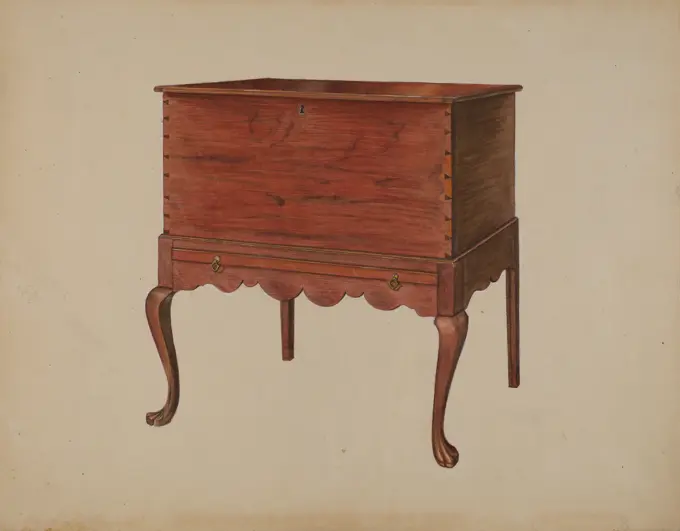
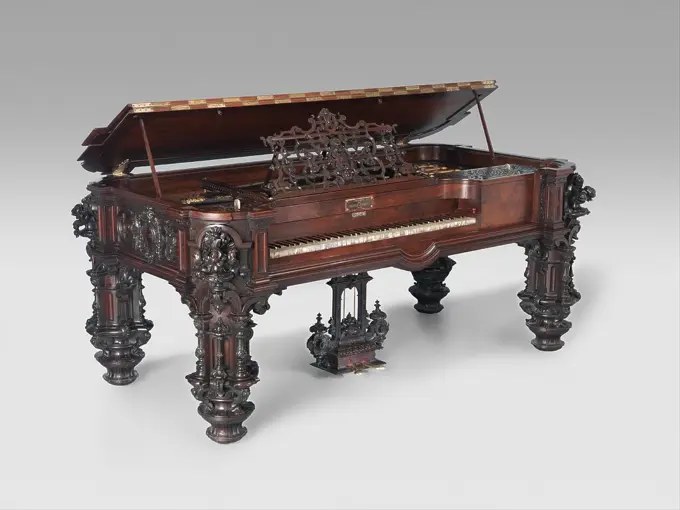
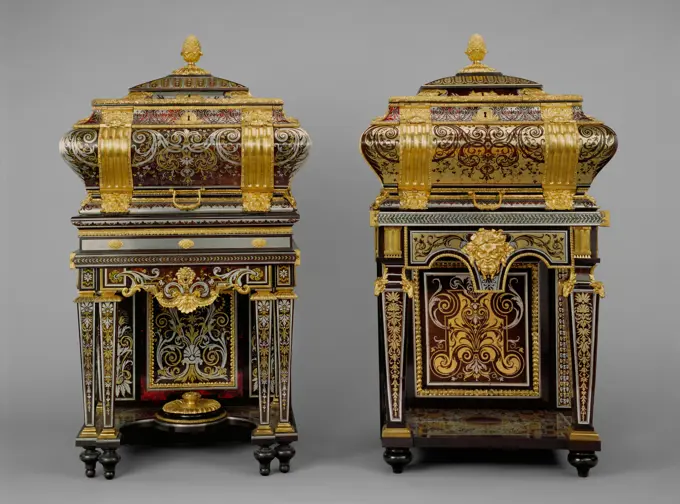
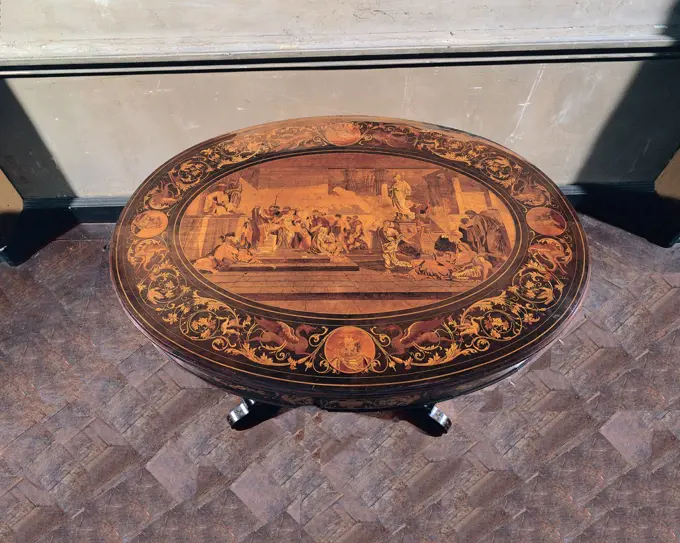
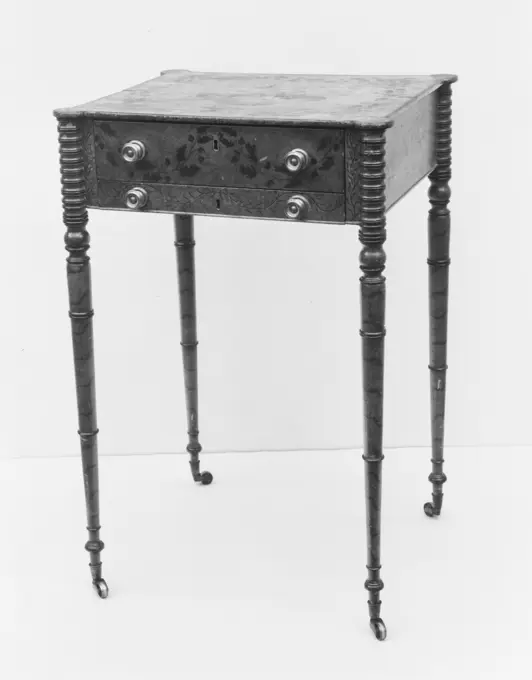
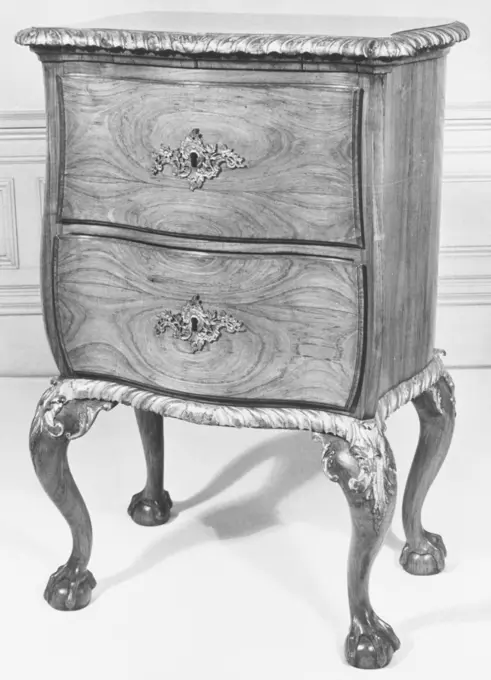
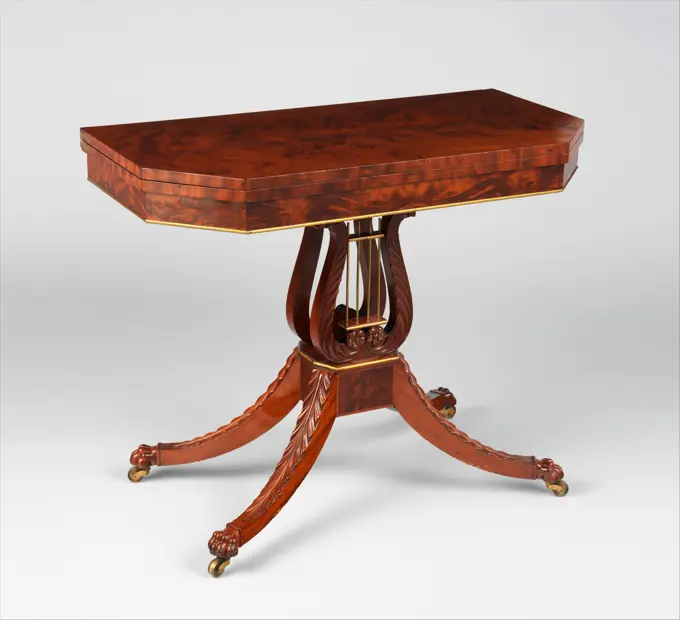
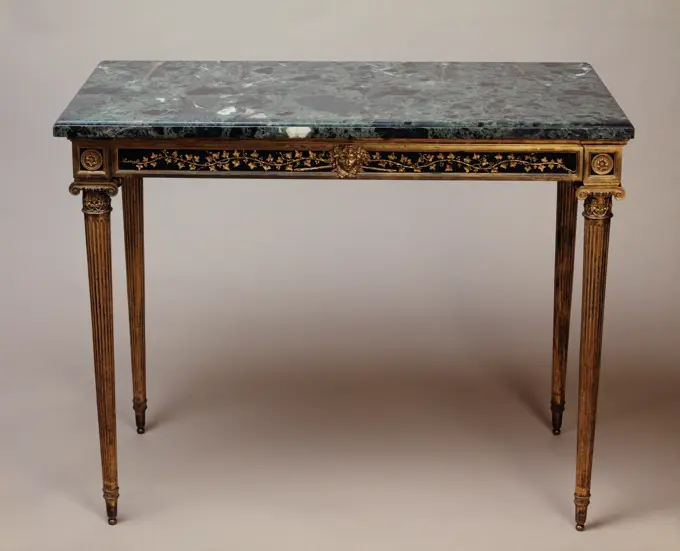
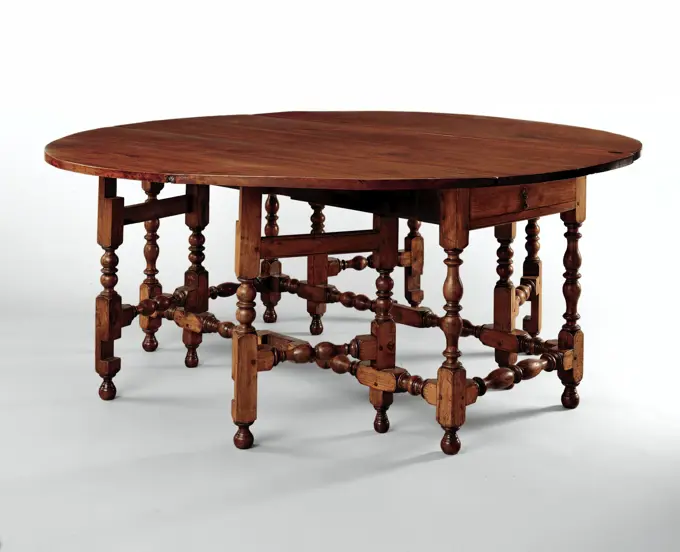
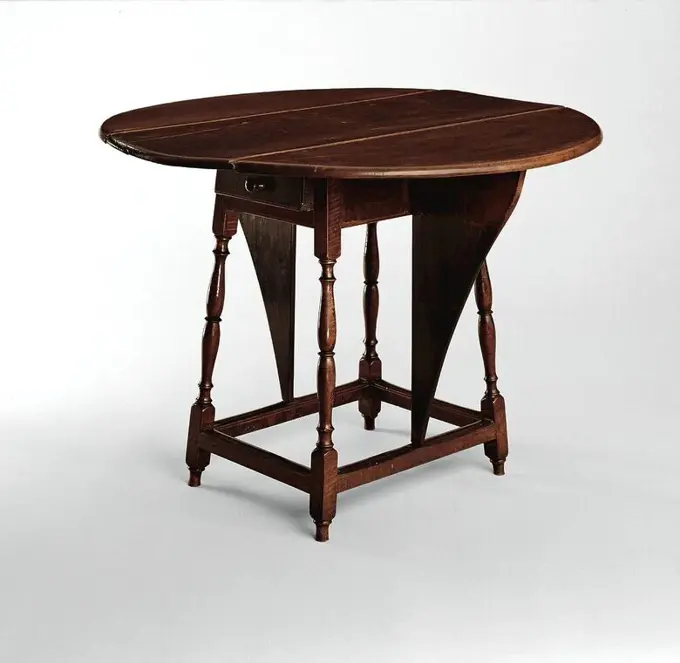
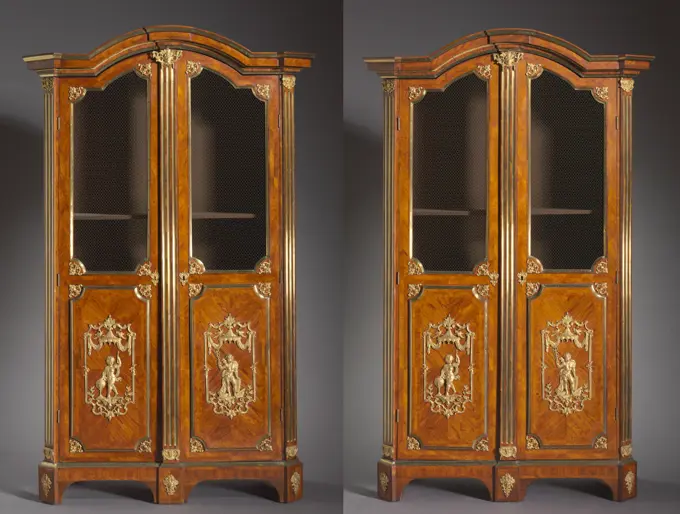
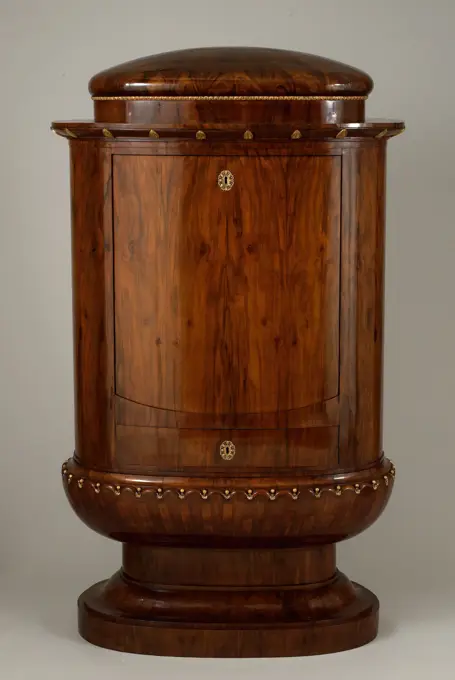
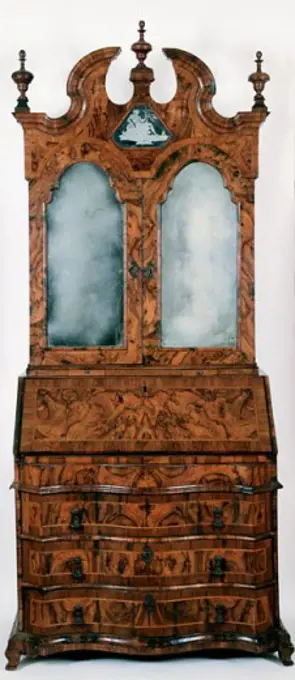
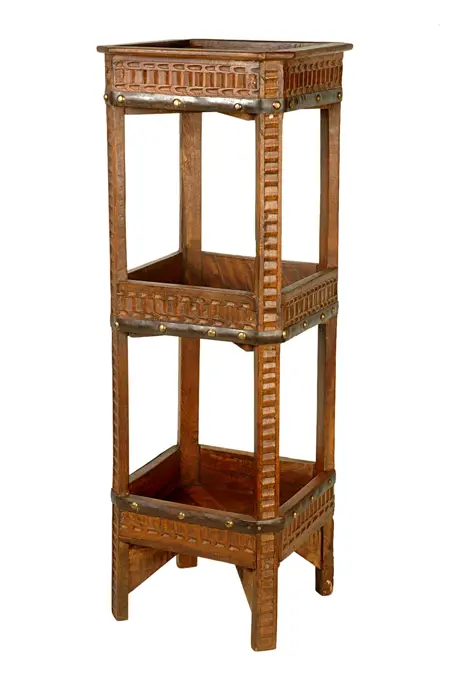
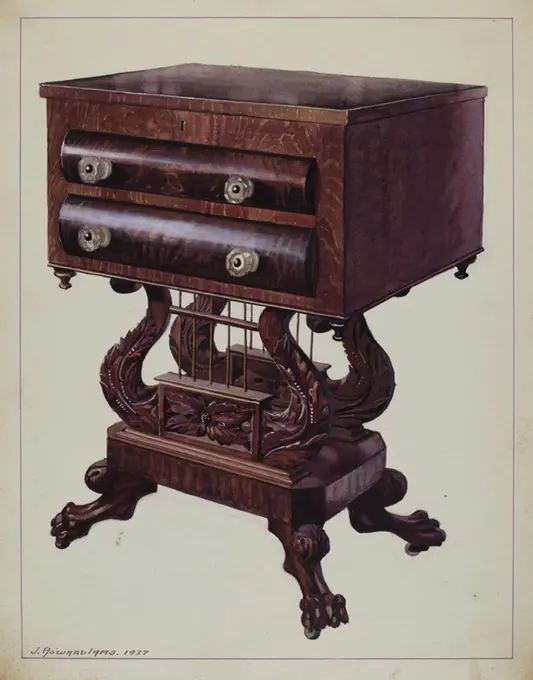
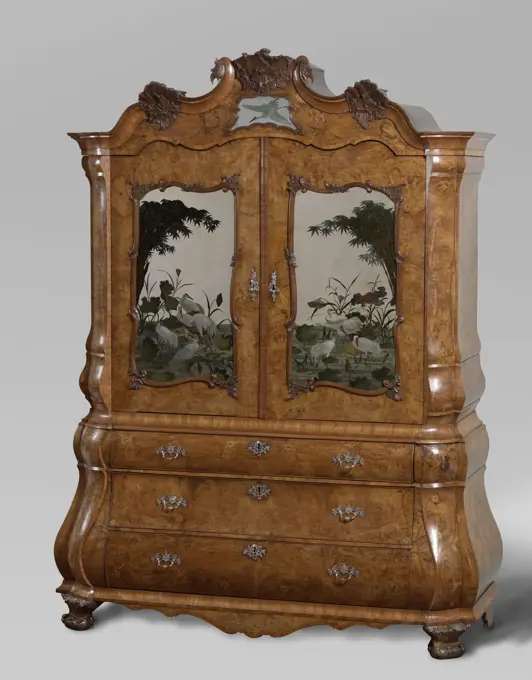
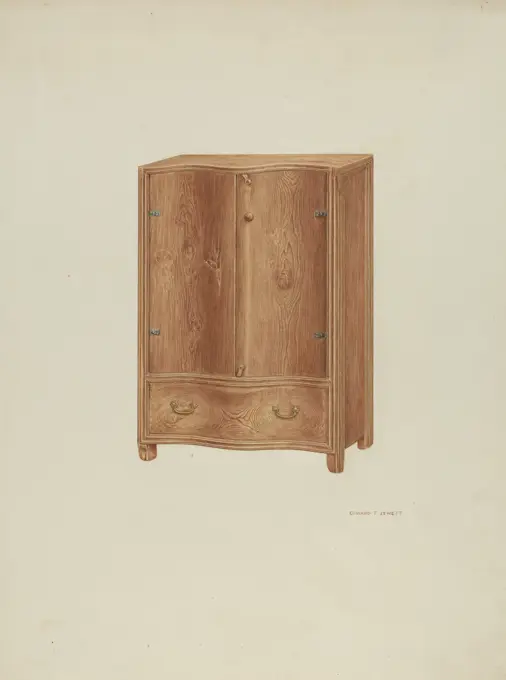
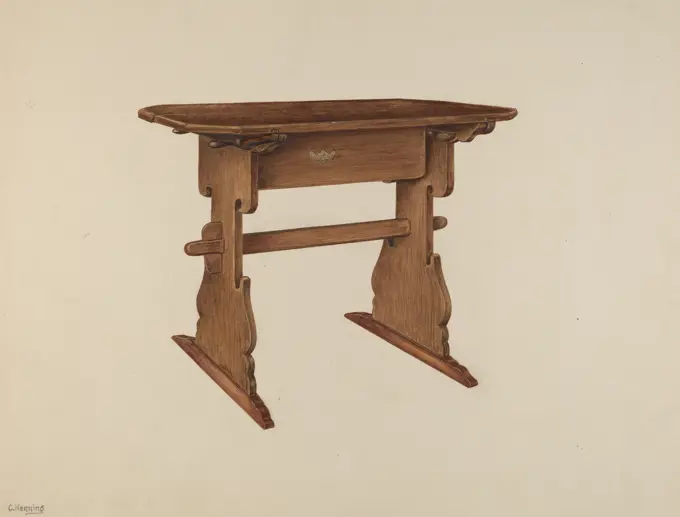
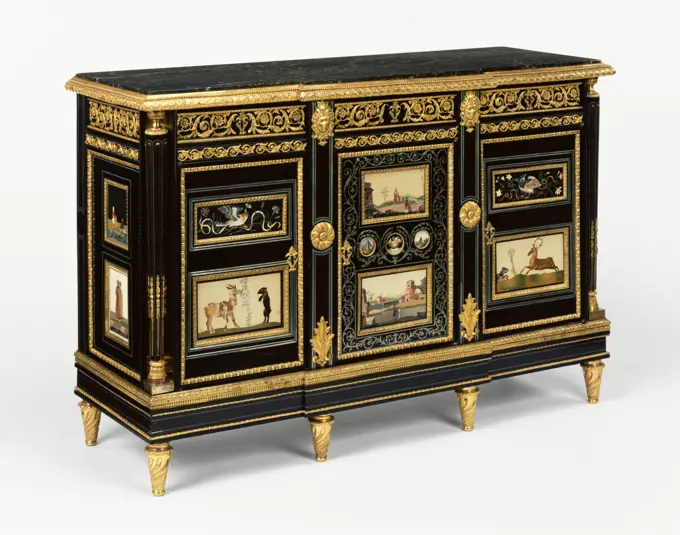
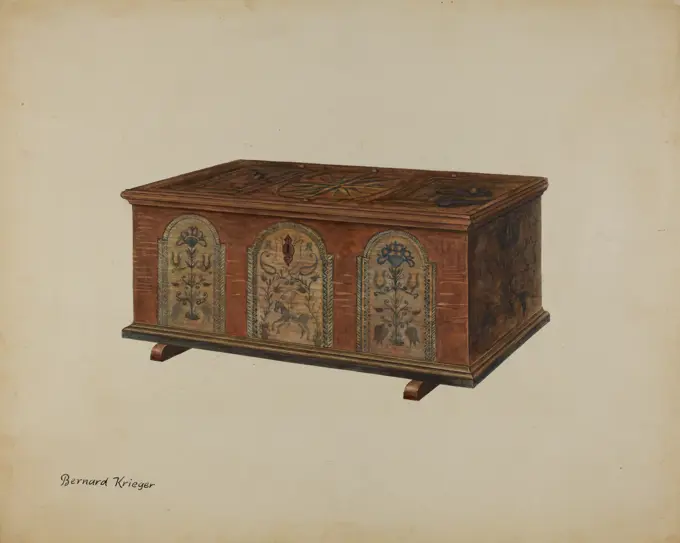
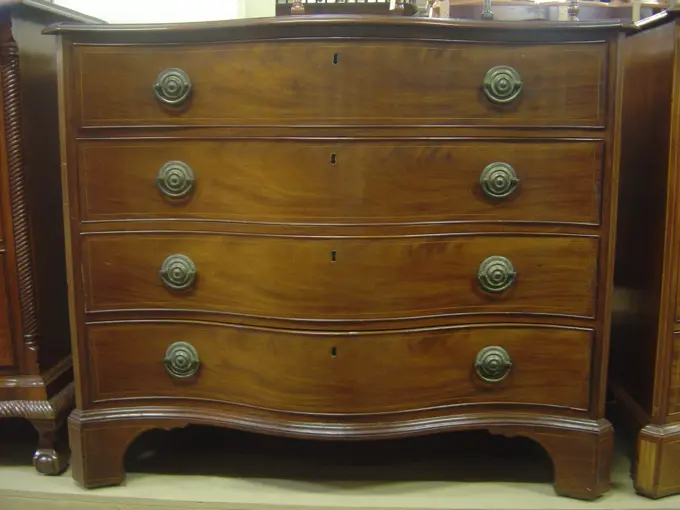
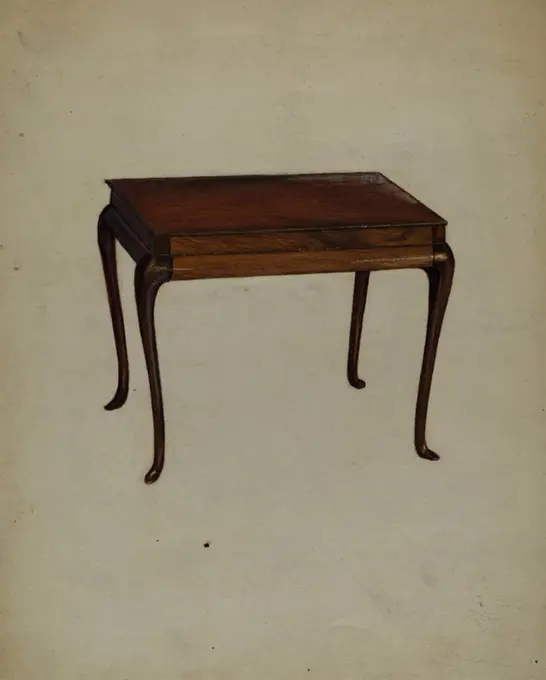
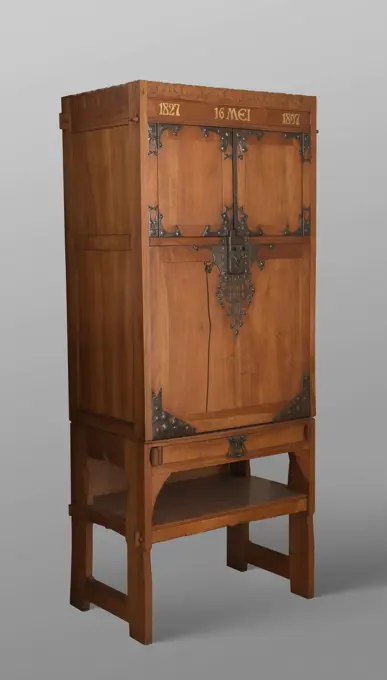
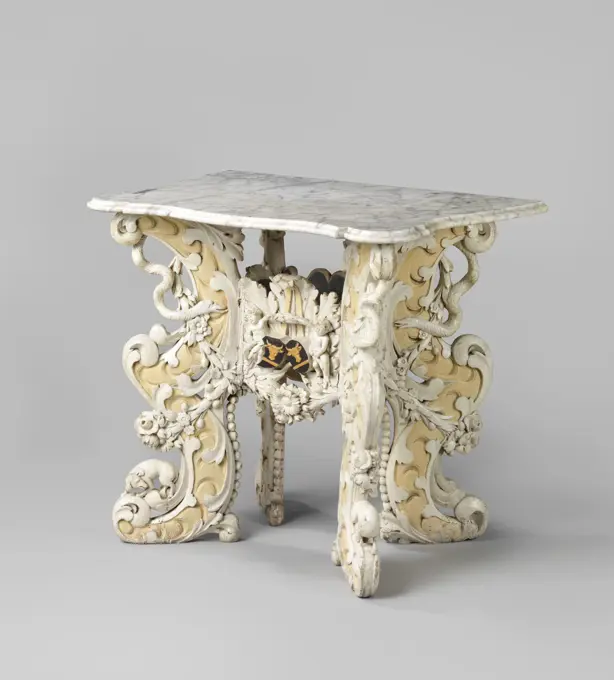
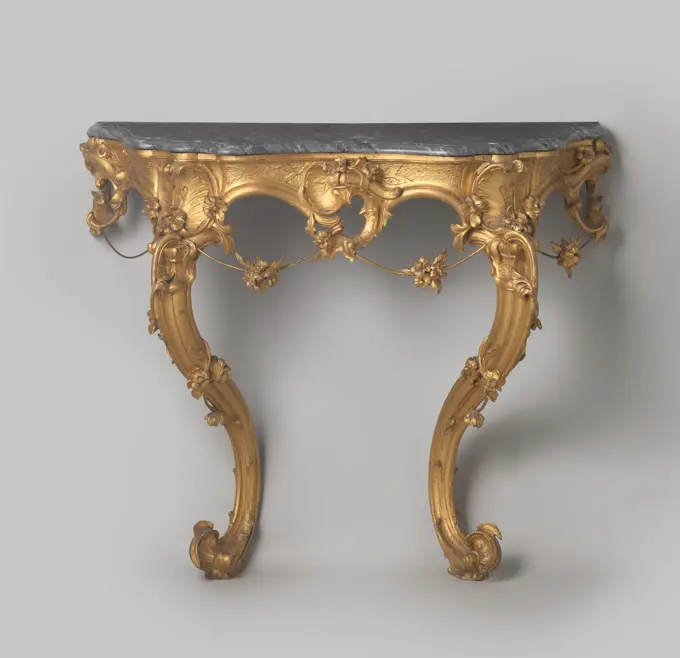
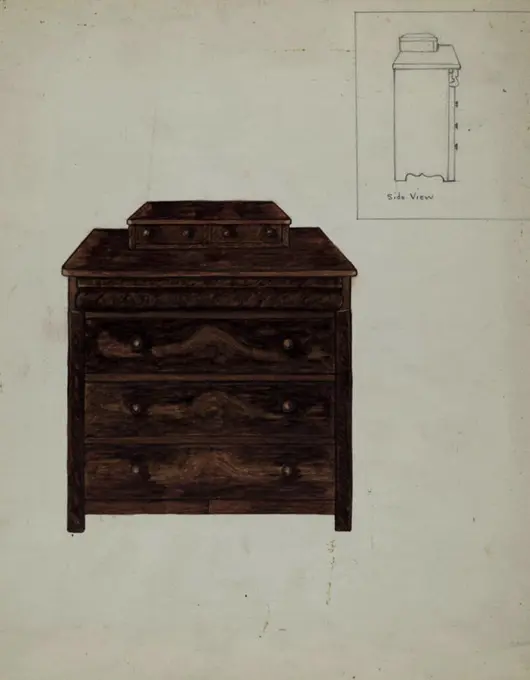
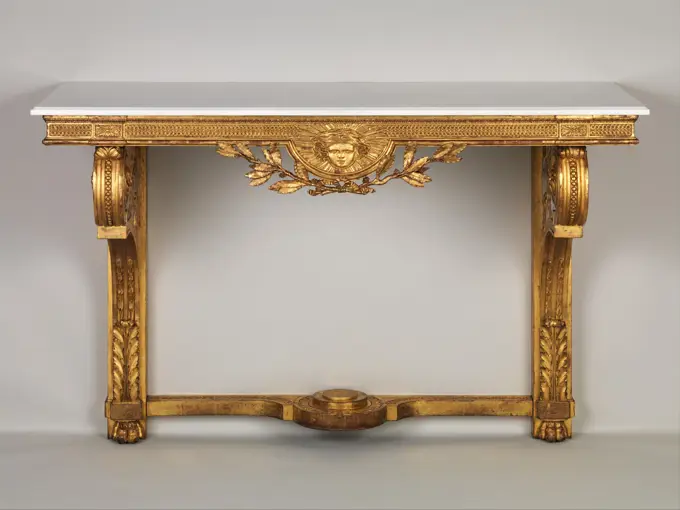
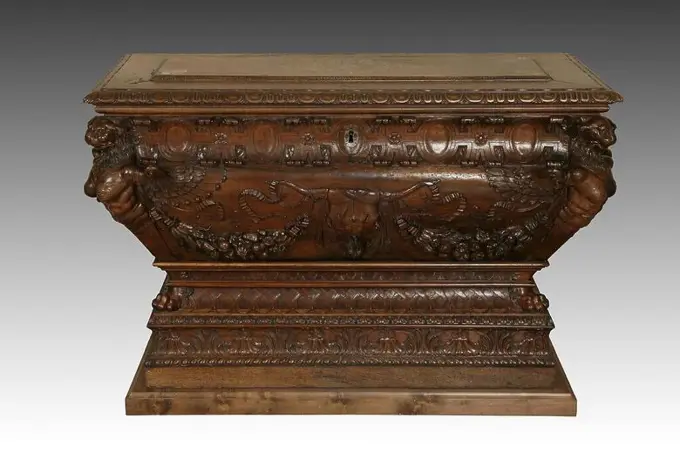
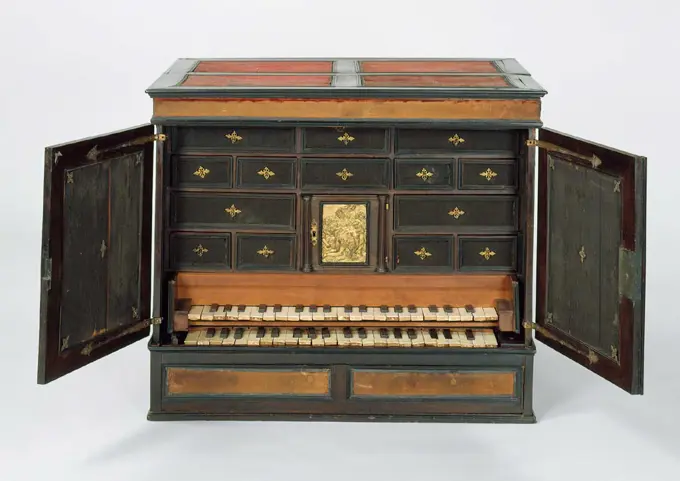
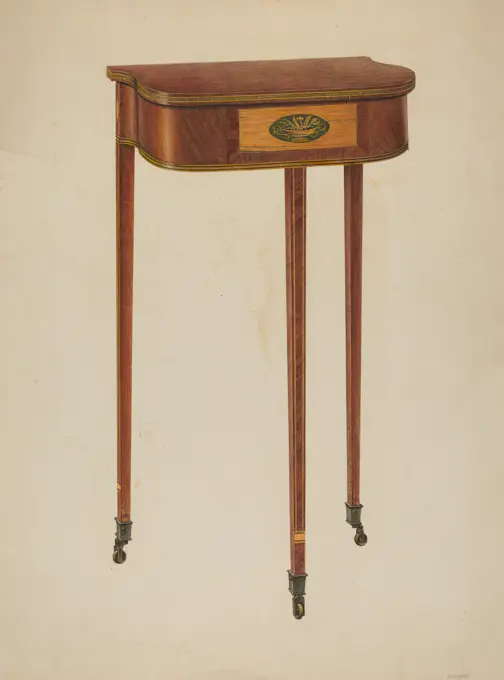
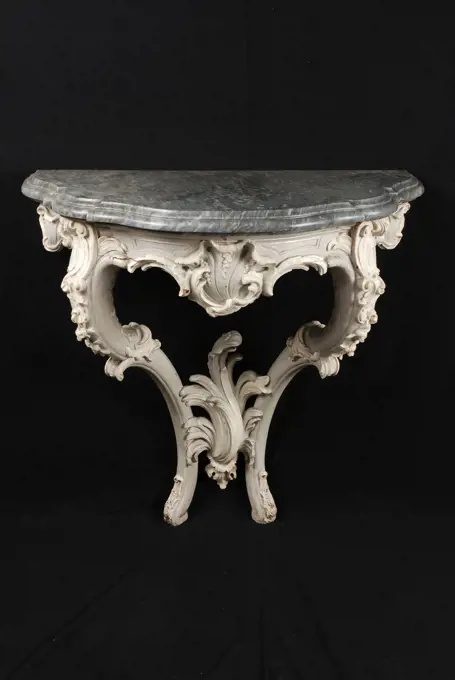
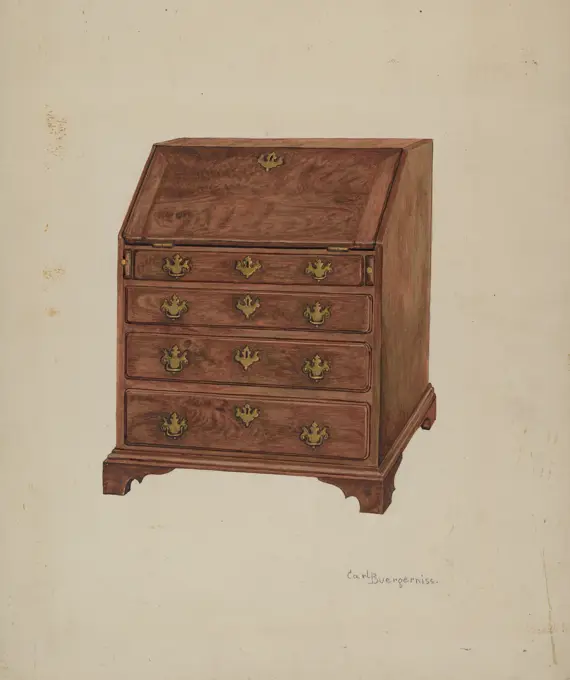
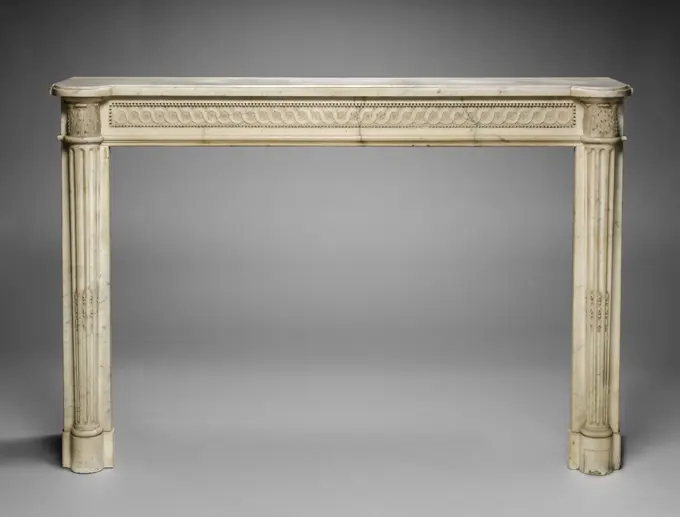
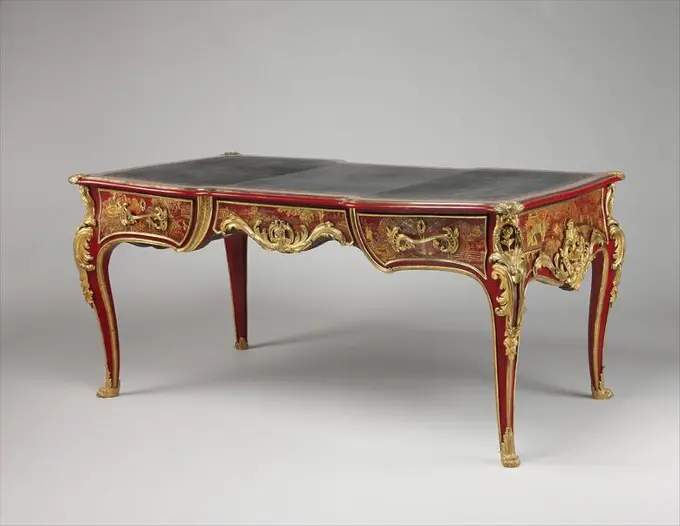
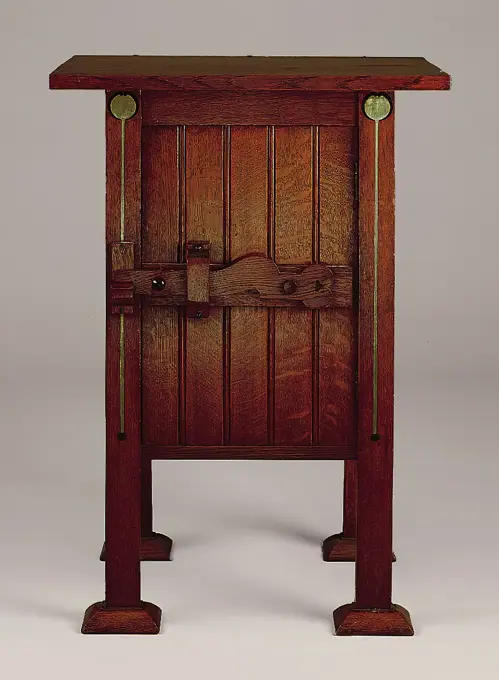
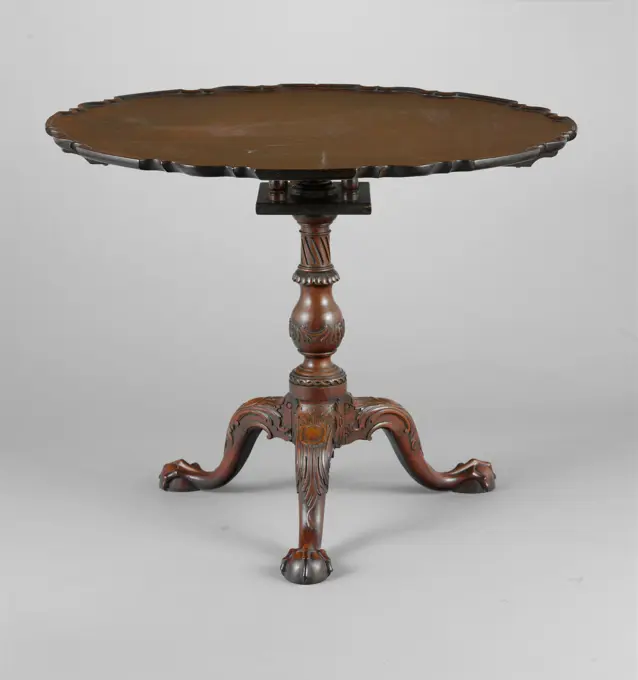
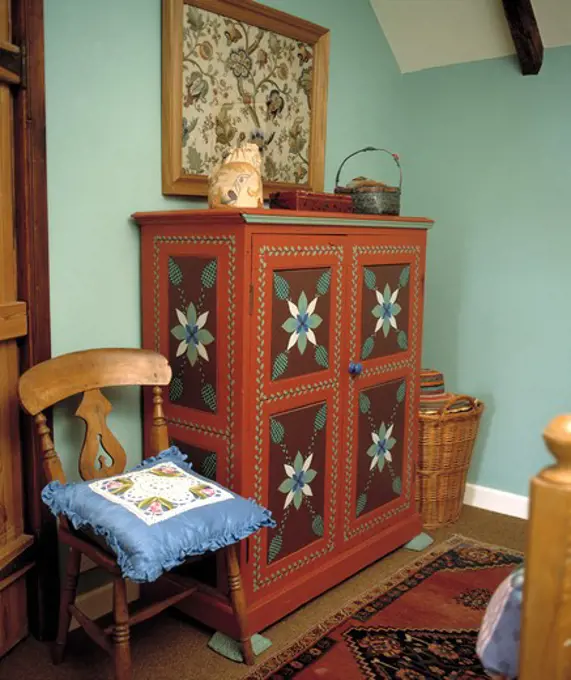
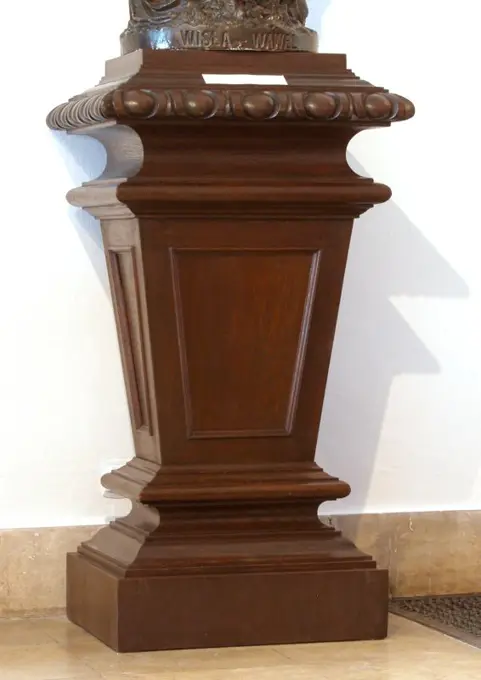
Chest c 1830 New England. Painted white pine and oak . Artist unknownTable, by Unknown, 19th Century, wood carved and inlaid. Italy, Piemonte, Turin, Royal Palace. Top view table inlaid top.SideboardChest withdrawersWork Table 1800-1810 American The lower drawer of this worktable, or sewing table, is a slide with a frame fitted with a silk bag for holding needlework. These small but often beautifully conceived tables were used in parlors, sitting rooms, and bedrooms. In the early nineteenth century, ornamental painting was part of the curriculum of girls schools, and the skill frequently extended to the decoration of light-wood tables and boxes. A New England schoolgirl probably executed this examples painted decoration of classical draped figures, festooned leaves, and entwined vines.. Work Table 10004Small commode ca. 1730-40 German, Hamburg (Altona). Small commode 205808Card Table 1810-20 American At the time when this card table was acquired from the collection of Louis Guerineau Myers, one of the great early connoisseurs and collectors of American furniture, it was attributed to the shop of Duncan Phyfe. The table bore that association for many years due to its elegant design and superb workmanship. Without documentation or any history of family ownership, however, it is difficult to justify assigning the table to the Phyfe shop. Recent scholarship has shown that as many as 300 cabinetmakers were at work in New York City in any given year between 1810 and 1820, and many of them were capable of rendering high-quality wares in this distinctive New York regional style.. Card Table 1445Table in golden bronze of Louis XVI style ". Bois, Bronze, Marble, 18th century. Museum of Fine Arts of the city of Paris, Petit Palais. Bronze, bronze gilded, marble, furniture, Louis XVI style, 18th 18th 18th 18th 18th 18th 18th century, table, tableAstragal-end Work Table. Culture: American. Dimensions: 31 x 27 x 14 1/2 in. (78.7 x 68.6 x 36.8 cm). Date: 1805-15.This astragal-end ladies sewing or worktable is distinguished by its tall, elegant, and finely reeded legs. The pleated silk bag, which held sewing fabric or needlework, is patterned after a design in plate 26 of Thomas Sheraton's "The Cabinet- Maker and Upholsterer's Drawing-Book" (1794). Museum: Metropolitan Museum of Art, New York, USA.Oval table with falling leaves 1690-1720 American This spectacular walnut table is as fine as any made in colonial America. Its multiple turned legs and gate-like supports create a virtual forest of baluster turnings. In stark contrast to the rectilinearity of seventeenth-century tables, the gentle elliptical curve of its top invited conviviality and conversation among those seated around it. The narrow width of leather and cane chairs of this period were ideal for use among the multiple legs on tables like these.. Oval table with falling leaves 3908Writing desk, c. 1870, Attributed to William Howard, American (born Africa), American (born Africa about 1805) active until c. 1870, 60 3/4 x 29 7/8 x 23 11/16 in. (154.31 x 75.88 x 60.17 cm), Yellow pine, tobacco box and cotton crate wood, United States, 19th century, William Howard was born in Africa and lived and worked at Kirkwood Plantation in Madison County, Mississippi, first as an enslaved man and then, after the Civil War (1861-65), as a free man. This desk was handed down through an African American family, along with the story of William Howard as its maker.Maker, possibly by: John A. Shaw, 1735-1839, Pembroketable, Mahogany, mahogany veneer; yellow-poplar (end rail, drawer front and bottom), red oak (inner side rails, right hinged rail), white oak (left hinged rail), redgum (drawer sides, back, guides, runners), spruce (strips nailed to undersides of side rails), 28 3/8 × 19 1/2 × 30 1/8 in. (72 × 49.5 × 76.5 cm), Made in Annapolis, Maryland, North America, American, 18thcentury, Furniture. Table of oak, decorated with ebony. The legs have a square pedestal with a squeezed vase-shaped articulation, on which a festoon attached to rings. They are connected by an H-shaped cross. Cannelure-piping or cannelures on the corner styles. The drawer has two forged iron lock plates and heart-shaped tractors. The inserted weapon of Genemuiden has been installed in the middle. The rear is the year 1645 in ebony. From the town hall in Genemuiden.Sewing Cabinet. Dated: c. 1937. Dimensions: overall: 37.4 x 25.4 cm (14 3/4 x 10 in.) Original IAD Object: 11" x 15". Medium: watercolor, colored pencil, and graphite on paper. Museum: National Gallery of Art, Washington DC. Author: Frank Eiseman.Console Table. UnknownDrop-leaf Table. Culture: American. Dimensions: 24 x 34 in. (61 x 86.4 cm). Date: 1700-1800. Museum: Metropolitan Museum of Art, New York, USA.George V Vezolles, Shaker Cabinet, 1935 1942 Shaker CabinetTable. Culture: Italian, Rome. Dimensions: 35 3/8 x 48 5/8 x 23 in. (89.9 x 123.5 x 58.4 cm.). Date: ca. 1775-80.Arriving from Dresden in Rome in 1755, the historian of classical art Johann Joachim Winckelmann (1717-1768) stepped into a different, intensely stimulating world. The sophisticated international community settled there was experiencing a rapidly growing fascination with the ancient Mediterranean civilizations. As librarian to the collector Cardinal Alessandro Albani (1692-1779), Winckelmann spent nine productive years in the intense study of Etruscan, Greek, classical Roman, and Egyptian works. He found them "in the galleries, vaults, and gardens of Roman palaces, at Naples, and at the new excavations of Herculaneum."1 During ancient Roman times, Egyptian monuments, such as obelisks and statues, and precious materials, such as alabaster, that formerly decorated the palaces of the pharaohs and temples on the banks of the Nile (for example, two panels on the Farnese table;Brass design fitting on wooden almira, Jodhpur, Rajasthan, India Copyright: xSafatxAli/DinodiaxPhotoxSquare piano, anonymous, c. 1860 - c. 1880 Table piano of seven Octavians with uneven claviature.  wood (plant material) Table piano of seven Octavians with uneven claviature.  wood (plant material)Cassone Italian late 15th century, with 19th century alterationsCollectors cabinet with miniature apothecary. The cabinet houses many small pots and bottles containing simplicia, or medicinal ingredients. Several drawers are filled with minerals, fossils, wood samples, seeds and so forth. Many other drawers are empty. The cabinet may originally have contained a ‘universal collection, which included small artefacts as well as products of nature, probably assembled by a cultivated and prosperous gentleman.Pair of Bookcases (Bibliothèques), c. 1720. Attributed to Charles Cressent (French, 1685-1768). Kingwood and rosewood veneers, gilt metal mounts; overall: 247.6 x 132.1 x 57.2 cm (97 1/2 x 52 x 22 1/2 in.). One of the obligations of a wealthy existence in the early 1700s was an interest in reading, or at least the impression of developing such an interest. Large bookcases such as these helped in that pursuit as they kept elaborately leather-bound books neatly behind a screen. The broad panels of marquetry and gilt-bronze mounts below suggest that the overall decorative scheme of figures symbolizing Geography and Commerce was perhaps more prominent than the rich intellectual holdings within.Alfred H Smith, Shaker Desk, c 1953 Shaker DeskBureauTable. Maker, attributed to: John Townsend, American, 1732/33-1809Mahogany china cabinet, 1906. Artist: Shirley Slocombe.Chair Table 1600-1700 New York. Maple and oak . Artist unknownBiedermeier secretary, 1834, 73 x 38 1/2 x 20 1/2 in. (185.42 x 97.79 x 52.07 cm) (closed), Walnut, maple and birch veneers, brass, gilded and ink-inscribed wood, glass mirror, Hungary (probably), 19th century, Rising like a column from its footed base and capped by a giant mushroom-like pediment, this desk is remarkable for its oval form. It opens to reveal a stage-like interior decorated with penwork (ink drawing imitating inlaid ivory or ebony), marbleizing, and gilding. Two columns of drawers flank a mirrored recess at the center that allows access to something not revealed: secret compartments for storing precious objects. Within this desk is more than meets the eye.Venetian Rococo Burl Walnut Secretary Antiques Pair of Commodes.Flat bowl on a stand. unknown, craftsmanBrass and iron design fitting on antique wooden telephone and magazine stand, Jodhpur, Rajasthan, India Copyright: xSafatxAli/DinodiaxPhotoxÉtagère 1855-60 Julius Dessoir German (Prussian). Étagère 3553Table - Double Lyre Base. Dated: 1937. Dimensions: overall: 35.5 x 27.8 cm (14 x 10 15/16 in.) Original IAD Object: 32"high; 21 1/2"x16"=top. Bottom 14 1/2x11 1/2 inches. Medium: watercolor, colored pencil, gouache, and graphite on paperboard. Museum: National Gallery of Art, Washington DC. Author: J. Howard Iams.China Cupboard. Dated: 1935/1942. Medium: watercolor, graphite, colored pencil, and pen and ink on paper. Museum: National Gallery of Art, Washington DC. Author: George Fairbanks.Mirrored cabinet, Dirk Froger (attributed to), c. 1764 Mirror cabinet glued with several types of wood on an oak core and consisting of an upper and lower cabinet. The base cabinet has round corner styles, three drawers and tranquility on claw pieces. The doors of the upper cabinet have mirrors with "back glass paintings" in Chinese style, with cranes in the midst of aquatic plants and reeds. The scalloped hood has a mirror in the middle with a painted flying crane fillet. Zilververlag with Amsterdam City Clear and Masterteken DF (attributed to Dirk Froger). Amsterdam (possibly) wood (plant material). oak (wood). maple (wood). rosewood (wood). looking glasses. silver (metal). amalgam Mirror cabinet glued with several types of wood on an oak core and consisting of an upper and lower cabinet. The base cabinet has round corner styles, three drawers and tranquility on claw pieces. The doors of the upper cabinet have mirrors with "back glass paintings" in Chinese style, with cranes in the mJack Bochner and Arthur Johnson, Cellaret, c 1938 CellaretSquare Piano. Culture: American. Dimensions: Height: 37 3/4 in. (95.9 cm)Width: 87 15/16 in. (223.3 cm)Depth: 46 7/16 in. (118 cm). Maker: Robert Nunns (British, (active United States) 1791-1869); John Clark (British (active United States), active 1833-1907). Date: 1853.This costly showpiece of Renaissance and Rococo Revival eclecticism, an obvious status symbol perhaps intended for display at New York's Crystal Palace exposition, elevated the reputation of the English immigrants Robert Nunns and John Clark, partners in New York since 1833; they had exhibited an equally ornate piano in London in 1851. Built on the scale of a billiard table, this massive rosewood instrument stands on elephantine legs surmounted by lush carved bouquets. Slips of mother-of-pearl, tortoiseshell, and abalone embellish the seven-octave keyboard. Within, a lacquered iron frame reinforces the case. The felt-covered hammers could have been made by machines invented by Rudolph Kreter, who assigned his patent to Santiago Marco / Secreter, 1925. Colección privada.Edward Jewett, Cupboard, 1938 CupboardCharles Henning, Trestle Table, c 1939 Trestle TableCabinet (one of a pair). Attributed to Adam Weisweiler (French, 1744 - 1820, master 1778)Bernard Krieger, Pa German Dower Chest, c 1938 Pa. German Dower ChestChest ofDrawers.   Maker: Langley Boardman, American, 1774-1833Silver Table (Tea). Dated: 1935/1942. Dimensions: overall: 29.2 x 22.9 cm (11 1/2 x 9 in.) Original IAD Object: none given. Medium: watercolor, gouache, colored pencil, and graphite on paper. Museum: National Gallery of Art, Washington DC. Author: Meyer Goldbaum.Secretaire Aannemers Vereeniging Eendracht.Secretary with boxes and drawers. The Frisian mentions at the top: 16 May 1827-1897. On the inside of the upper doors: Contractors Association Eendracht.Hundred from the 17th century from the Antoni Sapiech collection in Warsaw in 1915 - a general view;  1915 (not after 12/06/1915) (1915-00-00-1915-00-00);. Fir screen of mahogany. The rectangular window rests on triangular feet, on which winged half lions. On the sides, the rules and on all sides of the styles, gilt bronze decorations are arranged, including various animals, fable animals, palmets, rosettes, women and mythological heads, etc. On top of monogram, flanked by a lying sphinx is on top of it; On the corners of pomegranates. The upholstery shows a flower wreath and palm teeth, passes and cord work.Table of white painted wood with four overhoeks placed legs and equipped with cutting, anonymous, 1650 - 1700 Table of white painted Lindehout with four overhoeks placed legs, made up of two C-Voluten placed one above the other. The legs are decorated with acanthus leaf and at the rear with pearls. At the bottom is a dog, a snake at the top. The flat connecting rule shows a standing Acanthus leaf at the front, for which a double coat of arms (each with a cow's head with beam) in the midst of two putti. At the bottom of a flowerguirle, which splits in two on the legs. Northern Netherlands wood (plant material). linden. paint (coating) Table of white painted Lindehout with four overhoeks placed legs, made up of two C-Voluten placed one above the other. The legs are decorated with acanthus leaf and at the rear with pearls. At the bottom is a dog, a snake at the top. The flat connecting rule shows a standing Acanthus leaf at the front, for which a double coat of arms (each with a cow's heaChest. Dated: 1935/1942. Dimensions: overall: 22.9 x 28 cm (9 x 11 in.) Original IAD Object: Approx. 23 1/2"high; 4'3"long; 22 1/2"deep. Medium: watercolor, colored pencil, and graphite on paperboard. Museum: National Gallery of Art, Washington DC. Author: Columbus Simpson.Escritoire;  1825-1835 (1825-00-00-1835-00-00);Wall-table. Dated: c. 1938. Dimensions: overall: 34.9 x 27.8 cm (13 3/4 x 10 15/16 in.) Original IAD Object: Approximately 30"high. Medium: watercolor, colored pencil, and graphite on paper. Museum: National Gallery of Art, Washington DC. Author: Michael Riccitelli.Console table ca. 1740 Italian, Rome. Console table 205305Penant table made of gilded wood on two S-shaped legs decorated with rocailles, Anonymous, 1750 Penant table made of gilded wood. The two S-shaped legs end up in rocaille motifs at the top and bottom and are wounded by the flower of flowers. The corresponding, profiled leaf is made of blue-gray-veined marble and consists of two parts. The edge is decorated at the front and shell motifs decorated on the sides with asymmetrical empire. Below is, between the legs, cutting of flowers applied to gilded iron wire. Northern NetherlandsNetherlands wood (plant material). gilding (material). marble (rock). gilding Penant table made of gilded wood. The two S-shaped legs end up in rocaille motifs at the top and bottom and are wounded by the flower of flowers. The corresponding, profiled leaf is made of blue-gray-veined marble and consists of two parts. The edge is decorated at the front and shell motifs decorated on the sides with asymmetrical empire. Below is, between the legs, cutting of flowersOld Dresser. Dated: c. 1936. Dimensions: overall: 28 x 22.9 cm (11 x 9 in.) Original IAD Object: 20x41x32 1/2 in. Top section: 33 1/2"x 9 1/2"x 5".. Medium: watercolor, colored pencil, and graphite on paper. Museum: National Gallery of Art, Washington DC. Author: Mary E. Humes.BANCO PROCEDENTE DE LA CASA CALVET - SIGLO XIX - MADERA DE ROBLE. Author: ANTONI GAUDI (1852-1926). Location: CASA MUSEO GAUDI. Barcelona. SPAIN.Console table ca. 1775-80 French Supported on one or two legs, console tables need to be attached to the wall for stability and are considered to be part of the interior decoration of a room. They were made by a special group of joiners, menuisiers en btiments (litt. building carpenters) responsible for the fixed elements in the interior such as paneling, pier glasses and console tables. Unlike other members of the guild, these craftsmen were not required to stamp their output and for that reason it is rarely known who created such works.These console tables are of identical design except in size. They were among the few neoclassical consoles in the model collection of woodwork, paneling and seat furniture of Maison Leys, a successful decorating business, located at the Place de la Madeleine in Paris. Since 1885 the business was directed by Georges Hoentschel who installed the collection in 1903 in a museum-like display at Boulevard Flandrin, Paris. Three years later, Hoentschel sold ARCA GOTICA - SIGLO XV. Location: INSTITUTO VALENCIA DE DON JUAN-COLECCION. MADRID. SPAIN.Ornamented Grand Piano, 1885-1890. Designer: Sir Edward Burne-Jones. Gilder: Kate Faulkner. Manufacturer: Broadwood .Cabinet with barrels, anonymous, c. 1815 - c. 1825 musical instrument. mechanical instrument. cabinet with barrels Roller cabinet of oak and mahogany. The blind doors are decorated with a winch, the valve with ornament. Along the plinth and top a copper baget. Roller box belongs to saloncylinder organ in the form of a secretary (BK-NM-14353-A). Amsterdam oak (wood). mahogany (wood)Chest ofdrawersIrving I Smith, Shaker Ironing Table, 1935 1942 Shaker Ironing TableAnonymous / 'Chest'. 1550 - 1575. Walnut. Museum: Museo del Prado, Madrid, España.Tabernacle frame. Artist: possibly del Tasso workshop. Culture: Italian. Dimensions: Overall, 75 x 37 cm; sight, 27.8 x 20.3 cm; rebate, 30.2 x 22.2 cm.. Date: ca. 1530.A tabernacle frame is characterized by architectonic structural and decorative members, most often based on classical precedents. This type of frame grew increasingly popular during the fifteenth century, and more elaborate and inventive forms developed during the sixteenth century, after which it largely went out of fashion. An inscription warning against vanity, "Not beauty but truth is to be admired," appears in the cartouche below two griffins at the bottom edge of this finely carved frame that originally housed a mirror. Like most sixteenth-century Florentine mirrors, it originally included a sliding shutter to cover the glass: the slot through which the shutter passed in the right pilaster of the frame, has been filled with a modern wood repair.During this period, walnut, a costly wood with a hard dense grain suDesk, glued with different types of wood, copper and mother -of -pearl. Bombed on all sides. Decorated with cross and cloverleaf-shaped motifs. Biezen van Koper., Anonymous, 1850 - 1875 Bureau of egg and rosewood, glued with several types of wood, copper and mother-of-pearl. The furniture bombarded on all sides has S-shaped legs with copper piping, the flowing lines of which run into the corner styles. Scalloped rilts. The middle fields of the front and sides and of the front-containing leaf at the front are inlaid with a continuous pattern of cross and cloverleaf-shaped motifs. The narrow cover is wearing a gallery with diamond motifs. France oak (wood). rosewood (wood). pear (wood). ebony (wood). rosewood (wood). maple (wood). copper (metal). mother of pearl. bronze (metal). veneer gilding Bureau of egg and rosewood, glued with several types of wood, copper and mother-of-pearl. The furniture bombarded on all sides has S-shaped legs with copper piping, the flowing lines of which run iPoppenwashel. Poppenwastel, mahogany. On two legs, from below. In the middle a late one why a golf edge, buddy is missing. Two towel racks on the sides.Luxury gold plated part kitchen table in baroque style. Close-up. luxurious kitchen tableDraw-top table. Culture: Swiss. Dimensions: H. 28 x W. 46 x D. 30 in. (71.1 x 116.8 x 76.2 cm). Date: 17th century. Museum: Metropolitan Museum of Art, New York, USA.Claviorganum 1598 Lorenz Hauslaib German This tiny instrument incorporates an organ and a virginal built into an ebony tabletop chest of drawers. The lower keyboard manual is for the organ, and levers at the left of the keyboard serve as stops. A pair of bellows is concealed beneath the top of the chest; two ranks of flue pipes and a regal (reed) stop are arranged behind the drawers in the back. The upper keyboard belongs to a removable octave virginal. The instrument is tuned to approximately A=445. Above the keyboards is a small door with a lock and two carved columns flanking a brass relief panel depicting the Deposition from the Cross. The instrument was constructed by Laurentium Hauslaib during the time that he served at the court of Frederick IV, elector of the Palatinate, and was probably intended for domestic use.Technical description: Two manual keyboard instrument, upper manual is an octave virginal, lower manual is an organ; the virginal is removable from the cabinet of the Harry Eisman, Mirror Stand, 1940 Mirror StandCORO DE LAS CLARISAS: DECORACION POLICROMADA Y ESCUDOS. MEDIEVAL. (DEPOSITO: MUSEO ARQUEOLOGICO NACIONAL).Gaming Table. Dated: 1935/1942. Dimensions: overall: 22.8 x 30 cm (9 x 11 13/16 in.). Medium: watercolor, pen and ink, and graphite on paper. Museum: National Gallery of Art, Washington DC. Author: Ferdinand Cartier.Isadore Goldberg, Kas, c 1937 KasItaly - Kingdom of Sardinia - 19th century. Two magnetic needles telegraph by Charles Wheatstone (1802-1875)Shaker Table. Dated: c. 1938. Dimensions: overall: 30.3 x 24.1 cm (11 15/16 x 9 1/2 in.) Original IAD Object: 26 1/4" high; 17 1/2" deep; 31" wide. Medium: watercolor, graphite, and pen and ink on paper. Museum: National Gallery of Art, Washington DC. Author: John W. Kelleher.Abruzzo L'Aquila Sulmona Museo Civico0. Hutzel, Max 1960-1990 Museo Civico Treasures: these objects (Tesoro del Pio Istituto della SS. Annunziata and Tesoro della Cattedrale) are now housed in the security vault of a bank, not in the Museo Civico, as noted in Hutzel's photo campaign notes of August 1984. Views of the treasures include: a silver processional cross (14th century); gold, silver and enamel chalice (13th century), gold and silver crosier with sculpted figures depicting the Annunciation (13th century), a silver and gold reliquary with glass (13th century), a silver diadem (13th century), and a box-like silver and gold reliquary (15th century). German-born photographer and scholar Max Hutzel (1911-1988) photographed in Italy from the early 1960s until his death. The result of this project, referred to by Hutzel as Foto Arte Minore, is thorough documentation of art historical development in Italy up to the 18th century, including objects of the Etruscans and the Romans, as welCupboard (Schrank). unknown, creatorCabinet (installed with 1975.1.2017). Culture: Italian, Umbria. Dimensions: H. 93.3 cm, W. 75.3 cm, D. 48.5 cm. Date: ca. 1400 (rebuilt, 20th century). Museum: Metropolitan Museum of Art, New York, USA.Furnace metal, vintage engraved illustration.Painted lime wood rococo console table, console table side table table furniture interior design paint marble stone lime wood frame, With carved ornamentation with rocailles and S- curved linden wood gray painted white heightened. With gray marble top rococo Collection .O van Kerkwijk.Carl Buergerniss, Writing Desk, 1937 Writing DeskMantel and Hearth , c. 1770-1790. France, style of Louis XVI, 18th Century. Marble; overall: 111.1 x 165.7 x 33 cm (43 3/4 x 65 1/4 x 13 in.).Fire screen, anonymous, c. 1793 - c. 1795 Fire screen of the Kopseublement, with an extendable plate. The upholstery shows a bouquet in the middle of floral motifs on light blue satin soil and held by two griffins; Below are crossed arrows with a bow. The screen rests on a double-curved base and has detached Tuscan columns with smooth lower and tancidded above shaft on the corners. Sills with stabbed braid. Coming from the building Nieuwe Gracht 74, Haarlem. See: BK-15615-A/P, 15614 and 15616-A. furniture worker: Netherlandsdesigner: Amsterdam wood (plant material). beech (wood). silk. paint (coating) Fire screen of the Kopseublement, with an extendable plate. The upholstery shows a bouquet in the middle of floral motifs on light blue satin soil and held by two griffins; Below are crossed arrows with a bow. The screen rests on a double-curved base and has detached Tuscan columns with smooth lower and tancidded above shaft on the corners. Sills with stabbed braid. Coming from the buildiTilt-top Tea Table 1750-75 American. Tilt-top Tea Table 8661Writing table (bureau plat). Culture: French, Paris. Dimensions: H. 31-3/4 x W. 69-1/4 x D. 36 in. (80.6 x 175.9 x 91.4 cm). Maker: Gilles Joubert (French, ca. 1689-1775). Date: 1759.In his Useful Hints to Those Who Make the Tour of France, which appeared in 1768, Philip Thicknesse (1719-1792) expressed the opinion that Louis XV would have made a much better country gentleman than a sovereign prince, since he loved the diversions of country life and seldom went to Paris.1 It is not surprising, then, that the king spent much of his time at Versailles, where daily business was conducted in his Cabinet Intérieur. This small study, its windows overlooking the palace courtyard below, was one of the most beautiful rooms of his private apartment. On December 29, 1759, Gilles Joubert supplied this writing table, a so-called bureau plat, or flat-topped desk, lacquered in brilliant crimson and with pseudo-Asian landscape scenes in gold for the king's use in the Cabinet Intérieur. The surface Pair of Commodes. Bernard II van Risenburgh (French, after 1696 - about 1766, master before 1730)Shaker Cabinet. Dated: c. 1936. Dimensions: overall: 26.3 x 21.5 cm (10 3/8 x 8 7/16 in.). Medium: watercolor and graphite on paper. Museum: National Gallery of Art, Washington DC. Author: Anne Ger.Miniature door 17th century, partly, and later 19th century Italian. Miniature door. Italian. 17th century, partly, and later 19th century. Walnut, softwood, glass, and iron.. WoodworkCabinet, 1890, Attributed to George Walton; Manufacturer: Waring and Gillow, Scottish, 1867-1933, 30 1/8 x 21 1/2 x 16in. (76.5 x 54.6 x 40.6cm), Oak, pewter, Scotland, Arts and CraftsModel for a Pulpit, oak, Hexagonal pulpit model in the Gothic Style., England, ca. 1850, models and prototypes, Decorative ArtsEva Braun's Photo Albums, ca. 1913 - ca. 1944. These albums are attributed to Eva Braun (four are claimed by her friend Herta Schneider, nee Ostermeyer) and document her life from ca. 1913 to 1944. There are many photographs of Eva, her sisters and their children, Herta Schneider and her children, as well as photographs of Eva's vacations, family members and friends. Included also are photographs taken by and of Eva Braun at Hitler's chalet Berghof (or Kehlstein), photographs of Hitler and his entourage, visitors to Berghof and the scenery around Berchtesgaden, and some studio portraits of Eva and members of her family.Tilt-top tea table 1765 American Types of furniture associated with social interactionsespecially the serving and drinking of teawere indispensable components of fashionable parlors during the second half of the eighteenth century. Tilt-top tea tables, featuring a single pillar supported by three legs, could be placed against a wall for storage when their tops were tilted to a vertical position.. Tilt-top tea table 8271Blue cushion on old wooden chair beside decoratively painted cupboard in pale turquoise bedroomSewing cabinet , Tables, Sewing equipment & supplies, Shaker furniture. The Massachusetts WPA Federal Art Project Photograph CollectionFeature, farmhouse in Provence, FranceWalnut Bench with Balustraded Back. Dated: 16th century. Dimensions: overall: 188.7 x 101.4 x 38.9 cm (74 5/16 x 39 15/16 x 15 5/16 in.). Medium: carved, gilded, and polychromed walnut and oak. Museum: National Gallery of Art, Washington DC. Author: Sienese 16th Century.Two Coffers on Stands. Attributed to André-Charles Boulle (French, 1642 - 1732, master before 1666)Neo-Gothic bookcase, c. 1835 - c. 1845 Neo-gothic bookcase, inlaid with an embroidered panel. Netherlands Mahogany (Wood). Glass. Embroidery: Silk embroidering Neo-gothic bookcase, inlaid with an embroidered panel. Netherlands Mahogany (Wood). Glass. Embroidery: Silk embroideringHighboy. Dated: 1937. Dimensions: overall: 45.4 x 36.6 cm (17 7/8 x 14 7/16 in.) Original IAD Object: 70 1/2"high; 37 1/4"wide, base, 20"deep. Legs 21 1/2"high. Medium: watercolor, gouache, colored pencil, and graphite on paperboard. Museum: National Gallery of Art, Washington DC. Author: Arsen Maralian.Pedestal. unknown, author