Antique Wooden Cabinets

A collection of elegant wooden cabinets showcasing intricate designs, rich finishes, and historical craftsmanship from various eras.

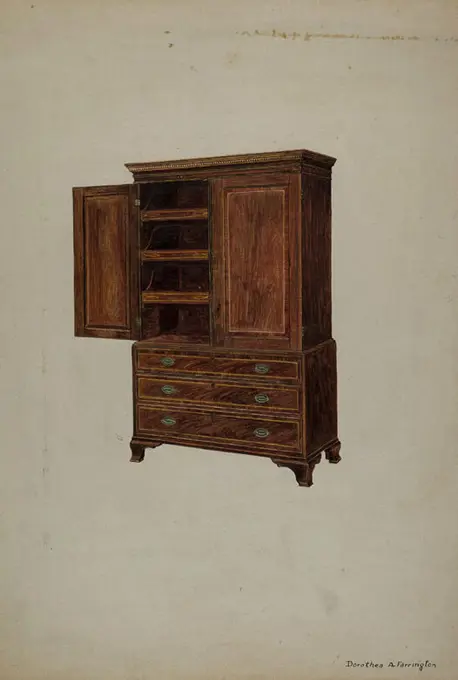
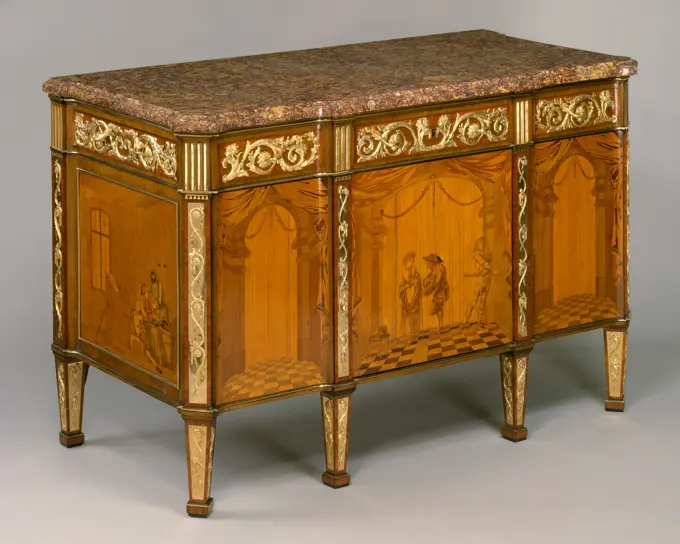
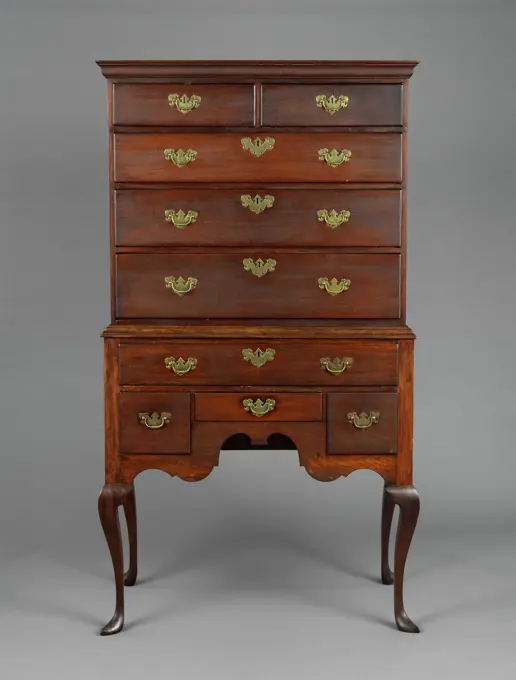
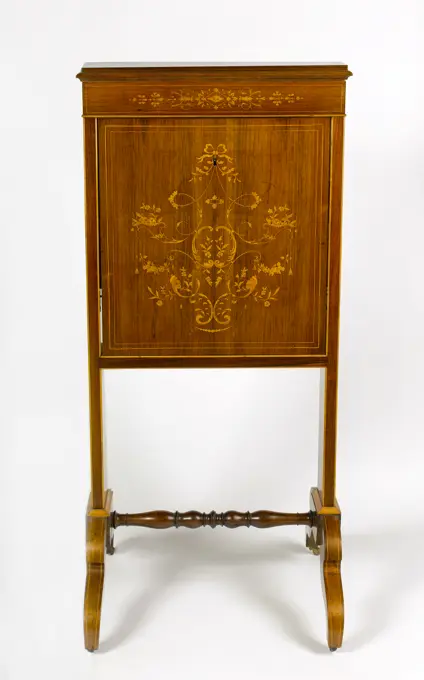
Tropical wood cabinet with in doors Spitsovaal van Ebony and above doors fronton with vase and lauwerslinger, anonymous, 1800 - 1810 Tropical wood cabinet (Sono Keling) Inlaid with ebony, with seizure of silver. The rectangular furniture is divided into a lower and upper cabinet. The base cabinet has two duals, treated as two x three drawers, separated by a middle style, and angle -placed corner styles on conical, rejuvenating legs. The upper cabinet has two doors behind which planks. The right door is closed by the middle style. Both doors have inlaid a deepened panel with a rush -hour loop in Ebony. Corinthian pilasters placed on the two front corners of the upper cupboard. The cabinet is crowned by a pediment, broken in the middle by a vase on a pedestal on which a Lauwerslinger depends. Final plates and tractors of silver. Indonesia ebony (wood). silver (metal). wood (plant material) Tropical wood cabinet (Sono Keling) Inlaid with ebony, with seizure of silver. The rectangular furn
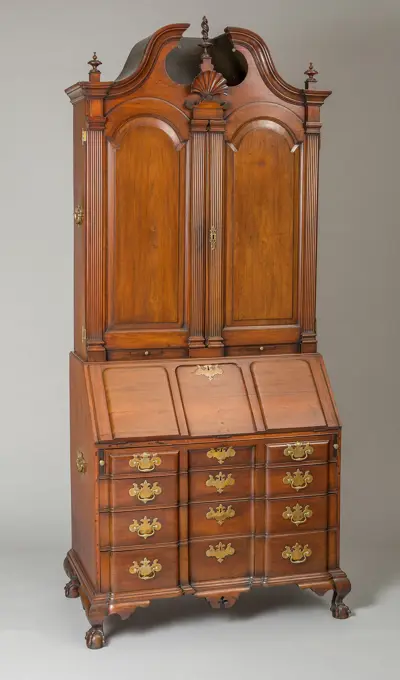
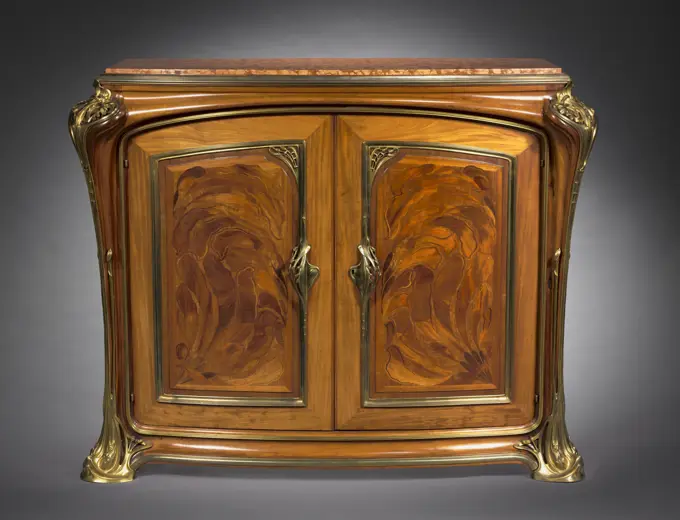
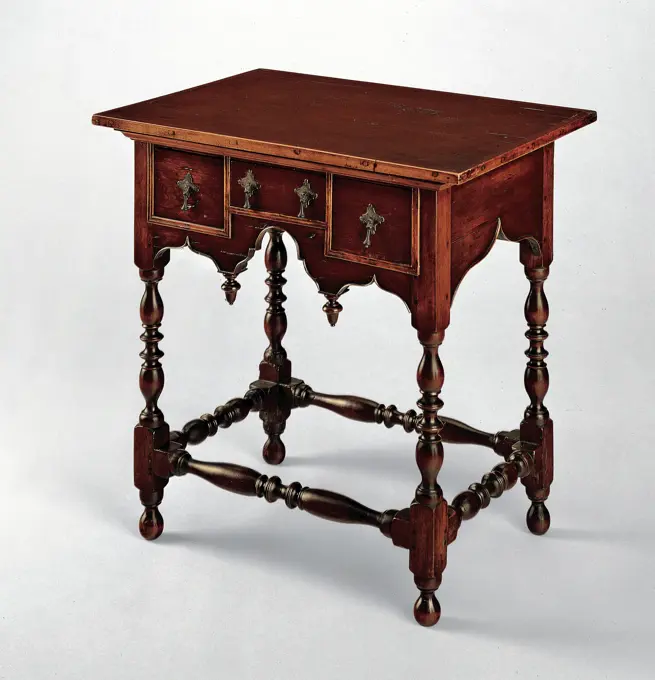
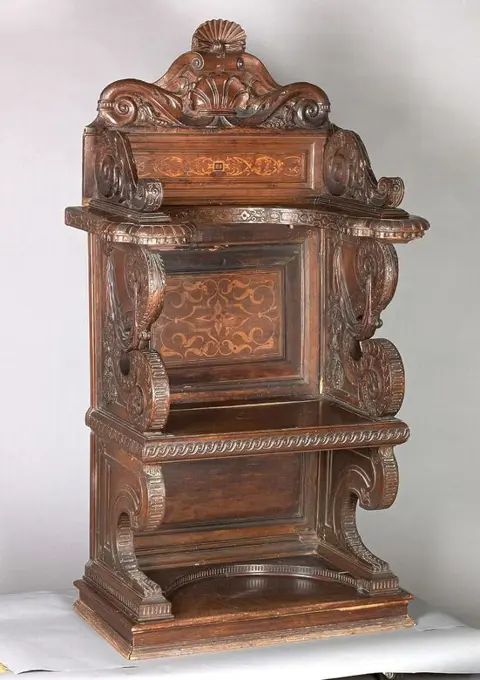
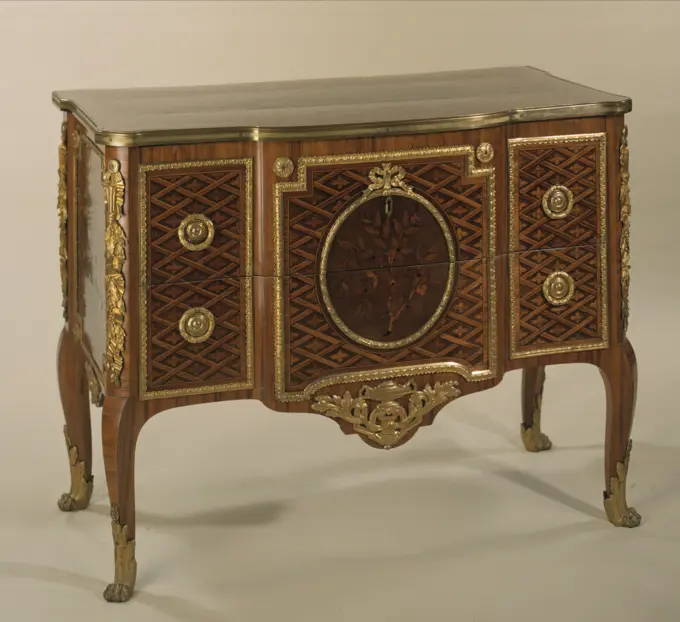
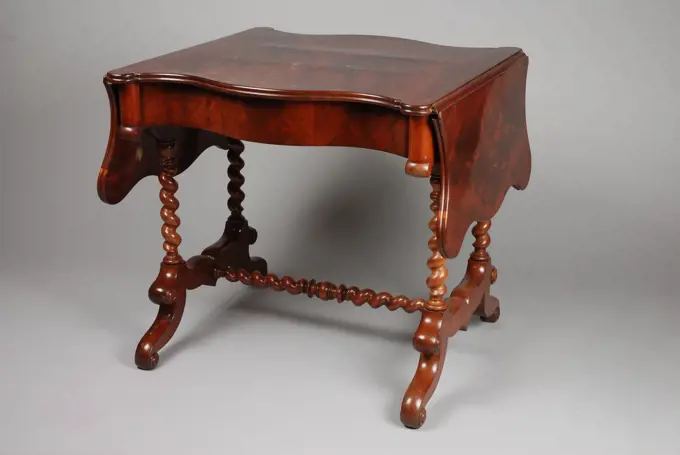
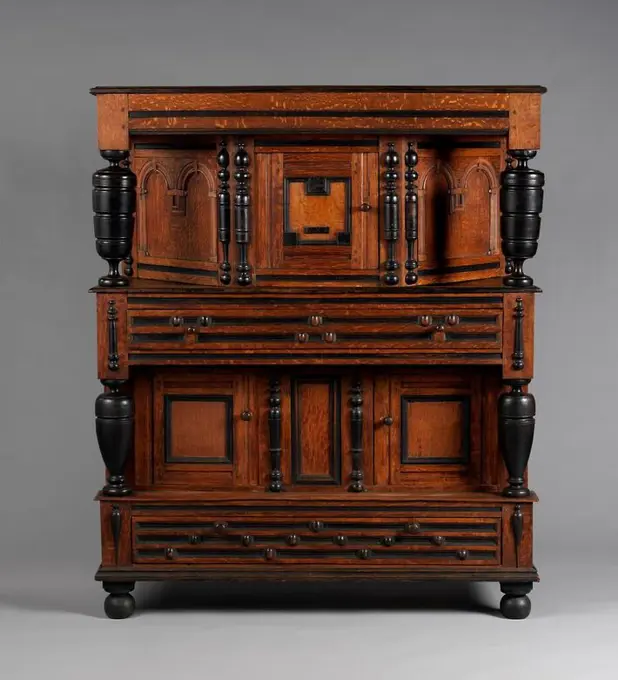
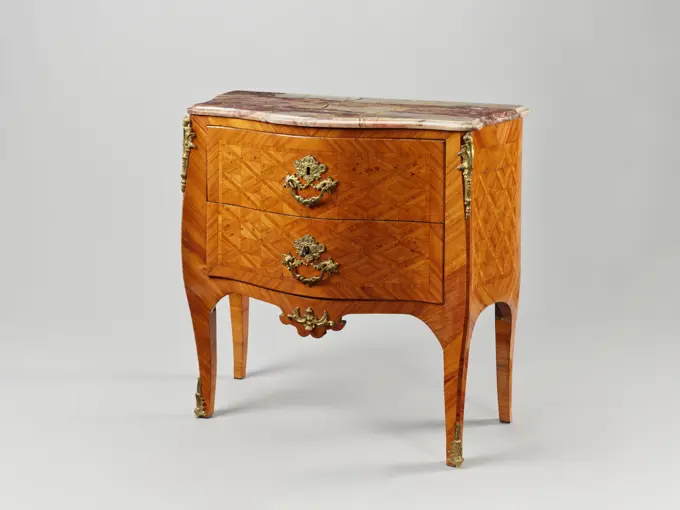
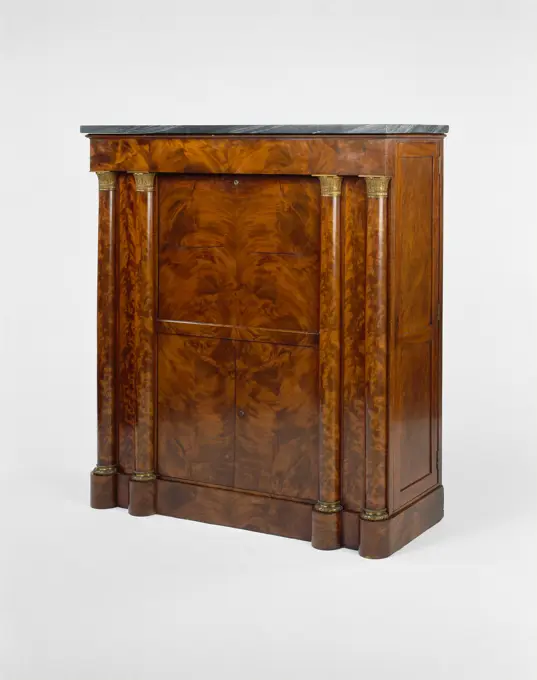
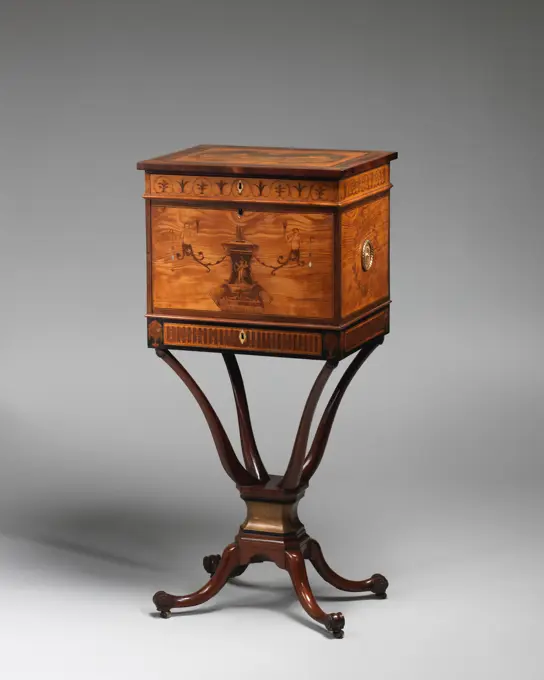
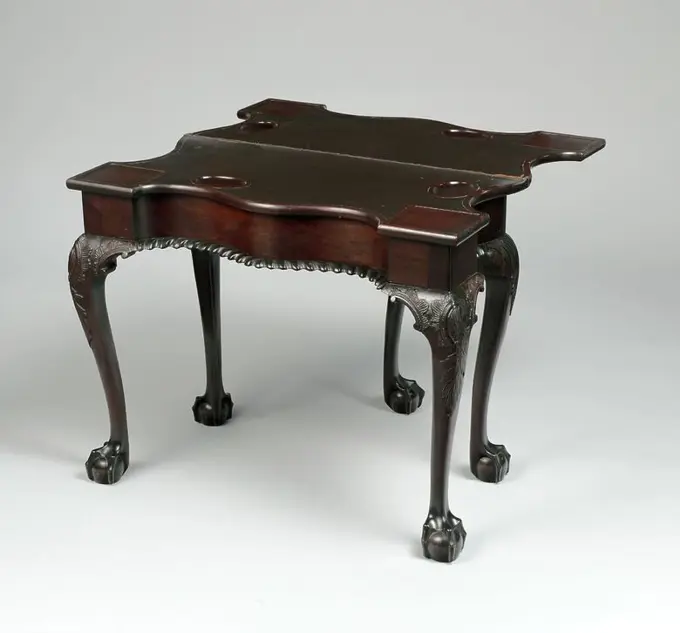
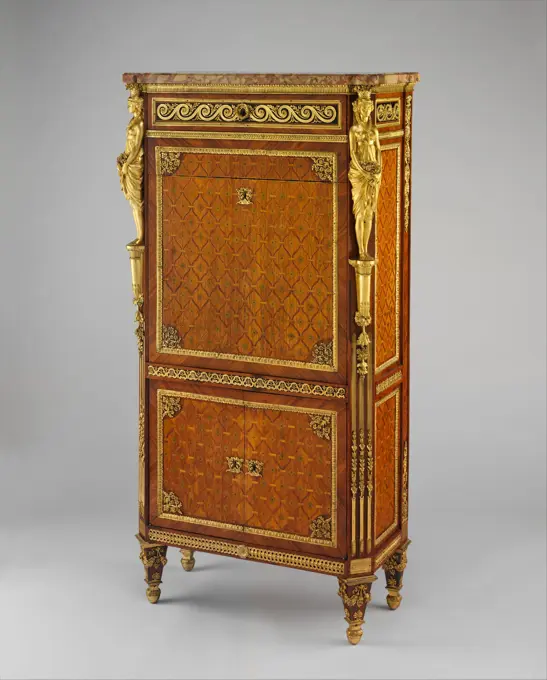
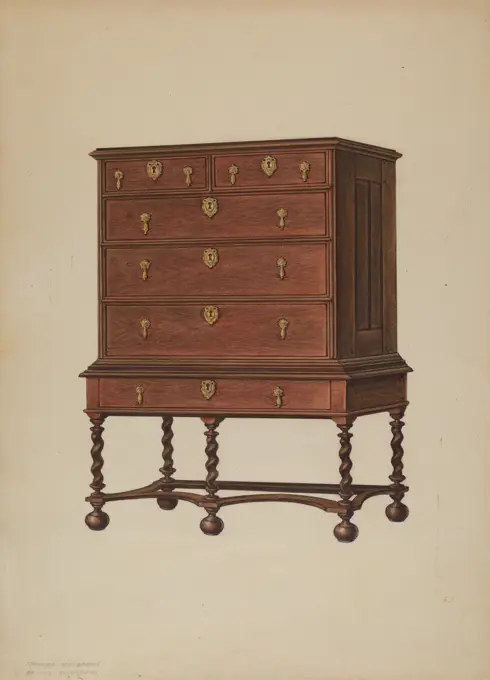
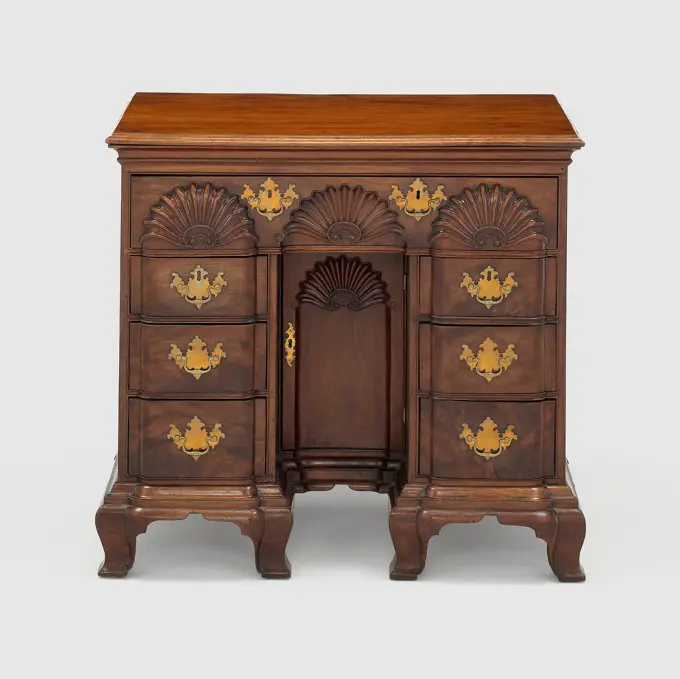
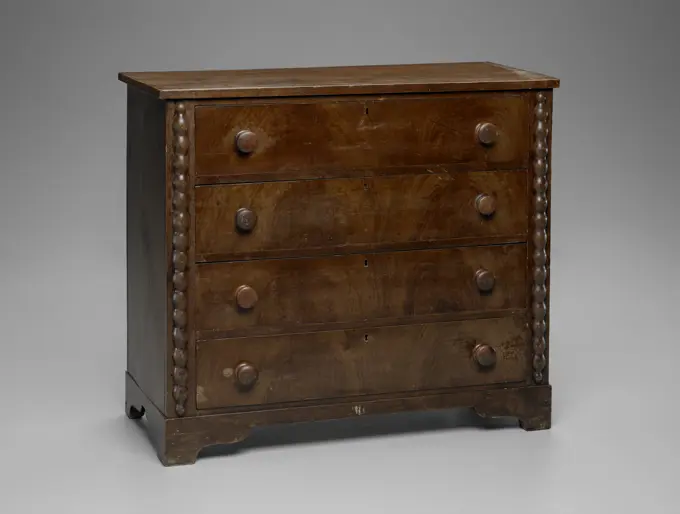
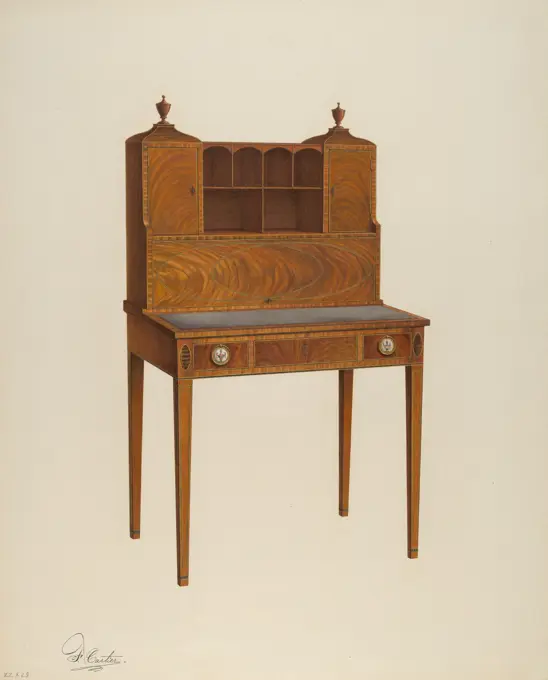
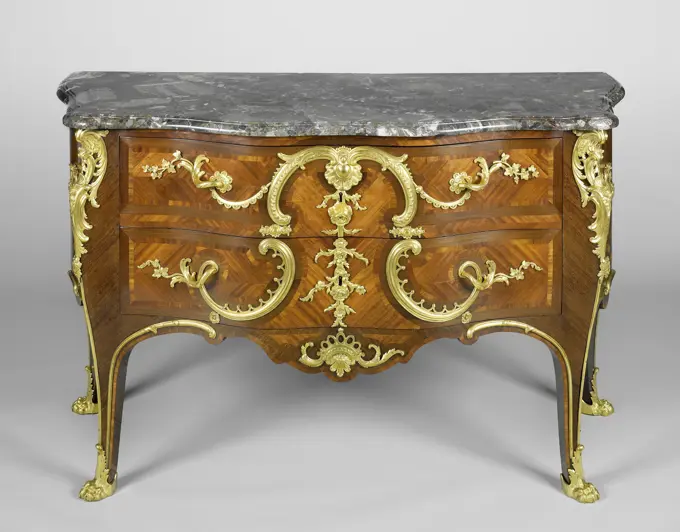
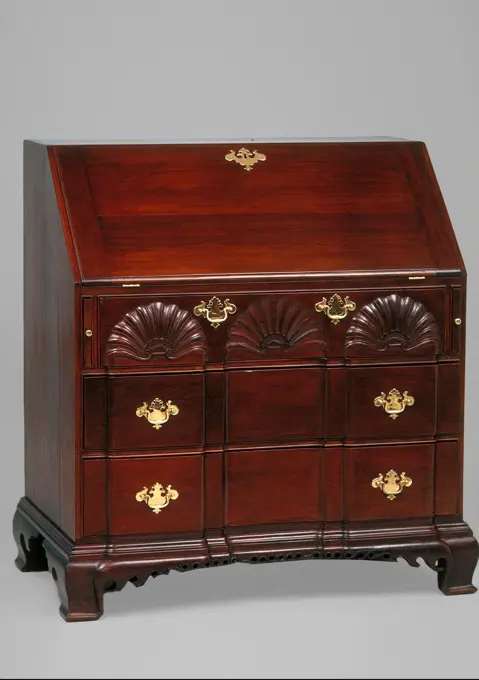
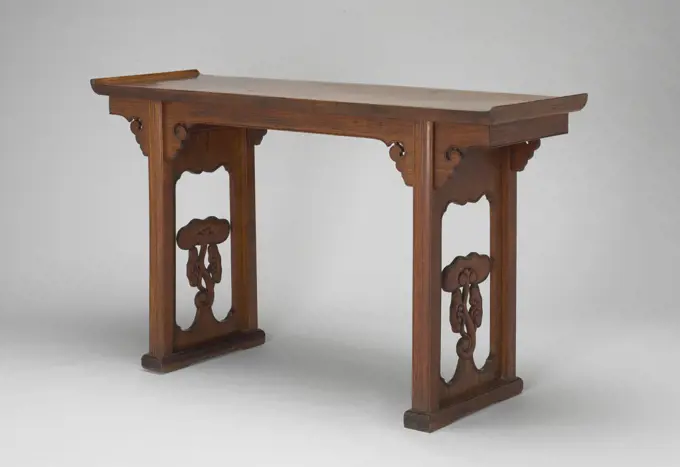
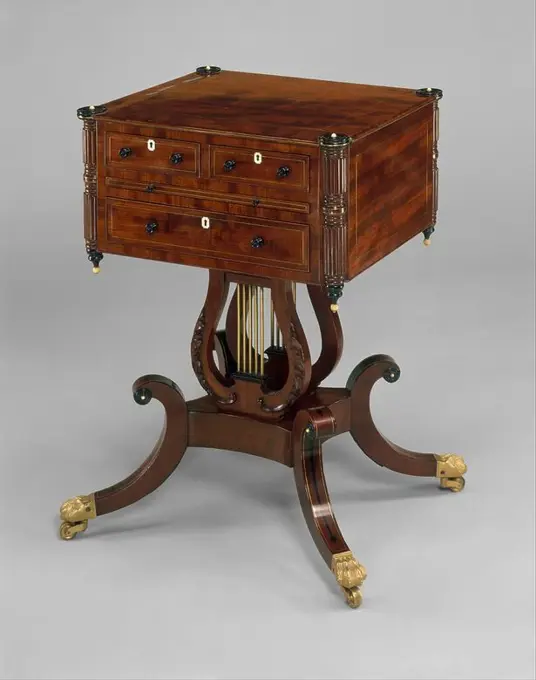
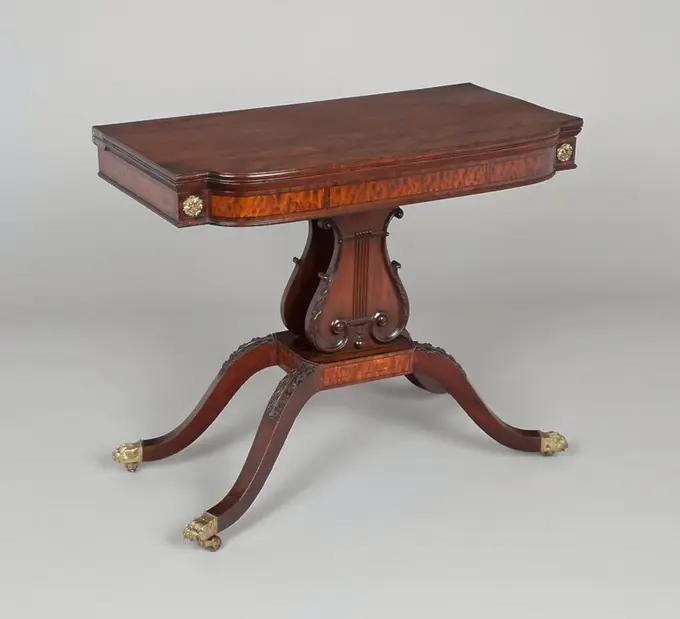
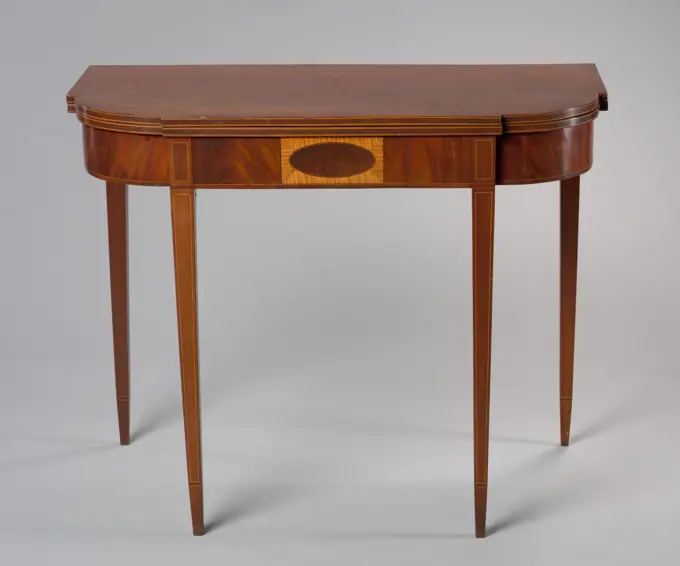
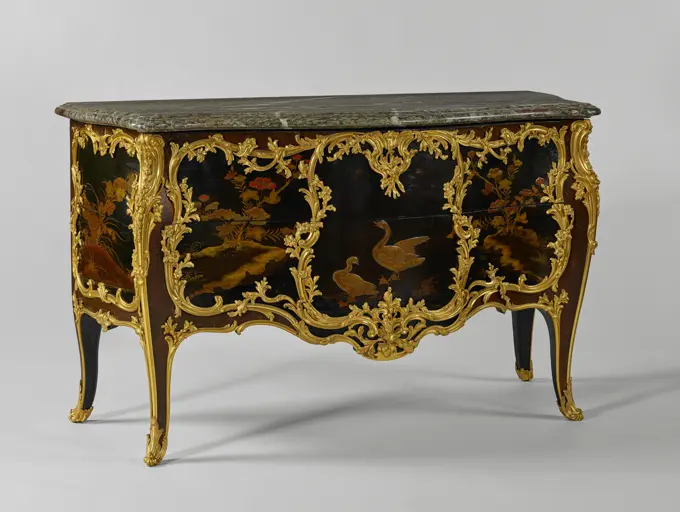
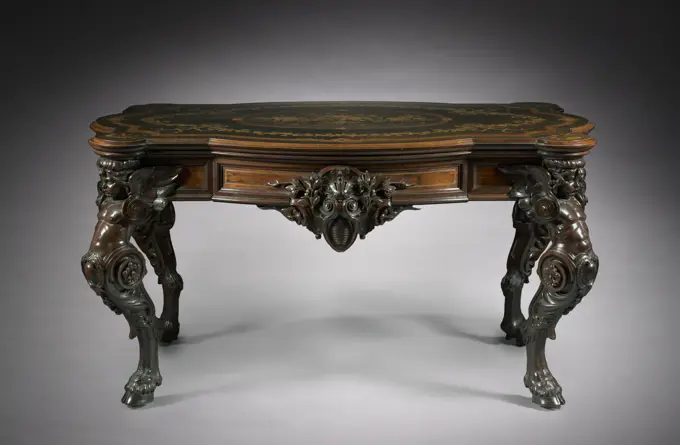
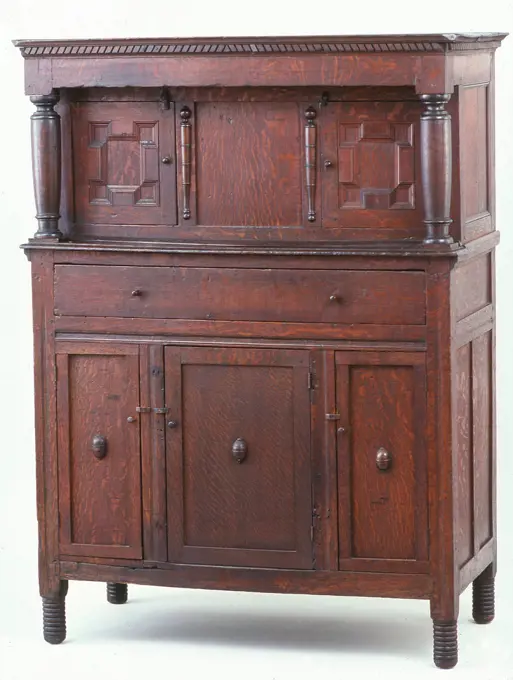
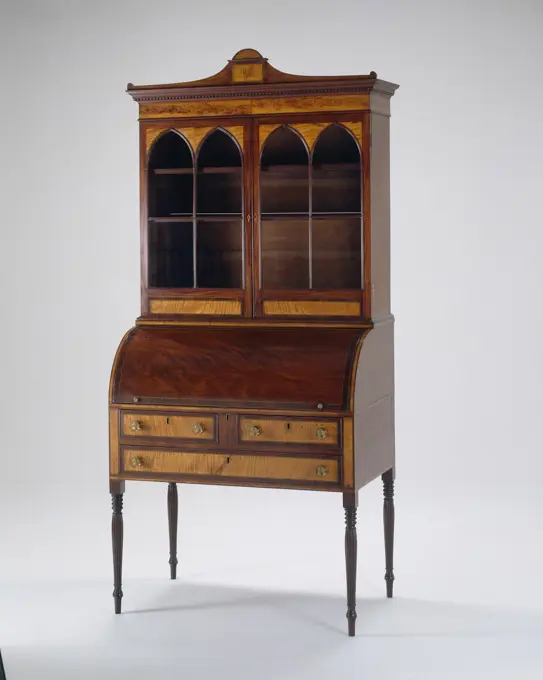
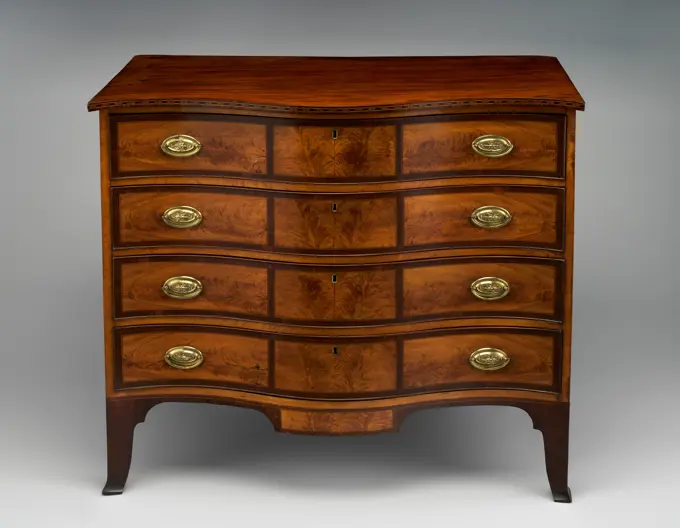
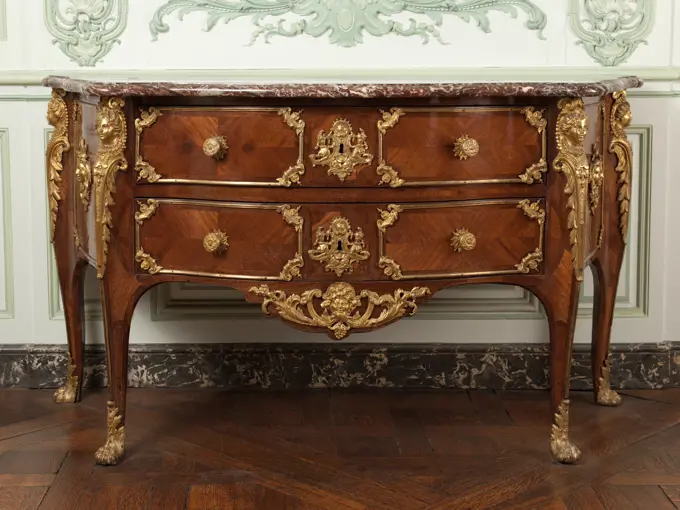
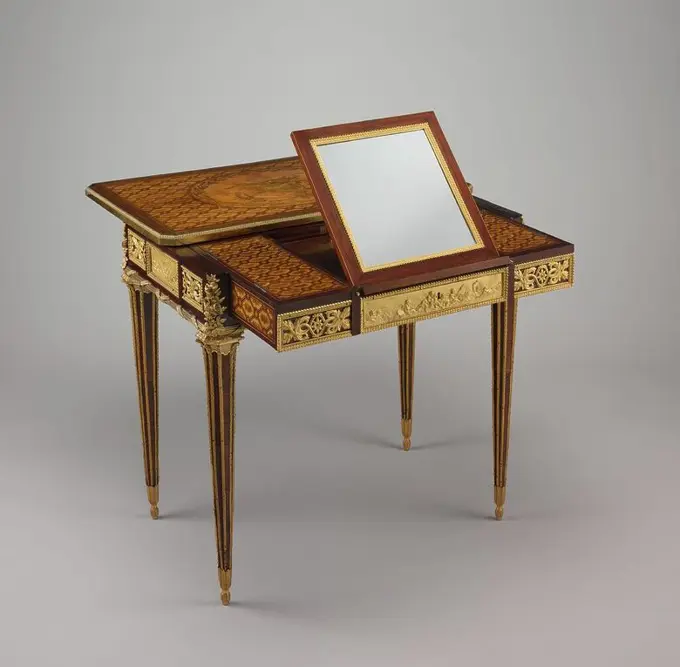
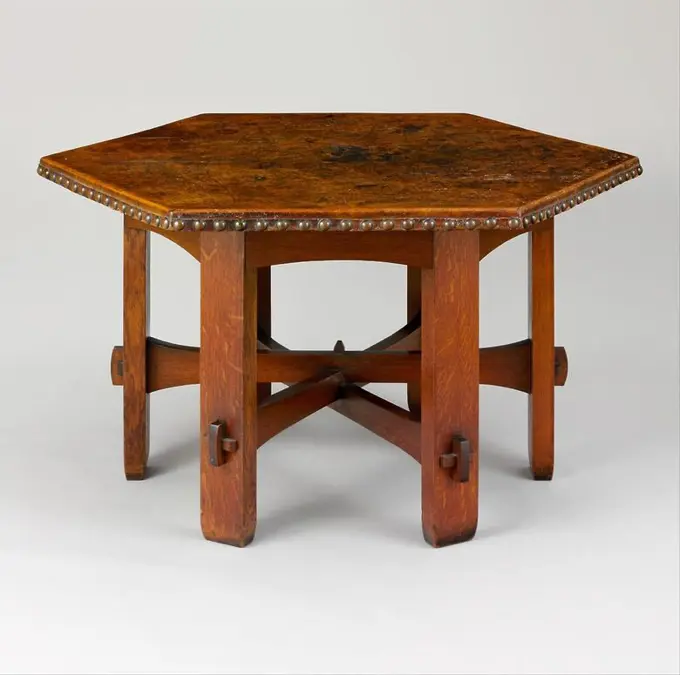
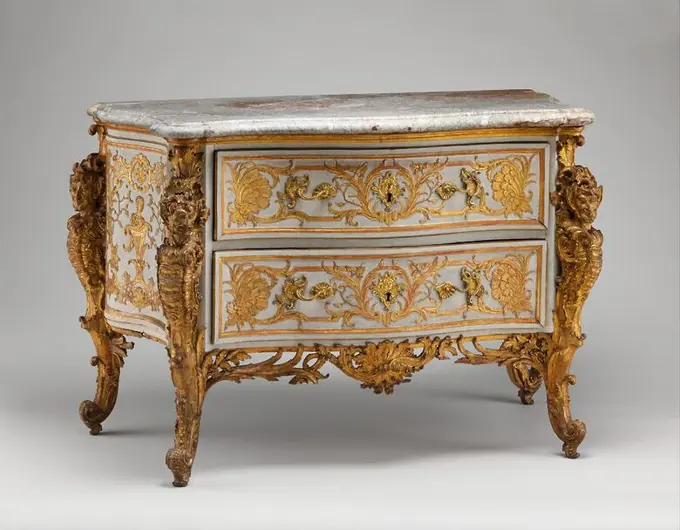
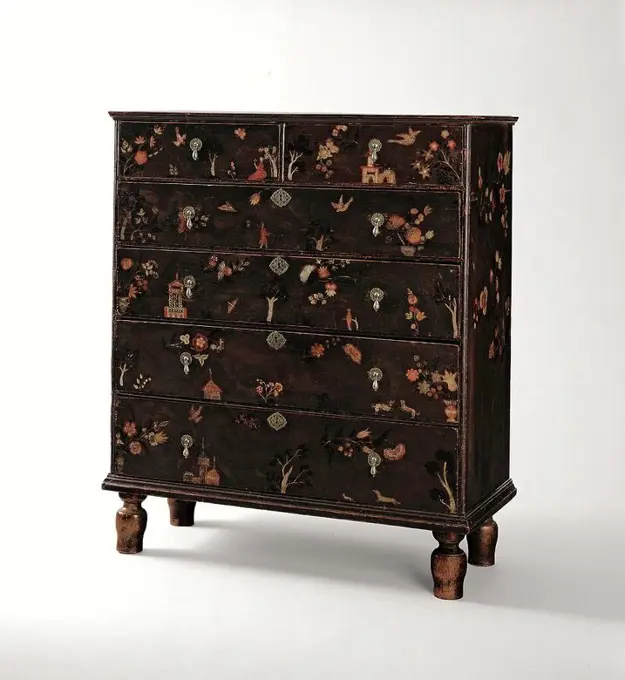
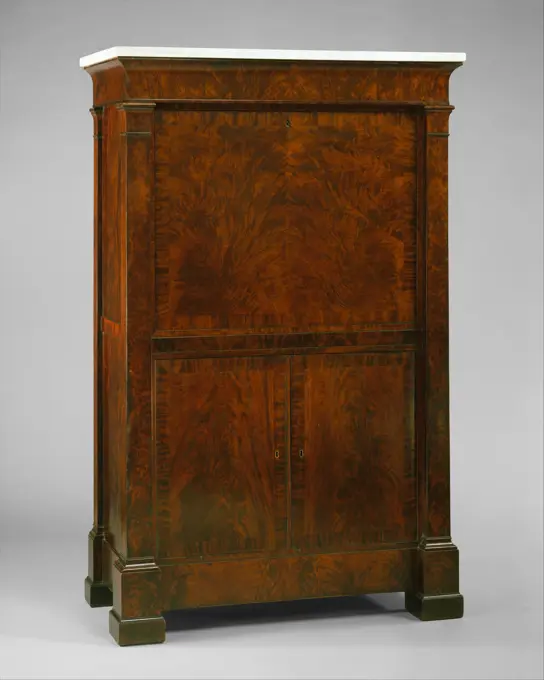
Secrétaire à abattant 1835-47 Attributed to the Workshop of Duncan Phyfe Scottish The rippling figure of mahogany veneers sheaths the Classically inspired columnar supports and architectonic mass of this secrétaire à abattant, or "French secretary" according to the 1834 New York cabinetmakers price book. In the 1830s and 40s, the Phyfe workshop embraced the revival of Grecian designs and use of flashy veneering techniques popularized by their French counterparts. The Phyfe workshop produced very few secrétaires but may have based this form on number 368 of volume one (1813-1815) in Pierre de La Mésangères Collection de Meubles et Objets de Goût (1820-1831). The secrétaire employs sophisticated hardware such as spring-locked drawers for the safekeeping of valuables and a drop-fron with a weighted iron balance hinge.. Secrétaire à abattant 7367Cabinet, c. 1910. Louis Majorelle (French, 1859-1926). Wood marquetry with metal mounts; overall: 130.8 x 162.5 x 58.4 cm (51 1/2 x 64 x 23 in.).Pa. German Chest. Dated: 1939. Dimensions: overall: 37.9 x 48 cm (14 15/16 x 18 7/8 in.) Original IAD Object: 29 1/2" high; 22" wide; 50" long. Medium: watercolor and graphite on paper. Museum: National Gallery of Art, Washington DC. Author: Carl Strehlau.Tropical wood cabinet with in doors Spitsovaal van Ebony and above doors fronton with vase and lauwerslinger, anonymous, 1800 - 1810 Tropical wood cabinet (Sono Keling) Inlaid with ebony, with seizure of silver. The rectangular furniture is divided into a lower and upper cabinet. The base cabinet has two duals, treated as two x three drawers, separated by a middle style, and angle -placed corner styles on conical, rejuvenating legs. The upper cabinet has two doors behind which planks. The right door is closed by the middle style. Both doors have inlaid a deepened panel with a rush -hour loop in Ebony. Corinthian pilasters placed on the two front corners of the upper cupboard. The cabinet is crowned by a pediment, broken in the middle by a vase on a pedestal on which a Lauwerslinger depends. Final plates and tractors of silver. Indonesia ebony (wood). silver (metal). wood (plant material) Tropical wood cabinet (Sono Keling) Inlaid with ebony, with seizure of silver. The rectangular furnCardTableSideboard wardrobe;  1740-1760 (1740-00-00-1760-00-00);. Around 1650, Antwerp was the leading centre of production for cabinets. They were made in large numbers and exported to many European countries. In general, they were richly and strikingly ornamented. This cabinet is notable for its simplicity. It is almost entirely veneered with expensive tortoiseshell and inlaid with decorative lines of bone. It may have been intended for the Paris market.Dressing Table 1700-1730 American. Dressing Table 3421KastChoir chair. Culture: Italian, Tuscany (Florence). Dimensions: H. 169 cm, W. 98.5 cm, D. 52.4 cm. Date: early 16th century (partly, and later). Museum: Metropolitan Museum of Art, New York, USA.Martin Carlin. "Building convenient, with floral motif in medallion against a background of trellis, Louis XVI period (overview on a clear background). Bois, Bronze. Paris, Cognacq-Jay museum. 25924-4 Bronze, convenient, medallion, furniture, floral motif, woodMahogany neo-Baroque canapé table, hanging table table furniture interior design mahogany oak wood, Drawer-pivoted legs base of solid mahogany top and oak drawer veneered with mahogany fully polished neo baroque. Cabinet glued with rosewood on oak core, resting on ball legs. On, in the corners diagonally placed, crushing with cushions are half columns and detached columns; The capitals with cups and leafwork decorated. The front of the head frame is glued at the front with floral motifs and with two birds as a center piece. On the profile above Leeuwenmaskers with Cherubs. The cornice has a cutter decorative piece in the middle. At the bottom of a wide drawer, shared by crushing in two.WorktableFolding table. Culture: British. Dimensions: Overall: 31 1/2 × 34 × 17 1/2 in. (80 × 86.4 × 44.5 cm). Date: ca. 1600. Museum: Metropolitan Museum of Art, New York, USA.Furniture. Mahogany game table, resting on four S-shaped curved legs, ending in a claw and globe. At the top are the legs decorated with stabbed leaf motifs. The leaf showing a border with braided bracelet motif is foldable; A leg is rotatable to support for the leaf. The leaf is covered with modern green sheet and on each of the four corners of square shelf.Card Table c 1815 New York. Trained as a cabinet-maker in Paris, Charles-HonorÈ Lannuier arrived in New York in 1803 at the age of twenty-four. His older brother was already well established as the owner of a successful confectionary shop on Broadway and from there the young furniture maker first advertised his services to all potential clients who desired furniture in the ìlatest French fashion.î Early-nineteenth-century America was much enamored with French taste, and Lannuier successfully catered to his upscale clientele, tempering his designs to suit their preference even while he retained a distinctive French flair. One of a group of similar card tables, this example shares many of their decorative and design elements, including a winged caryatid central support, a Lannuier trademark.. Mahogany with rosewood veneer, giltwood, brass and ebony inlay, ormolu . Charles-Honoré LannuierHigh chest of drawers American 1700-1730 The striking maple burl veneers that create a pattern of arches draw immediate attention to the upper front of this high chest. A burl is a dome-shaped growth on the trunk of a tree that is sliced though to make veneer.Charles Squires, Chest of Drawers, c 1938 Chest of DrawersWall table with marble leaves and legs in the form of winged Caratives with predator legs, E. Muller, c. 1810 Mahoniehout wall table with white marble leaves and gilded bronze batter. The leaf is supported by sculpted and polychromed winged caratives with naturalically displayed predator legs. The Hague mahogany (wood). pine (wood). brass (alloy). gilding (material). paint (coating). marble (rock). looking glasses. amalgam gilding Mahoniehout wall table with white marble leaves and gilded bronze batter. The leaf is supported by sculpted and polychromed winged caratives with naturalically displayed predator legs. The Hague mahogany (wood). pine (wood). brass (alloy). gilding (material). paint (coating). marble (rock). looking glasses. amalgam gildingTable. Table of oak on four legs connected by a double y-shaped cross, which are vase-shaped. The cross has exits. The lower houses are unprocessed, the upper carry a chain ornament. The cut-out support pieces show C-Volutes. The rules are decorated with shalmen. The furniture has two pull leaves.Cupboard. Culture: American. Dimensions: 58 1/4 x 49 1/2 x 20 3/4 in. (148 x 125.7 x 52.7 cm). Date: 1683.Large two-stage oak cupboards were the most elaborate pieces of furniture in seventeenth-century New England homes. They were used for storing textiles, silver, and other valued objects. Their scale and ornamental richness bespoke the prosperity and status of their owners. This superlative example was made by an unidentified shop in northern Essex County, noted for its complex joinery and decoration, featuring ebonized turnings that freely interpret classical columns and channel-molded drawer fronts with applied bosses arranged in rhythmic linear patterns across their length. Museum: Metropolitan Museum of Art, New York, USA.SideboardDresser;  2. PO. 19th century (1850-00-00-1900-00-00);Plate, Anonymous, 1785 - 1800 Mahoniehout table on square, to lower rejuvenating legs with semi-filled cannelures. Under the leaf, which has a raised edge on the rear and sides and is profiled on the front to the front, there is a drawer with a copper tensile ring on the left. The legs have a copper list under the houses. France wood (plant material). mahogany (wood). elm (wood). oak (wood). copper (metal) Mahoniehout table on square, to lower rejuvenating legs with semi-filled cannelures. Under the leaf, which has a raised edge on the rear and sides and is profiled on the front to the front, there is a drawer with a copper tensile ring on the left. The legs have a copper list under the houses. France wood (plant material). mahogany (wood). elm (wood). oak (wood). copper (metal)Secrétaire à abattant c 1820-1825 Boston. This architecturally inspired secretary was originally owned by David Sears (1787ñ1871), a prominent merchant and landowner, whose house, designed by Alexander Parris (1780ñ1852), still stands at 42 Beacon Street, Boston, as the Somerset Club. An 1822 perspective drawing of the home shows a double-columned portico with composite capitals similar to those of the secrÈtaire, epitomizing the American interpretation of the late French Empire style. The simple form of the exterior highlights the luxuriousness of its materials and also belies a complicated interior of intricate drawers and shelves of various sizes.. Mahogany, mahogany veneer, pine, black marble, ormolu, and brass . Artist unknownHigh chest ofdrawers. Maker, attributed to: Whitfield Dunlap, AmericanFront of the grade wardrobe;  1762 (1762-00-00-1762-00-00);Writing cabinet on a stand ca. 1785 British. Writing cabinet on a stand. British. ca. 1785. Mahogany, satinwood, ebony, various other woods. Woodwork-FurnitureCard Table. Culture: American. Dimensions: 27 7/8 x 35 x 17 3/4 in. (70.8 x 88.9 x 45.1 cm). Date: 1760-90.The most sophisticated New York Chippendale-style card tables have serpentine sides, shaped corners, gadrooned skirts, and five cabriole legs ending in claw-and-ball feet. The square corners supported candlesticks, and the four oval dishes held gaming counters. Museum: Metropolitan Museum of Art, New York, USA.Drop-front secretary (secrétaire à abattant or secrétaire en armoire) 1786-87 Guillaume Benneman This secretary was made for the Cabinet Intérieur of Louis XVI at the Palais de Compiègne. The cabinetwork was executed under the supervision of Guillaume Beneman (master 1785). The gilt-bronze mounts were modeled by Louis-Simon Boizot (1743-1809), Martin, and Michaud; cast by Forestier; chased by Pierre-Philippe Thomire (1751-1843), Bardier, and Tournay, among others; and gilded by Galle. Work on the secretary was coordinated by Jean Hauré, entrepreneur des Meubles de la Couronne (active 1774-96). The "eyes" of the marquetry were originally set with gilt-bronze rosettes. Listen to experts illuminate this artwork's story Listen Play or pause #2268. Drop-front Secretary (Secrétaire à abattant or secrétaire en armoire) Supported by Bloomberg Philanthropies We're sorry, the transcript for this audio track is not available at this time. We are working to make it available as soon as possible.. Isadore Goldberg and Ernest Busenbark, Highboy, c 1940 HighboyBureau Table c 1770 Newport. This elegant piece epitomizes the Late Baroque style that flourished in Newport, Rhode Island. It is one of six bureaus that can be attributed to the celebrated cabinetmaker John Townsend on the basis of similar construction and design features in labeled pieces by the maker. For example, the carved shells have central C-scrolls featuring petals and crosshatched baskets, all motifs that are indicative of Townsendís work. In addition, the top is integrated into the case by cove-and-bead molding, with smaller cavetto molding underneath. The blocking of the upper drawer continues through the side drawers and into the graceful double scroll of the bracket feet, creating an unbroken visual plane that unifies the design elements.Kept in bedchambers, bureau tables most likely functioned as dressing tables. They were particularly popular among the Quaker citizens of Newport, who appreciated the wide array of storage possibilities they offered. According to oral traChest table. unknown, creatorFour-drawerChestWardrobe. unknown, joinerSmall table. unknown, creatorToilet table consisting of a table -shaped frame covered with red velor and an attachment with mirror, anonymous, c. 1890 - c. 1900 Toilet table made of walnut and bird eye -drainage consisting of a chassis and an attachment. The table rests on four curved and profiled legs that end up at the top in floral motifs. The table top has profiled sides and ears and is covered with red velvet. A smaller leaf is installed under the table top, the support pieces of which are sculpted in the form of branches. The space between the two sheets is divided into three. In the middle there is a drawer that contains imposed whipping motifs with two open spaces on either side. The loose attachment consists of a mirror -crowned flower -crowned flower with claw pieces with an open space underneath in the middle that is flanked by two drawers including open compartments. The attachment contains on Vogeloogesdoorn raised branch motifs of walnut. France wood (plant material). walnut (hardwood). maple (wood).Buffet, glued with several types of wood and ashesle paint panels on the doors with landscape with houses., Anonymous, 1775 - 1800 Oak blind buffet glued with multiple types of wood and paint panels. The conical legs placed overhoek are tied up from above. Within a square framed panel, the doors wear a hen -lobe paint panel with a landscape with houses, on a bow with cord and brushes. The top line contains two drawers under a festival, decorated with multiple edges and batter, between which a paint panel with a flower branch. Paintwork and piping on the corner styles placed overhoek; Tires and edges aside and on the leaf. Northern NetherlandsNetherlands wood (plant material). oak (wood). maple (wood). rosewood (wood). satinwood (wood). mahogany (wood). purpleheart (wood). copper (metal). bronze (metal). lacquer (coating). tin (metal). English pewter lacquering / gilding Oak blind buffet glued with multiple types of wood and paint panels. The conical legs placed overhoek are tied up froLinen Press. Dated: 1935/1942. Dimensions: overall: 35.7 x 24.2 cm (14 1/16 x 9 1/2 in.) Original IAD Object: 49"wide, 22"deep, 6'7"high.. Medium: watercolor, colored pencil and graphite on paperboard. Museum: National Gallery of Art, Washington DC. Author: Dorothea A. Farrington.Chest of Drawers. Dated: 1936. Dimensions: overall: 30.4 x 21.5 cm (11 15/16 x 8 7/16 in.) Original IAD Object: 36"high; 26 1/2"wide; 21"deep. Medium: watercolor, colored pencil, pen and ink, and some heightening on paperboard. Museum: National Gallery of Art, Washington DC. Author: Thomas J. Eliot.Commode à vantaux ca. 1775-79 with later alterations David Roentgen German This important Roentgen commode, as well as another example in the Victoria and Albert Museum, London (W 51-1948), both have an illustrious provenance. Their histories may have begun in the royal apartments at Versailles. During the nineteenth century this example now at the Metropolitan Museum belonged to Baron Mayer de Rothschild, a member of the distinguished banking and art-collecting family, who kept it at Mentmore Towers, his palatial and splendidly appointed residence in Buckinghamshire. In 1964 it went under the hammer in London and fetched the highest price ever paid at auction for a piece of furniture, attracting tremendous media attention.1The New York and London commodes are related closely to each other and to the latter’s nearly identical counterpart at the Bayerisches Nationalmuseum in Munich, with which it once formed a pair in the collection of the grand duke of Sachsen-Weimar.2 All three piPier Table. Thomas Emmons; American, active 1812-1825; George Archbald; American, active 1813-1843; Boston, Massachusetts. Date: 1813-1825. Dimensions: 81.9 × 88.3 × 39.7 cm (32 1/4 × 34 3/4 × 15 5/8 in.). Mahogany, mahogany veneer, chestnut, pine, black marble, ormolu, and brass. Origin: Boston. Museum: The Chicago Art Institute, Chicago, USA.Table. Dated: c. 1936. Dimensions: overall: 28.7 x 37.4 cm (11 5/16 x 14 3/4 in.) Original IAD Object: 58 3/4"long; 28"high; 34 1/4"wide. Medium: watercolor, gouache, colored pencil, and graphite on paper. Museum: National Gallery of Art, Washington DC. Author: Henry Moore.High chest 1748 Christopher Townsend. High chest. American. 1748. Mahogany, chestnut, and white pine. Made in Newport, Rhode Island, United StatesAnonymous. "Portfolio secretary". Building: Oak. Placing: rosewood and holly. 1835. Paris, Carnavalet museum. 99383-20 Furniture, furnitureFerdinand Cartier, Desk, 1940 DeskCommode. Culture: British. Dimensions: Overall: 38 × 54 × 28 in. (96.5 × 137.2 × 71.1 cm). Maker: Attributed to John Mayhew (British, 1736-1811); Attributed to William Ince (British, active ca. 1758/59-1794, died 1804). Date: ca. 1770-80.The gilt-bronze rams have been attributed to Matthew Boulton, the one English manufacturer of decorative hardware to escape the anonymity of his colleagues, who lacked guild records to perpetuate their names. Boulton, with his partner John Fothergill, was responsible for an assembly-line production, 1768-1782, covering categories from buttons to vases, on a scale so comprehensive that Josiah Wedgwood deemed him "the most complete manufacturer in England of metal.". Museum: Metropolitan Museum of Art, New York, USA.Isadore Goldberg, Drop leaf Table, c 1938 Drop-leaf TableCommode, Charles Cressent (attributed to), c. 1745 - c. 1750 Commode decorated with marquetery of roson and mahogany on oak core and with gilded bronze. The S-shaped corner styles placed overhoeks turn into the legs. The double vertically curved front has two drawers and fittings, consisting of a centrally hanging flower festival, above which a central motif from which aimed C-Voluten emerges, with counterparts on the lower drawer. The vaulted sides with door and batter carry a storage space with board. Gray marble leaf. Paris wood (plant material). oak (wood). purpleheart (wood). satinwood (wood). rosewood (wood). mahogany (wood). kingwood (wood). bronze (metal). gilding (material). marble (rock) gilding Commode decorated with marquetery of roson and mahogany on oak core and with gilded bronze. The S-shaped corner styles placed overhoeks turn into the legs. The double vertically curved front has two drawers and fittings, consisting of a centrally hanging flower festival, above which aOval Table with FallingLeavesDeskTwo toilet cases, c. 1685 - c. 1690 Suitcase on chassis with sculptural, antique and renaissance examples remembering form, decoration with premiere partie boule-marqueterie of copper and turtle and gilded bronze attached. The chassis was renewed in the 19th century. Part of a few. Paris Blindhout chassis: Maple (Wood). Blindhout suitcase: softwood. Blindhout suitcase: Oak (Wood). Blindhout drawer: Oak (Wood). Profiles of the upper cupboard: Ebony (Wood). veneer: Pear (Wood). veneer:. veneer: Brass (Alloy). veneer: tin (metal). Batter: Bronze (Metal). Screws: Iron (Metal). Spijkers: Brass (Alloy). Batter: Gilding (Material) gilding Suitcase on chassis with sculptural, antique and renaissance examples remembering form, decoration with premiere partie boule-marqueterie of copper and turtle and gilded bronze attached. The chassis was renewed in the 19th century. Part of a few. Paris Blindhout chassis: Maple (Wood). Blindhout suitcase: softwood. Blindhout suitcase: Oak (Wood). Blindhout drTable ca. 1740 American. Table. American. ca. 1740. Walnut, pine. Made in Pennsylvania, United StatesIsidore Sovensky, Lowboy, 1938 LowboyHigh chair, Anonymous, 1750 - 1800 High chair in miniature on four wheels of green-gray painted oak, on which in white decorations are applied in Louis-XV style. The high three -sided back has a carved upper sill. The seat and play shelf are removable. Northern Netherlands wood (plant material). oak (wood) High chair in miniature on four wheels of green-gray painted oak, on which in white decorations are applied in Louis-XV style. The high three -sided back has a carved upper sill. The seat and play shelf are removable. Northern Netherlands wood (plant material). oak (wood)SideTable, 17th-18thcentury, Wood: top, hua-mu; legs; Huamu and huanghuali woods, 32 1/2 × 54 1/4 × 17 3/8 in. (82.6 × 137.8 × 44.13cm), Often called altar tables, rectangular tables such as this served as side tables in a room.  When positioned in the center of the back wall of a main hall, they dominated the room.  Objects could be placed on them and scrolls hung above them.  They thus served both for display and support.  Objects, whether altar furniture or a scholar’s rock, remained on the surface to be viewed and contemplated.  The everted flanges give further definition and presence to the table while at the same time concealing the grain ends of the top board.  In the side panels are carved upright lingzhi, the fungus of immortality, set within an open arched frame.  The fungus, silhouetted dramatically against the open space, helps to emphasize the length of thetable. , China, Chinese, Qing dynasty(1644-1911), FurnitureGarden bench in Marot style, Anonymous, c. 1700 - c. 1750 Bank of stained pine. The narrow seat rests on cheeks and has a scalloped decorative piece with broken volutes under the rule, in the middle a symmetrical leaf motif with branches and on the corners of brushes. The high back has a midfield, under and above, that hunted hunting trophes, hung on ribbons, shown, above which an alt'nrums, tied together from below. Put on both sides. To crown acanthus leaves in the midst of two broken volutes. furniture worker: Netherlandsdesigner: The Hague wood (plant material). pine (wood)   More and mountain Bank of stained pine. The narrow seat rests on cheeks and has a scalloped decorative piece with broken volutes under the rule, in the middle a symmetrical leaf motif with branches and on the corners of brushes. The high back has a midfield, under and above, that hunted hunting trophes, hung on ribbons, shown, above which an alt'nrums, tied together from below. Put on both sides. To crown acanWork table. Culture: American. Dimensions: 28 5/8 x 22 1/4 x 17 7/8 in. (72.7 x 56.5 x 45.4 cm). Maker: Attributed to Lemuel Churchill (active ca. 1805-28); Possibly Thomas Whitman (active ca. 1809-27). Date: 1810-15.Among the most elegant and sophisticated pieces of furniture produced in Boston in the early nineteenth century, this combined writing and sewing table bears the chalk inscription "Churchill"--presumably the signature of the Boston cabinetmaker Lemuel Churchill. Decoration similar to the beautifully rendered acanthus carving on the lyre is sometimes executed in gold leaf for a trompe-l'oeil effect on other Boston tables. Museum: Metropolitan Museum of Art, New York, USA.Arthur Johnson, Chest of Drawers, c 1938 Chest of DrawersTe Poel, Oak miniature kitchen table, table furniture miniature toy relaxant model wood oak brass, molded Rectangular tray with drawer four rejuvenated legs and brass knob on the drawer 1868 Sibilla van Embden play home kitchenCard Table. American; Boston, Massachusetts. Date: 1810-1820. Dimensions: 74.9 × 89.5 × 46.7 cm (29 1/2 × 35 1/4 × 18 3/8 in.). Mahogany, bird's eye maple, and leather. Origin: Boston. Museum: The Chicago Art Institute, Chicago, USA.Table, early 1800s. America, Sheraton Type, early 19th century. Mahogany with inlays of various woods; overall: 75.3 x 88.9 x 42.9 cm (29 5/8 x 35 x 16 7/8 in.).Description cabinet. With this writing cabinet, John Gottlieb Fiedler did not just shake his masterpiece to obtain the master dignity, but at the same time an extraordinary furniture of Berlin's early classicism. The surface of the three-part attachment furniture is veneered with marketeries whose color is achieved by various, partly colored wooden types. The center of the desk flap adorns a laurel wreath medallion with the profile portrait of Friedrich II. From Prussia (1712-1786), which is shown as victorious in accordance with its antique model Caesar (100-44 BC). On the pages are idyllic shepherd scenes in the style of contemporary painting. The door wings and the commodity part adorn landscapes with ruins of antique temples.Wall table, Z.G. "Sun table" from tropical wood. Wall table, Z.G. "Sun table" from tropical wood. The furniture rests on two tugs, on the front flared into claw and ball, the rear part of above decorated with flour patterns built from half tubes, ending in Volutes. The legs are connected by a leaf with a corrugated front. Above the dense back wall, opened with a "sun opestive" consisting of rays around a semicircle with a round opening in the middle. This openwork decoration is supplemented with ingrangled motifs. The profiled top rests on curved consoles, decorated with half tubes.Commode. Attributed to Joseph Baumhauer (French, died 1772)Sideboard Table. Dated: 1940. Dimensions: overall: 38.1 x 50.7 cm (15 x 19 15/16 in.) Original IAD Object: none given. Medium: watercolor, colored pencil, and graphite on paperboard. Museum: National Gallery of Art, Washington DC. Author: Isidore Sovensky.Sideboard.  Maker: Alexander Roux, American, born France, 1813-1886Office decorated with marquetery of different types of wood. Bureau glued with multiple woods on an oak core. The paws set four baluster-shaped overhoeks are connected by an X-shaped bent cross and run over in the corner styles. There are three drawers to the left and right side; In the middle a backing box with door and tray. The light bent drawers, sides, door and corner styles show flower and leafwork in marquetery, or without vase; On the door with maskaron. The leaf is completely filled with grotesken.Center Table, c.1860. Gustave Herter Firm (American). Rosewood with marquetry of various woods, brass inlay and gilding; overall: 74.9 x 143.2 x 90.8 cm (29 1/2 x 56 3/8 x 35 3/4 in.).George V Vezolles, Shaker Cabinet, 1935 1942 Shaker CabinetCabinet, possibly Pierre Gole, c. 1645 - c. 1650Cupboard, Oak, cedar, pine, maple, English elm, 60 3/4 × 45 7/8 × 22 5/8 in. (154.3 × 116.5 × 57.5cm), ProbablyBritish, 17thcentury, FurnitureSmall writing table ca. 1780 British. Small writing table 204551Cylinder Desk and Bookcase c 1800-1810 Boston. Mahogany and white pine, with mahogany, birch, and maple veneers . Artist unknownStanley Mazur, Kitchen Table, 1938 Kitchen TableChest of Drawers (Commode), c. 1750. Jean-Pierre Latz (French, 1691-1754). Oak, tulipwood marquetry, gilt metal mounts, marble; overall: 88 x 156.5 x 69.9 cm (34 5/8 x 61 5/8 x 27 1/2 in.).Buffet cabinet of oak wood decorated with marqueterie with rolling cartouches, moresken, anonymous, 1583 Buffet cupboard made of oak wood decorated with marquetery with rolling cartouches, moresken, flower vines with cartouches and a block pattern. The lower part with two drawers and two flat arches, which meet in a console, carries the top with two doors, decorated with buildings within a rolling cartouche, and a middle compartment with flower vines around a cartouche with the year 1583. The two panels of the rear shot show cities and ruins. A Hermcaryatide and Atlant support the excellent hood. Cologne wood (plant material). oak (wood). rosewood (wood). satinwood (wood). walnut (hardwood) Buffet cupboard made of oak wood decorated with marquetery with rolling cartouches, moresken, flower vines with cartouches and a block pattern. The lower part with two drawers and two flat arches, which meet in a console, carries the top with two doors, decorated with buildings within a rolling cartBoxCommode. UnknownStolik. unknown, craftsmanChest of drawers 1795-1805 American New England cabinetmakers often used birch veneer as a less expensive substitute for imported satinwood. The crotch-veneer panels on the drawers of this chest were carefully book-matched. The drop-panel in the center of the base is characteristic of Portsmouth, New Hampshire-style case furniture in the Federal period.. Chest of drawers. American. 1795-1805. Mahogany, mahogany and birch veneers with yellow poplar, white pine. Made in Portsmouth, New Hampshire, United StatesJohn Hall, Block front Secretary (walnut), c 1940 Block-front Secretary (walnut)Chest of drawers. unknown, creatorShaker Sewing Table. Dated: 1935/1942. Dimensions: overall: 27.5 x 22.6 cm (10 13/16 x 8 7/8 in.) Original IAD Object: 27 1/2" high; 26" wide; 12" deep. Medium: watercolor and graphite on paper. Museum: National Gallery of Art, Washington DC. Author: Irving I. Smith.Pierre IV Migeon. Convenient . Oak, veneer, marble, around 1730. Paris, Carnavalet museum. 50572-12 Chene, gilding, marble, furniture, plating, chest of drawers, furnitureChest-with-drawer 1700-1730 American. Chest-with-drawer 2035Dressing Mirror c 1820 United States. Mahogany veneer and tulip poplar . Duncan PhyfeMechanical table. Culture: French, Paris. Dimensions: Overall: 28 1/2 × 30 3/4 × 19 in. (72.4 × 78.1 × 48.3 cm). Maker: Jean Henri Riesener (French, Gladbeck, North Rhine-Westphalia 1734-1806 Paris). Date: 1781.Described in an inventory of 1789 simply as a writing table, this wonderful piece offered its original owner, Marie-Antoinette, many more options than that. Made by Jean-Henri Riesener in 1781 for the queen's Grand Cabinet Intérieur at Versailles, the table is fitted with a mechanism that allows the top to slide back and, at the same time, the main drawer to move forward. The central compartment of the drawer encloses a velvetlined writing surface that can be ratcheted up to form a bookstand and reversed to show a mirror. The marquetry surface on top is richly embellished with a pattern of trelliswork enclosing rosettes frequently used by Riesener on furniture for Marie-Antoinette. The central medallion encloses a trophy with the attributes of Poetry and Literature and the LatiLibrary Table. Culture: American. Dimensions: H. 30 in. (76.2 cm); Diam. 55 in. (139.7 cm). Maker: Gustav Stickley (American, Osceola, Wisconsin 1858-1942 Syracuse, New York). Date: ca. 1906.Gustav Stickley, a leading designer and proselytizer of the American Arts and Crafts movement, founded the Craftsman Workshops (called United Crafts before 1904) to manufacture his line of furniture. Simply designed for ease of manufacture, Craftsman furniture was modestly priced to appeal to the average American. The emphasis on structural elements in this hexagonal oak table, such as the massive tenon-and-key joints attaching each leg to the overlapping stretchers and the bold, circular tacks securing the leather top, is typical of early Stickley designs. The November 1902 issue of "The Craftsman," a periodical promoting the Arts and Crafts movement published by Stickley between 1901 and 1916, illustrated this type of table. By 1904 Stickley sales catalogues offered it as "Library Table Number 6Tea Table. Dated: c. 1936. Dimensions: overall: 22.9 x 28.4 cm (9 x 11 3/16 in.) Original IAD Object: 27 1/2"x34"x22 1/4". Medium: watercolor, colored pencil, gouache, and graphite on paperboard. Museum: National Gallery of Art, Washington DC. Author: Bernard Krieger.Arthur Johnson, Chest, c 1939 ChestCommode. Culture: German, Munich. Designer: Design attributed to Jean François Cuvilliés the Elder (German (born Belgian), Soignies 1695-1768 Munich). Dimensions: 33 1/4 × 51 1/2 × 24 1/2 in. (84.5 × 130.8 × 62.2 cm). Maker: Construction attributed to Johann Michael Schmidt (German); Carving attributed to Joachim Dietrich. Date: ca. 1735-40.When in the eighteenth century "a French aristocrat or nouveau riche had a stately home built for him, in Paris or in the provinces, he was well advised to listen to his architect's warning that the cost of construction amounted to no more than a mere quarter of total expenditure, and that the rest would have to be spent on interior decoration in order to make the edifice conform to the accepted patterns of living in the grand manner."1 This wry observation in Louis-Sébastien Mercier's Tableau de Paris (1780) held true not only in France but in other countries as well, since the European upper classes looked to Paris for everything à la mode. ButCabinet. unknown, creatorAnonymous. Cabinet composed of a two -leaf wardrobe and several drawers; Decor of landscapes and characters in gold lacquer on a black background. Lacquer. Museum of Fine Arts of the City of Paris, Petit Palais. Cabinet, landscape decor, black background, lacquer object, goldClose-up of an oval tea table, FranceChest-over-drawer. Attributed to Robert Crosman; American, 1707-1799. Date: 1720-1730. Dimensions: 52.8 × 57.2 × 32.6 cm (20 3/4 × 22 1/2 × 12 13/16 in.). White pine, iron, brass, and painted decoration. Origin: Massachusetts. Museum: The Chicago Art Institute, Chicago, USA.Desk and Bookcase c 1760-1770 Salem. Mahogany and white pine . Artist unknownChest of drawers. Culture: American. Dimensions: 49 3/4 x 43 x 17 in. (126.4 x 109.2 x 43.2 cm). Date: 1735-50.The sprays and vases of flowers, trees, buildings, figures, dogs, birds, and butterflies on this chest recall print sources that were more typically used by young women as inspiration for floral paintings and fancy embroidery. The female figure under a tree (top drawer) and the male figure holding a pole with a fishing net (second drawer) relate to the "fishing lady" needlework pictures produced in girls' boarding schools in Boston in the mid-eighteenth century. Museum: Metropolitan Museum of Art, New York, USA.