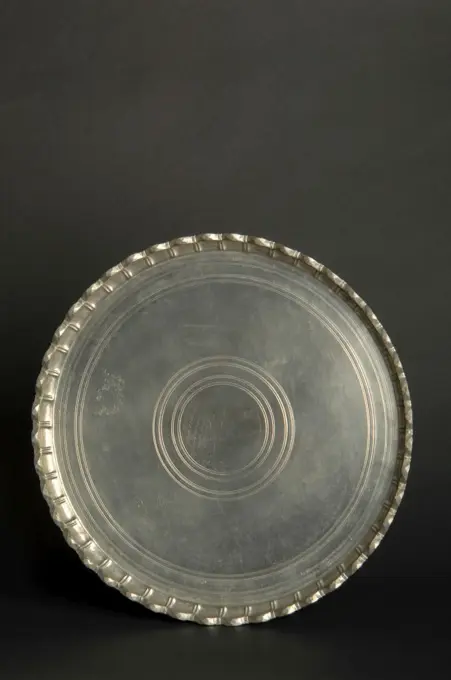
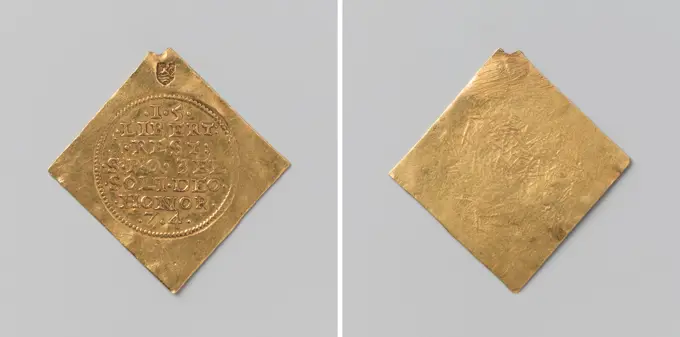
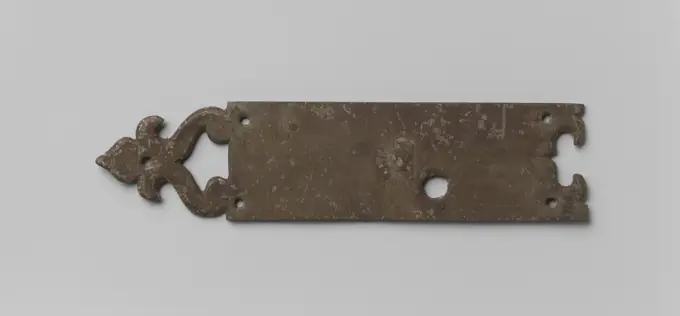
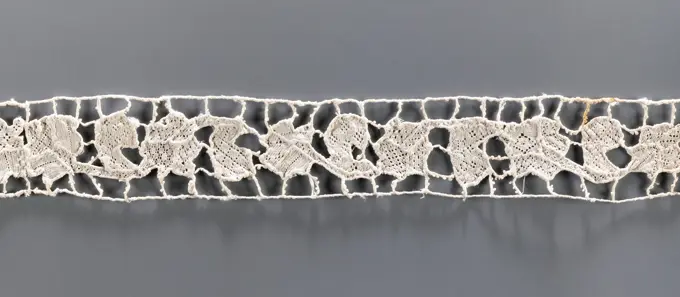
Artisan Metalwork and Fabrics

Decorative metalwork pieces such as knife handles and intricate cloth patterns, showcasing artistic skills in different historical contexts.
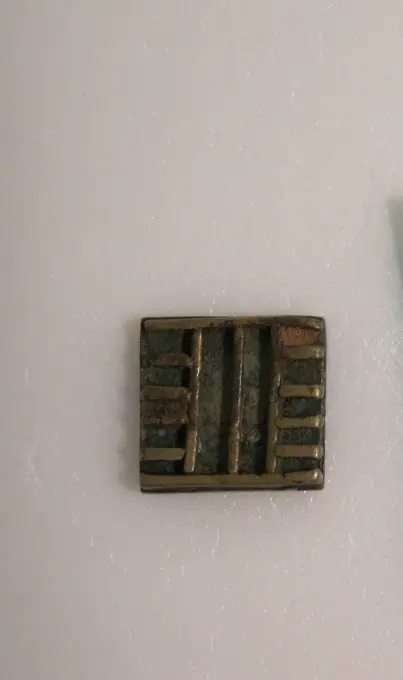
Goldweight Geometric, 20th century, 5/8 x 11/16 in. (1.59 x 1.7 cm), Bronze, Ghana, 20th century
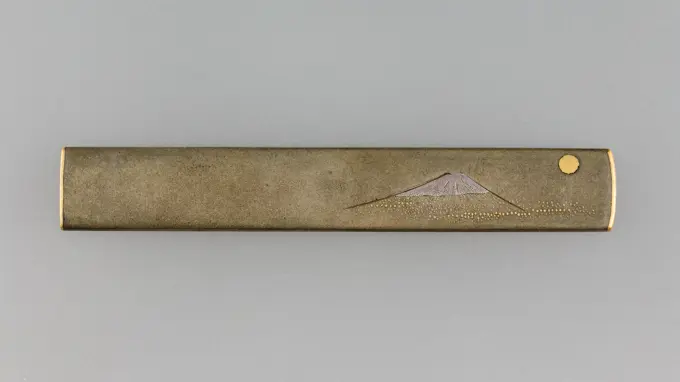
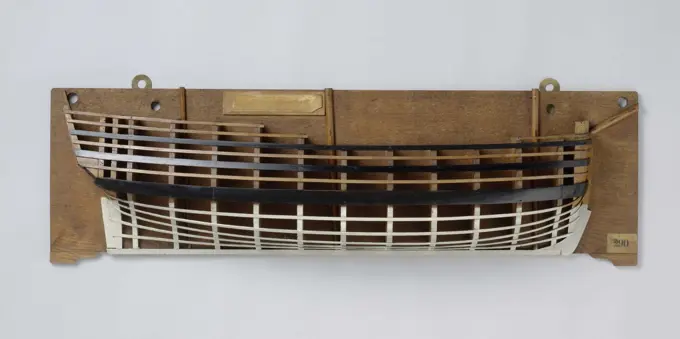
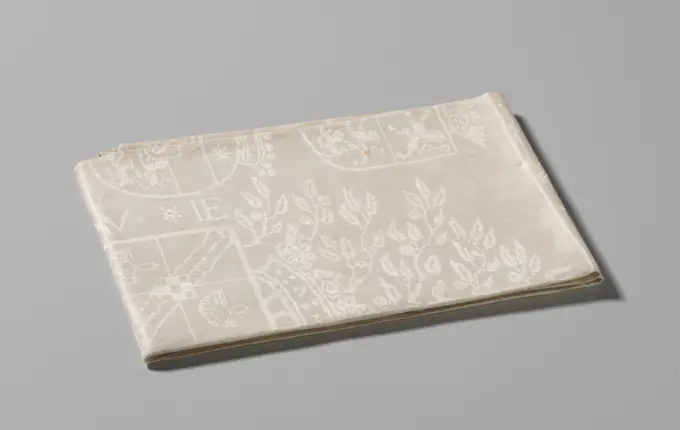
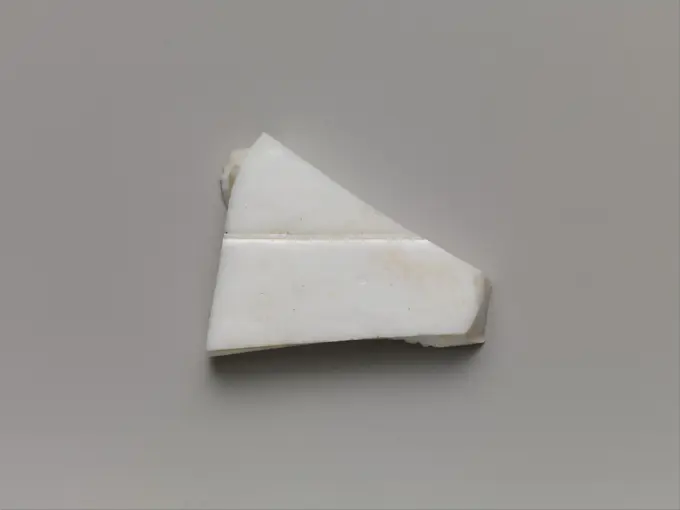
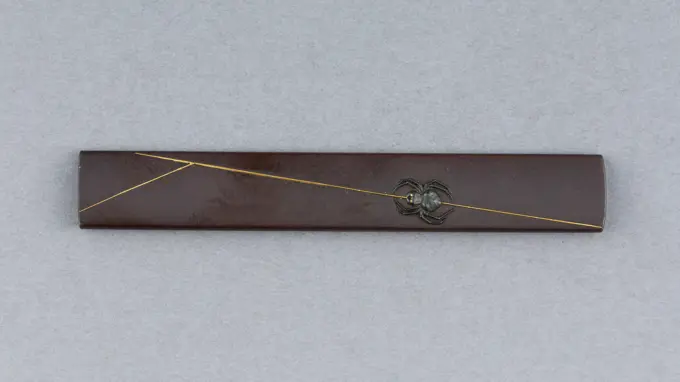
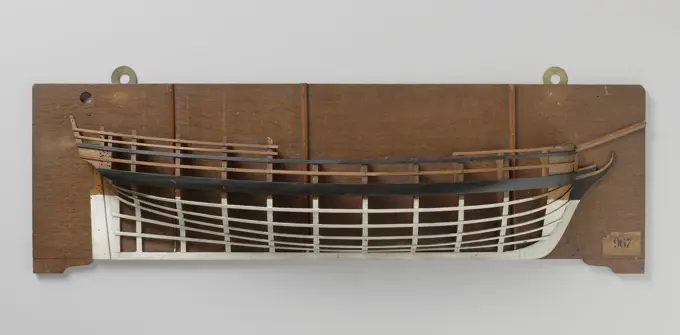
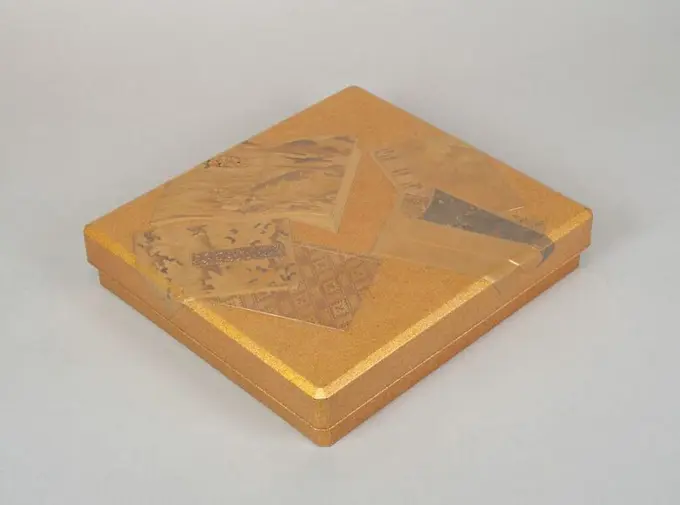
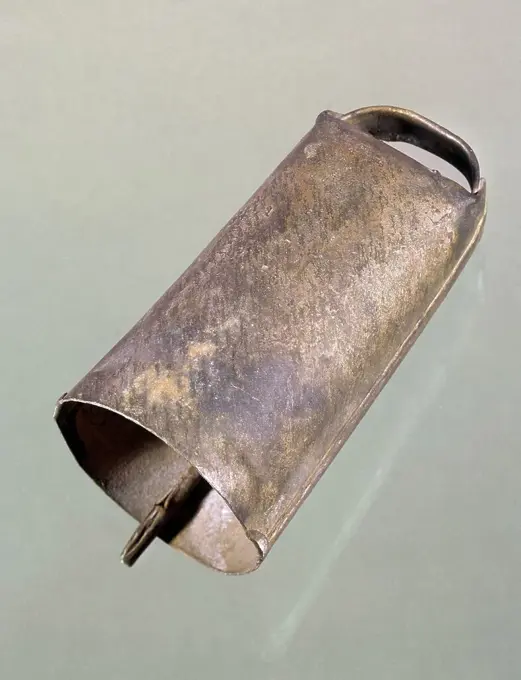
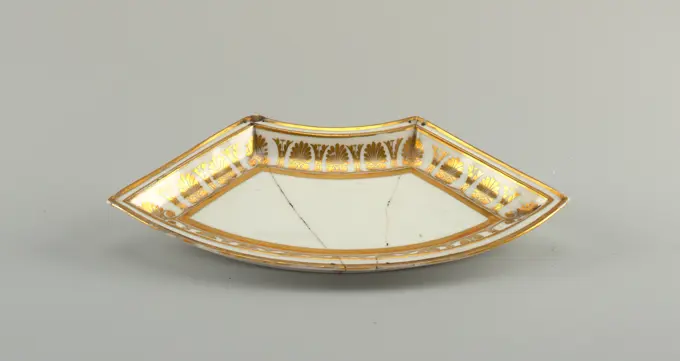
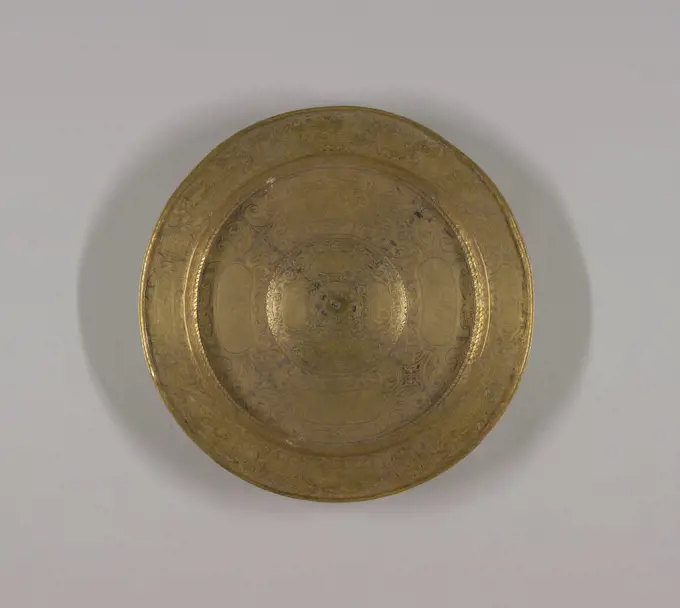
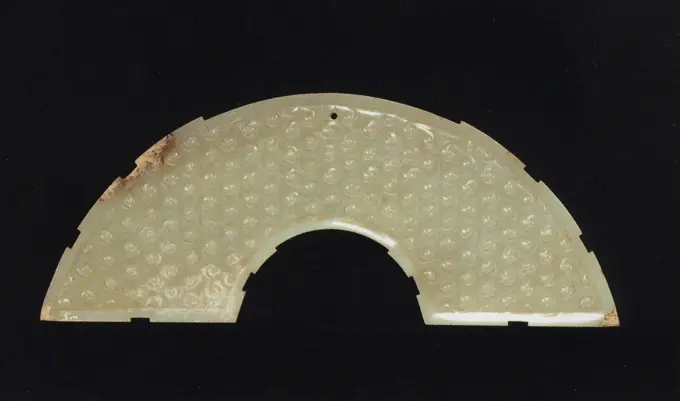
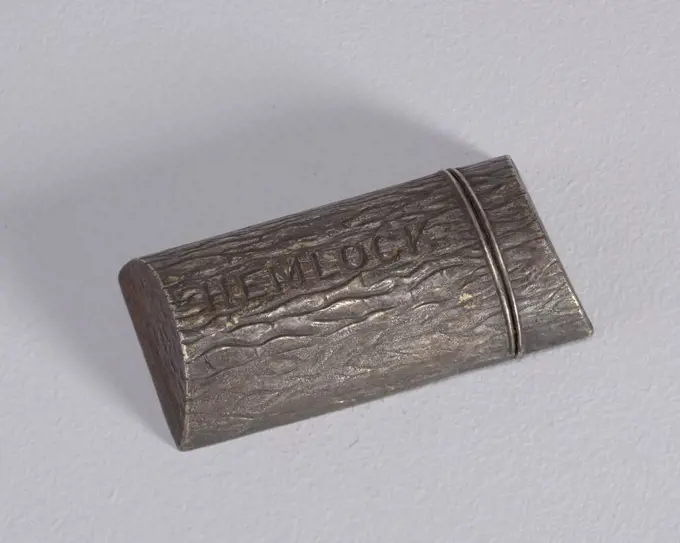
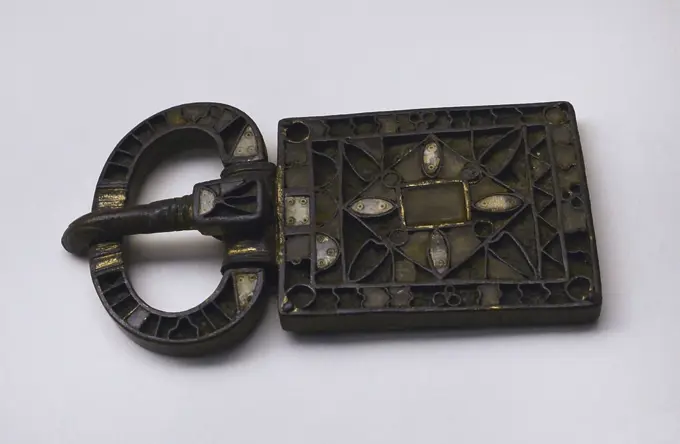
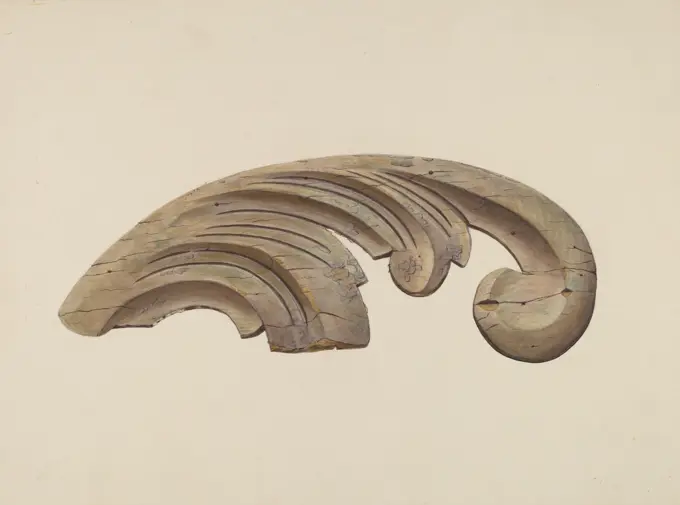
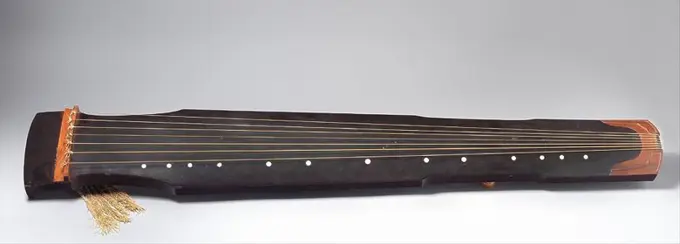
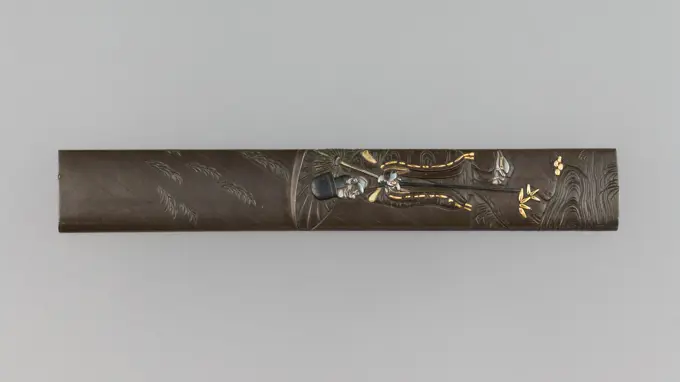
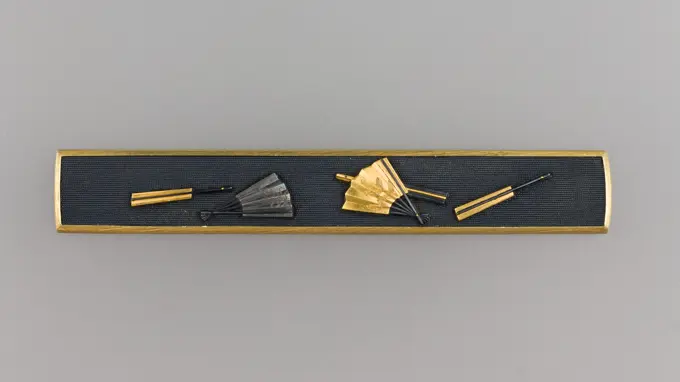
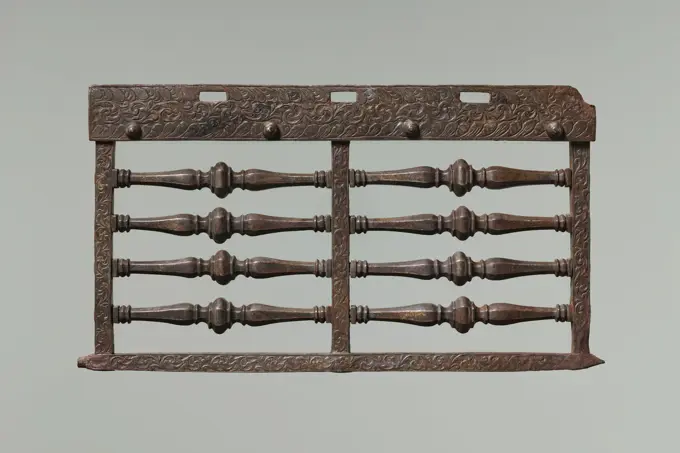
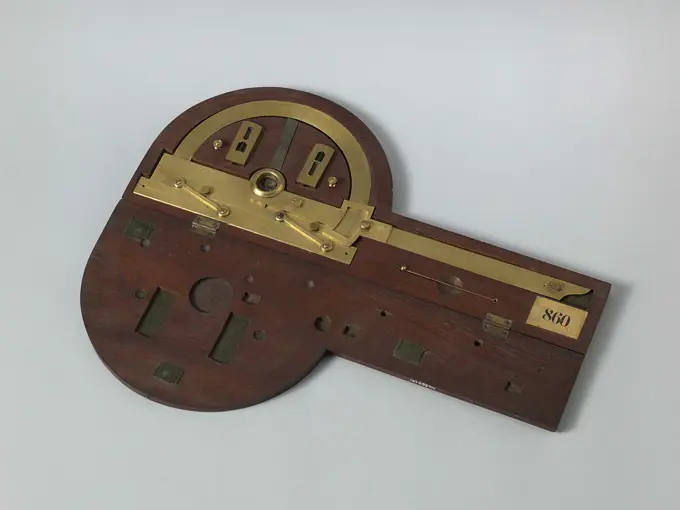
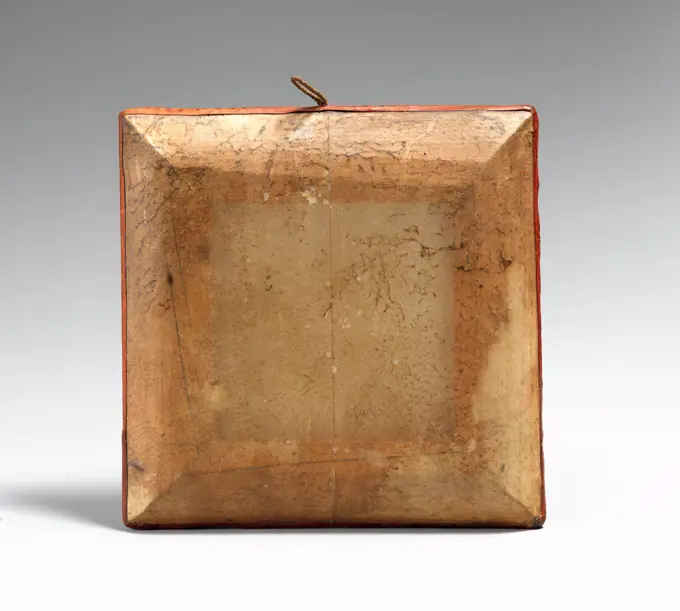
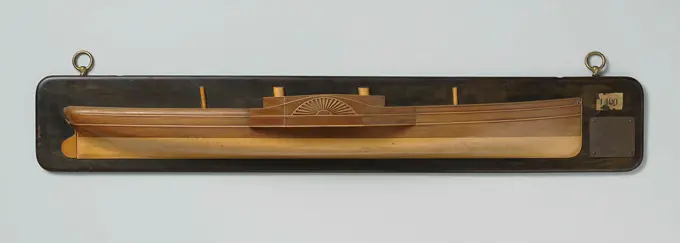
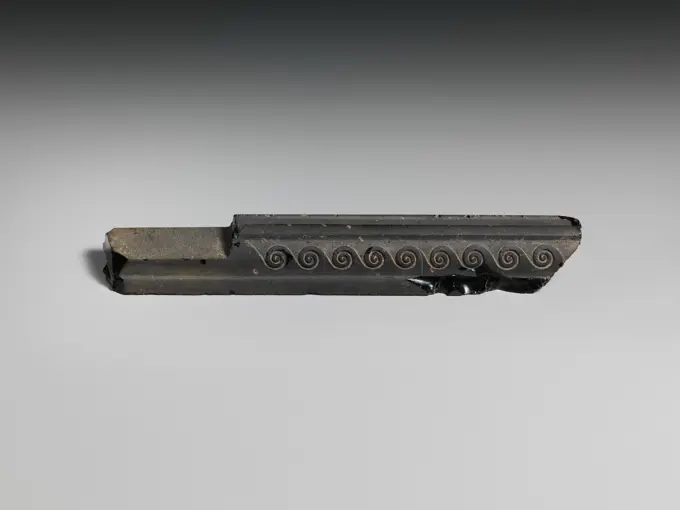
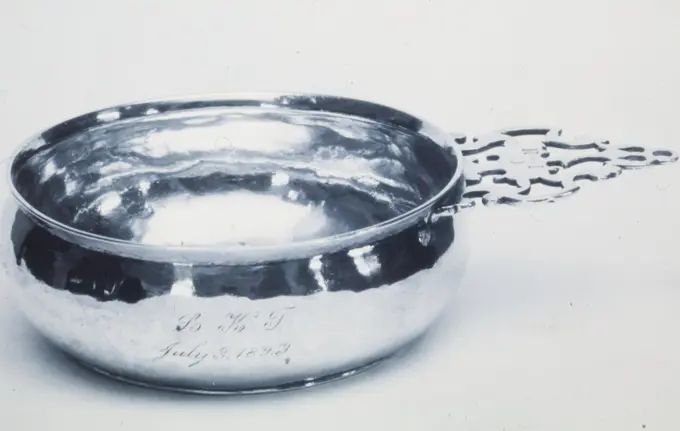
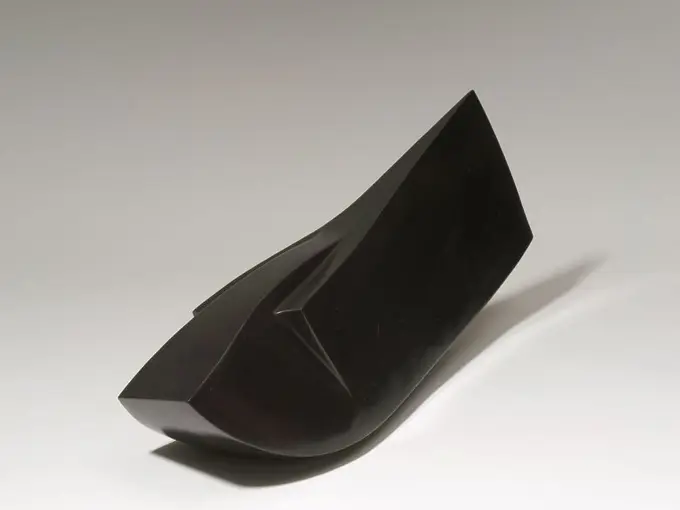
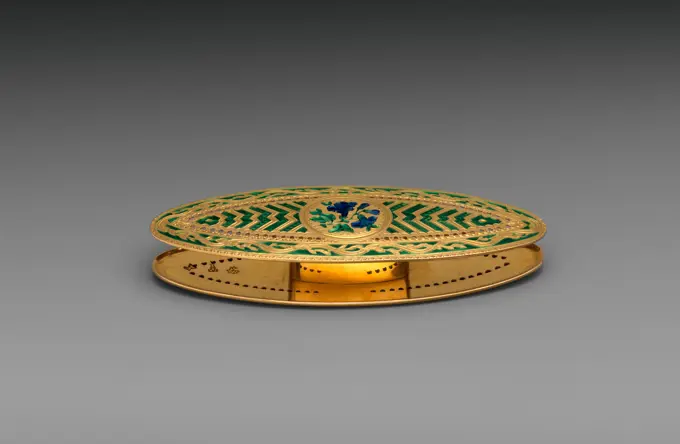
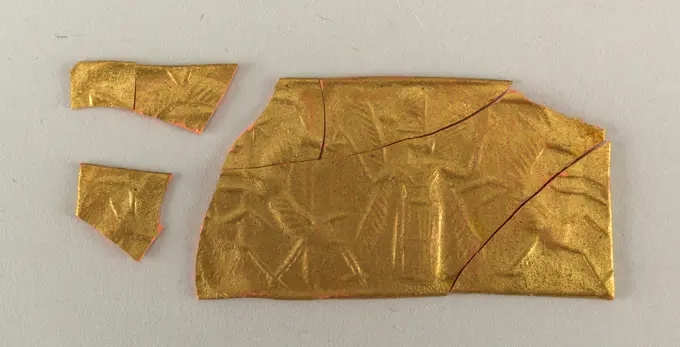
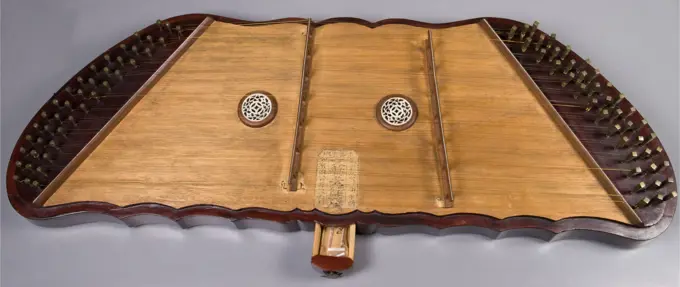
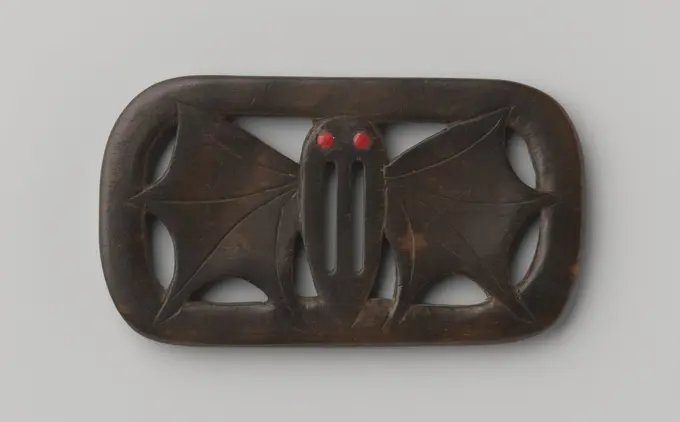
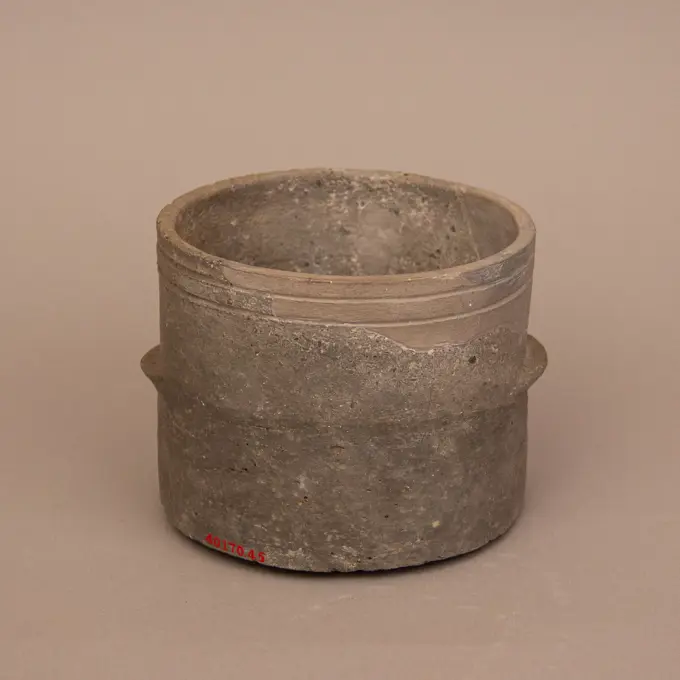
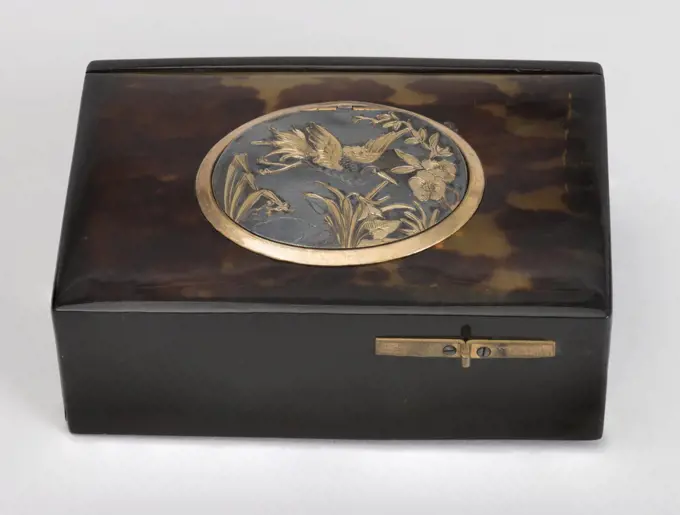
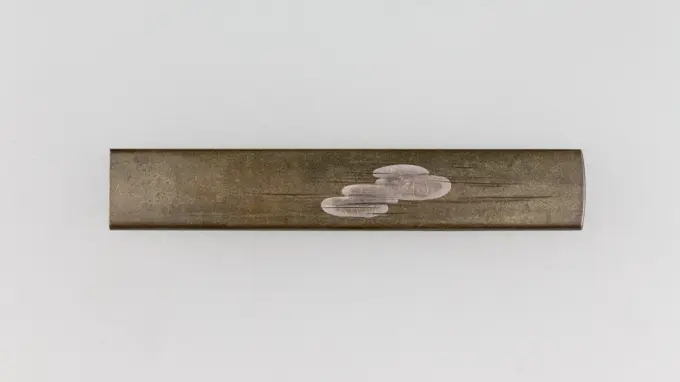
Knife Handle (Kozuka) mid-19th century Inscribed by Kanō Natsuo Japanese This kozuka features a design of the moon's reflection in water.. Knife Handle (Kozuka) 29725Knife Handle (Kozuka) 1789-1876 Japanese A kozuka is a handle of a by-knife that is part of a sword mounting. It is kept in a slot on the reverse of a katana scabbard, often with a matching kōgai (hairdressing tool).. Knife Handle (Kozuka) 29805Cloth with Entre-Deux van Kloskant with checkered pattern against a bar background., Anonymous, 1700-1799 Bedslaken of linen with bobbin bobbin with a diamond pattern against a bar background. Illegible remains of initials. Zaanstreek (Possible) Netherlands (Possible) linen (material). bobbin lace Bedslaken of linen with bobbin bobbin with a diamond pattern against a bar background. Illegible remains of initials. Zaanstreek (Possible) Netherlands (Possible) linen (material). bobbin lacePolychromed mold model (starboard) of a three-master. No gunpaints or decks indicated, only the semi-deck and the container through gillings. Wrinkled mirror, hollow wulf; Fence, side gallery and stir not indicated. Scroll a little ascending, two mountain wooden and one Reehout at both ends. Peaked round trip. Scale 1:48 (Scale by model).Goldweight Geometric, 20th century, 5/8 x 11/16 in. (1.59 x 1.7 cm), Bronze, Ghana, 20th centuryNapkin with the Oranjeboom and the coat of arms of Prince Maurits, Passchier Lammertijn, 1604 Linnamast napkin with the weapon of Prince Maurits. Midfield: Asymmetrical pattern with the crowned weapon of Maurits on an Oranjeboom, sprung from a truncated trank, including Tandem Fit Surculus Arbor. In addition to the Schild Nassau Ie Maintiendray and Ano 1604. On both sides the eight quarters: Nassau, Loon-Heinsberg, Stolberg, Königstein, Saxony, Mecklenburg, Königstein, Saxony. All around double edges: at the top of pigs, hare and deer yacht and navigation emblems; standing edges Roman and contemporary trophies, falcons and pig hunt with hunter figures; At the bottom of muskettes and cannon, duck and fishing. At the top of a row of provinces: Gelderland, Holland, Zeeland, Brabant, Friesland, Zutphen, Overijsel, Groningen. At the bottom of a border with rhyme -tight: praise in whose hands all the ghewelt staet here, hii waect about our countries by nobler statesraet, and through the LoflHalf Model of a Landing Craft, anonymous, 1780 - 1820 ship model. half model. builder's model Polychromed mold model (starboard) of a pointed hole sloop, wide rudder with tie stick. De Zeeg rises to both ends. Double kinking truss. Netherlands wood (plant material)Fragment 19th century China. Fragment 40607Knife Handle (Kozuka) mid-19th century Japanese A kozuka is a handle of a by-knife that is part of a sword mounting. It is kept in a slot on the reverse of a katana scabbard, often with a matching kōgai (hairdressing tool).. Knife Handle (Kozuka) 29763Half Model of a Sloop of War, anonymous, c. 1780 - c. 1820 ship model. half model. builder's model Mallen model (starboard) of a three -mast. No guns and no decks indicated. Get mirror, Hol Wulf, no details of fence or side gallery; Straight with square stirring king. Seeping forwards and backwards, one bark wood and one reehout. Peaked around. Netherlands (possibly) wood (plant material)Writing Box with Illustrated Books. Culture: Japan. Dimensions: H. 1 15/16 in. (4.9 cm); W. 9 in. (22.9 cm); D. 9 13/16 in. (24.9 cm). Date: 19th century.The writing box (suzuri-bako) contains an inkstone and a water dropper, as well as an inner tray for writing implements. The lid is embellished with several illustrated characters that refer to the murmur of the river (see ill.). The frog is also associated with spring. In the kana preface of the Kokin wakashu by Ki no Tsurayuki, there is an often cited sentence: "The song of the warbler among the blossoms, the voice of the frog dwelling in the water--these teach us that every living creature sings.". Museum: Metropolitan Museum of Art, New York, USA.Women's non -circle;  beginning of the 20th century (1901-00-00-1910-00-00);gift (provenance), collarLinnamast napkin with a edge pattern, c. 1650 - c. 1700 Linnamast napkin with a edge pattern. The napkin belongs to a napkin (BK-1977-295-B) and a tablecloth (BK-1977-294). Flanders (Possible) linen (material) damask Linnamast napkin with a edge pattern. The napkin belongs to a napkin (BK-1977-295-B) and a tablecloth (BK-1977-294). Flanders (Possible) linen (material) damaskPolylobe silver loop around 1787. Small strip, 2 gorges with wavy net inside and row of small square cabochons outside.Tobacco box. Tobacco box of silver. The front and lid is corrugated, the hinge side is right.Doctor's Instrument Case, 1820-30. This pocket instrument case is made of walnut and was possibly used for carrying scarifiers for vaccinations, or for dental instruments. It dates from the Regency period... Purchased from Edward H Pinto, 1965... .Snuffbox with presentation inscription 1795 James Kennedy. Snuffbox with presentation inscription. Irish, Dublin. 1795. Gold. Metalwork-Gold and Platinumancient oriental metal tray on dark background. antique bronze tableware. tray with engravingMountFries, anonymous, 1650 Oak Frisian decorated with sliced ornament, which shows acanthus vines on either side of a mid -motif. Northern Netherlands wood (plant material). oak (wood) Oak Frisian decorated with sliced ornament, which shows acanthus vines on either side of a mid -motif. Northern Netherlands wood (plant material). oak (wood)Kroon, emergency coin from Middelburg, beaten after the siege and the intake of the city, Anonymous, 1574 coin. siege coin Unilateral, diamond -shaped emergency coin. Front: two stamps above each other: upper stamp: coat of arms; Below that: inscription in round pearl edge. Reverse: Blanco Middelburg gold (metal) striking (metalworking)  MiddelburgHanden van Vertind iron with rank motifs, anonymous, 1600 - 1700 Handen of Vertind iron. At the bottom a large, round opening of a hinge with a straight start. Behind the impetus is the openwork, symmetrical fittings with rank motifs in volute between two right tracks. The top track runs in the middle in an openwork point.  iron (metal). tin (metal) Handen of Vertind iron. At the bottom a large, round opening of a hinge with a straight start. Behind the impetus is the openwork, symmetrical fittings with rank motifs in volute between two right tracks. The top track runs in the middle in an openwork point.  iron (metal). tin (metal)Half Model of a Launch, anonymous, c. 1780 - c. 1820 ship model. half model. builder's model Mallen model (starboard) of a sloop. The skin above the barkhout is closed and six crashes are indicated. Flat mirror, miniature wulf, hekkbord. De Zeeg rises to both ends, one barkhout. Peaked around. Scale approx. 1:22 (scale on model). According to the scale, this Jol is 32 feet long. Netherlands wood (plant material)Batter, c. 1400 - c. 1950   iron (metal)   iron (metal)Women's non -circle;  beginning of the 20th century (1901-00-00-1910-00-00);gift (provenance), collarTablecloth with the history of John the Baptist, Anonymous, c. 1590 - c. 1599 Tablecloth from Linnamast with the history of Johannes the Baptist. Midfield: The symmetrical, three times in width repeated pattern shows five scenes from the bottom up: 1 John preaches in the desert. Johannes, with her rug and barrew, is standing in the midst of a crowd in a hilly landscape with extensive arms. One of them wears a wambuis and balloon pants, another a flat bonnet. Caption ± Matth.III.cap. 2 Baptism of Christ in the Jordaan. In the middle the pigeon in rays above a palm tree, which grows on an island of the water, in which Christ stands with a curved head, crossed arms and loincloth. John -kneeling on the bank, with cross staff, sprinkles the gesture. Above him a deciduous tree in which: marci.i.ca. 3 Decapitation in prison. In front of a back wall with traited destroyers, the sparkling is standing for whose feet is the beheaded body of John leaning forward, he puts the head on the dish that Horse blinker. Culture: Assyrian. Dimensions: 2.68 x 4.49 in. (6.81 x 11.4 cm). Date: ca. 9th-8th century B.C.. Museum: Metropolitan Museum of Art, New York, USA.Treasure Box (Wakahuia) 1820s-30s Maori people. Treasure Box (Wakahuia) 313620Brick Mold from a Foundation Deposit for Hatshepsut's Temple ca. 1479-1458 B.C. New Kingdom For other objects found in Hatshepsut's temple foundation deposits, see 22.3.245, 25.3.40, 25.3.46a, b, 27.3.198.. Brick Mold from a Foundation Deposit for Hatshepsut's Temple. ca. 1479-1458 B.C.. Wood. New Kingdom. From Egypt, Upper Egypt, Thebes, Deir el-Bahri, Temple of Hatshepsut, S.E. corner, Foundation Deposit 2b (B), MMA excavations, 1921-22. Dynasty 18Fragment of the lace;  End of the 19th century (1891-00-00-1900-00-00);Loop.Patch Box,  1784-1785CENCERRO.Dish with Gold Palmettes Dish; Manufactured by Meissen Porcelain Manufactory (Germany); hard paste porcelain, goldDish, Engraved brass inlaid with silver, A wide rim with turned-over edge runs around a shallow dish with raised central boss. Scrolled cartouches are engraved with scenes from the chase and the Bible. In a round central medallion, a scrolled shield flanked by standing angels. Borders of bound fillets, interlacing lines and scrolling. Back fully engraved with foliation and a guilloche about shoulder. Engraved with name: Daniel D. Hanna., Venice, Italy, 16th century, metalwork, Decorative Arts, DishIncense box with quails and autumn plants, lacquerer, c. 1925 - c. 1935 Round incense box in gold lacquer with a decoration in Maki-e with pearl stem and gold of three quail between autumn grasses. In wooden box. Japan wood (plant material). lacquer (coating). gold (metal). silver (metal). mother of pearl Round incense box in gold lacquer with a decoration in Maki-e with pearl stem and gold of three quail between autumn grasses. In wooden box. Japan wood (plant material). lacquer (coating). gold (metal). silver (metal). mother of pearlArc-Shaped Pendant (Huang) 5th-4th century B.C. China. Arc-Shaped Pendant (Huang) 64120'Hemlock - Goodyear Lumber Co.', Metal, In the form of a cut or halved log with simulated wood grain, the front inscribed 'HEMLOCK.' The flat, unadorned, reverse side displays a ruler stamped into the metal on the upper edge, with measurements up to approximately 2 1/2 inches across. The reverse is also inscribed 'GOODYEAR LUMBER CO., BUFFALO, N.Y.' Lid (right side of log) hinged on reverse. Striker on left side of box., ca. 1900, containers, Decorative Arts, Matchsafe, MatchsafeSkyphos fragment East Greek/Sardis, Lydian. Skyphos fragment 252789 East Greek/Sardis, Lydian, Skyphos fragment, Terracotta, Overall: 1 3/4 x 15/16in. (4.4 x 2.4cm). The Metropolitan Museum of Art, New York. Gift of The American Society for the Excavation of Sardis, 1926 (26.199.222)Belt buckle decorated with cells filled with mother-of-pearl and vitreous paste. From the Visigothic necropolis of El Carpio de Tajo. Grave B. Province of Toledo, Spain. Museum of Visigoth Councils and Culture. Toledo, Castile-La Mancha, Spain.Two-piece bronze mold for large round disc, mold casting tool tools equipment base metal bronze, cast Two-piece bronze mold for casting large round disc; the shape can be used on two sides; edge is later reinforced in connection with crack and strip with screws Rotterdam tin casting tin tin Meeuws Druy craft Shapes are from the originally 18th century Rotterdam tinnegieter J Druy. The large molds that were not signed or dated were the property of the tinker guild and were rented to the small tin caster.Clayton Clements, Wood Carving  Scroll, c 1939 Wood Carving - ScrollRight punch: Punch of the Orfèvres Association, Paris 1793.Bowl ca. 1050-900 B.C. Cypriot. Bowl. Cypriot. ca. 1050-900 B.C.. Terracotta. Iron Age. VasesDish (Germany); brassTablecloth made from two sewn together with large winding motif of flowers ,, 1735 - 1740 Two to tablecloths set together from white Linnamast with large winding motif of flowers. Marked with Red Cross stitch VHT 1. Germany (possibly) linen (material) Two to tablecloths set together from white Linnamast with large winding motif of flowers. Marked with Red Cross stitch VHT 1. Germany (possibly) linen (material)Guqin ( ). Culture: Chinese. Dimensions: L: 122.8 cm (48-5/16 in.); W: 18.3 cm (7-3/16 in.); Depth: 10.1 cm (3-15/16 in.). Date: 19th century.Endowed with cosmological and metaphysical significance and empowered to communicate the deepest feelings, this zither, beloved of sages and of Confucius, is the most prestigious instrument in China. Han Dynasty (206 B.C.-220 A.D.) writers state that the qin helped to cultivate character, understand morality, supplicate gods and demons, enhance life, and enrich learning. Ming Dynasty (1368-1644) literati who claimed the right to play the qin suggested that it be played outdoors in a mountain setting, a garden or a small pavilion or near an old pine tree (symbol of longevity) while burning incense perfumed the air. A serene moonlit night was considered an appropriate time for performance. Each part of the instrument is identified by an anthropomorphic or zoomorphic name and cosmology is ever present: for example, the upper board of wutong wood Upper Arm Defense (Rerebrace). Culture: Italian. Dimensions: H. 6 in. (15.2 cm); W. 3 in. (7.6 cm); D. 5 in. (12.7 cm); Wt. 10 oz. (283.5 g). Date: ca. 1430-40. Museum: Metropolitan Museum of Art, New York, USA.Match Box. Dated: c. 1939. Dimensions: overall: 29.2 x 37 cm (11 1/2 x 14 9/16 in.) Original IAD Object: 9" wide; 3 1/4" high; 4 1/8" deep. Medium: watercolor, graphite, and pen and ink on paperboard. Museum: National Gallery of Art, Washington DC. Author: John H. Tercuzzi.Carnavalet museum, tokens collectionKnife Handle (Kazuko) mid-19th century Japanese. Knife Handle (Kazuko). Japanese. mid-19th century. Copper-silver alloy (shibuichi), copper-gold alloy (shakud), silver, gold. Sword Furniture-KozukaDrawing of a Rocket in a Red Velvet Encasing. Draughtsman: anonymous. Dating: c. 1800. Place: United Kingdom. Measurements: w 30 cm × h 22 cm. Museum: Rijksmuseum, Amsterdam.Ribbon of cream -colored mesh of 6 meters, c. 1900 - c. 1915 Ribbon of cream -colored mesh for 6 meters. Nijmegenfrance silk. Ribbon of cream -colored mesh for 6 meters. Nijmegenfrance silk.line in morocco africa old tile and colorated floor ceramic abstractDummy Breech of A 36-Pounder Cannon, Rijkswerf Vlissingen, c. 1820 scale model Wooden model of the Kulas of a cannon of 36 pounds. The flint lock that was present on this model is missing. Flushing wood (plant material)Knife Handle (Kozuka) late 18th-early 19th century Japanese A kozuka is a handle of a by-knife that is part of a sword mounting. It is kept in a slot on the reverse of a katana scabbard, often with a matching kgai (hairdressing tool).. Knife Handle (Kozuka). Japanese. late 18th-early 19th century. Copper-gold alloy (shakud), gold, silver. Sword Furniture-KozukaWing of the furnace door ();  XVII/VIII century (1670-00-00-1730-00-00);Treeft, anonymous, c. 1500 - c. 1600 Roast of forged iron.  iron (metal) forging Roast of forged iron.  iron (metal) forgingTwo-piece bronze mold for foot or bowl, cast molding tool tools base metal bronze, cast twisted Two-piece bronze shape for foot of an object or bowl top: Rotterdam tin foundry tin stain tin Meeuws Druy craft Shapes are from the origin 18th century Rotterdam tinnegieter J Druy. The large molds that were not signed or dated were the property of the tinker guild and were rented to the small tin caster.Toilet box (one of a pair) (part of a set). Culture: British, London. Dimensions: Overall (confirmed): 2 x 5 1/16 x 3 5/8 in. (5.1 x 12.9 x 9.2 cm). Maker: John Parker (British, active 1759-77); Edward Wakelin (British, active before 1748, died 1784). Date: 1766.These boxes were part of a toilet service sold by the leading London retailers Parker and Wakelin to John Heathcote, who, a few years earlier, had married the heiress Lydia Moyer. Parker and Wakelin's accounts for the sale show that the service included eight such boxes, a pair of candlesticks, two "essence pots," a looking glass, a "jewells trunk," and a pair of octagonal pierced trays. The cost for gilding the service was more than £56--roughly equal to the annual wage of a successful artisan--and the entire bill came to more than £300. There was a further charge of £6 6s for a "red morocco leather case with a drawer & 2 cushions.". Museum: Metropolitan Museum of Art, New York, USA.Luiermand, anonymous, c. 1700 - c. 1725 Rectangular diaper basket on four legs and with four handles. The basket is processed with simulated braid and is marked: stk. = Amsterdam and an illegible sign. Amsterdam silver (metal) filigree Rectangular diaper basket on four legs and with four handles. The basket is processed with simulated braid and is marked: stk. = Amsterdam and an illegible sign. Amsterdam silver (metal) filigreeProtractor. Brass conveyor or degree bow in a wooden box. The jet of the degree arch is 102 mm. The center of the arc is indicated with an iron needle and the instrument has an arm with a nonius on the bow. Two visors can be mounted on the arm. A loose visible needle has been added. Kleman made this carrier on clues of Captain at sea C. Jager.Sword-Hilt Collar (Fuchi) late 18th-early 19th century Japanese A fuchi is a collar that is mounted at the base of the grip of a sword hilt, usually made as part of a set with a matching kashira (pommel cap).. Sword-Hilt Collar (Fuchi). Japanese. late 18th-early 19th century. Iron, gold. Sword Furniture-Fuchi-KashiraWood cutting board isolated on white background. Wooden pizza boardDeff 19th Century Algerian Deff may refer to a round frame drum but this one from Algeria is a square wood frame covered with goat skin. It is played by both men and women and influenced the form of a similar instrument, the adufe, found in Portugal.. Deff 501882Half Model of a Paddle Steamer.Stacking model (starboard) of a two-timed paddle steam ship. Vertical defit, decorated with praise. Elliptical fence with leaf motifs and national arms; Stir with round stirring king. Ornate throat cupboard; On deck two chimneys. Side ascending ascending. Running around with flat bottom. Scale 1:50 (Scale by model).Empty wooden cutting board with cracks and scuffs located on a dark concrete backgroundHingePortrait list of dark red wood with Intarsia of pink flowers, coming from behind a yellow interior list., Anonymous, 1900   wood (plant material). paint (coating)   wood (plant material). paint (coating)Obsidian furniture attachment ca. 25 B.C.-A.D. 10 Roman Very deep purple, appearing black.Solid block, with flat back; convex sides curving outward to flat, recessed band at front; top end cut back at angle sloping upward from back to front; bottom end carved back at front to a flat surface. On back, two slots as deep recesses, one of which is carved into the sloping top edge of the block; the other, located on the flat back towards the top, has a broad section at bottom leading to a narrower section above with flanges to hold an attachment pin.Raised molding on edge between sides and bottom; on curving sides, symmetrical wave pattern comprising nine waves on each side carved in relief; above, two plain raised molding bands flanking frontal recessed surface.Broken off at bottom and some chips and damage to top, sides, and back; unpolished mat surfaces, rougher in ground behind wave pattern, on flat cut in the front, and on back; small patches of limy accretion on back.The slot on the bCarnavalet museum, tokens collectionPorringer, c. 1730, Samuel Burrill, American, 1704 - 1740, 2 1/4 x 8 1/4 x 6in. (5.7 x 21 x 15.2cm), Silver, United States, 18th centuryInvention Horn Crook, Carl Gottlob Schüster, 1850 - 1950 Bracket of Invention horn. Marked: des.1  copper (metal) Bracket of Invention horn. Marked: des.1  copper (metal)Table Light And Case (England); brass, silk, leatherLluis Ventós / "Pez" (Fish), 2005, Sculpture (black Belgian marble), 22,5 x 57 x 16 cm.Shuttle (navette) 1764-65 Mathieu Coiny fils. Shuttle (navette). French, Paris. 1764-65. Gold, enamel. Metalwork-Gold and PlatinumComb. Egypt, 10th-12th century. Jewelry and Adornments; combs. BoneImpression Of Seal Cylinder; 1902-20-32Metropolitan Water Works Miscellaneous, manhole cover, top, middle and bottom sections joined together, Mass., ca. 1900-1919 , waterworks, manhole componentsHalf Model of an East Indiaman.Polychromed mold model (starboard) of a three-master. No decks or gunposes indicated, semi-deck and baking deck can be distinguished by the gillings. Wrinkled mirror, hollow wulf, no details of fence or side gallery; Stir straight with square roofing. Side forward and back ascending, one bark wood and one Reehout. Peaked round trip. Scale approx. 1:60 (derived).rectangular double tie gray and purple on a white background isolated. linen tie on white backgroundHalf model or a screw steamer.Poly chromed and completely covered molds model (starboard) of a three-way screw steam vessel. Nine gates on the upper deck. Straight, almost vertical defense with solid Judasoor on which a crossbar, the shoeboard is a curl. Elliptical fence with national arms; Stir with round stirring king. The abrasion between stern and stirring stage indicate the use of a screw light device. Side ascending, a Reehout. Running. Scale 1:40 (Obenen).. Rooster for a charcoal iron, consisting of three bars in scalloped sawn edge.Black podium on background minimal design. 3D renderingBroche, obra de Joaquim Capdevila, 1968. Colección privada.Model of a Chain Messenger, Rijkswerf Willemsoord, 1844 demonstration model Model representing the middle part of a deck from pre -stem to a hole ranking with twelve wind trees and eight places in the foot. The model demonstrates a chain babeling, for which the capstan is equipped with a border with piles in the foot of the drum. At the Voorsteven, the cable elongation goes over two vertical rollers, which are mounted on toothed rails to adjust the voltage of the cableing. The anchoret is covered with brass, there are two servants and three shutters, the middle one of which serves as a cable hole. At the rear servant, the cableing is led over rollers. The model is equipped with a stick cancer with anchor chain, which is attached to the cableing with teeth pegs. Scale 1:20. model maker: Den Helderafter design by: London wood (plant material). brass (alloy)Yangqin ( ) 19th century Shop of Refined Tones, Guangzhou (Canton) This dulcimer is found in orchestras and small ensembles but is more at home in the regional opera of Guangzhou (Canton). Evidence suggests that the yangqin first appeared in the southeastern province of Guandong during the Ming dynasty (1368-1644), indicating diffusion by sea from the Middle East rather than by the usual overland Silk Road. Unlike plucked lutes, which have silk or nylon strings of varying thicknesses, the yangqin has strings of copper or steel, which are beaten with flexible bamboo hammers.. Yangqin ( ). Chinese. 19th century. Wood, brass. Qing dynasty (1644-1911). Canton, China. Chordophone-Zither-struck-dulcimerTray;  End of the 19th century (1880-00-00-1890-00-00);Knife salvaged from the Great Chelsea Fire of 1908 , Fires. Chelsea Public Library Archive CollectionNose Ornament 1st-3rd century Moche. Nose Ornament 317801Buckle 'bat', c. 1920 Wooden buckle 'bat', with two eyes of red paste. The buckle is not signed. Amsterdam wood (plant material). cutting Wooden buckle 'bat', with two eyes of red paste. The buckle is not signed. Amsterdam wood (plant material). cuttingGate, Thatched-Roof Buildings, Sail Boats and Mt. Fuji in central reserve Matchsafe; Japan; Overall: 6.4 cm (2 1/2 in.)Bowl 8th-9th century. Bowl. 8th-9th century. Earthenware; unglazed. Excavated in Iran, Nishapur. CeramicsBox belonging to a bronze medal, Fernand Dubois, 1903 box Bottom of a rectangular box. Brussels cardboard   Dinant. BelgiumFrontlet of gold leaf. Frontlet of gold leaf 242965Kruitfles. Trapezoidal, black velvet clad kleit bottle with hollow sides. Two support rings on the left two and on the right. Iron angle reinforcements and diamond-shaped decoration in the middle. Spout with locking mechanism.. Hair comb of turtle with narrow, increded curved back. Five teeth.Double -sided gingerbread formHalf Model of a 15-Gun Gunboat with Sliding Keels, anonymous, 1806 ship model. half model. builder's model Polychromed mold model (starboard) of a three -mast. The skin above the barkwood is closed, six gun gates on one deck. Gewlen Spiegel, Hol Wulf, closed gate, no side gallery; Stir with square roser king. Zeeg to both ends ascending, one barkhout. Flat bottom with three sliding chills. Scale approx. 1:36 (derived). Netherlands wood (plant material)Music Box, Tortoiseshell, silver gilt, feathers, Rectangular tortoise shell box with hinged back, containing key. Oval, hinged and parcel-gilt medallion on top, engraved with flying crane and flowers. Catch on front of box opens this medallion and releases a small feather-covered bird. This automaton beats its wings, opens and closes its beak and pivots on a vertical axis while twittering. Beneath it, a cut-out medallion with and scrolls. B) a key, France, ca. 1780, containers, Decorative Arts, box, box