Artistic Porcelain Vases

An assortment of porcelain vases featuring intricate designs and historical significance, highlighting craftsmanship from different eras.

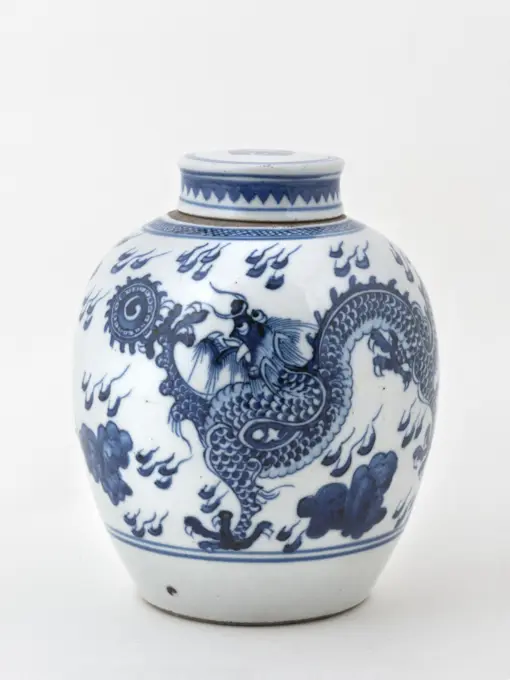
Baluster covered jar with figures in panels, anonymous, c. 1875 - c. 1899 Lid button in the form of a lion of baluster -shaped lid jar, painted in underlaze blue. Covered with a geometric pattern in which two cartouches with two people are depicted in a fenced garden. Blue White. China porcelain. glaze. cobalt (mineral) painting / vitrification Lid button in the form of a lion of baluster -shaped lid jar, painted in underlaze blue. Covered with a geometric pattern in which two cartouches with two people are depicted in a fenced garden. Blue White. China porcelain. glaze. cobalt (mineral) painting / vitrification
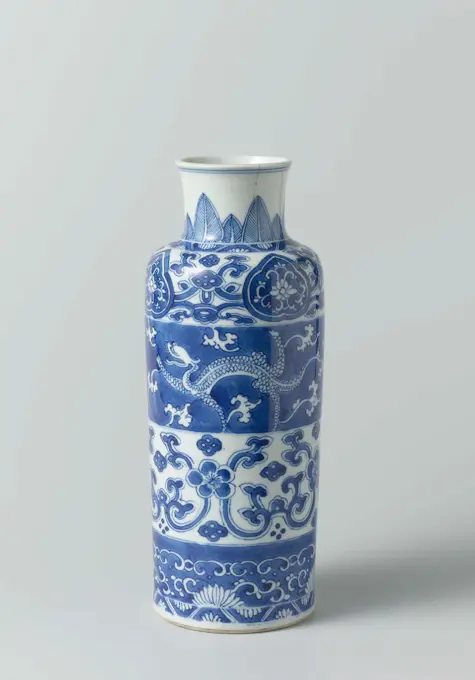
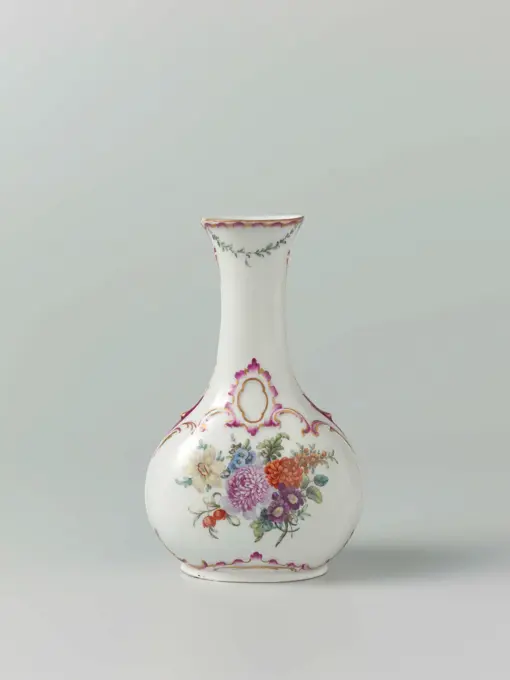
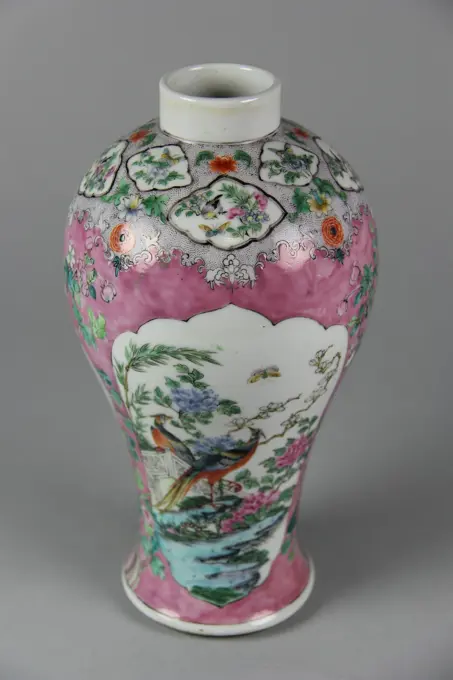
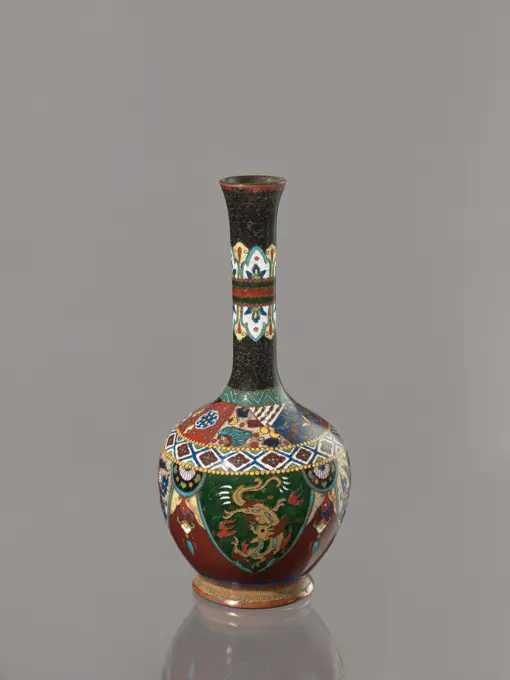
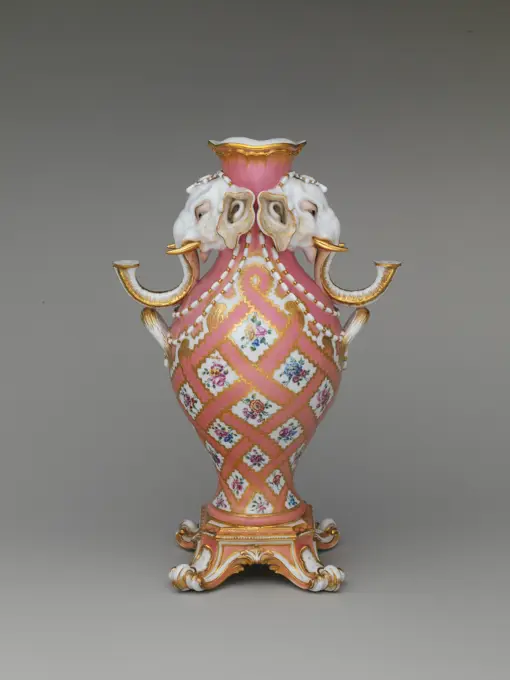
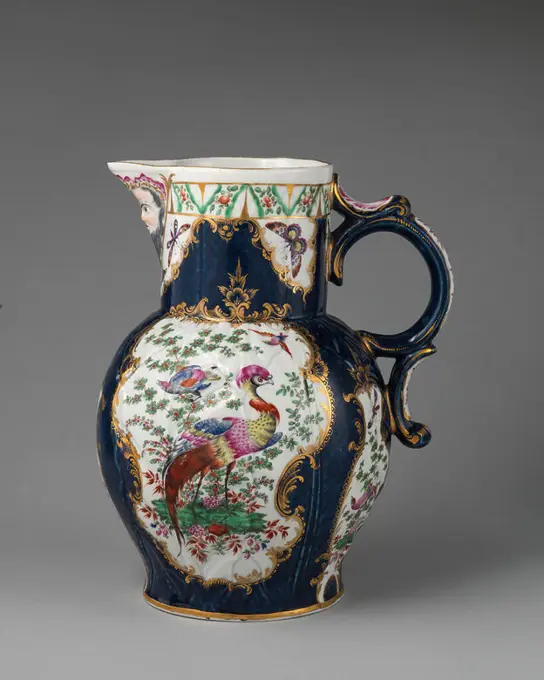
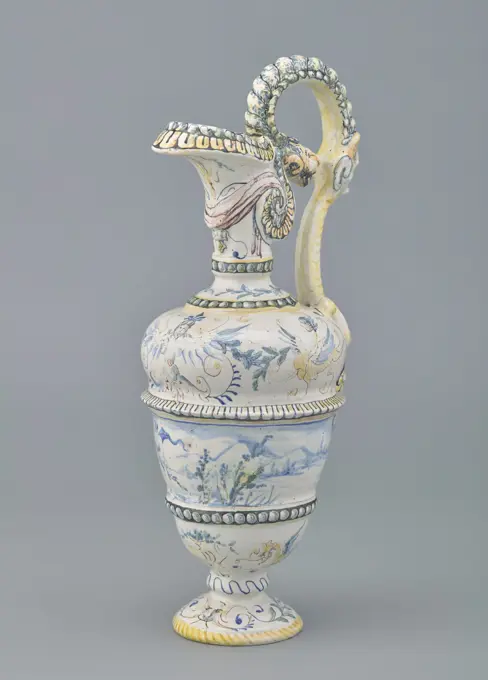
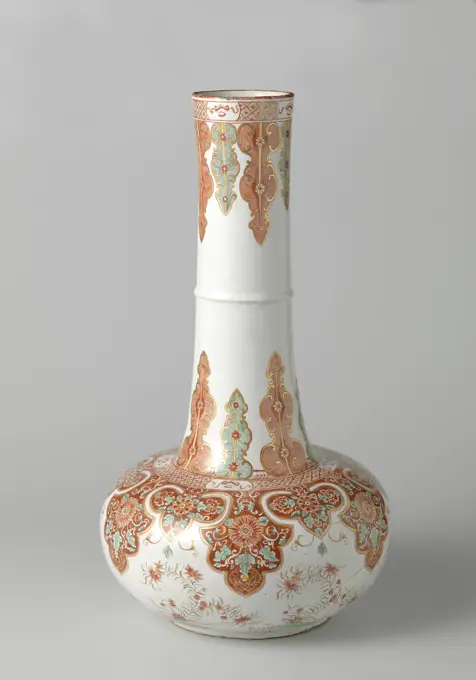
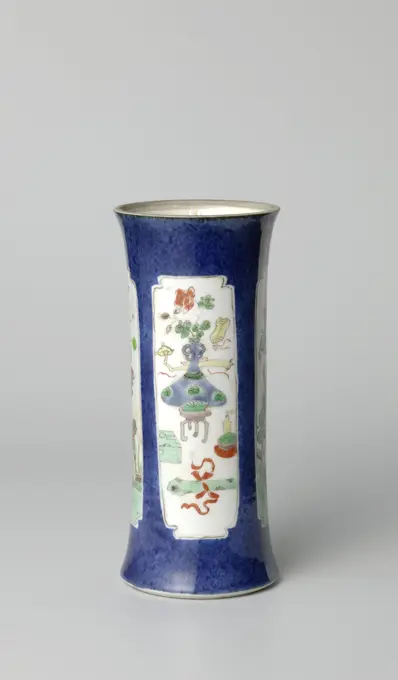
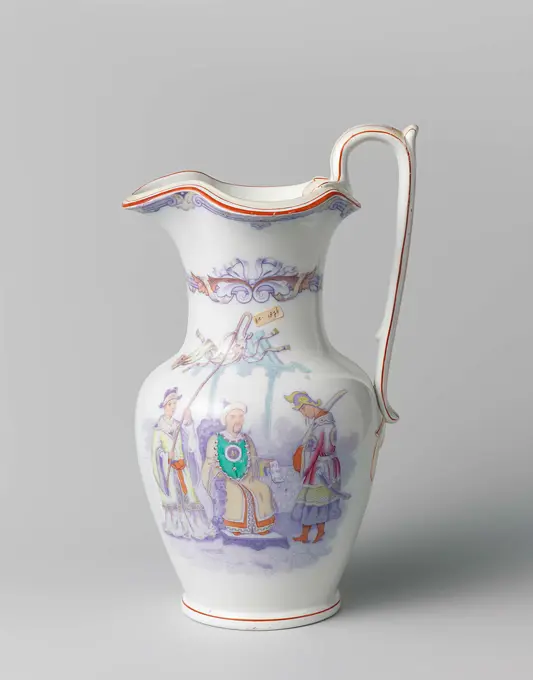
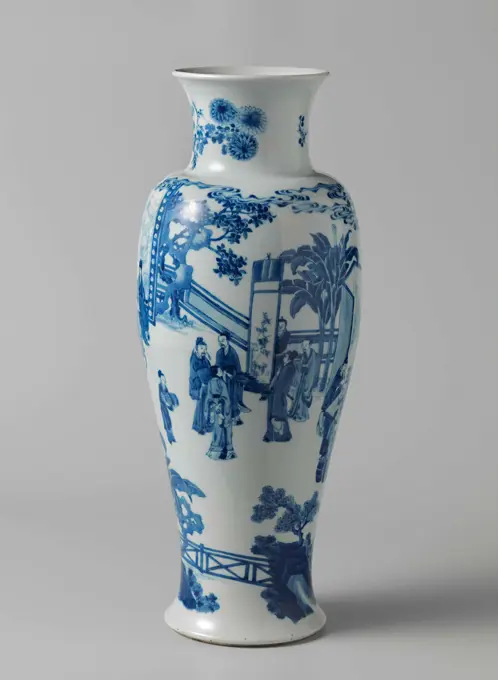
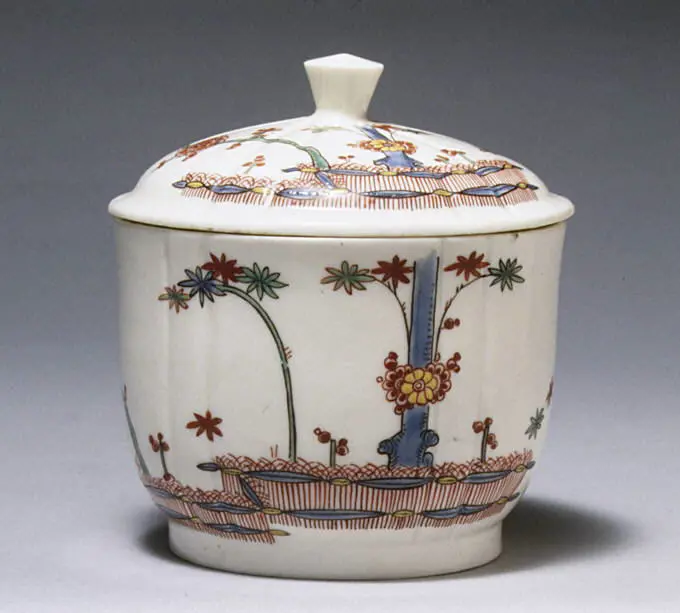
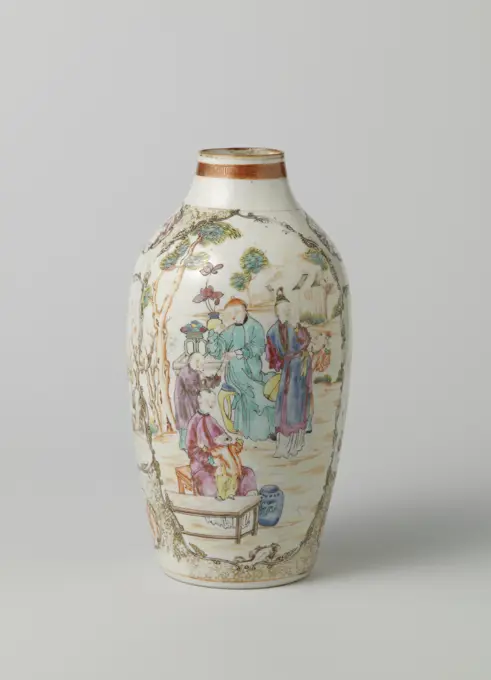
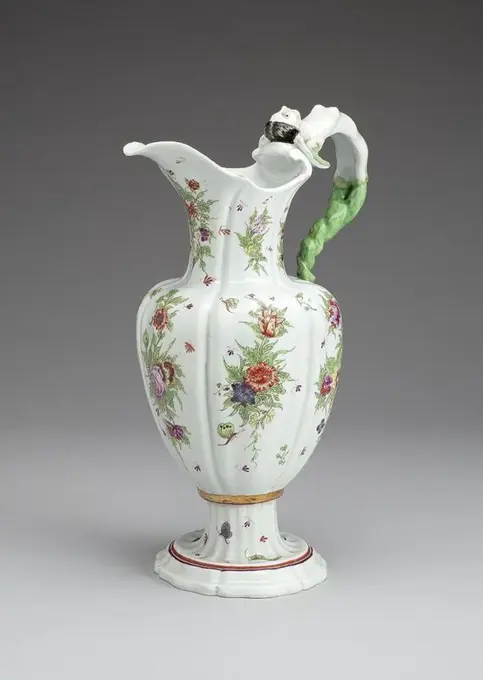
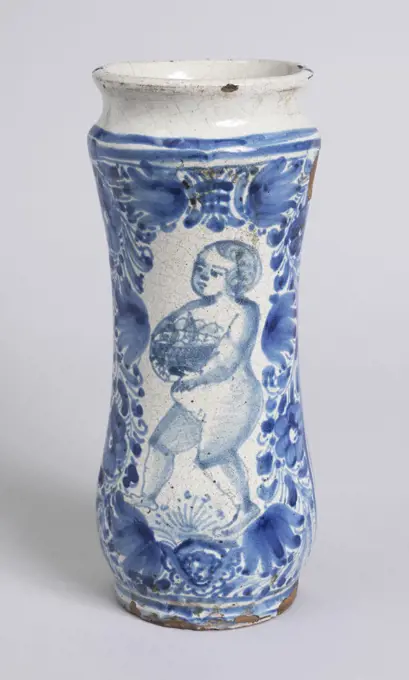
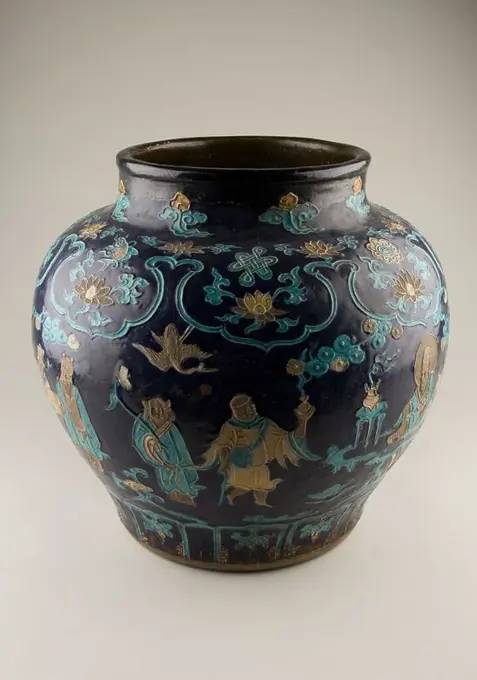
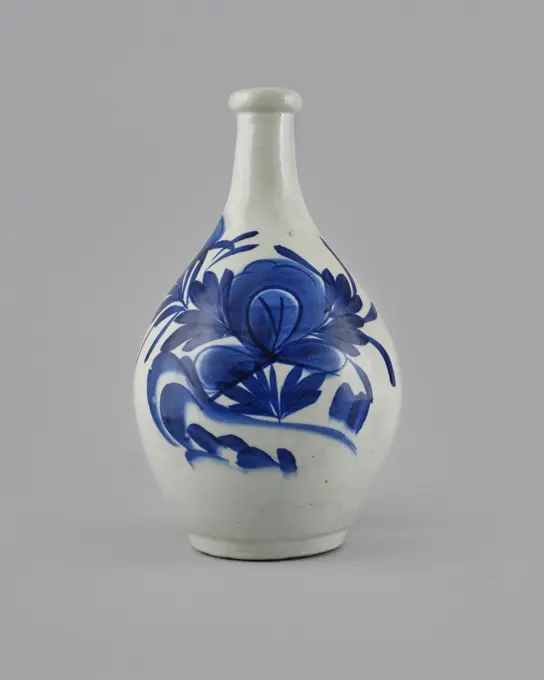
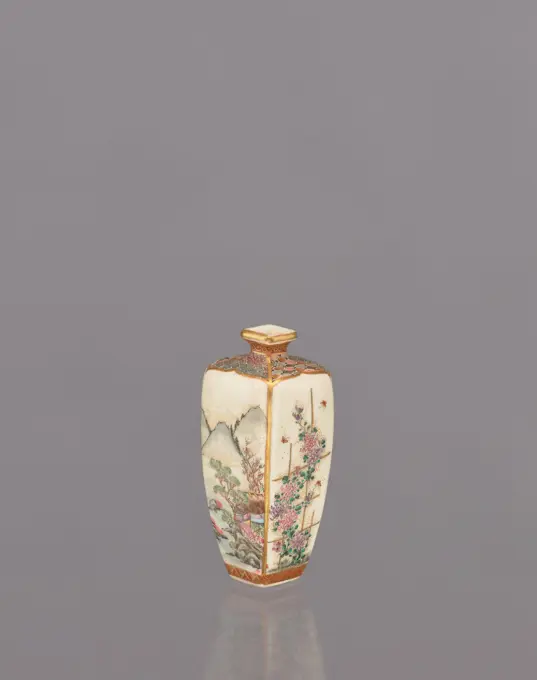
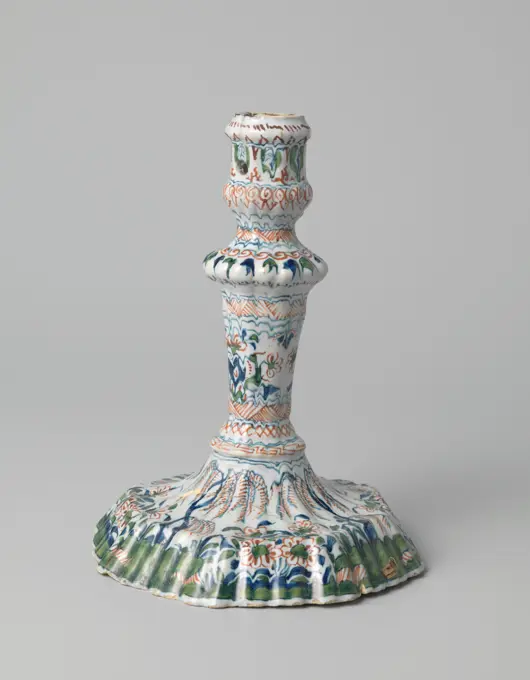
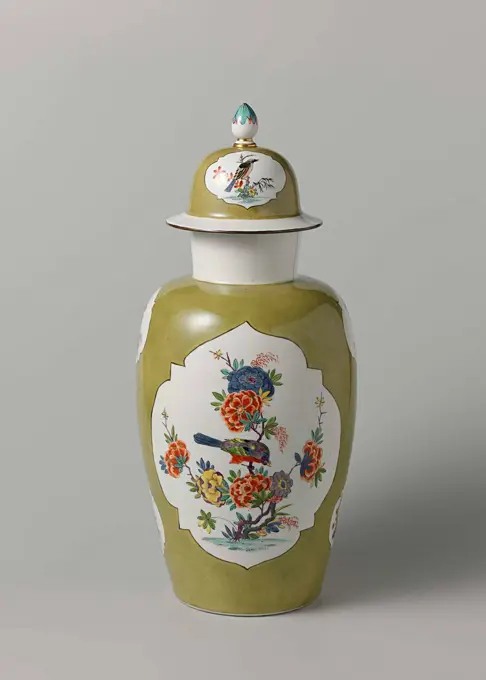
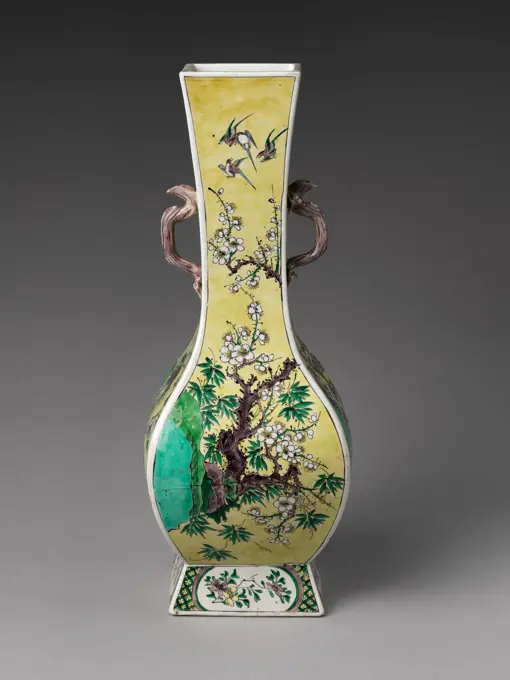
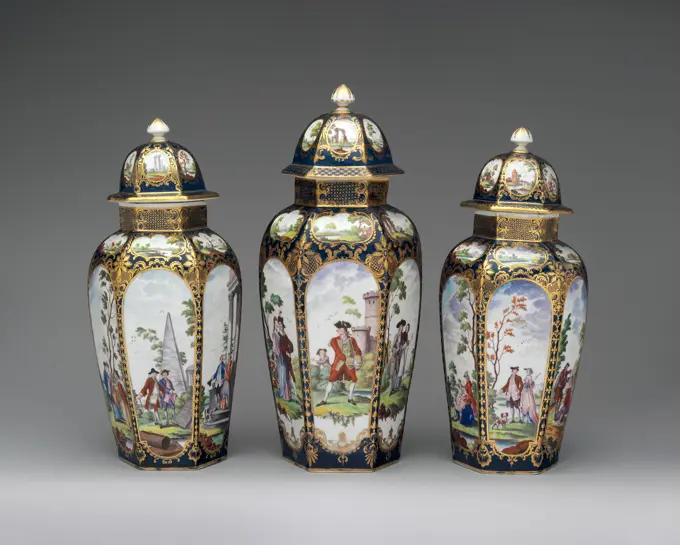
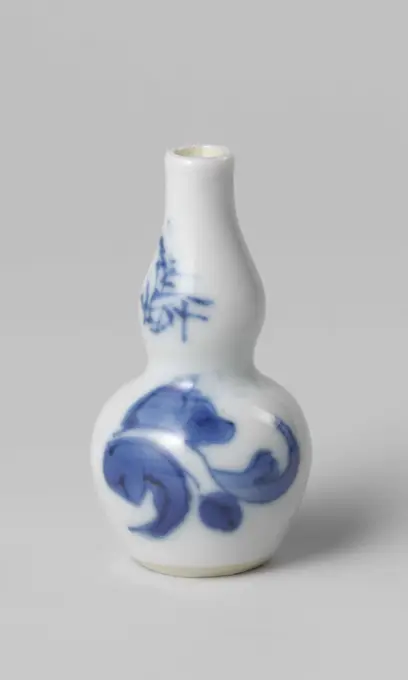
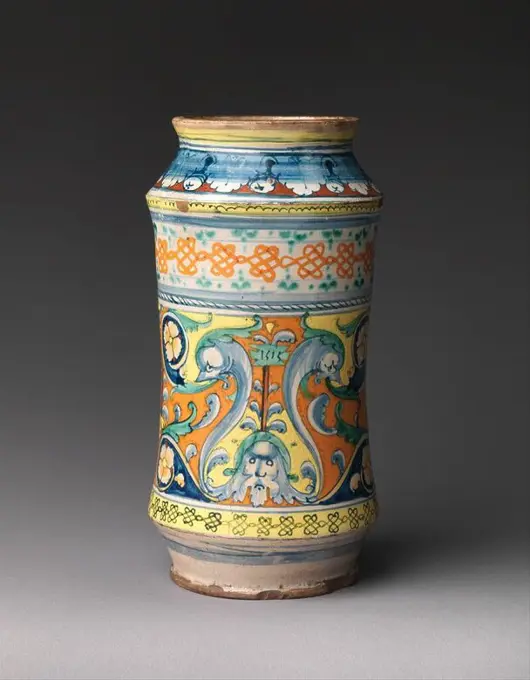
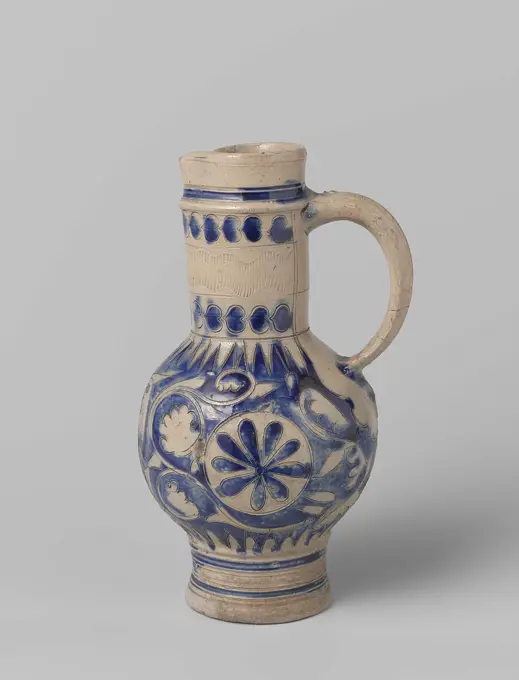
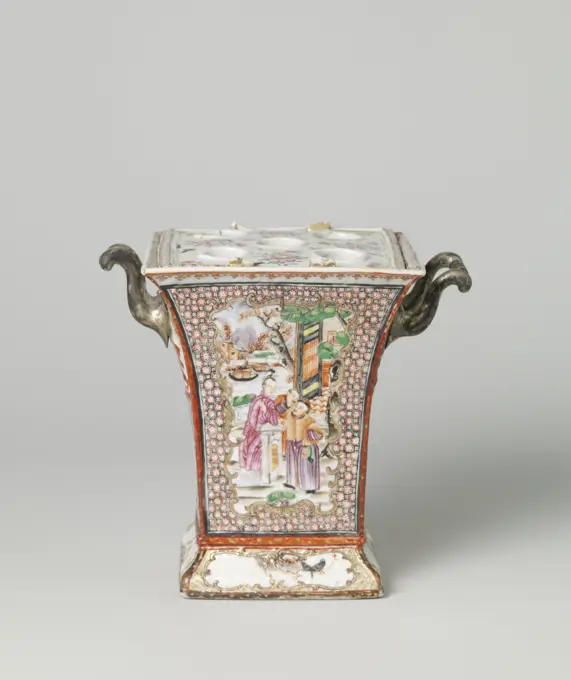
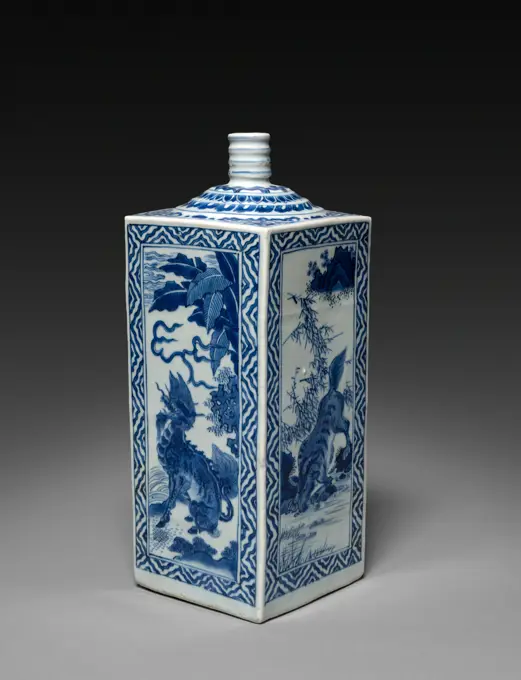
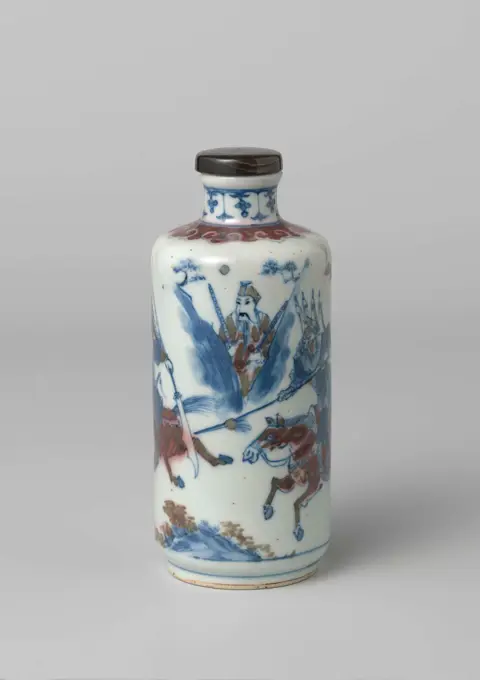
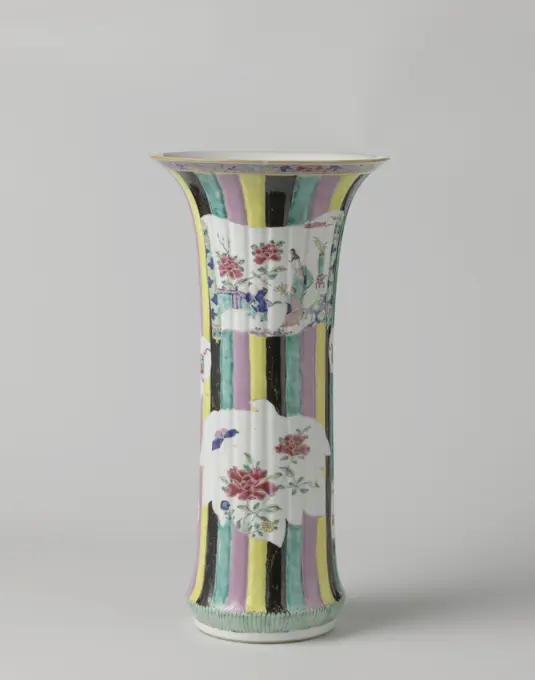
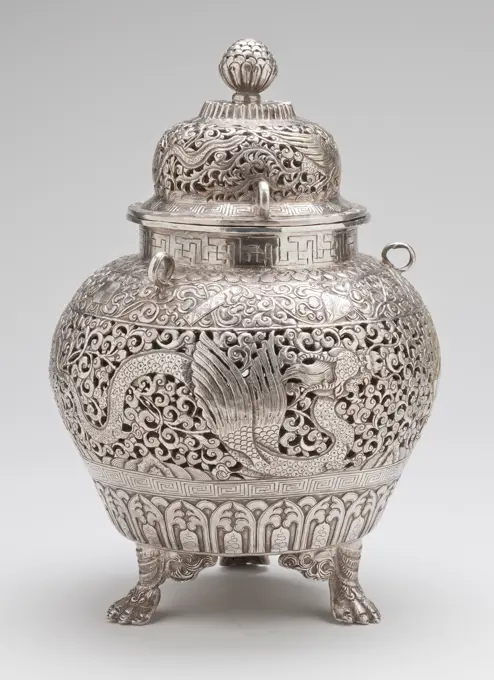
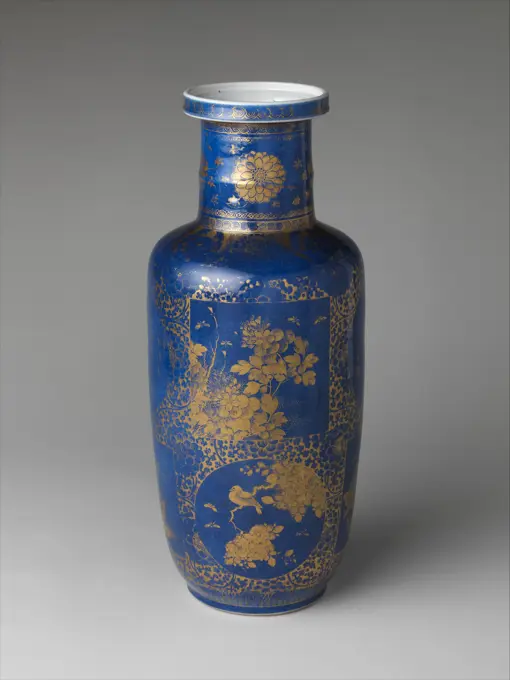
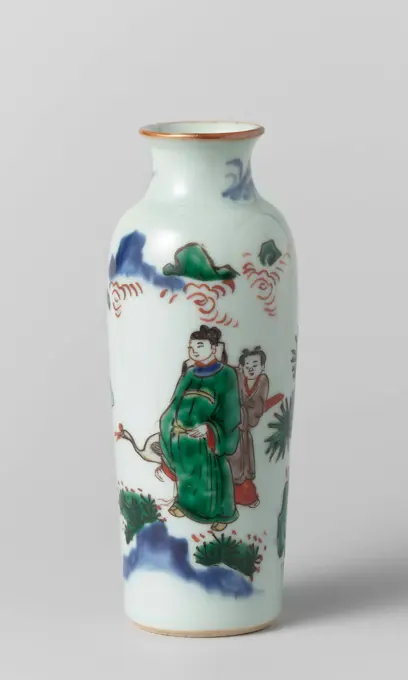
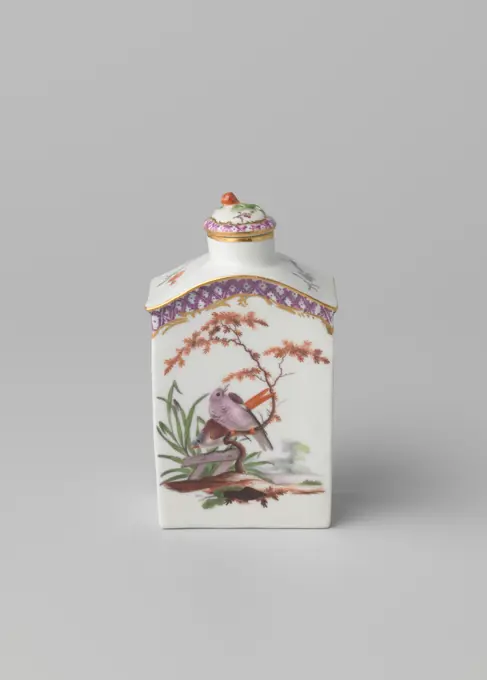
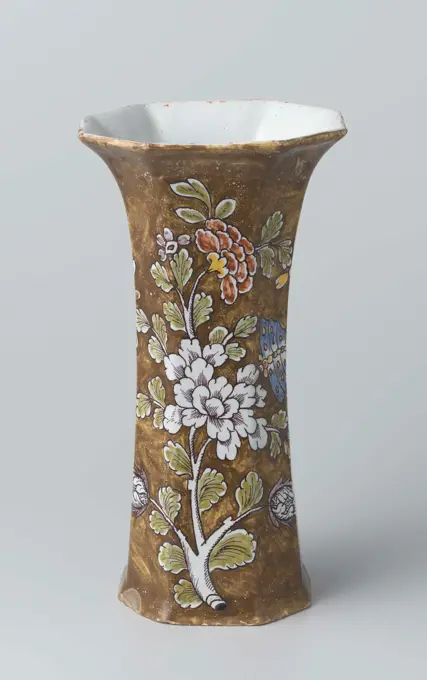
Lidded vase. Meissen porcelain manufactory Meissen, c. 1740 Hard Paste PorcelainVase, 1662-1722, 31 1/2 x 10 3/4 in. (80.01 x 27.31 cm), Porcelain with overglaze enamel decor, Famille verte ware, China, 17th-18th century, This large beaker, decorated in standard famille verte overglaze enamels, depicts a domestic scene in the lower register while the 'three Star Gods' and young children are illustrated in the neck of the vase. The lower scene shows the well-attired matriarch and patriarch of an aristocratic household formally seated on either side of a round incense stand while other family members gather in front of them for a domestic ceremony.Vase, 9 1/2 x 4 1/4 in. (24.1 x 10.8 cm), Porcelain, China, Qing dynastyCup with Dragons and Phoenixes, 1522-66. China, Jiangxi province, Jingdezhen kilns, Ming dynasty (1368-1644), Jiajing mark and reign (1522-66). Porcelain with underglaze blue decoration; diameter: 11 cm (4 5/16 in.); overall: 10.5 cm (4 1/8 in.).Vase (Netherlands); tin-glazed and painted earthenware; 25 x 13 x 13 cm (9 13/16 x 5 1/8 x 5 1/8 in.); Bequest of Walter Phelps Warren; 1986-61-40Double Gourd-Shaped Vase With Floral Scrolls, Medallions and Ornamental Borders. Kalbasal-shaped vase of porcelain, painted on the glaze in red and gold. The lower part of the body with four scalloped cartouches with flour rinks, also fluid drinks between the cartouches; Above a band with medallions with swastika pattern and arrearing. Between the two balls a bond with flower drinks. The upper part of the body with four medallions with flour rinks, also fluid drinks between the medallions; Above a band napkin with medallions. The neck with a bond with flower drinks and windows with tendrils. Around the foot a decorative band and a band with arrearing. The underside with the inscription 'Kasugayama', Name; 'TENPO NENSEI', 'Made in the TENPO period'; 'Minzan' Name, Mark. Edge has been restored. Kasugayama.Miniature bottle-shaped vase of porcelain with a square body, painted in underglaze blue. On each side a round medallion with a flowering plant. On the neck twigs. Blue White.Ewer with figures in a landscape and floral scrolls, anonymous, c. 1650 - c. 1680 Can be made of porcelain with a pear-shaped body, C-shaped ear and curved spout on the top connected to the neck, painted in underlaze blue. On the abdomen twice a landscape with one or two standing people in rocks and flowering plants. The shoulder with a decorative band and pointed leaf motifs. On the neck a tire with flower vines. The spout and the ear with flower vines. A decorative band around the foot. On top of the ear a hole for a frame. Arita, Blauw-Wit. Japan porcelain. glaze. cobalt (mineral) painting / vitrification Can be made of porcelain with a pear-shaped body, C-shaped ear and curved spout on the top connected to the neck, painted in underlaze blue. On the abdomen twice a landscape with one or two standing people in rocks and flowering plants. The shoulder with a decorative band and pointed leaf motifs. On the neck a tire with flower vines. The spout and the ear with flower vines. A decor. Cylindrical vase of porcelain with a wide, spreading neck, painted in underglaze blue. The abdomen is divided into four wide tires with from bottom to top: a band with spared lotus drinks, one with flour rinks, one with two chilongs (corneless dragon) with a mushroom (Lingzhi) between clouds and one with flower rinks interrupted by a saved lotus drink A lobby cartouche. On the shoulder and above the foot a bond with a zigzag pattern with flowers. The neck with standing, pointed leaf motifs. Blue White.. Manufacturing former loose ruderecht, c. 1774-1778Hard-Paste PorcelainWaza (tsubo) with covers;  around 1730-1750 (1730-00-00-1750-00-00);Covered Jar (one of a pair). Culture: China. Dimensions: H. 9 3/4 in. (24.8 cm). Museum: Metropolitan Museum of Art, New York, USA.Covered baluster jar with figures in an interior behind framework, prunus trees and floral scrolls, anonymous, c. 1650 - c. 1699 Balus -shaped porcelain lid jar with a spreading base, painted in underly glaze blue and on the glaze red, black and gold. On the wall twice two people sitting in an interior behind modeled and painted grille work. This grille is decorated with modeled and decorated prunus trees and tires with flower vines. Under the grille work a band with flower vines. Around the foot a bond with lotus drinks. On the neck three cartouches with lotus vines. Imari. Japan porcelain. glaze. cobalt (mineral). gold (metal) painting / gilding / vitrification Balus -shaped porcelain lid jar with a spreading base, painted in underly glaze blue and on the glaze red, black and gold. On the wall twice two people sitting in an interior behind modeled and painted grille work. This grille is decorated with modeled and decorated prunus trees and tires with flower vines. Under the grille woVase, printed egg -shaped, multi -colored painted with trophies, mermaid, elephant, horse and two angel heads, anonymous, c. 1550 Printed egg -shaped vase of multicolored painted majolica. On the belly are strucks, a mermaid, an elephant, a horse and two angel heads painted on a brown stock. Venice (possibly)Castel Durante (possibly) earthenware. tin glaze. lead glaze majolica Printed egg -shaped vase of multicolored painted majolica. On the belly are strucks, a mermaid, an elephant, a horse and two angel heads painted on a brown stock. Venice (possibly)Castel Durante (possibly) earthenware. tin glaze. lead glaze majolicaVase with Chi-Dragon Handles and Flowers and Birds, 1736-95. China, Jiangxi province, Jingdezhen kilns, Qing dynasty (1644-1911), Qianlong mark and period (1736-95). Porcelain painted in polychrome enamels over transparent glaze; overall: 27.3 cm (10 3/4 in.).Vase with auspicious animals 17th century China. Vase with auspicious animals 43350Covered Jar With Continuous Lotus Scrolls. Porcelain lid pot, painted in underglaze blue. On the wall a band with continuous lotus drinks. The lid with the same decoration. Lid is glued. Some chips and a crack in the lid pot. Blue White.Meiping vase with birds and flowers late 18th century China. Meiping vase with birds and flowers. China. late 18th century. Porcelain painted in overglaze polychrome enamels (Jingdezhen ware). Qing dynasty (1644-1911). CeramicsJar (Ping) with Orchids, Camellias, and Magnolias. China, Jiangxi Province, Jingdezhen, Chinese, Qing dynasty, Kangxi period, 1662-1722. Furnishings; Serviceware. Wheel-thrown porcelain with painted enamel decoration on the biscuit (mocai)Jug with medallions and silver mount, anonymous, c. 1850 - c. 1880 Jug of stoneware on a high foot with a spherical body and wide neck. The C-shaped ear is attached to the neck and shoulder. Some profiles and lines on the neck and foot. Partly covered with cobalt blue. Printed and imposed medallions in relief on the abdomen. The medallion is divided into four by means of a cross, with dots or stripes alternating in each box. Attached to the ear a rich -decorated silver frame with six bumps in the lid with fruit branches and ornaments. The awards in the form of a Roman soldier. A silver band with leaf vines on the foot. The frame is from later date. Westerwald. Westerwald Stoneware. Glaze. Cobalt (Mineral). frame: Silver (Metal) vitrification Jug of stoneware on a high foot with a spherical body and wide neck. The C-shaped ear is attached to the neck and shoulder. Some profiles and lines on the neck and foot. Partly covered with cobalt blue. Printed and imposed medallions in relief on tVase. unknown, craftsmanJar, the Greek A, c. 1695 - c. 1700 Pottle of fowence with blue ornaments. Delft . Pottle of fowence with blue ornaments. Delft .Vase (vase à tête d'éléphant) (one of a pair) ca. 1758 Jean-Claude Duplessis These three vases (58.75.89a, b-.91) were originally accompanied by two additional vases to form a set, or garniture, that was one of the most extraordinary and expensive garnitures produced at Sèvres during the eighteenth century. The boat-shaped vase, known at the factory as a pot-pourri à vaisseau or a pot-pourri en navire, would have occupied the central position in the grouping flanked by the two elephant-head vases (vase à tête déléphant) and two vases with ear-shaped handles (vase à oreilles) now at the Musée du Louvre, Paris.[1 The garniture is remarkable not only for its originality of the vase forms but also for its novel and extremely highquality decoration.The body of the center vase is in the shape of a boat with marine masks at both ends and truncated bowsprits emerging from the mouths of the masks. The lid, which is formed from shrouds or rigging that alternate with pierced panels to representIce cream pail (one of a pair) porcelain ca. 1730, mounts ca. 1780-90 Meissen Manufactory German Originally made to contain ice cream, these tall covered jars were produced at the Meissen factory in about 1730. Incised inventory marks indicate that they were originally part of the Saxon royal collections housed in the Japanese Palace in Dresden, where the enormous holdings of both Asian and Meissen porcelain owned by Augustus the Strong were displayed. Archival documents suggest that these jars were removed from the Japanese Palace and combined with similarly decorated Meissen porcelain to form a dinner service that was presented as a gift to Sir Thomas Robinson (1695-1770), a British diplomat who visited Dresden in 1737.Towards the end of the 18th century, the jars were fitted with gilt-bronze mounts which necessitated removing the porcelain handles, thus altering their appearance and function. A surviving drawing for the mounts indicates that they were produced in the workshop of LuiJardiniere. unknown, craftsmanJug. Culture: British, Worcester. Dimensions: Height: 11 5/8 in. (29.5 cm). Factory: Worcester factory (British, 1751-2008). Date: 1770-75. Museum: Metropolitan Museum of Art, New York, USA.Tincture jug (aigiere); Manufaktura Majoliki in Nieborów (Nieborów; Wytwórnia; 1881-1899); 1881-1886 (1881-00-00-1886-00-00);Fragment of a jug with the coat of arms of Spain among floral scrolls, anonymous, c. 1590 - c. 1620 Fragment of a jug of stoneware on stand ring with a spherical body. Neck and ear are missing. Profiles closely. Partly covered with cobalt blue. On the belly in relief twice a printed and imposed weapon of Spain with the inscription 'Kvnnick Wapen of Heisspaenien Anno 1591 (1596)'. The weapons are surrounded by bred ranks with stamped flowers. Raeren. Rae stoneware. glaze. cobalt (mineral) vitrification Fragment of a jug of stoneware on stand ring with a spherical body. Neck and ear are missing. Profiles closely. Partly covered with cobalt blue. On the belly in relief twice a printed and imposed weapon of Spain with the inscription 'Kvnnick Wapen of Heisspaenien Anno 1591 (1596)'. The weapons are surrounded by bred ranks with stamped flowers. Raeren. Rae stoneware. glaze. cobalt (mineral) vitrificationVase, 1736-95. China, Qing dynasty (1644-1911), Qianlong mark and reign (1736-95). Porcelain with decoration in colored fa-lang enamels, Guyuexuan ware; overall: 15.4 cm (6 1/16 in.).Jar 14th century Underglaze painting in blue and black on a white stonepaste body is characteristic of Mamluk production in Syria. The main decoration on this jar is the large inscription in thuluth: "Lasting glory, increasing prosperity, and good fortune.". Jar. 14th century. Stonepaste; polychrome painted under transparent glaze. Attributed to Syria. CeramicsVaas, De Greek A, 1700 - 1725 Vase, spherical with long cylindrical neck halfway interrupted by a ring, multi -colored painted with hanging lambrequins. Marked. Delft . Vase, spherical with long cylindrical neck halfway interrupted by a ring, multi -colored painted with hanging lambrequins. Marked. Delft .Beaker vase with powder blue, flower sprays, antiquities and precious objects, anonymous, c. 1700 - c. 1724 Porcelain cup vas with spreading neck and foot, painted in underly glaze blue and on the glaze blue, red, green, yellow, eggplant and black. The outside of the vase is covered with bleu poudré (powder blue) with four compartments saved in it; Two with a flower branch (prunus and peony) and insects, two with valuables (pearl, artemisia magazine), antiques (Ruyi-Skeptter, vase, rolls, books, incense burner) and an attribute of one of the eight immortal (range). Cabinet with AK-NM-6364. Bleu Poudré with Famle Verte. China porcelain. glaze. cobalt (mineral) painting / vitrification Porcelain cup vas with spreading neck and foot, painted in underly glaze blue and on the glaze blue, red, green, yellow, eggplant and black. The outside of the vase is covered with bleu poudré (powder blue) with four compartments saved in it; Two with a flower branch (prunus and peony) and insects, two witLampet can with a Chinese on a throne with servant and soldier. Pottery lamp with lilac transfer decor and muffling colors, high with gold. On the abdomen a Chinese scanner on a throne, assisted by a servant, and a soldier. The ear is attached to the belly and ends on the inside of the top edge in two leaves embossed.Milk jug of stoneware with a polychrome decoration on the glaze. Pear-shaped milk jug from stoneware, with a polychrome decoration on the glaze. The decoration has a landscape in which a house (church) Behind a fence. The top edge of the can be corrugated and has a spout. The ear is C-shaped.Incense burner ca. 1760-65 Derby Porcelain Manufactory. Incense burner. British, Chelsea-Derby. ca. 1760-65. Soft-paste porcelain. Ceramics-PorcelainWine Jug 1715-1725 Ansbach. Tin-glazed earthenware (faience) and pewter .Ovoid Covered Jar With Fluted Sides and Figures in Medallions. Egg-shaped porcelain lid pot with ribbed wall and flat lid, painted in underglaze blue. Four medallions have been saved in the ribbed wall with a Chinese lady (long likes) in a fenced garden for a pavilion with trees and rocks; around the foot and shoulder a band with flower branches (peekanjer, peony, camellia); The edge of the lid with fruit branches (peach), the top with three playing boys (oceans) in a fenced garden. Marked on the underside with the six character mark of Emperor Chengua in a double circle. Blue White.Square bottle with flowering plants, a dragon, birds, flower vases and insects, anonymous, c. 1700 - c. 1724 Square bottle of porcelain, painted on the glaze in blue, red, green, yellow, eggplant, black and gold. On the wall a flower vase on a stool with two flower baskets, insects and a bird next to it; Two quail in flowering plants, a rock and tied hedges; A flower vase on a table with three vases behind it, a parrot on a stick and two birds, lid jar with handle, bird and insects; A Hoo-Vogel on a flowering plant with a dragon underneath. On the shoulder a band with a kind of 'Spearhead-Border' with flowers; Below that a band with lambrequins with servetwork interrupted by flowers. Around the neck a band with leaf motifs. The underside is unglazed. Arita, decorated in the Japanese Kakiemon style in Europe. Japan porcelain. glaze. gold (metal) painting / gilding / vitrification Square bottle of porcelain, painted on the glaze in blue, red, green, yellow, eggplant, black and gold. On tTea Caddy With a Crowned, illegible monogram surrounded by two Flower sprays. Porcelain tea bus lid with four times lobed wall and edge and four short feet, painted on the glaze in blue, red, pink, green, yellow, black and gold. The lid knob in the shape of a shishi (lion dog); On the lid flower drinks and cartouches with landscapes or flower branches. European performance in email colors.Vase van FaiSence covered with black litter, the young Moriaanshooft, c. 1680 - c. 1690 Vase of Faience. Completely covered with black and black flowers in gold and red. Delft . Vase of Faience. Completely covered with black and black flowers in gold and red. Delft .Baluster Vase With Four Groups or Scholars in a Fenced Garden. Baluster-shaped vase of porcelain with spreading foot, wide neck and trumpet-shaped mouth, painted in underglaze blue. On the wall a continuous representation of four groups scholars in a fenced garden: a group is sitting at a table, with a large screen behind them; A second group plays a table 'Go'; A third group sits in front of a screen at a table, the screen is decorated with swirling water, they listen to the person who is playing on the 'Qin'; The fourth group admires a hanging role, which is held by a servant. Around the foot of the vase rocks and banana trees; On the shoulder clouds; Around the neck rocks and flower branches. Marked on the underside with the six character mark of Emperor Jiajing in a double circle. Blue White.Bowl with cover ca. 1735-40 Saint-Cloud factory The gift of the Hans Syz Collection in 1995 endowed the Museum with nearly three hundred examples of European and Asian ceramics meticulously acquired by Swiss-born collector Dr. Syz (1894-1991) to chart the migration of models and patterns from East to West. Documenting a continuous process of influence and adaptation, these pieces provide a discriminating review of the nuances of stylistic change resulting from three centuries of trade.. Bowl with cover 208334Lidded box, anonymous, c. 1700 - c. 1715 Round box of Faïence. Multicolored painted with an Imari decoration. Delft . Round box of Faïence. Multicolored painted with an Imari decoration. Delft .Ovoid vase with floral scrolls and figural scenes in panels, anonymous, c. 1775 - c. 1799 Egg -shaped vase of porcelain with a short, slightly tissue neck, painted on the glaze in blue, red, pink, brown, green, yellow, black and gold. On the wall flower vines and cartouches; Two large cartouches with men, women and children in a landscape with trees and pavilion, in between two smaller cartouches with a woman with a child on the back of an ox in a landscape; Above and under cartouches with landscape; A meander band around the neck. Neck has been broken. Famle Rose/ Mandarin. China porcelain. glaze. gold (metal) painting / gilding / vitrification Egg -shaped vase of porcelain with a short, slightly tissue neck, painted on the glaze in blue, red, pink, brown, green, yellow, black and gold. On the wall flower vines and cartouches; Two large cartouches with men, women and children in a landscape with trees and pavilion, in between two smaller cartouches with a woman with a child on the bacVase: busts of a man and woman in medallion, Italian majolica of Urbino, around 1530 (side of woman's bust). Museum of Fine Arts of the City of Paris, Petit Palais. 27010-10 Bust, ceramic, faience, woman, Italy, Italian majolica, urbino, vaseEwer. Italy, Florence; Doccia Porcelain Manufactory (Italian, founded 1737). Date: 1755-1765. Dimensions: H. 29 cm (11 1/16 in.). Hard-paste porcelain, polychrome enamels, and gilding. Origin: Doccia. Museum: The Chicago Art Institute, Chicago, USA.Ewer With Flower Sprays And Spout Shaped Like a Feng Huang. Can be made from porcelain with landscaped walls, an ovenproof neck with ribbed edge and spout in the shape of a Feng Huang. Painted on the glaze in red, green, yellow, eggplant and black. The wall is divided into four large compartments with flower branches (lotus, peony, prunus, chrysanthemum) and six smaller compartments with geometric pattern or napkin; On the shoulder loose flowers against a black speckled green ground; the lower part of the neck with the four flower branches in boxes, above, separated by a meander strap, four compartments with napkin; the edge with flower drinks; on the foot a bond with lotus branches in boxes; Above the foot a band with modeled lotus leaves. Lid is missing. Famille Verte.Barrel-shaped covered jar with flower scrolls and geometric patterns, anonymous, c. 1700 - c. 1724 Ton -shaped pot with lid with a button made of porcelain made up of three concave layers above each other, painted on the glaze in red, green, yellow, eggplant and black with flower vines and geometric motifs. Each layer has a different decoration: the lower one is filled with lotus vines, the middle one with geometric motifs interrupted by cartouches with a flower branch, the upper with flower vines saved in a red soil; Curling is applied around the foot. The lid also has a concave wall and forms the fourth layer. The same decoration on the wall and top as the middle and top layer of the pot respectively. Famle Verte. China porcelain. glaze. painting / vitrification Ton -shaped pot with lid with a button made of porcelain made up of three concave layers above each other, painted on the glaze in red, green, yellow, eggplant and black with flower vines and geometric motifs. Each layer has albarello, tin-glazed earthenware, Drug jar, decorated on one side in blue with figure of putto bearing a basket of fruit, within a framework of flowers and foliage., Italy, ca. 1700, ceramics, Decorative Arts, albarelloJar. Culture: China. Dimensions: H. 13 1/4 in. (33.7 cm); W. 15 in. (38.1 cm). Museum: Metropolitan Museum of Art, New York, USA.Candy, anonymous, c. 1600 - c. 1650 Kendi van Porcelain, painted in undermglaze blue. The Kendi is in the form of an elephant with a long, floating neck with again narrower edge. The details of the elephant are applied in undermglaze blue with a cover over his back. The neck with twice a prunus branch and a band with curl on the edge. The trunk has been broken down. Kraakporcelain. China porcelain. glaze. cobalt (mineral) painting / vitrification Kendi van Porcelain, painted in undermglaze blue. The Kendi is in the form of an elephant with a long, floating neck with again narrower edge. The details of the elephant are applied in undermglaze blue with a cover over his back. The neck with twice a prunus branch and a band with curl on the edge. The trunk has been broken down. Kraakporcelain. China porcelain. glaze. cobalt (mineral) painting / vitrificationBottle (usual name), 1700. White porcelain with cobalt blue decoration in covered (sometsuke). Cernuschi Museum, Asia Museum of Asia in the city of Paris.Vase. unknown, craftsman. The cooler is decorated with vase and floral motifs surrounded by laurel wreaths in the style introduced into the Netherlands by the Frenchman Daniël Marot. That this cooler still has both its bottles is exceptional, as most of them have perished over time.Vase, late 19th century, Unknown Japanese, 9 13/16 x 4 1/16 x 4 1/16 in. (24.92 x 10.32 x 10.32 cm), Cloisonné enamel, Japan, 19th centuryCandlestick with multicolored painting, c. 1690 Faïence candlestick, multi -colored painted under the glaze. Eight -sided foot, scanned trunk. Unnoticed. Delft . Faïence candlestick, multi -colored painted under the glaze. Eight -sided foot, scanned trunk. Unnoticed. Delft .Ovoid tea caddy with the arms of the Van Schoonhoven and Geraerds family, anonymous, c. 1739 Porcelain tea leisure with egg -shaped body, painted on the glaze in blue, red, black and gold. On the belly the weapon of the families of Schoonhoven and Geraerds. The weapon to the left of the Van Schoonhoven family consists of two fields: above a stork on blue background and under three pike. The weapon to the right of the Geraerds family consists of two fields: above a pigeon and under three roses or flower buds on a black background. The helmet sign is a crown with pearls with a diadem above it. The weapons are on a pedestal in red and gold. The wall is further covered with flower vines in Bianco Sopra Bianco. Around the foot curry in relief; A Spearhead border around the shoulder. The lid with flower vines and a Spearhead border. Glaze partially off the lid button. Weapon porcelain with email colors. China porcelain. glaze. gold (metal) painting / gilding / vitrification Porcelain tea leiChinese, Pair of Bottles, porcelain.Decorative vase with lid. unknown, craftsmanInkwell. Culture: Mexican. Dimensions: Diam. 4 in. (10.2 cm). Date: ca. 1750. Museum: Metropolitan Museum of Art, New York, USA.. Pot with faience lid. Painted blue.Vase with spherical body, long straight neck and outstanding mouth edge, the porcelaine bottle, c. 1880 - c. 1920 Vase of earthenware, with bulb body and long straight neck and outstanding mouth edge. Decorated with birds and leaves. On the neck and mouth rim, among other things. Used colors: blue, green, yellow, orange and black Delft earthenware. glaze Vase of earthenware, with bulb body and long straight neck and outstanding mouth edge. Decorated with birds and leaves. On the neck and mouth rim, among other things. Used colors: blue, green, yellow, orange and black Delft earthenware. glaze. Between 1705 and 1711, both the De Roos and the De Witte Ster pottery factories were in the hands of the same owners. There must have been a lively exchange of motifs and painters, for it is impossible to distinguish between the objects made in either factory during those years.Jar with a lid. "Blue and white" porcelain. Paris, Cernuschi museum. 78838-16 Asian art, Chinese art, jar, porcelain, containerGinger jar 1886 Crown Derby The history of the Derby porcelain manufactory can generally be divided into two periods. The old Derby porcelain was produced from 1750 to 1848, and was foremost distinguished by the ownership of William Duesbury I and II. When the original factory closed in 1848, a number of former workers established a separate smaller factory at King Street, Derby, using Crown Derbys original molds and patterns and oftentimes incorporating the factory marks on its wares. Around 1876, a separate company established a factory at Osmaston Road under the name Derby Crown Porcelain Company (and eventually bought the King Street factory in 1935), although the firm did not being producing commercial pieces until two years later. In 1890, the factory was granted the privilege of using the title "Royal Crown Derby Porcelain Company." Although the new Crown Derby continued to produce the firms old eighteenth-century Japan patterns, it became known for making vessels lavishly decVases of Meissen porcelain. Meissen/painted hard-paste porcelain. In the 1720s Meissen began producing colourfully decorated vases on a large scale. While the shapes and decoration of the vases were often inspired by models from China, they were hardly ever literal copies of them. Johann Gregorius Horoldt, who headed the painting workshop at the factory from 1720 onwards, specialized in fanciful scenes with Chinese figures, which were painted on many of the vases.Sugar Bowl 1834 Sèvres. Hard-paste porcelain and gilding . Manufacture nationale de Sèvres (Manufacturer)Tea Caddy. Weesper Porcelainfabriekweesp, c. 1759-1771Hard-Paste PorcelainVaas met deksel, veelkleurig beschilderd met Indianische Blumen in uitgespaarde vierpassen in een mosgroene fond.Vase of painted porcelain. The vase is almost entirely covered with a moss-green entire one in which two large and four small shouted fours in which Indian black blums with one or two birds. The lid is high-roughing and has an oblique edge. The lid also has a green fond with two four-handed four-handed. The pointed knob of the lid is painted with a multicolored rosette. The vase has been marked.Vase in Form of Archaic Bronze late 18th-19th century China Cataloguing of porcelains with a yellow background remains problematic. Although vases such as this have traditionally been dated to the eighteenth century, it is possible that they were produced in the nineteenth as part of the reinvigoration of trade in Chinese porcelains spurred by the new interest in this material on the part of collectors such as Benjamin Altman.. Vase in Form of Archaic Bronze. China. late 18th-19th century. Porcelain painted with colored enamels over transparent glaze (Jingdezhen ware). Qing dynasty (1644-1911). CeramicsCovered vase ca. 1770 Worcester factory These two vases (see also 64.101.787a, b) are decorated with scenes of figures set in landscapes, and the detail with which they are depicted marks these vases as particularly fine examples of Worcester porcelain of this period. The deep blue ground color and the elaborate gilt decoration reflect the strong influence of the Sèvres porcelain manufactory in France on Worcesters production during the 1770s.. Covered vase 203608Miniature baleub shaped porcelain vase, painted in underglaze blue. Leaf rights and twigs on the wall. Blue White.Bottle vase with figures in a continuous landscape, anonymous, c. 1650 - c. 1699 Bottle -shaped vase made of porcelain with a spherical body and spreading neck, painted in underlaze blue. On the wall a continuous landscape with three sitting people, one standing, trees, plants, rocks and mountains. Arita, Blauw-Wit. Japan porcelain. glaze. cobalt (mineral) painting / vitrification Bottle -shaped vase made of porcelain with a spherical body and spreading neck, painted in underlaze blue. On the wall a continuous landscape with three sitting people, one standing, trees, plants, rocks and mountains. Arita, Blauw-Wit. Japan porcelain. glaze. cobalt (mineral) painting / vitrificationBOTE PANZUDO DE TALAVERA. Location: CONVENTO DE LAS CARMELITAS. Toledo. SPAIN.Famille-Rose Vase 1900-1950 China. Porcelain painted in overglaze enamels .Cilindrical vase with powder blue and panels with figures and animals in landscapes, anonymous, c. 1700 - c. 1724 Cylindrical vase of porcelain with a wide, straight neck and upright edge, decorated in under -glaze blue. The vase is covered with bleu poudré (powder blue) with different cartouches saved in it. On the abdomen two elongated cartouches with one woman in the window of a pavilion with a man in front of a dragon on swirling waves. In the other two ducks by the banks of a river and a third duck flying in the air. Two smaller ones between the elongated cartouches: a fan -shaped cartouche with flowering plants with a rock and a four -pass with a hare. On the other side in the four pass a shrimp between aquatic plants. Bleu Poudré with blue and white. China porcelain. glaze. cobalt (mineral) painting / vitrification Cylindrical vase of porcelain with a wide, straight neck and upright edge, decorated in under -glaze blue. The vase is covered with bleu poudré (powder blue) with difWhite vase with blue decoration of flowers, knob vase vase crockery holder ceramic earthenware glaze, baked painted glazed part of cabinet set: baluster shaped body long narrow neck with protuberance above the center wide chalice mouth Rotterdam Delfshaven Middelland Heemraadssingel cabinet set Delft blue chinoiserie decorate home interior house at Heemraadssingel Rotterdam.Vase (Netherlands); tin-glazed earthenware; 42 x 19 x 19 cm (16 9/16 x 7 1/2 x 7 1/2 in.); Bequest of Walter Phelps Warren; 1986-61-36Albarello. Culture: Italian, Siena. Dimensions: Overall (confirmed): 9 15/16 × 5 3/16 × 5 3/16 in. (25.2 × 13.2 × 13.2 cm). Date: 1515.Storage vessels were among the most frequently produced maiolica wares in late medieval and Renaissance Italy. Made in fairly standard shapes, they were designed to fit with dozens of others on a shelf, often in a pharmacy or shop. Their handles therefore tend to fit within the vessel's profile, and the cylindrical albarello type is generally narrower at the middle than at the top or bottom, making it easy to grip. Other common features include inscriptions indicating contents and flanged lips to help secure cloth or paper seals. The decoration, usually more elaborate on one side than the other, can sometimes link pieces to a known dispensary or specific workshop or artist. Museum: Metropolitan Museum of Art, New York, USA.Vase with clouds China 16th centuryCan. Can be from stoneware. There is a spout on the cylindrical neck. Decorated with ancient stars and arabes.Square bough pot with figures on a terrace, birds and flower sprays, anonymous, c. 1770 - c. 1790 Square flowerpot or vase of porcelain on spreading foot and upwards, painted on the glaze in blue, red, pink, green, yellow, purple, black and gold. The walls covered with servetwork with spared whimsically formed cartouches with people on a terrace for a pavilion or three birds on a branch; Clubs with a paved cartouche with birds and plants. Matching loose plate on the top with five holes for loose flowers, decorated with flower branches. Contemporary, silver ears. Plaat broken; A crack in the vase. European forms with family rose/mandarin. China porcelain. glaze. gold (metal). silver (metal) painting / gilding / vitrification Square flowerpot or vase of porcelain on spreading foot and upwards, painted on the glaze in blue, red, pink, green, yellow, purple, black and gold. The walls covered with servetwork with spared whimsically formed cartouches with people on a terrace for a pavilion oTransitional Blue-and-White Square Bottle, 1628-1722. China, Jiangxi province, Jingdezhen kilns, Ming dynasty (1368-1644), Chongzhen reign (1628-44) or Qing dynasty (1644-1911), Kangxi reign (1662-1722). Porcelain with underglaze cobalt blue decoration; height: 31.1 cm (12 1/4 in.). The shape of this flask derives from European gin bottles. Its decoration in brilliant shades of blue with fantastic animal motifssuch as a leopard, the mystical qilin, a horse, and another imaginary beastis characteristic of porcelain of the transitional period between the Ming and Qing dynasties when potters lost imperial patronage and experimented to find new clients in China and abroad.Small vase with lid. unknown, craftsmanPot with lid, the gilded Blompot, 1780 - 1820  Pottle of Faience lid. Multicolored painted. Delft .. Tin-glazed earthenware (faience) with pewter .Goldsmith's art, Italy, 16th century. Lapis lazuli and gold vase. Height cm. 8.3Cylindrical Bottle Vase With Warriors. Cilidric, bottle-shaped vase of porcelain with flat shoulder and short neck, painted in underglaze blue and red. On the wall a continuous image of warriors in a landscape, two on horseback, a viewing between two rocks, in the sky a cloud of cloud; to the shoulder a band with Ruyi motif; The neck with a decorative edge. A double circle on the bottom. Middle blue and copper red.Pharmacy vase;  XVII-XVIII century (1590-00-00-1590-00-00);Beaker vase with figures, flower sprays and auspicious symbols in shaped panels on a multi-colored ground, anonymous, c. 1725 - c. 1740 Porcelain cup vas with trumpet -shaped neck and ribbed wall, painted on the glaze in blue, red, pink, green, yellow, purple, black and gold. On the wall cartouches against a frequently colored background of vertical tires (Harlequin pattern); Two cartouches in the form of open rolls with a woman (long lijs) with young (fool) in a fenced garden with flowering plants, underneath two leaf-shaped cartouches with peony branch and butterfly, a smaller pomegranate and fingercitren-shaped compartment on either side of the large courses with lucky symbols; On the edge a band with flower vines. On the bottom two old labels with 'S.K. 21 'and' 17100/91 ... 003/5 '. A chip in the edge. Belonging to a five -part cupboard. Famle Rose. China porcelain. glaze. gold (metal) painting / gilding / vitrification Porcelain cup vas with trumpet -shaped neck and ribbed wall, Censer. Tibet, late 19th century. Tools and Equipment; containers. Parcel-gilt silver repousséVase with flowers, birds, and poems dated 1709 China The precise date for the vase is found in the poems and seals that are part of the decoration. One of the poems discusses peonies, particularly those on the mythical mountain Penglai, while the other alludes to the strength and brightness of chrysanthemums. The seal, which appears twice, is that of the residence of wood and stone” (mu shi ju), the name of an independent kiln or studio at Jingdezhen.. Vase with flowers, birds, and poems 49352Vase (wheelchair) with a Scholar-Official and His Servant in a Landscape. Small cylindrical vase (trolley) of porcelain with a spreading neck, painted in underglaze blue and on the glaze red, green, yellow, eggplant and black. On the wall a dignity and his servant in a landscape with plants, a banana plant, rocks and mountains. In addition to the two men, a turkey is ?. A plant twice on the neck. The bottom is unglazed. Transition porcelain with email colors.Covered Jar With Hoo-Birds in panels on a ground of Lotus and Floral scrolls. Porcelain lid pot, painted in underglaze blue and on the glaze red, black and gold. On the outer wall flower drinks with a lotus drink and a cartouche with a hay-bird alternately. A tire with pointed leaf motifs around the foot. Imari.Small, Cylindrical Bottle Vase With Flower Sprays and Precious Objects. Small cylindrical, bottle-shaped vase of porcelain with straight neck and flat edge, painted in underglaze blue. The wall has been modeled in six compartments filled with a flower branch; On the shoulder valuables (pearl, diamond, artemisia leaf), a tire with curl motif and dots on the neck. Marked on the bottom with a Chinese character. Cracked glaze. Blue White.Lid of tea bus. Lid of tea bus, painted multiply with flowers. Along the edges of napkin. The button in the shape of a pear.Chinese, Snuff Bottle, porcelain.Ink stand with horses, vases and flowers, anonymous, c. 1750 - c. 1799 Ink set of stoneware with a pen box and two holders for the ink jar and the sand spreader. Partly covered with cobalt blue. The front and back with a relief decoration of a printed and imposed flower flanked by prancing horses and two-original vases surrounded by a festin. On the top an entry, stylized flowering plant. A modeled 'Klinknagel' on every corner. Westerwald. Westerwald stoneware. glaze. cobalt (mineral) vitrification Ink set of stoneware with a pen box and two holders for the ink jar and the sand spreader. Partly covered with cobalt blue. The front and back with a relief decoration of a printed and imposed flower flanked by prancing horses and two-original vases surrounded by a festin. On the top an entry, stylized flowering plant. A modeled 'Klinknagel' on every corner. Westerwald. Westerwald stoneware. glaze. cobalt (mineral) vitrificationFaience vase with a multicolored painting with flower branches on brown fond.Vase of multi-colored padded faience, with a brown fond. The vase is concave cylindrical. Flower branches are painted on the vase into the colors white, green, yellow, red, blue and purple. The vase is part of a couple. The other parts are an identical vase (BK-NM-13329-D) and two identical filling (BK-NM-13329-A and BK-NM-13329-C). The parts are marked.. Gold plated bronze cap of square bottle of porcelain, in the shape of a swan with spread wings on a flower rosette. The edge has been ground. Arita, decorated in Europe ? In the Japanese Kakiemon style.