Artistic Vases and Jugs

A variety of unique vases and jugs from different cultures and periods, illustrating craftsmanship in ceramics and metals.

Dish;  around 1550 1069 BC ; New PA
Dish; around 1550 1069 BC ; New PA
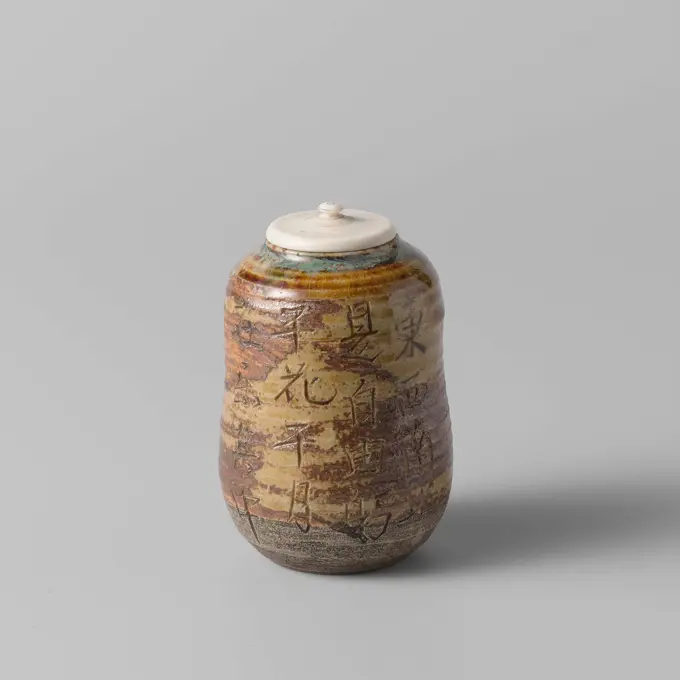
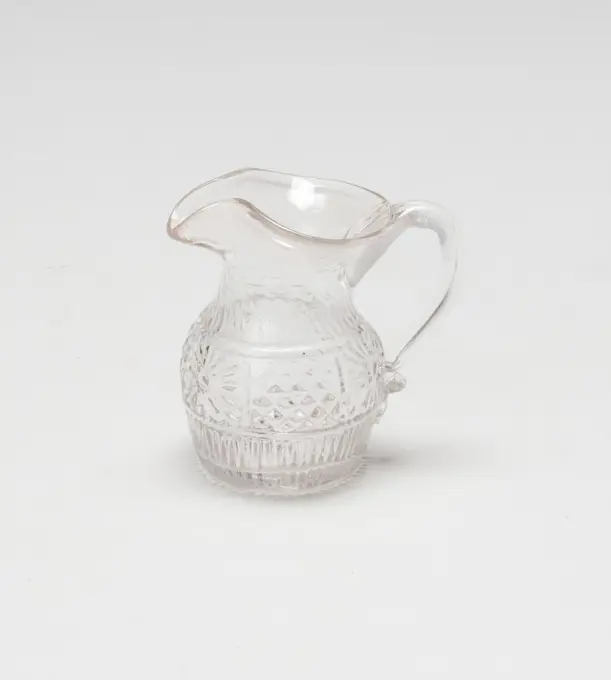
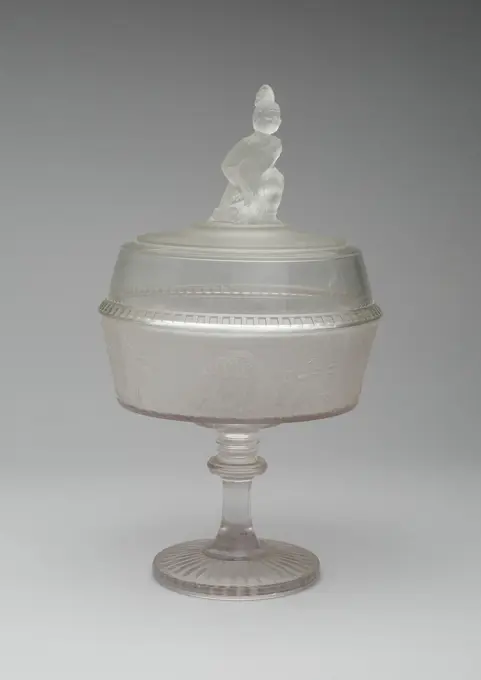
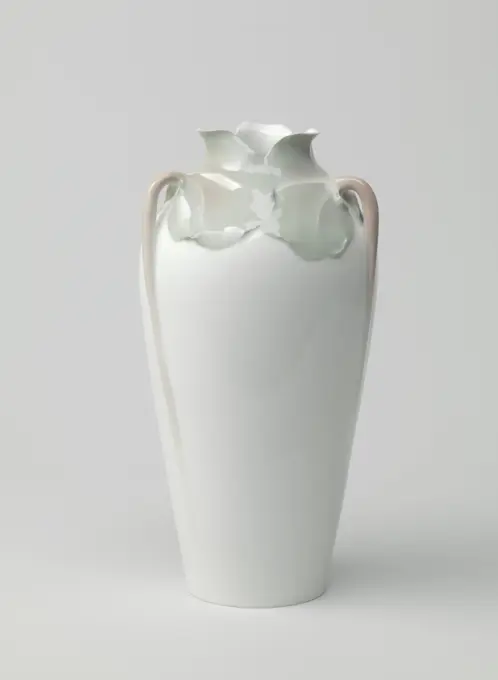
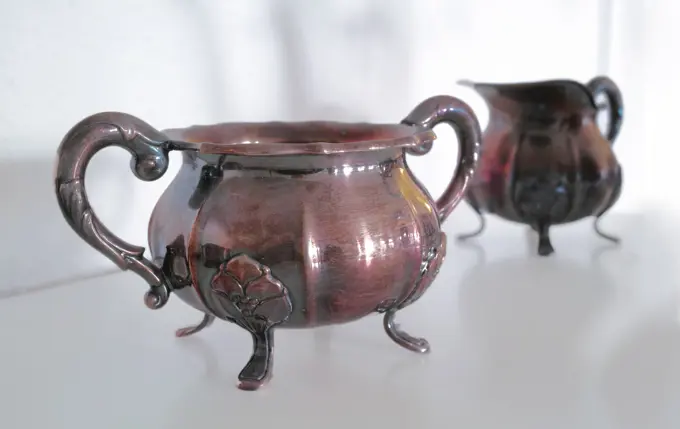
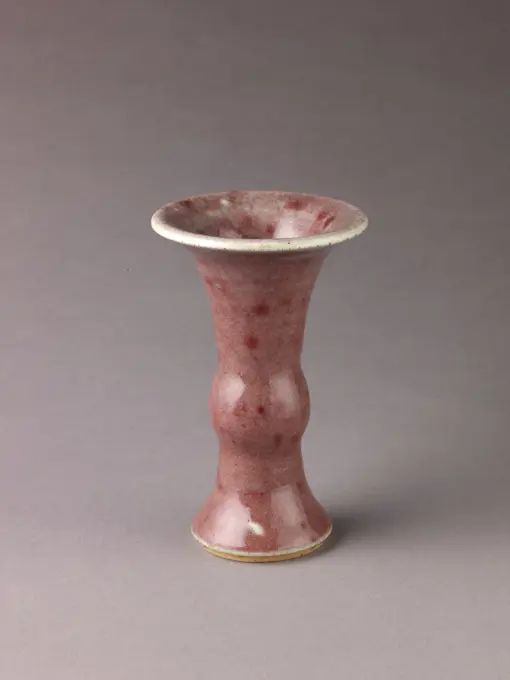
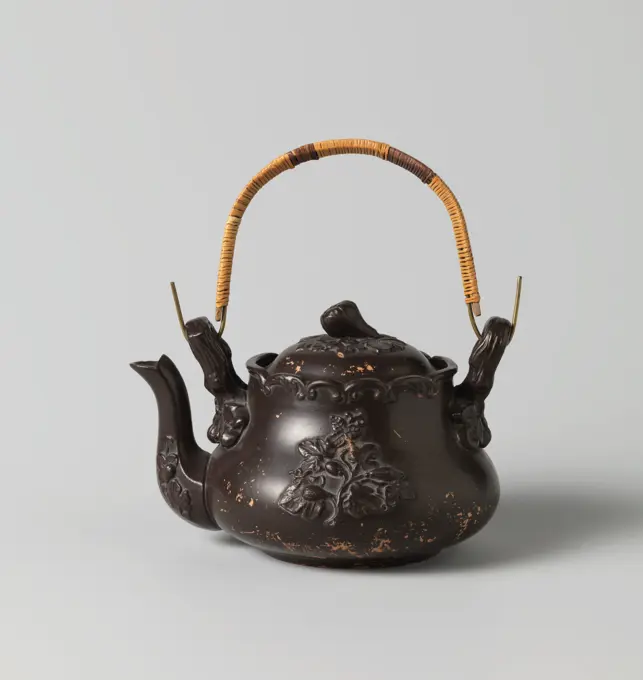
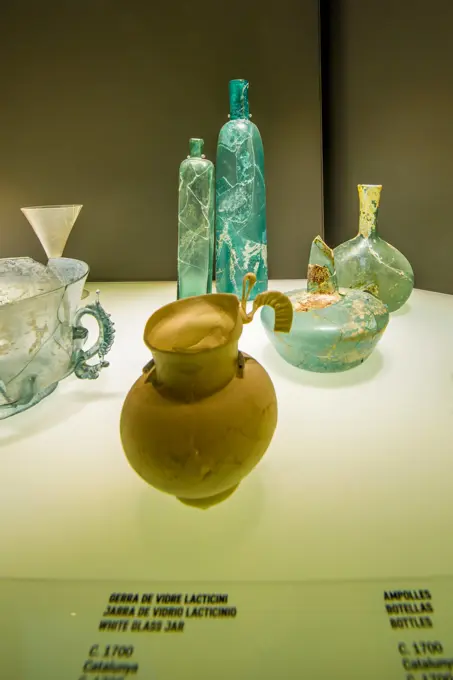
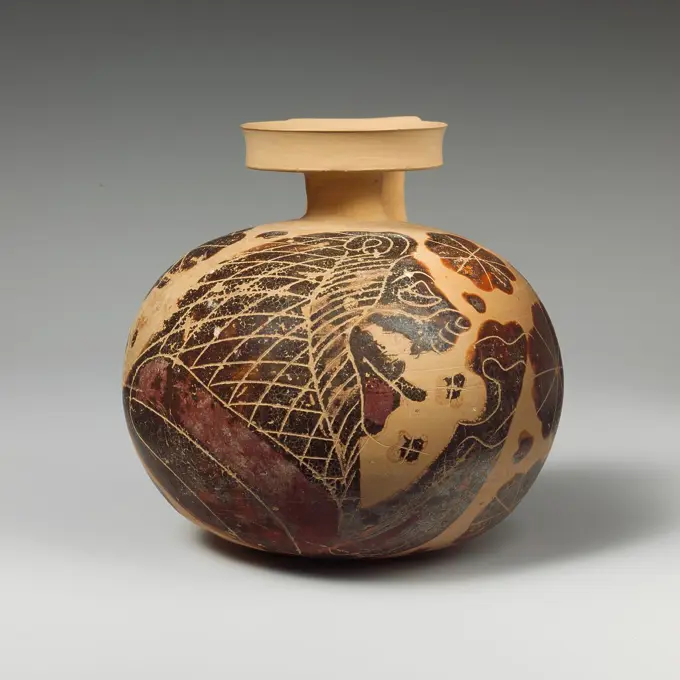
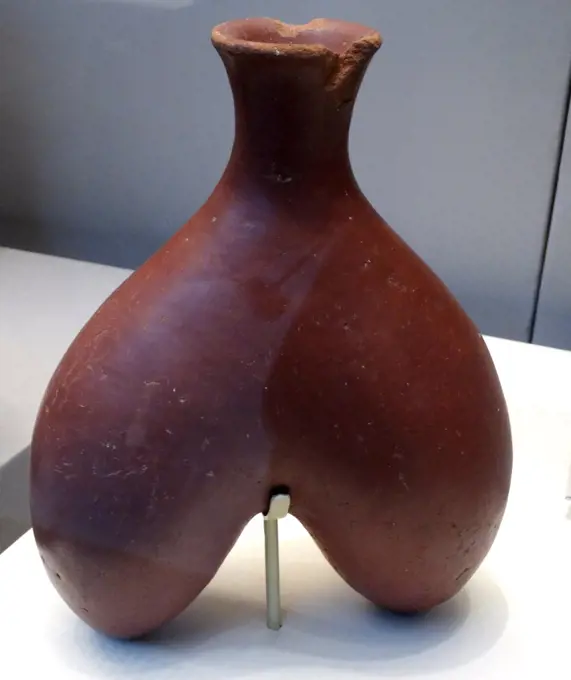
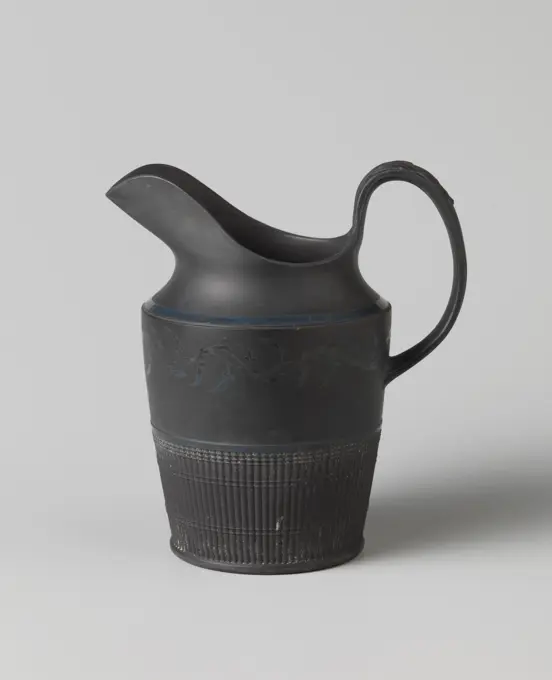
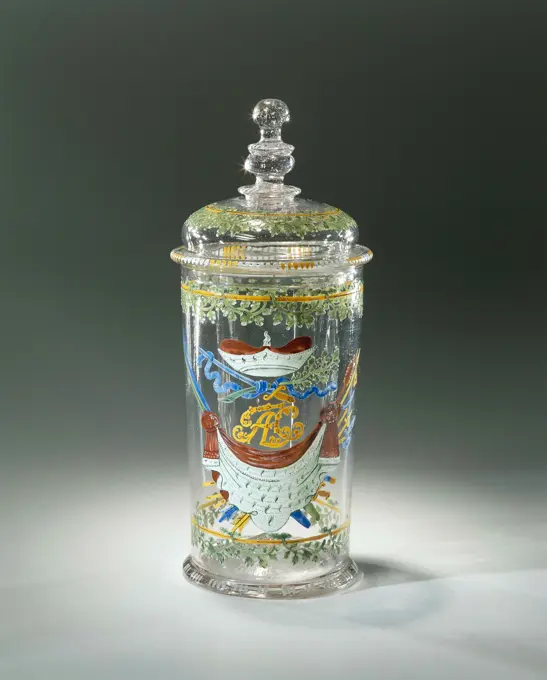
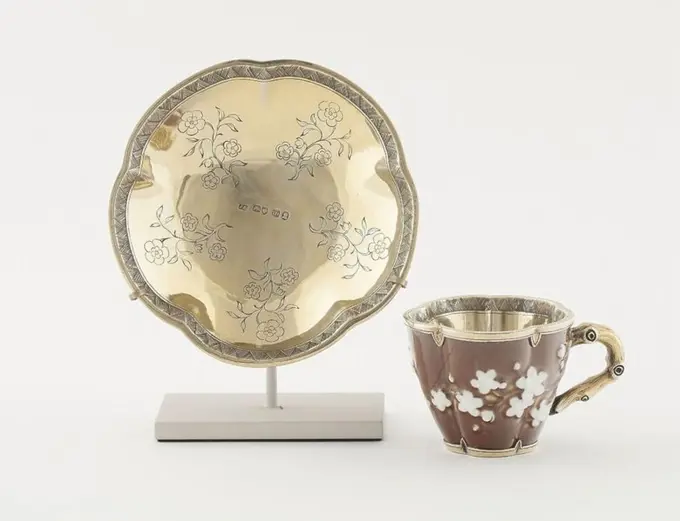
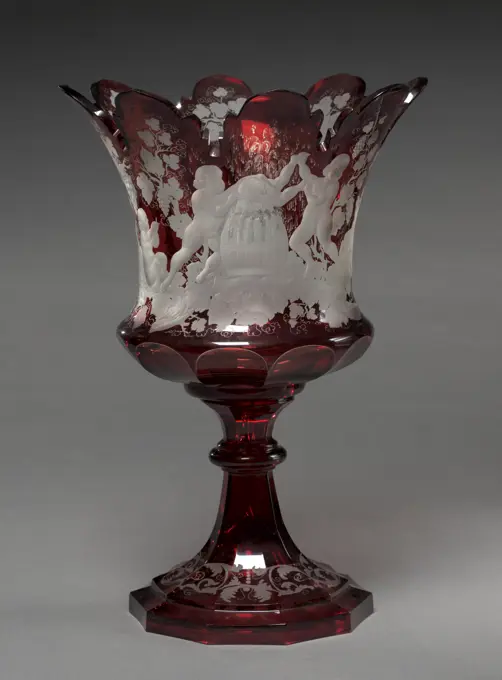
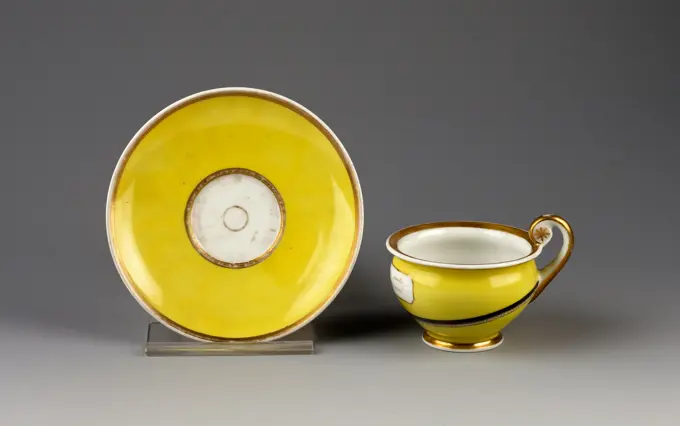
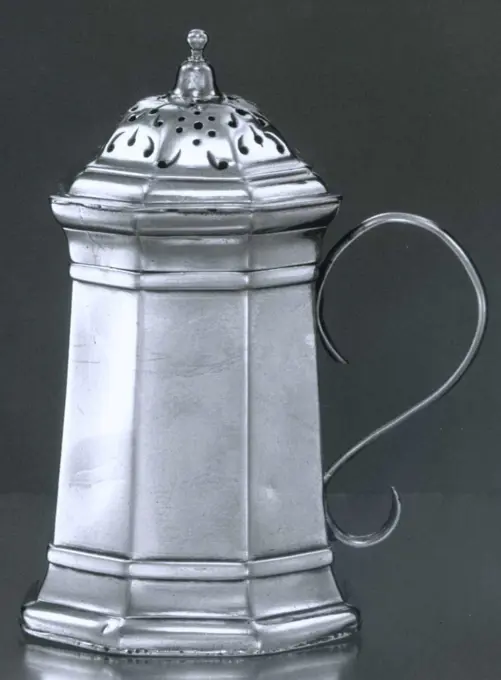
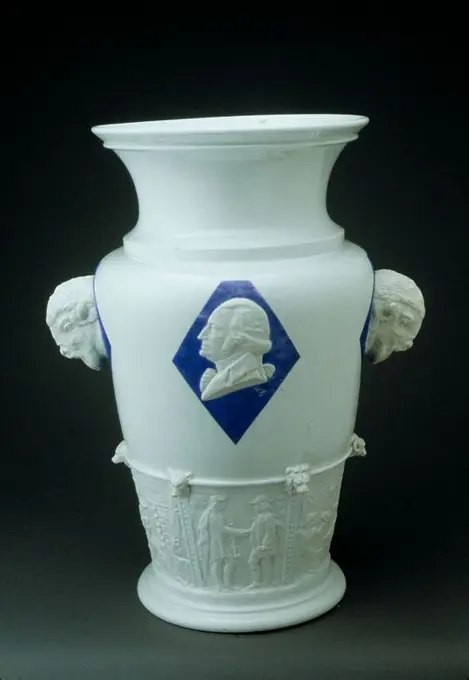
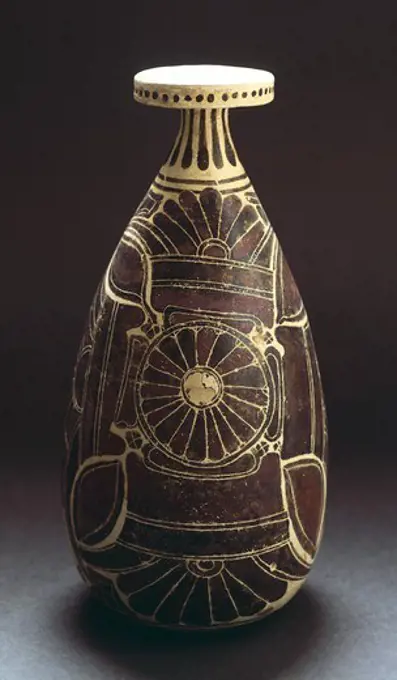
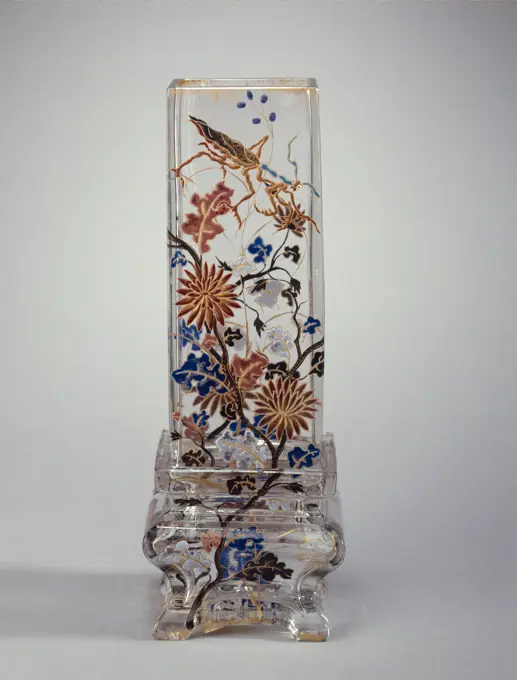
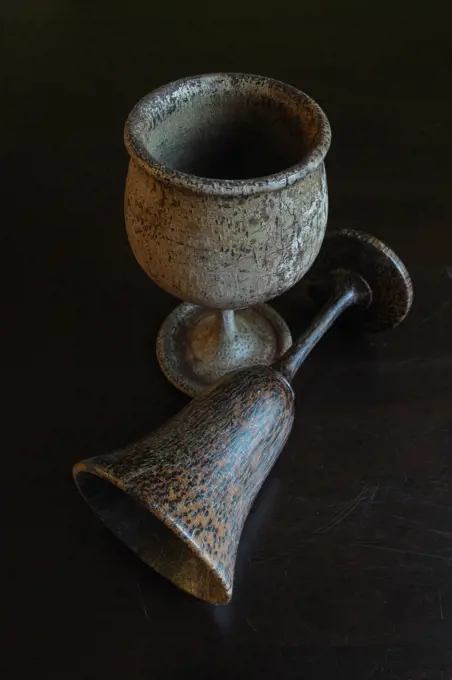
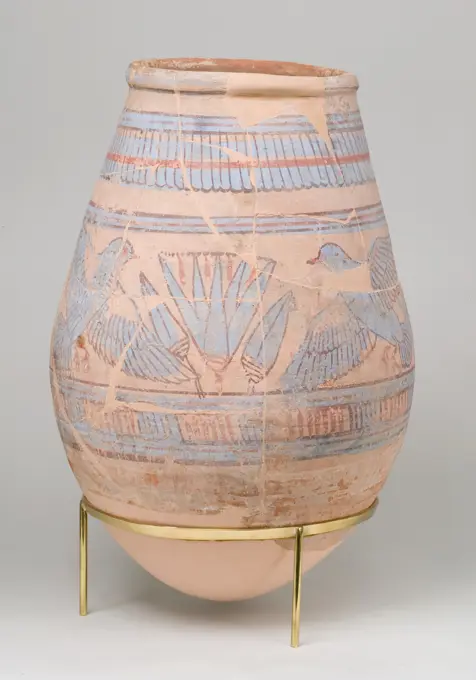
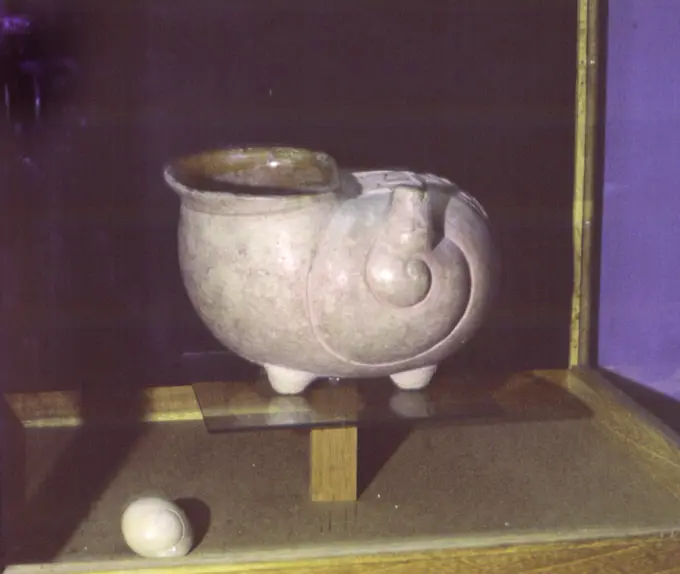
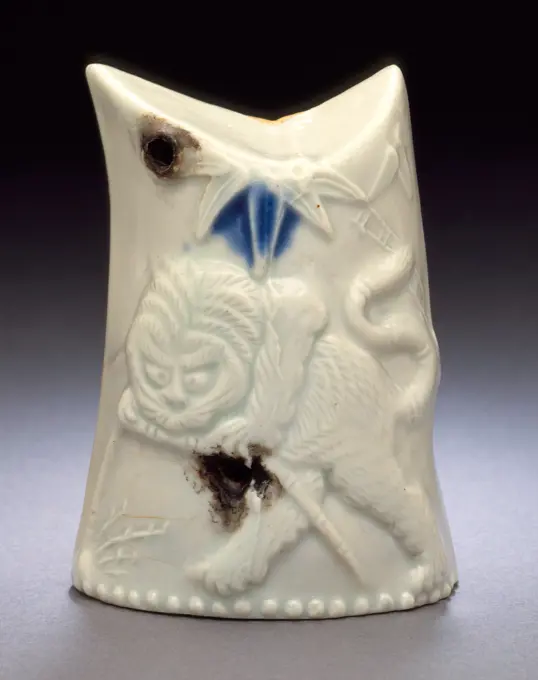
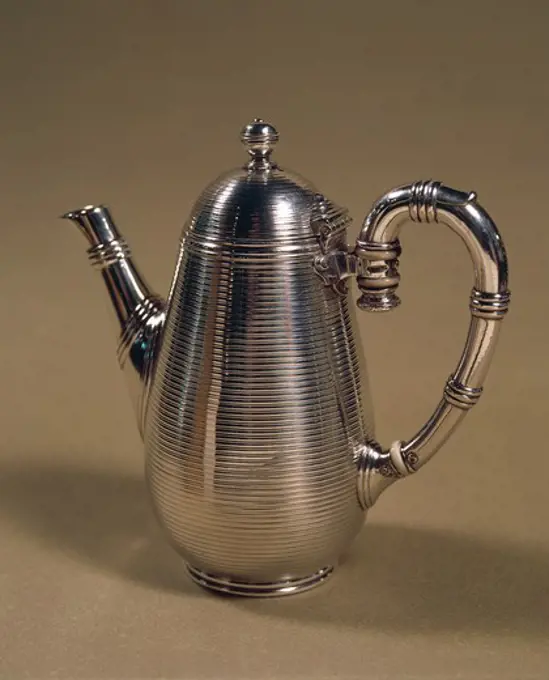
Miniature Cup 1895-1905 Russia. Gold, plique--jour, and cabochon ruby . A. TillanderJug with gold borders on a red ground, anonymous, c. 1800 - c. 1824 Can of porcelain, covered on the glaze with red and gold. The jug has an egg -shaped body on a spreading base and a wide neck with a wide donation crow on one side. The High Ear has a palmet at the base and the end is in the form of a snake head, which bites in the edge. The belly is covered with red and the foot, shoulder, neck and ear with gold. On the shoulder a flower vank in one of the gold tires. Marked on the underside with II. Empire. France (possibly) porcelain. glaze. gold (metal) painting / gilding / vitrification Can of porcelain, covered on the glaze with red and gold. The jug has an egg -shaped body on a spreading base and a wide neck with a wide donation crow on one side. The High Ear has a palmet at the base and the end is in the form of a snake head, which bites in the edge. The belly is covered with red and the foot, shoulder, neck and ear with gold. On the shoulder a flower vank in one of the gold ti. Dust tea bus or chair of stoneware with an ivory lid, partly covered with a light brown glaze. The lower part of the bus is unglazed. On the wall an unidentified square inscription with a signature. Old label on the inside with 'oribe'.Cream Jug, 18th century, Unknown American, 2 1/2 x 2 1/2 x 1 5/8in. (6.4 x 6.4 x 4.1cm), Glass, United States, 18th centuryWestward Ho!/Pioneer pattern covered compote on pedestal c 1876 Philadelphia. Glass . Gillinder and Sons (Manufacturer)Vase with three pink branches with leaf work, Rörstrand, c. 1900 Vase of porcelain, painted on the body with three pink branches that cross the mouth to the ears, on which green, pink nerved leaves form the mouth opening together. Marked with KL in green; Inserted and engraved the Model no 6643 and the letters W.L.; In the edge the letter I including a number 5. Denmark porcelain Vase of porcelain, painted on the body with three pink branches that cross the mouth to the ears, on which green, pink nerved leaves form the mouth opening together. Marked with KL in green; Inserted and engraved the Model no 6643 and the letters W.L.; In the edge the letter I including a number 5. Denmark porcelainJug (for Wine, Cider, or Vinegar). Dated: c. 1941. Dimensions: overall: 58.5 x 44.1 cm (23 1/16 x 17 3/8 in.) Original IAD Object: 18" High(approx) 6 1/2" Dia(base). Medium: watercolor, graphite, and colored pencil on paperboard. Museum: National Gallery of Art, Washington DC. Author: John Tarantino.Shelf, vintage and milk pots for coffee, victorian kitchenware and tools in kitchen at home. Metal, antique creamer and container for tea with copper, retro decor and rustic design with collectibleJug (England); glazed stonewareLavabo. The vessel is poured into CIRE Perdue technique with the spouts and presumably also with the handle deposits as a whole. The Platbolle vessel has a sharp, hollow collar. The two spouts are in each other's extension and end in blurred animal heads. Arranged at odds thereon against the top edge of the collar two handle tips in the form of female heads, in which the handle holes. The handle consists of a round bent iron rod with a round opening in the middle, in which the hook with a ring in it. Cast outlids can be observed on vessel and spouts.Snuff bottle in the Shape of an Elephant withVaseCream Jug; pewterBottle with Coiling Dragon. Culture: China. Dimensions: H. 8 1/4 in. (21 cm). Date: late 16th century.Archaeological evidence indicates that the kilns near Dehua in Fujian Province on China's southeastern coast opened in the late thirteenth century and flourished from the sixteenth to the eighteenth. Characterized by thick, lustrous glazes, Dehua wares, both religious figures and items for use on a scholar's desk, were exported to Europe in the seventeenth to nineteenth century. They are often known in Western writings by the French term blanc de chine, or "China white," which originated in nineteenth-century scholarship. Museum: Metropolitan Museum of Art, New York, USA.VINAJERAS CERAMICA DE TALAVERA S XIX. Location: CONVENTO DE SAN CLEMENTE-MUSEO. Toledo. SPAIN.This large and ornate cast bronze oil lamp features a central hole for filling and a single spout for its wick. Its extravagant handle rises to create both a loop and a sort of hook, one or both of which may have served to suspend the lamp when lit. Alternatively, the lamp may have stood on its own, perhaps atop a tall lampstand. While its primary function may have been for lighting dark spaces, this lamp must also have served an ornamental purpose. Oil Lamp, c. 50 BCE-50 CE. Roman, late Republican-early Imperial (c. 50 BCE - 50 CE). Bronze, cast; overall: 28.7 x 17.8 cm (11 5/16 x 7 in.).Tea and tea storage placed directly across the black tableAnonymous vase in the shape of a double gourd (common name), 1700. Brown coverage sandstones, black decor: on four sides of the paunch, black spirals are part of a hollow. Cernuschi Museum, Asia Museum of Asia in the city of Paris.Writer's Water Bottle China. Writer's Water Bottle 52044Small vase 18th century Chinese. Small vase 461500Cup With Rooster. Egypt or Syria, after 642 A.D. post Arab Conquest. Furnishings; Serviceware. TerracottaK'ang Hsi, Miniature Cup and Trembleuse Saucer, 1662-1722, hard-paste porcelain.Stop from Goudvis bowl, Anonymous, c. 1825 - c. 1850 Hollow, profiled, baluster -shaped stop with a gilded metal lower part and air holes. A garland in white and gold. Bohemen (possibly) glass. metal glassblowing / gilding Hollow, profiled, baluster -shaped stop with a gilded metal lower part and air holes. A garland in white and gold. Bohemen (possibly) glass. metal glassblowing / gildingTerracotta lekythos (oil flask). Culture: Greek, Attic. Dimensions: H. 15 7/16 in. (39.1 cm); diameter 4 3/4 in. (12.1 cm). Date: ca. 440 B.C..Two women at tombIn the center, an altar stands before the burial mound. On the left, a woman approaches with fillets (bands). On the right, another woman pours water form a kalpis (water jar), which she holds by the horizontal handles. This representation provides a rare picture of a ritual being performed at a tomb. Museum: Metropolitan Museum of Art, New York, USA.Covered Bowl, anonymous, c. 1800 - c. 1899 Porcelain lid bowl, covered with a monochrome dark red glaze. The edges are white. White glazed within the foot ring; With the six-character brand of Keizer Yongzheng. Cover button in the form of a rooster. Monochrome. China porcelain. glaze. cobalt (mineral) vitrification Porcelain lid bowl, covered with a monochrome dark red glaze. The edges are white. White glazed within the foot ring; With the six-character brand of Keizer Yongzheng. Cover button in the form of a rooster. Monochrome. China porcelain. glaze. cobalt (mineral) vitrificationBell (Chunyu) 3rd-2nd century B.C. China. Bell (Chunyu) 61054Vase in the Shape of a Bamboo Basket with Bean Vines and Butterflies second half of the19th century Japan. Vase in the Shape of a Bamboo Basket with Bean Vines and Butterflies. Japan. second half of the19th century. Bronze. Meiji period (1868-1912). MetalworkBeaker. Culture: Lambayeque (Sicán). Dimensions: H. 5 1/4 x Diam. 4 1/4 in. (13.3 x 10.8 cm). Date: 10th-11th century. Museum: Metropolitan Museum of Art, New York, USA.jarro liturgico y patena de bronce, siglo VII, Illescas, Museo de los Concilios y la Cultura Visigoda, Iglesia de San Román,Toledo, Castilla-La Mancha, Spain.Chocolate boiler with lid of red earthenware, children's toys., Anonymous, c. 1840 - c. 1870 Pouch -shaped chocolate boiler with lid of red earthenware. The kettle has an S-shaped spout, a lid with a pear as a button and a straw of reeds. The boiler is decorated in relief with leaves and buds. The boiler is marked. Bohemia earthenware Pouch -shaped chocolate boiler with lid of red earthenware. The kettle has an S-shaped spout, a lid with a pear as a button and a straw of reeds. The boiler is decorated in relief with leaves and buds. The boiler is marked. Bohemia earthenwarePeach-shaped wine pot or teapot (pair with 1975.1.1722) probably 18th century Chinese. Peach-shaped wine pot or teapot (pair with 1975.1.1722) 461528Taller de las Águilas / 'Bottle with two mouths and rings'. 1570 - 1600. Rock crystal / Hyaline quartz, Enamel, Gold. Museum: Museo del Prado, Madrid, España.Vase. Mintons Ltd.; English, founded 1793. Date: 1890-1900. Dimensions: 19.1 x 11.1 x 10.8 cm (7 9/16 x 4 3/8 x 4 1/4 in.). Hard-paste porcelain with pte sur pte decoration in white on green ground surrouned by pale peach ground with gilding. Origin: Stoke on Trent. Museum: The Chicago Art Institute, Chicago, USA.Terracotta jug ca. 1800-1725 B.C. Cypriot Oval flask with tubular spout, string-holes, and bands of lattice triangles.. Terracotta jug 240634Bottle (Iran); dark blue glass"OLLA" VIDRIADA CON DECORACION VEGETAL - S XX ARTE POPULAR. Location: ALFARERIA. CUENCA. SPAIN.TeaCaddy. Manufacturer: Gorham Manufacturing Company, American, founded 1831Benjamin Halsted Myer Myers, Cann, 1760-70, silver.Chinese, Snuff Bottle, porcelain.CERAMICA DE TALAVERA TIESTO S XVIII. Location: CONVENTO DE SAN CLEMENTE-MUSEO. Toledo. SPAIN.Double-gourd vase (one of a pair) ca. 1742 Decorated in the style of Adam Friedrich von Löwenfinck Painted in polychrome enamels in the style of Adam Friedrich von Löwenfinck (1714-1754), inspired by Chinese famille verte porcelain.. Double-gourd vase (one of a pair) 238559BOTIJO DE CUELLO ANCHO Y UN ASA - S XX - CERAMICA POPULAR. Location: ALFARERIA. MOTA DEL CUERVO. CUENCA. SPAIN.Arab jar, Ribera de Guadalimar, Archeological Museum. Úbeda, Jaén province, Andalusia, Spain.Hot MilkJugCANTARO PARA AGUA VIDRIADO Y DECORADO EN COLORES CON DOS ASAS Y TAPA. Location: ALFARERIA. Nijar. Almería. SPAIN.trilobed jug, Visigoth - early medieval, Valladolid Museum , Castile and Leon, Spain.Artifacts at the El Born Cultural and Memorial Centre archeological site and museum, Barcelona, Spain. McPMDF McP_MDF_Barcelona563 *** artifacts AT The El Born Cultural and Memorial Centre Archeological Site and museum, Barcelona, Spain McPMDF McP MDF Barcelona563 McPMDFTerracotta aryballos (oil flask). Culture: Greek, Corinthian. Dimensions: H. 3 3/4 in. (9.6 cm). Date: ca. 620-590 B.C..Forepart of a lion. Museum: Metropolitan Museum of Art, New York, USA.Double flask with a single neck that divides into two containers that represent breasts. Such jars provided the newly reborn dead with the nurture and nourishment they to flourish in the afterlife. Early Predynastic Egyptian,(Naqada HA), (about 3800 BC)Milkkan of earthenware, Neale & Palmer Black Basalt, Neale & Palmer (Hanley), c. 1790 - c. 1825 Cup -shaped milk jug of earthenware, black basalt. The jug has a wide lip and a C-shaped ear. The lower half of the jug is ribbed. A silver -colored leaf shank runs along the top edge. Hanley earthenware Cup -shaped milk jug of earthenware, black basalt. The jug has a wide lip and a C-shaped ear. The lower half of the jug is ribbed. A silver -colored leaf shank runs along the top edge. Hanley earthenwareVASO DE PORCELANA CHINA S XVIII. Location: CONVENTO DE SAN CLEMENTE-MUSEO. Toledo. SPAIN.Jar - Dion Pottery Dion Pottery. Plowed soil, smooth, mounted standing ring, cylinder-shaped body. Vaulted lid with transferring edge and composite button. On the body the ermieten keelvorstenmantel ceased by weapons and standard, the monogram Fac for Friedrich August Churfürst, a sword and lauertak, above a keelvorstehoed. The stand ring decorated with stripes; Along the lower and upper edge and on the lid a narrow yellow breeze wound with ivy drinks.JARRONES DE GRES VIDRIADO-DINAST SONG 960/1279 -FORMA KINUTA EN BORDES. Location: MUSEO REAL ARTE CHINO. STOCKHOLM.BOTIJO CON FORMA DE GALLO - SIN VIDRIAR - ARTE POPULAR S XX. Location: ALFARERIA. Agost. Alicante. SPAIN.Lid of a jar. Vaulted lid with metal frame. Covered lid decorated with glass ribs.Crock. Dated: c. 1937. Dimensions: overall: 29.2 x 22.5 cm (11 1/2 x 8 7/8 in.). Medium: watercolor and graphite on paper. Museum: National Gallery of Art, Washington DC. Author: Charlotte Sperber and Jean Peszel.Beaker mid-16th century German This exceptionally tall, straight-sided glass, sometimes called a Stangenglas (pole glass), is as richly ornamented on the inside as on the outside. It is a rare example of a glass featuring sharp-pointed spikes that project into the glass.. Beaker 466666Cup and Saucer. Porcelain: Sèvres Porcelain Manufactory (Founded 1740); Mounts: James Aldridge (English, 1768-); Adapted under the direction of William Beckford (English, 1760-1844); Porcelain: Sèvres, France; Mounts: England. Date: 1815-1825. Dimensions: Cup: 5.1 × 6.4 × 5.1 cm (2 × 2 1/2 × 2 in.); Saucer: D. 2.5 cm ( 1 in.); diam. 11.4 cm (4 1/2 in.). Porcelain with silver-gilt. Origin: . Museum: The Chicago Art Institute, Chicago, USA. Author: Manufacture nationale de Sevres.Miniatureteapot. Maker, possibly by: Sampson Bennet, British, active 1721-66Maker, formerly attributed to: Samuel Bartlett, American, 1752-1821The Portland Vase. Cameo glass, probably made in Rome about 15 BC - AD 25. The Portland Vase is one of the finest surviving pieces of Roman glass, and is named after the Dukes of Portland who owned it from 1785 to 1945.Bottle. Norymberga, glass engraverMetallic green decorative vase. Studio Photo. Metallic green decorative vaseRuby Vase, 1800s. Bohemia, 19th century. Glass; diameter: 27.2 cm (10 11/16 in.); overall: 40 x 17.5 cm (15 3/4 x 6 7/8 in.).Fili Anka with a saucer; Korzec (Porcelain and faience manufacture; 1790-1832); 1815-1820 (1815-00-00-1820-00-00);Ryszard, Stanisław Ryszard (1871-1955) - collection, Biedermeier (style), inscriptions, dedication inscriptions, purchase (provenance)Fire Pot, anonymous, 1550 - 1700 fire pot Round earthenware pot with a short neck. The three vertically placed ears of this pot are smoothly broken down and lost; This pot still has remains of the original content. Netherlands earthenware. cork (bark). fuel   FlushingBottle. The decoration of this bottle includes a European spyglass made of lacquered paper, as well as a Dutch man and woman in a medallion. To underscore the Western style of the scene, the couple is rendered in a lacquer technique that imitates oil paint.Pepperbox. Maker, attributed to: Charles Whiting, American, 1725-1765kitchen utensils, Son Fornes Archaeological Museum, talayotic period room (1300-123 a. C.), Montuiri, Es Pla region, Mallorca, Spain.Century Vase. Culture: American. Designer: Designed by Karl L. H. Müller (ca. 1820-1887). Dimensions: Overall: H. 22 1/4 in. (56.5 cm); Diam. 17 3/8 in. (44.1 cm)Lip: Diam. 13 1/8 in. (33.3 cm). Manufacturer: Union Porcelain Works (1863-ca. 1922). Date: 1876.The "Century Vase" is one of several large works designed by the German sculptor Karl L. H. Müller for the Union Porcelain Works booth at the Centennial Exhibition held in Philadelphia in 1876. It was originally intended to be displayed on a porcelain pedestal, also designed by Müller. George Washington's profile is featured on the front and back of the vase, flanked by bison-head handles. Six relief panels portraying scenes from American history, including the Boston Tea Party and William Penn's treaty with the Lenni Lenape, encircle the base. The unfinished vase lacks the painted scenes of American industrial progress found on two of the other large-scale other examples. Museum: Metropolitan Museum of Art, New York, USA.old ceramic monastery tableware, Monastery of Santa María de Carracedo, 10th century, Carracedo del Monasterio, El Bierzo region, Castile and Leon, Spain.Vase (USA); Designed by Unknown; Manufactured by The Gates Potteries, American Terracotta and Ceramic Company; glazed earthenwareOctagonal cup with dancing boys and flowering plants, c. 1700 - c. 1720 Octagonal head of porcelain, covered with a cracked, translucent glaze and painted on the glaze in blue, red, green, yellow, black and gold. Above the foot a band with modeled, pointed leaf motifs. In Europe painted with a dancing boy with an instrument and flowering plants. A flower drink on the bottom. Marked on the underside with an unidentified seal brand. Baking sand on the foot ring. Brown edge. Blanc de Chine in Europe decorated in the Japanese Kakiemon style. Dehuapainter: Europe porcelain. glaze. gold (metal) painting / gilding / vitrification Octagonal head of porcelain, covered with a cracked, translucent glaze and painted on the glaze in blue, red, green, yellow, black and gold. Above the foot a band with modeled, pointed leaf motifs. In Europe painted with a dancing boy with an instrument and flowering plants. A flower drink on the bottom. Marked on the underside with an unidentified seal brand. BakingVase from Peloponnesus, Greece, 5th century. Artist: UnknownPrzeszo Przyszoci unknownAlabastron, decorated Corinthian pottery, Italy. Ancient Greek civilization, Magna Graecia.Stolp with two imposed tires and eleven openwork rosettes, anonymous, c. 1680 - c. 1760 Slim conical bell jar from undecorated faience, with two imposed tires, eleven openwork rosettes and a C-shaped ear on the top. Delft (possibly) earthenware. tin glaze. Slim conical bell jar from undecorated faience, with two imposed tires, eleven openwork rosettes and a C-shaped ear on the top. Delft (possibly) earthenware. tin glaze.Vase, Ernest Chaplet, 1885-1886, Amsterdam, Netherlands.Roman glass flasks.Paris (7th arr.), France The exhibition of decorative arts, national manufacture of Sèvres, a vase , 1925 - International Exhibition of Modern Decorative and Industrial Arts Paris (French - Paris ( VIIe arr. ) , France L' Exposition des arts décoratifs , Manufacture Nationale de Sèvres , un vase). Engraving, interior view, painted decor, vase, painting, decorative arts, ceramics, exhibition, exhibition of decorative arts, ephemeral architecture, Art , Habitat , Architecture, A.D. National Manufre de Sèvres - A vase 1925 France, Paris, Exhibition of decorative arts, Manufre Natle de Sèvres. A vaseCupVase Bing & GroendhalVase; about 1915; England; Stourbridge; Stevens & Williams; Cameo glass. Cameo glass is a luxury form of 'art glass' produced by etching and carving through fused layers of different coloured glass.Emile Gallé. "Quadrangular vase of traditional Chinese shape decorated with chrysanthemums and religious mantis and console base with flowers decoration, in thick transparent white glass, polychrome enamels and gilding, around 1880 (view together face A)". Glass and enamel. Museum of Fine Arts of the City of Paris, Petit Palais. 26989-13 China, Chinese, chrysantheme, console, decor, gilding, polychrome email, flower, traditional shape, insect, nun mantle, decorative object, base, transparent thick, quadrangular vase, white glassOld antique wooden holy grails stand out of dark table with window lightTea head with multi -colored flower decor, Wilkinson Ltd, c. 1930 - c. 1940 Tea head of earthenware, multi -colored painted with floral decor. Part of tea set. England earthenware. uranium oxide Tea head of earthenware, multi -colored painted with floral decor. Part of tea set. England earthenware. uranium oxideBlue-painted Jar from Malqata ca. 1390-1353 B.C. New Kingdom The decorated pottery excavated by the Museum's Egyptian Expedition at Malqata, the palace city of Amenhotep III, is primarily of the type called blue-painted ware. The vessels are embellished with floral and animal motifs painted in a palette limited to blue, red, and black (see 11.215.464 and 11.215.472). A few are adorned with three-dimensional decorative elements (see 11.215.460 and 11.215.477). This pot has been painted with a scene of birds flying up from a marsh. A similar motif may also be seen on two painted ceiling fragments from the main palace (see 12.180.257 and 12.180.258).. Blue-painted Jar from Malqata. ca. 1390-1353 B.C.. pottery, slip, paint. New Kingdom. From Egypt, Upper Egypt, Thebes, Malqata, Palace of Amenhotep III, MMA excavations, 1910-11. Dynasty 18Mayan pottery shell shaped vessel, Mexico.CANTARO CON CUELLO ALTA CON UN ASA. Location: ALFARERIA. MOVEROS. Zamora. SPAIN.Bottle Decorated with "Three Friends" Pine, Bamboo and Plum mid-18th century Japan. Bottle Decorated with "Three Friends" Pine, Bamboo and Plum 72312OLLA MAJA VIDRIADA Y DECORADA CON FLORES DE PASTA BLANCA-ARTE POPULAR S XX. Author: MARIANO GOMEZ (S XX). Location: ALFARERIA. CUERVA. Toledo. SPAIN.Case (Inrō) in Shape of Tea Caddy in Its Brocade Cover 19th century Koma Kōryū Japanese. Case (Inrō) in Shape of Tea Caddy in Its Brocade Cover 58895Water Dropper in the Form of Bamboo with a Raised Tiger. Japan, dated 1865. Ceramics. Hirado Mikawachi ware; porcelain with blue and clear glazesKettle unknownCreampot.   Maker: Thomas Shields, American, 1742-1819Amphora with Chimera, c6th century BC.Closeup of empty drawing art studio with nobody in itSilversmith's Art, France 19th century. Engraved silver coffeepot with circles and with bamboo-shaped handle. Paris, 1880.Shanghai,ChinaCopper lacquer Vase by Jean Dunand, a French lacquer, sculptor, dinandier (copper manufacturer) and interior designer. Dated 1935Set of Ceramic, stylish tableware, table decor and food menu concept.. Set of Ceramic, stylish tableware