Artistically Designed Fans

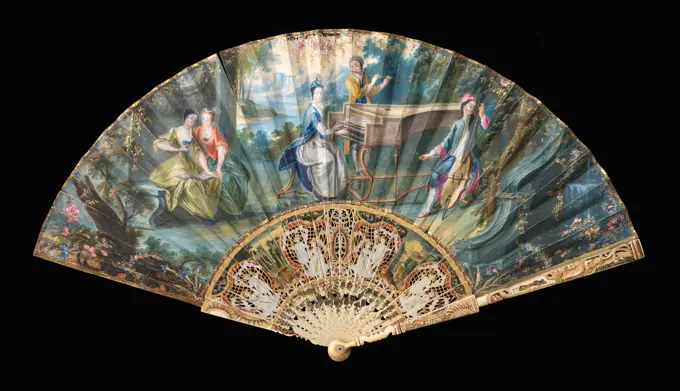
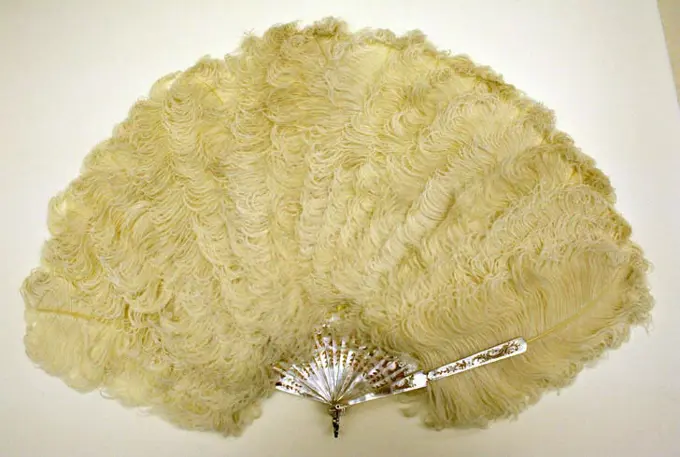
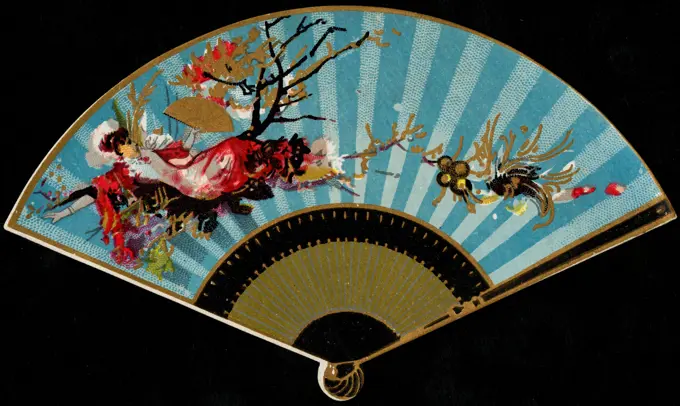
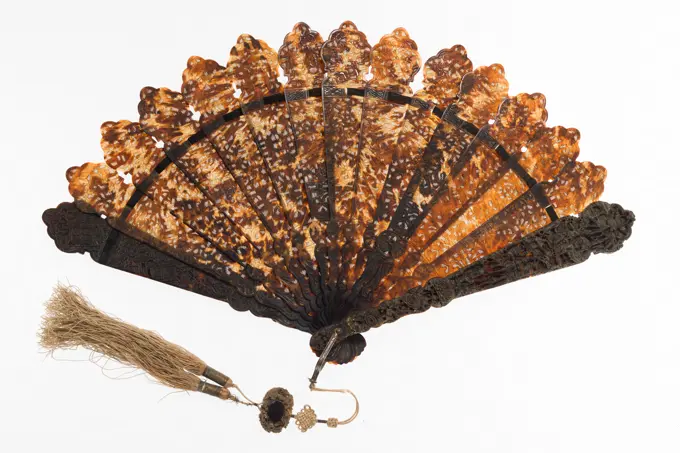
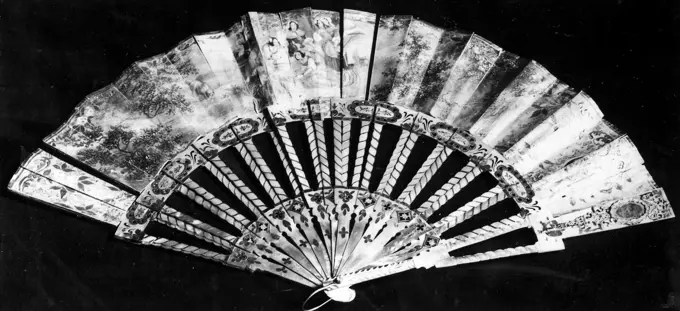
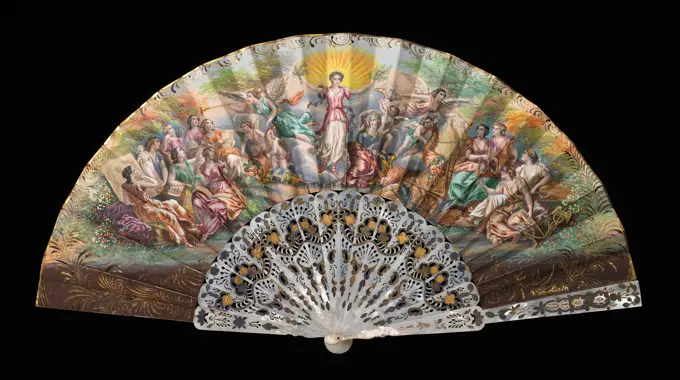
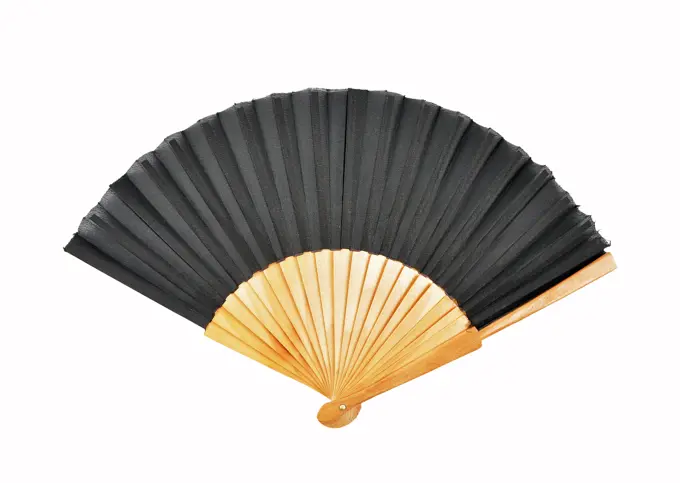
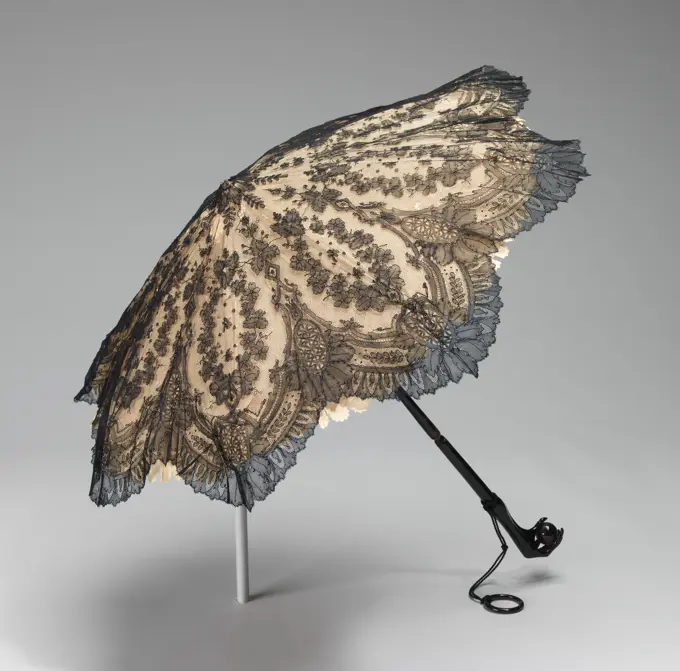
A collection of decorative hand fans, showcasing intricate designs, colors, and materials, reflecting the artistry of fashion accessories from the 19th to early 20th century.

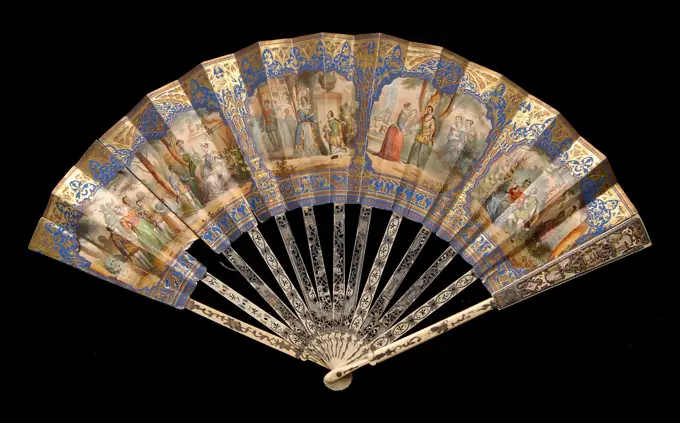
EVENTAIL. "Rome", second half of the 19th century. Swan skin and watercolor, openwork and golden black wood. Paris, Carnavalet museum. Rome Second half XIXth Fashion accessory, Eventail
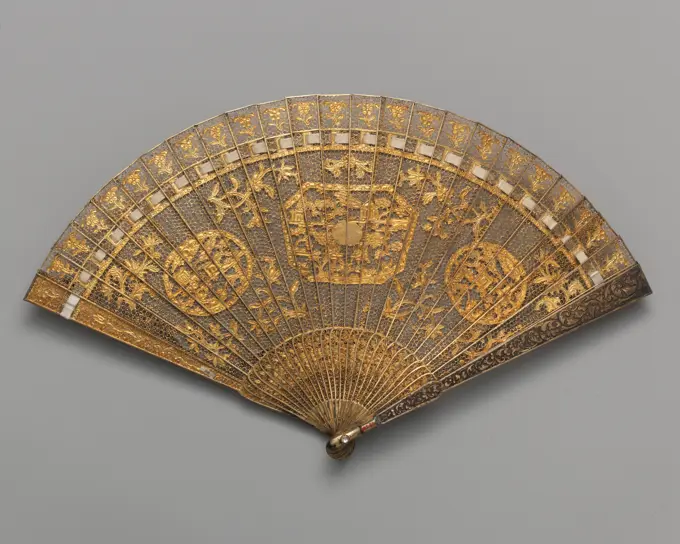
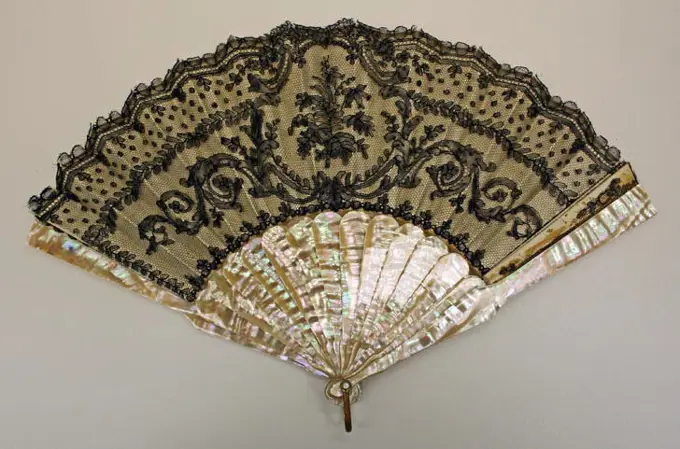
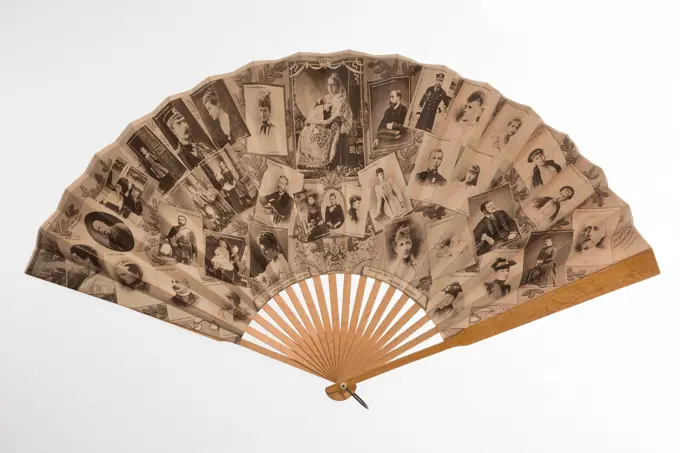
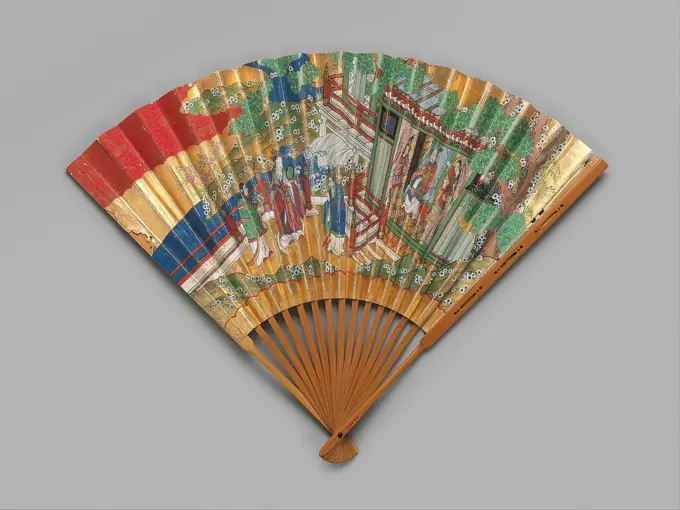
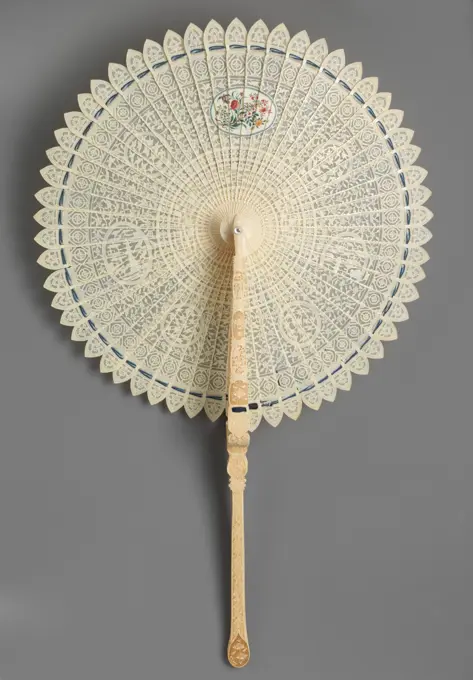
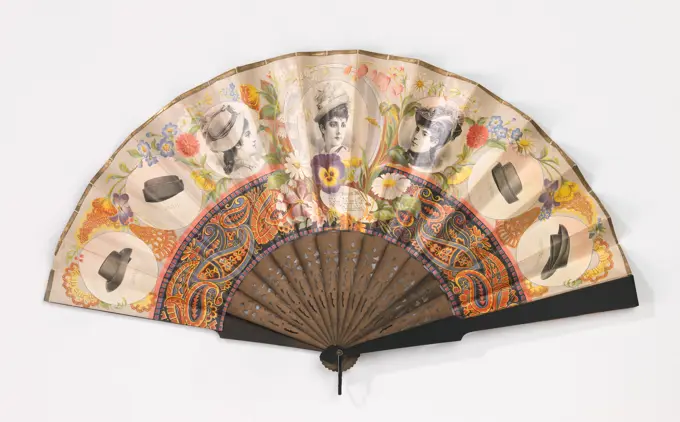
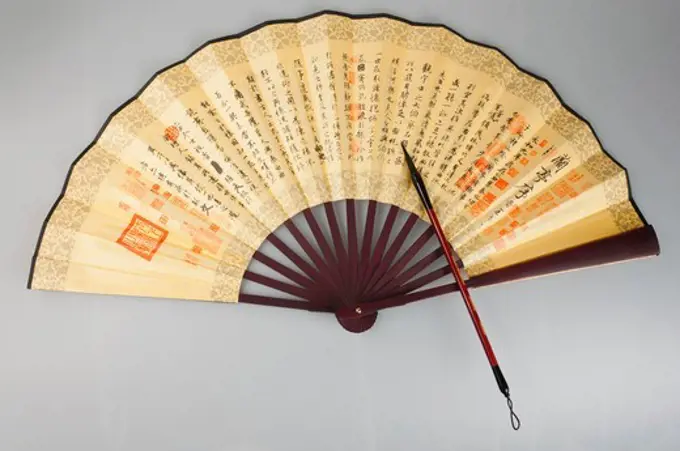
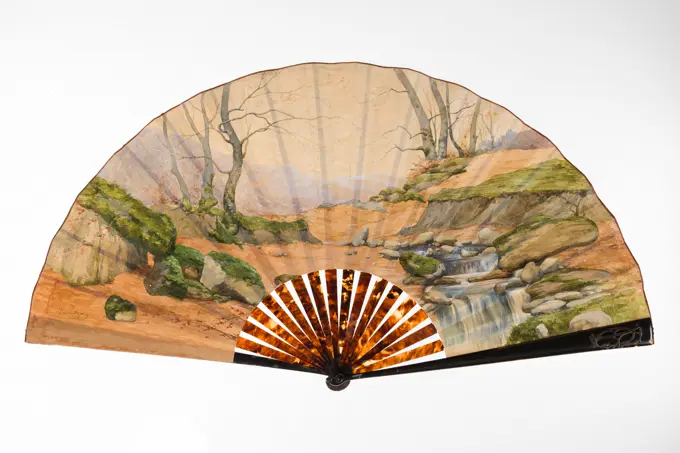
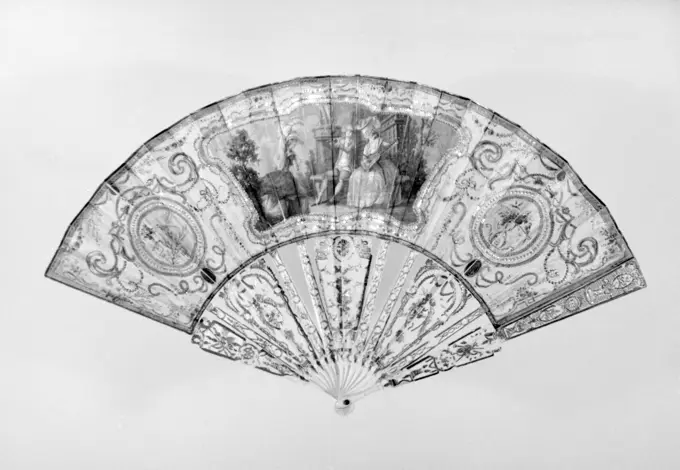
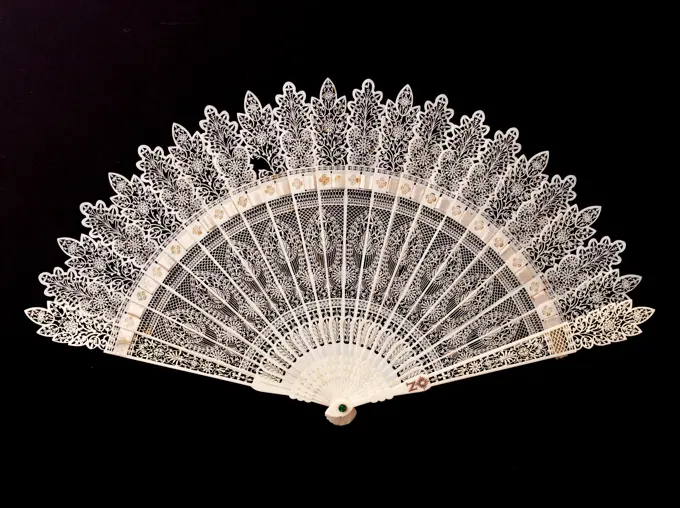
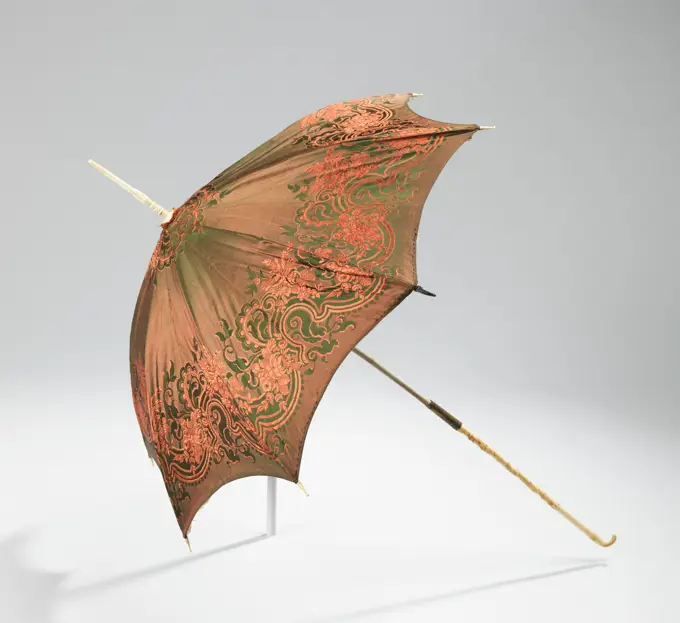
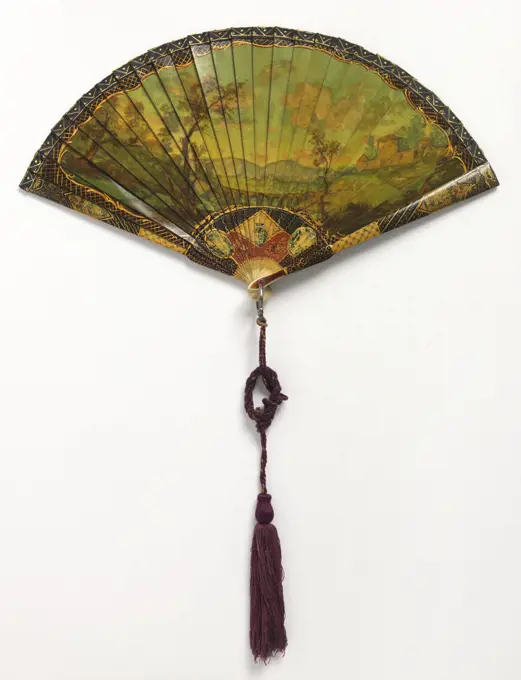
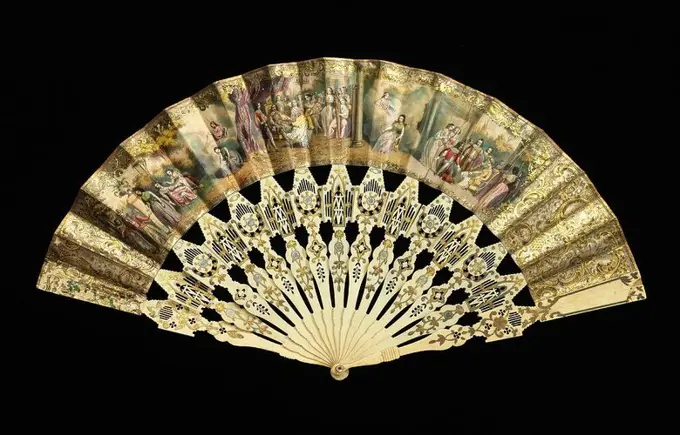
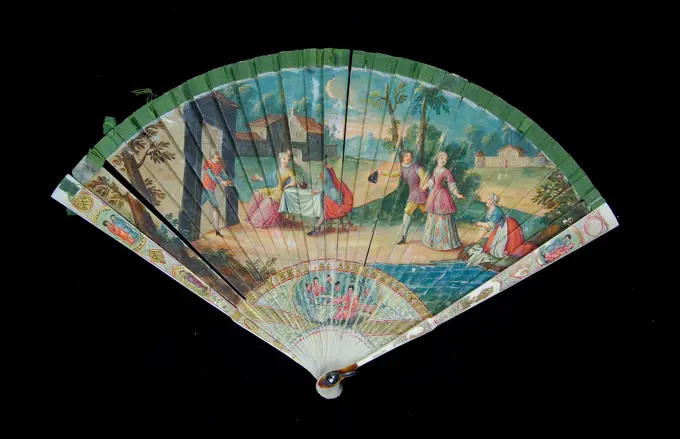
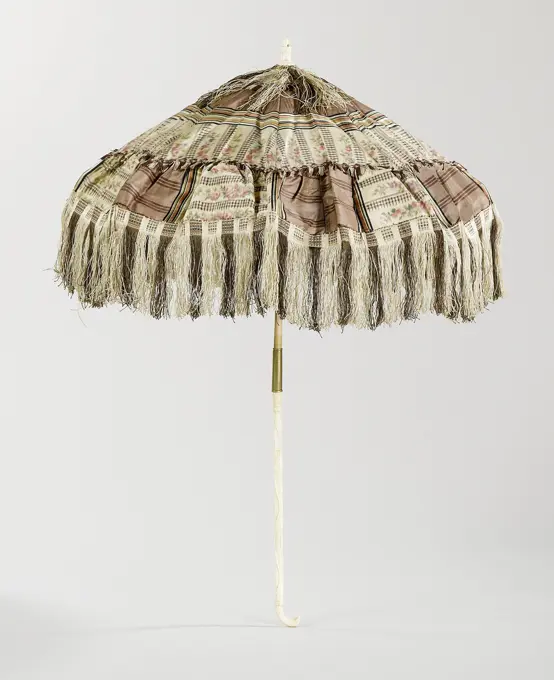
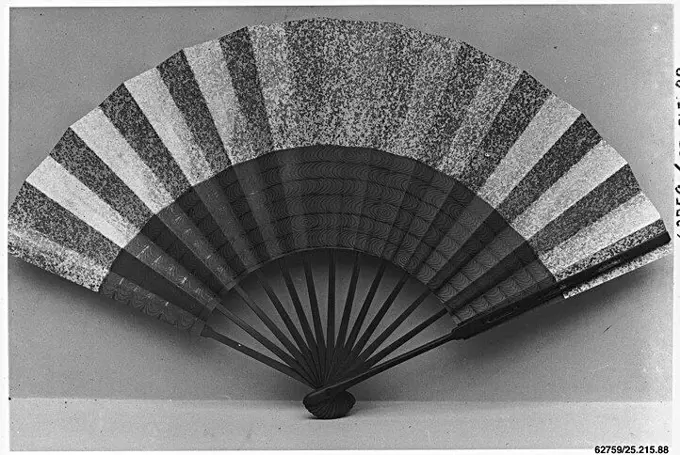
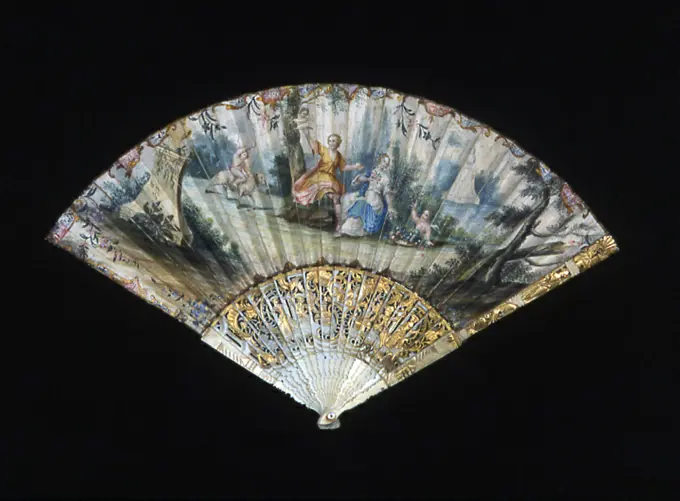
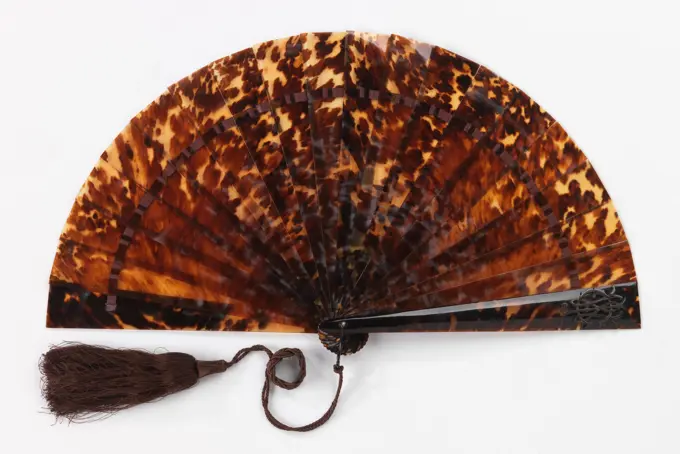
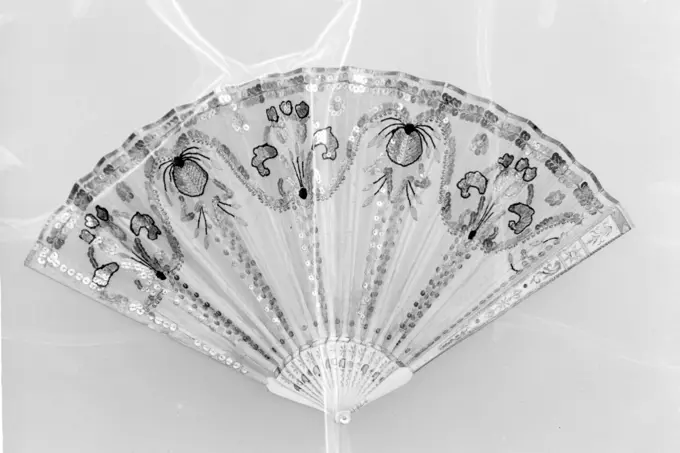
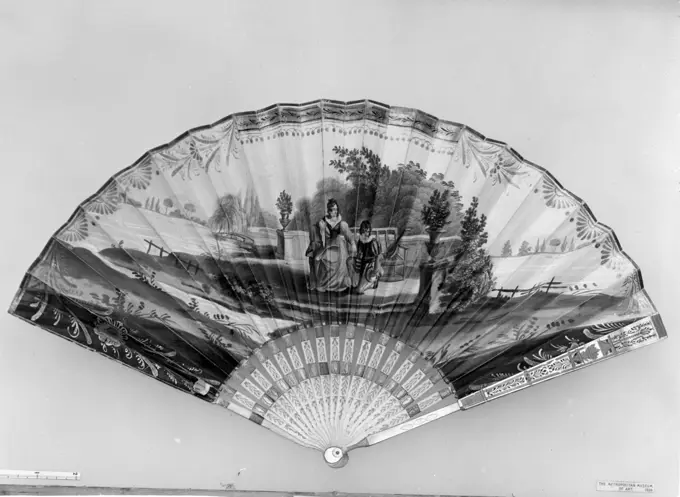
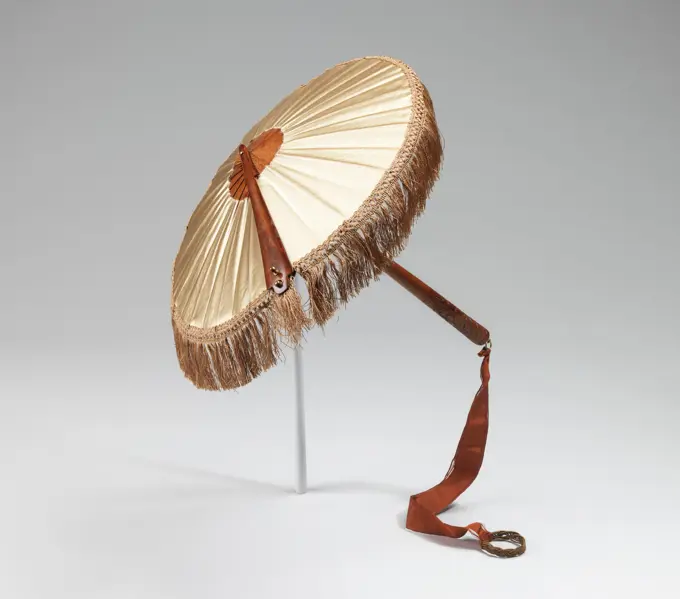
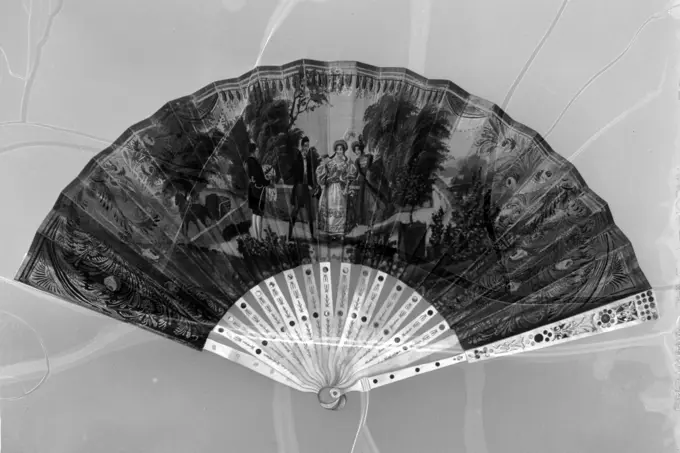
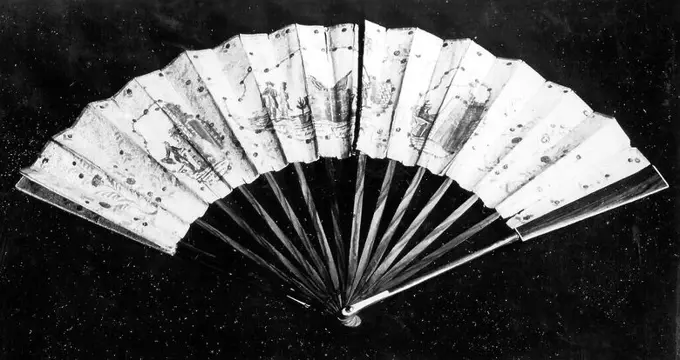
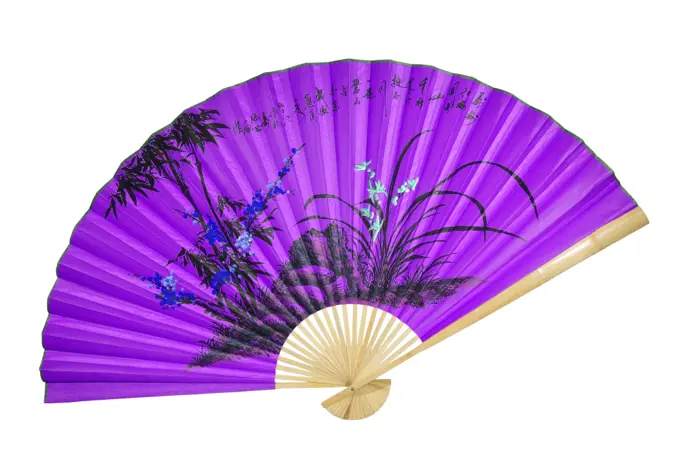
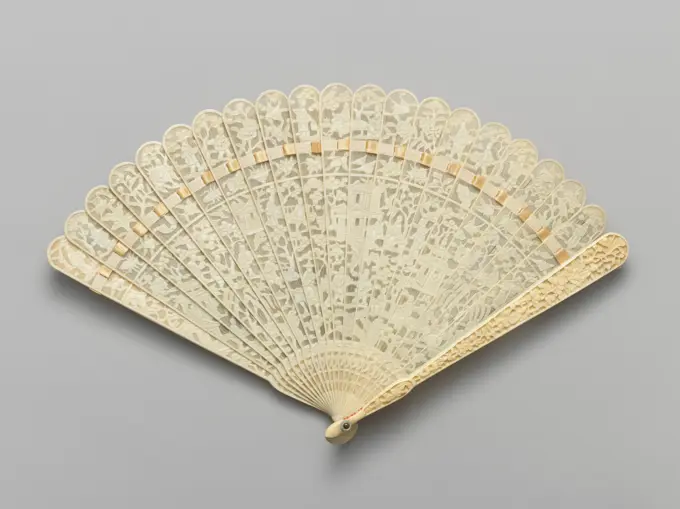
Fan 1840-59 Eugene André. Fan 168776Fan 1860-70 probably American. Fan 105517EVENTAIL. "Queen Victoria Jubilee", 1887. Paper, common wood. Paris, Carnavalet museum. 99083-11 Fashion accessory, EventailMourning fan. Culture: American. Date: 1887-89.This fan belonged to Amelia Beard Hollenback (1844-1918), wife of the prominent financier and philanthropist John Welles Hollenback (1835-1923). The fan was most likely part of Amelia's mourning wardrobe worn after the death of her closest sister, Julia Beard (1849-1887). Made up in the appropriate materials and dimensions of the late 1880s, women continued to follow the dictates of fashion even during mourning. Museum: Metropolitan Museum of Art, New York, USA.Pleated Fan (France); silk net leaf embroidered with spangles and appliquéd with painted silk panels, carved and pierced tortoise shell sticks with gold foil and inlaid piqués, gilt metal bail, faceted stone at rivetFan third quarter 19th century American. Fan 120535Sparrows, Peonies, and Chrysanthemums/Evening StreetScene. Artist: Katsuda Kunihisa, Japanese, 1832-1891Fan 1875-90 American or European. Fan 118741Delicate wooden fan with intricate patterns and designs - path includedChukei Fan. Culture: Japan. Dimensions: 13 1/4 × 19 in. (33.7 × 48.3 cm). Date: 19th century.In the refined and simplified performances of the Noh theater, the fan plays an important role in delineating character. The design, colors of the ground and color of the lacquer on the bamboo frame vary, depending on the role being performed. Cherry blossoms and pine are depicted on one side of this fan, and the Queen of the West and the King of the East of Chinese legend appear on the reverse. The chukei fan which spreads out toward the top when closed, is appropriate for a female actor. Museum: Metropolitan Museum of Art, New York, USA.Fan mid-19th century French. Fan. French. mid-19th century. Mother-of-pearl, gold, parchment, glass. FansBrisé Cockade Fan, with Painted Floral Posy Chinese, for the European Market 19th century This fan represents the epitome of highest quality and design sought by Europeans from China throughout the nineteenth century- and imitated in Europe by less technically precocious pieces such as The Met's British-made fan 65.80.14. The incredibly fine detailing of the fretwork in this Chinese example is unusually well-preserved, suggesting that this large fan was made as a presentation gift, not intended to be used. View more. Brisé Cockade Fan, with Painted Floral Posy. Chinese, for the European Market. 19th century. Ivory. FansBrisé Fan; carved and pierced ivory sticks, peacock and peahen feathers, gilt metal bail, silk tasselPleated Fan; parchment leaf with gilded and hand-colored lithograph; carved and pierced mother-of-pearl sticksFan 1880 Donaldson Brothers American Trade fans such as this were a result of the profound commercial and social changes set in motion by the Industrial Revolution. They were given away to customers for promotional purposes. Like magazine ads of the time, the fans were instructive as a document of costume and social history. In this example produced by Kohn & Adler, a Philadelphia hat manufacturer, the image not only depicts various styles of hats in the company's stock in 1880 but also supplies the names given to each one. Some of the names bear references to operas.. Fan 157041Lace fan unknownFan 1745-55 European. Fan 156286Close-up of fan and brushEVENTAIL. "Views of some buildings from the hamlet of Marie-Antoinette in Versailles". Printed paper, common wood. Paris, Carnavalet museum. Eventail: Views of some buildings from the hamlet of Marie-Antoinette in Versailles Fashion accessory, EventailKreutzer. EVENTAIL. "Winter landscape", around 1890. Watercolor, swan skin, jasped scale. Paris, Carnavalet museum. 99087-7 Fashion accessory, EventailFan (Cabriolet Type) Made 1801-1900 France. Carved and painted sticks with gold incrustations; red stone rivet, silver loop .Fan 18th century French. Fan 209817Fan late 18th-early 19th century Chinese. Fan. Chinese. late 18th-early 19th century. Paper, ivory. FansFolding range, with paper leaf on which in aquarel on the front a dancing crowd around a freedom tree, a red-white-blue banderolle, putti with a freedom hat and flag and on the back a keeshond with freedom hat, in a lamework of leg with silver , Anonymous, 1795  Folding range, with paper leaf on which in aquarel on the front a dancing crowd around a freedom tree, a red-white-blue banderolle, putti with a freedom hat and flag and on the back a keeshond with freedom hat, in a lamework of leg with silver . The decorated freedom tree on the front of the fan is shown in a fairly conventional manner. The image of the keeshond with freedom staff on the back, on the other hand, is special and supports the dating of 1795. During the years of exile, the Kees had been the symbol of the Patriots, but was only used for a short time after the takeover. After 1795 he hardly appeared anymore. Match leaf: Paper. leaf: Watercolor (Paint). frame: Bone (Material). frame: Silver Leaf. frame: Wood (plant maFolded fan, Face Leaf: In a central cartel, England is personified in the guise of a woman wearing a helmet and a spear with her a shield in the colors of the English flag and behind her is lying a lion, facing her a personificationEVENTAIL. Advertising for the Picon brand. "Temptation of Saint Antoine". Color paper, wood. Paris, Carnavalet museum. Eventail: "temptation of Saint Antoine" (Picon advertisement) Fashion accessory, EventailEngland, London, Greenwich, The Fan Museum, Display of Historical FansBroken fan, decor: character scenes, animals, flowers, etc. GAL1961.104.3 Wood covered with black and gold lacquerFan 19th century Chinese. Fan. Chinese. 19th century. Silver, brilliants. FansEVENTAIL. Palmette and lace motif, m surmounted by a star and n topped with a crown. Ivory remedied, with a green stone with a pivot. Paris, Carnavalet museum. Broken event: palm and lace patterns; M surmounted by a star and n topped with a crown; Green pivot stone Fashion accessory, EventailFringed parasol, anonymous, c. 1840 - c. 1860 Parasol with deck of green moiré and changeant side, on top and along the edge trimmed with long frills of green and red. The deck is unlawful and has eight whalebalines. Long narrow knotty wooden stick with black accents and at the bottom a point of leg. On top of a button on which a ring of leg. On the button two green brushes, a two cords, which are crossed by a green bead. France The kk:telk. Spens: to be gold (aPrea sowertuper). Belele: but Callele. Pxt: LAMe (Ae (Ee ). Spports: tactsk. Fraal: Glalassses. cutting / cutting / cutting Parasol with deck of green moiré and changeant side, on top and along the edge trimmed with long frills of green and red. The deck is unlawful and has eight whalebalines. Long narrow knotty wooden stick with black accents and at the bottom a point of leg. On top of a button on which a ring of leg. On the button two green brushes, a two cords, which are crossed by a green bead. France The kk:telk. Spens: to Fan ca. 1725-50 possibly Italian. Fan 209494EVENTAIL. Pattern pattern painted in black. Broken, painted ivory. Paris, Carnavalet museum. Event: black painted flowers Fashion accessory, EventailEVENTAIL. "Exhibition of 1878", Panorama. Paper, common wood. Paris, Carnavalet museum. Eventail: Exhibition of 1878, Panorama Fashion accessory, EventailParasol 1850-59 European This style of parasol is the ultimate in frivolity and fancifulness. The particularly special element is the lovely carved hand on the spike. Carriage parasols were ostensibly used to shade the wearer from the sun and they were initiated by Queen Victoria in the 1840s when riding in open carriages began. This parasol purportedly belonged to a member of the royal family of Austria during Franz-Joseph's reign (1830-1916), emperor of Austria from 1848-1916.. Parasol 157264EVENTAIL. Assignates board. Paper, engraving, rosewood. Paris, Carnavalet museum. Eventail: assignment board. Revolution Fashion accessory, Evening, French RevolutionFolded range Gal1986.95.23APleated Fan (possibly France); double-sided leaf of plain weave and gauze weave silk net with applied metallic spangles, sticks of imitation tortoiseshell with inset metallic circular spangles, painted wood slips, imitation tortoiseshell washer at the rivet.Fan, Decor Face sheet: sowing bouquets of peonies and bells. GAL1981.92.2 Black cheese sheet encrusted with black lace and painted with gouache, black silk glans, black wooden frame engravedParasol for women unknownParasol stretched with a deck of white printed cotton with a litter pattern made of pink florets on a light wooden stick, Gustav Schnitzler, c. 1930 - c. 1940 Parasol stretched with a deck of white printed cotton with thrown pink florets. Unfarted, with eight black iron ribs. Light wooden stick with a narrow strap of silver -colored metal at the bottom, a hook on it, on which two brushes on a cord. On top of an elongated wooden point. Nijmegen Dek: Cotton (textile). Stok: Wood (plant material). Baleinen: Iron (Metal). Band: Metal printing / cutting / casting Parasol stretched with a deck of white printed cotton with thrown pink florets. Unfarted, with eight black iron ribs. Light wooden stick with a narrow strap of silver -colored metal at the bottom, a hook on it, on which two brushes on a cord. On top of an elongated wooden point. Nijmegen Dek: Cotton (textile). Stok: Wood (plant material). Baleinen: Iron (Metal). Band: Metal printing / cutting / castingBrisé fan, Painted ivory sticks, silk ribbon and tassel, metal bail, faceted stone at rivet, Brisé fan. Ivory sticks painted to resemble 'vernis martin' showing a group of figures seated under a tree; gorge and guard painted with Chinoiserie. Silk connecting ribbon and purple tassel. Metal bail and faceted red stone at rivet., France, 1875-1900, costume & accessories, Brisé fanFan 1860s European. Fan 120649Fan. Culture: probably Spanish. Date: 1860-69. Museum: Metropolitan Museum of Art, New York, USA.Fan. Culture: possibly Italian. Dimensions: 21 x 11 3/4 in. (53.3 x 29.8 cm). Date: ca. 1725-50. Museum: Metropolitan Museum of Art, New York, USA.Brisé fan first quarter 18th century Italian. Brisé fan 168290Fan ca. 1830 French. Fan 195315Carriage parasol, anonymous, c. 1840 - c. 1865 Carriage parasol with silk deck with brown stripes, interspersed with Chiné pattern with roslingers and gray cross stripes. Along the edge a brown -white striped fringe. The parasol is fed with a white ponjé side, in which an edge of fine flowers pressed in relief. Dark, wooden ribs. The handle is cut from leg with golf lines, two smoothly profiled and one tooth, with a small curved hook at the bottom. Halfway through a copper ring, which can be pushed up, so that the stick can nod. The upper part is made of lacquered wood. The button on top of the parasol is made of leg, the ring is missing in the top. West-Europa deck: Silk. Lining: Silk. Handle: Bone (Material). Stok: Wood (plant material). Stok: Lacquer (coating). Baleinen: Wood (Plant Material). Ring: Copper (Metal). Button: Bone (Material) cutting / lacquering / casting / cutting Carriage parasol with silk deck with brown stripes, interspersed with Chiné pattern with roslingers and gFan 20th century Japan. Fan 68469Parasol. Culture: probably French. Department Store: Gorham Manufacturing Company (American, 1831-present). Date: 1850-70. Museum: Metropolitan Museum of Art, New York, USA.Fan Made 1701-1800 France. Ivory guards and sticks, carved and etched; gold leaf; paper mount, painted; gold leaf; pin of metal and mother-of-pearl .Fan 18th century French. Fan 209847Brisé fan 1875-89 probably French This is a classic example of a brisé fan, which is constructed of individual sticks held together with connecting ribbon or threads at the top. There is no leaf. The tortoiseshall pattern presents a strikiing visual effect when held to the light and moved back and forth. A special touch is the elaborate monogram on the guard.. Brisé fan. probably French. 1875-89. tortoiseshell, silk, syntheticParasol with deck of plain white cotton, on a narrow wooden stick, with a white dice at the bottom on which blue dots, Gustav Schnitzler, c. 1900 Parasol with deck of plain white cotton. Unsurbed, with seven black iron ribs. Narrow unadorned wooden stick, with a white dice at the bottom on which blue dots. On top of an elongated wooden point. Nijmegen Dek: Cotton (textile). Baleinen: Iron (Metal). Stok: Wood (plant material). knob: casting / cutting / vitrification Parasol with deck of plain white cotton. Unsurbed, with seven black iron ribs. Narrow unadorned wooden stick, with a white dice at the bottom on which blue dots. On top of an elongated wooden point. Nijmegen Dek: Cotton (textile). Baleinen: Iron (Metal). Stok: Wood (plant material). knob: casting / cutting / vitrificationFan first quarter 19th century possibly Spanish. Fan. possibly Spanish. first quarter 19th century. Silk, gold, net, ivory, silver gilt. FansFan ca. 1830-40 French. Fan. French. ca. 1830-40. Ivory, paper, gold foil, mother-of-pearl. FansParasol third quarter 19th century American Featured, is a novel combination of a fan and a parasol, functioning as a sunshade. It is a compact object that would have been as easy to carry as a fan. The fitting that allows the parasol to fold down is related to the marquise parasols that can be tipped in different angles for flirtation as well as shading from the sun.. Parasol 155985Fan ca. 1835 French. Fan. French. ca. 1835. Paper, mother-of-pearl, silver, lapis lazuli. FansFan. France. Date: 1770-1800. Dimensions: 29 cm (11 in.). Plain wood sticks and guards; bordered with ivory paper mount, printed; metal rivet. Origin: France. Museum: The Chicago Art Institute, Chicago, USA.Fan. Culture: Chinese. Dimensions: 7 1/4 x 12 1/4 in. (18.4 x 31.1 cm). Date: late 18th-early 19th century. Museum: Metropolitan Museum of Art, New York, USA.EVENTAIL. "The general state". Paper, colored engraving, ivory. Paris, Carnavalet museum. Sitting on the triple base of the State, France reaches out to hope. While in the left, Necker lights up the three states gathered. Fashion accessory, Evening, French Revolutionviolet Chinese fan on the white background. (isolated)Broken fan, c. 1795 Brisé fan with 26 legs. Opened ivory with flower vines against a background of very fine vertical lines. A bird, a flower branch and a mushroom alternately above the ribbon. Under the ribbon there are Utigspaard in the decoration Drtie Velden that are painted. In the middle field two women and a man, in both smaller fields a woman. The cartouches are surrounded by gold -plated ornamental ties. On the back the fields are painted with flower branches. The closing legs are decorated with pavilions cut into a landscape. Canton ivory. oil paint (paint). gilding (material) cutting  Canton Brisé fan with 26 legs. Opened ivory with flower vines against a background of very fine vertical lines. A bird, a flower branch and a mushroom alternately above the ribbon. Under the ribbon there are Utigspaard in the decoration Drtie Velden that are painted. In the middle field two women and a man, in both smaller fields a woman. The cartouches are surrounded by gold -plated ornamentalFan, 1700s - 1800s. France, 18th-19th century. Tortoise shell with pierced gilt metal for outer sticks, elaborate gilt decoration and spangles; radius: 17.2 cm (6 3/4 in.); spread: 33.7 cm (13 1/4 in.).EVENTAIL. "Paris Hippodrome", program and presentation of attractions. Paper, common wood. Paris, Carnavalet museum. Eventail "Hippodrome de Paris", program and presentation of attractions Fashion accessory, EventailBrisé Fan (China); carved tortoise shell sticks, silk ribbonFan late 18th-early 19th century Chinese. Fan. Chinese. late 18th-early 19th century. Ivory. FansBroken fan, sheet decor: painted bouquets, stylus decorated with a flavored stone. GAL1985.1.146 Leaf: donkey skin painted with gouache, bone frameParasol 1886 American This charming parasol belonged to Juliette Geneva Hollenback (1881-1917), the youngest daughter of prominent financier and philanthropist John Welles Hollenback (1834-1923) and may have accompanied dress 2009.300.900. Purchased for Juliette in 1886 during a trip to California by her Aunt Julia, this scaled-down version of an adult's accessory indicates that there was a great deal of fondness between the two women. The fiery color could be seen as a portent of the woman Juliette would become: an active leader in settlement work.. Parasol 158213Range;  beginning of the 20th century (1901-00-00-1910-00-00);Dobrowolska, Danuta (Fl. Ca 2001) - collection, gift (provenance), bird feathers, fansFan 1840-60 European. Fan 156575Fan 1890s American or European. Fan 107435Fan ca. 1782 Spanish. Fan 209515Flowers and Leaves 1801-1900 China. Fan (ovoid); ink and colors on silk, bamboo-style handle, ivory tip .Paper fans, Fuli Village paper fan workshops, Yangshuo, ChinaFolded range, painted decor: leaf adorned with a large central cartel representing 2 women symbolizing in pink "the day" and in blue night "at night" accompanied each with a love holding their veil. GAL2001.67.1 Leaf in black gouache gauze, Chantilly lace border, bail and scales rtering, jasper scales mountWoman lounging with a fan in her hand, branches in the background. , Women, Flowers, Fans Accessories, 19th Century American Trade CardsFar East event. Broken Broken scale in dark and wide strand engraved. Paris, Carnavalet museum. 99054-16 Fashion accessory, EventailFan Made 1801-1900 Italy. Carved and gilded mother-of-pearl sticks and guards; painted paper mount; rhinestone rivet; metal loops; gilt ornament on guard with mirror; gilt ornament on guard with stone missing .Fan 1855-65 European This is from the fan collection of Mary Walters Arents, wife of George Arents, one of the founders of the American Tobacco company. The Arentses also collected academic art which is in a similar style and aesthetic as the fans.. Fan 156568Fan early 18th century French. Fan 209608a spanish fan, used by Andalusian women to fight the heat in summersubjects, Faltfalls ** Fan, fans clk-khqPleated Fan (England); gilded paper leaf; pierced bone sticksFan late 18th century Italian. Fan 209514origami peacock India Asia Copyright: xVirenxDesai/DinodiaxPhotoxPeter Connin, Parasol, 1935 1942 ParasolParasol 1860-65 Fortis Carriage parasols were popularized by Queen Victoria in the 1840s and continued to be popular through the nineteenth century. They were distinguished for their size and carried as decorative accessories which served some function of shading the face from the sun, as close-fitting fashionable hats at that time did not. The claw and ball motif found on the handle was also a popular motif in furniture legs of the Queen Anne and Chippendale styles. It is a representation of a bird's claw grasping a ball and is thought to be derived from the Chinese dragon's claw holding a crystal ball or jewel.. Parasol 157278Colorful hand fan Colorful hand fan isolated on gray Copyright: xZoonar.com/SergiixSvyerchkovx 5934447Fan-'Amore Scene', 18th century, Unknown French, 19 x 10 3/4 in. (48.26 x 27.3 cm) (framed, mounted), Painted vellum, overall relief, mother of pearl, France, 18th centuryBlack japanese fan icons. Dance elegant asian fans design isolated on white background. Simple handheld fanning oriental symbols, chinese tidy vector set. Illustration of traditional decoration. Black japanese fan icons. Dance elegant asian fans design isolated on white background. Simple handheld fanning oriental symbols, chinese tidy vector set