My Boards
View Pictures
  • My Boards

Asteroid and Planetary Surfaces

Images captured by spacecraft showing the rugged surfaces of asteroids and planets, highlighting craters, ejecta blankets, and geological features.

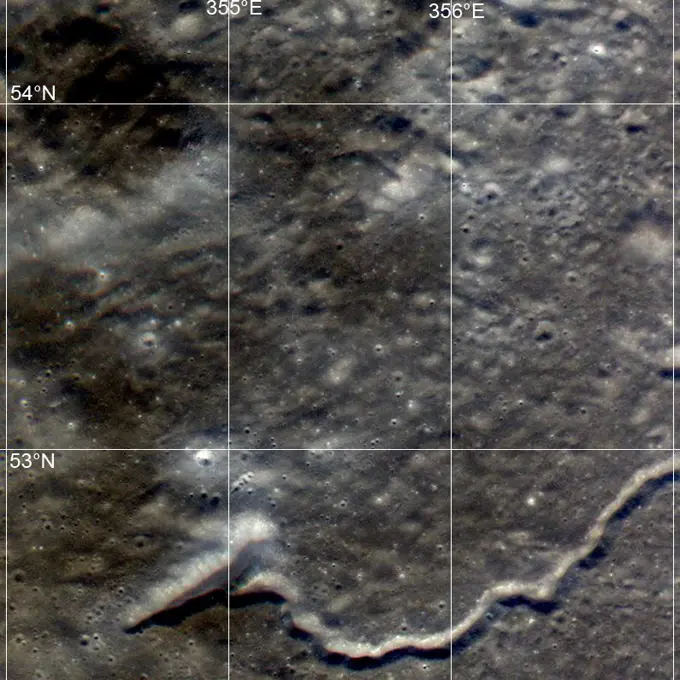
A wrinkle ridge within Brisbane Z crater in Mare Australe. This wrinkle ridge is located within the crater Brisbane Z.
344 assets in this story
6145-45297189
The THEMIS VIS camera contains 5 filters. The data from different filters can be combined in multiple ways to create a false color image. These false color images may reveal subtle variations of the surface not easily identified in a single band image. Today's false color image shows several small, unnamed craters in Terra Sirenum. The bright blue region on the inner crater rim is morning frost. Collected during the winter, south facing slopes stay in shadow and retain frost longer than the rest of the rim already in sunlight. Frosts are only identifiable in multi filter images. Orbit Number 80442 Latitude -36.3327 Longitude 198.274 Instrument VIS Captured 2020-02-01 21 41
6145-44944235
We Are the 0.00007%!
6145-44520566
Ganymede Topography
1746-19670914
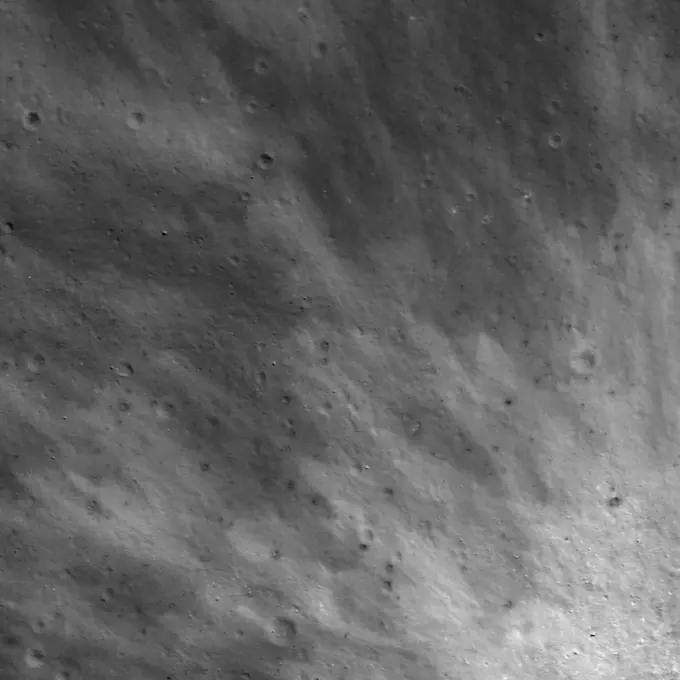
A bright crater on the flank of a larger dark halo crater.
6145-44891185
Tyagaraja, and Zeami, and Sophocles! Oh My!
6145-44516136
This computer photomosaic is of the Caloris Basin, the largest basin on Mercury. NASA's Mariner 10 spacecraft imaged the region during its initial flyby of the planet after its launch in 1974.
6145-44560496
Flow-ejecta Crater in Icaria Planum - High Resolution Image
6145-44717783
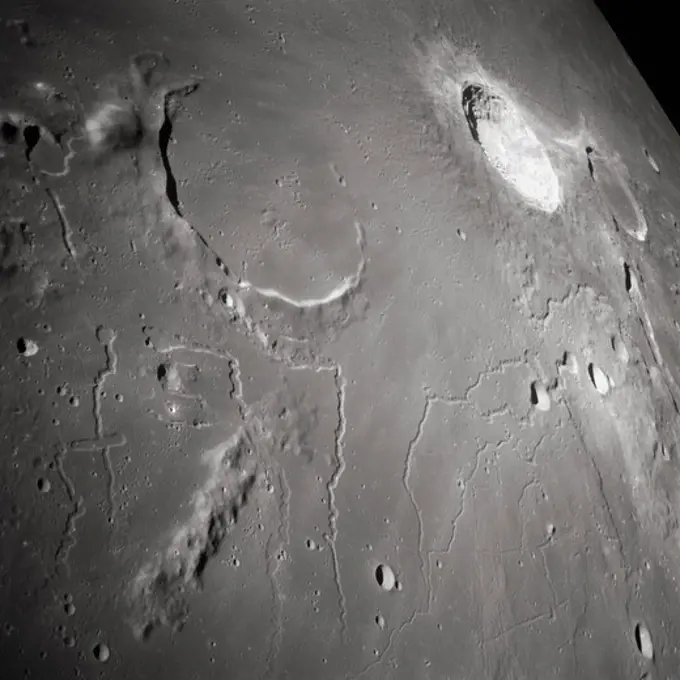
S71-44667 (31 July-2 Aug. 1971) --- An oblique view of the Hadley-Apennine area, looking north, as photographed by the Fairchild metric camera in the Scientific Instrumentation Module (SIM) bay of the Apollo 15 Command and Service Modules (CSM) in lunar orbit. Hadley Rille meanders through the lower center of the picture. The Apennine Mountains are at lower right. The Apollo 15 Lunar Module (LM) touchdown point is on the east side of the chicken beak of Hadley Rille. The Caucasus Mountains are at upper right. The dark mare area at the extreme upper right is a portion of the Sea of Serenity. The Marsh of Decay is at lower left. The large crater near the horizon is Aristillus, which is about 55 kilometers (34.18 statute miles) in diameter. The crater just to the south of Aristillus is Autolycus, which is about 40 kilometers (25 statute miles) in diameter. The crater Cassini is barely visible on the horizon at upper right. The three-inch mapping camera was one of eight lunar orbital scien
6145-44506645
Apollinaris Patera, Mars
6145-44557088
MGS Views of Nirgal Vallis
6145-45097705
NASA's Cassini spacecraft gazes out upon a rolling, cratered landscape in this oblique view of Saturn's moon Dione. A record of impacts large and small is preserved in the moon's ancient, icy surface.
6145-45092312
One of the most captivating views acquired during NASA's MESSENGER's first Mercury flyby was of the crater Apollodorus surrounded by the radiating troughs of Pantheon Fossae.
6145-44815480
The northern hemisphere of Saturn's moon Dione is seen in this polar stereographic maps, mosaicked from the best-available clear-filter images from NASA's Cassini and Voyager missions.
1746-19670877
The pattern of ejecta from a young crater is still preserved on the floor of Van de Graaff crater.
6145-44833236
Ejecta Blanket
6145-44810260
Luna 16 was the first robotic mission to land on the Moon on basaltic plains of Mare Fecunditatis and return a sample to the Earth. It was launched by the Soviet Union on 12 September 1970. This image was taken by NASA's Lunar Reconnaissance Orbiter.
6145-44656105
Mutch Crater
6145-44922519
These mosaic images from NASA's Dawn mission show how dark, carbon-rich materials tend to speckle the rims of smaller craters or their immediate surroundings on the giant asteroid Vesta; Numisia Crater is shown at left.
6145-45092812
The large, 400-kilometer-diameter (250-mile-diameter), impact basin Shakespeare occupies the bottom left quarter of this image from NASA's MESSENGER spacecraft.
6145-44785511
NASA's Surveyor 1 spacecraft sitting silently on Oceanus Procellarum, the first US spacecraft to land on another planet on June 2, 1966 in this image taken by NASA's Lunar Reconnaissance Orbiter.
6145-45107812
Ceres' Haulani Crater, with a diameter of 21 miles (34 kilometers), shows evidence of landslides from its crater rim as seen by NASA's Dawn spacecraft.
6145-45264350
An annotated image of the surface of Mars, taken by the HiRISE camera on NASA's Mars Reconnaissance Orbiter (MRO) on May 30, 2014. The annotations - added after InSight landed on Nov. 26, 2018 - display the locations of NASA's InSight lander, its heat shield and parachute.
6145-45093879
Best Determination of MESSENGER's Impact Location
6145-44493780
Crater Copernicus
6145-45091266
NASA's Mars Exploration Rover Opportunity, working on Mars since January 2004, passed marathon distance in total driving on March 24, 2015.
6145-44704638
Mercury's First Fossae
6145-44952255
Orbital Mosaic of Mercury's North Pole
6145-45014379
Identifying Lava Flow Fronts on Mercury
6145-44773786
NASA's Lunar Reconnaissance Orbiter's first look at the Apollo landing sites.
6145-44613067
Spirit's Prime-Mission Traverse
6145-44965118
Wang Meng Paints the Canvas
6145-44914058
A World View
6145-44512964
Ranger 7 took this image, the first picture of the Moon by aU.S. spacecraft, on 31 July 1964 at 13:09 UT (9:09 AM EDT) about 17 minutes before impacting the lunar surface.
255-29057920
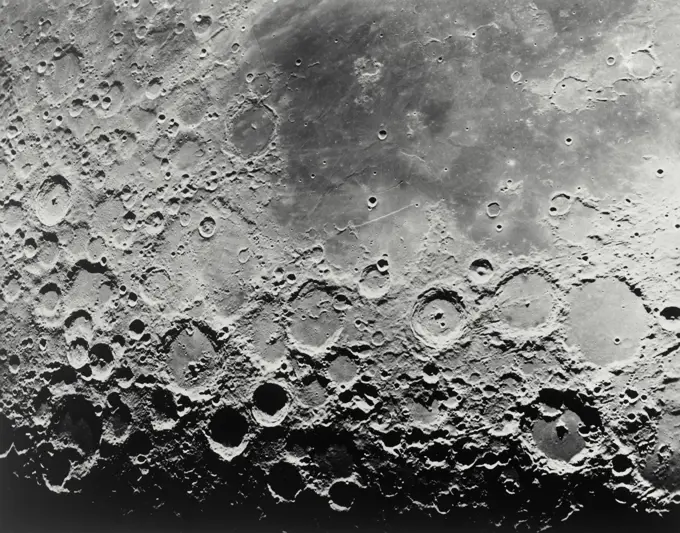
Vintage Photograph. Portion of the moon at last quarter from ptolemacus to tycho. photographed with 100 inch hooker telescope
6145-44836626
Looking Toward Mercury's Horizon
6177-V70817811
824-63128357
Colon mucosa in SEM x 600. The colon mucosa is constituted of an epithelium, glands, a connective tissue. The glands of this mucosa (crypts of Lieberkühn) have a precise physiological function in the absorption of food (secretion of intestinal juice).
6145-44838727
Mercury's Caloris Basin, One of the Largest Impact Basins in the Solar System
4389-328
Apollo 14 - Moon Lava
1746-19670806
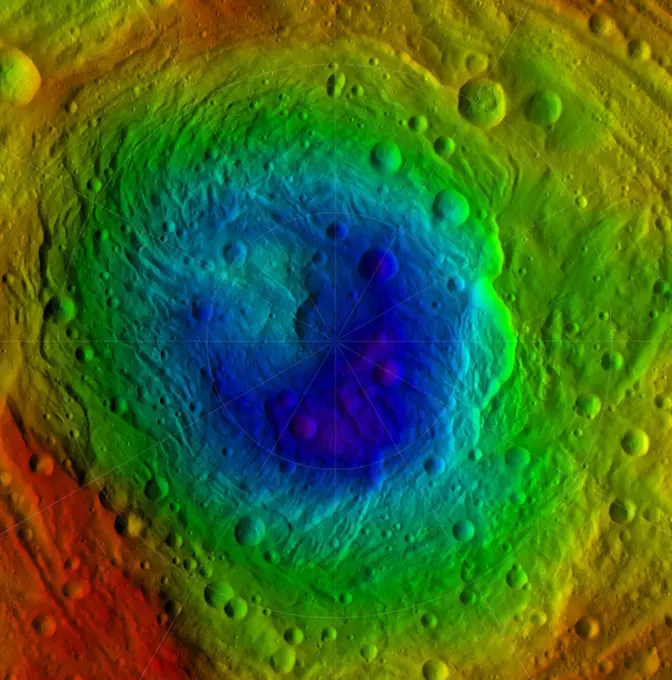
This image from NASA's Dawn mission shows the topography of the northern and southern hemispheres of the giant asteroid Vesta, updated with pictures obtained during Dawn's last look back. Around the time of Dawn's departure from Vesta in the late summer of 2012, dawn was beginning to creep over the high northern latitudes, which were dark when Dawn arrived in the summer of 2011. The three craters that make up Dawn's 'snowman' feature can be seen at the top of the northern hemisphere map on the left. A mountain more than twice the height of Mount Everest, inside the largest impact basin on Vesta, can be seen near the center of the southern hemisphere map on the right.
4389-316
Apollo 15 - Moon Craters and Rilles
1746-19671086
This pair of THEMIS infrared images shows the so-called 'face on Mars' landform viewed during both the day and night.
6145-44802411
This image taken by NASA's Lunar Reconnaissance Orbiter shows a wide variety of geologic features on northwest of Plato crater.
6145-44901416
This image shows a closer view of the landing site of NASA's Curiosity rover and a destination nearby known as Glenelg. Curiosity landed inside Gale Crater on Mars on Aug. 5 PDT (Aug. 6 EDT) at the blue dot.
PREVIOUS
of 4
NEXT
2401 S. Ervay, Suite 206
Dallas, Texas 75215
United States
Get Started
Free ResearchMy BoardsMy Cart
For Creators
How To License Your ContentContributor PortalFrame of Mind
Resources
API accessPricing
Contact
+1 866 236 0087help@viewpictures.co.uk Contact form
©2026 View Pictures. All Rights Reserved. -A
This site is protected by reCAPTCHA and Google Privacy Policy and Terms of Service apply.