Blue and White Porcelain Vases

A collection of elegantly shaped porcelain vases and jars, featuring intricate blue underglaze designs of flowers, landscapes, and scholars, showcasing classic craftsmanship.

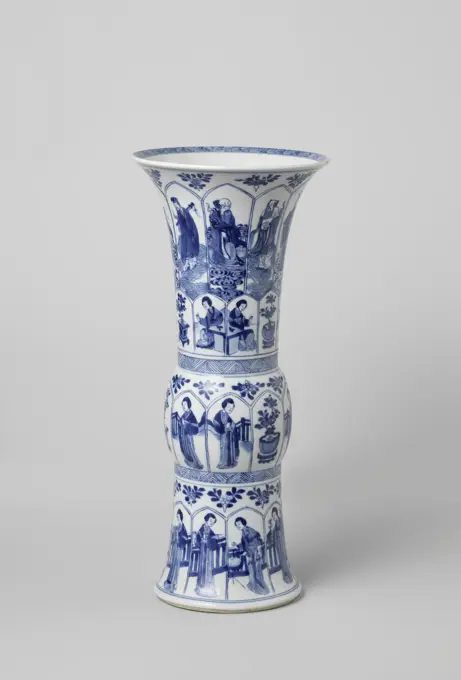
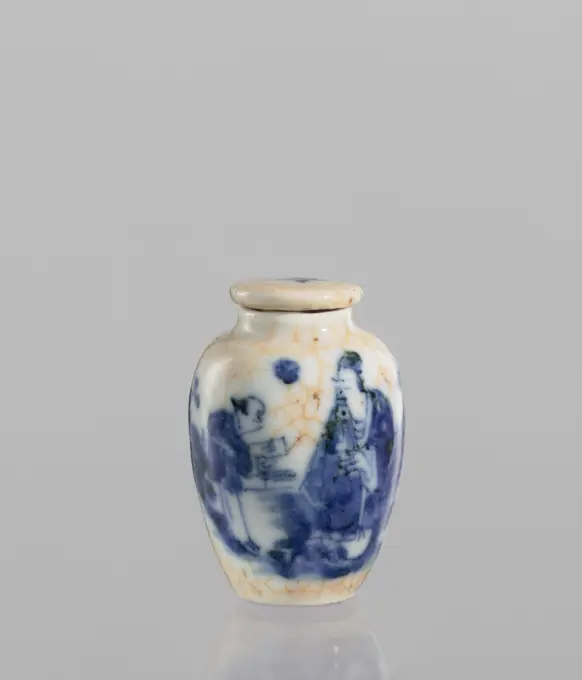
Gu-shaped vase with figures in a landscape and flower sprays, anonymous, c. 1680 - c. 1720 GU-shaped vase of porcelain with a round thickening in the middle, painted in underlaze blue. The decoration is threefold: two sitting scholars around the foot in a landscape with a servant; flower branches on the thickening; On the neck four people in a landscape with a horse, one of them offers a sword. Garnated on the underside with a leaf in a double circle. Blue White. China porcelain. glaze. cobalt (mineral) painting / vitrification GU-shaped vase of porcelain with a round thickening in the middle, painted in underlaze blue. The decoration is threefold: two sitting scholars around the foot in a landscape with a servant; flower branches on the thickening; On the neck four people in a landscape with a horse, one of them offers a sword. Garnated on the underside with a leaf in a double circle. Blue White. China porcelain. glaze. cobalt (mineral) painting / vitrification
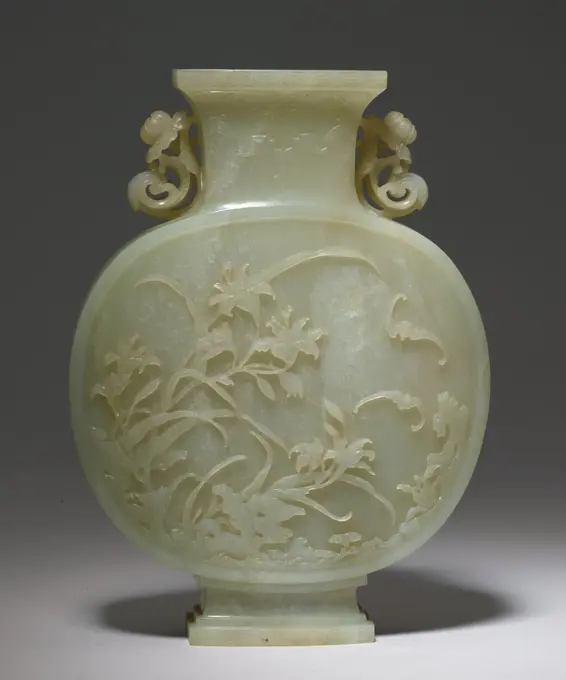
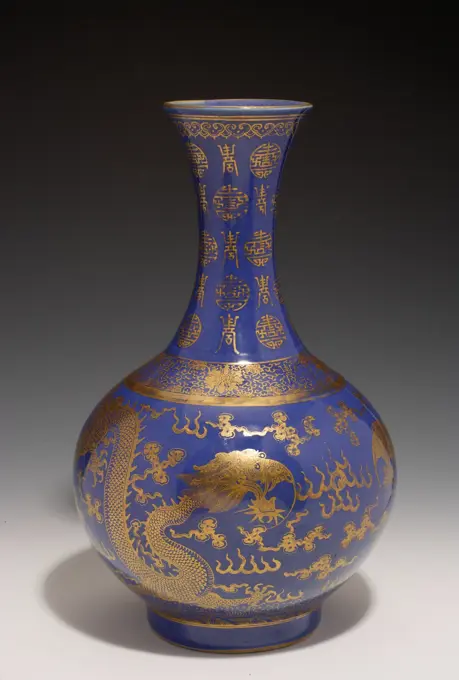
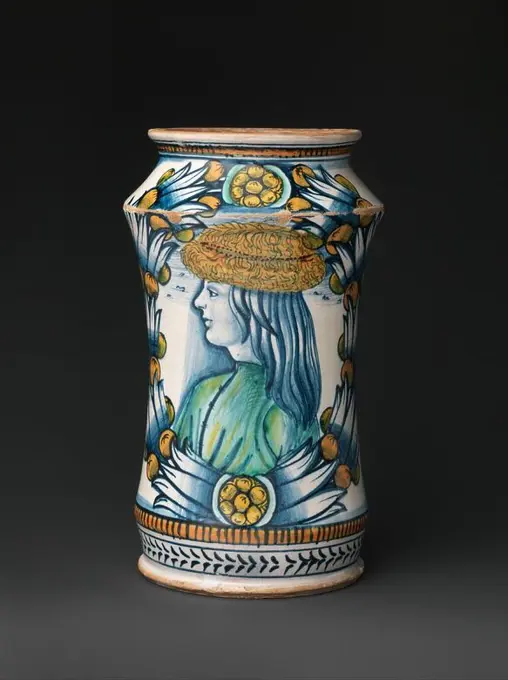
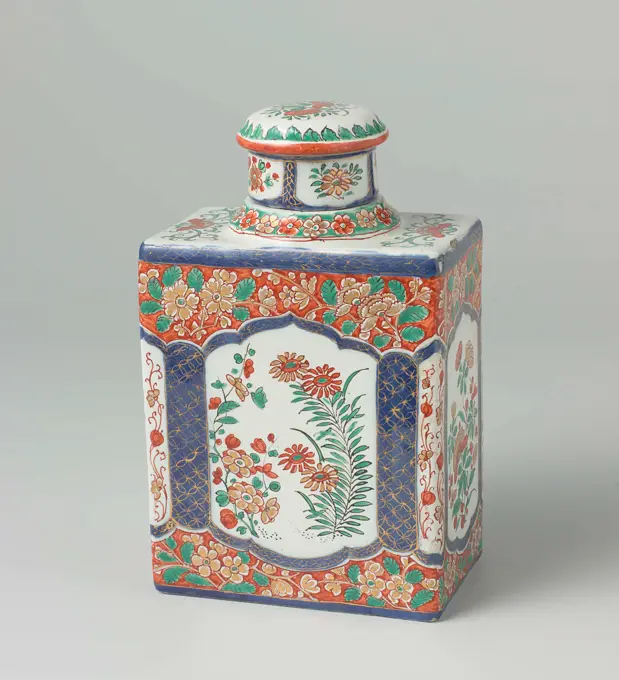
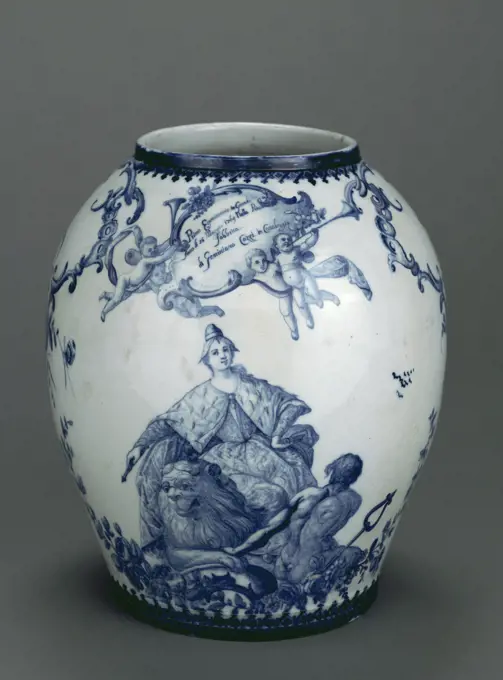
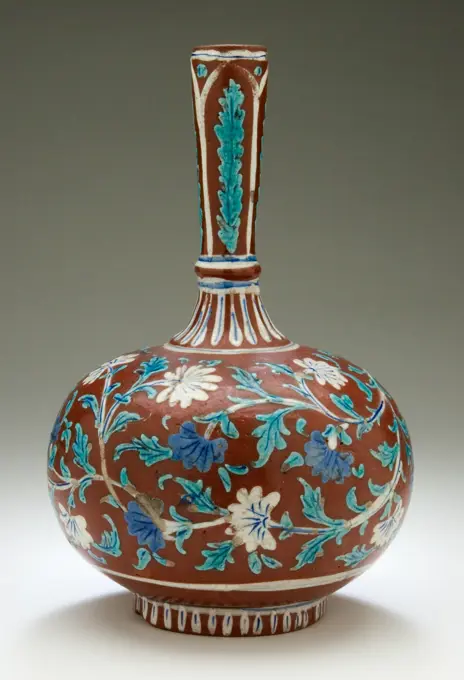
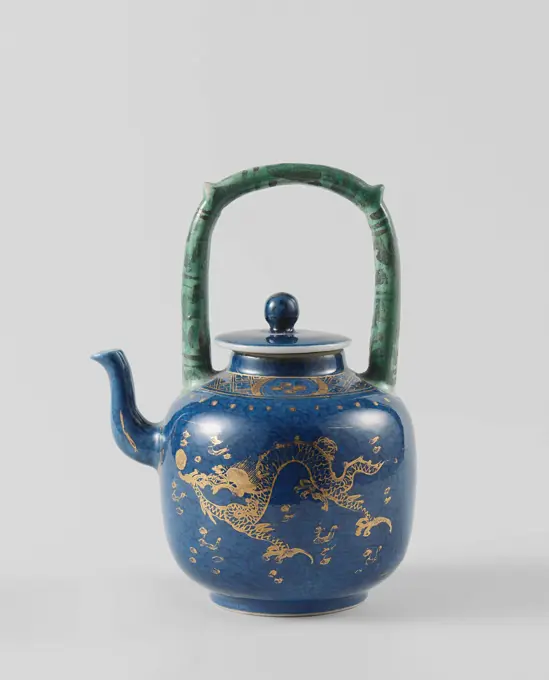
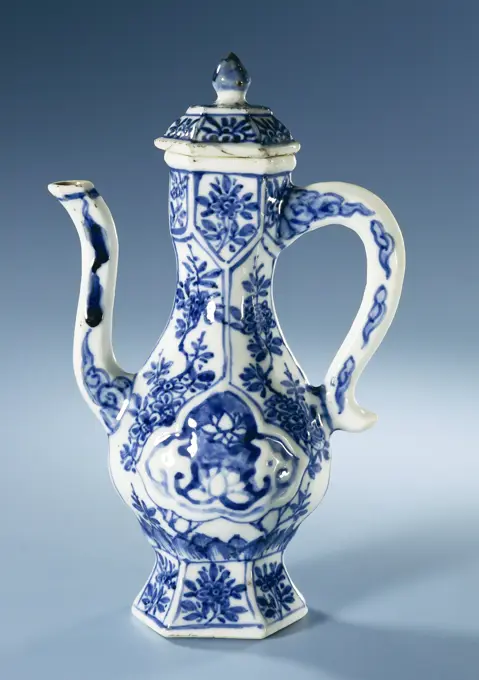
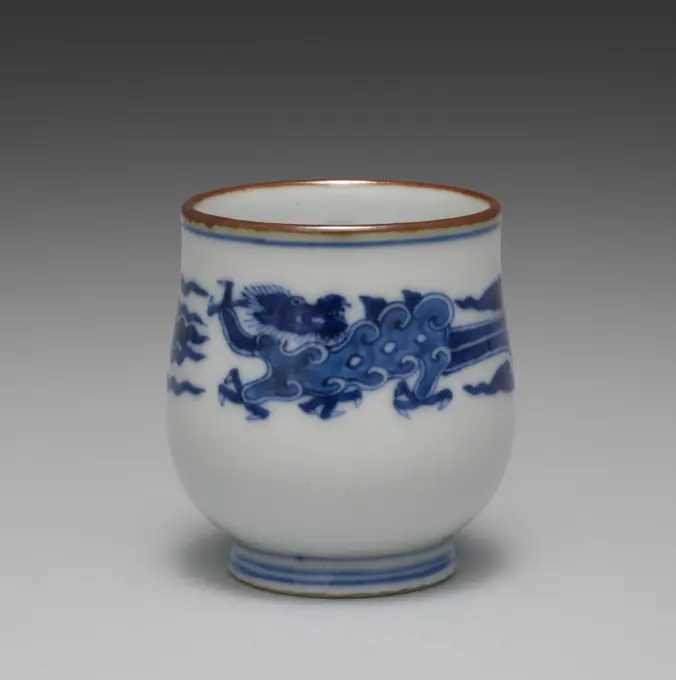
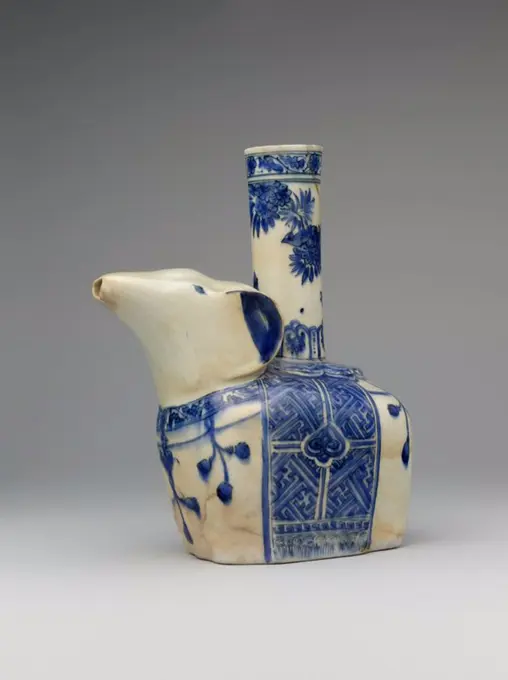
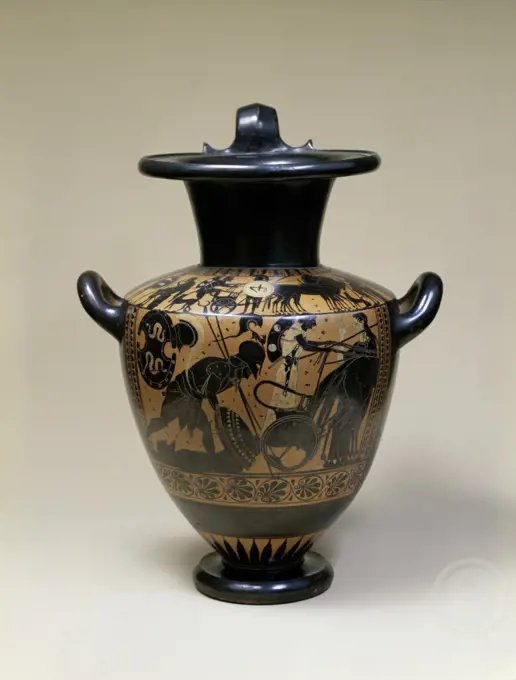
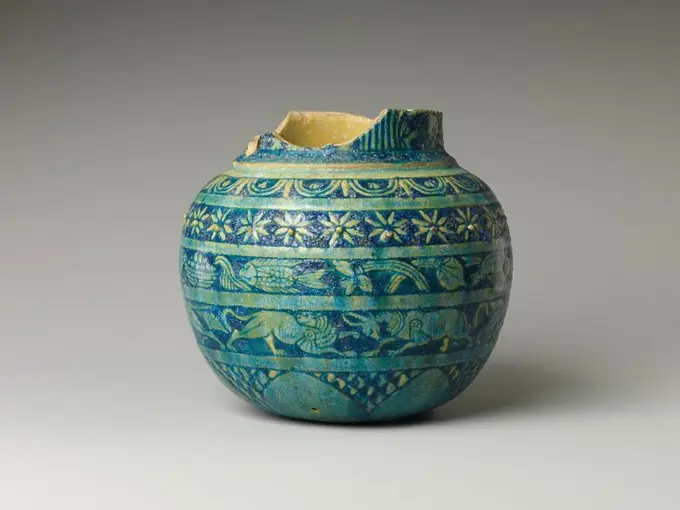
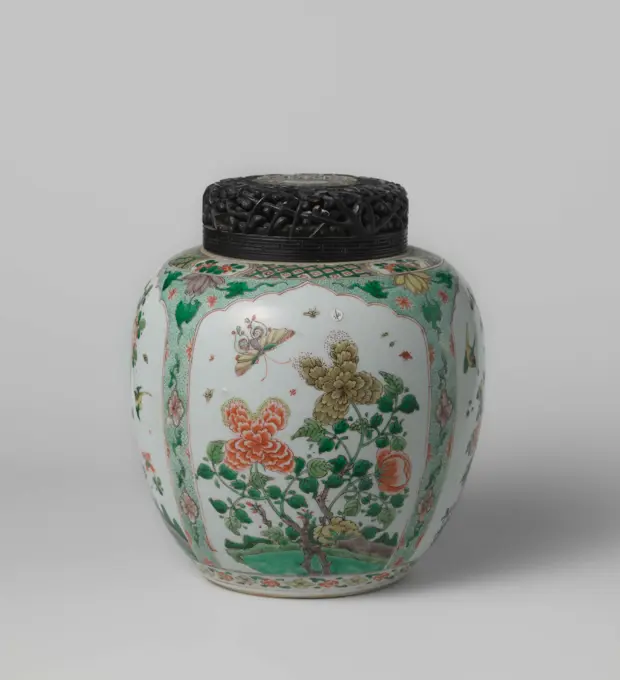
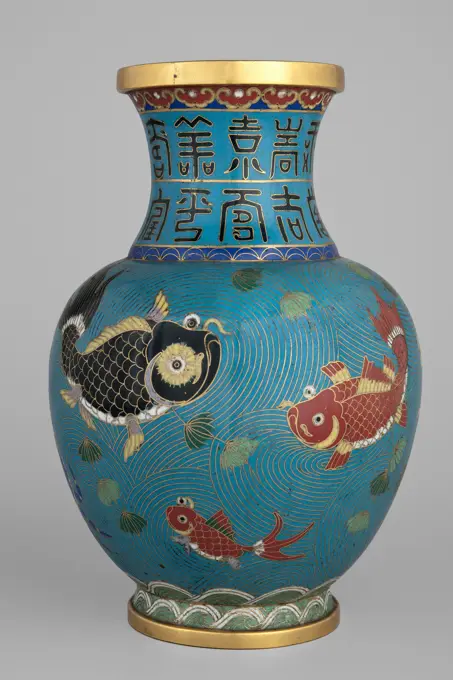
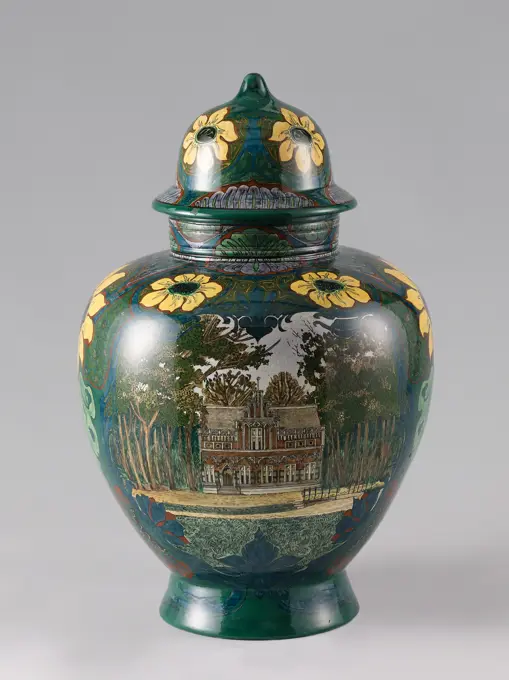
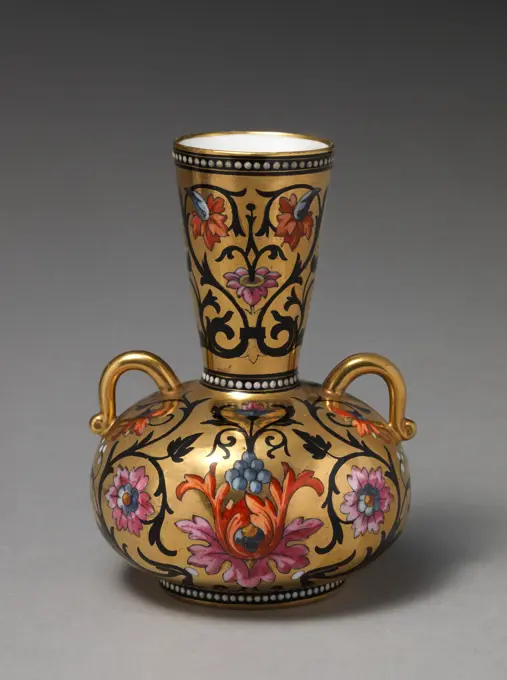
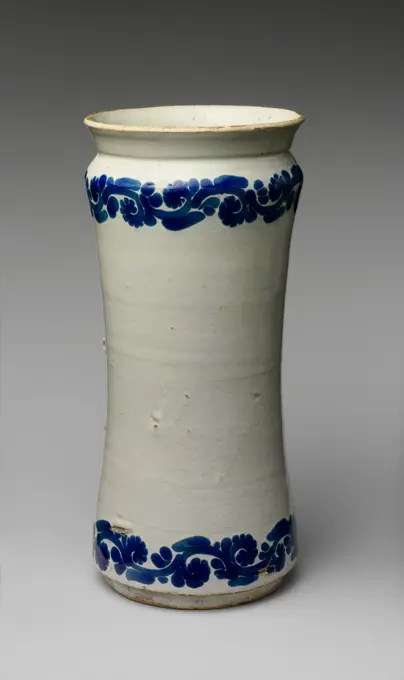
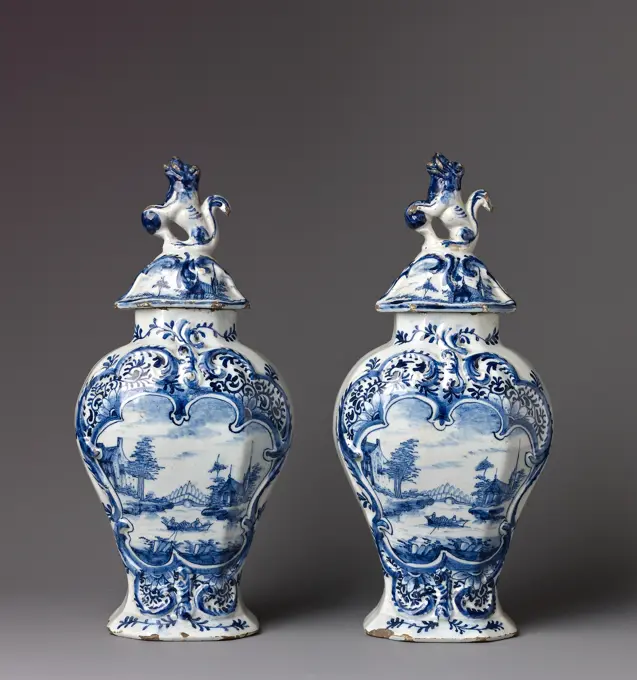
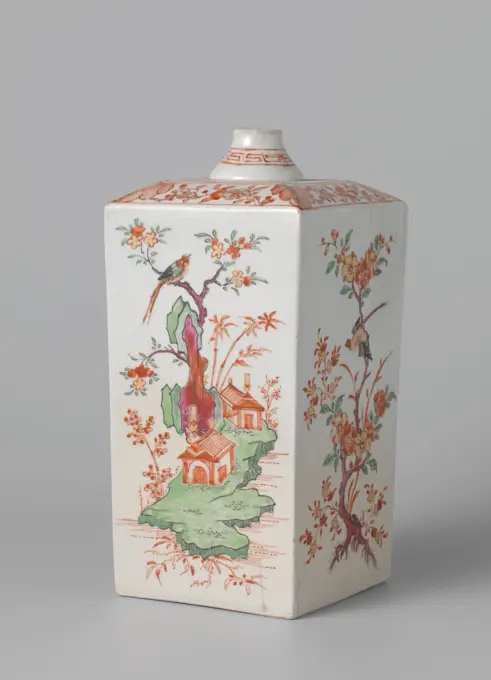
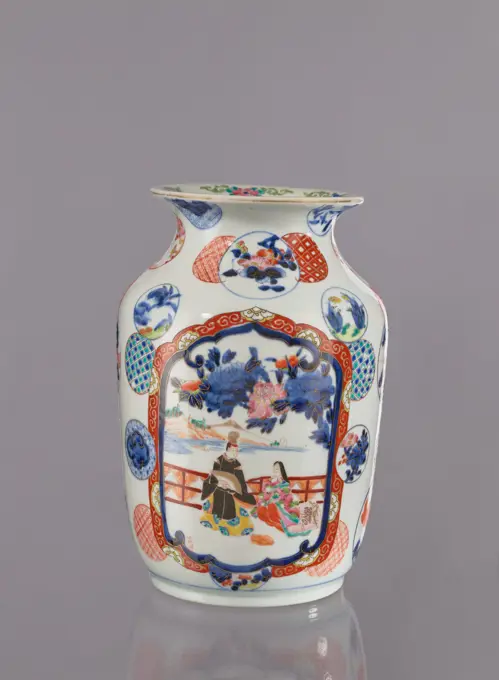
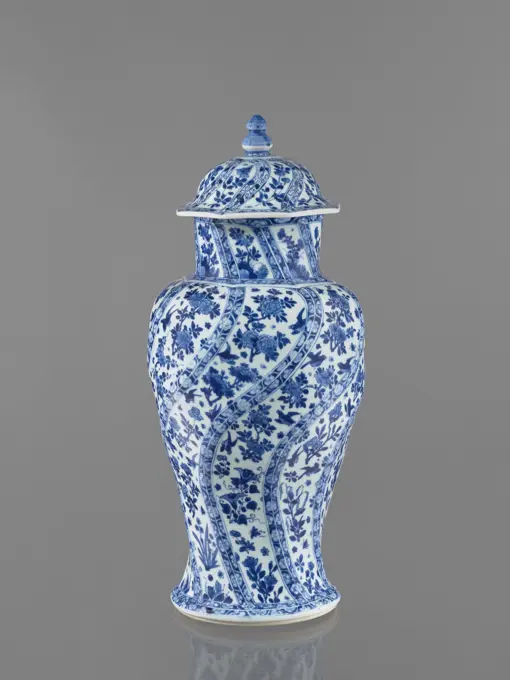
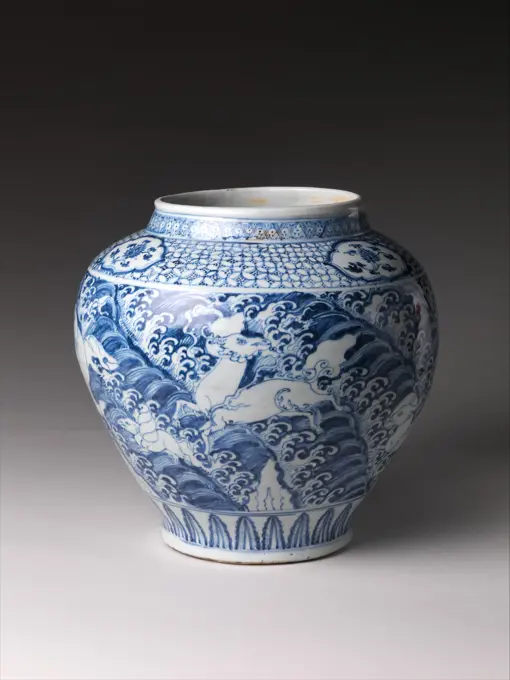
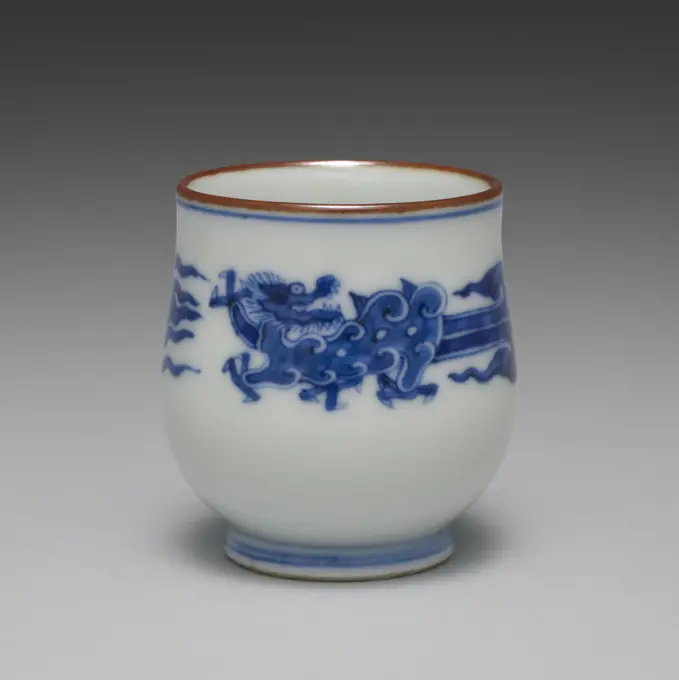
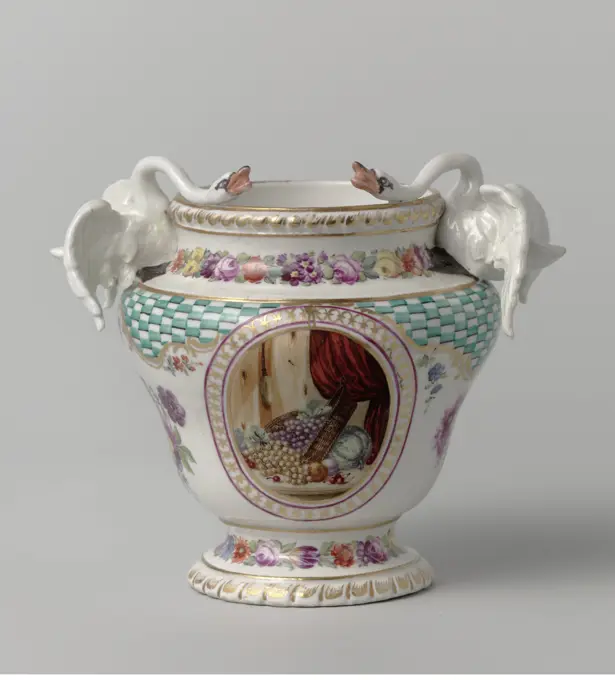
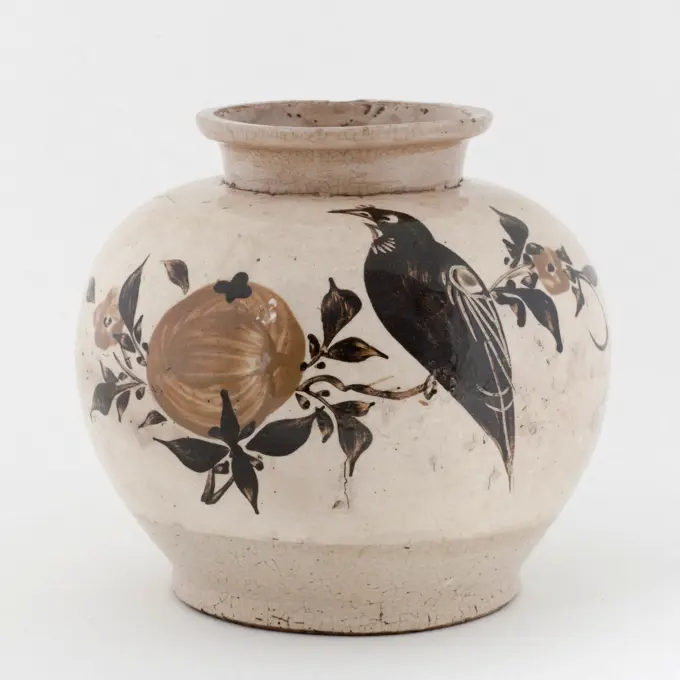
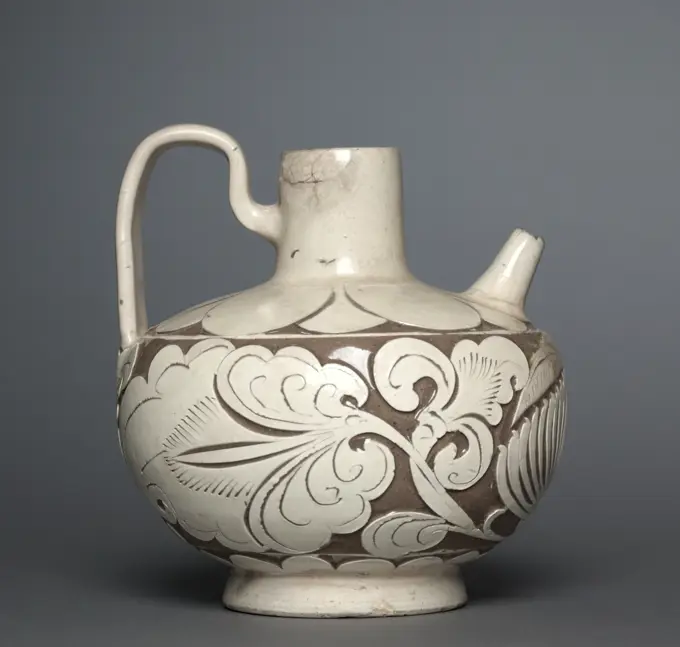
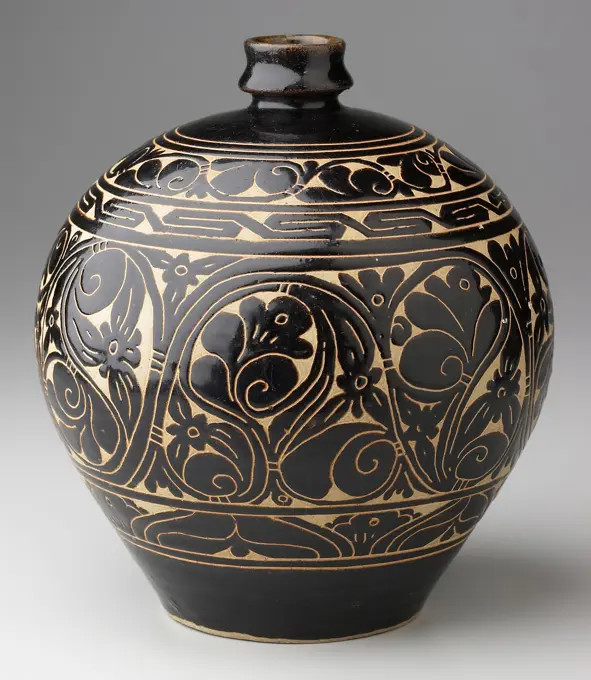
Ovoid Bottle, late 12th century, 8 9/16 x 7 11/16 in. (21.75 x 19.53 cm), Huai-jen ware Stoneware with dark-brown glaze and 'cut-glaze' decoration, China, 12th century, Probably intended for wine, this ovoid bottle is covered with a nearly black glaze into which a decorative scheme was incised and carved before firing. The dark glaze design elements appear against the light grey ground of the exposed body clay. Commonly known as the 'cut-glaze' technique, this decoration was most likely inspired by the partially glazed brown and white ceramics produced during the Tang dynasty (ninth century) at the Huangbu kilns.Small vase. unknown, craftsmanSnuff Bottle with Scene of Dragon-Boat Festival China. Snuff Bottle with Scene of Dragon-Boat Festival. China. Porcelain with overglaze enamel colors, malachite stopper. Qing dynasty (1644-1911), Qianlong mark and period (1736-95). Snuff BottlesFlower vase with a lid. De Porceleyne Schotel (wytwórnia fajansu ; 1612-1800), factoryTerracotta oinochoe (jug). Culture: Greek, Attic. Dimensions: H. 5 1/4 in. (13.4 cm). Date: 4th century B.C..Aphrodite and ErotesPlastic adjuncts had been part of the decoration of Attic vases from the Geometric period on.The execution of the decoration in applied, low relief was a short-lived phenomenon that lasted from the second half of the fourth into the third century B.C. The fragility of the relief accounts for the often poor condition of the objects. This one had extensive remains of gilding and blue color. Museum: Metropolitan Museum of Art, New York, USA.Czarka with the Cave;  1736-1795 (1736-00-00-1795-00-00);Ovoid Covered Jar With Japanese Ladies in Pavillions Among Flowering Plants. Egg-shaped porcelain lid pot, painted in underglaze blue and on the glaze red, black and gold. On the abdomen a continuous representation of various pavilions with Japanese ladies surrounded by a rock and large flowering plants (Peony, Carnation, Prunus, Chrysanthemum) in a fenced garden. On the shoulder a wide bond with peony ranks interrupted by book-shaped cartouches with landscapes or flowering plants. Around the neck a bond with leaf refrices interrupted by groups of three prunus flowers. Around the foot and on the neck a band with alternating a stylized flower drink and chrysanthemums in boxes. The foot with a band with a cloud motif. The lid with the same decoration. The lid has been broken. Imari.Vase in the Form of a Bronze Wine Vessel, with Dragons, Waves, and Trigrams 1573-1620 China. Porcelain painted in overglaze enamel .Ovoid Jar And Domed Cover With Spiraling Bands Of Flower Sprays. Egg-shaped pot of porcelain, painted in underglaze blue. On the wall of the pot of tires of tires with flower branches with a double row of flower leaf-shaped compartments with flower branch; Three decorative tires at the foot; On the neck two rows with flower leaf-shaped boxes filled with flour branch with a decorative tape above; to the edge a bond with Ruyi motif; A double circle on the bottom. Blue White.Vase, late 18th-early 19th century, 8 1/16 x 6 x 1 5/8in. (20.5 x 15.2 x 4.1cm), White jade, China, 18th-19th centuryVase;  19th/20th century (1885) (1875-00-00-1908-00-00);Guangxu (style), Qing (style), Chinese (culture), porcelain, Chinese art, purchase (provenance)Vase, the porceleijne bottle, c. 1912 Vase with decoration: peacock with hanging drag. Delft earthenware. glaze Vase with decoration: peacock with hanging drag. Delft earthenware. glazeBottle, square with rounded shoulder, round low neck and round lid, painted with storks, anonymous, c. 1670 - c. 1690 Porcelain bottle, square with rounded shoulder, round low neck and round lid with button. Painted in blue, red, green, yellow, brown, black and gold with two storks on rocky soil on the walls on the walls and prunus, two birds on the branch of a prunus near rocks, two birds on bamboo near rocks and two birds On a prunus -like tree at Rock. Symmetrical flower vines and birds on the shoulder. On the neck ornaments. Rosette in red and gold on a button. A curved red piping between shoulder and walls. Kakiemon decor. Arita porcelain Porcelain bottle, square with rounded shoulder, round low neck and round lid with button. Painted in blue, red, green, yellow, brown, black and gold with two storks on rocky soil on the walls on the walls and prunus, two birds on the branch of a prunus near rocks, two birds on bamboo near rocks and two birds On a prunus -like tree at Rock. Symmet. Cylindrical vase (trolley) of porcelain with a spreading neck, painted in underglaze blue. On the wall a high-quality capacity in a landscape with a servant behind him with a parasol. In addition to him, four servants. A man offers a vase with arrows on a tray to the dignity. In the landscape are rocks, willow, pine trees and banana trees. On the neck a band with dependent, pointed leaf motifs. The bottom is unglazed. Transition porcelain in blue and white.Moon flask with stylized floral decoration 1867 Minton(s) Minton was the most important ceramics factory during the Victorian period and began exhibiting products at the first Great Exhibition of 1851. Founded in 1793 by Thomas Minton at Stoke-on-Trent, the firm initially specialized in transferware pottery before expanding under the ownership of Thomass son Herbert Minton, beginning in 1836. Under the ownership of Colin Minton Campbell, who succeeded his uncle in 1858, the factory became recognized as a specialist producer of Aesthetics movement porcelain, which were inspired by a rich array of exotic and eclectic decorative motifs.. Moon flask with stylized floral decoration. British, Stoke-on-Trent, Staffordshire. 1867. Bone china with enamel decoration and gilding. Ceramics-PorcelainCan, decorated with three flowers surrounded by several ornamented rings. Can be from stoneware. The belly is decorated with three flowers surrounded by several ornamented rings.Vase 17th century This vase is typical of the objects that were displayed in open niches in reception rooms of upper-class Syrian residences during the Ottoman period. Vase 447748Storage Jar (Albarello). Culture: Italian, Deruta. Dimensions: Height: 8 3/4 in. (22.2 cm). Date: ca. 1505-10.Storage vessels were among the most frequently produced maiolica wares in late medieval and Renaissance Italy. Made in fairly standard shapes, they were designed to fit with dozens of others on a shelf, often in a pharmacy or shop. Their handles therefore tend to fit within the vessel's profile, and the cylindrical albarello type is generally narrower at the middle than at the top or bottom, making it easy to grip. Other common features include inscriptions indicating contents and flanged lips to help secure cloth or paper seals. The decoration, usually more elaborate on one side than the other, can sometimes link pieces to a known dispensary or specific workshop or artist. Museum: Metropolitan Museum of Art, New York, USA.Tea bus from multicolored painted faïence. Tea bus from Faïence. With a lid. Multicolor painted with floral decorations.Vase with Personification of Venice; Factory of Geminiano Cozzi (Italian (Venetian), active 1764 - 1812); Venice, Veneto, Italy; vases 1769; lid modern (1800 - 1988); Hybrid soft-paste porcelain; 29.8 x 27.3 cm (11 3,4 x 10 3,4 in.)Flask. Dated: c. 1575/1587, or slightly later. Dimensions: overall (height to rim): 12.7 cm (5 in.). Medium: imitation porcelain (a version of soft-paste porcelain). Museum: National Gallery of Art, Washington DC. Author: Medici Porcelain Factory.. On the lid four small four passes within which Höroltt chinoiseries. Flower branches and insects are painted between the saved fields. Three figures and a child are painted at a fence within a large four-pass. The vase has been marked.Water Vessel (surahi). India, Maharashtra, Mumbai (Bombay), circa 1890. Furnishings; Serviceware. Glazed ceramicPuzzle jug, anonymous, c. 1730 - c. 1760 Fopkan multicolored painted with Chinese figures. Delft . Fopkan multicolored painted with Chinese figures. Delft .Jug with a panel decoration and scrolls, anonymous, c. 1590 - c. 1620 Small jug of stoneware on high foot with an egg -shaped body and narrow neck. The (broken) C-shaped ear is attached to the neck and shoulder. Profiles on the neck and foot. Partly covered with cobalt blue. The belly is divided into wide and narrow courses, separated by a profile. Stamped in the wide courses. The shoulder with the same decoration, only here the wide compartments are filled with core cut. Raeren/Westerwald. Raeren (possibly) stoneware. glaze. cobalt (mineral) vitrification Small jug of stoneware on high foot with an egg -shaped body and narrow neck. The (broken) C-shaped ear is attached to the neck and shoulder. Profiles on the neck and foot. Partly covered with cobalt blue. The belly is divided into wide and narrow courses, separated by a profile. Stamped in the wide courses. The shoulder with the same decoration, only here the wide compartments are filled with core cut. Raeren/Westerwald. Raeren (posPharmacy Jar second half 15th century Spanish. Pharmacy Jar 468525Covered ewer with floral patterns late 17th-early 18th century China. Covered ewer with floral patterns 48128Jug with a cross above a heart among floral scrolls, anonymous, c. 1680 - c. 1750 Jug of stoneware on stand ring with a pear -shaped body and wide neck. The C-shaped ear is attached to the neck and shoulder. Partly covered with cobalt blue and mangangan purple. The KAN is decorated with an Ingrift Cross above a heart between flower vines. The flower vines consist of stealing and printed and imposed flowers in relief. Westerwald. Westerwald stoneware. glaze. cobalt (mineral). manganese oxide vitrification Jug of stoneware on stand ring with a pear -shaped body and wide neck. The C-shaped ear is attached to the neck and shoulder. Partly covered with cobalt blue and mangangan purple. The KAN is decorated with an Ingrift Cross above a heart between flower vines. The flower vines consist of stealing and printed and imposed flowers in relief. Westerwald. Westerwald stoneware. glaze. cobalt (mineral). manganese oxide vitrification. Vase of pottery, with globe body and long narrow neck with outstanding mouth edge. Neck two rectified S-shaped ears. Painted in blue, green, yellow and black with four flowers surrounded by leaves on the convex body, on the neck ornaments.Vase 1830-70 American. Vase 9255Teapot with powder blue and pearl chasing dragons in Gold. Teapot of porcelain with a curved spout and high upper handle, covered with underglaze blue and on the biscuit green and black and on the glaze gold. On the wall twice a pearl rooting dragon between flames. On the shoulder a band with dots and one with napkin interrupted by a cartouche with a flower. The handle with geometric motifs. Bleu poudré with email sur biscuit.Gu-shaped beakervase with the Eight Immortals, women and flower pots in panels, anonymous, c. 1680 - c. 1720 GU-shaped vase of porcelain with a round thickening in the middle and a spreading neck, painted in under-glaze blue. On the wall tires with people and flower pots in petal -shaped compartments. At the top a bond with the eight immortals; Below that a band with alternating a sitting woman (long lijs) or a flowerpot on a stool. Alternately a woman (long lijs) in a fenced garden or a flowerpot on a low table on the thickening; above that flower branches. The lower band with eight musician women in front of a fence; above that flower branches. Up and below the thickened middle part and on the inner edge a band with a zigzag pattern. Marked on the underside with the six-character brand of Emperor Jiajing in a double circle. A crack in the edge. Blue White. China porcelain. glaze. cobalt (mineral) painting / vitrification GU-shaped vase of porcelain with a round thickening in the middMilk jug (pot à lait ovoide) (part of a service). Culture: French, Sèvres. Decorator: Pictorial decoration by Jean Charles Develly (active 1813-47); Gilded by Pierre Riton (active 1821-60). Dimensions: Overall (confirmed): 7 7/16 x 3 7/8 x 3 1/4 in. (18.9 x 9.8 x 8.3 cm). Factory: Sèvres Manufactory (French, 1740-present). Patron: Commissioned by Louis Philippe, King of France (French, Paris 1773-1850 Claremont, Surrey) for Queen Marie-Amélie. Date: 1836.The best of the Sèvres porcelain produced in the mid-nineteenth century displays an originality of conception unmatched by the other European ceramic manufactories of the period. This inventiveness is reflected in the unusual subject matter and bold ornamental patterns employed in the decoration of this service. Each of the scenes depicts an aspect of the cultivation of cacao or the preparation of hot chocolate, and the various stages of production and the utensils employed are rendered with a surprising degree of historical accuracy.Snuff Bottle with One Hundred Children China. Snuff Bottle with One Hundred Children 41332Covered Jar. Culture: China. Dimensions: H. (with cover) 4 1/2 in. (11.4 cm). Date: second quarter of the 18th century. Museum: Metropolitan Museum of Art, New York, USA.Sugar bowl lid with river face, Royal Porcelain Factory Dommer & Co., 1809 - 1814 Lid decorated with a multicolored river landscape landscapes. A golden edge and gold button. Nieuwer-Amstel porcelain Lid decorated with a multicolored river landscape landscapes. A golden edge and gold button. Nieuwer-Amstel porcelainHookah Base, early 1700s. India, Mughal Dynasty (1526-1756). Glass with colored enamel and gilding; overall: 17.8 cm (7 in.).Hexagonal ewer with flowering plants and floral scrolls, anonymous, c. 1700 - c. 1724 Hexagonal can of porcelain with a pear-shaped body, long, s-shaped spout and s-shaped ear, painted in under-glaze blue. On the abdomen flowering plants interrupted by a modeled, lobed cartouche with one modeled and one Lotusrank -saved in blue. The foot, edge and lid are divided into six compartments with flower areas. Cloud motifs on the spout and the ear. Blue White. China porcelain. glaze. cobalt (mineral) painting / vitrification Hexagonal can of porcelain with a pear-shaped body, long, s-shaped spout and s-shaped ear, painted in under-glaze blue. On the abdomen flowering plants interrupted by a modeled, lobed cartouche with one modeled and one Lotusrank -saved in blue. The foot, edge and lid are divided into six compartments with flower areas. Cloud motifs on the spout and the ear. Blue White. China porcelain. glaze. cobalt (mineral) painting / vitrificationCup from Sake Cups with Dragons, c. 1893-1914. Seifū Yohei III (Japanese, 1851-1914). One from a set of six sake cups; porcelain with underglaze blue and iron oxide rims; overall: 5 x 4.5 cm (1 15/16 x 1 3/4 in.).Baluster Jar With A Seated Chinese Lady With Maids, Watching A Performance of Music and Dance. Baluster-shaped pot of porcelain with spreading foot and wide neck, painted in underglaze blue and on the glaze red, green, yellow and black. On the abdomen a seated Chinese lady surrounded by four servants, two with large impellers. The seated lady looks at a terrace with six women making music and a dancer. A crane is flying in the air. In addition to the women a large rock and a banana plant. On the shoulder a band with a 'crackled ice' motif; Rocks and flower branches on the neck. Lid is missing. Famille Verte.Vase first half of the 14th century China. Vase. China. first half of the 14th century. Porcelain painted with cobalt blue under a transparent glaze (Jingdezhen ware). Yuan dynasty (1271-1368). CeramicsElephant-Shaped Kendi. Dimensions: H. 9 1/8 in. (23.2 cm)W. 7 1/8 in. (18.1 cm)Diam. 4 5/8 in. (11.7 cm). Date: second quarter 17th century.This object in the shape of a seated elephant with cobalt blue and white designs is clearly modeled on a kendi, a type of Chinese drinking vessel. Unlike the Chinese originals, this Safavid example is made of stonepaste rather than porcelain and the elephant's features are not as naturalistic. Museum: Metropolitan Museum of Art, New York, USA.Moon flask with orchids ca. 1872 Minton(s) Minton was the most important ceramics factory during the Victorian period and began exhibiting products at the first Great Exhibition of 1851. Founded in 1793 by Thomas Minton at Stoke-on-Trent, the firm initially specialized in transferware pottery before expanding under the ownership of Thomass son Herbert Minton, beginning in 1836. Under the ownership of Colin Minton Campbell, who succeeded his uncle in 1858, the factory became recognized as a specialist producer of Aesthetics movement porcelain, which were inspired by a rich array of exotic and eclectic decorative motifs.. Moon flask with orchids. British, Stoke-on-Trent, Staffordshire. ca. 1872. Bone china. Ceramics-PorcelainCôte ribbed on board Chantourné and two handles; White background and garlands of polychrome flowers. Openwork handles, decorated with cut leaves and enhanced with blue. Soft porcelain. Carnavalet museum, history of Paris.Achilles Fastens the Body of Hector to the Hearse  510 B.C.  Master of Antiope (6th Century B.C.)  Painted Earthenware Hermitage Museum, St. Petersburg Buire: the Annunciation ", glass of Venice. Anonymous, late 15th, early 16th century. Art object. Museum of Fine Arts in the city of Paris, Petit Palais. 24096-4 Annunciation, Anonymous, Buire, Catholic, Chretian Chretian, New Testament, Art Object, Biblical Scene, Venice Glass, VirginVase ca. 1879-90 Probably John Moses and Company. Vase. American. ca. 1879-90. Porcelain. Made in Trenton, New Jersey, United StatesEwer ca. 1650-80 French, Nevers The decoration of birds and flowers on this ewer is inspired by Turkish pottery.. Ewer 194289Covered slop jar 1849-58 Probably United States Pottery Company. Covered slop jar 2473Jar with registers of plant ornament and animals. Dimensions: H. 14 cm (5 1/2 in.); Dia. 12.5 cm (4 15/16 in.). Date: 100-30 B.C..This elaborately decorated vessel belongs to a later Ptolemaic type made outside Alexandria. On the neck of the vessel partially preserved panels with nude figures in marsh environments can be noted. Two registers at the top of the body of the vessel show vegetal motifs. These are followed by a register with birds, fish, fruits, and other vegetation, and then a register with groupings of animals including a hare, and a griffon. The bottom of the vessel is cupped by a lotus calyx. Museum: Metropolitan Museum of Art, New York, USA.Covered, Ovoid Jar With Flower Sprays, Birds and Butterflies. Egg-shaped porcelain lid pot with wooden lid, painted in underglaze blue and on the glaze red, green, yellow, eggplant and black. On the wall Four large compartments with a brace-shaped top filled with flowering plants birds or butterflies with insects; Between the frying beans against a green speckled soil; around the foot a decorative border with flowers; Around the shoulder a decorative border with geometric motif interspersed with catrouches with flower branches. A double circle on the bottom. Famille Verte.Tin GoneVase;  19th century (1801-00-00-1900-00-00);Paderewski, Ignacy Jan (1860-1941), Paderewski, Ignacy Jan (1860-1941)-collection, qing (style), Chinese (culture), cloisonné, gift (provenance), lands, fish, Chinese artVaas with the Huis Ter Horst, N.V. Haagsche Plateel Factory Rozenburg, 1896 Vase of earthenware, belonging to a couple of three, polychrome painted with sunflowers and topographical representations. On one side the Ter Horst house near Voorschoten is painted, on the other side a pavilion in the garden of Huis de Paauw. Sunflowers are painted between and above the performances. The Hague earthenware Vase of earthenware, belonging to a couple of three, polychrome painted with sunflowers and topographical representations. On one side the Ter Horst house near Voorschoten is painted, on the other side a pavilion in the garden of Huis de Paauw. Sunflowers are painted between and above the performances. The Hague earthenwareSnuff bottle with cork. unknown, craftsmanVase (wheelchair) with a Scholar-Official and His Servants in a Landscape. Small cylindrical vase (trolley) of porcelain with a spreading neck, painted in underglaze blue and on the glaze red, green, yellow, eggplant and black. On the wall a dignity leaving in a landscape with plants, a banana plant, rocks and mountains. Behind him a servant with a range; A second servant is wearing a book. A plant twice on the neck. The bottom is unglazed. Transition porcelain with email colors.Sake bottle with chrysanthemums. Culture: Japan. Dimensions: H. 8 3/4 in. (22.2 cm). Date: 18th century. Museum: Metropolitan Museum of Art, New York, USA.Jug with medallions, anonymous, c. 1650 - c. 1724 Can be made of stoneware on a high base with a spherical body and long neck with a flared edge and pinched spout. The C-shaped ear is attached to the edge and the shoulder. Some profiles on the edge and foot. Partly covered with cobalt blue. On the abdomen and neck small printed and imposed medallions with a rosette. The shoulder with a band in blue. Attached to the ear a pewter frame with lid; A beaten flower on the inside. Westerwald. Westerwald Stoneware. Glaze. Cobalt (Mineral). frame: tin (metal) vitrification Can be made of stoneware on a high base with a spherical body and long neck with a flared edge and pinched spout. The C-shaped ear is attached to the edge and the shoulder. Some profiles on the edge and foot. Partly covered with cobalt blue. On the abdomen and neck small printed and imposed medallions with a rosette. The shoulder with a band in blue. Attached to the ear a pewter frame with lid; A beaten flower on the inside. Decoration vase Chinoiseries; Bielino (Manufaktura Fajansu; 1779-1800), Wolff, Karol (fl. Ca 1800); 1780-1795 (1780-00-00-1795-00-00);Scent bottle. Meissener Porzellan ManufakturMeissen, c. 1730-1735hard-paste porcelain, gold, silver giltJug with a Musical Theme. UnknownCoffeepot (part of a service) ca. 1770 Frankenthal Porcelain Manufactory. Coffeepot (part of a service) 196936Can with silver lid in which a weapon with helmet sign. Can of lead glaze pottery, with a silver hinged lid. The can have a spherical body and a long slim neck. A silver profiled frame is attached around the foot. The ear is C-shaped. A weapon with helmet sign is engraved in the lid. The can be covered with blue, brown, green and purple sliblagen, shaken. Matching case.. Pottery vase lid, belonging to a couple of three polychrome painted with sunflowers and topographic representations. Four sunflowers are painted on the lid.Miniature bottle-shaped vase of porcelain with a six-spectant body, painted in underglaze blue. Plants flowering on the belly and neck. Blue White.Ardiniera based on;  19th century (1801-00-00-1900-00-00);Vase with cover (one of a pair) ca. 1700 Lambertus van Eenhoorn Dutch The shape and decoration are modeled after imported Chinese porcelains. Large Dutch vases and their Chinese prototypes were admired in England and remained part of formal interior furnishings for over a century.. Vase with cover (one of a pair) 200761Vase, c. 1850, 14 3/4 x 9 x 5 1/2 in. (37.47 x 22.86 x 13.97 cm), Porcelain with underglaze blue decoration, China, 19th century, This Chinese style vase, made for the Western market, is decorated with a Chinese royal personage and a Buddhist lion.Vase 1880s Crown Derby The history of the Derby porcelain manufactory can generally be divided into two periods. The old Derby porcelain was produced from 1750 to 1848, and was foremost distinguished by the ownership of William Duesbury I and II. When the original factory closed in 1848, a number of former workers established a separate smaller factory at King Street, Derby, using Crown Derbys original molds and patterns and oftentimes incorporating the factory marks on its wares. Around 1876, a separate company established a factory at Osmaston Road under the name Derby Crown Porcelain Company (and eventually bought the King Street factory in 1935), although the firm did not being producing commercial pieces until two years later. In 1890, the factory was granted the privilege of using the title "Royal Crown Derby Porcelain Company." Although the new Crown Derby continued to produce the firms old eighteenth-century Japan patterns, it became known for making vessels lavishly decorateAnonymous, Théière (usual name), 1800. CERUNUSCHI Museum, Museum of Arts in Asia in the city of Paris. FlowersPilgrim Bottle, c. 1540. Italy, Papal States, Faenza. Tin-glazed earthenware (maiolica); overall: 34.6 x 19.4 x 12.4 cm (13 5/8 x 7 5/8 x 4 7/8 in.).Apothecary Jar 1750-1800 Mexican. Apothecary Jar 3464Vase with jugglers, anonymous, c. 1800 - c. 1825 Bottle -shaped vase of porcelain with egg -shaped body and a long, narrow neck that spreads slightly at the top. Painted on the glaze in blue, red, green, yellow, purple, black and gold. On the belly three artists: a man with an instrument on his back and a stick in his hand, a woman with a person on her back and a toll in her hand and a man who turns a plate on a bamboo stick placed on his head Is, he plays a flute. The stick with the plate runs on the neck. A chip in the edge and in the foot. Porcelain with email colors. Japan porcelain. glaze. painting / vitrification Bottle -shaped vase of porcelain with egg -shaped body and a long, narrow neck that spreads slightly at the top. Painted on the glaze in blue, red, green, yellow, purple, black and gold. On the belly three artists: a man with an instrument on his back and a stick in his hand, a woman with a person on her back and a toll in her hand and a man who turns a plate on a bambooEwer with landscapes in panels and floral scrolls, anonymous, c. 1655 - c. 1680 Porcelain pouring jug with an egg-shaped body, C-shaped ear and small, triangular spout from the edge. Painted in underlaze blue. On the belly three scalloped cartouches with in two a person in a river landscape with trees and rocks and in one two birds on a tree branch; Ranks between the cartouches. The neck and the ear with flower vines. A hole in the top of the ear. Arita, Blauw-Wit. Japan porcelain. glaze. cobalt (mineral) painting / vitrification Porcelain pouring jug with an egg-shaped body, C-shaped ear and small, triangular spout from the edge. Painted in underlaze blue. On the belly three scalloped cartouches with in two a person in a river landscape with trees and rocks and in one two birds on a tree branch; Ranks between the cartouches. The neck and the ear with flower vines. A hole in the top of the ear. Arita, Blauw-Wit. Japan porcelain. glaze. cobalt (mineral) painting / vitrificationBottle Depicting Storks in Blue and Yellow on a White Background 17th century. Bottle Depicting Storks in Blue and Yellow on a White Background 446654Covered vase 1764-88 De Porceleyne Bijl (The Porcelain Axe) Factory, Delft. Covered vase. De Porceleyne Bijl (The Porcelain Axe) Factory, Delft. Dutch, Delft. 1764-88. Tin-glazed earthenware.. CeramicsLidded jar 1882 Worcester factory After the end of the Flight, Barr & Barr ownership of the Worcester factory in 1840, the firm went through a succession of owners and mergers before falling under the ownership of Kerr & Binns in 1852. During the partnership, the factory sought to rebuild its former eighteenth-century reputation in porcelain and known for Renaissance-inspired designs. With the establishment of the Royal Worcester Porcelain Company in 1862, the company gradually gained recognition for its Japanese-inspired designs, which formed part of Japonisme, a collective fascination with Japan that took place in Europe and the United States following the opening of Japanese markets to the West by Commodore Perry in 1853.. Lidded jar. British, Worcester. 1882. Bone china. Ceramics-PorcelainVase ca. 1760 British. Vase 9298Pitcher. Culture: American. Dimensions: 13 1/4 in. (33.7 cm). Maker: John Bell Pottery (1848-80). Date: 1848-80. Museum: Metropolitan Museum of Art, New York, USA.Can with silver lid in which a weapon with helmet sign. Can of lead glaze pottery, with a silver hinged lid. The can have a spherical body and a long slim neck. A silver profiled frame is attached around the foot. The ear is C-shaped. A weapon with helmet sign is engraved in the lid. The can be covered with blue, brown, green and purple sliblagen, shaken. Matching capacity (BK-1957-1-2).Cilindrical vase with flower sprays and scrolls in shaped panels, anonymous, c. 1700 - c. 1725 Cylindrical vase of porcelain with a wide, slightly spreading neck, painted on the glaze in blue, red, green, yellow, eggplant, black and gold. On the wall loose flower branches. Around the foot and on the shoulder a band with scalloped cartouches or lambrequins with flower branches and vines. On the shoulder the tire is interrupted by four lobed cartouches with a flower branch. The neck with flower branches. Imari. Japan porcelain. glaze. gold (metal) painting / gilding / vitrification Cylindrical vase of porcelain with a wide, slightly spreading neck, painted on the glaze in blue, red, green, yellow, eggplant, black and gold. On the wall loose flower branches. Around the foot and on the shoulder a band with scalloped cartouches or lambrequins with flower branches and vines. On the shoulder the tire is interrupted by four lobed cartouches with a flower branch. The neck with flower branches. Dagger Hilt with Triple Lotus Bud Pommel. India, Mughal empire, circa 1700-1750. Arms and Armor; hilts. White nephrite jade inlaid with rubies, diamonds, and emeralds set in goldEwer With figures in a Continuous Landscape, Ornamental Borders and Tulip Motif. Can be painted from porcelain with slim, pear-shaped body, high foot and C-shaped ear in underglaze blue. On the abdomen a continuous landscape with four running people in trees and flowering plants. Around the foot and on the shoulder decorative tires. The neck with twice a tulip motif. A rank on the ear. The edge is caught in a silver frame with a lid. Arita, blue-white.Square bottle with birds, flowering plants and pavilions, anonymous, c. 1700 - c. 1724 Gilded bronze cap of a square bottle of porcelain, in the form of a braided ring, ending in a Hoo bird head on a flower rosette. The edge has been ground. Arita, decorated in Europe  In the Japanese Kakiemon style. Japanpainter: Europe (possibly) bronze (metal). cork (bark) Gilded bronze cap of a square bottle of porcelain, in the form of a braided ring, ending in a Hoo bird head on a flower rosette. The edge has been ground. Arita, decorated in Europe  In the Japanese Kakiemon style. Japanpainter: Europe (possibly) bronze (metal). cork (bark)Vase. Hichôzan, factoryVase. unknown, craftsmanOLLA O PUCHERO VIDRIADO Y DECORADO EN VERDE Y AZUL-S XX ARTE POPULAR. Location: ALFARERIA. SPAIN.Bowl, c. 1900. Albert Louis Dammouse (French). Stoneware;Vase with lid. unknown, craftsmanJar with Winged Animals over Waves mid-15th century China The theme of winged animals, in this case a horse, an elephant, a mongoose, a fish, a rabbit, and two cervids, was most likely inspired by the extraordinary court-sponsored maritime expeditions of the early fifteenth century, in which a Chinese fleet, under the direction of Zheng He (1371-1433), reached the coast of Africa.. Jar with Winged Animals over Waves. China. mid-15th century. Porcelain with cobalt blue under a transparent glaze (Jingdezhen ware). Ming dynasty (1368-1644). CeramicsJug with a cavalcade, anonymous, c. 1550 - c. 1649 Jug of stoneware on a high base with a cylindrical body, round shoulder and narrow neck. The C-shaped ear is attached to the neck and shoulder. Profiles on the neck, belly and foot. Partly covered with cobalt blue. On the cylindrical abdomen in relief a printed and laid band with a cavalcade. In addition, the inscription 'Soldiers vnd seint ehren wert, sie deinen zv favs vnd avch zv pert vnd vnd vnd that man es von ihnen begsertt im December in 1617. Reidet in Nam Ds Heren'. The lower part of the abdomen runs slanted to the foot and is provided with Canelures. Leaf motifs and stamped windows with a four -pass, including a flower drink on the shoulder. The neck with a band of masks in medallions with bird heads, interspersed with floral vases. Attached to the ear a pewter frame with lid. Raeren. Rae Stoneware. Glaze. Cobalt (Mineral). frame: tin (metal) vitrification Jug of stoneware on a high base with a cylindrical body, round shouldeCup from Sake Cups with Dragons, c. 1893-1914. Seifū Yohei III (Japanese, 1851-1914). One from a set of six sake cups; porcelain with underglaze blue and iron oxide rims; overall: 5 x 4.5 cm (1 15/16 x 1 3/4 in.).Stoneware bell jar on foot, completely covered with appliqués, flower and leaf motifs, bulletbayer jug crockery holder soil find ceramic stoneware glaze salt glaze, hand twisted stamped glazed glazed baked Stoneware bulletbayer gray shard with salt glaze profiled neck and foot with cord strap curled tail archeology import pottery serve serve drink wine serve beerCylindrical Miniature Vase With Flower Scrolls. Cylindrical miniature vase of porcelain, painted in underglaze blue and on the glaze gold. The wall is covered with flower drinks, turned on with gold. Blue White.Bouilloire on Comfoor, painted email on copper, anonymous, 1740 - 1760 Roden bouilloire on comfoor, with S-shaped spout, flat lid with lid button and moving, modeled brass handing handle, wounded with rattan. On the two sides painted with ladies in a landscape: one lady is accompanied by a child and two servants who wear a packed lute and a basket respectively. On the other side there is a lady at a table with a child with a grenade juices in the hand on her knee; A second woman is playing the whistle and a third woman is standing at the table and prepares the incense burner .. around the shoulder an ornamental band with servetwork. The comfoor has three curved legs and shell -shaped feet. In the edge, between the legs, three large volute shapes. The edge and legs are painted with flower vines. An oil reservoir with lid (marbled) falls in the comfoor. China copper (metal). Roden bouilloire on comfoor, with S-shaped spout, flat lid with lid button and moving, modeled brass handing handlBottle early 19th century Japan. Bottle. Japan. early 19th century. Porcelain covered with glaze, over which is a design in gold lacquer (Kyoto ware). Edo period (1615-1868). CeramicsFlowerpot Container (Cache-Pot), Manufactuur Oud-Loosdrecht, c. 1778 - c. 1782 Porcelain flowerpot with gray-white shard. Flat bottom with round, a twisted knit edge, hollow, then convex and straight spreading wall with a pinched shoulder with a twisted knit edge. Two swans on the shoulder. Polychrome painting with edges of mixed flowers, a medallion with fruit still life around which flower bouquets and at the back a branch with three birds. Relief with gold. Subtotel is missing. Loosdrecht porcelain Porcelain flowerpot with gray-white shard. Flat bottom with round, a twisted knit edge, hollow, then convex and straight spreading wall with a pinched shoulder with a twisted knit edge. Two swans on the shoulder. Polychrome painting with edges of mixed flowers, a medallion with fruit still life around which flower bouquets and at the back a branch with three birds. Relief with gold. Subtotel is missing. Loosdrecht porcelainVase 1755-1765 Sèvres. Soft-paste porcelain, polychrome enamels and gilding . Manufacture nationale de Sèvres (Manufacturer)Jar ". Sandstone with slip -in -brown cream under transparent cover. Paris, Cernuschi museum. Chinese art, Chinese Ceramic, Engobe cream, foliage, leaf, flower, gres, decorative motif, bird, fruitSpouted Ewer with Handle, 900s. Northern China, Northern Song dynasty (960-1127). Glazed stoneware with carved decoration, Cizhou ware; diameter: 15.9 cm (6 1/4 in.); overall: 17.6 cm (6 15/16 in.).