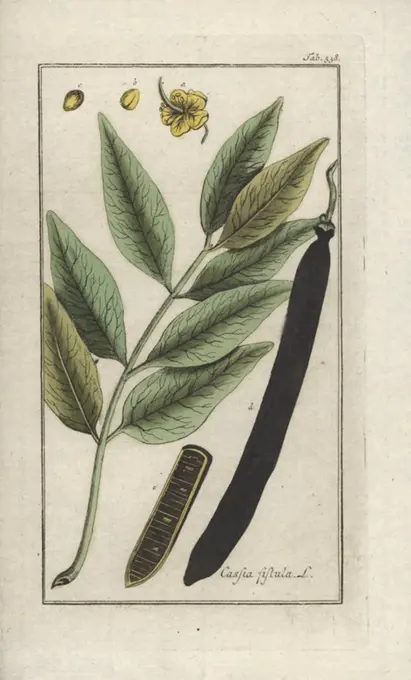
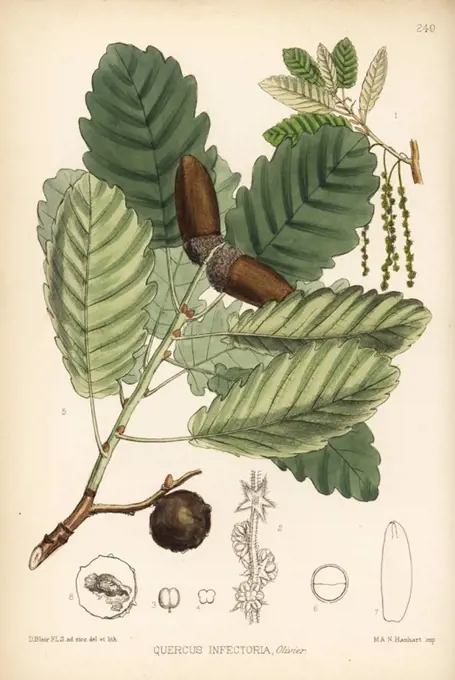
Botanical Illustrations

Handcolored engravings of various plants and spices, showcasing detailed foliage and flowers, reflecting historical botanical art.

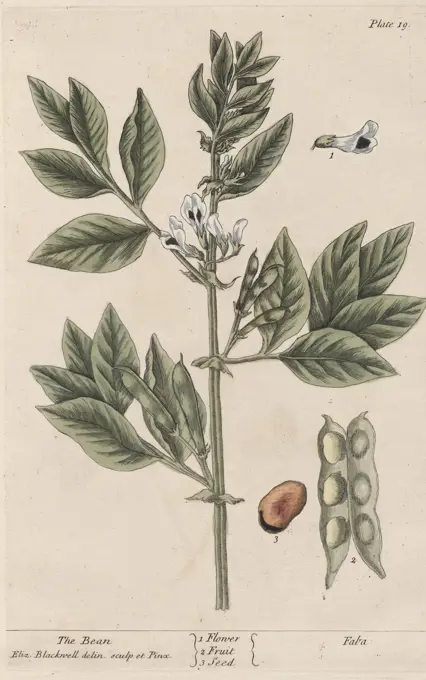
The bean, 1751, 1751, London, Publisher, Printed for John Nourse, Botany, Medical
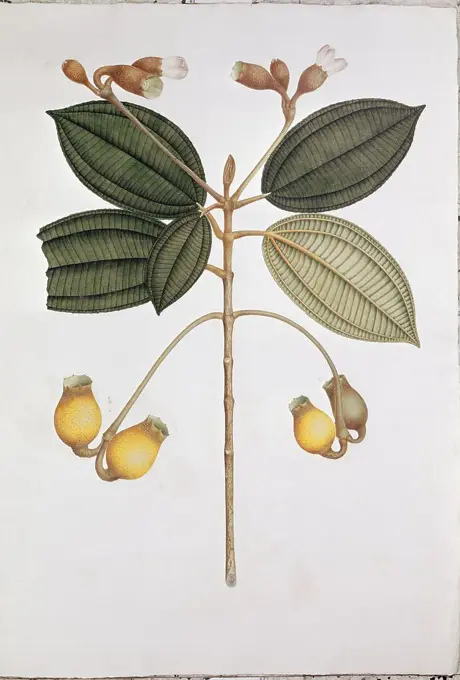
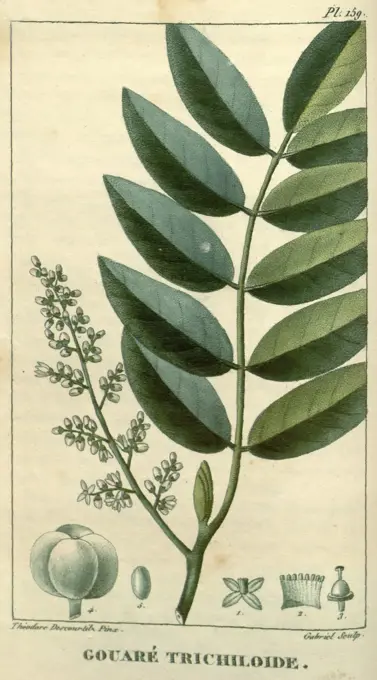
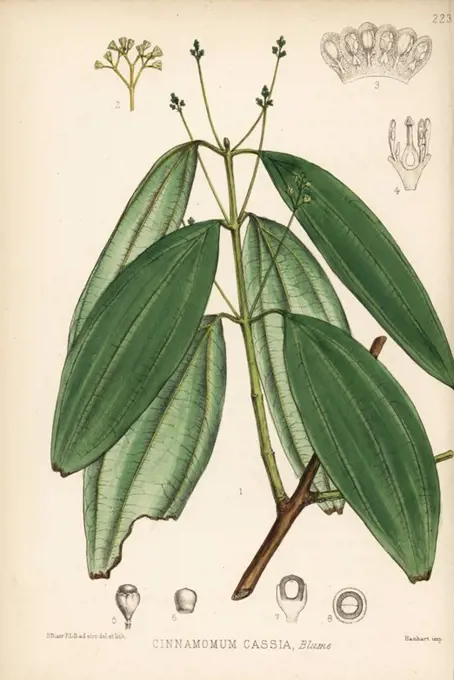
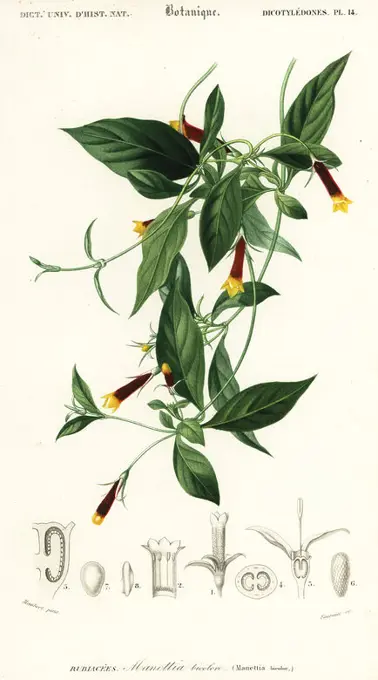
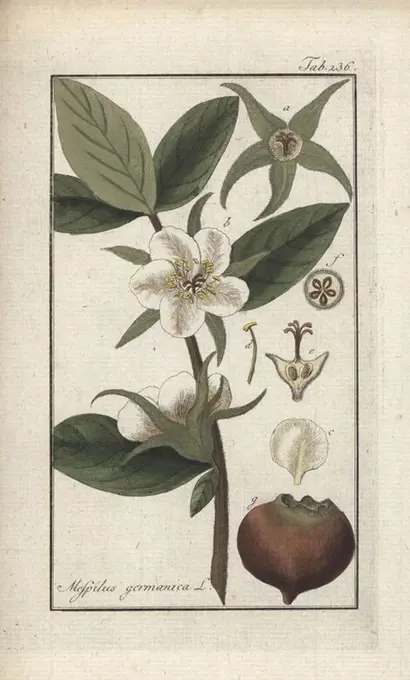
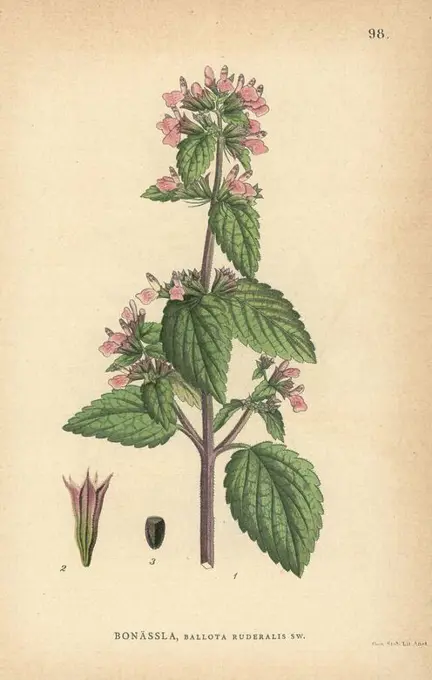
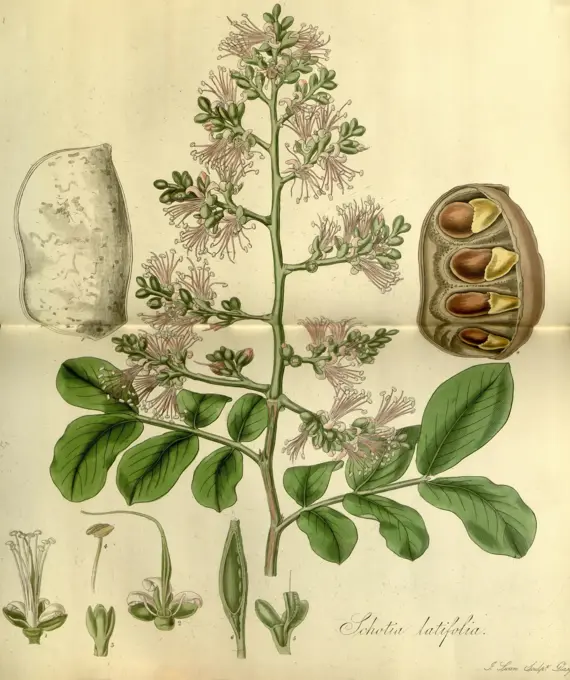
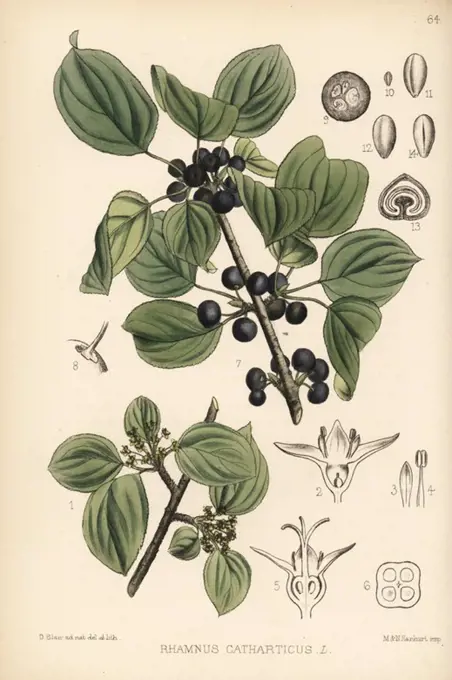
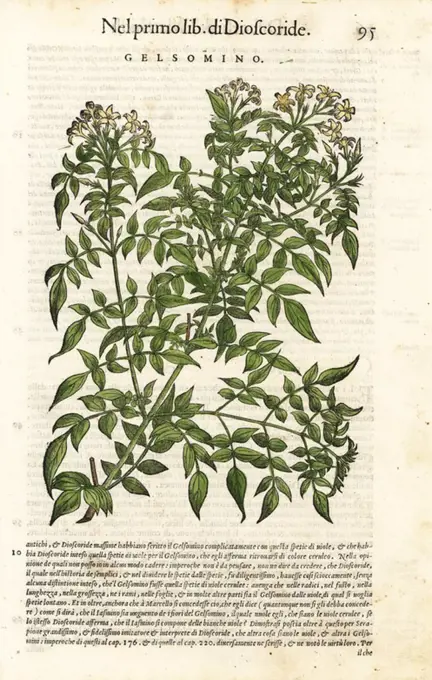
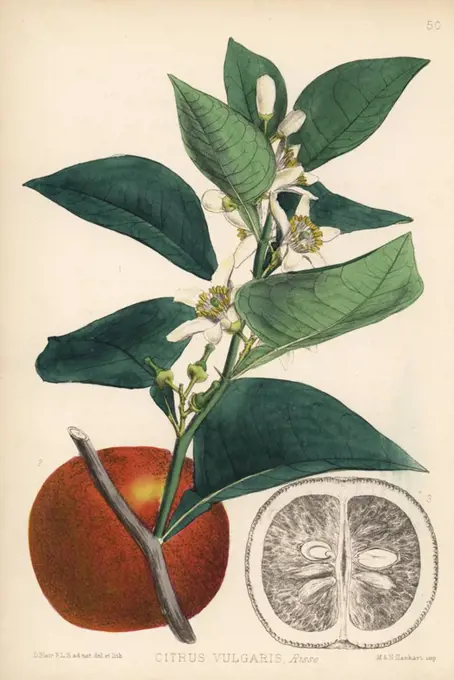
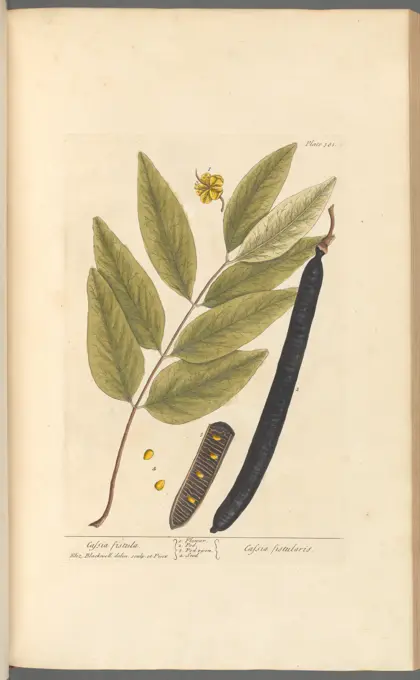
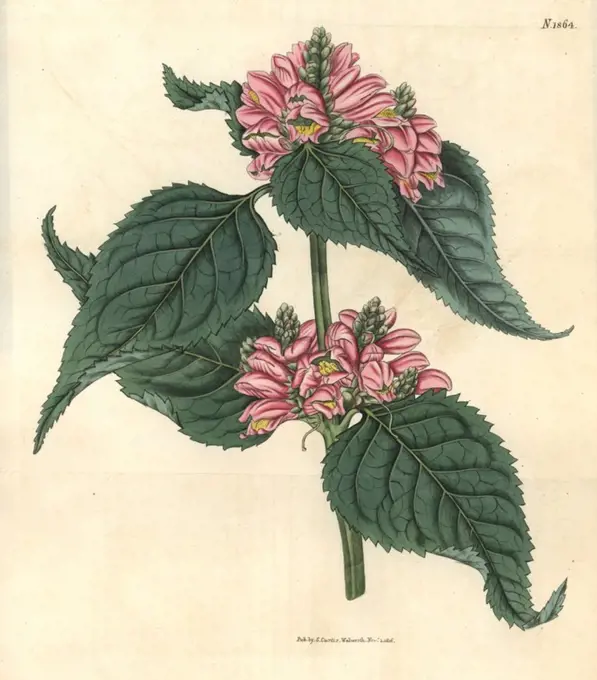
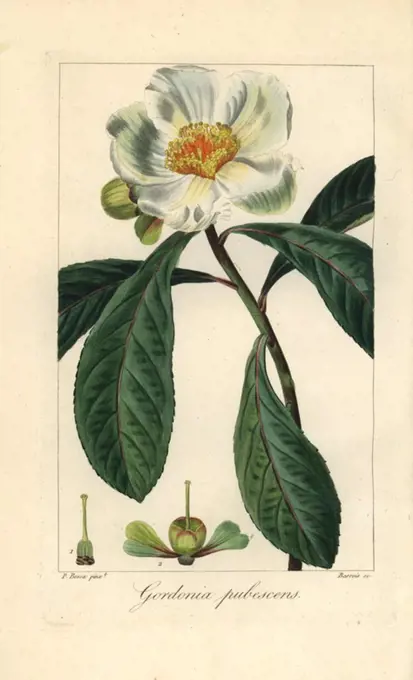
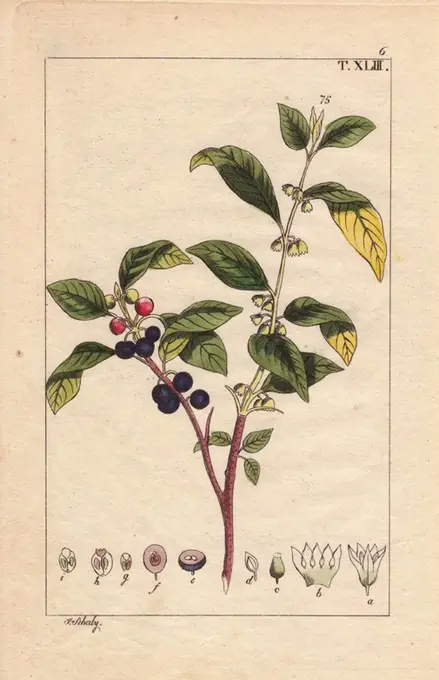
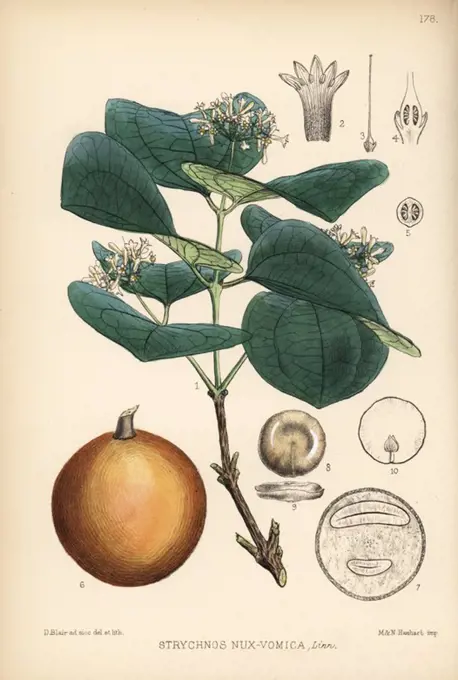
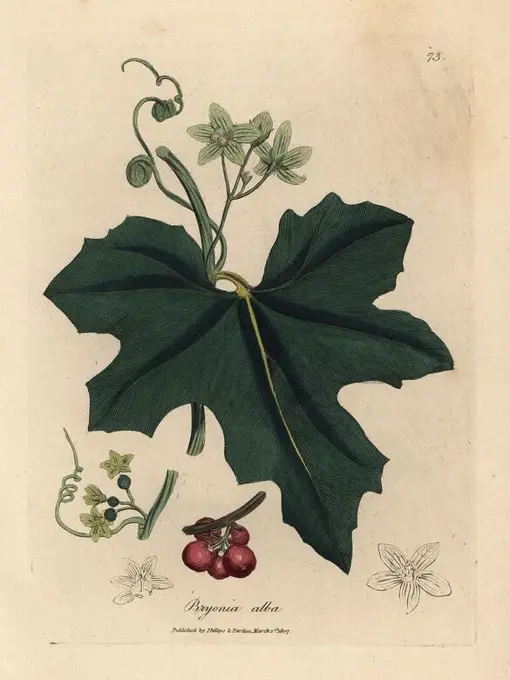
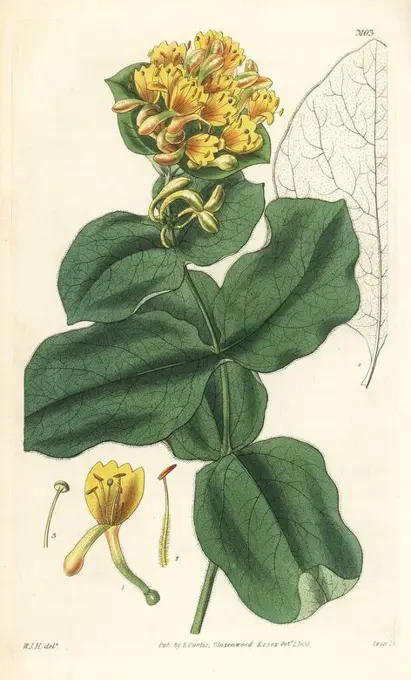
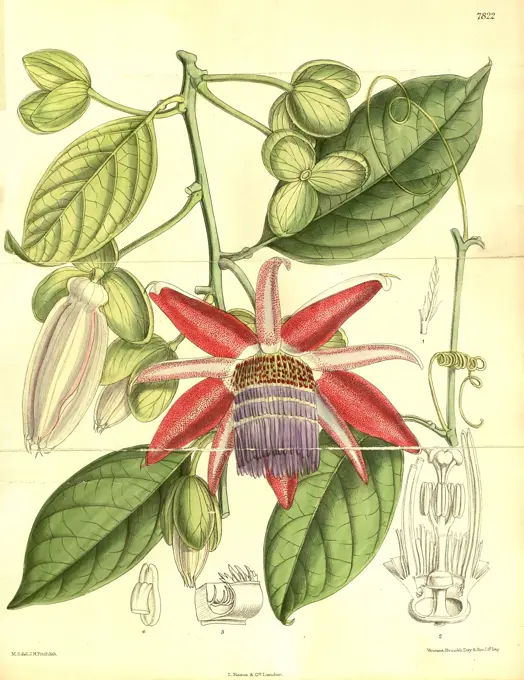
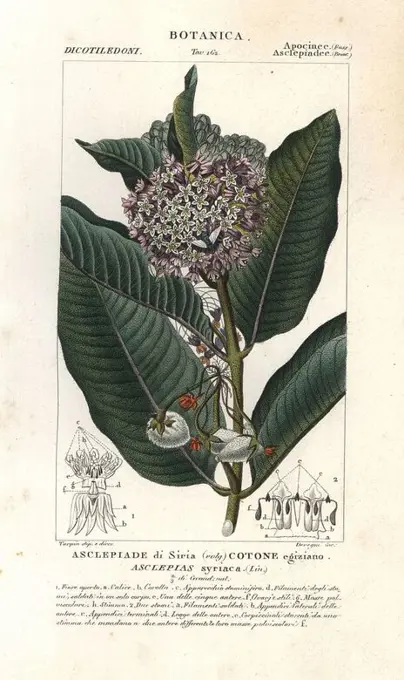
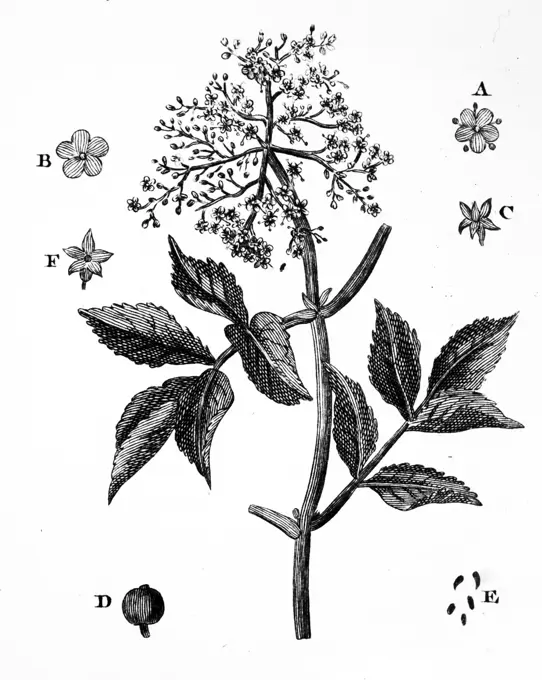
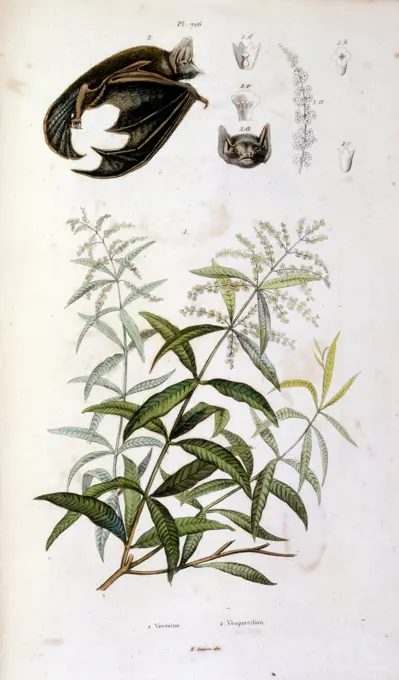
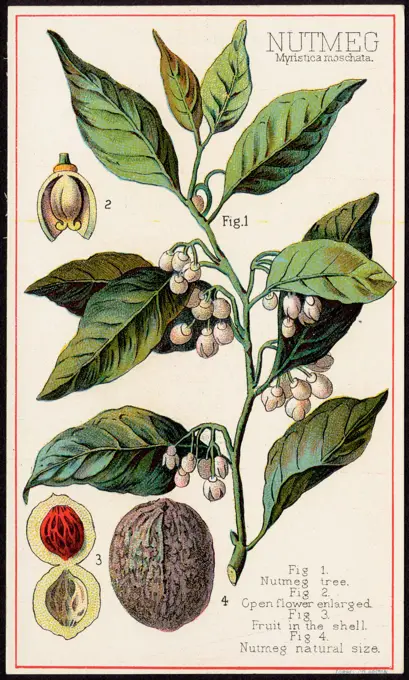
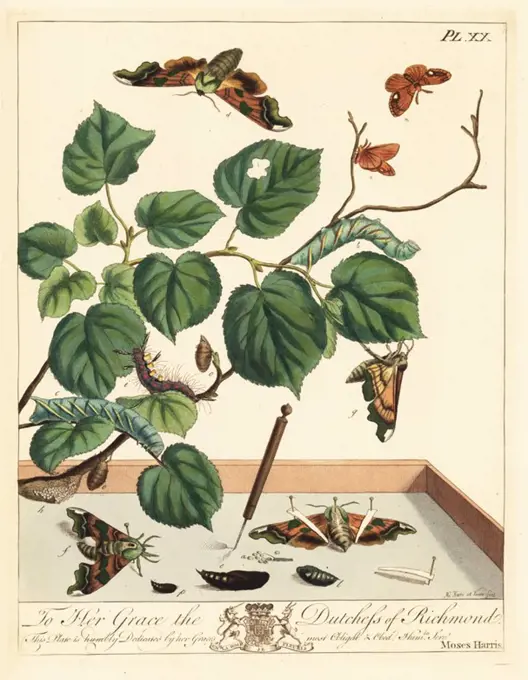
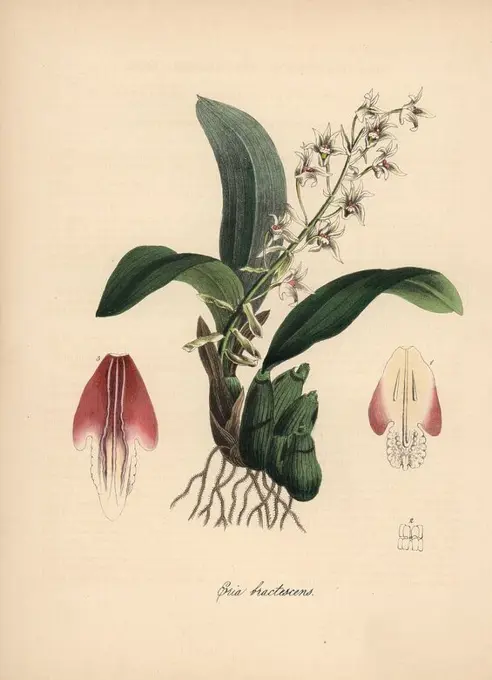
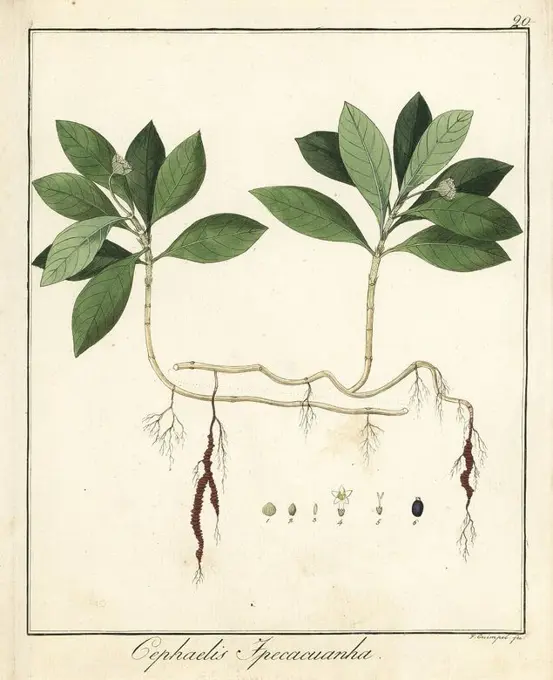
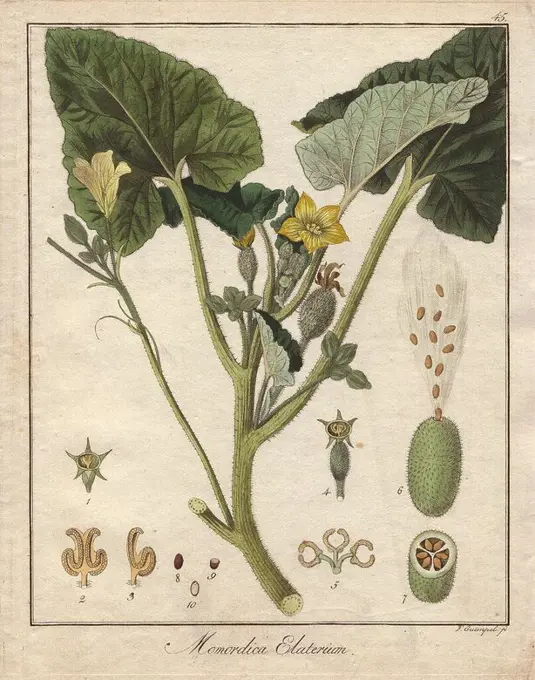
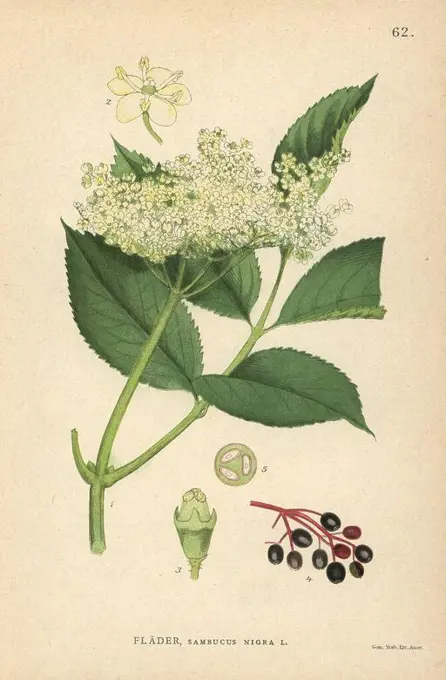
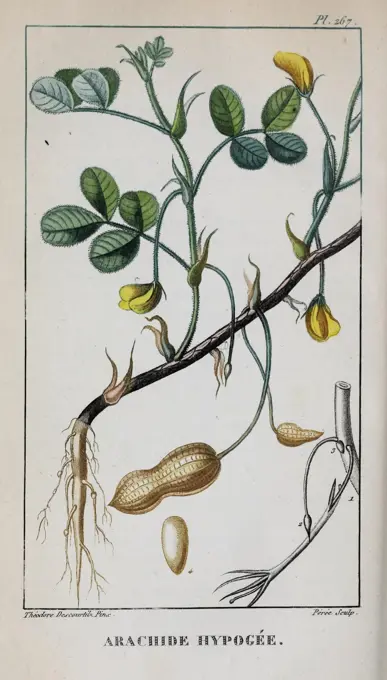
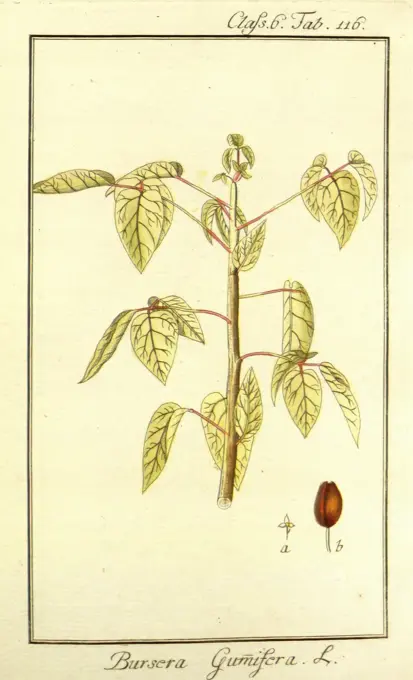
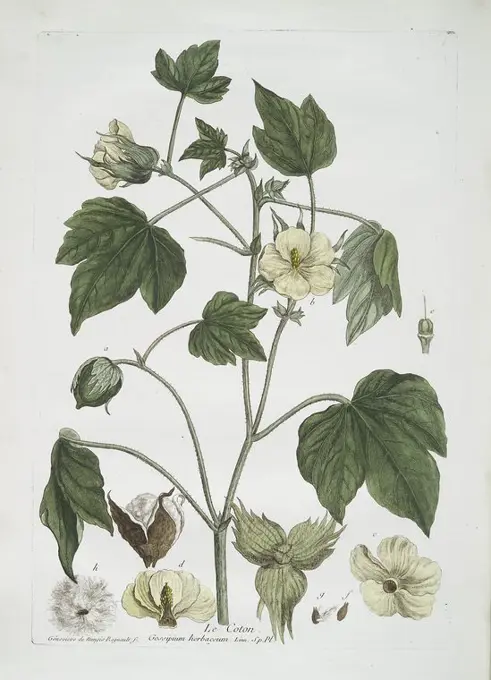
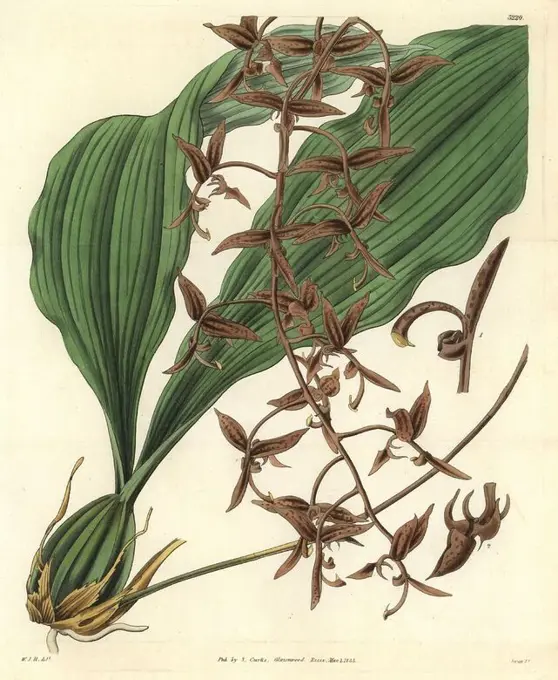
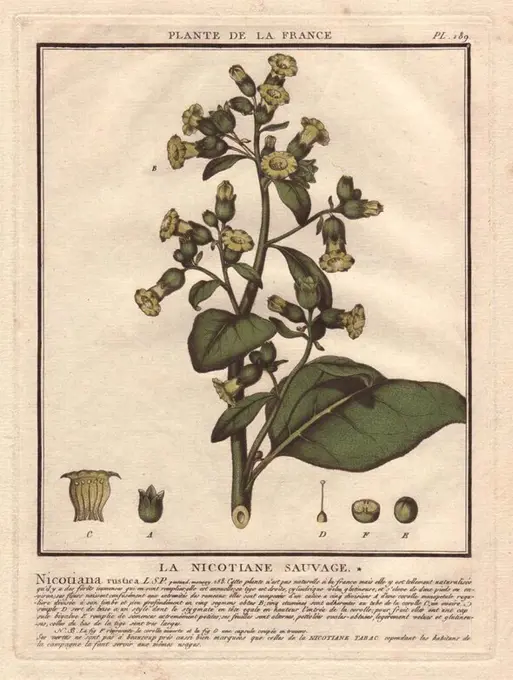
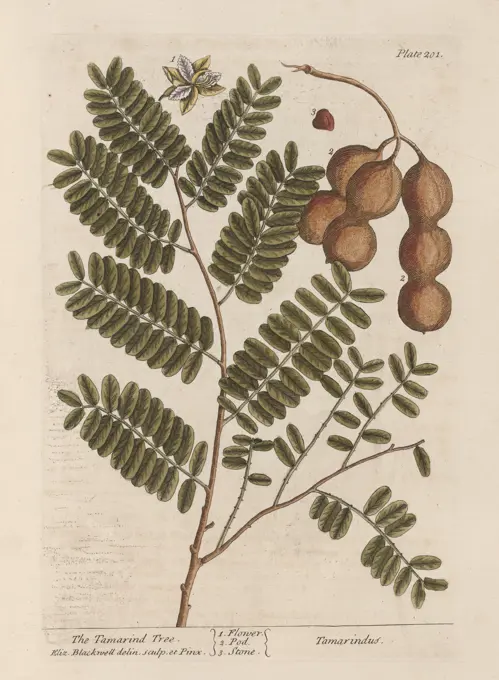
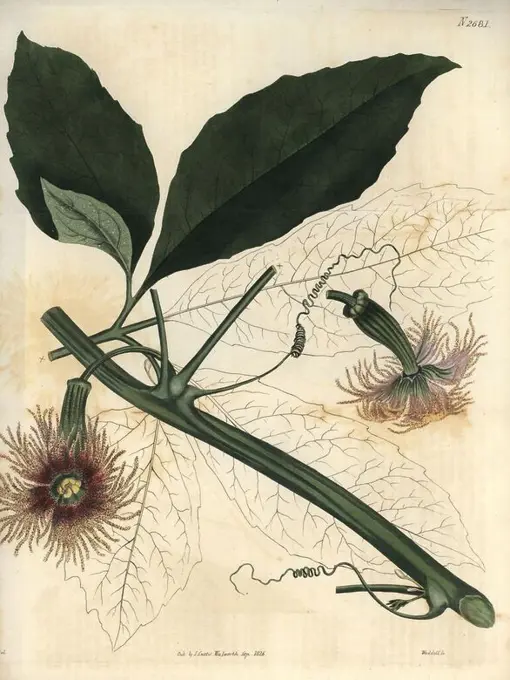
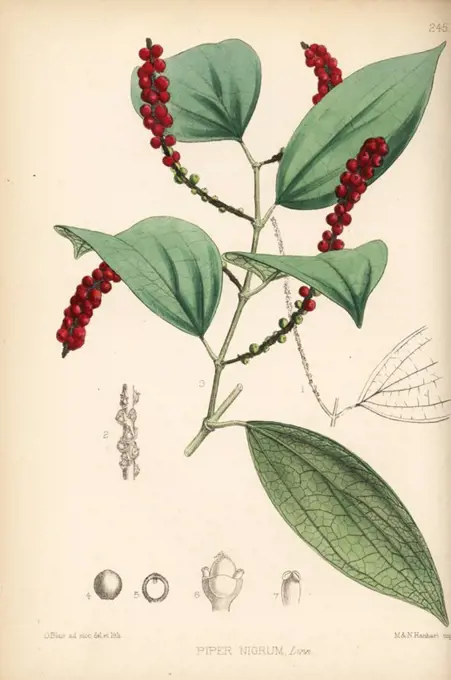
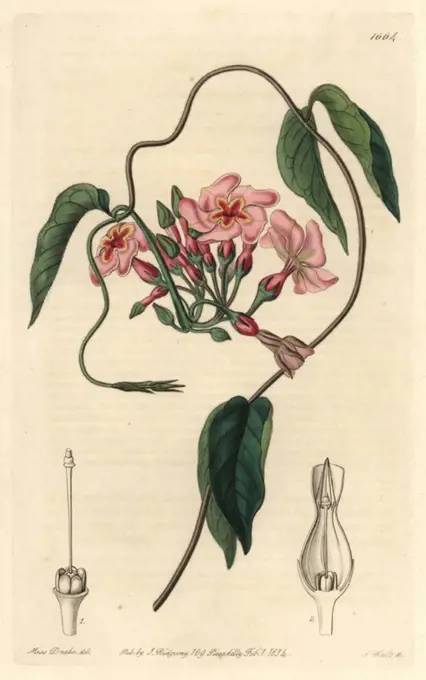
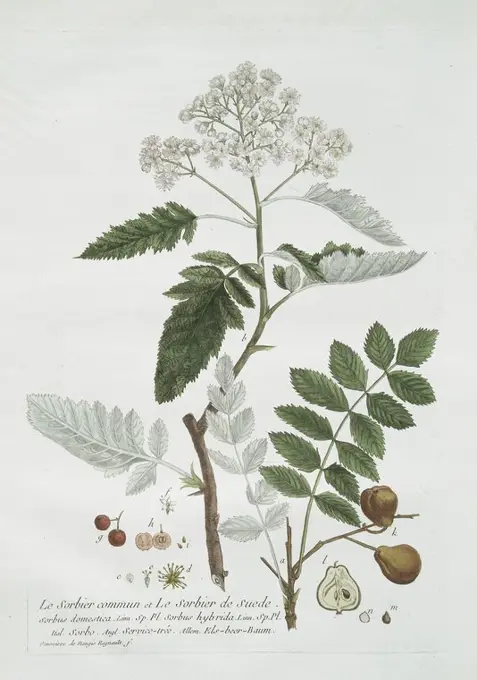
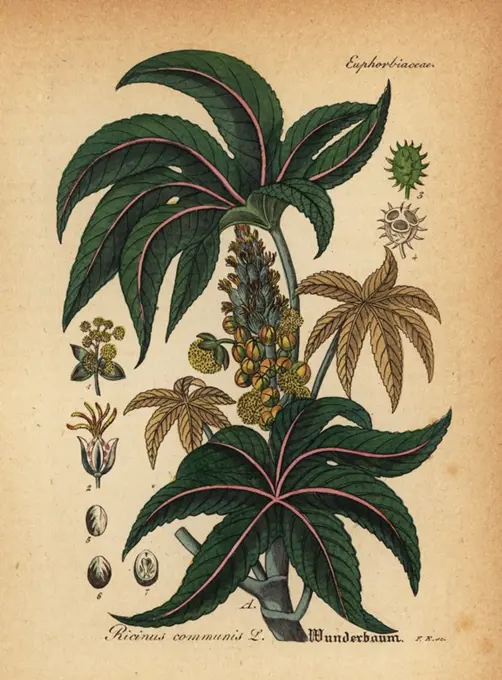
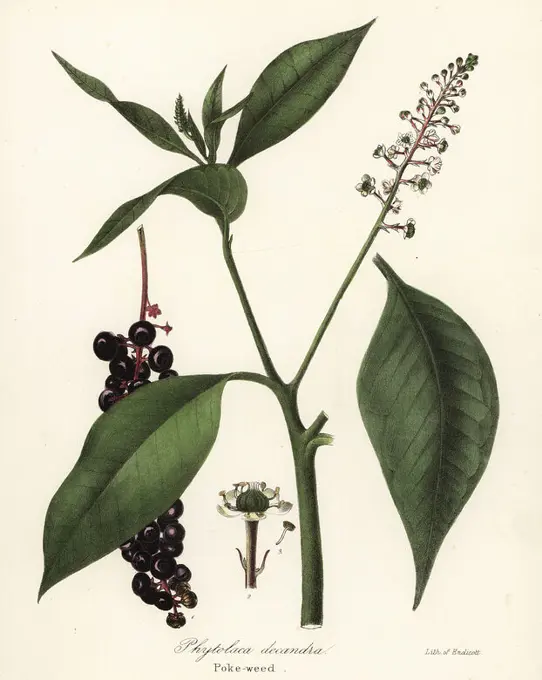
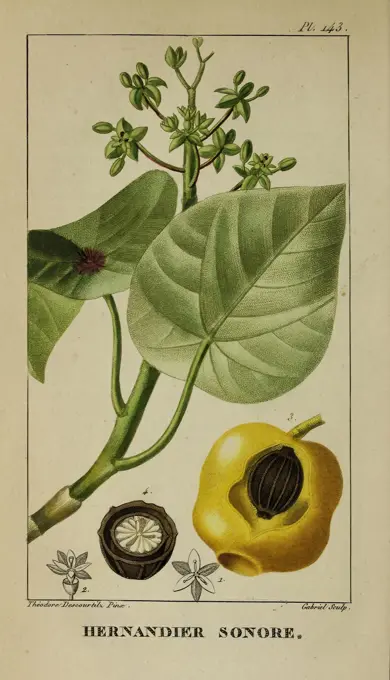
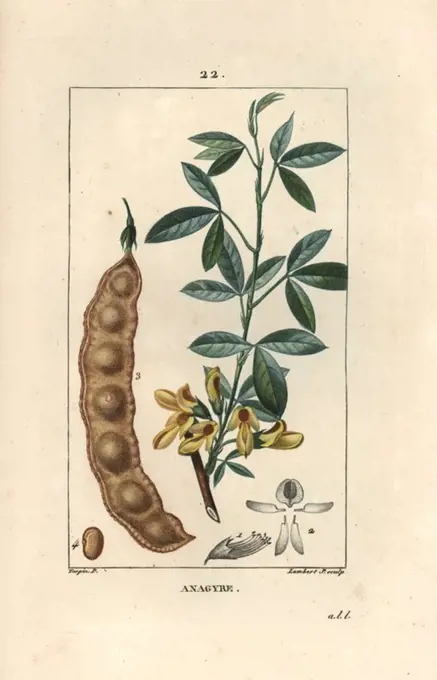
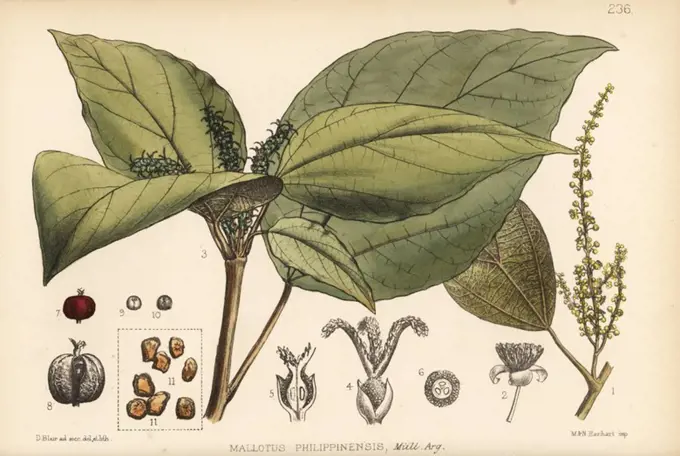
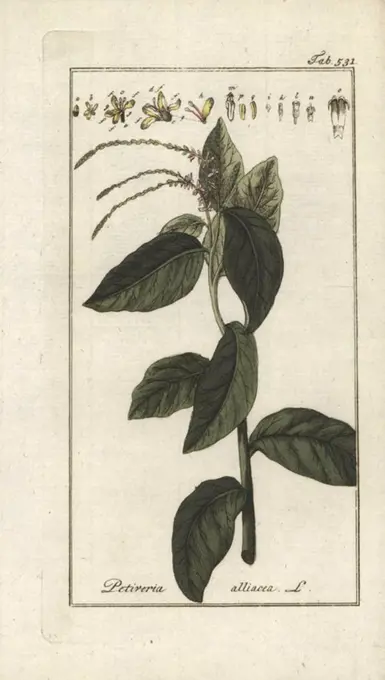
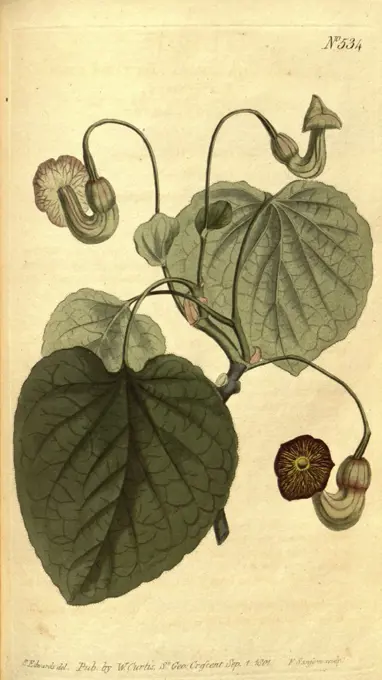
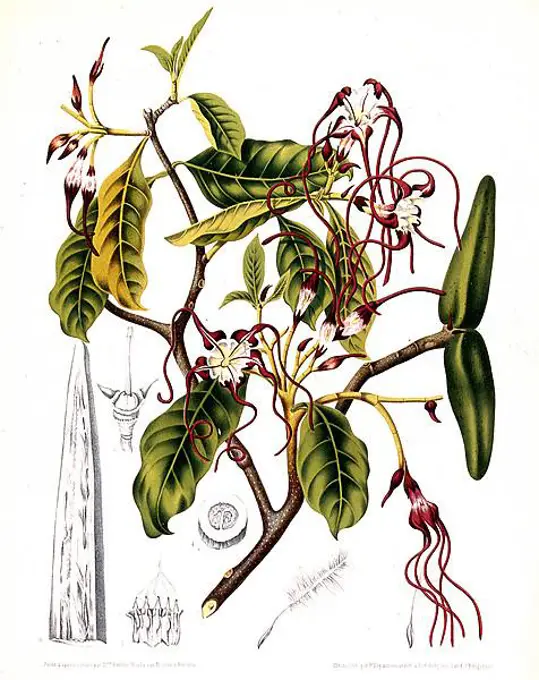
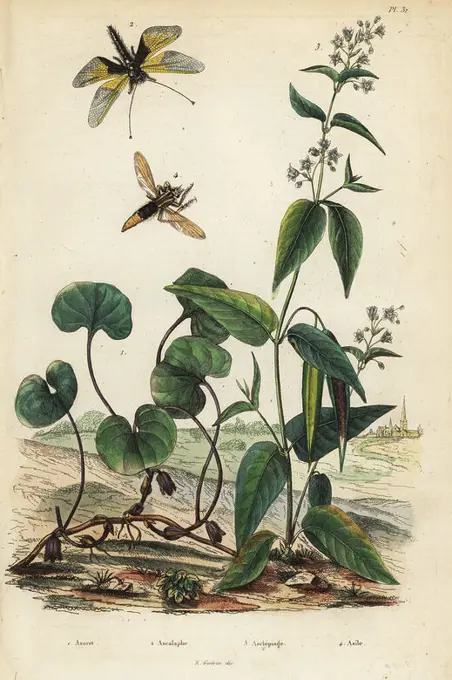
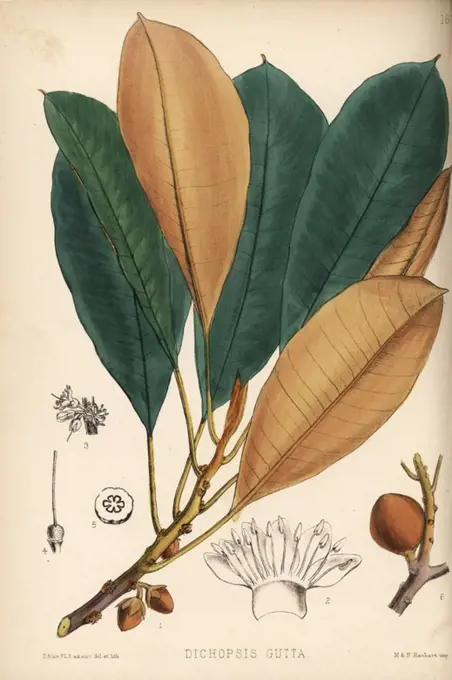
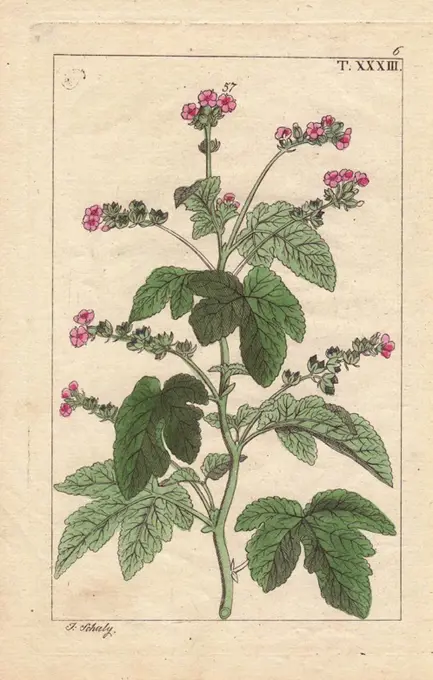
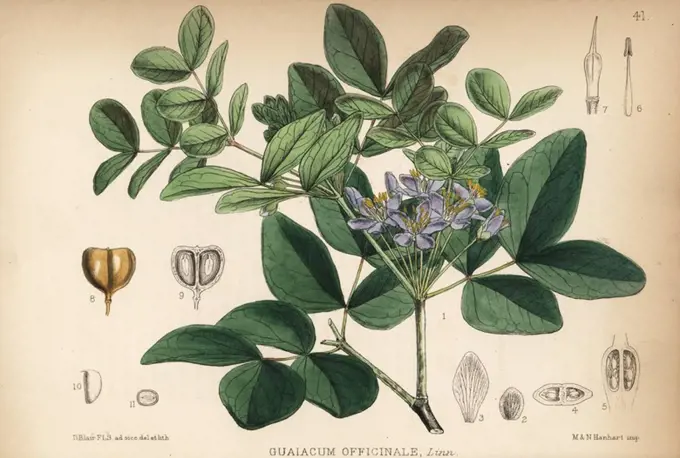
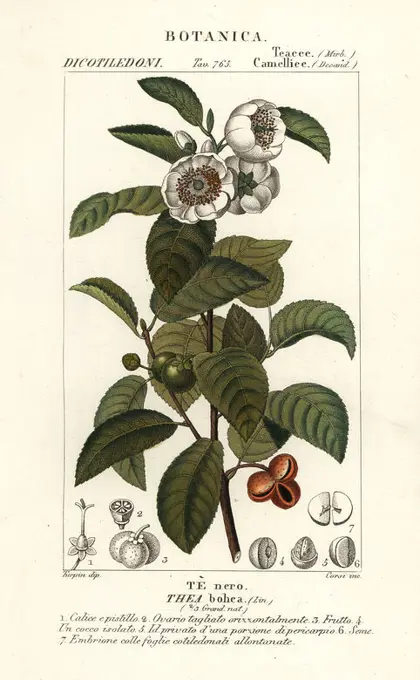
HUILAEA MUTISIANA - DRAWING MADE FOR THE BOTANICAL EXPEDITION OF THE KINGDOM OF NEW GRANADA - 18TH CENTURY. Author: MUTIS CELESTINO. Location: JARDIN BOTANICO-DIBUJOS. MADRID. SPAIN.Flore médicale des Antilles, ou, Traité des plantes usuelles, Paris, Pichard, 1821-1829 botany West Indies medicinal plants botany medical, This illustration features the detailed depiction of a Gouaré trichloide plant. Prominently displayed are its large, elongated leaves with a symmetrical arrangement, showcasing the rich veins that define the leaf structure. Adjacent to the foliage are smaller botanical details: a flowering branch with delicate blossoms, indicating the plant's reproductive elements. Also included are various botanical representations, such as a fruit resembling an apple, a seed capsule, and a flower, providing a comprehensive visual study of the species. The scientific nature of the artwork suggests it may have been created for educational purposes, highlighting the diversity and features of the Gouaré trichloide.Caulinia bimaculata (Purple glycine, Glycine bimaculata). Handcoloured copperplate engraving by Sansom after an illustration by Sydenham Edwards from William Curtis' Botanical Magazine, London, 1794.Chinese cinnamon or cassia, Cinnamomum cassia. Handcoloured lithograph by Hanhart after a botanical illustration by David Blair from Robert Bentley and Henry Trimen's Medicinal Plants, London, 1880.Manettia luteorubra. West Indies, Mexico, Americas. Manettia bicolor, Manettia bicolore. Handcoloured steel engraving by Felicie Fournier after an illustration by Louis Joseph Edouard Maubert from Charles d'Orbigny's Dictionnaire Universel d'Histoire Naturelle (Universal Dictionary of Natural History), Paris, 1849.Annual mercury, La mercuriale annuelle male, Mercurialis annua (mas). Copperplate engraving printed in three colours by Pierre Bulliard from his Herbier de la France, ou collection complete des plantes indigenes de ce royaume, Didot jeune, Debure et Belin, 1780-1793.Bilberry, Vaccinium myrtillus, showing ripe fruit, flower, leaf and seed. Handcoloured stipple copperplate engraving by Lambert Junior from a drawing by Anne-Ernestine Panckoucke from Chaumeton, Poiret et Chamberet's "La Flore Medicale," Paris, Panckoucke, 1830. Madame Anne-Ernestine Panckoucke (1784-1860) was a talented student of Pierre-Joseph Redoute and wife of the publisher Panckoucke.Cashew apple and nut, Anacardium occidentale, showing leaf, flowers, ripe nut and section of nut. Handcoloured stipple copperplate engraving by Lambert Junior from a drawing by Pierre Jean-Francois Turpin from Chaumeton, Poiret et Chamberet's "La Flore Medicale," Paris, Panckoucke, 1830. Turpin (1775~1840) was one of the three giants of French botanical art of the era alongside Pierre Joseph Redoute and Pancrace Bessa.Common medlar, Mespilus germanica. Handcoloured copperplate botanical engraving from Johannes Zorn's "Afbeelding der Artseny-Gewassen," Jan Christiaan Sepp, Amsterdam, 1796. Zorn first published his illustrated medical botany in Nurnberg in 1780 with 500 plates, and a Dutch edition followed in 1796 published by J.C. Sepp with an additional 100 plates. Zorn (1739-1799) was a German pharmacist and botanist who collected medical plants from all over Europe for his "Icones plantarum medicinalium" for apothecaries and doctors.Hyenanche globosa Lam. or Toxicodendrum capense of globosum (Cape wolvegift), in or after c. 1780 drawing Hyenanche globosa (Gaertn.) Lam. (A.B.S.; Raper & Boucher); of toxicodendrum capense of globosum (Dyer; etiket tent. 2002).  paper. ink. pencil. chalk. watercolor (paint) pen / brush plants; vegetationHorehound, Ballota ruderalis Sw.. Chromolithograph from Carl Lindman's "Bilder ur Nordens Flora" (Pictures of Northern Flora), Stockholm, Wahlström & Widstrand, 1905. Lindman (1856-1928) was Professor of Botany at the Swedish Museum of Natural History (Naturhistoriska Riksmuseet). The chromolithographs were based on Johan Wilhelm Palmstruch's "Svensk botanik" (1802-1843).Bupleroides, quae simpla noble canariensium. Thoroughwax, 1772 - 1793, Romae, Publisher, Sumptibus Bouchard et Gravier. Topics include Plants, Flowers, Medicinal plants, Botany. Italy, RomeExotic flora, Edinburgh, Printed for W. Blackwood, 1823-27, Great Britain, plants, pictorial works, plants cultivated, The illustration features a detailed botanical study of the plant known as Sabal latifolia. It includes a depiction of the plant's elongated leaves, which fan out elegantly from a central stem. The flowering parts are showcased with delicate pinkish-purple blossoms, highlighting their intricate structure. To the side, a cross-section of the fruit reveals its unique shape, with visible seeds inside. Accompanying illustrations present various stages of the floral and genetic characteristics of the plant, enhancing the overall understanding of its anatomy and reproductive features. This study serves as a valuable resource for botanical research and education.Purging buckthorn, Rhamnus cathartica. Handcoloured lithograph by Hanhart after a botanical illustration by David Blair from Robert Bentley and Henry Trimen's Medicinal Plants, London, 1880.Jasmine, Jasminum officinale. Handcoloured woodblock print by Wolfgang Meyerpick after an illustration by Giorgio Liberale from Pietro Andrea Mattioli's Discorsi di P.A. Matthioli ne i sei libri della Materia Medicinale di Pedacio Dioscoride Anazarbeo (Commentary on the Materia Medica of Dioscorides), Vincenzo Valgrisi, Venice, 1568.Bitter orange or Seville orange, Citrus aurantium (Citrus vulgaris). Handcoloured lithograph by Hanhart after a botanical illustration by David Blair from Robert Bentley and Henry Trimen's Medicinal Plants, London, 1880.Cassia fistula. Miller, Joseph, 1668 or 1669-1748. Botanical illustrations, Prints. 1739. Manuscripts and Archives Division. Botany, Botany, MedicalAncistroclidus vahlii, native to Southeast Asia, Sri Lanka, digitally restored historical colour print from 1893, AsiaLyon's chelone, Chelone lyonii (Chelone major). Handcoloured botanical engraving by Weddell from John Sims' Curtis's Botanical Magazine, Couchman, London, 1816.Franklin tree, Franklinia alatamaha, native to America, extinct in the wild. Handcoloured stipple engraving on copper by Barrois from a botanical illustration by Pancrace Bessa from Mordant de Launay's "Herbier General de l'Amateur," Audot, Paris, 1820. The Herbier was published from 1810 to 1827 and edited by Mordant de Launay and Loiseleur-Deslongchamps. Bessa (1772-1830s), along with Redoute and Turpin, is considered one of the greatest French botanical artists of the 19th century.Androcymbium capense (L.) Krause., Androcymbium capense (L.) Krause., draughtsman: Robert Jacob Gordon, Oct-1777 - Mar-1786, paper, pen, brush, h 660 mm × w 480 mm, h 253 mm × w 194 mmRhamnus tinctoria, Dyers buckthorn. Handcolored copperplate engraving of a botanical illustration from G. T. Wilhelm's "Unterhaltungen aus der Naturgeschichte" (Encyclopedia of Natural History), Vienna, 1816. Gottlieb Tobias Wilhelm (1758-1811) was a Bavarian clergyman and naturalist in Augsburg, where the first edition was published.Poison nut or kuchila, Strychnos nux-vomica. Handcoloured lithograph by Hanhart after a botanical illustration by David Blair from Robert Bentley and Henry Trimen's Medicinal Plants, London, 1880.White flowered bryony with red berries, Bryonia alba. Handcolored copperplate engraving from a botanical illustration by James Sowerby from William Woodville and Sir William Jackson Hooker's "Medical Botany" 1832. The tireless Sowerby (1757-1822) drew over 2,500 plants for Smith's mammoth "English Botany" (1790-1814) and 440 mushrooms for "Coloured Figures of English Fungi " (1797) among many other works.Hairy American woodbine, Lonicera hirsuta. Handcoloured copperplate engraving by Swan after an illustration by William Jackson Hooker from Samuel Curtis's "Botanical Magazine," London, 1831.Curtis's Botanical Magazine, London, New York, botany, periodicals, pictorial works, Matilda Smith, Passiflora ambigua, Nicaragua, Curtis, flowers, Joseph Dalton Hooker, women in science, Matilda Smith, This illustration features a detailed botanical study of the passionflower plant. Prominently displayed is a vibrant red and purple flower at the center, characterized by its intricate structure and layered petals. Surrounding the flower are large, oval leaves with distinct veins, showcasing their glossy texture. Below, smaller buds and a flower outline provide additional perspective on the plants growth stages. The composition highlights both the beauty and complexity of the passionflower, emphasizing its lush foliage and unique floral anatomy.Common milkweed, Asclepias syriaca. Handcoloured copperplate stipple engraving from Antoine Jussieu's "Dictionary of Natural Science," Florence, Italy, 1837. Illustration by Turpin, engraved by Devegni, directed by Pierre Jean-Francois Turpin, and published by Batelli e Figli. Turpin (1775-1840) is considered one of the greatest French botanical illustrators of the 19th century.Engraving depicting a sample of Elder. Sambucus nigra (Elder) is a species complex of flowering plants in the family Adoxaceae native to most of Europe and North America. Common names include elder, elderberry, black elder, European elder, European elderberry and European black elderberry. Dated 19th century1. Rhipsalis oblonga, 2. Rhipsalis elliptica, 3. Rhipsalis crispata, Kaktus, Kakteen, aus The Cactaceae, descriptions and illustrations, N.L. Britton and J.N. Rose, 1919-1923, Historisch, historical, digital improved reproduction of an original from the 19th century / digital restaurierte Reproduktion einer Originalvorlage aus dem 20. Jahrhundert, genaues Originaldatum nicht bekannt.Botanical and zoological illustration by F. E. Guérin. From Dictionnaire pittoresque d'histoire naturelle et des phénomènes de la nature - 1833/1834Nutmeg, Myristica moschata , Spices, Trees, 19th Century American Trade CardsIcones, Plantarum, Medicinalium, Nurnberg, auf Kosten der Raspischen Buchhandlung, 1779-1790, Botany, Medical, Pictorial, Works, The illustration features a plant identified as Arctium lappa L. (greater burdock). The central stem is adorned with clusters of pinkish-purple flowers, showcasing both buds and fully opened blossoms. The leaves are broad and heart-shaped, characterized by a rich texture. Below the main illustration, detailed depictions of various plant parts are labeled with letters from 'a' to 'f.' These components include the flower structure and seed, emphasizing the botanical details essential for identification and study. The overall composition highlights the intricate beauty of the plant while providing educational annotations.Lime hawk-moth, Mimas tillae, and common vapourer moth or rusty tussock, Orgyia antiqua, on lime leaves, Tillia europaea. Handcoloured lithograph after an illustration by Moses Harris from "The Aurelian; a Natural History of English Moths and Butterflies," new edition edited by J. O. Westwood, published by Henry Bohn, London, 1840.Long-bracted eria orchid, Eria bractescens. Mirror image of the illustration by Miss Sarah Drake in the Botanical Register, 1844. Handcoloured zincograph by C. Chabot drawn by Miss M. A. Burnett from her "Plantae Utiliores: or Illustrations of Useful Plants," Whittaker, London, 1842. Miss Burnett drew the botanical illustrations, but the text was chiefly by her late brother, British botanist Gilbert Thomas Burnett (1800-1835).Ipecacuanha, Carapichea ipecacuanha. Handcoloured copperplate engraving by F. Guimpel from Dr. Friedrich Gottlob Hayne's Medical Botany, Berlin, 1822. Hayne (1763-1832) was a German botanist, apothecary and professor of pharmaceutical botany at Berlin University.Medicinal plant, Cinchona officinalis, Historical, digitally restored reproduction from a 19th century originalBlack-banded spider wasp, Anoplius viaticus 1, pickerelweed, Pontederia cordata 2, and watchman prawn, Anchistus custos 3. Pompile, Pontederie, Pontonie. Handcoloured steel engraving by du Casse after an illustration by Adolph Fries from Felix-Edouard Guerin-Meneville's Dictionnaire Pittoresque d'Histoire Naturelle (Picturesque Dictionary of Natural History), Paris, 1834-39.Botanical Print by Walter Hood Fitch 1817 - 1892, W.H. Fitch was an botanical illustrator and artist, born in Glasgow, Scotland, UK, colour lithograph. From the Liszt Masterpieces of Botanical Illustration Collection.Squirting cucumber, Mormodica elaterium, Ecballium elaterium. Handcoloured copperplate engraving from Dr. Friedrich Gottlob Hayne's "Getreue Darstellung und Beschreibung der in der Arzneykunde Gebrauchilchen Gewachse" (Medical Botany), Berlin, 1822. Hayne (1763-1832) was a German botanist, apothecary and, from 1814, professor of pharmaceutical botany at Berlin University.Black elder, Sambucus nigra. Chromolithograph from Carl Lindman's "Bilder ur Nordens Flora" (Pictures of Northern Flora), Stockholm, Wahlström & Widstrand, 1905. Lindman (1856-1928) was Professor of Botany at the Swedish Museum of Natural History (Naturhistoriska Riksmuseet). The chromolithographs were based on Johan Wilhelm Palmstruch's "Svensk botanik" (1802-1843).Pareira brava cissampelos, Cissampelos pareira. Handcoloured copperplate engraving from a botanical illustration by James Sowerby from William Woodville and Sir William Jackson Hooker's "Medical Botany," John Bohn, London, 1832. The tireless Sowerby (1757-1822) drew over 2, 500 plants for Smith's mammoth "English Botany" (1790-1814) and 440 mushrooms for "Coloured Figures of English Fungi " (1797) among many other works.Yellow flower, leaves and fruit of the squirting cucumber, Momordica elaterium. Handcolored copperplate engraving from a botanical illustration by James Sowerby from William Woodville and Sir William Jackson Hooker's "Medical Botany" 1832. The tireless Sowerby (1757-1822) drew over 2,500 plants for Smith's mammoth "English Botany" (1790-1814) and 440 mushrooms for "Coloured Figures of English Fungi " (1797) among many other works.Flore pittoresque et médicale des Antilles, ou, Histoire naturelle des plantes usuelles des colonies françaises, anglaises, espagnoles, et portugaises, Paris, Ches l'Editeur, 1833, botany, medicinal plants, pictorial works, West Indies, This illustration depicts the peanut plant, Arachis hypogaea, showcasing its key botanical features. Prominent green leaves fan out along the stem, while yellow flowers are depicted near the top of the plant. Below the surface, the roots are visible, with pods containing peanuts breaking through the soil. The detailed representation highlights the distinctive growth habit of the plant, emphasizing both its aerial and subterranean parts. The labeling in the illustration identifies the species, contributing to its educational purpose in botanical studies.Sweet granadilla or grenadia, Passiflora ligularis. Illustration drawn by William Jackson Hooker, engraved by Swan. Handcolored copperplate engraving from William Curtis's "The Botanical Magazine," Samuel Curtis, 1830. Hooker (1785-1865) was an English botanist, writer and artist. He was Regius Professor of Botany at Glasgow University, and editor of Curtis' "Botanical Magazine" from 1827 to 1865. In 1841, he was appointed director of the Royal Botanic Gardens at Kew, and was succeeded by his soRed granadilla, Passiflora capsularis (Angular-fruited passion flower, Passiflora capsularis). Handcoloured copperplate engraving by Swan after an illustration by William Jackson Hooker from Samuel Curtis' Botanical Magazine, London, 1828.Dreyhundert, Auserlesene, Amerikanische, Gewachse, Nach, Linneischer, Ordnung, Nurnberg, Auf, Kosten, Der, Raspischen, Buchh, 1785-88, Plants, Centralamerica, Westindies, Pictorial, Works, This botanical illustration showcases the plant Bursera gummifera L. It features a detailed depiction of a slender stem with a series of elongated, oval leaves characterized by a prominent central vein and subtle serrations along the edges. The arrangement of the leaves is alternating, adding to the overall symmetry of the plant. At the bottom, there is a depiction of a fruit or seed, labeled with letters for identification. Annotations indicating the classification and tab number are included, suggesting its significance in botanical studies. The illustration captures the delicate features and natural beauty of this species.Cascarilla or grannybush, Croton eluteria, with section through bark. Handcoloured stipple copperplate engraving by Lambert Junior from a drawing by Pierre Jean-Francois Turpin from Chaumeton, Poiret et Chamberet's "La Flore Medicale," Paris, Panckoucke, 1830. Turpin (1775~1840) was one of the three giants of French botanical art of the era alongside Pierre Joseph Redoute and Pancrace Bessa.Blood-stained trillium, Trillium erythrocarpum. Illustration drawn by William Jackson Hooker, engraved by Swan. Handcolored copperplate engraving from William Curtis's "The Botanical Magazine," Samuel Curtis, 1830. Hooker (1785-1865) was an English botanist, writer and artist. He was Regius Professor of Botany at Glasgow University, and editor of Curtis' "Botanical Magazine" from 1827 to 1865. In 1841, he was appointed director of the Royal Botanic Gardens at Kew, and was succeeded by his son Joseph Dalton. Hooker documented the fern and orchid crazes that shook England in the mid-19th century in books such as "Species Filicum" (1846) and "A Century of Orchidaceous Plants" (1849). A gifted botanical artist himself, he wrote and illustrated "Flora Exotica" (1823) and several volumes of the "Botanical Magazine" after 1827.Le Coton.. Regnault, Nicolas-François, 1746-1810. Prints, Scientific illustrations, Botanical illustrations. 1774. General Research Division. Plants, BotanyDark-flowered gongoria, Gongoria atropurpurea. Illustration drawn by William Jackson Hooker, engraved by Swan. Handcolored copperplate engraving from William Curtis's "The Botanical Magazine," Samuel Curtis, 1833. Hooker (1785-1865) was an English botanist, writer and artist. He was Regius Professor of Botany at Glasgow University, and editor of Curtis' "Botanical Magazine" from 1827 to 1865. In 1841, he was appointed director of the Royal Botanic Gardens at Kew, and was succeeded by his son Joseph Dalton. Hooker documented the fern and orchid crazes that shook England in the mid-19th century in books such as "Species Filicum" (1846) and "A Century of Orchidaceous Plants" (1849). A gifted botanical artist himself, he wrote and illustrated "Flora Exotica" (1823) and several volumes of the "Botanical Magazine" after 1827.Botanical Print by Walter Hood Fitch 1817 - 1892, botanical illustrator and artist, born in Glasgow, Scotland, UK, colour lithographGolden shower tree, Cassia fistula. Handcoloured copperplate botanical engraving from Johannes Zorn's "Afbeelding der Artseny-Gewassen," Jan Christiaan Sepp, Amsterdam, 1796. Zorn first published his illustrated medical botany in Nurnberg in 1780 with 500 plates, and a Dutch edition followed in 1796 published by J.C. Sepp with an additional 100 plates. Zorn (1739-1799) was a German pharmacist and botanist who collected medical plants from all over Europe for his "Icones plantarum medicinalium" for apothecaries and doctors.Crinkle-leaf poison or shaggy gastrolobe, Gastrolobium villosum. Handcoloured copperplate engraving by George Barclay after an illustration by Miss Sarah Drake from Edwards' Botanical Register, edited by John Lindley, London, Ridgeway, 1847.Villous zichya, Zichya villosa. Kennedya species Handcoloured copperplate engraving by George Barclay after an illustration by Miss Sarah Drake from Edwards' Botanical Register, edited by John Lindley, London, Ridgeway, 1842.Bungo fruit, mbungo, or rubber vine, Saba comorensis (Landolphia comorensis var. florida). Chromolithograph after a botanical illustration from Hermann Adolph Koehler's Medicinal Plants, edited by Gustav Pabst, Koehler, Germany, 1887.Aleppo oak, Quercus infectoria. Handcoloured lithograph by Hanhart after a botanical illustration by David Blair from Robert Bentley and Henry Trimen's Medicinal Plants, London, 1880.James Heath, 1757-1834, British, Kuara 1789, 1789. Hand colored engraving.Fodder galega or eastern galega, Galega orientalis. Handcoloured copperplate engraving by Weddell from Samuel Curtis' Botanical Magazine, London, 1821.Botanical print by Robert Kaye Greville, 1794 - 1866, an English botanist. He was an accomplished British botanical artist and  illustrator of natural history.Wild or Aztec tobacco, mapacho. La nicotiane sauvage (Nicotiana rustica). French botanist Jean Baptiste François Pierre Bulliard was born around 1742 at Aubepierre-en-Barrois (Haute Marne) and died on 26 September 1793 in Paris. He studied at Angers, and later illustrated and published a number of botanical and mycological works on French flora. He studied art and engraving under Francois Martinet, the celebrated artist of many of Buffon's natural history books.The tamarind tree, 1751., 1751., London. Publisher, Printed for John Nourse. Botany, MedicalCorynocarpus laevigata, 1848, England, by Walter Fitch.Flowers, stem and leaf of a tropical plant (Dillenia pentagyna) and five skin beetles (Dermestes species). Coloured etching by J. Pass, c. 1803, after J. Ihle.Holtzbecker bans, Simon (1620-1671); Maria Sibylla Merian (1647-1717), Amaranthus bleeding (Roeder amarant); Extension activities (raevehale-amarant), 1649-1659Female pedate feuillaea. Feuillaea pedata or Telfairia pedata Hook. Named for Mr. Charles Telfair, superintendent of the Royal Garden at Mauritius.. Illustration by E.D., engraved by Weddell. Handcolored copperplate engraving from Samuel Curtis's "The Curtis Botanical Magazine" 1826.. Samuel Curtis, cousin and son-in-law to William Curtis, took over the Botanical Magazine in 1826. Samuel re-named it "The Curtis Botanical Magazine" and enlisted the help of William Jackson Hooker, Professor of Botany at Glasgow University. Samuel Curtis' daughters (Miss C and C.M) drew the illustrations for the magazine. C.M. Curtis also drew illustrations for Forbe Royle's "Natural History of the Himalayan Mountains" 1833 and Lindley's "Pomologia Britannica" 1841.Black pepper or murich, Piper nigrum. Handcoloured lithograph by Hanhart after a botanical illustration by David Blair from Robert Bentley and Henry Trimen's Medicinal Plants, London, 1880.Star-flowered echites, Echites stellaris. Native to Brazil. Handcoloured copperplate engraving by S. Watts after an illustration by Miss Drake from Sydenham Edwards' "The Botanical Register," London, Ridgway, 1834. Sarah Anne Drake (1803-1857) drew over 1,300 plates for the botanist John Lindley, including many orchids.Hyenanche globosa Lam. or Toxicodendrum capense of globosum (Cape wolvegift). Draughtsman: Robert Jacob Gordon. Dating: in or after c. 10-Jan-1780. Measurements: h 660 mm × w 480 mm; h 368 mm × w 240 mm. Museum: Rijksmuseum, Amsterdam.Le Sorbier de Suede.. Regnault, Nicolas-François, 1746-1810. Prints, Scientific illustrations, Botanical illustrations. 1774. General Research Division. Plants, BotanyPomologie francaise, Paris, Langlois et Leclercq, 1846, plants, fruits, identification, fruit trees, field guides, arbres fruitiers, fruit culture, fruit, A beautifully illustrated botanical study featuring the leaves and fruit of the Assimi tree, also known as the African pear. The composition includes large, detailed green leaves with prominent veins, alongside clusters of green fruit that exhibit a smooth surface. Additionally, various stages of the fruits development are depicted, including a cut section showcasing its interior, along with delicate flowers and seed structures, emphasizing the intricate details of this plants anatomy. The illustration is accompanied by the title 'Assimini et Virgine,' highlighting its scientific exploration and aesthetic appeal.Castorbean or castor-oil-plant, Ricinus communis. Handcoloured copperplate engraving from Dr. Willibald Artus' Hand-Atlas sammtlicher mediinisch-pharmaceutischer Gewachse, (Handbook of all medical-pharmaceutical plants), Jena, 1876.Bitter ginger, Zingiber zerumbet. Handcoloured copperplate engraving from Samuel Curtis' Botanical Magazine, London, 1818.A plant (Sondaria cranganoorensis Denn.) Coloured line engraving.Plates prepared between the years 1849 and 1859, to accompany a report on the forest trees of North America Washington, 1891, North America, trees, Kentucky coffee tree, Gymnocladus canadensis, This illustration features the Kentucky Coffee Tree, scientifically known as Gymnocladus dioicus. The depiction includes branches adorned with compound leaves, showcasing their distinctive leaflets. Prominently displayed is a seed pod, split open to reveal its two large, round seeds, which are nestled within. The detailed rendering highlights the natural elegance of the plant, emphasizing both its foliage and reproductive components, along with labeled botanical terminology to educate viewers about this North American species.Pokeweed, Phytolacca americana (Phytolaca decandra). Handcoloured lithograph by Endicott after a botanical illustration from John Torreys A Flora of the State of New York, Carroll and Cook, Albany, 1843. The plates drawn by John Torrey, Agnes Mitchell, Elizabeth Paoley and Swinton. John Torrey was an American botanist, chemist and physician 1796-1873.Twisted trichopilia orchid, Trichopilia tortilis. Handcoloured copperplate engraving by S. Nevitt after a botanical illustration by Mrs Augusta Withers from Benjamin Maund and the Rev. John Stevens Henslow's The Botanist, London, 1836.Mrs. Horsfall's ipomoea, Ipomoea horsfalliae. Handcoloured copperplate engraving after a botanical illustration by Mills from Benjamin Maund and the Rev. John Stevens Henslow's The Botanist, London, 1836.Flore pittoresque et médicale des Antilles, ou, Histoire naturelle des plantes usuelles des colonies françaises, anglaises, espagnoles, et portugaises, Paris, Ches l'Éditeur, 1833. Botany, Medicinal Plants, Pictorial Works, West Indies, Illustration displaying the plant 'Hernandier Sonore,' featuring detailed depictions of its leaves, flowers, and fruit. The upper section showcases elongated, green leaves with a glossy finish and small clusters of flower buds. Below, the illustration presents a cutaway view of the fruit, revealing its interior, alongside an image of the whole fruit that displays its vibrant yellow exterior and a dark seed in the center. The intricate details highlight the botanical characteristics and natural beauty of this species.Stinking bean trefoil, Anagyris foetida, showing flower, leaf, seed pod and bean. Handcoloured stipple copperplate engraving by Lambert Junior from a drawing by Pierre Jean-Francois Turpin from Chaumeton, Poiret et Chamberet's "La Flore Medicale," Paris, Panckoucke, 1830. Turpin (1775~1840) was one of the three giants of French botanical art of the era alongside Pierre Joseph Redoute and Pancrace Bessa.Kamala tree, red kamala or kumkum tree, Mallotus philippinensis. Handcoloured lithograph by Hanhart after a botanical illustration by David Blair from Robert Bentley and Henry Trimen's Medicinal Plants, London, 1880.Hop goodenia, Goodenia ovata, Goodenia a feuilles ovales, native to Australia. Handcoloured copperplate stipple engraving from Antoine Laurent de Jussieu's Dizionario delle Scienze Naturali, Dictionary of Natural Science, Florence, Italy, 1837. Illustration engraved by Massard, drawn and directed by Pierre Jean-Francois Turpin, and published by Batelli e Figli. Turpin (1775-1840) is considered one of the greatest French botanical illustrators of the 19th century.African cucumber, balsam apple, and balsam pear, Momordica balsamina. Handcoloured copperplate stipple engraving from Antoine Laurent de Jussieu's Dizionario delle Scienze Naturali, Dictionary of Natural Science, Florence, Italy, 1837. Illustration engraved by Corsi, drawn and directed by Pierre Jean-Francois Turpin, and published by Batelli e Figli. Turpin (1775-1840) is considered one of the greatest French botanical illustrators of the 19th century.Guinea henweed, Petiveria alliacea. Handcoloured copperplate botanical engraving from Johannes Zorn's "Afbeelding der Artseny-Gewassen," Jan Christiaan Sepp, Amsterdam, 1796. Zorn first published his illustrated medical botany in Nurnberg in 1780 with 500 plates, and a Dutch edition followed in 1796 published by J.C. Sepp with an additional 100 plates. Zorn (1739-1799) was a German pharmacist and botanist who collected medical plants from all over Europe for his "Icones plantarum medicinalium" for apothecaries and doctors.Common ivy (Hedera helix), historical illustration from 1885, Germany, EuropeRed buckeye or firecracker plant, Aesculus pavia, native to the United States. Handcoloured copperplate stipple engraving from Jussieu's "Dictionary of Natural Science," Florence, Italy, 1837. Engraved by Corsi, drawn by Pierre Jean-Francois Turpin, and published by Batelli e Figli. Turpin (1775-1840) is considered one of the greatest French botanical illustrators of the 19th century.Botanical print by Sydenham Teast Edwards 1768 - 1819, Sydenham Edwards was a natural history illustrator, British, UK,  colour lithograph, botanical artist. From the Liszt Masterpieces of Botanical Illustration Collection.As a heart remedy and for the treatment of snakebites, Historic, digitally enhanced reproduction of an original from the period, Strophanthus divaricatus is a liana or sarmentous shrub that can grow up to 4, 5 metres high, with a stem diameter of up to 4 centimetres. The plant has been used in medicineScarlet fuchsia, Fuchsia coccinea (Fuchsia coccinia). Handcoloured copperplate engraving after an illustration by Richard Duppa from his The Classes and Orders of the Linnaean System of Botany, Longman, Hurst, London, 1816.Purple flowered peppermint, Mentha piperita. Handcolored copperplate engraving from a botanical illustration by James Sowerby from William Woodville and Sir William Jackson Hooker's "Medical Botany" 1832. The tireless Sowerby (1757-1822) drew over 2,500 plants for Smith's mammoth "English Botany" (1790-1814) and 440 mushrooms for "Coloured Figures of English Fungi " (1797) among many other works.Chilean birthwort, Aristolochia chilensis. Handcoloured copperplate engraving by S. Watts after an illustration by Miss Drake from Sydenham Edwards' "The Botanical Register," London, Ridgway, 1834. Sarah Anne Drake (1803-1857) drew over 1,300 plates for the botanist John Lindley, including many orchids.European wild ginger, Asarum europaeum 1, Libelloides longicornis, Ascalaphus longicornis 2, milkweed, Asclepias syriaca 3, and hornet robberfly, Asilus crabroniformis 4. Asaret, ascalaphe, asclepiade, asile. Handcoloured steel engraving from Felix-Edouard Guerin-Meneville's Dictionnaire Pittoresque d'Histoire Naturelle (Picturesque Dictionary of Natural History), Paris, 1834-39.Tamarind, Tamarindus indica, shwoing flower, leaf, and seedpod. Handcoloured stipple copperplate engraving by Lambert Junior from a drawing by Pierre Jean-Francois Turpin from Chaumeton, Poiret and Chamberet's "La Flore Medicale," Paris, Panckoucke, 1830. Turpin (1775~1840) was one of the three giants of French botanical art of the era alongside Pierre Joseph Redoute and Pancrace Bessa.Cassava or manioc, Manihot esculenta (Eatable-rooted physic nut, bitter cassada, manioc or tapioca, Janipha manihot). Handcoloured copperplate engraving by Swan after an illustration by T. Nicholson from Samuel Curtis's "Botanical Magazine," London, 1831.Butterfly mist, Ageratum corymbosum. Handcoloured copperplate stipple engraving from Jussieu's Dizionario delle Scienze Naturali, Dictionary of Natural Science, Florence, Italy, 1837. Illustration engraved by Devigni, drawn by Jean Gabriel Pretre and directed by Pierre Jean-Francois Turpin, and published by Batelli e Figli. Turpin (1775-1840) is considered one of the greatest French botanical illustrators of the 19th century.SHEET 5 - LEANDRA SUBSERIATA - FLORA OF THE ROYAL EXPEDITION OF THE NEW KINGDOM OF GRANADA - DRAWING 18TH CENTURY. Author: MUTIS CELESTINO. Location: JARDIN BOTANICO-DIBUJOS. MADRID. SPAIN.Muslin moth, Diaphora mendica. Phalaena mendica, Phalaena pupillata. Handcoloured copperplate engraving by Johann Carl Bock from Eugenius Johann Christoph Espers Die Schmetterlinge in Abbildungen nach der Natur, Erlangen, 1786.Gutta percha or taban, Palaquium gutta (Dichopsis gutta). Handcoloured lithograph by Hanhart after a botanical illustration by David Blair from Robert Bentley and Henry Trimen's Medicinal Plants, London, 1880.Malva peruviana, Peruvian mallow. Handcolored copperplate engraving of a botanical illustration from G. T. Wilhelm's "Unterhaltungen aus der Naturgeschichte" (Encyclopedia of Natural History), Vienna, 1816. Gottlieb Tobias Wilhelm (1758-1811) was a Bavarian clergyman and naturalist in Augsburg, where the first edition was published.Roughbark lignum-vitae, guaiacwood or Jamaica guaiacum, Guaiacum officinale. Handcoloured lithograph by Hanhart after a botanical illustration by David Blair from Robert Bentley and Henry Trimen's Medicinal Plants, London, 1880.Tea plant, Camellia sinensis. Thea bohea, Te nero. Handcoloured copperplate stipple engraving from Antoine Laurent de Jussieu's Dizionario delle Scienze Naturali, Dictionary of Natural Science, Florence, Italy, 1837. Illustration engraved by Corsi, drawn and directed by Pierre Jean-Francois Turpin, and published by Batelli e Figli. Turpin (1775-1840) is considered one of the greatest French botanical illustrators of the 19th century.