My Boards
View Pictures
  • My Boards
← Artworks

Bronze Figurative Sculptures

A series of bronze sculptures depicting human figures in various poses, showcasing classical beauty and dynamic forms, with a focus on texture and anatomical details.

Venus Kallipygos ,, 1550 - 1600  Italy bronze (metal)  Italy bronze (metal)
Venus Kallipygos ,, 1550 - 1600 Italy bronze (metal) Italy bronze (metal)
212 assets in this story
6188-55457942
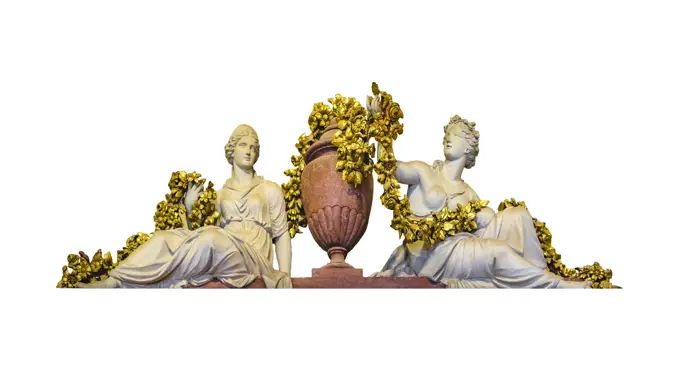
Antique Sculptures at Decorated Wall ROME, ITALY, JANUARY - 2018 - Interior scene with antique sculpture at decorated walll Copyright: xZoonar.com/DanielxFerreira-LeitesxCiccarinox 12472657
4409-17570869
Torso-Kore. Jean (Hans) Arp; French, born Germany (Alsace), 1886-1966. Date: 1958. Dimensions: 34 1/4 × 6 1/2 × 5 15/16 in. (87 × 16.5 × 15 cm). Bronze, edition 2/5. Origin: France. Museum: The Chicago Art Institute, Chicago, USA.
4409-17355471
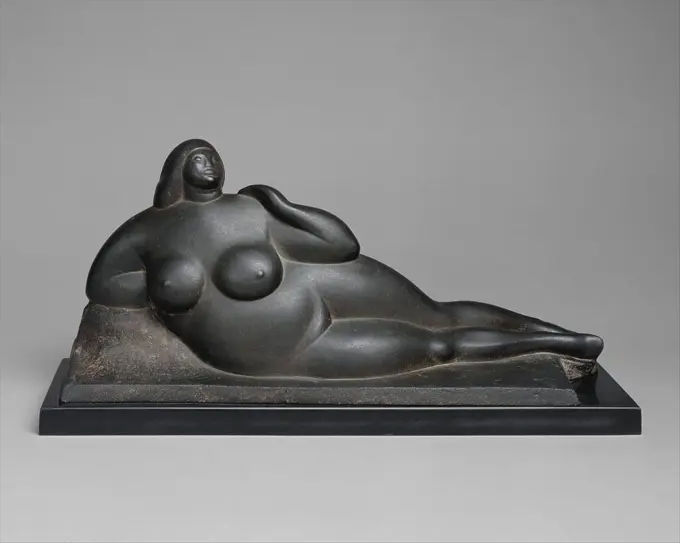
The Mountain. Artist: Gaston Lachaise (American (born France) 1882-1935). Dimensions: 8 3/8 × 18 1/8 × 5 3/4 in. (21.3 × 46 × 14.6 cm)Weight: 26.5 lb. (12 kg). Date: 1913; carved 1919. Museum: Metropolitan Museum of Art, New York, USA.
4443-21187803
Théodore Gericault, Flayed Horse II, French, 1791 - 1824, model c. 1820-1824, cast c. 1832, bronze
6145-29735558
The Wounded Bunkie 1896, cast before 1939 Frederic Remington American The soldiers who patrolled the frontier during the Indian Wars became familiar heroes in art and literature about 1900. "The Wounded Bunkie" depicts two troopers retreating from an unseen combatant. An enemy bullet has pierced the torso of one; only the outstretched arm of his bunkmate, or "bunkie," keeps him upright. Remington makes a poignant statement about unflinching valor and brotherly bonds while invigorating the life-and-death narrative with complex arrested motion in which only two of the horses eight hooves meet the base. Lifetime casts were produced by the Henry-Bonnard Bronze Company, which used the sand-cast method. This example, which x-radiography confirms is a lost-wax cast, is a posthumous cast, presumably done by Roman Bronze Works after 1921, when Remingtons original models were destroyed.. The Wounded Bunkie. Frederic Remington (American, Canton, New York 1861-1909 Ridgefield, Connecticut). Amer
1848-53373548
Oldtown and world heritage Wismar
6145-29809258
Autumn 19th century Possibly Edmé Samson. Autumn 238818
6145-29763089
Crouching Boar (Il Porcellino) late 17th or early 18th century Follower of Pietro Tacca Italian. Crouching Boar (Il Porcellino). Follower of Pietro Tacca (Italian, Carrara 1577-1640 Florence). late 17th or early 18th century. Bronze, dark patina and black varnish.. Metalwork-Bronze
6145-58991172
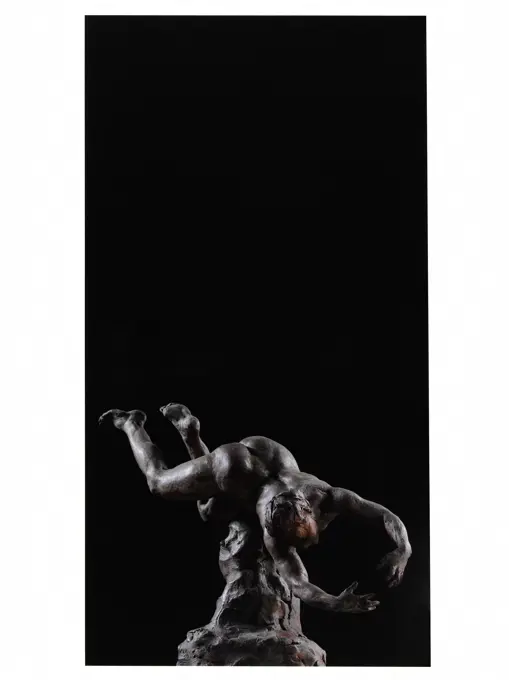
Aimé-Jules Dalou (1838-1902). "Woman with flags". Gelatino-argentic print on paper, from digital file. Photograph by Eric Emo. 2009. Museum of Fine Arts of the City of Paris, Petit Palais. 59510-8 Lying, arms, body, back, naked woman, movement, female nude, rock, statue, support, tender
6145-29724096
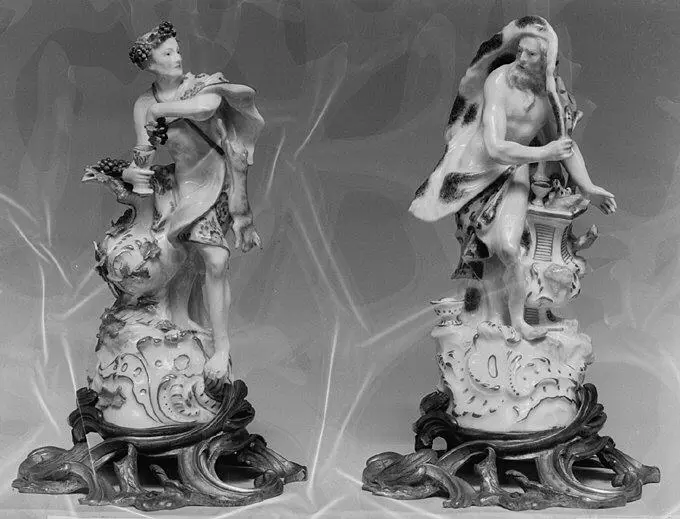
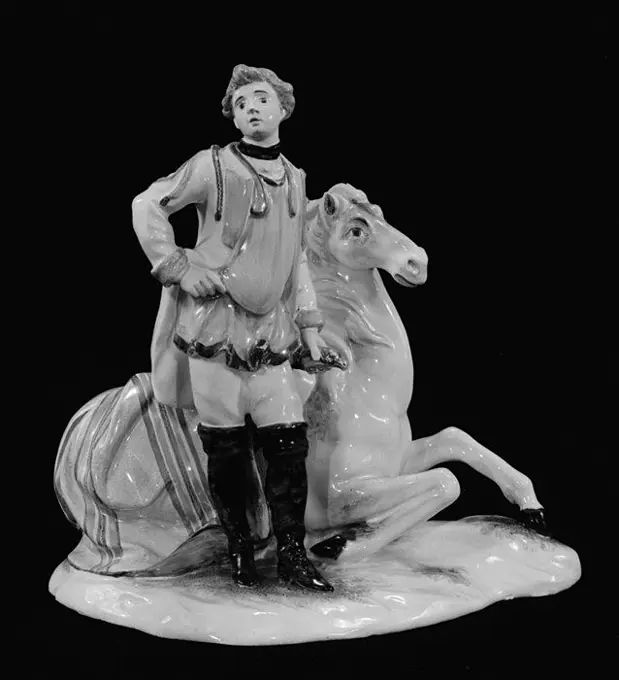
Young soldier and horse (representing Europe) (part of a set) 18th century probably French, Niderviller Faience, or tin-glazed and enameled earthenware, first emerged in France during the sixteenth century, reaching widespread usage among elite patrons during the seventeenth and early eighteenth centuries, prior to the establishment of soft-paste porcelain factories. Although characterized as more provincial in style than porcelain, French faience was used at the court of Louis XIV as part of elaborate meals and displays, with large-scale vessels incorporated into the Baroque garden designs of Versailles. Earlier examples of French faience attest to the strong influence of maiolica artists from Italy. Later works demonstrate the ways in which cities such as Nevers, Rouen, Lyon, Moustiers, and Marseille developed innovative vessel shapes and decorative motifs prized among collectors throughout Europe. While faience can be created from a wide mixture of clays, it is foremost distinguishe
6145-29746063
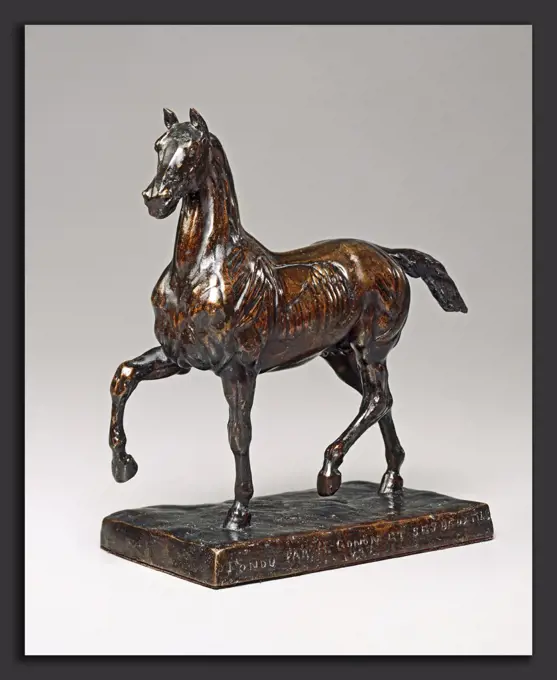
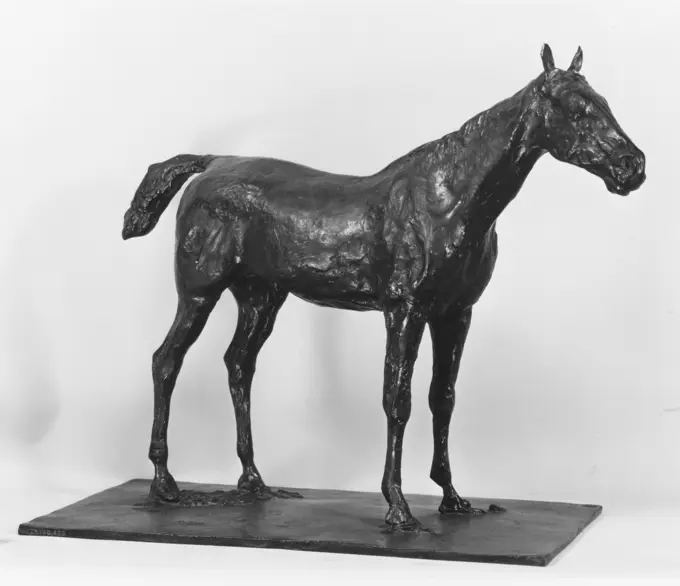
Horse Standing modeled possibly ca. 1881-82, cast 1920 Edgar Degas French Upon Degas's death in 1917, more than 150 figurative sculptures were found in his studio. Most were made of fragile wax, clay, and plastiline (a wax- and oil-based modeling material). Many had deteriorated. Only a few were preserved in copies that had been cast from them in plaster. Except for the wax Little Fourteen-Year-Old Dancer (Washington: NGA) none of these sculptures had been publicly exhibited during the artists lifetime.Although Degas had not favored reproducing his sculptures in more permanent materials, his heirs authorized that copies be cast in bronze in order to preserve the compositions and to sell them as finished works. Paul-Albert Bartholomé, a sculptor and Degas's longtime friend, prepared 72 of the figures for casting, a process executed by the distinguished Paris foundry A.-A. Hébrard et Cie. The quality of the Degas bronzes was tightly controlled and their edition was limited. Only twenty-
6145-46770469
Statue, horse with spearing riders. Retouched image.
PREVIOUS
of 3
NEXT
2401 S. Ervay, Suite 206
Dallas, Texas 75215
United States
Get Started
Free ResearchMy BoardsMy Cart
For Creators
How To License Your ContentContributor PortalFrame of Mind
Resources
API accessPricing
Contact
+1 866 236 0087help@viewpictures.co.uk Contact form
©2026 View Pictures. All Rights Reserved. -A
This site is protected by reCAPTCHA and Google Privacy Policy and Terms of Service apply.