My Boards
View Pictures
  • My Boards
← Artworks

Bronze Sculptures of the Human Form

A collection of bronze sculptures showcasing diverse human figures and poses, emphasizing anatomy and emotional connections through art.
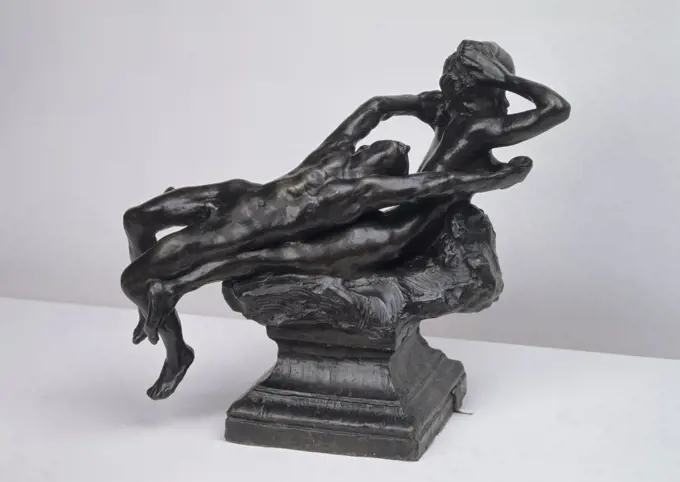
Fugit Amor Fleeting Love 1881 Auguste Rodin (1840-1917 French) Bronze Musee d'Orsay, Paris, France
279 assets in this story
4409-40003
Life-size sculpture of a hunting dog, 520 BC. Marble. Found south of the Parthenon, Athens. Acropolis Museum. Athens, Greece.
6145-29840263
Edgar Degas, The Schoolgirl (Woman Walking in the Street), c 1880 1881 The Schoolgirl (Woman Walking in the Street)
6145-29843943
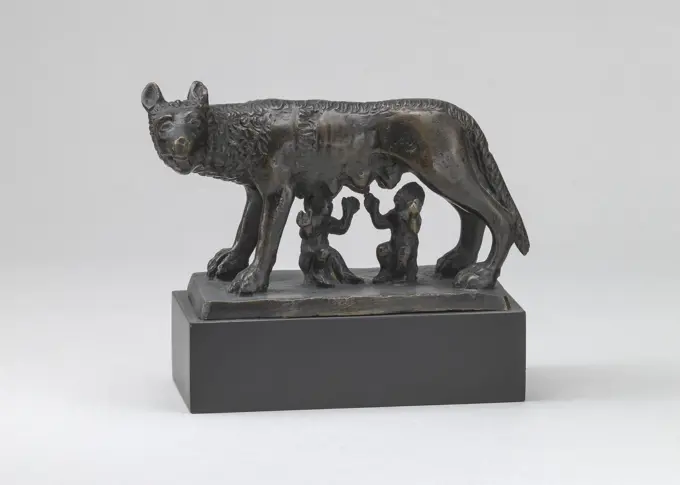
Florentine 15th Century, The Capitoline Wolf Suckling Romulus and Remus, 15th century The Capitoline Wolf Suckling Romulus and Remus
1848-55081140
Decorative antique statue of a woman
6145-29119714
Heavenly Spirit: Karyōbinga. Kyokusen (Japan, active early 19th century). Japan, early 19th century. Costumes; Accessories. Wood with inlays
4409-17277478
ESCULTURA. Author: SERRANO PABLO. Location: PRIVATE COLLECTION. MADRID. SPAIN.
4409-17391002
Appeal to the Great Spirit. Artist: Cyrus Edwin Dallin (Springville, Utah 1861-1944 Arlington Heights, Massachusetts). Dimensions: 21 3/8 × 14 1/2 × 21 3/4 in. (54.3 × 36.8 × 55.2 cm). Date: 1913; cast ca. 1916.Born in Utah Territory and trained in Paris and Boston, Cyrus Edwin Dallin is best known for his dignified sculptures of American Indians. Appeal to the Great Spirit is an iconic representation of a mounted chief, his arms spread wide in a moment of individual communion with a higher power. In Dallin's own words, he captured the moment when the chief made his "final appeal to the Great Spirit for peace with the white man" after "his signal of peace...had been rejected." This statuette is a reduced version of a life-size monument installed in front of the Museum of Fine Arts in Boston in 1912. It is the fourth and final in a series of equestrian sculptures that Dallin completed between 1890 and 1909, which he collectively called The Epic of the Indian. In the first quarter of th
6145-29871352
Jean Louis Ernest Meissonier, Horseman in a Storm, model c 1878, cast after 1894 Horseman in a Storm
6188-66520893
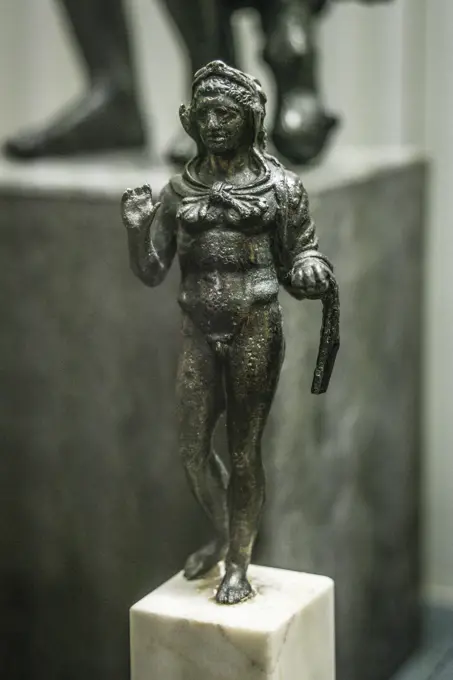
Apollo-Figur Apollo-Figur Copyright: xZoonar.com/Tolox 22682479
4409-17382020
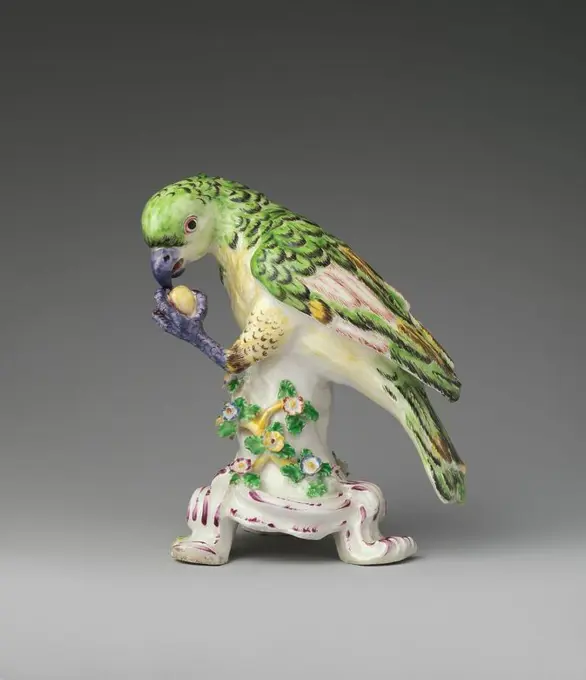
Parrot. Culture: British, Bow, London. Dimensions: Overall (confirmed): 6 5/8 × 5 13/16 × 4 11/16 in. (16.8 × 14.8 × 11.9 cm). Factory: Bow Porcelain Factory (British, 1744-1776). Date: ca. 1760. Museum: Metropolitan Museum of Art, New York, USA.
6145-29785451
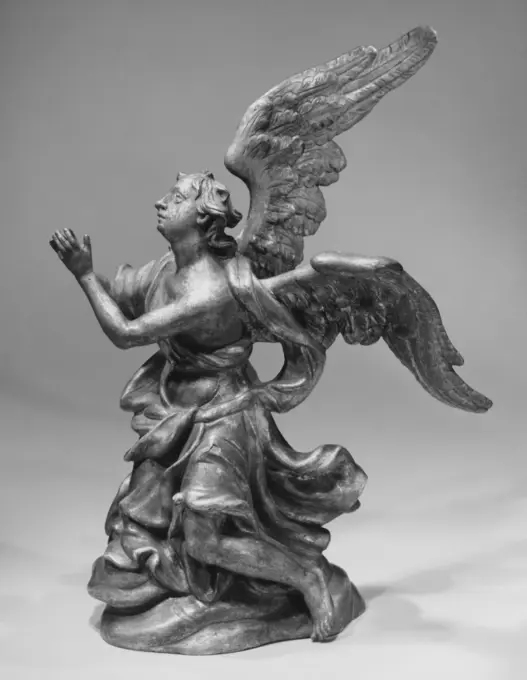
Kneeling angel (one of a pair) mid-18th century German, probably Franconia. Kneeling angel (one of a pair) 206370
6145-51786835
Herakles the Archer. Herakles drawing his bow against the Stymphalian Birds, Émile Antoine Bourdelle (Montauban, France, 1861 - 1929) 1908 - 1909
4409-21479425
Aquamanile. Germany, late 13th century. Middle Age. Bronze. The State Hermitage Museum. Saint Petersburg. Russia.
4266-26919
Resting Stag by Nadelman, Elie (1882-1946)  Honolulu Academy of Arts  c. 1915  Poland  Bronze  Sculpture  Objects,Animals and Birds
6145-44323429
Gliedermann. The movable miniature design of the perfect person is constructed from head to the tiptoe after the idea of the human body, which goes back to the proportional studies Albrecht Dürer. Detailed processing suggests that the miniature has been made for an artificate chamber.
1746-21116914
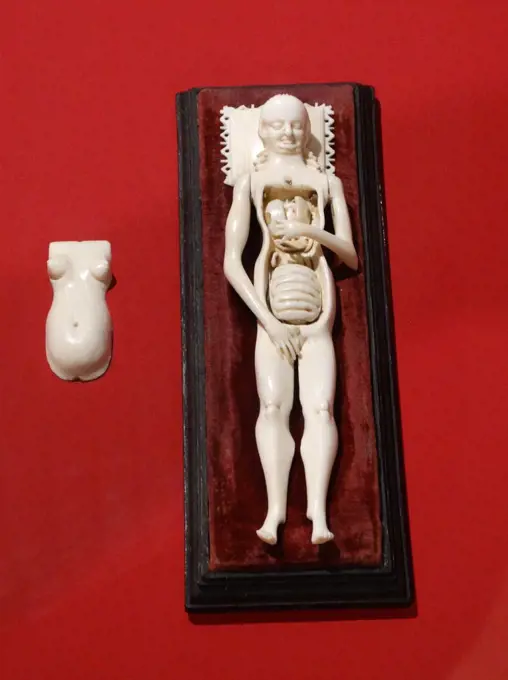
Model of a pregnant woman for use during anatomy education. Italian, made from ivory, 17th century.
6145-30174957
Pelican 1891-1901 France. Glazed stoneware . Emmanuel Frémiet
1558-15362727
Poland, Wroclaw, Wroclaw's dwarfs, former symbol of resistance, dwarf orchestra in front of the National Forum of Music, tuba player
4435-6380
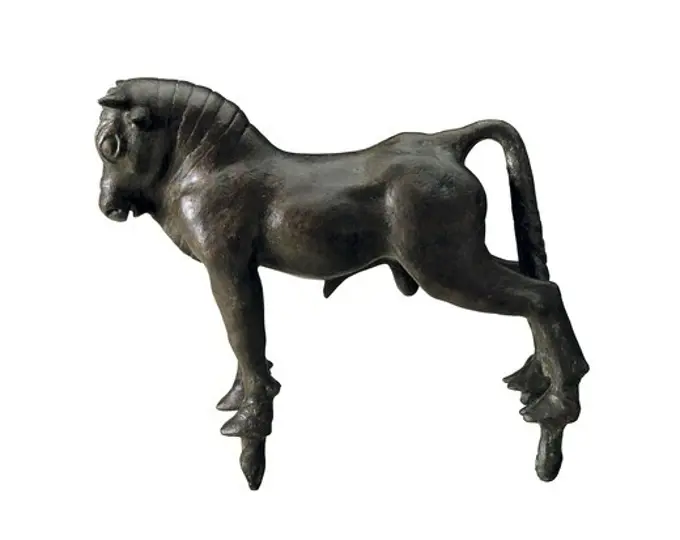
Bull from Azaila. Iberian art. Sculpture on bronze. SPAIN. MADRID (AUTONOMOUS COMMUNITY). Madrid. National Museum of Archaeology. Proc: SPAIN. ARAGON. TERUEL. Azaila.
6145-30154198
Figure of a Butcher 1760-1770 France. Hard-paste porcelain, polychrome enamels, and gilding . Jean-Jacques Louis
6188-65610321
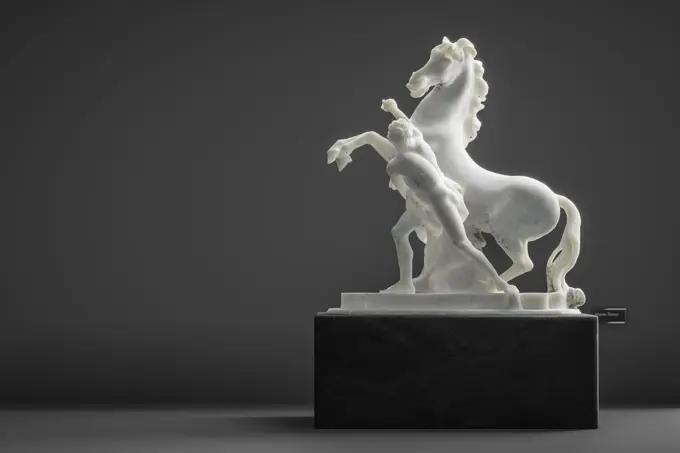
Statue of a horse tamer in a virtual museum Statue of a horse tamer in a virtual museum with space for your content, 3D illustration Copyright: xZoonar.com/magannx 16448217
4409-21893
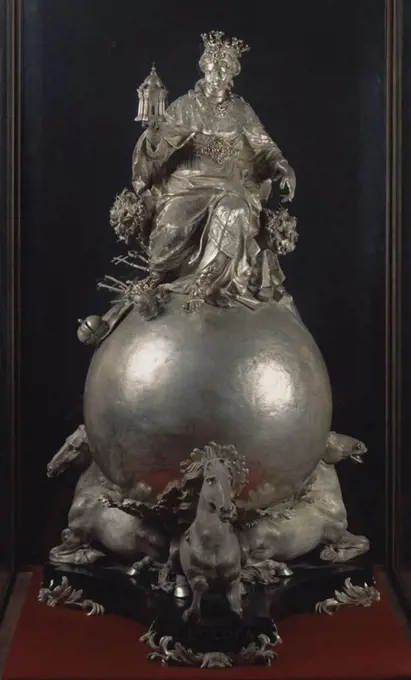
EUROPA - RELICARIO DE PLATA. Location: CATEDRAL-INTERIOR. Toledo. SPAIN.
6145-29733463
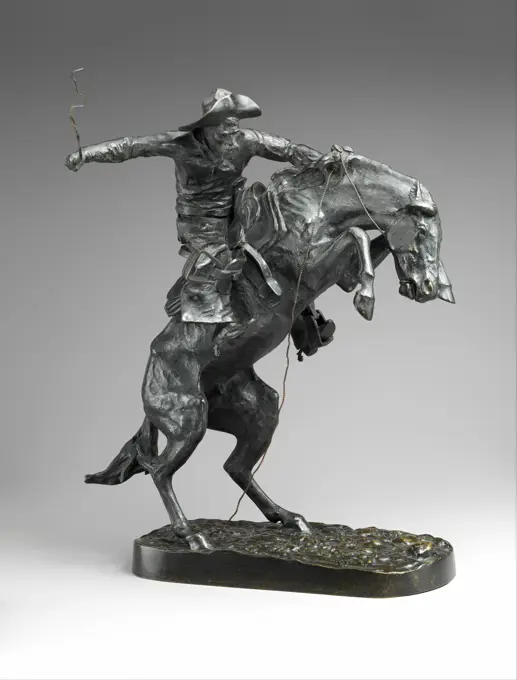
The Broncho Buster 1895, cast 1918 Frederic Remington American "The Broncho Buster," Remington's first sculpture, and the first sculpture of a cowboy cast in bronze, was copyrighted in October 1895. He adapted the subject, a cowboy breaking in a rearing horse, from his drawing "Pitching Broncho," published in "Harper's Weekly" on April 30, 1892. The rough-and-ready drama Remington captured in his paintings carried over to this action sculpture, and the statuette earned quick appreciation as an iconic rendering of the White cowboy. The many bronze statuettes in "The Broncho Buster" edition were first sand-cast at the Henry-Bonnard Bronze Company, and later, after 1900, lost-wax cast at Roman Bronze Works. Following her husband's death in 1909, Eva Remington (1859-1918) oversaw the production of additional bronzes from foundry molds, but because of the sculptor's attention to quality in the casting and coloring processes, estate bronzes lack the refinement and original flair for detail o
4443-28738271
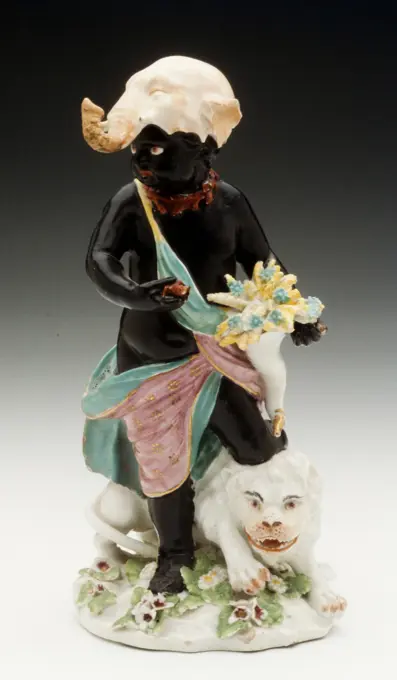
Africa, c. 1765, 9 3/8 in. (23.81 cm), Soft-paste porcelain; Derby porcelain, England, 18th century
6145-29067109
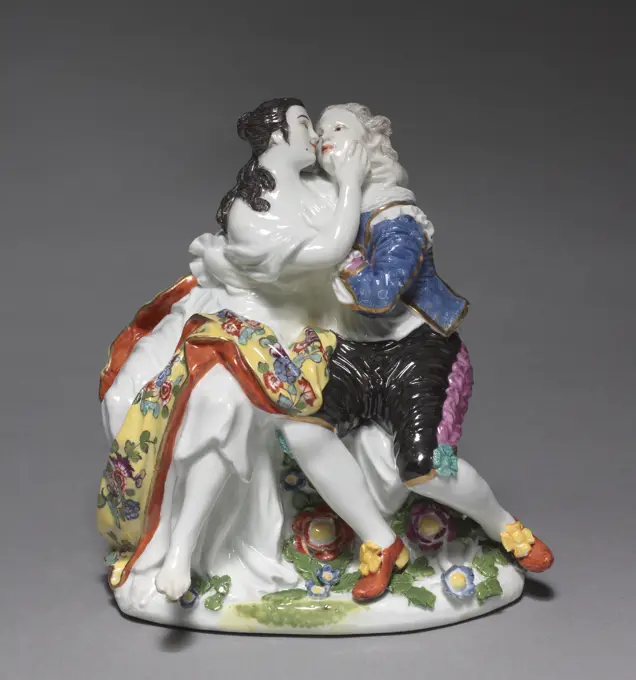
The Lovers, c. 1740. Meissen Porcelain Factory (German), Johann Friedrich Eberlein (German, 1696-1749). Porcelain with enamel decoration; overall: 15.3 x 15.3 cm (6 x 6 in.).
6145-29119628
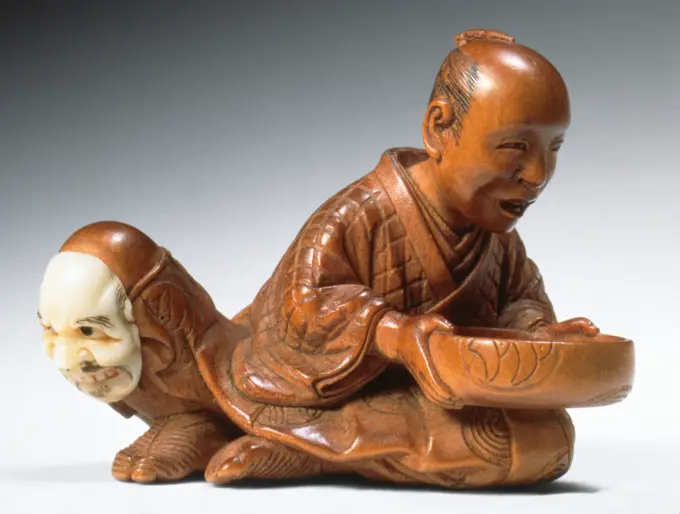
Scene from the Kyōgen play "Obagasake". Fukumoto Hōmin (Japan, active mid- to late 19th century). Japan, mid- to late 19th century. Costumes; Accessories. Wood, ivory with staining, sumi, red pigment
6145-51845632
Jean-Baptiste Carpeaux, Head of the Virgin, 1864, bronze.
4409-17582848
'Sculptural group: young knight brings out of the battlefield the elderly warrior'. France, 1840s. Dimensions: 88x57x29 cm. Museum: State Hermitage, St. Petersburg. Author: Jean-François-Théodore Gechter.
4409-21381022
LAS TRES GRACIAS. Author: ARISTIDE MAILLOL (1861-1944). Location: TATE GALLERY. LONDON. ENGLAND.
4435-1282
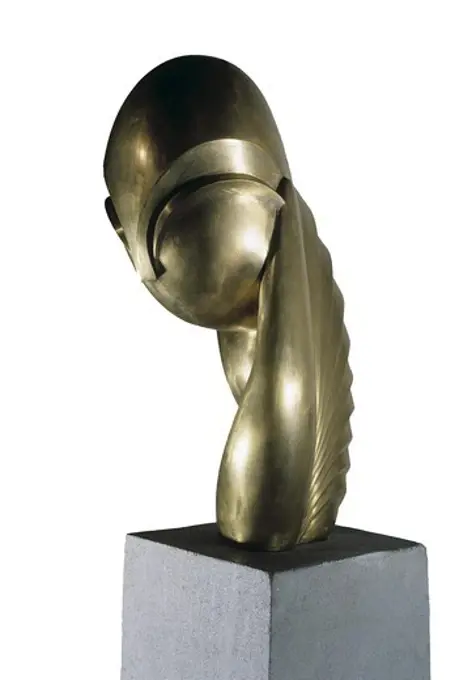
BRANCUSI, Constantin (1876-1957). Mademoiselle Pogany III. 1933. Artistic avant-gardes. Sculpture on bronze. FRANCE. LE-DE-FRANCE. Paris. Centre national d'art et de culture Georges Pompidou (Georges Pompidou National Art and Culture Centre).
6145-29168388
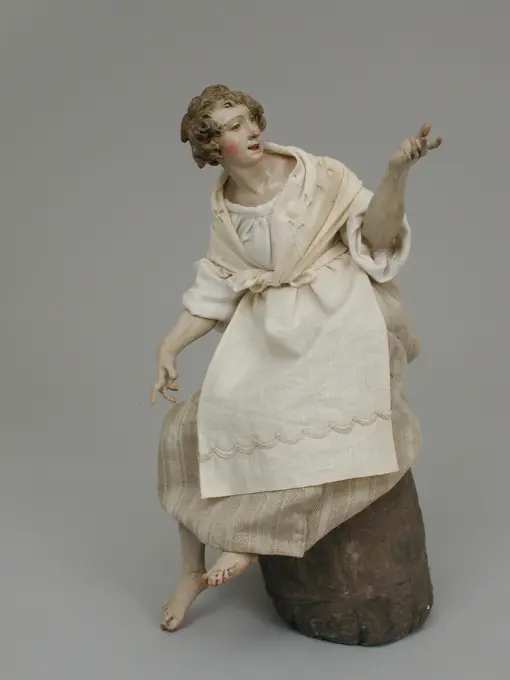
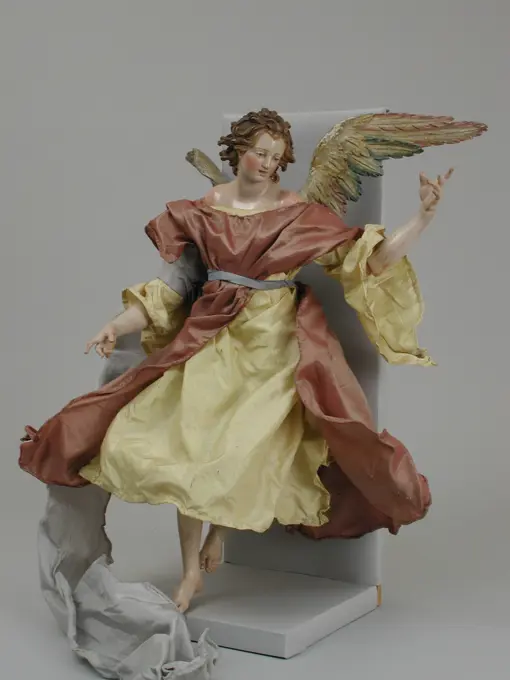
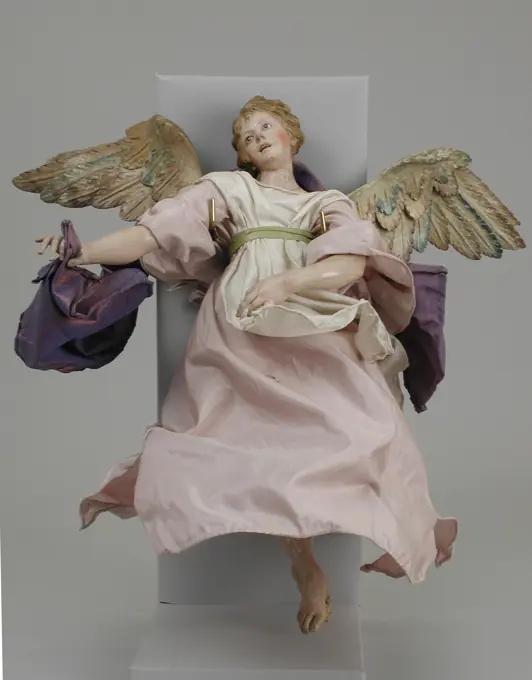
Angel late 18th-early 19th century Italian, Naples. Angel. Italian, Naples. late 18th-early 19th century. Polychromed terracotta head; wooden limbs; body of wire wrapped in tow; silk and velvet garments. Crèche
6145-29214647
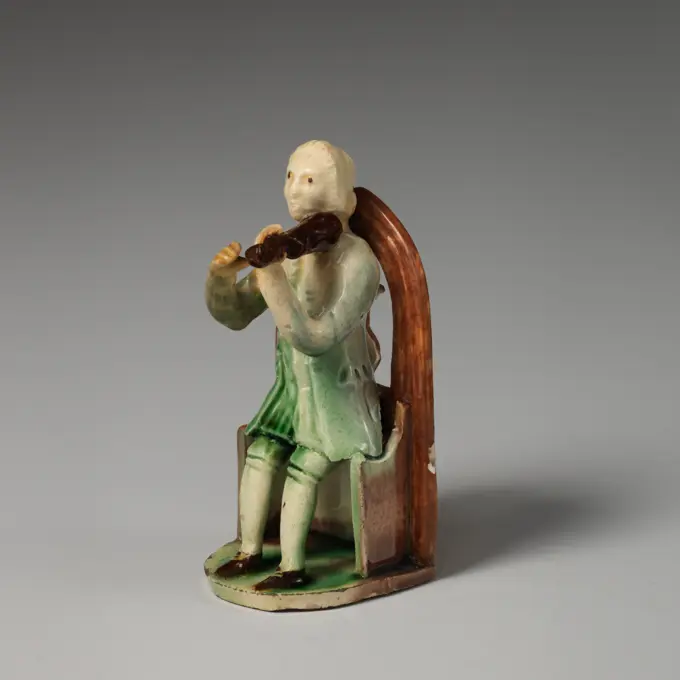
Man playing a fiddle ca. 1745-50 Style of Astbury-Whieldon. Man playing a fiddle. British, Staffordshire. ca. 1745-50. Lead-glazed earthenware. Ceramics-Pottery
6145-45526842
Bliżej Kultury
6145-29774759
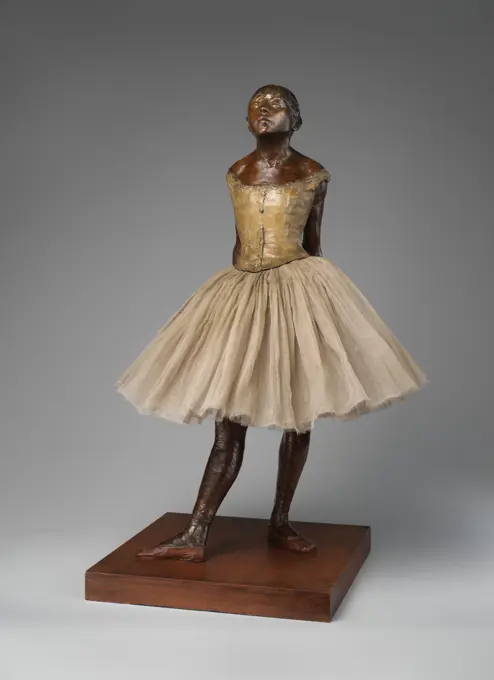
The Little Fourteen-Year-Old Dancer 1922 (cast), 2018 (tutu) Edgar Degas French Upon Degas's death in 1917, more than 150 figurative sculptures were found in his studio. Most were made of fragile wax, clay, and plastiline (a wax- and oil-based modeling material). Many had deteriorated. Only a few were preserved in copies that had been cast from them in plaster. Except for the wax Little Fourteen-Year-Old Dancer (Washington: NGA) none of these sculptures had been publicly exhibited during the artists lifetime.Although Degas had not favored reproducing his sculptures in more permanent materials, his heirs authorized that copies be cast in bronze in order to preserve the compositions and to sell them as finished works. Paul-Albert Bartholomé, a sculptor and Degas's longtime friend, prepared 72 of the figures for casting, a process executed by the distinguished Paris foundry A.-A. Hébrard et Cie. The quality of the Degas bronzes was tightly controlled and their edition was limited. Only t
4409-17408889
The Crucifixion and the Entombment. Culture: probably French (Nevers). Dimensions: 29.5 x 31.3 x 23 cm. Date: 18th century. Museum: Metropolitan Museum of Art, New York, USA.
4409-10015
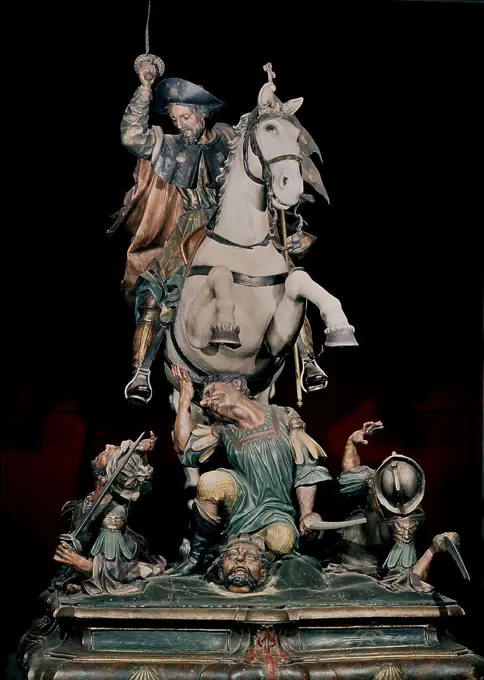
SANTIAGO CABALLERO - SIGLO XVIII. Author: JOSE GAMBINO (-1775). Location: CATEDRAL-INTERIOR. SANTIAGO DE COMPOSTELA. A CORUÑA. SPAIN. Apóstol Santiago el Mayor. APOSTOL SANTIAGO EN CLAVIJO. APOSTOL SANTIAGO-SANTIAGO MATAMOROS.
6145-29826535
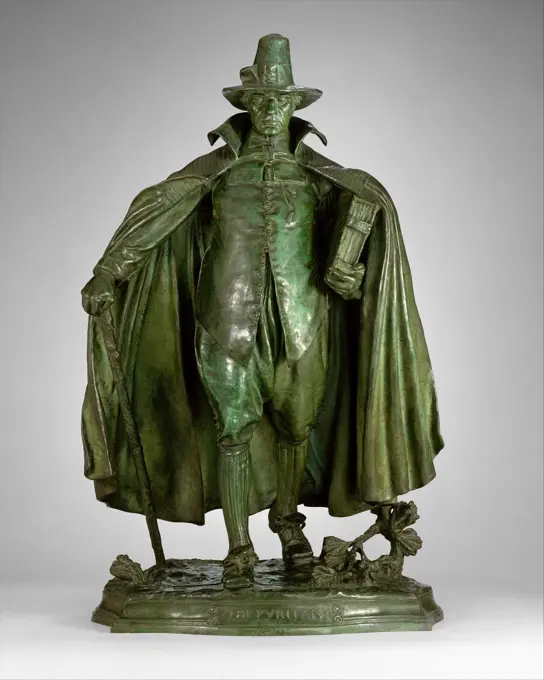
The Puritan 1883-86, cast 1899 or after Augustus Saint-Gaudens American In 1881 Saint-Gaudens was commissioned by Chester W. Chapin, a railroad tycoon and congressman, to sculpt a large-scale bronze likeness of an ancestor, Deacon Samuel Chapin (1595-1675), a prominent early settler of Springfield, Massachusetts. The sculptor wrote in his "Reminiscences" that: "The statue.. was to represent Deacon Samuel Chapin, but I developed it into an embodiment.. of the 'Puritan.'" On Thanksgiving Day 1887, "The Puritan" was unveiled on Stearns Square in Springfield, at one end of a site designed by Stanford White. The monument was relocated to Merrick Park in 1899. In "The Puritan," Saint-Gaudens successfully translated an abstract idea into three-dimensional form. The figure is not an individual portrait, but a representation of Puritan dogma. Eyes focused downward, he strides with a knotty walking stick across the pine-strewn New England wilderness, symbolized by a few scattered branches on the
6145-58995966
Anonymous. Chinese decor from Juliette Drouet's house in Guernsey, West Wall. Chinese FO dog in earthenware (mismatched). Ceramic. 1750-1850. Paris, house of Victor Hugo. 79112-2 Asian art, decorative arts, Chinese, Ceramic, Chinese dog, Chinese, Decor, Faience, Chinese Salon, Statuette, 19th XIX 19th 19th 19th 19th century, 18th XVIIIth XVIII 18th 18th 18
6145-29154455
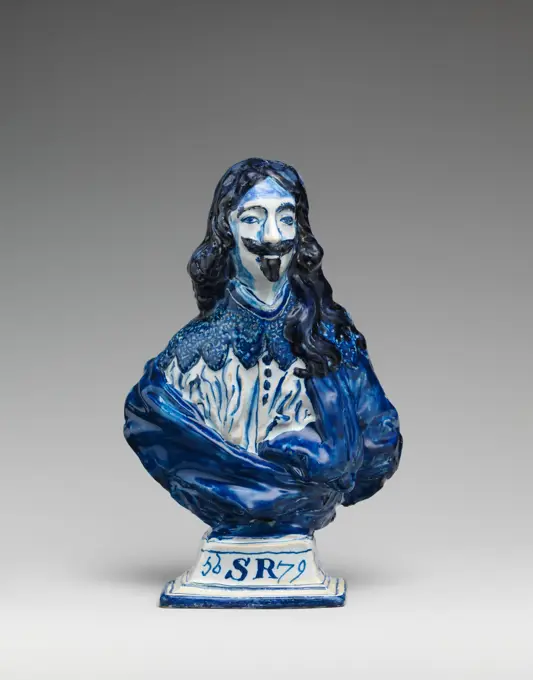
Charles I dated 1679 British, Lambeth. Charles I 197820
1558-13913474
China, Shanghai, Shanghai Museum, Tang Dynasty (618-907 AD) Glazed Pottery Figure of a Man Riding a Horse
6145-59489767
Beggar, Simon Troger (workshop or), c. 1740 sculpture The beggar stands on a pedestal and has gave his hands out. The man carries remains of clothing and a hat. München Ivory. Pedest: Wood (plant material). Eyes: Glass  Begin
6145-54679859
Antigraceful Umberto Boccioni Italian 1913, cast 1950 In this bust of his mother, Cecilia Forlani Boccioni, the artist employs Cubist distortions and fragmentation to undermine conventional concepts of beauty. The title refers to Boccionis rejection of traditional artistic values, a view he expanded on in his 1914 book Pittura, scultura futuriste, "We must smash, demolish, and destroy our traditional harmony, which makes us fall into a gracefulness created by timid and sentimental cubs." Art historians have speculated that Pablo Picassos 1909 bronze Head of a Woman influenced Boccioni since the two works have striking stylistic similarities. View more. Antigraceful. Umberto Boccioni (Italian, Reggio 1882-1916 Sorte). 1913, cast 1950. Bronze. Sculpture
4443-28737027
Chinese musician, one of a pair, 1767, Joseph Weinmuller, German (Ludwigsburg), German, 11 1/2 x 7 1/4 x 5 in. (29.2 x 18.4 x 12.7 cm), porcelain, Germany, 18th century
6145-29709358
Turk on a rhinoceros ca. 1755-60 Ludwigsburg Porcelain Manufactory. Turk on a rhinoceros. German, Ludwigsburg. ca. 1755-60. Hard-paste porcelain, gilt bronze. Ceramics-Porcelain
6145-29171579
Lead figure of a goddess with spear, probably Athena 6th-5th century B.C. Greek, Laconian Small flat votive figurines of cast lead have been found in great quantities at the ancient sanctuaries of Laconia; over one hundred thousand, dating from the seventh century B.C. to the Classical period, were dedicated to the goddess Artemis Orthia in Sparta.. Lead figure of a goddess with spear, probably Athena 251621 Greek, Laconian, Lead figure of a goddess with spear, probably Athena, 6th5th century B.C., Lead, Height: 1 15/16 in. (5 cm). The Metropolitan Museum of Art, New York. Gift of A. J. B. Wace, 1924 (24.195.55)
6145-46070881
Begging figure. .
6145-58992656
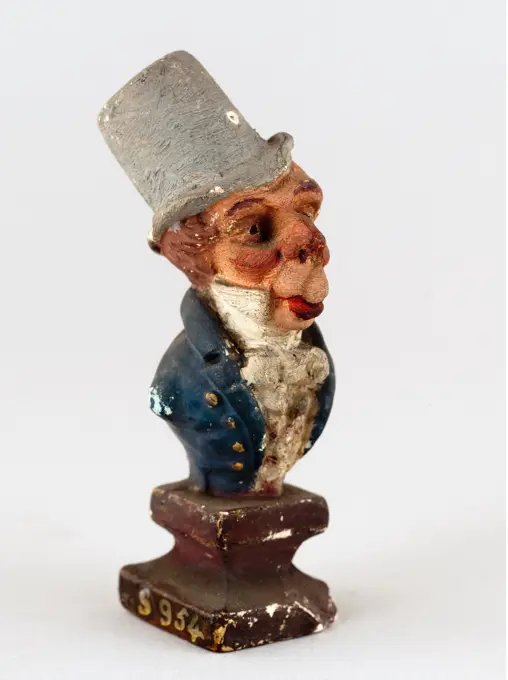
Tadpole. "Portrait-charge of Paul Grassot (1800-1860), actor". Polychrome plaster. Paris, Carnavalet museum. 72099-52 French actor, bust, polychrome plaster, portrait-load
1606-21718547
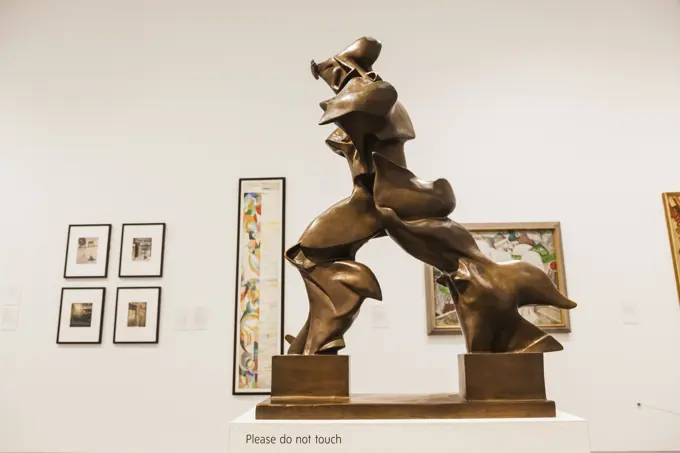
England, London, Tate Modern, Bronze Cast Sculpture titled "Unique Forms of Continuity in Space" by Umberto Boccioni
6145-58992666
Tadpole. "Portrait of Louis-Hyacinthe Duflost, known as Hyacinthe (1814-1887), actor". Polychrome plaster. Paris, Carnavalet museum. 72099-54 French actor, bust, polychrome plaster, portrait-load
866-4146
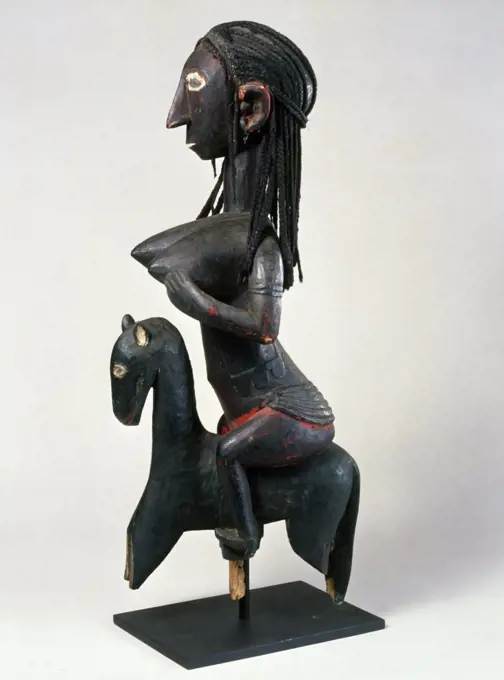
Fine and Rare Baga Dance Crest, England, London, Christie's Images, Primitive Art
6145-59042690
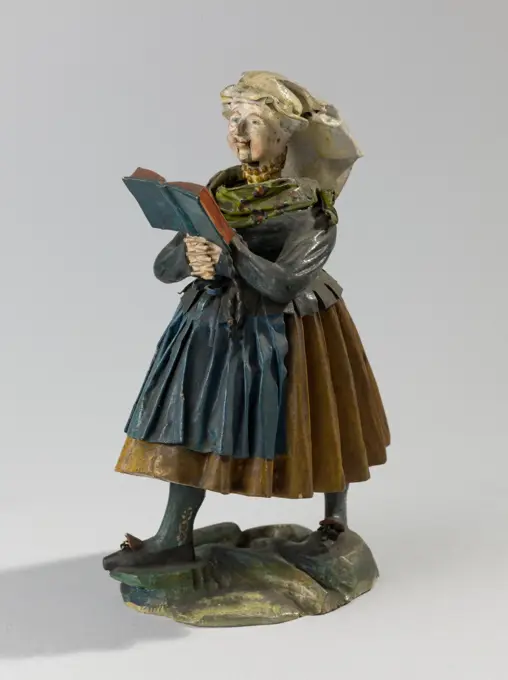
Anonymous. "Naples doll". Painted wood. Paris, Museum of Romantic Life. DOLL
4435-7292
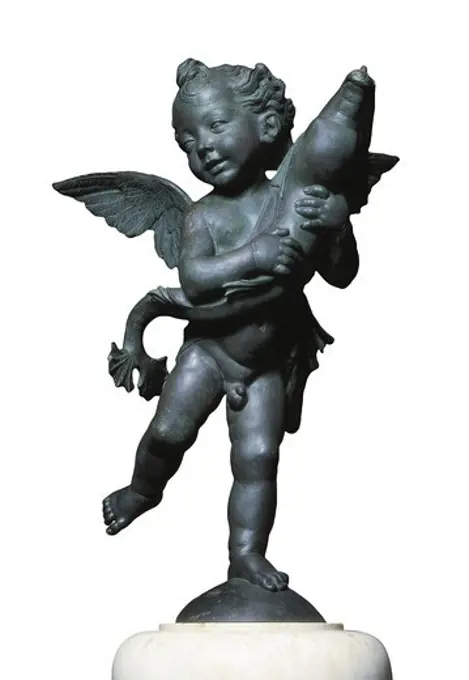
VERROCHIO, Andrea del (1435-1488). Putto with Dolphin. ca. 1470. Renaissance art. Quattrocento. Sculpture on bronze. ITALY. TUSCANY. Florence. Palazzo Vecchio (Old Palace).
4409-7903
HERACLES ARQUERO CAZA LAS AVES DEL LAGO ESTINFALO - 1909. Author: ANTOINE BOURDELLE (1861/1929). Location: PRIVATE COLLECTION. France.
6145-29754847
Angel second half 18th century Italian, Naples In 1964, Loretta Hines Howard generously presented to the Museum over 140 Neapolitan crèche figures, dating from the second half of the eighteenth century. The varied assortment includes figures from the three traditional scenes of a complete Neapolitan presepio: the Nativity, with angels, shepherds, and sheep; the procession of the three Magi, with their colorful retinue of attendants; and the varied and gay crowd of country and town people thronging the tavern, or inn, of Bethlehem  the diversorium mentioned by St. Luke, where on the Holy Night there was no place for Mary and Joseph. Averaging between twelve and fifteen inches in height, according to the position they were to take in perspective in the stage set, the figures are pliable and can be given poses at will, according to their facial expressions. Their bodies are made of tow and wire, their arms and legs are finely carved of wood, and their heads and shoulders are modeled of t
1746-30004368
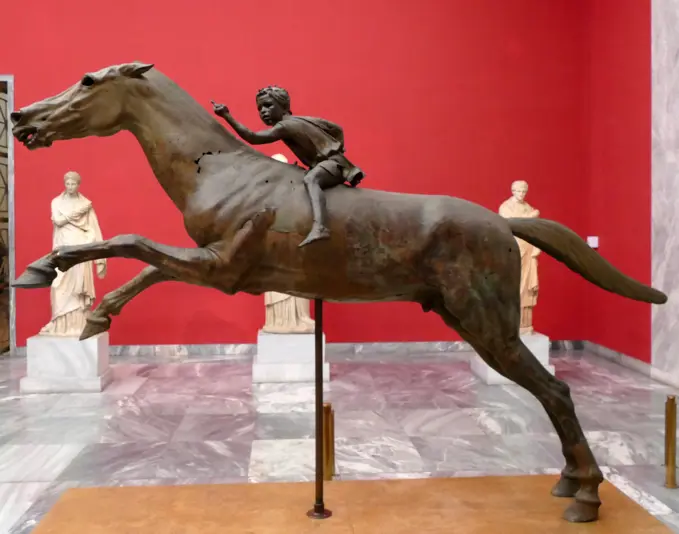
The Jockey of Artemision, a large Hellenistic bronze statue of a young boy riding a horse, dated to around 150-140 BC.
6145-29088522
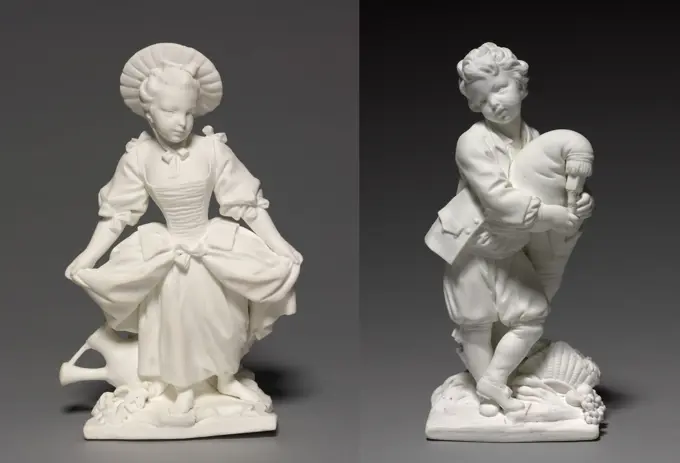
Figure Pair of the Dancer (La Danseuse) and the Bagpiper (Le Joueur de Musette), 1748-52. Vincennes Porcelain Factory (France, 1740-56), Pierre Blondeau (French), after a design by François Boucher (French, 1703-1770). Unglazed soft-paste porcelain (biscuit porcelain); Although a few Vincennes porcelain figures exist which are glazed, the royal factory adopted at an early date the practice of producing unglazed, biscuit figures which, because of the purity of their material, resemble marble figurines. The fashion for biscuit figures first introduced at Vincennes quickly spread through Europe.
4409-17442463
Head of a Bull. Dated: 1824. Dimensions: overall: 71 x 70.5 x 68.9 cm, 520 lb. (27 15/16 x 27 3/4 x 27 1/8 in., 235.87 kg). Medium: marble. Museum: National Gallery of Art, Washington DC. Author: Gaetano Monti.
6145-58989214
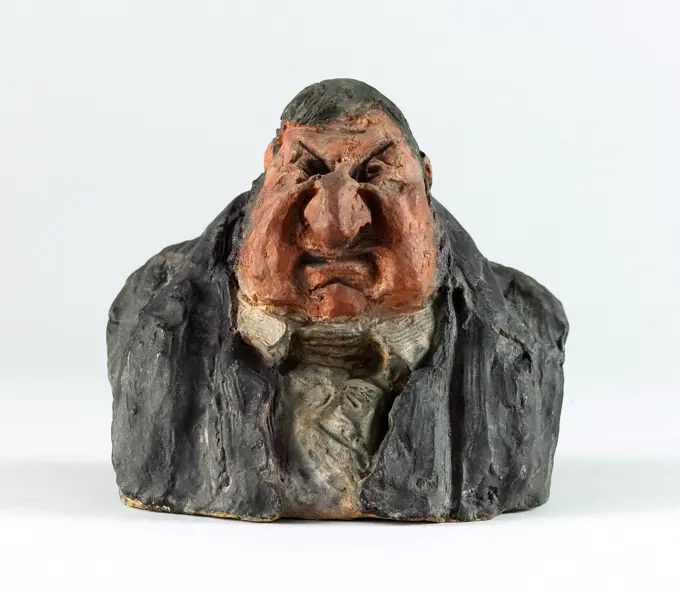
Honoré Daumier (1808-1879). Jean-Marie Fruchard (1788-1872), deputy for Morbihan. Polychrome terracotta, stamping, 1833. Paris, Carnavalet museum. 54222-11 Bust, Depute Morbihan, stamping, French politician, polychrome, portrait, terracotta, front view
6145-29706904
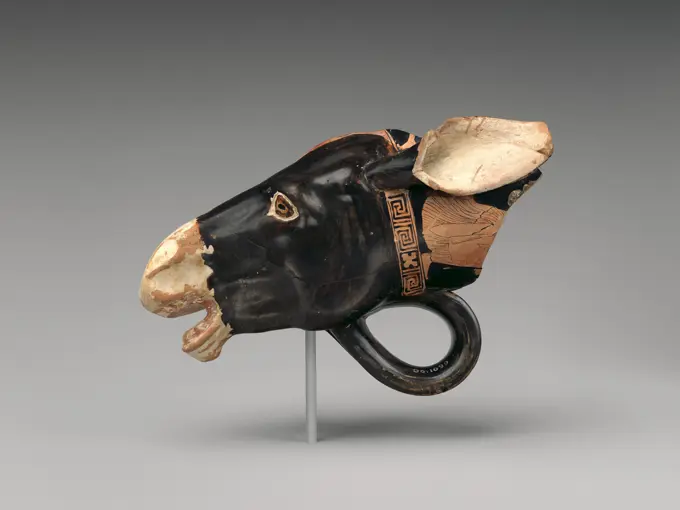
Fragmentary terracotta rhyton (vase for libations or drinking) ca. 460-450 B.C. Attributed to the manner of the Sotades Painter Remains of two figuresThe predilection for vases in figural form continued throughout the fifth century B.C. During the middle of the century, the workshop of the Sotades Painter was the most active and creative source. Whereas head vases, occasionally with two heads conjoined, were popular in the 490s and 480s, the next generation of artists introduced the conceit of combining the heads of different animals, in this case, a donkey and a ram. The painted scene probably showed a satyr and a maenad.. Fragmentary terracotta rhyton (vase for libations or drinking). Greek, Attic. ca. 460-450 B.C.. Terracotta; red-figure. Classical. Vases
4409-28494502
ESCULTURA-TORO BANDERILLEADO. Author: CRISTINO MALLO-CRISTINO GOMEZ GONZALEZ. Location: PRIVATE COLLECTION. MADRID. SPAIN.
6145-29829913
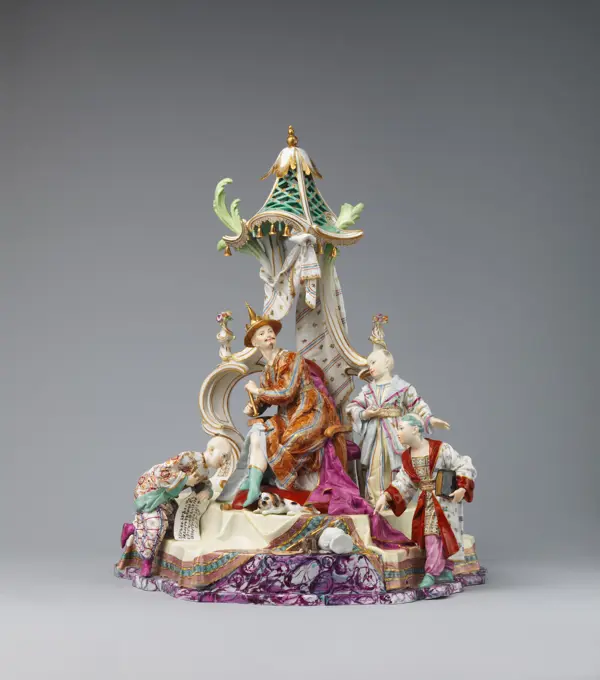
The Chinese Emperor ca. 1766 Höchst Manufactory This remarkable sculpture was almost certainly produced as the centerpiece for a grouping of figures made to decorate a dining table. In both scale and complexity, it is one of the most ambitious figure groups produced at Höchst, and it is further distinguished by its enamel decoration, which is more detailed and finer than that found on the four other known examples of this model.1 The group depicts the Chinese emperor holding a scepter and seated beneath a baldachin on a stepped platform. The figure standing closest to the Chinese emperor presents the other two figures, both representing the Arts and, by extension, the enlightened patronage of the emperor. The other standing figure, who wears a laurel crown, holds a book under his arm and points to emblems of the arts, including a painter’s palette and the sculpted head of a putto, placed on the lower step of the platform. The kneeling and bowing figure holds an unfurled scroll with f
4409-20926235
POLIEDRO VACIO - 1957 - LATON - 19x12x8. Author: JORGE DE OTEIZA (1908-2003). Location: PRIVATE COLLECTION. MADRID. SPAIN.
6145-29799777
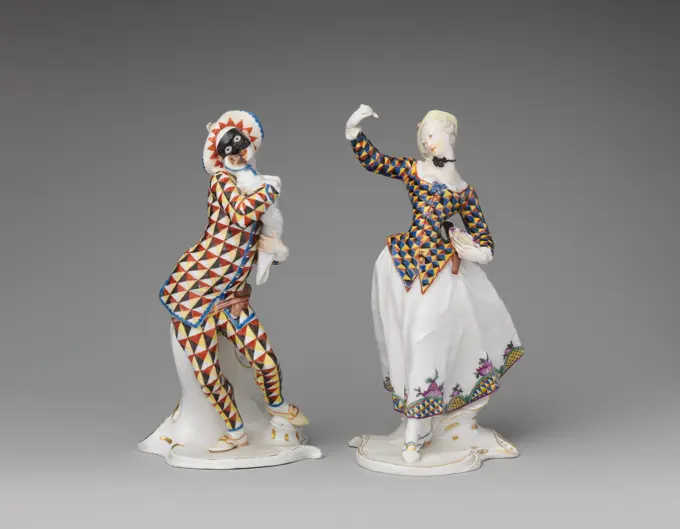
Harlequin ca. 1760 Nymphenburg Porcelain Manufactory In the eighteenth century, porcelain figures depicting characters from the Italian commedia dell'arte were extremely popular. The various characters that comprised a typical Italian comedy troupe were instantly recognizable to the audience because of their costumes, and the details of these costumes were faithfully copied in the porcelain figures. The male figure illustrated here depicts Harlequin, the principal character of the commedia dell'arte, who always wears a suit composed of brightly colored patches. The female figure (see 1974.356.524), Harlequina, is dressed in a complementary costume.Italian commedia dell'arte figures were produced at all of the major German porcelain factories, but those made at Nymphenburg are among the most accomplished. Around 1760, Franz Anton Bustelli (ca. 1720-1763) modeled sixteen characters from the Italian commedia dell'arte, and these figures justify his reputation as one of the greatest of all
6145-59164617
Abruzzo Chieti Chieti Museo Nazionale di Antichita06. Hutzel, Max 1960-1990 Exterior views of part of the former Villa Frigeri, which along with a neighboring palazzo, houses the Museo Nazionale di Antichita. Views also of the gardens, fountain (17th century) and the restored interior. The so-called "Capestrano Warrior" (5th century B.C.) is found in the Antiquities core collection under Men, Youths, Warriors--Stone--Etruscan, Italic. Hutzel views include statues, funerary monuments, portrait busts and mosaics, many of which were excavated from Alba Fucens. Hutzel paid particular attention to the colossal statue of Hercules (late Hellenistic); the funerary temple reliefs of Lucius Storax; various nudes, torsos and heads, including the portrait bust of Agrippina Minore and the sepulchral portrait relief of Lucius Poditius (1st century A.D.); gravestones with inscriptions and bas-reliefs; Roman coins; bronze figurines (mainly warriors); and bronze vessels, utensils, helmets and ornaments
6145-29746960
Angel second half 18th century Italian, Naples In 1964, Loretta Hines Howard generously presented to the Museum over 140 Neapolitan crèche figures, dating from the second half of the eighteenth century. The varied assortment includes figures from the three traditional scenes of a complete Neapolitan presepio: the Nativity, with angels, shepherds, and sheep; the procession of the three Magi, with their colorful retinue of attendants; and the varied and gay crowd of country and town people thronging the tavern, or inn, of Bethlehem  the diversorium mentioned by St. Luke, where on the Holy Night there was no place for Mary and Joseph. Averaging between twelve and fifteen inches in height, according to the position they were to take in perspective in the stage set, the figures are pliable and can be given poses at will, according to their facial expressions. Their bodies are made of tow and wire, their arms and legs are finely carved of wood, and their heads and shoulders are modeled of t
4409-17429680
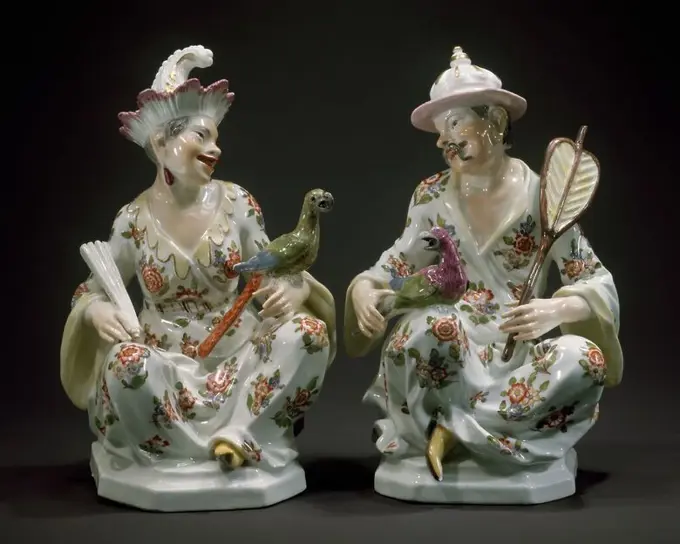
Chinese Couple. Culture: German, Meissen. Dimensions: Height (each): 7 1/16 in. (17.9 cm). Factory: Meissen Manufactory (German, 1710-present). Modeler: Johann Joachim Kändler (German, Fischbach 1706-1775 Meissen). Date: ca. 1737. Museum: Metropolitan Museum of Art, New York, USA.
4435-9861
LUTHER, Martin (1483-1546). German religious reformer. Pine nuts cutter with Martin luther's image (17th c.). Sculpture. SPAIN. MADRID (AUTONOMOUS COMMUNITY). Madrid. National Museum of Archaeology.
6145-58991179
Aimé-Jules Dalou (1838-1902). "Study of flay". Gelatino-argentic print on paper, from digital file. Photograph by Eric Emo. 2009. Museum of Fine Arts of the City of Paris, Petit Palais. 59510-2 Body, Scarcher, Study, naked man, muscle, male nude, profile, statuette
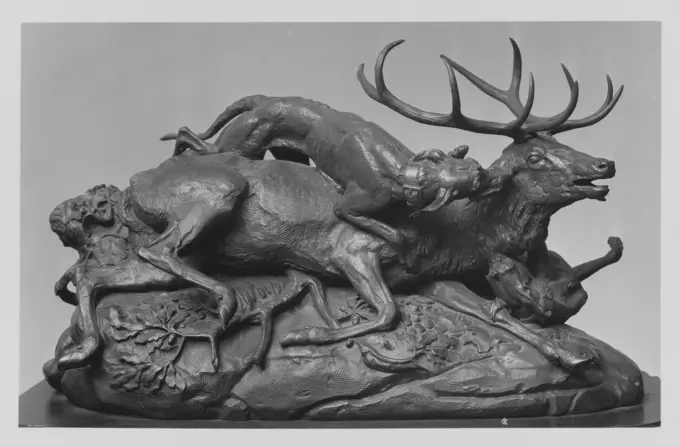
6145-29709269
Ten-Point Stag Brought Down by Two Scotch Hounds modeled perhaps ca. 1833, cast before 1845 Antoine-Louis Barye French In 1838 Barye obtained a commercial patent for casting small bronzes, and by 1845 he had formed a partnership with the entrepreneur Emile Martin for the purpose of producing small bronzes in quantity for middle-class collectors. Barye soon began to market his bronzes with the aid of a series of catalogues that permitted the purchaser to order from a variety of models. The earliest catalogue was published in 1844. The catalogue of 1847 stated that each bronze would be numbered and punch marked, but the marking system was quickly abandoned, perhaps because of its very success. After Barye's death, the models were bought by a number of founders, some of whom continued to use them for many years.. Ten-Point Stag Brought Down by Two Scotch Hounds 192771
6145-29144479
Figure of Farmer 1860 Japan. Figure of Farmer. Japan. 1860. Pottery; the hands and face unglazed, decorated with colored enamels. Edo period (1615-1868). Ceramics
6145-45817001
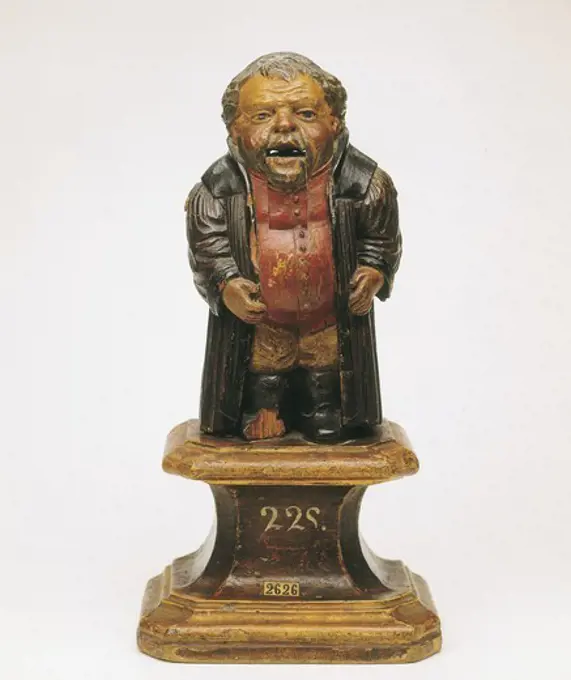
Thicky person with the pipe in the mouth and the can handle hoti (in a different hand). Thicky person with the pipe in the mouth and the can handle hoti (in a different hand).
6145-59020385
Meissen Manufacture. "Guitarist monkey". This subject belongs to a set of several pieces. Metal, bronze, porcelain, wood. Around 1755/1760. Museum of Fine Arts of the City of Paris, Petit Palais. 144002-5 German art, decorative art, ceramic, faience, German renaissance, musician monkey, rococo style, 18th 18th 18th 18th 18th 18th century, animal
1788-15188
Capitoline She-Wolf (Lupa Capitolina) in bronze, Height 75cm, from Rome
4409-62749485
Anonymous; Roman Sculptor / 'Boar'. Ca. 20. White marble. Museum: Museo del Prado, Madrid, España.
6145-45531337
Bliżej Kultury
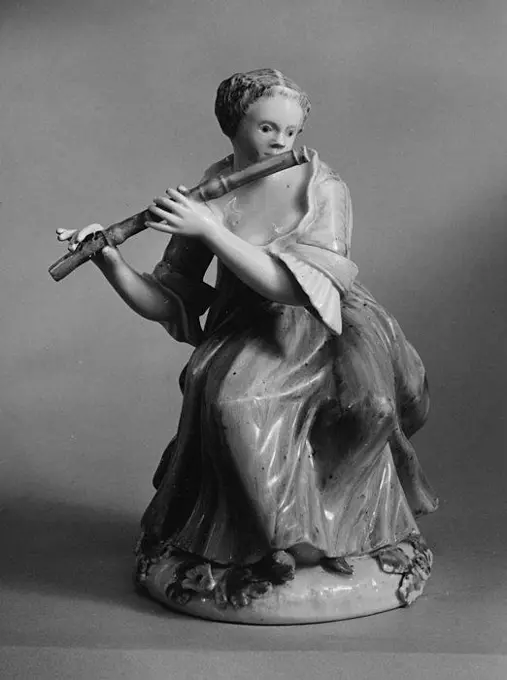
6145-29814541
Woman with a flute ca. 1755 Longton Hall. Woman with a flute 199339
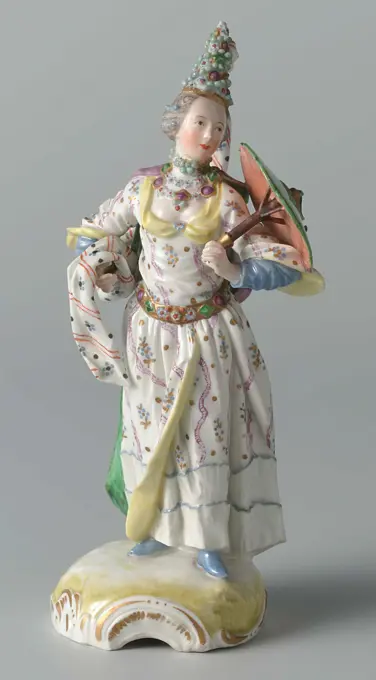
6145-30085961
Sultane.Sultane, painted multi-colored on a rocaille basis. Signature with an x in underglazing blue.
4409-19778
TORERO - ESCULTURA EN BRONCE-. Author: MIGUEL BERROCAL (1933-2006). Location: BANCO EXTERIOR. Malaga. SPAIN.
6145-45538312
Bliżej Kultury
PREVIOUS
of 3
NEXT
2401 S. Ervay, Suite 206
Dallas, Texas 75215
United States
Get Started
Free ResearchMy BoardsMy Cart
For Creators
How To License Your ContentContributor PortalFrame of Mind
Resources
API accessPricing
Contact
+1 866 236 0087help@viewpictures.co.uk Contact form
©2026 View Pictures. All Rights Reserved. -A
This site is protected by reCAPTCHA and Google Privacy Policy and Terms of Service apply.