My Boards
View Pictures
  • My Boards

Buddhist Deities and Statues

A collection of brass and wood sculptures representing figures like Avalokiteshvara and Tara, highlighted by their intricate craftsmanship and historical significance.

Buddha of Grahi, a masterpiece of 12th century Srivijaya art, donated by the Governor of Grahi, from Chaya District, National Museum, Bangkok, Thailan...
373 assets in this story
4409-17582679
'Bodhisattva Maitreya'. China, 17th-18th centuries. Dimensions: height 24,5 cm. Museum: State Hermitage, St. Petersburg.
6145-58826244
Buddha, Anonymous, c. 1150 - c. 1200 Buddha on the Naga Mucilinda; Buddha was in meditation on a throne; The throne is formed by the body of the seven -member snake, which surrounds the head of Buddha with his heads. On a pedestal. Cambodia bronze (metal) Buddha on the Naga Mucilinda; Buddha was in meditation on a throne; The throne is formed by the body of the seven -member snake, which surrounds the head of Buddha with his heads. On a pedestal. Cambodia bronze (metal)
1525-26747318
Close up statue of goddess Saraswati with musical instrument isolated. Close up statue of goddess Saraswati with musical instrument
6145-29797223
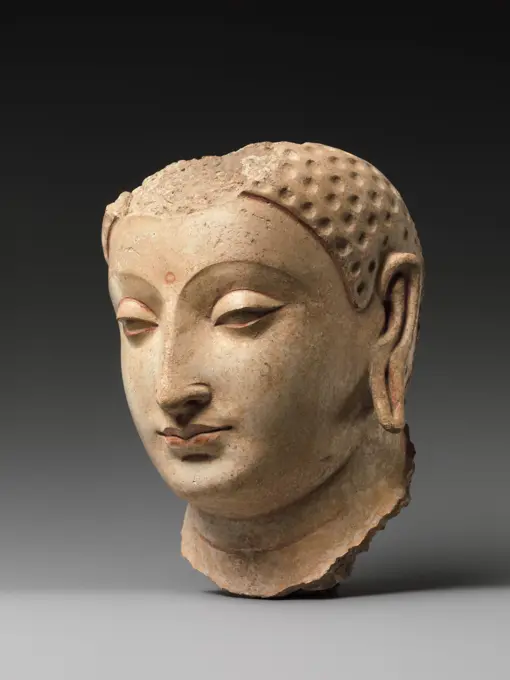
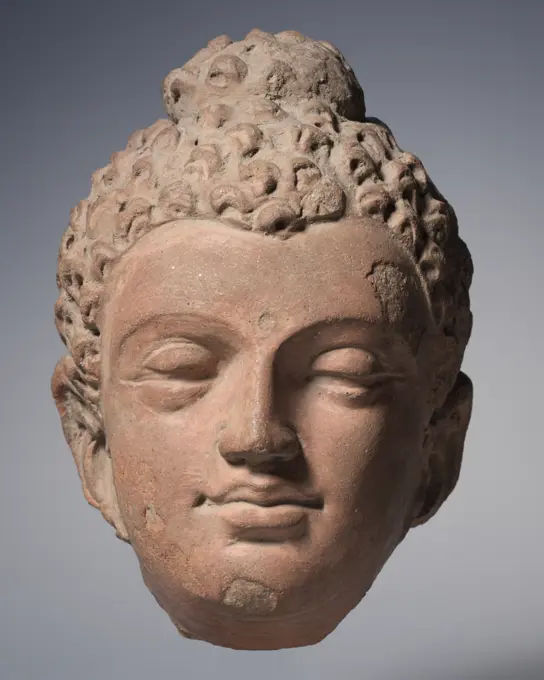
Head of Buddha 5th-6th century Afghanistan (probably Hadda) The well-preserved surface and traces of paint provide an idea of what this head looked like when it was being used in worship. The abstracted treatment of the eyes and the intersecting plains defining forehead, eyebrows, and nose are stylistic features shared with imagery produced in north India during the Gupta period. The fact that this north Indian way of presenting the Buddha had penetrated into Afghanistan suggests a shared Buddhist tradition.. Head of Buddha. Afghanistan (probably Hadda). 5th-6th century. Stucco with traces of paint. Sculpture
6145-29167151
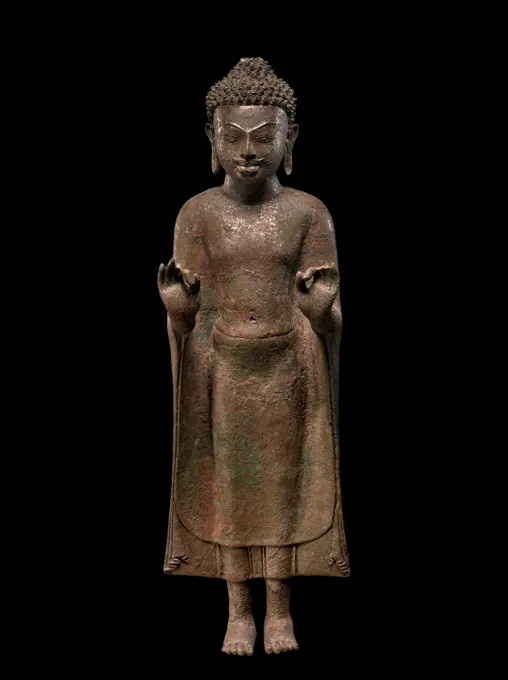
Buddha Preaching 8th century Northeastern Thailand The Prasat Hin Khao Plai Bat II cache included a small number of preaching Buddhas, this one being among the largest. Stylistically, this work looks west to the Mon regions of central Thailand, where this Buddha type was developed during the seventh century, drawing on northern Indian Sarnath models. Both hands are raised in the gesture of exposition (vitarkamudra), a hallmark of the Dvaravati style in Thailand. Like most of the bodhisattvas in the cache, this Buddha has a mustache and inlaid eyes.cat. no. 142. Buddha Preaching. Northeastern Thailand. 8th century. Copper alloy inlaid with silver and glass or obsidian. Sculpture
4409-62027173
Buddha, Thailand, 18th century, bronze, Anthropology National Museum, Madrid, Spain.
1746-19664563
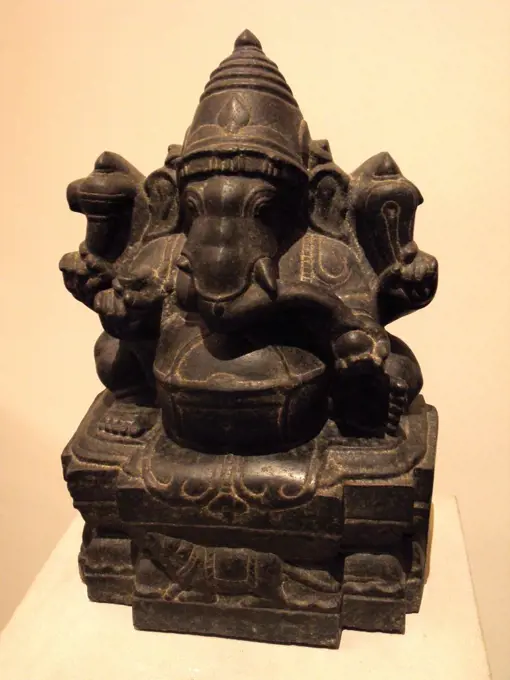
black polished granite sculpture of the Hindu god Ganesha; Dravidian
7155-70376584
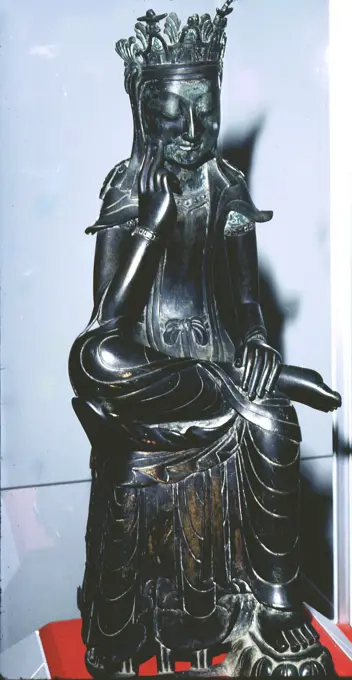
Maitreya, seated with foot on lotus. Gild bronze. Buddhist God. Three Kingdoms. 7th cent AD.
6145-29117916
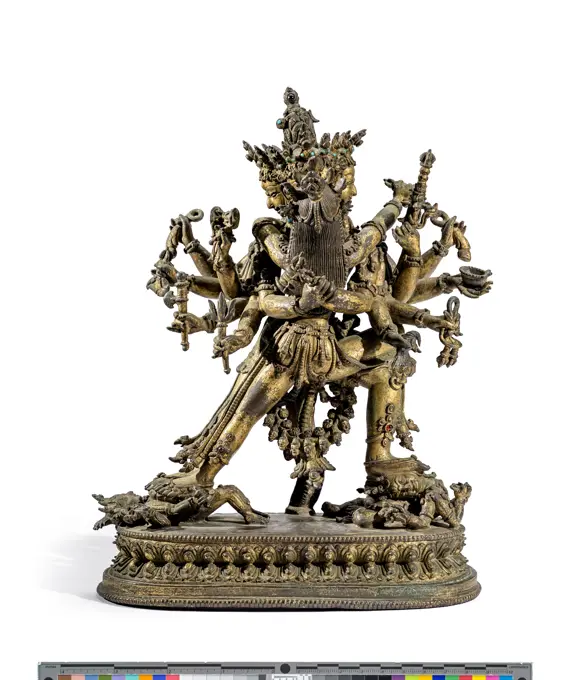
Chakrasamvara and Vajravarahi. Nepal, late 14th-early 15th century. Sculpture. Gilt copper
6212-62160093
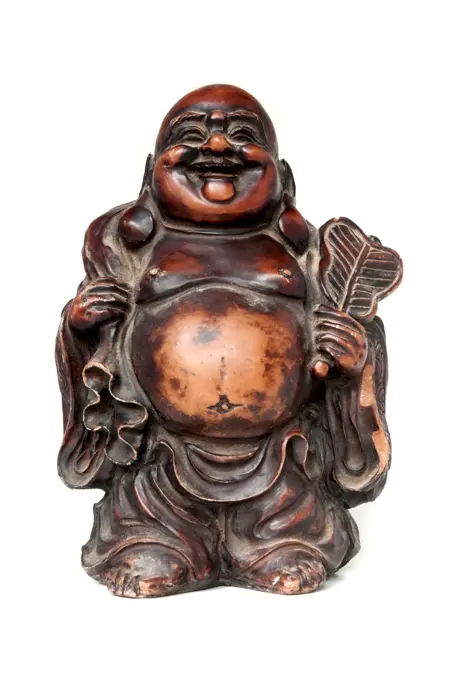
Laughing Buddha on a white background
6145-48531336
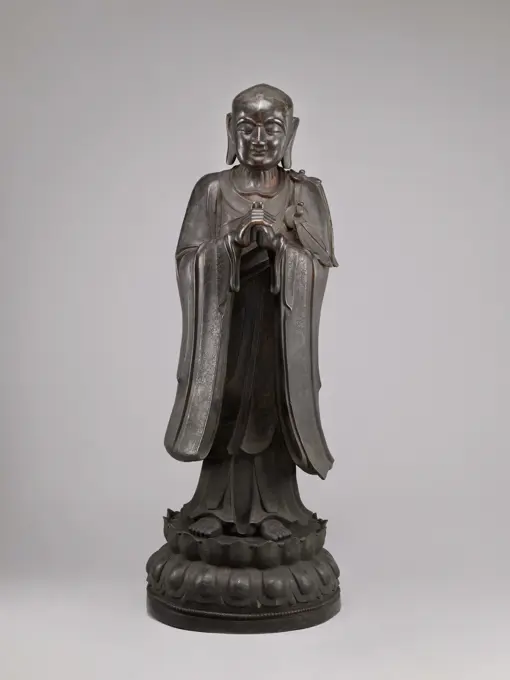
Buddhist monk. unknown, craftsman
6145-29125850
Ganesha, Lord of Obstacles
1746-21099109
Statue of the Buddha Amida Nyorai. Dated 16th Century
6145-30161017
God Vishnu with Goddesses Lakshmi and Sarasvati 901 CE-1200 Bangladesh. Basalt .
6145-58996355
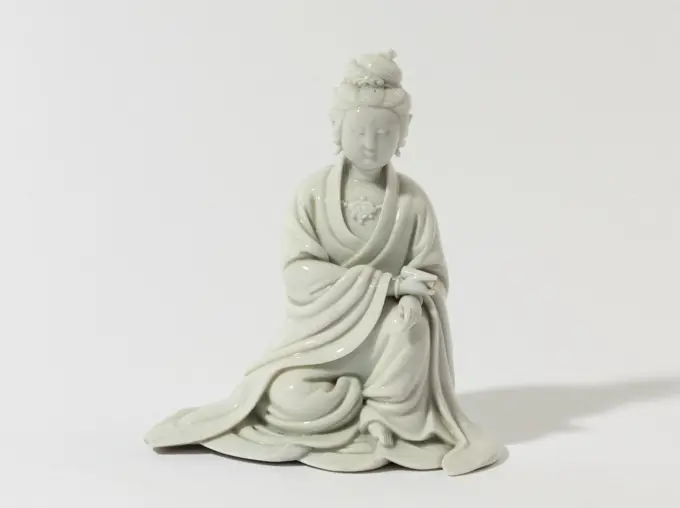
Guanyin sitting. White porcelain ,. Provenance: China. Paris, Cernuschi museum. 78846-12 Fine ceramic, figurine, porcelain, statuette
6145-29078392
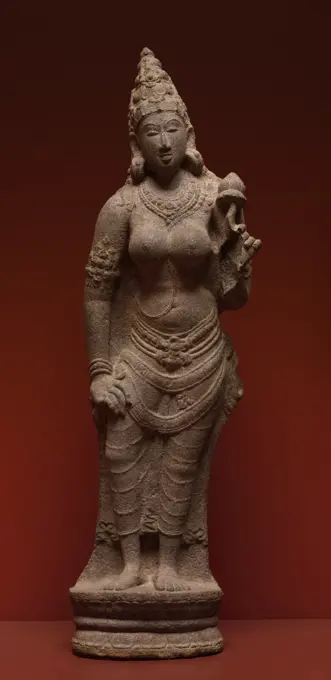
Bhu, 900-950. South India, Tamil Nadu, probably Pudokkatai, early Chola Dynasty, 10th Century. Granite; overall: 175.9 x 61.6 cm (69 1/4 x 24 1/4 in.). One of Vishnu's two wives, Bhu, the earth goddess, holds the lotus in her right hand.
6145-29831822
Buddha Preaching the First Sermon Attended by Maitreya and Padmapani 8th-9th century Nepal (Kathmandu Valley) This triad depicts the historical Buddha Shakyamuni preaching the first sermon in the forest retreat at Sarnath, flanked by Maitreya and Padmapani, the two premier bodhisattvas of the Licchavi period in Nepal. The Wheel of Law symbol (dharmachakra) flanked by a pair of kneeling deer makes this association explicit.. Buddha Preaching the First Sermon Attended by Maitreya and Padmapani 38358
6145-29076458
Head of Buddha, 700s. India, Kashmir, Akhnur school, 8th century. Clay, accidentally burned; overall: 23.5 x 16.5 cm (9 1/4 x 6 1/2 in.).
1746-19663451
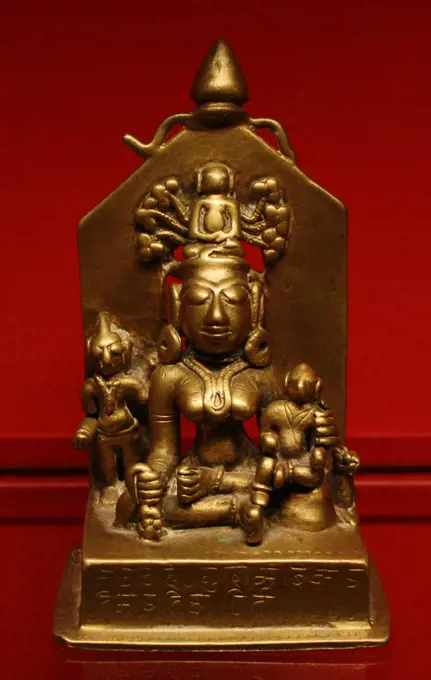
Ambika, brass, Gujarat. dated 1521. The benign Jain goddess Ambika holds a child on her knee and a bunch of mangoes.
4409-63023508
Virgin and Child, polychrome wood carving and cuts, 12th century, church of La Malena, Huesca Diocesan Museum, Aragon community, Spain.
6188-67171856
Mighty angry vajravarahi statue: ancient Tibetan-Buddhist art from the 13th mighty angry vajravarahi statue: antique Tibetan-Buddhist art from the 13th
6145-29762145
Standing Surya (The God of the Sun) ca. 6th century India (Jammu & Kashmir, ancient kingdom of Kashmir). Standing Surya (The God of the Sun) 38529
1899-19135728
Maldives: Buddha image discovered on Thoddu Island, 1959. Possibly 8th-9th century CE
6145-43592271
Figurine of Palden Lhamo. unknown, sculptor
6145-29743768
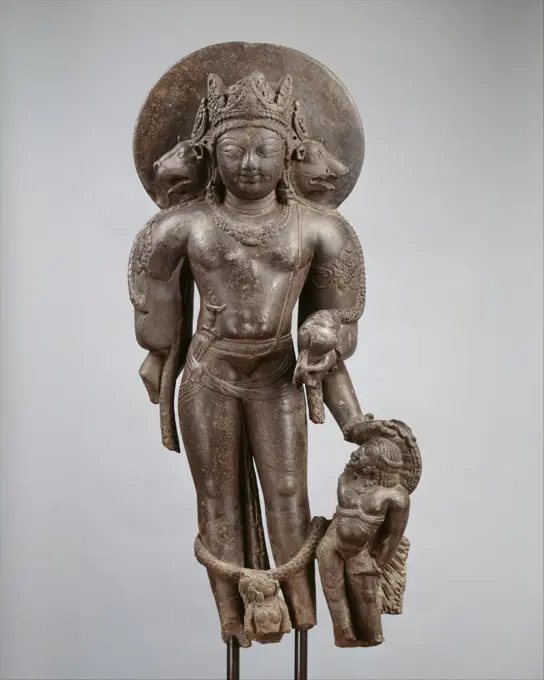
Vaikuntha Vishnu last quarter of the 8th century India (Jammu & Kashmir, ancient kingdom of Kashmir) This complex form of Vishnu, first referred to by the name Vaikuntha in the seventh-century Vishnudharmottarapurana, is four-faced (chaturmurti), with the heads of a lion (right) and a boar (left) flanking a human head. He is also identifiable in this form by the epithet Para-Vasudeva, the highest god.” The lion and boar represent Vishnu’s Varaha and Narasimha avatars. Carved in low relief on the back of the halo is the fourth face, a demonic, grimacing representation with fangs and a vertical third eye on the forehead. The small attendant on Vishnu’s left is Chakrapurusha, the personification of his war discus, originally balanced on his right by Gadadevi, the female personification of his battle mace. The earth goddess Prithvi, stands between Vishnu’s legs. from the eighth through the tenth century, this four-faced Vishnu was the paramount cult icon in the kingdom of Kashmir. Listen
6145-29825518
Buddhist Trinity on Cushions 8th century Indonesia (Java, Dieng Plateau). Buddhist Trinity on Cushions 39000
6145-58826483
Shiva, Parvati, and Ganesha, anonymous, 850 - 930 Parvati (standing). with Vadamudra and Lotus stem; Equipped with a nimbus. Java silver (metal) Parvati (standing). with Vadamudra and Lotus stem; Equipped with a nimbus. Java silver (metal)
6145-29124722
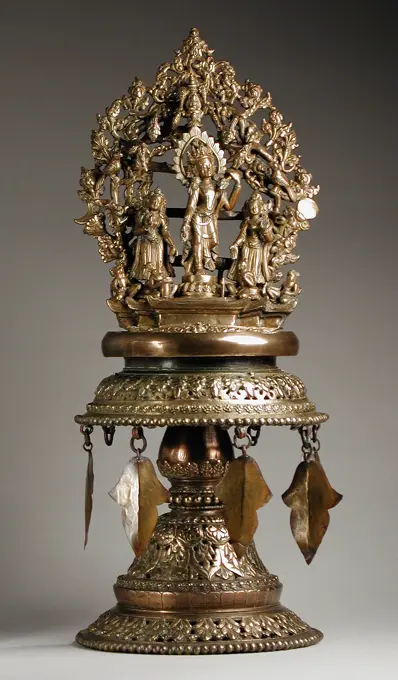
Temple Lamp with the Buddhist God Chintamani Lokeshvara and Attendants. Nepal, late 19th century. Furnishings; Lighting. Gilt brass and copper alloy
6188-55509165
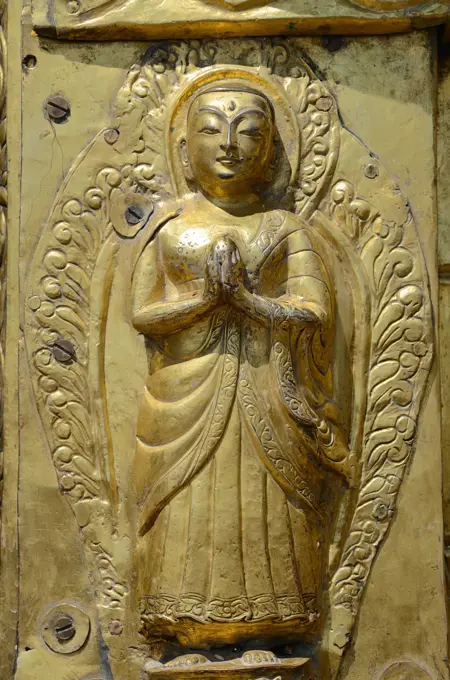
Golden statue Golden statue from Swayambhunath Stupa or Monkey Temple in Kathmandu Valley, Nepal Copyright: xZoonar.com/NatalliaxYaumenenkax 4440208
4266-21639098
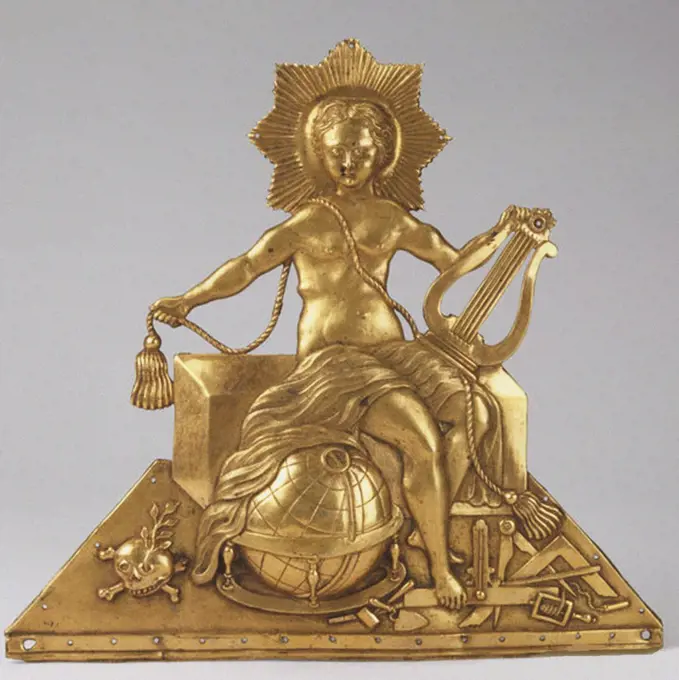
Masonic Plaque, Russia, Anonymous master
1746-29965438
A Gandhara Buddha, 2nd Century AD. Indian National Museum New Delhi, India
1746-19665253
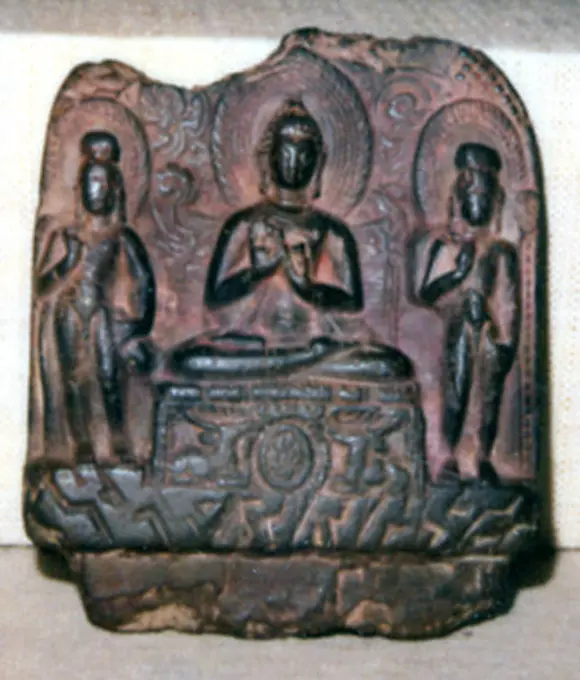
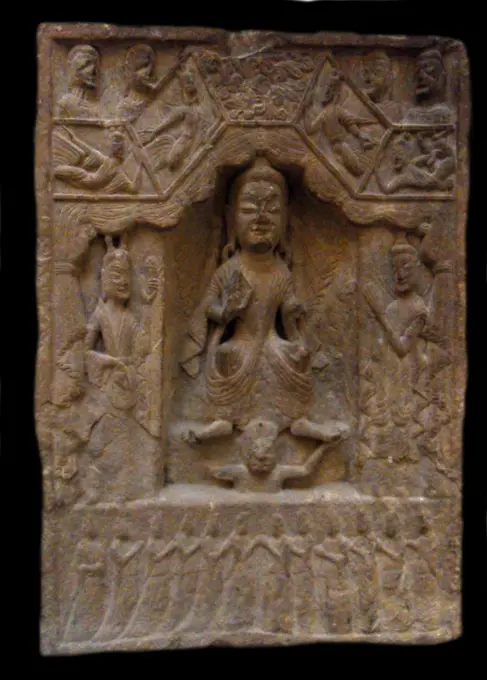
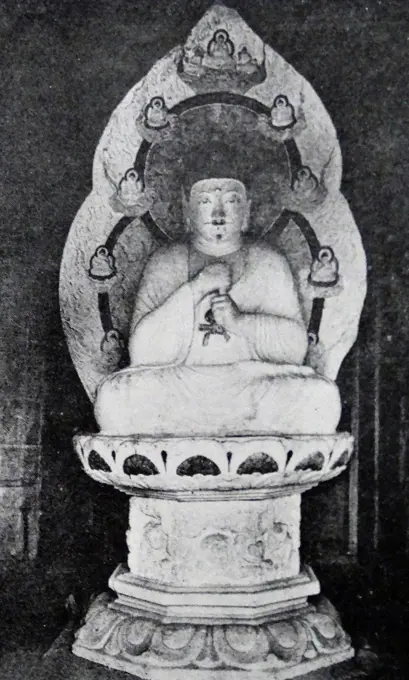
representation on a buddhist stele of the descent to earth of the Buddha Mayitreya. Chinese 386-534 AD
1899-18717463
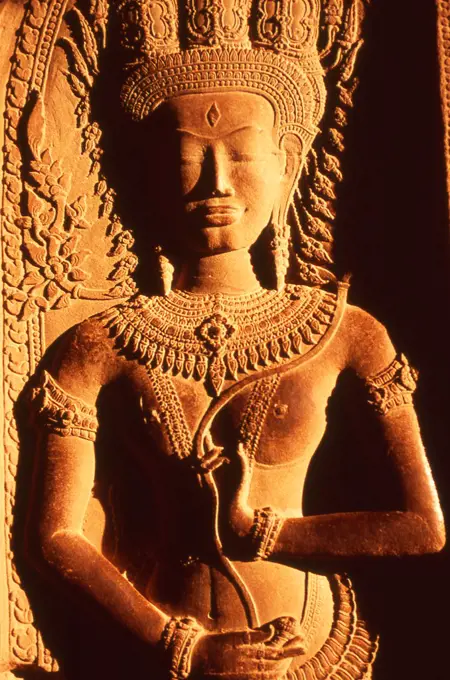
Angkor Wat was built for King Suryavarman II (ruled 1113-50) in the early 12th century as his state temple and capital city. As the best-preserved temple at the Angkor site, it is the only one to have remained a significant religious centre since its foundation - first Hindu, dedicated to the god Vishnu, then Buddhist. It is the world's largest religious building. The temple is at the top of the high classical style of Khmer architecture. It has become a symbol of Cambodia, appearing on its national flag, and it is the country's prime attraction for visitors. Angkor Wat combines two basic plans of Khmer temple architecture: the temple mountain and the later galleried temple, based on early South Indian Hindu architecture. It is designed to represent Mount Meru, home of the devas in Hindu mythology: within a moat and an outer wall 3.6 kilometres (2.2 mi) long are three rectangular galleries, each raised above the next. At the centre of the temple stands a quincunx of towers.
1525-21776592
Buddha statue on white background.
6145-29732483
Seated Preaching Buddha 9th century Indonesia (Java). Seated Preaching Buddha 38272
6145-46508150
Cup of a Bodhisattva. Cup of a Bodhisattva. On base.
1746-19665851
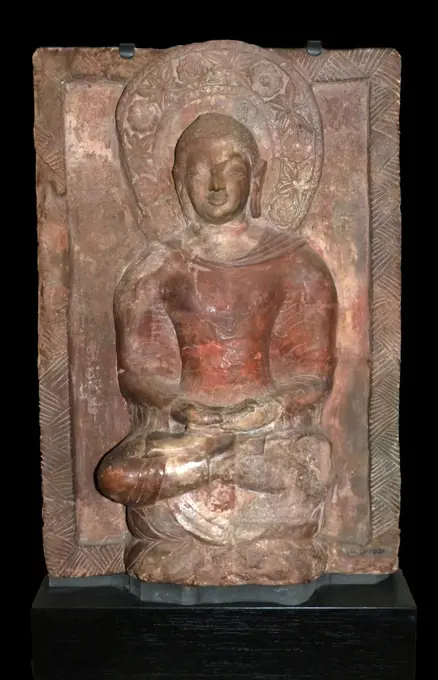
Buddha from a Stupa (400-600) Gupta period. Terracotta. Buddhists build stupas or mounds to enclose relics of the Buddha and later teachers, as well as other important artefacts such as sacred books. The stupas became more elaborate in time. Pilgrims cam from afar to worship the stupas, walking round and round them on a ritual path.
6145-29766729
Seated Bodhisattva 12th century Indonesia (Java). Seated Bodhisattva 39057
4443-28739316
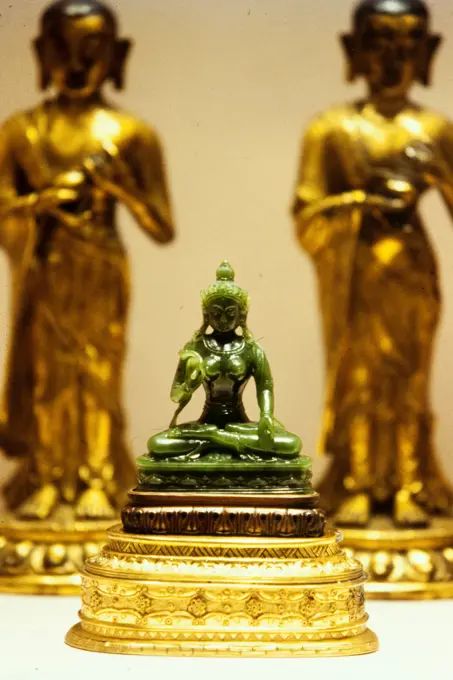
Sgrol-ma, Qian Long period, 1723-1735, 4 x 3 in. (10.16 x 7.62 cm), Green jade and gilt bronze, China, 18th century, Along with the White Tara, the Green Tara, as goddess of mercy and consort to Avalokitesvara, is one of the most popular deities of Tibetan Buddhism. A well-known legend links both of these goddesses to the pious wives of the seventh century Tibetan Buddhist king Songs-bstan Sgam-po. The story describes the king as an incarnation of the great bodhisattva Avalokitesvara, his Nepalese queen as that of the Green Tara, and his Chinese queen as that of the White Tara.
1848-49257633
Front view buddha head statue
6212-62159530
Samantabhadra on a white background
6145-52953479
Arhat holding a shoe China 18th-19th century Although not represented in Indian or Southeast Asian art, luohans (Sanskrit: arhats) play an important role in China, where they appear in both religious painting and sculpture and as a theme in the decorative arts. Originally the disciples of the Historical Buddha Shakyamuni, luohans are understood as protectors of Buddhism and the devout. View more. Arhat holding a shoe. China. 18th-19th century. Bamboo. Qing dynasty (1644-1911). Bamboo
4409-17435402
Standing Buddha. Culture: China. Dimensions: H. 2 1/8 in. (5.4 cm). Date: 18th century. Museum: Metropolitan Museum of Art, New York, USA.
6145-29162621
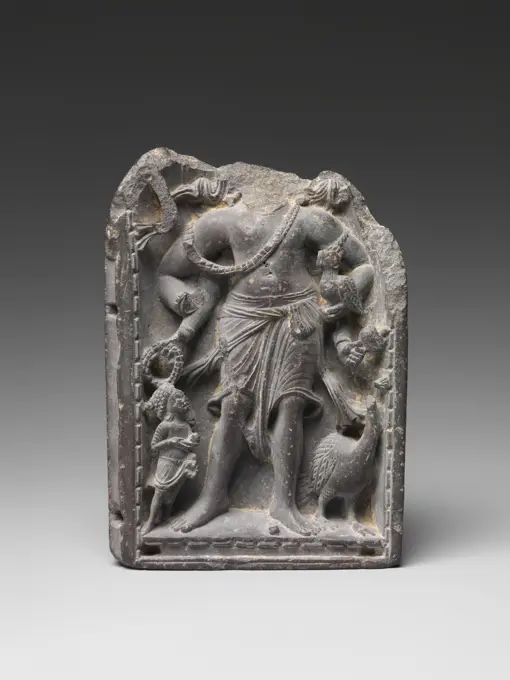
Panel of a Portable Shrine with Karttikeya, the God of War 6th century Pakistan (ancient region of Gandhara) Here, the god of war Karttikeya, eldest son of Shiva and Parvati, is accompanied by a peacock, his vehicle, and a male donor presenting an offering. The deity is also associated with the rooster, likely the bird he holds in one hand. In his lower-left hand, he displays a victory laurel, marking his triumphs in combat, the most celebrated of which is the slaying of the demon Taraka. Karttikeya touches the donors head with the laurel, as if bestowing victory upon him.. Panel of a Portable Shrine with Karttikeya, the God of War 38181
6145-54681236
Daoist Deity Zhenwu China 15th century The Daoist god known as Zhenwu is the personification of the ancient symbol of the north, an entwined tortoise and snake. In the eleventh century, this powerful symbol was given a human form by the Song emperors, who erected temples to worship the deity. Zhenwu became particularly popular during the Ming dynasty, when he was revered as a protector of the empire and the imperial family.This version employs the two-color decoration scheme of Cizhou ceramics to create a visually striking robe for Zhenwu. It was created for personal veneration on a home altar. View more. Daoist Deity Zhenwu. China. 15th century. Stoneware with overglaze enamel decoration (Cizhou ware). Ming dynasty (1368-1644). Ceramics
6145-29119057
Mountain Priest Sounding Signal. Japan, early 19th century. Costumes; Accessories. Ivory with staining, sumi, red pigment
6145-54679650
Vajrabhairava with His Consort Vajravetali Mongolia 18th-19th century Buddhist ideology from Tibet became especially important to the Zanabazar tradition in Mongolia. There, Buddhism reached the nomadic population via tent/temple complexes moving across the plains. This unusual image is fabricated from a silt substrate bonded using tongue oil over a wire armature; it was then gilded and painted in an effort to simulate metal. No comparable example is known, making it an especially rare object, speaking to an otherwise-lost image-making tradition.
6145-59347545
Sculpture by Guanyin, the Buddhist deity, for restoration, Anonymous, 1880 - 1910 photograph   photographic support  statues, paintings, etc. ~ objects of worship (Hinduism, Buddhism, Jainism). piece of sculpture, reproduction of a piece of sculpture
4409-17401316
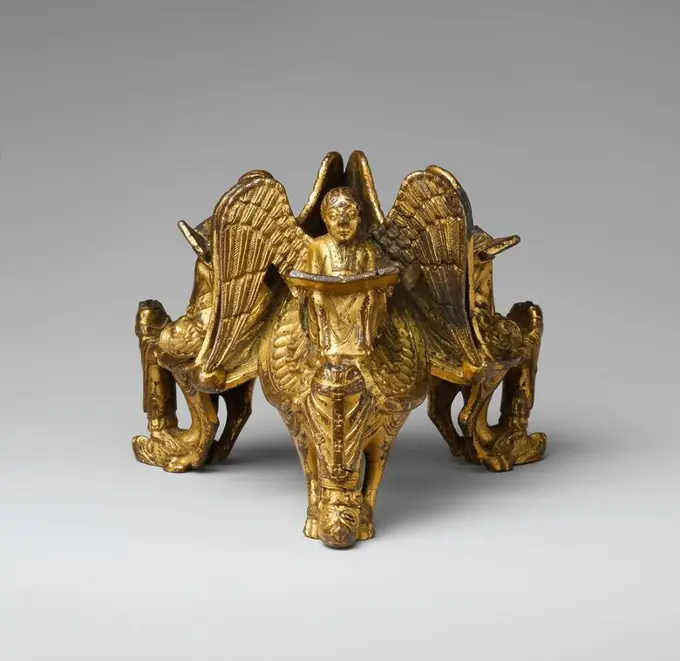
Base of an Altar Cross with Reading Angels Sitting on Dragons and Standing Church Fathers. Culture: North Italian. Dimensions: Overall: 4 x 5 1/8 x 5 1/8 in. (10.2 x 13 x 13 cm). Date: ca. 1125-50.The names of Saints Augustine, Jerome, and Gregory are inscribed on the books held by the angels. The absence of Saint Ambrose from the group (the heads are missing) indicates that the standard form of identifying the Church Fathers had not yet been established. Museum: Metropolitan Museum of Art, New York, USA.
6145-54582830
This rare bronze triad from the 1400s shows Amitabha ( in Korean), or the Buddha of the Western Paradise, seated on a lotus pedestal at the center. He is flanked by two sacred attendants, Ksitigarbha ( in Korean) on his left and Avalokitesvara ( in Korean) on his right. The combination of these three Buddhist deities was particularly popular in the early Joseon period. The small scale suggests that this triad might have been displayed in a personal shrine rather than a large worship hall. Amitabha Triad, 1400s. Korea, Joseon dynasty (1392-1910). Bronze with traces of gilding; overall: 40.6 x 16.5 x 54.6 cm (16 x 6 1/2 x 21 1/2 in.).
6145-59100231
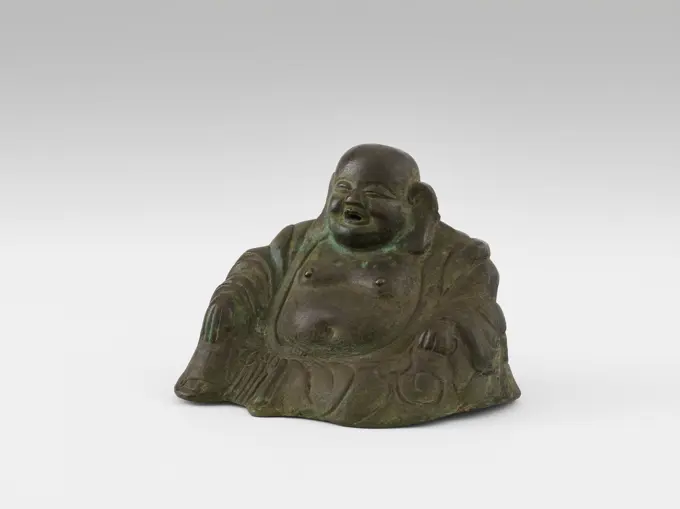
Budai monk (Buddha's);  19th century (1801-00-00-1900-00-00);
6145-48967673
Sculpture  a figure Aizen Myoo sitting on a lotus throne with a fiery halo unknown
6145-29058805
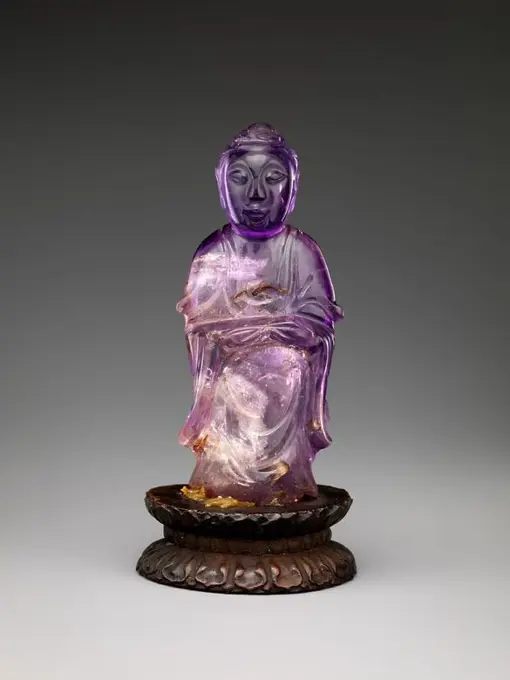
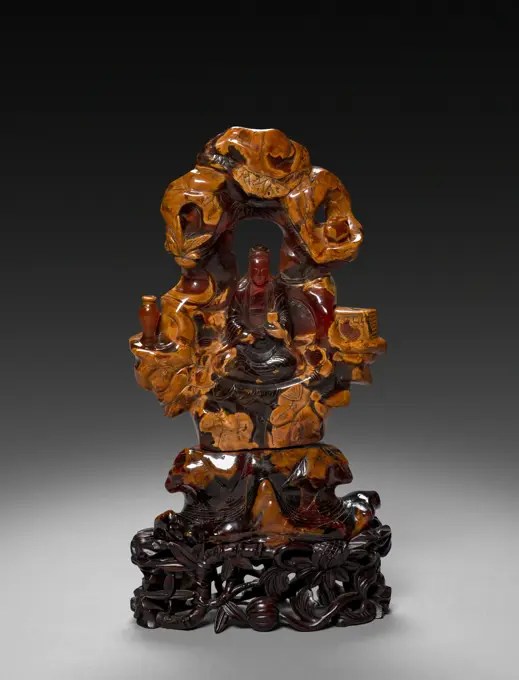
Bodhisattva Guanyin Seated in a Rock Grove, 1675-1700. China, Qing dynasty (1644-1911). Opaque ochre and translucent red-orange amber; overall: 22.9 cm (9 in.).
6145-29786127
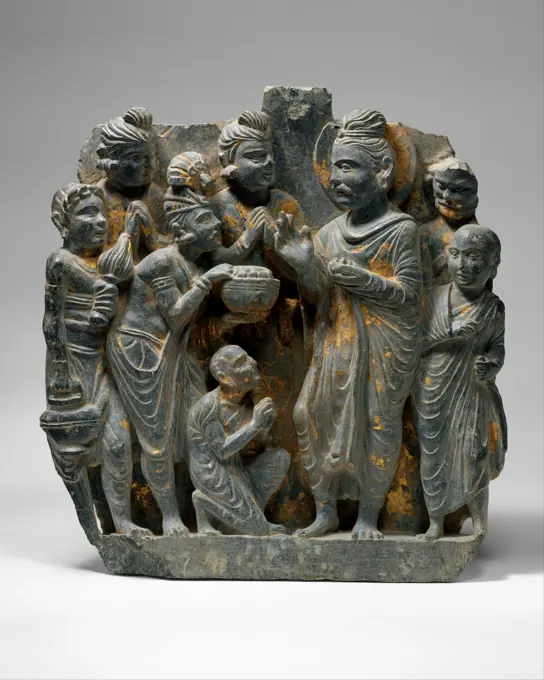
The Gift of Anathapindada 2nd-3rd century Pakistan (ancient region of Gandhara) The identification of the subject of this relief as the Gift of Anathapindada is by no means certain. The presence at the far left of the figure holding a waterpot suggests that a gift is about to be made, as a donor traditionally poured water over the hands of a recipient to seal a gift. However, determining the overall meaning depends on identification of the objects in the bowl being proffered to the Buddha. Sudatta, called Anathapindada (the Incomparable Almsgiver), was the richest merchant of the town of Sravasti (in Kosala). He met the Buddha at Rajagriha and proposed to donate money in order to buy land for a monastery in Sravasti. The amount of the payment exacted from Anathapindada was calculated by covering the grounds of the park to be purchased with gold coins. The identification of the objects in the bowl as coins is speculative, and the precise scene in the life of the Buddha that is represent
6145-29739217
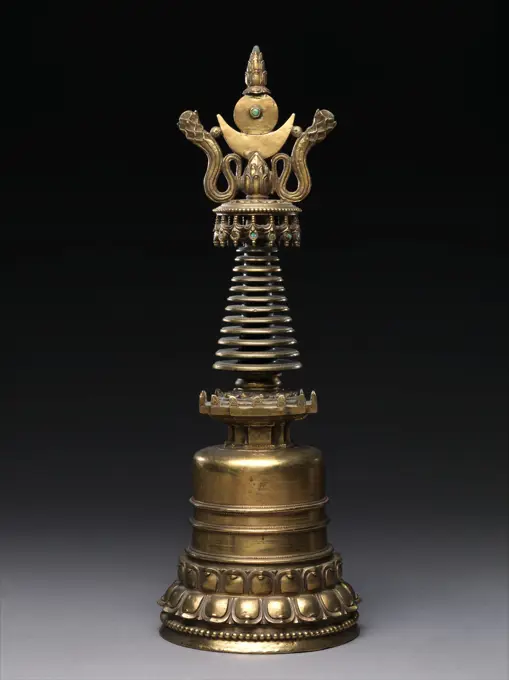
Stupa mid-15th century Tibet The stupa (Tibetan: chorten) is the most ancient form of Buddhist art, symbolizing the monumental funerary mounds of ancient India that were appropriated into Buddhism as depositories for Buddha relics. Over time they assumed many forms, including scaled-down versions in metal, which serve the same function of housing holy relics, but whose higher purpose in a monastery is to evoke the presence of the Buddha and his teachings.. Stupa. Tibet. mid-15th century. Brass. Sculpture
6145-29157958
Statuette China. Statuette. China. Mud. early Ming dynasty (1368-1644). Sculpture
6145-45592473
Two armed Ganesha (former Lichte collection). Yogyakarta, Yogyakarta district, D.I. Yogyakarta province, 9th century..
1746-19677359
The Bodhisattva Avalokiteshvara 18th Century A.D. Bodhisattvas are enlightened beings.
6188-63377253
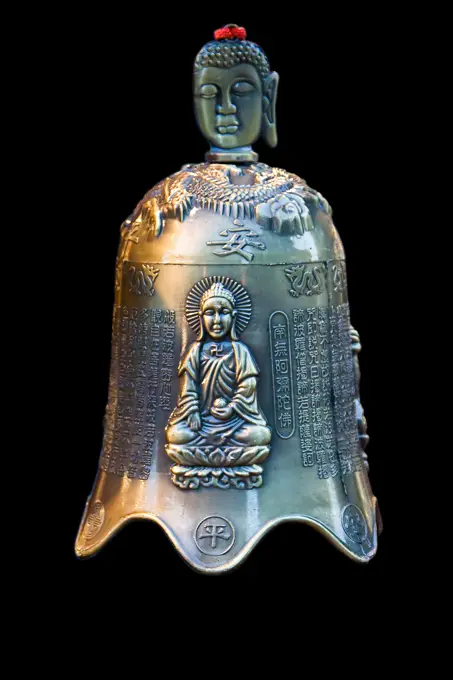
Buddha bell A bronze bell with Chinese characters and an image of Buddha sitting in the lotus position and the face of Buddha as handle, isolated on black Copyright: xZoonar.com/PaulxHakimatax 1976715
1848-60841231
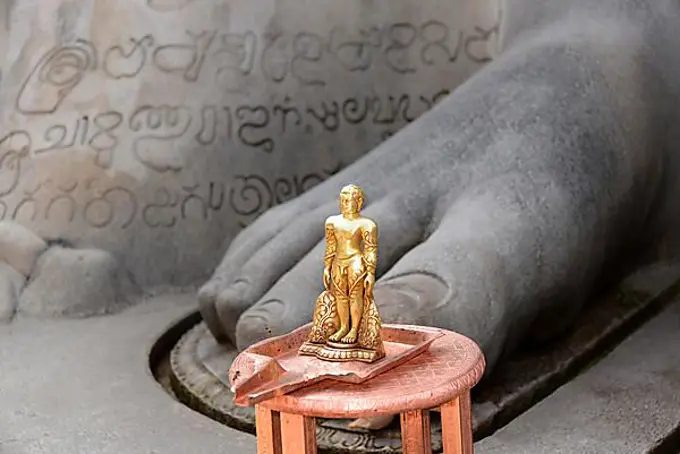
Detail, Gomateshwara statue, Jaina ascetic, Jain temple on Vindyagiri Hill, Shravanabelagola, Karnataka, South India, India, Asia
6145-29738372
Sculpture of the Buddha Second half of the 8th-second half of the 10th century Indonesia (Java). Sculpture of the Buddha 49710
6145-59657177
Monk displaying the varada mudra, Residential house. Kediri, Kediri district, East Java province, 13th - 14th century., 1866 - 1867 photograph A sitting Buddha in a Varada Mudra. The statue was placed at the Residentie Huis in Kediri. Java (possibly) paper. photographic support. cardboard albumen print
1746-30020804
Stone Seated Vairocana Buddha at Biroam Hermitage of Donghwasa Temple, Daegu, Silla Dynasty (57 BCE - 935 AD), Korea
1848-51701169
Vietnam, Hanoi, Unicorn at Van Mieu Temple, dedicated to Confusius, build in 1070, Asia
1890-103915
Prayer wheel, Golden Temple, Patan, Nepal, Asia
6145-29172572
Vajrapani, the Thunderbolt-Bearing Bodhisattva late 9th-10th century Bangladesh. Vajrapani, the Thunderbolt-Bearing Bodhisattva 39034
6145-29159159
Head of the Buddha late 18th-19th century Thai. Head of the Buddha 460977
6145-29823676
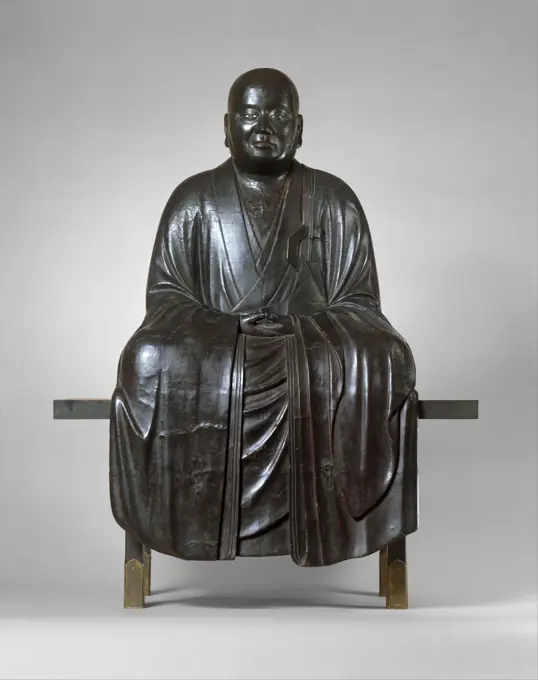
Portrait of a Zen Master 15th century Japan The intense presence of a Zen master is achieved here by a focus on realism in the face, while the body, with its heavy robes flowing over the chair, is more conventionalized. Sculpted portraits were frequently venerated in the living quarters of Zen temples. There, they provided a physical reminder of the deceased founder, who, in an unbroken chain of transmission from master to disciple, represented the crucial link between his disciples and the lineage that descended from the historical Buddha. This notion of teaching "from heart to heart" without the aid of sutras is central to Zen and made such portraits more important than icons of Buddhist deities. Listen to experts illuminate this artwork's story Listen Play or pause #8860. Portrait of a Zen Master Supported by Bloomberg Philanthropies We're sorry, the transcript for this audio track is not available at this time. We are working to make it available as soon as possible.. Portrait of a
6188-68093061
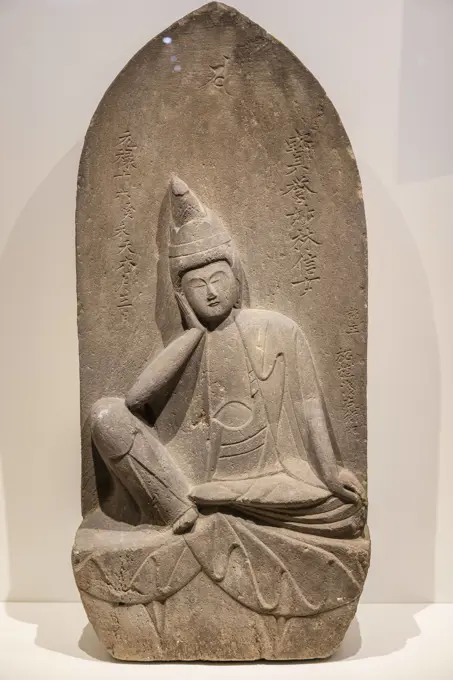
Dem Bodhisattva Cintamanicakra gewidmete Grabstele Funerary stele dedicated to Bodhisattva Cintamanicakra, Nyoirin Kannon Bosatsu, Japan, 1703, stone, MuEC, Barcelona, Catalonia, Spain LicenseRF Copyright: xZoonar.com/BartomeuxBalaguerxRotgerx 23171371
6145-29138283
The Seven Mother Goddesses (Matrikas) Flanked by Shiva-Virabhadra and Ganesha, Lord of Obstacles. India, Madhya Pradesh, 9th century. Sculpture. Red sandstone
6145-52340332
Indie. Socha Buddhova z Buddha-Gaji. (Bihár.). Periodicals. 1911 - 1913. General Research Division. Modernism (Art), Czech literature , 20th century, Art, Arts , Czechoslovakia
1525-22201439
Buddha
6176-59871529
Asian sculptures and artifacts inside Toronto Royal Ontario Museum
PREVIOUS
of 4
NEXT
2401 S. Ervay, Suite 206
Dallas, Texas 75215
United States
Get Started
Free ResearchMy BoardsMy Cart
For Creators
How To License Your ContentContributor PortalFrame of Mind
Resources
API accessPricing
Contact
+1 866 236 0087help@viewpictures.co.uk Contact form
©2026 View Pictures. All Rights Reserved. -A
This site is protected by reCAPTCHA and Google Privacy Policy and Terms of Service apply.