My Boards
View Pictures
  • My Boards

Buddhist Sculptures Collection

A series of intricately crafted Buddhist sculptures depicting figures like Buddha, Tara, and Avalokitesvara. The artworks showcase diverse styles and materials across centuries.
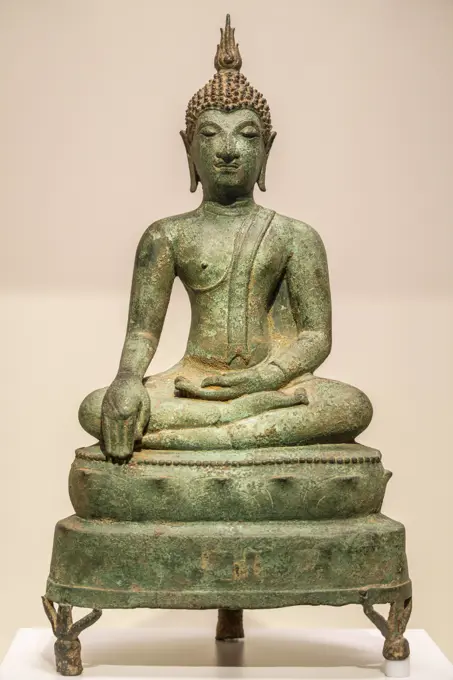
Buddha Buddha, Thailand, 15th century, bronze, MuEC, Barcelona, Catalonia, Spain LicenseRF Copyright: xZoonar.com/BartomeuxBalaguerxRotgerx 23171185
357 assets in this story
1558-13913426
China, Shanghai, Shanghai Museum, Northern Dynasty (534-550 ADS) Stone Buddha Statue
6145-29809070
Standing Horrific Female Deity ca. 16th-17th century India (Kerala). Standing Horrific Female Deity 39132
6145-29833203
Seated Avalokiteshvara 10th-11th century() Indonesia (Sumatra). Seated Avalokiteshvara 39235
6145-29155675
Par nirvana (death and transcendence of the Buddha) and attendant arhats dated 1503 Qiao Bin Chinese This is a depiction of the Buddhas nirvana. His attendants are all in deep sorrow: one wipes away a tear, while others seem to be crying out or, alternatively, at a loss for words. The Buddha, however, is shown in a state of near sleep, indicating a heavenly wisdom.According to the inscription on the back and sides of the couch on which the Buddha reclines, a monk had these sculptures made in 1503 as a private act of devotion. They were originally part of a larger group of figures from the Qiao family workshop in Yangcheng, Shanxi Province.. Par nirvana (death and transcendence of the Buddha) and attendant arhats 53925
6145-29138238
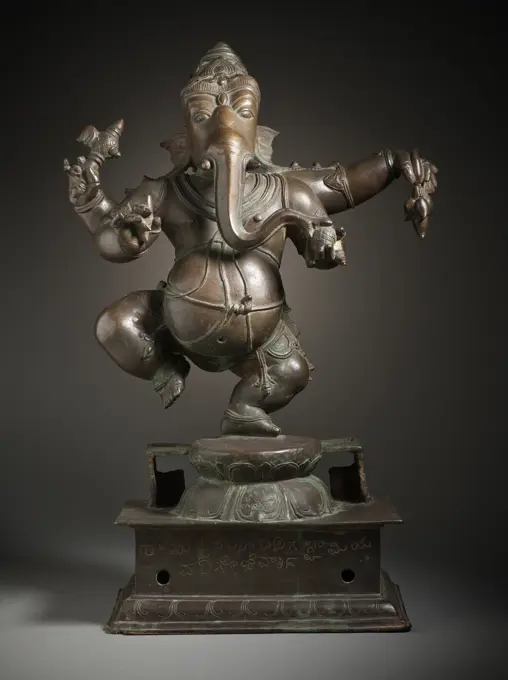
Dancing Ganesha, Lord of Obstacles. India, Karnataka, 16th-17th century. Sculpture. Copper alloy
6145-46263165
Avalokitesvara. Avalokitesvara (Guanyin), standing on a lotus cushion; In the raised right hand a wish jewel and a vase in the left; side figure of an altar.
1899-18713185
Phnom Bok is a hill in the northeast of the East Baray in Cambodia, with a prasat (temple) of the same name built on it. It is one of a 'trilogy of mountains', each of which has a temple with similar layout. The creation of the temple is credited to the reign of Yasovarman I (889-910) between the 9th and 10th centuries and was established after he moved his capital to Angkor and named it Yasodharapura. The two other sister temples, named after the contiguous hills, are Phnom Bakheng and Phnom Krom. The temple is an Angkor monument. It is dedicated to the Trimurti of the Hindu pantheon, Brahma, Vishnu and Shiva. It was built in Bakheng style (893-927) and designed with individual sanctums, which have door openings to the east and west. These are raised on a foundation with a plinth made of laterite stone.
6145-29777558
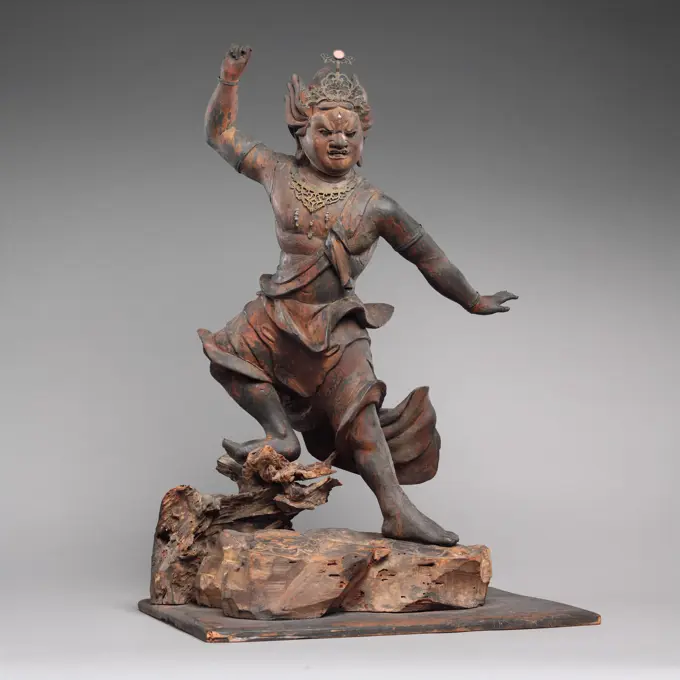
Za Gongen 14th century Japan This boyish figure of ferocious mien is carved of a single block of Japanese cedar (sugi), but for its separately carved limbs. His right foot is raised in a bounding leap as he brandishes a now-missing vajra in his raised right fist. He wears the Hindu dhoti, a long cloth wrapped around the waist and between the legs that, like the long scarf draped over the left shoulder, flutters with the figure's energetic movement. His hair sweeps back in flamelike tufts to frame the face. The powerful expression, with brow bulging and mouth open in a roar, is made riveting by inset crystal eyes, including a third in the center of the brow, that are painted and touched with red to appear bloodshot. Za Gongen is the protective spirit of Mount Kimpu in the lovely Yoshino range south of Nara. Because he came to be venerated as a local avatar of Shaka Nyorai, Kannon Bosatsu, and Miroku Buddha—the Buddhas of past, present, and future worlds— according to a text of 1337, K
6145-29169810
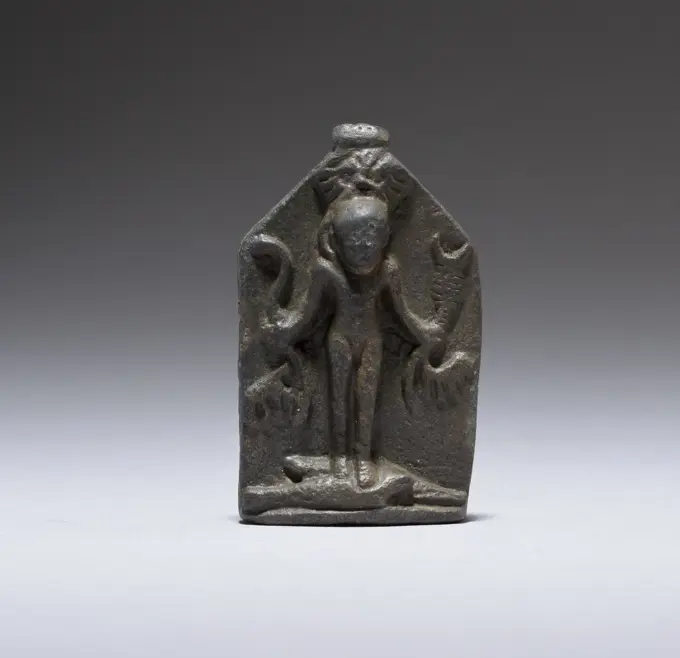
Miniature cippus of Horus (magical stela) 332-30 B.C. Ptolemaic Period This very small cippus is, unusually, made of cupreous metal. The front scene shows the child Horus standing on crocodiles and holding a snake and an oryx on the left and a lion and a scorpion on the right. At the top of the cippus is a Bes-head. On the reverse is an upper register depicting a falcon standing on an oryx, Thoth seated wearing the atef crown, and a seated goddess and god. Below that are five lines of inscription giving a spell familiar from magical stelae: "welcome god son of god, welcome heir son of the heir, welcome steer son of the steer born of the body of god, welcome Horus brought forth by Osiris whom Isis bore......" The signs are somewhat garbled, and on the sides of the stela actually make no obvious sense.It seems likely such a small stela was used like an amulet for its magical protection rather than being used to impart its magic to water poured over it for drinking. A roughness at the top
6145-46651340
. The protuberance or topknot on the head (ushnisha) and the raised spot on the forehead (urna) are standard features of the Buddha. The wavy hair combed back from the face is characteristic of Buddha figures from Gandhara. It was only during the early decades of the 1st century AD that the first Buddha images began to appear.
6188-67171930
Exquisite Buddhist ritual crown from the 10th to 11th centuries with ratnasambhava exquisite Buddhist ritual crown from 10 to 11th centuries with ratnasambhava copyright: xzoonar.com/gallóxgusztávx 22873838
6145-46833117
Puppet (Wayang Klitik) ofGaragangsa
6145-29138445
Buddha Shakyamuni with Attendants. Central Thailand, 13th-14th century. Sculpture. Terracotta
6145-52892987
The Sultanganj Buddha, 500-700. Artist unknown.. Cast by the lost-wax technique on a clay core, this 6th to 7th Century bronze statue was excavated by E B Harris, a railway engineer, at Sultanganj, the state of Bihar, in northern India during the course of railway construction in 1862.
6145-29171761
Standing Buddha late 18th-early 19th century China. Standing Buddha 44108
6145-29195846
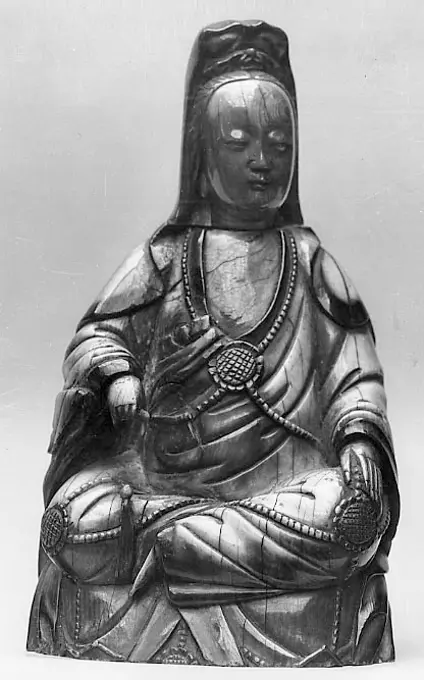
Seated Guanyin China. Seated Guanyin 41947
6176-67035865
Statuette of a Celtic mother-goddess. Artist: Unknown
6145-30174688
Mayadevi, Mother of the Buddha 1801-1900 Nepal. Bronze with coral inlay .
6145-58826204
Buddha Head, anonymous, 550 - 650 Fragment (head) of a Buddha of white, mica-containing marble. Dingzhou marble (rock) Fragment (head) of a Buddha of white, mica-containing marble. Dingzhou marble (rock)
4409-17385465
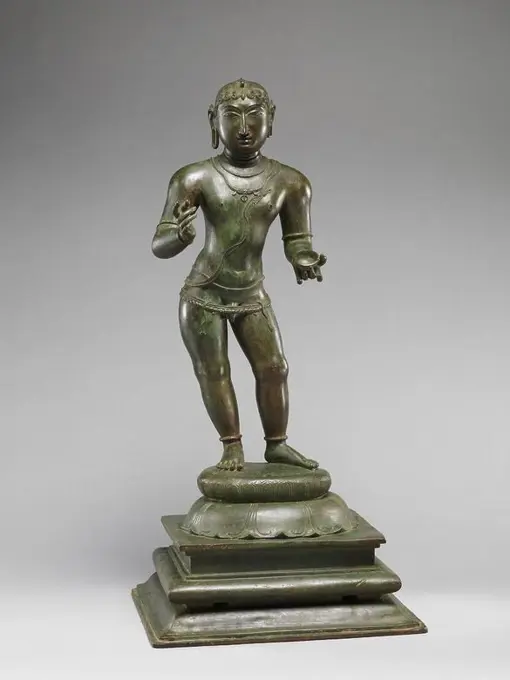
Child Saint Sambandar. Culture: India, Tamil Nadu. Dimensions: H. 29 3/8 in. (74.6 cm); W. 14 5/8 in. (37.1 cm); D. (rectangular base) 12 5/8 in. (32.1 cm). Date: late 11th century.Sambandar, the popular seventh-century child saint, is one of the muvar, the three principal saints of South India. Legend recounts that after receiving a gift of milk (represented by the bowl) from the goddess Uma, the infant Sambandar devoted his life to composing hymns in praise of Lord Shiva; his raised hand points to Shiva's heavenly abode at Mount Kailash, in the Himalayas. The sculptor captured the saint's childlike quality while also empowering him with the maturity and authority of a spiritual leader. This icon was intended for processional use during temple festivals celebrating gods and saints. Museum: Metropolitan Museum of Art, New York, USA.
1899-68036
Kanshoji  zen monastery: statue of Kannon
1525-56565900
Bangkok, Thailand - Apr 03, 2023 - Figurine of Phali, (The Unbeatable Money King) Sculpture Statue on Dark Background. In Ramayana, Phali is the strongest monkey king who got blessing from God Shiva. Space for text.
6145-46812509
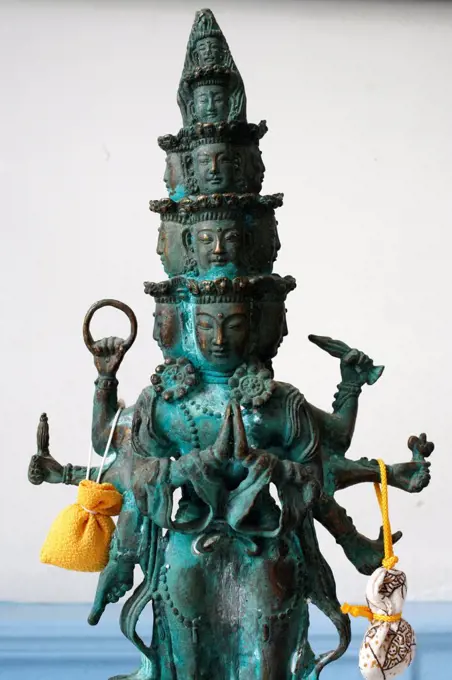
Buddhist GoddessTara
4409-17393350
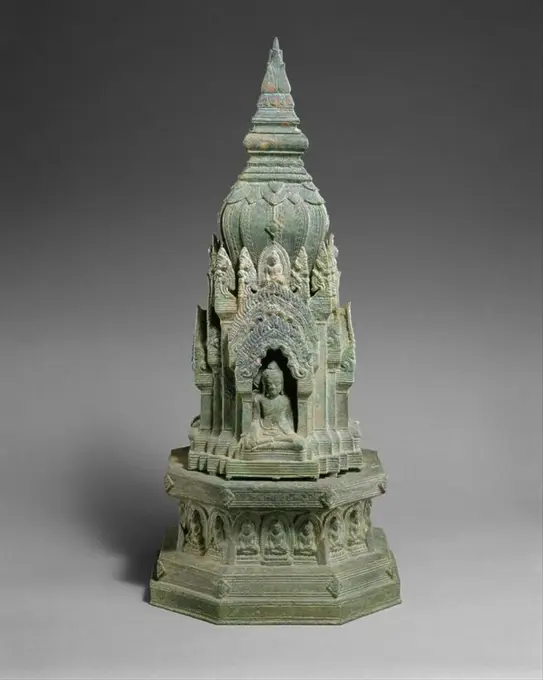
Buddhist Shrine. Culture: Thailand or Cambodia. Dimensions: H. 19 1/2 in. (49.5 cm); W. 8 1/2 in. (21.6 cm); D. 8 in. (20.3 cm). Date: 13th century. Museum: Metropolitan Museum of Art, New York, USA.
4443-28739919
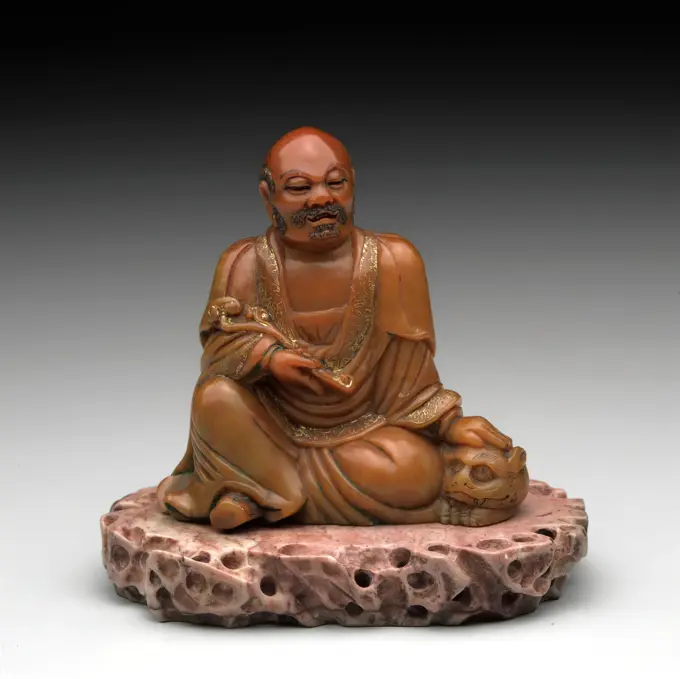
Lohan and Tiger, 17th century, 3 3/8 x 3 3/8 x 2 in. (8.57 x 8.57 x 5.08 cm) (including stone base), Soapstone, China, 17th century, Appropriate to a scholar's study, this small, finely carved soapstone figure most likely represents Da mo or Bodhidarma, chief patriarch of the Buddhist religion. His basic doctrine was that perfection must be achieved through inward meditations of the heart rather than in outward deeds and observances. According to legend, he traveled from India to China in the sixth century and founded the Chan sect of Buddhism. He is shown here sitting at ease on a rockwork base holding a ru yi scepter and stroking a reclining tiger that emerges from the folds of his robe. Da mo is depicted with a rather large head and a black curly beard and mustache; these foreign features connote his Indian origins.
6145-29179169
Figure of Bodhisattva 16th century China. Figure of Bodhisattva. China. 16th century. Porcelain with blue and turqoise glaze (Jingdezhen ware). Ming dynasty (1368-1644). Ceramics
6145-29754374
Head of a Bodhisattva 3rd-7th century Central Asia. Head of a Bodhisattva. Central Asia. 3rd-7th century. Stucco. Sculpture
6188-64595239
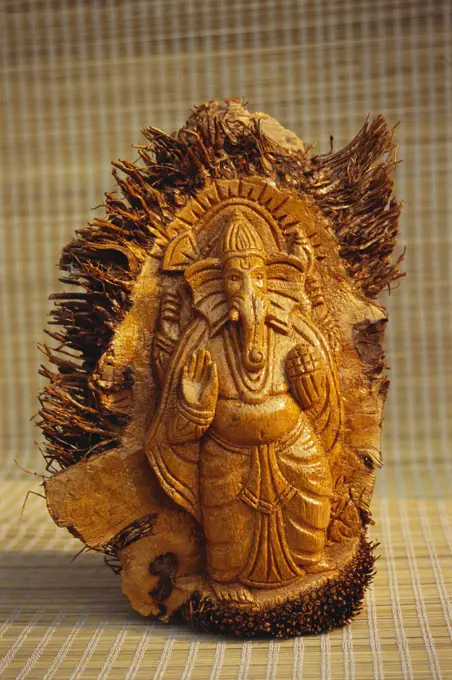
God Ganesha Ganpati bamboo art, Tripura, India Copyright: xBhagwandasxRupani/DinodiaxPhotox
6145-29143926
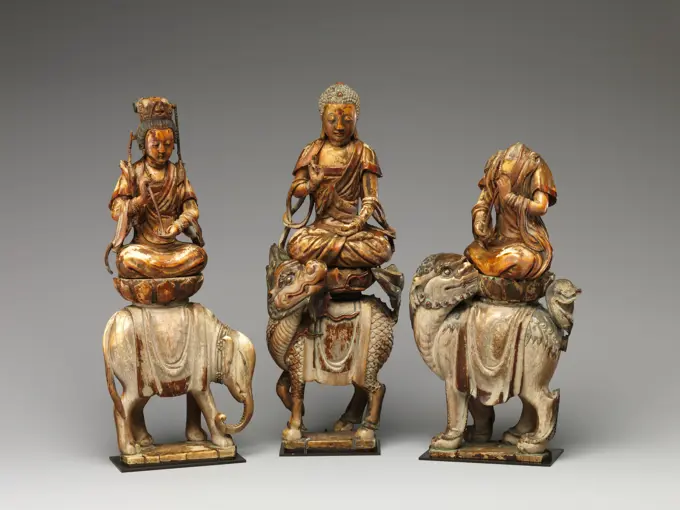
Buddha Shakyamuni with attendant bodhisattvas 12th-14th century China This extraordinary group is a rare example of Buddhist sculpture made in China using mammoth ivory as opposed to elephant ivory. Based on a text known as the Flower Garland Sutra, it depicts the founder of Buddhism, Shakyamuni, seated on a mythical animal known as a qilin and attended by the bodhisattvas Samantabhadhra (Chinese: Puxian) on an elephant and Manjushri (Chinese: Wenshu) on a lion. The former symbolizes virtuous practice, the later wisdom.. Buddha Shakyamuni with attendant bodhisattvas 653244
6145-29732779
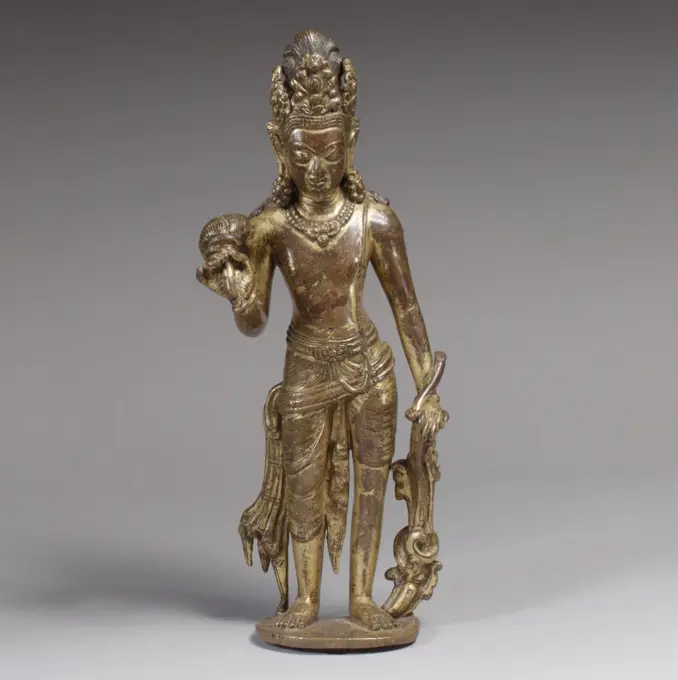
Bodhisattva, probably Padmapani Lokeshvara 10th-11th century Nepal (Kathmandu Valley) This bodhisattva, richly bejeweled and crowned, holds a flywhisk in his raised hand, indicating that he was designed to attend an image of the Buddha. Stylistically, this work belongs to the transitional post-Licchavi period, when eastern Indian Pala influences are evident in the greater adornment and elaboration of detail.. Bodhisattva, probably Padmapani Lokeshvara. Nepal (Kathmandu Valley). 10th-11th century. Gilt copper alloy. Licchavi-Thakuri periods. Sculpture
6145-30190173
God Vishnu with Lakshmi and Sarasvati 801 CE-1000 Bangladesh. Bronze .
6145-29732538
Plaque from a Tantric Ritual Apron ca. 16th century Tibet (or Nepal). Plaque from a Tantric Ritual Apron 38565
1746-19675286
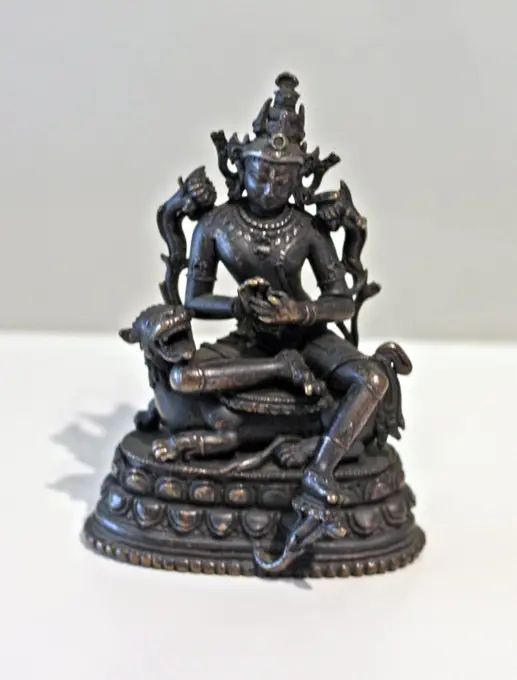
The bodhisattva Manjushri. India or Bangladesh, Bengal, 11th-12th century, bronze, silver. Manjushri is seated on his mount, a lion. His relaxed pose, with one leg hanging down, is called lolita-esuna and is often found in images of bodhisattvas. On the blue water lily to the right of Manjushris head is his attribute - the book, a symbol of wisdom. Manjushri is making the gesture to set the wheel of doctrine in motion.
4409-17432133
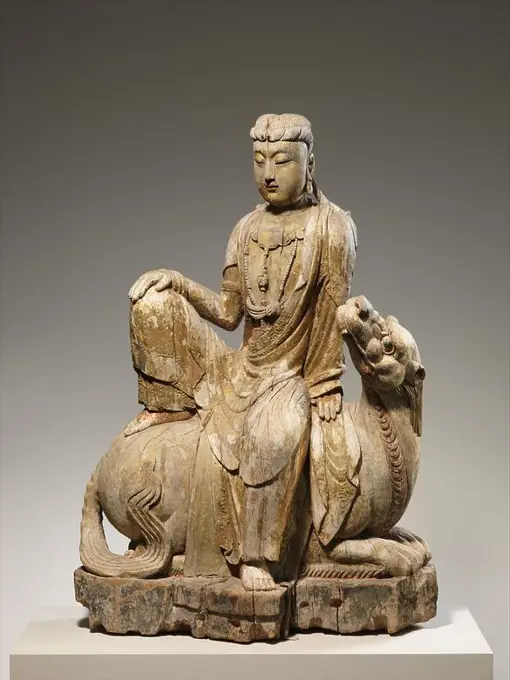
Bodhisattva Avalokiteshvara of the Lion's Roar, or Simhanada Avalokiteshvara (Shi Hou Guanyin). Culture: China. Dimensions: H. 42 1/8 in. (107 cm); W. 29 in. ( 73.7 cm); D. 13 in. (33 cm). Date: late 15th-early 17th century.Avalokiteshvara (the Bodhisattva of Compassion) and Manjushri (the Bodhisattva of Wisdom) are identifiable by the fact that both, at times, appear atop lions. As such, they are said to assume the form of Simhanada, or the Lion's Roar, which is a reference to the intensity of the moment of enlightenment. Here, the lion's recumbent pose and the bodhisattva's sidewise posture suggest that this sculpture represents Simhanada Avalokiteshvara, although the headdress does not bear the image of a seated Buddha, which is Avalokiteshvara's standard identifying attribute. Depictions of Simhanada Avalokiteshvara developed in India around the eleventh or twelfth century and appeared in China during the twelfth. Museum: Metropolitan Museum of Art, New York, USA.
6145-59103088
Four -armed divine warrior ( Iwa as Khandoba);  20th century (1901-00-00-1940-00-00);
6145-29757669
Parvati 16th century India (Tamil Nadu). Parvati 39257
1746-19691826
Bronze Guanyin figure China, Liao dynasty (907-1125). Guanyin raises her right hand in the gesture of 'fear not' and holds the Vase of Life in her left, sending a message of peace and hope to those who suffer. Bronze.
6145-29159891
Figure of Guanyin China. Figure of Guanyin 48673
4409-17403803
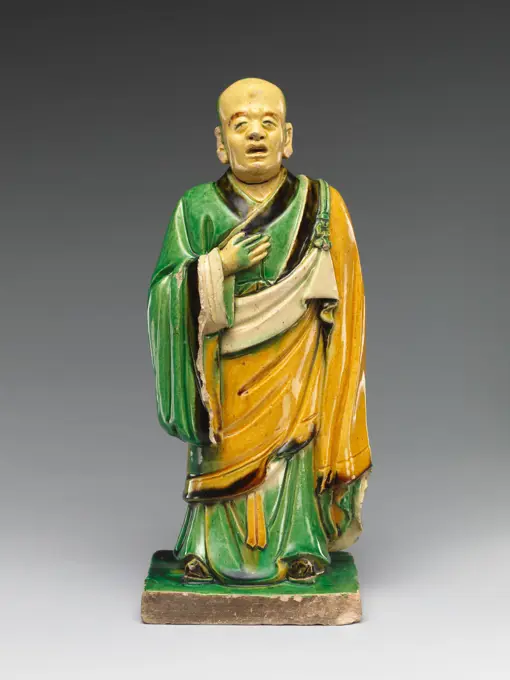
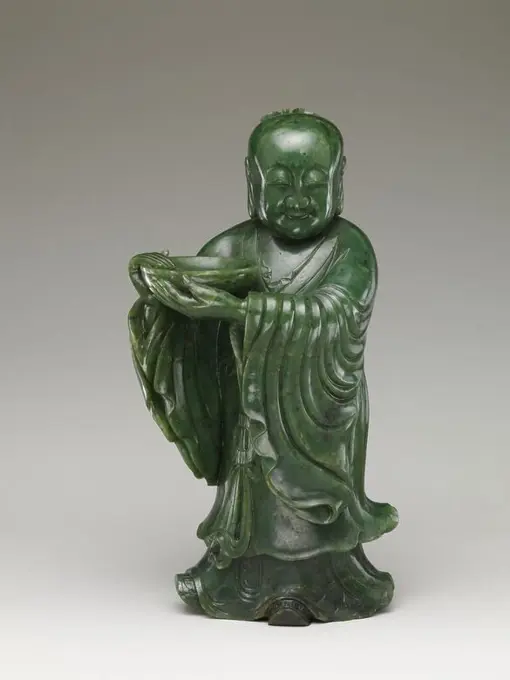
Temple attendant. Culture: China. Dimensions: H. 12 × W. 6 1/2 in. (30.5 × 16.5 cm). Date: 18th century. Museum: Metropolitan Museum of Art, New York, USA.
1899-18554245
Bodhisattva  Avalokitehvara. Guan Yin (The Goddess of Mercy) in hand.  France..
6145-45902596
Budai. Budai (literally sack cloth’) is a character from Chinese folklore. He can be identified from his sack and his bare, fat belly. Budai represents contentment.
1746-21133781
Seated Mahavira; Karnataka; India. Mahavira (The Great Hero) was the founder of the modern Jainism. He lived in the 6th century BC and is shown nude.
6188-64595774
Ganesh ganpati Elephant head Lord in stone Copyright: xAnilxDave/DinodiaxPhotox
6145-29128465
The Saint Andal. India, Tamil Nadu, Madurai District, 14th century. Sculpture. Copper alloy
1525-20359203
Japan, woodmade Kongorikishi statue, the muscular guardians of the Buddha, 13 century
1899-18854452
Kāśyapa Mātaṅga and Dharmaratna were, according to ancient tradition, the Indian monks who first introduced Buddhism into China. It is said that the Emperor Ming (58-75 CE) had a dream in which a golden image appeared in the west. So moved was he by this strange dream that he sent a group of envoys beyond the western borders of China to find out what they could about this image. This was in about 64 CE. The envoys returned three years later accompanied by two monks, Kāśyapa Mātaṅga and Dharmaratna. The monks brought with them a text called 'The Sūtra of the Forty-Two Sections' and the emperor built them a monastery called 'The White Horse Monastery', after the horse that had carried the text and the monks' supplies. 'The Sūtra of the Forty-Two Sections' is a collection of the Buddha's sayings, paraphrased and arranged according to subject. It is not an Indian work but was probably compiled in Central Asia or Afghanistan as a brief introduction to Buddhism. It has remained popular in Ch
6145-29749613
Seated Esoteric Buddhist Female Deity ca. last quarter of the 10th-first half of the 11th century Indonesia (Java) This sculpture would have been part of a large group forming a mandala.. Seated Esoteric Buddhist Female Deity 39179
6212-62159743
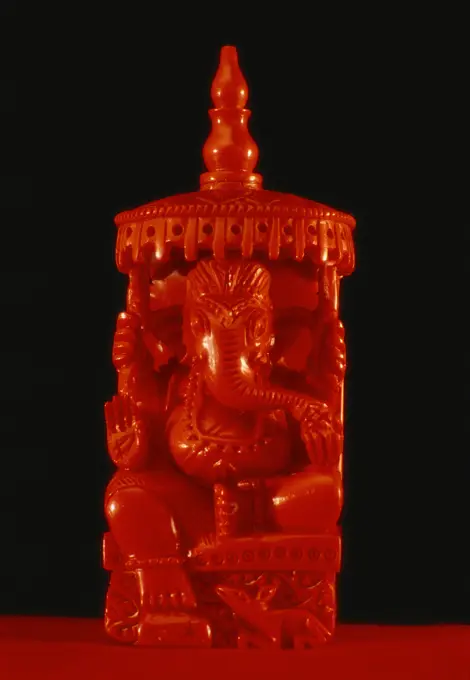
Statue of the hinduist god Ganesha on a white background
4409-17409860
Buddhist Monk Budai. Culture: China. Dimensions: H. 6 3/4 in. (17.1 cm); W. 7 1/4 in. (18.4 cm); D. 5 1/2 in. (14 cm). Date: 17th century.The kilns near Dehua, in Fujian Province, opened in the late thirteenth century and flourished from the sixteenth to the eighteenth century. Characterized by thick, lustrous glazes, Dehua ware is often known in Western writings as blanc de chine, or "China white." Budai, who lived in the eighth or ninth century, was noted for his round stomach and his affinity for children. Museum: Metropolitan Museum of Art, New York, USA.
6145-29822530
Buddha 20th century China. Buddha 44084
6145-46652160
. The lucky god Hotei and a Chinese boy.
6188-64603789
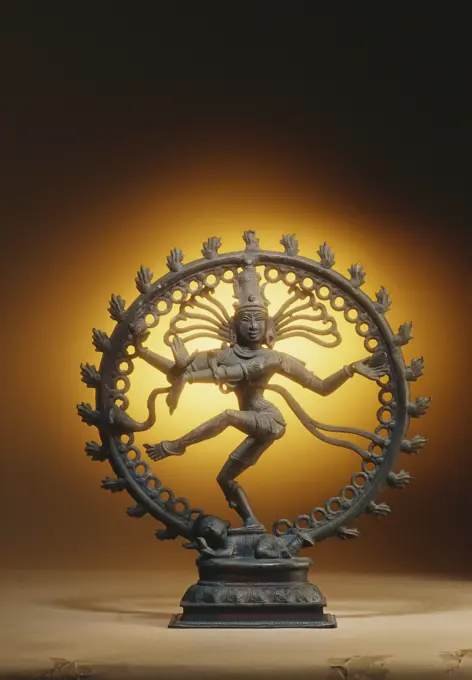
Dancing Shiva Nataraj in bronze Copyright: xVirenxDesai/DinodiaxPhotox
6145-59514323
Body of a standing Chinese Knikpop (MAN), 1804 - 1808  Body of a standing kink doll. Together with a head, two hands and a staff, form a Chinese dignitaries. China (possibly) loam. iron (metal). lead (metal). wood (plant material). porcelain.   China
6145-59514324
Head of a standing Chinese Knikpop (MAN), 1804 - 1808  Head of a kink doll. Together with a body, two hands and a staff, form a Chinese dignitaries. China (possibly) loam. iron (metal). lead (metal). wood (plant material). porcelain.   China
6145-46358492
Head of a standing Chinese kinkpop (man). Head of a kinkpop. Together with a body, two hands and a staff, forms a Chinese high-quality capacity.
6145-29835014
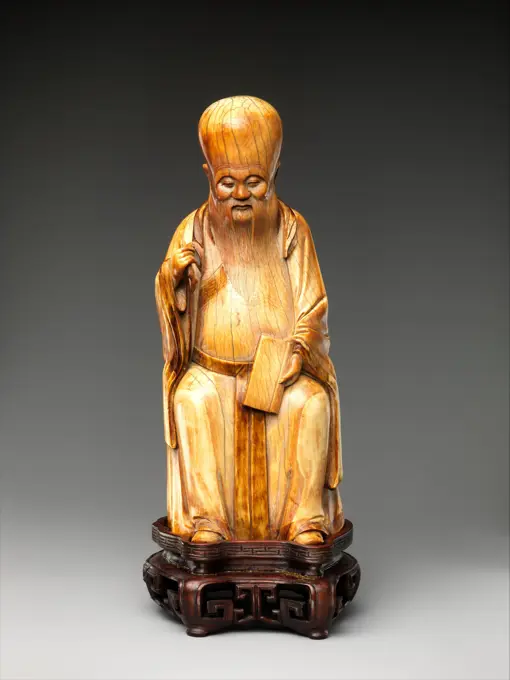
Shouxing, Stellar God of Immortality 16th century China As one of the personified stars, Shouxing is associated with the South Pole in Chinese astronomy and is believed to control the human life span. Longevity, good fortune, and prosperity are considered the three attributes of a good life in traditional Chinese culture.. Shouxing, Stellar God of Immortality. China. 16th century. Ivory. Ming dynasty (1368-1644). Ivories
7155-70376449
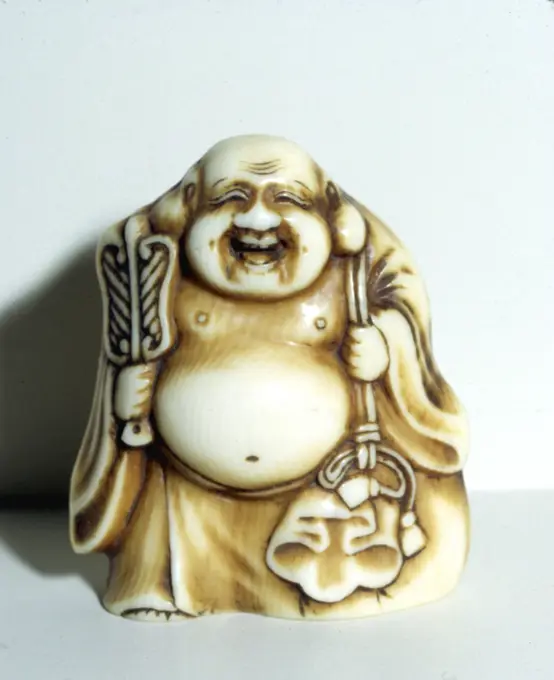
Hotei- god of prosperity. Ivory Netsuke. JAPAN.
PREVIOUS
of 4
NEXT
2401 S. Ervay, Suite 206
Dallas, Texas 75215
United States
Get Started
Free ResearchMy BoardsMy Cart
For Creators
How To License Your ContentContributor PortalFrame of Mind
Resources
API accessPricing
Contact
+1 866 236 0087help@viewpictures.co.uk Contact form
©2026 View Pictures. All Rights Reserved. -A
This site is protected by reCAPTCHA and Google Privacy Policy and Terms of Service apply.