My Boards
View Pictures
  • My Boards

Buddhist Statues and Art

Diverse representations of Buddha statues from varying eras and styles. Emphasis on craftsmanship and spiritual significance in Buddhist iconography.

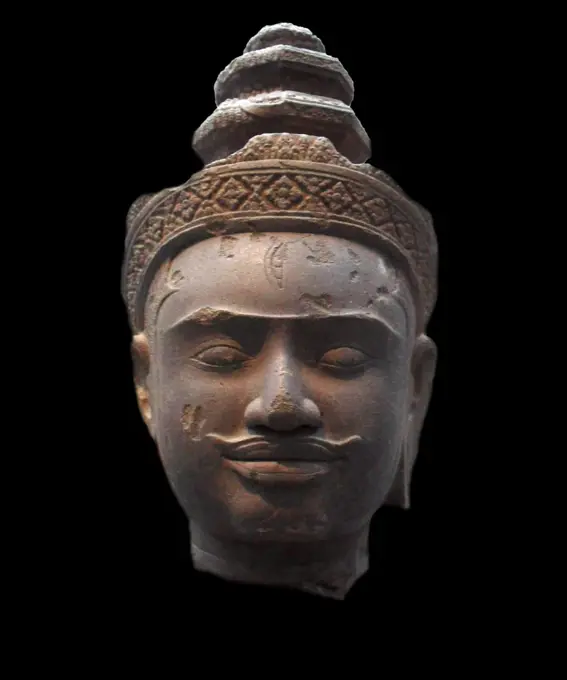
Figure of a Buddha, 1350-1767 (Ayutthia period), H.20-9/16 x W.16-1/2 x D.6-3/4 in., bronze, mother-of-pearl, Thailand, 14th - 18th century
259 assets in this story
6145-30165450
Bishamon 1001-1100 Japan. Earlier sculptures of this type were usually made from clay and lacquer, like the Chinese versions that inspired them. This example reflects a shift to carving in wood that took place in the Heian period (794ñ1185). The carving hints at the deityís strong body beneath his armor, which still bears the traces of elaborate decoration patterns of dragons and flowers in gold and bright colors.This figure represents Bishamon, the chief of the four guardian devas (or shitenn) who protect the four cardinal directions in a Buddhist sanctuary. Originally an Indian folk deity, and later adopted by Buddhism, Bishamon was believed to ward off harmful influences from the north. The sculpture once held a miniature reliquary in his left hand and a spear in his right, symbolizing his duty to defend Buddhist law.. Wood with traces of polychromy .
1746-19664478
10th Century sculpture of the Hindu God Brahma. Sandstone from Cambodia, Wat Baset (temple)
1525-22231387
Golden wooden Buddha statue from Myanmar against yellow wall.
6145-29814796
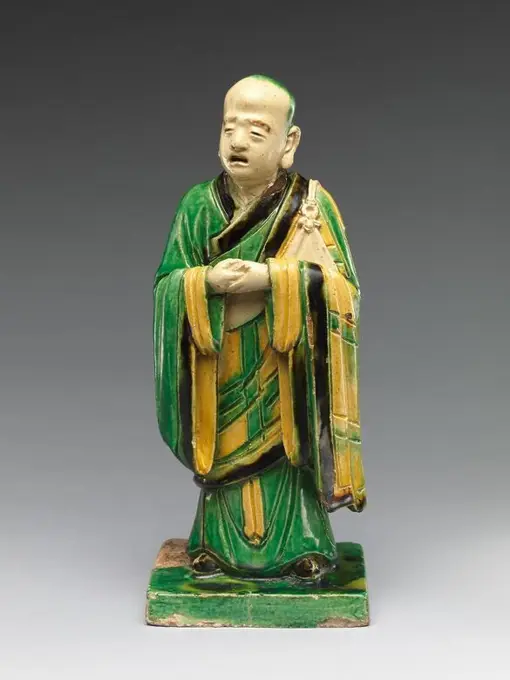
Daoist divine official dated 1482 Qiao Bin Chinese This figure of a Daoist deity is embellished with low-fired lead glaze colors typical of Ming religious ceramic sculptures made in Shanxi Province. An inscription on the back indicates that a certain Daoist priest ordered three sets of sculptures for his monastery in the Tiantan Mountains of Shanxi. Chief among these was a set of the Three Divine Officials (sanguan), Daoist deities who preside over heaven, earth, and water, respectively. The clothing on this sculpture helps to identify it as one of the three officials, though which one is uncertain.. Daoist divine official 50549
4286R-12959
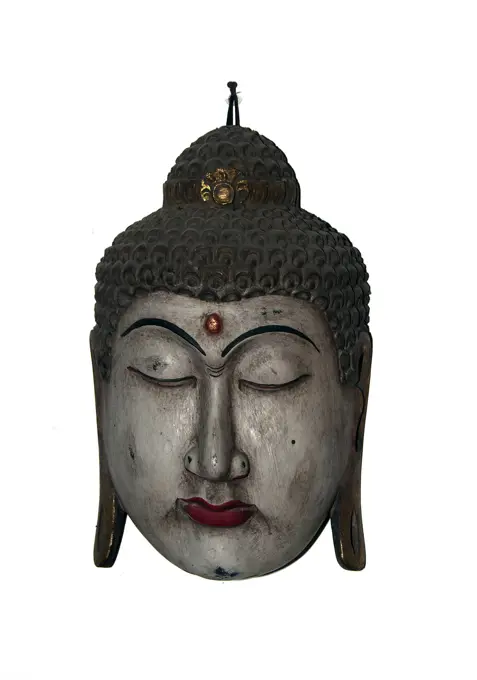
Buddha head on bright white background with shadow
6145-29823138
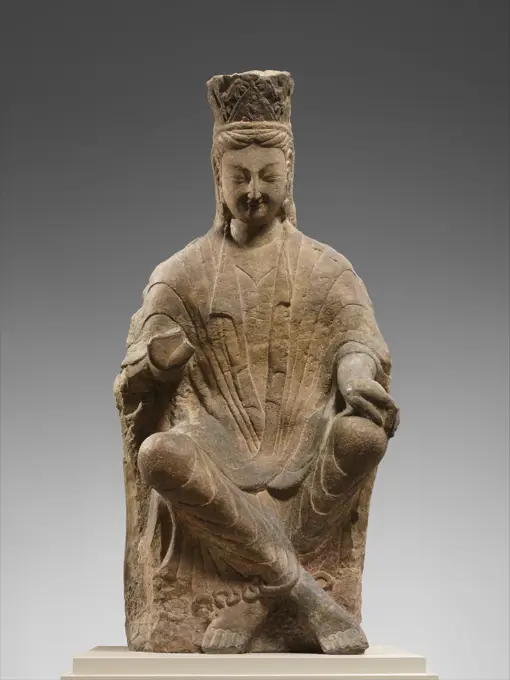
Bodhisattva (Maitreya) with crossed ankles ca. 470-80 China Listen to experts illuminate this artwork's story Listen Play or pause #7320. Bodhisattva, probably Avalokiteshvara (Guanyin) with Crossed Ankles Supported by Bloomberg Philanthropies We're sorry, the transcript for this audio track is not available at this time. We are working to make it available as soon as possible.. Bodhisattva (Maitreya) with crossed ankles 42711
1899-18721016
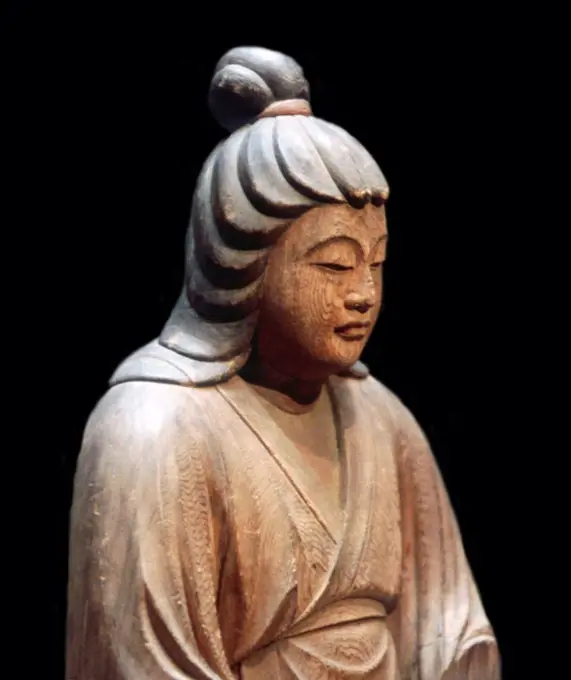
Wood carving of Empress Jingu dated 1326, Hatimangu Shrine, Shimane prefecture. Consort to Emperor Chuai, she also served as Regent from the time of her husband's death in 209 until her son Emperor Ojin acceded to the throne in 269. No firm dates can be assigned to this historical figure's life or reign. Jingu is regarded by historians as a 'legendary' figure because of the paucity of information about her. Legend has it that she led an army in an invasion of Korea and returned to Japan victorious after three years. However, this theory is widely rejected even in Japan as there is no evidence of Japanese rule in any part of Korea. Some believe that Empress Jingu's conquest is only based on the Gwanggaeto Stele (in Jilin, China). But the legend of Jingu's invasion of the Korean peninsula also appears in the ancient Japanese chronicles Kojiki written in 680 and Nihon Shoki written in 720.
6243-72050517
Sitatara Bodhisattva from Tibet (circa 1500) Victoria and Albert Museum in central London in the United Kingdom.
1570R-124114
A praying gold Buddha statue with headphones on
6188-55509163
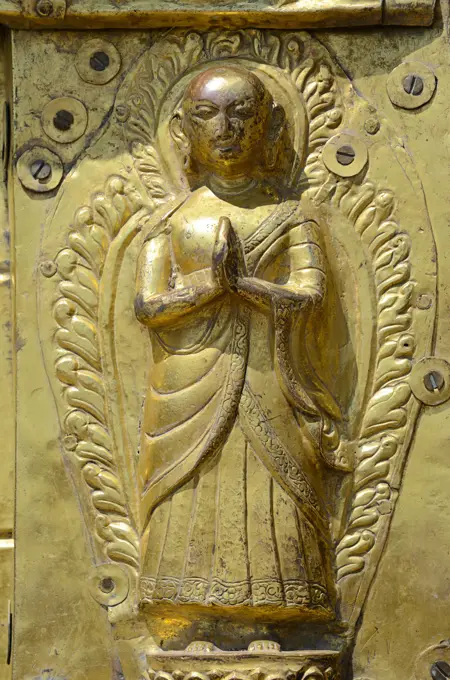
Golden statue Golden statue from Swayambhunath Stupa or Monkey Temple in Kathmandu Valley, Nepal Copyright: xZoonar.com/NatalliaxYaumenenkax 4440201
6145-29119526
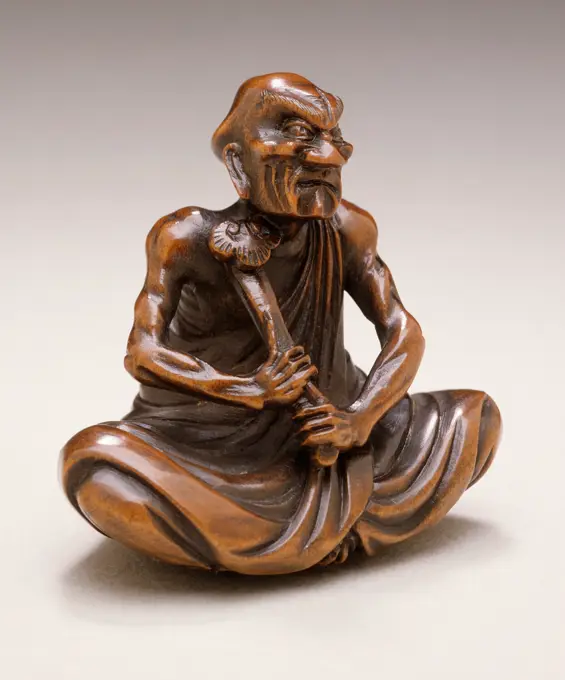
Daoist with Gourd. Japan, 18th century. Costumes; Accessories. Ivory with staining, sumi
6145-29810329
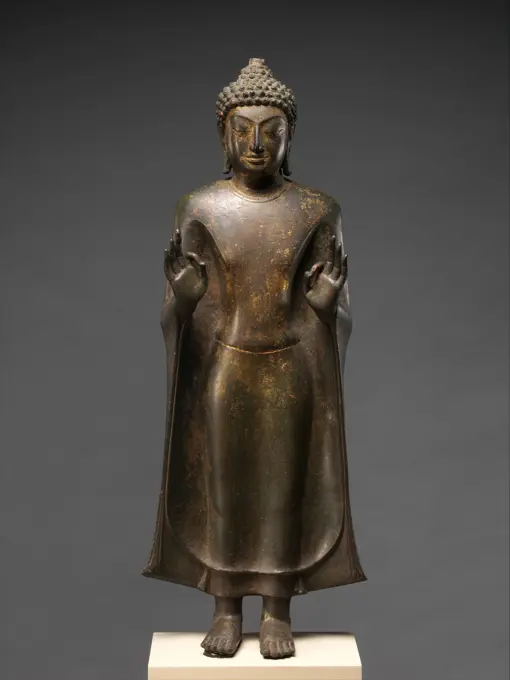
Standing Buddha 8th-9th century Thailand (Nakhon Pathom Province) Considerable innovations in religious iconography were developed during the Mon-Dvaravati period. For example, many Buddhas hold both of their hands in a gesture of exposition or teaching (vitarkamudra) that in India is confined to the right hand. Images from the related site of Prakhon Chai also exhibit this double hand gesture, but otherwise it is unknown in the Buddhist world. Another iconographic innovation was to place a standing Buddha and flanking attendants on the back of Garuda, a semidivine winged creature that usually appears as the vehicle (vahana) of Vishnu.. Standing Buddha. Thailand (Nakhon Pathom Province). 8th-9th century. Bronze with traces of gilt. Mon-Dvaravati period. Sculpture
4409-29043977
Virgen de Ger, siglo XII. Museu Nacional d'Art de Catalunya.
6145-29072803
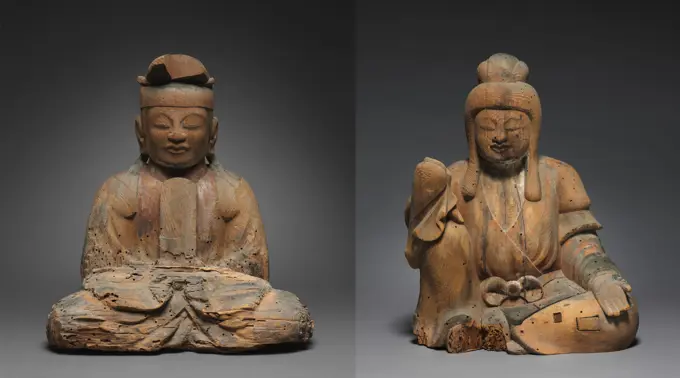
Shinto Deities, 900s. Japan, Heian period (794-1185). Wood, with traces of polychromy; overall: 50.3 x 38.1 cm (19 13/16 x 15 in.). These sculptures represent kami, the name for deities associated with the Japanese religious tradition known as Shinto. They are said to have originally been created for the Usa Hachiman shrine in Oita on the island of Kyushu. Usa Hachiman Shrine houses four main kami: Hime Okami, who assists those engaged in agriculture and sea travel; the legendary 5th-century emperor Ojin deified as the kami Hachiman; Empress Jingu; and the kami of Mount Kawara, who aids copper miners. The identities of these two figures are unknown, but they belong to a larger group containing at least three other deities.
4409-17379413
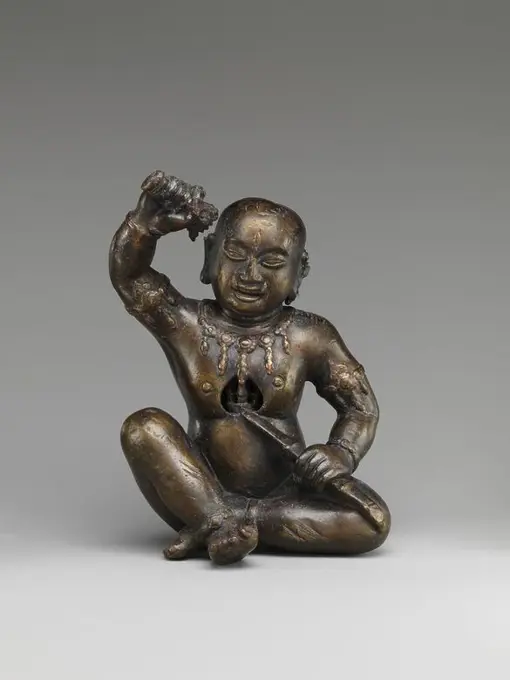
Esoteric Buddhist Personage. Culture: Nepal (Kathmandu Valley). Dimensions: H. 6 3/8 in. (16.2 cm); W. 4 3/8 in. (11.1 cm). Date: 15th century.This wrathful Tantric Buddhist personage, with a shaved head, a vertical third eye, and upward-pointing fangs, is unidentified. His jewelry derives from eastern Indian prototypes of the Pala period (9th-12th century). He points a single-pronged thunderbolt scepter (vajra) toward a heart-shaped cavity at the center of his chest, itself occupied by a multipronged vajra. In his raised hand he holds a sword pommel with a guard in the shape of a lion's head. Museum: Metropolitan Museum of Art, New York, USA.
4409-17381609
Standing Buddha. Culture: Korea. Dimensions: H. 6 3/4 in. (17.1 cm). Date: 8th century.The gilt-bronze statue is a typical small icon made for private devotion in the Unified Silla kingdom and exemplifies a high point in the production of Buddhist sculpture in Korea. The Buddha's hand gesture (mudra) symbolizes the dispelling of fear and the granting of wishes. Museum: Metropolitan Museum of Art, New York, USA.
4409-17413967
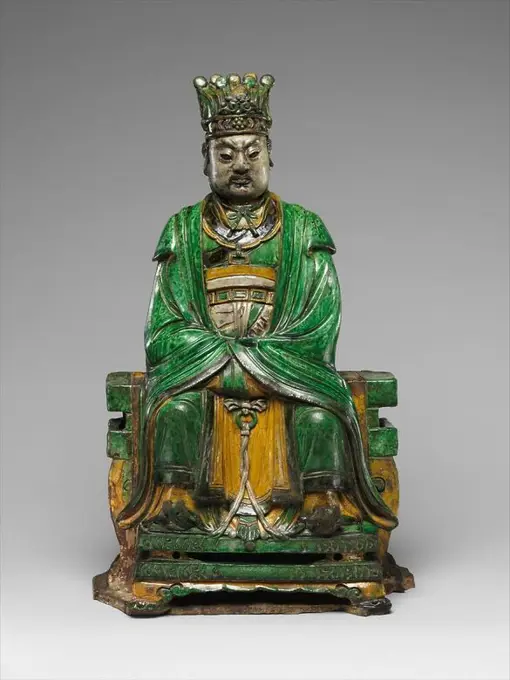
Daoist Deity, probably Heavenly Marshal Zhao (Zhao Gong Ming). Artist: Qiao Bin (Chinese, active 1481-1507). Culture: China. Dimensions: H. 23 3/4 in. (60.3 cm); W. 15 in. (38.1 cm); D. 8 3/8 in. (21.3 cm). Date: dated 1482.This figure of a Daoist deity is embellished with low-fired lead glazes in yellow, green, black, and white that are typical for Ming-dynasty (1368-1644) Daoist and Buddhist ceramic sculptures. The figure probably represents the Heavenly Marshal Zhao (Zhao Gong Ming), a popular local god of wealth who was absorbed into the Daoist pantheon. An inscription on the back that dates the piece to 1482 states that the commissioner Li Daoming, Daoist devotee of the Quanzhen sect, ordered a set of "Guan and Zhao" figures, which suggests that this sculpture was one of a pair. Museum: Metropolitan Museum of Art, New York, USA.
1746-19675080
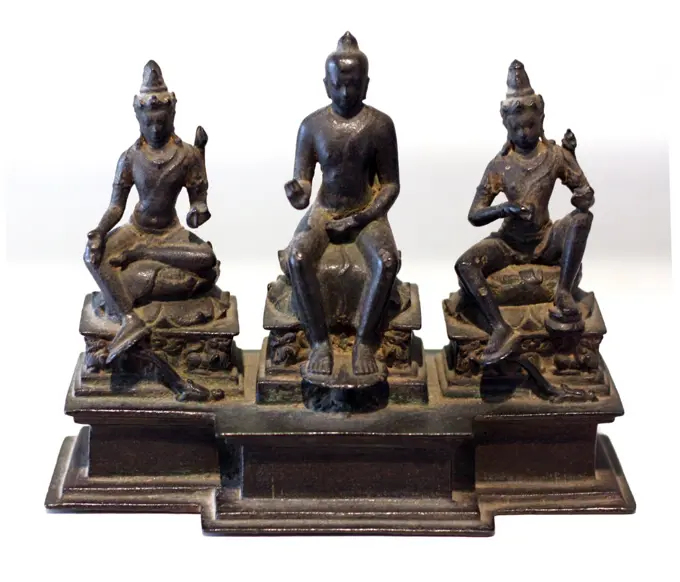
The Buddha between two bodhisattvas. Bronze sculpture Javan circa 900 AD
6145-59083841
Bodhisattwa Guanyin;  18th century (1701-00-00-1800-00-00);
6145-52952709
Seated Female Esoteric Buddhist Deity Indonesia (Java) ca. mid-10th century View more. Seated Female Esoteric Buddhist Deity. Indonesia (Java). ca. mid-10th century. Bronze. late Central or early Eastern Javanese period. Metalwork
6145-58825314
Head of a Buddha image, anonymous, 1600 - 1699 Fragment (head) of Buddha with crown. Thailand bronze (metal) Fragment (head) of Buddha with crown. Thailand bronze (metal)
6145-43663059
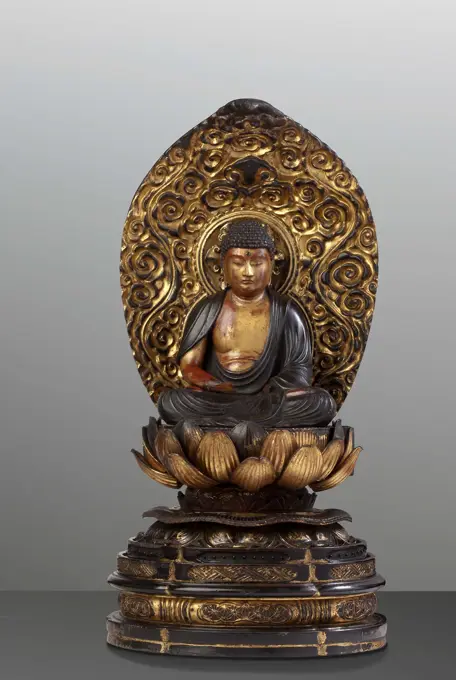
Amida, the Buddha of Infinite Light (Amida nyorai). unknown, author
6145-29807308
Seated Buddha in Cross-Legged Position 10th century Sri Lanka. Seated Buddha in Cross-Legged Position 39125
1746-30019411
Painted stone statue of the Bodhidharma. Bodhidharma was a semi-legendary Buddhist monk who lived during the 5th or 6th century. He is traditionally credited as the transmitter of Buddhism to China, and regarded as its first Chinese patriarch.
4409-17371701
Fudo Myoo in Portable Shrine. Culture: Japan. Dimensions: H. 1 7/8 in. (4.8 cm)H. of portable shrine: 4 in. (10.1 cm). Date: 18th century.Portable shrines containing diminutive Buddhist sculptures are frequently used as personal devotional icons. This statue of the King of Brightness Fudo the "Immovable" was once owned by the famous grand champion (yokozuna) sumo wrestler Hitachiyama Taniemon (1874-1922), who toured the United States and Europe in 1907-8. He fought a wrestling match in New York, at which time he presented the Museum with this shrine. Fudo would have been a deity with whom a powerful wrestler could identify, for his role within Japanese Esoteric Buddhism is to use his superior strength to fight the evil and ignorance that are obstacles to enlightenment. Museum: Metropolitan Museum of Art, New York, USA.
4409-17582838
'Buddha in the Palileyaka Woods'. Siam (now Thailand). Bangkok art, Second half of the 19th century. Dimensions: h. 15,5 cm. Museum: State Hermitage, St. Petersburg.
6145-46399990
Fragment of a Buddha image. Cup of Buddha with crown.
1746-21111523
Birch wood carving of Saint Bishop from Saint-Bertrand-de-Comminges. Dated 14th Century
6176-67050538
Stone head of Buddha, Gupta, India, 5th century. Artist: Unknown
4409-17420084
Standing Buddha Shakyamuni. Culture: Indonesia (Java). Dimensions: H. 7 11/16 in. (19.5 cm). Date: 9th century. Museum: Metropolitan Museum of Art, New York, USA.
1558-13913729
Thailand, Bangkok, Bangkok National Museum, 15th century Buddha Head
6145-29779405
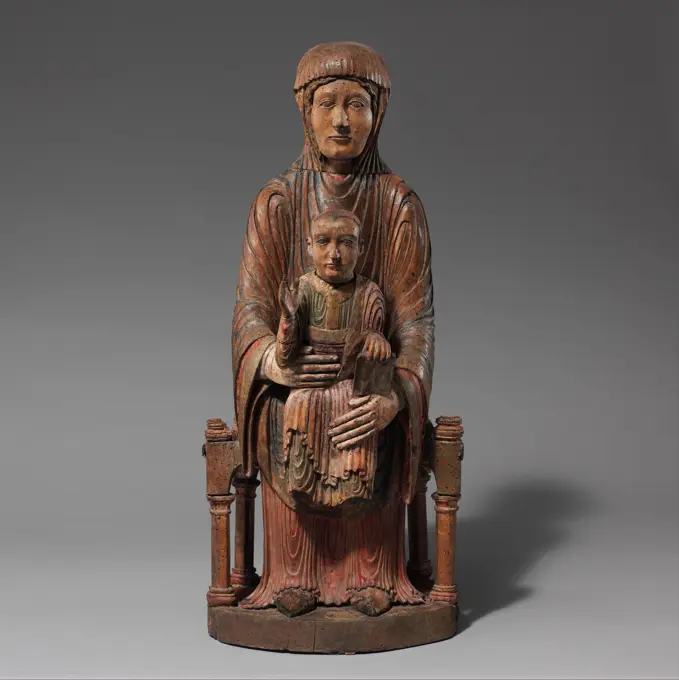
Enthroned Virgin and Child 1150-1200 French The stark and rhythmic lines of this sculpture are almost modern in their effect. In fact, this seemingly straightforward image of the infant Jesus seated rigidly on the Virgins lap represents a complex, medieval theological notion known as a Sedes Sapientiae (Throne of Wisdom), in which Mary serves as a throne for Christ, who in turn embodies divine wisdom. Placed on an altar, this imposing group was an object of veneration that could also be carried in procession or incorporated into a theatrical performance within a church. A circular cavity in the Virgins left shoulder suggests that the sculpture contained a relic. Recent conservation treatment has revealed remains of the original painted and applied metal decoration. A Virgin and Child (16.32.194) probably by the same artist is on view in the Main Building of The Metropolitan Museum of Art. Listen to experts illuminate this artwork's story Listen Play or pause #12. Enthroned Virgin and
6145-29727105
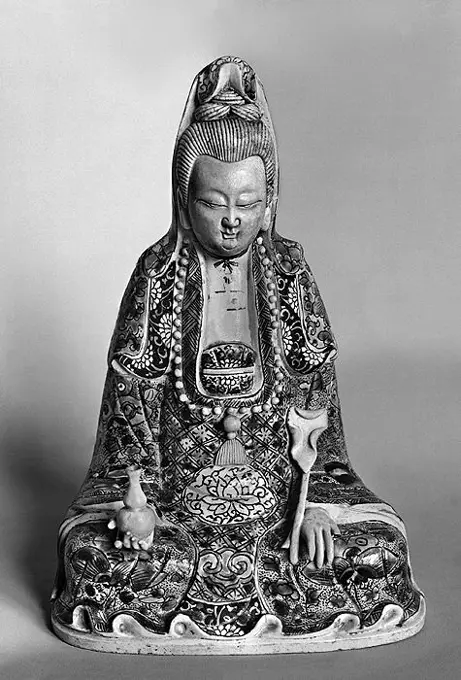
Figure of bodhisattva Guanyin 19th century China. Figure of bodhisattva Guanyin 47849
4443-28736744
The Monk Ananda, 9th century, 64 11/16 x 16 x 8 3/4in. (164.3 x 40.6 x 22.2cm), Limestone, China, 9th century, Ananda was a cousin to the Buddha and one of his major disciples. Usually credited with being the most attentive among the Buddhas ten principal followers, Ananda devoted himself to the Buddha as a personal attendant and, after the Buddhas death recited all of his teachings word-for-word so they could be recorded in writing. In this Chinese imagining of Ananda, he appears as a monk, identifiable by his shaved head and monastic robes. That the figure leans slightly left is an indication that it was originally the right figure in a triad made up of the Buddha and two disciples, Ananda and Kashyapa.
4409-17435055
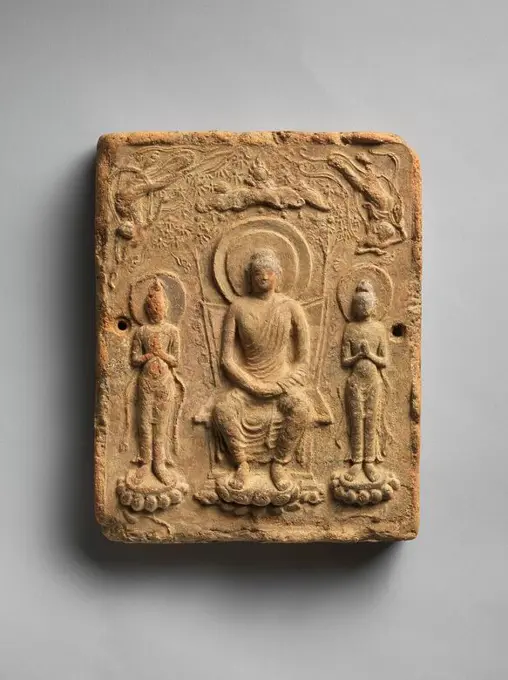
Clay Relief Tile with Buddhist Triad (Sanzon senbutsu). Culture: Japan. Dimensions: H. 9 5/8 in. (24.5 cm); W. 7 3/4 in. (19.7 cm); D. 1 1/2 in. (3.8 cm). Date: second half of the 7th century.Clay relief tiles with figures of the Buddha, known as senbutsu, were made for only a short period of time, between the second half of the seventh and the early eighth century. Here, the Buddha sits beneath a canopy with two (unidentifiable) attendant bodhisattvas in front of the sacred bodhi tree. This example is believed to have been an interior wall decoration at Tachibanadera Temple in Asuka, near the ancient capital of Nara. Museum: Metropolitan Museum of Art, New York, USA.
6145-29125037
Milarepa (1040-1123)
6188-63874895
bali masks mask from the indonesian island Bali Copyright: xZoonar.com/chrisxwilllemsenx 6598581
1525-21232782
gold statue
1890-162528
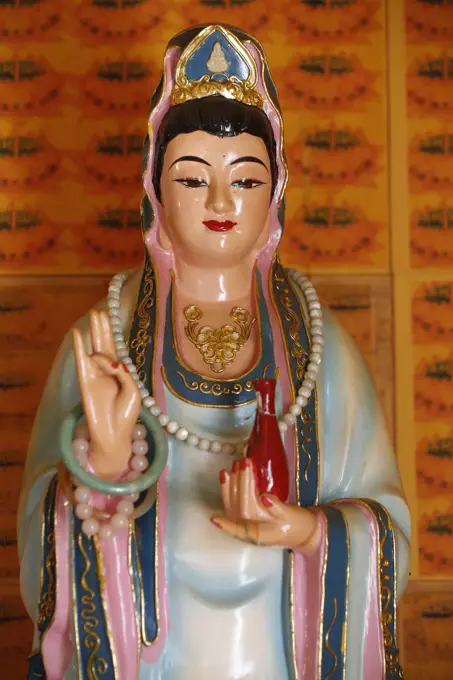
Quan Am, the Bodhisattva of Compassion (Goddess of Mercy), Tu An Buddhist temple, St. Pierre-en-Faucigny, Haute-Savoie, France, Europe
1746-19628258
Buddha. Stone statue from Gandhara. 2nd century AD. Delhi Museum
4409-28797628
Bodhisattva Guanyin, devotional painted wooden figure, Jin dynasty, 1115-1234, Shanxi, British museum, London, England, Great Britain.
4409-17372271
Parinirvana (Extinction of the Buddha) and Attendant. Artist: Qiao Bin (Chinese, active 1481-1507). Culture: China. Dimensions: H. 11 1/2 in. (29.2 cm); W. 4 5/8 in. (11.7 cm); D. 4 3/4 in. (12.1 cm). Date: dated 1503.According to the inscription on the back and sides of the couch on which the Buddha reclines, this depiction of the ultimate extinction of the historical Buddha was created as a private act of devotion and was originally part of a larger assemblage of figures: "In the sixteenth year of the Hongzhi reign era of the Great Ming dynasty 1503, the chan monk Huitai from Pantingshan, Xiyan, fulfilled his desire and commissioned on sleeping Buddha, one Shakyamuni, one Maitreya, one Kshitigarbha, one Avalokitshvara, and seven lofty monks. Made by Qiao given name illegible from Dongguan of our country." Based on other inscribed sculptures of this type, this set can be identified as coming from the Qiao family workshop in Yangcheng, Shanxi Province. Museum: Metropolitan Museum
255-20232938
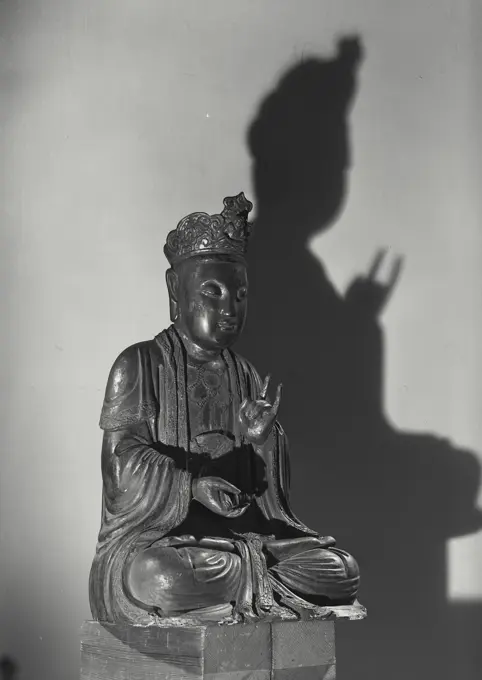
Asian statue turned slightly to side with harsh shadow behind on wall from light below
1439R-1073373
Buddha ornament
6145-29833427
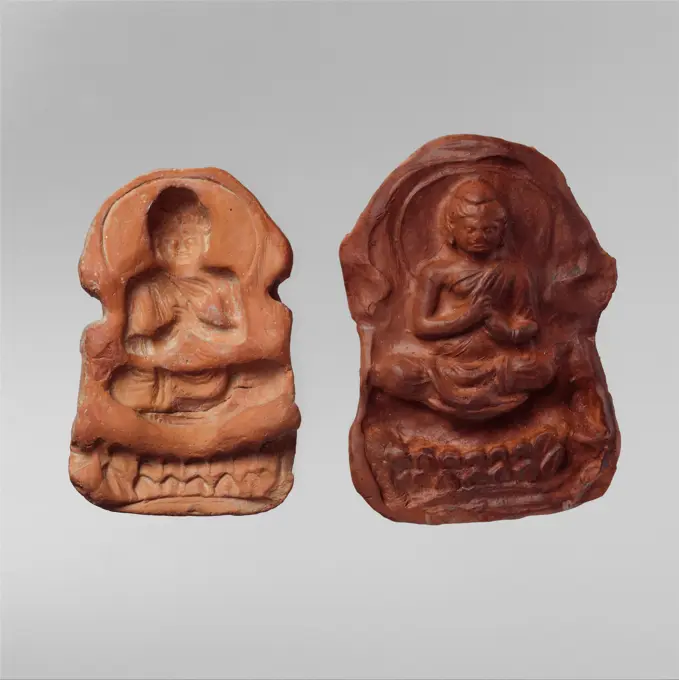
Mold and Impression for a Seated Buddha 5th-7th century Pakistan (ancient region of Gandhara). Mold and Impression for a Seated Buddha 38651
6145-59657656
Image of Buddha in BhumisParsamudra from a niche on the east wall of the Borobudur., 1873 photograph  Java (possibly) paper. photographic support. cardboard albumen print
6188-68089515
THAILAND PHITSANULOK WAT PHRA SI RATTANA MAHATHAT one of the Buddha at Wat Phra Si Rattana Mahathat in the city of Phitsanulok in Thailand. Thailand, Phitsanulok, November, 29, 2024. LicenseRF Copyright: xZoonar.com/URSxFLUEELERx 23166397
6145-29161455
Chinese child with musical instrument 1760 Japan. Chinese child with musical instrument 52462
1525-22200999
Buddha
6145-45659506
Image of one of the two king sons in the temple Mendoet south of Magelang, Dutch East Indies.; 75. Mendooet. Image of one of the two king's sons in the temple Mendoet south of Magelang, Dutch East Indies
6145-29728340
Jurjin, God of Longevity and Wisdom late 19th century Japan. Jurjin, God of Longevity and Wisdom. Japan. late 19th century. Ivory. Sculpture
1525-23947464
Buddha statue standing isolated on white background. Buddhism religion Concept.
6145-29119301
Rakan: A Principle Disciple of the Buddha. Hōshunsai Masayuki (style of) (Japan, active mid- to late 19th century). Japan, mid- to late 19th century. Costumes; Accessories. Wood
6145-29159156
Head of the Buddha late 18th-19th century Thai. Head of the Buddha 460394
6145-46358494
Staff from a standing Chinese kinkpop (man). Staff Horry at a kinkpop in the shape of a Chinese dignity.
6145-46358495
Right hand of a standing Chinese kinkpop (man). Right hand of a kinkpop. Together with a head, body, left hand and a staff, form a Chinese high-quality.
6145-29154118
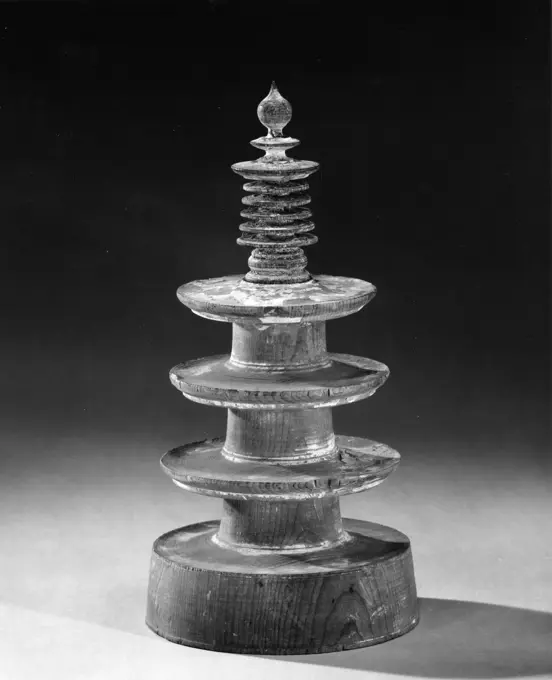
One of the One Million Pagodas” (Hyakumanto) and Invocation ca. 764-70 Japan This miniature wooden pagoda (t?) is one of one million (hyakuman) commissioned by the Empress Sh?toku (718-770) and distributed to Japan’s ten major temples. It originally was created to commemorate and offer thanks to Buddhist deities for their help in suppressing the Emi Rebellion in 764. This example belonged to the temple H?ry?ji in Nara, where three thousand of the one million pagodas were given away in 1908 to those contributing to an appeal for funds. Each pagoda was painted white and contained a printed Buddhist text called a darani (Sanskrit: dharani), or invocation. The text displayed here came from the pagoda on known as the Jishin’in darani, the invocation is one of four from the sacred text Mukuj?k?ky? (Sanskrit: Vimala Mirbhasa Sutra) found in the pagodas. These printed texts are among the oldest known in the world. They are likely to have been printed from bronze plates, but some scholars main
6145-46079514
Room with four Buddha statues on pedestals; Exhibition Borobudur: art and religion in the old Java. .
1899-18791661
The 14th Dalai Lama (Religious name: Tenzin Gyatso, shortened from Jetsun Jamphel Ngawang Lobsang Yeshe Tenzin Gyatso, born Lhamo Dondrub, 6 July 1935) is the 14th and current Dalai Lama. Dalai Lamas are the most influential figure in the Gelugpa lineage of Tibetan Buddhism, although the 14th has consolidated control over the other lineages in recent years. He won the Nobel Peace Prize in 1989, and is also well known for his lifelong advocacy for Tibetans inside and outside Tibet. Tibetans traditionally believe him to be the reincarnation of his predecessors and a manifestation of the Buddha of Compassion. The Dalai Lama was born in Taktser, Qinghai and was selected as the rebirth of the 13th Dalai Lama two years later, although he was only formally recognized as the 14th on 17 November 1950, at the age of 15. He inherited control over a government controlling an area roughly corresponding to the Tibet Autonomous Region just as the nascent People's Republic of China wished to reassert
PREVIOUS
of 3
NEXT
2401 S. Ervay, Suite 206
Dallas, Texas 75215
United States
Get Started
Free ResearchMy BoardsMy Cart
For Creators
How To License Your ContentContributor PortalFrame of Mind
Resources
API accessPricing
Contact
+1 866 236 0087help@viewpictures.co.uk Contact form
©2026 View Pictures. All Rights Reserved. -A
This site is protected by reCAPTCHA and Google Privacy Policy and Terms of Service apply.