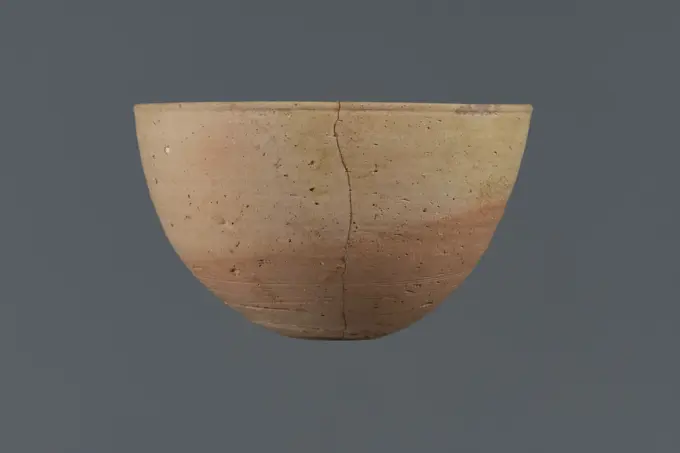
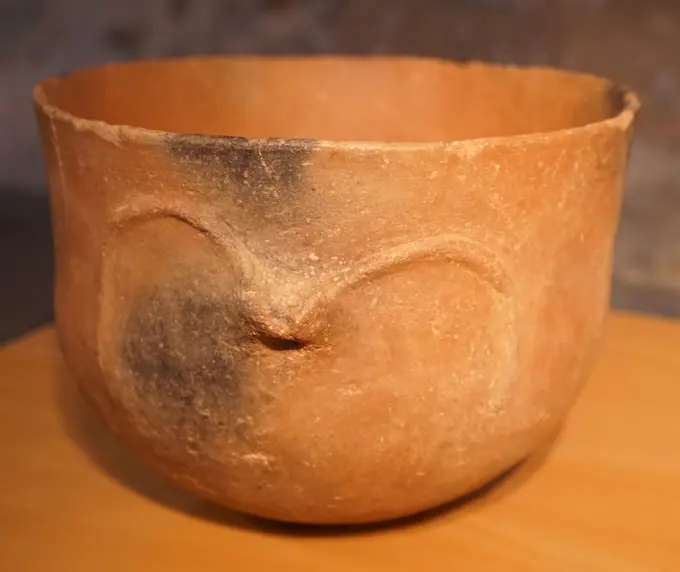
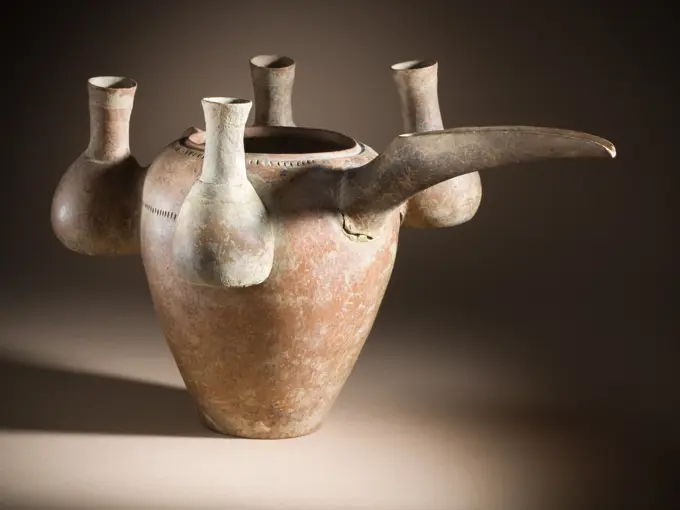
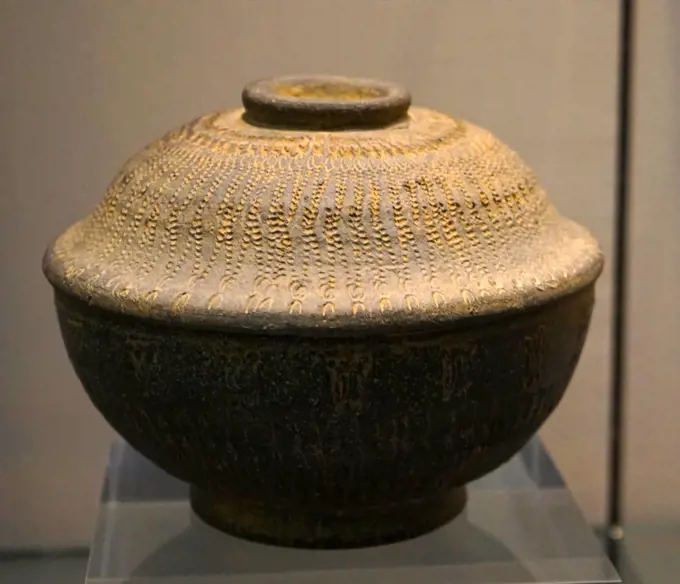
Ceramic Pottery

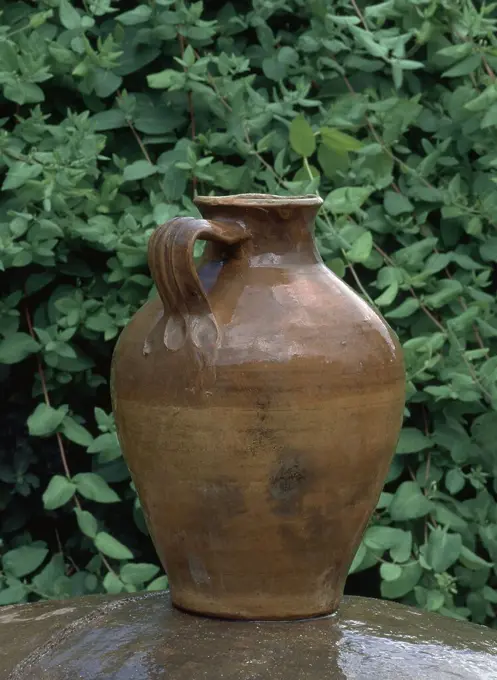
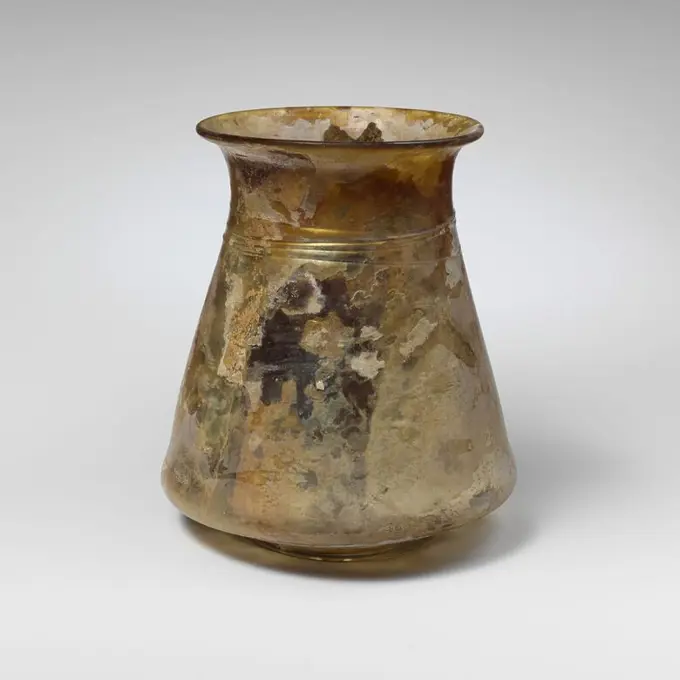
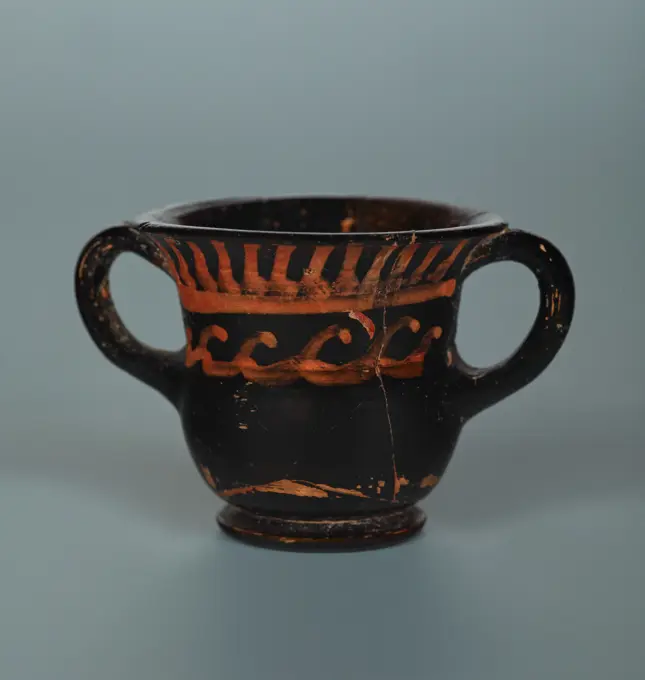
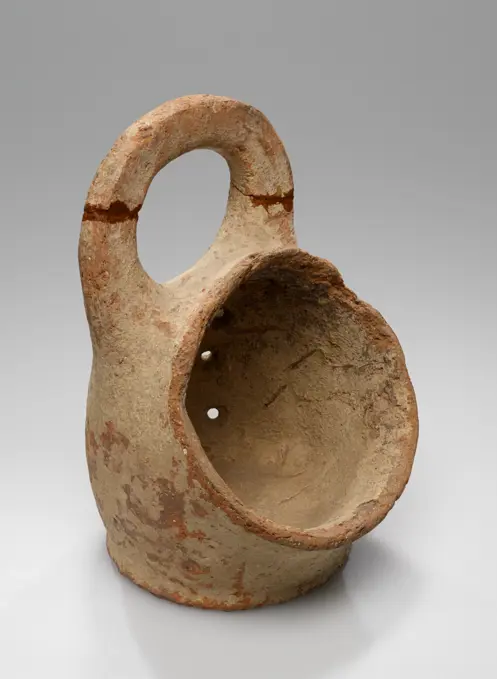
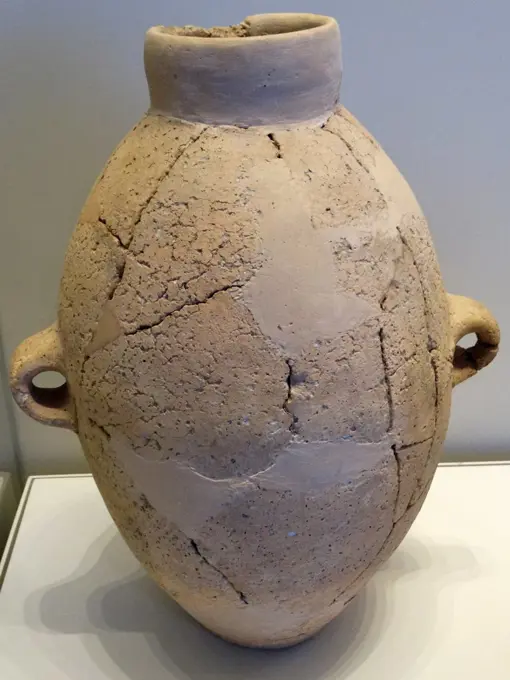
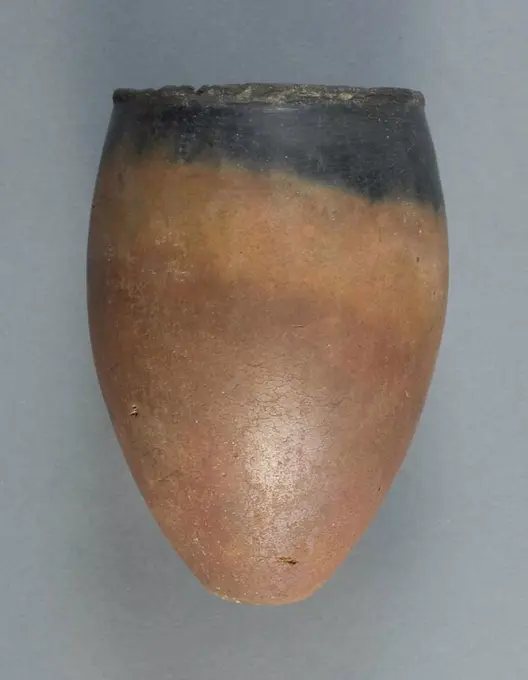
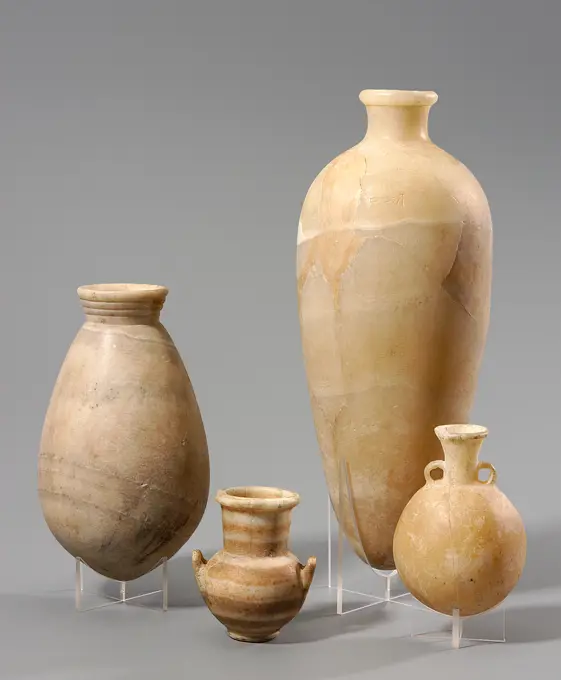
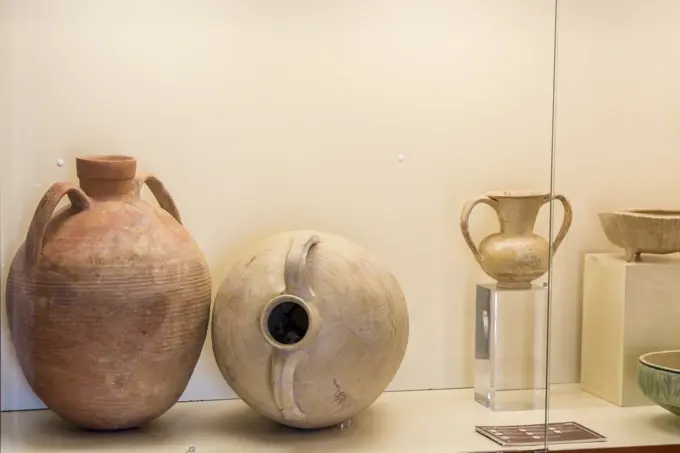
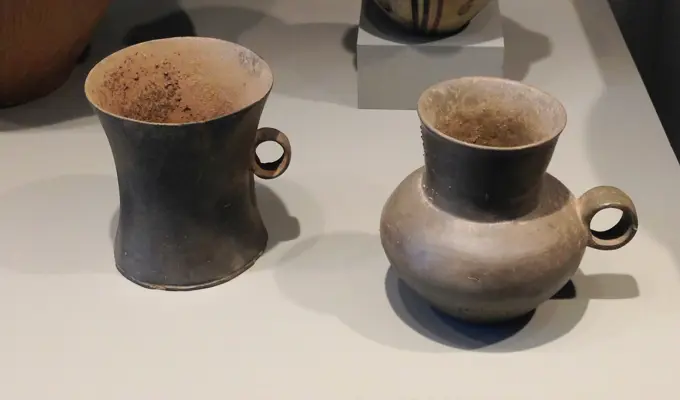
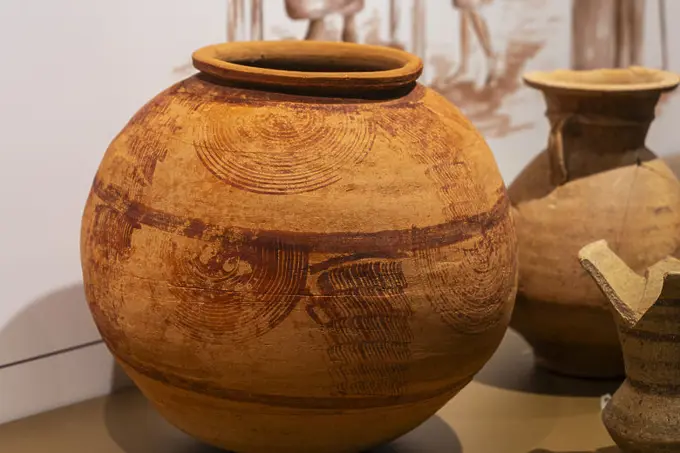
An array of antique ceramic pottery, including jugs and cooking pots, featuring distinct shapes and historical designs from various cultures.
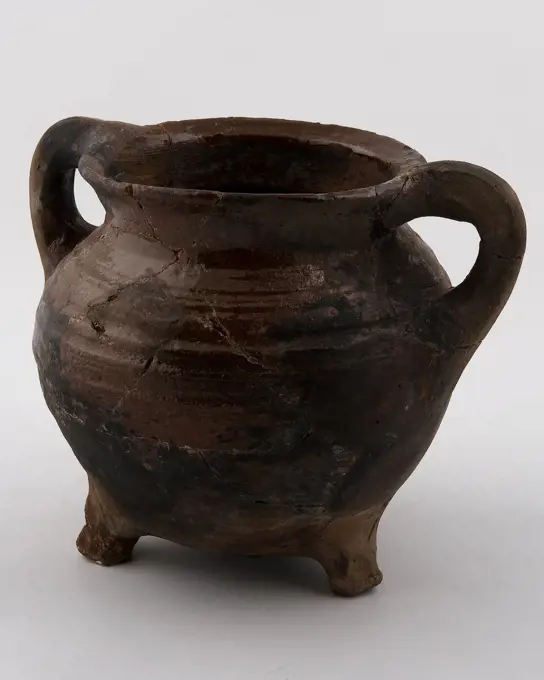
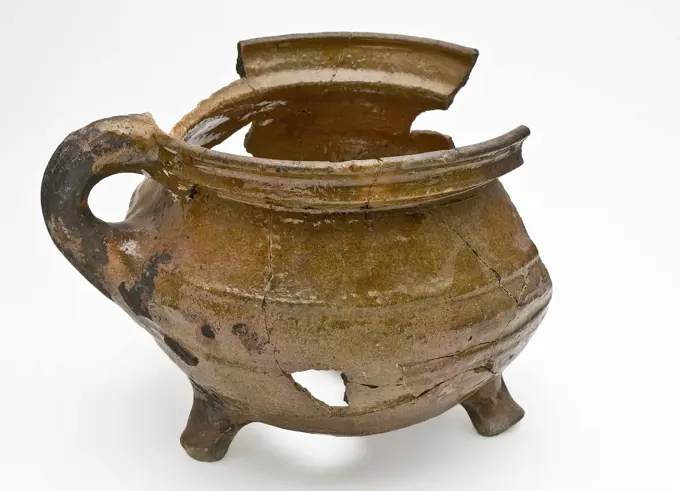
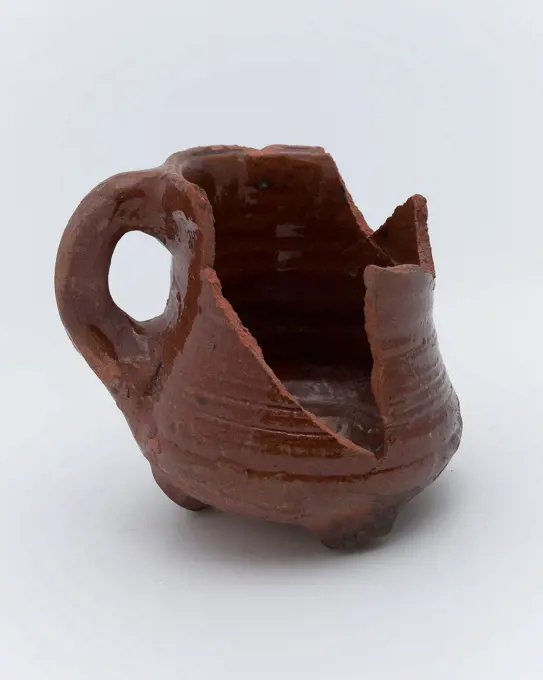
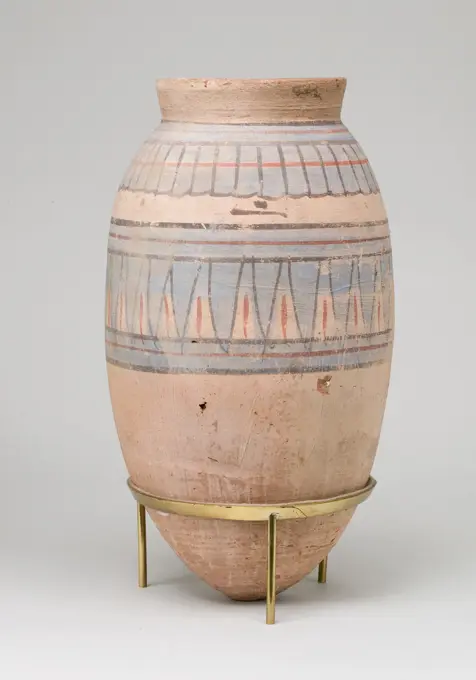
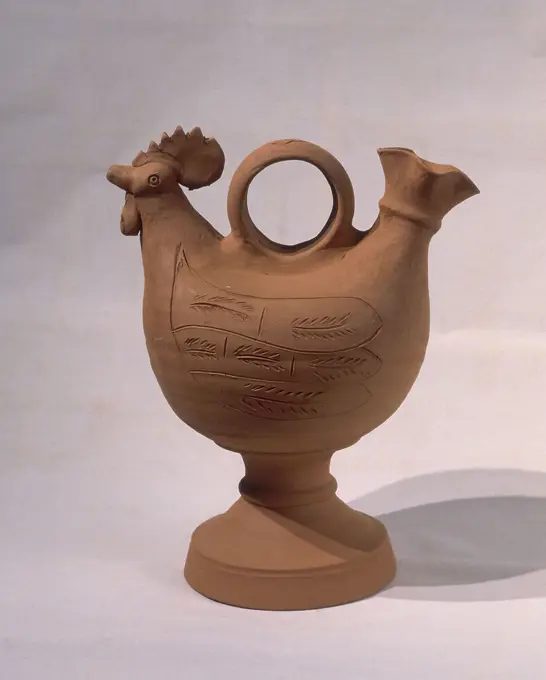
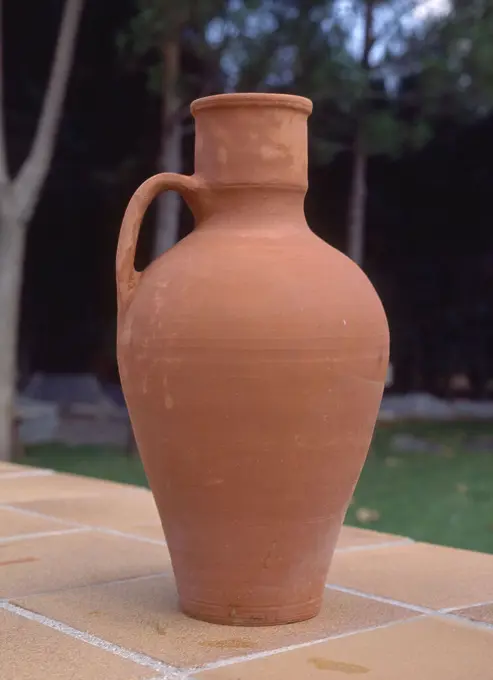
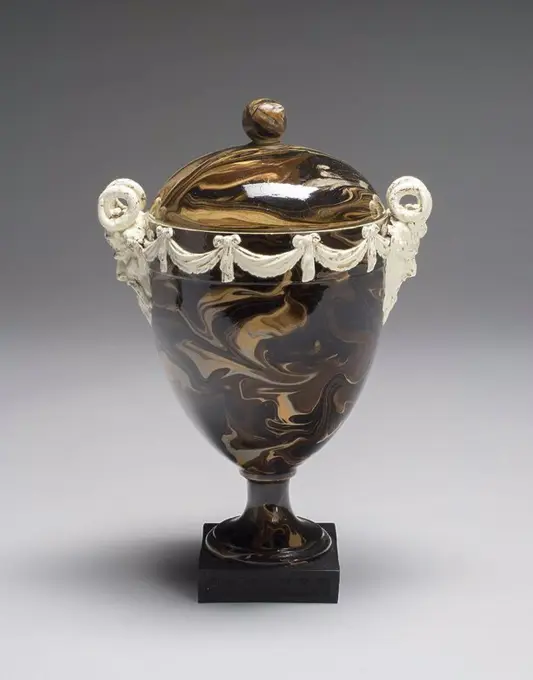
Pottery cooking pot, grape with two sausage ears, on three legs, sparingly glazed, grape cooking pot crockery holder kitchen utensils earthenware ceramics earthenware glaze lead glaze, hand-turned glazed baked Red shard brown-green glaze on shoulder. Black spots Two ears neck with slanting top edge rotations on shoulder on which lead glaze archeology underground pit Rotterdam City Center Stadsdriehoek Groenendaal indigenous pottery food preparation cooking kitchen Soil discovery: underground pit Groenendaal first 50 meters from well 1975-09-11.
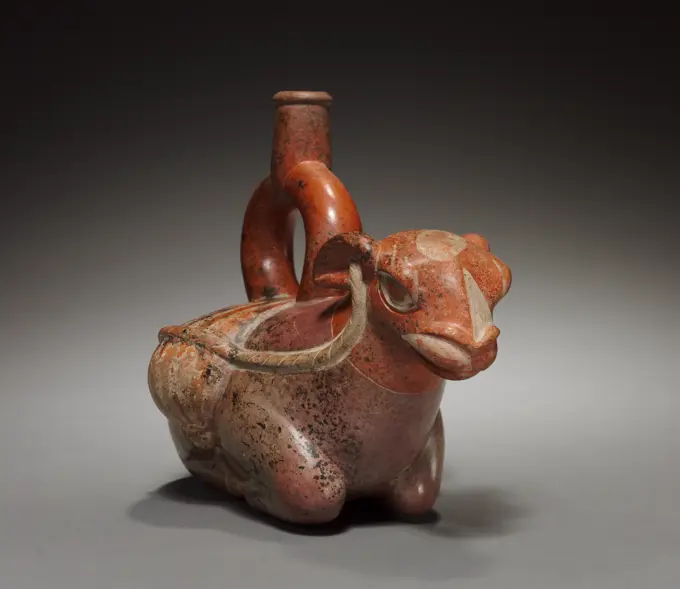
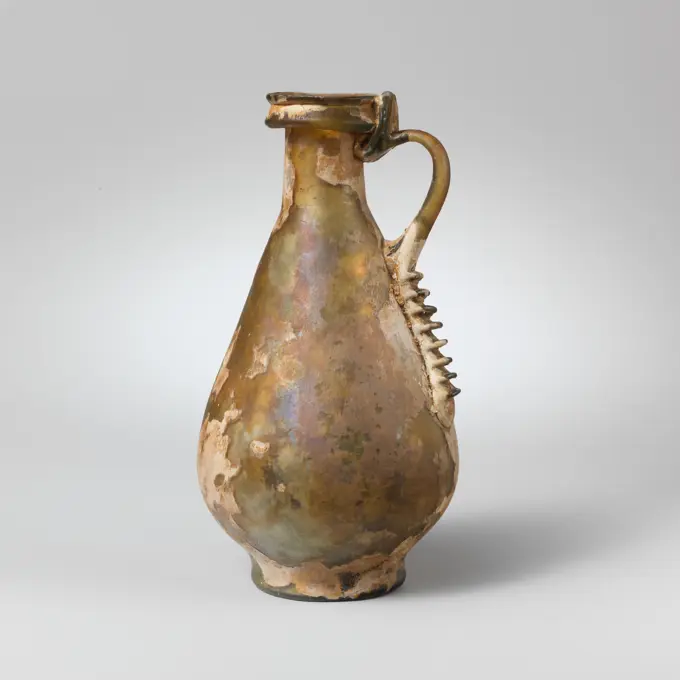
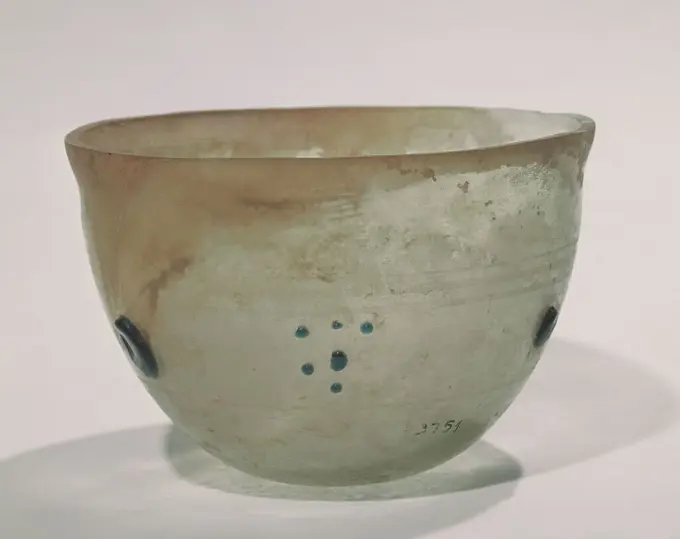
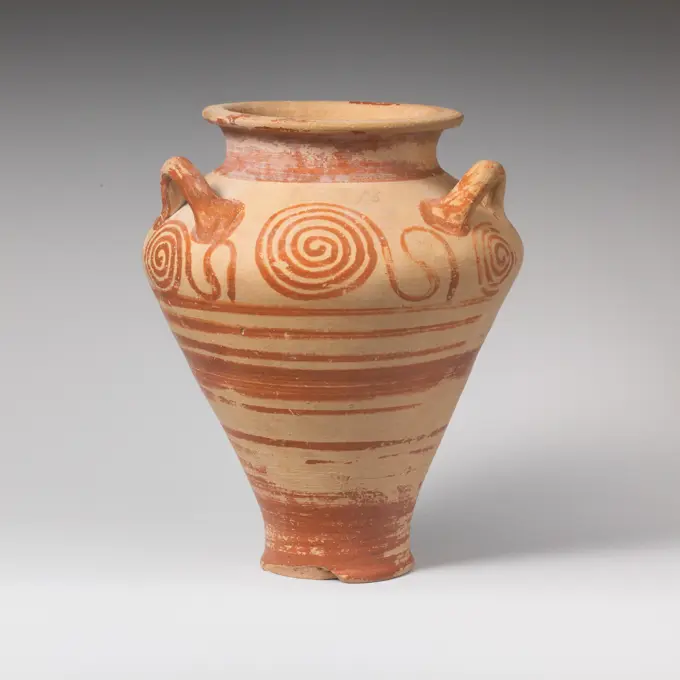
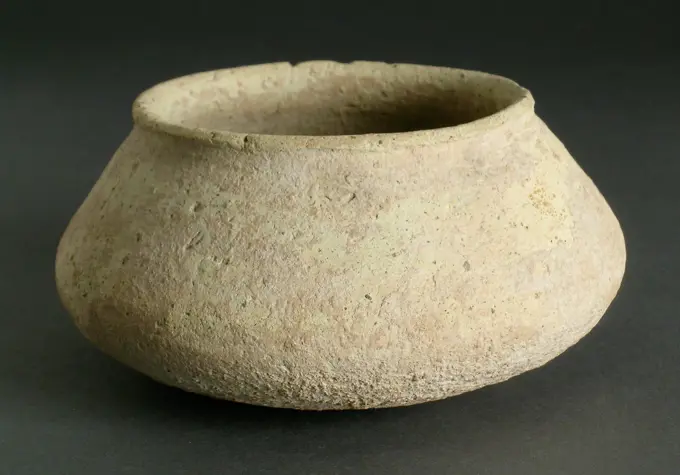
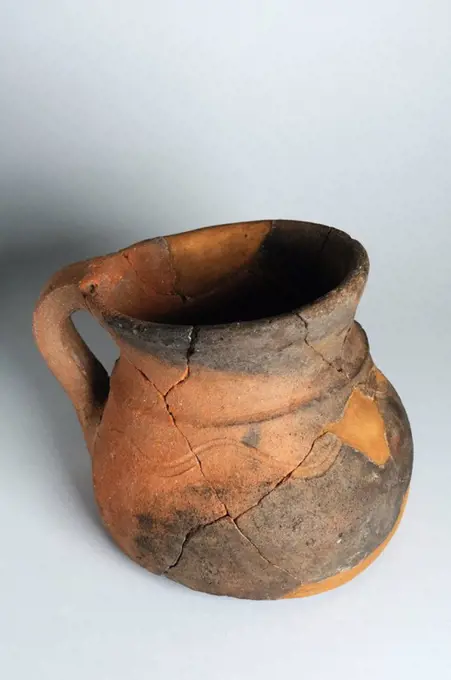
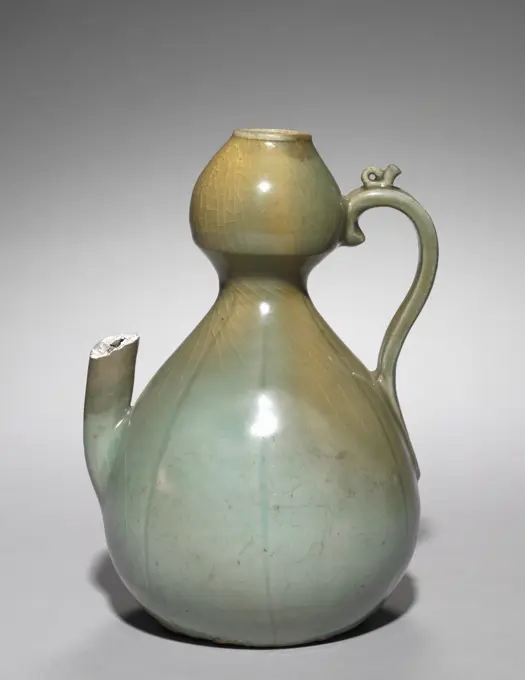
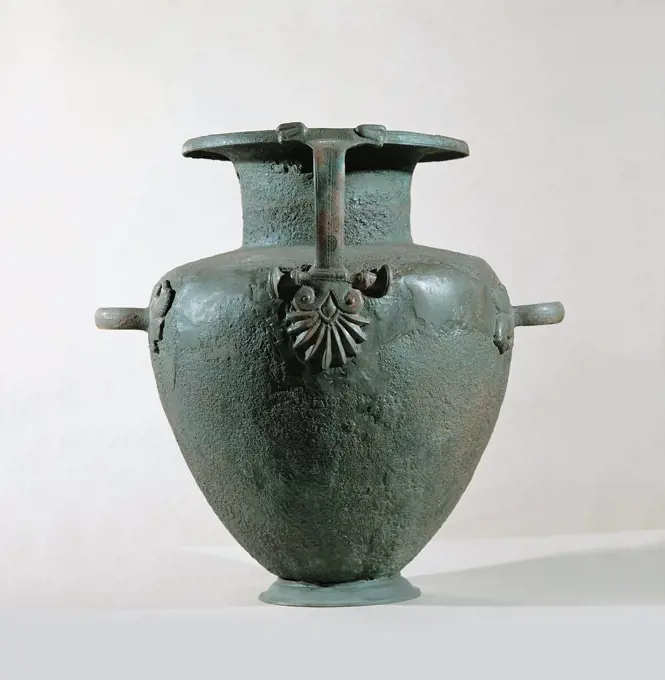
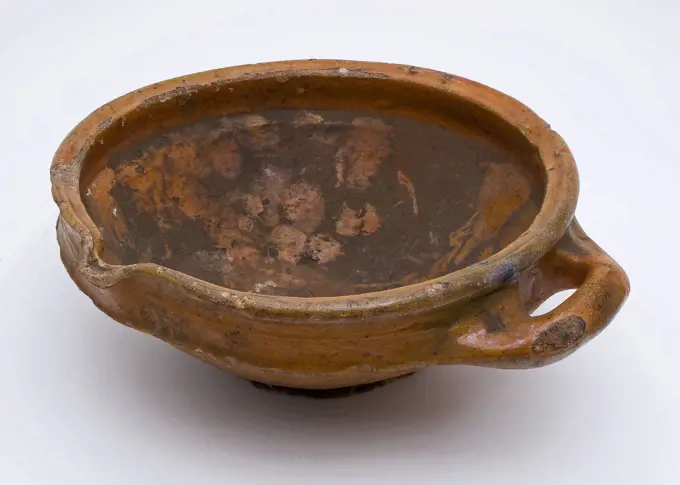
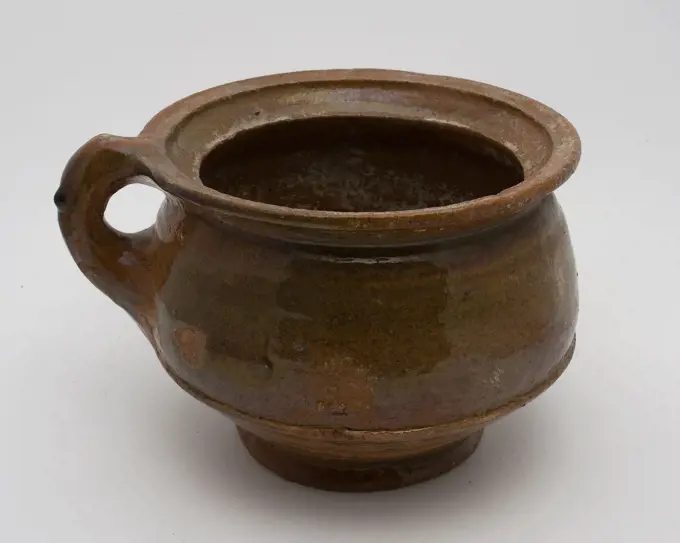
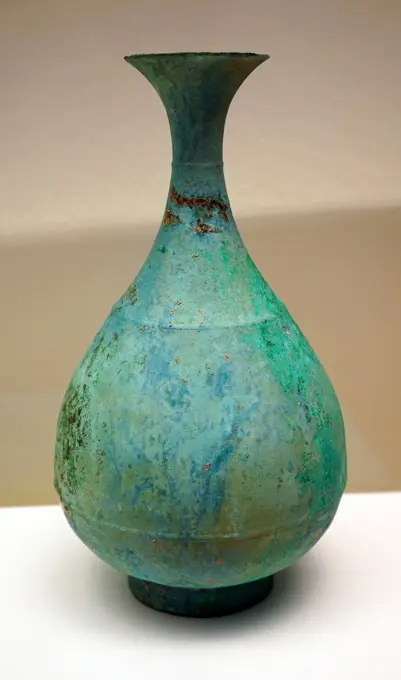
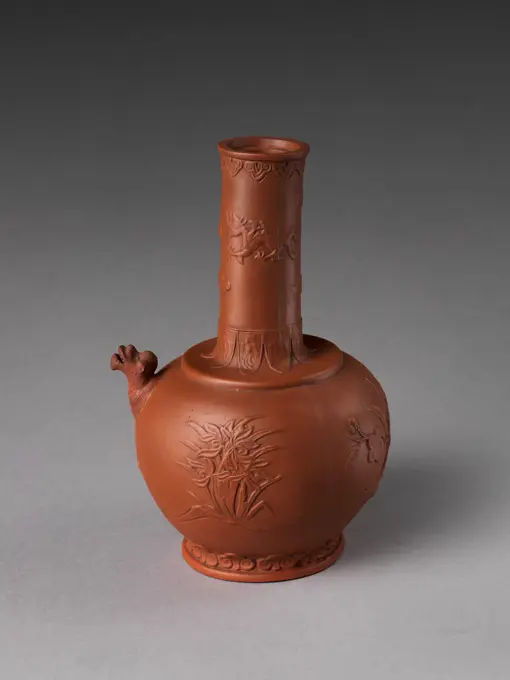
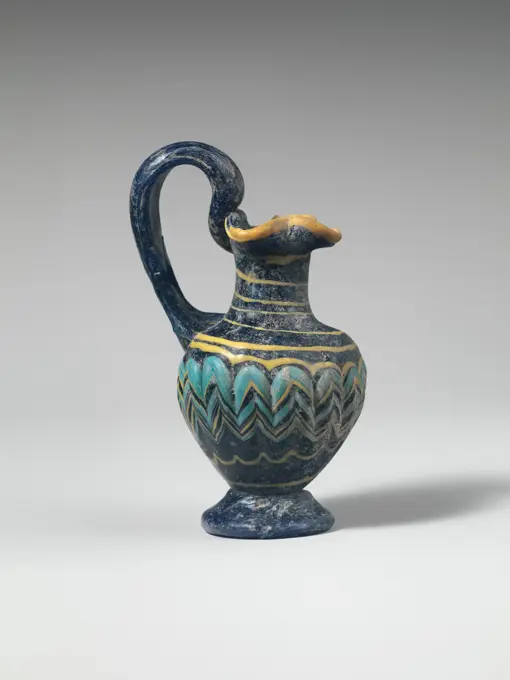
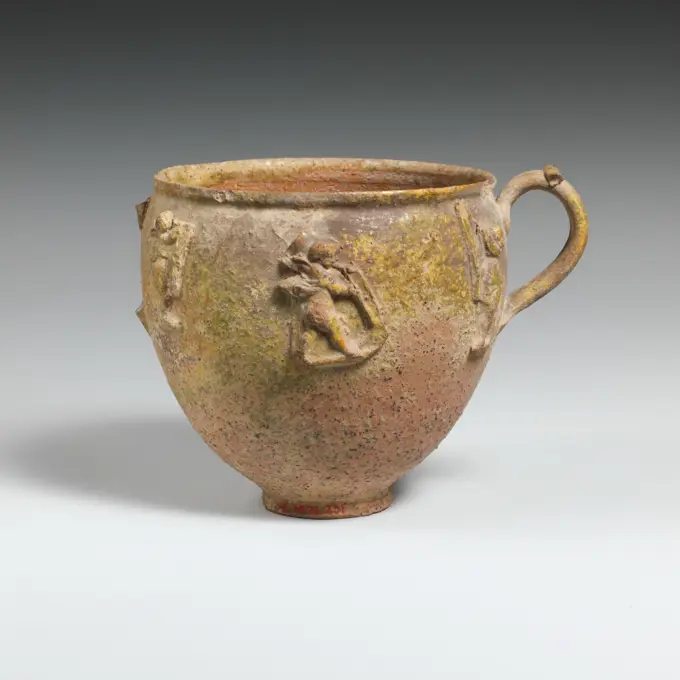
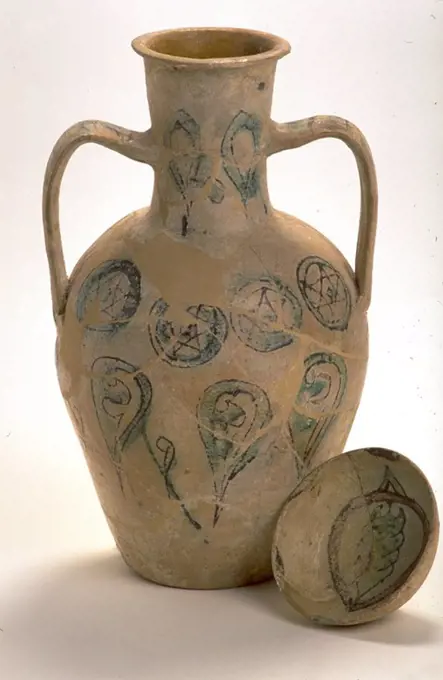
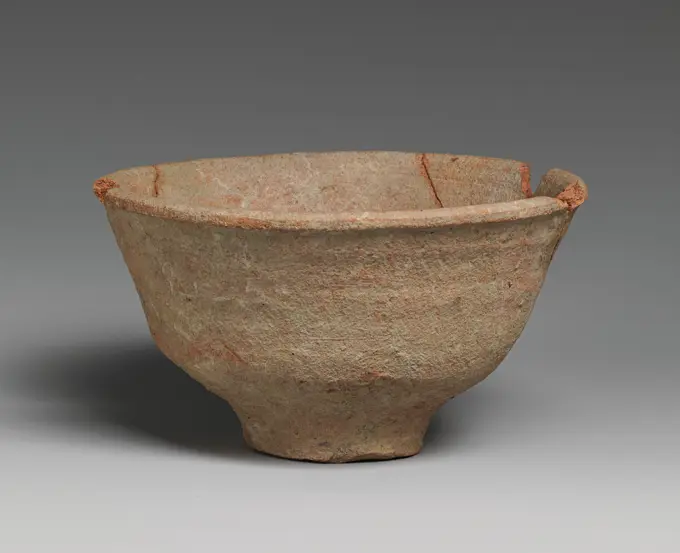
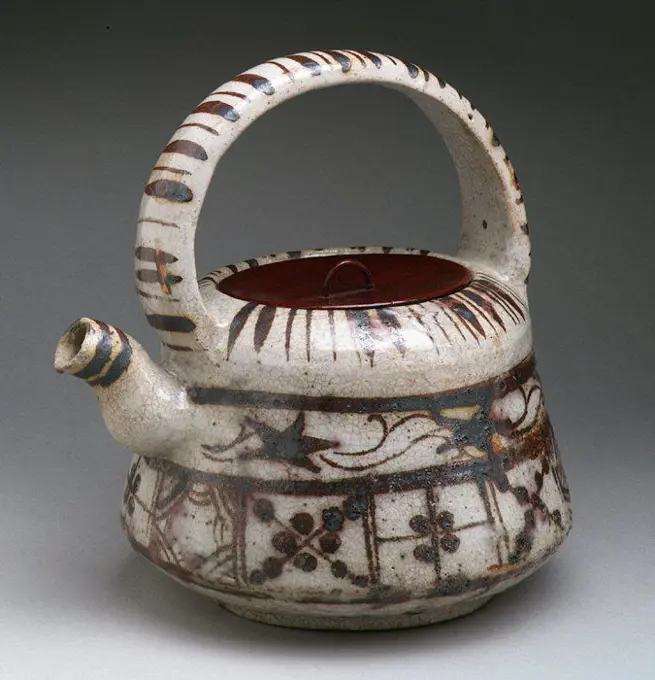
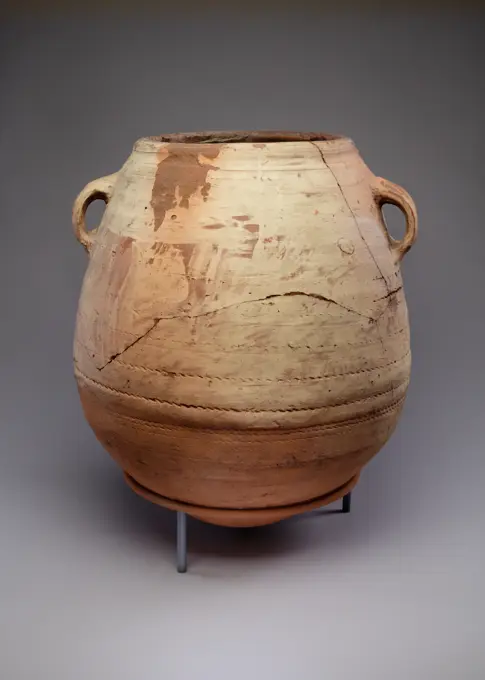
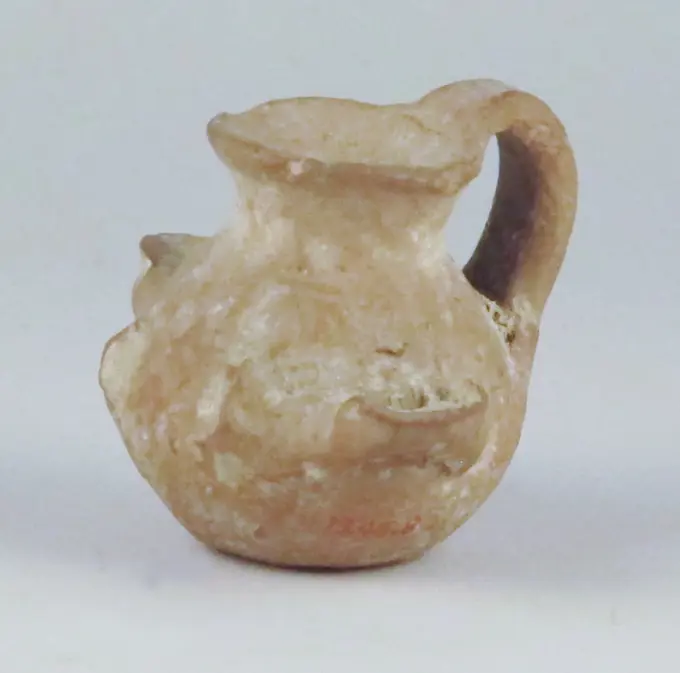
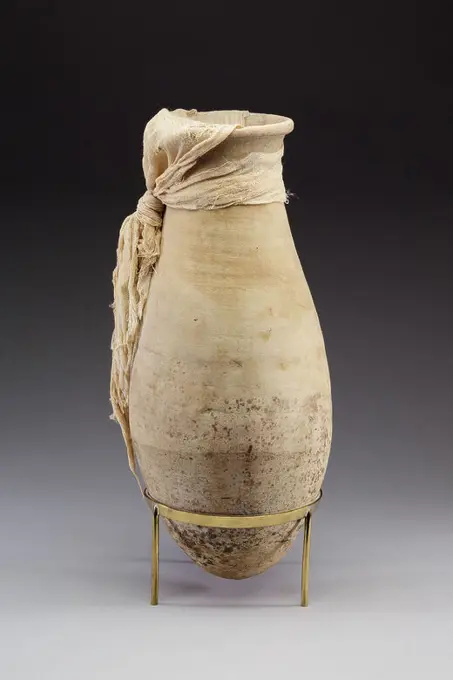
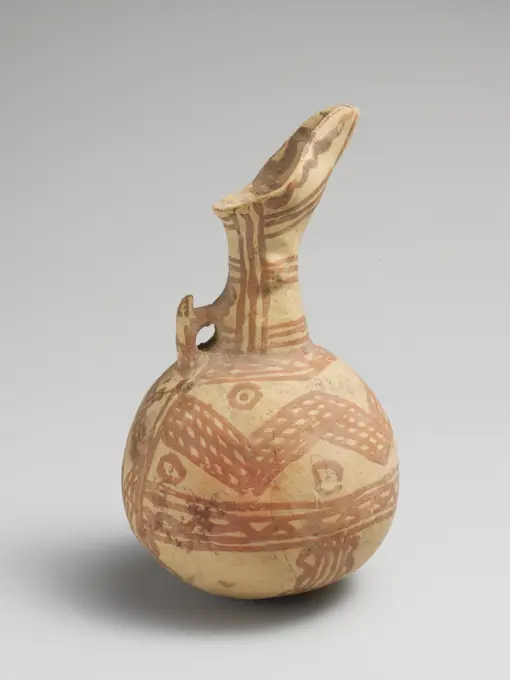
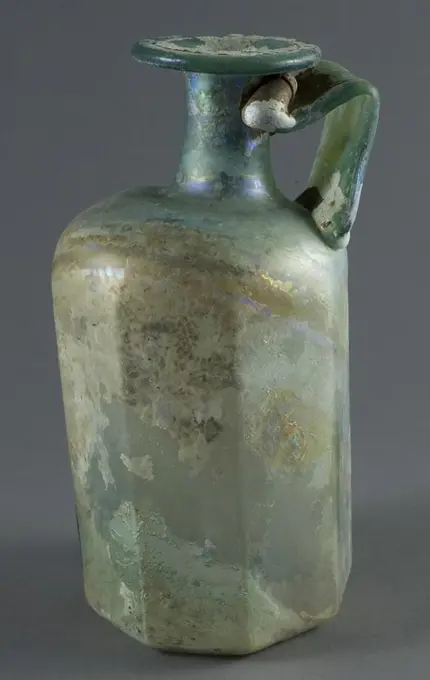
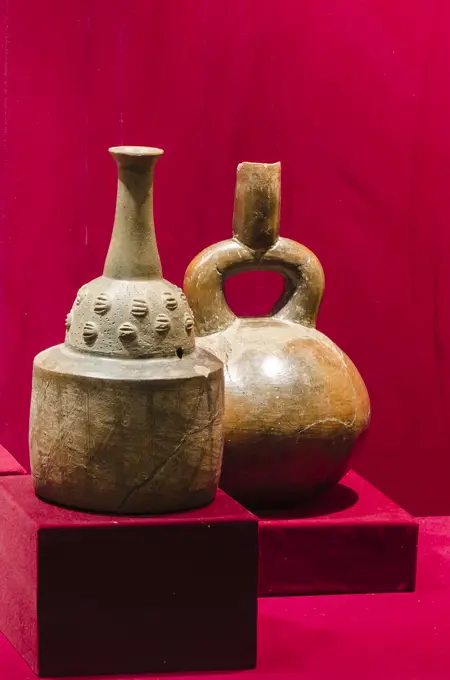
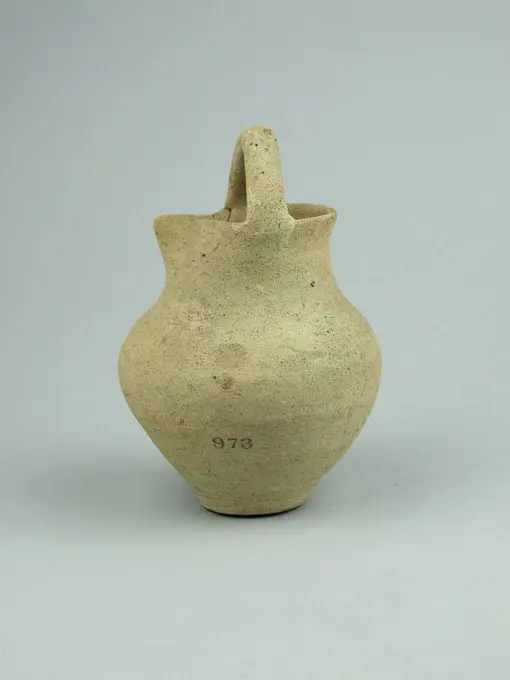
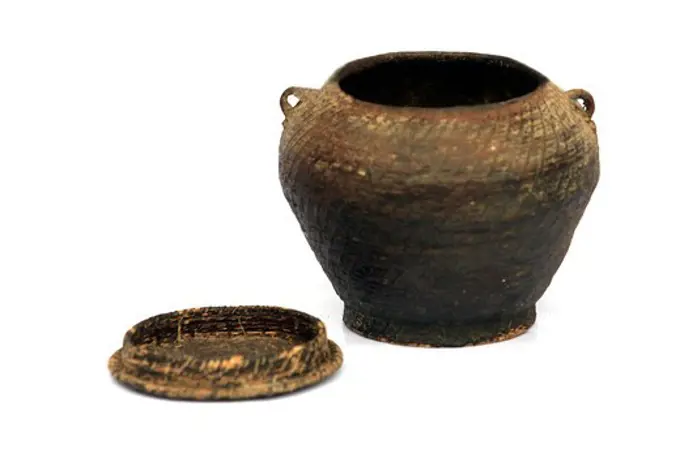
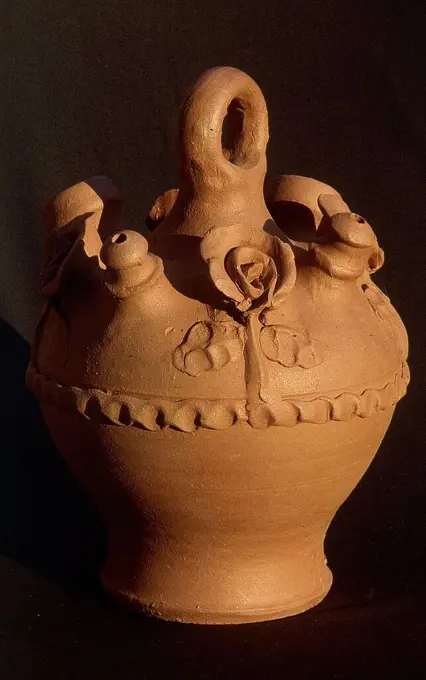
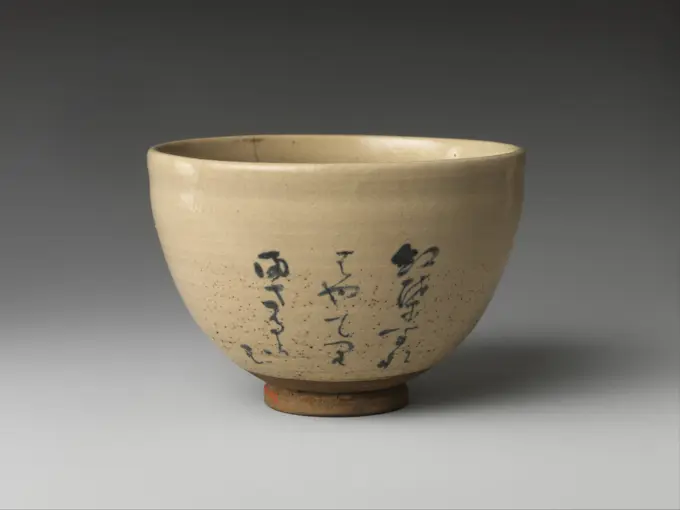
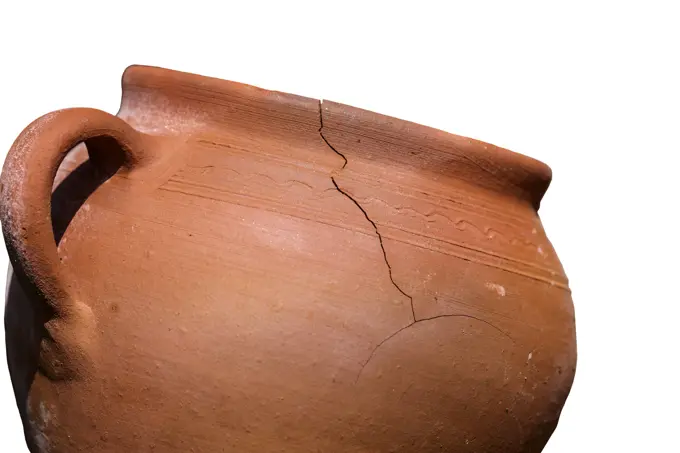
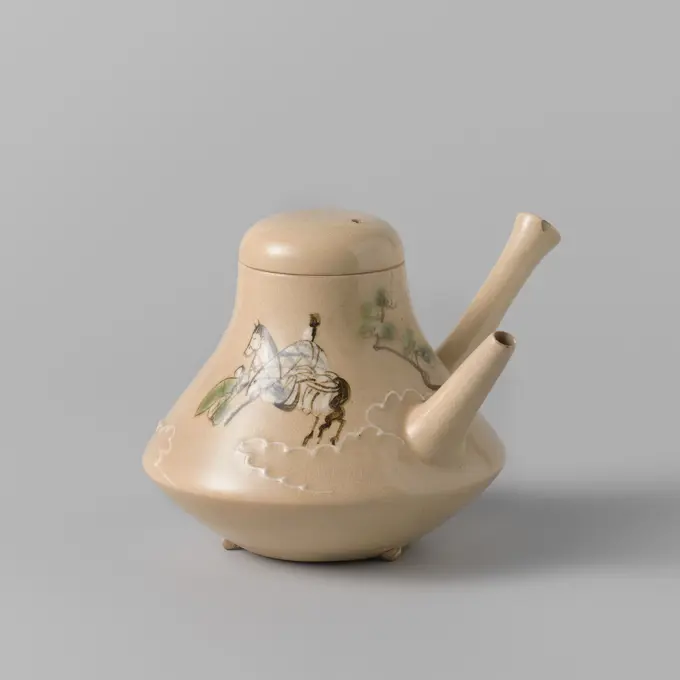
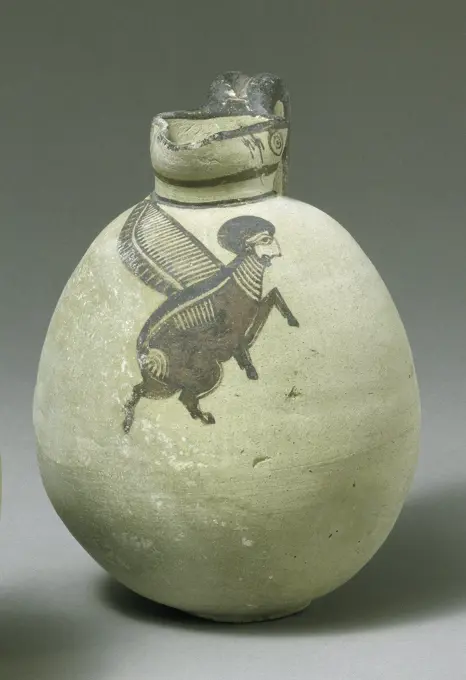
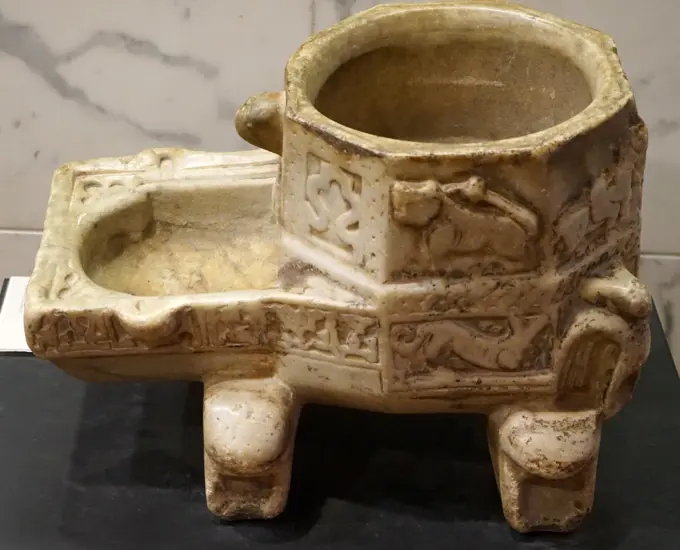
Amsterdam City Jug, Harmen Barendsz. Haen (attributed to), after Artus Quellinus (I), 1651 - 1652 Stadskan with Tin lid. On the high, curved foot with a wide position ring, an oval body with a narrower neck and wider lip edge rests, with tires applied to the foot, trunk and neck for decoration. The top is closed with a clock -shaped lid with a round button in the middle. The lid runs through a angular thumb rest and a one -cash hinge in a handle in the shape of a hose, which curls down head under the lip edge. On the belly a coat of arms with the city coat of arms of Amsterdam with emperor crown is engraved with a lion standing on the hind legs on either side as shield holders. Amsterdam tin (metal) casting / engraving Stadskan with Tin lid. On the high, curved foot with a wide position ring, an oval body with a narrower neck and wider lip edge rests, with tires applied to the foot, trunk and neck for decoration. The top is closed with a clock -shaped lid with a round button in the midLlama Vessel, c. 200-550. Peru, North Coast, Moche style (50-800). Earthenware with colored slips; overall: 17.8 x 13.2 x 23.1 cm (7 x 5 3/16 x 9 1/8 in.).Earthenware cooking pot or grape on three legs, grape cooking pot tableware holder utensils earthenware ceramics earthenware glaze lead glaze, top) hand-turned glazed fried Grape or cooking pot on three legs. Red shard archeology Geervliet Bernisse indigenous pottery cooking kitchen nutrition food preparation Soil discovery Geervliet demolition Trouw put 1.Glass jug mid-1st century A.D. Roman Colorless with pale blue green tinge; handle in same color.Rim folded out, down, up, and out, forming a downward flange and stepped profile; short cylindrical neck with faint horizontal tooling marks around base; conical body, then curving inwards to low, slightly outsplayed integral foot ring; concave bottom; rod handle attached to top of body with long tail extending down side and pinched to form eight semicircular projections, drawn up, out, and round in a curve, and trailed on to top of neck and outer edge of rim with vertical, flat thumb-rest.Intact; few bubbles; dulling, iridescence, and thick creamy brown weathering, with small areas of soil encrustation. Inside bottle, three large solidified lumps of earth.91.1.1321 and 91.1.1266 are very similar and may be seen as products of the same workshop. Other examples are known principally from Cyprus (see 74.51.105).. Glass jug 245709Ewer with a border with circles and spirals, anonymous, c. 1200 - c. 1299 Quarter fritry can be decorated with a band with black spirals and circles under a transparent turquoise glaze. Raqqa earthenware. glaze painting / vitrification Quarter fritry can be decorated with a band with black spirals and circles under a transparent turquoise glaze. Raqqa earthenware. glaze painting / vitrificationCUENCO DE VIDRIO ROMANO. Location: MUSEE D'ARTS DECORATIFS. MADRID. SPANIEN.Pottery test, fire test on three legs, with angular standing ear and square top edge, fire test test earth discovery ceramics earthenware glaze leadglaze, hand turned hand shaped glazed fired Pottery fire test red shard both inside and outside glazed turning wackets overhand placed sausage ear three legs. Semicircle bottom and square top archeology indigenous pottery food prepare heat cooking kitchen warming stewTerracotta pithoid jar ca. 1400-1325 B.C. Mycenaean On shoulder, spirals.. Terracotta pithoid jar 244778VASO DE BOCA DE SETA FENICIO S VII AC. Location: MUSEO ARQUEOLOGICO-COLECCION. Sevilla. Seville. SPAIN.Palace Ware cup ca. 8th-7th century B.C. Assyrian. Palace Ware cup 324399Bowl. Syria, second half of 13th-14th century. Ceramics. Earthenware, unglazedCeramic jug with a handle and a rounded edge. has engraved rolling under the hull below the neck . Rim diameter 116 mm Height 121 mm Width 140 mm (6 th - 7 th CE ) - Visigoth period belonging of the " Burgo de Santiuste Museum" in Alcalá de Henares. (Madrid). SPAIN.Gourd-shaped Wine Pot, 1200s. Korea, Goryeo period (918-1392). Pottery; height with lid: 26.7 cm (10 1/2 in.).Jar 9th-10th century. Jar 449363Tasse Tasse Copyright: xZoonar.com/Tolox 22568953Ovoid jar with small flared collar ". Terracotta. Vietnam-Xe-Xive s. Paris, Cernuschi museum. 72186-18 Jarre Ovoli, Vietnamese object, Small Evase Col, TerracottaHydria - Rudiae, bronze,Terracotta vase, from Tomb A in the Necropolis of Brembate Sotto, Lombardy, Italy. Italic Civilization, 5th Century BC.Mepering. Tru Urpelds Bruns Luns Paris, Museum Causori. 78844-31 Asian art, ancient ceramic, gres, container, terracotta, vaseJug. Gray with blue jug of stoneware. Decorated with the coat of arms of Amsterdam and the year 1603.Jarlet with Cursive Floral Scroll. Vietnam, late 14th century. Furnishings; Serviceware. Wheel-thrown stoneware with cream slip, underglaze brown painted decoration, and clear glazeCANTARO VIDRIADO DE BOCA ANCHA Y CUELLO CORTO CON ASA ANCHA - CERAMICA ANTIGUA. Location: ALFARERIA. Aranda de Duero. BURGOS. SPAIN.Elsie Wein, Crock, c 1939 CrockEwer probably 18th-19th century. Ewer 443114Skiopticon image from the Department of Photography at the Royal Institute of Technology. Use by Professor Helmer Bäckström as lecture material. Bäckström was Sweden's first professor in photography at the Royal Institute of Technology in Stockholm 1948-1958.autochrome. Urn. Neg. By J. Hertzberg transferred to gelatin reliefs on Agfa anaglyffilm, stained with pinatypy colors.CANTARO SEMIVIDRIADO-S XX ARTE POPULAR. Location: ALFARERIA. BURGOS. SPAIN.Glass jar. Culture: Roman. Dimensions: 3 5/16 in. (8.5 cm)Diameter: 2 15/16 x 2 1/4 in. (7.5 x 5.7 cm). Date: 3rd century A.D..Colorless with pale bluish tinge, with trail in same color.Plain, rounded rim; flaring neck; conical body, rounded at base; integral, tubular base ring; pushed-in bottom.Single horizontal trail wound unevenly three and a half times around top of body.Intact; pinprick a nd a few larger bubbles; dulling, pitting, and iridecent weathering on exterior; patches of soil encrustion with weathering and iridescence on interior. Museum: Metropolitan Museum of Art, New York, USA.Charcoal burner, anonymous, c. 1600 - c. 1699 Charcoal burner from Steengoed on three short legs and with two handles, covered with a green, frameled glaze. Old label on the inside with 'Ki Seto/ auction Breuer'. Ki Seto. Japan stoneware. glaze. deksel: wood (plant material) vitrification Charcoal burner from Steengoed on three short legs and with two handles, covered with a green, frameled glaze. Old label on the inside with 'Ki Seto/ auction Breuer'. Ki Seto. Japan stoneware. glaze. deksel: wood (plant material) vitrificationPrehistory, Albania, Iron Age. Vase consisting of two ollas joined by a biforated handle and ornamented with painted triangle pattern. From Korce.Miniature kantharosKyathosLamp. UnknownEarthenware bowl on stand, with shank and lying sausage ear, porcelain dish holder holder earthenware pottery glaze lead glaze, hand-turned glazed baked earthenware bowl bowl red shard fully glazed pouring lip in broad cuff-shaped edge horizontal set sausage ear standring archeology indigenous earthenware food porridge eat food prepare kitchen serve serve tableLamp 12th-13th century. Lamp 447232Earthenware chamber pot, ease of use on stand, with wide neck opening and standing ear, pot holder sanitary soil found ceramic earthenware glaze lead glaze, hand turned glazed baked Pottery chamber pot on stand. Red shard fully glazed except the bottom of the bottom Double conical shape with low bend in the side wall Wide pot edge and slantingly outward directed pot edge. Lid slot Standing sausage above the edge excellent archeology indigenous pottery drains night sleeping room hygieneJug 1900-1600 B.C. Cypriot. Jug. Cypriot. 1900-1600 B.C.. Terracotta. Middle Cypriot. VasesBronze bottle from the Korean Peninsula. Dated 12th DynastyPouring vessel (Kendi) ca. 1710-12 Meissen Manufactory German Used principally in Southeast Asia for drinking and pouring, the kendi is loosely based on an earlier Indian form. This German example is decorated with dragons and clouds on the neck, flowering narcissus on the body, and the heads of the lingzhi fungus at the foot and rim, motifs that derive from China, where kendi-type vessels were often made for export. This type of red stoneware body is known as Böttger stoneware, named after the man who developed it at the Meissen factory.. Pouring vessel (Kendi). German, Meissen. ca. 1710-12. Stoneware with raised decoration. Ceramics-PotteryAmphora 4th-7th century Coptic. Amphora 476271Glass oinochoe (perfume jug) late 6th-5th century B.C. Greek, Eastern Mediterranean Translucent cobalt blue, with handle in same color; trails in opaque yellow and opaque turquoise blue.Applied broad trefoil rim-disk; rather tall cylindrical neck; broad sloping shoulder; ovoid body; applied outsplayed foot with radiating tooling marks on upper surface and deep concave bottom; broad handle attached in a pad to shoulder over trail decoration, drawn up and out, then turned in, arching well above rim-disk, and pressed on to back of rim-disk and neck.Yellow trail attached at edge of rim-disk; a yellow trail applied unevenly to top of neck and wound down spirally across shoulder, then tooled on body around upper half of body with deep vertical ribs; a turquoise blue trail added over yellow and intermingling with it, forming a close-set zigzag pattern; below this, the yellow trail continues in a spiral as an irregular festoon pattern around lower body, ending just about pad-base.Broken and reJARRA DE VINO -BARRO ROJO SEMIVIDRIADO. Location: ALFARERIA. VALL DE UXO. Castellón. SPAIN.Lamp. UnknownSnuff Bottle with Doves and Pekingese Dogs. China. Date: 1820-1850. Dimensions: 5.7 × 4.8 × 2.7 cm (2 1/4 × 1 7/8 × 1 1/16 in.). Yixing stoneware with slip decoration. Origin: China. Museum: The Chicago Art Institute, Chicago, USA.Terracotta cup 20 B.C.-A.D. 20 Roman The sides of the cup are decorated with appliqués of cupids either holding torches or playing long trumpets. The cup was probably made in southern Italy.. Terracotta cup 247416Juglet Cypriot Jug with globular body and high handle; unpainted clay.. Juglet. Cypriot. Terracotta. VasesJARRA DE AGUA DE DOBLE PICO - PARCIALMENTE VIDRIADA-LLENA DE AGUA. Location: ALFARERIA. SPAIN.PLATO Y JARRA: VERDE Y MORADOS. MUSULMAN(DEPOSITO: MUSEO ARQUEOLOGICO NACIONAL).Bowl 4th century B.C.-4th century A.D. Coptic. Bowl. Coptic. 4th century B.C.-4th century A.D.. Earthenware. Made in Kharga Oasis, Byzantine Egypt. CeramicsEwer with Floral and Striped Design early 17th century Japan Used in the tea ceremony, this vessel is topped by a newer lacquer lid that replaces the original stoneware cover. The bold designs resemble textile patterns favored in the Momoyama period.. Ewer with Floral and Striped Design 44528Two-handled globular jar ca. 1886-1070 B.C. Late New Kingdom, Ramesside This large two-handled storage jar is from the houses east, north, and west of the pyramid of Amenemhat I. The black coating on the interior suggests that it migt have been used at some point for mummification or embalming, then perhaps re-used for storage.. Two-handled globular jar. ca. 1886-1070 B.C.. Pottery. Late New Kingdom, Ramesside. From Egypt, Memphite Region, Lisht North, North Pyramid Cemetery, House West of North Pyramid, MMA excavations, before 1912-13. Dynasty 20Hydria, miniature 6th century B.C. Greek Without decoration.. Hydria, miniature. Greek. 6th century B.C.. Terracotta. Archaic. VasesJar from the Burial of Amenhotep. Dimensions: H. 34 cm (13 3/8 in.); Diam. of mouth 10.5 cm (4 1/8 in.); Greatest diam. 15.5 cm (6 1/8 in.); D. 33.5 cm (13 3/16 in.). Dynasty: Dynasty 18. Reign: Joint reign of Hatshepsut and Thutmose III. Date: ca. 1479-1458 B.C..In the tomb of the child Amenhotep (36.3.153), six jars had been placed on either side of the coffin. The contents of the jars incidated that they had once held various liquids. Three of the jars (including 36.3.161. 36.3.164) are decorated with geometric patterns in red and black paint. This undecorated jar still has its closure of linen cloth that covers the mouth nad has been tied in a square knot around the neck. Museum: Metropolitan Museum of Art, New York, USA.Terracotta juglet ca. 1900-1600 B.C. Cypriot Globular jug with small handle and beaked spout, a lattice zigzag band on shoulder.. Terracotta juglet. Cypriot. ca. 1900-1600 B.C.. Terracotta; White Painted Ware. Middle Cypriot. VasesFragment pottery cooking jug, cooking pot crockery holder kitchen utensils earthenware ceramics earthenware glaze lead glaze, hand-turned glazed baked Three worn legs pouch form one ear. Red earthenware on the inside completely glazed. Outside of traces of grating Coarse and fine twisted feathers on the outside archeology Rotterdam railway tunnel indigenous earthenware food preparation cooking kitchen food Soil discovery: railway tunnel Rotterdam.Early pottery vessels including storage vessels, jars, cooking pots, bowls, chalices, spoons and other miniature vessels. From Munhata, Tel Teo, Tel Kiri and Herzlia from the Yarmukian culture from over 8,000 years ago. Made from pottery and pigments.Vessel. Egyptian. Date: 4000 BC-3200 BC. Dimensions: H. 13.3 cm (5 1/4 in.); diam. 9.2 cm (3 5/8 in.). Ceramic. Origin: Egypt. Museum: The Chicago Art Institute, Chicago, USA. Author: Ancient Egyptian.Dish, amphora on the foot, a dish in the manner's shape;  around 1985-m 1650 BC ; Pahu (0-00-00-0-00-00), approx. 1550-1186 BC ; New PA ; Pahu, 12-13 dynasty (0-00-00-0-00-00), approx. 1550-OK. 1186 BC ; New PADeposit of the University of Warsaw from 1937-1939, scenes.gal.g., Stone vessels, Polish-French excavations in Edfu (Egypt)Sencha cup with poem, from a set of five, 19th century, Ōtagaki Rengetsu, Japanese, 1791 - 1875, 1 3/4 × 2 5/8 × 2 1/2 in. (4.45 × 6.67 × 6.35 cm), White stoneware, Japan, 19th centuryArtifacts in Castelo de Silves Museum, Silves, Algrave, PortugalKeramikflasche Keramikflasche Copyright: xZoonar.com/Tolox 22568795FRASCOS DE VIDRIO - FENICIOS. Location: PRIVATE COLLECTION. MADRID. SPANIEN.Lazio Frosinone Casamari Museo Archeologico1. Hutzel, Max 1960-1990 Post-medieval: paintings on canvas, paintings on wood, wooden church furnishings Governing Body: Abbazia di Casamari General Notes: This record is for the pinacoteca which is part of the Museo Archeologico, housed within the Abbey of Casamari. Hutzel assigned it a separate numbering sequence. German-born photographer and scholar Max Hutzel (1911-1988) photographed in Italy from the early 1960s until his death. The result of this project, referred to by Hutzel as Foto Arte Minore, is thorough documentation of art historical development in Italy up to the 18th century, including objects of the Etruscans and the Romans, as well as early Medieval, Romanesque, Gothic, Renaissance and Baroque monuments. Images are organized by geographic region in Italy, then by province, city, site complex and monument.Flask. Roman; Levant or Syria. Date: 101 AD-200 AD. Dimensions: 20.6 × 11.4 × 10.2 cm (8 1/8 × 4 1/2 × 4 in.). Glass, blown technique. Origin: Syria. Museum: The Chicago Art Institute, Chicago, USA. Author: ANCIENT ROMAN.Pre-Columbian pottery in the Museum of Archaeology, Trujillo, Peru.Juglet. Culture: Cypriot. Dimensions: H. 4 15/16 in. (12.5 cm). Date: 600-480 B.C..Miniature vase with handle crossing mouth, of unpainted clay. Museum: Metropolitan Museum of Art, New York, USA.VASIJA DE CERAMICA PROCEDENTE DE CASTRO MAO. Location: ARCHAEOLOGICAL MUSEUM. Orense. SPAIN.Tripod Vessel. Culture: Diquís. Dimensions: Height 3-1/8 in. (7.9 cm)Diameter: 4 3/8 in.. Date: 6th-15th century. Museum: Metropolitan Museum of Art, New York, USA.TESORO DE ALISEDA - JARRO TALLADO EN VIDRIO CON DECORACION JEROGLIFICA EGIPCIA PROCEDENTE DE IMPORTACIONES FENICIAS - SIGLO VII-VI AC. Location: MUSEO ARQUEOLOGICO NACIONAL-COLECCION. MADRID. SPAIN.Oblong Single Spout Bottle 5th-2nd century B.C. Paracas. Oblong Single Spout Bottle 308702Old objects straw jarBlue-Painted Jar from Malqata ca. 1390-1353 B.C. New Kingdom. Blue-Painted Jar from Malqata. ca. 1390-1353 B.C.. Pottery, slip, paint. New Kingdom. From Egypt, Upper Egypt, Thebes, Malqata, Palace of Amenhotep III, MMA excavations, 1911-12. Dynasty 18BOTIJO CON FORMA DE GALLO EN BARRO. Location: ALFARERIA. Guadix. GRANADA. SPAIN.Rhyton 1st millennium B.C. Iran. Rhyton 326959CANTARO DE BARRO SIN VIDRIAR-S XX ARTE POPULAR. Location: ALFARERIA. CASTELLAR DE SANTIAGO. CIUDAD REAL. SPAIN.Neolithic tripod pottery jar, art gallery, Hong Kong, 2010.Vase. Wedgwood Manufactory; England, founded 1759; Etruria, Staffordshire, England. Date: 1765-1775. Dimensions: 22.5 × 17 cm (8 7/8 × 6 11/16 in.). Earthenware (surface agateware). Origin: Burslem. Museum: The Chicago Art Institute, Chicago, USA.BOTIJO FLOREADO - SIN VIDRIAR Y EN BARRO ROJO - ARTE POPULAR. Location: ALFARERIA. SPAIN.Teabowl with Autumn Poem second half of the 19th century Eiraku Wazen. Teabowl with Autumn Poem 63157Bottle with peony leaves, second half 15th century, Unknown Korean, 12 11/16 × 6 3/4 × 6 3/4 in. (32.23 × 17.15 × 17.15 cm), Buncheong ware; earthenware with sgraffito design underglaze, Korea, 15th century, This Buncheong bottle is an example of sgraffito design. Potters first brushed the surface with white slip (liquid clay); after it dried to a leatherlike hardness, they incised the design with fine lines, and certain areas were carved away. In this manner, the decorative motif in whitein this case a scrolling peony-leaf designstands out dramatically against the darker clay. Finally, a thin glaze was applied.Old crock Old, cracked clay pot isolated on white background Copyright: xZoonar.com/GennadiyxIotkovskiyx 4589309Water Pot (Shuicheng) with Dragon Medallions. China, Jiangxi Province, Jingdezhen, Chinese, Qing dynasty, Kangxi mark and period, 1662-1722. Furnishings; Cookware. Wheel-thrown porcelain with incised decorations and peach-bloom glazeTeapot with a horsemen in a landscape, anonymous, c. 1800 - c. 1825 Lid of stoneware. Japan stoneware. glaze painting / vitrification Lid of stoneware. Japan stoneware. glaze painting / vitrificationCzarka. nieznany warsztat północno mezopotamski (ca 2600-ca 2350 a.C.), workshopGreyware Bowl with Incised Monkeys 3rd century B.C. Paracas. Greyware Bowl with Incised Monkeys 307618ceramic decorated vase, found near Barcelona, Spain circa 5000 BCSpouted Bowl with Juglets. Northern Iran, possibly from the Rudbar valley or Amlash., circa 1350-800 B.C.. Furnishings; Serviceware. Dark orange wareStoneware Funerary Urn. Dated 7th CenturyPARIDERA DE BARRO SIN VIDRIAR - CERAMICA POPULAR SIGLO XX. Location: ALFARERIA. CUENCA. SPAIN.Bridge and Spout Bottle in Bird Form 1st-5th century Vicús. Bridge and Spout Bottle in Bird Form 309746ceramic canteen, Roman period, Manacor History Museum, Manacor, Mallorca, Balearic Islands, SpainJug 16th century Italian. Jug. Italian. 16th century. Lead-glazed earthenware. Ceramics-PotteryTerracotta jug ca. 750-600 B.C. Cypriot The astonishing figure shows a compact body with small hooves, one of a pair of wings, and a human face. The iconographical source is Near Eastern, possibly one of the human-headed composite creatures that figure prominently on readily portable seals. During the period of Assyrian control of Cyprus (ca. 707-612 B.C.) such influence are particularly likely.. Terracotta jug. Cypriot. ca. 750-600 B.C.. Terracotta. Cypro-Archaic I. Vasesurn, Museum of Maya Anthropology, Department of El Quiché, Guatemala, Central America.Ewer, 7th-10th century, H.8-1/2 x W.7-1/4 in., Black splashed glazed ceramic, China, 7th-10th centuryMarble jar stand with crouched lions with eagles from Egypt. Dated 12th CenturyVase. Bronze. Cernuschi Museum, Asia Museum of Asia in the city of Paris.Vessel with Handle, c. late 4000-early 3000 BCE, 4-13/16 x 5-1/2 x 4-3/8 in. (12.2 x 14.0 x 11.1 cm), Earthenware, China, 40th-30th century BCECampania Salerno Nocera Inferiore Museo dell'Agro Nocerino. Hutzel, Max German-born photographer and scholar Max Hutzel (1911-1988) photographed in Italy from the early 1960s until his death. The result of this project, referred to by Hutzel as Foto Arte Minore, is thorough documentation of art historical development in Italy up to the 18th century, including objects of the Etruscans and the Romans, as well as early Medieval, Romanesque, Gothic, Renaissance and Baroque monuments. Images are organized by geographic region in Italy, then by province, city, site complex and monument.decorated ceramic urn 6th-2nd century BC, Santaella, Iberian culture, Iberian Museum of Jaén, Andalusia, Spain.Storage Jar (aryballos) 15th-16th century Inca. Storage Jar (aryballos) 313287