Ceremonial Swords and Knives

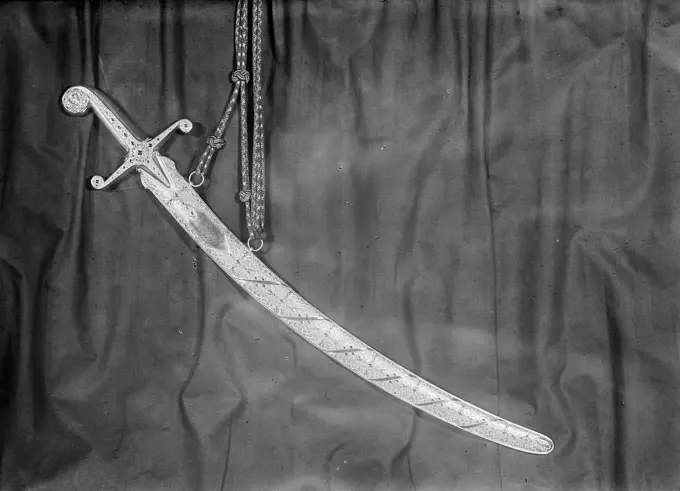
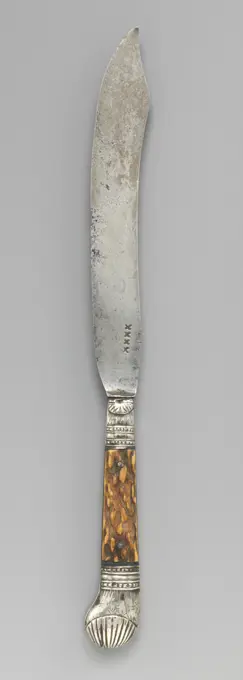
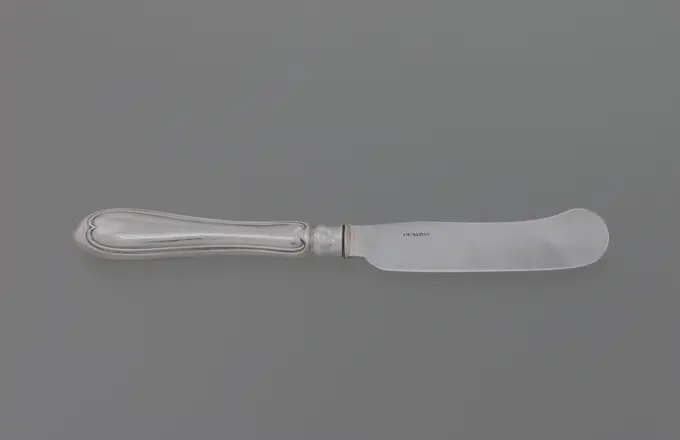
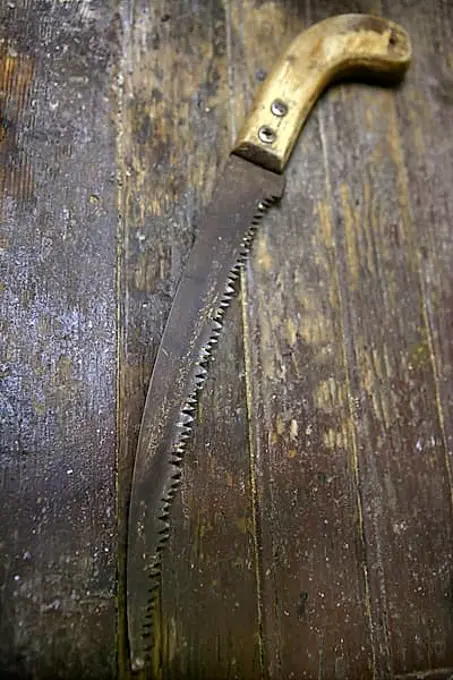
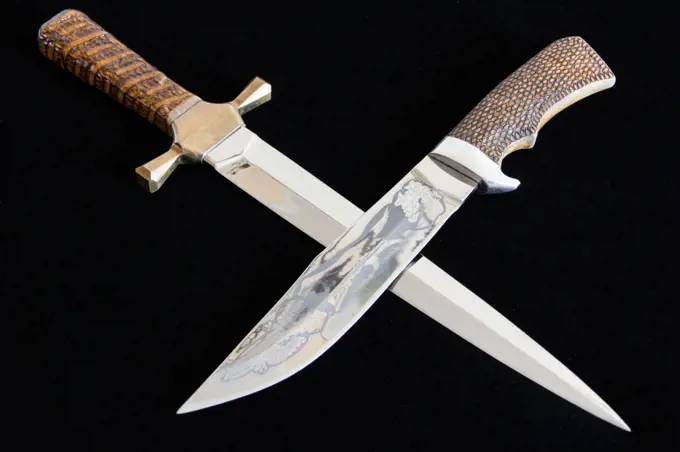
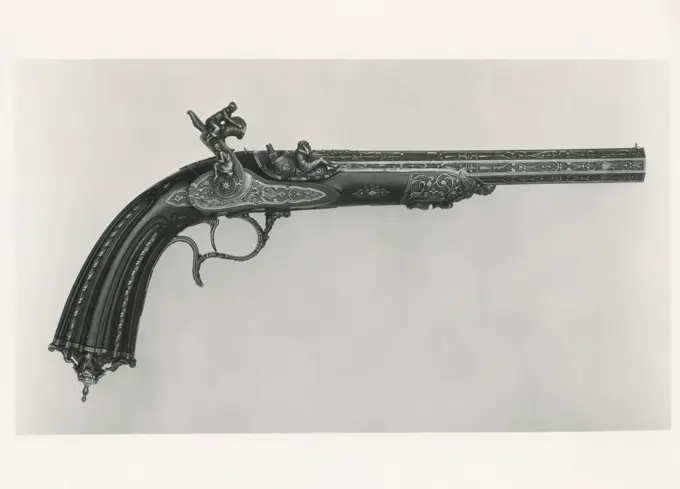
A variety of ceremonial blades and knives, showcasing craftsmanship and historical relevance. Elements include ornate handles and decorative sheaths.

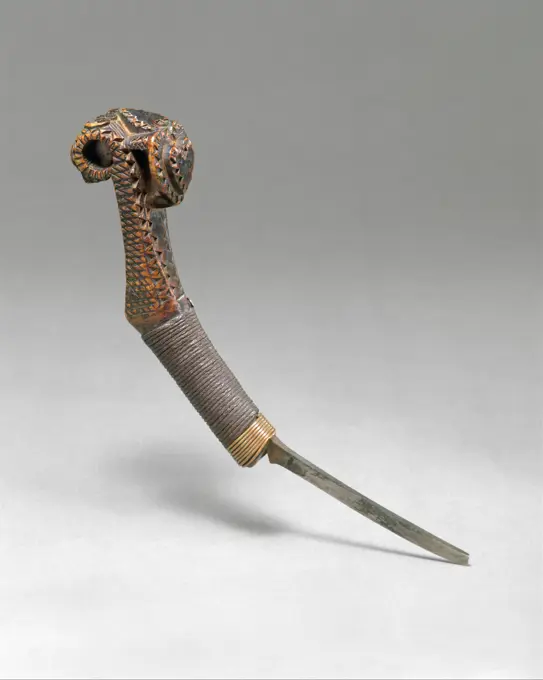
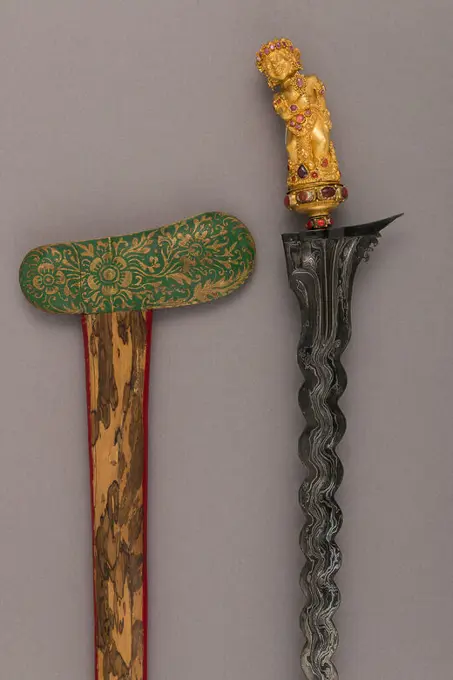
Kris van Bali with Schede, Anonymous, c. 1800 - c. 1899 kris Kris van Bali, the steel at the hilt elegant, forged, in more than half yellow -painted sheath. Taken on the Expedition of Lombok in 1894. Bali steel (alloy)   Lombok
Kris van Bali with Schede, Anonymous, c. 1800 - c. 1899 kris Kris van Bali, the steel at the hilt elegant, forged, in more than half yellow -painted sheath. Taken on the Expedition of Lombok in 1894. Bali steel (alloy) Lombok
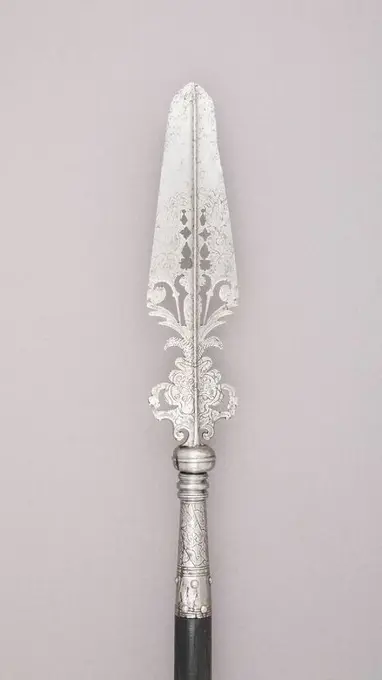
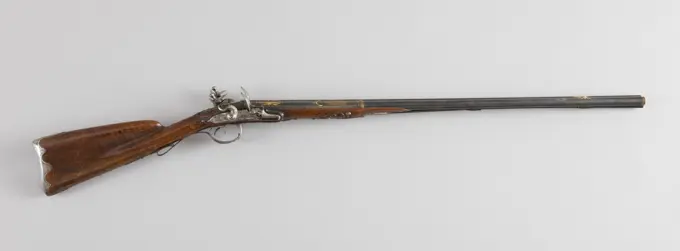
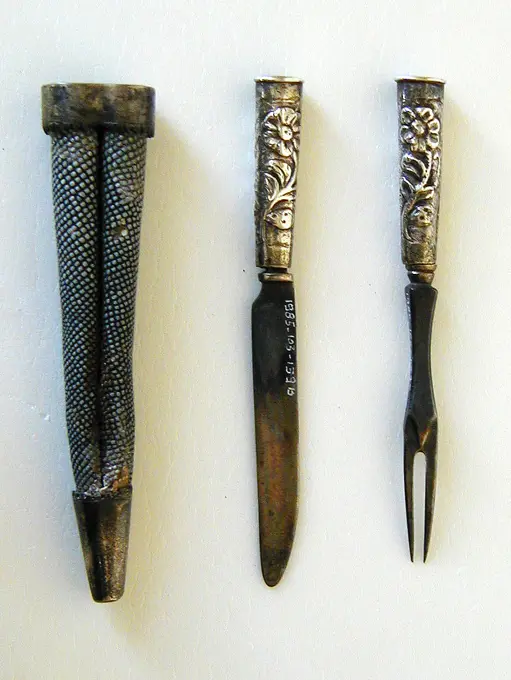
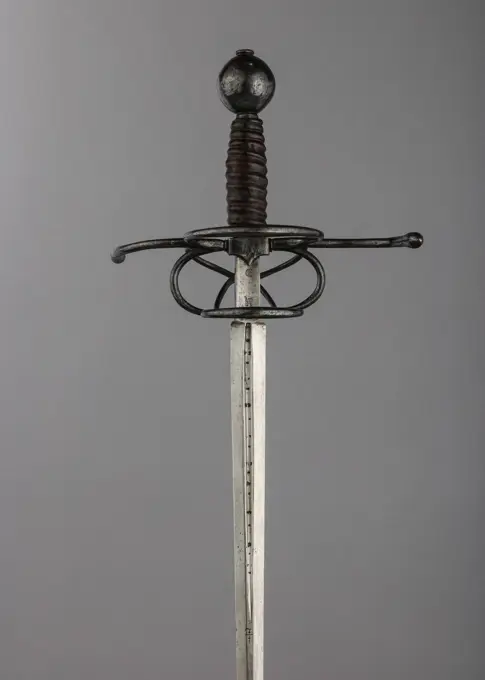
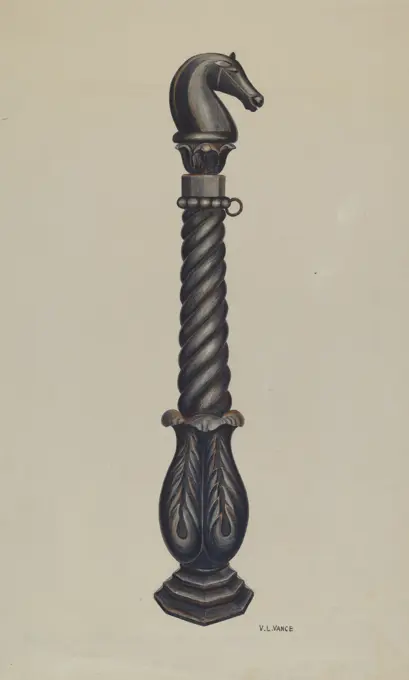
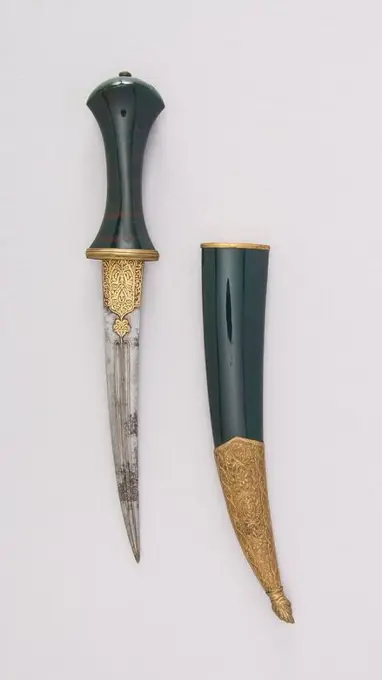
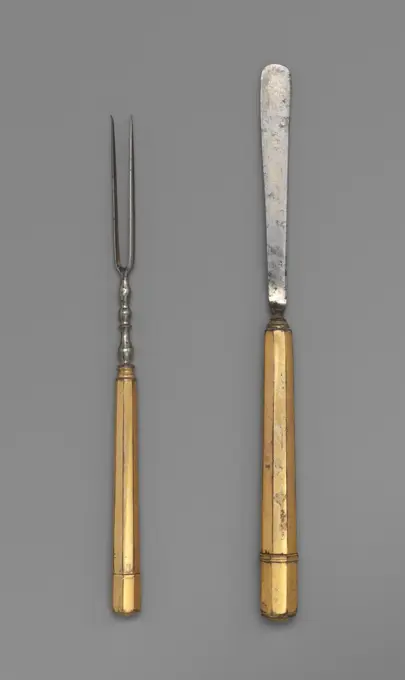
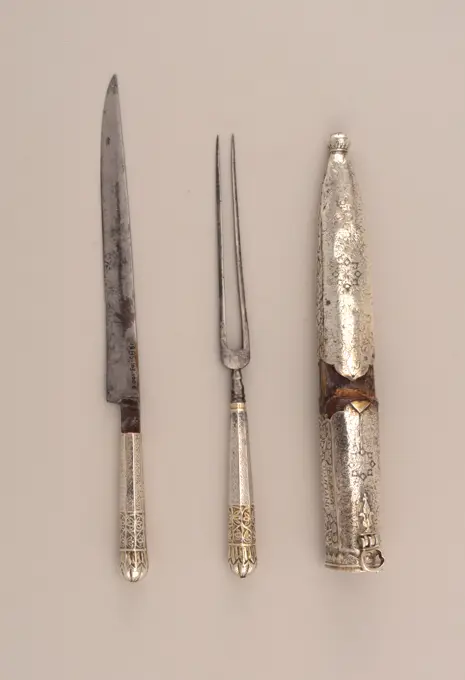
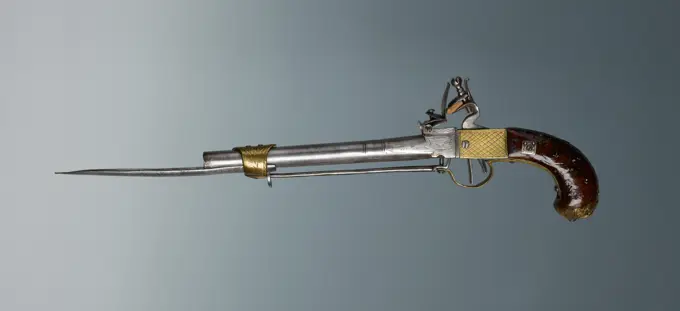
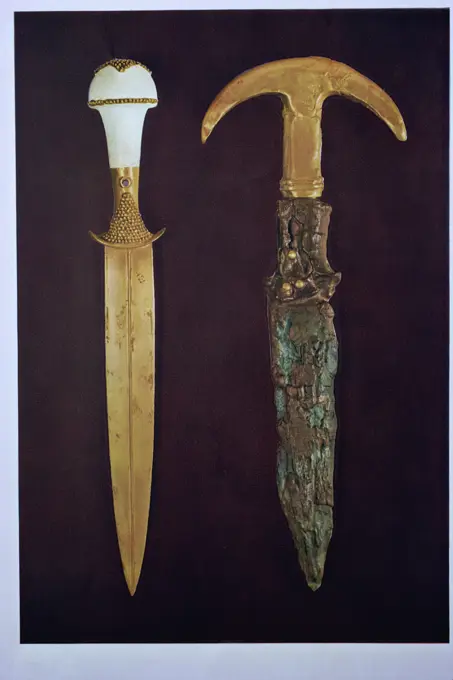
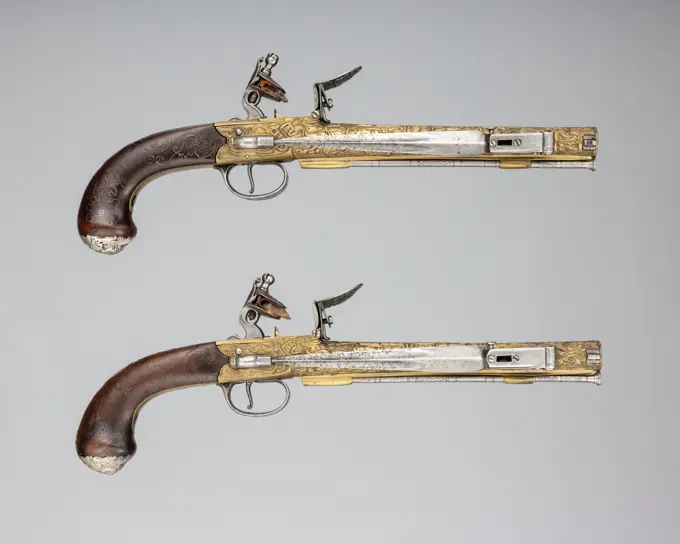
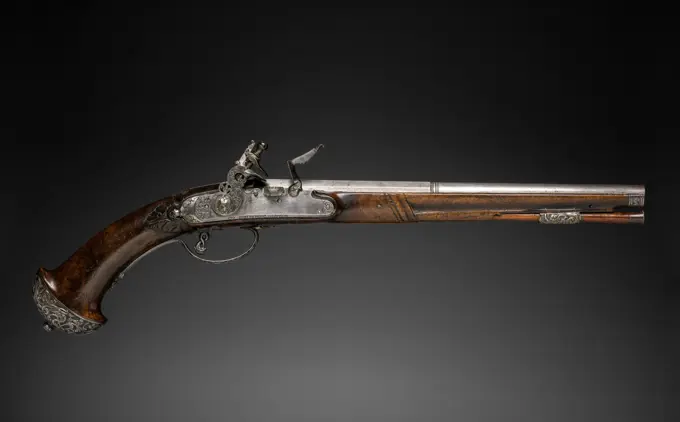
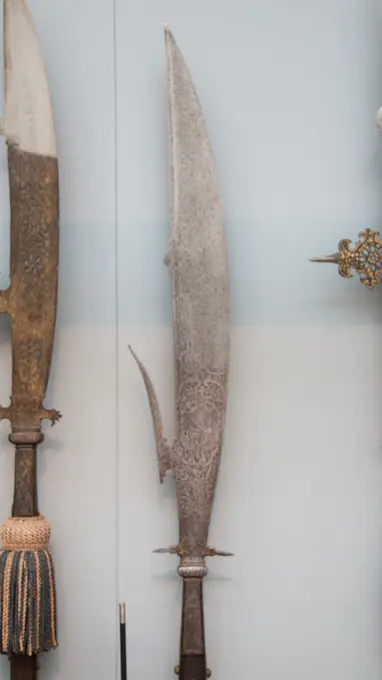
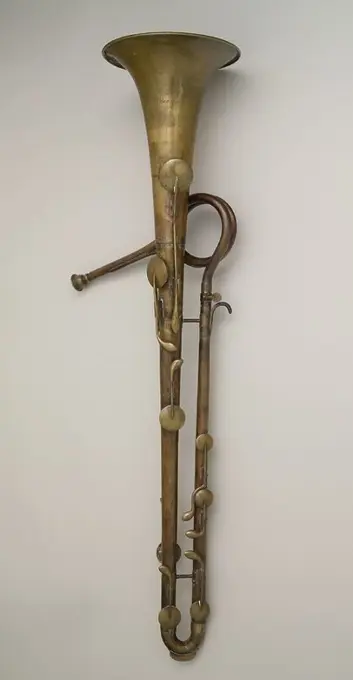
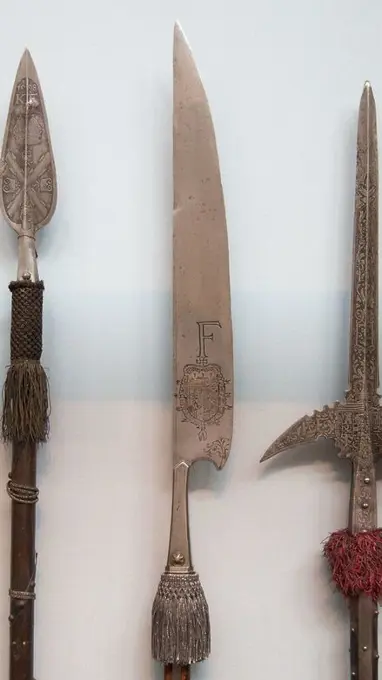
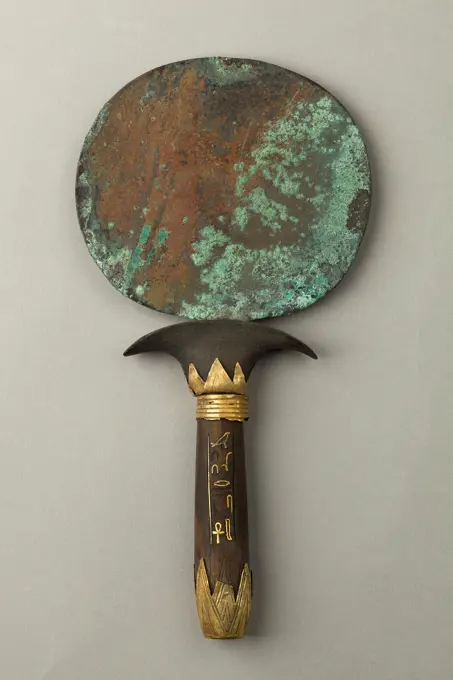
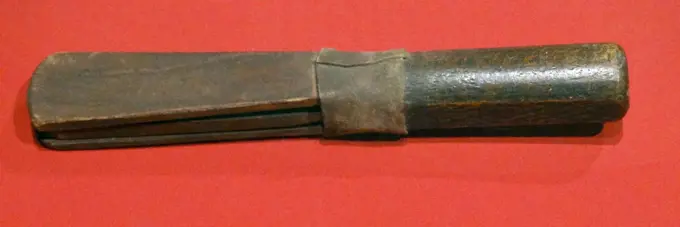
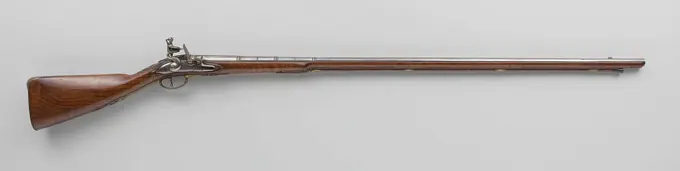
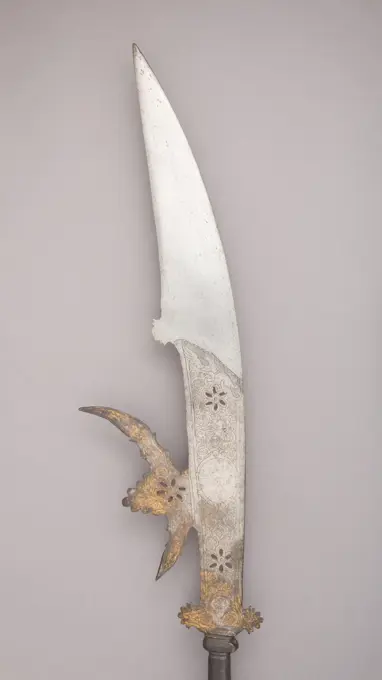
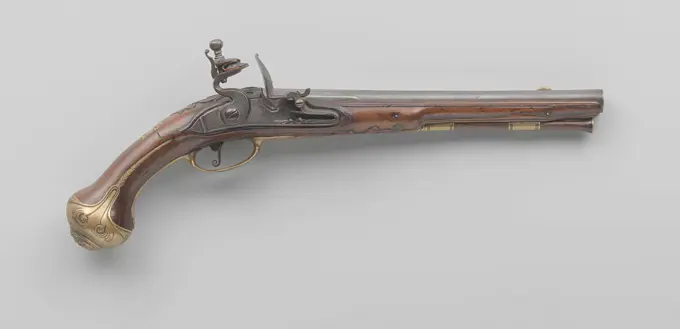
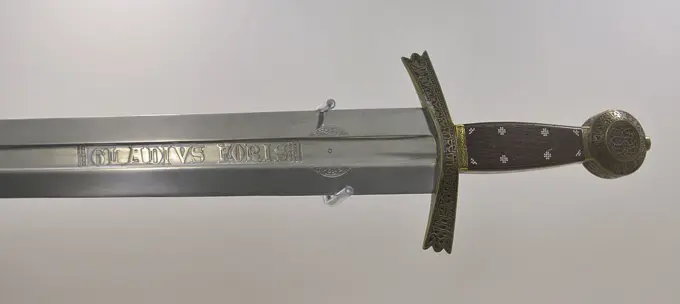
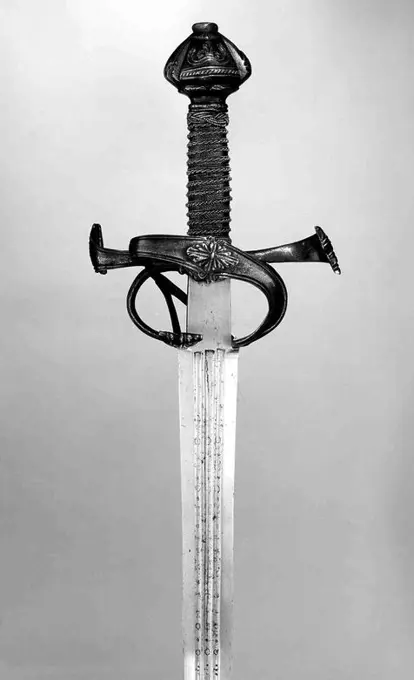
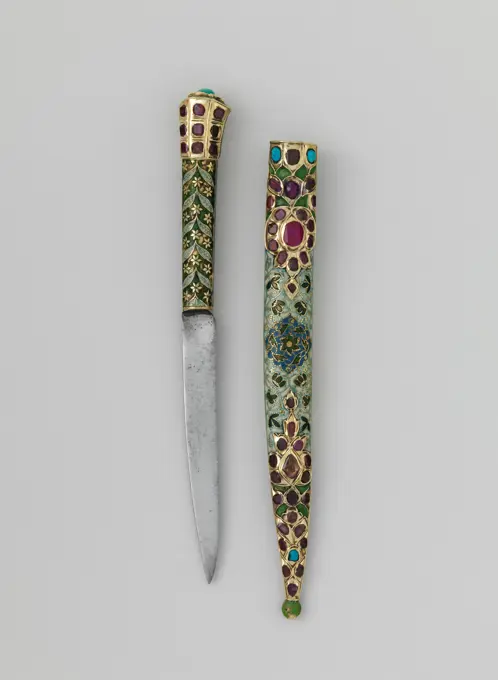
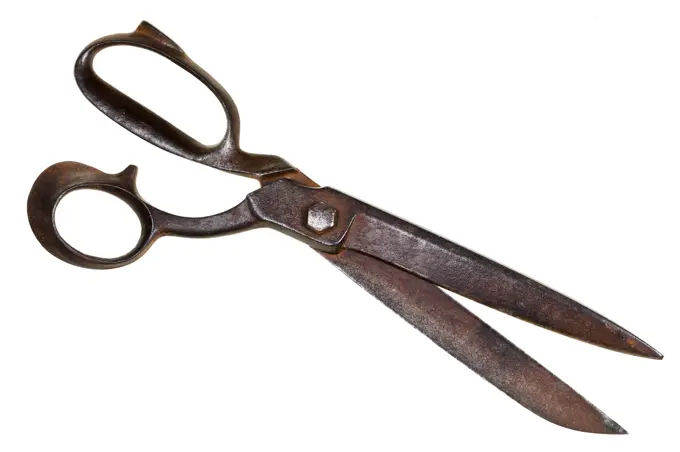
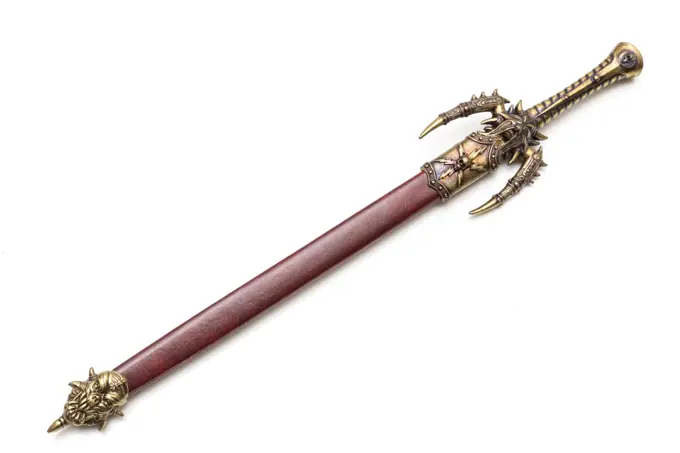
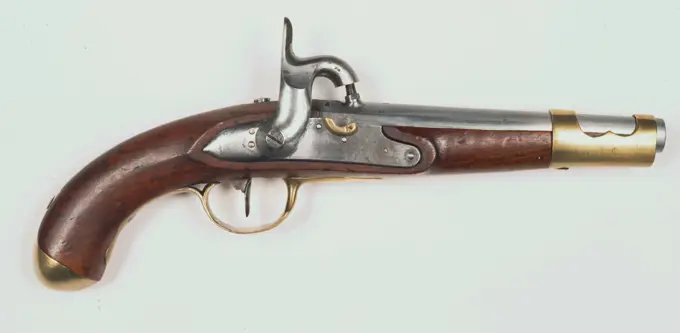
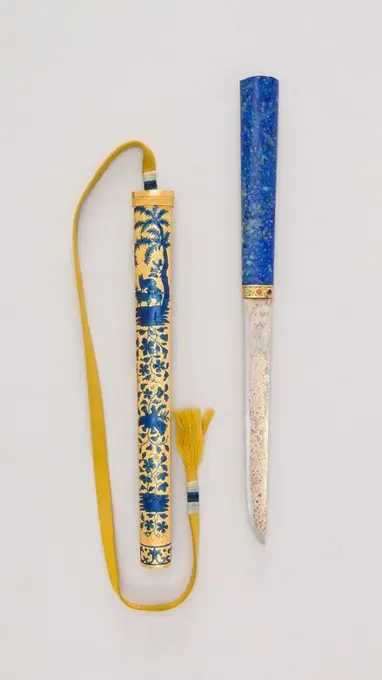
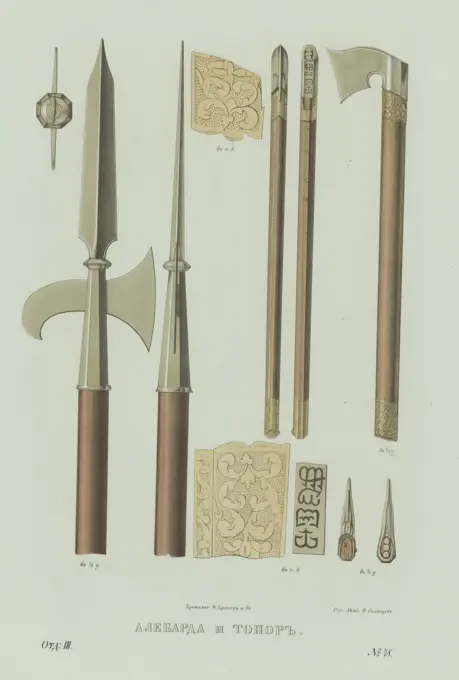
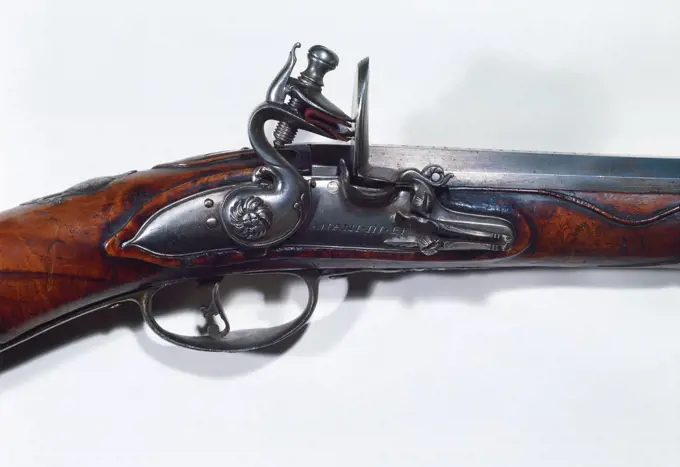
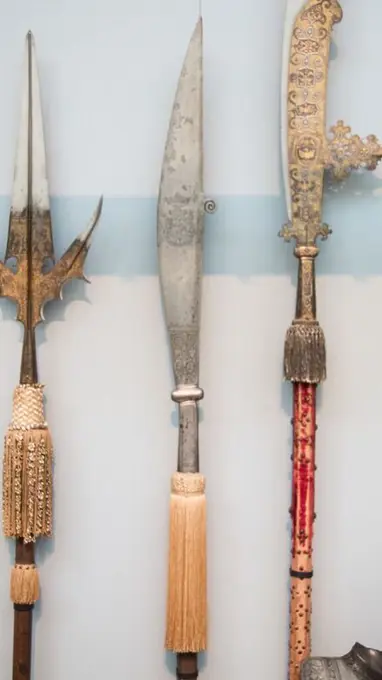
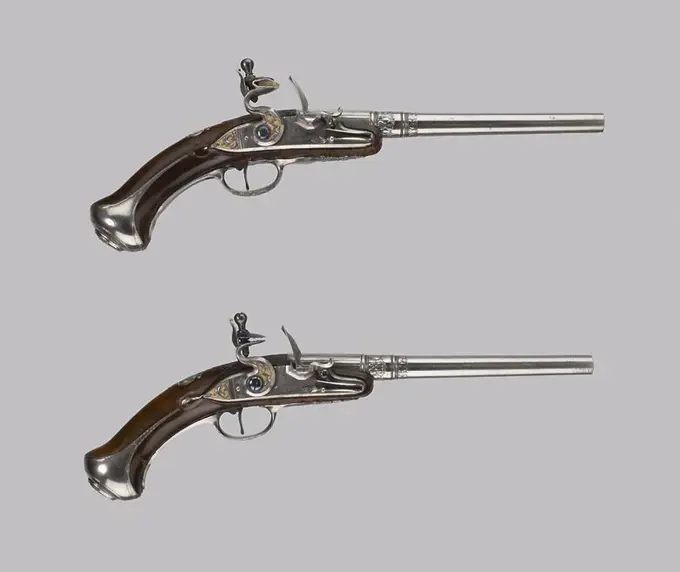
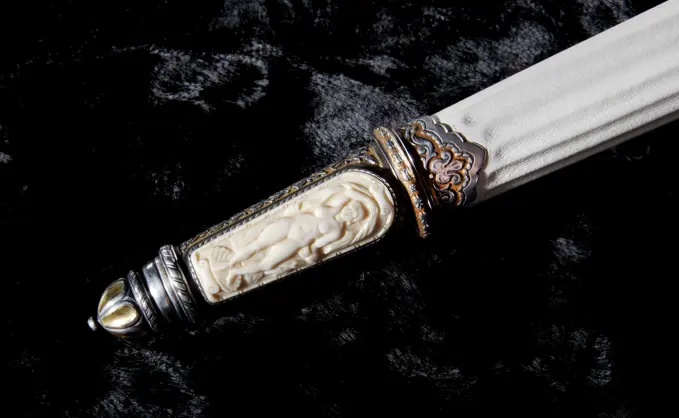
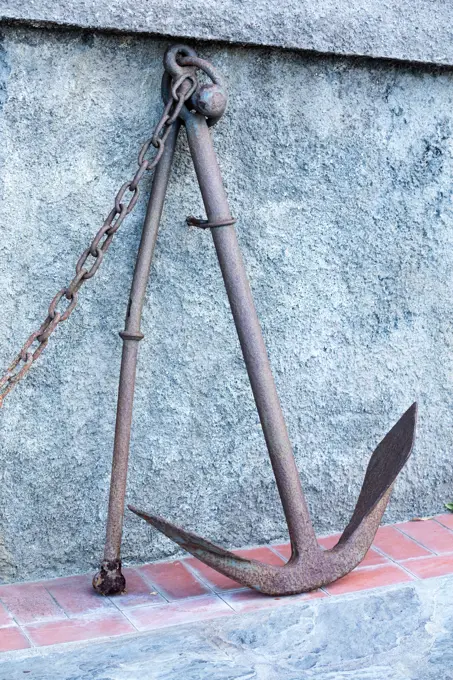
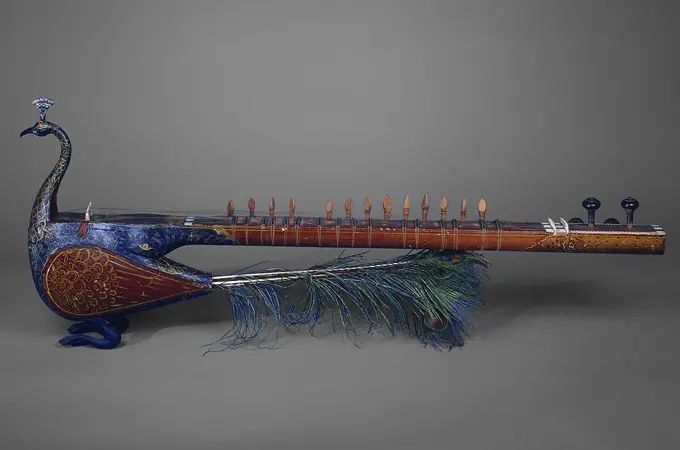
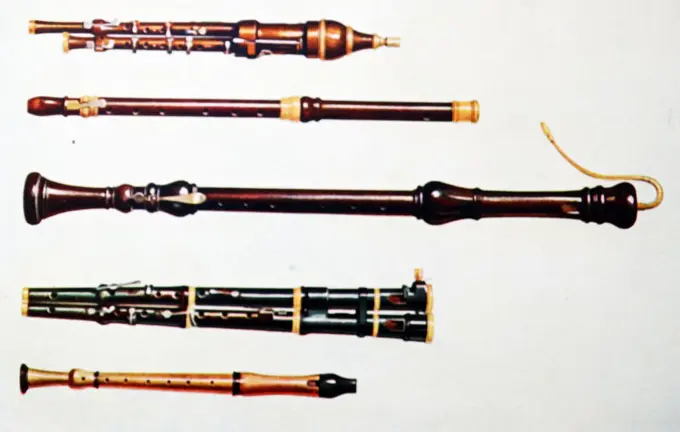
Pair of Spurs Made 1800-1900 France. Iron .Insertbayonet, Abraham du Cellieé, c. 1768 - c. 1785 bayonet Insertbayonet or plugbayonet. The long dagger has such a grip formed that it fits in the course of a gun. The Palmhouten Ostr has turned in the form of a baluster and equipped with a yellow -cut cap; The rest of the previously gilt, broneloper batter includes a small pare bar and a shell -shaped bump plate. The straight, six -square blade is etched on both sides with a panel with a signature and a martial trophy, a panel framed by curls and a basket with praise. Amsterdam wood (plant material). brass (alloy). gilding (material) striking (metalworking) / etching / gildingFork and knife ca. 1750 British, Staffordshire. Fork and knife. British, Staffordshire. ca. 1750. Glazed earthenwarePartisan. Culture: Italian. Dimensions: L. 93 1/2 in. (237.5 cm); L. of head 16 7/8 in. (42.9 cm); W. 2 7/8 in. (7.3 cm); Wt. 3 lbs. 6 oz. (1530.9 g). Date: ca. 1700. Museum: Metropolitan Museum of Art, New York, USA.Flight gun. Part of a couple. The tail of the lock plate has been kicked; Unmarried on an engraved strand beads under the pan and the signature. The round loop is flattened on top and becomes wider at the trumpery; On the back of a ring with a deep keypad for the awareness that goes through to the tail of the loop; Iron visor grain; In contrast to 142-A, 142-B is not stamped at the bottom with a brand in the form of a chair under a crown. The flask from blackened walnut is easily cut. The previously gold-plated, selector batter consists of two charging bokekers in embossed, the tractor bracket, a symmetrical screw plate of leaflets with placing embossed embossing on either side of a mask, a white, oval thumb plate framed by acanthus drinks and with an acanthus leaf on the bottom, and an unmedged kolf cap with stepped traces and an octagonal flask plate with a ball on it; The loading stick has a hood of Koehoorn.Dubeltówka with rock castles Kownacki, Andrzej (Fl. 1760 1800)Knife (Netherlands), ca. 1730; steel, silver; L x W: 10.1 x 0.8 cm (4 x 5/16 in.); The Robert L. Metzenberg Collection, gift of Eleanor L. Metzenberg; 1985-103-139-bPick, ca. 1875, containers, Decorative Arts, PickRapier German late 16th century The rapier was the principal civilian sidearm throughout the sixteenth and seventeenth centuries. Designed for cut-and-thrust fencing of progressively complex techniques, the rapier is characterized by a double-edged blade with an acute point and an elaborate guard for the hand. The guards, usually of iron or steel, were subject to a variety of embellishment. They were engraved, chiseled, gilded, damascened, and encrusted in gold and silver in keeping with fashionable styles. Unless otherwise noted, the materials, attributions, and dating given here refer to the hilts. Rapier blades, invariably of steel, bear a variety of makers marks denoting their origin in the two principal centers of blademaking, Toledo in Spain and Solingen in Germany. View more. Rapier. German. late 16th century. Steel, leather. SwordsIndian stuffVL Vance, Cast Iron Hitching Post, c 1941 Cast Iron Hitching PostDouble-Barrel Revolving Flintlock Holster Pistol (One of a Pair). Gunsmith: T. (Thomas) Thiermay (Flemish, active about 1720-50); Barrelsmith: Daniel Thiermay (Flemish, active about 1700-40); Liège. Date: 1720-1730. Dimensions: . Steel, brass, gilding, and walnut. Origin: Liège. Museum: The Chicago Art Institute, Chicago, USA.Dagger with Sheath. Culture: Persian or Turkish, Ottoman. Dimensions: H. with sheath 14 1/2 in. (36.8 cm); H. without sheath 12 9/16 in. (31.9 cm); H. of blade 8 in. (20.3 cm); W. 2 in. (5.1 cm); Wt. 7.4 oz. (209.8 g); Wt. of sheath 5 oz. (141.7 g). Date: 18th-19th century. Museum: Metropolitan Museum of Art, New York, USA.Fruit fork and knife 18th century French. Fruit fork and knife. French. 18th century. Steel, gilded copper. Metalwork-SteelFork (possibly Poland); silver, steel; L x W: 17.2 x 1.2 cm (6 3/4 x 1/2 in.); The Robert L. Metzenberg Collection, gift of Eleanor L. Metzenberg; 1985-103-100-bObject ID #18803641; silver, steel; L x W: 19.7 x 1.3 cm (7 3/4 x 1/2 in.); The Robert L. Metzenberg Collection, gift of Eleanor L. Metzenberg; 1985-103-100-cDagger, late 1600s. Italy, late 17th Century. Steel and ivory; overall: 30.2 cm (11 7/8 in.); blade: 20.3 cm (8 in.); quillions: 6.4 cm (2 1/2 in.). The carved grip of this dagger depicts the female followers of Bacchus, the Roman god of wine.. It consists of a opening up of fighting and corrosive animals.Model Field Cannon with Carriage and Wedge. Austrian, possibly Dutch. Date: 1682. Dimensions: Overall length of cannon: 22 11/16 in. (58 cm)Cliber: 1 1/4 in. (3.2 cm)distance between ends of trunnions: 5 3/8 in. (13.7 cm)Weight: 37 lb. 14 oz.Length of carriage: 33 3/8 in. (84.8 cm)Distance between muzzle end of cannon and end of trail: 42 11/16 in. (108.5 cm)Diameter of wheels: 11 3/4 in. (29.9 cm)Distance between outside surfaces of hubs: 14 13/16 in. (37.6 cm)Width of cheek end: 5 1/8 in. (13 cm)Width of trail end: 8 5/8 in. (22 cm)Weight of carriage: 22 lb. 4 oz. Bronze, wood, and iron. Origin: Austria. Museum: The Chicago Art Institute, Chicago, USA.Knife (Kukri) with Two Sheaths, Two Small Knives, and Two Sharpening Pouches. Culture: Indian or Nepalese, Gurkha. Dimensions: H. with sheath 18 1/2 in. (47 cm); H. without sheath 17 3/8 in. (44.1 cm); W. 1 11/16 in. (4.3 cm); Wt. 14 oz. (396.9 g); Wt. of sheaths 9.1 oz. (258 g); small knife (c); H. 6 1/4 in. (15.9 cm); W. 7/8 in. (2.2 cm); Wt. 1.3 oz (36.9 g); small knife (d); H. 6 1/4 in. (15.9 cm); W. 7/8 in. (2.2 cm); Wt. 1 oz. (28.3 g). Date: 18th-19th century. Museum: Metropolitan Museum of Art, New York, USA.Travel pistol with a rock castle and a folding bayonet unknown scruxDaggers excavated at Ur, Iraq, Middle EastDonderbus, Laurens constant, c. 1760  Military or Marine-Donderbus. The lock carries a signature and is stamped on the inside with the letters LB. Initially the course does not become wider, but towards the oval tromp does; The loop is stamped with the capital letters pH. The flask is hardly cut. The yellow -leaking batter includes a battery -shaped screw plate and a pump plate that runs along the top; The loading stick has a yellow cap. Rotterdam brass (alloy). wood (plant material). iron (metal) engraving / cuttingCrooked Knife 1889 Canada or New England. Crooked Knife 319135Dubbelloops flint turning gun, Cornelis Coster, 1680 - 1690 flintlock pistol The lock is equipped with flower and leaf vines with a mask and a putto, partly in bass-relief, partially engraved and carries a signature. The two runs are mounted above each other. The flask has a groove on both sides with a place on one side in front of the cargo. The iron batter consists of, among other things, an ajour processed, curled screw plate and the flask hood with a cover plate with a chiseled mask. Utrecht iron (metal) engraving / cutting / striking (metalworking)Pair of Flintlock Box-Lock Pistols with Bayonets hallmarked for 1782-83 British, Birmingham, and Spanish Brass-barreled flintlock pistols mounted with spring-loaded bayonets were a common type in England during the last quarter of the 18th century. This pair features barrels and silver mounts that have been comprehensively carved with half-nude figures and animals in a manner that led former curator Stephen V. Grancsay to suggest that they may have been embellished by a craftsman in the Balearic Islands.. Pair of Flintlock Box-Lock Pistols with Bayonets. British, Birmingham, and Spanish. hallmarked for 1782-83. Steel, wood (walnut), silver, brass. Birmingham; Balearic Islands. Firearms-Pistols-FlintlockFlint gun with belt hook, Gerrit Lasonder (I), 1680 - 1690 flintlock pistol Military gun with belt hook. The lock is engraved with praise and a signature. The loop is divided by three rings, one of which around the tromp; On the back marked with the weapon of Utrecht and on the bottom with a C. The flask is hardly cut. The iron batter consists of two loading stokkers with cracks between the rings, a screw plate in the shape of a stretched S with a belt hook over it and a pump hood engraved with praise and edges; The chest of drawers has an iron roof. Utrecht iron (metal). wood (plant material) engravingDubbelloops Flint turning gun, Anonymous, 1650 - 1655 flintlock pistol Flint gun with rotating walking; Part of a couple. The lock consists of three plates: a back plate with the lock mechanism and the two front plates, each with a pan and a fire sample; De Haan has been edited Ajour in the form of a cat; The lock is engraved with flower vines. The two mounted runs are decorated with arabesks, clarified in silver; Pumped and engraved at the trumps on the back and in the middle; marked cmil and small brands that can be deciphered underneath, including an F and T. The flask consists of two parts: the grooved frontade, on one side in front of the chest of drawers, and the handle that runs into a flask button with an ebony plate decorated with at the bottom with turned silver thread, which is covered again by an ivory plate engraved with a flower challenge; The frontade is equipped with an ivory roof and easily cut. The batter consists of two silver loading stickers engraved with cross floRadslotpistool, anonymous, c. 1575 - c. 1600  Radslot gun. Radslot is secured with two lock screws. The loop is partly octagonal (back) and round. Narrow profile band in the middle. The drawer is decorated with a simple grain motif and inlaid with engraved tracks plates. At the bottom the letters H.W. Between the flask button and pumping and engraved legs. Signed and marked in the room: H R. Condition good. Almost identical gun: NG-NM-11422-A. Germany (possibly) iron (metal). pear (wood). bone (material) forging / cutting / engravingShooting  Garłacz with the Skałkowy Castle M.1777Flintlock Pistol, c. 1690-1700. Gio Borgognone (Italian), Lazarino Cominazzo (Italian). Steel, chiseled steel with walnut stock; overall: 49.5 cm (19 1/2 in.); barrel: 30.9 cm (12 3/16 in.); bore: 1.3 cm (1/2 in.).Glaive of the Bodyguard of Giovanni Battista Bourbon del Monte (1541-1614) ca. 1590-1600 Italian, Brescia The long, knife-like blade has a convex cutting edge and flat back sharpened near the tip, with two molded spikes at the base. The back edge terminates in an ornamental scroll in the form of a dolphin, and a long, upward-curving parrying spike projects at an acute angle from the back. The lower half of the blade is etched on either side with a decorative cartouche enclosing the arms of Bourbon del Monte (azure, three fleurs-de-lis or, with a bend, gules overall), surmounted by a seven-pointed crown, above a figure of a warrior in Roman armor. The octagonal socket and the side straps are etched with strapwork, rosettes, and tiny figures of warriors within oval medallions. The wooden shaft of flattened octagonal section is studded with gilt-brass nail heads beneath which are traces of the original fabric covering.Italian staff weapons of this particular type, variously called faucharDagger with scabbard made of ivory, gold and silver; hilt and sheath are decorated with relief depicting animals and men on horseback, from Byblos, Temple of the Obelisks, LebanonTenor (Alto) Ophicleide in E-flat. Culture: Belgian. Dimensions: Overall: 19 x 86.5cm (7 1/2 x 34 1/16in.). Maker: Possibly by Charles Joseph Sax (Belgian, Dinant, Belgium 1790-1865 Paris). Date: ca. 1825-65. Museum: Metropolitan Museum of Art, New York, USA.Glaive of Ferdinand, Archduke of the Tyrol (1529-1595). Culture: German. Dimensions: L. 29 17/32 in. (75.01 cm); W. 3 11/32 in. (8.51 cm). Date: ca. 1556. Museum: Metropolitan Museum of Art, New York, USA.Mirror of the Chief of the Southern Tens Reniseneb ca. 1810-1700 B.C. Middle Kingdom This mirror, its handle in the form of a papyrus plant, is inscribed with the name of Reniseneb who had a judicial title translated as "Great One of the Southern Tens." Reniseneb's coffin was discovered in 1910 during excavations by Howard Carter and his patron, Lord Carnarvon. It was at the bottom of the shaft of a pit tomb (CC25). Although the two chambers off this shaft had been robbed, the coffin and mummy of Reniseneb were untouched by thieves. Unfortunately, dampness had caused severe damage to both. This mirror was found in the wrappings over the chest of the mummy. A necklace (26.7.1349) and a shen amulet (26.7.1347) were found at the neck, and a small hippopotamus figurine (26.7.898) was found in the wrappings at the small of the mummy's back.The mirror is currently displayed in the upper tray of a cosmetic box found in the same pit tomb (26.7.1438).. Mirror of the Chief of the Southern Tens RCaliber (test)  7, 1/8 of the line Dżons i SynLeprosy clapper. Carried by those who suffered from the disease as a way of warning people of their approach and possibly as an attraction for donations. From England, made from wood, 17th Century.Ancient sabre Ancient sabre. A smart variant of the fighting weapon Copyright: xZoonar.com/ValeryxxSibrikovx 2424027Knife (Barong) with Sheath. Culture: Philippine, Subanon. Dimensions: L. with sheath 17 1/2 in. (44.5 cm); L. without sheath 13 1/2 in. (34.3 cm); L. of blade 7 7/8 in. (20 cm); W. 3 in. (7.6 cm); Wt. 13.5 oz. (382.7 g); Wt. of sheath 6.9 oz. (195.6 g). Date: 18th-19th century. Museum: Metropolitan Museum of Art, New York, USA.Vuursteenjachtgeweer.The lock is engraved with brords, branches and a signature. The loop is decorated with rings in which there is always a gold-plated, granulated groove, and the signature; The grain is from Geelkoper; Mounted at the bottom with the coat of arms of Amsterdam and two other brands: HI and DB. The root nutshell flask has simple carving. The batter is made of cast iron and consists, among other things, from four loading bokeers and a facilitated, ajour processed screw plate with tendrils and a mask, an incredible thumb plate framed by tendrils and with a mask, and the flask with a point in the shape of a leaf ; The loading stick has a hood of Koehoorn.Smallsword. Culture: British, probably London. Dimensions: L. 39 in. (99.1 cm); L. of blade 32 3/16 in. (81.7 cm); Wt. 1 lb. (454 g). Sword cutler: Attributed to John Bland (British, London, active ca. 1780-85). Date: ca. 1780-85.This unusual Neoclassical hilt combines fashionable cut-steel beads with panels of blued and gold-encrusted steel. It is attributed to the London sword-cutler John Bland, who retailed several hilts of similar workmanship. Museum: Metropolitan Museum of Art, New York, USA.Ornamental Detail, 1775-1799. France, 18th century, Period of Louis XVI. Gilt bronze; overall: 26.7 x 3.9 cm (10 1/2 x 1 9/16 in.).Kruittester. Kruittester in pocket format. The handle is from Koehoorn; There is a glass ring on the front. The short loop of the test mechanism is from previously gold-plated selector and mounted on a ringed picture that has been soldered at the handle; The Zundgat is on top; The loop is signed; A mounting plate is soldered under the loop, engraved with a leaf; There is a wheel with the numbers 1 to 9, which excludes the trump valve.Shaft-Hole Axe HeadKris with Sheath. Culture: Balinese. Dimensions: L. with sheath 27 1/4 in. (69.2 cm); L. without sheath 26 in. (66 cm); W. 3 3/4 in. (9.5 cm); Wt. 1 lb. 8 oz. (680.4 g); Wt. of sheath 7.1 oz. (201.3 g). Date: 19th century. Museum: Metropolitan Museum of Art, New York, USA.A shotgun with a rock castle like a janchark unknown scrunging plantPair of Knives with Sheath. Culture: Javanese. Dimensions: H. with sheath 8 7/8 in. (22.5 cm); knife (a); H. without sheath 5 7/8 in. (14.9 cm); W. 15/16 in. (2.4 cm); Wt. 1.2 oz. (34 g); knife (b); H. without sheath 6 in. (15.2 cm); W. 15/16 in. (2.4 cm); Wt. 1.2 oz. (34 g); sheath (c); Wt. 2.1 oz. (59.5 g). Date: 16th-19th century. Museum: Metropolitan Museum of Art, New York, USA.Fauchard 1550-75 Italian, Venice. Fauchard. Italian, Venice. 1550-75. Steel, wood, textile, copper alloy, gold, metallic thread. Venice. Shafted WeaponsSpanish sword collection detail, sigle XVIVuursteenpistool.The lock plate has a stepped tail and is engraved with prainmesh in panels and a signature; The rooster is decorated in bas-relief. The loop is stamped both up and bottom with the coat of arms of Utrecht and has a rib over over to the trump; On the tail of the loop there is a wing-shaped awareness, the visor grain is made from Geelkoper. The flask is cut with acanthus leaves. Previously gold-plated, selector attachment with partially contemporary relief decoration, on the two octagonal loading boomers, consists of a symmetrical screw plate of ajour machined curls, partially granulated, a tractor bracket framed by leafs, a unprocessed, oval thumb plate with a crown above, on either side birds And a mask underneath, and a kolf hood decorated with brords and a mask at the bottom; The loading stick is equipped with a glass cap.Sword belonging to King Sancho IV of Castile (1258-1295). National Arms Factory, Toledo, 20th century. Replica. Detail. Army Museum. Toledo, Spain.Rapier. Culture: Italian. Dimensions: L. 43 1/4 in. (109.9 cm); L. of blade 37 in. (94 cm); Wt. 2 lb. 6 oz. (1077.3 g). Date: ca. 1550-60. Museum: Metropolitan Museum of Art, New York, USA.Rapier Italian ca. 1620 The rapier was the principal civilian sidearm throughout the sixteenth and seventeenth centuries. Designed for cut-and-thrust fencing of progressively complex techniques, the rapier is characterized by a double-edged blade with an acute point and an elaborate guard for the hand. The guards, usually of iron or steel, were subject to a variety of embellishment. They were engraved, chiseled, gilded, damascened, and encrusted in gold and silver in keeping with fashionable styles. Unless otherwise noted, the materials, attributions, and dating given here refer to the hilts. Rapier blades, invariably of steel, bear a variety of makers marks denoting their origin in the two principal centers of blademaking, Toledo in Spain and Solingen in Germany. View more. Rapier. Italian. ca. 1620. Steel, silver, brass wire. SwordsKnife and Sheath 18th century. Knife and Sheath 446993big tailor shears big tailor shears isolated on white background Copyright: xZoonar.com/ValeryxVoennyyx 5455381ancient sword on a white backgroundPercussion army pistool model M 1815.Percussion army pistool model M 1815. Smooth, round loop, which passes the room in a five-sided section. A percussion fireplace is closed at the top of the room. On the tail piece of the loop an unreadable brand. In the room: 1816. is (crown above) and GB. Slot: Original flint battery lock, later adapted for percussion. The brass Kruitpan has been sawn off. Signature: 16, SB and crown above each other. Wood: walnut. When a round stamp in which GH-Delft-1848. Batter: brass. At the front of the tray is an open-worked tube, which serves to confirm the loop; counterplate; trigger bracket; Kolfkap.Copper trumpet. .Indicator, P.N. Rijk, A.M. de Jong, 1865 indicator McNaught's indicator of steam engines consists of a tube -shaped body to which a rotating tube is attached to an arm. A string, which has been rolled around the tube at the bottom, can be attached with an end to a moving machine part, so that the tube rotates with each stroke and then reversed in its original position by the rolled up spring in the tube. A paper is attached to the tube. In the body a piston with piston rod is applied under a spring, which is moved up and down by steam or vacuum. With the tap on the underside, the body is screwed onto the cylinder, so that the piston of the indicator is the same with the piston of the steam engine and proportionally moves up and down with the steam and vacuum pressure. instrument maker: Rotterdaminstrument maker: Rotterdamafter design by: United Kingdom brass (alloy). copper (metal). iron (metal). ropeFlint gun for the Heavy Cavalry, Dutch Armee, Model 1820, Anonymous, 1820 flintlock pistol Flint gun or cavalryist for the heavy cavalry, M1820 for the Dutch Armee; Part of a couple. De Haan has a heart -shaped recess; Pan made of yellow -buyer. The barrel is marked on top with an E, LG, and a star in an oval, and on the bottom with, among other things, the figure 56; Equipped with a blazon with a dot; The loading stick is permanently attached with a set of hinged brackets under the tromp. The flask is curved. The iron and yellow -leaking batter consists of a steel chest of drawers attached to a bracket and a strip that connects the tail of the barrel with the pump hood; The rest of the batter is yellow buyer and consists of a treadmill with two strips with an integrated chest of drawers, an L-shaped screw plate, a wide tractor bracket and the flask hood.  iron (metal). wood (plant material).Double flint gun. Double flint gun or dock gun; Part of a couple. The two locks are attached to the left and right; The right lock serves the top loop; The locks are engraved with praise and have a dragon head on the rooster; Equipped with an inscription. The two runs are mounted above each other; On the back of praise against a granular background. The flask has a grooved vain sauce and the loading stick on the left. The iron fittings is unfromed, except the brackets that is decorated in the same way; The kolf hood is engraved with praise; The loading stick is equipped with an iron hood.Imperial Knife with Sheath. Culture: Chinese. Dimensions: L. with sheath 11 1/4 in. (28.6 cm); L. without sheath 10 9/16 in. (26.8 cm); W. 15/16 in. (2.4 cm); Wt. 3.5 oz. (99.2 g); Wt. of sheath 4.9 oz. (138.9 g). Date: 18th century.This elegant knife was intended as a personal accessory for a member of the imperial court, rather than as a weapon. It is part of a group of several known examples, all of which are similar in shape, size, and richness, but with each having some differences, particularly in the style and decoration of the sheaths. The gilding of their blades is a distinctive and highly unusual feature; the steel beneath the gold is purposely roughened to create a mottled, naturalistic surface to contrast with the refined precision of the accompanying hilt and sheath. At the base of the spine of the blade, the Qianlong mark is inlaid in gold letters: Qianlong nian zhi (Made in the Qianlong reign). The decoration on the sheath imitates European gold and enamel work.Swivel Gun and Two Charges or Grape Shot. Bronze Charging Enterbus on a standard. The loop has a 52 mm caliber and a conical room. On the right side of the short drawer, a heavy flint slot is applied, the pandeseling of which is collected by a spring when it opens. Behind an iron handle. The Enterbus hangs in an iron mik. Two green painted grapes.Halberd and axe' by F. G. Solntsev. This artwork features a chromolithograph showcasing a halberd and an axe, created between 1849 and 1853 in Moscow. The piece is a watercolor illustration by Acad. F. Solntsev and produced by F. Dreher. It reflects the artistry of Russian chromolithographs from that period and was published by Tip. A. SemenaKnife with Sheath. Culture: Indonesian, Sulawesi (possibly the Philippines). Dimensions: H. with sheath 6 5/8 in. (16.8 cm); H. without sheath 6 1/4 in. (15.9 cm); W. 2 1/16 in. (5.2 cm); Wt. 0.9 oz. (25.5 g); Wt. of sheath 0.6 oz. (17 g). Date: 18th-19th century. Museum: Metropolitan Museum of Art, New York, USA.Tibet: Hayagriva Dorje Phurba Dagger, from Lhasa. A tantric ritual object with a crystal point.Double lock pistol with a pair with rock castles after General Stanisław Gawroński 1784 1860 ChiefESPADA DE FERNANDO EL CATOLICO - EMPUÑADURA CHAPADA EN ORO - SIGLO XV - FOTOGRAFIA EN BLANCO Y NEGRO - AÑOS 60. Location: CATEDRAL-CAPILLA REAL-INTERIOR. GRANADA. SPAIN.Percussion army pistool Model M 1815, Anonymous, c. 1815 - c. 1816  Percussion army pistool Model M 1815. Smooth, round loop, which turns into the room in a five -sided part. A percussion was taken into the top of the room. On the tail piece: m 181 .. marked on the course: 1816, t (crown above it), yes (crown above) s (crown above it) and gb. Slot: Percussieslot, marked: D (crown above it). Wood: walnut. Batter: brass: at the front of the drawer is an openwork sleeve, which serves to confirm the loop; Tegenlotplaat; tractor bracket; Kolf hood. Netherlands Lads, bat: Walnut (Hardwood). Tractor bracket, batting hood: brass (alloy). cock, walk, lock plate: Iron (Metal)Parrying Dagger, c. 1600. Germany, early 17th Century. Steel, wire grip with arched quillions and side ring; overall: 34.6 cm (13 5/8 in.); blade: 22.7 cm (8 15/16 in.); quillions: 7.6 cm (3 in.); grip: 10.9 cm (4 5/16 in.).Flintlock pistol, by Unknown, 18th Century, Unknow. Italy, Piemonte, Turin, Royal Armory. Detail. Firearm trigger flintlock barrel wheel.Mannlicher Mauser Pattern 1888 rifle SPANDAU, Schlegelmilch, Louis factoryKnife, ivory, steel, brass, Scimitar-shaped blade, humped curve upper edge, angled point. Baluster neck and brass baluster ferrule. Ivory handle curved with deep upward spirals, surmounted by male head in military headgear and moustache., Germany or the Netherlands, 1675-1700, cutlery, Decorative Arts, KnifeGlaive of the Bodyguard of Guglielmo Gonzaga (1538-1587), Duke of Mantua and Monferrato. Culture: Italian. Dimensions: L. 8 ft. 5 1/2 in. (257.8 cm); L. of head 33 1/2 in. (85.1 cm). Date: ca. 1575. Museum: Metropolitan Museum of Art, New York, USA.War axe and mace on a wooden backgroundFlint belt gun, with emblem of the Westvriërisland Admiralty. Flint belt gun or thunderbus gun from a torque. The rooster of the lock is engraved with a curl and the screw with the usual slit; The inside of the lock plate is stamped with a D and the outside carries a signature. The loop starts straight and around and then narrowing slightly to the middle and then towards the trumpet wider and oval; The loop is stamped with a sign of two crossed anchors with an A and a W, the logo of the Westvrienvilia Admiralty, and the Arm of Amsterdam. The flask is easily cut and runs out in an unmedged, solid wood flask. The Geelkoperen attachment includes a lord and a loading cooker; The loading stick is made of steel; The iron belt hook has been filed.Anefo photo collection. Erre sword for General Eisenhower. August 29, 1947Table knife 18th century German or Swiss. Table knife. German or Swiss. 18th century. Steel, buckshorn, silver. Metalwork-SteelTwo butterknives.  Maker: Robert and William Wilson, American, active 1824-46Flintlock Blunderbuss with a Folding Butt 1775 Brescia. Walnut, ash, horn, iron, and steel .Flint Gordelpistool, with emblem of the Admiralty of Westfriesland, Johannes Rousseau, 1780 - 1795 flintlock pistol Flint beltstolool or thunder wooden tool from a couple. The rooster of the lock is engraved with a curl and the screw with the usual crack. The barrel starts straight and around and then a little narrow to the middle and then to become wider and oval towards the tromp; The loop is stamped with a sign of two crossed anchors with an A and a W, the emblem of the Admiralty of Westfriesland, and the Wapen van Amsterdam. The flask is simply cut and ends in an unadorned, solid wooden pump button. The yellow -lying batter includes a front loading tape and a loading sticker; The loading stick is made of steel; The iron belt hook has been made. Amsterdam wood (plant material). brass (alloy). steel (alloy) engraving / cutting  Hoorn (North Holland). EnkhuizenFlone bag gun. Pocket gun with flint slot; Part of a couple. The loop and the lock form a whole. The lock is like an open cabinet lock and is easily engraved with a signature; rainproof pan. The tapered loop is engraved on the back of Rococo Praise; Equipped with different rings, including the tromp as if it were a gun. The curve flask is largely decorated with asymmetrical curls of inlaid silver thread. The iron tractor bracket, engraved with rococo leaflets, can be pushed forward to block the trigger; The rest of the batter is made of cast silver with non-vis-à-vis relief decoration and consists of an ajour processed screw plate consisting of a trophy collection of weapons, musical instruments, the course of a cannon and a barrel with cannonballs, and a kolf cap with a grotesque mask; There is no provision for a loading stick.Aged grunge wood saw tool wooden boardPhoto of cold weapon on black backgroundFlintlock Turn-Off Holster Pistol (One of a Pair). Barrel Smith: Domenico Bonomino; (Italian, about 1635-c. 1700); Gunsmith: Johann Casimir Tanner; (German, 1691- 1764); Barrel: Brescia; lock and stock: Sonderhausen. Date: 1680-1690. Dimensions: Overall L. 39.3 cm (15 1/2 in.) Barrel L. 23.8 cm (9 3/8 in.) Wt. 1 lb. 14 oz.Caliber .48. Steel, gilding, lead, flint, walnut. Origin: Germany. Museum: The Chicago Art Institute, Chicago, USA.Spanish sword collection detail, sigle XVIPercussion Pistol with Case possibly 1844 Alfred Gauvain French This pistol may have been exhibited at the Exposition Universelle in 1855 in Paris, where Gauvain received a medal of honor for several pistols. Gauvain also showed decorated pistols at the international exhibitions held in London in 1849 and 1851.. Percussion Pistol with Case. French, Paris. possibly 1844. Steel, wood (ebony), gold, wood, textile. Paris. Firearms-Pistols-PercussionAncient sabre. A smart variant of the fighting weaponSmart dagger Smart dagger of the medieval soldier. It was used for hunting Copyright: xZoonar.com/VALERY-SIBRIKOVx 20020685Anchor with chain Anchor exposed on a wall with chain Copyright: xZoonar.com/MassimoxLamax 9330736Crossbow hunting of Emperor Maximilian I. Innsbruck. 16th century. Iron, steel, wood and bone. German Historical Museum. Berlin. Germany.Cannon, anonymous, before 1745 Cannon. Gun Mount. frame Bronze cannon, a complicated decoration at the top, partly cast in relief and then covered with silver; The surface of gold inlaid with silver, small rubies are used in a few places. Main form European. The cannon carries the symbols of the king of Kandy: a sun, half moon and Singalese lion. The wooden cane has paintings of animals and flowers. With a chop and kick. Sri Lanka bronze (metal). wood (plant material). silver (metal). precious stone (material). gold (metal). ruby (mineral) casting / inlay (process) / sawing  Sri Lanka. Kandy. NetherlandsTas (mayuri) 19th century Indian Popular at nineteenth century Indian courts, this bowed lute borrows features of other Indian stringed instruments, such as the body shape of the sarangi and the frets and neck of the sitar. There are four melody strings and fifteen sympathetic strings that sound when the instrument is played to accompany popular religious song. The peacock is the vehicle of Sarasvatî, the goddess of music, and it appears in Indian poetry as a metaphor for courtship.. Tas (mayuri). Indian. 19th century. Wood, parchment, metal, feathers. India. Chordophone-Lute-bowed-frettedPercussiepistool with two walks and four roosters, Frères Dewalle, c. 1844 - c. 1862  Percussiepistool with two walking and four roosters. Smooth damaged run. Two tractors. Iron cheststick. Engraving. Vizier grain. Liège Drawer, Kolf: Wood (Plant Material). Loop, lock, tractor bracket: Iron (metal). Tractor: Iron (Metal) engraving  NetherlandsBronze dagger, Shang dynastyModel of a bronze gun. Model of a gun with oval grape with acanthus leaves and nopes. Inscription on kulas band; Coat of arms between Kulasband and first fracture in relief. The coat of arms of the Frisian family of Haersma has an oak tree with a six-lasting star on the field and a French lily on the right. Above the weapon: a closed visor with leaf decoration; The helmet mark is a jerk with the letters ah. The letters AH refer to Aulus van Haersma, Grietman from Smallingerland. Dolphins between first and second fracture and decorations around second break / reel. On the shock relief decoration of acanthus leaves on substrate of regular well pattern. Necklace. Two smooth tapping. Zundgat with two cams. Administering rolling horse.Two Double Flageolets, a German Flute and two German Flutes Douces. The Flageolet is the last example of the 'flutes Douces' bored with reversed cones. The double flageolets were made by W. Bainbridge in London who specialised in instruments such as these.Carbine - Sharps Rifle Manufacturing Co. Sharps Rifle Manufacturing Co.Cleaver on stainless steel surface