Ceremonial Weapons and Tools

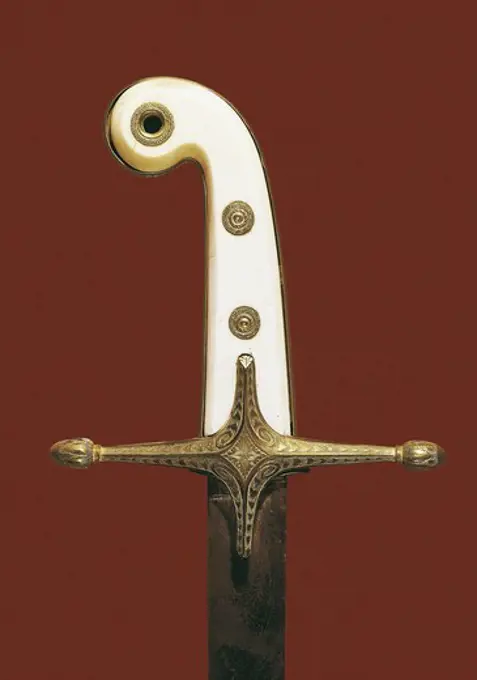
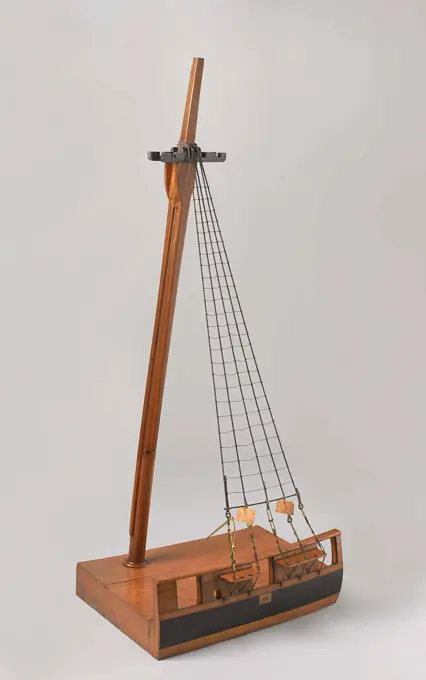
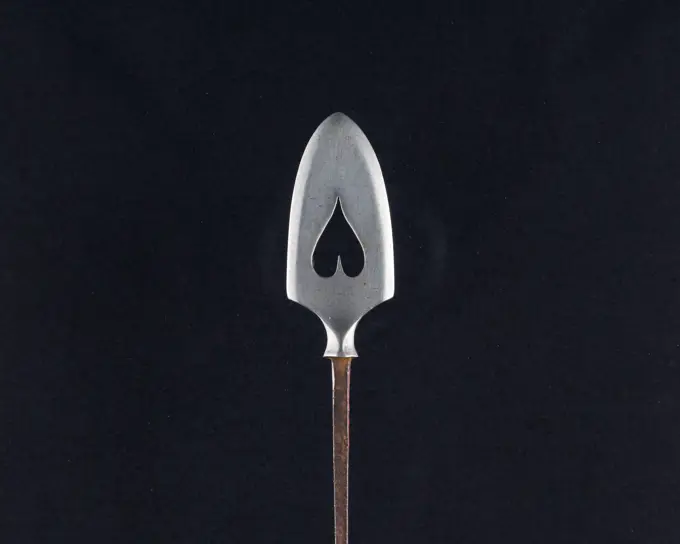
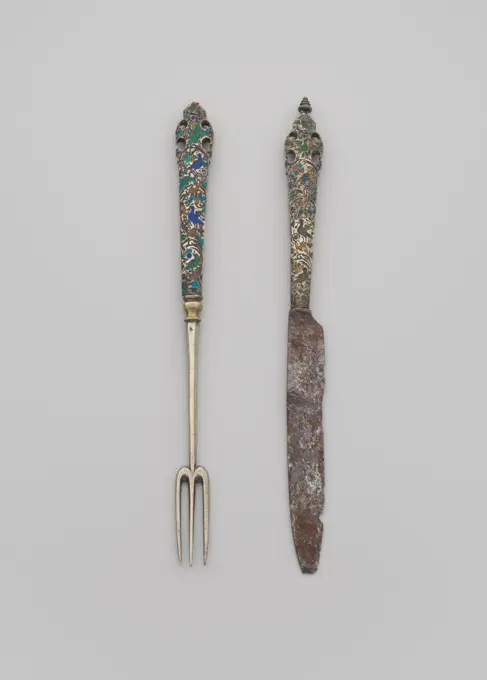
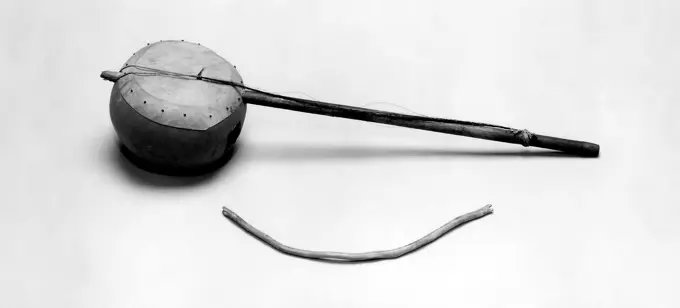
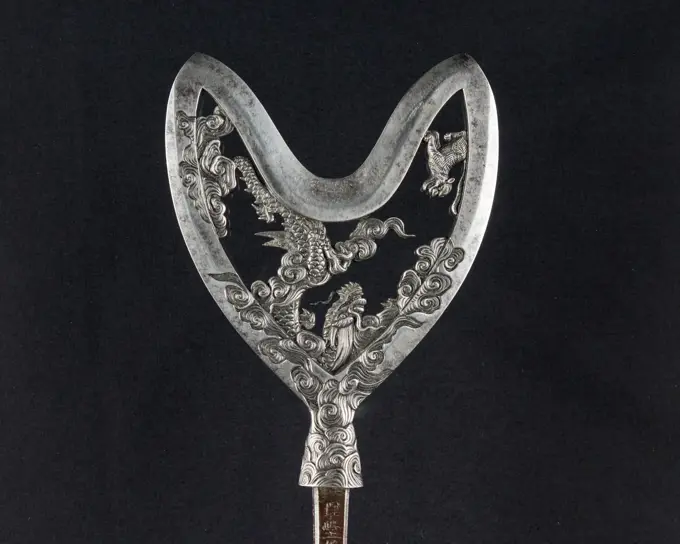
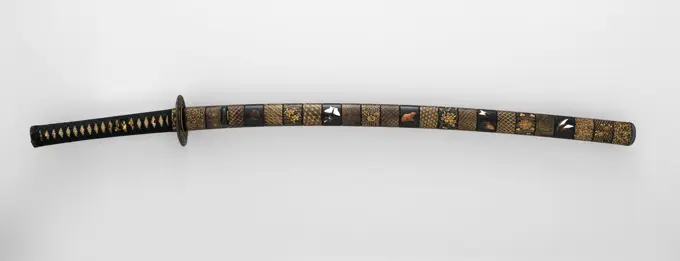
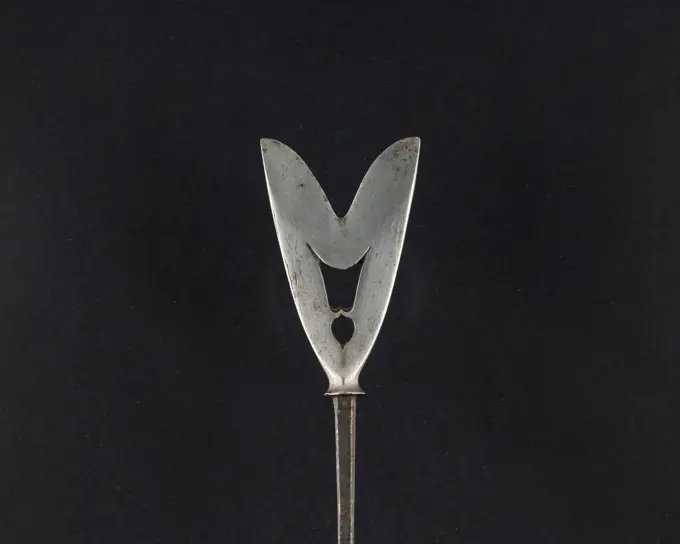
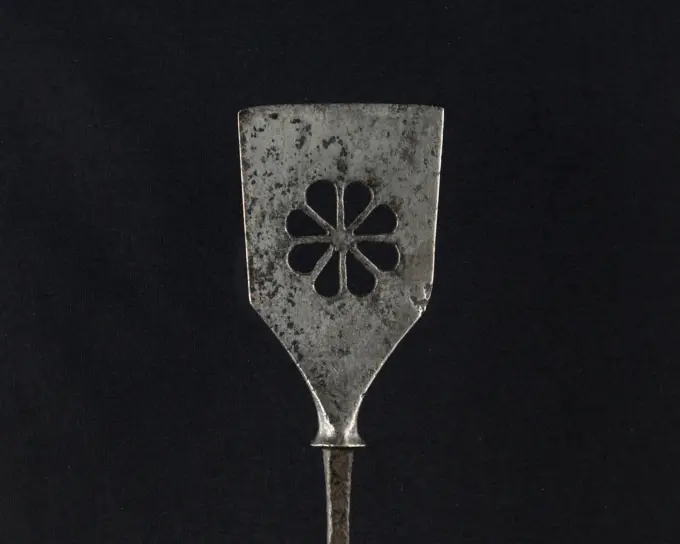
A selection of historical weapons including a ceremonial arrowhead, luxurious hanger, a decorative dagger, and a wooden forked staff, showcasing intricate craftsmanship.
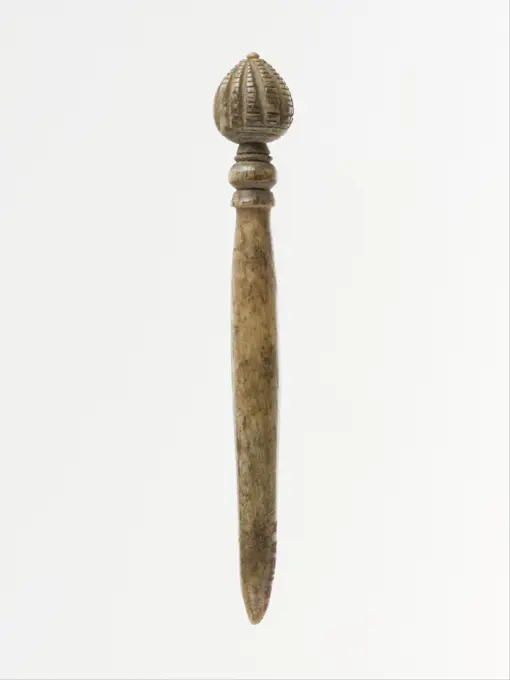
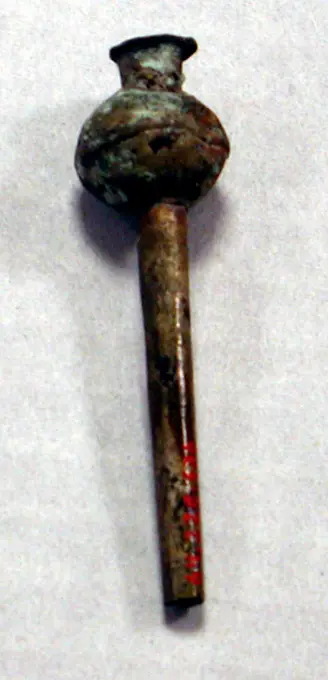
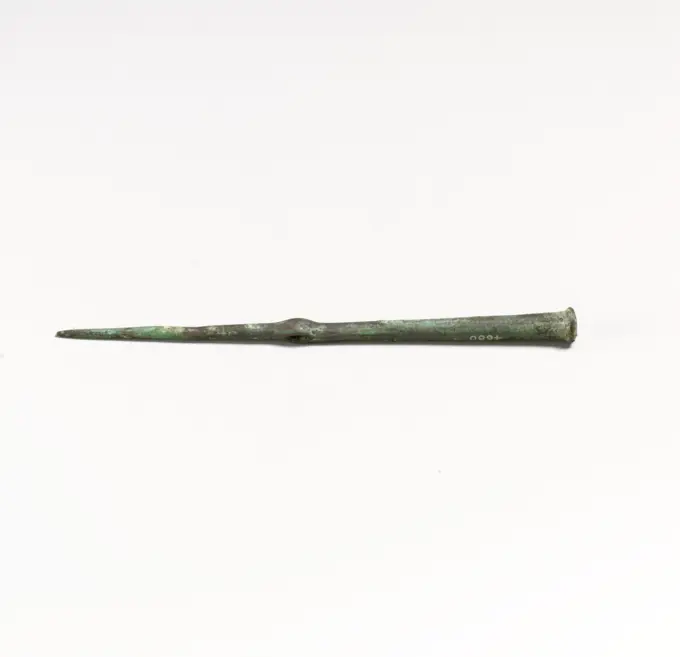
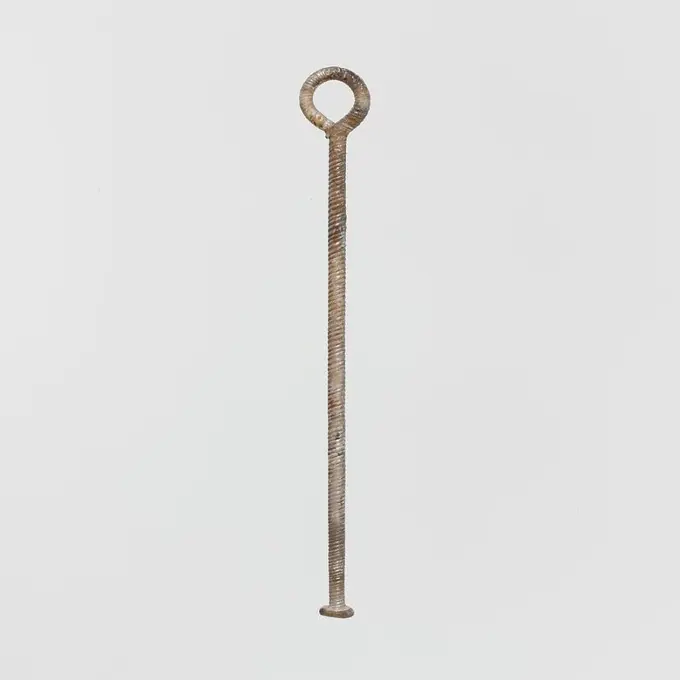
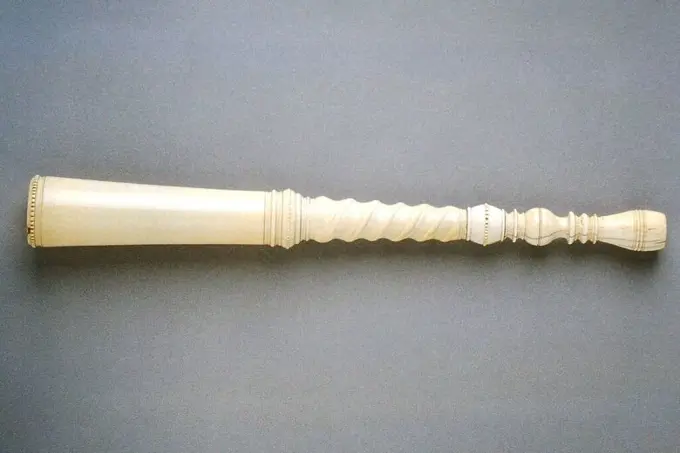
Bone pin ca. A.D. 300-450 Roman Similar pins found in excavations in Rome have been dated to the late Roman period (4th-5th century A.D.).. Bone pin 246463
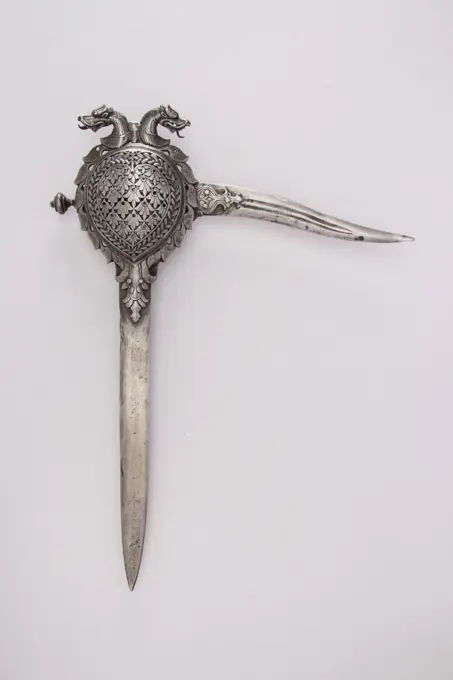
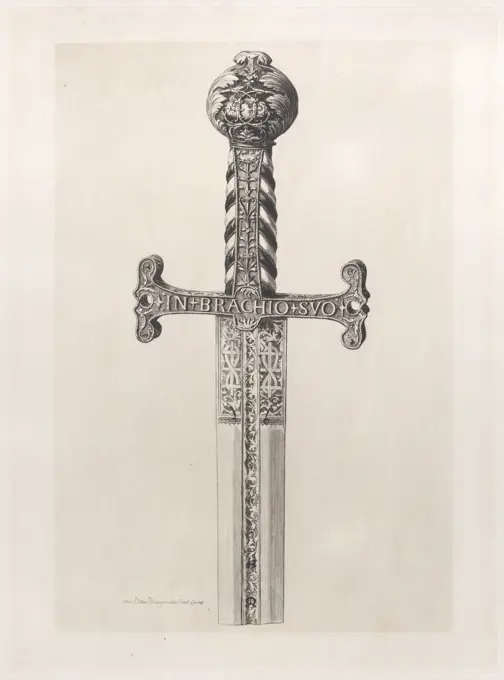
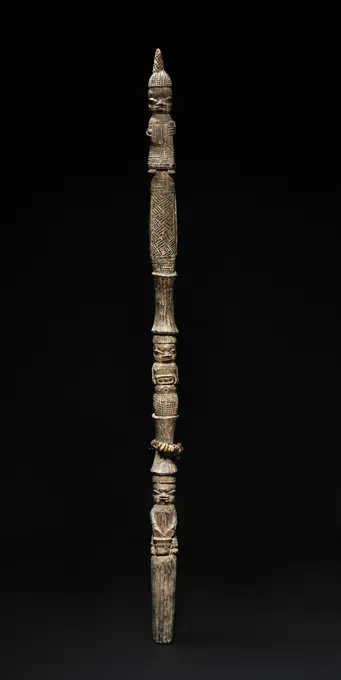
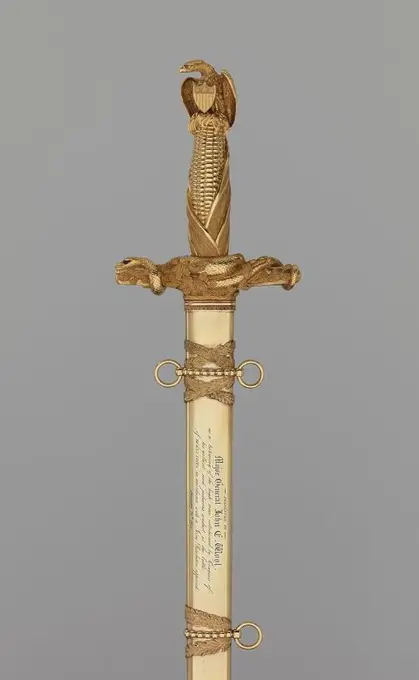
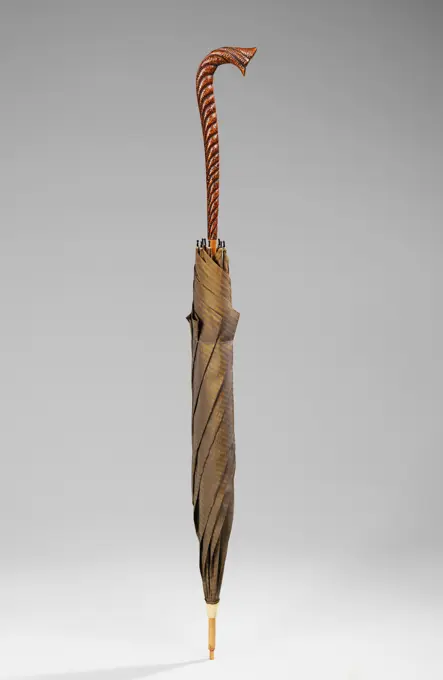
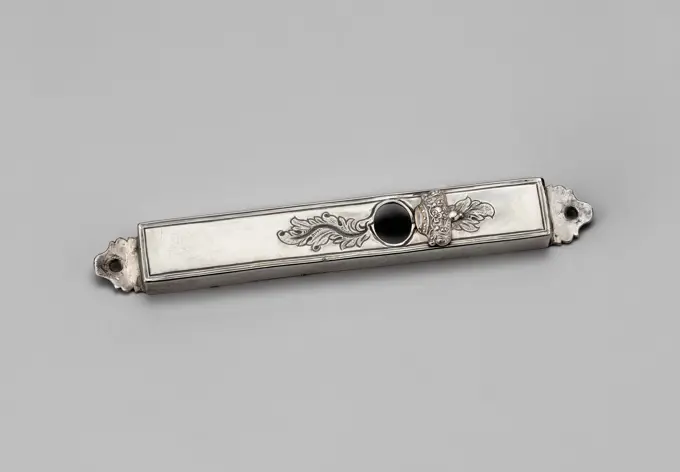
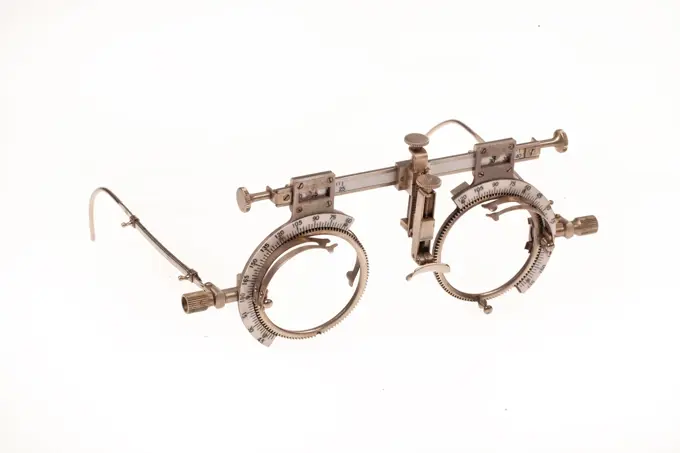
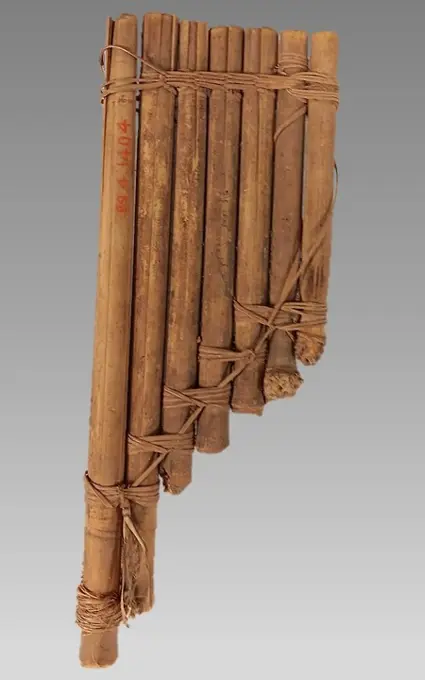
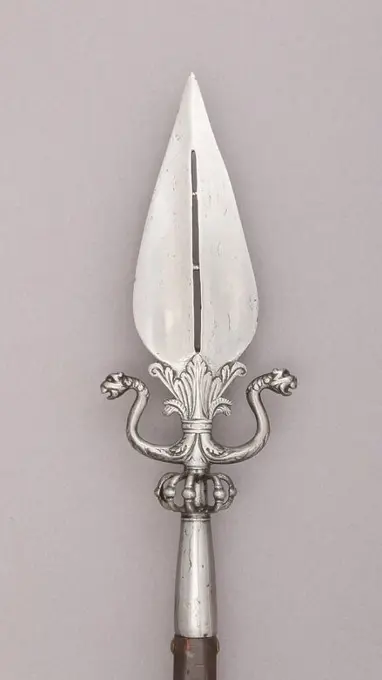
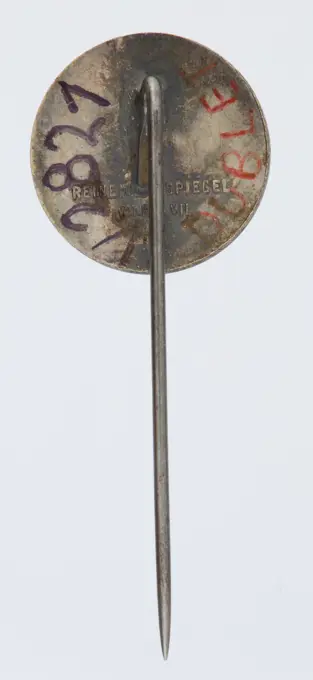
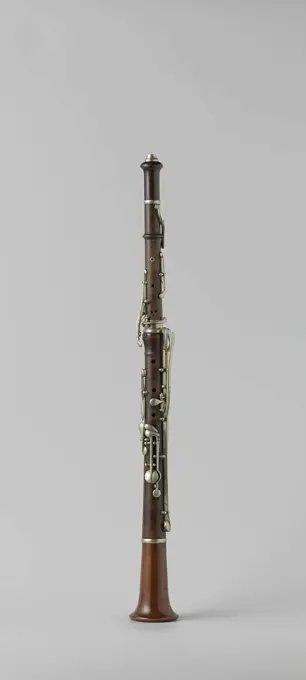
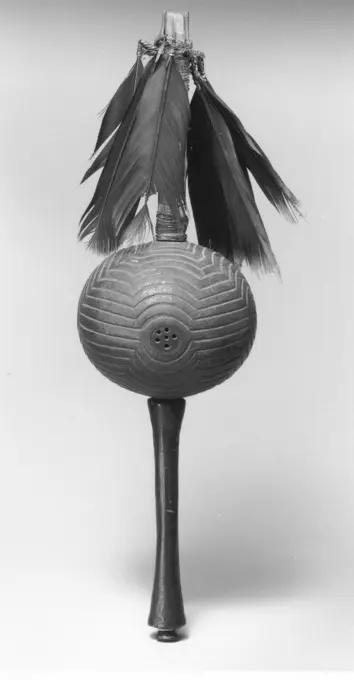
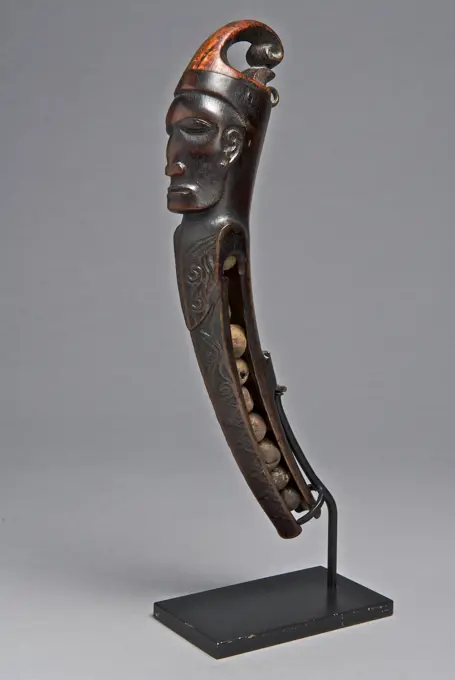
Musette, Thibouville Frères, c. 1915 - c. 1919 Musette van Palmhout, in two parts and with four brass valves. Marked on the lower part: Thibouville / Frères / IVry (Eure) / Brevetés / S. G. D. G. / F. de l'Armée. Ivry boxwood. brass (alloy) Musette van Palmhout, in two parts and with four brass valves. Marked on the lower part: Thibouville / Frères / IVry (Eure) / Brevetés / S. G. D. G. / F. de l'Armée. Ivry boxwood. brass (alloy)Pair of andirons with cross bar. Culture: French. Dimensions: Overall (andiron .60): 36 × 28 in. (91.4 × 71.1 cm);Overall (andiron .61): 35 × 27 in. (88.9 × 68.6 cm);Overall (cross bar .62): 43 in. (109.2 cm). Date: 15th century. Museum: Metropolitan Museum of Art, New York, USA.Tool for Basketwork orWeavingDagger (Katar) early 17th century Indian, Thanjavur; straight blade, European. Dagger (Katar) 31511François Ier's Sword 1864 Jules-Ferdinand Jacquemart. François Ier's Sword. Gems and Jewels of the Crown. Jules-Ferdinand Jacquemart (French, Paris 1837-1880 Paris). 1864. Etching. PrintsCrane hook hooks of a cargo crane on a cargo shipRattle Staff (ukhuhre), 1900s. Nigeria, Benin Kingdom, Ẹdo peoples, member(s) of the Igbesanmwan (wood and ivory carvers) guild. Wood, paint, cowrie shells, and plant fiber; overall: 149.5 x 7.5 x 8 cm (58 7/8 x 2 15/16 x 3 1/8 in.). Rattle staffs (ukhuhr) are instruments of memory and sound. Though this staff represented a single elite man, it evokes the individuals in his lineage. Inspired by bamboo, it is divided into segments that link three carved men dressed in coral-beaded finery. Benin courtiers still carry these staffs during celebrations and rituals. By banging the staff on the ground, a rattling sound emanates from its open center, where a wooden cylinder rolls freely. The noise alerts ancestral spirits to prayers offered on their behalf. When not in use, they are stored on ancestral altars.Baluster mid-18th century British. Baluster. British. mid-18th century. Deal. WoodworkCongressional Presentation Sword and Scabbard of Major General John E. Wool (1784-1869). Culture: American, probably Baltimore. Dimensions: L. with scabbard 39 3/16 in. (99.6 cm); L. without scabbard 38 13/16 in. (98.5 cm); L. of blade 31 7/16 in. (79.9 cm); W. 5 5/8 in. (14.3 cm). Sword cutler: Samuel Jackson (American, Baltimore, active 1833-70). Date: 1854-55.This sword was awarded by the United States Congress to General Wool in 1854 in belated recognition of his pivotal role in the American victory at Buena Vista (February 1847) during the Mexican War. The massive gold hilt incorporates the American eagle as the pommel, an ear of corn for the grip, and a cactus branch entwined with snakes (for Mexico) as the cross-guard. The sword's elegant proportions, novel design, sculptural conception, and superb finish make it an outstanding example of mid-nineteenth-century silversmithing. As the blade is by a Baltimore cutler, Samuel Jackson, the hilt and scabbard may be the work of a BaltOboe. Culture: Italian. Dimensions: Length: app. 56.5 cm (22¼ in.). Maker: Castel (Italian active second quarter 18th century to late 18th century). Date: ca. 1750. Museum: Metropolitan Museum of Art, New York, USA.Hairpin, 400s BC. Greece, 5th Century BC. Ivory; overall: 13.3 cm (5 1/4 in.).Silver spoon stalk ending in apostle figure, anonymous, c. 1600 - c. 1625 Spoon stalk of silver with the gilded image of an apostle at the end Germany silver (metal) gilding Spoon stalk of silver with the gilded image of an apostle at the end Germany silver (metal) gildingTobacco Pipe, 1700s to mid-1800s. Japan, Edo period (1615-1868). Metals; overall: 19.1 cm (7 1/2 in.).Salt spoon 19th century possibly German. Salt spoon 188248Hilt from the Duke of Wellington's sabre during the Spanish War of Independence. SPAIN. CASTILE-LA MANCHA. Toledo. Army Museum.Key;  18th century (1701-00-00-1800-00-00);Beddenpan, Wessel Jansen, c. 1650 - Before 1696 Bed pan with long handle. The stem is profiled in three places and has a ring at the end. The bed pan is marked: Mt. = Wessel Jansen (twice), key (= 17th century import sign in Leiden), Bijtje. Amsterdam silver (metal) Bed pan with long handle. The stem is profiled in three places and has a ring at the end. The bed pan is marked: Mt. = Wessel Jansen (twice), key (= 17th century import sign in Leiden), Bijtje. Amsterdam silver (metal)Hammered Silver Miniature Scepter 8th-mid-16th century Peru; north coast (). Hammered Silver Miniature Scepter 309162Model of a Mainmast with Turnbuckles and Pinion Jack.Model of a scraped large mast with longitudinal expenses and main rods, on a base shelf representing the port part of a deck. Three guns gates in the wall, the rest is interrupted by the middle port. Four of the five main rods have tensioning screws, which only differ in detail. Scale 1:10 (according to Obeen).A key.Model of an Anchor release. Model of a crane beam with anchor trap. The tap bar has two discs in the head, three half cleats on one side and a valmechanics on the other, consisting of a set of jaws and a lever to open them.Umbrella 1888 American Prior to the widespread mass-production of clothing in the 20th century, fashionable silhouettes changed more slowly, while small details and decorative elements were the focus of rapt attention and rapid change. In the umbrella and parasol industry, novelty was constantly required from the manufacturers themselves, as its product could not readily be created at home or by a skilled local craftsperson. The quest for invention is seen in this umbrella from the Brooklyn collection, where the fabric has a very interesting visual effect not unlike a tiger's eye stone, and the handle fascinates the viewer with its biomorphic quality. Umbrellas with various animal heads or other features worked into the handles were particularly favored in the 1880's and 1890s.. Umbrella 158043Military saber after Karol Kalita Rembajle from the January Uprising, with the vaginaMezuzah; Swinarski, Micha (fl. Ca 1853-1882); 1863 (1863-00-00-1863-00-00);Bronisław Krystall. Testament (Warsaw - Exhibition - 2015/2016), Krystall, Bronisław (1887-1983) - collection, Krystall, Bronisław - testamentary record, crowns, testamentary record (provenance)Nail 15th-16th century European. Nail. European. 15th-16th century. Iron. Metalwork-IronVase. Bronze. Chine. Par musée musée malée. 70002-42 Anse, Chinese art, bronze, extended shape, vaseOptometric Device To Match Lenses Old optometric device to choose the correct lense on isolated background Copyright: xZoonar.com/AndreyxSkatx 12418771Rapier Made 1620-1640 Italy. Steel, iron, textile, and wood .Panpipes Melanesian (New Ireland, Papua New Guinean) late 19th centuryLance-Linstock. Culture: Italian. Dimensions: L. 84 1/4 in. (214 cm); L. of head 15 in. (38.1 cm); W. 5 3/8 in. (13.6 cm); Wt. 3 lbs. 12 oz. (1700 g). Date: 17th century. Museum: Metropolitan Museum of Art, New York, USA.Bliżej Kultury Reinemer & Spiegel Vienna VIIMountKnifeModel Chisel from a Foundation Deposit ca. 1479-1458 B.C. New Kingdom. Model Chisel from a Foundation Deposit. ca. 1479-1458 B.C.. Wood, bronze or copper alloy. New Kingdom. From Egypt, Upper Egypt, Thebes, Deir el-Bahri, Tomb of Senenmut (TT 353), Foundation deposit 3 and 5a, MMA excavations, 1926-27. Dynasty 18Shrine of Saint Patrick's Hand early 20th century (original dated 14th century) Irish. Shrine of Saint Patrick's Hand 463162Spoon late 17th century Possibly by Hans Reinhold Mühl. Spoon 188308 Maker: Possibly by Hans Reinhold Mhl, 16541692, Spoon, late 17th century, Silver gilt, Length: 4 7/8 in. (12.4 cm). The Metropolitan Museum of Art, New York. Gift of Mrs. Samuel P. Avery, 1897 (97.2.285)Staff, 19th-20th century, 43 15/16 x 2 x 2 1/2 in. (111.6 x 5.1 x 6.4 cm), Wood, Mozambique, 19th-20th centuryScent bottle, Glass, silver, Cigar-shaped scent bottle with metal trim and chain. Shape is cylindrical with hemispherical ends with silver top with chain mounted at about three-quarters of entire length with small opening. Hinged silver collar holds glass top, remaining one quarter of entire length. Glass is double, enclosing pierced rococo scrolls. Simple band engraving on each silver collar., USA, 19th century, glasswares, Decorative Arts, Scent bottleSilver strainer 6th century B.C. East Greek Domed shaped and set off from the broad, slightly slanted rim with a collar. The stem is reinforced with two groups of three profiled rings, and its upper end curves in a semicircle to the left, terminating in a calf's head.. Silver strainer. East Greek. 6th century B.C.. Silver. Archaic. Gold and SilverOboe.Hobo of flamed maple wood with valves from Berlin silver.Obah late 19th century Sierra Leonean. Obah. Sierra Leonean. late 19th century. wood, gourd. Sierra Leone. Chordophone-HarpLoop . A row of round stones.Bronze eyelet-type pin ca. 14th century B.C. Mycenaean "Eyelet" type with perforation halfway down shaft.. Bronze eyelet-type pin 244403Arrowhead (Yanone) 18th century Japanese Although today Japanese warriors are renowned most for their swordsmanship, archery, especially from horseback, has been an essential part of samurai warfare and culture for centuries. Arrows were fitted with heads of varying shape according to their intended use in war, the hunt, or target practice. Arrowheads made for use on the battlefield incorporated different designs intended for specialized purposes such as the piercing of armor or to cause maximum damage to horses and unarmored personnel.Large arrowheads, pierced and elaborately chiseled with landscapes, birds, flowers, dragons, and Buddhist divinities, were created to be admired for the beauty of their metalwork and design rather than for use in archery. Such highly elaborate examples may have been made for presentation or as a votive offerings to a shrine.. Arrowhead (Yanone). Japanese. 18th century. Steel. Archery Equipment-ArrowheadsSouvenir spoon with view of a harbor and finial in form of a postage stamp European late 19th centuryMes with leaning ending in open worked roller work motif. Bass telaille Émail., Anonymous, 1600 - 1615 Silver and iron knife. It extends to the end, and has been awarded with open work motif. It is decorated with motifs in Bass telaille Émail.  silver (metal). gilding (material). iron (metal). gilding Silver and iron knife. It extends to the end, and has been awarded with open work motif. It is decorated with motifs in Bass telaille Émail.  silver (metal). gilding (material). iron (metal). gildingcattails, Fulper Pottery Company, founded 1805, Glazed stoneware, Tan-colored stoneware body, cast. Tall cylindrical body tapering outward at base. Design of cattails in relief around body. Covered with green matte glaze with ochre effects defining the design, called 'verte antique' glaze. Bottom glazed the same. Interior covered with terra cotta colored matte glaze., Flemington, New Jersey, USA, 1909-15, ceramics, Decorative Arts, Vase, VaseGlass stirring rod. Culture: Roman. Dimensions: H. 7 5/8 in. (19.4 cm); diameter 1 in. (2.5 cm). Date: ca. 1st-2nd century A.D..Colorless with pale yellow green tinge.Cylindrical rod, tightly twisted to produce spiral fluting; one end tooled into a flat disk, the other is formed into a loop or ring handle by bending the rod round a full 360 degrees and attaching it to the top of the straight shaft of the rod.Intact, except for loss on one side of the disk finial; iridescence, weathering, and limy encrustation.Pinkish twisted dipping-rod with handle and knob. Museum: Metropolitan Museum of Art, New York, USA.umbrella Spanish sword collection detail, sigle XVIBrush of iron.Notified 1606.Bodkin; unknown Lurista workshop; VIII - VI century BC ; period of ; period II (-800-00-00-501-00-00);Nassery, Solaiman (Fl. Ca 1890-Ca 1990), Luristan browns, gift (provenance), Iron period III (approx. 800-ok 600 BCRiti late 19th century probaby Senegalese (Fula or Wolof) Riti, the name of this instrument, refers to rubbing two object together. The fiddle accompanies praise songs and dancing.. Riti 502106Hunting Sword with Scabbard, Knife, and Fork. Culture: German. Dimensions: L. 25 3/4 in. (65.4 cm); L. of blade 20 3/8 in. (51.7 cm); Wt. 1 lb. 9 oz. (708.7 g); Wt. of scabbard 4 oz. (113.4 g); knife (c); L. 5 3/4 in. (14.6 cm); Wt. 0.5 oz. (14.2 g); fork (d); L. 5 in. (12.7 cm); Wt. 0.5 oz. (14.2 g). Date: blade dated 1656. Museum: Metropolitan Museum of Art, New York, USA.Toolbox -Cup-Hilted Rapier Made 1660-1700 Italy. Steel, iron, brass, and gilding .Decorated wrought iron trivets, trims iron brass, Hand-forged trivet of thin iron with brass knob on handle.Pin Drees A, 1910 - 1980  Round pin with white letter A on golden serrated circle, in which black. Red long distance. Netherlands copper (metal).   NetherlandsPinsWatch fob, Leather, gold, stone, The gold-and-matrix pendant is in the form of a modelled demon, contorted against engraved skeletons; in box of Marcus and Co., New York., New York, New York, USA, 1880-90, jewelry, Decorative Arts, Watch fobGarlopa, cepillo de carpintero. Museu Català de les Arts i Tradicions Populars.Parrying Dagger, c. 1580-1610. Italy, late 16th - early 17th Century. Steel, copper wire; overall: 26.5 cm (10 7/16 in.); blade: 17.2 cm (6 3/4 in.); quillions: 8.4 cm (3 5/16 in.). The perforations within the blade were meant to provide elasticity, preventing it from snapping during vigorous parries. The serrations were arranged not for producing an unpleasant wound, but to "catch" the adversary's blade.An old lamp post . Old lamppostOld vintage key on the black background Old vintage key on the black background Copyright: xZoonar.com/OttoxxPleskax 19554536Gondola prow in the shape of a doge's cap 18th century Italian, Venice The arms are of the Dolfini family of Venice.. Gondola prow in the shape of a doge's cap. Italian, Venice. 18th century. Iron, partly gilded. Metalwork-IronLaboratory burner -Bassoon 1870 Frederic Triebert French. Bassoon. French. 1870. Maple, grenadilla, brass with gold wash. Paris, France. Aerophone-Reed Vibrated-double reedCeremonial Arrowhead (Yanone) dated 1645 Umetada Motoshige Japanese Large arrowheads, pierced and elaborately chiseled with landscapes, birds, flowers, dragons, and Buddhist divinities, were created to be admired for the beauty of their metalwork and design rather than for use in archery. This arrowhead is dated 1645 and signed by Umetada Motoshige (died 1675), a member of the Umetada school of swordsmiths, tsuba makers, and iron chiselers. It belongs to a group of more than thirty similarly signed and dated pieces in the Metropolitan Museum's collection (including acc. nos. 32.75.318, .321, .327, .330, .334, .337, .339-.340, .398, .403, .406, .409) that may have been made for presentation or as a votive offering to a shrine.. Ceremonial Arrowhead (Yanone). Japanese. dated 1645. Steel. Archery Equipment-Arrowheads Blade and Mounting for a Sword (Katana) Japanese blade 17th century; mounting 19th century This mounting features a scabbard with twenty-three striated sections. Eighteen of these are each finished in a different gold lacquer design, including geometric patterns, running water, chrysanthemums, and cherry blossoms, while the remaining five are adorned with various insects and a toad. Mother-of-pearl was used for the wings of certain insects and the eye of the toad. Made in the early Meiji period (1868-1912), the mounting displays the highest level of lacquer workmanship of the time. This style of scabbard originated at the turn of the eighteenth century, when the affluent Genroku period (1688-1704) gave rise to luxurious sword mountings. View more.  Blade and Mounting for a Sword (Katana). Japanese. blade 17th century; mounting 19th century. Steel, wood, lacquer, mother-of-pearl, rayskin (same), thread, copper-gold alloy (shakud), copper-silver alloy (sChrysanthemum Oyster Fork; Manufactured by Tiffany and Co. (United States); USA; silver; L x W x D: 15 x 2 x 1 cm (5 7/8 x 13/16 x 3/8 in.)A key.Boor.A richly decorated iron drill with profiled wooden bud.Spoon stalk with depicting apostle. Spoon stalk of silver with a gold-plated apostle at the end.Arrowhead (Yanone) 18th century Japanese Although today Japanese warriors are renowned most for their swordsmanship, archery, especially from horseback, has been an essential part of samurai warfare and culture for centuries. Arrows were fitted with heads of varying shape according to their intended use in war, the hunt, or target practice. Arrowheads made for use on the battlefield incorporated different designs intended for specialized purposes such as the piercing of armor or to cause maximum damage to horses and unarmored personnel.Large arrowheads, pierced and elaborately chiseled with landscapes, birds, flowers, dragons, and Buddhist divinities, were created to be admired for the beauty of their metalwork and design rather than for use in archery. Such highly elaborate examples may have been made for presentation or as a votive offerings to a shrine.. Arrowhead (Yanone). Japanese. 18th century. Steel. Archery Equipment-ArrowheadsFork. Probably Italy, circa 17th century. Furnishings; Serviceware. SilverTable knife and fork 19th century Serbian. Table knife and fork. Serbian. 19th century. Steel, bone. Metalwork-SteelSpoons; wood, carved, painted, gildedLadle China. Ladle 53556Tsiitsiito (rattle) Culture Hiwi Indians Native American late 19th century The Hiwi shaman's rattle is the principal musical instrument used for healing and divination among the Hiwi. It helps the entranced healer to call upon málike and málikai, spirits who may take the form of birds. The rattles carefully incised calabash body has small holes at the cardinal points and contains seeds and magical crystals (wánali stones). The handle features curassow feathers which add to the rattles power.Key, isolated on white background Key, isolated on white background Copyright: xZoonar.com/OleksandrxKostiuchenkox 9746587Old, rusty keyBullet Holder (Paru-Paru or Baba NiOnggang)Knife Handle (Kozuka). Culture: Japanese. Dimensions: L. 3 13/16 in. (9.7 cm); W. 9/16 in. (1.4 cm); thickness 3/16 in. (0.5 cm); Wt. 1.2 oz. (34 g). Date: ca. 1615-1868. Museum: Metropolitan Museum of Art, New York, USA.Mayor's hammer Delfshaven, Rotterdam, chairman gavel official symbol identification carrier wood, turned Delfshaven Van Citters authority board city council mayor Rotterdam Hamer used by several chairmen of the council of Delfshaven last by mayor jr. F. van Citters on 29 January 1886.Ralph Atkinson, Churn, c 1937 ChurnWaterpipe for smoking opium. unknown, craftsmanSix Night Signals.Three types of night signals, two of each, used to use the Russian navy. The first type consists of a wooden stick with a pan at the end for pyrotechnic fire and a fire lock, the trigger's tractor is the stick. The second type consists of a stick with a lont holder at the end, which a cylinder can be slid over, which the flame withdraws. The third type is a kind of drain stick with a loop holder at the end, which is compressed by a ring.Gift Tapp. >>The swords of Sultan Mehmed (II), Sultan Selim (I), Bayezid (II), and Constantine kept in the Imperial Treasury / Abdullah FrèresBassoon early 19th century William Milhouse British. Bassoon. British. early 19th century. Wood, brass. London, England, United Kingdom. Aerophone-Reed Vibrated-double reedShort Club (Wahaika), mid 1800s. Polynesia, New Zealand, Maori people, mid-19th Century. Wood; overall: 35.6 cm (14 in.). The wahaika, carried in a belt, was used by the Maori in hand-to-hand combat. Early, undecorated clubs were made of stone. Bone and wood clubs were decorated with increasingly complex carved designs. The small figure clinging to the side of this club may well represent the supernatural power (mana) of the weapon, while the face at the end of the grip expresses the aggression of combat.Arrowhead ca. 18th-19th century probably Tibetan or Chinese. Arrowhead. probably Tibetan or Chinese. ca. 18th-19th century. Iron, reed, sinew, bark. Archery Equipment-ArrowheadsCemetery Background, Montevideo, Uruguay MONTEVIDEO, URUGUAY, MARCH - 2016 - Cemetery background scene at Montevideo city, Uruguay Copyright: xZoonar.com/DanielxFerreira-LeitesxCiccarinox 11314609. Bouquet holder (posyholder, porte bouquet) of cut and cut-away ivory decorated with cut steel beads, consisting of a handle with cannelures, a button of concanthus leaves and palmets on which fanning, pointed leaves closing with a loose ivory ring. Model: From an ornament from Accanthus leaves, a straight handle comes with deeper and shallow cannelures. Hereby a button composed of dependent concanthus leaves and raised palmets, upstairs a ring with pointed shields in which a three pass. Six pointed leaves are placed between this ring and the round hole in the stem, which are closed by a loose, decorated ring. Decoration: The ornament at the bottom of the stem, the button and the loose ring are set with small, faceted steel beads. The pointed leaves are opened in holes with a flower-like motif. When one used to go to a ball, it was common that the woman got a small book flowers of her supervisor. For the sake of convenience, these flowers were made in a holder, which had a pin to secuArrowhead (Yanone) 18th century Japanese Although today Japanese warriors are renowned most for their swordsmanship, archery, especially from horseback, has been an essential part of samurai warfare and culture for centuries. Arrows were fitted with heads of varying shape according to their intended use in war, the hunt, or target practice. Arrowheads made for use on the battlefield incorporated different designs intended for specialized purposes such as the piercing of armor or to cause maximum damage to horses and unarmored personnel.Large arrowheads, pierced and elaborately chiseled with landscapes, birds, flowers, dragons, and Buddhist divinities, were created to be admired for the beauty of their metalwork and design rather than for use in archery. Such highly elaborate examples may have been made for presentation or as a votive offerings to a shrine.. Arrowhead (Yanone). Japanese. 18th century. Steel. Archery Equipment-Arrowheads5 Spindle Fragments , 1000-1400. Wood, pigment, Longest fragment: 1/8 x 1/8 x 2 7/8 in. (0.3 x 0.3 x 7.3 cm).   Arts of the Americas 1000-1400Decorated Walrus Tusk. Dimensions: H. 22 in. (55.9 cm). Date: 1825-50. Museum: Metropolitan Museum of Art, New York, USA.NAPOLEON I Bonaparte (1769-1821). French military man and politician, Emperor of France (1804-1815). Hilt from Napoleon Bonaparte's sabre. SPAIN. CASTILE-LA MANCHA. Toledo. Army Museum.Boender consisting of a Takekebos, tied together by Wilgenteen., Anonymous, c. 1700 - c. 1710 Boender consisting of a Takekebos, tied together by Wilgenteen. Amsterdam . Boender consisting of a Takekebos, tied together by Wilgenteen. Amsterdam .Falconer's Horn. Culture: German or British. Dimensions: Height: 11 15/16 in. (30.3 cm)Diameter (Of bell): 1 5/16 in. (3.3 cm). Date: 18th century.Although we usually think of horns as being made of brass, the oldest and simplest of these instruments were commonly made of animal horn. The conical shape of animal horns used as signal or ritual instruments was retained in more sophisticated horns of metal and wood. The term "cornetto" comes from the Latin, "cornu" (horn), while "shofar" is related to the Sumerian name for a male goat of ibex. The falconer's horn and shofar produce only a few pitches, while the fingerholes of the bukkehorn and cornetto allow melodic playing. Museum: Metropolitan Museum of Art, New York, USA.