Chess Pieces Collection

A range of chess pieces in various styles and materials, depicting the strategic game of chess with emphasis on design and color.

Chess Pieces
Chess Pieces
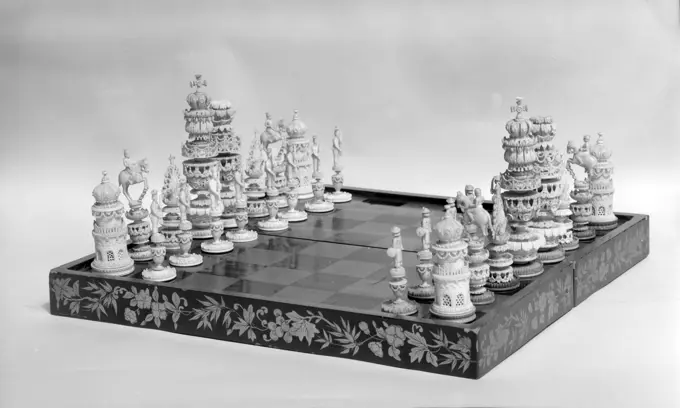
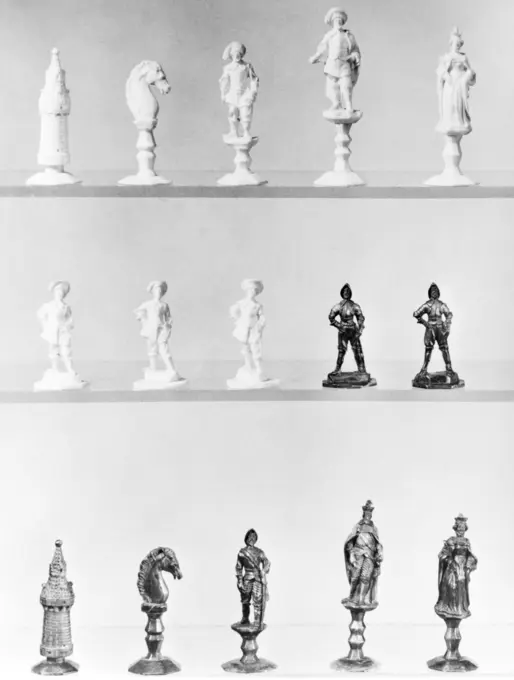
Playing a parlor game: Meeples on a table, ludoChess board and pieces, computer illustration.Chess set ca. 1800 The game of chess probably originated in India, where ivory chess pieces have been found dating as far back as the eighth century. This set and board were made for the Western market but are distinguished from the majority of export pieces by their exquisitely intricate carving. The use of red and white figures instead of black and white is characteristic of sets produced in India.. Chess set. ca. 1800. Lacquered wood, ivory. Made in Indiablack and white pawns isolated on white. 3D chessSet of chess figures on the playing boardelephant chess line icon vector. elephant chess sign. isolated contour symbol black illustration. elephant chess line icon vector illustrationrolled currency on a chess boardChess board and chess piecesChess figures isolated on the white backgroundGame photo. Checkers.Schachspiel Schachspiel Copyright: xZoonar.com/WolfgangxBerrothx 855165Chess concept with pieces on the boardWooden chess board isolated on a white backgroundChess icons, vector illustration.Bus van tin, fragment, anonymous, c. 1590 - c. 1596 salt (condiment vessel). fragment Tinn bus or barrel of which only the crucible has been preserved.  tin (metal) casting  Nova Zembla. Saving HuysPepper mill vector illustration icons setClose-up of checker pieces on a boardChess table with figures including king, queen, rook, pawn, knight, and bishop color vector illustrationParchesi Boardgame.Asian chess set made of fish bones, Chess Museum Löberitz, Saxony-Anhalt, GermanyChess set Dutch 19th century The kings probably represent Frederick Henry, prince of Orange (1584-1647), and Charles V of Spain (1500-1558). The queens' costumes are of an earlier style than the men's, and the queens are probably not intended to represent actual women. The period of Frederick Henry is considered the golden age of the Dutch republic. He continued the struggle for independence started by his father, William of Orange. Frederick died a few months before the completion of the treaty by which the United Provinces gained their independence from Spain in 1648. The earlier phase of the struggle is illustrated by the dark side, the king here wearing the crown of the Empire. There is thus an anachronism between the two sides, carried through in the sixteenth-century costume of the Spanish and seventeenth-century costume of the Dutch.Wooden stamp with the inscription: Soforthilfe, Studio