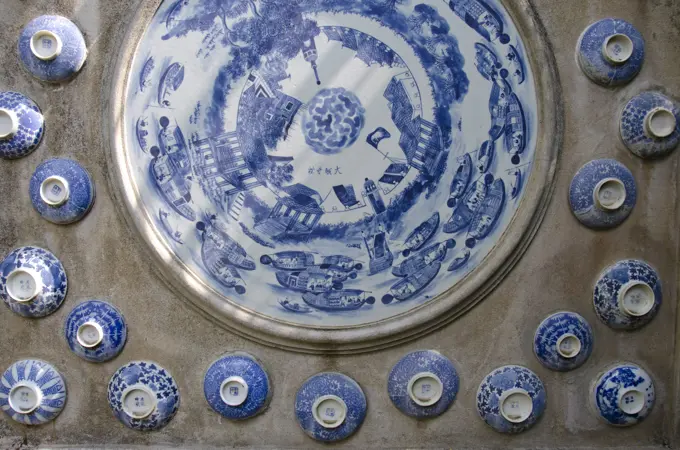
Chinese Blue and White Porcelain

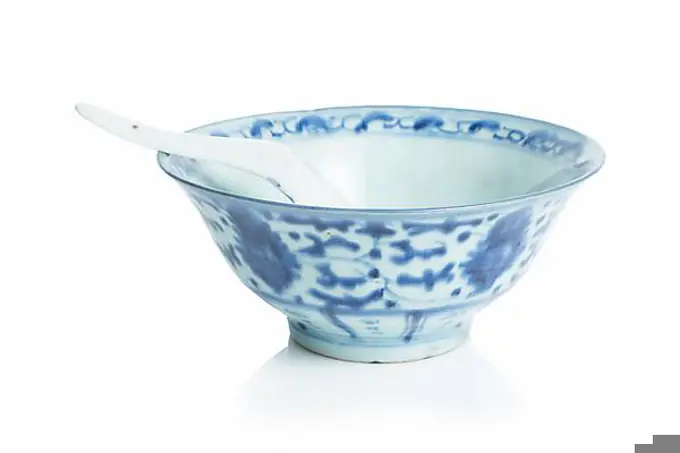
A collection of exquisite blue and white porcelain dishes featuring intricate floral and animal motifs, showcasing a blend of artistry and craftsmanship.

Hexagonal saucer-dish with landscapes and figures, anonymous, c. 1750 - c. 1774 Hexagonal porcelain dish, painted in underly glaze blue. On the flat a river landscape with pavilions, trees and a person; The wall is divided into six subjects with alternating a person by a fence and a river landscape with a pavilion and trees. A crack and a chip in the edge. Blue White. China porcelain. glaze. cobalt (mineral) painting / vitrification Hexagonal porcelain dish, painted in underly glaze blue. On the flat a river landscape with pavilions, trees and a person; The wall is divided into six subjects with alternating a person by a fence and a river landscape with a pavilion and trees. A crack and a chip in the edge. Blue White. China porcelain. glaze. cobalt (mineral) painting / vitrification
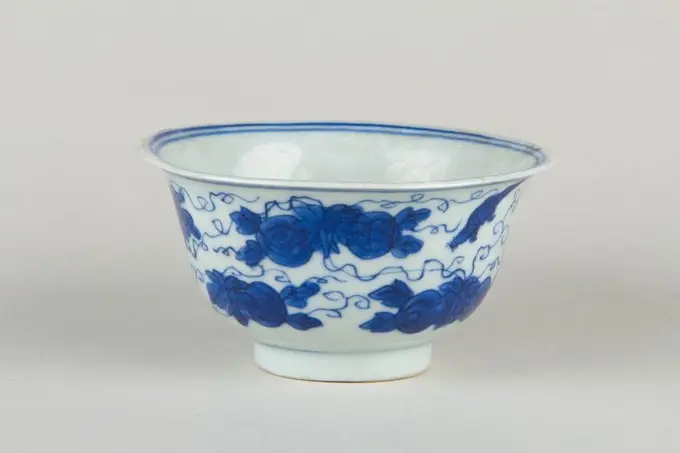
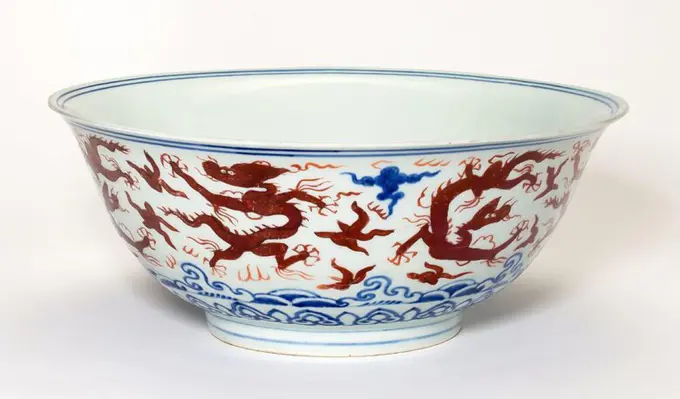
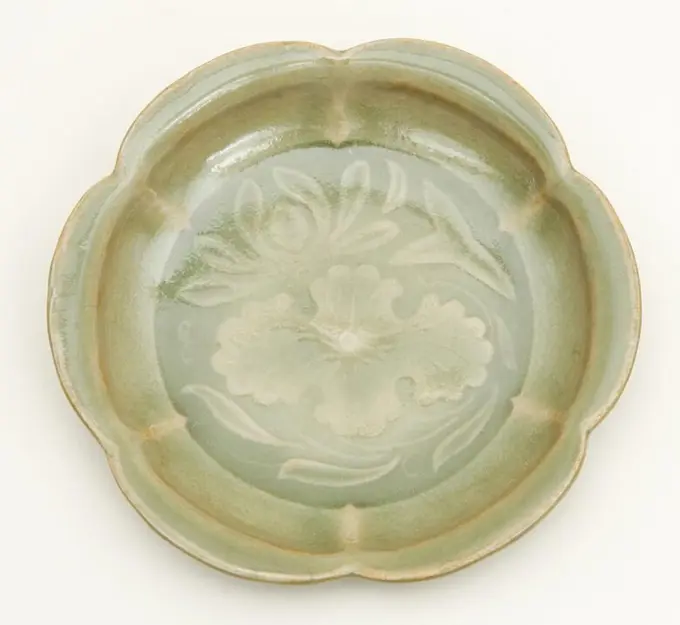
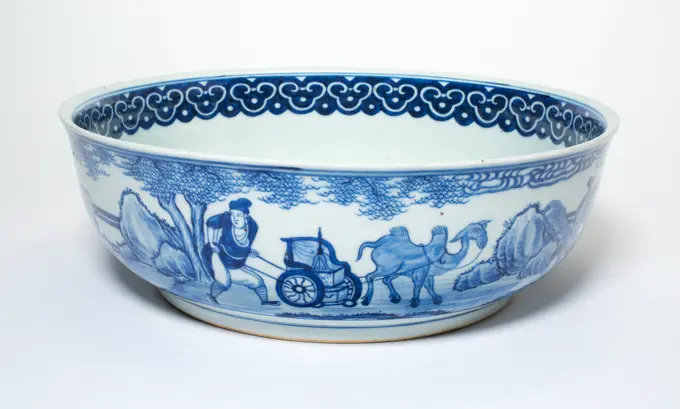
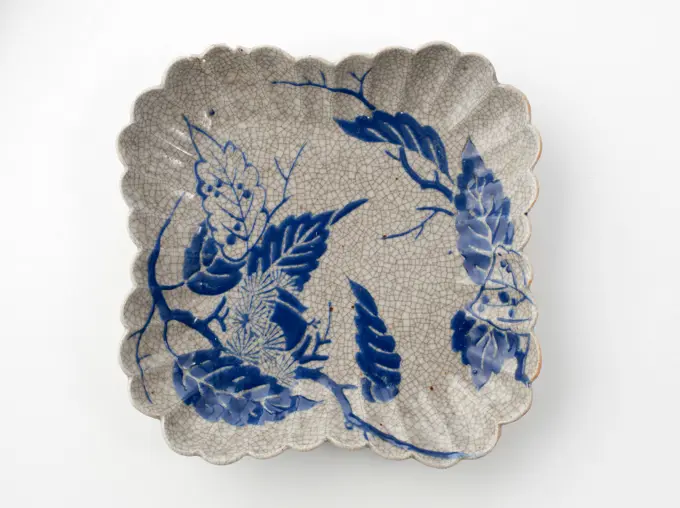
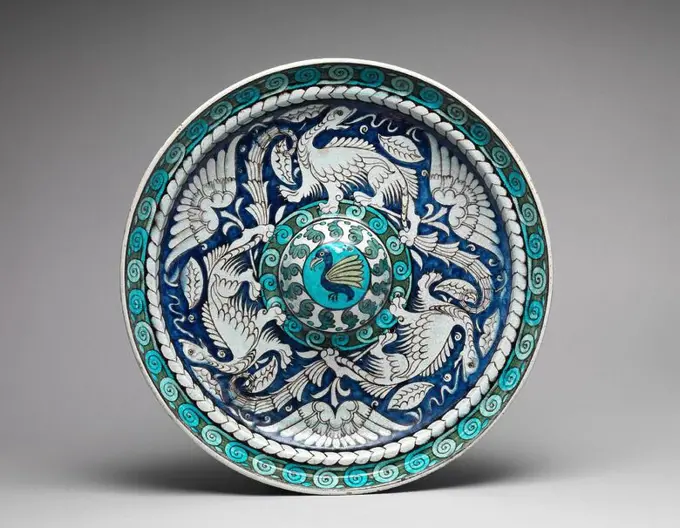
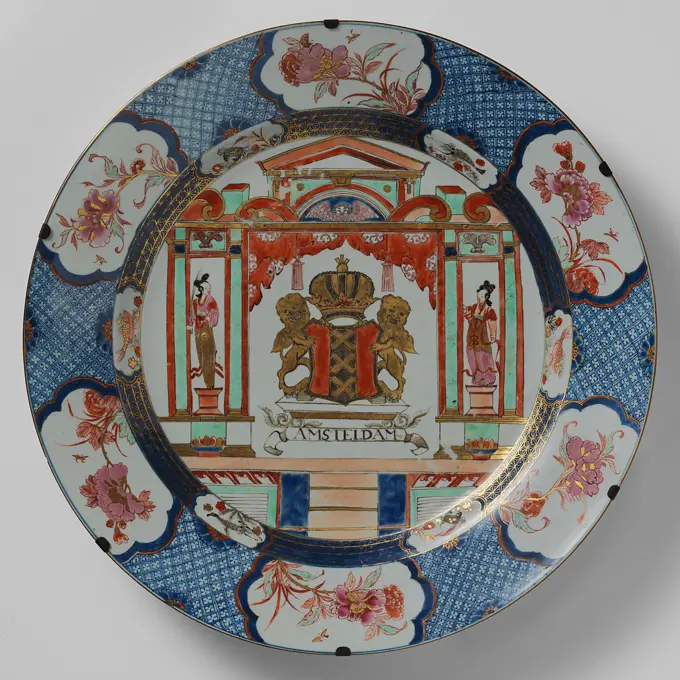
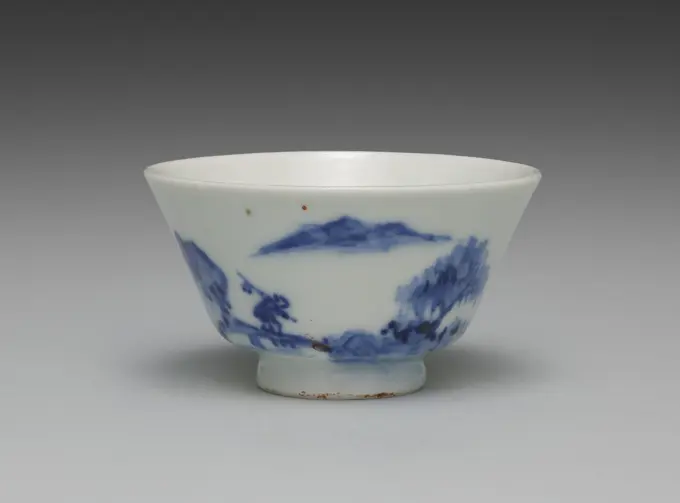
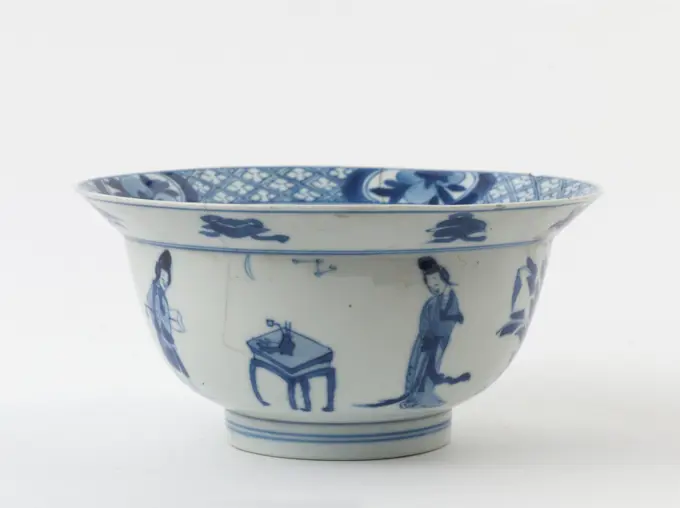
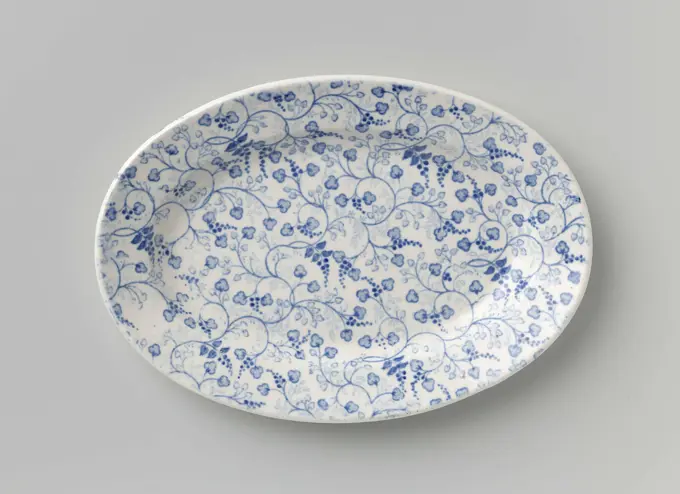
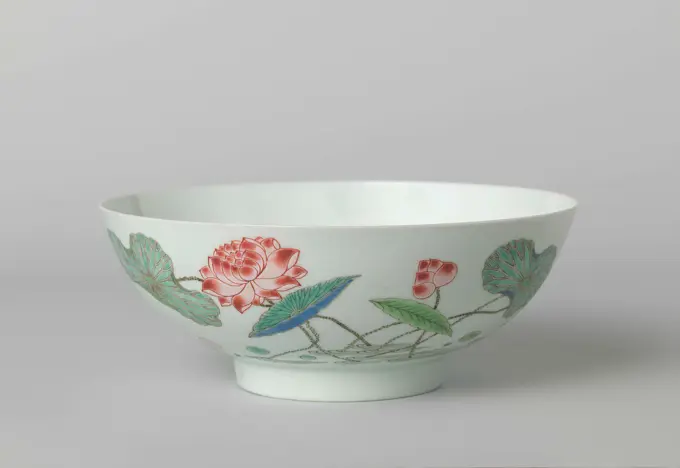
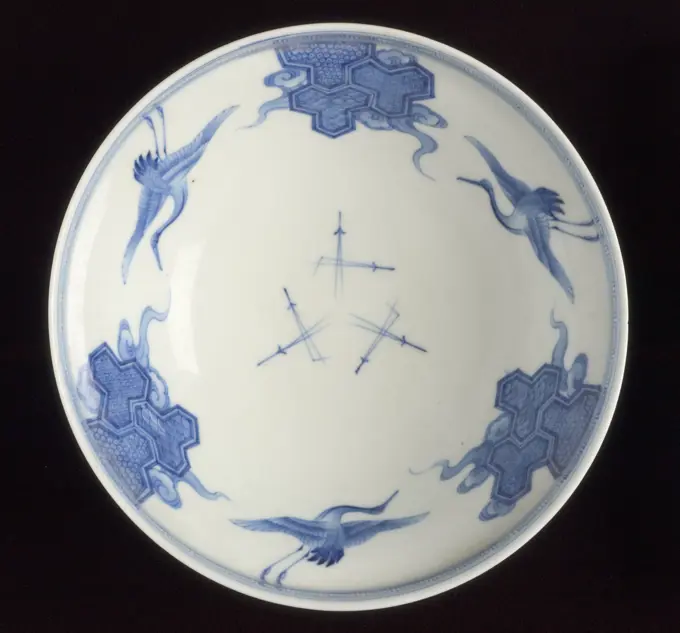
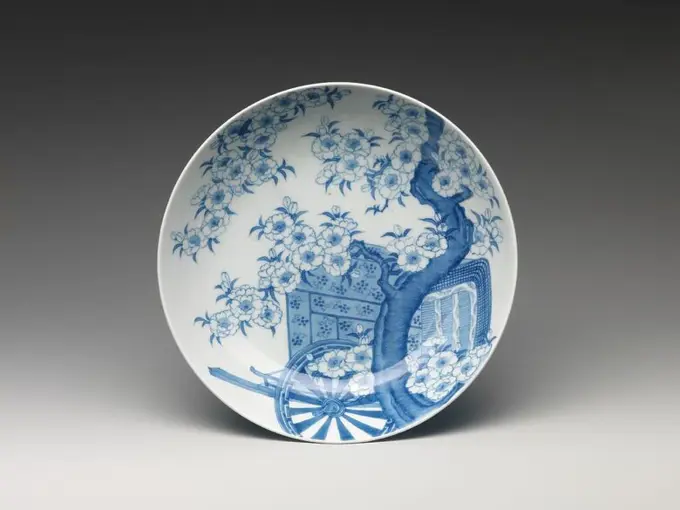
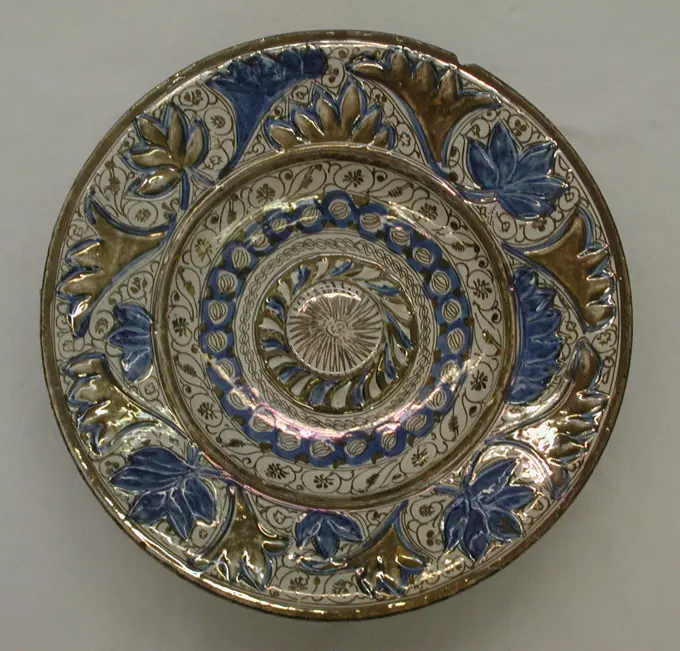
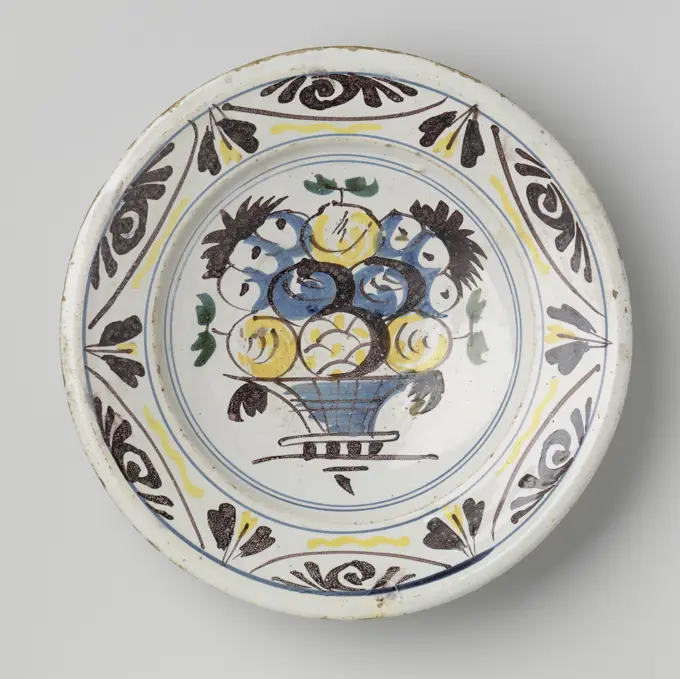
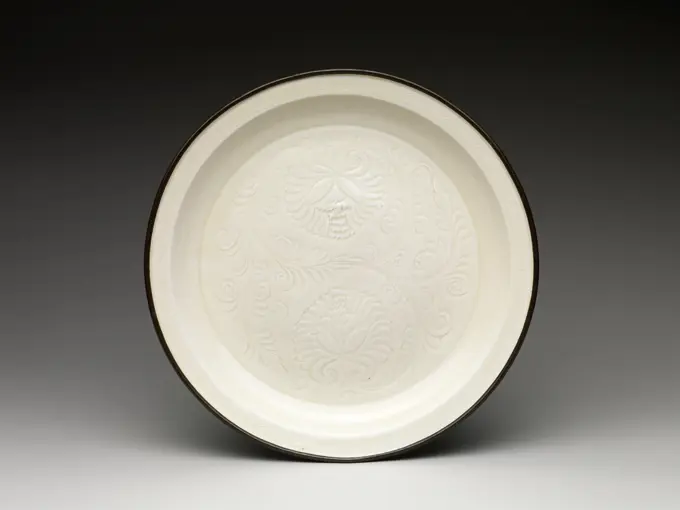
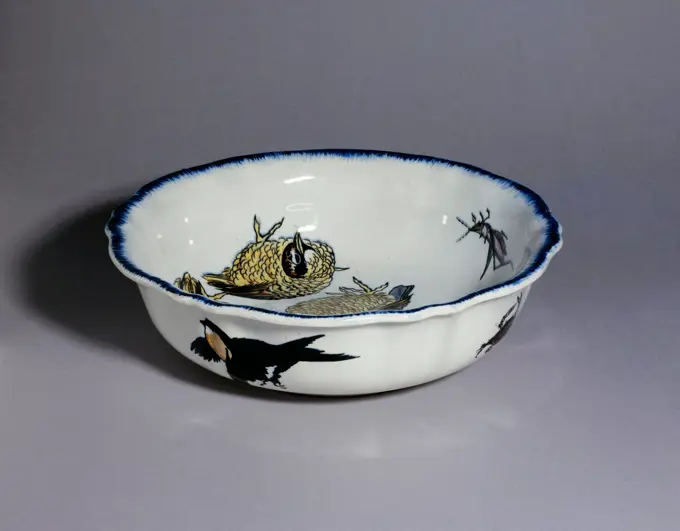
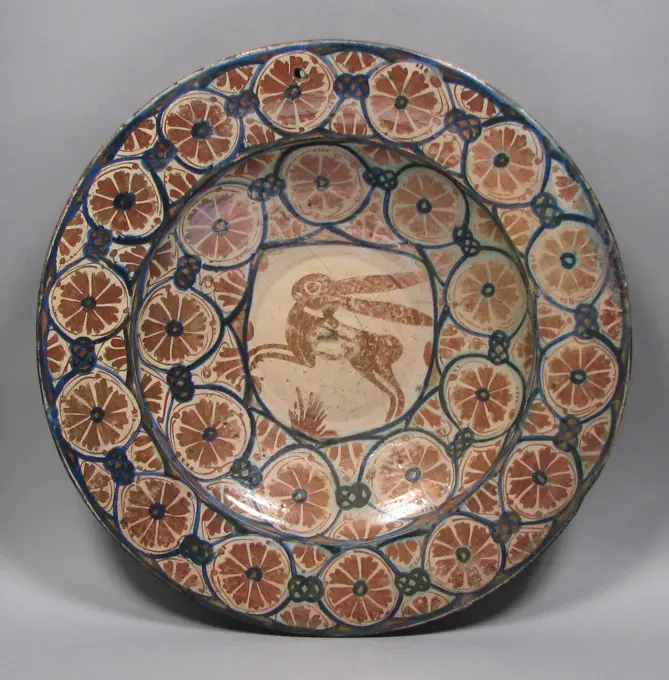
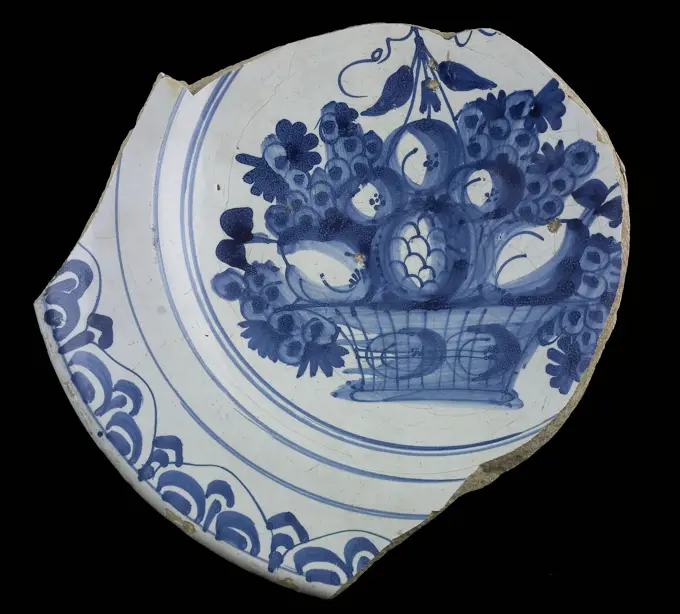
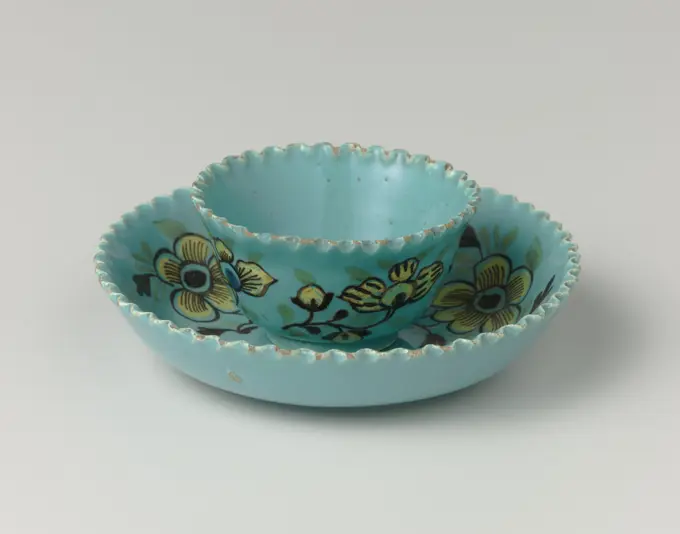
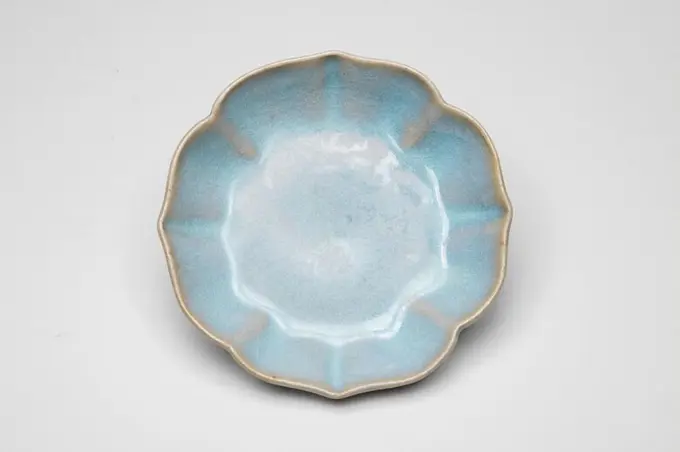
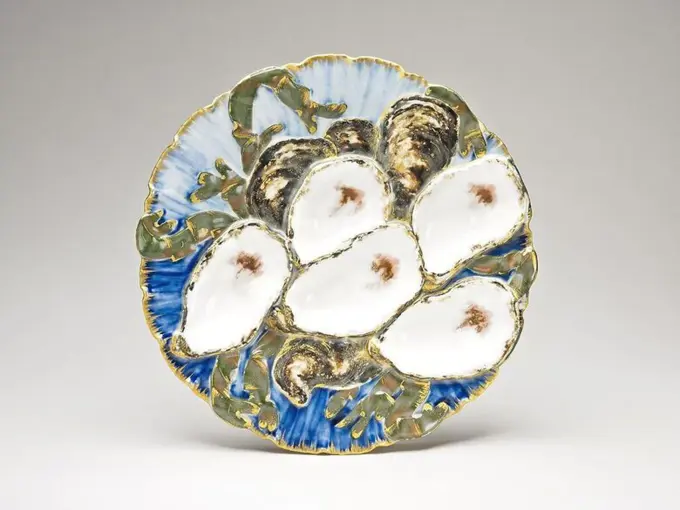
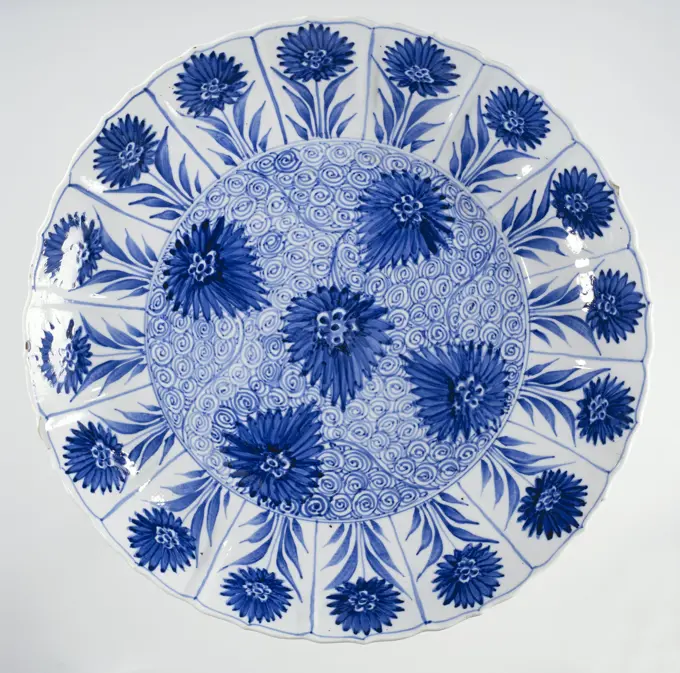
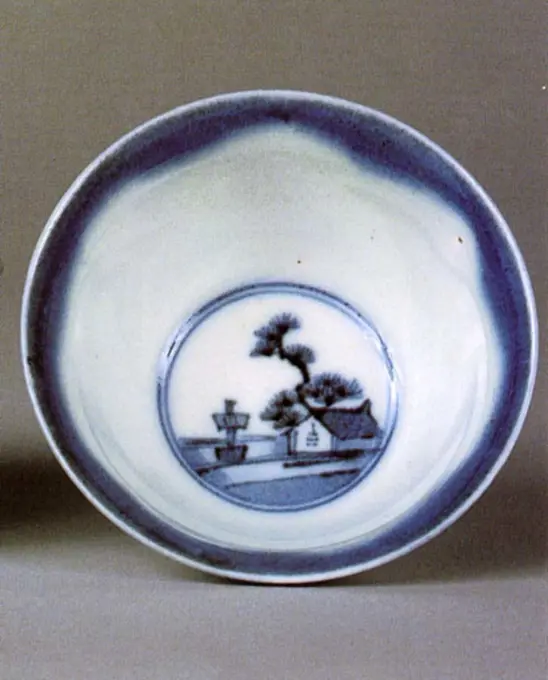
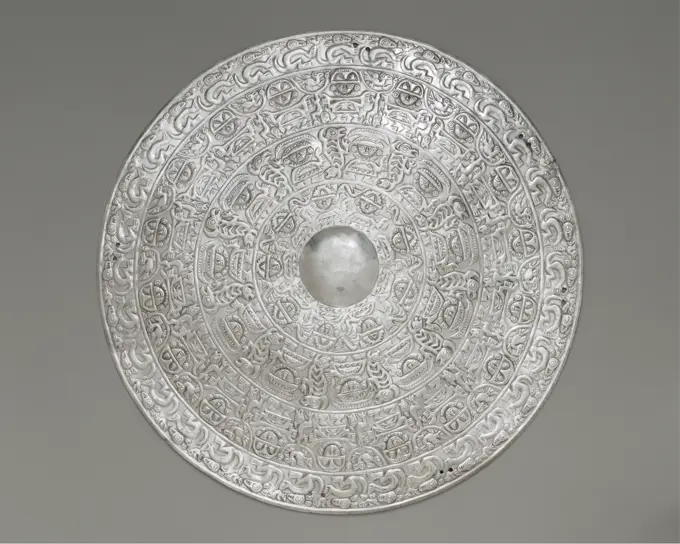
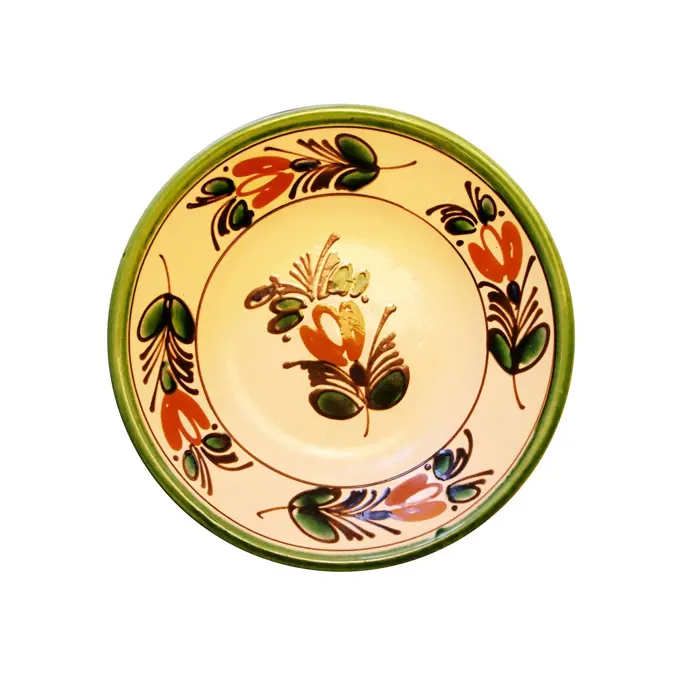
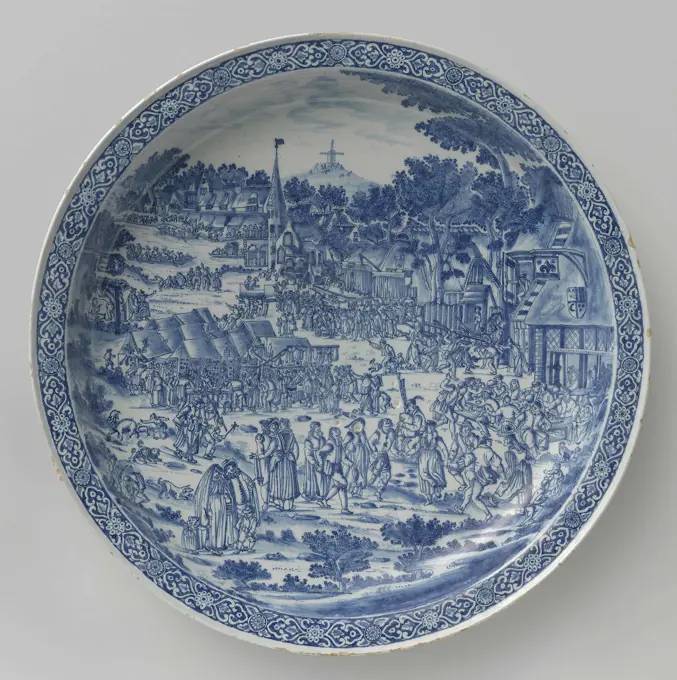
Cup with twisted panels with flower sprays, anonymous, c. 1680 - c. 1720 Head of porcelain with the wall modeled in twisted courses, painted in underlaze blue. The wall with twisted courses with flower branch; A medallion with flower branch on the bottom; The inside of the edge a band with flower vines. Marked on the underside with the Chinese character 'Fú' in a double circle. Blue White. China porcelain. glaze. cobalt (mineral) painting / vitrification Head of porcelain with the wall modeled in twisted courses, painted in underlaze blue. The wall with twisted courses with flower branch; A medallion with flower branch on the bottom; The inside of the edge a band with flower vines. Marked on the underside with the Chinese character 'Fú' in a double circle. Blue White. China porcelain. glaze. cobalt (mineral) painting / vitrificationDish With Fluted Sides, Flower Basket and Flower Sprays. Dish of porcelain with ribbed wall and lobed edge, painted in underglaze blue. On the flat a flower basket with chrysanthemum, peony, prunus and lotus and two artemisia ladies; the wall with flower branches; on the edge a band with arcing; Three flower branches on the back. Marked on the bottom with an artemisia leaf in a double circle. Blue White.Plate, 1368-1644, Hsien Lu, Chinese, 2 3/8 x 11 1/4 in. (6.03 x 28.58 cm), Lung Chuan ware Celadon, ceramic, China, 14th-17th centuryCoffee Can and Saucer. Wedgwood Manufactory; England, founded 1759. Date: 1785-1795. Dimensions: Cup: 7 × 9.2 cm (2 3/4 × 3 5/8 in.)Saucer: H: 3.2 cm (1 1/4 in.); D: 2.5 cm (1 in.); diam. 12.1 cm (4 3/4 in.). Stoneware (jasperware). Origin: Burslem. Museum: The Chicago Art Institute, Chicago, USA.Bowl with Dragons above Waves. China. Date: 1522-1566. Dimensions: H. 12.0 cm (4 3/4 in.); diam. 31.5 cm (12 3/8 in.). Porcelain painted in underglaze blue and overglaze enamels. Origin: China. Museum: The Chicago Art Institute, Chicago, USA.Bowl - Portneuf potteryDish with Petal-Lobed Rim, Lotus, and Waterweeds. China. Date: 1000-1127. Dimensions: H. 2.8 cm (1 1/8 in.); diam. 10.9 cm (4 5/16 in.). Yaozhou ware; stoneware with underglaze molded decoration. Origin: China. Museum: The Chicago Art Institute, Chicago, USA.Covered Bowl (one of a pair) 18th century China. Covered Bowl (one of a pair) 52717Dish with flowers and auspicious motifs Japan 17th century The white porcelain body of the small, round dish is embellished with a composition of blossoming flowers and auspicious motifs scattered on the rim. The rim is further decorated with paneled geometric and stylized patterns. The decoration is painted in blue, red, green, purple, and yellow overglazes. The enamel colors are fresh, vivid and include iron-red and brown. The contours and details are rendered in thick black lines. The patterns were rapidly painted with some irregularities. The style of the decoration identifies the piece as a Kraak ware, made in Japan for Dutch export.The earliest known written reference to Kraak porcelain dates from 1638. It is a memorandum sent on 12 April by the director of the VOC (Dutch East Asia Company) in Amsterdam to the Hoge Regering (the Dutch governors office in Batavia) specifying which porcelain assortments were most in demand in the Netherlands. In this document the terms craek and caBowl with Figures in Landscape 1800-1899 China. Porcelain painted in underglaze blue .Ravier. Sandstone, gray covered cracked, dark blue enamel. Paris, Cernuschi museum. Japanese art, dark blue, tree branch, Japanese ceramic, gray covered, cracker, email, gres, leaf pattern, ravier, fruitPlate. Culture: British (London). Designer: William De Morgan (British, London 1839-1917 London). Dimensions: Diameter: 16 in. x Depth: 2 1/2 in. (40.6 x 6.4 cm). Manufacturer: Sands End Pottery (British). Date: ca. 1890-1907.Known for his "Persian style" blue and turquoise ceramics inspired by Iznik pottery, De Morgan produced glazes with richer, softer colors than his contemporaries. Particularly fond of dragons, he used them, dancing between stylized flowers, to anchor this design. Chief assistant Charles Passenger painted the ornament at Fulham in London, where De Morgan moved his works in 1889 to avoid the long daily commute to Merton Abbey. Museum: Metropolitan Museum of Art, New York, USA.Charger with the Coat-of-Arms of Amsterdam. In the beginning of the 18th century, city and province armorial dishes, for which European illustrations sometimes served as models, were made in China. The Amsterdam coat-of-arms situated in a gate adorning this dish is probably based on an illustrated title page of a European book. The Chinese painter adapted the details in keeping with his own taste.Teacup from Teacups with Chinese Landscapes, c. 1915-40. Seifū Yohei IV (Japanese, 1872-1951). One from a set of eleven teacups; porcelain with underglaze blue; overall: 4 x 6.6 cm (1 9/16 x 2 5/8 in.).Bowl 13th century. Bowl 447178Straight-sided cup and saucer with European landscapes in panels, anonymous, c. 1740 - c. 1760 Porcelain head and saucer with straight wall, painted on the glaze in black and gold. On the flat of the dish a cartouche with three people in a landscape with trees near a village. The head with two cartouches with European landscapes and on the bottom a building behind a overgrown hill. Decorated in Europe in Encre de Chine. China porcelain. glaze. gold (metal) painting / gilding / vitrification Porcelain head and saucer with straight wall, painted on the glaze in black and gold. On the flat of the dish a cartouche with three people in a landscape with trees near a village. The head with two cartouches with European landscapes and on the bottom a building behind a overgrown hill. Decorated in Europe in Encre de Chine. China porcelain. glaze. gold (metal) painting / gilding / vitrificationDish with Peony and Lotus Flowers. China. Date: 1723-1735. Dimensions: H. 4.5 cm (1 3/4 in.); diam. 21.1 cm (8 5/16 in.). Porcelain with underglaze blue and overglaze yellow enamel decoration. Origin: China. Museum: The Chicago Art Institute, Chicago, USA.Plate 1881-1891 Hanley. Christopher Dresserís designs for Old Hall Earthenware were mass-produced with transfer-printed decoration. This plate was printed with the Persia pattern. The name was derived from the patternís stylized flowers that reference Middle Eastern aesthetics. As a part of a larger dinner service, this plate was likely intended for the entrÈe potion of a meal. The indentations on the edges of the plate were designed to hold condiments like salt or mustard.. Lead-glazed earthenware with polychrome enamels . Christopher Dresser (Designer)Oval dish of hard-baked pottery. Oval dish of hard-baked pottery with a decoration in blue from a landscape with buildings, a tree and a man with an animal. The edge is decorated with flower branches.Fragment sign from V.O.C. ship De 'Witte Leeuw', Anonymous, Before 1613 plate (dishes) Fragment sign from V.O.C. ship De 'Witte Leeuw', 55 present. Jingdezhen bone china (material)   Sint-HelenaKlapmutsen. "Blue and white" porcelain, Ming. Provenance: China. Paris, Cernuschi museum. 78846-31 Asian art, Chinese art, art of living, bowl, fine ceramic, Ming dynasty, klapmutsen, porcelain, container, dishesFUENTE DECORADA CON PAJARO-VIDIRADA Y DECORADA EN AZUL. Location: ALFARERIA. GRANADA. SPAIN.Round, flat plate of hard-baked pottery. Round, flat plate of hard-baked pottery with on the flat a decoration in blue of a landscape with buildings, a tree and a man with an animal. The edge is decorated with flower branches. The sign is marked: Hackwood. Three equal signs (BK-NM-14091-A T / M BK-NM-14091-D) belong to the board.. Ink case from Delft Pottery.Scale, oval. Scale of pottery, oval, with blue-running floral decor, belonging to a children's service.Shallow, Straight-Sided Bowl with Lotus Plant, Swimming Duck and Butterflies. Wide, shallow bowl of porcelain with straight wall, painted on the glaze in blue, red, pink, green, yellow and black. On the outside of the bowl a large lotus plant with a swimming duck and some butterflies; The inside of the bowl with two prunus flowers and two buttons. Marked on the underside with the six character mark of Emperor Yongzheng in a double circle. Family Rose.Ripe sweet Yellow persimmon on colourful white with red flower painted pedestal tray China ware, Chinese porcelain on wooden backgroundSaucer-dish with moulded petal-shaped petals, a flowering lotus and scrolls, anonymous, c. 1725 - c. 1749 Scale of porcelain with modeled lotus leaves in the wall and a scalloped edge, painted on the glaze in red, pink and gold. A lotus plant on the flat; the wall with lotus leaves between which lotus drinks in gold; Lotus vrilacles in gold on the back. A crack in the wall. Famle Rose. China porcelain. glaze. gold (metal) painting / gilding / vitrification Scale of porcelain with modeled lotus leaves in the wall and a scalloped edge, painted on the glaze in red, pink and gold. A lotus plant on the flat; the wall with lotus leaves between which lotus drinks in gold; Lotus vrilacles in gold on the back. A crack in the wall. Famle Rose. China porcelain. glaze. gold (metal) painting / gilding / vitrificationCup with twisted panels with flower sprays, anonymous, c. 1680 - c. 1720 Head of porcelain with the wall modeled in twisted courses, painted in underlaze blue. The wall with twisted courses with flower branch; A medallion with flower branch on the bottom; The inside of the edge with flower vines. Marked on the underside with the Chinese character 'Fú' in a double circle. Blue White. China porcelain. glaze. cobalt (mineral) painting / vitrification Head of porcelain with the wall modeled in twisted courses, painted in underlaze blue. The wall with twisted courses with flower branch; A medallion with flower branch on the bottom; The inside of the edge with flower vines. Marked on the underside with the Chinese character 'Fú' in a double circle. Blue White. China porcelain. glaze. cobalt (mineral) painting / vitrificationBowl with Designs of Three Cranes, Pine Frond and Turtle Shell Patterns. Japan, late 19th-early 20th century. Ceramics. Hirado Mikawachi ware; porcelain with underglaze blueDish with Court Carriage beneath a Cherry Tree. Culture: Japan. Dimensions: Diam. 8 in. (20.3 cm). Date: ca. 1770-1800. Museum: Metropolitan Museum of Art, New York, USA.Plate, 19th century, 1 x 9 5/16 x 9 5/16 in. (2.54 x 23.65 x 23.65 cm), Porcelain, China, 19th centuryTerrine, Tag Met Het wing pattern decor, Meissener porcelain manufactory, 1901 Terrine of painted porcelain. The terrine is painted in green and blue with the so -called Flügelmuster. The terrine is marked and belongs to a service (BK-1976-65-1 to BK-1976-65-34). Float porcelain Terrine of painted porcelain. The terrine is painted in green and blue with the so -called Flügelmuster. The terrine is marked and belongs to a service (BK-1976-65-1 to BK-1976-65-34). Float porcelainDish mid-16th century Spanish, Catalonia Tin-glazed earthenware, of which lusterware is one type, was developed in the Middle East in the ninth and tenth centuries to imitate the porcelains produced in China. The opaque white glaze concealed the clay body, which could range from pale buff to brick red, allowing for brilliant effects created by painting the white surface with metal oxides that fired to a range of colors. This technique, as well as the use of metallic lusteran iridescent, coppery painted glazespread throughout the Muslim world, arriving among the potters of Valencia in the thirteenth century. The so-called Hispano-Moresque lusterware, with its fusion of Islamic and Gothic styles and motifs, often in shaped imitating those of metal vessels, was treasured by the elite in Spain during the fifteenth century and exported to the courts of Europe. The Valencian industry declined in the late sixteenth century, as colorful Italian Renaissance maiolica gained in popularity amongDish of multicolored Majolica, Anonymous, c. 1730 - c. 1780 Round dish of multi -colored painted majolica. A basket with fruits is painted on the flat around which concentric circles. On the edge, six segment arches were painted with palmets and stylized leaves. Delft earthenware. tin glaze. lead glaze majolica Round dish of multi -colored painted majolica. A basket with fruits is painted on the flat around which concentric circles. On the edge, six segment arches were painted with palmets and stylized leaves. Delft earthenware. tin glaze. lead glaze majolicaDish 16th-17th century. Dish 448436Plate with chrysanthemums 12th century China The interior of this thin plate is decorated with a lush, incised design of chrysanthemums, leaves and stems. Additional leaf-like motifs fill the rim, which is covered with a copper band. Use of this band illustrates a production technique in which pieces, such as this plate, were fired on the rim to spread the weight and guard against distortions in the kilns. This process left the rim unglazed: and this area was then hidden by the metal band. There are no inscriptions or marks on this plate.. Plate with chrysanthemums 78883Bowl. Culture: China. Dimensions: H. 2 in. (5.1 cm); Diam. 3 5/8 in. (9.2 cm). Museum: Metropolitan Museum of Art, New York, USA.Félix Henri Bracquemond, Eugène Rousseau. "Cut". Ceramics, fine earthenware, printed decor and painted under cover. 1866-1875. Museum of Fine Arts of the City of Paris, Petit Palais. 74386-24 Ceramic, cut, prints, fine faience, insect, bird, painted, dishesDish 16th century. Dish 451843Ewer Stand. Italy, Deruta, circa 1520. Furnishings; Serviceware. Tin-glazed earthenware (maiolica)Ancient Crockery older than 200 yearsArita (Ceramic Production Center), covered cup Decor Imari (username). Ceramics, porcelain, polychrome enamels: cobalt blue under glaze, iron red on glaze, gilding. Petit Palais, Museum of Fine Arts of the City of Paris.Octagonal saucer with lotus-shaped panel with lotus scrolls and diaper pattern. Octagonal dish of porcelain, painted on the glaze in blue, pink, green and black. On the flat a lotus-shaped compartment with a medallion filled with lotus drink in the center; to the center in eight petril-shaped courses also a lotus drink; Between the leaves napkin with a flower on a green ground; On the edge napkin on a pink soil. Wall has been broken. Family Rose.Dish ca. 1450 Spanish. Dish. Spanish. ca. 1450. Tin-glazed earthenware. Made in probably Manises, Valencia, Spain. CeramicsPlate, belonging to a tea set of chromolith stoneware, decorated in blue and tan. Plate, octagonal, belonging to a tea set from Chromolith Stoneware. Decoration in blue and tan.Fragment majolica dish, blue on white, with fruit basket with grapes, apples and pears, plate dish crockery holder soil find ceramic earthenware glaze, total, baked underside covered with clear lead glaze. Monochrome archeology adorn serving foodWaszek with the motives of prosperity and graviata vegetable wing unknownSaucer: Qingbai ware, 1200s-1300s. China, Southern Song Dynasty (1127-1279) - Yuan Dynasty (1271-1368). Porcelain; diameter: 14 cm (5 1/2 in.).Pickle Stand. Culture: American. Dimensions: H. 5 5/8 in. (14.3 cm). Maker: Gousse Bonnin; George Anthony Morris. Manufacturer: Manufactured by American China Manufactory (1770-1772). Date: 1770-72.The form of this stand, which was intended to hold various comfits (sugared fruits or nuts) during the dessert course of a meal, was one of the most ambitious produced at the short-lived factory of Bonnin and Morris--America's first successful porcelain factory. The Rococo style, emphasizing repeated shell motifs and asymmetrical painted floral sprays, was in vogue in America in the 1770s. Museum: Metropolitan Museum of Art, New York, USA.Cup with a pearl chasing dragon, c. 1750 - c. 1774 Porcelain head with slightly spreading wall, painted in underlaze blue. On the inside and outside a continuous four-clawy dragon, a pearl, the tail on the outside and the head on the inside; The dragon is surrounded by cloud motifs. Marked on the underside with a seal brand in a double circle. Blue White. China porcelain. glaze. cobalt (mineral) painting / vitrification Porcelain head with slightly spreading wall, painted in underlaze blue. On the inside and outside a continuous four-clawy dragon, a pearl, the tail on the outside and the head on the inside; The dragon is surrounded by cloud motifs. Marked on the underside with a seal brand in a double circle. Blue White. China porcelain. glaze. cobalt (mineral) painting / vitrificationBowl;  XVIII/19th century (1791-00-00-1810-00-00);Saucer With Petal-Shaped Panel Around A Central Medallion, Filled With Flower Sprays. Dish of porcelain, painted in underglaze blue and on the glaze red and gold. On the platter a medallion with flour, a medallion six petal-shaped boxes filled with flower branches; Between the boxes a flower drink; Three loose flowers on the back. Chinese Imari.Dish, Anonymous, c. 1720 - c. 1750 Dish of multi -colored painted faience. The head and saucer are painted with yellow flowers on a turkey background. The edges of the dish are serrated. Delft earthenware. tin glaze. Dish of multi -colored painted faience. The head and saucer are painted with yellow flowers on a turkey background. The edges of the dish are serrated. Delft earthenware. tin glaze.Plate with (Effaced) Arms of an Ecclesiastical Patron Made 1570-1605 Castelli. Tin-glazed earthenware with polychrome enamels and gilding .PunchBowlBlue plate with a picture of a lady, 17th century.Tea Bowl and Saucer 1765-1775 Worcester. Soft-paste porcelain, polychrome enamels and gilding . Worcester Royal Porcelain Company (Manufacturer)Dish with foliate sprays, anonymous, c. 1800 - c. 1810  Porcelain dish, painted on the glaze in blue and gold. In the center a golden dot within a circle with a leaf branch seven times around. Two gold tires on the inner edge, one with small bulbs in relief. France porcelain. glaze. gold (metal) painting / gilding / vitrification. Round plate of blue painted faience. On the flat, two figures (Chinese) are painted at a column in a building, the edge is richly decorated including. with a floral drink. The plate is a soil find.Vase, one of a pair, 17th century, 8 3/4 x 5 3/8 in. (22.23 x 13.65 cm) (rim), Tin-glazed earthenware, Netherlands, 17th century, Founded in 1609, the Dutch East India Company imported into Europe large quantities of Chinese porcelain, usually with bright blue-and-white floral patterns. Such thinly potted, translucent porcelain was unknown in Europe at this time and became highly prized for its rarity and decorative qualities.Platter ca. 1828-ca. 1846 Enoch Wood & Sons British. Platter. British (American market). ca. 1828-ca. 1846. Earthenware, transfer-printed. Made in Staffordshire, EnglandLidded box, anonymous, c. 1730 - c. 1740 Box with Faïence lid. Rotterdam . Box with Faïence lid. Rotterdam .Majolica plate, polychrome decor, rosette of rings in the middle, plate crockery holder soil find ceramic earthenware glaze lead glaze tin glaze, hand turned baked glazed painted baked Small majolica plate on stand ring underside covered with lead glaze Narrow stand ring pierced Polychrome decor. Rosette of rings in the middle around it frieze in which arches and plume deco rings and along the edge rope decor Restauration is repainted. Lightly irrigated show archeology Valckensteyn Poortugaal Serving Albrandswaard serving food Soil discovery: castle Valckensteyn in Poortugaal now Albrandswaard 1961-1962.Fragment majolica dish, blue on white, Chinese decor, pond With flowers, dish crockery holder earth discovery ceramic earthenware glaze, Cooked on prunes Stamped on the back archeology indigenous earthenware decorate serving serve table stewBowl China. Bowl 44753Platter. unknown, manufacturerMUSEO-ATIFOR CON DECORACION EPIGRAFICA-HISPANO MUSULMANA. Location: MEDINA AZAHARA / MADINAT AL-ZAHRA-MUSEO-CERAMICA. PROVINCIA. CORDOBA. SPAIN.Bracket-Lobed Dish. China. Date: 1127-1279. Dimensions: H. 2.0 cm (13/16 in.); diam. 9.2 cm (3 5/8 in.). Jun ware; glazed stoneware. Origin: China. Museum: The Chicago Art Institute, Chicago, USA.Deep plate from v.O.c.-ship the 'white lion'.deep Plate from v.O.c.-Ship the' white lion ', 70% present. Type 1.3.1.Oyster Plate. Designed by Theodore Russell Davis; American, 1840-1894; Made by Haviland & Co.; Limoges, France, founded 1842. Date: 1879-1887. Dimensions: Diam: 22.2 cm (8 3/4 in.). Porcelain, enamel, and gilding. Origin: United States. Museum: The Chicago Art Institute, Chicago, USA.Dish, painted with the Flügelmuster decor. Round dish of painted porcelain. The dish is painted in green and blue with the flügelmuster. The dish has been marked and belongs to a tableware (BK-1976-65-1 to BK-1976-65-34).Dish on stand. unknown, craftsmanSharf of porcelain, at the top with a painting of flower molds in blue on a white surface, c. 1500 - c. 1899 fragment   earthenware. glazeCylindrical covered jar with flower-heads in reserve, anonymous, c. 1680 - c. 1720 Porcelain lid of cylindrical lid jar, painted in underlaze blue. Covered with a 'crackled ice' blue soil with plum blossoms in reserve; The flat lid button with flour against a blue ground. Blue White. China porcelain. glaze. cobalt (mineral) painting / vitrification Porcelain lid of cylindrical lid jar, painted in underlaze blue. Covered with a 'crackled ice' blue soil with plum blossoms in reserve; The flat lid button with flour against a blue ground. Blue White. China porcelain. glaze. cobalt (mineral) painting / vitrificationAncient Crockery older than 200 yearsArita (Ceramic Production Center), bowl cover with Imari decor (common name). Ceramics, porcelain, polychrome enamels: cobalt blue under glaze, iron red on glaze, gilding. Petit Palais, Museum of Fine Arts of the City of Paris.Saucer-dish with flower sprays and flowers on scrolls, anonymous, c. 1700 - c. 1724 Scale of porcelain with round wall, modeled in compartments and scalloped edge, painted in under -glaze blue. On the flat five flowers on curl work; The wall with a professional decoration filled with flower branch on the front and back. Marked on the underside with a tripod in a double circle. Three chips in the edge. Blue White. China porcelain. glaze. cobalt (mineral) painting / vitrification Scale of porcelain with round wall, modeled in compartments and scalloped edge, painted in under -glaze blue. On the flat five flowers on curl work; The wall with a professional decoration filled with flower branch on the front and back. Marked on the underside with a tripod in a double circle. Three chips in the edge. Blue White. China porcelain. glaze. cobalt (mineral) painting / vitrificationPosition. Leaf of faience, blue painting of a water landscape.Thailand, Bangkok. The Prasart Museum. Private collection of Asian art and artifacts. Asian sculpture made from traditional blue and white china bowls.Plate. unknown, craftsmanA plate;  19th century (1801-00-00-1900-00-00);One of a Pair of Cups Japan early 18th centuryDish second half 15th century Spanish. Dish 471760Disk (Shield Cover) 14th-15th century Chimú Made of thin sheet silver, this disk is one of at least eleven highly similar examples reportedly found in a burial, or burials, on Perus north coast. The disks are all between thirty and thirty-five centimeters in diameter, and share the same basic composition, in which four concentric bands of repoussé ornament (a design hammered in relief from the back of the disk) surround a central undecorated convex boss. The imagery in each band is distinct from the others on a disk, and consists of one or several repeated motifs. The iconography varies from disk to disk, but each follows one of four distinct patterns (see also Met object number 1978.412.144). The outermost band of this disk features a motif--perhaps a monkey holding a bird--that is repeated around the entire circumference. The three inner registers contain frontal, anthropomorphic figures with crescent headdresses—different in each band—that appear to hold or gesture to sea birds andhungarian dish A photography of an old hungarian dish Copyright: xZoonar.com/magannx 1119752Dish with inscription "Leolte", Anonymous, c. 1425 - c. 1475 Round dish of multi -colored painted faience. In the colors brown yellow with blue, fine flower vines with leaves are painted, a weapon in the middle with a climbing lion and the inscription "Leolte". Manises earthenware. tin glaze. Round dish of multi -colored painted faience. In the colors brown yellow with blue, fine flower vines with leaves are painted, a weapon in the middle with a climbing lion and the inscription "Leolte". Manises earthenware. tin glaze.Bowl with Dragons in Waves, 1506-21. China, Jiangxi province, Jingdezhen kilns, Ming dynasty (1368-1644), Zhengde mark and reign (1506-21). Porcelain with incised decoration and green overglaze enamel and resist enamel decoration on biscuit; overall: 7.4 x 16.5 cm (2 15/16 x 6 1/2 in.).Plate from a Calendar Set. 'de Porceleijne Bijl' Shop (Holland, 1679-1803)Hugo or Justus Brouwer (Holland, 1739-1775). Holland, 1739-1775. Furnishings; Serviceware. Earthenware with tin glaze and enamel (Delft)Sign from V.O.C.-ship De 'Witte Leeuw', Anonymous, Before 1613 plate (dishes) Sign from V.O.C. ship De 'Witte Leeuw', 40 present. Jingdezhen bone china (material)   Sint-HelenaUrn, Longton Hall Porcelain Manufactory, English, 1749 - 1760, soft paste porcelain, vitreous enamel, Campana urn form with spreading circular foot. Raised leaf decoration with lime green and aubergine outlines. Dome shaped lid with vine shaped handle. Gords and vine on interior or base., England, 1749-1760, ceramics, Decorative Arts, urn, urnDish from the 'Saxonia' coffee and tea set. Dish of porcelain, painted in blue and gray. The dish is part of the Saxonia coffee and tea set. The dish has been marked.Cup with powder blue and cranes. Tea cup from porcelain, painted in underglaze blue. With associated dish (AK-RBK-15855-B-2). Bleu poudré.Czarka;  19th century (1801-00-00-1900-00-00);Sugar Basin (lid), c. 1750. Sceaux Factory (French, active 1748-66). Faience; overall: 13.7 x 17.2 x 14 cm (5 3/8 x 6 3/4 x 5 1/2 in.).. Dish of faience, painted in blue with a village fair, on the edge rosettes and leafwork.Cylindrical Bowl with Dragons Chasing a Flaming Pearl. China. Date: 1506-1521. Dimensions: H. 9.5 cm (3 3/4 in.); diam. 15.3 cm (6 in.). Porcelain with overglaze yellow and green enamels, ground with incised decoration. Origin: China. Museum: The Chicago Art Institute, Chicago, USA.Button with Signs of the Zodiac 1775-1799 Burslem. Stoneware (jasperware)Saucer-dish with two birds and a bouquet of flowers above a house near flowering plants, anonymous, c. 1700 - c. 1749 Scale of porcelain with lobed edge, painted in under -glaze blue and on the glaze red, green and gold. On the front in underlaze blue a house with a pyramid shape on either side of flowering plants, two flying birds and a bouquet above the house. Added flower branches and gold outline in Europe in Europe. Marked on the bottom with a Ruyi motif in a double circle. Decorated in Europe. China porcelain. glaze. cobalt (mineral). gold (metal) painting / gilding / vitrification Scale of porcelain with lobed edge, painted in under -glaze blue and on the glaze red, green and gold. On the front in underlaze blue a house with a pyramid shape on either side of flowering plants, two flying birds and a bouquet above the house. Added flower branches and gold outline in Europe in Europe. Marked on the bottom with a Ruyi motif in a double circle. Decorated in Europe. China porcelain. gCome from V.O.C.-Schip De 'Witte Leeuw', Anonymous, Before 1613 bowl Come from V.O.C. ship the 'Witte Leeuw', 90 present. Shatou porcelain   Sint-Helena