Classic Chairs Collection

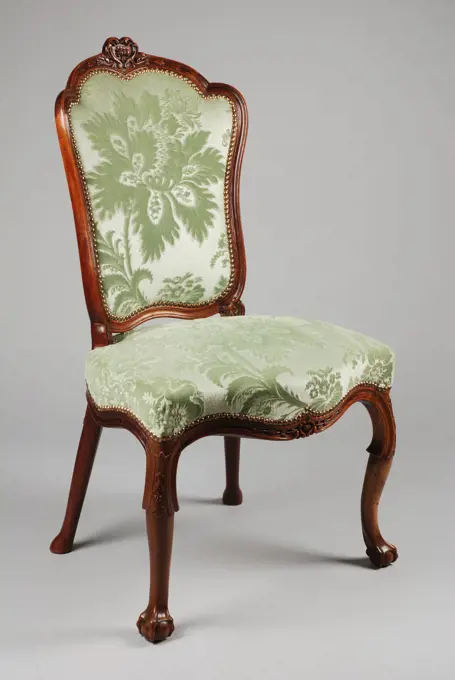
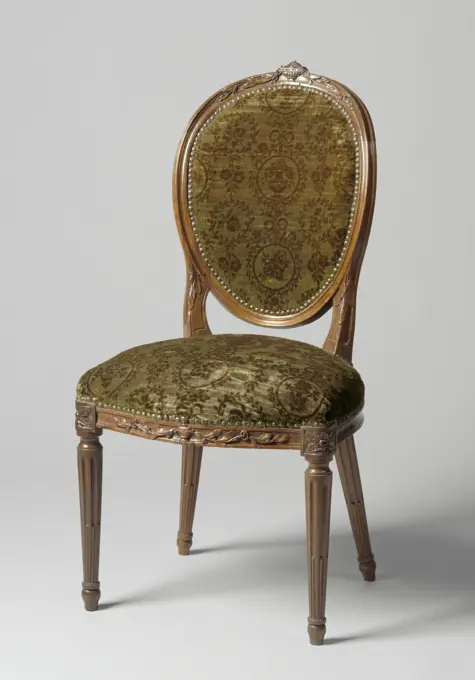
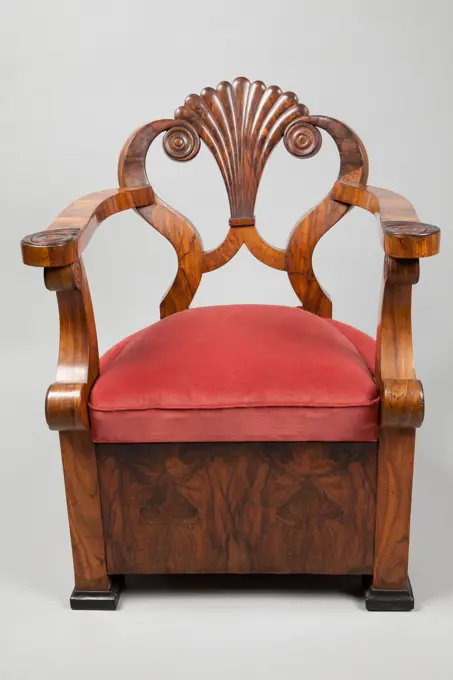
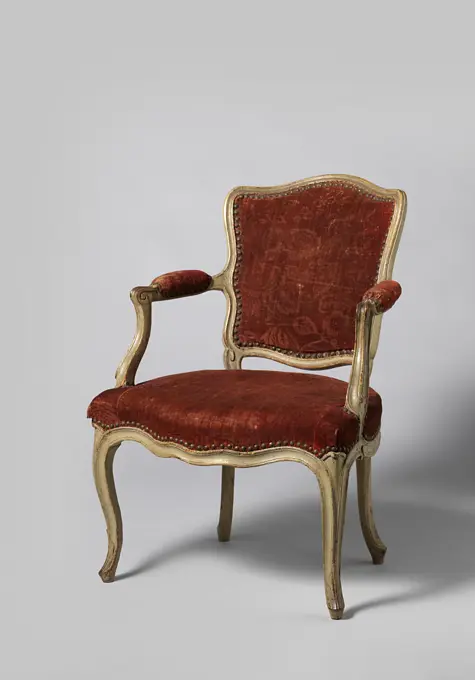
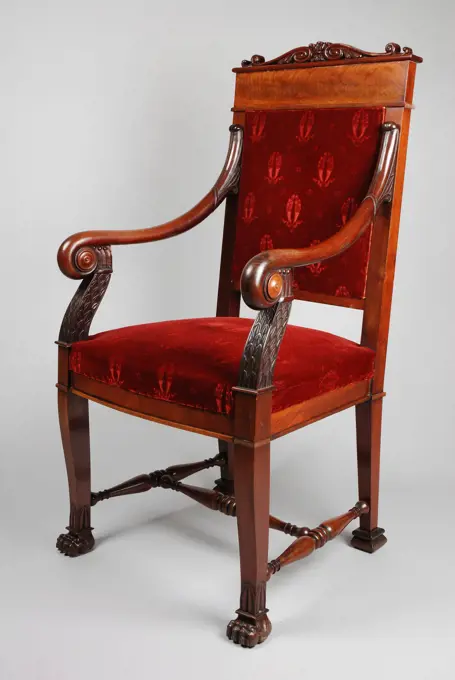
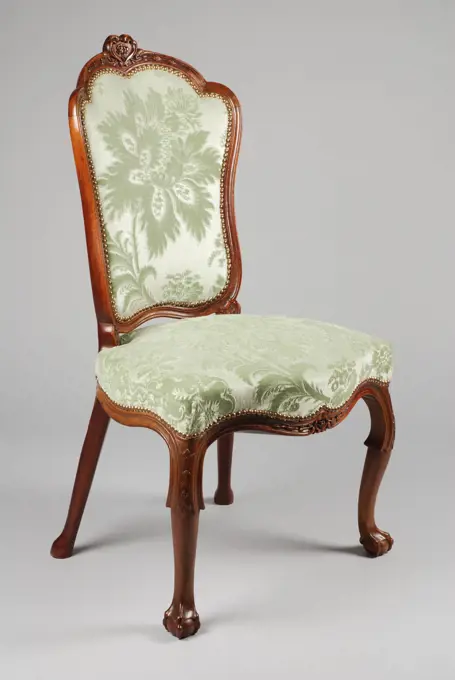
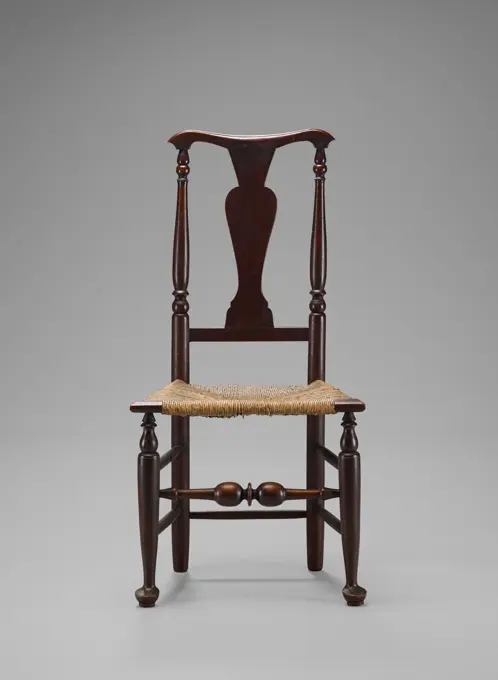
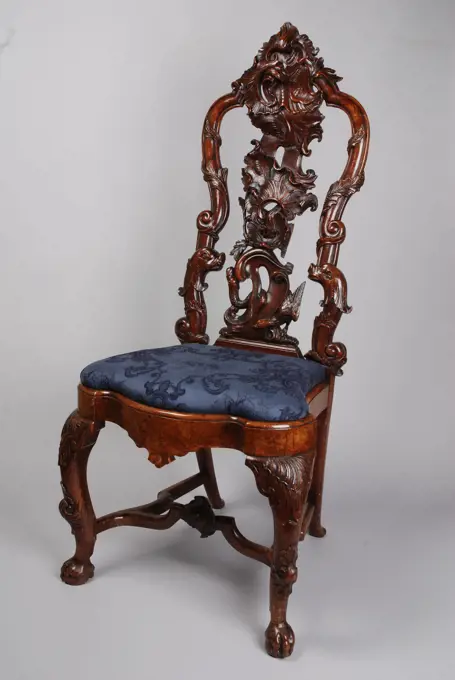
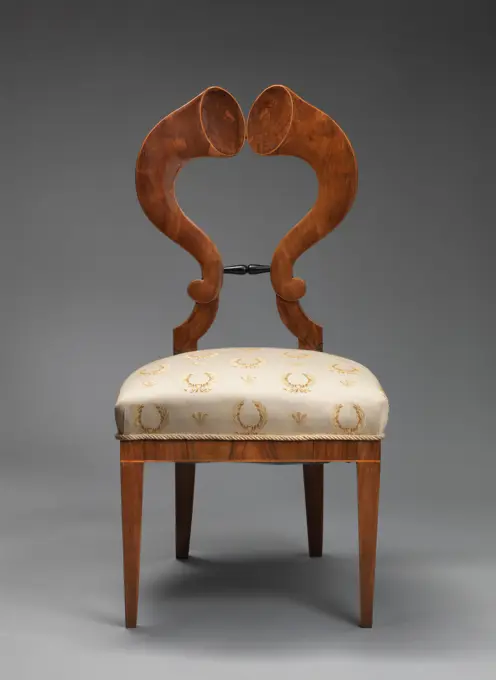
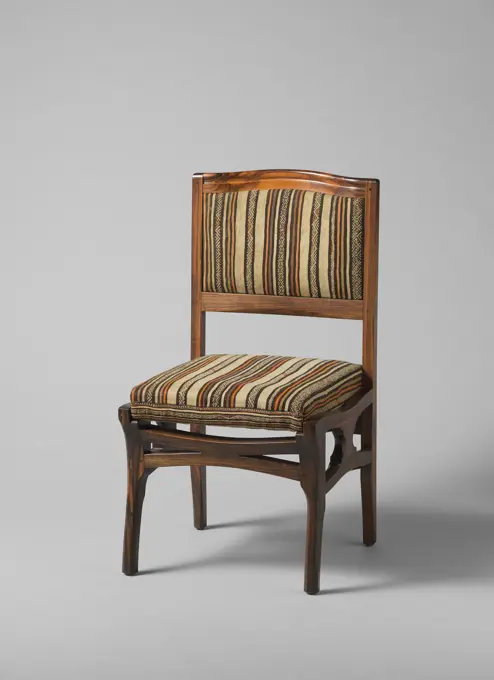
An array of classic chairs with distinctive designs and upholstery, highlighting craftsmanship from different historical styles.

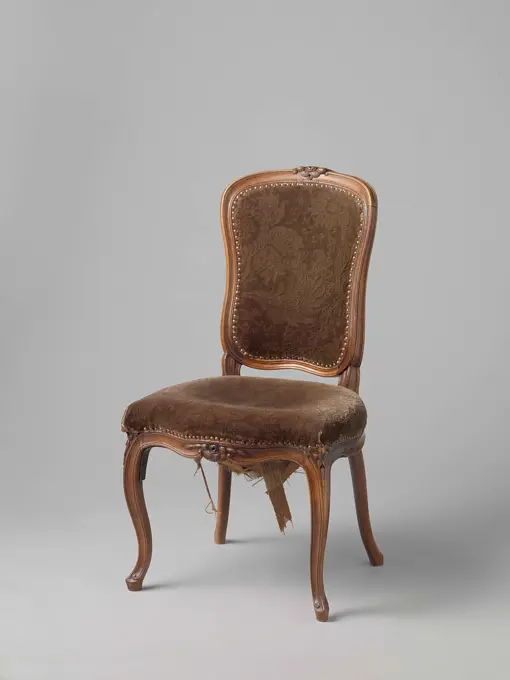
Elmwood directoire chair, chair furniture furniture interior design wood elmwood brass velvet, Openwork backrest in which diamond shape with bent ribs in topline encrusted brass pane of which rib is missing seat striped velvet and gobelin-like directoire
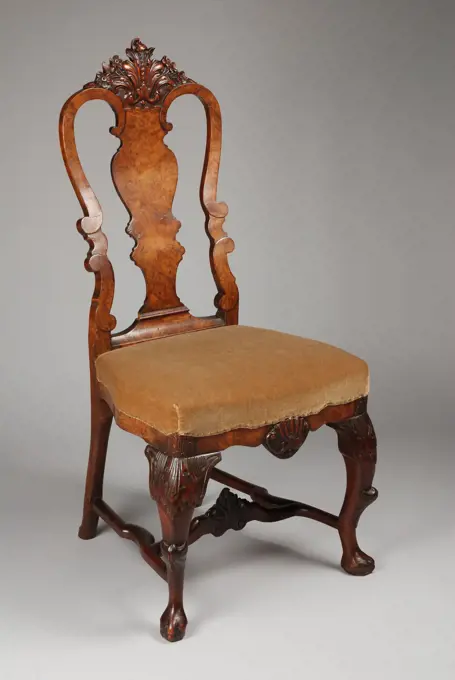
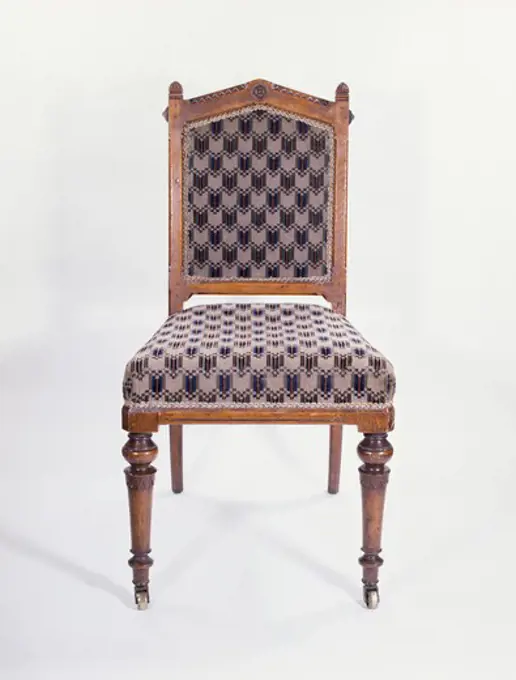
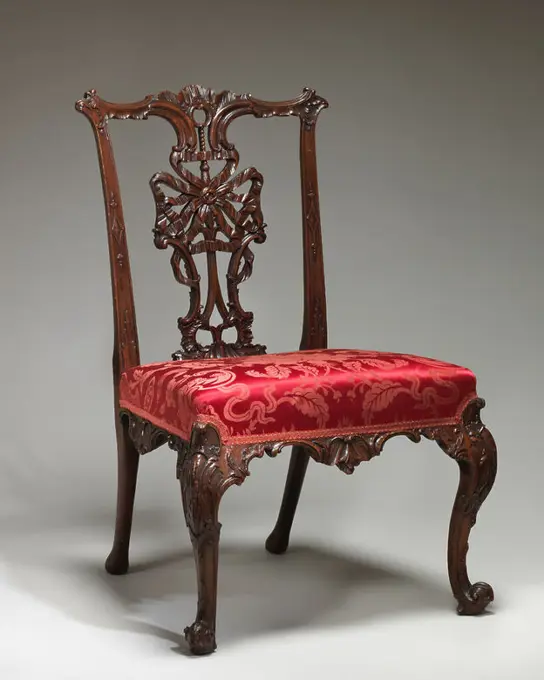
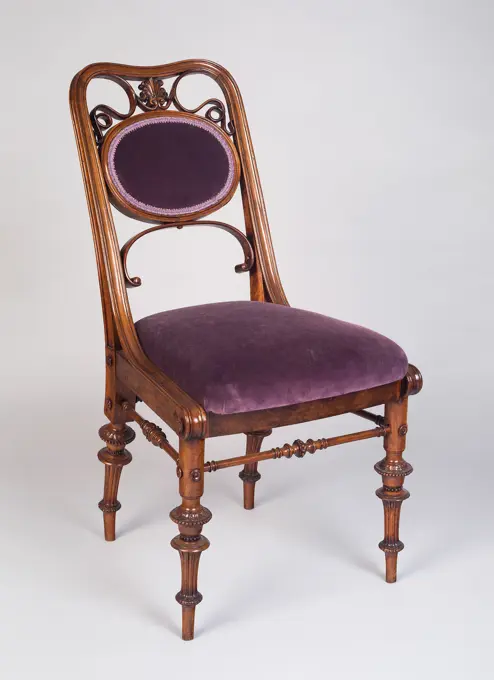
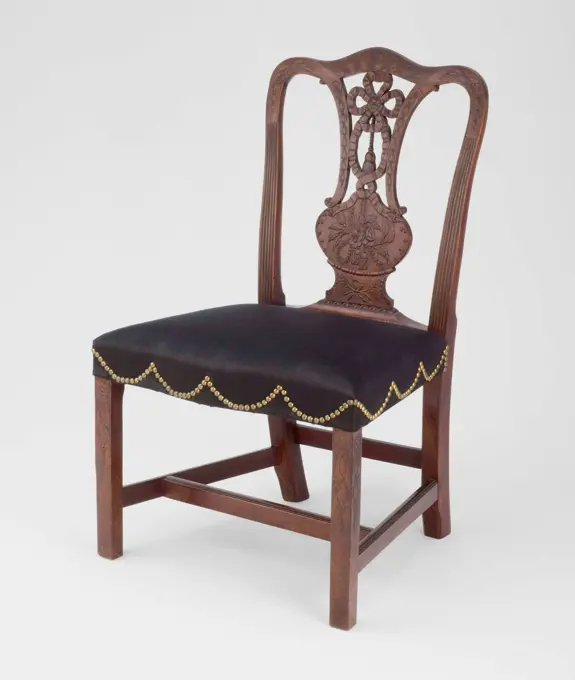
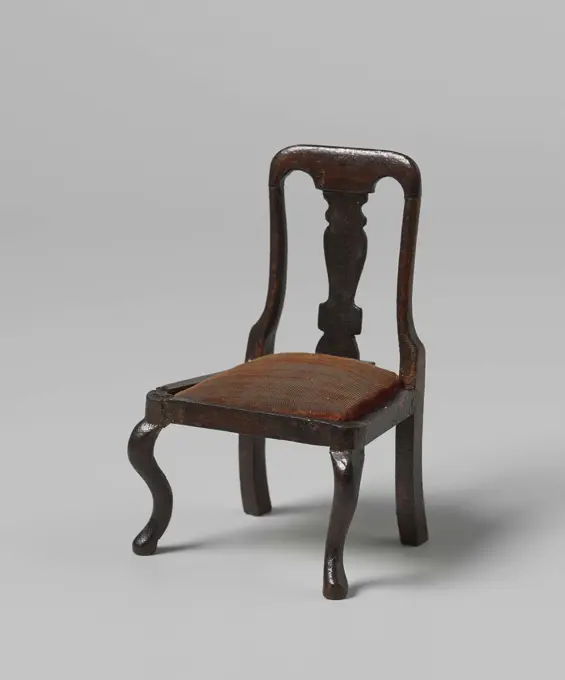
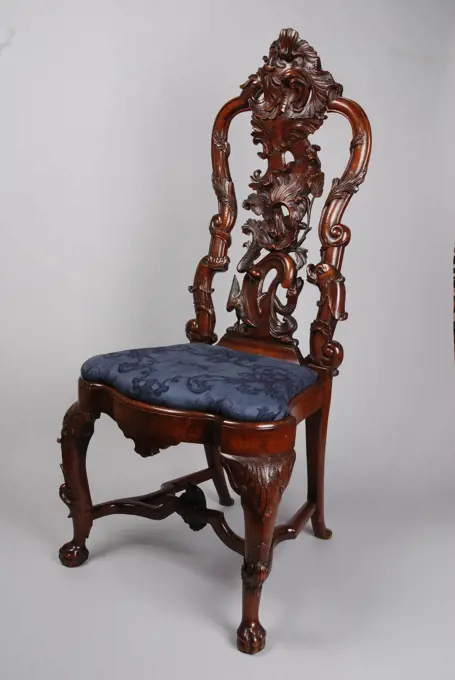
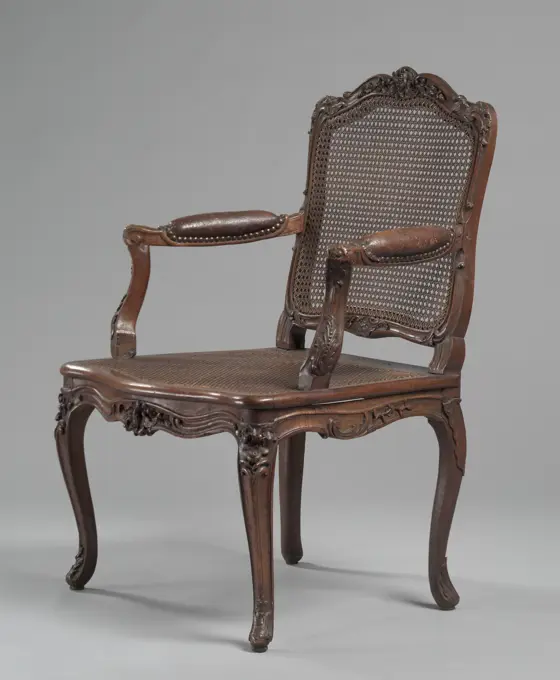
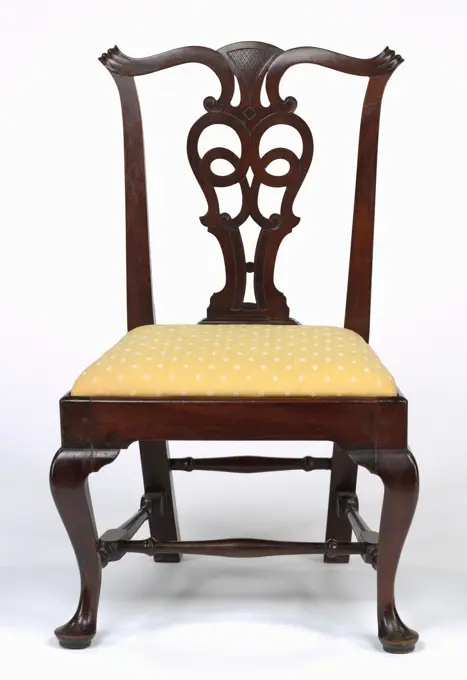
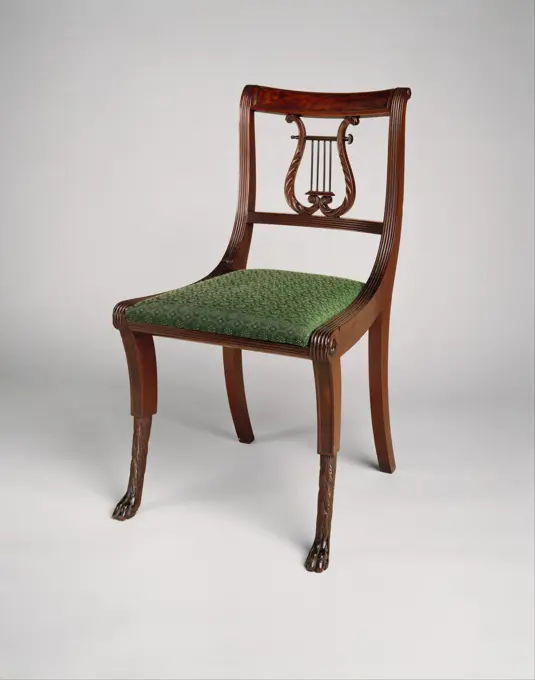
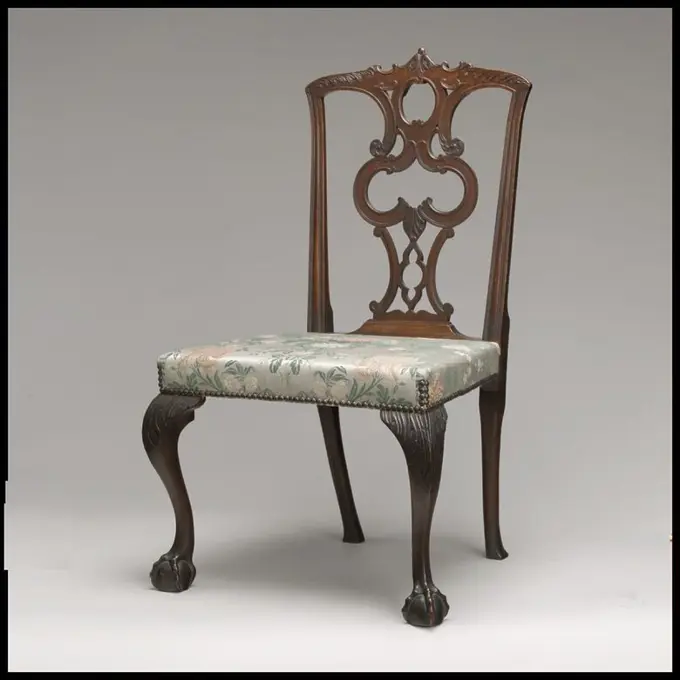
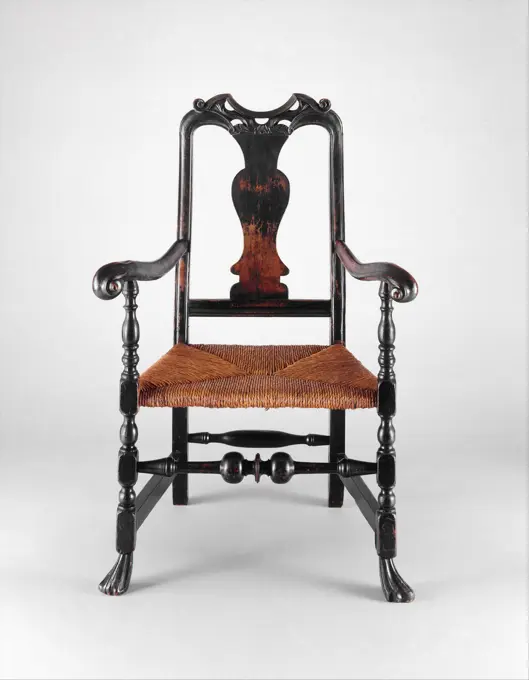
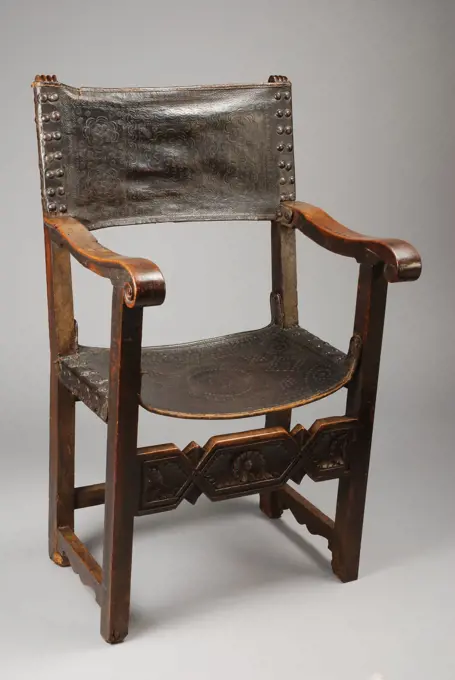
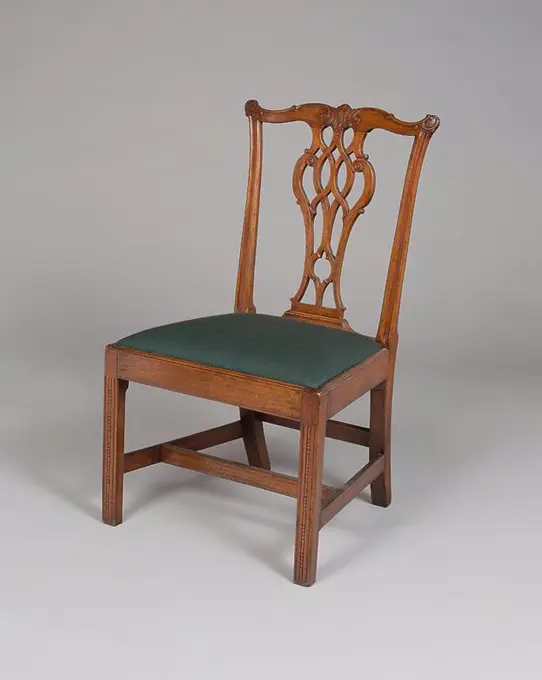
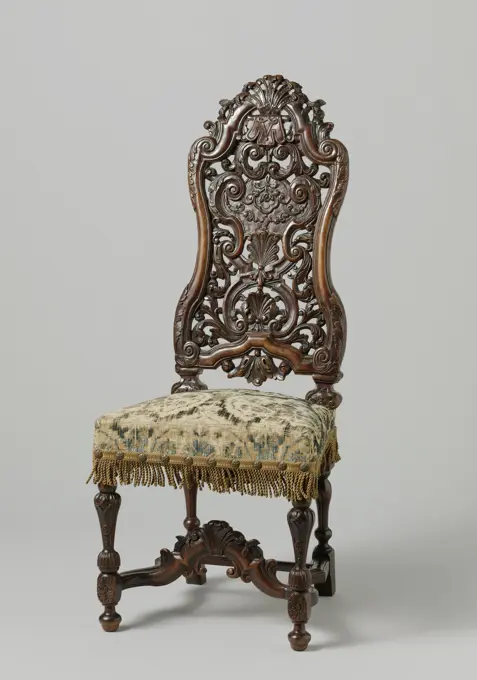
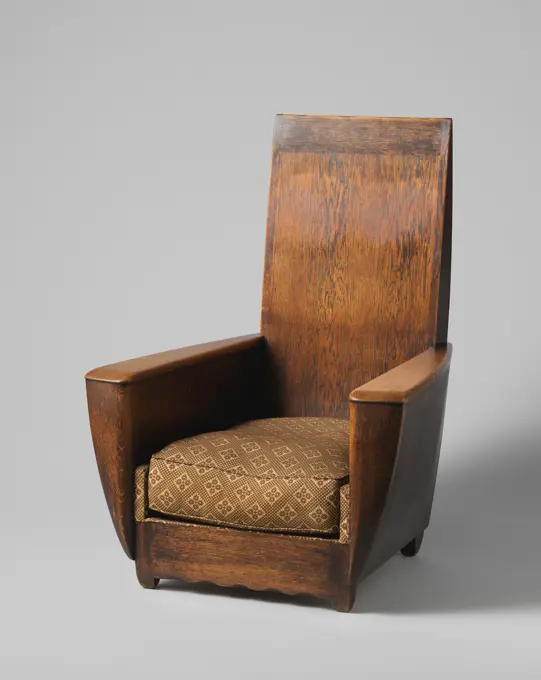
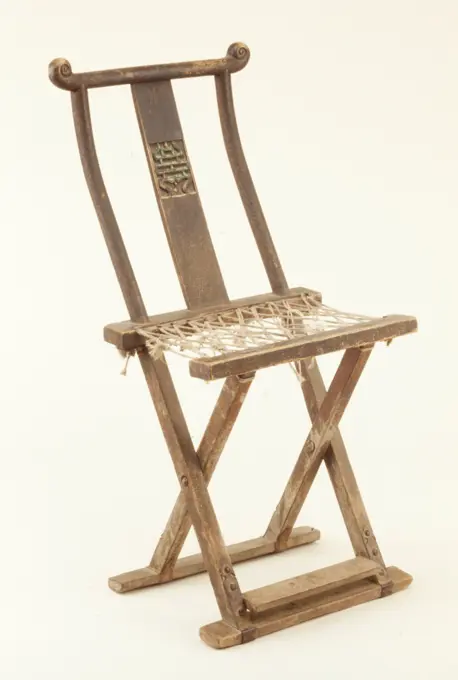
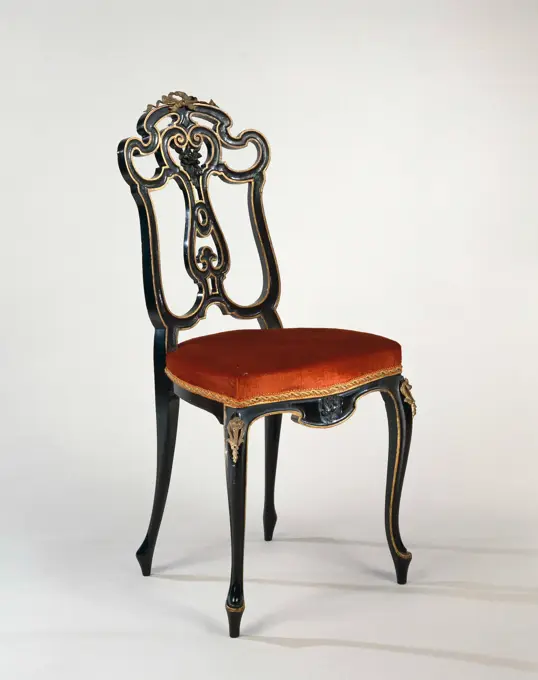
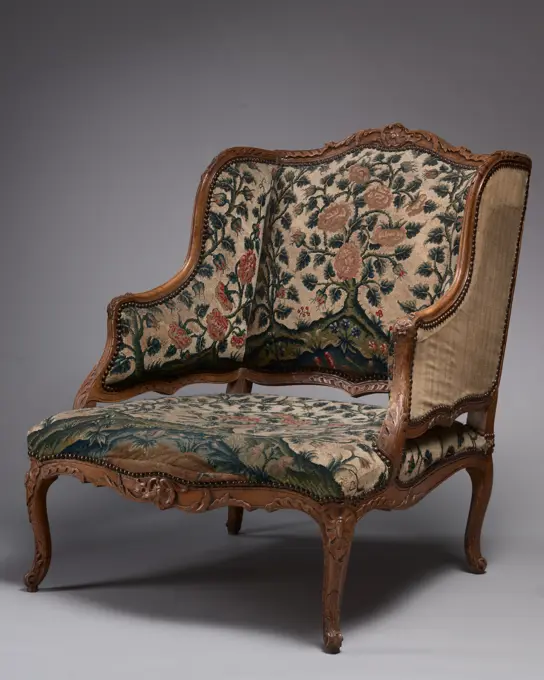
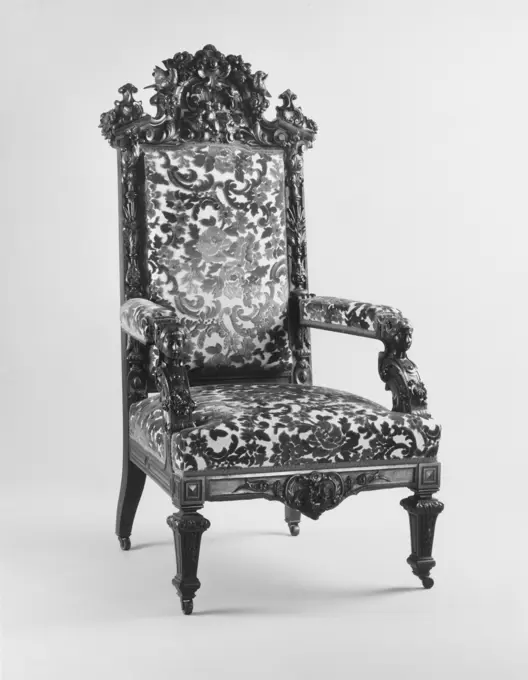
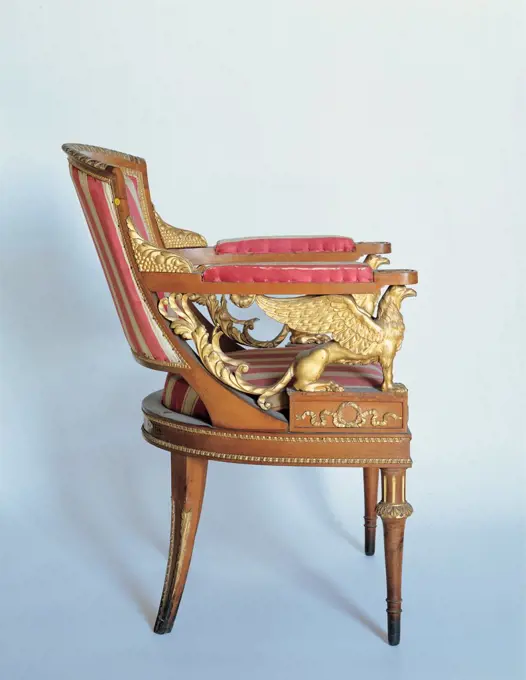
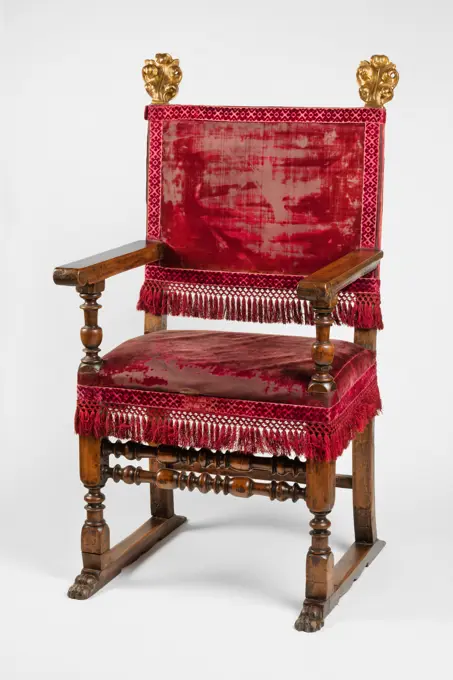
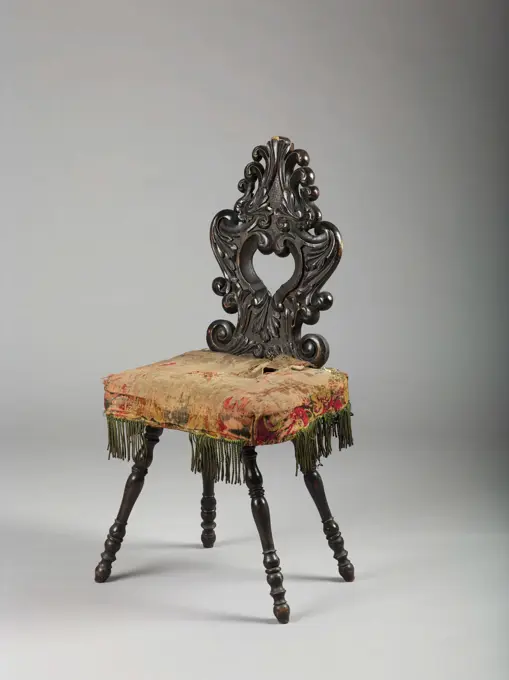
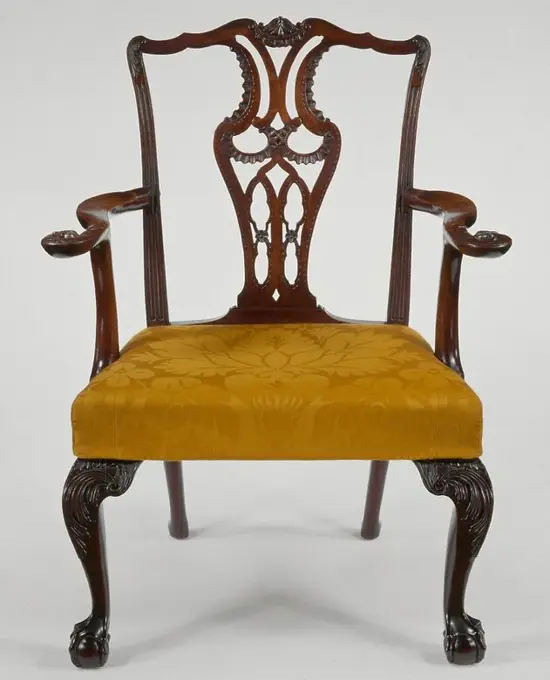
Armchair. Culture: American. Dimensions: 39 1/2 x 30 x 23 1/2 in. (100.3 x 76.2 x 59.7 cm). Date: 1770-90.Like much New York furniture, this armchair follows English precedents in having a low back and tapering rear legs that end in oval spade feet. It descended in the family of Samuel and Judith Verplanck, whose complete parlor furnishings are displayed in the Verplanck Room (gallery 718). Museum: Metropolitan Museum of Art, New York, USA.Furniture, Anonymous, 1775 - 1800 Chair of mahogany, resting on square legs that narrow downwards and wearing acanthus rosettes on the houses; The hind legs areas backwards. The open bent and profiled back has a narrow middle style and two sloped twisted bars. The scanned sitting window is fainting at the front with square corner pieces; The back is hemisphere in shape. The upholstery of Groen Trijp was applied later. Northern NetherlandsNetherlands wood (plant material). mahogany (wood). velvet (fabric weave) Chair of mahogany, resting on square legs that narrow downwards and wearing acanthus rosettes on the houses; The hind legs areas backwards. The open bent and profiled back has a narrow middle style and two sloped twisted bars. The scanned sitting window is fainting at the front with square corner pieces; The back is hemisphere in shape. The upholstery of Groen Trijp was applied later. Northern NetherlandsNetherlands wood (plant material). mahogany (wood). velvet (fabric weave)Chair with back of the back A woman head cut in profile inside a medallion with on both sides Lauwerslings. Chair of mahogany, covered with green tripe (not original). The two light S-shaped curved legs are decorated with a ribbed band that is crowned by a large motif an acanthus leaves. The powerfully curved hind legs are unfinished. The straight sitting rule shows in front and sides of cannelures, interrupted in the middle of the front by a round medallion with rosette, which depends on bays of bays in both sides. Along the oval, slightly hollow back and the high, C-shaped curved supports, a list of alternating bars and three pearls. This is interrupted at the top by a round medallion with a women's head in profile, used to the left, hanging on a bow and flanked on both sides by dependent lewers. Numbered on the inside of the rule: VII with two stripes below, there are above one; Furthermore, the letter C with a double point.Walnut Queen Anne chair, chair furniture furniture interior design walnut beech wood velours burr walnut wood, Carving on the hood the front and backrest line and lines veneered with root walnut green velor upholstery Queen AnneElmwood directoire chair, chair furniture furniture interior design wood elmwood brass velvet, Openwork backrest in which diamond shape with bent ribs in topline encrusted brass pane of which rib is missing seat striped velvet and gobelin-like directoireAnonymous, convertible armchair (main title). Wood, embroidered fabric with flowers. Petit Palais, Museum of Fine Arts of the City of Paris.Close-up of velour-upholstered Edwardian dining chairSide chair. Culture: British. Dimensions: Overall: 37 7/8 × 25 1/4 × 24 3/4 in. (96.2 × 64.1 × 62.9 cm). Date: mid-18th century.The design is based on one of several "ribband-back chairs" in the first edition of Thomas Chippendale's influential book, The Gentleman and Cabinet-Maker's Director of 1754. The preparatory drawing for this plate, which also appeared in the editions of 1755 and 1762, is in the Drawings Department at The Metropolitan Museum of Art. Museum: Metropolitan Museum of Art, New York, USA.Dining Chair 1865-1875 Austria. While architect and interior designer Theophil Hansen incorporated classical elements into his furniture designs, he also embraced contemporary advances in manufacturing, including the use of steam to bend solid and laminated wood, as seen in the curved forms of this chairís back.Laminated bentwood furniture is most closely associated with the Viennese firm Gebr¸der Thonet, the first manufacturers to produce bentwood on an industrial scale. When Thonetís patent expired in 1869, however, others such as Hansen and Jacob and Josef Kohn (whose rocking chair is to the right) were able to experiment with new designs using the technique.. Walnut and beech with modern velvet upholstery . Theophilus Edvard von HansenSide Chair c 1780-1790 Massachusetts. Mahogany, white pine, and maple . Artist unknownChair, back with vase-shaped middle leaf, the seat with burgundy velvet. Chair of mahogany. The back is open with a vase-shaped middle leaf. The chair has a trapezoidal open seating window with a loose seat with burgundy velvet.Chair. unknown, creatorjoiner, Rococo chair with dog and sea monster in the back, chair furniture furniture interior design wood walnut elmwood burr walnut silk, cut stitched veneered Above the seat in the backrest are snake on the right and bird on the left. Pendant of 80488 stamped number under the seat: VIIII home interior rococo shippingArmchair, c.1740. René Cresson (French, c. 1705-c. 1749). Carved wood, cane; overall: 95.6 x 70.5 x 60 cm (37 5/8 x 27 3/4 x 23 5/8 in.).Chair. unknown, creatorFurniture, Anonymous, 1650 - 1700 Chair of walnut, covered with black velvet and cracking tie risles. The furniture has flung legs, which are connected by an H-shaped cross and an upper sport, all also hurled. The tapisserie decoration on the upholstery shows flowers and lilies in green, salmon color, liver color and blue. The lining of the backs is yellow damask. The canals are old. One from a series of seats of six (inv. No. BK-KOG-1797-A to -F). Northern Netherlands wood (plant material). walnut (hardwood). velvet (fabric weave) tapestry / damask Chair of walnut, covered with black velvet and cracking tie risles. The furniture has flung legs, which are connected by an H-shaped cross and an upper sport, all also hurled. The tapisserie decoration on the upholstery shows flowers and lilies in green, salmon color, liver color and blue. The lining of the backs is yellow damask. The canals are old. One from a series of seats of six (inv. No. BK-KOG-1797-A to -F). Northern Netherlands woodOak chair with sitting and back of leather. Eight oak chairs with leather sitting and back. The legs show home and suffered and are connected by an H-shaped cross. There is a wide advance at the front, between two houses. The hind legs neighborhood. The back rests high on the struts and is bent from above.Chair of mahogany on overhoeks placing s-shaped legs on ball and claw, the hind legs ending in boxing hoeven. Sitting covered with green velor .. Upper armchair from mahogany, resting on overhoeks S-shaped front legs, ending in ball and claw, and on Hearing legs ending in boxing hooves. A voluntary decoration on the swellings; On the front legs also an acanthus motif. The seating frame is trapezoidal. The faint bent armrests have cushions and acanthus leaf decorations and end in volutes. The stretched S-shaped armrests are placed backwards. The coated elongated back window has a scalloped upper shell.Chair of white -painted beech wood, Noël Poirié, 1740 Chair of white -painted beech wood, with reeds stretched. The S-shaped legs placed overhoek ends in an acanthus leaf and turn into the seating rules. Flower branches have been applied to the swellings of the front legs, the center of the prescription rule and the upper sill of the back window. The sitting window, with slightly scalloped front and curved sides, crosses and is trapezoidal. The stupid back window has stretched S-shaped styles with small volutes above and acanthus leaf below and scalloped sills. France wood (plant material). beech (wood). paint (coating) Chair of white -painted beech wood, with reeds stretched. The S-shaped legs placed overhoek ends in an acanthus leaf and turn into the seating rules. Flower branches have been applied to the swellings of the front legs, the center of the prescription rule and the upper sill of the back window. The sitting window, with slightly scalloped front and curved sides, crosses aChair in neo-rococo style of djatihout, sitting and back tensioned with reeds. Chair in Neo-Rococo style of Djatihout and trenched seat and back. S-shaped curved front legs and curved rule and egg-shaped back, resting on C-volute-shaped struts and completely surrounded by asymmetrically cut-away cutting of C and S volutes with flower and leaf motifs.Furniture. Chair from mahogany children's family celebration consisting of three chairs and two armchairs. The round front legs are decorated with turning and with a border of semicircular profiles. The label-shaped hind legs run over in the back window with curved styles and upper spray and with an intermediate rule, decorated with symmetrically placed leaf classes, between which a vertically profiled lock piece. The S-shaped armrests and struts end in a volute; The underside of the struts wear semicircular profiles. Clad seat.Furniture, Anonymous, 1850 - 1875 Chair from Mahonieen Kindersueblement consisting of three chairs and two arm chairs. The round front legs are decorated with turning and with a border of semicircular profiles. The saber -shaped hind legs run into the back window with bent styles and upper sill and with an intermediate rule, decorated with symmetrically placed leaf skins, between which a vertically profiled final piece. The S-shaped armrests and struts end in a volute; The underside of the struts wear semi -round profiles. Covered session. Northern NetherlandsNetherlands wood (plant material). mahogany (wood). textile materials Chair from Mahonieen Kindersueblement consisting of three chairs and two arm chairs. The round front legs are decorated with turning and with a border of semicircular profiles. The saber -shaped hind legs run into the back window with bent styles and upper sill and with an intermediate rule, decorated with symmetrically placed leaf skins, between which a verticaSide Chair 1900 Germany. Walnut, caning . Jacob KellerMahogany rococo chair, chair seating furniture furniture interior design wood mahogany velvet, Seat and backrest covered with light green velvet decorated with carving flowers cogwheels Rotterdam City Triangle Hoogstraat North Oude Noorden Gerard Scholtenstraat Heilige Geesthuis Oudemannenhuis Oude mannenhuis Heiligegeesthuis rococo Object was until 1972 part of the inventory of the Heiligegeesthuis at the Gerard Scholtenstraat From 1898 to 1972 the 'Heiligegeesthuis' was located in this building.Chair. unknown, authorChair of Mahoniehout, covered with green Trijp, Anonymous, 1775 - 1800 Chair of Mahoniehout, covered with green trijp, belonging to an ameblement. The hind legs of the conical, scanned legs are backwards. The sitting window is round; The oval hired back window rests on C-shaped struts with acanthus leaf. The front rule and the top sill are decorated with a vase, in the midst of branches with leaves, hung on rings. See also: BK-18323-A/G and I/N. Northern NetherlandsNetherlands wood (plant material). mahogany (wood). Chair of Mahoniehout, covered with green trijp, belonging to an ameblement. The hind legs of the conical, scanned legs are backwards. The sitting window is round; The oval hired back window rests on C-shaped struts with acanthus leaf. The front rule and the top sill are decorated with a vase, in the midst of branches with leaves, hung on rings. See also: BK-18323-A/G and I/N. Northern NetherlandsNetherlands wood (plant material). mahogany (wood).Amus of beech wood. Amus of beech wood, painted blue and white. The furniture has a coated seat and rest on conical legs with cannelures. The armrest tricks are in the form of Tuscan colonets. The armrests have cushions. The back consists of four Tuscan columns carrying arcades with flat acantus leaf and detached Tuscan fluted colonets on both sides. The upholstery has been updated.Side Chair (2 of 2), c. 1775-90. John Townsend (American, 1732-1809). Mahogany; overall: 39 x 24 x 18 cm (15 3/8 x 9 7/16 x 7 1/16 in.).Chair with overhoeks placing s-shaped legs on boxing hooves. Chair belonging to Ameublement consisting of six coated walnut chairs and one armchair, resting on overhoeks stated S-shaped legs on boxing hooves, which proceed in the seating. It was rounded at the front, sitting room wears decorations in floral pattern; As well as the upper spray of the elongated coated back window that is slightly scalloped from below and from the side. The stretched S-shaped armrests are supported by backwards stated S-shaped struts with volute and acanthus blade decoration.Side Chair 1810-20 American This scroll-back chair and its mates were part of a set of 24 made by Duncan Phyfe for the family of William Livingston, governor of New Jersey (1776-1790). A sketch of about 1816 in Phyfe's hand shows this type of chair and gives its price. These chairs were somewhat higher in price than for other contemporary scroll-back chairs due to the extra cost charged to carve the front paw feet. (See 65.188.2-.14 for set.). Side Chair 1904Discount armchair and tensioned with rattan seat, Z.G. 'Raffles' chair. Teak's armchair with sitting with rattan ('Raffles chair'). The chair rests on baluster-shaped ribbed front legs and label-shaped hind legs that pass in the back styles to the rear. The back has a wide upper spray including a cut-away field with horizontal and vertical bars above a field with crossed bars. The curved arms end in ribbed uiva forms on twisted struts.Side chair ca. 1710-20 British. Side chair. British. ca. 1710-20. Walnut veneer on walnut, needlework. Woodwork-FurnitureChair, Anonymous, 1775 - 1800 Beech wood chair with a covered seat and resting on conical legs with cannelures, above which houses with rosettes. The hind legs are connected to a horizontal baluster -shaped sport at the height of the sitting window. The open, hurried back window rests on canaly struts, and has detached styles in the form of Tuscan-tuseled columns, destroyed, straight top and sill and in the middle a winch on which two rosettes. France wood (plant material). beech (wood). paint (coating). textile materials Beech wood chair with a covered seat and resting on conical legs with cannelures, above which houses with rosettes. The hind legs are connected to a horizontal baluster -shaped sport at the height of the sitting window. The open, hurried back window rests on canaly struts, and has detached styles in the form of Tuscan-tuseled columns, destroyed, straight top and sill and in the middle a winch on which two rosettes. France wood (plant material). beech (wood). paint (coArmchair. unknown, authorArmchair from mahogany, lined with green tripe. Armchair from mahogany, lined with greenery, belonging to an amele. The hind legs deviate from the conical, fluted legs. The sitting window is round; The oval healed back window rests on C-shaped struts with acanthus leaf. The rule and the upper spray are decorated with a vase, in the middle of branches with leaves, hung on rings. The armchair has S-shaped armrests and S-shaped armrests with cushions and volute. See also: BK-18323-A and C / N.Side Chair. Culture: American. Dimensions: 38 3/4 x 21 5/8 x 17 1/2 in. (98.4 x 54.9 x 44.5 cm). Date: 1765-90.These chairs are among the finest of all Boston seating furniture in the Rococo style. The design of their back is taken verbatim from plate 9 of Robert Manwaring's modest pattern book The Cabinet and Chair-Maker's Real Friend and Companion, which was published in London in 1765, and available in Boston by January 1767. But whereas Manwaring's chair design had plain straight legs and was considered of modest scale and importance, the Boston maker considered his handiwork top of the line and added elegantly carved cabriole legs and claw-and-ball feet. Museum: Metropolitan Museum of Art, New York, USA.Armchair with a toiletArmchair on S-shaped curved front legs, gray-painted walnut and covered with red velvet with pattern of rosary branches .. gray painted walnut with red velvet. The Ovonger placed S-shaped front legs will go into the scalloped rules without interruption. The trapezoidal sitting window is slightly bent at the front and vaulted on the sides. The armrests deviate outwards, have cushions and end in volutes. The armrest struts will be in the armrests S-shaped. The back window rests on small struts; Slightly curved styles and sills.Mahogany armchair in late Empire style, armchair seat seating furniture interior furniture wood mahogany oak velvet, Council seat Empire inclined towards Biedermeier; mahogany veneer over oak core Front legs standing on stabbed claw transition to armrest with inserted ornament same ornament on transition armrest to back. Twisted lines under the seat Tapestry on the topside red velvet upholstery Empire town hall town hall administration Rotterdam City Triangle Cheese Market Hoogstraat Originating from the old Town Hall on the Cheese Market Rotterdam The chairs remained in use until 1851.Mahogany rococo chair, chair seating furniture furniture interior design wood mahogany velvet, Seat and backrest covered with light green velvet decorated with carving flowers cogwheels Rotterdam City Triangle Hoogstraat North Oude Noorden Gerard Scholtenstraat Heilige Geesthuis Oudemannenhuis Oude mannenhuis Heiligegeesthuis rococo Object was until 1972 part of the inventory of the Heiligegeesthuis at the Gerard Scholtenstraat From 1898 to 1972 the 'Heiligegeesthuis' was located in this building.Side Chair 1765-90 American. Side Chair 1633Mahogany Biedermeier chair, chair furniture furniture interior design wood mahogany elm wood textile tarpaulin, veneered and scalloped hood and tassel leg sable-shaped legs and rear pillars ending in volutes covered with dark brown canvas BiedermeierPair of sidechairsPair of SideChairsjoiner, Rococo chair with sea monster and dog in the back, chair furniture furniture interior design wood walnut elmwood burr walnut silk, cut stitched veneered Above the seat in the backrest there is snake on the left and bird on the right. Pendant of 80489 stamped number under the seat: III home interior rococo shippingChair ca. 1830 Austrian. Chair. Austrian. ca. 1830. Walnut veneer on beech; ebonized wood; light color hardwood stringing. Woodwork-FurnitureChair. Chair.Ebbenfineer chair with Boulle Marqueterie, Anonymous, 1800 - 1900  Ebbenfineer chair with Boulle Marqueterie. The chair is stamped W.  ebony (wood). wood (plant material). brass (alloy). gilding (material). silk gildingSidechairMark Hopkins House, Rosewood, inlaid and veneered with various woods, silk (of the period but not original), The back of inlaid open rectangular latticework surmounted by an incurved crest band inlaid with a rod with ribbons holding a banner, side stretchers separated with three circular voids, side supports, tapered legs and stretchers all with gilded incuse lines; the yellow Chinese silk upholstery fabric of the period but replaced., New York, New York, USA, ca. 1878-80, furniture, Decorative Arts, Side chair, Side chairSide chair. Culture: American. Dimensions: 14 1/2 x 19 1/2 x 44 in. (36.8 x 49.5 x 111.8 cm). Maker: Herter Brothers (German, active New York, 1864-1906). Date: 1879.William H. Vanderbilt, son of Cornelius "Commodore" Vanderbilt, inherited a vast fortune and a lucrative transport business, which he expanded exponentially, becoming one of the wealthiest men in America. In 1879, to mark his elevated social and economic status, he built a mansion that spanned an entire city block on Fifth Avenue, between Fifty-First and Fifty-Second Streets. He commissioned Herter Brothers, one of the premier cabinetmaking firms in New York City, to decorate and furnish his home. In devising distinct decorative schemes for each room of the mansion, Herter Brothers drew inspiration from a wide range of historical styles and utilized expensive, exotic materials.Vanderbilt's library was conceived as a masculine, solemn, and quiet space to house antique works of art and bound volumes. The woodwork and furniSide chair (one of a pair). Culture: British. Dimensions: Overall: 41 3/4 × 25 × 29 in. (106 × 63.5 × 73.7 cm). Maker: Attributed to Richard Roberts (British, active 1714-29). Date: ca. 1715.These chairs are part of a large set that included two settees and one winged easy chair, stools, and side chairs, supplied to Sir Robert Walpole, later first Earl of Orford (1676-1745), for Houghton Hall, Norfolk. The attribution to Richard Roberts is based on an account of a considerable debt owed by Walpole in 1729 to a "Thomas Roberts." Thomas Roberts, carver and joiner to the royal household, worked in London under the sign of The Royal Chair until his death in 1714. He was succeeded by Richard Roberts, presumably his son, who was active at the time that Walpole redecorated Houghton Hall. Museum: Metropolitan Museum of Art, New York, USA.Chair. unknown, author, Jansen (fl. ca 1880), upholstererMahogany rococo chair, upright chair seat furniture furniture interior design wood mahogany velvet brass, Bolkow legs and green velvet covering with sunflowers Rotterdam City center Stadsdriehoek Hoogstraat Heilige Geesthuis Oudemannenhuis Old man house Heiligegeesthuis rococoChair -SideChair, Soft maple, red oak, leather upholstery, 42 13/16 × 14 3/8 × 14 1/2 in. (108.7 × 36.5 × 36.8 cm), This chair reflects a dramatic change in seating furniture that took place toward the end of the 1720s. The uprights curve and the backrest becomes a single broad splat. Chairs of this type also retain earlier features such as vase-and-block turned legs and ball-and-ring turned front stretchers. Similar leather chairs often have scrolled or so-called Spanish feet. This chair retains its original Russia leather upholstery on the back panel and on the band along the edges of theseat. , Made in Boston, Massachusetts, American, 18thcentury, FurnitureSplat-back armchair 1735-43 Attributed to the shop of John Gaines III American In the design and construction of this armchair, the incline of the back, relaxed slope of the arms, and forward pull of the powerful rams-horn handgrips are in perfect balance. The scrolls, foliate carvings, and piercing of the crest rail and the extended length and breadth of the outward-sweeping carved feet are design elements associated with John Gaines III. Trained by his father, a turner and chairmaker in Ipswich, Massachusetts, Gaines moved in 1724 to Portsmouth, where his shop remained active until 1745.. Splat-back armchair 203Chair ca. 1830 Austrian. Chair. Austrian. ca. 1830. Walnut veneer on beech and coniferous wood. Woodwork-FurnitureWalnut renaissance armchair, armchair seat furniture interior design wood walnut leather metal, Seat and back covered with leather with blind stamping front with geometric decoration renaissanceSide Chair. American; Boston, Massachusetts. Date: 1760-1780. Dimensions: 94.6 × 57.8 × 47.6 cm (37 1/4 × 22 3/4 × 18 in.). Mahogany, white pine, and red gum. Origin: Boston. Museum: The Chicago Art Institute, Chicago, USA.Armchair. Culture: British. Dimensions: Overall: 36 1/2 × 22 1/2 × 16 1/2 in. (92.7 × 57.2 × 41.9 cm). Date: ca. 1710. Museum: Metropolitan Museum of Art, New York, USA.Armchair. Armchair, coated, lacquered beech wood. The overhoeks placed S-shaped legs, ending in an acanthus sheet, are transferred to the scalloped rules. The trapezoidal sitting window is slightly bent on the front and vaulted on the sides. The armrests deviate outwards, have cushions and end in volutes. The struts switch to the armrests S-shaped. The stifed back window has slightly curved styles and sills. Profile lists with small volutes follow the chair in its contour.Chair, anonymous, c. 1710 - c. 1725 Chair of Notenhout. The furniture is covered and rests on baluster legs. The forSport is sculpted and decorated with acanthus leaf. The side sports are hurled. The high, openwork and sculpted back rests on short baluster -shaped struts. The side styles show stretched volutes with acanthus leaf decorated. The upper sill has a symmetrical acanthus leaf as a middle part; Under the sill a symmetrical seal leaf. Inside the window there are shell motifs, flanked by band work and volutes. Northern Netherlands wood (plant material). elm (wood). walnut (hardwood) Chair of Notenhout. The furniture is covered and rests on baluster legs. The forSport is sculpted and decorated with acanthus leaf. The side sports are hurled. The high, openwork and sculpted back rests on short baluster -shaped struts. The side styles show stretched volutes with acanthus leaf decorated. The upper sill has a symmetrical acanthus leaf as a middle part; Under the sill a symmetrical seaArmchair with high backrest and coated with a beige fabric with a brown diamond pattern. Armchair of dark tinted oak resting on four low legs. The legs are interconnected both at the front and rear by means of a broad rule with a wavy edge at the bottom. The armchair has wide cheeks on which the armrests lie. The armrests widen to the front. The cheeks curved on the outside widen to the front and top. The armchair has a high backrest. The seat and a loose cushion are covered with a beige fabric with a brown diamond pattern.Armchair;  1. W. XVII; 19th/20th century (1601-00-00-1625-00-00);Armchair;  4 W.XVIIIW. (1776-00-00-1800-00-00);Armchair. unknown, authorChair with open backrest with middle style, sitting with green velvet. Chair of mahogany, round open backrests with middle style; straight rule, back legs of hind legs and overhoeks placed S-shaped front legs; Seat covered with green velvet with filling over blackboard paper.Armchair (part of a set) ca. 1820 Charles Dixwell The klismos, with splayed legs and round back, was an antique form resuscitated in the archaeological enthusiasm of the late eighteenth century. The signature "C. Dixwell 1820" beneath the seat rail of the side chair is that of Charles Dixwell, a London "upholder," a profession including the tasks of upholsterer, furniture repairman, and undertaker.. Armchair (part of a set). British. ca. 1820. Mahogany, leopard-skin upholstery original to the chair. Woodwork-FurnitureChair, belonging to an eleven -piece amblement, anonymous, c. 1750 Chair, made of walnut, belonging to an eleven -piece ameblement, consisting of a bank and ten chairs. The seat of neighboring duration with leaf and floral motifs in silk on linen grid, with a soft filling. Amsterdam (possibly) Walnut (Hardwood). Seat: Silk. seat: Chair, made of walnut, belonging to an eleven -piece ameblement, consisting of a bank and ten chairs. The seat of neighboring duration with leaf and floral motifs in silk on linen grid, with a soft filling. Amsterdam (possibly) Walnut (Hardwood). Seat: Silk. seat:Writing Armchair. Dated: 1940. Dimensions: overall: 45.4 x 36.5 cm (17 7/8 x 14 3/8 in.) Original IAD Object: none given. Medium: watercolor, colored pencil, and graphite on paperboard. Museum: National Gallery of Art, Washington DC. Author: Rolland Livingstone.Provincial Folding Chair, c. 1689, 38 1/8 x 18 1/2in. (96.8 x 47cm), wood, fiber, metal, China, 17th centurySideChairHighChair. Black-dyed wooden chair and cabriolet, with orange-red tripe and passing coated and with gold-plated metal batter. The overhoeks placed stretched S-shaped front legs carry batter with bows and dependent tendrils. The curved profiled rule carries a floral pattern in the middle. The openwork, hollow profiled back consists of curved shapes, between which a French lily, an oval and a bouquet; A bow on the upper spray. Finish with gold-plated tires on red bolus. See: BK-1971-257-a / b.Chair with a brown leather upholstery, Hendrik Petrus Berlage, c. 1902 Eikhout chair. The front and hind legs are interconnected by means of an H-shaped cross with pen and hole connections, the pens of which stick through the legs. The slanted billioned backstyles end in bird heads and rest on the cross. The handrail rests on Stutten near the seat and these also serve as hind legs. The backrest is connected both above and below by an intermediate rule. The top line contains a sliced star shape in the middle. There is a panel between the lines that is covered with brown leather and is secured with copper nails. The seat is also covered with brown leather and secured with copper nails. designer: Netherlandsmaker: Amsterdam oak (wood). leather Eikhout chair. The front and hind legs are interconnected by means of an H-shaped cross with pen and hole connections, the pens of which stick through the legs. The slanted billioned backstyles end in bird heads and rest on the cross. The handrail rChair with coated seat and carved opened back. Decoration of broken vultuts, shell motifs and acanthus leaf. Chair of walnut. The furniture has a coated seat and baluster-shaped front legs with a brush-shaped thickening of the upper part. Process has openwork broken s vultuts with acanthus leaves on either side of a shell. The high, openwork and carved back rest on twisted struts and has articulated detached corner styles. Upper and sills are scalloped and exhibit broken vultuts, shell motifs and acanthus leaf. Inside the window a shell motif, acantus leaf and band work. The upholstery new.Stoel van eikenhout,op de platte sport het jaartal 1624.Oak chair, resting on legs with house and articulation, connected by eight sports. At the bottom of the rules a hold tooth list. The back styles are decorated with interrupted cannelures, a drip, buckle and field with stainless steel; Ter crocus vases. Halfway through a flat sport, the back window bears a flat sport that, in Marqueteria, wearing a rolling cartouche with the year 1624. Above seven Tuscan columns and two half-columns wearing braid arches; underneath and on the upper shell decoration in rollerwork motif.Daybed Armchair (Duchesse brisée), c. 1890-1940. France, style of Louis XV, 20th century. Carved wood frame upholstered in needlework; part 1: 102.6 x 83.8 x 78.8 cm (40 3/8 x 33 x 31 in.).Michael Thonet / 'Thonet armchair'. Ca. 1930. Wood, Ratán/Médula, Metal. Museum: Museo del Prado, Madrid, España.Chair of partially veneered and painted satin wood. Partially veneered and painted satin seats, resting on channeled conical articulated front legs and backwardly curved hind legs. The connection between the armrests and the faint bent armrests is C-shaped. The back is bent and decorated in the middle with a vertical connection, on which painted medallions, free to 18th-century representations. The seat is stretched with cane and equipped with loose embroidered cushions. See also: BK-16137-A to e.Furniture, Anonymous, 1800 Elm wood chair with square, downwards, rejuvenating legs. The back is open with two arches; The center track shows rectangular interruptions. The chair wears a loose cushion of green trijp. Northern Netherlands elm (wood). Elm wood chair with square, downwards, rejuvenating legs. The back is open with two arches; The center track shows rectangular interruptions. The chair wears a loose cushion of green trijp. Northern Netherlands elm (wood).Chair. unknown, authorWriting chair, Joined, turned, and carved ash, maple and beech woods; leather; brass, Small comb-back of five spindles. Right arm terminating in large ovate writing surface supported by two turned braces and covered with red leather; left arm is knuckled. Arm assembly rests on two turned seventeen spindles. Broad slightly dished seat supported by four turned legs joined by H system of turned stretchers; drawers under writing arm and seat., USA, early 19th century, furniture, Decorative Arts, Writing chairArmchair. Culture: American. Dimensions: 46 x 23 1/2 x 17 in. (116.8 x 59.7 x 43.2 cm). Date: 1675-1700. Museum: Metropolitan Museum of Art, New York, USA.Armchair 1853 Julius Dessoir German (Prussian) This armchair in the Louis XIV Revivial style is part of a larger suite of furniture exhibited at the New York Crystal Palace by the Prussian immigrant cabinetmaker Julius Dessoir. Like other objects made for exhibition, this chair is larger and more lavishly decorated than it's domestically scaled counterparts. The extensive ornamentation-naturalistic birds, flowers, and the female heads on the armrest-advertised Dessoir's skill at design and carving.. Armchair 15297Federico Correa y Alfonso Milá / Silla, 1961. Colección privada.Pair of armchairs ca. 1730-50 Tapestry woven at: Beauvais. Pair of armchairs 204093Armchair 1898 Joseph Maria Olbrich Austrian Olbrich was one of the most influential architects of the maverick Secession movement in Vienna, which rejected historicism. His best-known building is the exhibition hall he built for the Secession on the Ringstrasse, which carried above its portal the slogan "To every age its art; to art its freedom." He designed this chair for a suburban home outside Vienna.. Armchair 482541Chair. unknown, authorRoundaboutChairArmchair, by Casadoro Giuseppe, 1812 - 1812, 19th Century, cherry-wood partially carved and gilded, fabric. Italy, Veneto, Stra, Venice, Villa Pisani know as Nazionale. Whole artwork. Side view gilded floral volutes red silk decorations griffin.Armchair. unknown, creatorBoard chair. unknown, authorSide Chair 1840-60 United Society of Believers in Christs Second Appearing (“Shakers”), Mount Lebanon, New York. Side Chair 1866Side Chair 1785-95 American. Side Chair 1564Armchair. Culture: American. Dimensions: 40 x 27 3/8 x 25 5/8 in. (101.6 x 69.5 x 65.1 cm). Maker: Attributed to Thomas Affleck (1740-1795). Date: ca. 1766.This armchair is a more elaborately carved version of another example (59.154) in the collection. Both are thought to have been made by Thomas Affleck for the family of John Penn. Here, the straight "Marlborough" legs are embellished with Gothic pointed arches over a Chinese trellis, and the arm supports are fronted by carved leafage. Museum: Metropolitan Museum of Art, New York, USA.Side Chair 1878-84 American This delicate side chair is part of a bedroom suite made for Elizabeth Love Marquand, the daughter of Henry Gurdon Marquand, second president of The Metropolitan Museum of Art (see 1986.47.1-.3). The suite was used in her family's residence at Madison Avenue and Sixty-Eighth Street, designed by Richard Morris Hunt (1827-1895) and built between 1881 and 1884. When, in 1884, Elizabeth married Harold Godwin (grandson of the poet and editor William Cullen Bryant), she brought the bedroom suite with her to "Cedarmere," Godwin's family home on Long Island, where it remained until 1984. Although the suite exhibits American woods and was likely made in New York, the delicate and highly skilled carving of the Renaissance-style motifs suggests the work of a European-born craftsman. In contrast to the taste for flat surface decoration that dominated the 1870s, richly carved furniture such as this became fashionable about 1880.. Side Chair 1921Armchair;  1860-1880 (1860-00-00-1880-00-00);Side Chair 1790-1800 American. Side Chair. American. 1790-1800. Mahogany, ash, tulip poplar, satinwood. Made in Baltimore, Maryland, United States