My Boards
View Pictures
  • My Boards
← Artworks

Classic Sculptures of Allegorical Figures

Sculptures depicting female figures representing ideals like Republic and Hope, rendered in various materials from the 17th to 19th centuries.

Simon Miedema, Cast bronze statue of child with sickle and bundle of grain in hand, summer, from series the seasons, sculpture sculpture bronze metal, cast Series = spring - summer - autumn - winter cabinet furniture furniture crowning Made on behalf of J.P. van der Schilden as crowning box designed by him.
259 assets in this story
6145-29742928
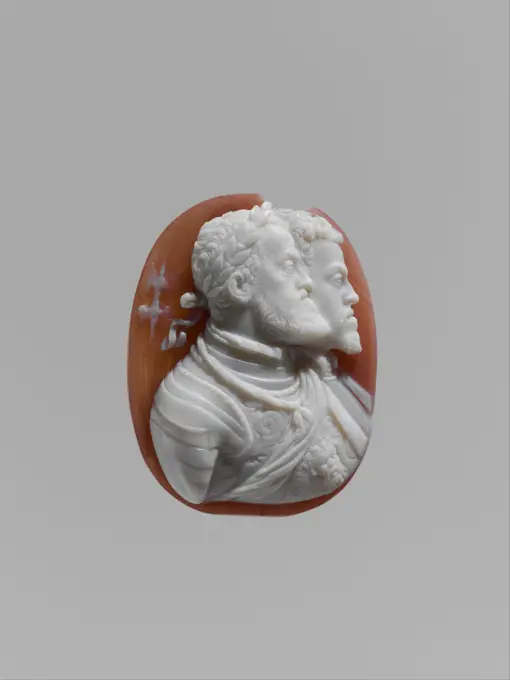
Emperor Charles V (1500-1558) and his Son Philip II of Spain (1527-1598) 1550 Leone Leoni Italian This is a rare, possibly unique instance of a Renaissance cameo documented in the carvers own words. The eminent Hapsburg court sculptor Leone Leoni wrote in 1550 from Milan to Cardinal Granvella, agent of Charles V in Brussels, that “a fantastic stone” inspired him to carve a double portrait of Charles and his son, Philip II, “the way a sculptor used to do for Caesar and Augustus. On the reverse I represented the Empress so beloved of the Emperor.” Isabella of Portugal, wife of Charles and mother of Philip, had died in 1539. Leoni estimated that his work had taken two months. He was perpetually busy with important projects and his attention cannot have been undivided, yet as the precious letter corroborates, he obviously took great care with the cameos execution.Jugate portraits, in which one profile overlaps another, were indeed invented by the ancient Romans. The object behind the hea
4409-17355312
Pilgrim Couple. Culture: Italian, Naples (Capodimonte). Dimensions: Height: 8 3/8 in. (21.3 cm). Factory: Capodimonte Porcelain Factory (Italian, 1740/43-1759). Date: ca. 1755-59. Museum: Metropolitan Museum of Art, New York, USA.
6145-29119595
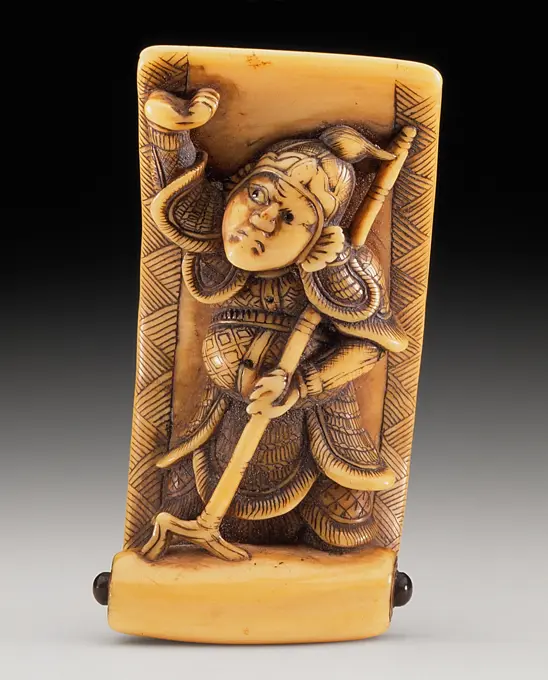
Bishamonten in Scroll. Juhōsai Tsunemasa (Japan, active 18th century). Japan, 18th century. Costumes; Accessories. Ivory with staining, sumi, inlays
4409-17466292
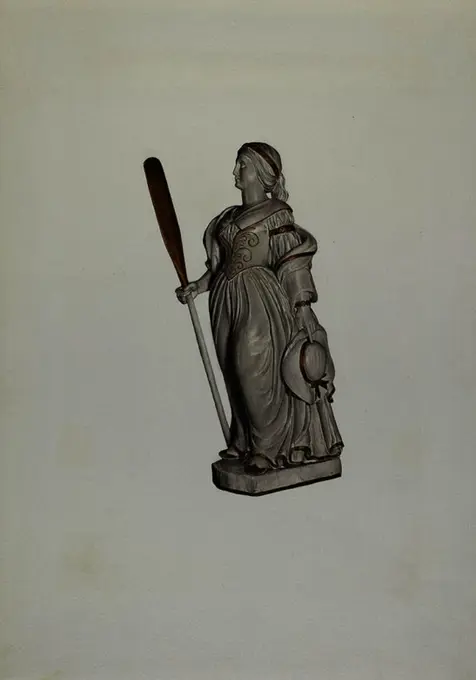
Figurehead. Dated: c. 1939. Dimensions: overall: 44.7 x 31.2 cm (17 5/8 x 12 5/16 in.). Medium: watercolor and graphite on paper. Museum: National Gallery of Art, Washington DC. Author: Lucille Lacoursiere.
4409-17382561
Angel Playing Instrument. Culture: French. Dimensions: Overall: 7 x 4 3/8 x 1 7/8 in. (17.8 x 11.1 x 4.8 cm). Date: 15th century. Museum: Metropolitan Museum of Art, New York, USA.
6145-29223390
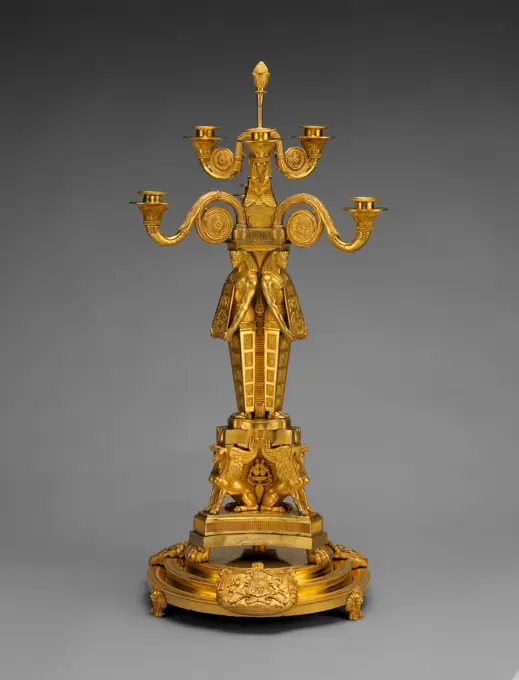
Egyptomania candelabrum (one of a pair) ca. 1802-6 Alexis Decaix These candelabra were one component of an extraordinary Egyptian-style dining room that was designed between 1802 and 1806 for Goodwood House, near Chichester in southern England, the home of the dukes of Richmond. The enthusiasm in England for all things Egyptian was first ignited by Napoleon Bonapartes (1769-1821) North African campaign of 1798. Napoleon was accompanied there by a team of scholars who recorded their findings, and the resulting publication by Baron Vivant Denon (1747-1825) on the monuments of the Nile Valley had a marked influence on design.. Egyptomania candelabrum (one of a pair). British. ca. 1802-6. Gilded bronze. Metalwork-Gilt Bronze
6145-29239109
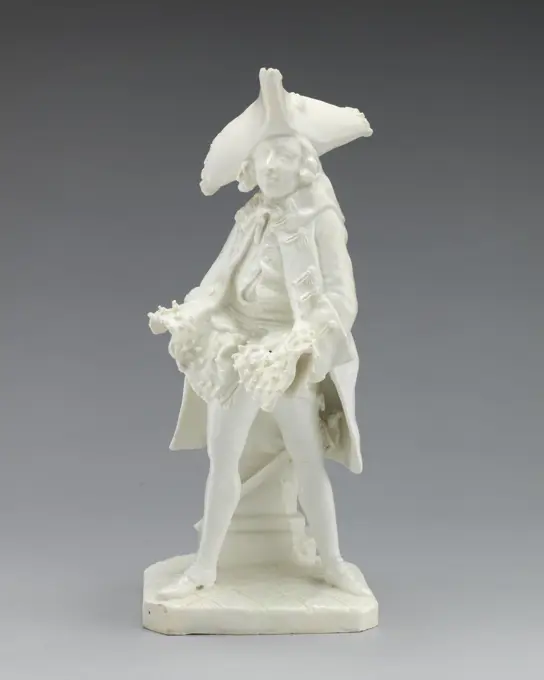
Henry Woodward 1750 Bow Porcelain Factory British These popular actors are represented in their roles in David Garrick's farce Lethe. The figure of Henry Woodward is modeled after his portrait by Francis Hayman (1708-1776) taken from a mezzotint by James McArdell (1728-1765). The figure of Kitty Clive (see 64.101.691) is modeled after an engraving of 1750 by Charles Mosley (1720-1770) taken from a drawing by Thomas Worlidge (1700-1766).Jessie McNab, 2002 Listen to experts illuminate this artwork's story Listen Play or pause #413. Retail Value. High and Low Supported by Bloomberg Philanthropies We're sorry, the transcript for this audio track is not available at this time. We are working to make it available as soon as possible.. Henry Woodward. After a mezzotint by James McArdell (Irish, Dublin 1729-1765 London). British, Bow, London. 1750. Soft-paste porcelain. Bow Porcelain Factory (British, 1747-1776). Ceramics-Porcelain
4409-17549407
Figurine: Lady Reading. Franz Anton Bustelli; German, 1723-1763, b. Switzerland. Date: 1760-1770. Dimensions: H. 19.4 cm (7 5/8 in.). Hard-paste porcelain with polychrome enamel decoration. Origin: Germany. Museum: The Chicago Art Institute, USA.
4443-21956202
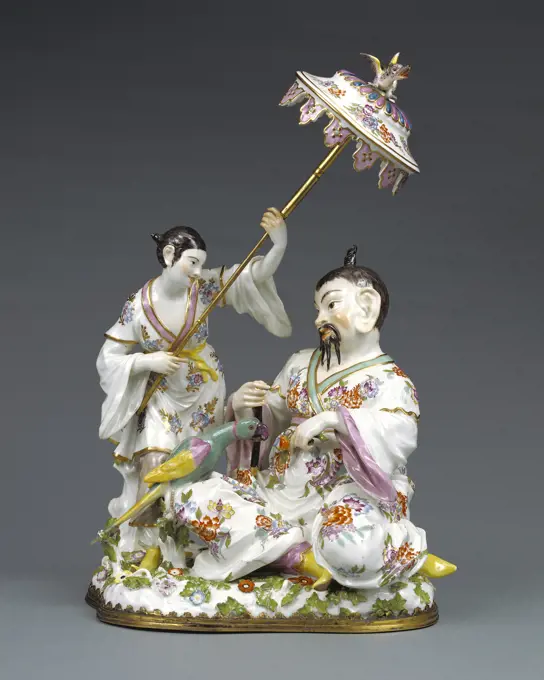
Group of Japanese Figures; Model by Johann Joachim Kändler (German, 1706 - 1775), Meissen Porcelain Manufactory (German, active 1710 - present); Meissen, Germany; about 1745; Hard-paste porcelain, polychrome enamel decoration, and gilding; gilt-bronze mounts; 45.1 x 29.5 x 21.7 cm (17 3,4 x 11 5,8 x 8 9,16 in.)
4409-17398323
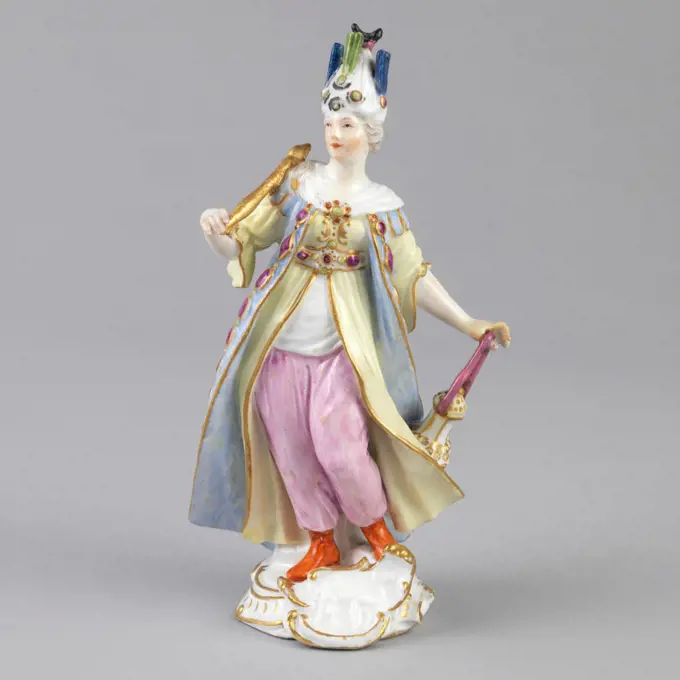
The Mountain Maid. Culture: China. Dimensions: H. 11 1/4 in. (28.6 cm); W. 7 1/4 in. (18.4 cm). Museum: Metropolitan Museum of Art, New York, USA.
6145-29731835
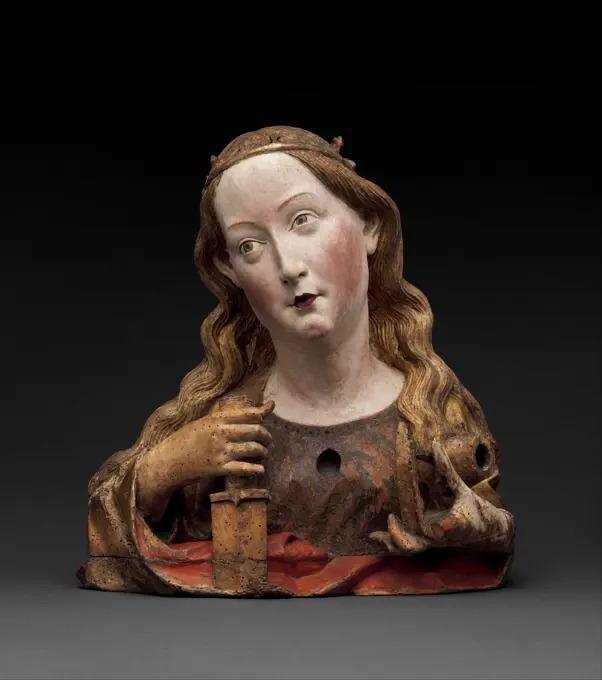
Reliquary Bust of Saint Catherine of Alexandria ca. 1465 Workshop of Niclaus Gerhaert von Leyden North Netherlandish This bust, and its companion (acc. no. 17.190.1735), reflect the liveliness and innovative naturalistm of sculpture carved in Nikolaus Gerhaerts workshop when he was working in the Upper Rhine region. Saint Catherine, whose relics were once located in the chest cavity, can be identified by her attributes the sword and the wheel. The bust of Saint Barbara also contained relics. She is recognized by the tower she holds in her right hand. It is likely that the busts were originally set into niches in the altarpiece at the high altar in Wissembourg. In addition to the saints seen here the altarpiece also incorporated busts of Saint Margaret (now in the Art Institute of Chicago) and Saint Agnes (unlocated). Plaster casts of all four busts are preserved in the Musée de lOeuvre Notre-Dame in Strasbourg. Listen to experts illuminate this artwork's story Listen Play or pause #3
4443-19534233
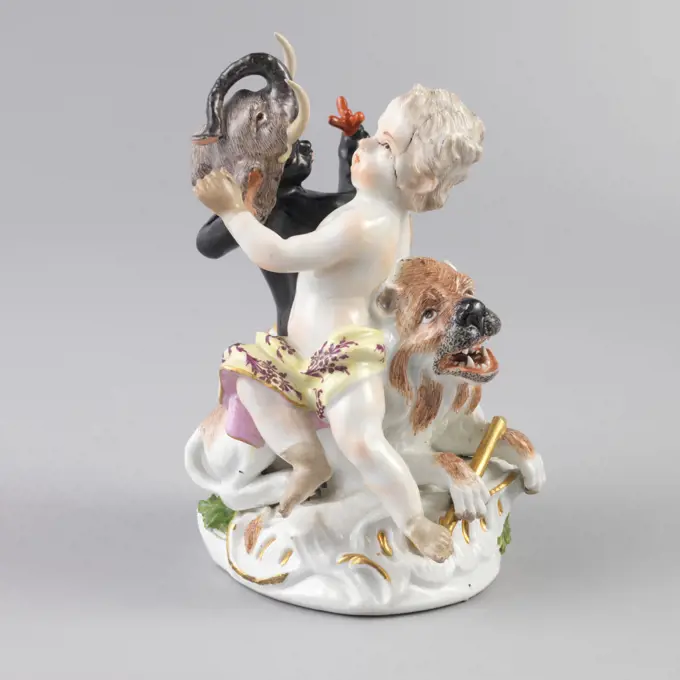
Allegorical Figure Depicting Putti as 'Asia' and 'Africa', Meissen Porcelain Manufactory, German, active from 1710 to the present, Friedrich Elias Meyer, German, 1723 - 1785, hard paste porcelain, vitreous enamel, gold, Asia wearing a loin cloth, seated on lion holding a scepter; Africa, black, wearing a loin cloth and elephant headdress, holding coral, seated on scrolled pedestal., Germany, 19th century, ceramics, Decorative Arts, figure, figure
6145-29714882
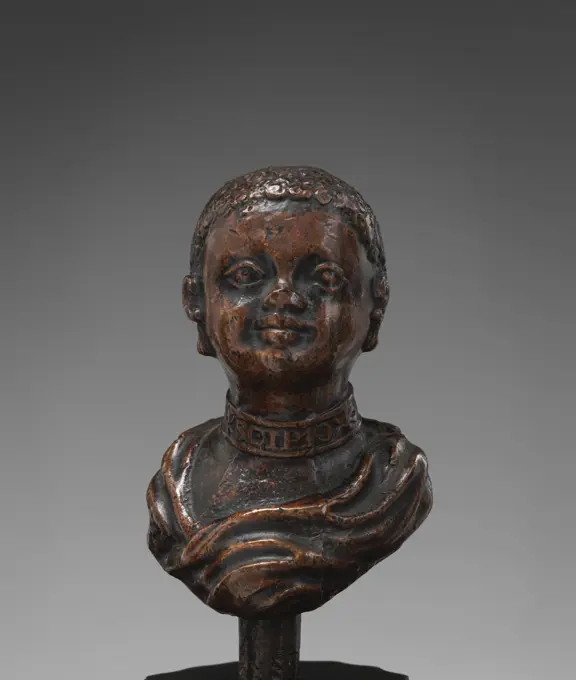
Bust of a Scipio 19th century European The expressive bust in miniature is distinguished both by the rendering of the young face, which is unexpected in such a stoic bust form alluding to ancient Roman models. It is not totally clear if a character study in the context of the expression des passions” was intended, or if the object was independently created as a precious Kunstkammer piece to be displayed and handled.. Bust of a Scipio. European. 19th century. Bronze, on later marble base. Sculpture
6145-58993571
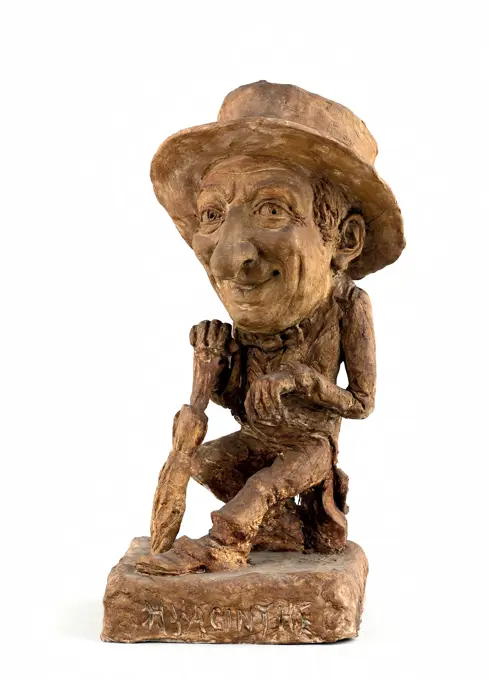
Charles Kotra (1859-1942). "Portrait-load by Louis-Hyacinthe Duflost dit Hyacinthe (1814-1887), comic actor and operetta singer". Terracotta. Paris, Carnavalet museum. 74059-17 Comic actor, seated, singer operette, umbrella, portrait-load, statue, terracotta, hat
6145-58872234
Lid of man with three -hand stitch and bottle in hand, on tons, anonymous, c. 1760 - c. 1790 Lid of decorative object of multicolored painted faïence. Delft earthenware. tin glaze. Lid of decorative object of multicolored painted faïence. Delft earthenware. tin glaze.
6145-50499639
Mount; cast and gilt bronze
6145-29751172
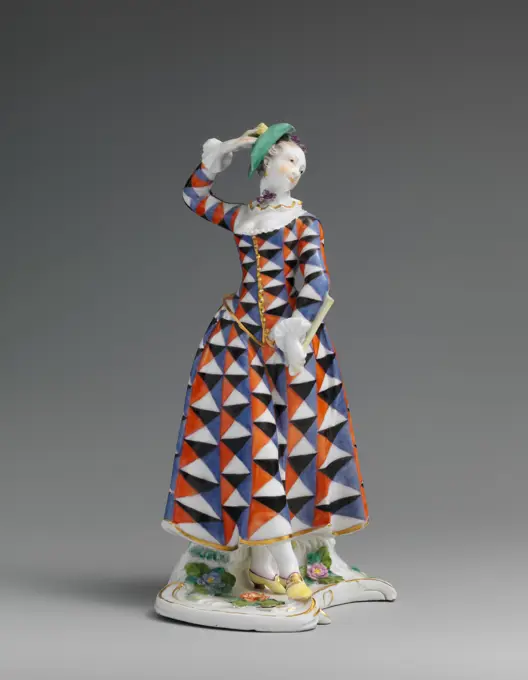
Harlequina ca. 1760 Nymphenburg Porcelain Manufactory This female figure from the commedia dell'arte has been published as Columbine,1 the clever and promiscuous servant girl who was the most prominent of the female commedia dell'arte characters. However, the lozenge-patterned dress of the porcelain figure identifies her as Harlequine, the female equivalent of Harlequin, the ignorant yet cunning male servant customarily depicted as a character primarily as a result of masquerade balls as a result of masquerade balls, which called for couples to have matching costumes.2Harlequine is depicted carrying the slapstick that was the primary accessory of Harlequin, and her raised hand forms the gesture of mano cornuta, the classic reference in Italy to infidelity. The elongated, graceful, and expressive pose of the figure is characteristic of the work of Franz Anton Bustelli, who, along with Kändler at Meissen, is considered one of the finest porcelain modelers of the eighteenth century. B
6189-55132652
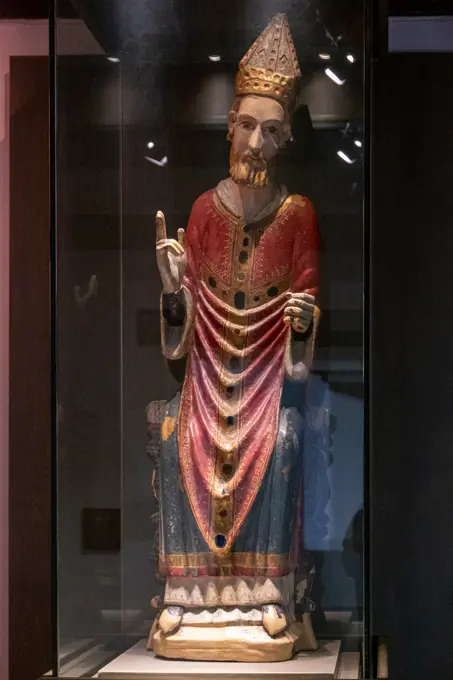
San Martin de Tours, 13th century, carved and polychrome wood, Majones, Diocesan Museum of Jaca, Huesca, Spain.
6145-46066876
Bust of Dom Luis da Cunha. Da Cunha was the Portuguese ambassador in The Hague from 1728 to 1736. He then left for Paris, where he had previously served as well. This bust was completed only after Da Cunhas departure from The Hague. As an expert on contemporary French art, Da Cunha was probably the most influential of Prince William IVs artistic advisors.
4443-19533511
Mount, Cast and gilt bronze, Furniture mount in the shape of a male figure walking into the wind with robes billowing., ca. 1810, metalwork, Decorative Arts, Mount
6145-29814772
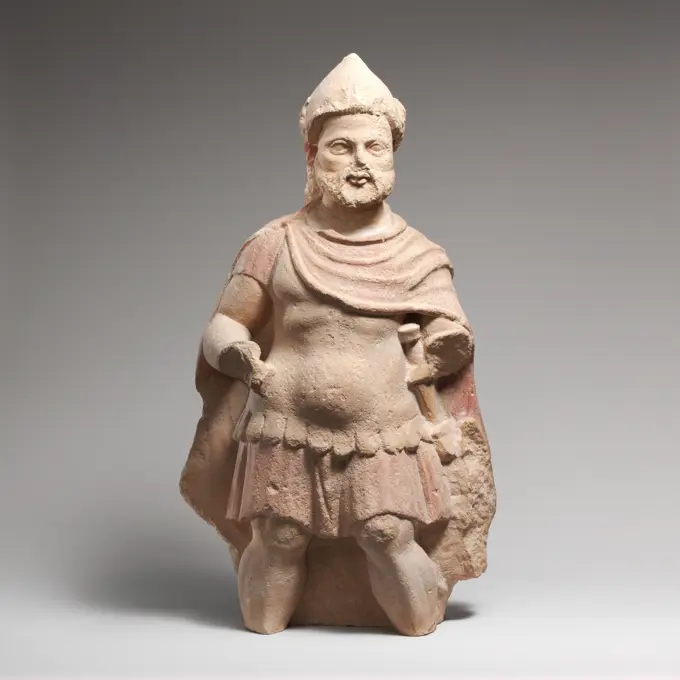
Limestone statue of a bearded warrior late 4th-3rd century B.C. Cypriot The figure is exceptional for the specificity of the characterization. It may have been dedicated by a ruler or warrior at the sanctuary of Apollo Hylates at Kourion.. Limestone statue of a bearded warrior. Cypriot. late 4th-3rd century B.C.. Limestone. Early Hellenistic. Stone Sculpture
6145-29797983
The Swing ca. 1760-70 Tournai. The Swing 200856
6145-29728821
Dish with Christ and two disciples probably 19th century Manner of Bernard Palissy French. Dish with Christ and two disciples 201618
6145-29125059
Ganesha, Lord of Obstacles. India, Uttar Pradesh, 10th-11th century. Sculpture. Brass
6145-29778956
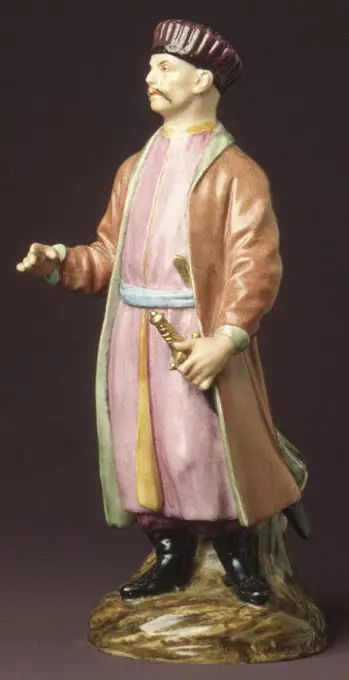
Karbadian Man ca. 1780-1800 Imperial Porcelain Manufactory, St. Petersburg Russian The Imperial Porcelain Factory entered a period of prosperity under patronage of Catherine the Great. The factory mainly served the needs of the court and, at the order of the empress, created unique pieces to be given as gifts to foreign dignitaries, favorites, and courtiers.Beginning in 1779, the chief modeler of the Imperial Porcelain factory, Jean Dominique Rochette (1744-1809), extended the scope of the factory production by creating a series of figures in porcelain. Rachette's workshop was responsible for the first series of figures known as the People of Russia. The series was inspired by the book of the famous ethnographer and traveler Johann Gottlieb Georghi entitled A Description of All the Peoples Inhabiting the Russian State. Work on the series continued from 1780 until 1804.. Karbadian Man 207065
6145-50500760
Angel Figure; painted papier-mché
4409-17479437
The Schoolgirl (Woman Walking in the Street). Dated: c. 1880/1881. Dimensions: overall without base: 27.2 x 11.3 x 8.6 cm (10 11/16 x 4 7/16 x 3 3/8 in.) base: 0.2 x 12.3 x 15.2 cm (1/16 x 4 13/16 x 6 in.). Medium: red wax. Museum: National Gallery of Art, Washington DC. Author: EDGAR DEGAS.
6145-29168281
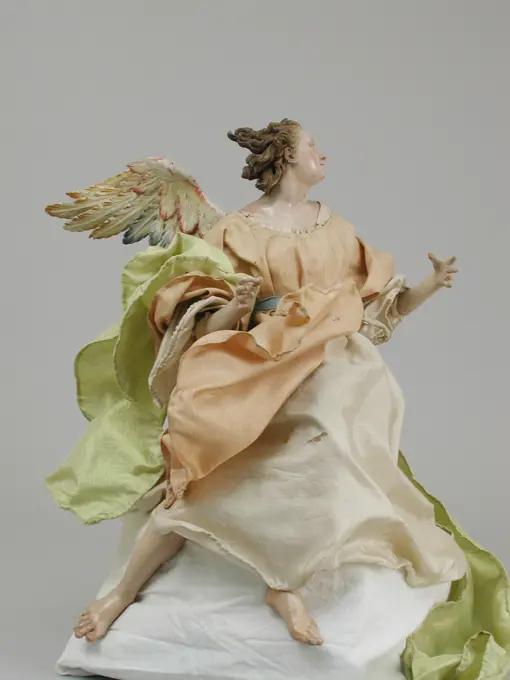
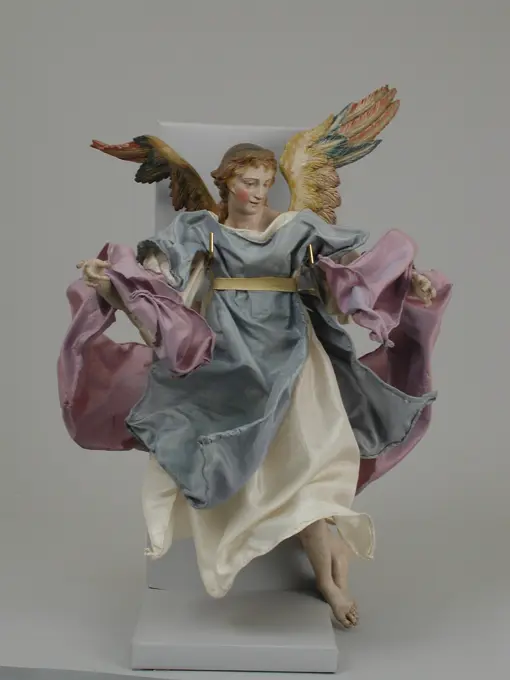
Angel second half 18th century Italian, Naples In 1964, Loretta Hines Howard generously presented to the Museum over 140 Neapolitan crèche figures, dating from the second half of the eighteenth century. The varied assortment includes figures from the three traditional scenes of a complete Neapolitan presepio: the Nativity, with angels, shepherds, and sheep; the procession of the three Magi, with their colorful retinue of attendants; and the varied and gay crowd of country and town people thronging the tavern, or inn, of Bethlehem  the diversorium mentioned by St. Luke, where on the Holy Night there was no place for Mary and Joseph. Averaging between twelve and fifteen inches in height, according to the position they were to take in perspective in the stage set, the figures are pliable and can be given poses at will, according to their facial expressions. Their bodies are made of tow and wire, their arms and legs are finely carved of wood, and their heads and shoulders are modeled of t
1848-50887029
Porcelain work with hunting motives in the hunting lodge Clemenswerth, Emsland, Soegel, Lower Saxony, Germany, Europe
4409-17583435
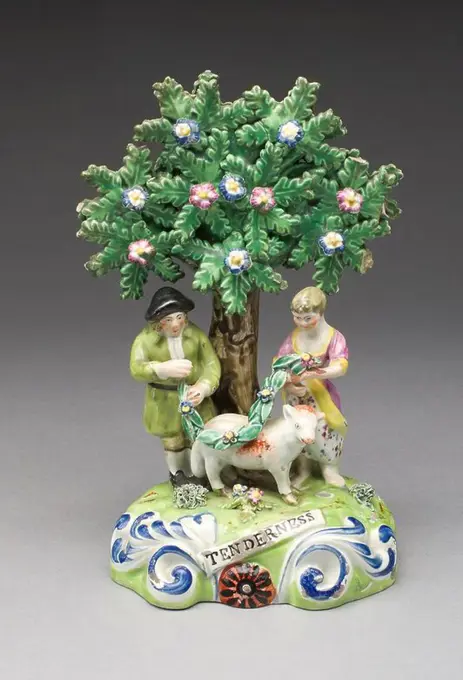
Figure Group: Tenderness. John Walton; English, 19th century. Date: 1820-1830. Dimensions: 21 x 11.8 cm (8 1/4 x 4 5/8 in.). Lead-glazed earthenware, polychrome enamels. Origin: Staffordshire. Museum: The Chicago Art Institute, Chicago, USA.
6145-30161158
Figure Group Tenderness 1820-1830 Staffordshire. Lead-glazed earthenware, polychrome enamels .
4409-17292008
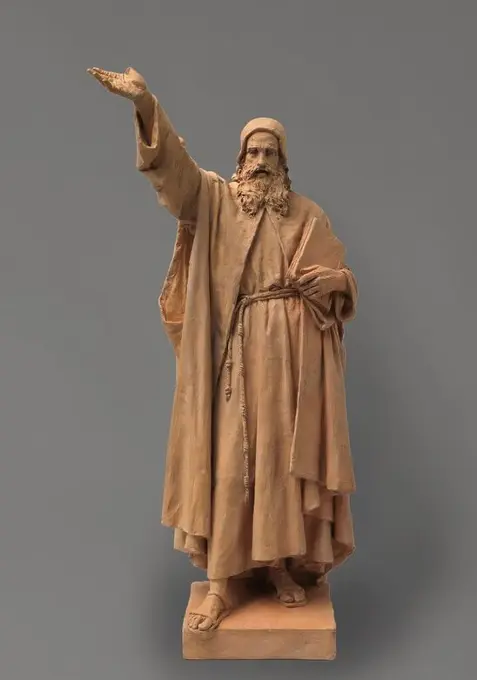
Juan Samsó / 'The Blessed Raimundo Lulio'. 1895. Terracotta. Museum: Museo del Prado, Madrid, España.
4409-17403735
Le Panier Mistérieux. Artist: After a painting by François Boucher (French, Paris 1703-1770 Paris). Culture: German, Fulda. Dimensions: Overall: 9 × 9 × 7 1/8 in. (22.9 × 22.9 × 18.1 cm). Manufactory: Fulda Pottery and Porcelain Manufactory (German, 1764-1789). Date: ca. 1775. Museum: Metropolitan Museum of Art, New York, USA.
4266-20011334
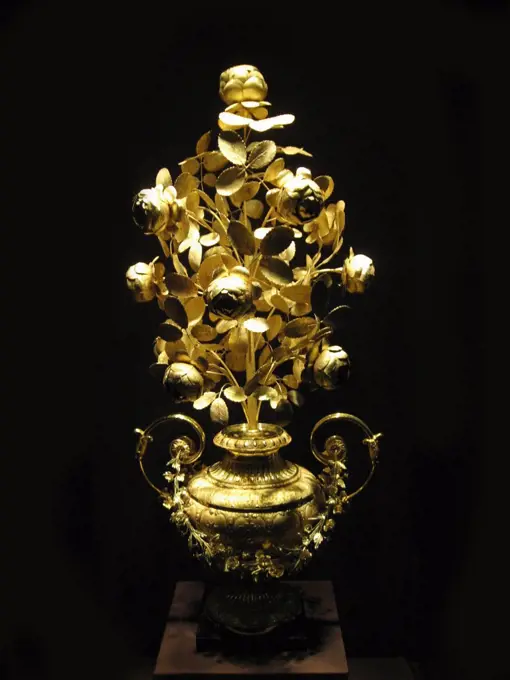
The Golden Rose by Spagna, Pietro Paolo (1793-1861) / Art History Museum, Vienne / 1818-1819 / Italy, Roman School / Gold / Objects / H 60 / Applied Arts
6145-29070979
Support with Addorsed Figures, 1400s. Tibet, Densatil Monastery, 15th century. Gilt bronze; overall: 33.5 x 9.5 x 8 cm (13 3/16 x 3 3/4 x 3 1/8 in.).
4409-17547435
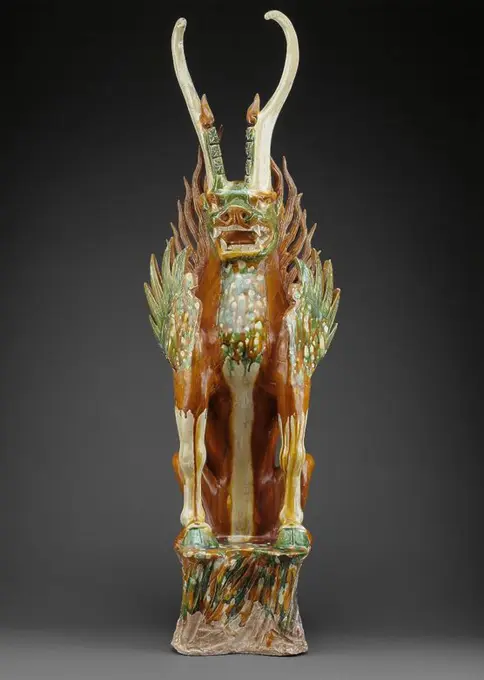
Feline-Headed Guardian Beast (Zhenmushou). China. Date: 701 AD-750 AD. Dimensions: Height: 39 5/8 in. Earthenware with three-color (sancai) lead glazes and traces of pigments. Origin: China. Museum: The Chicago Art Institute, Chicago, USA.
6145-29896181
Arlesian Féigoule, Claude-André. "Arlesian". Terracotta.
4409-17479481
Doll. Dated: c. 1939. Dimensions: overall: 36.5 x 28 cm (14 3/8 x 11 in.) Original IAD Object: 12" high. Medium: watercolor and graphite on paperboard. Museum: National Gallery of Art, Washington DC. Author: John Sullivan.
6145-30178052
Attachments Depicting Busts of Silenoi 50 BCE-50 CE Roman Empire. The Greek imagination was populated with a number of strange creatures. When their thoughts turned to wine, Greeks pictured mischievous young satyrs, the half- human, half-horse creatures who frolicked, danced, and chased hapless maenads. Satyrs symbolized suppressed hedonistic desires that were unleashed by the intoxicating elixir of the wine god Dionysos, known to the Romans as Bacchus. These creatures are mature satyrs, or silenoi (sing. silenos), and they once served as decorative elements for a type of couch on which elite, well-to-do Romans reclined at lavish banquets. Because wine was served at these festive events, creatures from Dionysosís entourage were popular subjects for such furniture attachments.Each object is made of two pieces that were cast separately and fastened together. The proper right arm of the left silenos is lost, but the right one retains his separately made left arm. It and the wineskin slung
6145-29196700
Woman and Hussar ca. 1755 Imperial Porcelain Manufactory. Woman and Hussar 205282
4266-11061
Sculpture by Johann Joachim Kaendler, Porcelain, overglaze decoration, 1737, 1706-1775, Russia, St. Petersburg, State Hermitage, H. 15, 5
6145-46832091
Shadow Puppet (Wayang Kulit) ofAntareja.   Maker: Ki Enthus Susmono, Indonesian, 1966-2018
6145-29729929
Sultana and Attendant ca. 1830 () Royal Porcelain Manufactory Danish. Sultana and Attendant 207105
6145-29153319
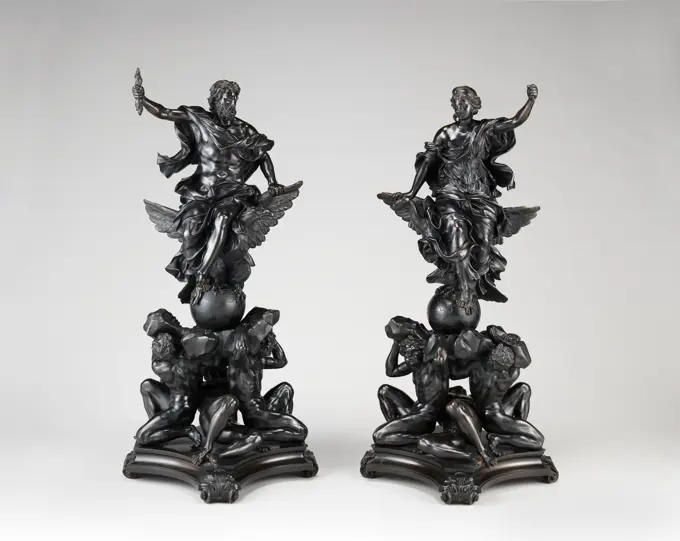
Firedog (Juno Controlling the Winds) (chenet) (one of a pair) 18th century After a model by Alessandro Algardi Italian According to the prominent biographer of artists Giovanni Pietro Bellori (1613-1696), the Baroque sculptor Alessandro Algardi, active in Rome, modeled a set of four firedogs representing the four elements in the guise of mythological figures. Commissioned for Philip IV, king of Spain, the models were created not long before the artists death, in 1654. Two of the designs, the figures of Jupiter and Juno as fire and air—a symbolism quite appropriate to their use as firedogs—were executed on a reduced scale for the French court, both in silver and in bronze. Firedogs of this exuberant model, which create a sense of movement and are interesting in the round, also found a market among the French aristocracy and are listed in late seventeenth- and eighteenthcentury inventories and sale catalogues. It is generally thought that some of them—varying slightly from Algardis ori
6145-30148512
Allegorical Figure Representing Europe 1746 Meissen. Hard-paste porcelain, polychrome enamels, and gilding . Meissen Porcelain Manufactory (Manufacturer)
6188-68384714
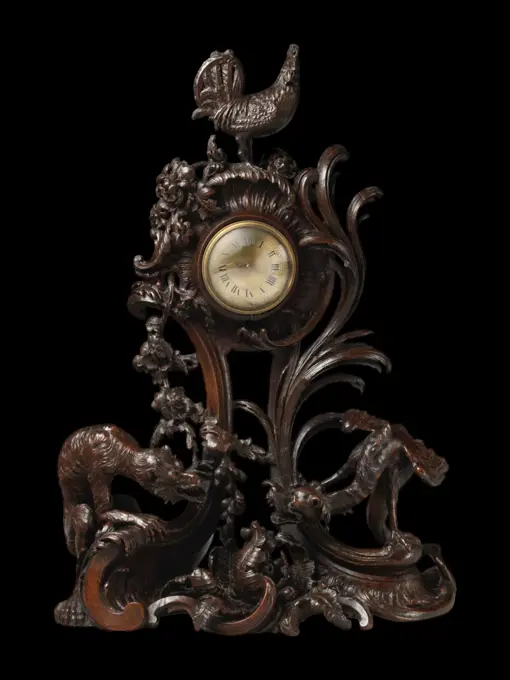
kunstvoll geschnitzter antiker holzuhrständer britisch um 1760 kunstvoll geschnitzter antiker holzuhrständer britisch um 1760 LicenseRF Copyright: xZoonar.com/GallóxGusztávx 23309482
6145-30150912
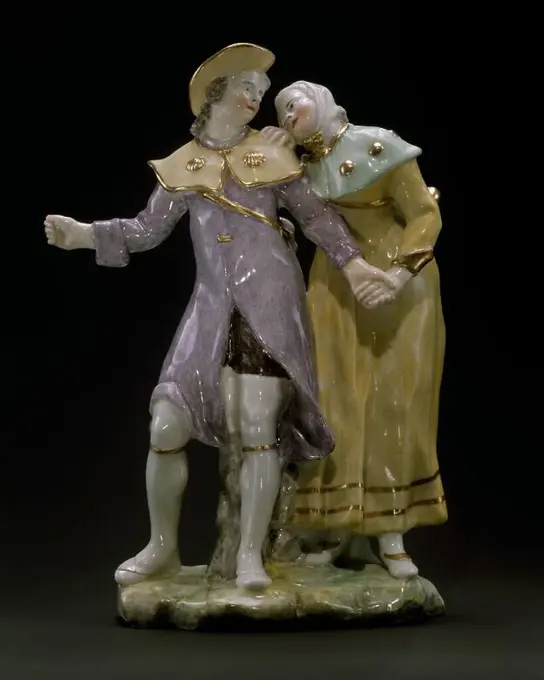
Lovers in an Arbour 1754-1764 Frankenthal. Hard-paste porcelain with polychrome enamel decoration . Johann Fredrich Lück (Modeler)
6145-29752906
Boy (one of a pair) ca. 1780 British, Staffordshire. Boy (one of a pair). British, Staffordshire. ca. 1780. Lead-glazed earthenware. Ceramics-Pottery
6145-29740423
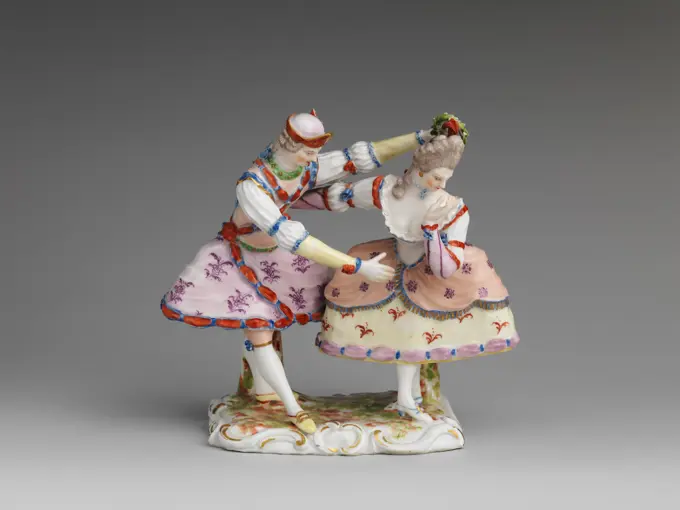
Two dancers ca. 1760-63 Ludwigsburg Porcelain Manufactory The figures produced by European porcelain factories during the middle decades of the eighteenth century reflect a wide variety of themes, and the various forms of entertainment popular at this time provided a particularly fertile range of subject matter for the factories to explore. Figures from the commedia dellarte were a primary focus for porcelain modelers (see 54.147.66; 1982.60.300; 1982.60.309) but opera and dance figures also had considerable appeal. The figures of dancers produced at the Ludwigsburg factory during the early 1760s were not only a tangible indication of the status of ballet at this time but also a direct reflection of the interests of the factorys founder, Karl Eugen (1728-1793), Duke of Württemberg.Karl Eugen was an active patron of the arts, and his engagement with ballet led to the employment of French choreographer Jean-Georges Noverre (1727-1810) in 1760 to produce ballets for his court.[1 Among
4443-19534232
Allegorical Figures of the 'Four Continents', Meissen Porcelain Manufactory, German, active from 1710 to the present, Friedrich Elias Meyer, German, 1723 - 1785, hard paste porcelain, vitreous enamel, gold, Four figures (a, b, c, d) together form a set., (a): Standing female figure, wearing jeweled mantle and turban with half-moon, holding sceptre and censer. Relief cartouche with camel; (b): Standing female figure, wearing ermine and crown, holding sceptre and orb. Book, globe, cornice fragment, cornucopia and relief cartouche with horse; (c): Standing black female figure, wearing feather skirt, mantle, and elephant-head coif, holding sheaf of wheat. Relief cartouche with lion; (d): Standing female figure, wearing feather skirt, mantle, and headdress. Parrot perched on arm, quiver with arrows and relief cartouche with alligator., Germany, 18th century, ceramics, Decorative Arts, figures, figures
4409-17933380
Josep Puig i Cadafalch / Pie de luz, detalle.
6145-58864231
The Virgin as Mater Dolorosa (Our Lady of Sorrows), Pietro Torrigiani (attributed to), after , c. 1507 - c. 1510 Polychromed terracotta bust of Maria, with mourning facial expression; She is wearing a blue cloak that has been beaten around her head and shoulders and is wrapped around her arms on the bottom. Under the cloak a white head and child corner. All kinds of details are indicated in the face, such as eyebrows, eyelids, teeth in the lightly opened mouth. Back side closed except for a gate -shaped opening at the bottom. sculptor: Southern NetherlandsMechelen (possibly) terracotta (clay material). oil paint (paint) Polychromed terracotta bust of Maria, with mourning facial expression; She is wearing a blue cloak that has been beaten around her head and shoulders and is wrapped around her arms on the bottom. Under the cloak a white head and child corner. All kinds of details are indicated in the face, such as eyebrows, eyelids, teeth in the lightly opened mouth. Back side closed ex
6145-29168343
Angel second half 18th century Italian, Naples In 1964, Loretta Hines Howard generously presented to the Museum over 140 Neapolitan crèche figures, dating from the second half of the eighteenth century. The varied assortment includes figures from the three traditional scenes of a complete Neapolitan presepio: the Nativity, with angels, shepherds, and sheep; the procession of the three Magi, with their colorful retinue of attendants; and the varied and gay crowd of country and town people thronging the tavern, or inn, of Bethlehem  the diversorium mentioned by St. Luke, where on the Holy Night there was no place for Mary and Joseph. Averaging between twelve and fifteen inches in height, according to the position they were to take in perspective in the stage set, the figures are pliable and can be given poses at will, according to their facial expressions. Their bodies are made of tow and wire, their arms and legs are finely carved of wood, and their heads and shoulders are modeled of t
6145-59097655
I want to ask; The first Galician Factory of Art Fiances and Terracotty (Pacyków; 1912-1939), Popiel, Antoni (1865-1910); around 1910 (1905-00-00-1915-00-00);
4409-17408042
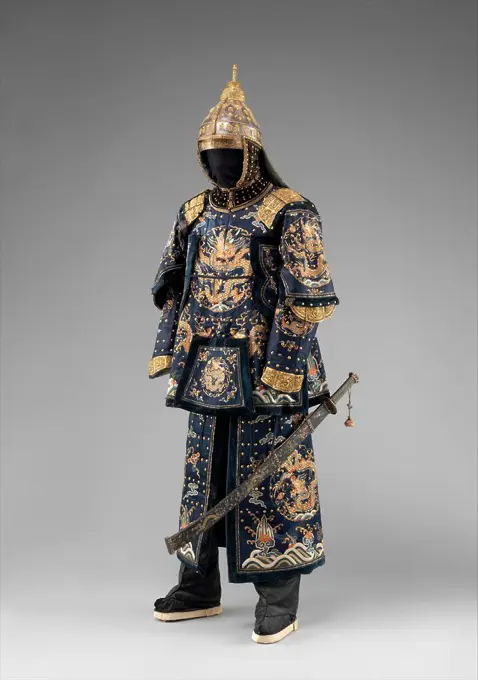
Ceremonial Helmet. Culture: Chinese. Dimensions: H. including nape defense 21 3/4 in. (55.2 cm); H. excluding nape defense 11 3/4 in. (29.8 cm); W. 8 in. (20.3 cm); D. 10 in. (25.4 cm); Wt. 4 lb. 7.5 oz. (2027 g). Date: mid-18th century.The excellent quality and elaborate ornamentation of this helmet indicate that it was made for a nobleman, possibly of imperial status, or a very high-ranking military official. It is decorated with applied ornaments of gilt copper including the Buddhist mantra <i>Om mani padme hum</i> in Lantsa characters. The Lantsa alphabet was often used for sacred inscriptions in Tibet, China, and other Buddhist countries. The helmet is very similar to one worn by Emperor Qianlong in a famous equestrian portrait of him painted by the Jesuit artist, Giuseppe Castiglione, and another helmet that was donated by the emperor to a Tibetan monastery in 1757. Museum: Metropolitan Museum of Art, New York, USA.
4443-19616519
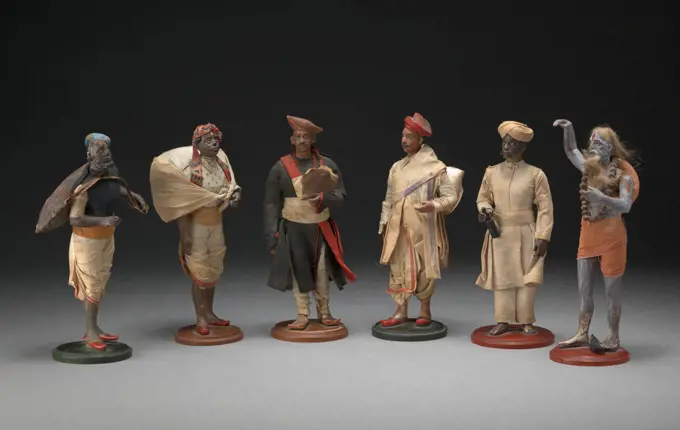
Indian Trades and Occupations, unknown artist, nineteenth century, between 1840 and 1850, Plaster, linen and wood, Overall: 8 inches (20.3 cm), costume, figure study, figures, men, trade
6145-46638618
. Women's figure of faience, representing Justitia. White glazed and with a copper scales in her hand.
4409-20898295
nossa senhora da ajuda, wood and brocade in gold and silk, 18th century, Evora Museum, Evora, Alentejo, Portugal, Europe.
4409-22840
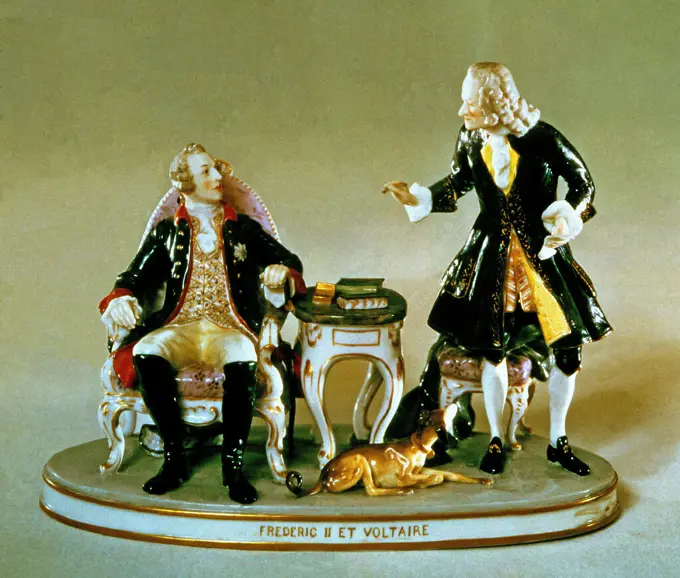
I-FIGURA DE PORCELANA DE FEDERICO II DE PRUSIA Y FRANCOIS VOLTAIRE - PORCELANA FRANCESA. Location: MUSEO DE ARTE. Tula. RUSSIA. GRANDE FEDERICO EL. FRANÇOIS VOLTAIRE (1694-1778). FEDERICO II EL GRANDE REY DE PRUSIA.
PREVIOUS
of 3
NEXT
2401 S. Ervay, Suite 206
Dallas, Texas 75215
United States
Get Started
Free ResearchMy BoardsMy Cart
For Creators
How To License Your ContentContributor PortalFrame of Mind
Resources
API accessPricing
Contact
+1 866 236 0087help@viewpictures.co.uk Contact form
©2026 View Pictures. All Rights Reserved. -A
This site is protected by reCAPTCHA and Google Privacy Policy and Terms of Service apply.