My Boards
View Pictures
  • My Boards
← Artworks

Classical Sculptures

Artistic representations of famous figures and allegorical scenes, featuring exquisite detailing in sculptural forms made from various materials throughout the 18th and 19th centuries.
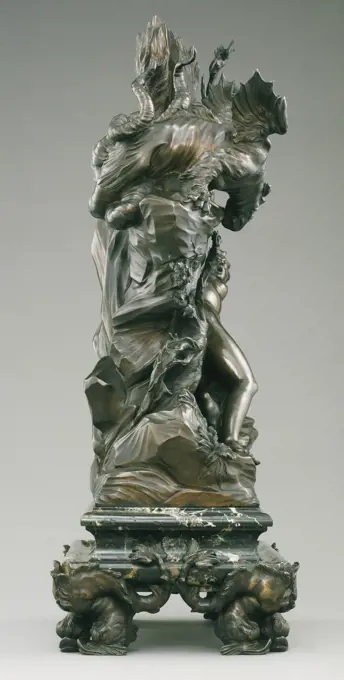
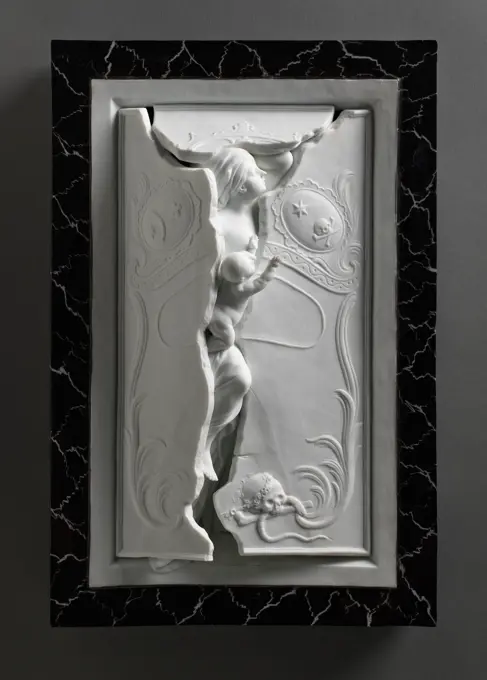
Andromeda and the Sea Monster; Massimiliano Soldani-Benzi (Italian, 1656 - 1740); Italy; designed before 1717; cast about 1725; Bronze on grey-green marble bases with bronze mounts; 49.6 x 33.3 x 20.7 cm (19 1,2 x 13 1,8 x 8 1,8 in.)
167 assets in this story
6145-46531295
Figure group. Figure group of biscuit porcelain presenting a woman, two men and a dog under a bow. The older man and the woman are sitting under the lapsed bow around a ton. The man plays a violin, while the woman is a younger man, who is hanging over the bow, a cup that she has just filled with a can. The young man has a flute with him, next to him is a hat. The tub between the older man and the woman is filled with a cup, a hat, a tobacco stew, two pipes and a piece of bread. The bottom of the group is made up of a stone wall with vegetation over it. About the bow also booming vegetation.
4409-17352395
Horse and rider. Culture: Cypriot. Dimensions: H. 6 1/16 in. (15.4 cm). Date: early 4th century B.C..The figurine, in the Kourion style, is handmade and solid. The rider's face is mold-made. The horse's head may be mold-made as well. The horse has a large head with depressions for the nostrils, a slit mouth, and a prominent forelock between the ears. Museum: Metropolitan Museum of Art, New York, USA.
6145-29886264
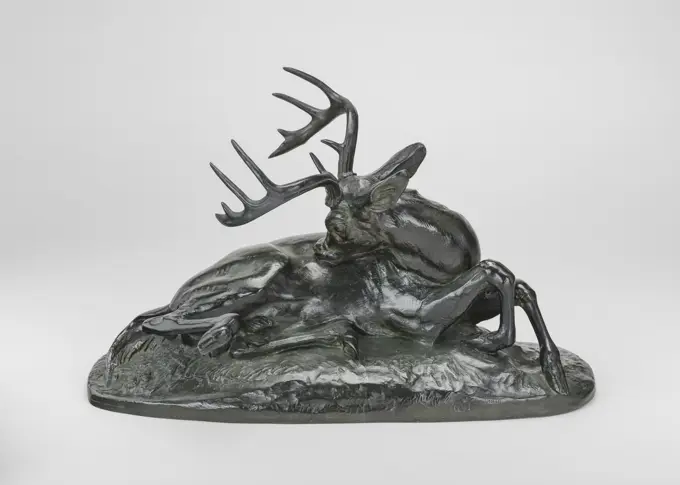
Antoine Louis Barye, Virginia Deer Reclining, model 1837, cast by 1873 Virginia Deer Reclining
4443-28732245
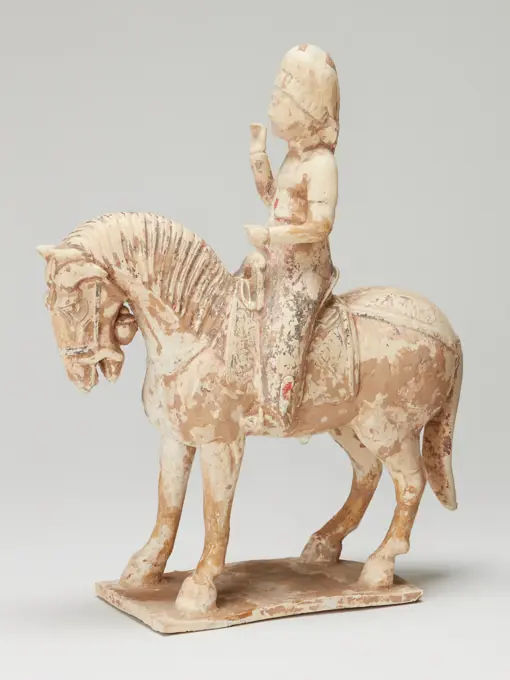
Figure on Horse, 7th century, Terra cotta, China, 7th century
6145-29163321
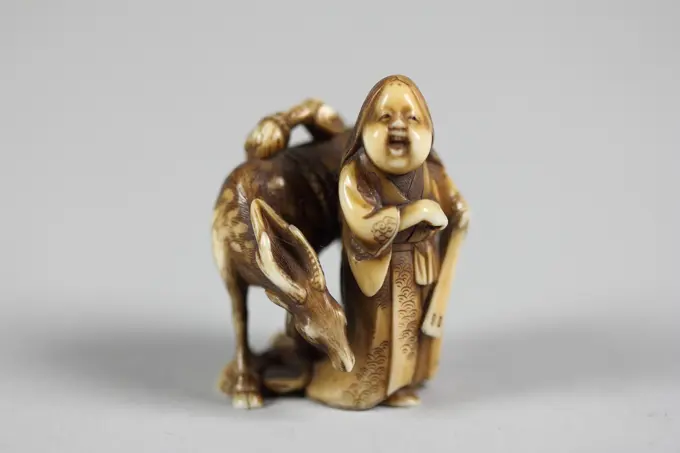
Netsuke of Female Figure (Okame) with a Deer late 18th century Japan. Netsuke of Female Figure (Okame) with a Deer. Japan. late 18th century. Ivory. Edo period (1615-1868). Netsuke
1746-19665935
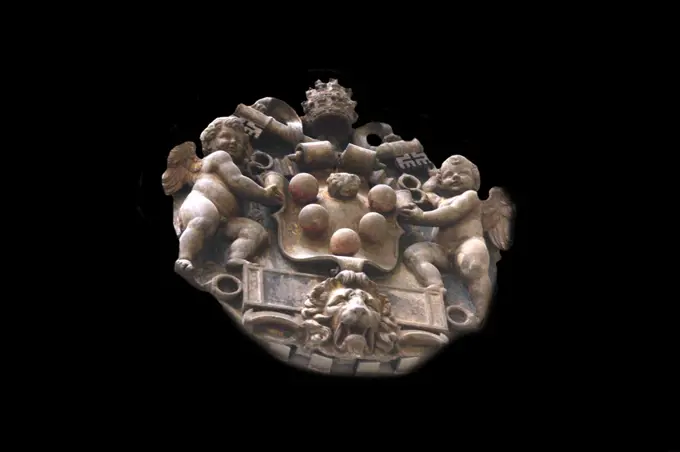
Coat of Arms (Stemma) of Pope Leo X c.1515. Pope Leo X was the son of Lorenzo the Magnificent (the unofficial ruler of Florence) and a major patron of the arts. His stemma combined the Medici emblem of six balls for (or palle) with the papal device of crossed keys and a tiara. It was displayed on buildings associated with Leo, his family or his papal office.
6145-29117419
Saint Michael Casting Satan into Hell. Lorenzo Vaccaro (Italy, Naples, 1655-1706)Francesco Picano (Italy, Sant' Elia, 1677/78-1743). Italy, Naples, 1715 - 1716. Sculpture. Wood, painted and gilded, metal and glass
6145-59524503
Part Pièce de Milieu, Johannes Mattheus van Kempen, 1900 table piece. part Palm branches of the top of the table piece representing a woman with, among other things, shield and laurel wreath (SRI-BILLITON) and attributes derived from the work in the tin mines. Around the pedestal 4 medallions with performances of labor in the tin mines (to photos). On the pedestal a medallion with text and one with the engraved portrait of Ermeling. At the top behind the woman two palms; A candle arm on both sides of the pedestal. Table piece was offered by officials and miners from the Billiton Maatschappij to their chef J.Ph. Ermeling on his 70th birthday at a party on Billiton. Voorschoten silver (metal) engraving  Dutch East Indies, The. Billiton
6145-45905727
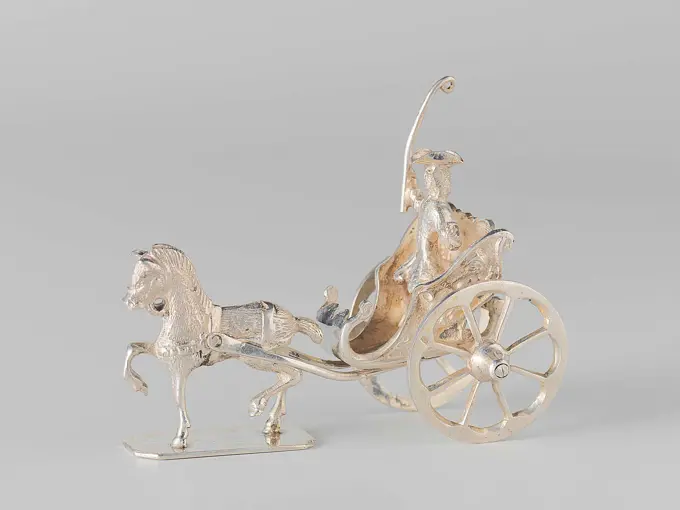
SJEES. Without hood, drawn by a horse. The horse stands on an elongated album. A man with a pitch is sitting in the Sjes and a whip in his raised right hand. The image is marked: STK. = Amsterdam, JRL. = C (1737), MT. = Attributed to Pieter van Somerwil I and twice a boar head.
6145-46007946
Showcase with objects of delft pottery and other materials; Arts industry halls Autumn 1985..
6145-45927836
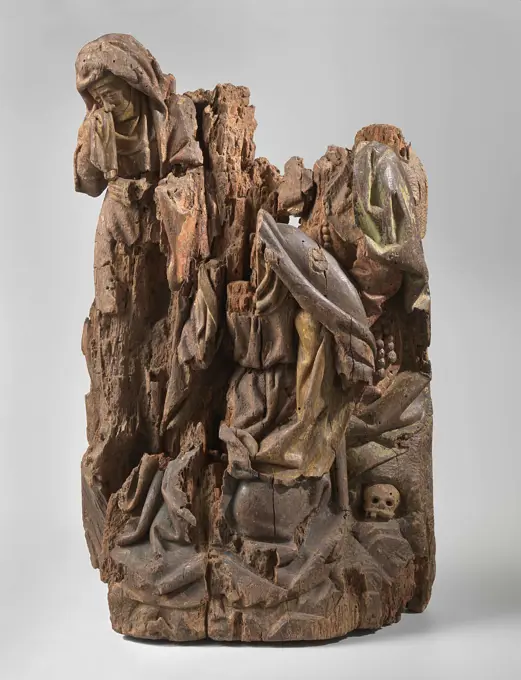
The Swoon of the Virgin, From a Calvary, from the Soest Altarpiece. The group consists of the Maria falling in swivel, supported by the John's standing behind her (both without head) and a woman who dries her tears with a cloth with one hand, while keeping the other hand before breast. Between them in the back character of Maria-Magdalena, from whom only some hair strands are present. Mary in a ganged robe has a neckerchief and a cloak that is struck to the left over the knees; John a bar and a sheath closed for the breast, a part of which has been hit over the left shoulder, so that the prayer cord and a sheath or fodstream are visible on the side. The weenenden woman wears a long robe, a child cloth and one of the head of hanging cloak. On the right in the foreground a skull, on the mountain behind Johannes remains of a lost ruin.
6145-29169281
Cup depicting Three Laughers of Tiger Ravine 18th century China Huddled beneath a cliff, a famous poet (Tao Yuanming, 365-427), a Daoist priest (Lu Xiujing, 406-477), and a Buddhist monk (Huiyuan, 334-416) burst into unrestrained laugher as the monk unintentionally breaks a vow by crossing the bridge separating his monastery from the mundane world. This widely depicted scene serves as a parable for the importance of crossing boundaries in the pursuit of understanding.. Cup depicting Three Laughers of Tiger Ravine 41882
1788-26629
Goldsmith's art, 18th century. Cameo depicting classical scene.
4409-17349224
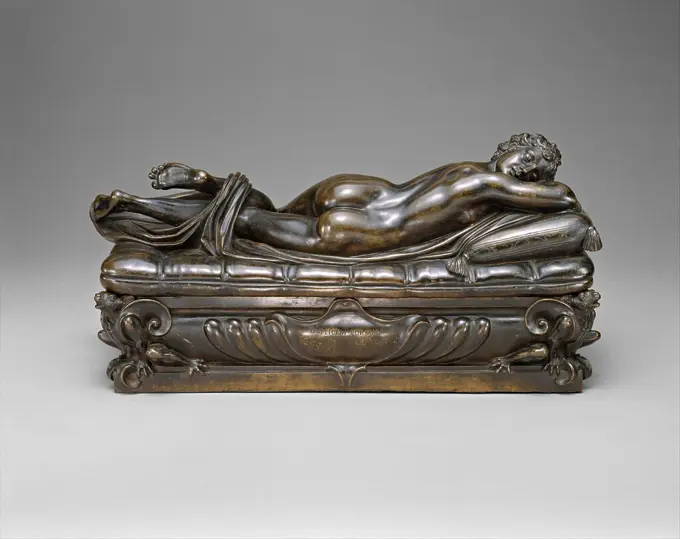
Hermaphrodite. Artist: Giovanni Francesco Susini (died 1646). Culture: Italian, Florence. Dimensions: Overall figure (confirmed): 4 5/8 × 17 × 7 1/4 in. (11.7 × 43.2 × 18.4 cm);Overall base (confirmed): 3 3/8 × 16 × 7 1/2 in. (8.6 × 40.6 × 19.1 cm). Date: 1639.In Greek myth and in reality, a hermaphrodite combines both sexes in one being. When viewed from the back, this sensuous nude appears female; from the front, the hermaphrodite's maleness is revealed. The Latin inscription on the sculpture's female side proclaims, "You see a double form in one body. Marvel at the beauty." The male side warns, "Often you will find a double heart in one breast. Beware of treachery.". Museum: Metropolitan Museum of Art, New York, USA.
6145-29083303
Medallion (reverse). Jules Dupré (French, 1811-1889). Bronze; overall: 5.1 x 7 cm (2 x 2 3/4 in.).
6145-29192586
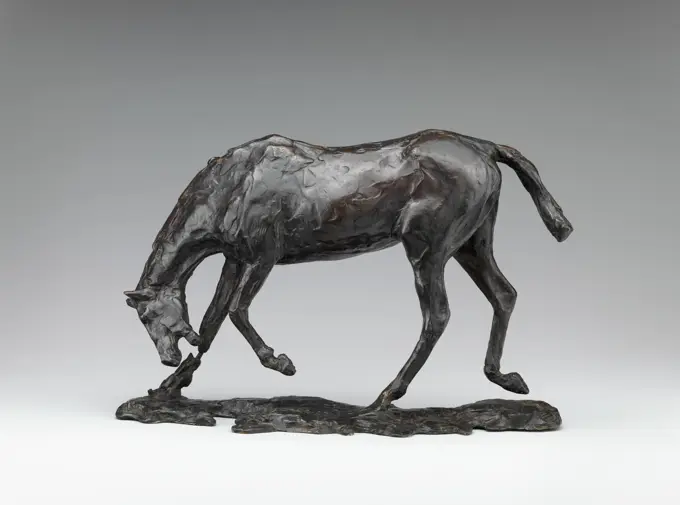
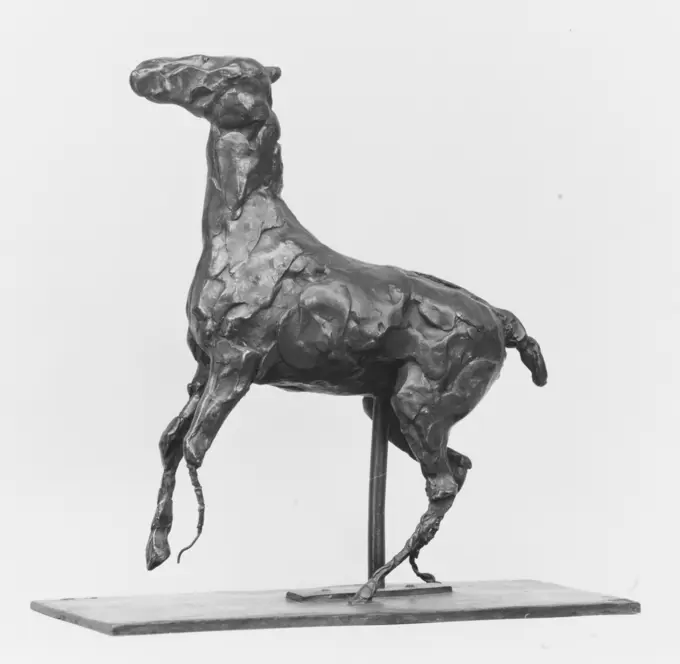
Horse with Head Lowered modeled probably ca. 1883-90, cast 1920 Edgar Degas French Upon Degas's death in 1917, more than 150 figurative sculptures were found in his studio. Most were made of fragile wax, clay, and plastiline (a wax- and oil-based modeling material). Many had deteriorated. Only a few were preserved in copies that had been cast from them in plaster. Except for the wax Little Fourteen-Year-Old Dancer (Washington: NGA) none of these sculptures had been publicly exhibited during the artists lifetime.Although Degas had not favored reproducing his sculptures in more permanent materials, his heirs authorized that copies be cast in bronze in order to preserve the compositions and to sell them as finished works. Paul-Albert Bartholomé, a sculptor and Degas's longtime friend, prepared 72 of the figures for casting, a process executed by the distinguished Paris foundry A.-A. Hébrard et Cie. The quality of the Degas bronzes was tightly controlled and their edition was limited. Onl
4409-17443210
Lion of the Colonne de Juillet. Dated: 1836. Dimensions: overall: 21 x 40.5 x 5.2 cm (8 1/4 x 15 15/16 x 2 1/16 in.) framed: 37 x 58.5 x 4.8 cm (14 9/16 x 23 1/16 x 1 7/8 in.). Medium: tinted terracotta. Museum: National Gallery of Art, Washington DC. Author: Antoine-Louis Barye.
6145-29865854
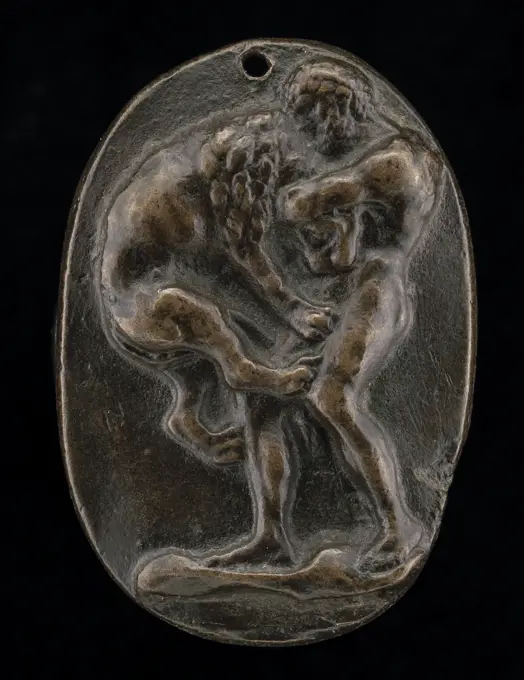
Italian 15th Century, after the Antique, Hercules and the Nemean Lion, 15th century Hercules and the Nemean Lion
4409-17413464
Hercules and Achelous (in the form of a bull). Culture: Austrian. Dimensions: Overall: 3 × 2 1/2 in. (7.6 × 6.4 cm). Maker: Attributed to the Master of the Martyrdom of St. Sebastian (Austrian). Date: ca. 1670.Old photographs show this small relief set into an ebony base that supported the sculpture of Hercules and Achelous, also in the Museum's collection (1982.60.129). Museum: Metropolitan Museum of Art, New York, USA.
4409-17292171
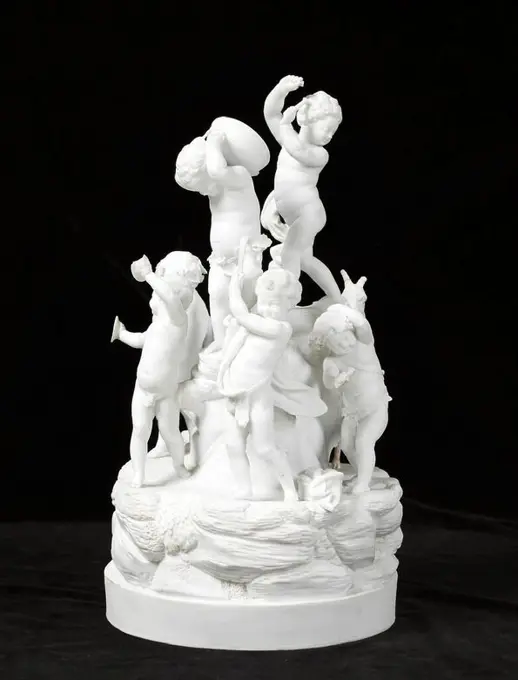
Niderviller Porcelain Manufactory / 'Bacchanal child'. 1780 - 1802. Ceramic paste. Museum: Museo del Prado, Madrid, España. Author: FÁBRICA DE PORCELANA DE NIDERVILLER.
6145-29743341
Hercules and Achelous (in the form of a bull) ca. 1670 Attributed to the Master of the Martyrdom of St. Sebastian Austrian Old photographs show this small relief set into an ebony base that supported the sculpture of Hercules and Achelous, also in the Museum's collection (1982.60.129).. Hercules and Achelous (in the form of a bull). Austrian. ca. 1670. Ivory. Sculpture-Miniature
6145-30191517
Immortals Riding Dragons Sections of a Tomb Pediment 206 CE-220 CE China. These triangular sculptures originally fit under the pitched roof of a burial chamber constructed of clay bricks. The position of similar panels discovered intact suggests that they originally formed two ends of a pediment that divided a chamber in half.The panels are carved and painted to depict winged figures mounted on dragons striding over hills or waves. In Han mythology, such beings are described as immortals (xian). Having achieved eternal life, these immortals were endowed with the power to fly and roamed freely about the universe. The depiction of these remarkable beings in tombs reflects a widespread belief that the soul of the deceased could leave its earth-bound existence, ascend to heaven, and become an immortal. The ascent of the soul to the realm of the immortals is a major theme in Han art.. Gray earthenware with traces of slip and polychrome pigments .
6145-29241165
Plaque late 18th century Josiah Wedgwood British. Plaque. British, Staffordshire. late 18th century. Jasperware. Ceramics-Pottery
6145-29127956
The Indian Hunter. John Quincy Adams Ward (United States, Ohio, Urbana, 1830-1910). United States, modeled 1858, cast 1860. Sculpture. Bronze
6145-30148782
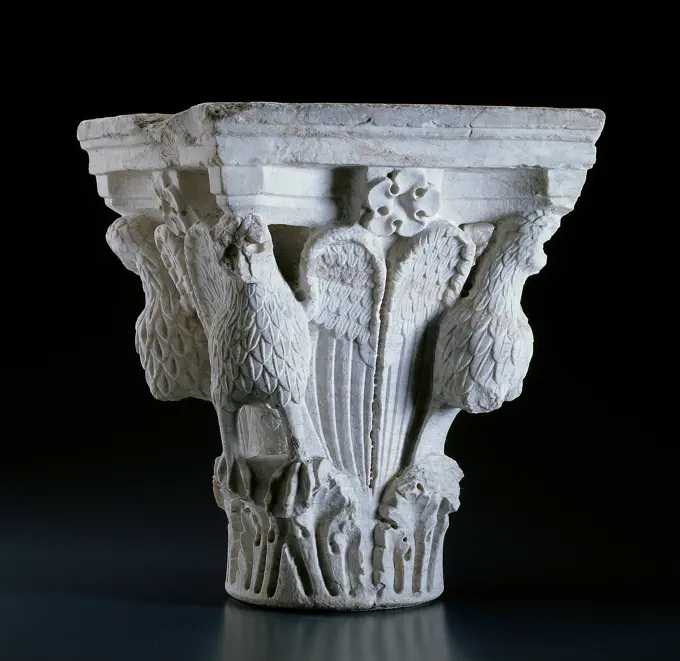
Capital with Eagles 1230-1240 Italian. Marble .
6145-59068358
Figural group: Africa and Asia, figural group: Europe and America; Koenigliche Porcellain Fabrique, Meissen (1710-1763), Meyer, Friedrich Elias (1723-1786); around 1755/60 (1755-00-00-1765-00-00);figurines, continents, personifications, purchase (provenance)
6145-45983134
Stern carving from the Royal Charles. These arms of King Charles II of England once adorned the stern transom, or counter’, of the English flagship the Royal Charles. The vessel was captured by Dutch forces in 1667 at its home port of Chatham, near London, and towed over the North Sea to the Netherlands, where it was scrapped. The counter decoration was preserved to commemorate this extraordinary Dutch triumph and England’s defeat.
4409-20928297
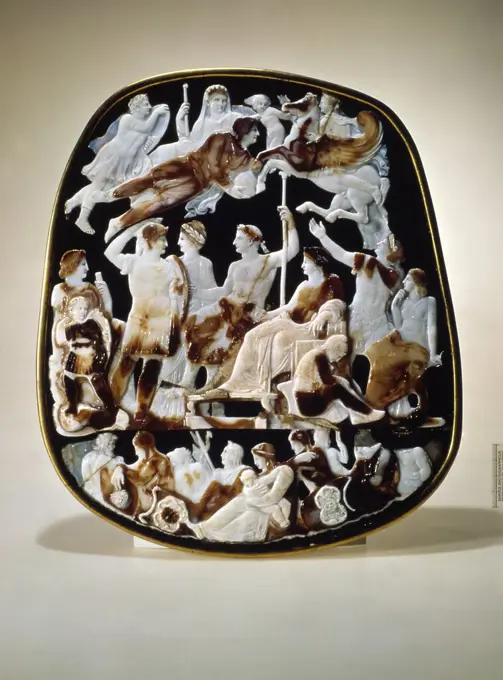
Grand Cameo of France 20 AD showing above Germanicus (left) to (right) Julius Caesar, August, Aeneas, Tiberius, Livia , Caligula. Museum: BIBLIOTHEQUE NATIONALE, BUDAPEST, France. AUGUSTUS. JULIO CESAR. CLAUDIO NERÓN TIBERIO.
4409-66125309
Lluís Masriera / Colgante con San Jorge, c. 1901-1902. Fundición en oro, esmalte translúcido «pliqué-à-jour», esmalte «basse-taille», diamantes y rubíes. Museu Nacional d'Art de Catalunya (MNAC). Author: LLUÍS MASRIERA I ROSÉS.
4409-17354055
Smithy Cupid Appliqué. Dimensions: 2 1/2 x 1 5/8 in. (6.4 x 4.1 cm). Retailer: Henry Kellam Hancock (1816-1851). Date: ca. 1810-30. Museum: Metropolitan Museum of Art, New York, USA.
6145-29213053
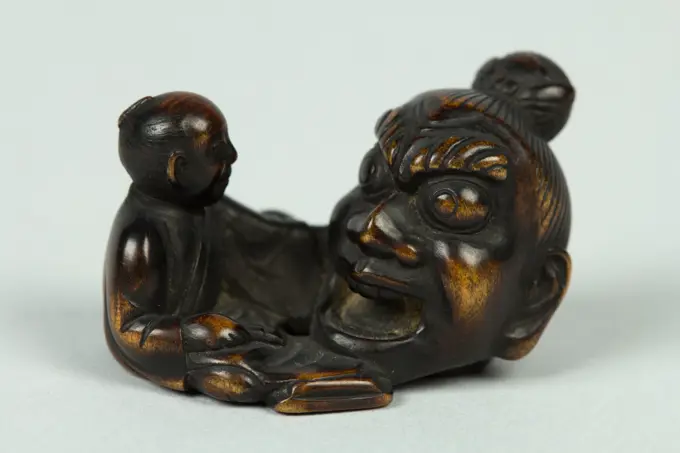
Netsuke of Sculptor Modelling a Large Head 19th century Japan. Netsuke of Sculptor Modelling a Large Head. Japan. 19th century. Wood. Edo (1615-1868) or Meiji period (1868-1912). Netsuke
6145-46630959
. Can be made of stoneware with salt glaze. The wall of the can be embossed decorated with eight apostles, each in a gothic archery.
4409-17478374
Tiger Surprising an Antelope. Dated: model c. 1831, cast after 1855. Dimensions: overall: 34.9 x 55.8 x 22.9 cm (13 3/4 x 21 15/16 x 9 in.). Medium: bronze. Museum: National Gallery of Art, Washington DC. Author: Antoine-Louis Barye.
6145-45396295
Vestal Rhea Silvia
4443-28729694
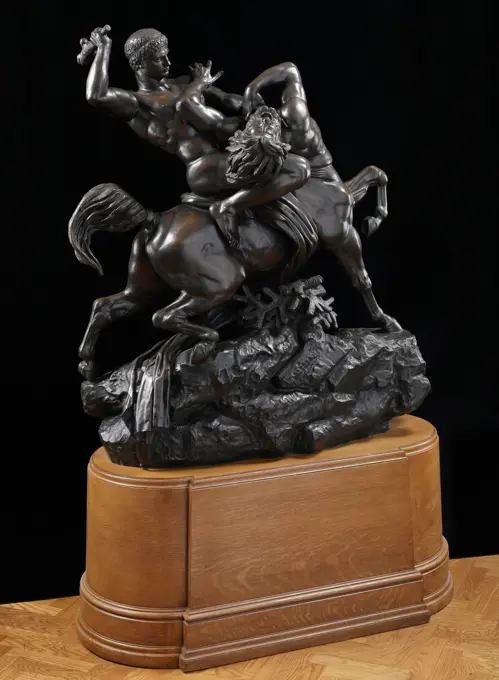
Theseus Slaying the Centaur Bianor, c. 1850 (modeled, cast c. 1891), Antoine-Louis Barye; Caster: F. (Ferdinand) Barbedienne, French, 1796-1875, 50 x 20 x 44 in. (127 x 50.8 x 111.76 cm), Bronze, France, 19th century, Theseus, one of the great heroes of Greek myth, was asked to attend the wedding of his good friend the king of the Lapiths. The king also invited the neighbors, the half-human, half-horse Centaurs. Big mistake. The Centaurs drank too much wine and tried to kidnap the bride. Theseus quickly stepped in, fighting them off and saving her.
6145-29082936
Medallion. Henri Emile Allouard (French, 1844-1929). Bronze; overall: 7 x 5.5 cm (2 3/4 x 2 3/16 in.).
4409-17393316
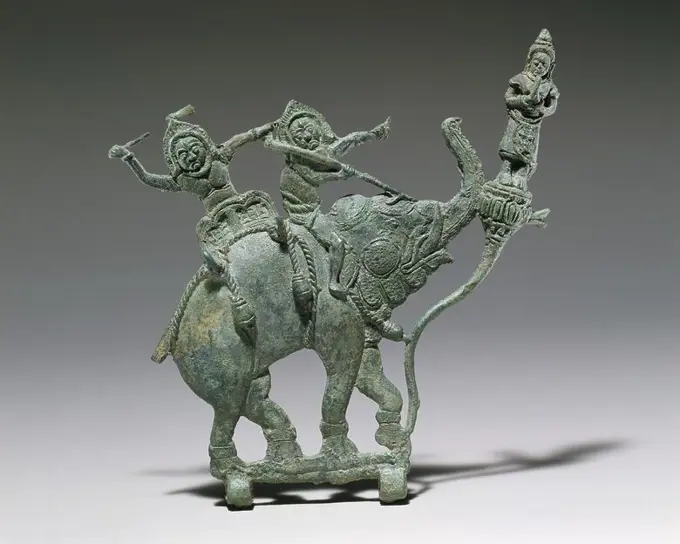
Demons on an Elephant with Adorant. Culture: Cambodia. Dimensions: H. 6 5/8 in. (16.8 cm). Date: late 12th-early 13th century.The presence of demonic figures and of Nan Brah Dharani suggests that this plaque is part of a larger composition depicting Buddha, prior to his enlightenment, being attacked by the forces of Mara, the personification of illusion and evil. Museum: Metropolitan Museum of Art, New York, USA.
6145-46352088
Plaque with the baptism of Christ. A plaque of bronze with a representation of the baptism of Christ. In the middle left Christ and right John the Baptist. Between these, slightly to the background, a sitting old man.
4409-73369860
Solomonic column, 17th century, gilded and polychrome carving, anonymous, Museum of Baroque of Catalonia, Manresa, Spain.
4409-12617
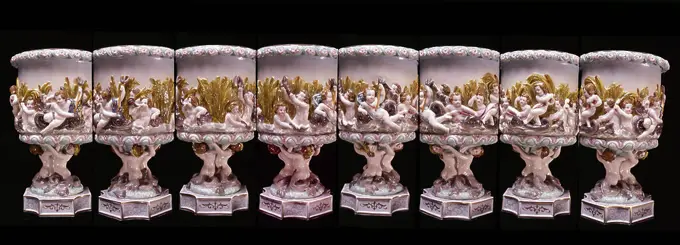
CERAMICA DE CAPODIMONTI (DESPIECE). Location: PRIVATE COLLECTION. MADRID. SPAIN.
6145-54680795
Shield Attributed to Girolamo da Treviso Italian ca. 1535 This is one of a small group of Renaissance pageant shields painted on both their interiors and exteriors with scenes from Roman history and Classical mythology in grisaille (tones of gray) on a ground of gold leaf. Many of the details are rendered in sgraffito (the technique of scratching through a surface to reveal a different color underneath, in this case, gold). The gold thus exposed is impressed with comma-shaped marks to heighten its light-reflecting quality. Girolamo da Treviso was one of the few sixteenth-century artists to employ the demanding sgraffito technique, which had gone out of fashion by the late fifteenth century.The battle scenes on the inside of the shield, perhaps illustrating episodes from the life of the Roman general Scipio, show a keen observation of Classical costume and armor, both of which were known from antique sculpture and coins. The style of painting, the physical types, and the energetic poses
4409-17383530
Model of a Man Plowing. Dimensions: H. 20 cm (7 7/8 in.); L. 49.8 cm (19 5/8 in.); W. 19.4 cm (7 5/8 in.). Dynasty: early to mid-Dynasty 12. Date: ca. 1981-1885 B.C..The peasant, feet deep in the sodden ground, trudges behind the hook-shaped plow pulled by two oxen. Ancient Egyptian plows were made of wood and had the shape of a hook. It is not possible to turn the soil with such plows, they only serve to open the ground. The ultimate aim of this kind of plowing was, therefore, to place the seeds well into the soil. Texts appear to indicate that while a plow may have been the farmer's property, the oxen were leased by state or temple institutions. Egyptians believed that they also had to work in the fields in the afterlife; and this may be the reason why a model such as this was included in among burial equipment. Museum: Metropolitan Museum of Art, New York, USA.
6145-29137022
Tomb of Maria Magdalena Langhans. John Augustus Nahl (Germany, Berlin, 1710-1785)Niderviller Porcelain Manufactory (France, Niderviller, founded 1748, closed 1772). France, circa 1780. Sculpture. Biscuit porcelain
4409-17375917
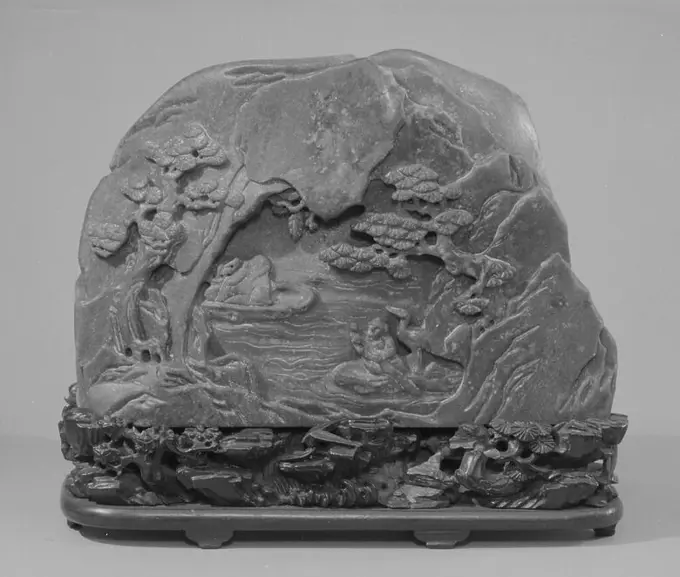
Mountain with landscape scene. Culture: China. Dimensions: H. 4 3/4 in. (12.1 cm); W. 6 1/4 in. (15.9 cm). Date: 18th century. Museum: Metropolitan Museum of Art, New York, USA.
6145-29185025
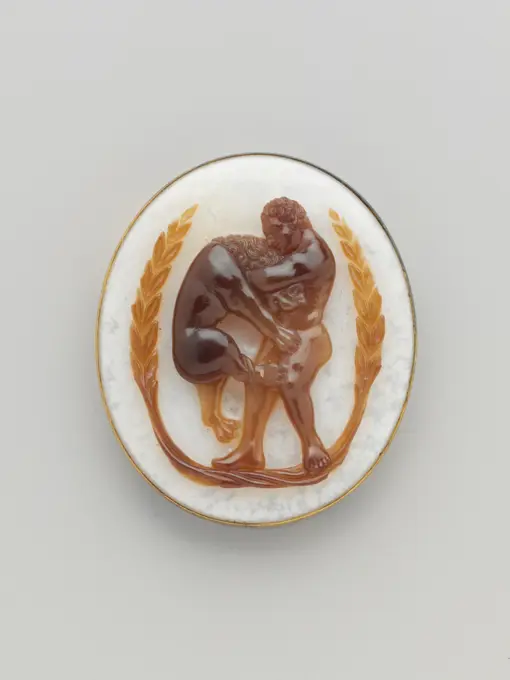
Cameo with Hercules and the Nemean Lion within a Garland ca. 1220-40 South Italian The court of Frederick II actively promoted the collecting and creation of cameos based upon antique subjects, styles and techniques. Here the classical theme of Hercules and the Nemean lion is adapted from imagery on ancient Greek coins.. Cameo with Hercules and the Nemean Lion within a Garland. South Italian. ca. 1220-40. Sardonyx with modern gold frame. Lapidary Work-Sardonyx
6145-29065802
Rooster (Gallic Cock), 1916 (plaster), cast 1919. Raymond Duchamp-Villon (French, 1876-1918). Painted bronze; overall: 43.5 x 36 x 5.5 cm (17 1/8 x 14 3/16 x 2 3/16 in.).
6145-29728827
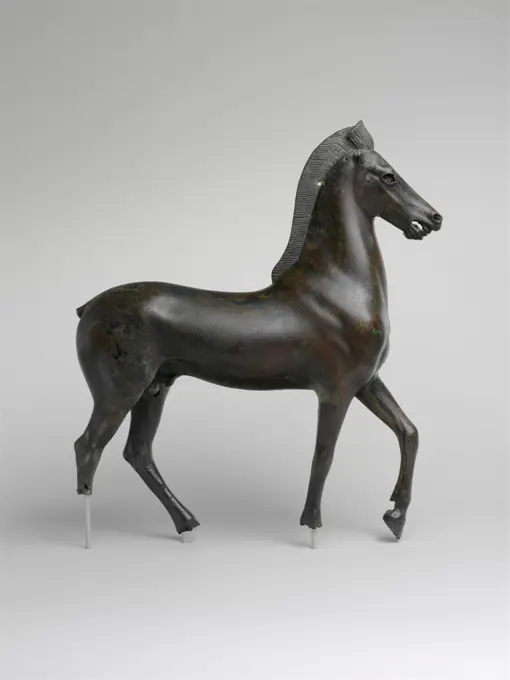
Bronze statuette of a horse late 2nd-1st century B.C. Greek When this bronze horse was first acquired in 1923, its austere majesty led to its identification as an Early Classical masterpiece of the fifth century B.C. It was long heralded as artistically the most important single object in the Museum's Classical collection. In the late 1960s, its authenticity was questioned on technical grounds, causing an international uproar and intense scholarly debate. After extensive scientific analysis, including thermoluminescence dating of its clay core, its authenticity was vindicated. However, reconsideration of its stylistic features in light of our current knowledge of the reuse of earlier styles in Hellenistic art has led to a more probable dating in the Late Hellenistic period. In the Classical period, such large statuettes were primarily religious in nature. Bronze horse or horse-and-rider statuettes were typically placed on the tops of columns set up at sanctuaries by the animal's owner
4409-17583147
'Battle of Kulma. 1813'. Russia, First half of the 19th century. Dimensions: diam. 20,5 cm. Museum: State Hermitage, St. Petersburg.
6145-29811211
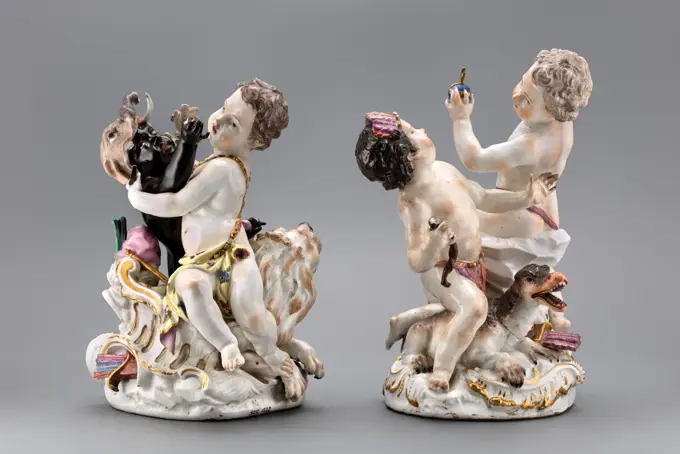
Impetuous Lover ca. 1743 Meissen Manufactory German. Impetuous Lover 203131
6145-29796420
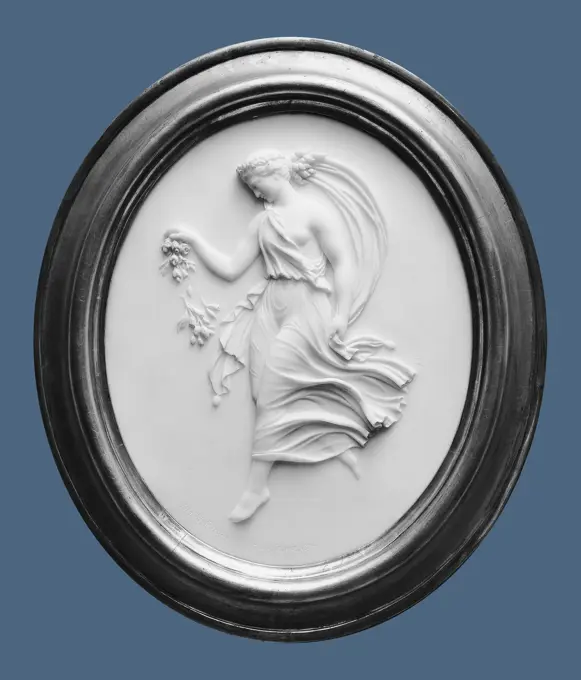
Spring 1856; carved 1874 William Henry Rinehart American "Spring" and its pendant, "Winter," were among the earliest works Rinehart created after moving to Italy in 1855. Personifications of the seasons and the times of day were frequent themes in Neoclassical relief sculpture. This work is reminiscent of the popular reliefs by the Danish sculptor Bertel Thorvaldsen, especially his "Day and Night" (1815; Thorvaldsens Museum, Copenhagen). Only the oval shape is a departure, since most Neoclassical reliefs are circular. Rinehart's bas-relief depicts a young woman as the personification of Spring, with classicized facial features and hair treatment. Her flowing drapery, revealing one breast in the manner of antique sculptures of Amazons, closely outlines her elongated form. She scatters flowers, her symbol.. Spring 11924
6145-48889885
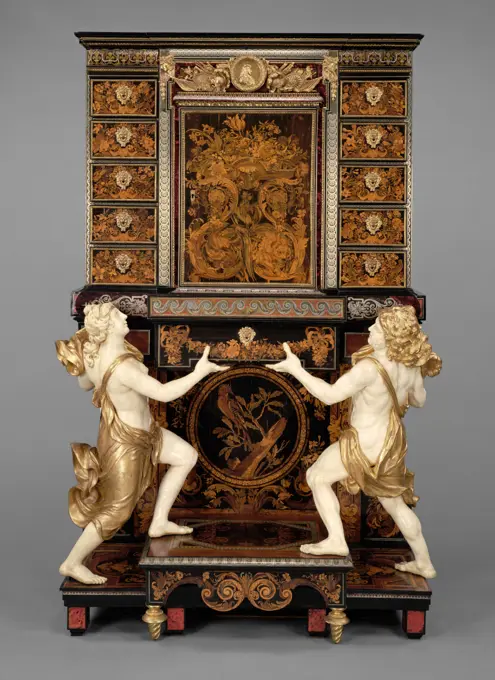
Cabinet on Stand.
6145-59043814
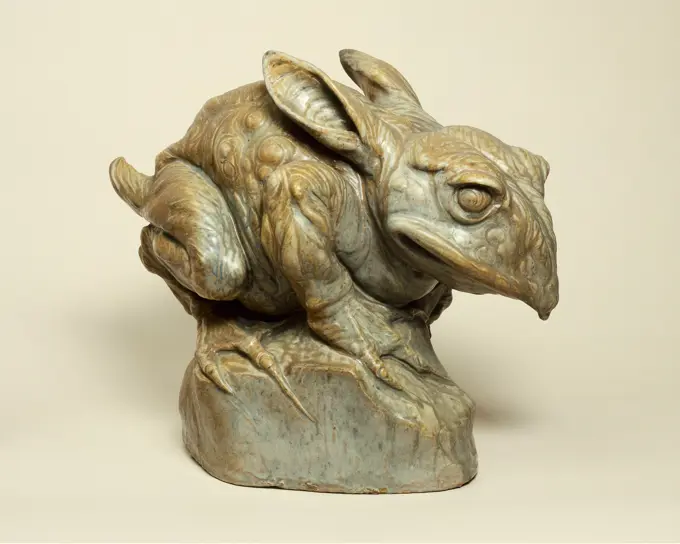
Jean Carriès (1855-1894). "Grouille with rabbit ears". Beige enameled sandstone ceramics. Museum of Fine Arts of the City of Paris, Petit Palais. 24844-2 Fantastic animal, beige, ceramic, frog, gres emaille, rabbit, ear
4409-21383235
HOMENAJA A ISAAC PERAL DELOS RESIDENTES EN ARGENTINA. Location: MUSEO NAVAL / MINISTERIO DE MARINA. MADRID. SPAIN.
1788-27037
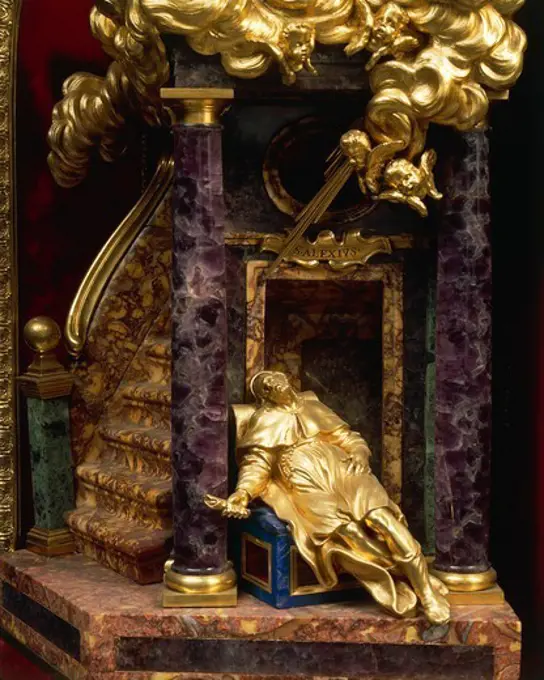
Silversmith's art, Italy, 17th century. Massimiliano Soldani Benzi (1656-1740), reliquary of Saint Alexius in silver, gilded bronze, ebony and pietre dure. Height cm. 54. Detail.
6145-45485860
Bliżej Kultury
6145-29789917
Prancing Horse modeled probably before 1885, cast 1920 Edgar Degas French Upon Degas's death in 1917, more than 150 figurative sculptures were found in his studio. Most were made of fragile wax, clay, and plastiline (a wax- and oil-based modeling material). Many had deteriorated. Only a few were preserved in copies that had been cast from them in plaster. Except for the wax Little Fourteen-Year-Old Dancer (Washington: NGA) none of these sculptures had been publicly exhibited during the artists lifetime.Although Degas had not favored reproducing his sculptures in more permanent materials, his heirs authorized that copies be cast in bronze in order to preserve the compositions and to sell them as finished works. Paul-Albert Bartholomé, a sculptor and Degas's longtime friend, prepared 72 of the figures for casting, a process executed by the distinguished Paris foundry A.-A. Hébrard et Cie. The quality of the Degas bronzes was tightly controlled and their edition was limited. Only twenty-
4409-17591238
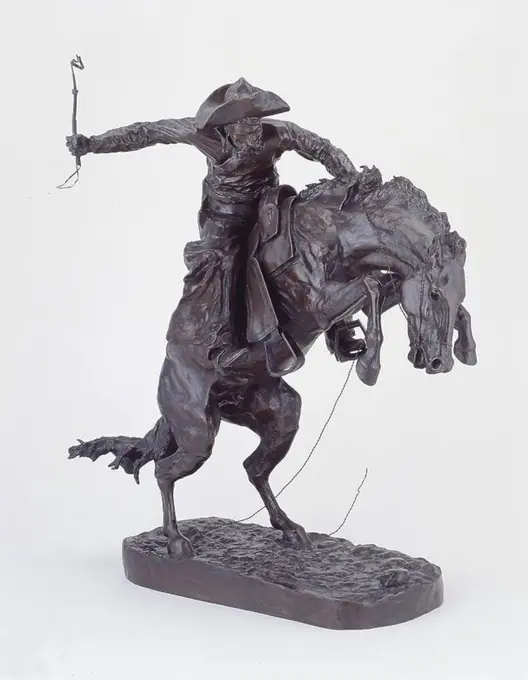
The Bronco Buster. Frederic Remington; American, 1861-1909; Cast by Henry-Bonnard Bronze Co.; American, 19th century. Date: 1895. Dimensions: 61 × 39.4 × 17.8 cm (24 × 15 1/2 × 7 in.). Bronze with brown patina. Origin: United States. Museum: The Chicago Art Institute, Chicago, USA.
6145-59040312
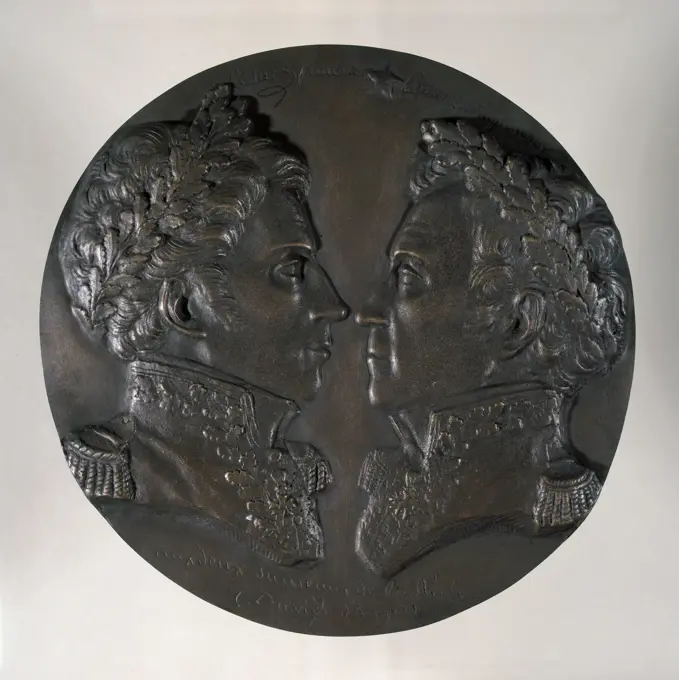
David d'Angers (1788-1856). Generals César and Constantin de Faucher. Paris, Carnavalet museum. 39481-10 Frere Jumeau, General Francais, War Vendee, Medallion, Military, First Empire, Profile, Portrait, French Revolution
4443-19550805
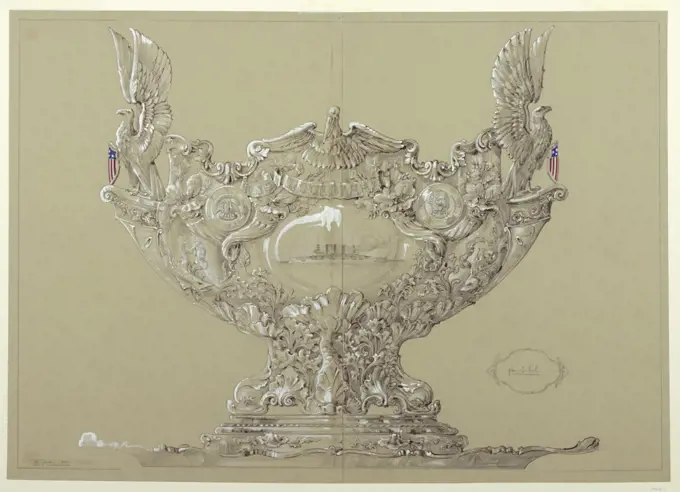
Punchbowl for U.S.S. Louisiana, Reed & Barton, American, 1824-2015, Graphite, pen and ink, wash on cream wove paper, Design for footed metal punchbowl with sculptural composition made up of eagles, cornucopia, medallions, and a central cartouche., France, Taunton, Massachusetts, USA, June 16, 1906, metalwork, Drawing, Drawing
4409-17447487
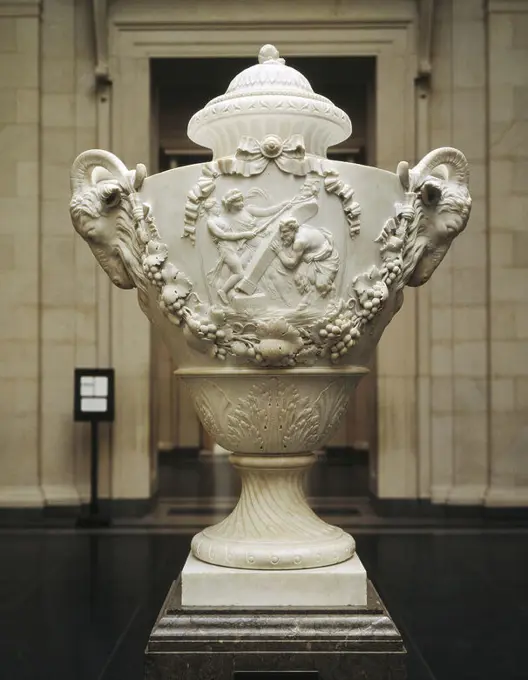
Monumental Urn. Dated: 1782. Dimensions: overall: 131.5 x 97.1 cm (51 3/4 x 38 1/4 in.). Medium: marble. Museum: National Gallery of Art, Washington DC. Author: CLODION.
6145-59490062
Death of Hendrik Danielsz Hooft, mayor of Amsterdam, Anonymous, 1794  Unilateral plaque in low relief on ovale, cardboard carrier, covered with black velvet. Front: pyramid -shaped tomb on a pedestal with inscription, to which medallion is attached with a breastpiece man; around four putti, both of which are upper and both lower on the edge of tomb; Putto at the top right keeps laurel wreath above medallion and freedom hat on spear in a different hand; Putto in the bottom right holds sheet of paper; Both other putti are busy wreath to hang Tomb; To the left of Tombe is justice with scale in the right hand and leaning with left hand on truncated column; On the right helmeted minerva with spear and shield; Based on the ground for tomb are two rowing bundles, two laurel wreaths, two coats of arms and staff with hose. Reverse: Blanco Netherlands silver (metal). velvet (fabric weave). cardboard gluing  Amsterdam
6145-29145168
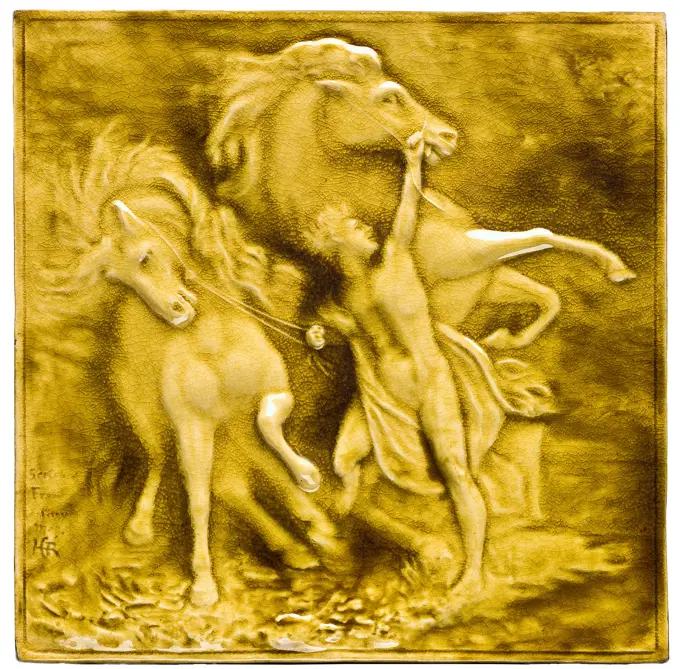
Tile ca. 1881-82 Chelsea Keramic Art Works. Tile. Hugh C. Robertson (1844-1908). American. ca. 1881-82. Earthenware. Made in Chelsea, Massachusetts, United States
4409-17570133
Coming Through the Rye (Over the Range). Frederic Remington; American, 1861-1909; Cast by Roman Bronze Works; American, early 20th century. Date: 1902. Dimensions: 72.4 × 71.1 × 47 cm (28 1/2 × 28 × 18 1/2 in.). Bronze with brown patina. Origin: New York. Museum: The Chicago Art Institute, Chicago, USA.
4409-17559155
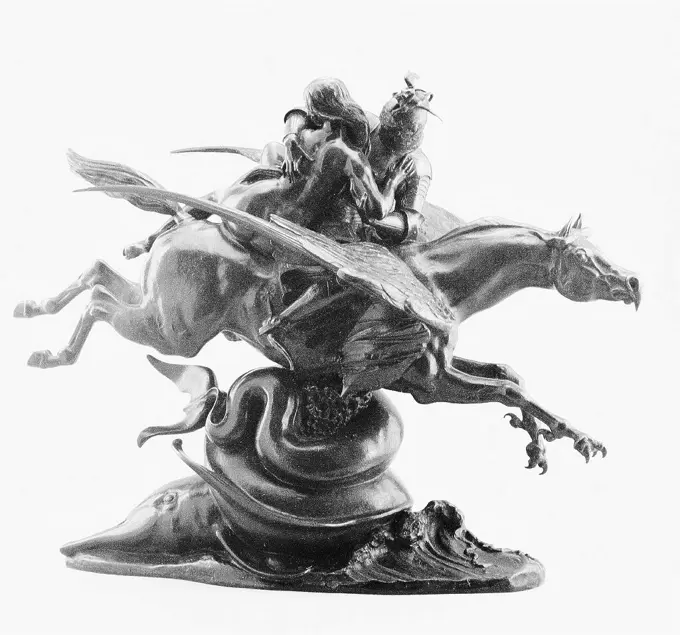
Roger and Angelica Mounted on the Hippogriff. Antoine Louis Barye; French, 1795-1875. Date: 1835-1845. Dimensions: 51.1 × 66.8 × 32 cm (20 1/8 × 26 1/4 × 12 5/8 in.). Bronze. Origin: France. Museum: The Chicago Art Institute, USA. Author: Antoine Louis Barye.
4409-17267810
ESCULTURA EN BRONCE. Author: REMIGIO MENDIBURU (1931-1990). Location: PRIVATE COLLECTION. MADRID. SPAIN.
1848-54800196
Gondola figure, detail of a gondola, Grand Canal, Canal Grande, Venezia, Venice, Italy, Europe
6145-59019645
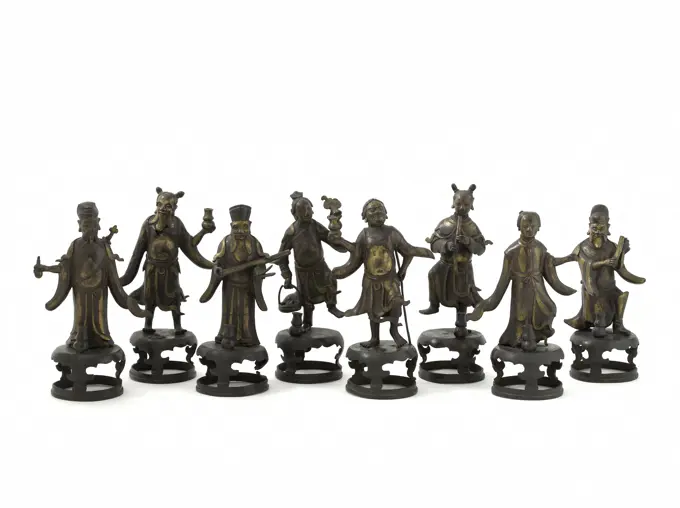
The 8 Immortals of Taisme. Bronze and gilding, 16th century. China. Paris, Cernuschi museum. 8, bronze, china, chinese religion, dore, gilding, gilding, immortal, immortal, character, philosophy, philosophy, Chinese religion, statuette, taism, taoist, taoist, taoist, character, china
PREVIOUS
of 2
NEXT
2401 S. Ervay, Suite 206
Dallas, Texas 75215
United States
Get Started
Free ResearchMy BoardsMy Cart
For Creators
How To License Your ContentContributor PortalFrame of Mind
Resources
API accessPricing
Contact
+1 866 236 0087help@viewpictures.co.uk Contact form
©2026 View Pictures. All Rights Reserved. -A
This site is protected by reCAPTCHA and Google Privacy Policy and Terms of Service apply.