My Boards
View Pictures
  • My Boards
← Artworks

Classical Sculptures

A collection of classical sculptures depicting figures, including allegorical representations and religious icons, crafted from materials like clay, marble, and ivory.

Michel de Ruther (1607-1676) (), Johannes Fredericus Maes (Attributed to), c. 1743 - c. 1759  The Hague (possibly) terracotta (clay material)  The Hague (possibly) terracotta (clay material)
Michel de Ruther (1607-1676) (), Johannes Fredericus Maes (Attributed to), c. 1743 - c. 1759 The Hague (possibly) terracotta (clay material) The Hague (possibly) terracotta (clay material)
278 assets in this story
6145-29887552
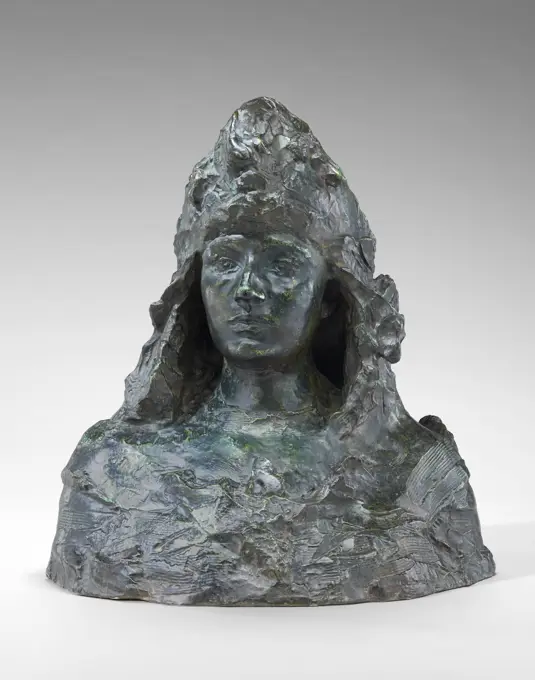
Auguste Rodin, La France, 1904 La France
6145-52952828
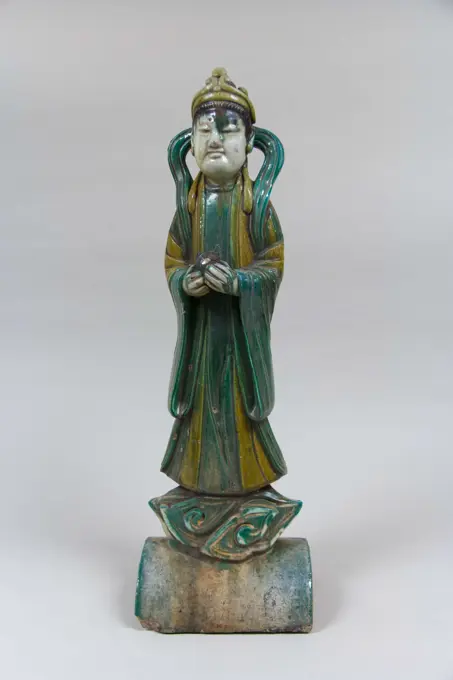
Roof tile with a standing figure China 15th-16th century View more. Roof tile with a standing figure. China. 15th-16th century. Stoneware with polychrome enamels. Ming dynasty (1368-1644). Ceramics
6145-29740135
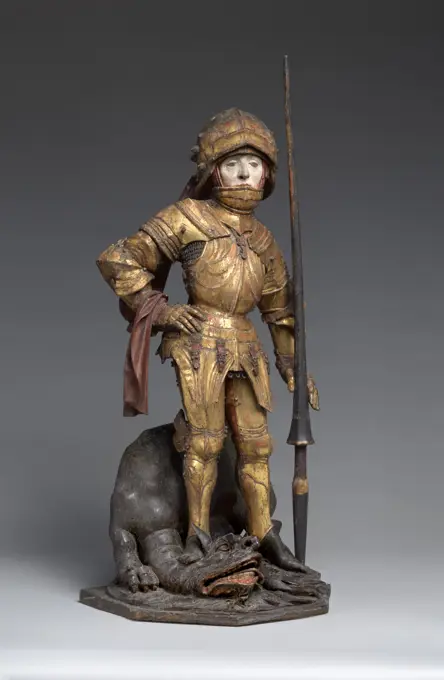
Saint George and the Dragon ca. 1460-70 South German Saint George was a soldier of the Roman Emperor Diocletian (r. 284-305) who became a Christian martyr when he chose torture and death over renouncing his faith. Venerated by both Muslims and Christians during the medieval period, Saint George was renowned for his bravery. One thirteenth-century story recounts how he rescued the entire population of a Libyan town from a dragon by singlehandedly defeating the creature in combat. This sculpture presents Saint George with his right foot pressing into the neck of the vanquished dragon. George became a patron saint for crusaders and numerous chivalric orders, including the Order of the Garter established by the English King, Edward III, in 1348.. Saint George and the Dragon. South German. ca. 1460-70. Limewood with paint and gilding. Made in Swabia, Germany. Sculpture-Wood
6145-30190429
Pensive Bodhisattva 101 CE-300 CE Gandhara. Gray schist .
6145-29129592
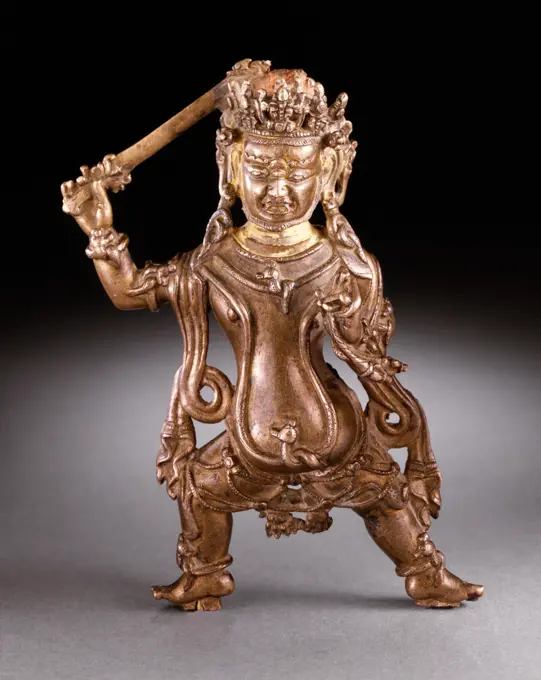
The God Achala. Western Tibet, 16th century. Sculpture. Copper alloy with traces of paint
6145-48530157
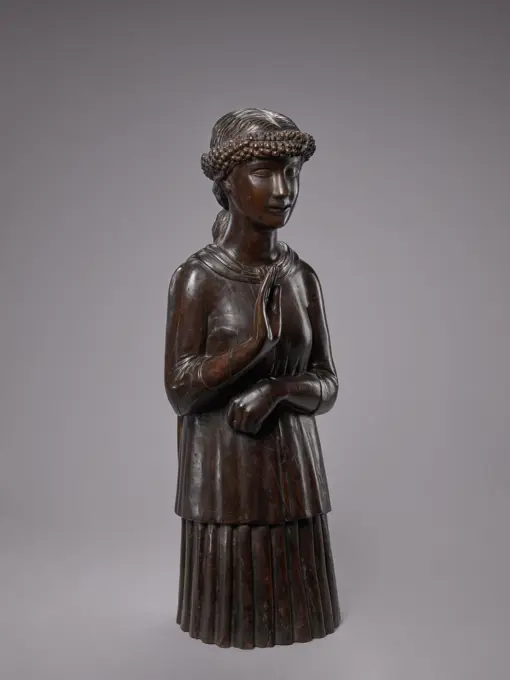
Dziewczynka w wianku jarzębinowym. Kuna, Henryk (1879-1945), sculptor
6145-29127692
Ganesha, Lord of Obstacles. India, Jammu and Kashmir, Kashmir region, 10th-11th century. Sculpture. Copper alloy
1746-21111524
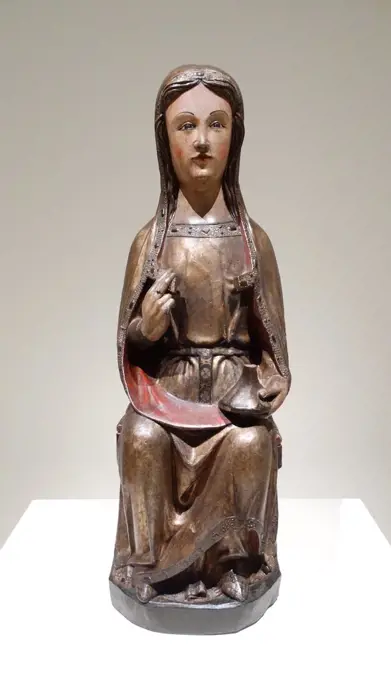
Birch wood carving of Saint Lucia from Saint-Bertrand-de-Comminges. Dated 14th Century
6145-29159921
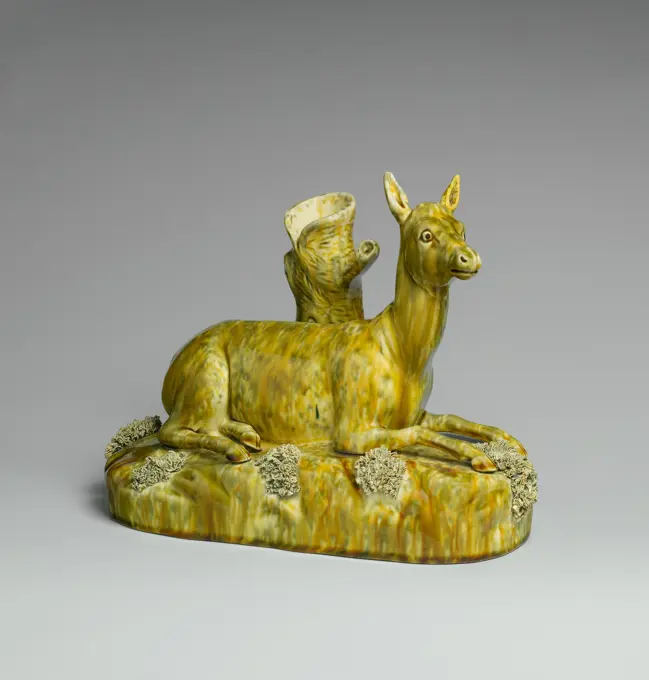
Figural spill vase 1849 Lyman, Fenton & Co. The middle of the nineteenth century witnessed a proliferation of relief-molded earthenware covered with an allover mottled brown enameled glaze. Often referred to as Rockingham ware in homage to similar ware first produced in England on the property of the marquis of Rockingham, many of the original molds and designs were brought from England by itinerant potters who fashioned these wares. Variations occur in the glazes by the means of applicationdipping, sponging, or splashingand with the addition of colored oxides. Relief-molded pitchers were the most common forms, but slip-cast animal figures such as a recumbent cows, lions, poodles, and deer, were also popular. This figure of a reclining doe on a base is one of a pair; its complimentary mate is a stag. The two opposite-facing figures were intended as mantel ornaments. The hollow tree trunk behind the doe was used to hold paper or wood spills for lighting candles or oil lamps.. Figural
6145-58865032
Gaius Julius Caesar Germanicus (Caligula), Bartholomeus Eggers, After Barent Dronrijp, After 1674 The bust is placed on a profiled pedestal. Amsterdam lead (metal). sokkel: sandstone The bust is placed on a profiled pedestal. Amsterdam lead (metal). sokkel: sandstone
6145-29756902
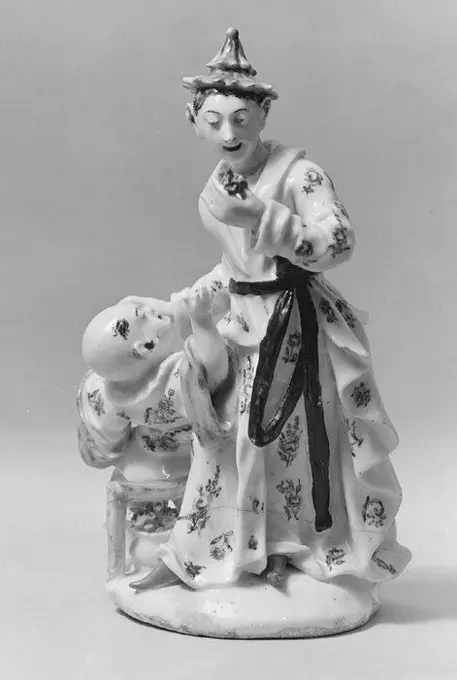
Winter and Spring ca. 1765 Chelsea Porcelain Manufactory. Winter and Spring. British, Chelsea. ca. 1765. Soft-paste porcelain. Chelsea Porcelain Manufactory (British, 1745-1784, Gold Anchor Period, 1759-69). Ceramics-Porcelain
6145-30175853
Statuary Group of Three Satyrs Fighting a Serpent 1 CE-100 CE . In 1488, an artwork matching the description of this small, powerful sculptural group was discovered in Rome and likely sold to Lorenzo deí Medici (1449ñ1492). It depicts a slithering serpent ensnaring and squeezing the life out of three hapless satyrs. One of them collapses, almost expired; the other two writhe in agonizing death throes. In a bold and dynamic composition, the two kneeling creatures lean away from, but twist toward, one another. The diagonal lines created by the kneeling satyrs converge at their companion, whose fallen body extends the full width of the base. The Renaissance artists Antonio Pollaiuolo (1433ñ1498) and Michelangelo Buonarotti (1475ñ1564) may have studied the group and incorporated elements of it into their own compositions.. Marble . Ancient Roman
4409-62749640
Juan Samsó / 'The Visitation'. Before 1886. Museum: Museo del Prado, Madrid, España.
6145-59018480
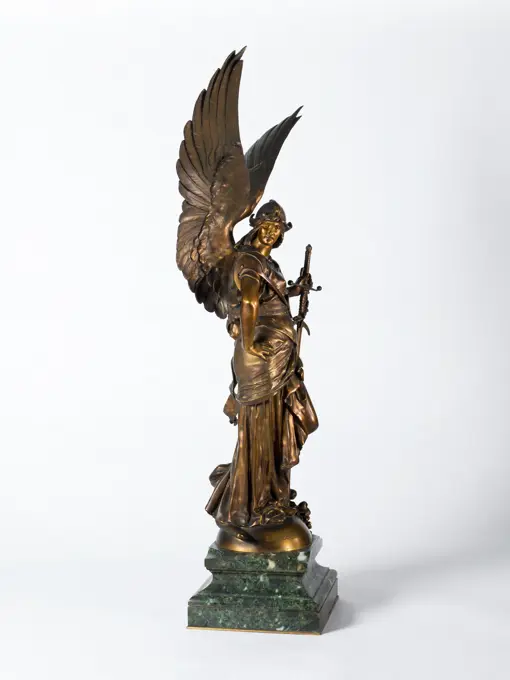
Jules Coutan (1848-1939). "Armed peace". Bronze. Around 1887. Museum of Fine Arts of the City of Paris, Petit Palais. 123540-10
1746-28978340
Marble statue of a youth on horseback. Dated 1st Century CE
6145-29139924
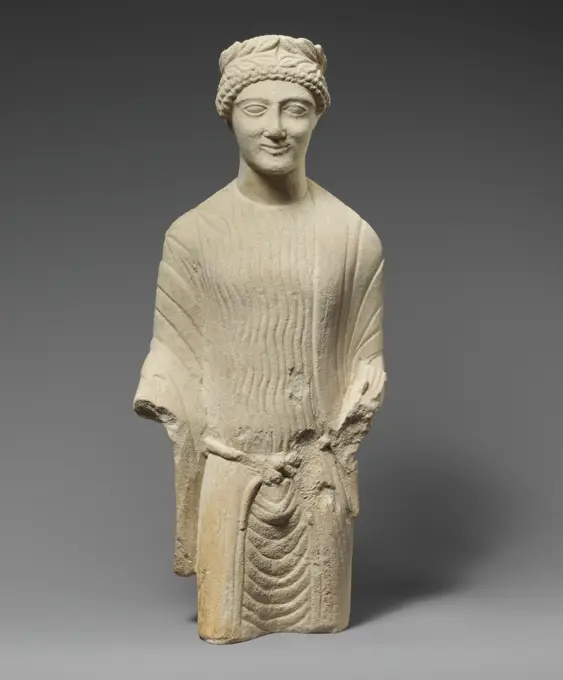
Limestone statuette of a beardless male votary with a wreath of leaves 2nd quarter or middle of the 5th century B.C. Cypriot. Limestone statuette of a beardless male votary with a wreath of leaves 242170
6145-58997476
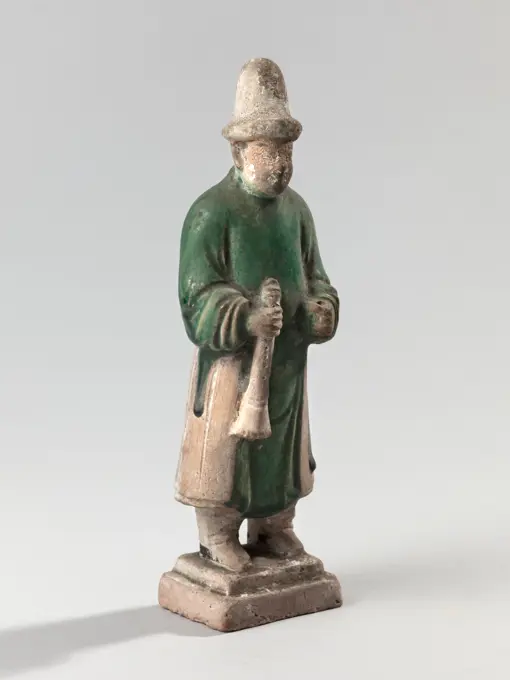
Flute player. Terracotta with glaze. Paris, Cernuschi museum. Asian art, old ceramic, covered, email, musical instrument, musician, character, porcelain, terracotta emaillee, tricolor
6145-30154096
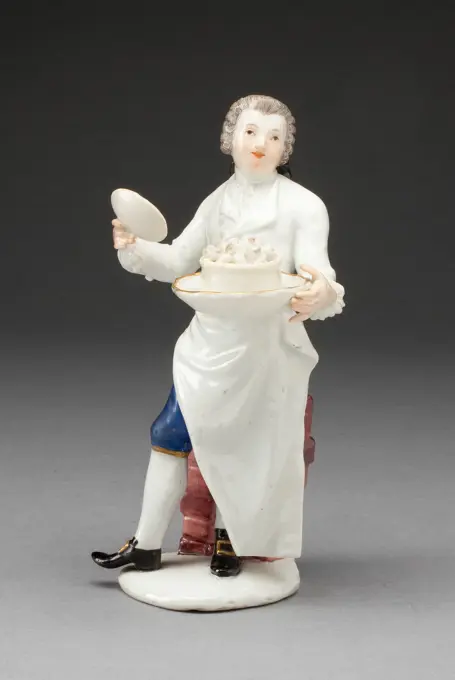
Figure of a Cook 1740-1755 Meissen. Hard-paste porcelain and polychrome enamels . Meissen Porcelain Manufactory (Manufacturer)
6145-29164237
Figure 6th century China. Figure 62930
4409-28798504
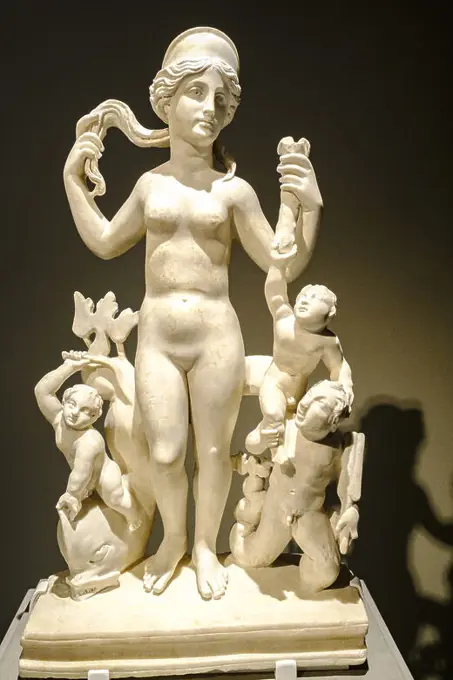
Venus Anadiomena, siglo IV, Saint-George-de-Montagne, Burdeos, Francia.
4409-20926771
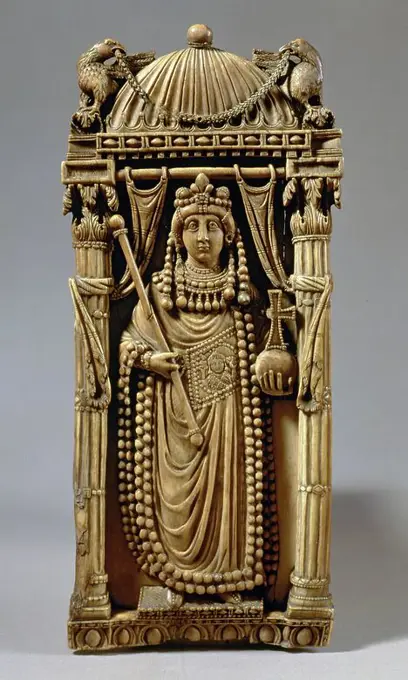
Ivory leaf of diptych with relief of Byzantine , Empress Ariane c. 500 AD. Museum: Museo Nazionale del Bargello, FLORENCIA, ITALIA.
4409-17500090
Small "Joseph" with hand raised in purple/grey long robes. Culture: Italian. Dimensions: Overall (confirmed): 11 3/4 × 4 × 3 in. (29.8 × 10.2 × 7.6 cm). Date: second half 18th-mid-19th century.The practice of using crèche figures to restage religious events reached the height of its complexity and artistic excellence in eighteenth-century Naples, and the Metropolitan Museum of Art's group of Neapolitan crèche is one of the finest and most complete survivals of the art form. The ensemble consists of characters traditional to eighteenth-century Italian Christmas holiday customs. The Nativity, featuring the holy family, shepherds and their flocks, and a host of angels and cherubs is joined by the procession of the three Magi and colorful peasants, townspeople, and animals. The figures have articulated bodies of tow and wire with polychromed terracotta heads, and are all in partially distressed condition.These vibrant characters are further brought to life by a wide-ranging set of cloth,
4409-102653
SAN MARTIN REPARTE LA CAPA CON UN POBRE-BARROCO. Location: MUSEO DE NAVARRA. Pamplona. NAVARRA. SPAIN. SAINT MARTIN OF TOURS.
6145-48530506
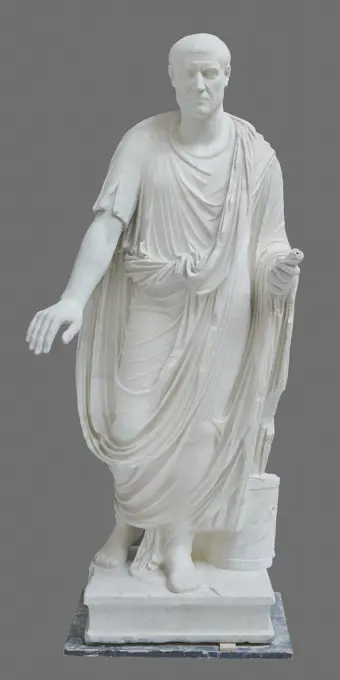
Posąg Rzymianina w todze. warsztat rzymski, workshop
6145-29124671
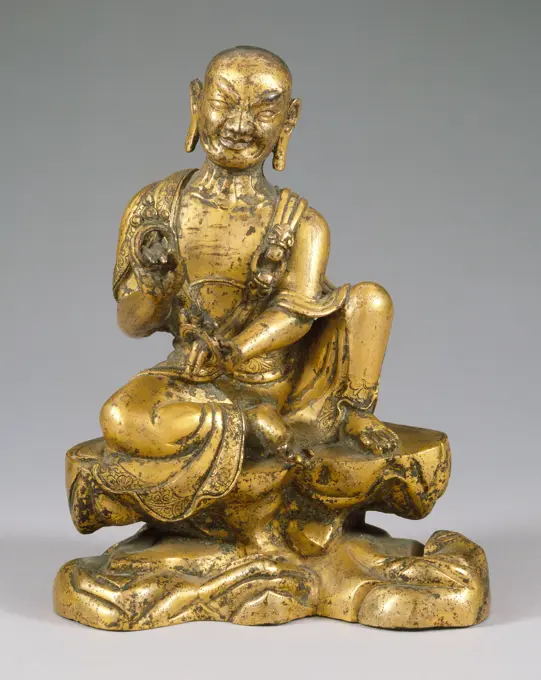
The Arhat Kalika. Eastern Tibet, 1450-1500. Sculpture. Gilt brass
4409-19321990
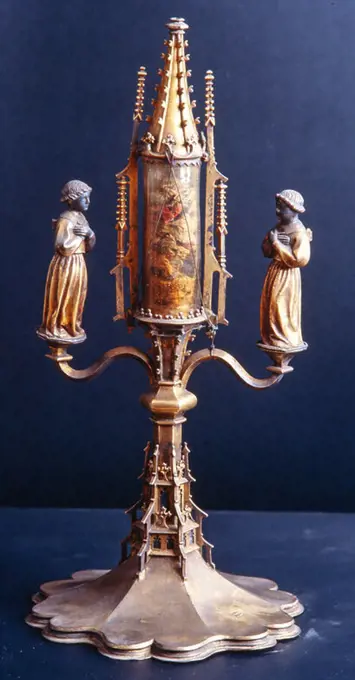
Relicario siglo XV. Nº inv. 156. Museo Diocesano de Barcelona.
1788-18634
Statue of Nike of Paeonios, from Temple of Zeus at Olympia
6145-30358762
Dancer
6145-29195934
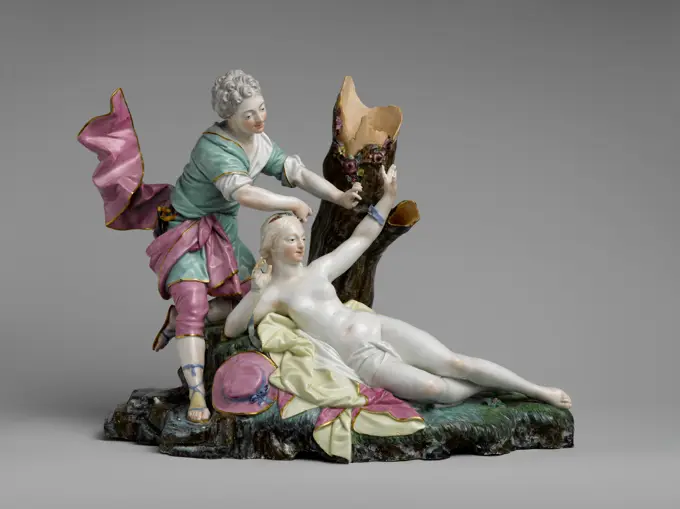
Amintas Freeing Sylvia ca. 1770 Höchst Manufactory. Amintas Freeing Sylvia. After a print by René Gaillard (French, ca. 1719-1790 Paris). German, Höchst. ca. 1770. Hard-paste porcelain. Ceramics-Porcelain
6145-29214619
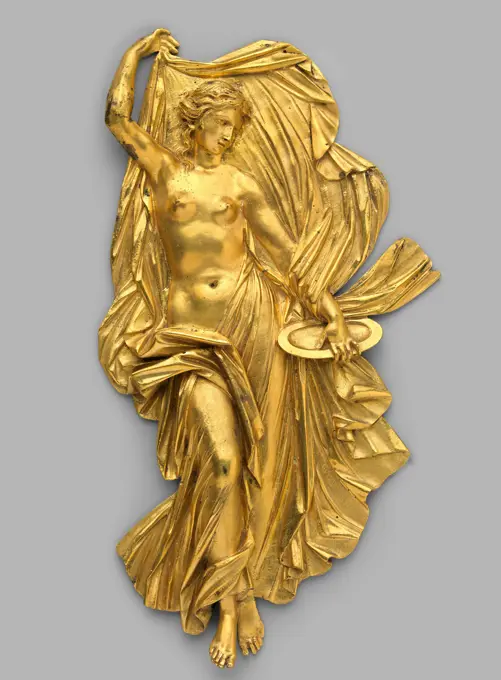
Twelve Dancers late 18th-early 19th century Possibly by Luigi Manfredini These belong to a set of twelve relief figures that were inspired by mural paintings in the so-called Villa of Cicero at Pompeii, excavated in 1749 and again in 1763-64.. Twelve Dancers. French. late 18th-early 19th century. Gilt bronze. Metalwork-Gilt Bronze
4409-17438746
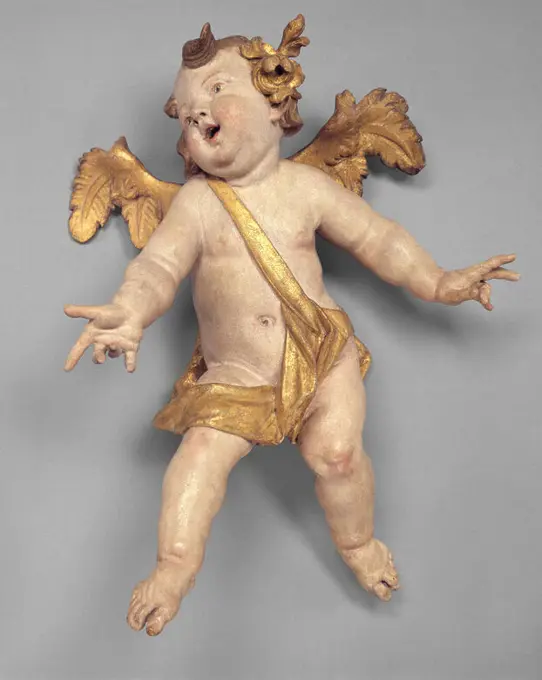
Angel. Artist: Christian Jorhan the Elder (1727-1804). Culture: Southern German. Dimensions: Height: 15 1/2 in. (39.4 cm). Date: mid-18th century.This putto and its companion (1974.356.800) probably belonged to an altar decoration, perhaps flanking a tabernacle. Museum: Metropolitan Museum of Art, New York, USA.
6145-59038084
Anonymous, writer with an extended Chinese figure (common name), 1701. Porcelain of the Mennecy Manufacture, tender paste, fixed on a chiseled and golden bronze terrace. Carnavalet museum, history of Paris.
6145-46521233
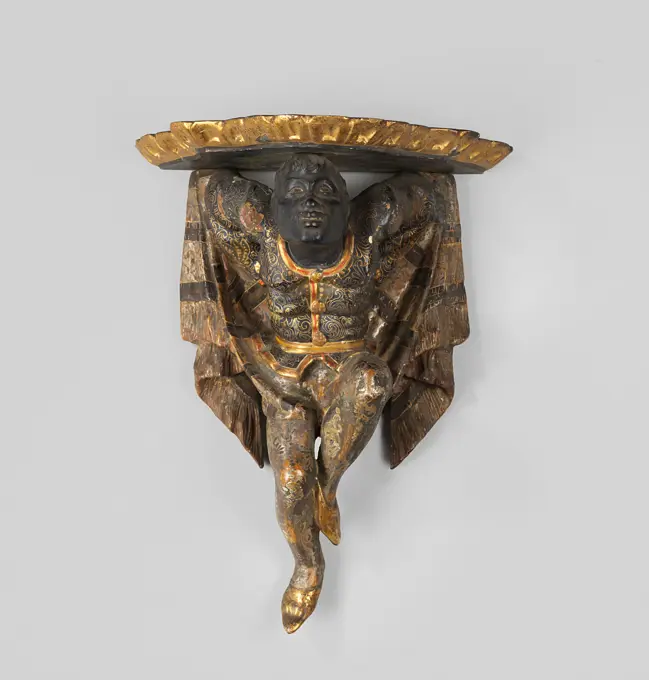
Console-shaped étagère with scalloped cover plate, worn by a sculpted dancer; Console-shaped étagère with scalloped cover plate, worn by a sculpted Negro slave. Console-shaped étagère of polychromed linden wood. The front cover plate is supported by a sculpted black dancer, with the head forward and the elbows facing back; Hands support the wall and the man sits on a draped cloth. The left leg has been lifted high. The silver-plated soup pants and the black cardigan with the gold-plated belt are decorated with tendrils. The vest closes at the front with three buttons; Gold pungent buildings. See: BK-1957-6-b.
6145-29765379
Stretcher from a console table from the Queen's bed chamber at Versailles ca. 1730 Jules Degoullons French Louis XIV was succeeded in 1715 by his great-grandson Louis XV (1710-1774), then only five years old. During the eight years that Philippe II, due d'Orléans (1674-1723), served as regent (the Régence period), the court moved back to Paris, but in 1723, when the young king came of age, Versailles once again became the main royal residence. Two years later Louis XV married Marie Leszczynska (1703-1768), daughter of Stanislas I of Poland (r. 1704-9 and 1733-36), and she was given the quarters in the palace that had belonged to the queen consort of Louis XIV, Marie Thérèse (1638-1683). As part of the renovation of the queen's bed chamber after the birth of the dauphin in September 1729, a new pier glass and matching console table were made for the room by sculptors Jules Degoullons, Mathieu Legoupil (active 1714-35), and Jacques Verberckt (1704-1771) following Robert de Cotte's design
4409-17232418
Romanesque art in the National Art Museum of Catalonia,Barcrelona,figures of the descent of Santa Maria de Taüll (12th-13th century).Boí valley.
6145-29194000
Female attendant 7th-8th century China. Female attendant. China. 7th-8th century. Earthenware. Tang dynasty (618-907). Tomb Pottery
6145-59035179
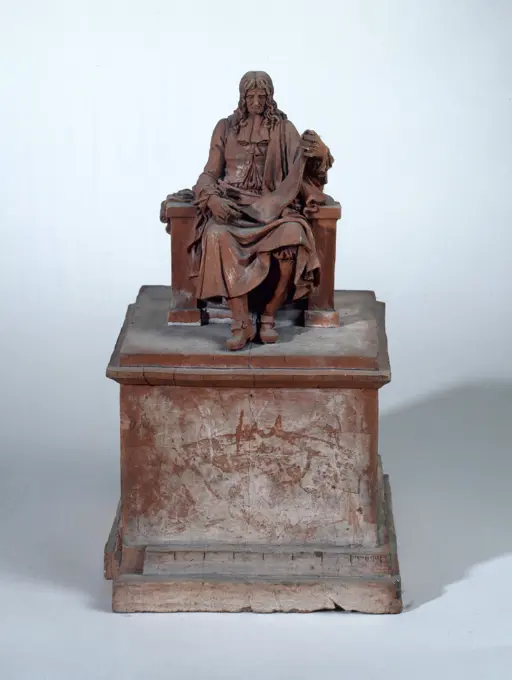
Dumont. "Colbert". Sculpture. Paris, Carnavalet museum. 38252-12 Politician, minister, model, statue, 19th 19th 19th 19th 19th 19th century
6145-58844965
Fire Bink of gilded bronze on a pedestal with leaf voltuten, with a man in fluttering robe and a woman with a fragment of an instrument in her left hand, the trident is missing, anonymous, c. 1750 - c. 1760 Citized and gilded bronze firebok. The base consists of leaf voltuten, partly opened in a cartouche-like motif. This motif is continued in a closed kidney form under the place where a man is seated, surrounded by a fluttering robe; He used to have a trident in his raised right hand, which is now missing. A woman with an instrument fragment sits in her left hand on the corresponding firebok. See also: BK-14853-B. Paris bronze (metal). gilding (material) gilding Citized and gilded bronze firebok. The base consists of leaf voltuten, partly opened in a cartouche-like motif. This motif is continued in a closed kidney form under the place where a man is seated, surrounded by a fluttering robe; He used to have a trident in his raised right hand, which is now missing. A woman with an instru
6145-43651690
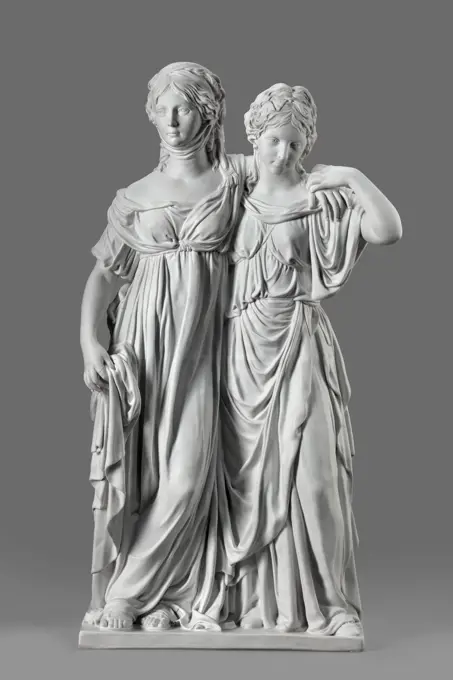
Two princesses, co called Prinzessinnengruppe. Schadow, Gottfried Johann (1764-1850), sculptor, Koenigliche Porzellan Manufaktur - KPM (Berlin ; 1763-1918), factory
6145-29058937
Shepherd and Shepherdess, 1770-1775 . Possibly by Niderviller Factory (French). Faience; overall: 19.7 cm (7 3/4 in.).
4409-17353075
Appliqué Figure of the Apostle Philip. Culture: North German. Dimensions: Overall: 12 9/16 x 3 7/16 x 1 15/16 in. (31.9 x 8.7 x 4.9 cm). Date: ca. 1350. Museum: Metropolitan Museum of Art, New York, USA.
6145-30176254
August 1765-1775 Berlin. Hard-paste porcelain, polychrome enamels, and gilding .
6145-29761488
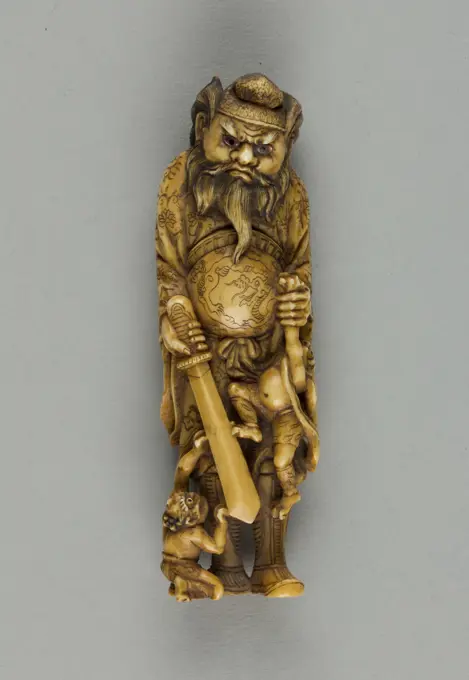
Netsuke of a Man and Two Demons 18th-19th century Japan. Netsuke of a Man and Two Demons. Japan. 18th-19th century. Ivory; inlaid eyes. Edo (1615-1868) or Meiji period (1868-1912). Netsuke
6145-58993566
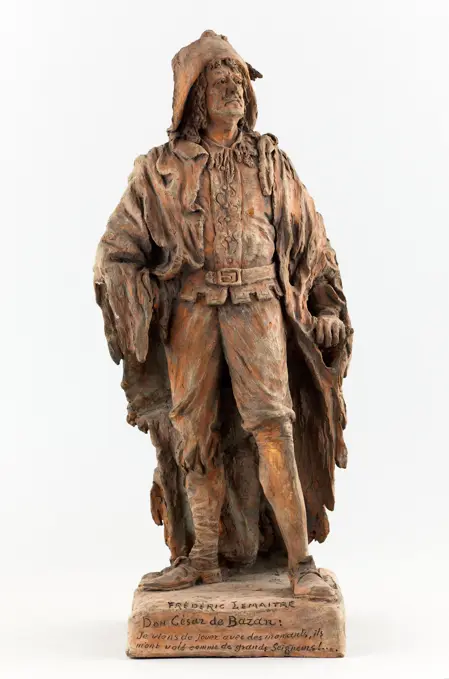
Charles Kotra (1859-1942). Antoine-Louis-Prosper Lemaître lemaître dit fédrick Lemaître (1800-1876), actor. Role of Don César de Bazan in "Don César de Bazan". Terracotta. Paris, Carnavalet museum. 74058-18 Actor, French comedian, derision, modeling, portrait-load, sculptor, terracotta, 19th 19th 19th 19th 19th 19th century, caricature
4443-21960121
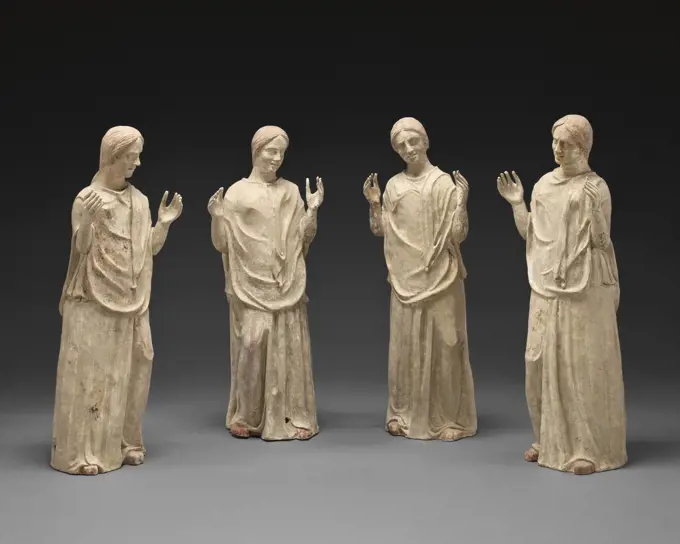
Group of Statues of Mourning Women (4); Canosa, South Italy; about 325 B.C; Terracotta;
6145-29799062
Saint Martin first half 16th century German. Saint Martin 475287
6145-59049746
Women's figurine, Men's figurine, figurine of the goddess Nike;  II century BC (-200-00-00--101-00-00), III-II century BC (-300-00-00--101-00-00), 1. PO. II century BC (-200-00-00--151-00-00);Czartoryski, Witold, Froehner, V., Ant.
6145-29066043
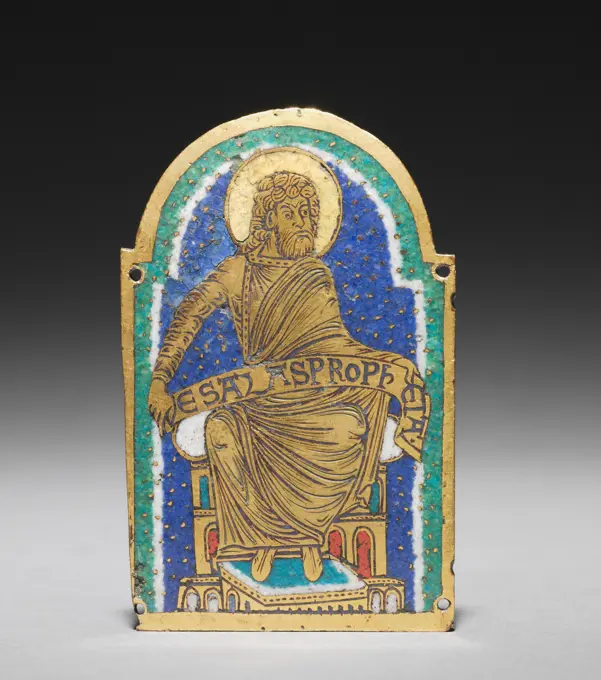
Plaque: Seated Prophet from a Reliquary Shrine: Esais (Isaiah), c. 1170-1180. Germany, Lower Saxony, Hildesheim, Romanesque period, 12th century. Gilded copper, champlevé enamel; overall: 9 x 5.7 x 0.3 cm (3 9/16 x 2 1/4 x 1/8 in.).
4443-21910772
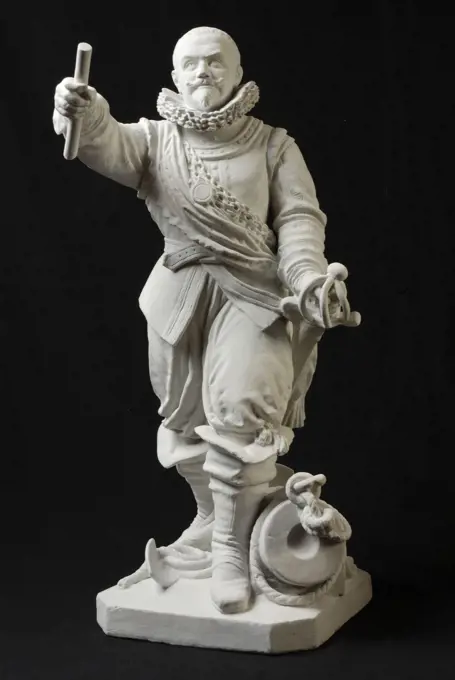
Joseph Graven, Plaster model for statue Piet Hein, sculpture visual material model plaster, Plaster model of the sandstone statue that was unveiled in 1870 in the presence of King William III; it represents Piet Hein at the moment he orders the attack on the Dunkirk hijackers Piet Heyn Piet Hein Delfshaven commemoration jubilee party hero shipping silver fleet Rotterdam
1010-15490
Antique figurines of Venus and Anchises of Meissen by Tallor, Porcelain and Sevres Porcelain Group, Decorative Arts
6145-45526597
Bliżej Kultury
4409-17582539
'Prince of Imereti. Figure from the Series Ranks of His Majesty's Own Escort'. Russia, St Petersburg, Early 1850s. Dimensions: 53x21 cm. Museum: State Hermitage, St. Petersburg. Author: Théodore-Joseph-Napoléon Jacques.
6145-29062426
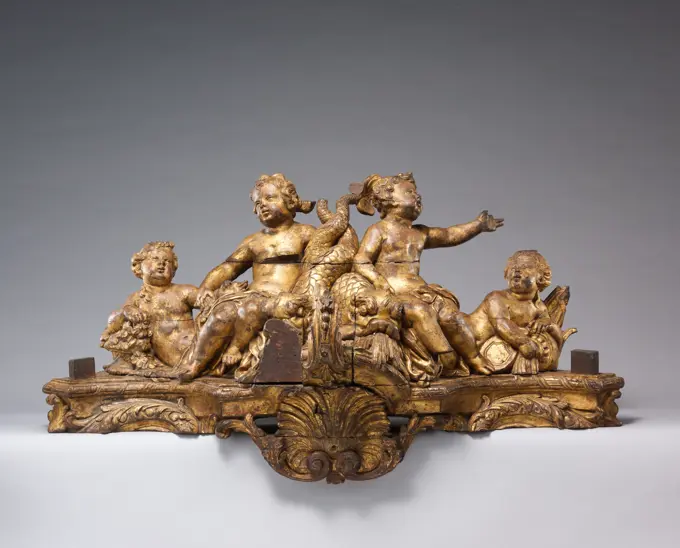
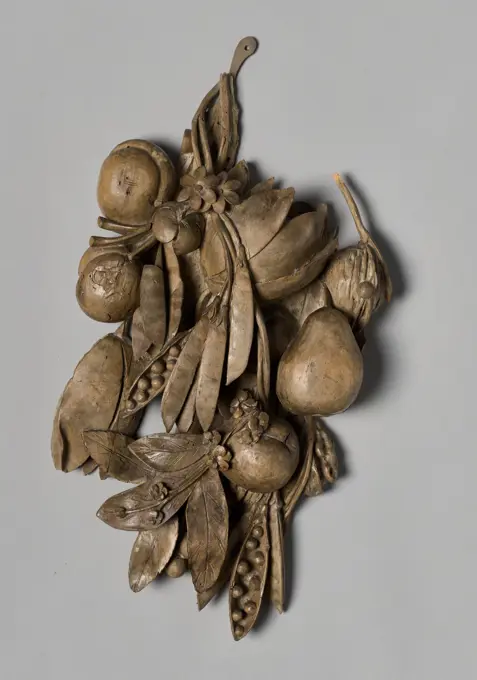
Carving from an Overmantel, c. 1675-77. Grinling Gibbons (British, 1648-1721). Lindenwood; The arrangement of architectural elements within grand interior spaces in the late 1600s and early 1700s emphasized symmetry and height. Decorative elements such as elaborately carved mantels, mirrors, paintings, and applied wall decorations were often stacked to achieve a visual focal point at one or both ends of the room. This particular overmantel decoration once hung above the fireplace in the Green Drawing Room of the Earl of Essex at Cassiobury in Watford, near London. In 1823, the British painter William Henry Hunt (1790-1864) produced a watercolor of the drawing room which featured this overmantel decoration.Grinling Gibbons was born in Rotterdam, the Netherlands, of English parents. After training there as an artist, he came to England in the 1660s and soon began to work as a sculptor of interior ornament, particularly in wood. One of his first large-scale decorative projects was the se
7012-69877143
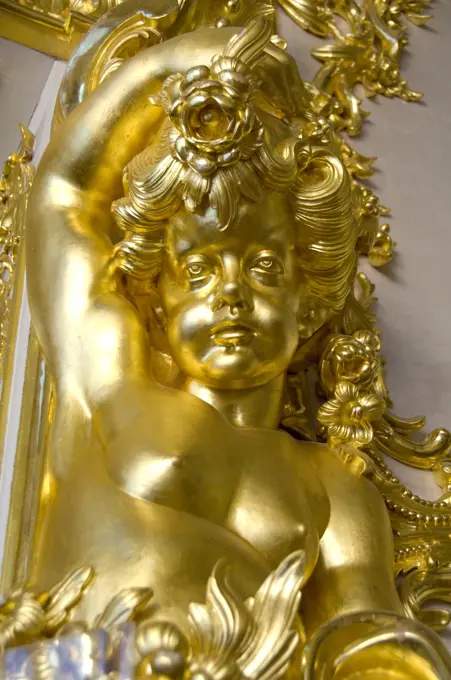
Russia, St. Petersburg, Catherine's Palace (aka Bolshoi Yekaterinsky Dvorets), interior. Detail of ornate gold room accents. (Editorial Usage Only)
6145-30156698
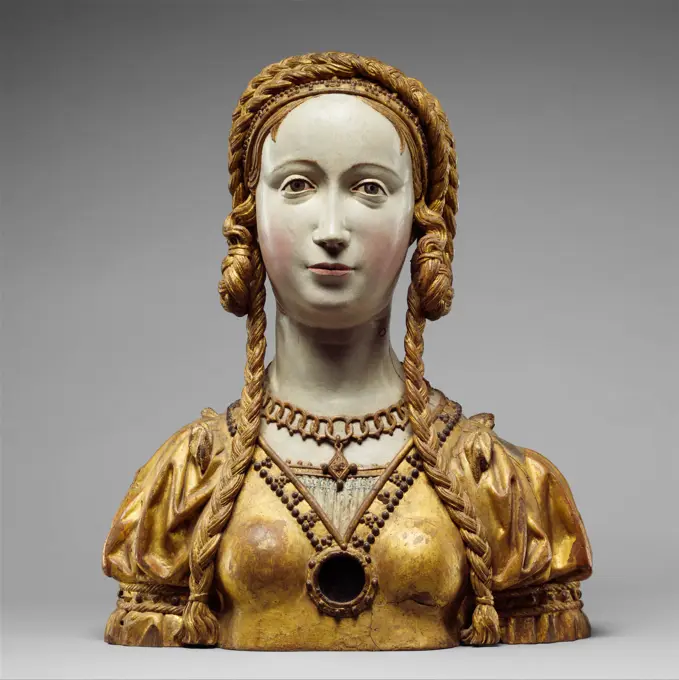
Reliquary Bust of Saint Margaret of Antioch 1465-1470 Strasbourg. Walnut with traces of 19th-century polychromy . Nicolaus Gerhaert
6145-29706555
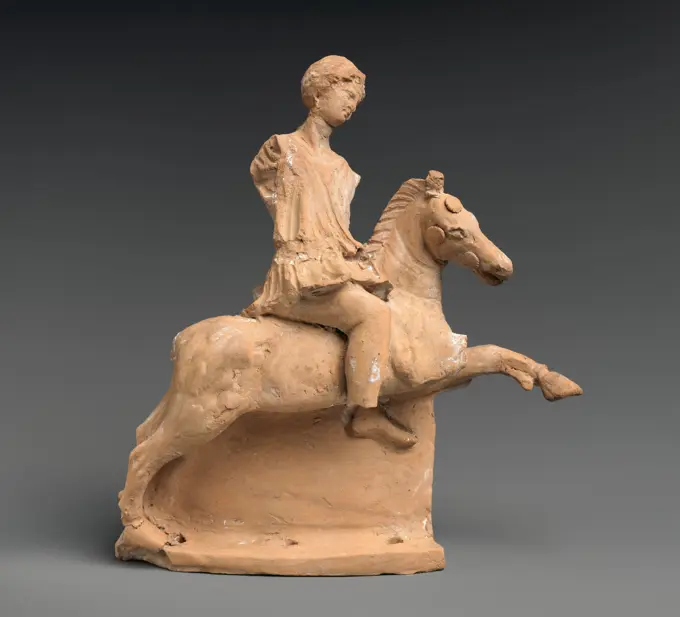
Terracotta relief detached from a funnel-jar late 4th-early 3rd century B.C. Italic-Native, South Italian (Canosan) Figure of a rider removed from funnel-jar 06.1021.248 a, b.. Terracotta relief detached from a funnel-jar. Italic-Native, South Italian (Canosan). late 4th-early 3rd century B.C.. Terracotta. Early Hellenistic. Vases
6145-29773408
Reliquary bust of a companion of Saint Ursula ca. 1520-30 Belgian, possibly Brussels This piece is one of twenty-three related reliquary busts, many of which have a Spanish provenance. In addition to the compartment visible on the saint's chest, a hinged opening at the top of her head gives access to another relic container.Although long believed to be Spanish, this series of busts is closer in style to the work of sculptors from the sourthern Lowlands (Brabant or possibly Brussels), whose influence on Spanish sculpture in the late Gothic period was profound. Some examples may well have been carved in Spain by Brabantine artists who migrated to Spain during this period of close political and artistic relations at the end of the fifteenth and in the early sixteenth century. Another possible explanation is that the Hapsburg emperor Charles V donated the pieces to Spanish churches, or that Spanish officials at his court in Brussels acquired the pieces and brought them back to Spain.. Reli
6145-29183259
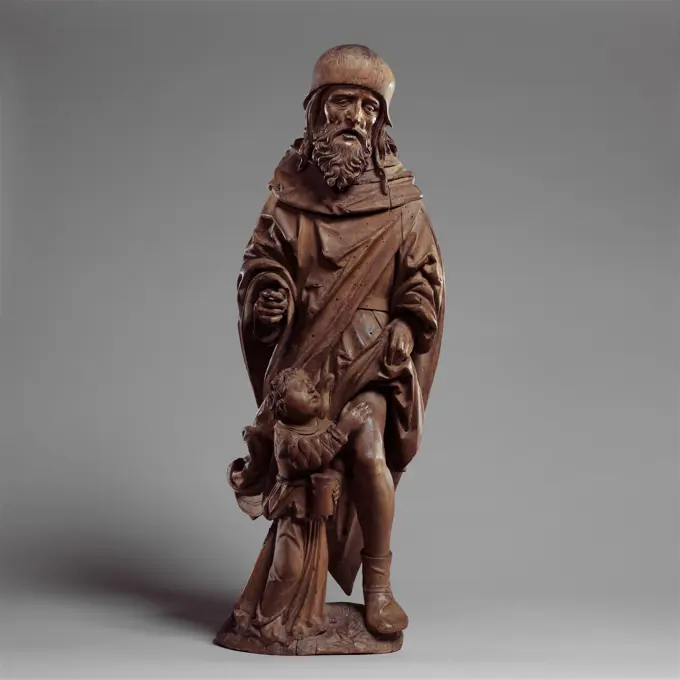
Saint Roch and the Angel ca. 1520 Master of the Biberach Holy Kinship German This sensitively carved group represents Saint Roch lifting his robe, while a small angel, his wings now missing, applies ointment to the boil on the saints leg. The drawn and weary face of the saint elicits empathetic anguish from the angel. The sculptor paid considerable attention to the anatomy of forms, notably in the rendering of the underlying bone structure of the face and hands and the careful articulation of the veins. Both figures are slightly rotated, which is emphasized by the long diagonal fold across the torso of Saint Roch that animates the group with implied motion.. Saint Roch and the Angel 471847
6145-29207032
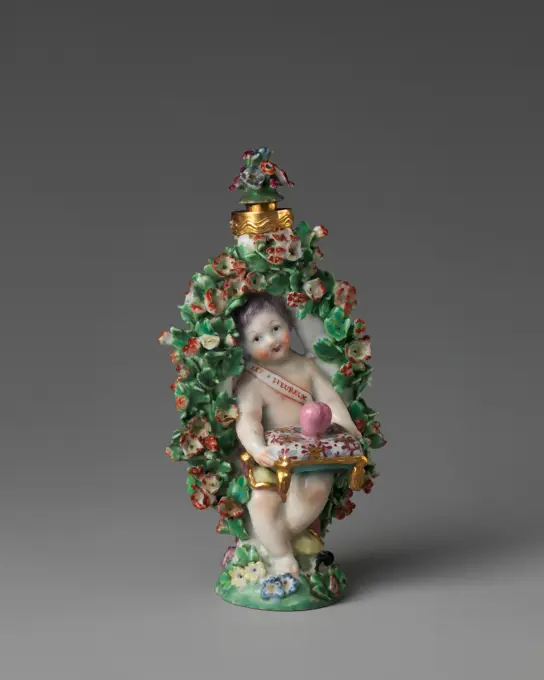
Cupid in a bower ca. 1765 Chelsea Porcelain Manufactory. Cupid in a bower. British, Chelsea. ca. 1765. Soft-paste porcelain. Chelsea Porcelain Manufactory (British, 1745-1784, Gold Anchor Period, 1759-69). Ceramics-Porcelain
6145-45534207
Bliżej Kultury
6145-29763888
Harlequine ca. 1740 Vienna. Harlequine 203206
6145-29068315
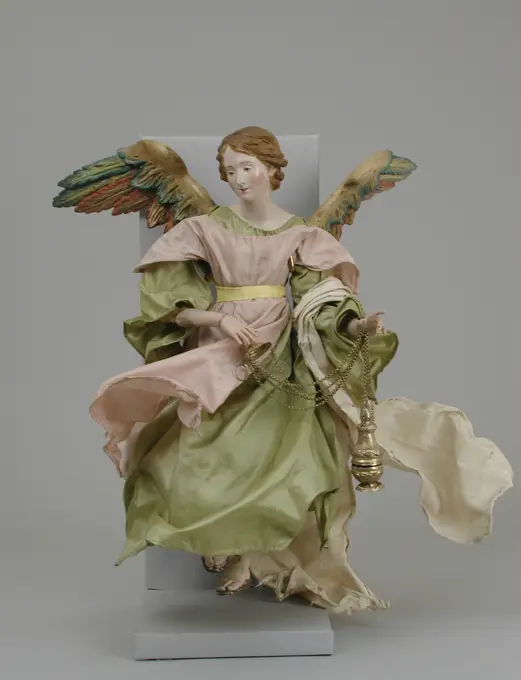
Figure from a Crèche: Angel, 1780-1830. Italy, Naples, late 18th-early 19th century. Painted wood and terracotta with various textiles; overall: 36.1 cm (14 3/16 in.). The practice of creating scenes of the Nativity for the home dates from the early 1700s in Italy, where people began to set up doll-like figures of about a foot or less in height. The custom was particularly popular in Naples around 1800, where crèche scenes (crèche means cradle, or crib) included many figures, whose heads and hands of painted terracotta, stuffed cloth bodies, and clothing adapted from contemporary local costumes gave them an amazingly realistic character.
6145-29168300
Angel second half 18th century Italian, Naples In 1964, Loretta Hines Howard generously presented to the Museum over 140 Neapolitan crèche figures, dating from the second half of the eighteenth century. The varied assortment includes figures from the three traditional scenes of a complete Neapolitan presepio: the Nativity, with angels, shepherds, and sheep; the procession of the three Magi, with their colorful retinue of attendants; and the varied and gay crowd of country and town people thronging the tavern, or inn, of Bethlehem  the diversorium mentioned by St. Luke, where on the Holy Night there was no place for Mary and Joseph. Averaging between twelve and fifteen inches in height, according to the position they were to take in perspective in the stage set, the figures are pliable and can be given poses at will, according to their facial expressions. Their bodies are made of tow and wire, their arms and legs are finely carved of wood, and their heads and shoulders are modeled of t
6145-29751670
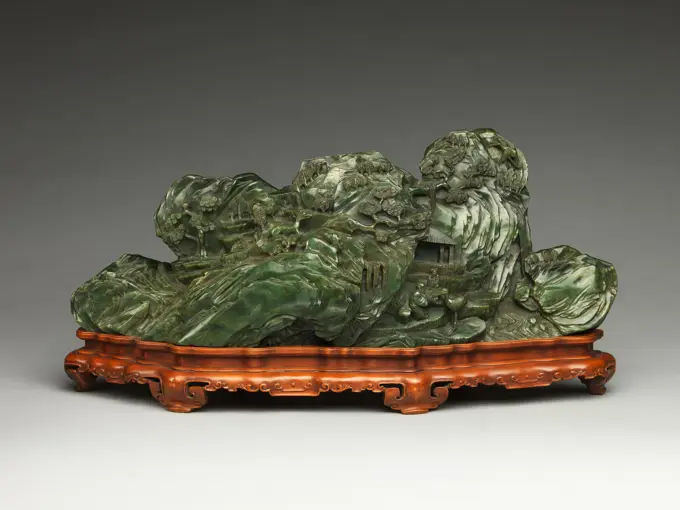
Landscape with hermits and a crane late 18th-early 19th century China This sculpture exploits the otherworldly luminescence of jade to depict a landscape beyond the reach of mere mortals. In the foreground, by a rushing river, an aging scholar communes with a crane, the frequent companion of Daoists and hermit. Landscape with hermits and a crane. China. late 18th-early 19th century. Jade (nephrite). Qing dynasty (1644-1911). Jade
4409-61855184
San Roque de Montpelier, carved in incarnate wood, stewed and polychrome, eighteenth century, colonial museum, Casa de Santo Domingo, old temple and convent of Santo Domingo and the Colegio Mayor de Santo Tomás de AquinoAntigua Guatemala, department of Sacatepéquez, Republic of Guatemala, Central America.
6145-29069689
Pax with Christ Appearing to the Apostles, late 1500s. Cast after a model by Valerio Belli (Italian, c. 1468-1546). Gilt bronze in ebony frame; overall: 21.2 x 15.2 x 6.5 cm (8 3/8 x 6 x 2 9/16 in.).
6145-58862785
Bust of Michiel de Ruyter (1607-1676), Anonymous, c. 1780 - c. 1795 Bust of Michiel Adriaansz. de Ruyter from Zwart Engels pottery, so -called. "Black Basalt". The bust has a square base of black marble with a fire -gilt brass plinth and ditto attachment. At the front of the pedestal, a cast, fire -gaunted brass plaqette has been applied, crowned by the helmeted weapon of De Ruyter. The text on the plaque is: Michel Adriansz de Ruijter Chevalier Admiral Général de l'Armée Navale des Provinces Unies & C. On the back of the bust blind brushed: De Ruyter and the brand: Wedgwood. England marble (rock). bronze (metal). gilding (material) casting Bust of Michiel Adriaansz. de Ruyter from Zwart Engels pottery, so -called. "Black Basalt". The bust has a square base of black marble with a fire -gilt brass plinth and ditto attachment. At the front of the pedestal, a cast, fire -gaunted brass plaqette has been applied, crowned by the helmeted weapon of De Ruyter. The text on the plaque is: Michel
6145-29781297
Mother and child group 1750-55 Derby Porcelain Manufactory The adult figure holding a flower is a personification of "smelling" from a set representing the five Senses -hearing, seeing, smelling, tasting, and touching. The white porcelain was probably enameled in London.. Mother and child group 200974
4409-17273029
BORRICA Y CAMPESINA GRANADINA EN BARRO-S XIX-ROMANTICISMO. Author: JOSE CUBERO GABARDON (1818-1877). Location: MUSEO DEL ROMANTICISMO-CERAMICA. MADRID. SPAIN.
6145-29836611
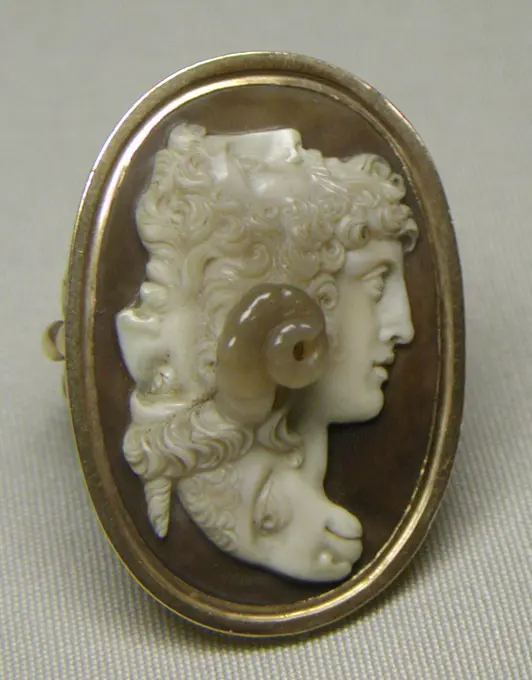
Gryllos: conjoined heads of a youth, a bearded man, a satyr, and a ram late 18th-early 19th century Italian The term gryllos, used for these bizarre combinations, is derived from the Greek word for caricature.. Gryllos: conjoined heads of a youth, a bearded man, a satyr, and a ram 198357
6145-29817165
Terracotta figure of a woman mid-5th century B.C. Greek The sculptural type of a woman wearing a peplos becomes prominent during the second quarter of the fifth century B.C., especially in small bronzes. Contemporary works in terracotta on this scale are exceedingly rare. It is possible that this piece served as a model for the preparation of molds from which bronze representations would have been cast.. Terracotta figure of a woman. Greek. mid-5th century B.C.. Terracotta. Classical. Terracottas
6145-29802494
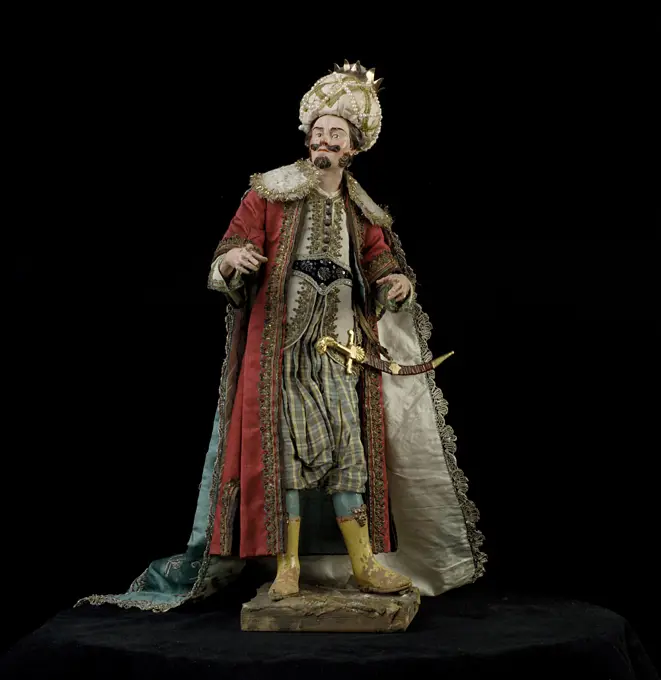
King second half 18th century Nicola Ingaldi In 1964, Loretta Hines Howard generously presented to the Museum over 140 Neapolitan crèche figures, dating from the second half of the eighteenth century. The varied assortment includes figures from the three traditional scenes of a complete Neapolitan presepio: the Nativity, with angels, shepherds, and sheep; the procession of the three Magi, with their colorful retinue of attendants; and the varied and gay crowd of country and town people thronging the tavern, or inn, of Bethlehem  the diversorium mentioned by St. Luke, where on the Holy Night there was no place for Mary and Joseph. Averaging between twelve and fifteen inches in height, according to the position they were to take in perspective in the stage set, the figures are pliable and can be given poses at will, according to their facial expressions. Their bodies are made of tow and wire, their arms and legs are finely carved of wood, and their heads and shoulders are modeled of ter
6145-59524301
Pièce de Milieu, Johannes Mattheus van Kempen, 1900 table piece Palm branches of the top of the table piece representing a woman with, among other things, shield and laurel wreath (SRI-BILLITON) and attributes derived from the work in the tin mines. Around the pedestal 4 medallions with performances of labor in the tin mines (to photos). On the pedestal a medallion with text and one with the engraved portrait of Ermeling. At the top behind the woman two palms; A candle arm on both sides of the pedestal. Table piece was offered by officials and miners from the Billiton Maatschappij to their chef J.Ph. Ermeling on his 70th birthday at a party on Billiton. Voorschoten silver (metal) engraving  Dutch East Indies, The. Billiton
4443-19551894
Figure, Painted papier-mché, Cherub with outstretched arms, one leg forward, head facing to his right. Pained wings., Germany or Italy, 18th century, figures, Decorative Arts, Figure
6145-29823823
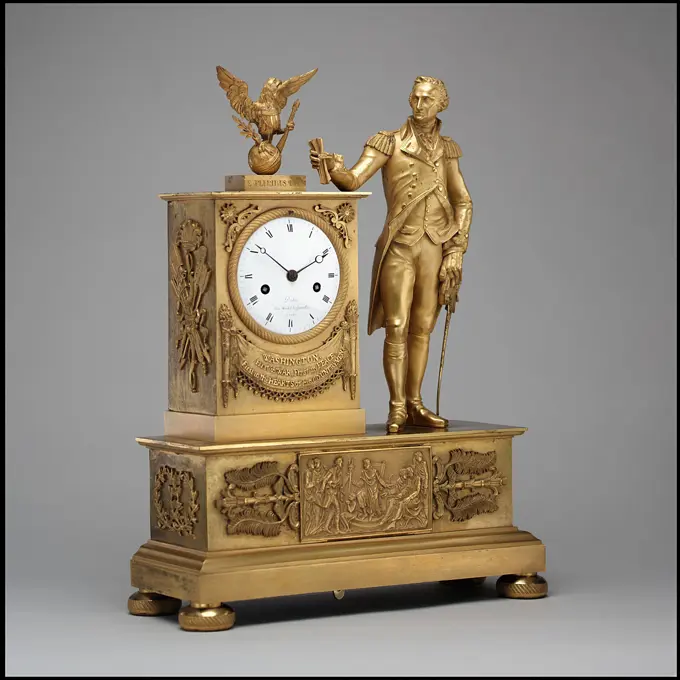
Clock 1815-20 Dubuc After the War of 1812 imported French clocks in gilt-bronze cases depicting allegorical subjects were marketed extensively in America, especially in New York. The standing figure of Washington is based on John Trumbull's painting "George Washington before the Battle of Trenton" (22.45.9), which was well known in Europe through engravings. The clock is replete with patriotic symbolism, including the seal of the United States and the eulogy under the dial taken from Major General Henry Lee's Funeral Oration on the Death of General Washington (1800).. Clock 2094
4435-6263
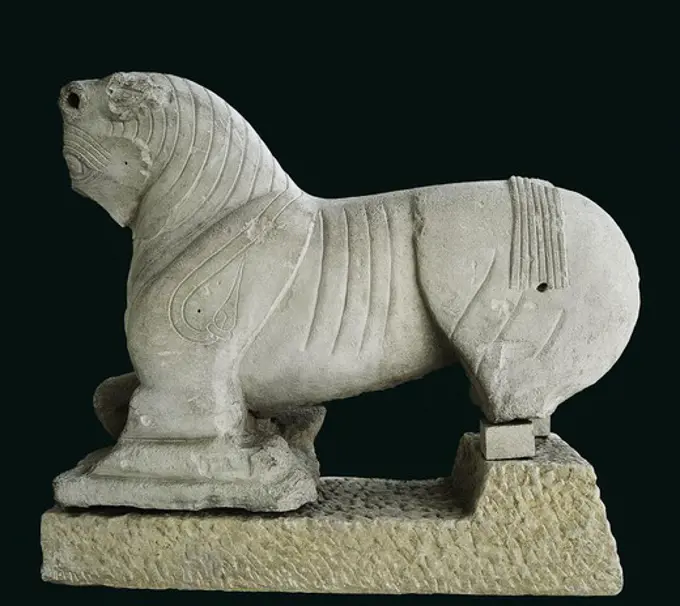
Bull of Porcuna. ca.  475 - 430 BC. Iberian art. Sculpture on rock. SPAIN. ANDALUSIA. JAEN. Jaen. Jaen's Provincial Museum. Proc: SPAIN. ANDALUSIA. JAEN. Porcuna. Necropolis of Cerrillo Blanco.
4409-30433150
Domènec Talarn i Ribot / Reyes de Oriente, siglo XIX. Museu d'Arts y Tradicions Populars.
6145-45531336
Bliżej Kultury
PREVIOUS
of 3
NEXT
2401 S. Ervay, Suite 206
Dallas, Texas 75215
United States
Get Started
Free ResearchMy BoardsMy Cart
For Creators
How To License Your ContentContributor PortalFrame of Mind
Resources
API accessPricing
Contact
+1 866 236 0087help@viewpictures.co.uk Contact form
©2026 View Pictures. All Rights Reserved. -A
This site is protected by reCAPTCHA and Google Privacy Policy and Terms of Service apply.