Colorful Historical Textiles

A collection of intricately designed textile fragments from the 16th to 18th centuries, featuring floral and geometric patterns in vibrant colors and luxurious materials.

Fragment of a multi -colored seals, anonymous, 1770 - 1780 A silk tissue with blue and cream stripes. On the blue stripes is a pendulum, in which a continuous slender with black stems and white flowers. Loose branches of white and blue flowers are partly woven on the blue and white stripes. Note: Self -sides; 0.3 cm Effenbinding (multiple colors in one jump). France silk A silk tissue with blue and cream stripes. On the blue stripes is a pendulum, in which a continuous slender with black stems and white flowers. Loose branches of white and blue flowers are partly woven on the blue and white stripes. Note: Self -sides; 0.3 cm Effenbinding (multiple colors in one jump). France silk
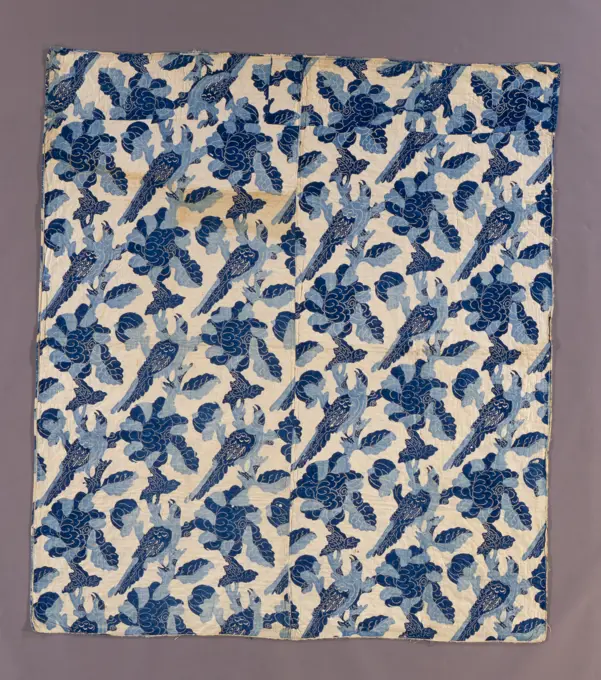
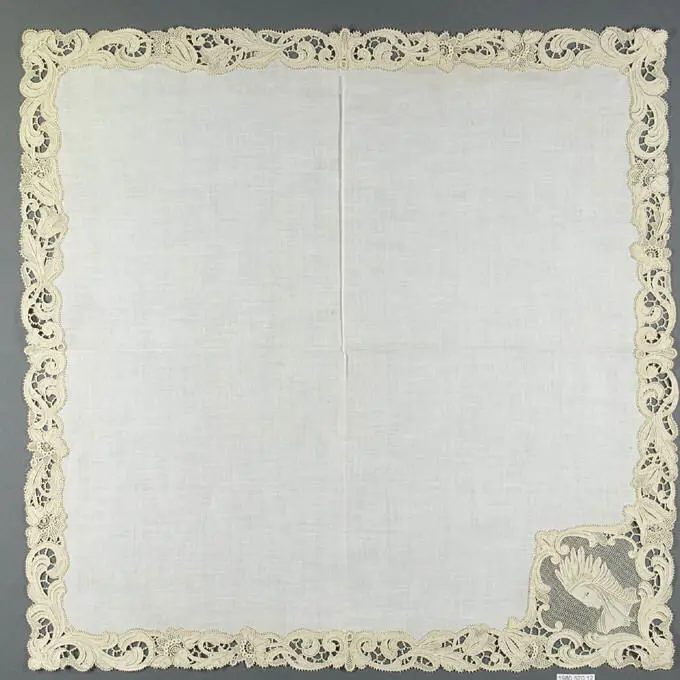
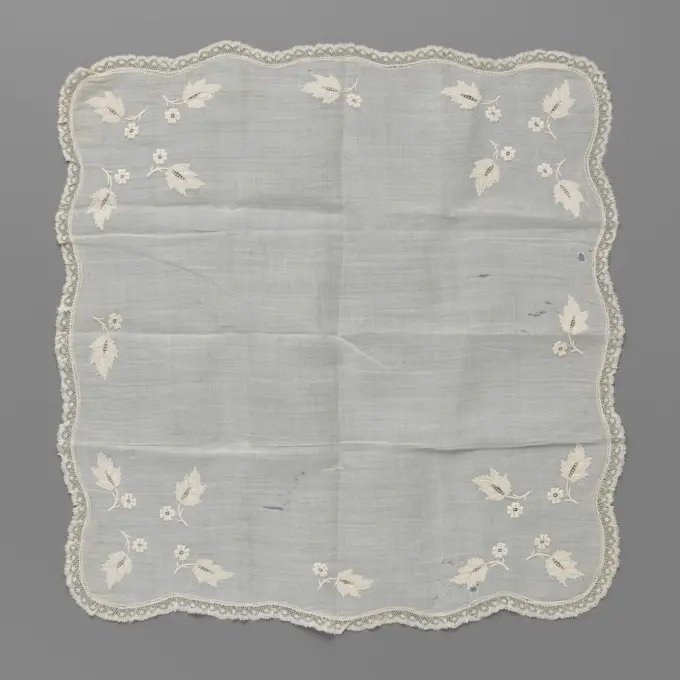
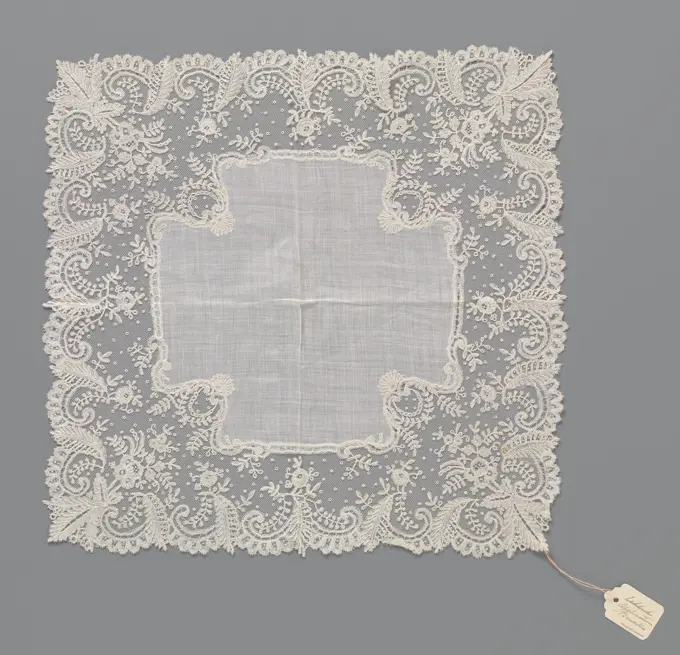
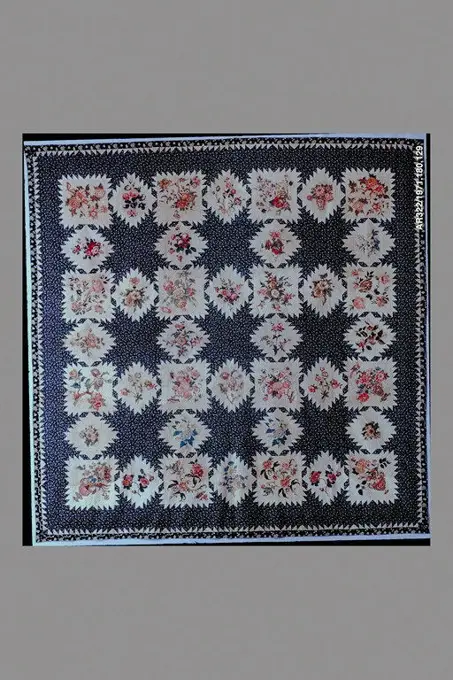
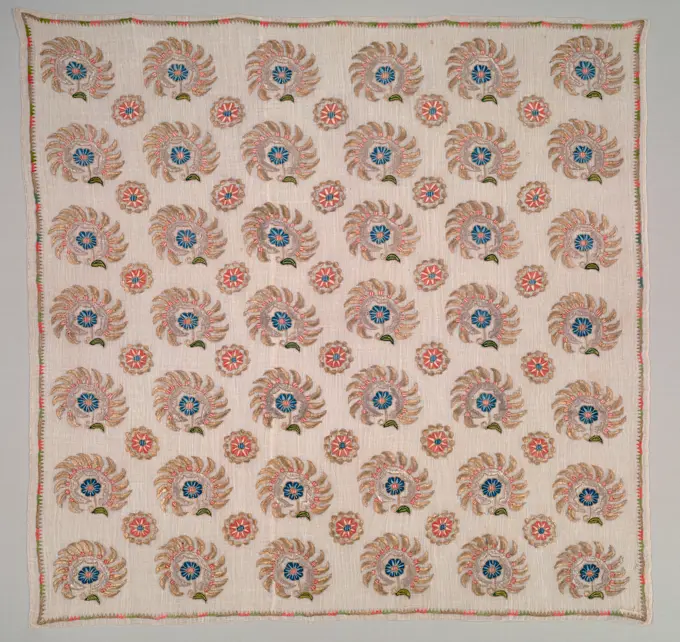
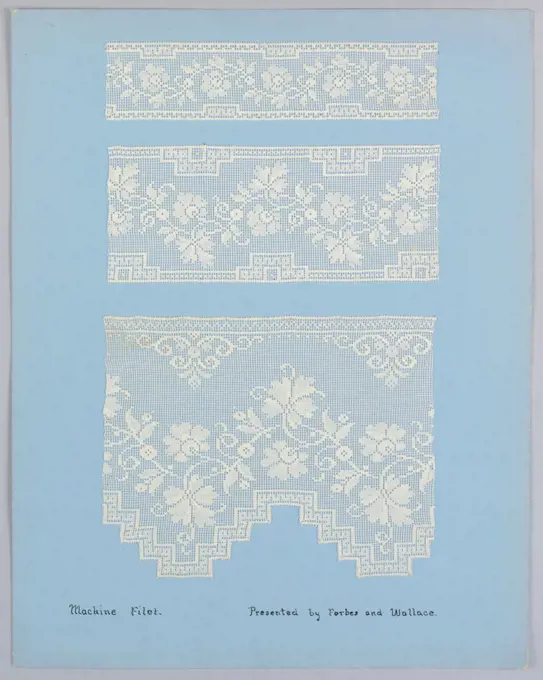
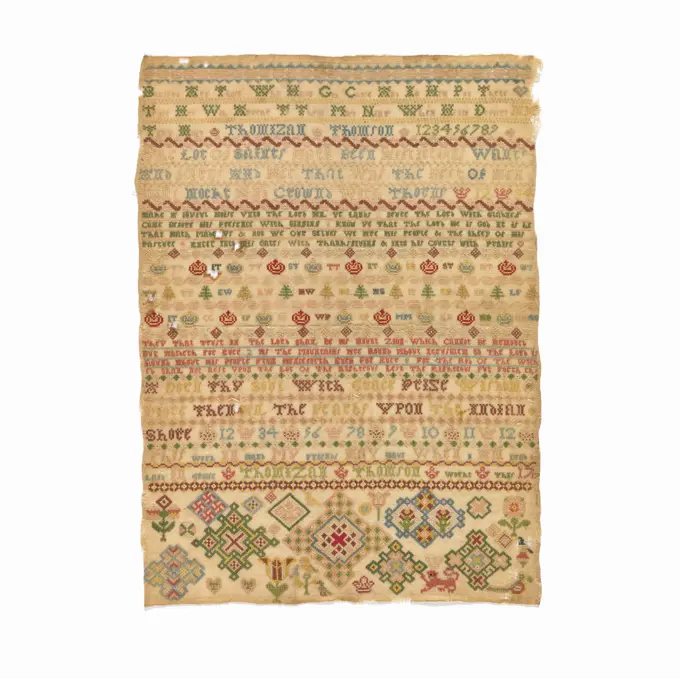
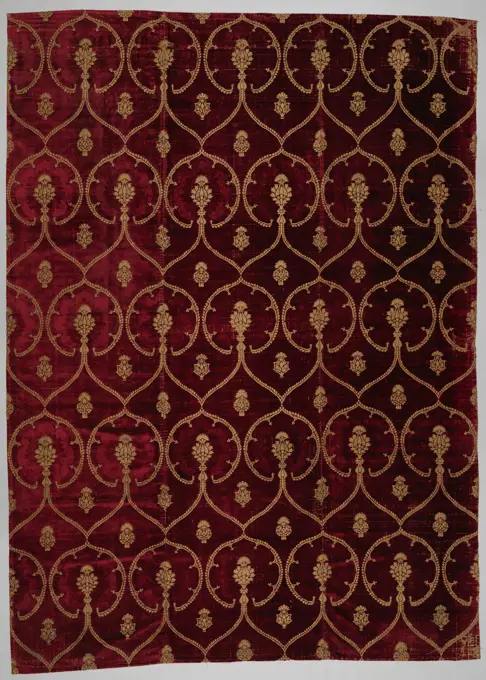
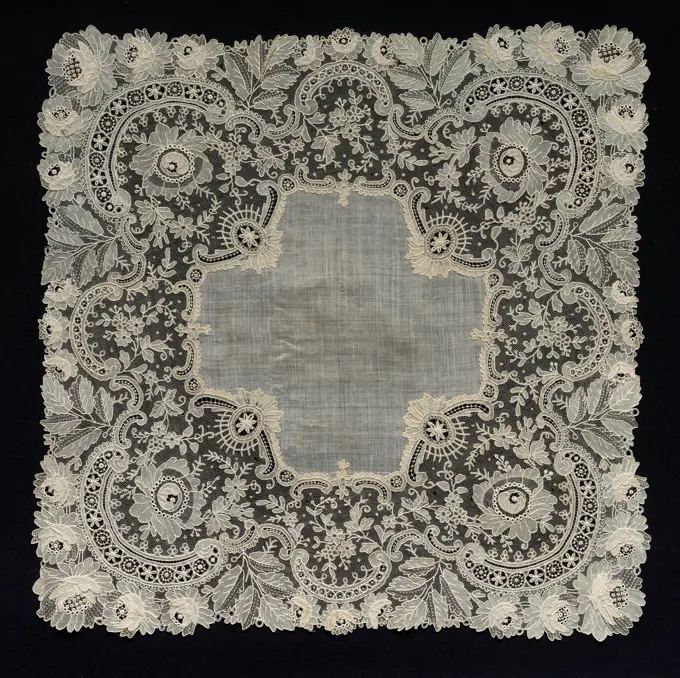
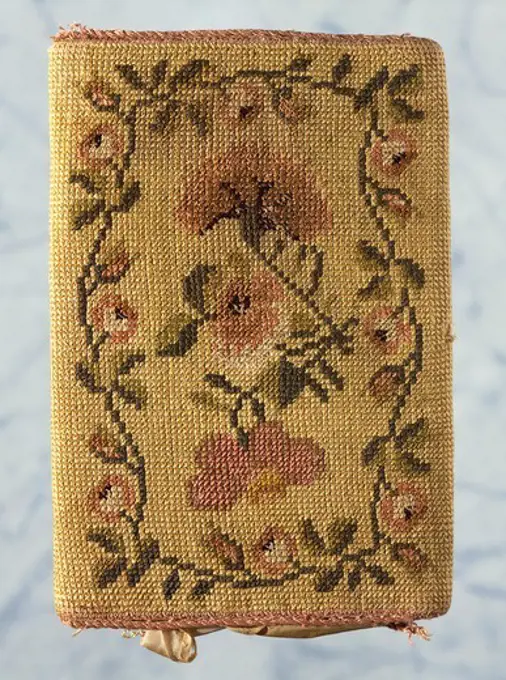
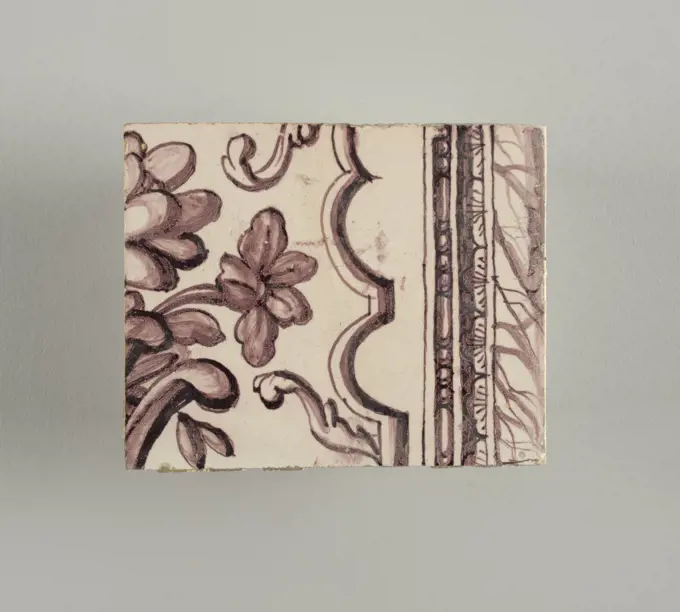
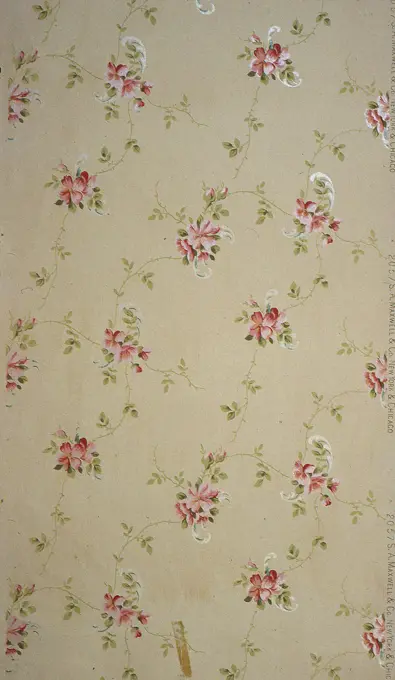
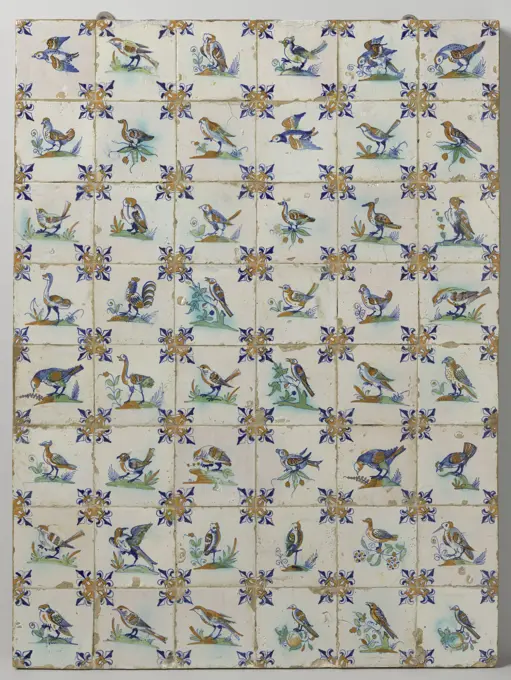
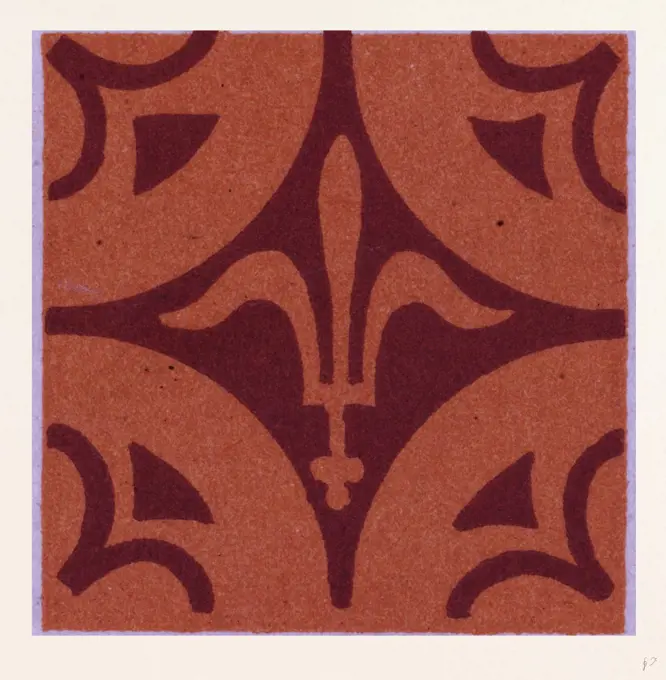
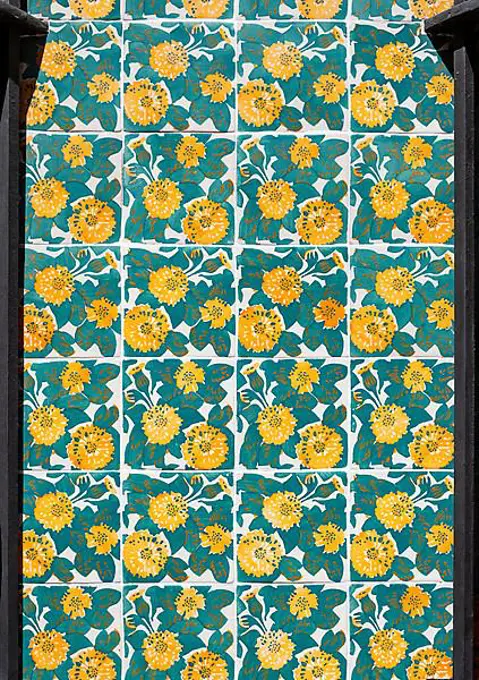
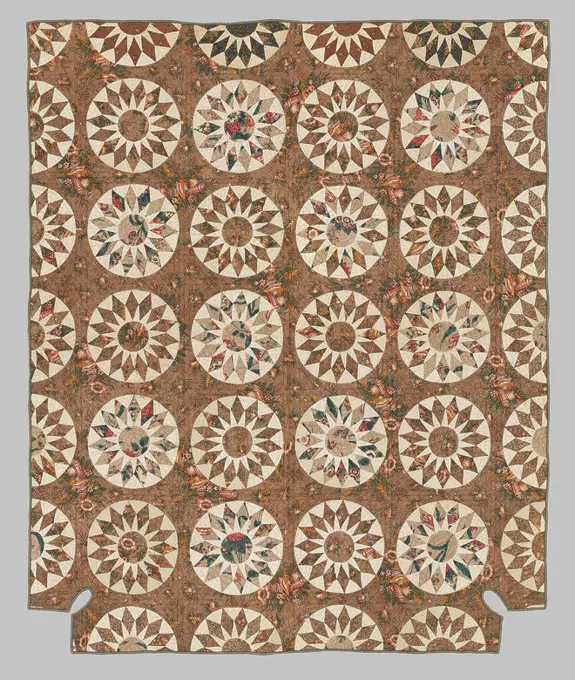
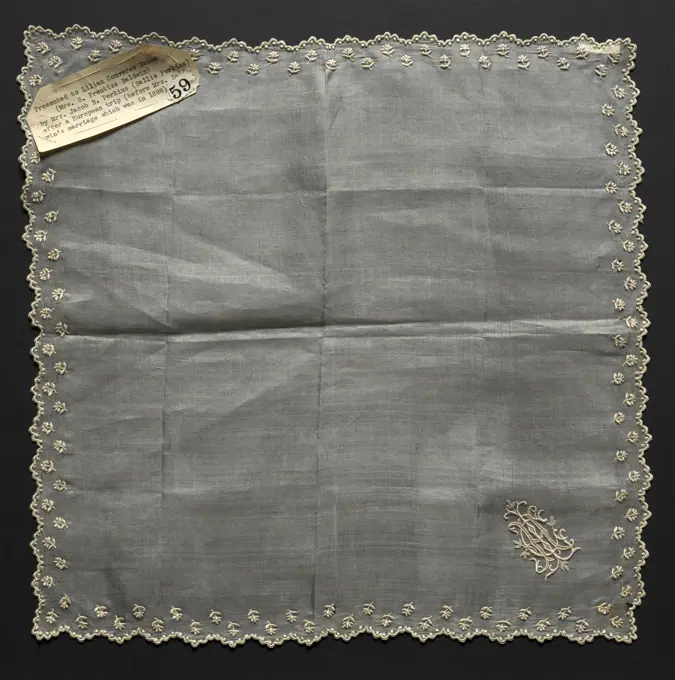
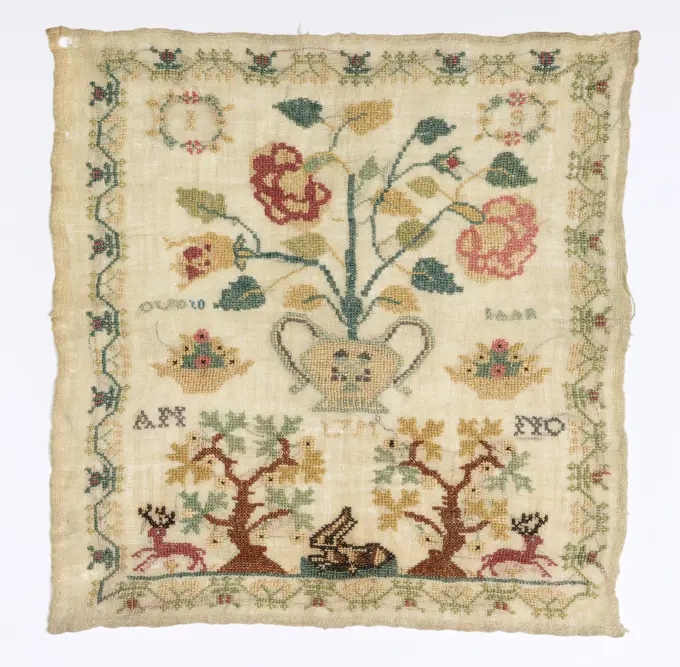
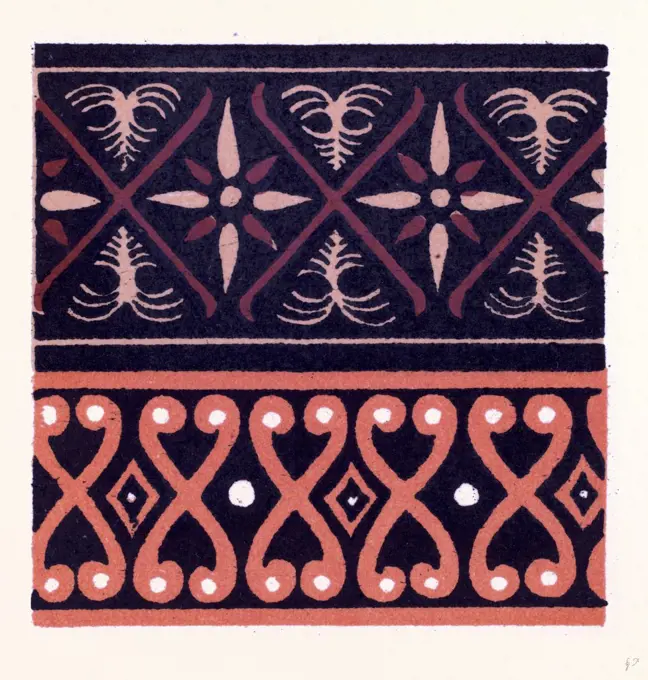
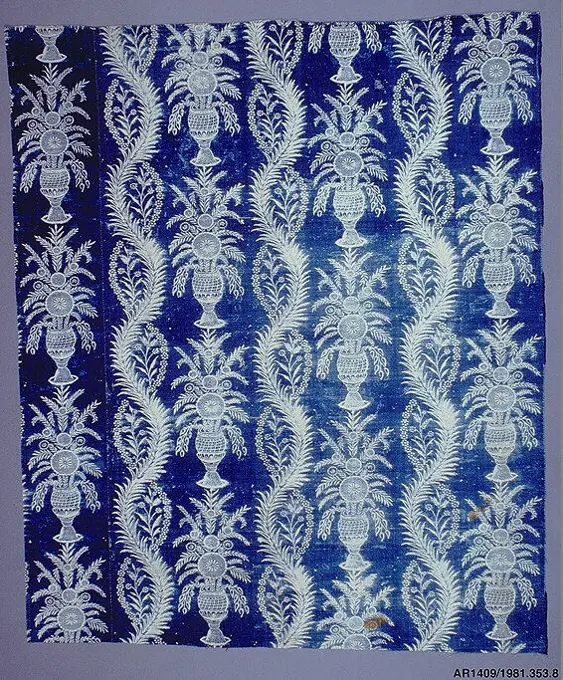
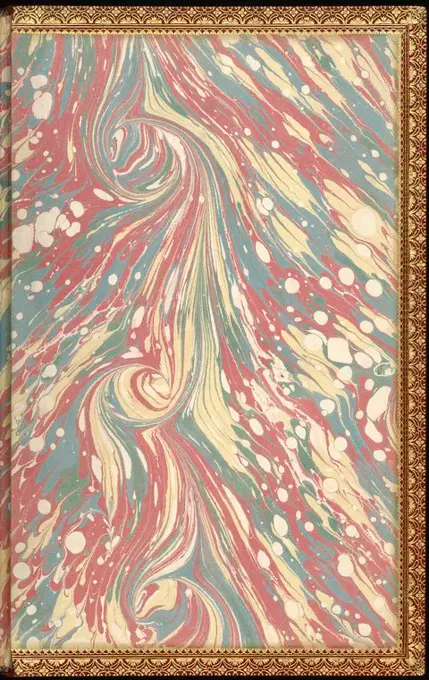
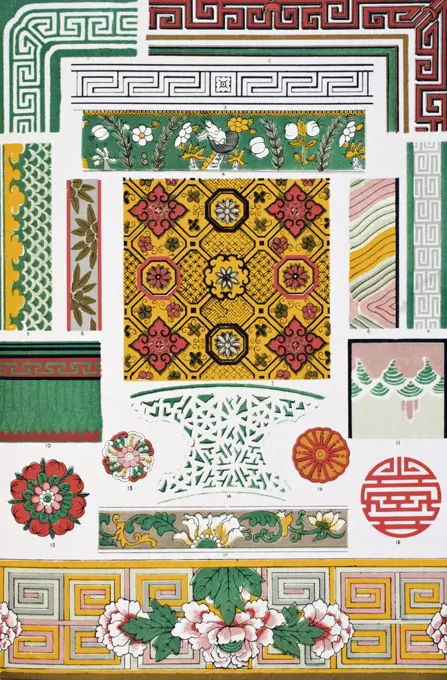
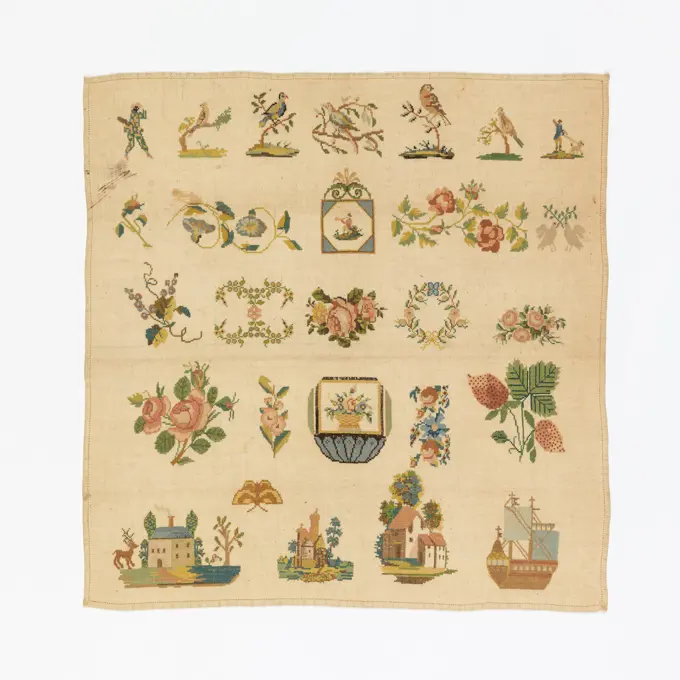
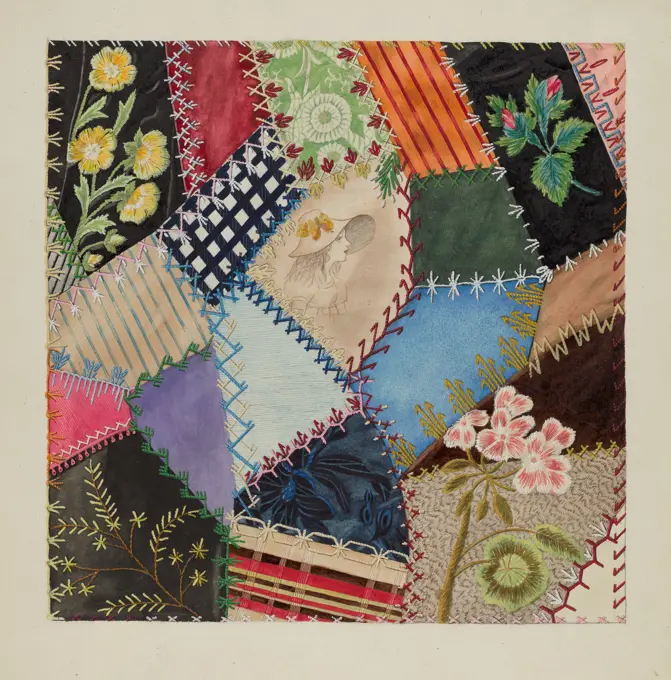
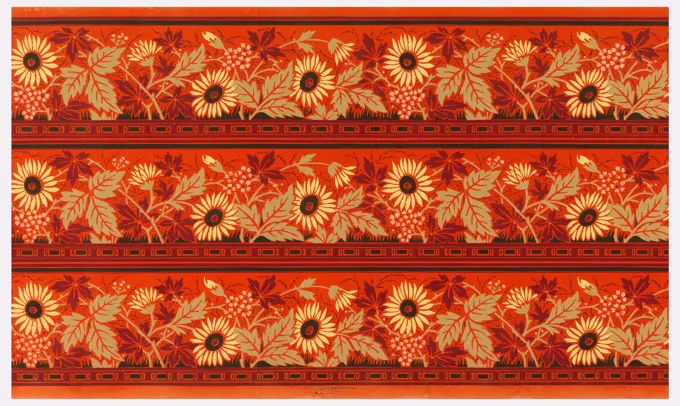
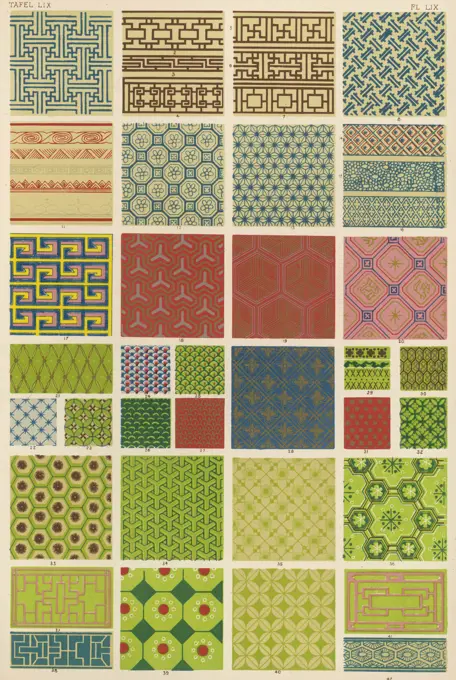
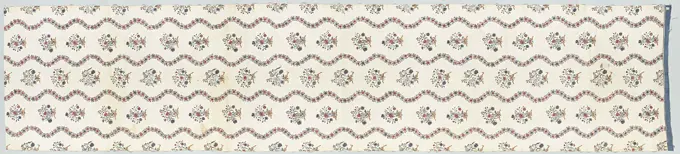
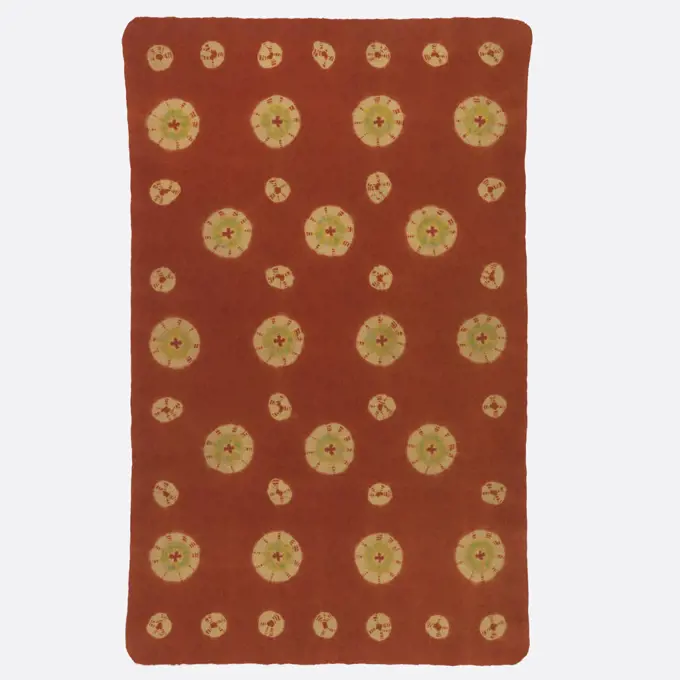
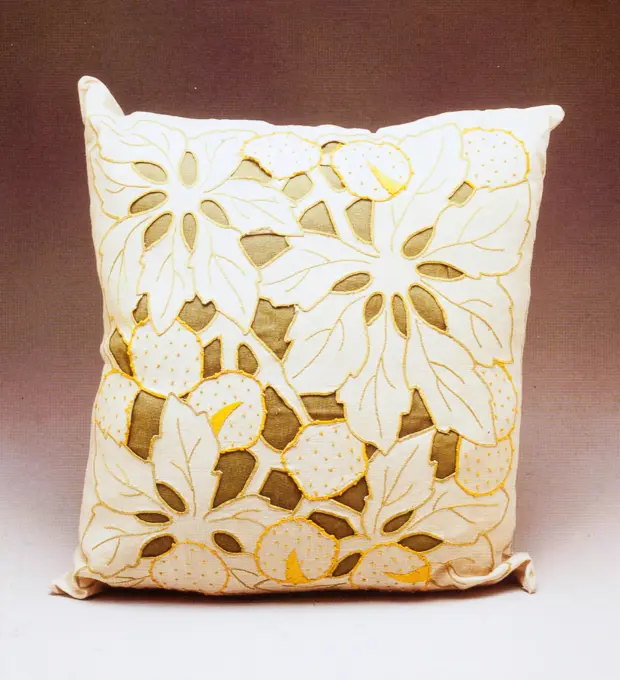
Fragments, Medium: silk Technique: woven, ca. 1730, woven textiles, FragmentsSidewall, Block printed and flocked paper, Red flocked floral paper used in the hall. Diaper pattern composed of foliage and bow knots with tassels, with inset floral bouquets in vases., USA, 1905, Wallcoverings, SidewallSidewall (USA); block-printed; 18 x 15 cm (7 1/16 x 5 7/8 in.)Bird, 1877-78. Manufacturer: Morris & Co. Designer: William MorrisZakdoek van batist met vier losse gevederde bladeren met rozetbloempje in elke hoek en afgezet met een rand Valenciennes-kant.Natural batist handkerchief with embroidery - whiteware - and finished around with a clust side: Valenciennes-side. Square model with wavy edges and rounded corners. Four loose feathered leaves are embroidered in every corner with one small rosette flower. The same leaf with flower is in the middle along each side. The pattern in the lace edge consists of one row of ringed snowflakes, in a square valenciennes ground. The handkerchief is saved with a different handkerchief in a sachet.Piece 18th century French. Piece 215693Piece 18th century Japan. Piece. Japan. 18th century. Silk / Compound weave. Edo period (1615-1868). Textiles-WovenFragment. Spain. Date: 1601-1700. Dimensions: 16.5 x 28.9 cm (6 1/2 x 11 3/8 in.). Brocaded silk, plain cloth. Origin: Spain. Museum: The Chicago Art Institute, Chicago, USA.Batist handkerchief all around with a wide edge application side with C-Volute and spring-shaped leaf, anonymous, c. 1850 Batist handkerchief all around with a wide edge of natural -colored Brussels Application side: bobbin lacquered on mechanical tulle with a straw pattern of moesjes. Square model with cross -shaped batisten center piece. Repetitive motif with a rosette flower under which a large spring -shaped leaf hangs and a branch with small leaves. At the bottom of the magazine a lying C-Volute on which five lobes hang. Motives in linen battle with thicker contour threads. Decorative stitches (needle side stitches) in, among other things, the C-Volute. The scalloped bottom edge stems from the pattern with the leaf and the lobes. Brussels cotton (textile). Brussels Applied Batist handkerchief all around with a wide edge of natural -colored Brussels Application side: bobbin lacquered on mechanical tulle with a straw pattern of moesjes. Square model with cross -shaped batisten centeFeathered Star pattern quilt with chintz appliques ca. 1860 American The main ground of this quilt is dark blue calico pieced into feathered stars. The voids in between the stars are of white cotton fabric that has been appliquéd with a variety of flowers that have been cut from chintzes. The edging is of a second dark blue calico. The piece is decorated with very fine quilting in various grid and arc patterns and is completely hand stitched.. Feathered Star pattern quilt with chintz appliques. American. ca. 1860. CottonEmbroidered Square, 19th century. Turkey, 19th century. Embroidery: silk, gold and silver filé on linen tabby ground; average: 83.9 x 81.3 cm (33 1/16 x 32 in.).Sidewall (USA); Manufactured by Carey Bros. W.P. Mfg. Co.; machine-printed paper, liquid mica; 93 x 49 cm (36 5/8 x 19 5/16 in.)Textile; Manufactured by Schwartz-Huguenin; cottonCeiling Paper (USA); Manufactured by Maxwell & Co., S.A. (United States); machine-printed paper, liquid mica; 75 x 49.5 cm (29 1/2 x 19 1/2 in.)Sample book page, Medium: cardboard, linen, silk, metallic Technique: linen embroidery with ground cloth dissolved Examples of embroidery on net produced by the Schiffli machine Metallic embroidery on net Machine-made openwork in imitation of hand-embroidered net Mostly floral and a few geometric patterns, some designs described as 'Spanish' Imitation hand-made filet Machine filet Imitation filet crochet Ploven (burnt-out lace) Fancy curtain lace made on the Levers machines Real filet (handmade) next to Machine-made filet Spotted curtain nets, made chiefly at Nottingham, England and Caudry, France., Samples of machine-made openwork and several examples of hand made lace mounted on boards. They imitate hand-embroidered net, crochet, or needlepoint. All are floral patterns plus a few of early 1920's geometric style., 'Embroidered net' produced by the Schiffli Machine., USA, ca. 1910, sample books, Sample book pageSampler (England); Embroidered by Thomizan Thomson (English); silk embroidery on wool foundationFragment striped, multicolored mexicaine, anonymous, c. 1750 - c. 1780 A fragment of white and blue speckled striped side. In which colored bouquets. NOTE: MEERSHIP; 0.7 cm, plain binding, striped. France silk A fragment of white and blue speckled striped side. In which colored bouquets. NOTE: MEERSHIP; 0.7 cm, plain binding, striped. France silkPattern of Chrysanthemum, Anonymous, 1860 - 1930 decorated paper  Japan Japanese paper (handmade paper). paint (coating)  flowers ~ ornament. flowers: chrysanthemumFragment, Medium: silk Technique: embroidered in satin stitch, Open tabby black silk square embroidered, mostly in satin stitch, in white, red, and yellow silks. Bird and flower design., China, 19th century, embroidery & stitching, FragmentVelvet brokaat with pomegranate pattern of gold on wine red, c. 1500 - c. 1525 Velvet brocate with pomegranate pattern of gold on wine red. Texture: The Pole is intersected in two heights, with gold shot and partly cruified. Pattern: rows of pointed Boogranken Contoured with closing leaves; On the strikers a single pomegranate, surrounded by seven -lobe leaves, concentrically of red and gold. The lobes are acolade -shaped; The Golden Lobben have final pieces from Klaverblad. Pointed Boogranken grow again from the tops of the Zevenlobbig, so that various fields arise, in the middle of which a pomegranate. Mounting: The piece consists of three connected dust widths. On the dismantled lining a crowned brand V: The piece served as a throne sky of Queen Victoria. Italy velvet (fabric weave) Velvet brocate with pomegranate pattern of gold on wine red. Texture: The Pole is intersected in two heights, with gold shot and partly cruified. Pattern: rows of pointed Boogranken Contoured with closinPurse (France); silk, metalTextile Swatches Onondaga Silk Company, Inc. (1925-1981). , 1948-1959. Silk, a: 42 1/4 x 23 in. (107.3 x 58.4 cm).    1948-1959Needlepoint (Point de Gaze) Lace Handkerchief, 19th century. Belgium, Brussels, 19th century. Linen center with border of needlepoint lace; overall: 35.6 x 35.8 cm (14 x 14 1/8 in.).Ribbon, 19th century, 27 5/16 x 5 5/8 in. (69.37 x 14.27 cm), Silk; printed, England, 19th centuryThirteen-patch block quilt with Japanesque backing fabric Unknown ca. 1886 The top of this large cotton quilt is made up of with square blocks, each set on point to form diamonds. Each block is composed of thirteen small squares of different printed colored cottons, surrounded by triangles of white fabric to make up the diamond. In between the blocks, there is sashing of dark blue cotton printed with a small white floral pattern. At the center of the quilt, there is one diamond that is decorated with an eight-pointed star. The quilts edges are bound with a red patterned cotton. Of particular interest is the quilts backing fabric, which is a bold large-scale Japanesque pattern of "cheater cloth" (or printed imitation patchwork,) that shows repeating scenes of kimono-wearing Japanese ladies in exotic landscapes, as well as bird, butterfly and fan decorations. American cotton printing was at its zenith of design and quality of printing in the 1880s. Since rolls of this type of fabric haveSample early 19th century French. Sample 224741Medieval ornamentLength 1850s French. Length 229778Textile; silk; Warp x Weft: 59 x 59 cm (23 1/4 x 23 1/4 in.)Sampler, Medium: cotton, linen Technique: plain weave bobbin lace, Plain white square with lace border with different mesh ground every three inches., Europe, early 19th century, embroidery & stitching, SamplerEmbroidery, 19th century. Back of a purse, embroidered with silk small stitch,  with floral motifs.Embroidered unknownFrieze (USA); machine-printed paper, liquid mica; 92 x 49.5 cm (36 1/4 x 19 1/2 in.)Fragment from Bedcover (Crazy Quilt Block) Made 1874-1894 United States. Silk, in a variety of weaves including cut velvet weave; pieced; embroidered in silk threads in a variety of stitches; backed with cotton, plain weave; lined with silk, satin weave .Panel, Tin-glazed earthenware, underglaze manganese decoration, Tile from upright rectangular panel of tiles; dark purple (manganese) on white ground showing arched framework; oval cartouche bearing double monogram (probably Lubert Adolf Torck), supported by pair of nude amors; pair of small amors holding crown above, borne by pair of female terms; surrounded by leafscrolls and foliations, with pair of flower-filled urns; top center, lunetted amor's head pendented with rosetted lattice cartouche., To be used in Rozendaal Castel. Intended to be viewed inset into a wall- indicated by the inclusion of a trompe-l'oeil marbleized edge that surrounds three sides of the panel., Possibly Rotterdam, Holland, Possibly Delft, Netherlands, ca. 1725, tiles, Decorative Arts, PanelBack doubleur. 1900. Bourget, Paul (1852-1935). bindings (gathered matter components), Book covers. Spencer Collection. BookbindingFragment, Medium: silk Technique: supplementary warp pile (velvet), cut and uncut, Four fragments of cut and uncut silk velvet in small scale stylized patterns., Italy, 16th-early 17th century, woven textiles, FragmentQuilt. Textile: Probably India for the American market; Quilt: United States, Connecticut, circa 1760-1780. Textiles; quilts. Cotton plain weave, resist painted and blockprinted and dyedCeiling Paper (USA); Manufactured by Maxwell & Co., S.A. (United States); machine-printed paper, liquid mica; 85.5 x 49 cm (33 11/16 x 19 5/16 in.)Field of forty -eight tiles with birds, anonymous, c. 1640 - c. 1660 Field of forty -eight tiles (8 x 6) with multicolored (blue, green, orange, yellow, purple and gray) birds on a ground. In the corners, a lily. Netherlands earthenware. tin glaze majolica Field of forty -eight tiles (8 x 6) with multicolored (blue, green, orange, yellow, purple and gray) birds on a ground. In the corners, a lily. Netherlands earthenware. tin glaze majolicaMedieval ornamentSteel spancing material to the design of Theo Nieuwenhuis in Passe-partout, Theo Nieuwenhuis, c. 1909 - c. 1924 Four steel spancing material from jacquard -woven cotton designed by Theo Nieuwenhuis. In original passe-partout with the name of designer and the name of manufacturer at the top left. Four designs with a floral pattern in the color combinations: golden yellow impact on white chain; dark green impact on mustard yellow necklace; brown -red impact on red chain; Gold -yellow necklace on light green chain. Netherlandsmaker: Helmond Staal: Cotton (Textile). PASE-PARTOUT: Cardboard jacquard Four steel spancing material from jacquard -woven cotton designed by Theo Nieuwenhuis. In original passe-partout with the name of designer and the name of manufacturer at the top left. Four designs with a floral pattern in the color combinations: golden yellow impact on white chain; dark green impact on mustard yellow necklace; brown -red impact on red chain; Gold -yellow necklace on light greenFront doublure.. 1899 - 1902. bindings (gathered matter components), Book covers. Spencer Collection. BookbindingFragments, six pieces, of white textile with print and embroidery, c. 1700 - c. 1940 Fragments, six pieces, of white textile with print and embroidery.  silk printing / embroidering Fragments, six pieces, of white textile with print and embroidery.  silk printing / embroideringGobelin cover;  1. PO. 20th century (1901-00-00-1950-00-00);Tiles with carnation motifs, Casa Vicens Gaudi, Barcelona, Spain, EuropeGenevieve Sherlock, Hitchcock Chair, c 1940 Hitchcock ChairPiece 18th century Japan. Piece 71854Elizabethan ornamentTextile; silk, metallic threadSunburst Quilt. Artist: Artist Unknown , American. Culture: American. Dimensions: 79 1/2 × 65 1/2 in. (201.9 × 166.4 cm). Date: ca. 1835. Museum: Metropolitan Museum of Art, New York, USA.Fragment; meduim: silk and metallic; Warp x Weft: 19.7 x 15.3 cm (7 3/4 x 6 in.)Indian ornamentTextile; cottonEmbroidered Handkerchief, late 19th century. Philippines, late 19th century. Embroidery in silk on pineapple cloth; average: 32.4 x 33 cm (12 3/4 x 13 in.).Fragment sits with flower branches and springy leaves. Fragment Sits with a decor of flower branches and here and there springy leaves. Self side at the top.Domino Paper (France); block-printed, stencilledTextile (Germany)Sampler (Netherlands); silk embroidery, linen foundationGreek Ornament and Etruscan OrnamentTextile (France); cotton; Warp x Weft: 27.5 x 41.5 cm (10 13/16 x 16 5/16 in.) Repeat H x W (straight): 21.6 x 21.6 cm (8 1/2 x 8 1/2 in.)Indian ornamentBedcover (Bride's Quilt). United States. Date: 1861. Dimensions: 245.1 x 195.6 cm (96 1/2 x 77 in.). Cotton, plain weave, pieced and quilted; appliquéd with cotton, plain weave, printed; backed with cotton, plain weave. Origin: United States. Museum: The Chicago Art Institute, Chicago, USA.Piece 18th century French. Piece 229707Tegel. .Glass Fragment 15th century European. Glass Fragment. European. 15th century. Colorless glass. Glass-StainedMedieval ornamentTrimming (France); silkSample early 19th century French. Sample 224671Back doublure.. bindings (gathered matter components), Book covers. 1825 - 1826. Spencer Collection. BookbindingMaterials from Quilt. Dated: c. 1936. Dimensions: overall: 28 x 23 cm (11 x 9 1/16 in.). Medium: watercolor, gouache, and graphite on paperboard. Museum: National Gallery of Art, Washington DC. Author: Dorothy Posten.Chinese No 3 Plate LXI From The Grammar of Ornament by Owen Jones published by Day & Son London 1865Fragments, Medium: silk Technique: plain weave patterned buy supplementary warp floats and supplementary weft floats, serpentine bands with blossoms on peacock green ground., 18th century, woven textiles, Fragmentsfloral ornamentvintage knitting craftsmanship - needlework by Maltese bobbin laceSampler, Medium: silk embroidery on cotton foundation Technique: embroidered in eyelet, cross, marking cross, knot, chain, and running (pattern darning) stitches on plain weave foundation Label: Linen embroidered with silk in eyelet, cross, marking cross, knot, chain, and pattern darning stitches, Eight pattern darning crosses and one darning corner. Central cross arranged as a star, surrounded by initial and crowns., Netherlands, 1839, embroidery & stitching, SamplerSampler (Italy); silk and cotton embroidery on linen foundationflowers iconsFragment; silkFragment ; silkVintage card with floral design, peach flowers on green. Vector illustration.Beautiful textileTextile; cottonEdith Towner, Patchwork Quilt (Section), c 1937 Patchwork Quilt (Section)Frieze (USA); machine-printed paper; 234 x 49.5 cm (92 1/8 x 19 1/2 in.)Cotton sheet in Jaunpur  Uttar Pradesh  India Copyright: xAnilxDave/DinodiaxPhotoxBorder (USA); block-printedDesigns from porcelain  and from paintings         Date: 1868Purse (France); silk, metalField of twelve tiles with leaf pattern, anonymous, c. 1610 - c. 1625 Field of twelve tiles (4 x 3) with multicolored (blue, yellow, green and orange -brown) painted leaf patterns and eight sides. Netherlands earthenware. tin glaze majolica Field of twelve tiles (4 x 3) with multicolored (blue, yellow, green and orange -brown) painted leaf patterns and eight sides. Netherlands earthenware. tin glaze majolicaSits met bloemslingers en boeketten.Motif of winding flower refrences. Since staggered, strict batches in different shades of red, blue, yellow and green on white fond. Exceptional with this piece is the twill binding. At the end of the fabric is an illegible stamp in blue / white on the blue edge.Sampler (Italy); silk, linen, and cotton embroidery on linen foundationBorder (USA); block-printedPaper cutMosen, Medium: wool Technique: felted and patterned with tied-resist dyeing (shibori) Label: felted and tie-dyed wool, Rectangular rug made of wool which is felted, then patterned with tied resist dyeing, leaving large and small dots of yellow in a deep red-orange ground. Touches of green applied by brush. A mosen is a type of rug used in Japanese tea ceremonies., China, late 19th century, printed, dyed & painted textiles, MosenChild's Quilt, 'Snowflakes with Stars'Napkin (from a set of table linens) Belgian late 19th centuryField of nine PompaDourtes with rosettes and pomegranates, anonymous, c. 1600 - c. 1625 Field of nine Pompaadourtes (3 x 3) each with a multicolored (blue, orange, green and yellow) rosette surrounded by pomegranates within a four -pass frame. In the corners, an ornament in filling technique. Netherlands earthenware. tin glaze majolica Field of nine Pompaadourtes (3 x 3) each with a multicolored (blue, orange, green and yellow) rosette surrounded by pomegranates within a four -pass frame. In the corners, an ornament in filling technique. Netherlands earthenware. tin glaze majolicaBorder (France); block-printed on paper; Repeat H x W: 46.5 × 49.5 cm (18 5/16 × 19 1/2 in.)Chestnut' pillow, c. 1910, 17 x 15 1/2 x 5 3/4in. (43.2 x 39.4 x 14.6cm), Linen, United States, Arts and Crafts