Colorful Historical Textiles

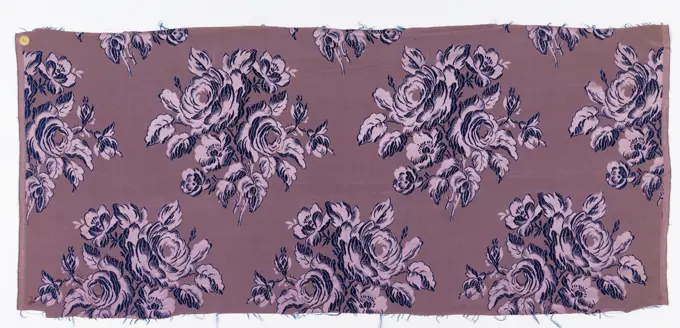
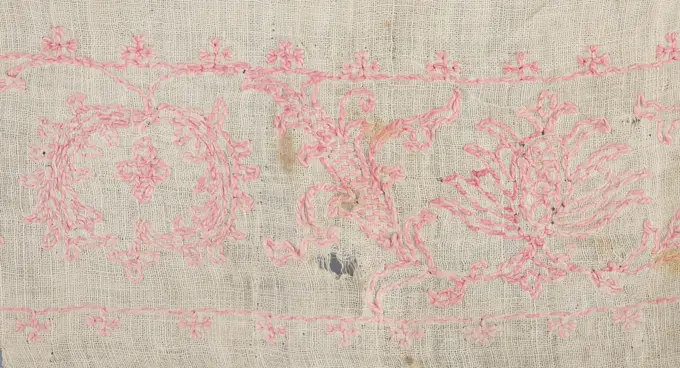
A collection of intricately designed textile fragments from the 16th to 18th centuries, featuring floral and geometric patterns in vibrant colors and luxurious materials.

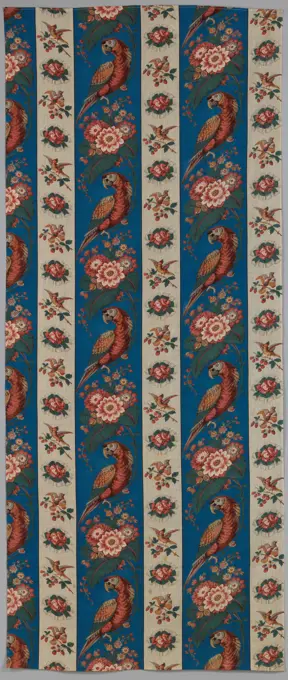
Fragment of a multi -colored seals, anonymous, 1770 - 1780 A silk tissue with blue and cream stripes. On the blue stripes is a pendulum, in which a continuous slender with black stems and white flowers. Loose branches of white and blue flowers are partly woven on the blue and white stripes. Note: Self -sides; 0.3 cm Effenbinding (multiple colors in one jump). France silk A silk tissue with blue and cream stripes. On the blue stripes is a pendulum, in which a continuous slender with black stems and white flowers. Loose branches of white and blue flowers are partly woven on the blue and white stripes. Note: Self -sides; 0.3 cm Effenbinding (multiple colors in one jump). France silk
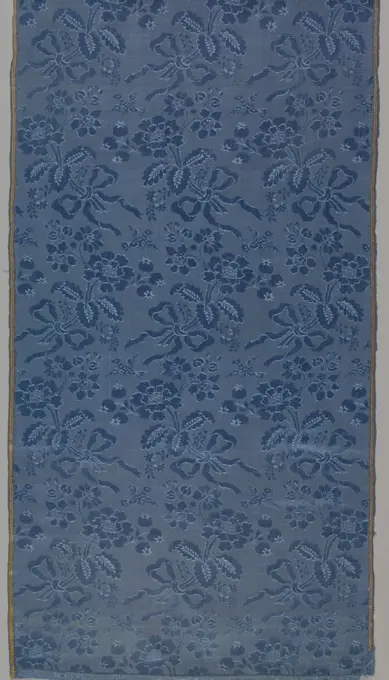
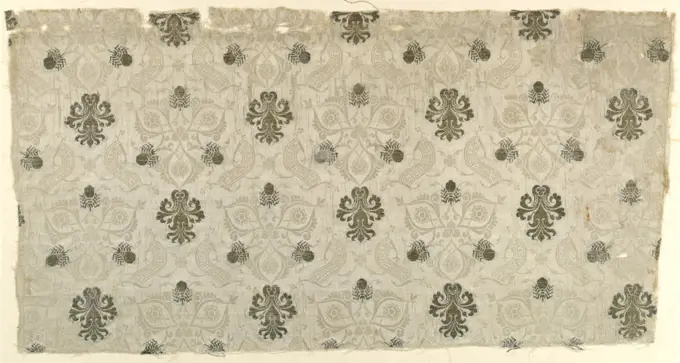
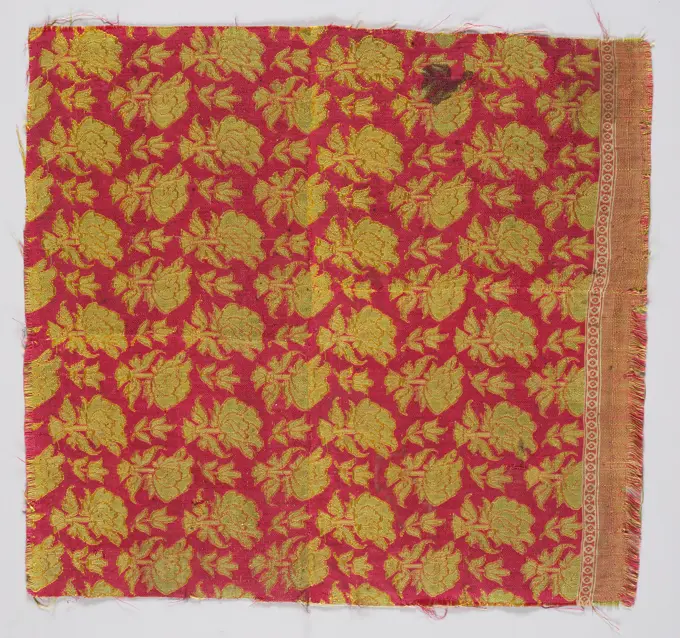
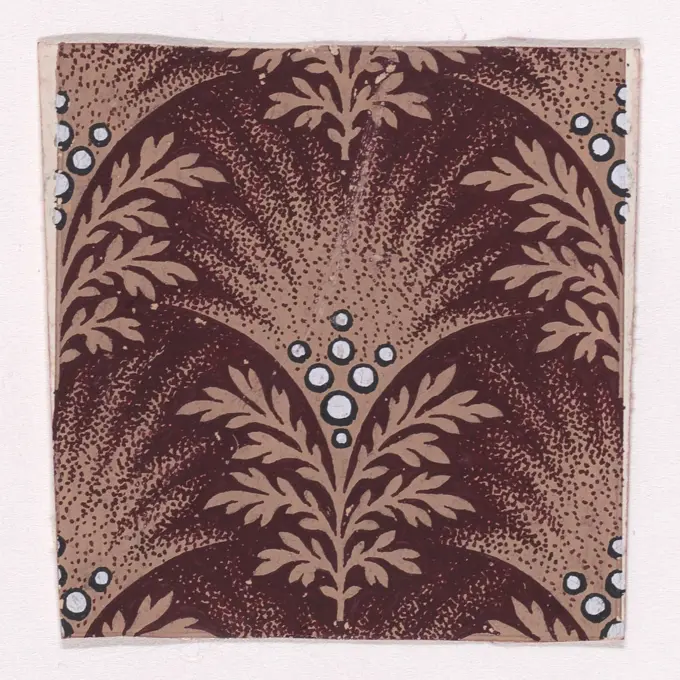
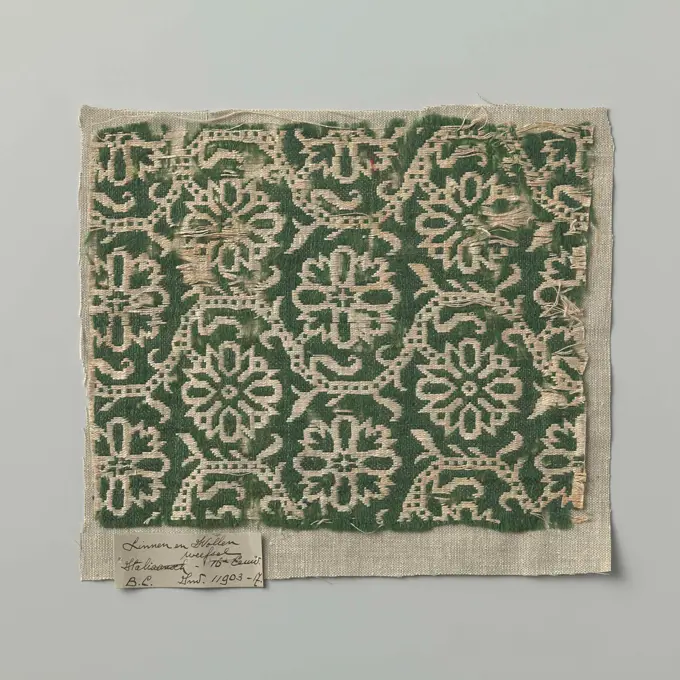
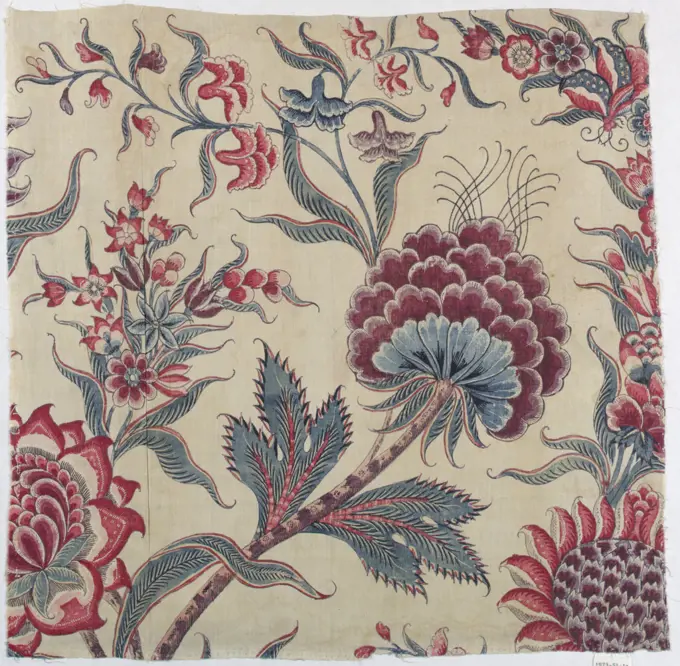
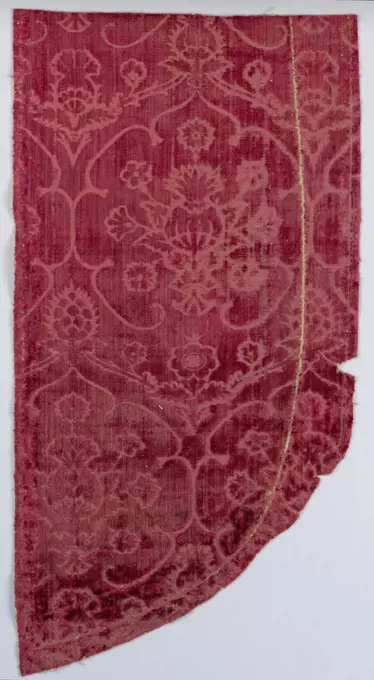
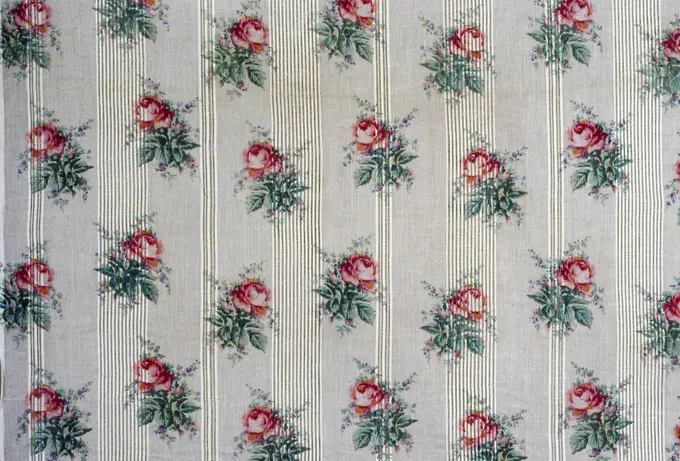
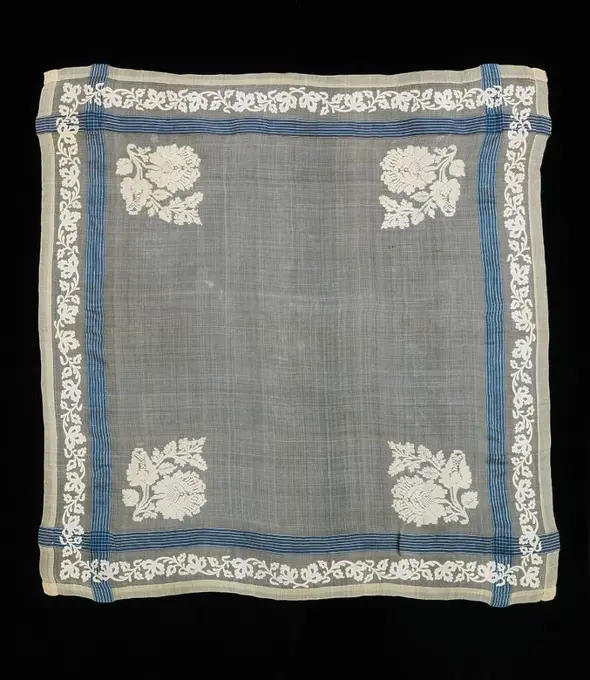
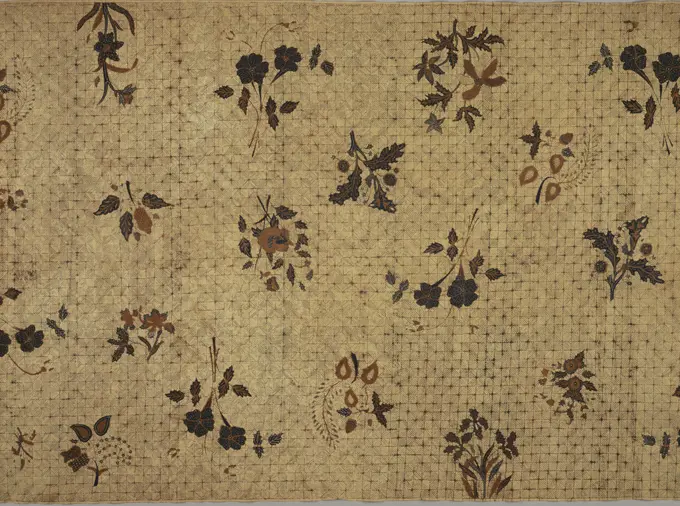
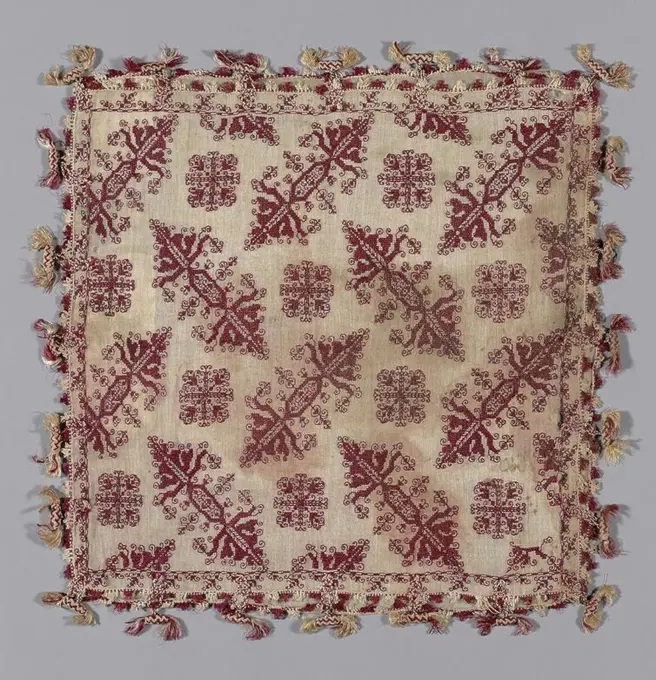
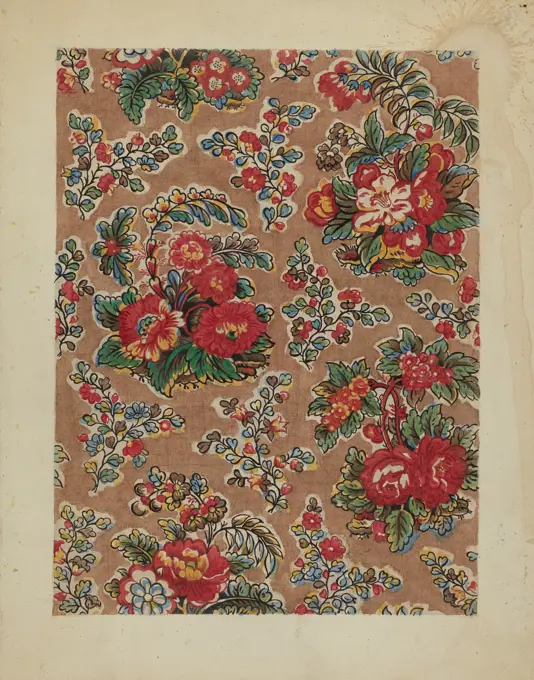
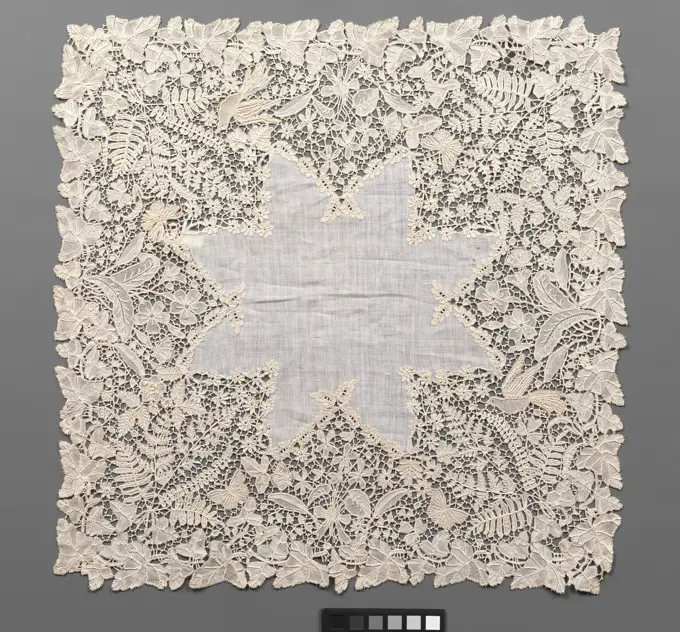
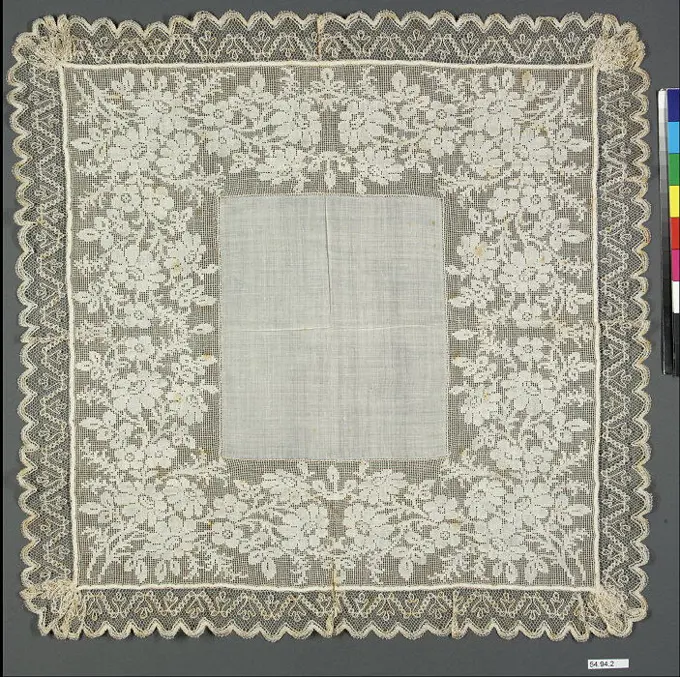
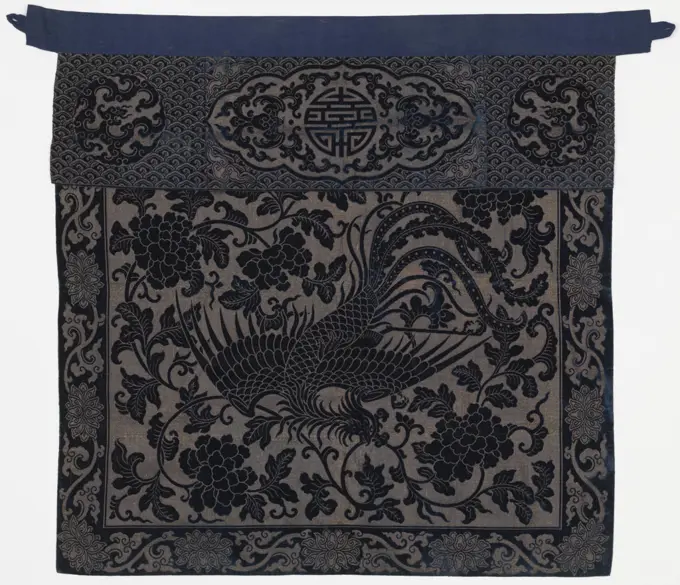
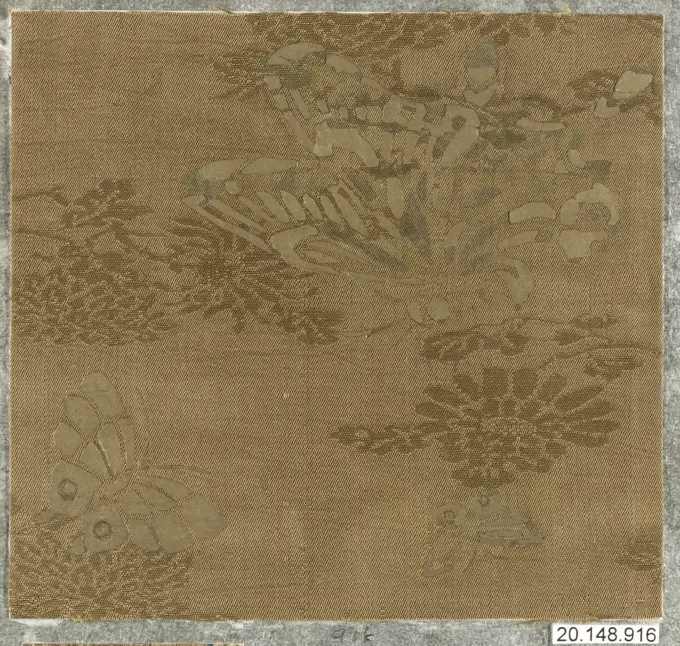
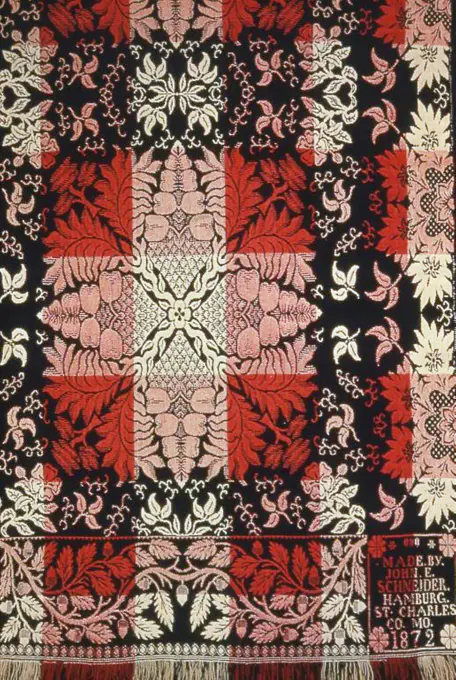
Coverlet Made 1872 Missouri. Wool, plain weave double cloth; main warp fringe; woven on loom with Jacquard attachment; two loom widths joined . John E. Schneider (Weaver)Fragment; silk; Bequest of Richard Cranch Greenleaf in memory of his mother, Adeline Emma Greenleaf; 1962-56-121Bedcover (Cockscomb, Rose Tree and Pineapple Quilt). United States. Date: 1830-1850. Dimensions: 218.9 x 195.4 cm (85 1/2 x 76 7/8 in.). Cotton, plain weave; appliquéd with cotton, plain weave, printed; backed with cotton, plain weave; quilted. Origin: United States. Museum: The Chicago Art Institute, Chicago, USA.Handkerchief ca. 1875-80 Belgian. Handkerchief 226650Textile fragment 1700-1899 Russian. Textile fragment 173387Textile, Medium: silk Technique: satin weave, Dark blue taffeta with a pattern of bouquets of flowers., France or Spain, 1750-1800, woven textiles, TextileFragments, Medium: silk Technique: plain weave with supplementary warps and supplementary wefts, Scattered floral sprigs on pink and white stripes., 1750-1800, woven textiles, FragmentsSampler, Medium: silk, metallic Technique: brocaded 5 harness damask, Trefoils, each enclosing a rose flanked by diagonal banderolles with debased Islamic inscription. Brocaded metallic palmettes and horsehoe crabs or insects., Italy, 14th century, woven textiles, SamplerFragment, 18th century, 10 1/8 x 9 1/4 in. (25.7 x 23.5 cm), Silk; brocade, 18th centuryPillow Sham with Embroidering Yarns. Made by the great-great grandmother, Jane Bolas Vaughan, or great-great-great grandmother, Elizabeth Ottiwell Vaughan, of Edward Goldisborough Chambre Vaughan, 1834-1914; England, Shropshire, Lobbington, Ellesmere, Burlton Hall. Date: 1675-1725. Dimensions: 46.6 x 82.1 cm (18 3/8 x 32 3/8 in.). Linen, plain weave; underlaid with cotton, plain weave; embroidered with silk in back, chain, open chain, leaf, Roman, Roumanian, satin and stem stitches; edged with linen, plain weave tape. Origin: Shropshire. Museum: The Chicago Art Institute, Chicago, USA.Bag, 18th century, Wool, India, 18th centuryFragments, silk woven, 18th century, woven textiles, FragmentsChintz, Medium: cotton Technique: mordants (2 reds, purple and black) applied by brush and pen; madder dyed; blue apparently brushed over a crackled resist; chintz on plain weave, Fantastic scrolling shapes with elaborate floral bouquets., probably India, 18th century, printed, dyed & painted textiles, ChintzTextile Design with Alternating Palmettes Decorated with Pearls Flanked by Bundles of Leaves 1840 Anonymous, Alsatian, 19th century Rectangular sheet of paper with a textile design from a group, dated 1840, made in Mulhouse, Alsace, which was an important nineteenth-century center for textile production in the Haut-Rhin region of France. The design consists of alternating palmettes rendered with stipples of dark reddish-brown color over a tan base, decorated with eight pearls of white color, and flanked by a bundle of six branches with leaves of light tan color, all over a dark reddish-brown base. Only one full motif can be seen in the sheet, with only fragments of the repeats seen in the continuation of the pattern around this central palmette.. Textile Design with Alternating Palmettes Decorated with Pearls Flanked by Bundles of Leaves. Anonymous, Alsatian, 19th century. 1840. GouacheFragment; linen warp, cotton weft; Warp x Weft: 25.5 x 24 cm (10 1/16 x 9 7/16 in.) Repeat H (half-drop): 21.6 cm (8 1/2 in.)Sidewall And Border (France); block-printed on handmade paper; 54 x 44 cm (21 1/4 x 17 5/16 in.)Fragment figurated tissue in linen and wool. Fragment with dark green fond in white a pattern of rosettes, interspersed with winding tape work.Coverlet Made 1841 United States. Cotton and wool, plain weave double cloth; woven on loom with Jacquard attachment; two loom widths joined . Charlotte Purchase Thornton (Weaver)Piece 18th-19th century Japan. Piece. Japan. 18th-19th century. Silk. Edo (1615-1868) or Meiji period (1868-1912). Textiles-WovenFragment with on white fond. Fragment with light red stripes and winding tires on white fond.Bliżej Kultury unknownCeiling paper, Maxwell & Co., S.A., Chicago, Illinois, USA, Machine-printed paper, Eight acanthus leaf scrolls branch off from a square formed by four floral sprigs. Four floral bouquets or sprigs separate acanthus scrolls. A petite flourish fills each void. Printed on tan or off-white ground., USA, 1905-1915, Wallcoverings, Ceiling paperPiece 18th-19th century Japan. Piece 66639Textile, Medium: cotton Technique: printed on plain weave, glazed, Bouquet of roses and pink ribbons on an off-white ground. Probably reprinted using blocks from 1840-1860., England, late 19th century, printed, dyed & painted textiles, TextileTextile, Medium: cotton Technique: printed by engraved roller on plain weave (red and black), block printed on plain weave (yellow), painted (blue/green), Half-drop repeat of large blossoms in profile on a red background. Outlines of pattern are black. Yellow (and therefore green) very faded. The edges of fabric do not line up with a pattern axis., Europe, early 19th century, printed, dyed & painted textiles, TextilePiece 18th century Japan. Piece 71779Chintz fragments, Medium: cotton Technique: mordants for reds, purples, black and browns applied by pen and brush (sometimes over resist); blue applied over resist; yellow applied over blue (chintz) on plain weave, Four fragments of a larger design of exotic blossoms, tree trunks, and birds on a white ground., India, 18th century, printed, dyed & painted textiles, Chintz fragmentsFragment, Medium: crewel wool on cotton Technique: long and short satin, and stem stitch embroidery on plain weave, Pieced fragment of sheer white muslin embroidered in small scale scattered designn of garden flowers and butterflies, in polychrome wools. Satin, long and short, stem stitches., France, early 19th century, embroidery & stitching, FragmentFragment, Medium: silk Technique: supplementary warp forming raised pile in 4&1 satin foundation, Pomegranates within lobed circles with floral decoration in red. Fragment was probably part of a chasuble at one time., 15th-16th century, woven textiles, FragmentLeaf with lanes pattern with flower branches between flower vines, anonymous, c. 1700 - c. 1850  Leaf with vertical job pattern with flower branches between winding flower vines. Used as a cover. With label with number: A628.  paper. block printing (relief printing process) ornament derived from plant formsPanel. England, Spitalfields. Date: 1725-1745. Dimensions: 79.6 x 53.3 cm (31 3/8 x 21 in.)Warp repeat: 33.6 cm (13 1/4 in.). Silk, silvered-gilt strips, and silvered- and gilt-metal-wrapped silk, plain weave with supplementary binding warps tying some supplementary brocading wefts. Origin: Spitalfields. Museum: The Chicago Art Institute, Chicago, USA.Panel (Dress Fabric) Made 1840-1860 France. Cotton, stripes of plain weave; warp-float faced twill weaves; plain gauze weave; openwork; roller printed .Handkerchief. Culture: Philippine. Date: third quarter 19th century.The nearly transparent woven pineapple cloth that comprises this handkerchief contains supplementary woven motifs at the corners that are echoed by the intricately detailed and finely cut muslin appliqué border. The cutwork appliqué seen here is very specific to the Philippines. Known as sombrado technique, it is highly painstaking and difficult work and is done on only the finest pieces of pineapple cloth accessories and garments. Museum: Metropolitan Museum of Art, New York, USA.Fragment 17th-18th century Italian. Fragment 230546Fragment (China); silk; Warp x Weft: 10.8 x 22.1 cm (4 1/4 x 8 11/16 in.)Handkerchief with a border needle side with four oval and pearls, anonymous, c. 1870 - c. 1890 Handkerchief with a border of natural -colored needle side, Brussels mesh side. A narrow, partly open, partly closed lace edge runs around a large, cross -shaped centerpiece. It contains four Oval Oval, which are connected by a wavy pearl cord. On the open part are leaf rosettes and flower branches of the plantain. The closed outdoor edge consists of wheels with godron edge and leaves. The inner edge is formed by hollow and convex leaf voltuits. Brussels linen (material) Brussels Gaze Point Handkerchief with a border of natural -colored needle side, Brussels mesh side. A narrow, partly open, partly closed lace edge runs around a large, cross -shaped centerpiece. It contains four Oval Oval, which are connected by a wavy pearl cord. On the open part are leaf rosettes and flower branches of the plantain. The closed outdoor edge consists of wheels with godron edge and leaves. The inner edge is foFragment, Medium: linen, silk Technique: needlework on gauze weave (buratto), Gauze weave embroidered in yellow, green and brown silks in a variety of stitches. Pattern is scrolling forms with leaves and flowers., Italy, 17th century, embroidery & stitching, FragmentKain panjang (long sarong), Medium: cotton Technique: wax resist dyeing (batik) on plain weave, Long sarong (kain panjang) printed with an all-over pattern of sparsely used flower and leaf designs in white-dotted indigo blue and brown on a light tan ground, which is evenly divided into small all-over geometric pattern of diagonally striped squares ('isen' motif)., Indonesia, 19th century, printed, dyed & painted textiles, Kain panjang (long sarong)Julie C Brush, Printed Cotton, c 1942 Printed CottonPillow Cover. Italy. Date: 1601-1700. Dimensions: 48.3 x 47.0 cm (19 x 18 1/2 in.). Linen and silk. Origin: Italy. Museum: The Chicago Art Institute, Chicago, USA.Piece 18th-19th century Japan. Piece 67613Chalice veil ca. 1720 Italian, Venice. Chalice veil 227845Frieze (USA); machine-printed paper; 91 x 49 cm (35 13/16 x 19 5/16 in.)Piece 18th-19th century Japan. Piece 67635Panel, Medium: silk, metal wire, flat metal strips, metal shapes, metal-wrapped silk Technique: plain weave with supplementary warps and continuous and discontinuous supplementary wefts; appliqué of spangles and metal threads; bobbin-made lace at all four edges, Fabric with floral sprays in pinks, greens and metallic heightened by metallic applique. Panel finished with gold colored metallic bobbin lace., France, 1750-1800, embroidery & stitching, PanelSidewall (USA); block-printed; 42 x 3 cm (16 9/16 x 1 3/16 in.)Textile (India); silk, metallic thread; Warp x Weft: 111.1 x 51.9 cm (43 3/4 x 20 7/16 in.)Sidewall - fragment, Machine-printed paper, a) On off-white patterned ground, alternating fleur-de-lis-like motif highlighted and shadowed to appear embossed; b,c) both contain the same design. Diaper pattern with acanthus medallions containing foliate motif. Printed in yellow-green and metallic silver on off-white moire background., b. On gold metallic ground, alternating medallions of metallic silver and gold framed by plumes of gold with grey-blue dots., c. same as 'b' above, USA, 1875-1900, Wallcoverings, Sidewall - fragmentPiece 18th century Japan. Piece 65798Frances Lichten, Patchwork Bedspread, c 1936 Patchwork BedspreadFragment 17th century Italian. Fragment 218813Fragment Of Bed Hanging (France); Manufactured by Clerambault (France); linenFragments; silk, metallic threadTextile; Manufactured by Schwartz-Huguenin; cottonPiece 18th-19th century Japan. Piece. Japan. 18th-19th century. Silk. Edo period (1615-1868). Textiles-WovenFragment, Medium: silk, metallic Technique: woven, Patterned rose ground with polychrome floral design in silks and silver metallic, 1700-1750, woven textiles, FragmentLength ca. 1755 British, London, Spitalfields. Length. British, London, Spitalfields. ca. 1755. Silk and metal thread. Textiles-WovenFragment; silkTextile, Schwartz-Huguenin, Medium: cotton Technique: printed by engraved roller on plain weave, Seven pieces, same design, different colors. A) Ground printed by 'molette' in diamond-shaped design of stripes composed of minute dots in pale blue. Flower clusters in rose and dull greens, printed over background. B) Grey ground and flowers, strong green leaves. C) Grey ground, flowers old rose with green foliage. D) Grey ground, blue flowers, grey foliage. E) grey ground, grey flowers, blue-green foliage. F) lighter grey ground, flowers with strong green foliage. G) Greey ground, blue flowers, green foliage., 1851-63, printed, dyed & painted textiles, TextileHandkerchiefs (one of two) ca. 1850 Brazilian. Handkerchiefs (one of two) 227759Ceiling Paper (USA); Manufactured by Cresswell & Washburn Ltd; machine-printed paper, liquid mica; 83.5 x 48 cm (32 7/8 x 18 7/8 in.)Piece late 18th century French. Piece 223721Woman's necktie 1870-80 French. Woman's necktie 221676Fragment of wool fabric, so called Tibetan” fabric  white background with colourful, naturaIIstic motifs of sprays of roses and other flowers unknownFragment multicolored brochure side. Three fragments multicolored silk tissue. The pattern has multicolored flowers on a blue ground.Textile (France); cotton; Warp x Weft: 73 x 66 cm (28 3/4 x 26 in.) Repeat H x W: 32 × 29 cm (12 5/8 × 11 7/16 in.); Bequest of Elinor Merrell; 1995-50-232Fragment Made 1725-1775 Japan. Silk and gold-leaf-over-lacquered-paper-strip, satin weave with supplementary patterning wefts and self-patterning wefts .Sidewall (USA); machine-printed; 32 x 25.5 cm (12 5/8 x 10 1/16 in.)Linen hat with strip Antwerp pots side, anonymous, c. 1800 - c. 1900 Linen hat with a lace strip. The lace strip is from Antwerp pottery side and has a pattern of a vase with flowers in which two birds cocks. This motif repeats itself and there is a large palmet between the motifs. The hat can be raced by means of a thread. Flanders linen (material). I can lace Linen hat with a lace strip. The lace strip is from Antwerp pottery side and has a pattern of a vase with flowers in which two birds cocks. This motif repeats itself and there is a large palmet between the motifs. The hat can be raced by means of a thread. Flanders linen (material). I can laceLinnamast napkin with volutes with flowers, edge with flower vases, anonymous, 1675 - 1699 Napkin made of white linen with a pattern of volutes with flowers and flower vases in the edges, Brand Kroon H 12 and W. Flanders (Possible) linen (material) damask Napkin made of white linen with a pattern of volutes with flowers and flower vases in the edges, Brand Kroon H 12 and W. Flanders (Possible) linen (material) damaskTextile (France); Manufactured by Schwartz-Huguenin; cottonCeiling Paper (USA); machine-printed paper, liquid mica; 57 x 61.5 cm (22 7/16 x 24 3/16 in.)Fragment (France); linen, cottonPiece 18th-19th century Japan. Piece 67401Sampler made at the Westtown Quaker School. Culture: American. Dimensions: 12 3/4 x 16 3/4 in. (32.4 x 42.5 cm). Maker: Rebecca Marsh (American, born 1791). Date: 1802.This sampler, made by Rebecca Marsh (b. 1791) in 1802, is an accomplished example of a distinctive type of embroidery made only at Quaker schools like the Westtown School in Pennsylvania's Chester County. The Quaker emphasis on simple, yet careful and precise sewing, enabled students from such schools to become some of the best needleworkers in the nineteenth century who often went on to teach embroidery to other young women. Rebecca entered Westtown in June 1802 when she was eleven and stayed until February 1804. Her sampler is related to two other Westtown examples in the Museum's collection (2005.19 and 2005.20), both made by Sarah Thomas (1786-1826) in 1801. Reflecting the Quaker emphasis on practicality, Rebecca only had to master half of each of the "snowflake" motifs that appear around the edges of the sampler bChalice veil. Culture: Italian. Dimensions: 39 x 47 1/2 in. (99.1 x 120.7 cm). Date: late 16th century. Museum: Metropolitan Museum of Art, New York, USA.Fragments of embroidery unknownSampler, Medium: silk embroidery on linen foundation Technique: counted and uncounted stitches; chain, satin and darning stitches on plain weave foundation, Bouquet of flowers including pansy, rose and carnation, surrounded by eight darning crosses of plain weave and twills, within a twisting floral border. The cross at center right is marked S. S., M.C., 1788, England, 1788, embroidery & stitching, SamplerCurtain British 19th century View more. Curtain. British. 19th century. Cotton. Textiles-PrintedScarf Sample (France); silkFragment white silk satin with multicolored flower branches. Fragment white silk tissue with multicolored flower branches.Portion of a Chasuble. Probably made for Piero Soderini (1452-1522); Italy, probably Florence. Date: 1450-1500. Dimensions: 52.7 × 22 cm (20 3/4 × 8 5/8 in.). Silk, satin weave, cut solid velvet. Origin: Italy. Museum: The Chicago Art Institute, Chicago, USA.Art - Taste - Beauty, leaflets of female elegance, June 1929, No. 106, 9th year, p.1. Far Leaf: Pattern of White, Gray, Pink and Red Flowers on Dark Blue Background. Bottom Right in A Framework: R. 14255/3 CREPE OF CHINA PRINTED A.G.B.Sidewall (USA); machine-printed paper; 49 x 39 cm (19 5/16 x 15 3/8 in.)Altar Frontal. Northern Italy, 1730-1740. Textiles; altar cloths. Silk satin with silk and metallic-wrapped-thread embroideryLeaf with spreading pattern of seals and flowers, Anonymous, 1800 - 1900  Leaf with spreading pattern of stylized tendrils over different flowers.  paper. block printing (relief printing process) ornament derived from plant formsBatist handkerchief with Korenaren embroidered in one corner and finished all around with an edge machine, anonymous, c. 1875 - c. 1899 Batist handkerchief with Korenaren embroidered in one corner and finished all around with a double strip of machine side: Machinal Valenciennes side. Square model with rounded corners. Europe linen (material). batiste embroidering Batist handkerchief with Korenaren embroidered in one corner and finished all around with a double strip of machine side: Machinal Valenciennes side. Square model with rounded corners. Europe linen (material). batiste embroideringTextile (England); cottonPiece ca. 1735 French or Italian. Piece 223769Textile 19th century Japan. Textile 68057Textile (France); silk; Anonymous bequest in memory of Albert and Rebecca Elsberg; 1938-82-163-bPanel, Medium: silk and metal-wrapped silk threads on cotton foundation Technique: embroidered on plain weave, Panel pieced from several fragments of embroidery. Design of curving stems, narrow straight leaves and small flowers. Bound with brown silk twill., Turkey, 19th century, embroidery & stitching, PanelHandkerchief second half 19th century Possibly designed by Emma Radford British Emma Radford was a prize-winning lacemaker and designer in her native Devon. Devonshire bobbin lace, commonly known as Honiton lace, comprised individual motifs that were later joined together. Queen Victoria chose Honiton lace for her wedding ensemble in 1840, leading to a boom in its popularity in the mid-nineteenth century. Philanthropists of the period were intent on increasing sales of handmade lace to alleviate the poverty of lacemakers. This movement coincided with the development of a new and uniquely English style of lace that incorporated motifs of highly naturalistic flowers, birds, and insects. The techniques developed to craft three-dimensional effects such as those seen in this piece, sometimes called raised work, were a specialty of Honiton lace workers.. Handkerchief 218374Handkerchiefs (one of two) ca. 1850 Brazilian. Handkerchiefs (one of two) 227758Textile Fragment 16th-17th century. Textile Fragment 454472Fragments of the church tablecloth with red sewing unknownBorderHanging, Medium: silk, gilded paper, cotton lining Technique: cut velvet, Flying phoenix holding curving sprays of tree peony in deep blue cut velvet on a rectangular foundation of tarnished gold. Border of stylized lotus and leaves reserved in gold on deep blue cut velvet ground. Narrow horizontal panel overlaid across top with two vertical pleats. Circular dragon medalliions flanking lobed central medallion with lucky monogram. Faced with blue cotton., China, 19th century, woven textiles, HangingPiece 17th century Japan. Piece 71900Chalice Veil, c. 1600, 22 1/2 x 22 1/2 in. (57.15 x 57.15 cm), Silk, metallic threads, wire, beads, sequins; raised work embroidery, needle lace, England, 16th-17th century, This chalice veil, used to cover the chalice during the mass, was probably made sometime in the early part of the seventeenth century. The overall patterning and general concept of the design are reflective of the Elizabethan style of the mid-to late-sixteenth century. The raised-work embroidery of the peas, pea pods, grapes, and flowers, as well as the rather whimsical placement of butterflies and caterpillars, anticipates the exaggerated raised needlework of the mid-1600s.