My Boards
View Pictures
  • My Boards

Cosmic Imagery and Galaxies

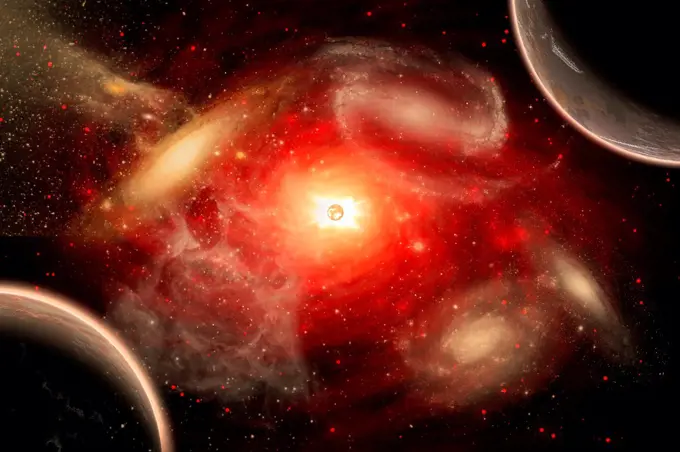
Conceptual space scenes featuring vibrant galaxies, stars, and nebulae with colors like red, blue, and purple illustrating the vastness of the universe.

A conceptual view of part of our vast universe.
213 assets in this story
6145-44861963
New results from NASA's Galaxy Evolution Explorer and the Anglo-Australian Telescope atop Siding Spring Mountain in Australia confirm that dark energy is a smooth, uniform force that now dominates over the effects of gravity.
6188-58505469
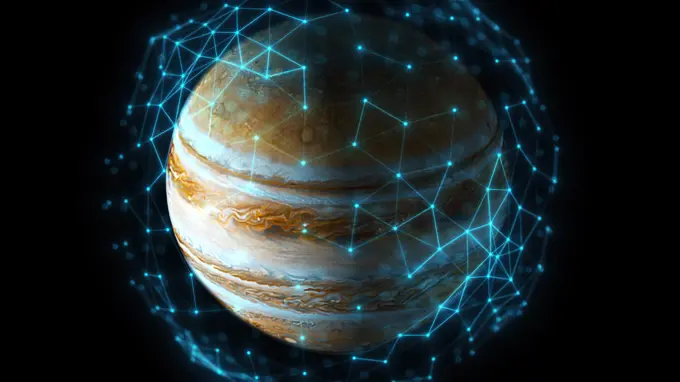
Jupiter with technology Jupiter with technology. Computer generated 3d render Copyright: xZoonar.com/RomanxBudnikovx 21545513
1916-111270822
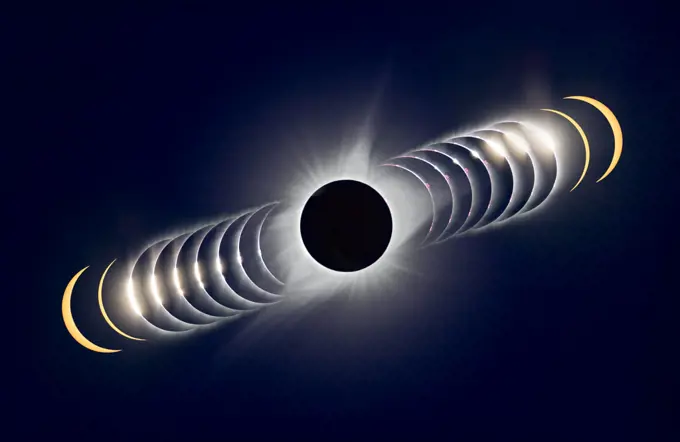
Heres a variation on creating a time-sequence composite of the August 21, 2017 total solar eclipse. In this case, time runs from left to right, from the last filtered partial phases I shot, through unfiltered shots of the rapidly changing last glimmer of sunlight disappearing behind the advancing Moon at “Second Contact,” forming “Bailys Beads, to totality at centre. The sequence continues at right with the Sun emerging from behind the Moon in a rapid sequence at “Third Contact,” followed
6145-45114236
The closest star system to the Earth is the famous Alpha Centauri group. Located in the constellation of Centaurus (The Centaur), at a distance of 4.3 light-years, this system is made up of the binary formed by the stars Alpha Centauri A and Alpha Centauri B, plus the faint red dwarf Alpha Centauri C, also known as Proxima Centauri. This NASA/ESA Hubble Space Telescope has given us this stunning view of the bright Alpha Centauri A (on the left) and Alpha Centauri B (on the right), shining like huge cosmic headlamps in the dark. The image was captured by the Wide-Field and Planetary Camera 2 (WFPC2). WFPC2 was Hubbles most used instrument for the first 13 years of the space telescopes life, being replaced in 2009 by Wide-Field Camera 3 (WFC3) during Servicing Mission 4. This portrait of Alpha Centauri was produced by observations carried out at optical and near-infrared wavelengths. Compared to the sun, Alpha Centauri A is of the same stellar type, G2, and slightly bigger, while Alpha
6145-44917590
This artist's impression shows the orbits of planets and comets around the star 61 Vir, superimposed on a view from the Herschel Space Telescope.
6145-44564602
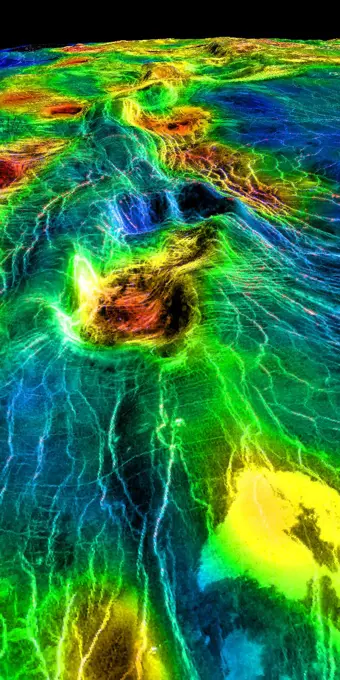
This perspective view of Venus, generated by computer from NASA's Magellan data and color-coded with emissivity, shows part of the lowland plains in Sedna Planitia. Circular depressions with associated fracture patterns, called 'coronae.'
4239-69143488
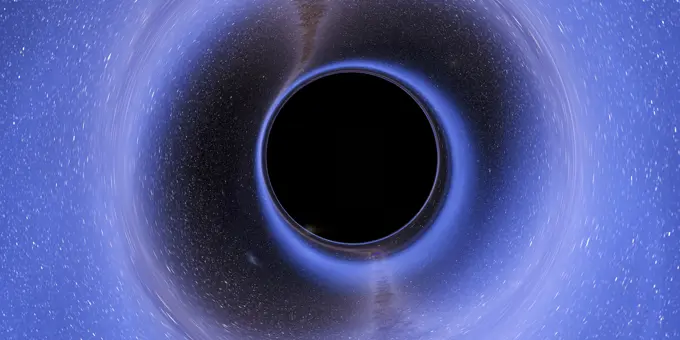
Artist's concept of Sagittarius A, a supermassive black hole.
4239-57497241
Galaxies and stars on screens in white background.
4389-357
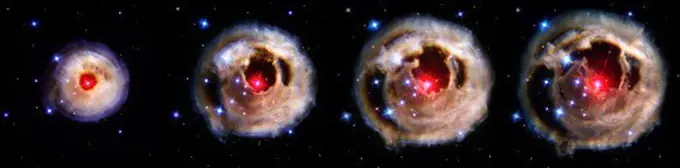
A Dramatic Sequence of a Stellar Outburst
6145-44823628
This artist's concept shows hundreds of brown dwarfs (deep red), expected to be added to the population of known stars in our solar neighborhood. Our sun and other known stars appear white, yellow or red.
6145-44969334
This graphic shows the orbits of all the known Potentially Hazardous Asteroids (PHAs), numbering over 1,400 as of early 2013.
4128-28968410
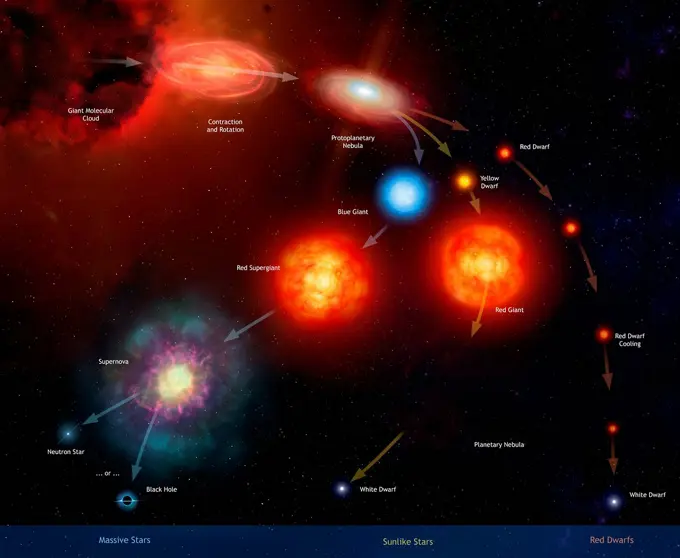
Star life cycles, illustration
4329-169
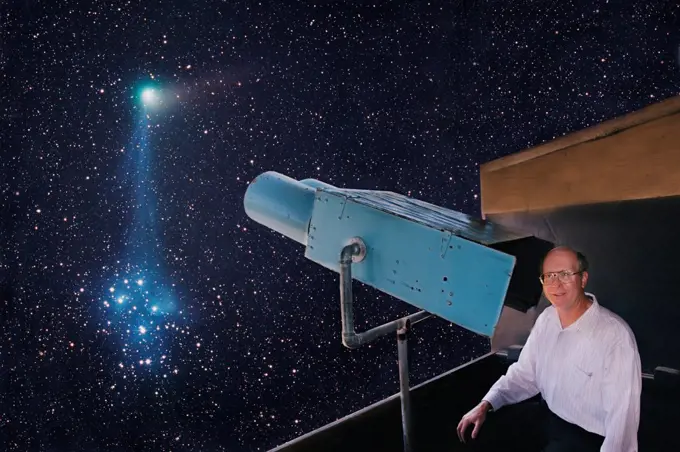
Comet hunter Don Macholtz with this home-made binoculars that he uses to sweep the sky; in the distance is Comet Machholz as it passed by M45, The Pleiades. Digitally composited.
PREVIOUS
of 3
NEXT
2401 S. Ervay, Suite 206
Dallas, Texas 75215
United States
Get Started
Free ResearchMy BoardsMy Cart
For Creators
How To License Your ContentContributor PortalFrame of Mind
Resources
API accessPricing
Contact
+1 866 236 0087help@viewpictures.co.uk Contact form
©2026 View Pictures. All Rights Reserved. -A
This site is protected by reCAPTCHA and Google Privacy Policy and Terms of Service apply.