Cultural Depictions of Divine Figures

Variety of historical religious art depicting divine figures and scenes, showcasing rich colors and intricate illustrations from different cultures.

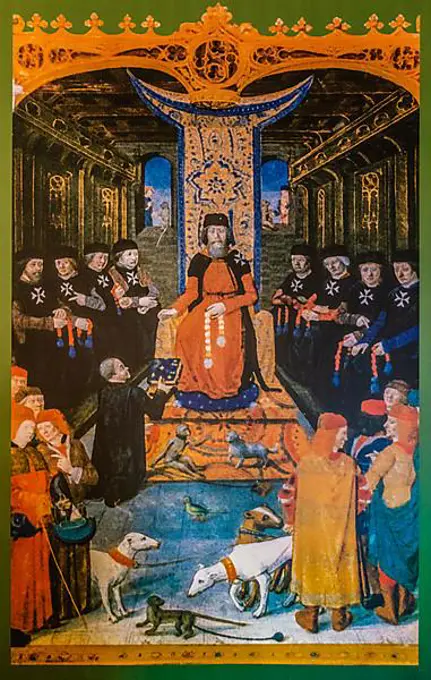
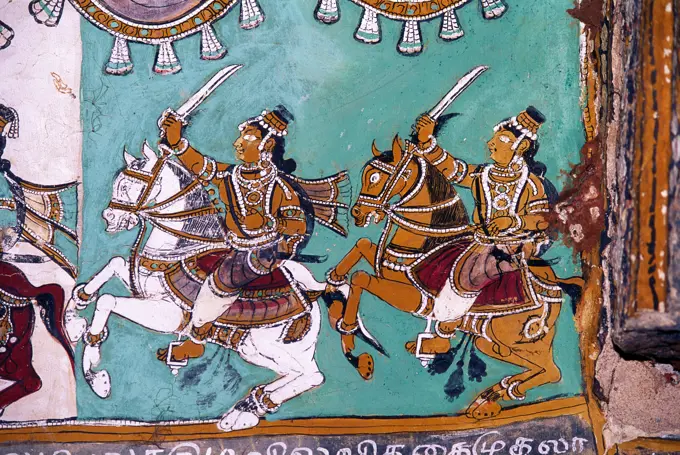
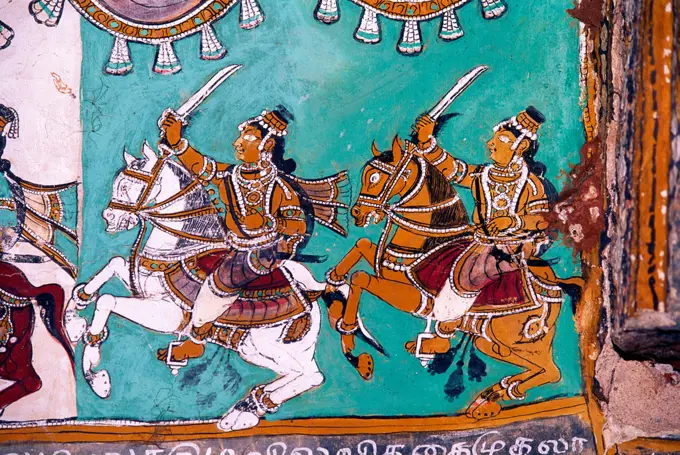
17th century murals on ceiling in Digambar Jain temple at Tirupparuttikunram, Kanchipuram, Tamil Nadu, India, Asia
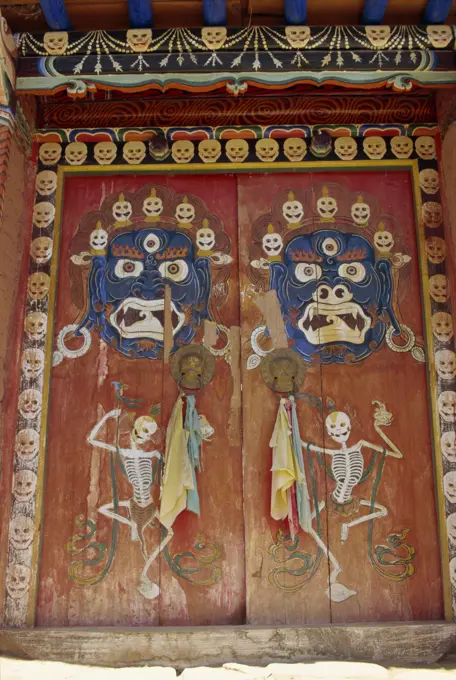
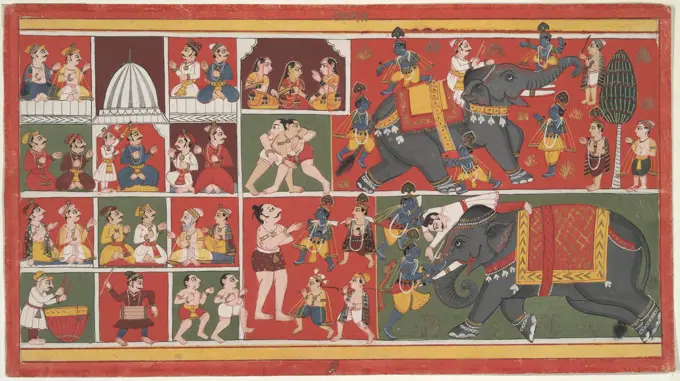
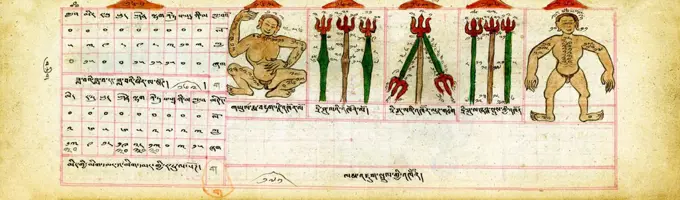
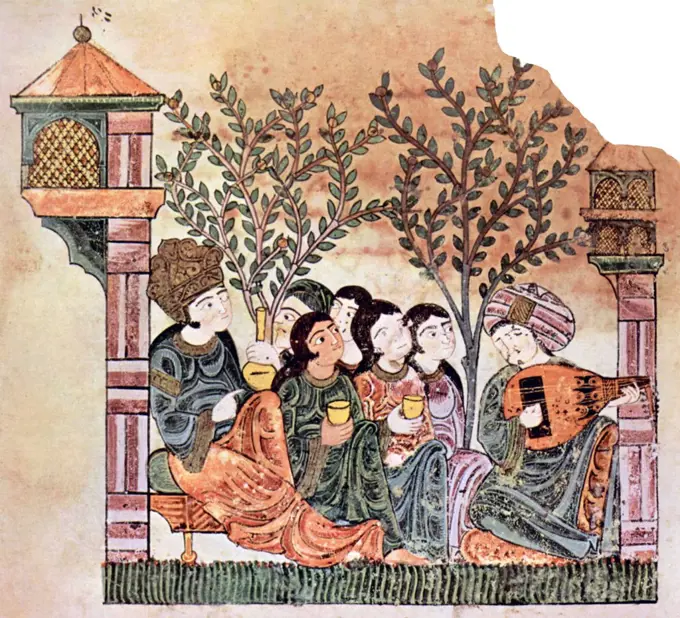
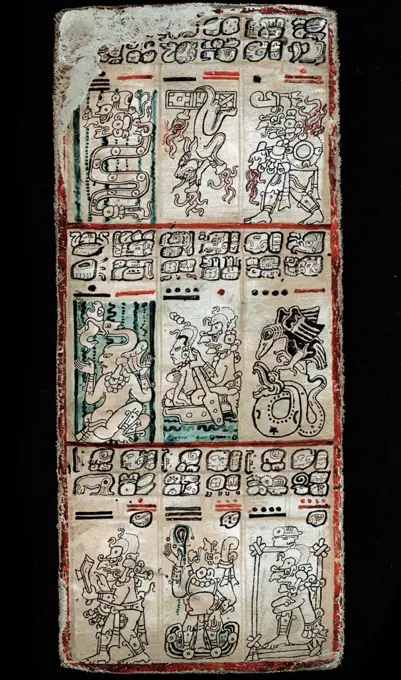
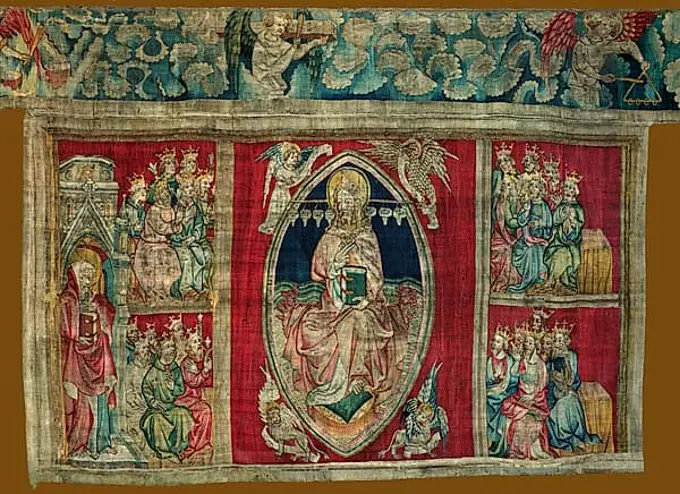
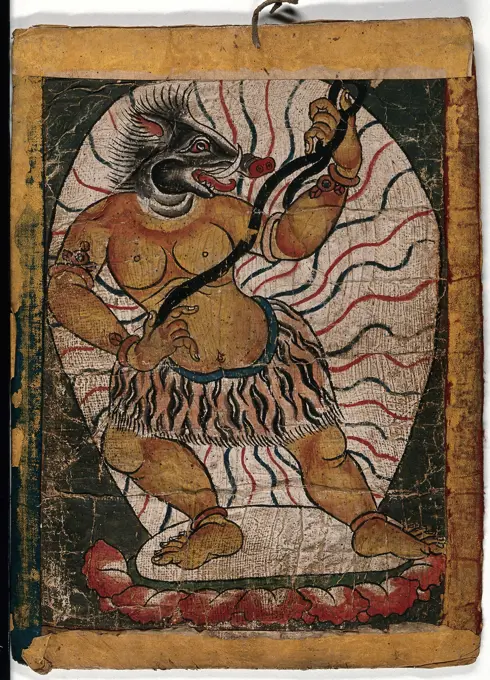
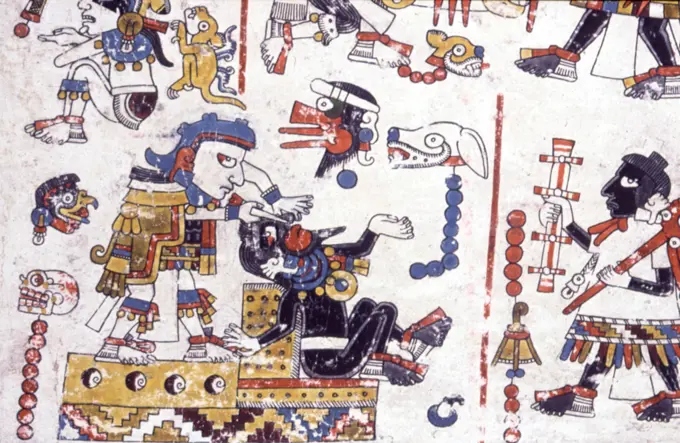
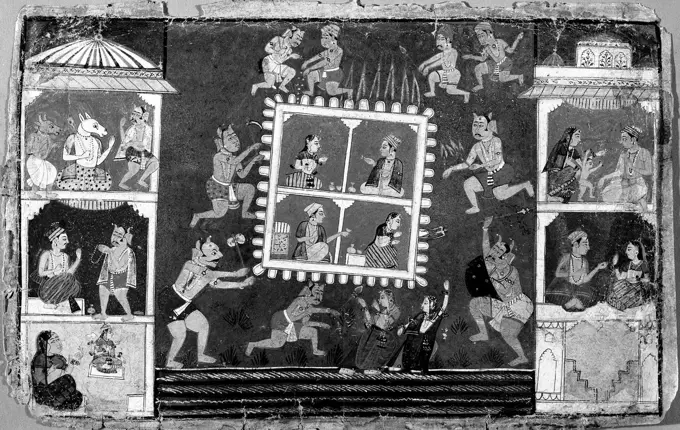
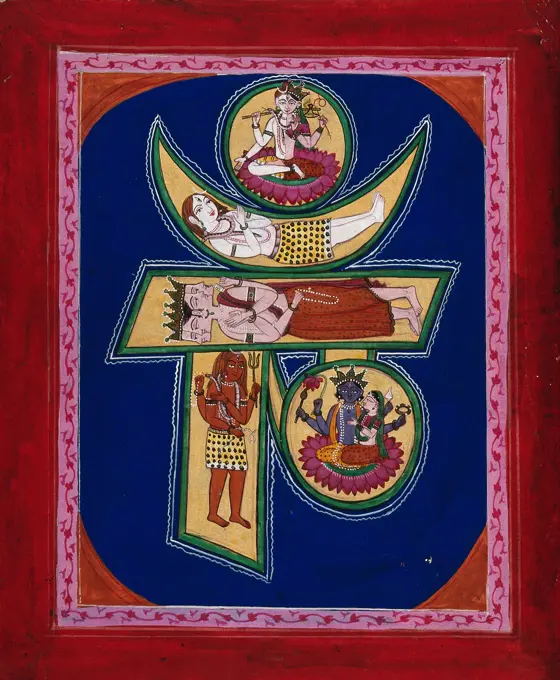
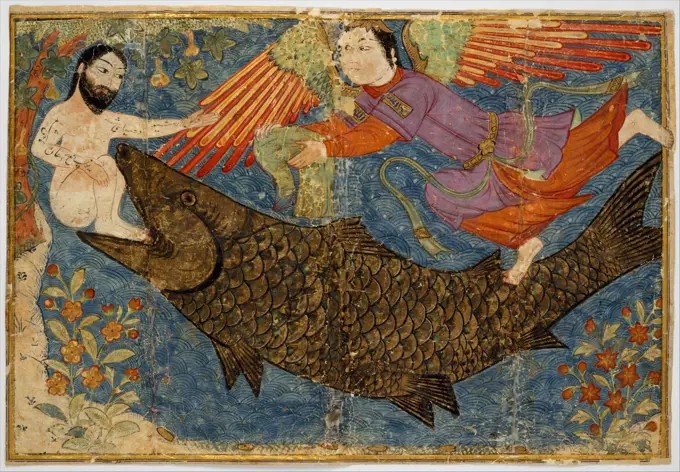
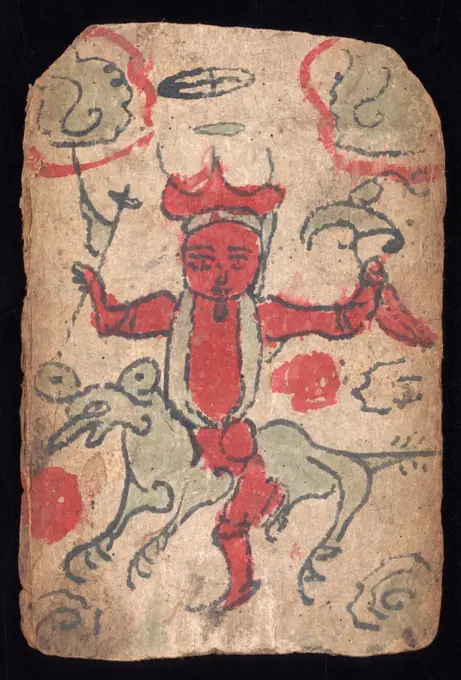
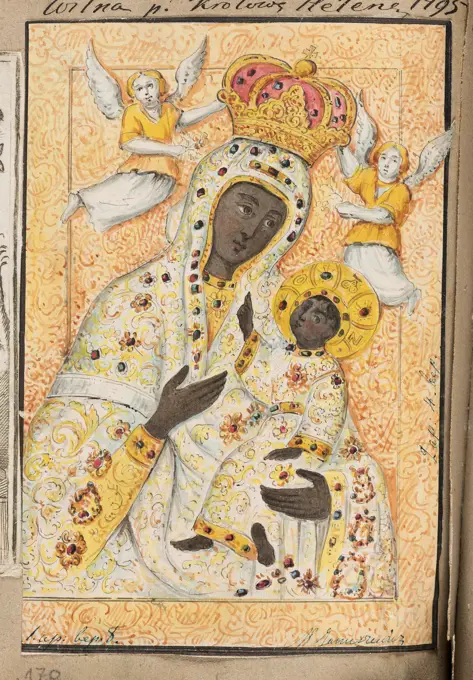
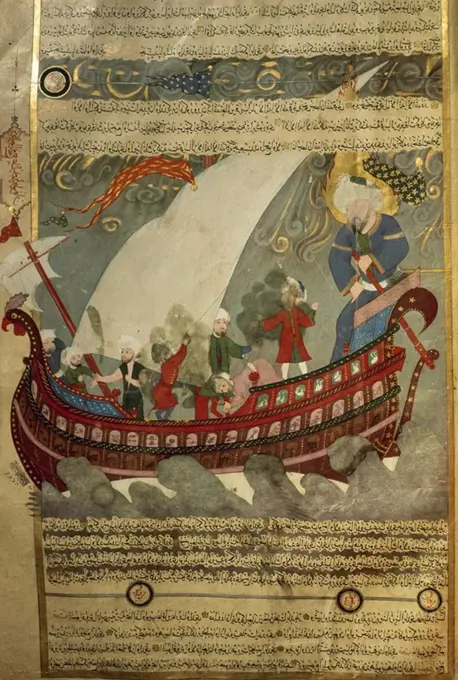
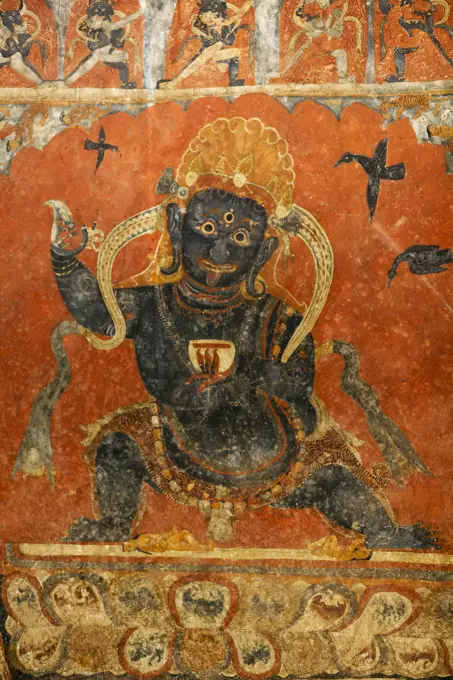
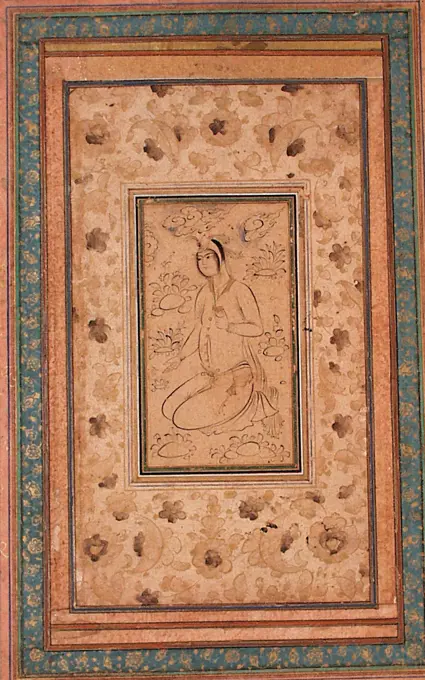
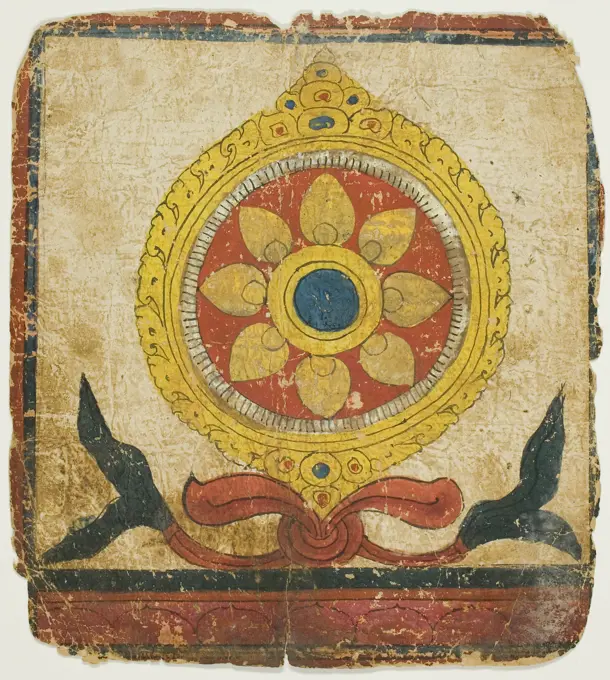
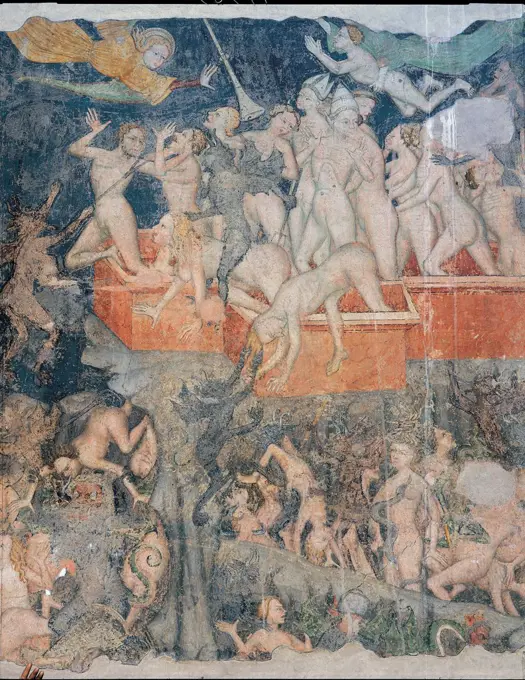
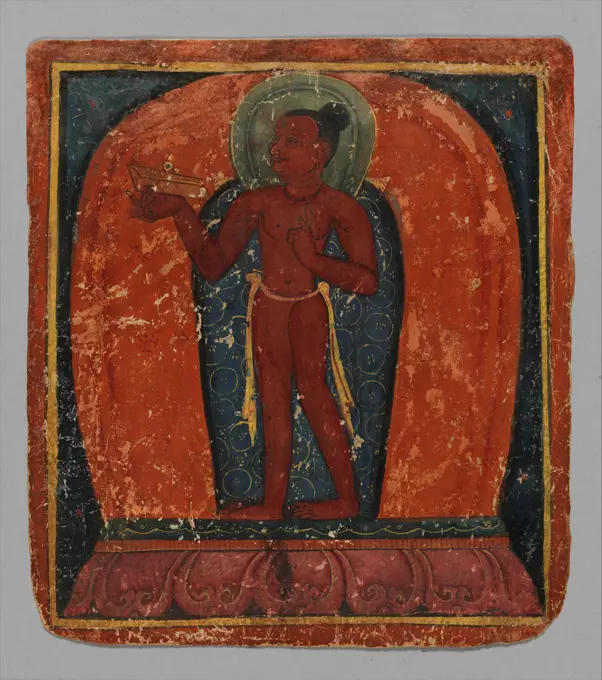
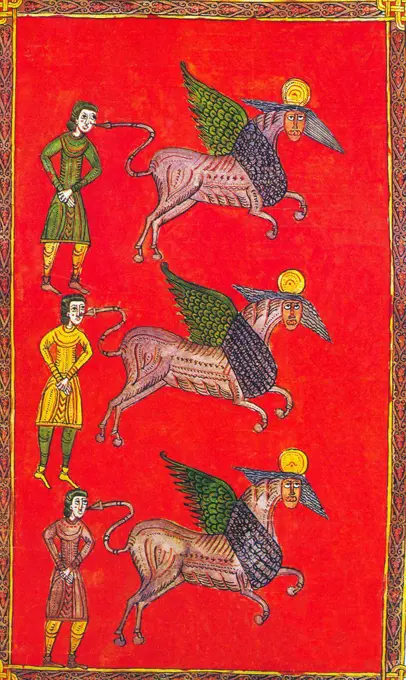
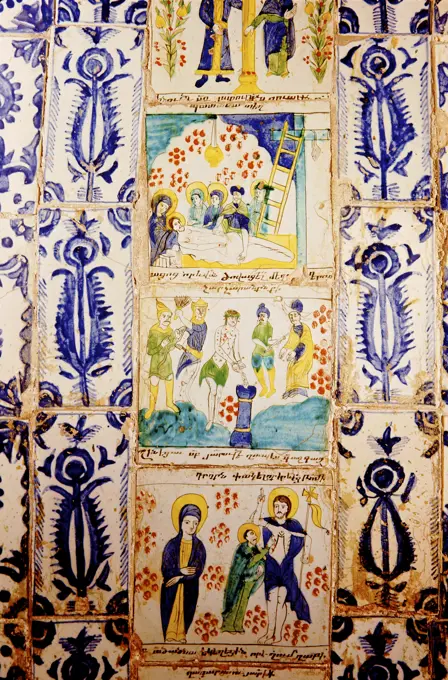
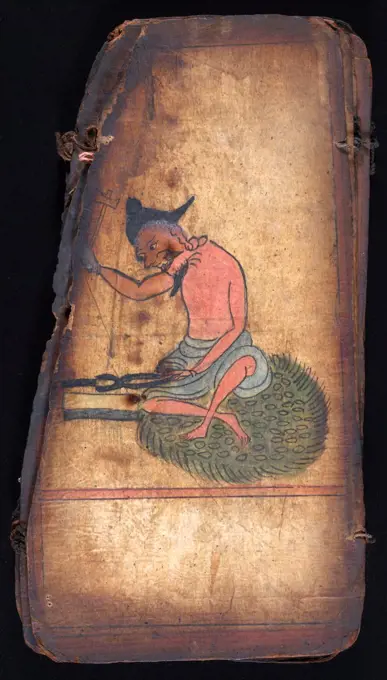
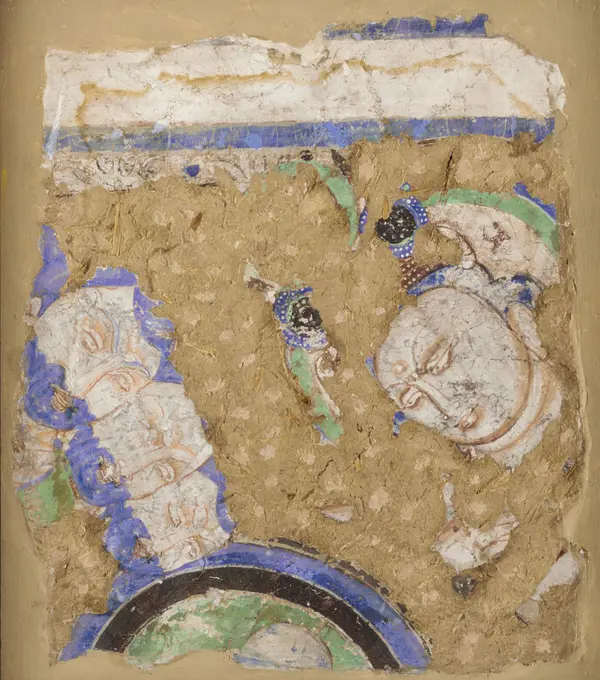
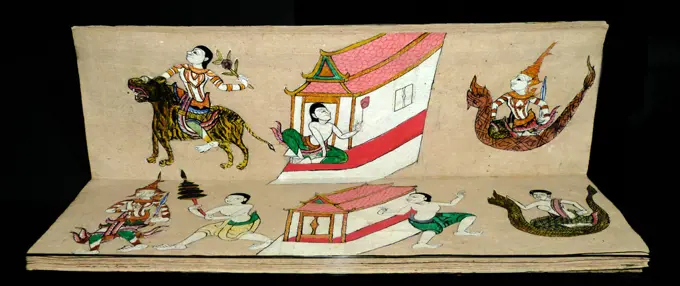
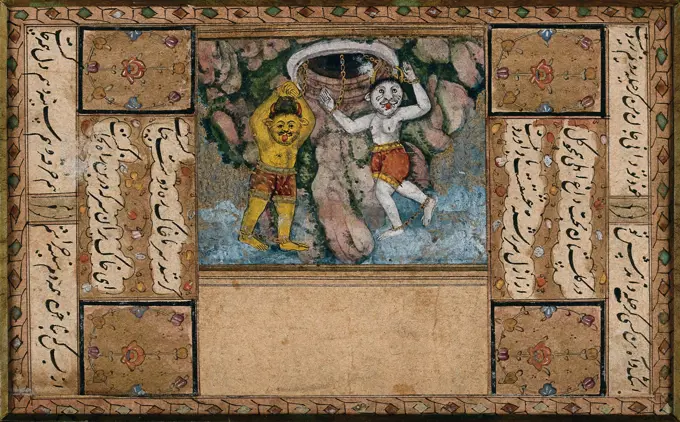
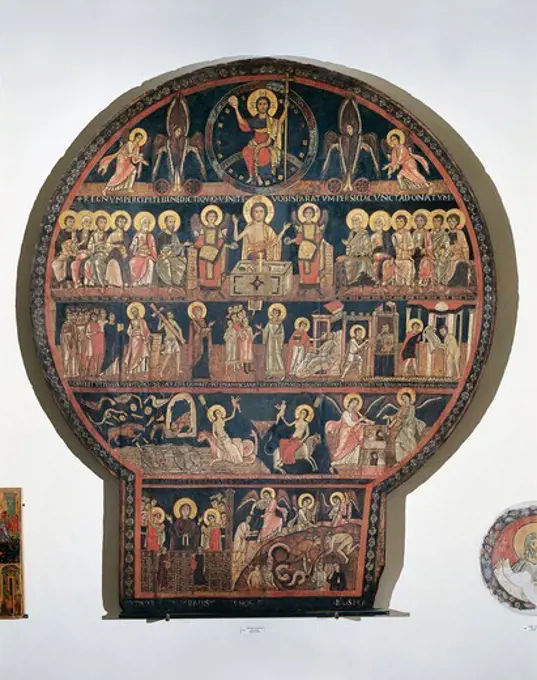
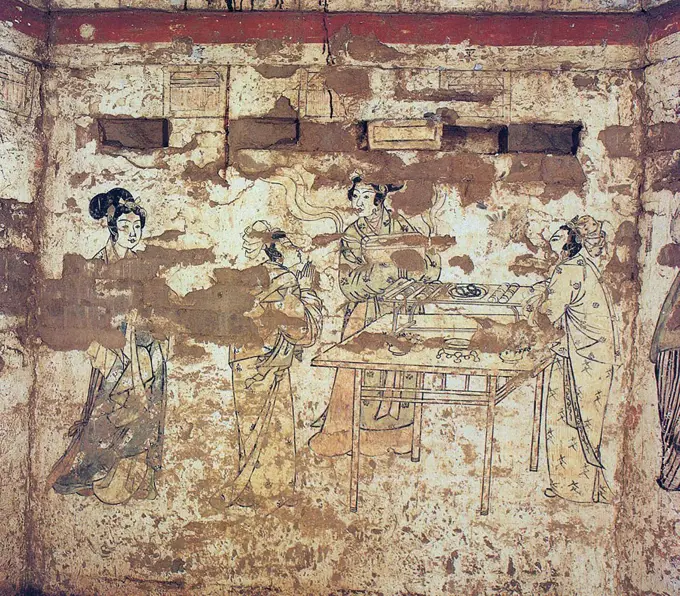
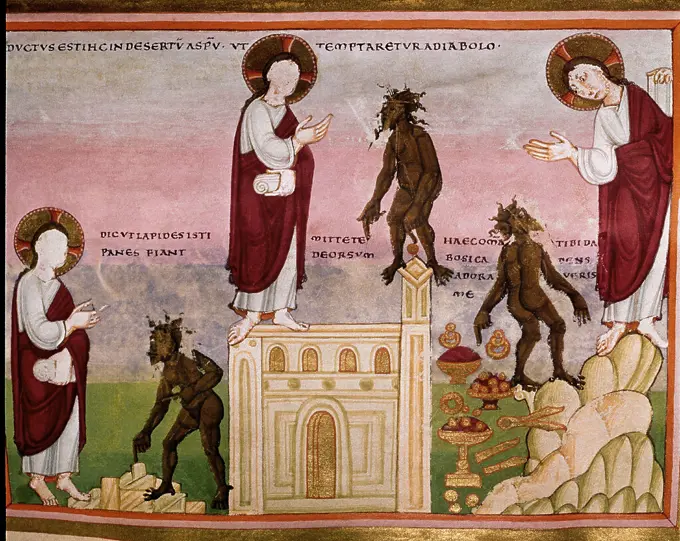
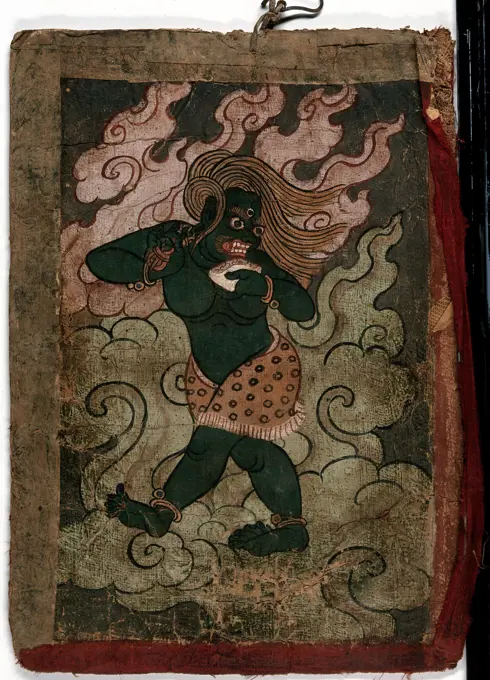
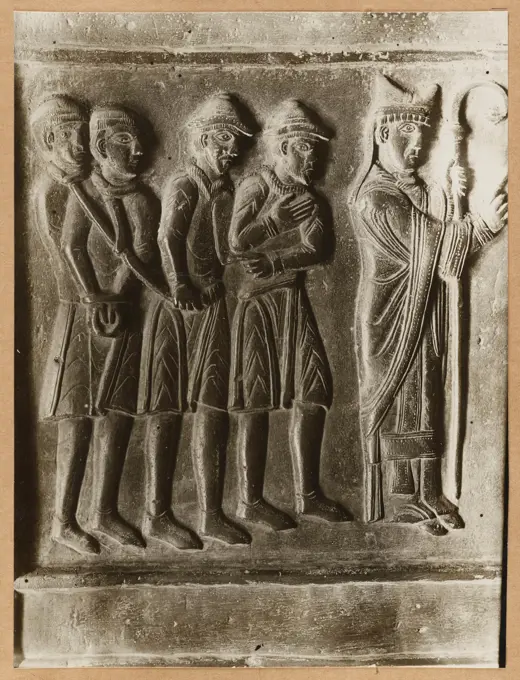
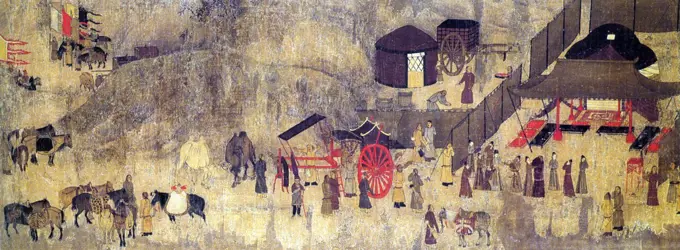
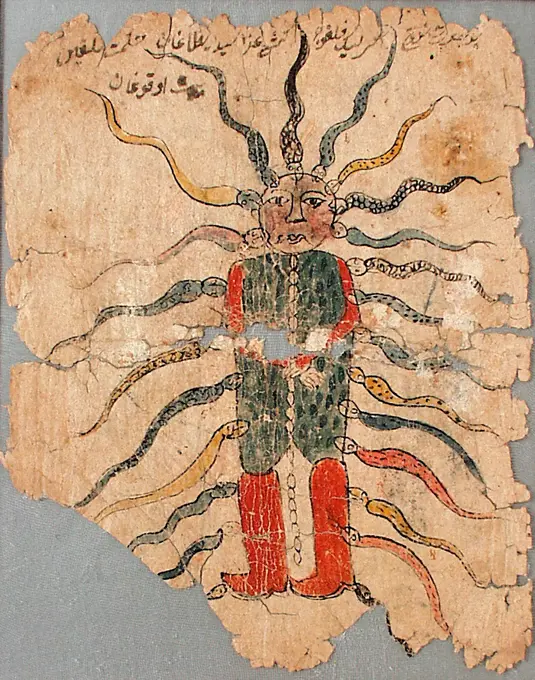
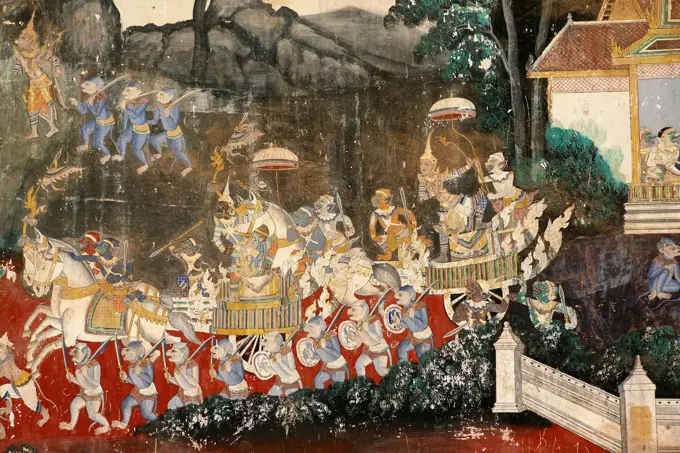
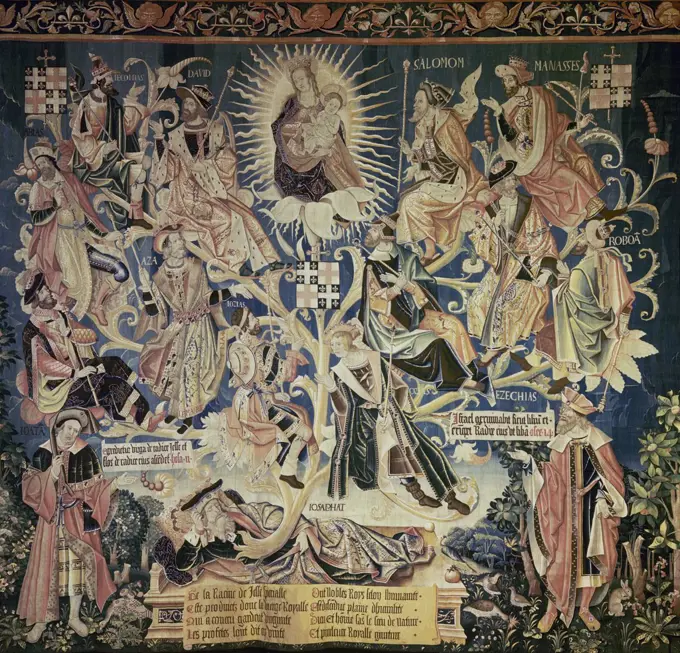
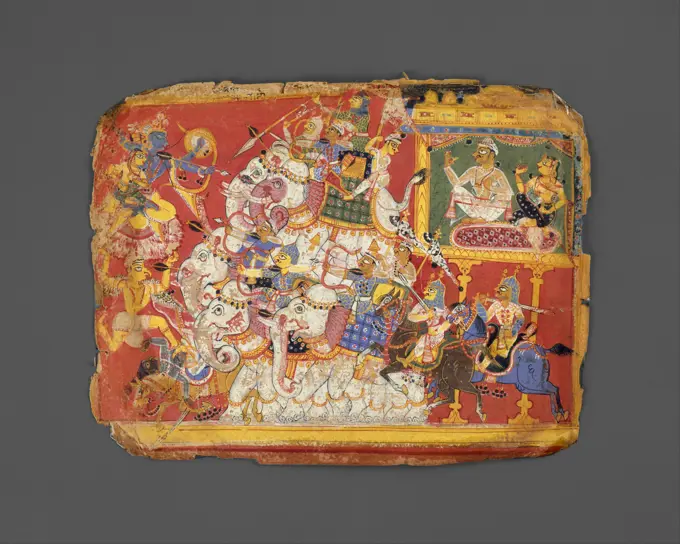
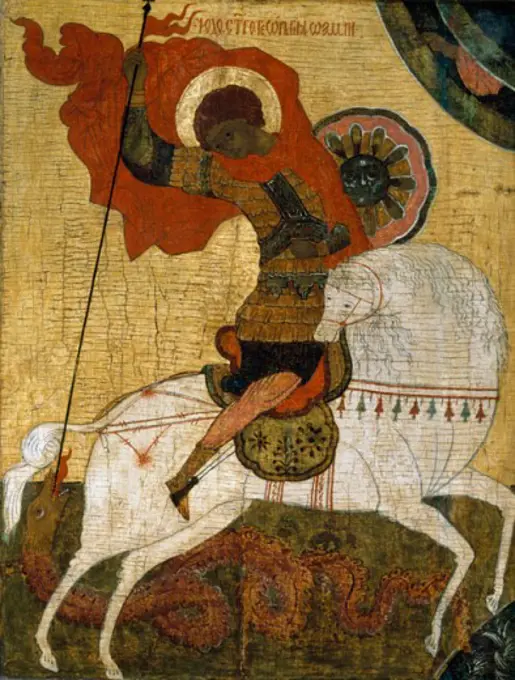
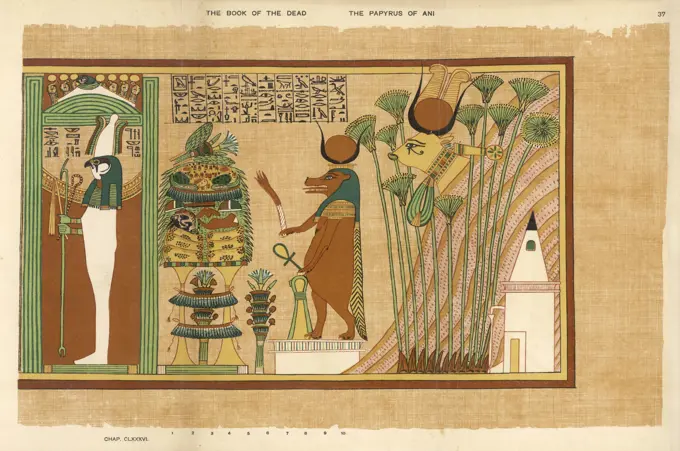
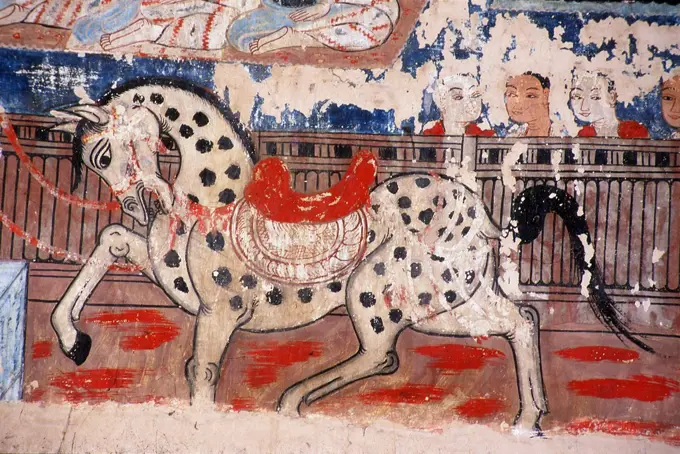
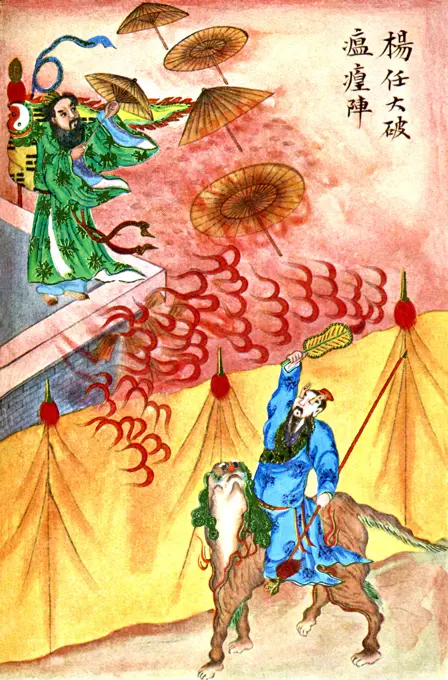
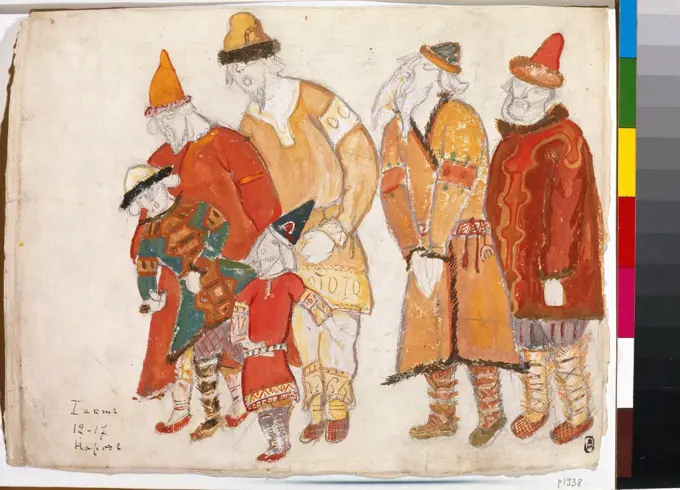
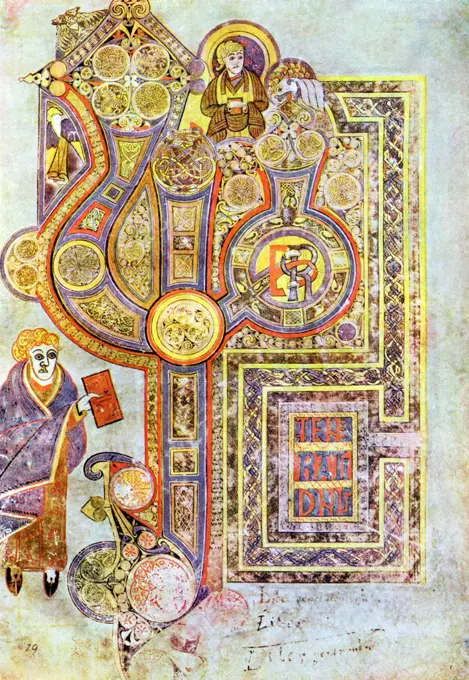
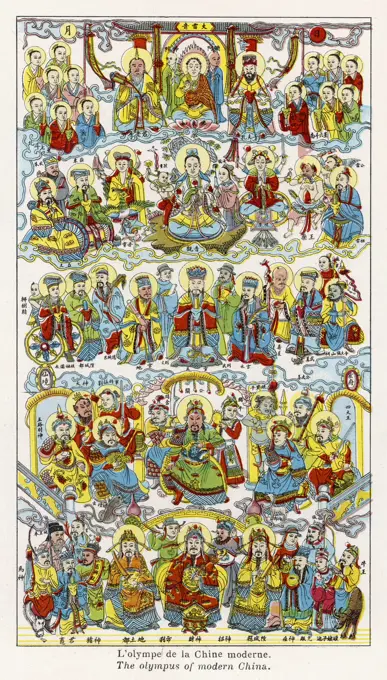
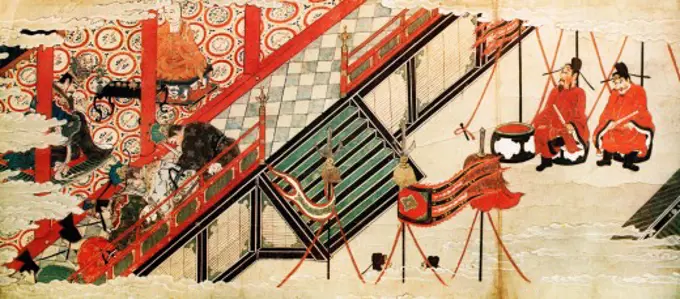
Traditional Kamasan Paintings, Kertha Gosa Pavilion (former Hall of Justice) at Puri Semarapura Palace, Klungkung, Bali, Indonesia, AsiaMantle ("The Paracas Textile") Nasca. Mantle ("The Paracas Textile"), 100-300 C.E. Cotton, camelid fiber, 24 5/8 × 58 11/16 in. (62.5 × 149 cm).  This extraordinarily complex mantle, or cloak, is one of the most renowned Andean textiles in the world. It was most likely used as a ceremonial object. The ninety figures decorating the border, created by needle knitting, have been interpreted as a microcosm of life on Perus South Coast two thousand years ago, with a particular focus on agriculture. Many of the images illustrate native flora and fauna as well as cultivated plants. Costumed figures may represent humans impersonating gods and acting as intermediaries between the real and supernatural worlds. Severed human trophy heads are shown as germinating seeds, suggesting the practice of ritual sacrifice and the interconnected cycles of birth and death. Este extraordinariamente complejo manto, o capa, es uno de los textiles andinos más conocidos en el mundo. Fue usado probablemente como Tantric paintings on doors at Tongren Monastery, Qinghai, China, AsiaKrishna Killing the Elephant Kuvalayapida, from the Bhagavata Purana BookTenIn the Egyptian pantheon, the sacred ram of Mendes was known as Ba'eb Djet (also spelled Banaded).Wat Pa Daet (ัดป่าแดด), the name - ‘sunlit woodland’ - indicates this was formerly a forest temple. A walled enclosure contains a viharn, sala and ho trai or library, while just outside stands an ubosot in traditional northern style, surrounded by a narrow moat. The viharn dates from 1877 and was painstakingly restored in the mid-1980s. Decorated in black and gold, the three-tiered roof sweeps low in typical Lan Na style, with elaborate winged gables supporting flaring naga. The steps leading to the portico are guarded by Burmese-style chinthe lions and naga-makara balustrades, with the chinthe emerging from the makara mouths, an unusual synthesis found elsewhere in the Mae Chaem Valley as well as at the ho trai of Wat Phra Singh in Chiang Mai. Within the viharn, after passing beneath gilded eyebrow pelmets, are a series of relatively well-preserved late 19th century murals, some of which appear to have been restored, while others are fading almost completely away due perhaps to salin300 year- old wall paintings murals frescoes in Uma Maheswarar temple in Konerirajapuram near Kumbakonam, Tamil Nadu, South India, India, AsiaMongolia: 'Departing on a Trip', A Manual of Astrology and Divination, Urga (Ulan Bator), c. 1800, US National Library of MedicineHadith Bayāḍ wa Riyāḍ (The Story of Bayad and Riyad) or Qissat Bayad wa Riyad is a 13th-century Arabic love story. The main characters of the tale are Bayad, a merchant's son and a foreigner from Damascus, Riyad, a well educated girl in the court of an unnamed Hajib (vizier or minister) of 'Iraq (Mesopotamia) and a 'Lady' (al-sayyida). The Hadith Bayad wa Riyad manuscript is believed to be the only illustrated manuscript known to have survived from more than eight centuries of Muslim and Arab presence in Spain. The sole manuscript is in the Vatican Library, where it is catalogued as Codex Vat. Arabo 368. This fragment of the medieval love story of Bayad and Riyad may have been taken from Tunis by the troops of Charles V. It is one of the rarest and most singular Arabic manuscripts in the Vatican collection. Written in maghribi script, it was probably copied in Spain in the first half of the thirteenth century from an eastern manuscript of the Baghdad school. The miniaturist, however, aMural, Mother Temple of Besakih, the most important, largest and holiest temple of Hindu religion in Bali, Indonesia (Large format sizes available)Page from Dresden Maya manuscript showing section of a 'tonalamatl', a sacred season of 260 days. God Quetalcoatl is represented to left and right, centre ferrying a woman, and bottom left with an axe. ChromolithographSERIE TAPICES DE BRUSELAS-LA SALVE N 3. Location: CATEDRAL-INTERIOR. PALENCIA. SPAIN.New Year Picture of the god, The Ox King early 20th century Unidentified artist(s). New Year Picture of the god, The Ox King. Unidentified artist(s) , early 20th century. China. early 20th century. Polychrome woodblock print; ink and color on paper. Republic period (191249). PrintsLa Tenture de l'Apocalypse d'Angers, Dieu en Majesté (1, 51 x 2, 60m)A Tibetan demon with a boar's head, pulling a black rope (). Gouache painting by a Tibetan artist.Prophecia Moysi (Personification of the Synagogue)  ca. 1490-1500 Artist Unknown Woodcut print Bibliotheque Nationale, Paris, France'Fortune Telling Icon'. Buryatia, late 19th century. Dimensions: 6x4 cm. Museum: State Hermitage, St. Petersburg.Tecuhtli- 8-Deer Jaguar Lord has his nose pierced. Mixtec Codex- Codex Zouche, MEXICO.Page from a Dispersed Bhagavata Purana Series Indian. Page from a Dispersed Bhagavata Purana Series, ca. 1610-1650. Opaque watercolor on paper, 9 x 14 in. (22.9 x 35.6 cm).  This is a page from a manuscript of the Bhagavata Purana, a lengthy Hindu scripture dedicated to the god Krishna, who is said to have lived on earth as a prince. The episode has not been firmly identified, but it depicts a city being besieged by demons. The artist employed a clever device to illustrate the siege with an economy of means, floating the crenellated square of the city walls in space so we can see that it is surrounded on all sides. At either end we see multistoried urban buildings populated by demons (in the upper left unit) and regular people, including a family at the upper right and a woman worshipping a small image of a goddess at the lower left. The compartmentalization and inventive abstraction of this image are both typical of paintings made in Central India, in a region once known as Malwa. AsiPainting showing marriage of Meenakshi with Sundara, 17th century murals in Sri Meenakshi temple, Madurai, Tamil Nadu, India Copyright: xMxAmirtham/DinodiaxPhotoxThe Mogao Caves, or Mogao Grottoes (Chinese: mò gāo kū), also known as the Caves of the Thousand Buddhas and Dunhuang Caves, form a system of 492 temples 25 km (15.5 miles) southeast of the center of Dunhuang, an oasis strategically located at a religious and cultural crossroads on the Silk Road, in Gansu province, China. The caves contain some of the finest examples of Buddhist art spanning a period of 1,000 years. The first caves were dug out 366 AD as places of Buddhist meditation and worship. The Mogao Caves are the best known of the Chinese Buddhist grottoes and, along with Longmen Grottoes and Yungang Grottoes, are one of the three famous ancient sculptural sites of China. The caves also have famous wall paintings.600-year-old Murals Paintings in St. George Orthodox church at Cheppad near Haripad, Kerala, South India, India, AsiaFive mnemonic devices in the form of a sacred character. Painting by an Indian artist, 1800s.Iran / Persia: Jonah rescued from the belly of the whale, helped by an angel. Folio from a copy of the Jami al-Tawarikh (Compendium of Chronicles) by Rashid al-Din Hamadani (1247-1318), c. 1400.Hostel of the Spaniards, Knights Street in Old Town from the time of the Order of St. John, the only surviving 16th century street in late Gothic style, Oddos Ippoton, Rhodes Town, Greece, EuropeThe Naxi or Nakhi are an ethnic group inhabiting the foothills of the Himalayas in the northwestern part of Yunnan Province, as well as the southwestern part of Sichuan Province in China. The Naxi are thought to have come originally from Tibet and, until recently, maintained overland trading links with Lhasa and India. The Naxi form one of the 56 ethnic groups officially recognized by the People's Republic of China. The Naxi are traditionally followers of the Dongba religion. Through both Han Chinese and Tibetan cultural influences, they adopted Tibetan Buddhism and, to a lesser extent, Taoism, in the 10th century.Ramayana painting at Madurai 400 years old Guru Vasisht teaching horse ride to his disciple Rama and his brothers, Tamil Nadu, India Copyright: xMxAmirtham/DinodiaxPhotoxPainting of Virgin Mary and Child in the Monastery of the Holy Trinity in Vilnius. Januszewicz, Marceli (1806-post 1862), draughtsman, cartoonist300 year- old ceiling paintings murals frescoes in Uma Maheswarar temple in Konerirajapuram near Kumbakonam, Tamil Nadu, South India, India, AsiaDetail of a scene preaching Buddhist. 1st Half Of The 7th century Fresco. Found in the Kizil (site), Kucha Oasis, ChinaIslamic art. Miniature. Deluge. Noah's ark Circling the Kaaba (Mecca). Museum of Turkish and Islamic art. Turkey.India, Ladakh, Alchi. Alchi Tsatsapuri is a little-know temple complex close to Alchi Choskhor. Contains superb wall-paintings. Was built between 13th-15th centuries. Consists of three buildings around a central courtyard, plus residential wing. Very few outsiders have seen these paintings.Elephant Throne, from a Set of Initiation Cards (Tsakali) 1299-1499 Tibet. Ink and watercolor on paper .Angry Spirits Threaten a TravelerGuanda war deity with companions;  beginning of the 20th century (1901-00-00-1932-00-00);A Kneeling Youth with a CupThe Ascent of the Prophet to Heaven, page from the Khamsa of Nizami 1595-1605 Iran. Opaque watercolor, gold, and ink on paper . IslamicFresco on the wall of a temple, Sulamani Temple, Bagan, Myanmarblur in iran antique carpet textile  handmade beautiful arabic ornamentThe Wheel of Law (Dharmachakra), from a Set of Initiation Cards (Tsakali) 1299-1499 Tibet. Ink and watercolor on paper .blur in iran antique carpet textile  handmade beautiful arabic ornamentLast Judgment, by Unknown artist, 14th Century, fresco. Italy: Lombardy: Lodi: Vergine Assunta Basilica Cathedral: Duomo. Detail of the damned souls plunged into hell lance/spear red gray devils demons fire flamesInitiation Card (Tsakalis) early 15th century Tibet Tsakali cards were used by itinerant teachers moving from one monastery to another in order to evoke Vajrayana Buddhist deities. When laid on the ground in the form of a mandala, as seen here, they functioned to create a fixed sacred space like that of a temple. The deities shown on these initiation cards include the Tathagata Buddhas, various bodhisattvas, fierce protectors, and the six possible realms of rebirth seen across the bottom. They probably were made by a Nepali artist for a Tibetan patron of the Nyingma school of Tibetan Buddhism.Tsakali cards were used individually to align a disciple with a deity from the vast pantheon. First, the disciple sought permission from the deity, either through a dream or under the guidance of a teacher. The associated ritual involved visualizing the deity as described in recited mantras (incantations) and with an imagein this case, the deity represented on the tsakali.The cards form a mandalaRama Kicks the Body of Dundubhi, page from an illustrated manuscript of the Ramayana (the "Shangri" Ramayana) Indian. Rama Kicks the Body of Dundubhi, page from an illustrated manuscript of the Ramayana (the "Shangri" Ramayana), ca. 1700-1710. Opaque watercolor, silver, and gold on paper, sheet: 8 5/8 x 13 7/8 in. (21.9 x 35.2 cm).   Asian Art ca. 1700-1710The Beatus of the Cathedral of El Burgo de Osma was produced in 1086 and contains 71 miniatures by the painter Martinus. The Apocalypse of John is the Book of Revelation, the last book of the New Testament.Royal palace complex. Murals of scenes from the Khmer (Reamker) version of the classic Indian epic Ramayana. Phnom Penh; Cambodia.Mural inside the ancient 14th Century Ura Kidane Mehret Monastery (Ethiopian Orthodox Church), Zege peninsula in Lake Tana, Bahir Dar, EthiopiaArmenian tiles depickting Christ Descent from the Cross, Flagellation, Thomas Doubt, St. James Cathedral, Jerusalem.The Naxi or Nakhi are an ethnic group inhabiting the foothills of the Himalayas in the northwestern part of Yunnan Province, as well as the southwestern part of Sichuan Province in China. The Naxi are thought to have come originally from Tibet and, until recently, maintained overland trading links with Lhasa and India. The Naxi form one of the 56 ethnic groups officially recognized by the People's Republic of China. The Naxi are traditionally followers of the Dongba religion. Through both Han Chinese and Tibetan cultural influences, they adopted Tibetan Buddhism and, to a lesser extent, Taoism, in the 10th century.Detail of a fresque Mengwi temple Bali IndonesiaWat Buak Khrok Luang, located in Ban Buak Khrok Luang Moo 1, Chiang Mai - Sankamphaeng Road, Chiang Mai, is a small and typically northern Thai Buddhist temple. It is believed to have been founded in the 15th century during the time of the independent Lan Na Kingdom (1292-1558), and was extensively restored during the reign of Chao Kaew Naowarat (r.1911-1939), the last King of Chiang Mai. The temple is chiefly noteworthy for its main viharn, which is purely Lan Na in inspiration, with a four-tiered roof and elegant naga balustrade entrance. The most remarkable aspect of the viharn is its extensive mural paintings, dating from around 1835 during the reign of Chao Phuttawong (r.1826-1846), the fourth ruler of the Chiang Mai Thipchang Dynasty. The murals, which are northern Thai in style with clear elements of Shan State and Konbaung Dynasty Burmese influence, are among the best in northern Thailand. They feature the jataka stories, past lives of the Buddha, and are interspersed with vernBodhisattvas and Monks, from Cave 224. Date: 4th-6th century. stucco with pigment. Museum: Smithsonian American Art Museum.A Chinese courtroom (): a woman is shown being beaten, as she kneels before a formally-dressed official, who is writing at a desk. Gouache painting on rice-paper, 1780/1880Mantle ("The Paracas Textile") Nasca. Mantle ("The Paracas Textile"), 100-300 C.E. Cotton, camelid fiber, 24 5/8 × 58 11/16 in. (62.5 × 149 cm).  This extraordinarily complex mantle, or cloak, is one of the most renowned Andean textiles in the world. It was most likely used as a ceremonial object. The ninety figures decorating the border, created by needle knitting, have been interpreted as a microcosm of life on Perus South Coast two thousand years ago, with a particular focus on agriculture. Many of the images illustrate native flora and fauna as well as cultivated plants. Costumed figures may represent humans impersonating gods and acting as intermediaries between the real and supernatural worlds. Severed human trophy heads are shown as germinating seeds, suggesting the practice of ritual sacrifice and the interconnected cycles of birth and death. Este extraordinariamente complejo manto, o capa, es uno de los textiles andinos más conocidos en el mundo. Fue usado probablemente como Fortune-Telling Manual circa 1850. In the past almost everyone in Thai society consulted fortune tellers. The system that they used was based on the day and month of birth of the user. Illustration depicts the fates of individuals or of married couples in symbolic form.Cossack game.Ritual miniature tsakali with the imagination of the guard - God  19th century (1801-00-00-1900-00-00);Two divs in golden chains (demons) trying to escape from a well. Gouache painting by a Persian artist, possibly Indian.Swayambhunath is an ancient religious complex atop a hill in the Kathmandu Valley, west of Kathmandu city. It is also known as the Monkey Temple as there are holy monkeys living in parts of the temple in the north-west. The Tibetan name for the site means 'Sublime Trees' (Wylie:Phags.pa Shing.kun), for the many varieties of trees found on the hill. For the Buddhist Newars in whose mythological history and origin myth as well as day-to-day religious practice, Swayambhunath occupies a central position, it is probably the most sacred among Buddhist pilgrimage sites. For Tibetans and followers of Tibetan Buddhism, it second only to Bodhnath.17th century murals fresco paintings of Ramayana epic in Kokarneswarar temple ceiling at Thirukokarnam, Pudukkottai, Tamil Nadu, South India, India, AsiaItaly, Rome, Painting of Last JudgmentBulgaria. Rila MonasteryAmit'a (Amitabha) and the Eight Bodhisattvas , Dated in accordance with 1666. Hanging scroll; ink and gold on silk, 39 x 32 in. (99.1 x 81.3cm).  Although Buddhism had flourished in Korea for centuries, official patronage for Buddhist art virtually disappeared when the Joseon dynasty, which discouraged the practice of Buddhism in favor of Confucianism, took power in 1392. The faith never truly died out, however, and artists continued to make Buddhist imagery for less elite patrons. Amitabha, the Buddha of the Western Paradise, is shown here enthroned and making a teaching gesture. He is surrounded by an extensive retinue, including eight bodhisattvas, enlightened beings who assist mortals in their quest for enlightenment. Asian Art Dated in accordance with 1666The Liao Dynasty, also known as the Khitan Empire, was a state that ruled over the regions of Manchuria, Mongolia, and parts of northern China proper. It was founded by the Yelü clan of the Khitan people in the same year as the Tang Dynasty collapsed (907), even though its first ruler, Yelü Abaoji (Yaruud Ambagai Khan), did not declare an era name until 916. Although it was originally known as the Empire of the Khitan, the Emperor Yelü Ruan officially adopted the name 'Liao' (formally Great Liao’) in 947. Another name for China in English, Cathay, is derived from the name Khitan. This is also the origin of the Russian word for China, Китай or Kitay, and that of several other East European languages. The Liao Empire was destroyed by the Jurchen of the Jin Dynasty in 1125. However, remnants of its people led by Yelü Dashi established the Xi (Western) Liao Dynasty 1125-1220, also known as Kara-Khitan Khanate, which extended its influence over Central Asia into Persia and survived until tIllustration depicting construction of TenochtitlanCODEX AUREUM 1033-39-JESUS ES TENTADO 3 VECES POR EL DEMONIO. Location: MONASTERIO-BIBLIOTECA-COLECCION. SAN LORENZO DEL ESCORIAL. MADRID. SPAIN.A green Tibetan demon () holding a skull cup and a vajra in its hand. Gouache painting by a Tibetan artist.A Serimpie - Javanese dancer  who would have performed at  the royal court.        Date: 1929Gniezno. The door is angry in the Basilica of the Primate's ascenda of the Mary Mary - a fragment of the quarters: Wojciech reminds the King Boles II; Jesio Not after 12.07.1930 (1929-00-00-1930-00-00);In ancient times Miran was a busy trading center on the southern part of the Silk Road, after the route split into two (the northern route and the southern route), as caravans of merchants sought to escape travel across the harsh wasteland of the desert (called by the Chinese 'The Sea of Death') and the Tarim Basin. They went by going around its north or south rim. It was also a thriving center of Buddhism with many monasteries and stupas. Marc Aurel Stein was the first archaeologist to systematically study the ruins at Miran in 1907. The many artifacts found in Miran demonstrate the extensive and sophisticated trade connections these ancient towns had with places as far away as the Mediterranean Sea. Archaeological evidence from Miran shows the influence of Buddhism on artistic work as early as the first century BCE. Early Buddhist sculptures and murals excavated from the site show stylistic similarities to the traditions of Central Asia and North India and other artistic aspects of tVsiakoe dykhanie da khvalit Gospoda.. Rovinski, D. A. (Dmitri Aleksandrovich), 1824-1895. Prints. 1881. Rare Book Division. Folk art , Russia (Federation), Russia , Social life and customs, Engraving, RussianMiddle East/Arabia: The Waq-waq tree from Kitab al-Bulhan or Book of Wonders, late 14th centuryCai Wenji was born shortly before 178 CE in what is now Qi County, Kaifeng, Henan. In 195, the chaos after Chancellor Dong Zhuo's death brought Xiongnu nomads into the Chinese capital and Cai Wenji was taken as prisoner to the northern lands. During her captivity, she became the wife of the Xiongnu chieftain Liu Bao and bore him two sons. It was not until twelve years later that Cao Cao, the new Chancellor of Han, ransomed her in the name of her father. When Cai Wenji returned to her homeland, she left her children behind at the frontier. The reason Cao Cao needed her back, was that she was the only one remaining of her clan and he needed her to placate the spirits of her ancestors. Cai Wenji's father Cai Yong was an established writer, but his works were lost in the ravages of war. At Cao Cao's request, Cai Wenji was able to recite from memory up to four hundred out of four thousand of her father's lost works. Later in her life, she wrote two poems describing her turbulent years. Her Page from a Chaghatay Manuscript Depicting Punishments in Hell for Offenses in LifeImage from a Set of Initiation Cards (Tsakali). Southern Tibet. Date: 1301-1500. Dimensions: 16 x 14.5 cm (6 1/4 x 5 3/4 in.). Ink and watercolor on paper. Origin: Tibet. Museum: The Chicago Art Institute, Chicago, USA.Mixtec Codex- Codex Zouche. Making fire , MEXICO.Leaf from a Gospel book. UnknownSaint John. UnknownCathedral. mosaic floor. Otranto. Salento. Apulia. Italy. Europe. (Photo by: Giorgio Mesturini/REDA&CO/UIG)Egypt: The Waq Waq Tree, Kitab Ghara'ib al-funun wa-mulah al-'uyun ('The Book of Curiosities of the Sciences and Marvels for the Eyes'), 12th-13th CenturiesCambodia, , Phnom Penh, Royal Palace - detail of Ramayana mural at the Silver PagodaBuilding detail, Vatxiengthongratsavoravihanh (Vatxieng Thong Temple), Luang Prabang, Northern Laos, Southeast AsiaRamayana painting at Madurai 400 years old Guru Vasisht teaching horse ride to his disciple Rama and his brothers , Tamil Nadu , IndiaCOMENTARIOS AL APOCALIPSIS. Author: BEATO DE LIEBANA. Location: CATEDRAL-ARCHIVO CAPITULAR. GERONA. SPAIN.Tojin ja-odori no zu : Chinese dragon dance. between 1850 and 1900. Japanese print shows eight men holding up a dragon with sticks for the dragon dance.Tree Of Jesse 16th Century Tapestry Textiles (Flemish)Krishna Battles the Armies of the Demon Naraka: Page from a Bhagavata Purana Manuscript ca. 1540 Northern India, Delhi or Agra region The Bhagavata Purana describes Vishnus avatars with particular attention to his form as Krishna. In this painted folio, the demon Naraka and his consort are seen in the palace interior of their fortified city of Pragyotisha, overseeing a fierce battle scene. Krishna and his consort Satyabhama enter the fray, carried by Vishnus birdman mount, Garuda. The figure-types and soldiers attire directly borrow from Muslim Sultanate-period painting conventions of the fifteenth and early sixteenth centuries. Listen to experts illuminate this artwork's story Listen Play or pause #7917. Krishna Battles the Armies of the Demon Naraka: Page from a Dispersed Bhagavata Purana Manuscript Supported by Bloomberg Philanthropies We're sorry, the transcript for this audio track is not available at this time. We are working to make it available as soon as possible.. Krishna St. George and the Dragon 16th Century Artist Unknown Tempera on wood Tretyakov Gallery, Moscow religion hinduism tantrism meditation picture Gayan Choparh Yantra watercolour on fabric Rajasthan 18th century private collection,Osiris-Seker within a shrine  adored by Ani and his wife,  Plate.  The goddess Hathor as  a hippopotamus crowned with  the sun-disk and horns Wat Buak Khrok Luang, located in Ban Buak Khrok Luang Moo 1, Chiang Mai - Sankamphaeng Road, Chiang Mai, is a small and typically northern Thai Buddhist temple. It is believed to have been founded in the 15th century during the time of the independent Lan Na Kingdom (1292-1558), and was extensively restored during the reign of Chao Kaew Naowarat (r.1911-1939), the last King of Chiang Mai. The temple is chiefly noteworthy for its main viharn, which is purely Lan Na in inspiration, with a four-tiered roof and elegant naga balustrade entrance. The most remarkable aspect of the viharn is its extensive mural paintings, dating from around 1835 during the reign of Chao Phuttawong (r.1826-1846), the fourth ruler of the Chiang Mai Thipchang Dynasty. The murals, which are northern Thai in style with clear elements of Shan State and Konbaung Dynasty Burmese influence, are among the best in northern Thailand. They feature the jataka stories, past lives of the Buddha, and are interspersed with vernAccording to Chinese mythology, when Lu Yueh was President of the Ministry, he was forced to retreat to his fortress by the enemy, Yang Chien. Lu Yueh climbed atop the central raised part of the embattled wall and opened all his plague-disseminating umbrellas, hoping to infect the enemy. But Yang Chien just waved his fan and turned all the umbrellas to dust - and burned the fort, with Lu Yueh in it. This illustration of the incident dates to around 1922.Jerusalem est prise & brulee, le Roy Sedecias a les yeux crevez. Et Jeremie est mene en Babilone. (Jerusalem is taken and burned; King Seleucis has his eyes gouged out. And Jeremiah is brought to Babylon. Jeremiah 39-43), no. 6, The Story ofJeremiah.  Artist: Unknown  Publisher: Charles le Vigoureux, French, 1547-1605Peoples. Costume design for the opera Prince Igor by A. Borodin by Roerich, Nicholas (1874-1947)/ State Russian Museum, St. Petersburg/ 1914/ Russia/ Watercolour, Gouache on Paper/ Symbolism/ Opera, Ballet, TheatreBook of the Moghul. Ms. 8300. 17th c. Wedding ceremony. The groom gives the bride a gold necklace. Hindu art. Miniature Painting. ITALY. VENETO. Venice. Biblioteca nazionale marciana (St. Mark's Library).Tibetan cosmological amulet for protection against diseases. Gouache painting, Tibet.Opening words of St Matthew's Gospel 'Liber Generationes'. From 'The Book of Kells'. 6th century manuscript of the Four Gospels THE CHINESE PANTHEON just a few of the countless  Chinese deities !  'Fortune Telling Icon'. Buryatia, late 19th century. Dimensions: 6x4 cm. Museum: State Hermitage, St. Petersburg.fine arts, countries, Japan, painting, adoration of Jizo Buddha, scroll-painting, detail, 13th century, National Museum, Tokyo,