My Boards
View Pictures
  • My Boards
← Religion & Culture

Cultural Figures in East Asia

Depictions of historical figures from East Asia, including emperors and scholars, in traditional garb with vibrant colors and intricate details.

Emperor Saga 786Äì842 52nd emperor of Japan from 809-823
137 assets in this story
6145-29127477
Çorbacı (Soup Cook), An Officer of the Janissaries (Costume Plate). Turkey, mid 17th century. Manuscripts; folios. Ink and opaque watercolor on paper
1899-68920407
Chinese Thean Hou Temple dedicated to the goddess Mazu and Guan Yin. Traditional chinese door guard. Kuala Lumpur. Malaysia.
1746-57661974
Genghis Khan (born Temüjin Borjigin, c. 1155 - c. 1162 - August 18, 1227), also officially Genghis Huangdi, was the founder and first Great Khan and Emperor of the Mongol Empire, which became the largest contiguous empire in history after his death
6176-66909417
A voice from the past -  Illustration shows the ghost of Louis XVI of France warning Nicholas II of Russia to not make a hasty decision regarding the imprisoned writer Maxim Gorky and to heed the "Petition" and impassioned pleas for his release. Political Cartoon, 1905
6188-64578865
Statue of Vajra Vidya Sansthan with music instrument in Tibetan style, Vajra Vidya Sansthan, Sarnath, Uttar Pradesh, India Copyright: xArunxMishra/DinodiaxPhotox
1899-18718881
The Tang Dynasty (Tang Chao; June 18, 618 - June 1, 907) was an imperial dynasty of China preceded by the Sui Dynasty and followed by the Five Dynasties and Ten Kingdoms Period. It was founded by the Li family, who seized power during the decline and collapse of the Sui Empire. The dynasty was interrupted briefly by the Second Zhou Dynasty (October 8, 690 - March 3, 705) when Empress Wu Zetian seized the throne, becoming the first and only Chinese empress regnant, ruling in her own right. The Tang Dynasty, with its capital at Chang'an (present-day Xi'an), which at the time was the most populous city in the world, is generally regarded as a high point in Chinese civilization equal to, or surpassing that of, the earlier Han Dynasty a golden age of cosmopolitan culture. Its territory, acquired through the military campaigns of its early rulers, rivalled that of the Han Dynasty. In two censuses of the 7th and 8th centuries, the Tang records estimated the population by number of registered
1848-51638176
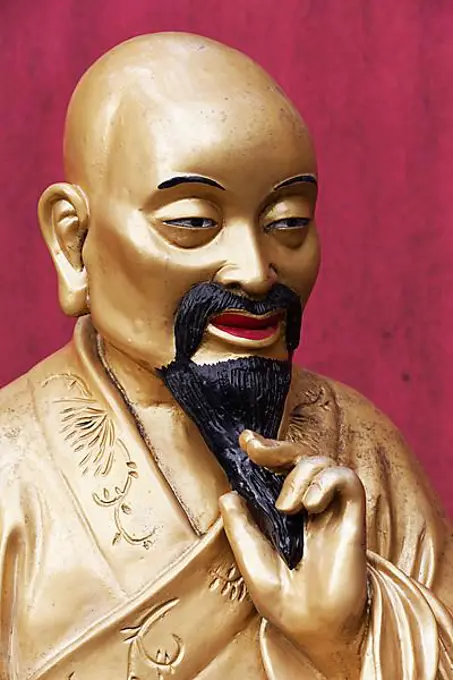
Arhat, Buddhist Sage, stroking his goatee thoughtfully, gilded figure, Temple of 10,000 Buddhas, Sha Tin, New Territories, Hong Kong, China, Asia
1848-61303101
Historical engraving, drawing of Confucius, 19th Century
6176-66099393
In Chinese mythology, Wen Chung , shown here with three eyes, is honored as the Minister of Thunder.
1899-18981689
Dalai Lama of Tibet (13th Dalai Lama) Photo taken 1905-1925 .
1899-18719085
Empress Gemmei (660-721), was the 43rd imperial ruler of Japan. She reigned for 8 years (707-715) after the death of her son, Emperor Mommu, in 707. She proved an unusually able ruler. She coined the first copper money and caused scribes to write down the ancient traditions lest they be lost, and in 708 she moved the capital city of Japan from Fujiwara to Heijo-Kyo, thus giving the Nara period of Japanese history its name. Married to her first cousin and nephew, Kusakabe no Miko, the son of Emperor Temmu of Japan and Empress Jito of Japan, she abdicated in favour of her daughter, Empress Gensho-Tenno. This empress is traditionally venerated at a memorial Shinto shrine (misasagi) at Nara.
6176-67052373
Chinese Stoneware, Seated Daoist Deity, Ming Dynasty, 16th century. Artist: Unknown.
1899-18712142
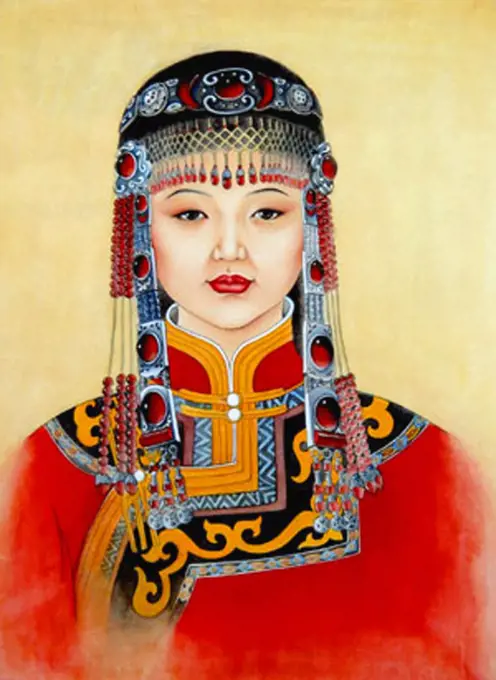
Empress Xiao Duan Wen (May 13, 1600 - May 17, 1649), personal name Borjigit. She was the principal Empress Consort of the Qing Dynasty Emperor Huang Taiji of China. Empress Xiao Duan Wen was a daughter of Manjusri Noyan, the First Prince Fu of the Borjigit clan, descended from the Mongol Horchin clan. Borjigit married the Tai Zong Emperor Huang Taiji of the Manchu Later Jin on May 28, 1614, and became his official wife and later Empress in 1636 when the Qing Dynasty was established. Both her nieces Bumbutai (later Empress Dowager Xiaozhuang) and Hai Lan Zu were married to the Emperor as well. Borjigit was posthumously styled with the title 'Empress Xiao Duan Wen' after her death.
1899-18712832
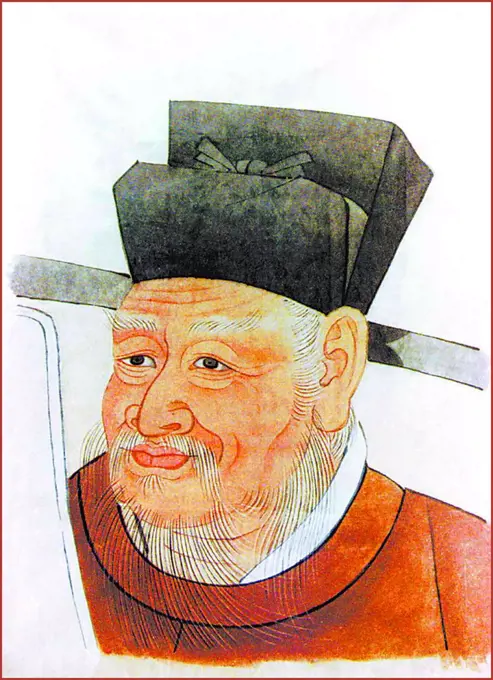
Bao Zheng is today respected as a symbol of justice in China. Throughout history, his largely fictionalized stories have appeared in a variety of different literary and dramatic genres, and have enjoyed sustained popularity. Bao Zheng was born into a scholar family in Hefei, Anhui province. At the age of 29, he passed the highest-level Imperial examination and became qualified as a Jinshi. He was a magistrate in Bian (Kaifeng), the capital of the Song dynasty. He is famous for his uncompromising stance against corruption among the government officials at the time. He upheld justice and refused to yield to higher powers. After his death, Bao Zheng's stories were retold and preserved particularly in the form of performance arts such as Chinese opera and pingshu. Written forms of his legend appeared in the Yuan Dynasty in the form of Qu. In Ming Dynasty times the novel Bao Gong An increased his popularity and added a detective element to his legends. The Qing Dynasty novel The Seven Heroe
1899-18711392
Emperor Zhengtong, 6th and 8th ruler of the Ming Dynasty (r. 1435-1449; 1457-1464). Personal Name: Zhu Qizhen, Zhū Qízhèn. Posthumous Name: Ruidi, Ruìdì. Temple Name: Yingzong, Yīngzōng. Reign Name: Ming Zhengtong, Ming Zhèngtǒng (1436-1449); Ming Tianshun, Ming Tiānshùn (1457-1464). Zhu Qizhen was an emperor of the Ming Dynasty. He ruled as the Zhengtong Emperor from 1435 to 1449, and as the Tianshun Emperor from 1457 to 1464. His first era name means 'Right Governance' and the second one means 'Obedient to Heaven'. The Tianshun Emperor died at the age of 37 in 1464 and was buried in the Yuling mausoleum of the Ming Dynasty Tombs.
6145-29713250
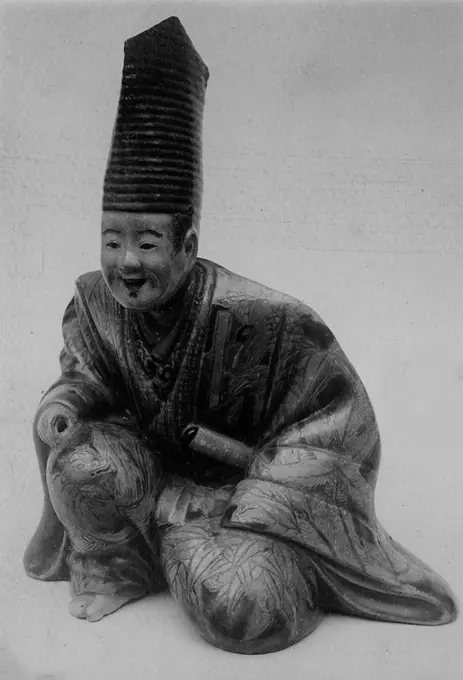
Senzai from the Noh Drama Okina 1780 Japan. Senzai from the Noh Drama Okina 62796
1899-18718741
The Jalkhanz Khutagt Sodnomyn Damdinbazar (1874-1923) was a high lamaist incarnation in northwestern Mongolia, and played a high-profile role in the country's independence movement. He served as Prime Minister twice, 1921 in Baron Ungern's puppet government, and 1922/23 under the MPRP. Damdinbazar was born in 1874 at Lake Oigon Nuur in the Nomrog district of present-day Zavkhan Aimag. His father Tserensodnom and mother Sonom were middle-class herders. In 1877 he was inaugurated as Jalkhanz Khutagt at Jalkhanzyn Khuree, in what is today Burentogtokh Sum in Khovsgol Aimag. From the ages of 16 to 20 he was instructed in Tibetan and Mongolian script, mathematics, astrology and religious matters and was a novice in a monastery at Ih Huree.
1899-18712222
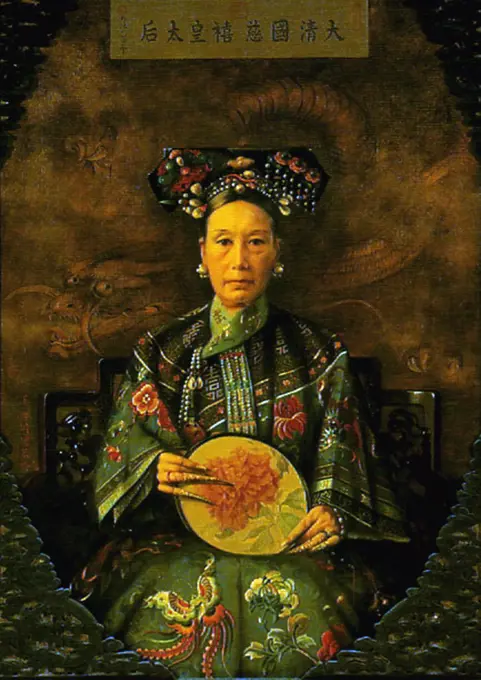
Empress Dowager Cixi (Wade-Giles: Tz'u-Hsi, 29 November 1835 - 15 November 1908) of the Manchu Yehe Nara Clan, was a powerful and charismatic figure who became the de facto ruler of the Manchu Qing Dynasty in China for 47 years from 1861 to her death in 1908.
1746-57661972
Genghis Khan (born Temüjin Borjigin, c. 1155 - c. 1162 - August 18, 1227), also officially Genghis Huangdi, was the founder and first Great Khan and Emperor of the Mongol Empire, which became the largest contiguous empire in history after his death
6145-30359429
Queen Mother of the West,Xiwangmu
1848-20007775
Buryat, woman from The Republic of Buryatia, Russia, in festive dress, Russia, 1881, digitally restored reproduction of a 19th century original, exact...
1746-30017284
Yeon Gaesomun, powerful military dictator in the waning days of the Goguryeo kingdom, which was one of the Three Kingdoms of ancient Korea. He is remembered for his successful resistance against Tang China under Emperor Taizong and his son Emperor Gaozong.
6145-48872084
Japanese Yakonin in Dress of Ceremony. Felice Beato (English, born Italy, 1832 - 1909)
1899-18711375
Emperor Yongle, 3rd ruler of the Ming Dynasty (r. 1402-1424). Personal Name: Zhu Di, Zhū Dì. Posthumous Name: Wendi, Wéndì. Temple Name: Chengzu, Chéngzǔ; Taizong, Tàizōng. Reign Name: Ming Yongle, Ming Yǒnglè. The Yongle Emperor was the third emperor of the Ming Dynasty of China from 1402 to 1424. His Chinese era name Yongle means 'Perpetual Happiness'. He became emperor by conspiring to usurp the throne which was against the Hongwu Emperor's wishes. He moved the capital from Nanjing to Beijing where it was located in the following generations, and constructed the Forbidden City there. After its dilapidation and disuse during the Yuan Dynasty and Hongwu's reign, the Yongle Emperor had the Grand Canal of China repaired and reopened in order to supply the new capital of Beijing in the north with a steady flow of goods and southern foodstuffs. He commissioned most of the exploratory sea voyages of Zheng He. During his reign the monumental Yongle Encyclopedia was completed. The Yongle Emp
1848-50229268
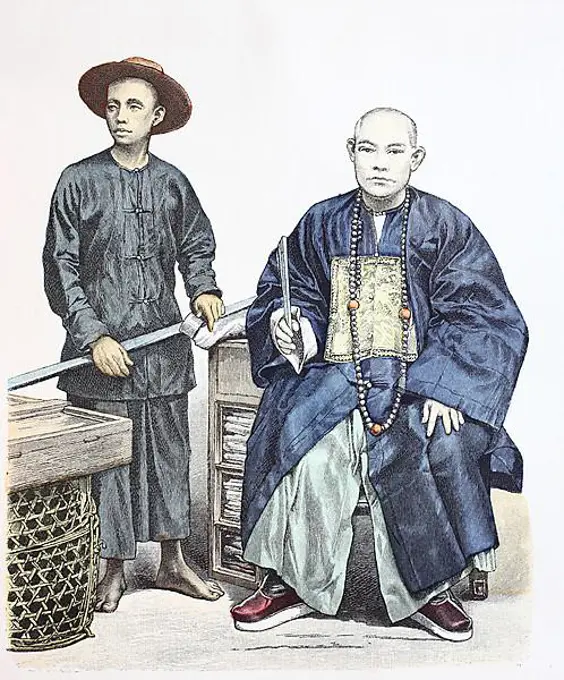
Folk traditional costume, clothing, history of costumes, Southern Chinese and merchant in Penang, China, 1880, digitally restored reproduction of a 19th century original, exact date unknown, Asia
1886-54110
Lama Tensing, a Sherpa lama at the Serlo Gompa monastery, Jumbesi, Solu, Nepal
6176-67082485
Buddhist deity, c1928. Creator: Unknown.
1746-30017247
Gojong the Emperor Gwangmu (1852 - 1919), was the last King of Joseon and the first Emperor of Korea. Emperor Emeritus of Korea 1907 - 1910 Emperor of Korea 1897 - 1907.
1899-18856374
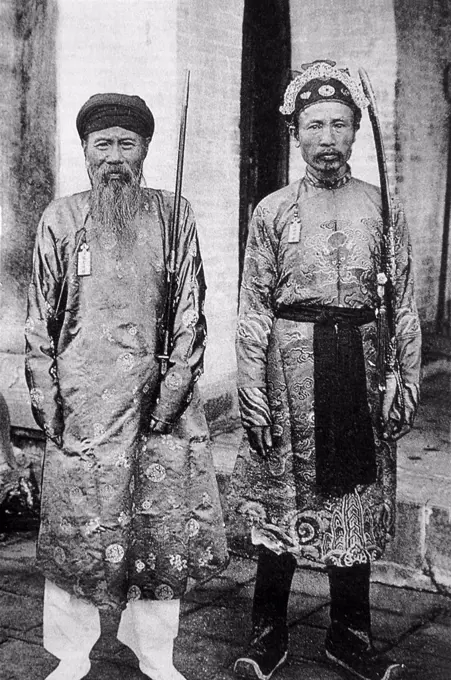
Huế originally rose to prominence as the capital of the Nguyễn Lords, a feudal dynasty which dominated much of southern Vietnam from the 17th to the 19th century. In 1775 when Trịnh Sm captured it, it was known as Phú Xun. In 1802, Nguyễn Phúc Ánh (later Emperor Gia Long) succeeded in establishing his control over the whole of Vietnam, thereby making Huế the national capital. Huế was the national capital until 1945, when Emperor Bảo Đại abdicated and a communist government was established in Hà Nội (Hanoi), in the north. While Bảo Đại was briefly proclaimed 'Head of State' with the help of the returning French colonialists in 1949 (although without recognition from the communists and the full acceptance of the Vietnamese people), his new capital was Sài Gòn (Saigon), in the south.
4443-28727480
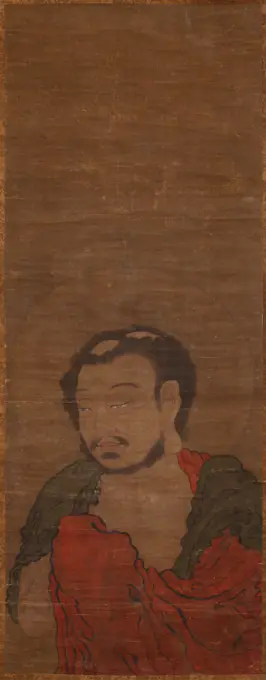
Sakyamuni, one of a pair, 13th century, Attributed to Yan Hui, Chinese, 68 × 21 1/8 in. (172.72 × 53.66 cm) (includes roller ends)37 11/16 × 14 5/8 in. (95.73 × 37.15 cm) (sheet), Ink and color on silk, China, 13th century, A professional painter, Yan Hui was especially known for his figure paintings of religious subjects. Here he depicted Sakyamuni (left), an Indian prince from the 400s BCE, whose teaching forms the underpinnings of Buddhism; and Bodhidharma (right), an Indian sage from the 500s CE, who advocated practicing meditation as a means of achieving spiritual enlightenment. Sakyamunis quiet, introspective character is suggested by his downcast eyes and gently inclined head, whereas Bodhidharmas aggressive nature is conveyed by his direct gaze. Yans choice of red for the robes of both holy men provides a visual connection between the two paintings.
1899-18718629
A scion of the Chao Chet Ton Dynasty that ruled Chiang Mai and the former Lan Na Kingdom as a tributary of the Siamese Chakri Dynasty in Bangkok from 1775 to 1939.
4409-66670852
Edad Antigua. Confucio (551 aC-479 aC), filósofo, pensador y educador chino, fundador de la escuela filosófica conocida como el confucionismo. Grabado de 1876.
1899-28702005
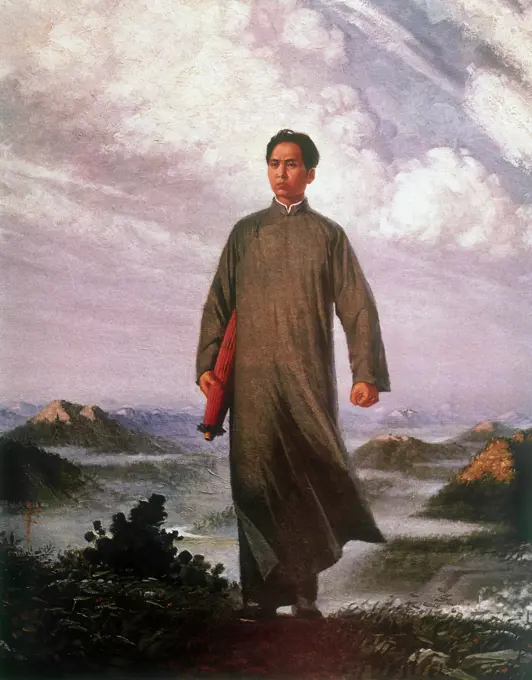
Mao Tse Tung.
7176-70563296
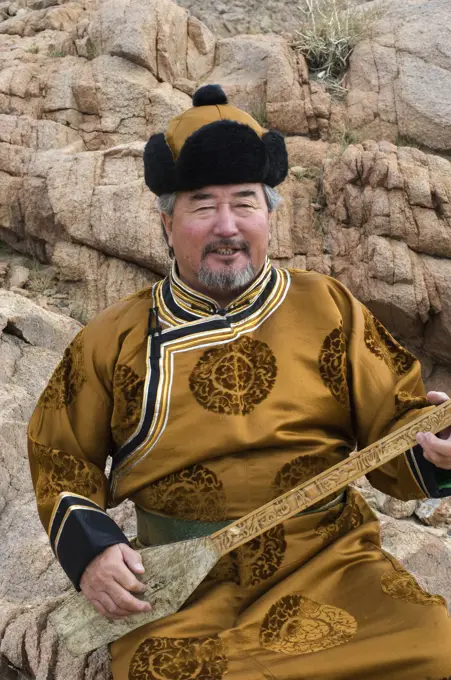
Sengedorj. N, ,throat singer. (MR)
1899-18711619
Ananda Mahidol (20 September 1925-9 June 1946) was the eighth monarch of Thailand under the House of Chakri. He was recognized as king by the National Assembly in March 1935. He was a nine-year-old boy living in Switzerland at this time. He returned to Thailand in December 1945. He was found shot to death in his bed in June 1946. Medical examiners ruled it a murder and three servants were later executed. His killing has been the subject of much controversy.
1899-18711617
Phra Bat Somdet Phra Poramentharamaha Vajiravudh Phra Mongkut Klao Chao Yu Hua, or Phra Bat Somdet Phra Ramathibodi Si Sintharamaha Vajiravudh Phra Mongkut Klao Chao Yu Hua, or Rama VI (1 January 1881 - 25 November 1925) was the sixth monarch of Siam under the House of Chakri, ruling from 1910 until his death. Vajiravudh is known for his efforts to create and promote Siamese nationalism. His reign was characterized by Siam's movement further towards democracy and minimal participation in World War I.
1899-18711605
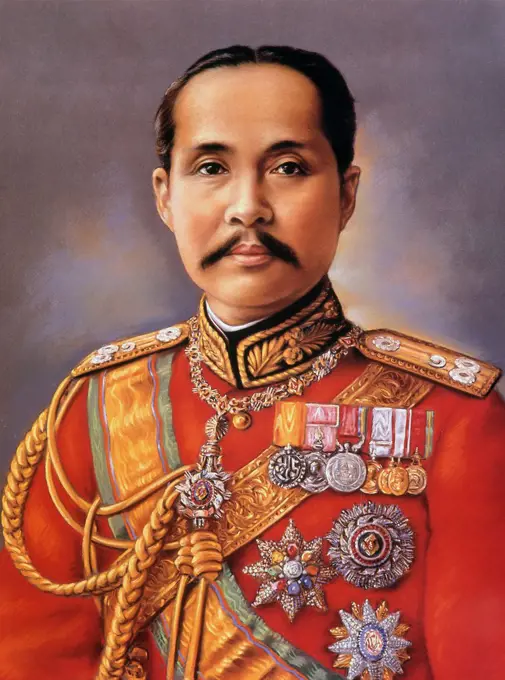
Phra Bat Somdet Phra Poramintharamaha Chulalongkorn Phra Chunla Chom Klao Chao Yu Hua, or Rama V (20 September 1853 - 23 October 1910) was the fifth monarch of Siam under the House of Chakri. He is considered one of the greatest kings of Siam. His reign was characterized by the modernization of Siam, immense government and social reforms, and territorial cessions to the British Empire and French Indochina. As Siam was threatened by Western expansionism, Chulalongkorn, through his policies and acts, managed to save Siam from being colonized. All his reforms were dedicated to Siams insurance of survival in the midst of Western colonialism, so that Chulalongkorn earned the epithet Phra Piya Maharat  - The Great Beloved King.
PREVIOUS
of 2
NEXT
2401 S. Ervay, Suite 206
Dallas, Texas 75215
United States
Get Started
Free ResearchMy BoardsMy Cart
For Creators
How To License Your ContentContributor PortalFrame of Mind
Resources
API accessPricing
Contact
+1 866 236 0087help@viewpictures.co.uk Contact form
©2026 View Pictures. All Rights Reserved. -A
This site is protected by reCAPTCHA and Google Privacy Policy and Terms of Service apply.