Cultural Textile Samplers

Unique textile pieces showcasing embroidery and designs from different periods, emphasizing craftsmanship and cultural heritage.

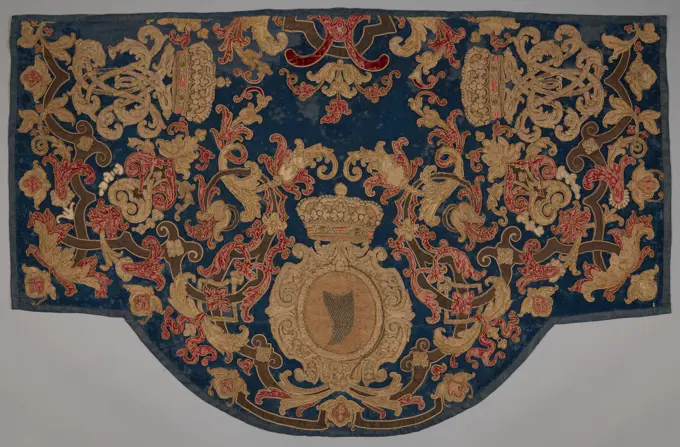
Chasuble;  XVII/18th century (1690-00-00-1710-00-00);Wróblewski, Bolesław (Fl. Ca 1926) - collection, gift (provenance), lace ornaments, plant ornaments, patterned fabrics
Chasuble; XVII/18th century (1690-00-00-1710-00-00);Wróblewski, Bolesław (Fl. Ca 1926) - collection, gift (provenance), lace ornaments, plant ornaments, patterned fabrics
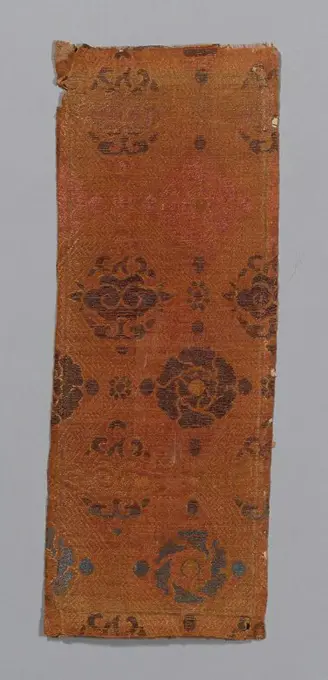
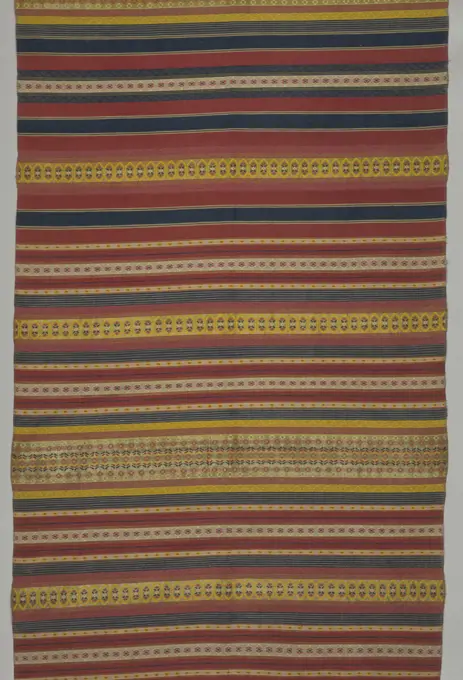
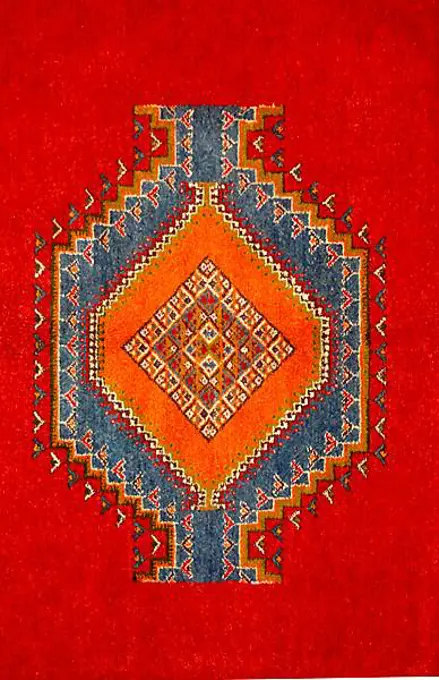
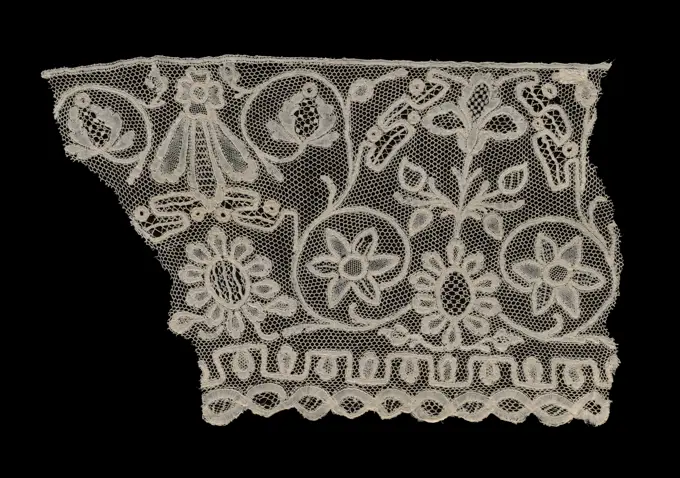
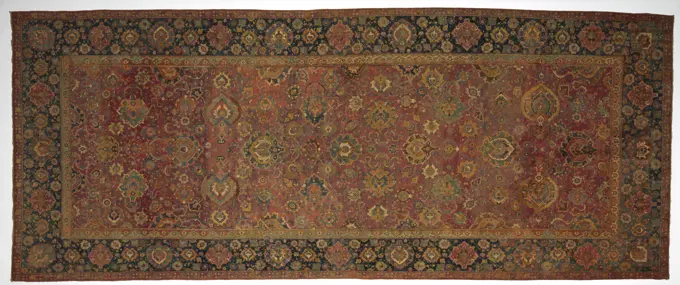
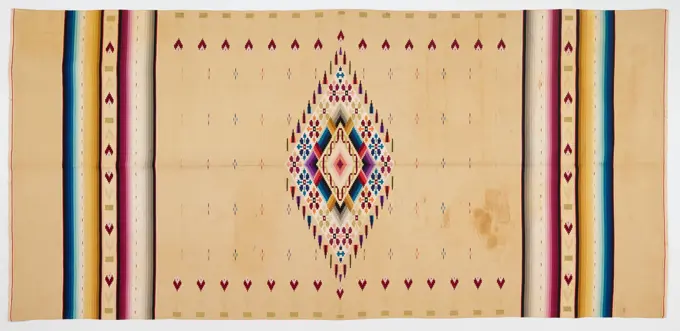
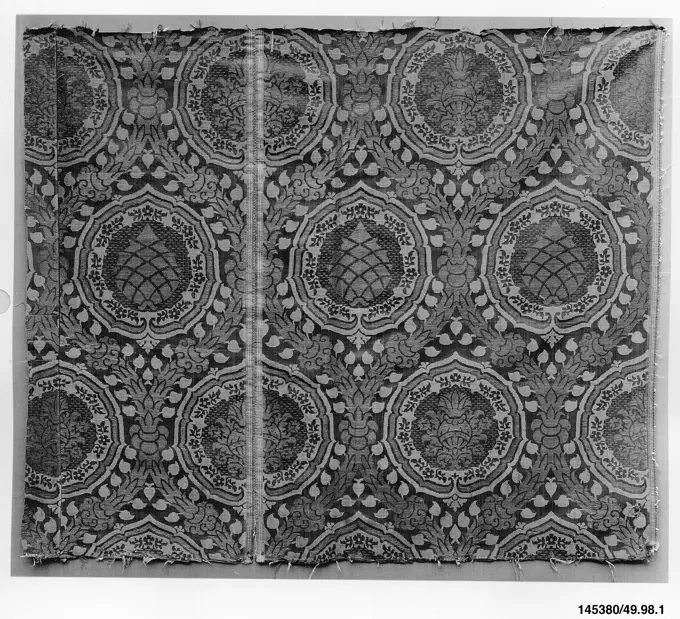
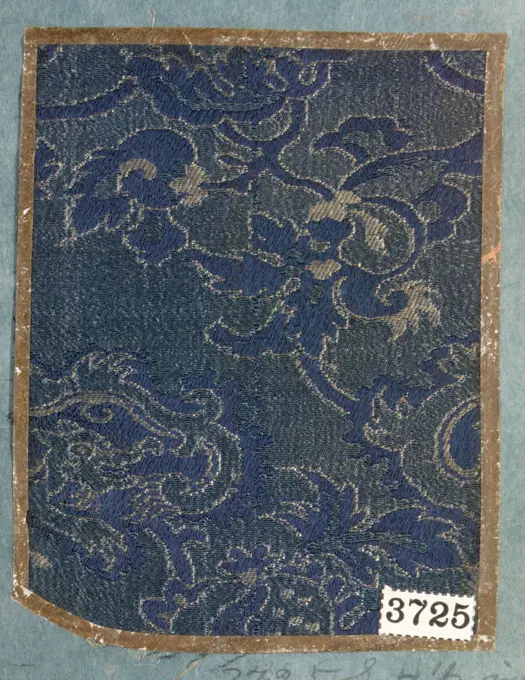
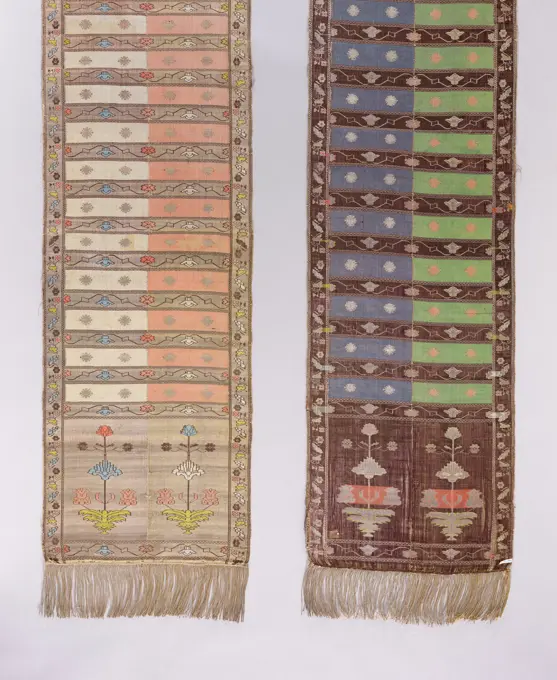
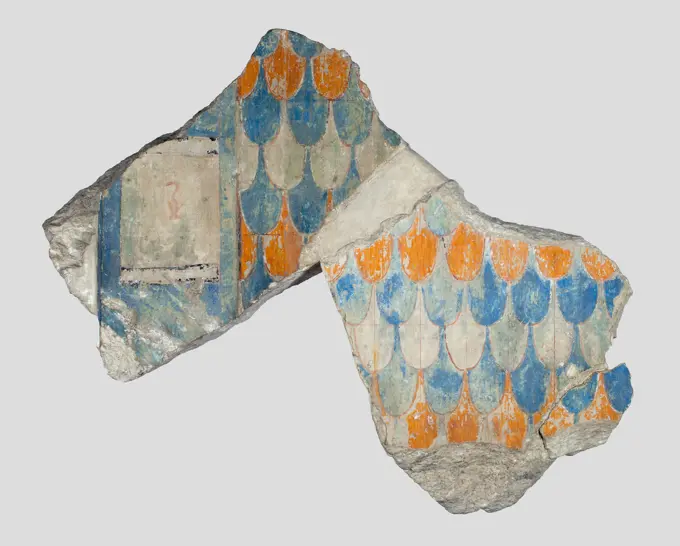
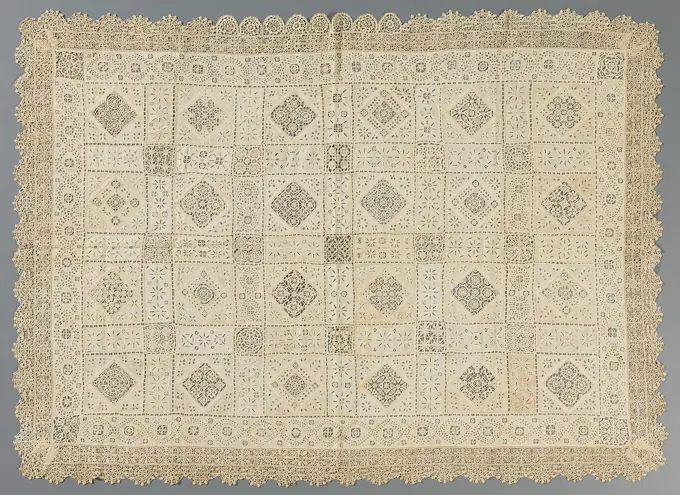
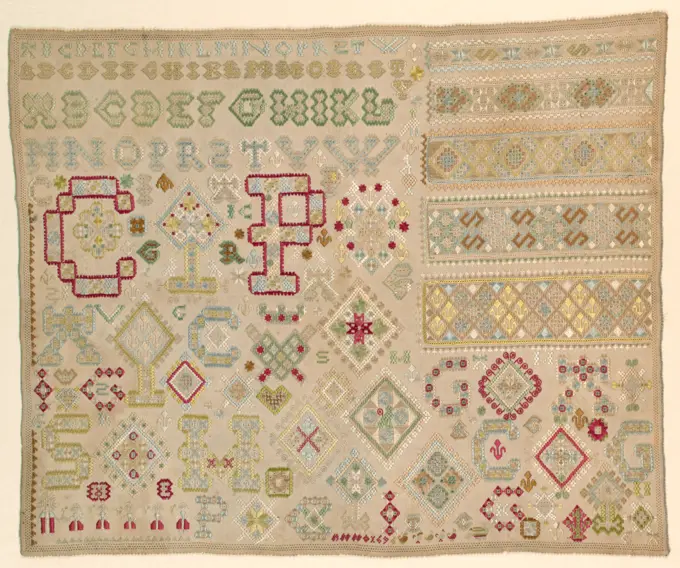
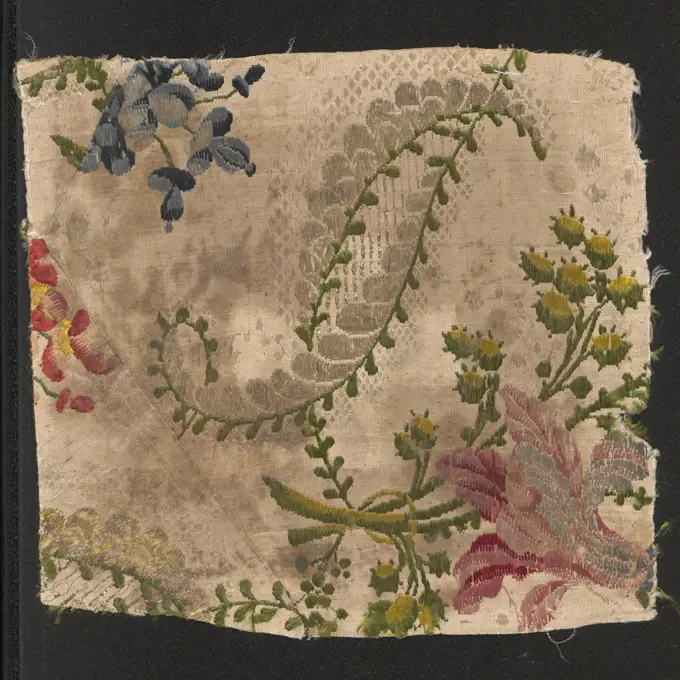
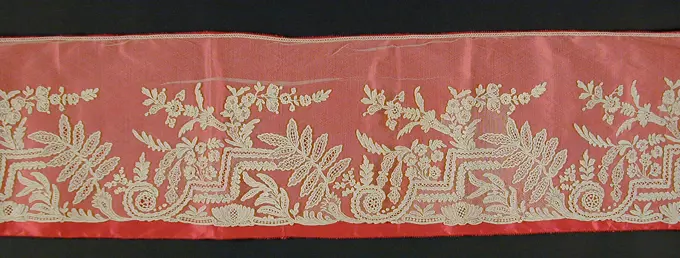
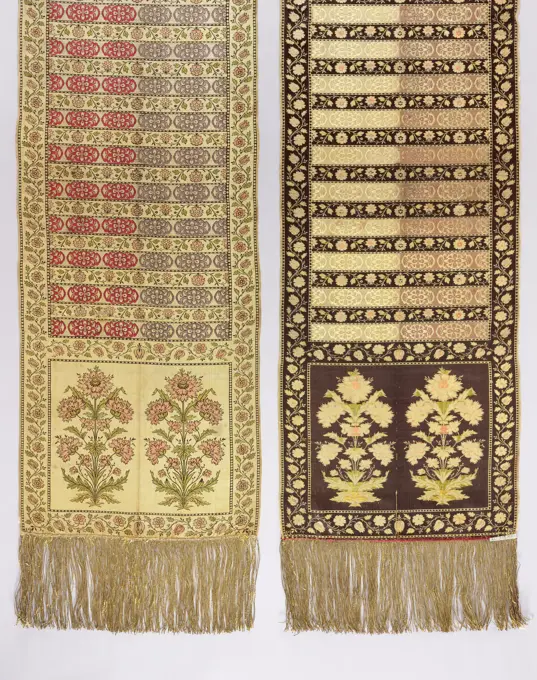
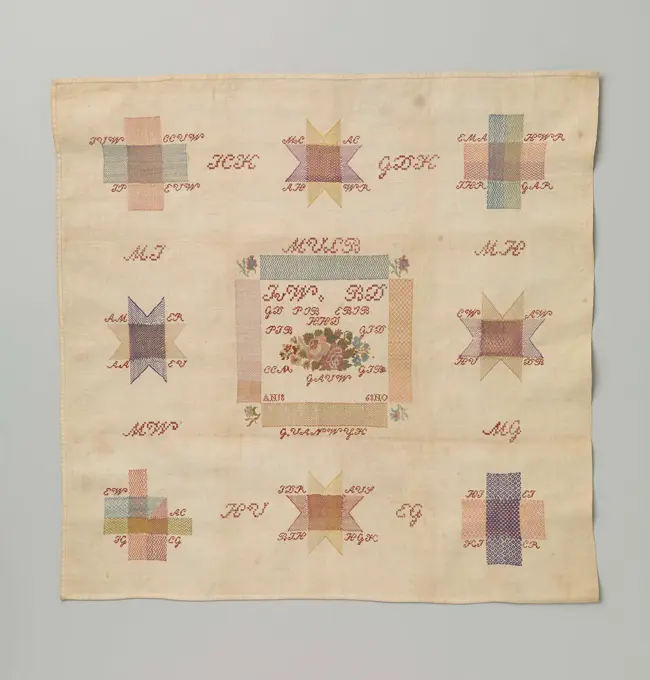
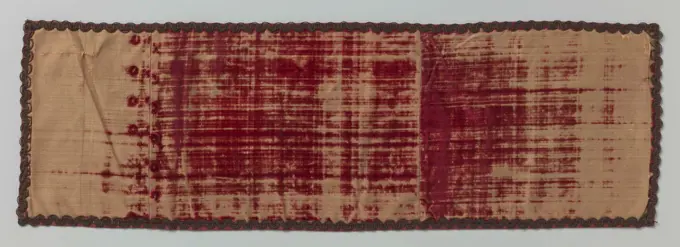
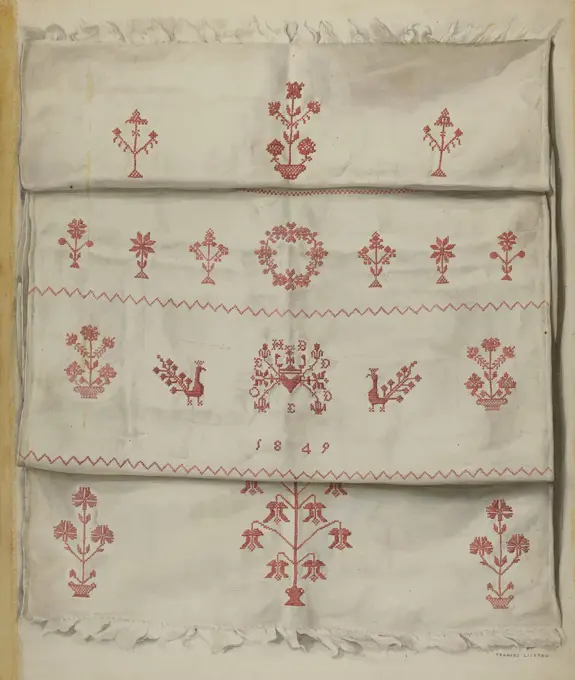
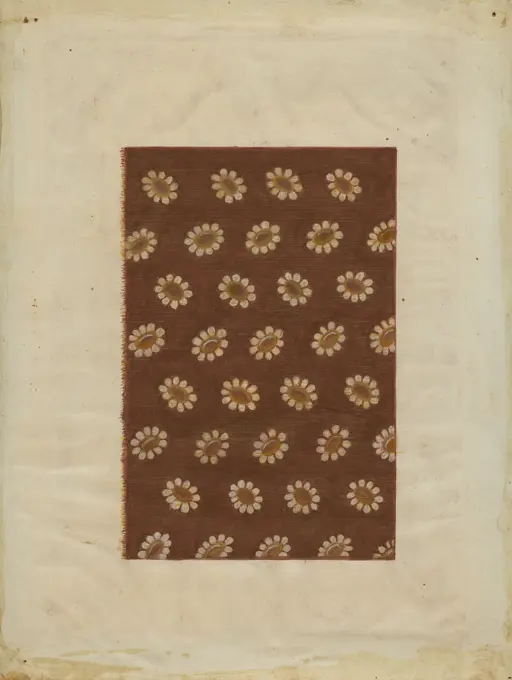
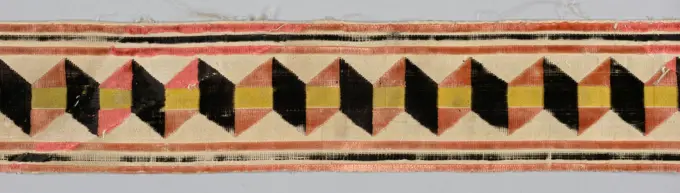
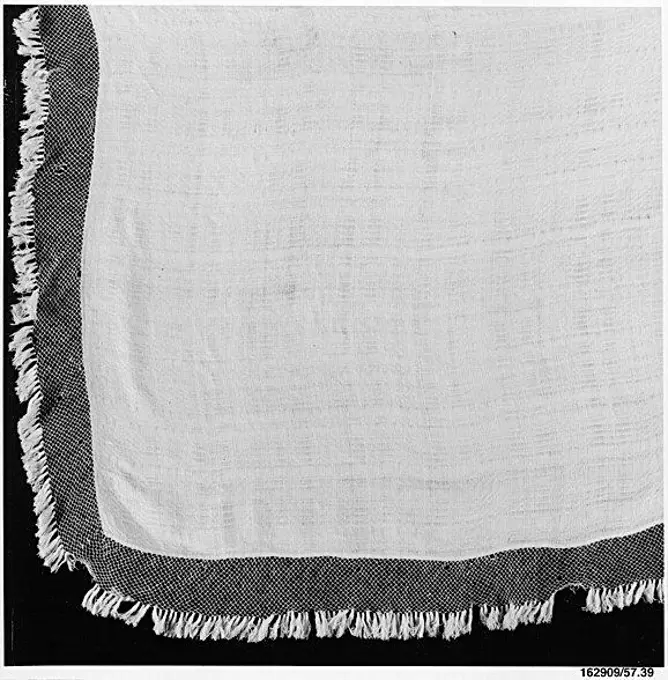
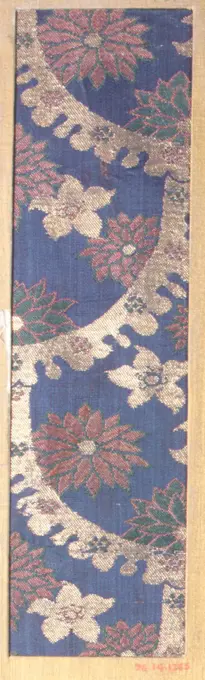
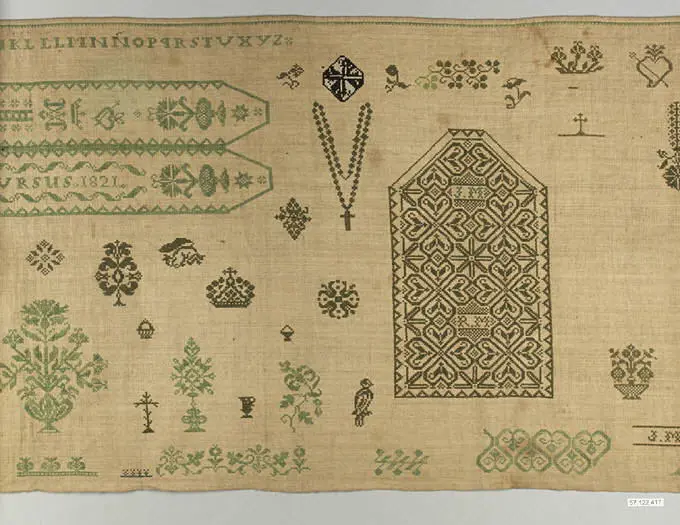
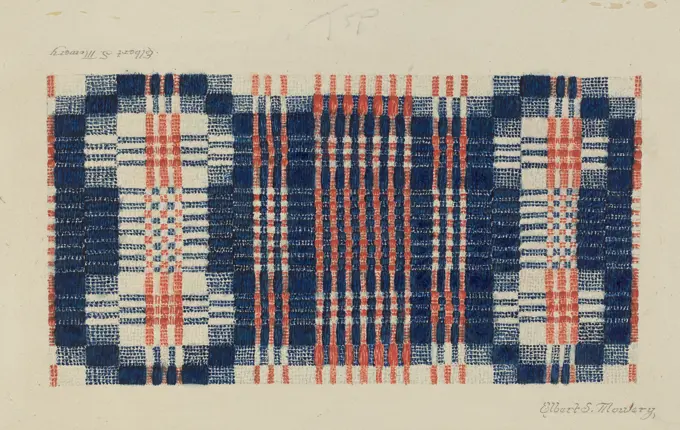
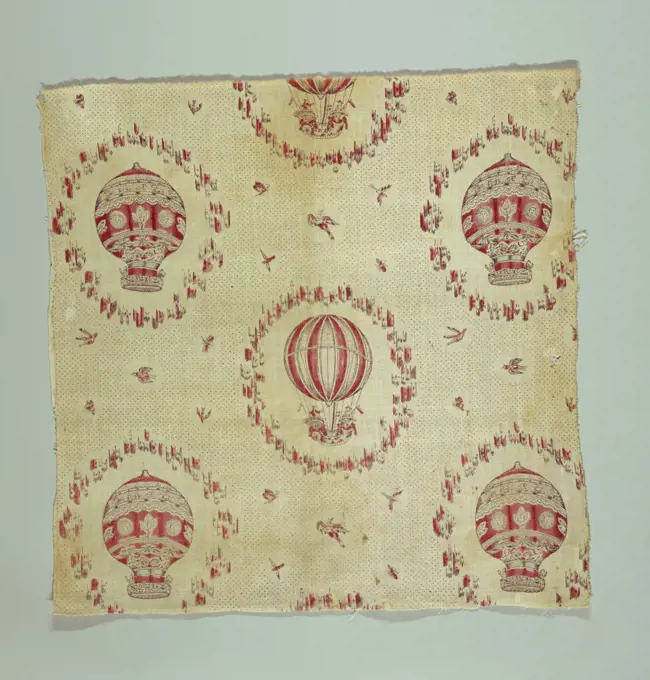
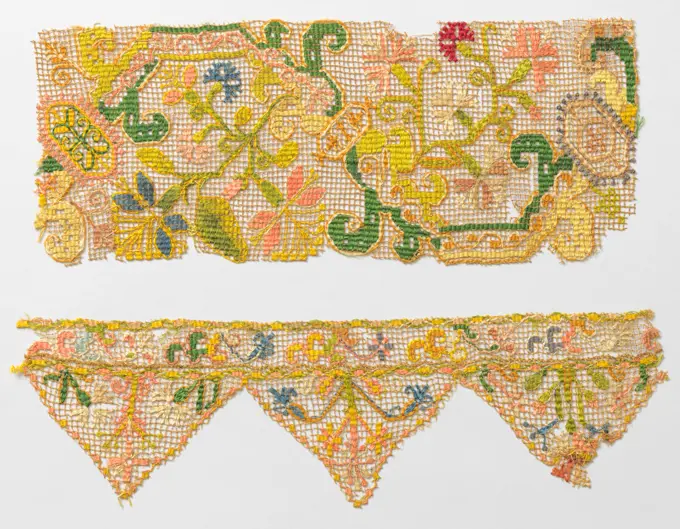
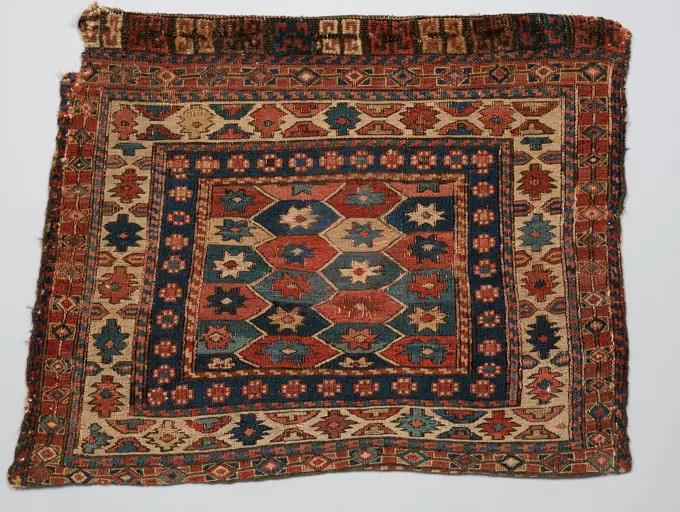
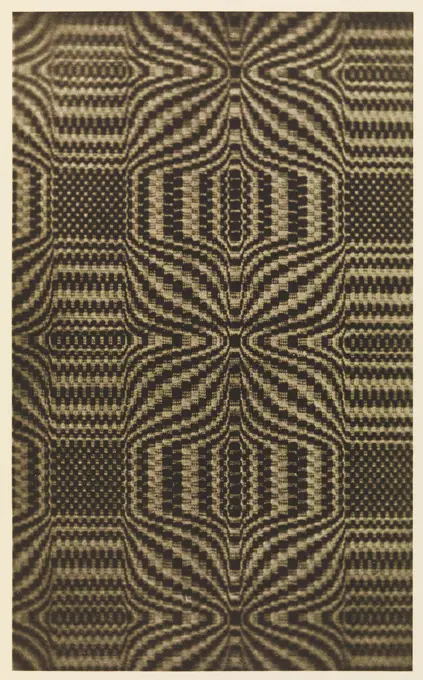
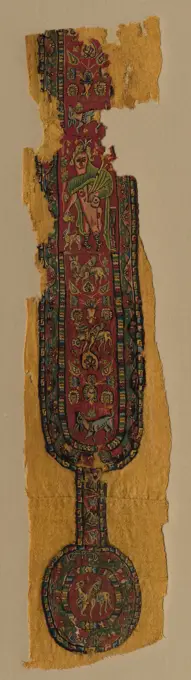
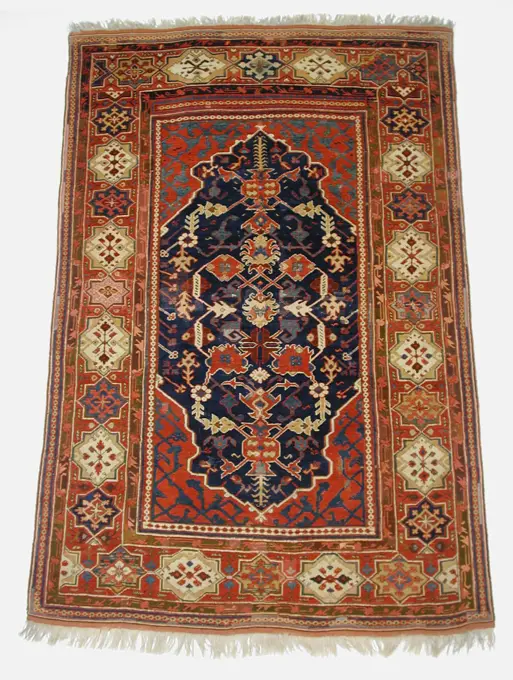
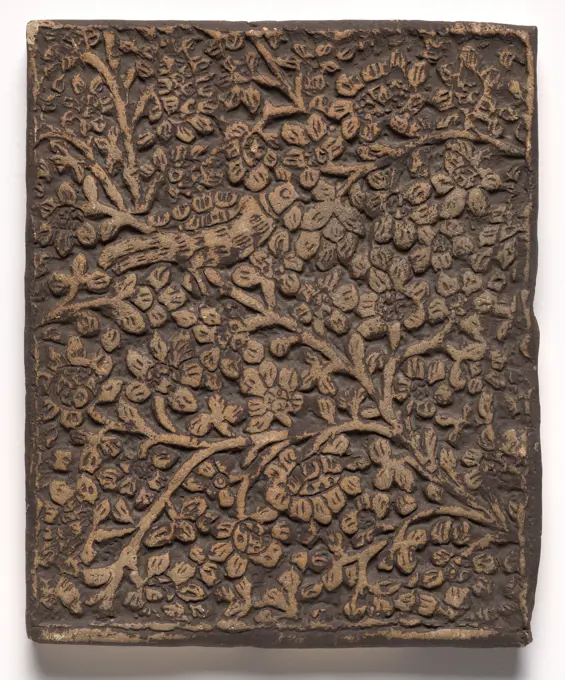
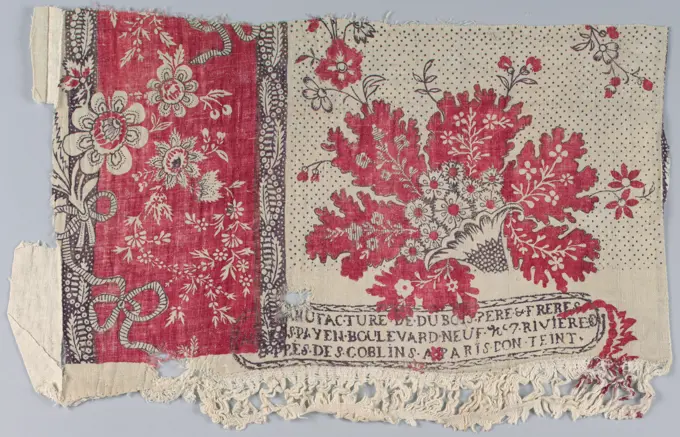
Fragment; silk on linen; Bequest of Marian Hague; 1971-50-61Sutra Cover. China. Date: 1590-1599. Dimensions: 36.2 × 13.7 cm (14 × 5 3/8 in.)Weft repeat: 9.2 cm (3 5/8 in.). Silk and cotton, warp-float faced 3:1 broken twill weave with supplementary patterning wefts some bound in weft-float faced 1:3 'S' twill. Origin: China. Museum: The Chicago Art Institute, Chicago, USA.Textile Fragment early 17th century. Textile Fragment 454523Piece 16th-17th century Italian. Piece 224410Border of a Shawl, 1800s. India, Punjab, 19th century. Tapestry twill; wool; overall: 18.5 x 64.8 cm (7 5/16 x 25 1/2 in.).Panel, 20th century, 30 1/4 x 31 1/2 in. (76.8 x 80.0 cm), Raffia; woven fabric, Democratic Republic of Congo, 20th centuryFragment, Medium: silk Technique: supplementary warp forming cut and uncut raised pile in plain weave foundation (velvet), Diagonal shapes in blue on tan ground., 17th century, woven textiles, FragmentPrzeszo Przyszoci unknownChinese ornamentTextile, Medium: wool, metallic thread Technique: twill plain weave with compound twill stripes, Design of horizontal stripes in varying thicknesses, the majority in red and others in dark blue, yellow and metallic thread. Hexagonal shapes have small rosettes and small geometric patterning. Fringes at ends., Near East or Syria, 19th century, woven textiles, TextileTextile, Medium: cotton, wool Technique: (2 sides) A: warp stripe, warp -faced plain weave; B: complementary warps; sides intact; ends with warp selvage, Rectangular piece made up of central section with border sewn on either side. Fringe on three sides. In the borders, warps form stripes in one part and bird designs in another. In the central section, warps form stripes in one part and design of interlocking birds' heads in another. Colors are brown, tan, and shades of red and yellow., Peru, 1000-1400, woven textiles, TextilePiece 18th century Japan. Piece 72189Bag (England); silk, silver-wrapped silk thread, linenCarpet Bazaar, Marrakech, Morocco, AfricaBobbin Lace Piece of Flounce made into a Cuff, 17th century. Flanders, 17th century. Lace, bobbin: linen; average: 22 x 32.4 cm (8 11/16 x 12 3/4 in.).Double Saddle Bag (Khorjin) ca. 1900. Double Saddle Bag (Khorjin). ca. 1900. Wool; pile weave (front), doublecloth, tapestry weave (back), sumak brocaded. From Iran, Fars. Textiles-Woven-BrocadeSkirt (KainKebat)Border Made 1800-1820 France. Satin and uncut velvet appliqued on white silk gauze .Steplap with different stopping .. Stop stack with embroidery. The embroidery has the crowned initials LGM, MMF, the crowned year 1801 and various stops.Hanging. unknown, authorSampler (England); silk embroidery, linen foundation; Warp x Weft: 65 x 16 cm (25 9/16 x 6 5/16 in.); Bequest of Mrs. Henry E. Coe; 1941-69-109Stomacher ca. 1710 British. Stomacher. British. ca. 1710. linenChurch cope. unknown, authorWall pocket, Medium: silk, metallic thread Technique: embroidery on salmon (faded) and blue silk plain weave; stem, knot, satin and chain stitches using dyed silks; couched gold-wrapped silk and strips of silver foil; plus attached coils of silver and gilt wire., Wall pocket with three pockets and highly ornamental shaped top. Two pockets of pale blue silk, one of faded rose, embroidered in symmetrical floral designs in silk and heavy gold thread and looped wire. At the top a small bird in an elaborate enframement. Bound with blue silk tape and lined with pale pink linen., Austria, Germany or Switzerland, late 17th century, embroidery & stitching, Wall pocketCarpet, 1500s. Iran, Herat, 16th century. Senna knot: wool and cotton; average: 771.7 x 307.3 cm (303 13/16 x 121 in.).Serape, c. 1900, 77 7/8 × 36 15/16 in. (197.8 × 93.82 cm), Cotton, silk, pigments, Mexico, 20th centuryPiece 16th century Italian. Piece 227475Sash 1790 () Manufactured by Jacob Paschalis. Sash 219020Beadwork Panel (England); beads, linenFragment embroidery on a red tissue, c. 1580 Red tissue of wool and linen with multi -colored embroidery. The pattern has an ornament edge of curls and flowers on a ground of moesjes.  linen (material). satin. wool. silk embroidering Red tissue of wool and linen with multi -colored embroidery. The pattern has an ornament edge of curls and flowers on a ground of moesjes.  linen (material). satin. wool. silk embroideringCushion Cover 18th century. Cushion Cover. 18th century. Silk and cotton. Attributed to Turkey, Bursa. Textiles-WovenTextile Sample from Sample Book 19th century Japan. Textile Sample from Sample Book 68202Sampler (Mexico); silk and linen embroidery on linen foundationSquare 18th-19th century. Square 445654Towel border 1800-1850 Russian. Towel border 173362Towel 18th century Greek Islands or Sardinian. Towel 227638Piece of fabric. unknown, authorConciliate belt; Daniel Chmielewski's studio (Kraków; Pasów label; 1796-1825), studio of Antoni Pułiowski (Kraków; Pasów label; 1793-1800); XVIII/19th century (1790-00-00-1810-00-00);Carpet (Kilim), late 19th-early 20th century. Turkey, Anatolia, late 19th-early 20th century. Tapestry weave: wool and cotton; average: 197 x 137.2 cm (77 9/16 x 54 in.).Ruth M Barnes, Hooked Rug, c 1936 Hooked RugRelief fragment with feather pattern ca. 2040-1300 B.C. Middle Kingdom-early New Kingdom This painted relief depicts part of a throne with a feather pattern. Two fragments (X.631.3 and 2006.82.1) have been joined here.. Relief fragment with feather pattern. ca. 2040-1300 B.C.. Limestone, paint. Middle Kingdom-early New Kingdom. Probably from Upper Egypt, Thebes, MMA excavations; From EgyptSpread from linen with embroidery and reticella. Suspended Linen Squares and Rectangles sewn from each other, that Ajour are embroidered (open sewing) with oval leaves, in which a length axis of a double wire is always running. Around a branch side - reticella - and a slip strip runs around. The embroidery exhibits stars, rosettes, leaves and daisies. The side has a pattern of wheels and stars. Around the bedspread a strip walks linen with a double garland from ovals and squares. MDL (1550) is embroidered in the outside.Trimming of embroidered shawl unknownBurnoose, Narrow Shawl, or Scarf Made 1852-1872 France. Silk and wool, warp threads dyed in multiple colors prior to weaving; center of weft-float faced 1 3 'Z' twill weave; patterned areas of weft-float faced 3 1 twill weave with supplementary patterning wefts bound in weft-float faced 1 3 'Z' twill interlacings over warp-float faced twill weave; main warp fringe; woven on loom with Jacquard attachment .Sampler (Netherlands); silk embroidery on linen foundationPiece 18th-19th century Japan. Piece. Japan. 18th-19th century. Silk. Textiles-WovenSampler. Culture: British. Dimensions: H. 13 1/4 x W. 13 inches (33.7 x 33 cm). Date: 1798. Museum: Metropolitan Museum of Art, New York, USA.Mandarin emblem of Buzi civil clerk fourth rank with the image of a wild goose unknownFragment of the fabric;  18th century (1701-00-00-1800-00-00);Bobińska, Jadwiga (1862 - 1940) - collection, gift (provenance), fabricsCharlotte Angus, Crib Quilt, 1935 1942 Crib QuiltWoman's Pocket. England, 1753. Costumes; Accessories. Wool, cotton, silk, linenSampler (Mexico); Embroidered by Maria Rosa Masedo; silk embroidery on cotton foundationFragment of Lace. France, mid-19th century. Textiles; fragments. Linen point d'Alençon or d'Argentan on cotton netConciliate belt;  18th century (1701-00-00-1800-00-00);Plug of multicolored silk on cotton. Silk stopper on cotton. The embroidery has a square in the middle in which a flower bouquet, initials and the year Anno 1868. Below the square is the name G. van Wyk. Around the square are cross and star-shaped embroidered between which letters in red.Kazuifel of light blue satin, embroidered with gold and silver thread and with blood corals, grenades and pearls, anonymous, c. 1675 - c. 1700 Kazuifel of light blue satin with embroidery of gold and silver thread, blood corals, grenades and pearls. The embroidery has two symmetrical spiral vines such as side lanes and one as a central track, with an ongoing tivulus pattern ending in golden flowers with silver blades. The flower hearts are filled with corals, grenades, pearls and a single stras diamond. The Kazuifel is part of six ecclesiastical embroidery with invnrs. BK-1966-54-A to BK-1966-54-F. Italy satin. silver thread. red coral (material). garnet (mineral). pearl. paste (glass) embroidering Kazuifel of light blue satin with embroidery of gold and silver thread, blood corals, grenades and pearls. The embroidery has two symmetrical spiral vines such as side lanes and one as a central track, with an ongoing tivulus pattern ending in golden flowers with silver blades. The flower heKleed van rood zijden fluweel..Dress of red silk velvet. The rug consists of three fragments. The rug is lined by a brown tinted gold gallon. The rug is lined with red satin.Baby Carrier, 31-7/8 x 28-3/8 in. (81.0 x 72.1 cm), Cotton, beads; needlework, ChinaBag (USA); cotton, glass and ceramic beadsConciliate belt;  18th century (1701-00-00-1800-00-00);Frances Lichten, Pa German Linen Towel, c 1937 Pa. German Linen TowelFlorence Stevenson, Calico, c 1936 CalicoTextile,ThailandTextile (Peru); cotton, woolNeedlework sampler unknownTrimming (France); silkFragment red lampas with pattern of stylized leaves, lions and the weapon of Granada, Anonymous, c. 1300 - c. 1599 Fragment red lampas with pattern in blue, green, white and gold from stylized leaves and flowers and ditto lions with surrounded head, as well as crowned coats of arms with diagonal bar (the weapon of Granada with leaves). Spain silk. lampas (textile material) Fragment red lampas with pattern in blue, green, white and gold from stylized leaves and flowers and ditto lions with surrounded head, as well as crowned coats of arms with diagonal bar (the weapon of Granada with leaves). Spain silk. lampas (textile material)Textile Swatches Onondaga Silk Company, Inc. (1925-1981). , 1948-1959. 52 Poliamide, 26 acetate, 22 metal, a: 17 1/2 x 18 1/2 in. (44.5 x 47 cm).    1948-1959Fragment (possibly Spain); silkBorder 16th century Italian. Border 214800End of a cover late 18th-early 19th century Hungarian, Slovakia (South Netra). End of a cover 215362Fragment Zijdelampas, Anonymous, 1720 - 1725 Fragment (4) of silk tissue with gold and silver thread, with a pattern of large flowers. France (possibly) silk. metal thread lampas (textile material) Fragment (4) of silk tissue with gold and silver thread, with a pattern of large flowers. France (possibly) silk. metal thread lampas (textile material)Tablecover ca. 1830 Olive Crocker Lovell. Tablecover 14131Fragments of Peruvian fabric unknownPiece 18th-19th century Japan. Piece. Japan. 18th-19th century. Silk. Textiles-WovenSampler 1821 Spanish. Sampler 228342Elbert S Mowery, Coverlet  Gentleman's Fancy, 1935 1942 Coverlet: Gentleman's FancyFragments, Medium: cotton Technique: block printed on plain weave, Two different balloons arranged in vertical stripes as an offset pattern. Both balloons have baskets carrying passengers and are probably after contemporary prints of balloonists. Picottage background with scattered birds and butterflies. In black, two reds, lavender and blue., France, 1770-90, printed, dyed & painted textiles, FragmentsFragment, Medium: cotton Technique: block-printed on plain weave, Fragment of cotton block-printed in purple, brown, red, and green on cream-colored ground. All-over stylized floral patter resembling pansies., Jaipur, Rajasthan, India, late 18th-early 19th century, printed, dyed & painted textiles, FragmentFragments (Italy); silk, linen hand knotted netAntepensium decorated with floral motifs, 1889 photograph  European Printer: Munich paper. printing ink collotype 11Q71422 antependium, frontal. flowers ~ ornament EuropeFace from Half of Double Saddle Bag (Khorjin) ca. 1800. Face from Half of Double Saddle Bag (Khorjin). ca. 1800. Wool; sumak brocaded, pile weave, symmetrically knotted pile. From Northwestern Iran. Textiles-Woven-BrocadeBag (France); silk, metallic threadsShawl Made 1850-1860 India. Red cashmere with borders embroidered in multicolor silk .Book Illustration, A Book of Hand-woven Coverlets, Hickory LeafClavi (Decorative Band), 700s. Egypt, Umayyad period (661-750) or Abbasid period (750-1258). Wool; plain weave with slit-tapestry weave; overall: 80 x 17.8 cm (31 1/2 x 7 in.); mounted: 92.7 x 68.6 cm (36 1/2 x 27 in.). Classical figures and winged animals remained popular during the early Islamic period. The nude male may portray Dionysus, Greek god of wine; he holds his thyrsus, a staff ornamented with ivy leaves and pine cones, as he pours liquid from a small jug for the panther. These colorful designs would have decorated the front or back of a tunic and one sleeve. Elaborate embellishments were cherished. Thus, once a tunic began to fray, its decoration was sewn onto a new one, as seen on this winter-weight woolen tunic cloth. Its finely detailed motifs, some with eccentric drawing, are woven in tapestry weave, the equivalent of painting with weft thread; discontinuous horizontal wefts are interlaced only where needed in the design.Handkerchief (USA); linenFragment Of A Medallion (Egypt); warp; s-spun, z-twist linen. wefts; s-spun linen, s-spun woolCushion Cover or Kneeling Mat China. Cushion Cover or Kneeling Mat. China. Foundation: cotton warp and weft; wool knotting. Qing dynasty (1644-1911), Kangxi period (1662-1722). Textiles-RugsTextile Fragment 3rd-4th century. Textile Fragment 443397Sampler 19th century Greek. Sampler 227993'Transylvanian' Carpet probably 17th century Large numbers of western Anatolian carpets such as this one were imported into Europe during the seventeenth and eighteenth centuries. So many were donated as pious gifts to churches throughout Romania and Hungary that they came to be known as "Transylvanian" carpets. Identifiable by distinctive border designs, their central motif likely is based upon Turkish prayer rugs. They were popular in Europe well into the nineteenth century. Listen to experts illuminate this artwork's story Listen Play or pause #6647. Overview: Later Anatolian Carpets Supported by Bloomberg Philanthropies We're sorry, the transcript for this audio track is not available at this time. We are working to make it available as soon as possible.. 'Transylvanian' Carpet 447548Tile- Bird Amid Foliage, before 1921. Moravian Pottery and Tile Works. Unglazed ceramic; overall: 14 x 17.2 cm (5 1/2 x 6 3/4 in.).Gobelin cover;  PO PO. 18th century (1750-00-00-1780-00-00);Ribbon Sample (France); silk, metallic threadSampler (Netherlands); Embroidered by Trntie Doddes; silk embroidery and linen overcasting on linenVelvet Fragment, 1600s. Italy, Genoa, 17th century. Velvet; overall: 12 x 56.1 cm (4 3/4 x 22 1/16 in.).Militaria, Italy, 20th century. Handkerchief given to the recruits, 1912.Fragments (France); Made by DuBois Pere et Freres; cotton; Warp x Weft (a): 32.5 x 49.5 cm (12 13/16 x 19 1/2 in.) Warp x Weft (b): 36.5 x 10 cm (14 3/8 x 3 15/16 in.); Bequest of Elinor Merrell; 1995-50-9-a,bBorder 18th century Greek Islands, probably Cephalonia. Border 216480