Cultural Textile Samplers

Unique textile pieces showcasing embroidery and designs from different periods, emphasizing craftsmanship and cultural heritage.

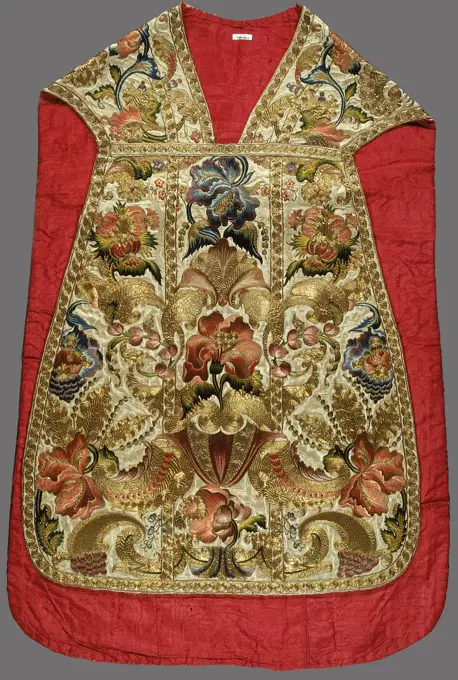
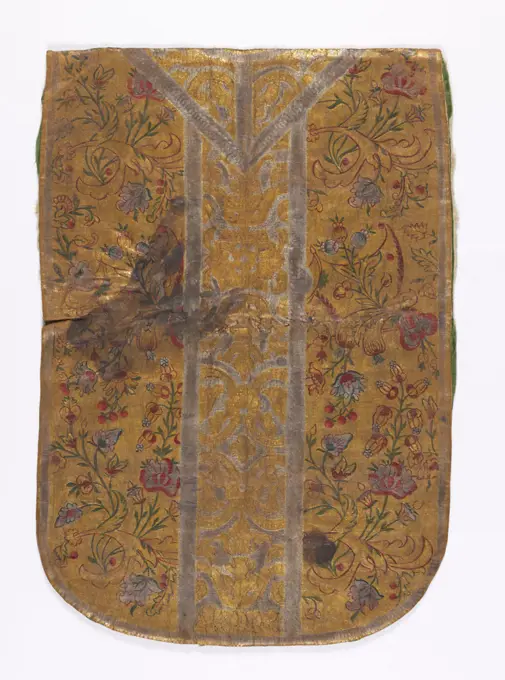
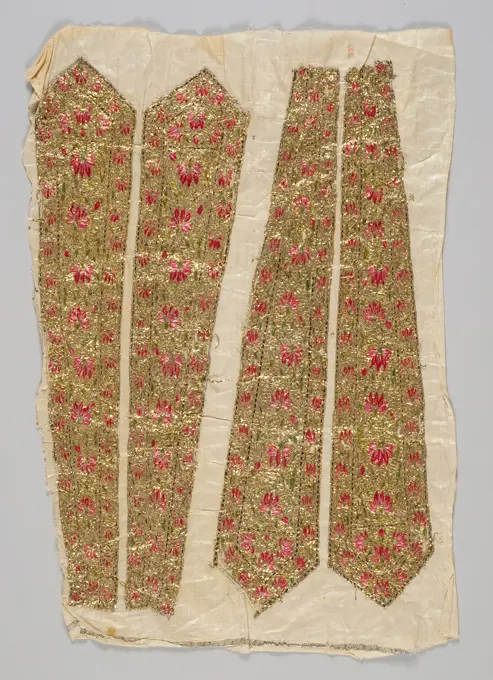
Chasuble;  XVII/18th century (1690-00-00-1710-00-00);Wróblewski, Bolesław (Fl. Ca 1926) - collection, gift (provenance), lace ornaments, plant ornaments, patterned fabrics
Chasuble; XVII/18th century (1690-00-00-1710-00-00);Wróblewski, Bolesław (Fl. Ca 1926) - collection, gift (provenance), lace ornaments, plant ornaments, patterned fabrics
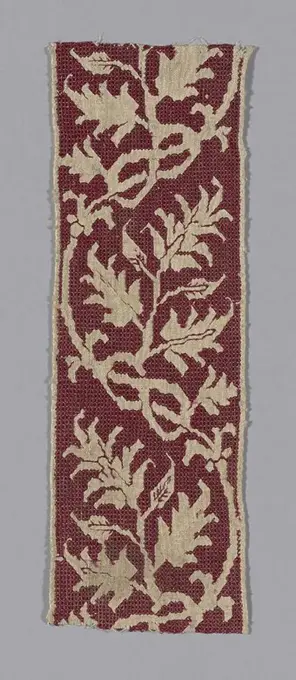
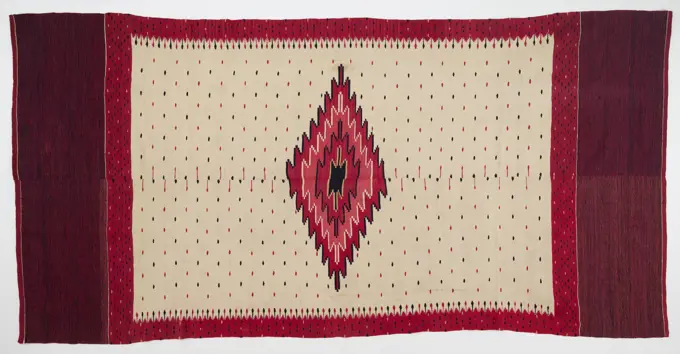
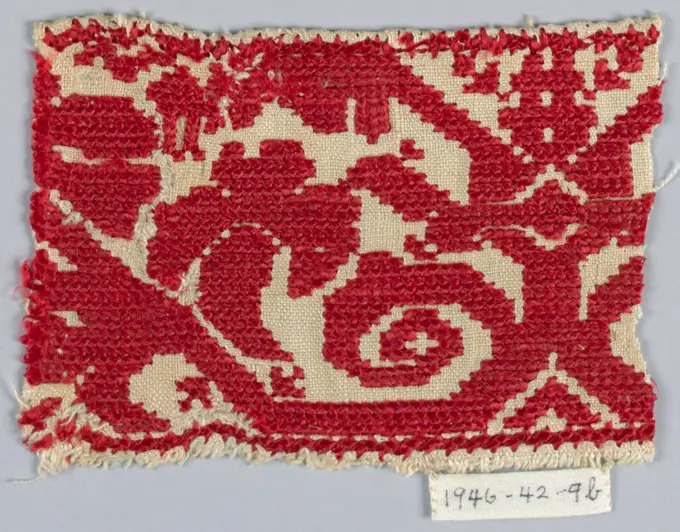
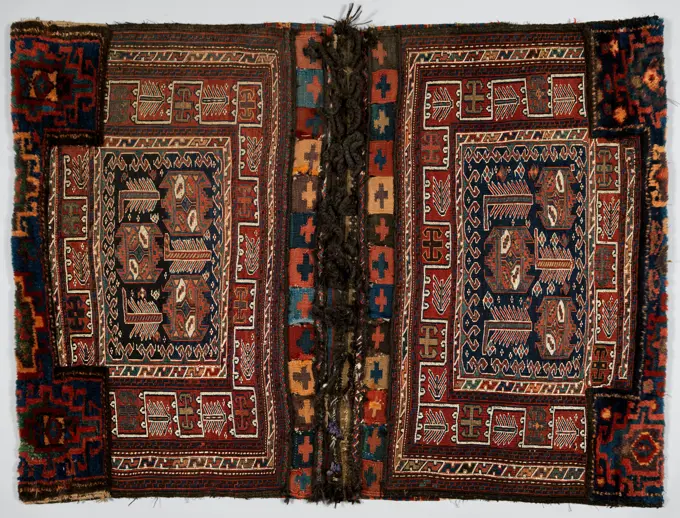
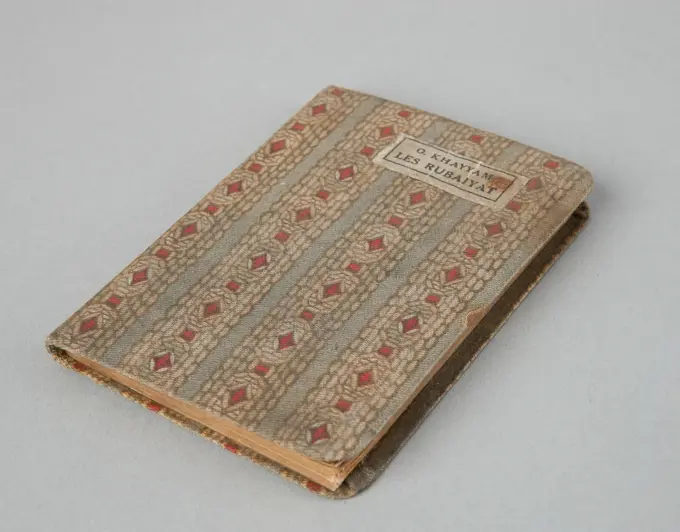
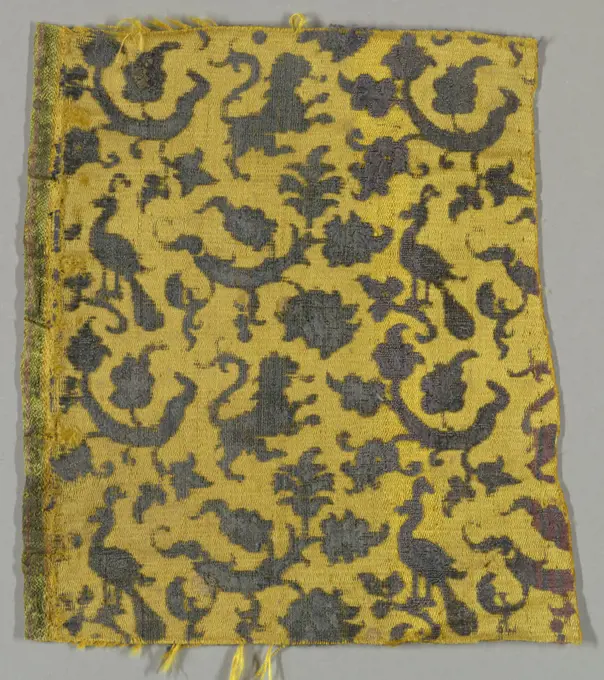
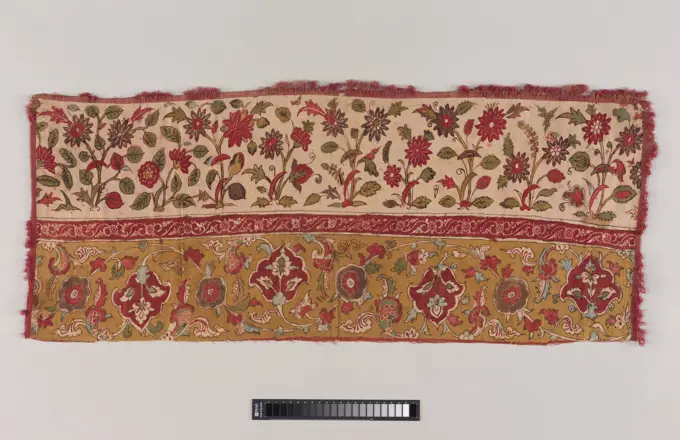
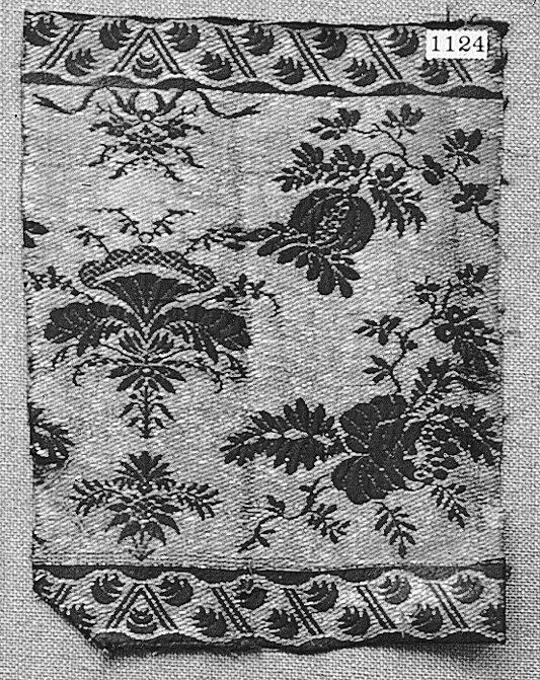
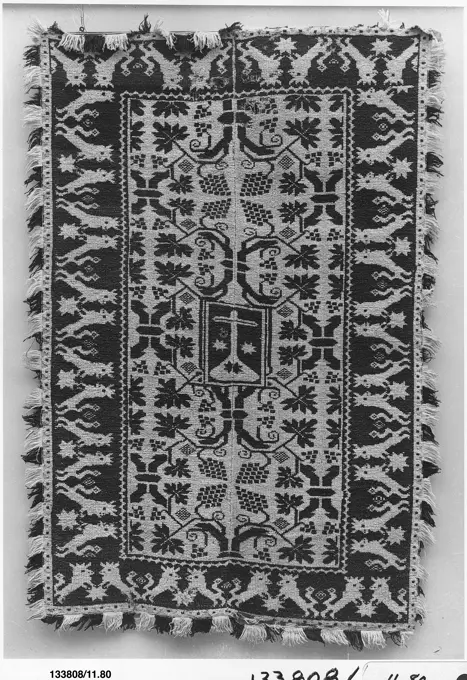
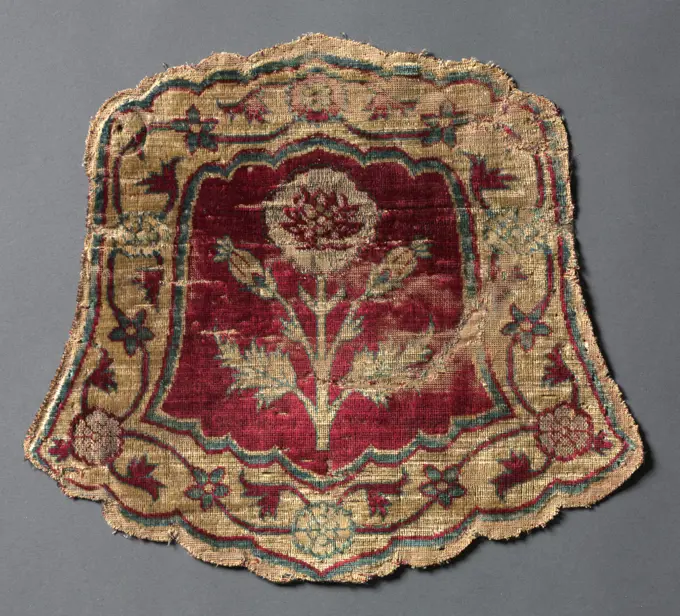
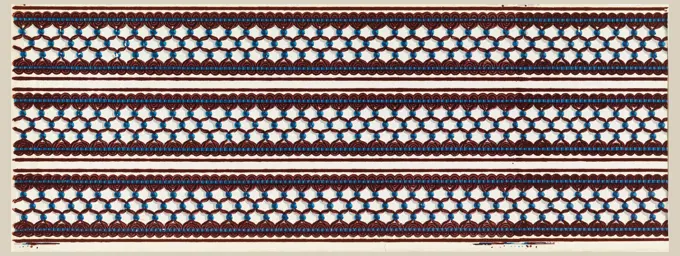
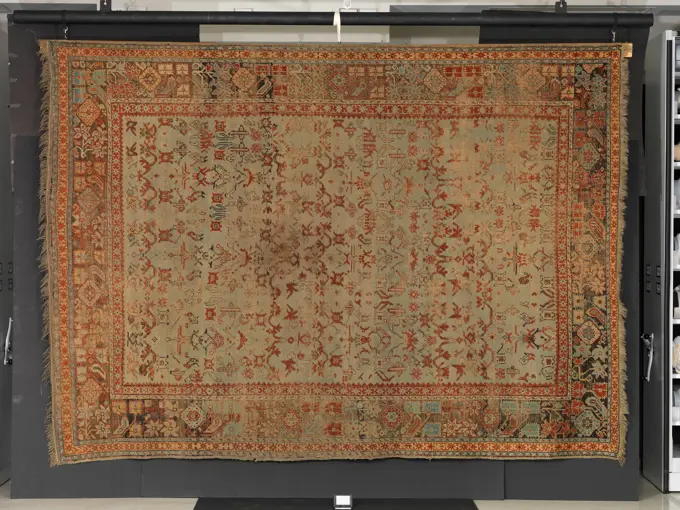
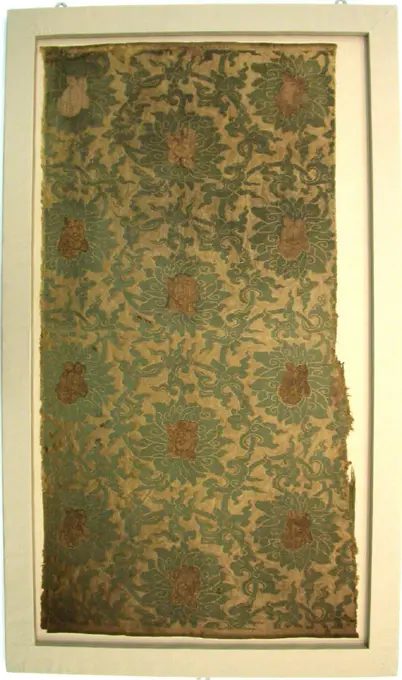
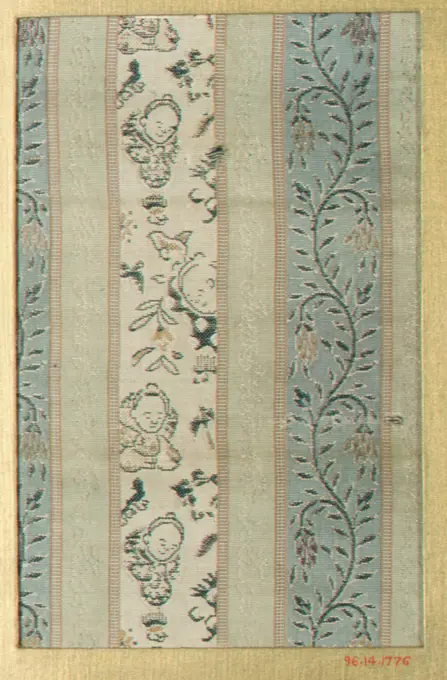
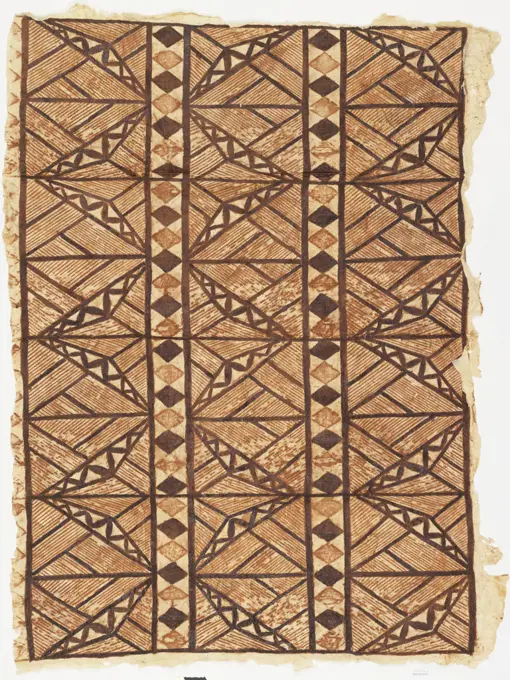
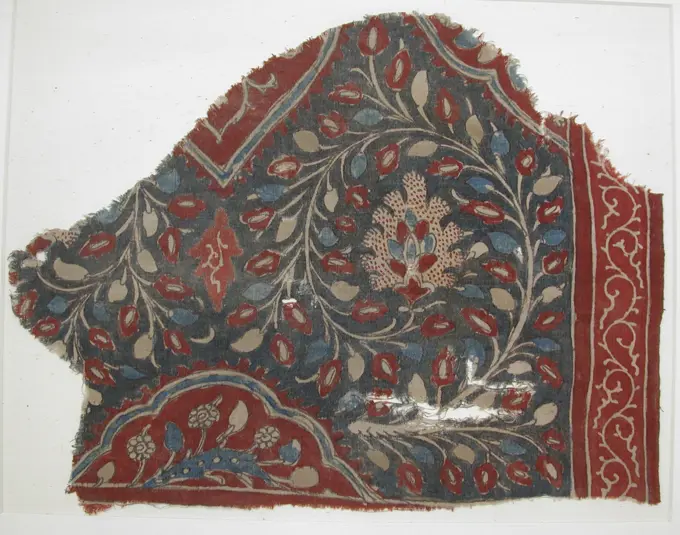
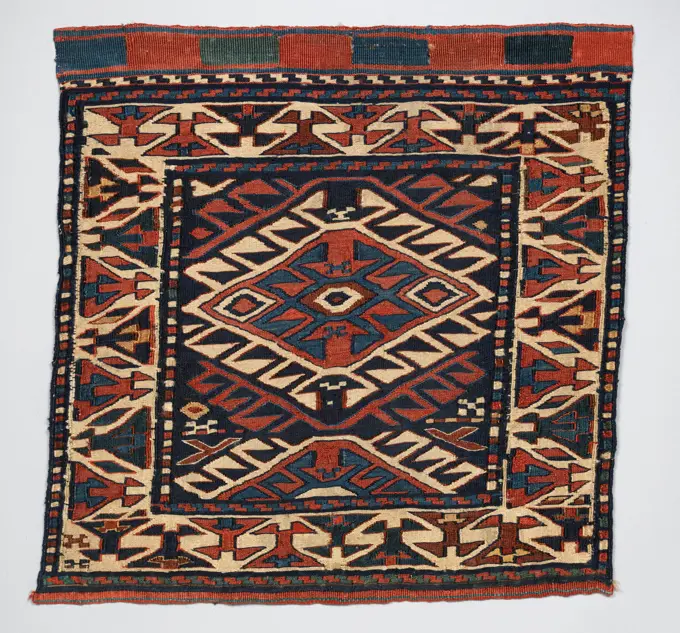
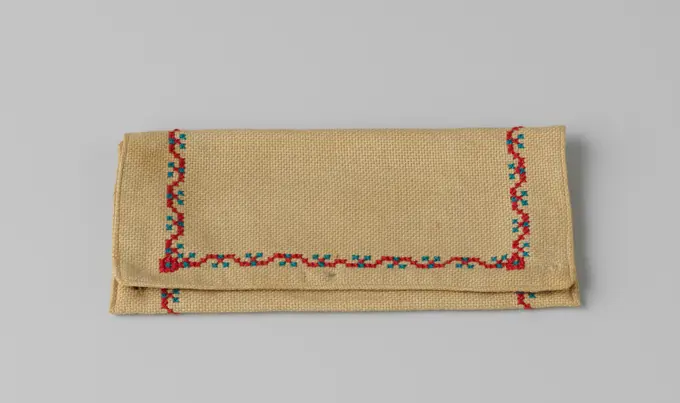
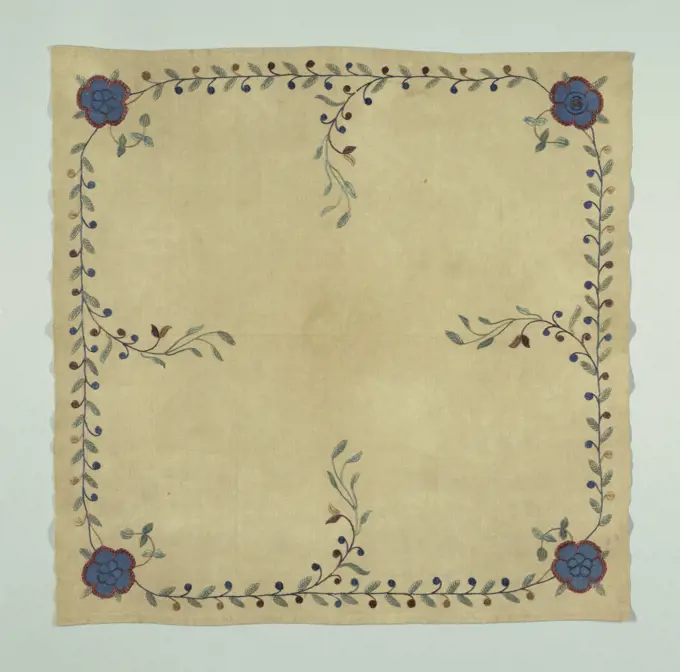
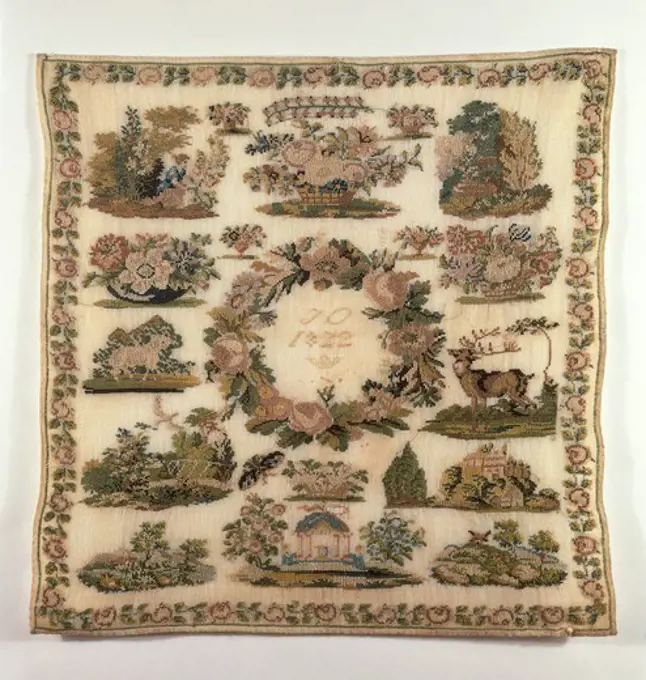
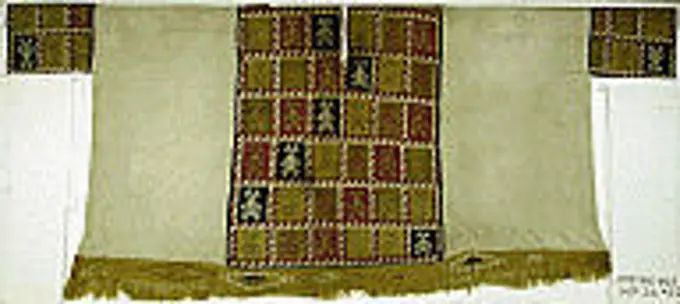
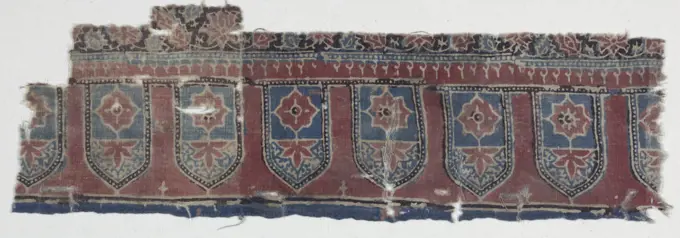
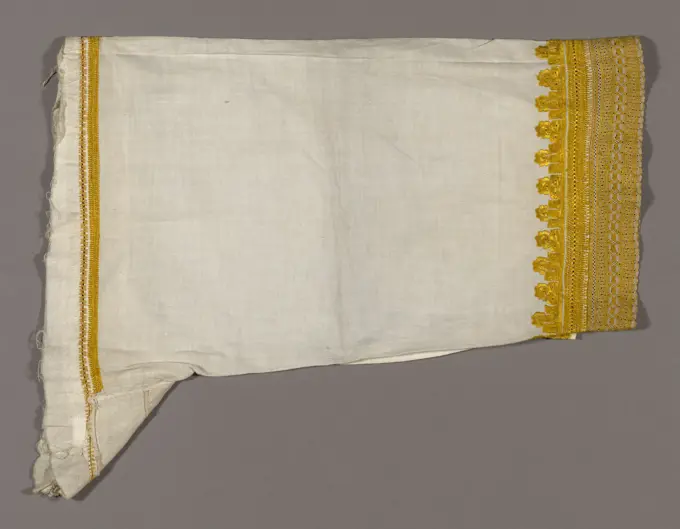
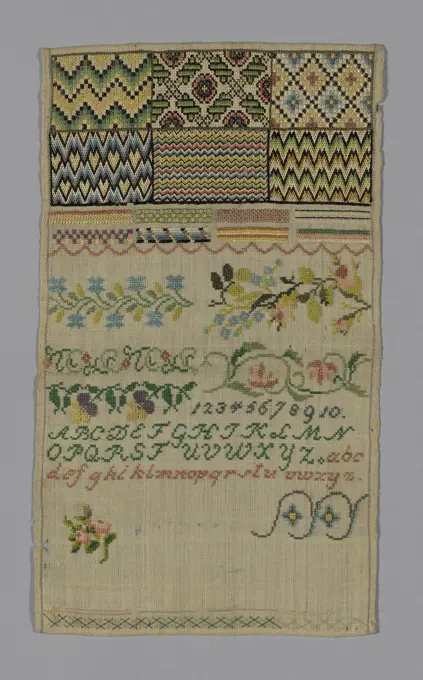
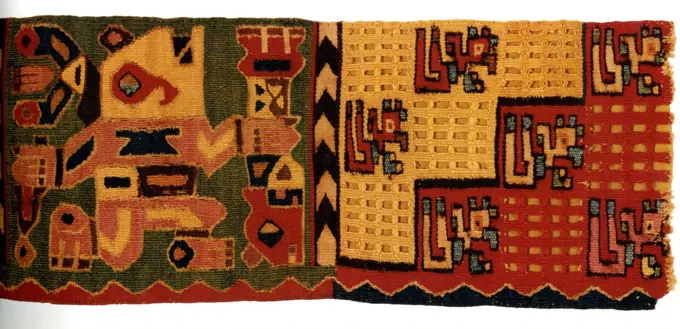
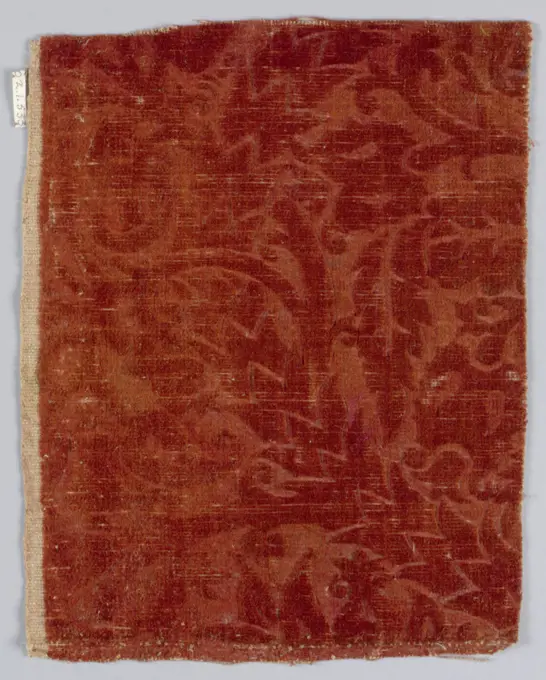
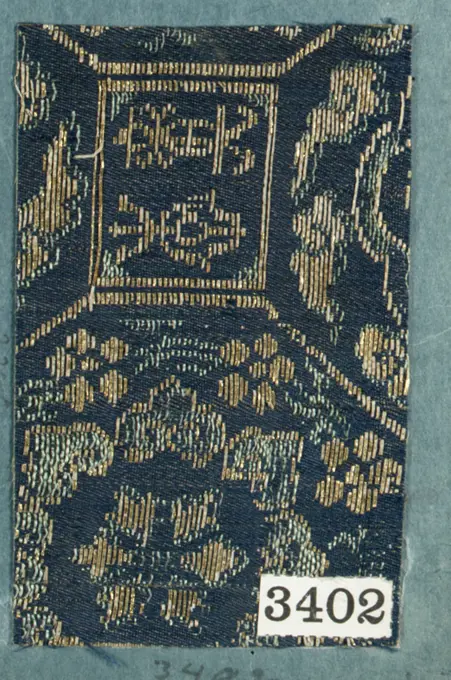
Fragments, Meillier et Cie, Material: cotton Technique: block printed on plain weave, Design of floral shapes alternate with stripe of loosely folded 'lace' in red and black on natural., Bordeaux, France, late 18th-early 19th century, printed, dyed & painted textiles, FragmentsTrimming of embroidered shawl unknownSidewall - Fragment (USA); block-printed; in 7.5x10.5 envelopeTextile (France); Produced by Oberkampf & Cie. (France); linen warp, cotton weft; Warp x Weft (a): 220 × 85 cm (7 ft. 2 5/8 in. × 33 7/16 in.) Warp x Weft (b): 225.5 × 85 cm (7 ft. 4 3/4 in. × 33 7/16 in.) Warp x Weft (c): 19.5 × 41.5 cm (7 11/16 × 16 5/16 in.) H x W (block): 33 × 21.5 cm (13 in. × 8 7/16 in.); Bequest of Elinor Merrell; 1995-50-247-a/cFragment Made 1700-1725 Italy. Cisele voided cloth velvet .Panel (India); cotton; Warp x Weft: 260 x 136 cm (8 ft. 6 3/8 in. x 53 9/16 in.)Sutra Cover with Pattern of Hanging Lanterns with Ribbons. Culture: China. Dimensions: Overall: 13 x 4 5/8 x 1/4 in. (33 x 11.7 x 0.6 cm). Date: 16th century.Sutra cover with repeating pattern of hanging lanterns with ribbons; light red on a dark background. Silk twill damask in two colors. Museum: Metropolitan Museum of Art, New York, USA.Fragment, Medium: linen Technique: bobbin lace (Binche style with Binche ground), Binche-style fragment with a large-scale floral design. Cinq trous ground., Belgium, 17th century, lace, FragmentTextile Fragment 18th century. Textile Fragment. 18th century. Silk and metallic thread; brocaded. Country of Origin Iran. Textiles-BrocadesLetter case, Medium: silk Technique: embroidered in chain stitch on plain weave, Rectangular letter case in purple silk taffeta, now faded, embroidered with ribbons and colored silks. Inside the double envelope are pouches with flaps, all embroidered in similar floral patterns. Lined with white silk taffeta., France, late 18th century, costume & accessories, Letter caseBand for Edge of Mattress, 18th-19th cnetury. Morocco, Fez, 18th-19th century. Embroidery: silk on cotton tabby ground; average: 29.2 x 13.7 cm (11 1/2 x 5 3/8 in.).Tentzakvalad .. Tentzakva leaf in large model, Chuval. In midfield are standing against a brown-red background. There are crosses with Tau hooks on the widest edge.Patolu sari 19th century India (Gujerat). Patolu sari 42582Band, Medium: silk on linen Technique: variation of cross stitch on plain weave, Pattern of curving plant and leaves in red silk on linen. Traces of overcastting and knotted decorative seam are at the top and bottom of the piece., Italy, 17th century, embroidery & stitching, BandShelter, embroidered unknownSkirt panels, late 19th century, 45 9/16 x 78 5/8 in. (115.73 x 199.71 cm), Cotton, silk; embroidery, India, 19th centuryCoverlet. Dimensions: 85 1/2 x 79 in. (217.2 x 200.7 cm). Date: ca. 1850-70. Museum: Metropolitan Museum of Art, New York, USA.Band 16th-17th century German or Italian. Band 217785Border. Italy. Date: 1601-1700. Dimensions: 22.5 x 7.94 cm (8 7/8 x 3 1/8 in.). Linen and silk, embroidered. Origin: Italy. Museum: The Chicago Art Institute, Chicago, USA.Fragments, Medium: silk Technique: two interconnected structures of 5-harness satin (blue) plus 1/2 twill (yellow), Fragments of woven fabric which was probably patterned by two offset interlocked rows of vertically symmetrical ogee - the same ogee in each row. The ogee is formed by leaves ending in a leaf finial at the top and a leaf pendant at bottom. The ogee encloses a floral motif., Egypt, Italy, 15th century, woven textiles, FragmentsSerape, c. 1900, 45 1/4 × 28 7/8 in. (114.94 × 73.34 cm), Cotton, pigments, Mexico, 20th century, The serape is among the finest and most vibrant North American textile traditions. Produced as early as the 1500s, the serape has since undergone different styles and remains a popular item today. Despite its prominence in Mexican culture, relatively little is known about the textiles origins and history.Fragments, Medium: silk Technique: supplementary warp forming raised pile in satin foundation (velvet), Vertical and diagonal bars and dots in green on a red background., 17th century, woven textiles, FragmentsBand; linen, cotton, silkTowel fragment, Medium: linen, cotton Technique: plain weave with supplementary weft, Supplementary blue weft floating alternatively face to face with a design of prancing unicorns. Boars underneath the unicorns., Italy, 17th century, woven textiles, Towel fragmentSample Book of Gauze Ribbon Swatches (Volume I) Made 1801-1900 France. Sample Book of Gauze ribbon swatches; total of swatches 848 .Fragment early 7th century. Fragment. early 7th century. Silk; serge weave, brocaded. Attributed to Syria. ReproductionsWomans Ceremonial Skirt (Tapis)Patchwork Quilt. Dated: 1935/1942. Dimensions: overall: 53.5 x 44 cm (21 1/16 x 17 5/16 in.). Medium: watercolor and graphite on paperboard. Museum: National Gallery of Art, Washington DC. Author: Alois E. Ulrich.Double Flour Bag ca. 1900 Double flour bags, which were carried on the backs of pack animals, are distinctive for their large size. Examples created by Bakhtiari weavers almost always include both tightly woven sumak extra-weft wrapping and reinforcement over points of extreme wear in the form of pile weave, typically with symmetrical knots. These methods would prevent flour from sifting through the bag.The closure of this bag was made with a tapestry (kilim) technique, with slits on one side and braided loops on the other. A band of twining, which extends into the three-dimensional loops, is worked into the plain-weave structure of the back of the bag, creating a stronger, more durable construction.. Double Flour Bag. ca. 1900. Wool (warp, ground weft, sumak weft, and pile) and goat() hair (braided loops); sumak extra-weft wrapping, tapestry (kilim) with dovetailing, and border pattern in complementary weft weave (front); symmetrically knotted pile (top and bottom edges); weft-faced Omar Khayyám, Les Rubaiyát Payot and Cie bookstoreBaby carrier panel (), ChinaFragment, Medium: silk Technique: cut and uncut supplementary warp pile (velvet) in a woven foundation, Fragment of blue silk velvet, cut and uncut, on a yellow ground with a pattern of peacocks, flowers and lions rampant., Italy, 17th century, woven textiles, FragmentScarf 19th century. Scarf. 19th century. Linen, silk; plain weave, embroidered. Attributed to Algeria. Textiles-EmbroideredSkirt for a Married Woman, 1985, Djege Coulibaly, Malian, born before 1940, 40 x 70 in. (101.6 x 177.8 cm), Cotton; painted and dyed (bogolanfini), Mali, 20th centuryBand Made 1875-1900 China. embroidered gauze . Han-ChineseFloral Decorated Textile early 18th century India (Coromandel Coast) A fragment of large kalamkari cotton, a frayed red border frames this textile on two sides. The design has two major registers by a horizontal floral band. The top section contains a row of alternating tall and short flowering plants set against a natural undyed background. Though similar in format each plant is a unique composition. The lower register contains a flower and vine pattern that repeats twice; this section was executed using red, blue, green, and ocher dyes. Finely drawn resist-dyed floral meanders infill the section divider.. Floral Decorated Textile. India (Coromandel Coast). early 18th century. Cotton, mordant and resist dyed. Textiles-DyedRug late 19th-early 20th century China. Rug 70375Bedcover (Sunburst Quilt). United States. Date: 1850. Dimensions: 218.4 x 220.3 cm (86 x 86 3/4 in.). Cotton, plain weaves; some printed; pieced; edged with cotton, plain weave; printed; backed with cotton, plain weave; quilted. Origin: United States. Museum: The Chicago Art Institute, USA.Trimming, Medium: silk Technique: uncut supplementary warp pile on satin ground (velvet), Trimming fragment in a design of an angular stem with leaves in uncut red velvet on a yellow satin ground., France, 19th century, trimmings, TrimmingRibbon ca. 1830 possibly Russian. Ribbon 216293Rug with Carmelite Order coat-of-arms 18th century Spanish. Rug with Carmelite Order coat-of-arms 219361Oriental carpet. Oriental carpet, medalleled. In the blue hexagonal center there is a concentric window, surrounded by hooks and stems with rosette flowers. A cross-shaped star flower in the heart. Button: Ghiledes knot.Medalleled, Kazak. Medalleled, Kazak. Midfield: Flets red fond with two fumper spend flocks in light green and blue, with white outlines and filling of standing rectangle to which long stems with flower buds. Field filling O.A. From many small four-legged friends and birds. Edges: Triple. The middle and bredest white with blocks with doubled hooks on either side. Tilt inland of blue and black. Outside zoom light yellow with the star flower or, the "crab" motif characteristic for Kazak.Panel; silk and wool on cottonHandkerchief Belgian, Brussels ca. 1870 View more. Handkerchief. Belgian, Brussels. ca. 1870. Bobbin lace, Brussels bobbin lace. Textiles-LacesRug, 73 1/2 × 45 3/4 in. (186.69 × 116.21 cm) (without fringe), Wool, United StatesFragments; linen, woolShaped horse trapping, 1600s. India. Velvet, brocaded and pile warp substitution: silk and gilt-metal thread; average: 26.1 x 23.5 cm (10 1/4 x 9 1/4 in.).Fragment Made 1575-1600 Italy. Silk, cut, and uncut velvet against satin weave ground .Fragment Made 1601-1700 Italy. Silk, cut, uncut, and voided velvet against plain weave foundation .Cloth; PA Moon. Cloth with geometric motifs.Border (France); block-printed and flocked on machine-made paper with polished ground; Overall (e): 48.5 x 7.3 cm (19 1/8 x 2 7/8 in.) Overall (e): 56.5 x 12.5 cm (22 1/4 x 4 15/16 in.)Carpet 1881-82 American. Carpet 19792Sampler (Spain); silk on linen; Bequest of Marian Hague; 1971-50-154Border. Egypt. Date: 401 AD-500 AD. Dimensions: 20.3 × 7.9 cm (8 × 3 1/8 in.). Linen and wool, tapestry weave. Origin: Egypt. Museum: The Chicago Art Institute, Chicago, USA.Textile with Floral Scroll 18th century China This textile is said to have been found in the tomb of Prince Guo (1697-1738), the seventeenth son of the Kangxi emperor (r. 1662-1722). The centers of the flowers are brocaded in gold thread-strips of gilded paper wrapped around a silk corefor an opulent effect.. Textile with Floral Scroll 52523Piece 18th-19th century Japan. Piece 67489Baby Carrier, 26 x 17 1/4 in. (66.04 x 43.82 cm), Cotton; needlework, ChinaFragment late 16th century Italian. Fragment 230169Chasuble (one of a set of five vestments) 18th century Italian, probably Sicily This chasuble is from a set of six vestmentsalso including a stole, maniple, burse, chalice veil, and chalice coverwhose quality, extent, and provenance make the group an important addition to the Museum's fine collection of ecclesiastical costume. The chasuble's embroidered decoration-a nearly symmetrical pattern of full-blown, seminaturalistic flowers, small blossoms, curving leaves, and scrollsis an excellent example of the style of late Baroque ornament used to embellish Italian vestments from the end of the seventeenth century to the middle years of the eighteenth. The robust flowers, worked in long and short stitches, French knots, and metallic loops, are carefully modeled in four to five shades of silk. The metallic thread is primarily used in laid and couched work, cursively following the contours of the motifs and secured in twill or chevron patterns with yellow silk. Although it is often impossFragment 16th century Italian. Fragment 213443Ribbon French 19th centurySari Made 1875-1900 India. Henna ground with repeat pattern of small gold medallions and deep gold bands at ends .One -sided, silking belt - fragment in a 1: 1 scale; Sztolcman, W Adys Aw Roman (1873-1950); 1917 (1917-00-00-1917-00-00);Fragment (Egypt); woolPrayer Rug, 19th century, 72 x 48 in. (182.88 x 121.9 cm), Wool, Turkey, 19th centuryVestment, Medium: leather, lambs-wool, silk Technique: stamped, tooled, painted, Gold ground with details of silver, red, green and blue painted over stamped repeat of scrolling leaves, flowers and berries, with central panel of stylized symmetrical curving motifs in silver and gold, which are stamped and tooled. Lined with lambs-wool and backed with modern green silk., Italy or Spain, 18th century, printed, dyed & painted textiles, VestmentTextile, Medium: wool on wool; linen Technique: crewel wool long and short stitch embroidery on twill weave, Scalloped scrap, wool twill backed with linen, heavily embroidered in polychrome wools in simple, stiff floral design, mostly in long and short stitch., late 17th century, embroidery & stitching, TextileBark cloth, Medium: Broussonetia bark Technique: beaten bark fiber, rubbed and hand painted Label: beaten and rubbed Broussonetia bark, hand-painted, Large panel of tapa cloth. Thick white fabric made from beaten bark, painted in rust and brown in design of three rows of rectangles enclosing striated angular forms. Rows are divided by stripes of diamond pattern., Samoa, 19th or early 20th century, non-woven textiles, Bark clothPart of a Skirt Border, 1800s. Greece, Crete, 19th century. Embroidery: silk on linen tabby ground; overall: 16.2 x 62.2 cm (6 3/8 x 24 1/2 in.).Embroidery and Thread Case, 9 7/8 x 6 x 1 1/4 in. (25.08 x 15.24 x 3.18 cm) (closed), Cotton fabric, paper, pigment, ChinaTextile Fragment 16th century Dated to around the sixteenth century, this textile fragment would have once been part of a larger piece. It is decorated with a central vegetal motif of blossoming with red-speckled petals that is surrounded by a branch with blue and red leaves. The fragments intricate design reveals the objects method of production which is akin to the technique of painting. The vibrant red color of the textile, seen on the borders, comes from the organic dye material of the chay root plant indicating that it was likely made near the region of the Coromandel Coast located in Southeast India. Found near the site of Fustat, Egypt, this fragment highlights the maritime relationship of trade and a highly popularized market demand for cotton textiles produced in South Asia that spanned across areas linked by the Red Sea and larger Indian Ocean.. Textile Fragment 448517Two uncut tabs for Anghanka, 18th century, 13 1/4 x 9 3/16 in. (33.66 x 23.34 cm), Cotton, silk, metallic thread; embroidered, India, 18th centuryFragment, Medium: cotton Technique: printed by engraved roller on plain weave, Flowers on trellises separating groups of people dancing and children playing. Brown and red with a tan background on undyed fabric., Rouen, France, 1858, printed, dyed & painted textiles, FragmentCard Case (USA); bark, straw, woolTapestry. unknown, authorBand 6th-7th century. Band 445831Face of Half a Double Saddlebag (Khorjin) mid-19th century This face of half a double saddlebag (Khorjin), was made by a woman weaver from the Shahsevan tribe, whose name means "those who love the king." The historical migratory range of these Turkic nomads reaches from the southwest shores of the Caspian Sea to the southern part of Transcaucasia. Art historians have identified Shahsevan weavings, including a variety of small-format bags, only in the past half century. Many Shahsevan weavings from the nineteenth and twentieth centuries, especially those with centralized geometric designs, such as seen here, show a striking relationship with Anatolian carpets from the fifteenth and sixteenth centuries. Many of the motifs found on Shahsevan textiles are thought to be centuries-old tribal emblems, a symbolic language that today we are frequently unable to decipher.. Face of Half a Double Saddlebag (Khorjin). mid-19th century. Wool (warp, sumak weft, and tapestry weft); sumak simple weft wEmbroidered travel bag. Emborded travel bay.Kilim with Six Double-Niches Made 1800-1825 Central Anatolian Region. Of all the types of kilims, those from Anatolia, the plateau of Asian Turkey, are held in the highest esteem for the aesthetic qualities of their patterns and colors. This is a classic example, with its design of large, boldly delineated geometric forms. Yet the pattern of lateral panels containing concentric lozenges or medallions with serrated ends is unknown in other kilims as well as archaic in nature, yielding no hint of evolution from an earlier form. The kilim is also unusual for its palette of soft colors.. Wool, slit tapestry weave .Scarf Sample (France); silkKontusz sash/belt. Pracownia Franciszka Masłowskiego (Kraków ; wytwórnia pasów ; 1781-1806), atelierTable mat, Deerfield Society of Blue and White Needlework, (Deerfield, Massachusetts, USA, 1896-1926), Medium: linen Technique: embroidery on plain weave, Square table mat in undyed linen with an embroidered border. A vine with brown and blue berries appears on each side, and a blue flower is embroidered in each corner. A signature 'D' is embroidered in the flower in the lower right corner., Deerfield, Massachusetts, USA, ca. 1910, embroidery & stitching, Table matTowel border. Culture: Russian. Dimensions: 16 x 11 1/2 in. (40.6 x 29.2 cm). Date: 1840-70.This object is from the collection of Natalia de Shabelsky (1841-1905), a Russian noblewoman compelled to preserve what she perceived as the vanishing folk art traditions of her native country. Traveling extensively throughout Great Russia, she collected many fine examples of textile art of the wealthy peasant class. From the 1870s until moving to France in 1902, Shabelsky amassed a large collection of intricately embroidered hand-woven household textiles and opulent festival garments with rich decoration and elaborate motifs. The Brooklyn Museum holdings include many fine examples including the majority of the garments. Portions of Shabelsky's collection are also housed at the Museum of Fine Arts, Boston, the Cleveland Art Museum, and the Russian Museum of Ethnography in St. Petersburg.Kilim or split tapestry is a hand weaving technique most usually used to produce heavyweight rugs. Kilim weaEmbroidery, Germany 19th century. Beginner's work embroidered in cross-stitch on fine weft linen, 1822.Sash, The Chastisement of Psyche; silkFragment of Coptic fabric unknownTunic 13th-15th century Ica (). Tunic. Ica (). 13th-15th century. Camelid hair, cotton. Peru. Textiles-WovenFragment, Medium: cotton Technique: resist-dyed and block printed on plain weave, Horizonal band of Mihrabs each enclosing a simple floral motif with narrow pearled borders and a continuous pearled baseline. Below is another pearl band off-setting the scrolling floral pattern. Red, blue and aubergine (blue over red) and reserved areas of white., India, 1250-1370, printed, dyed & painted textiles, FragmentSleeve End Made 1801-1900 Czech Republic. embroidery .Shoulder Cloth(Limar)Lingelap from linen, with multicolored embroidery. Stoppipe with embroidery. Embroidery has the year 1758 and the initials ICL in a square, with several stopping around it.Textile Fragment 17th century. Textile Fragment 454543Sampler Made 1801-1900 Southern Germany. Wool, plain weave; embroidered with silk .Fragment from a Tunic orSleeve.  Artist: UnknownSignature Quilt Made 1896 Illinois. Embroidered, cotton plain weave quilt .Fragment, Medium: wool mohair Technique: supplementary warp pile (velvet), embossed, Fragment of embossed wool velvet with a pattern of scrolling stems and leaves, in deep red., Flanders, 16th century, woven textiles, FragmentKerchief. Culture: Philippine. Date: third quarter 19th century.The cutwork appliqué work, known as sombrado technique, worked on this scarf is very specific to the Philippines. Giving the appearance of lace, it is very labor-intensive and highly detailed technique that involves stitching down the fragile cutwork onto the equally fragile pineapple cloth. Because of the degree of difficulty and time involved, it is used on high quality pineapple cloth accessories and garments. Museum: Metropolitan Museum of Art, New York, USA.Textile 19th century Japan. Textile 68036Square (Egypt); warp: s-spun linen. wefts; s-spun linen, s-spun wool