Decorative Art and Ornaments

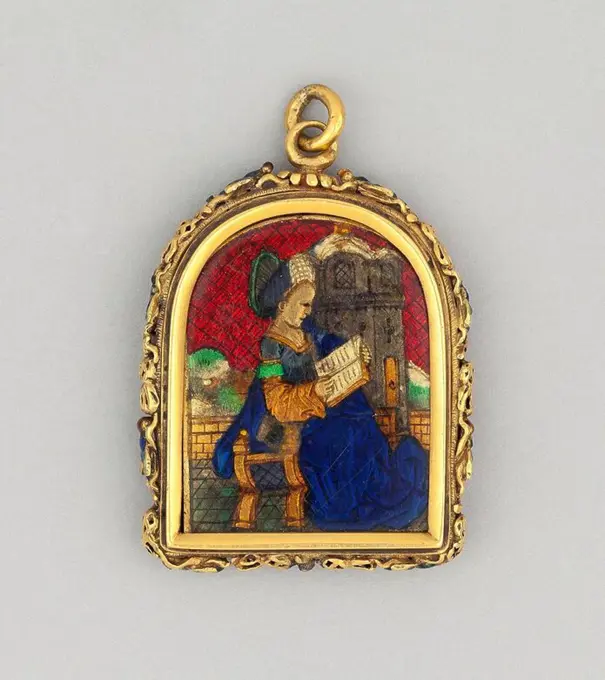
Images of historical decorative pieces, including mounts and wall lamps, exhibiting craftsmanship in gold detailing and intricate designs.
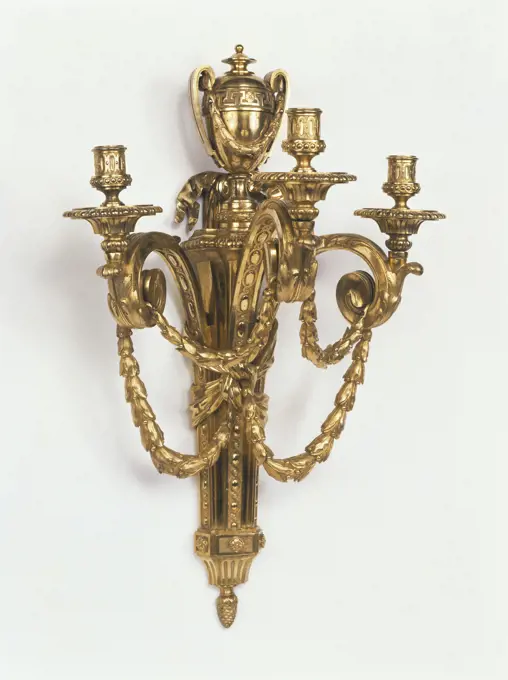
Wall Light; Philippe Caffieri (French, 1714 - 1774 (master 1743)); Paris, France; about 1765 - 1770; Gilt bronze; 64.8 x 41.9 x 31.1 cm (25 1,2 x 16 1,2 x 12 1,4 in.)
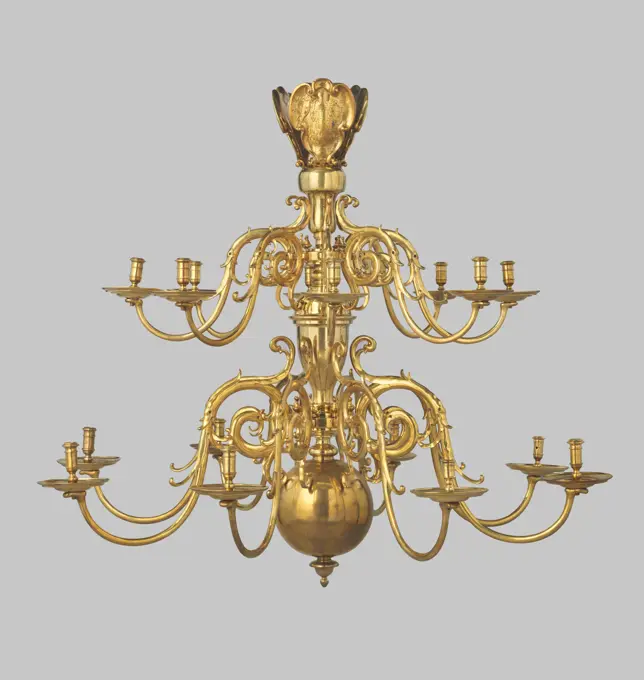
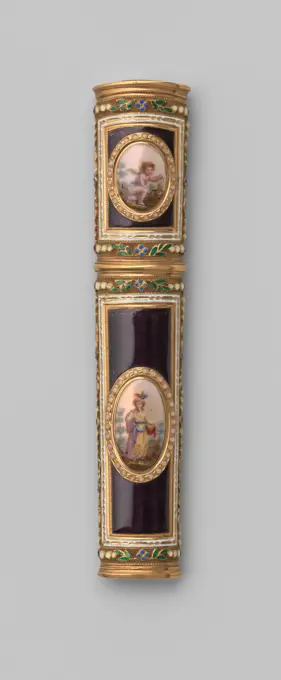
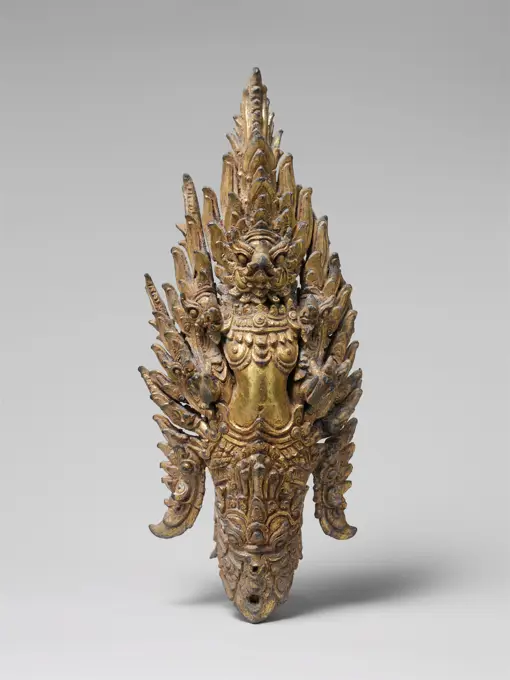
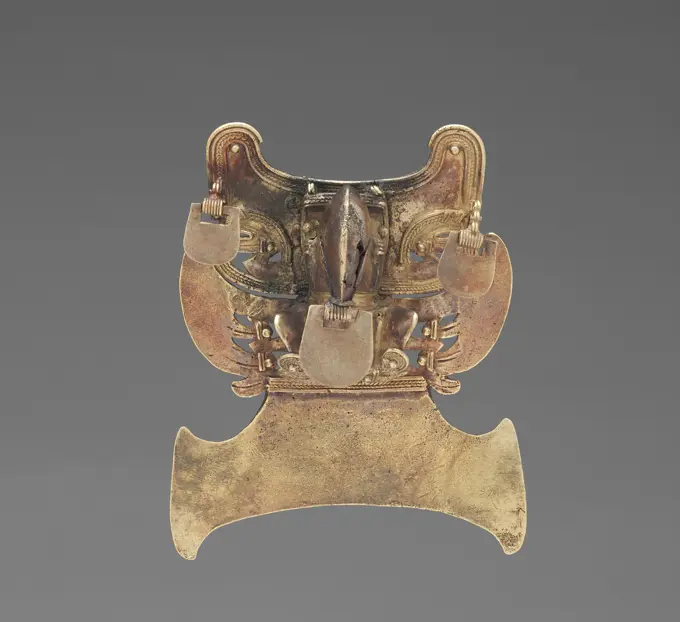
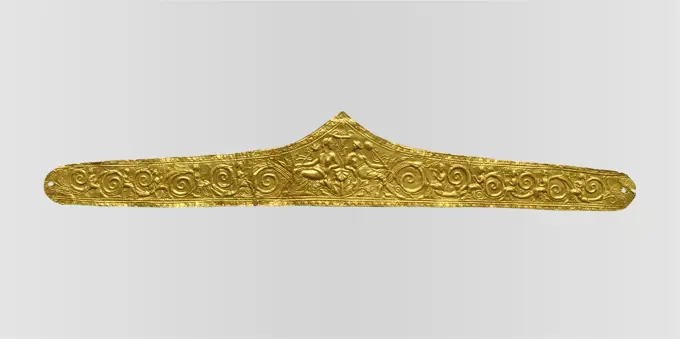
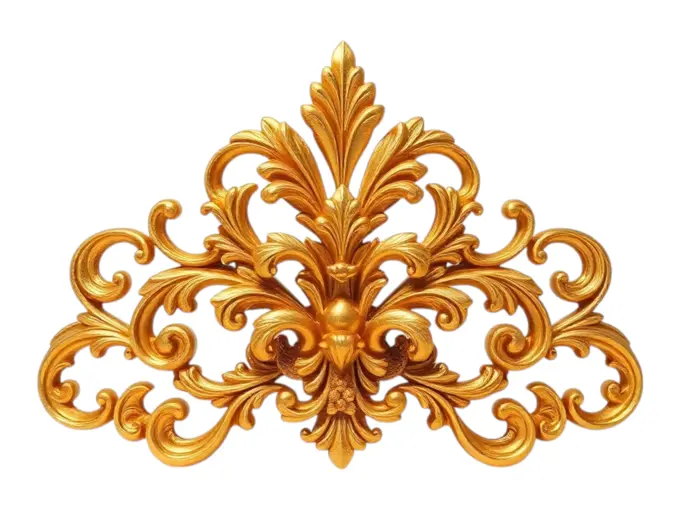
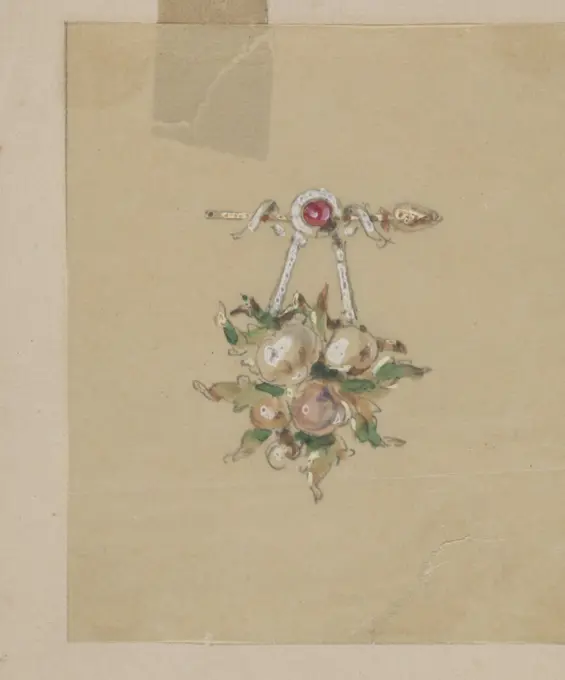
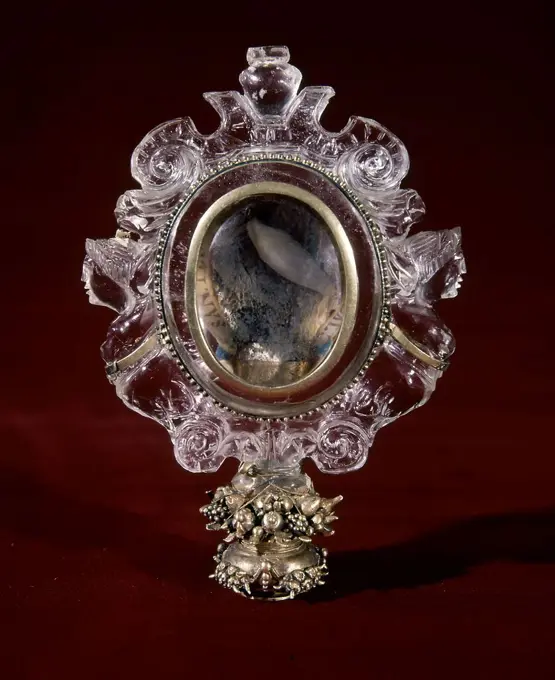
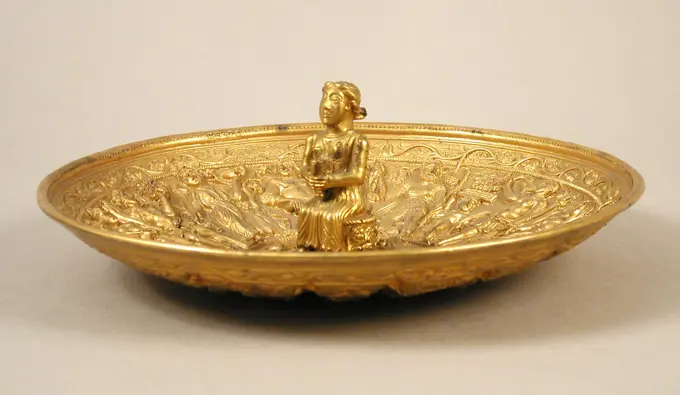
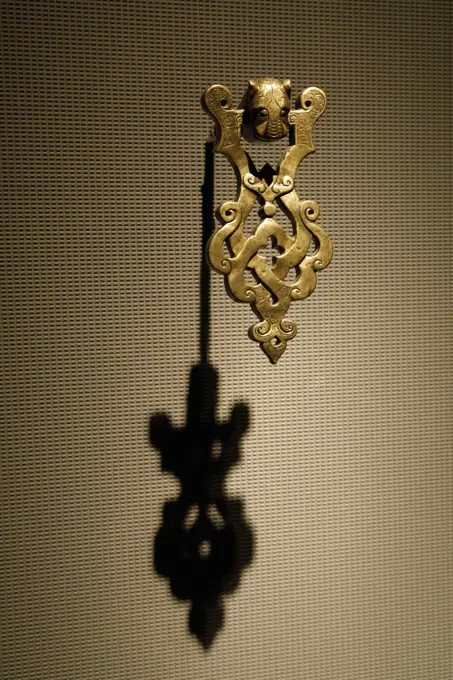
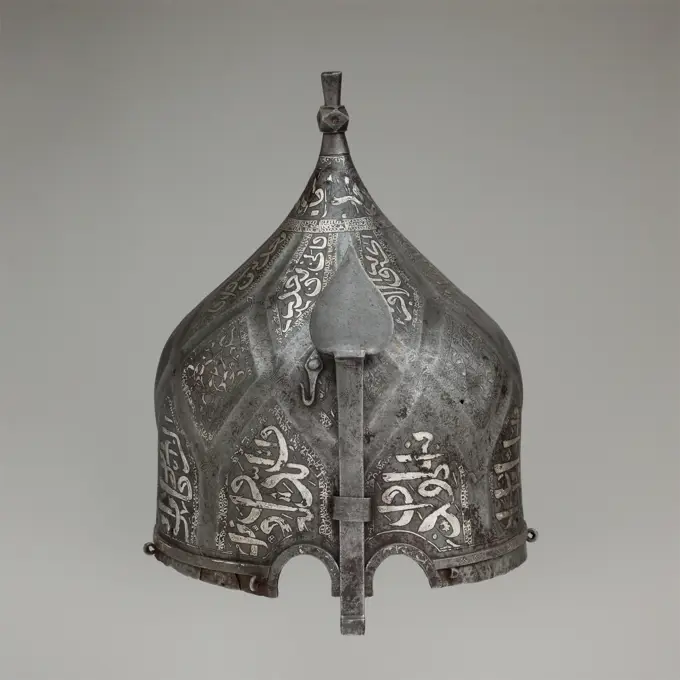
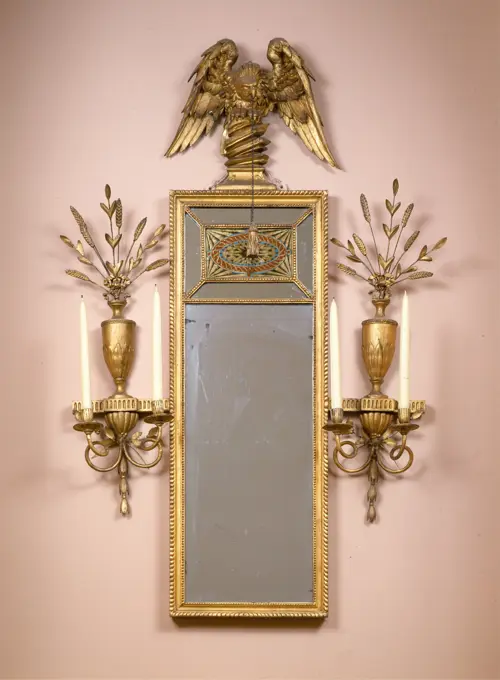
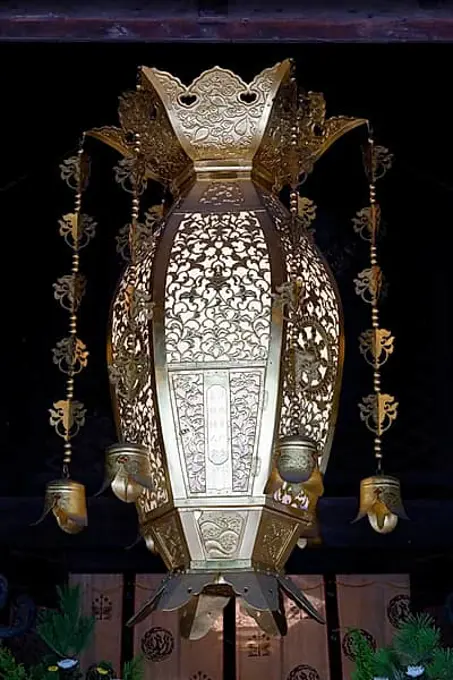
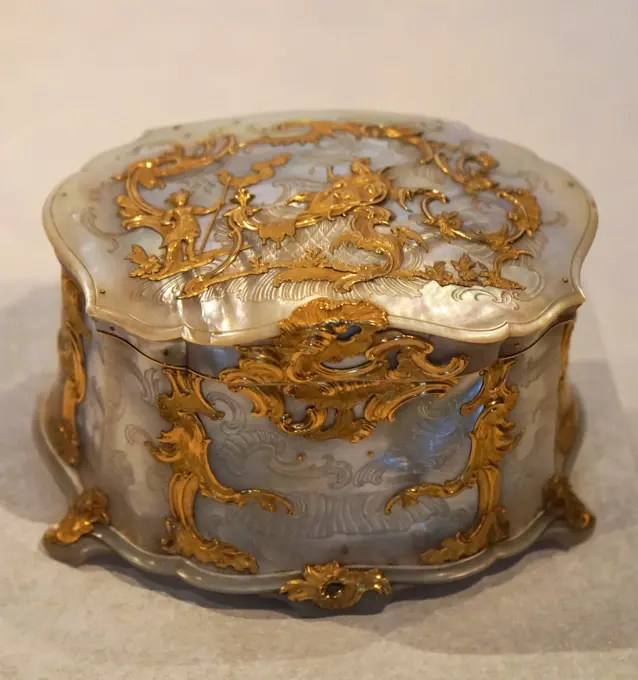
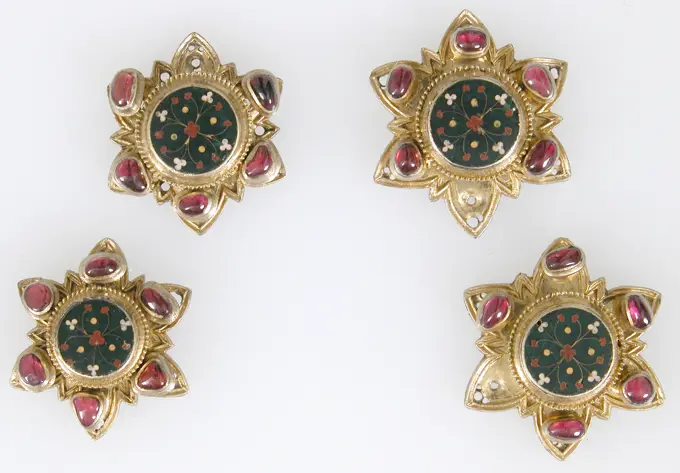
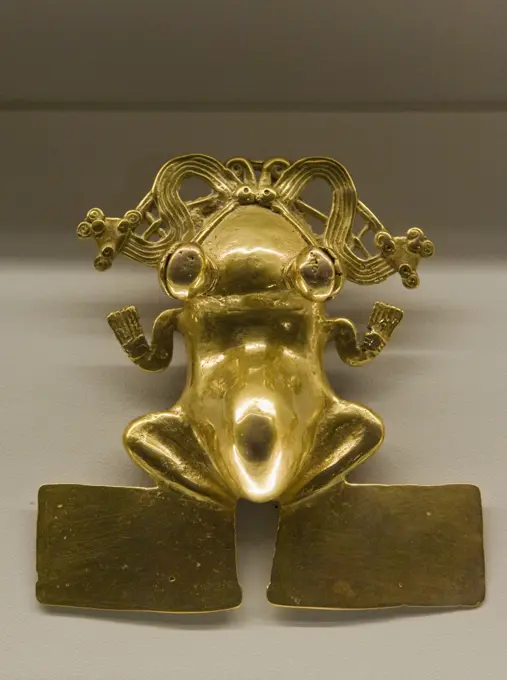
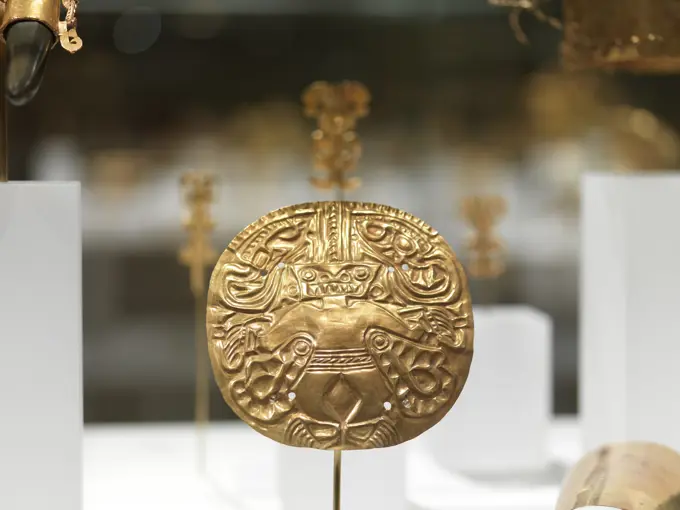
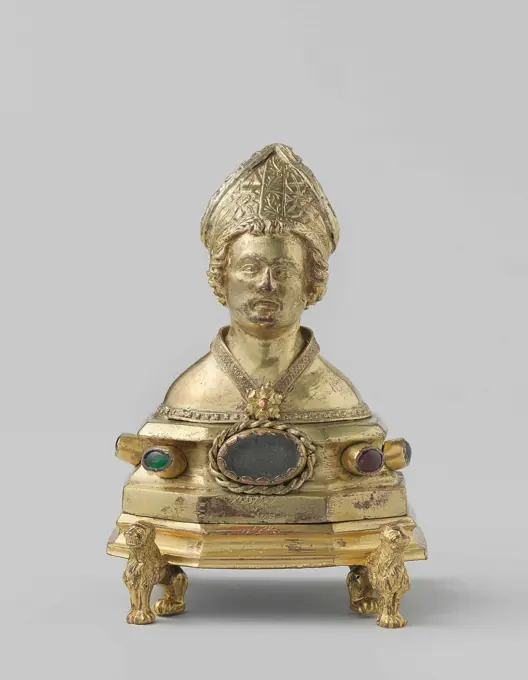
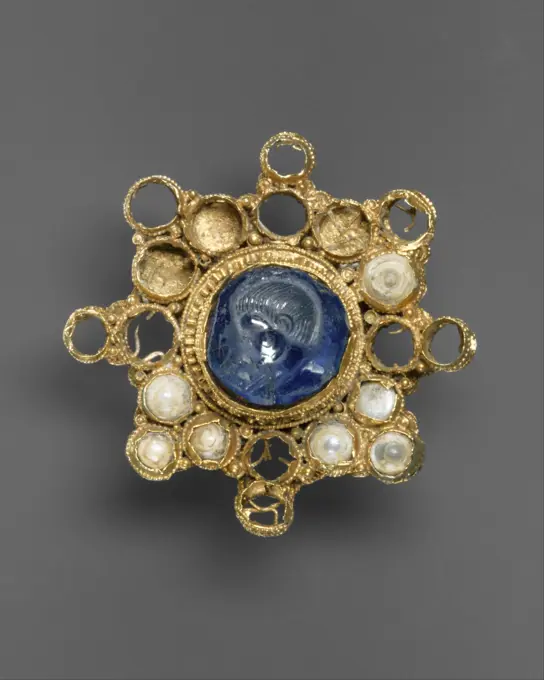
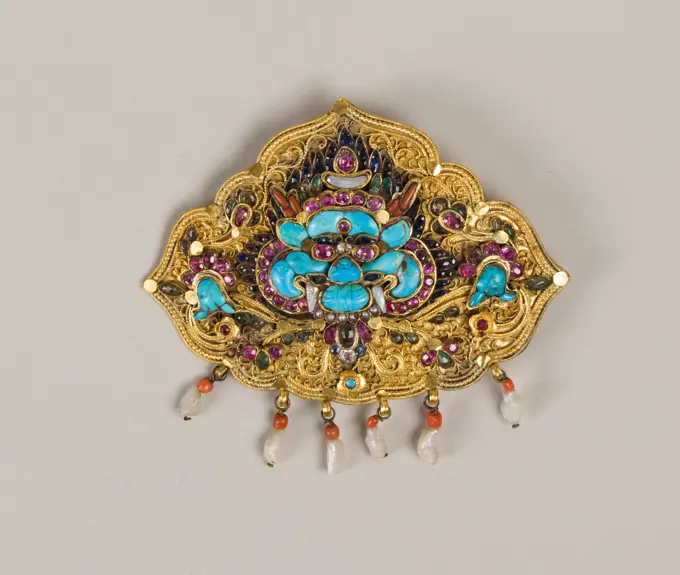
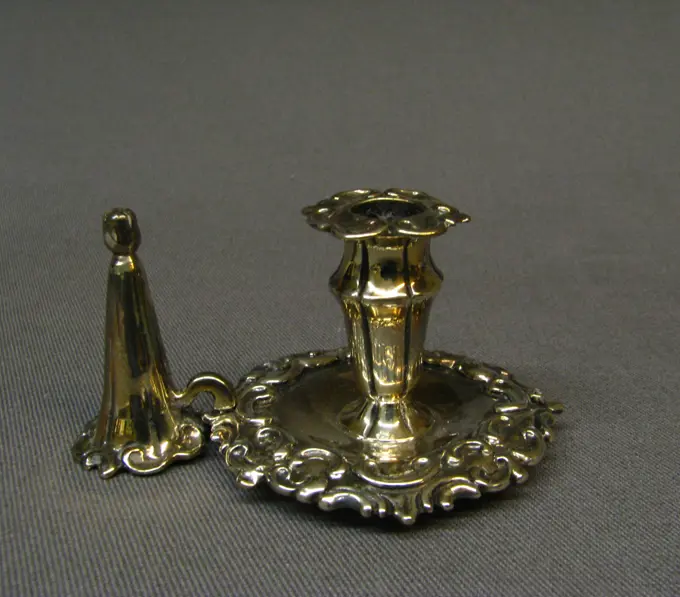
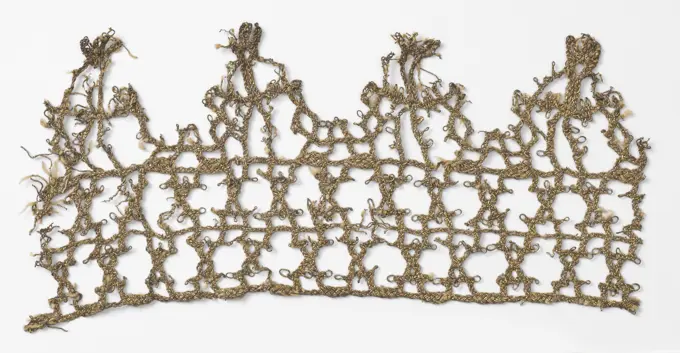
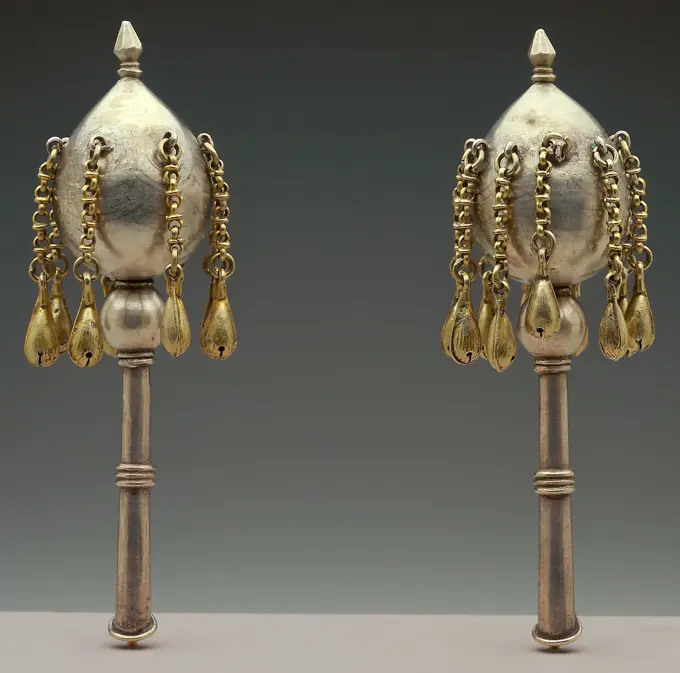
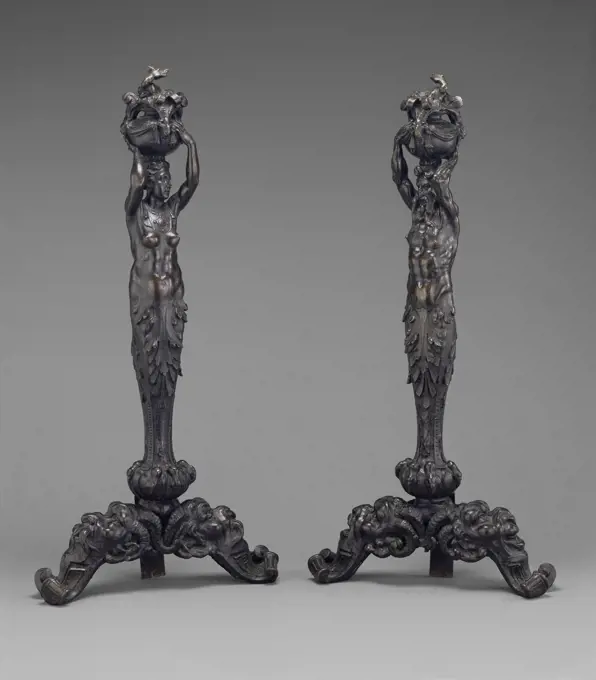
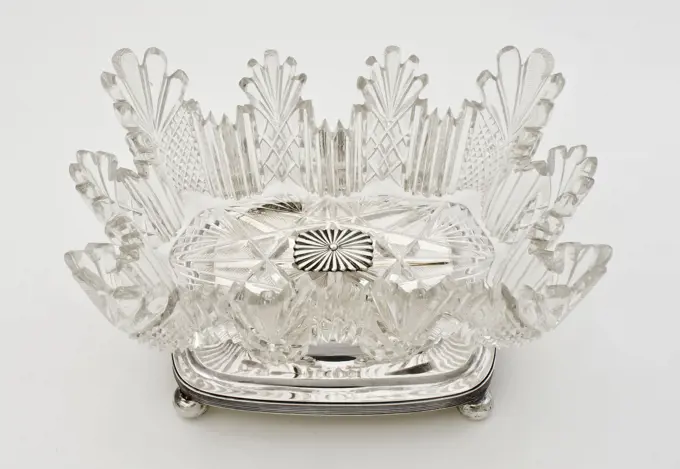
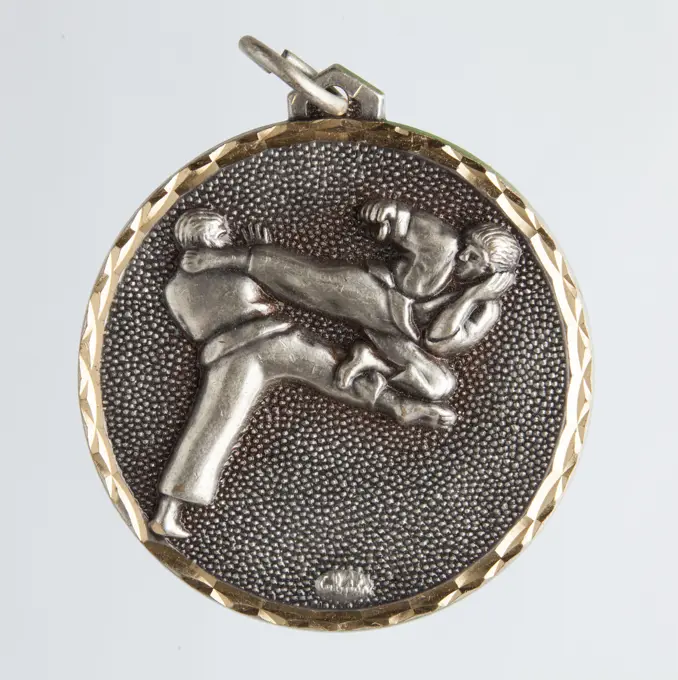
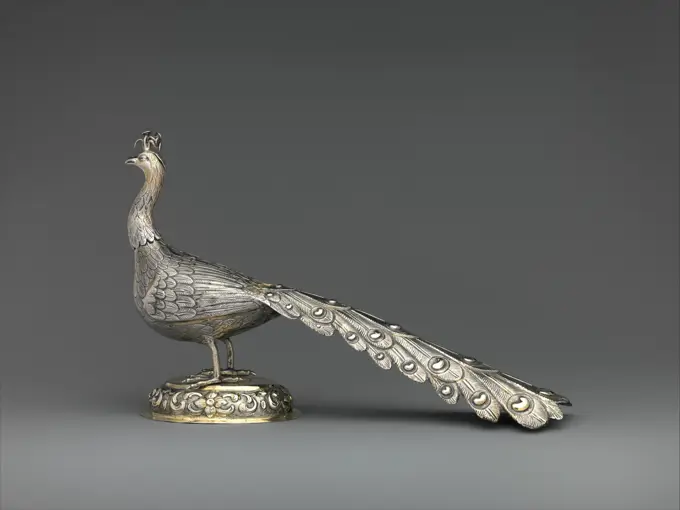
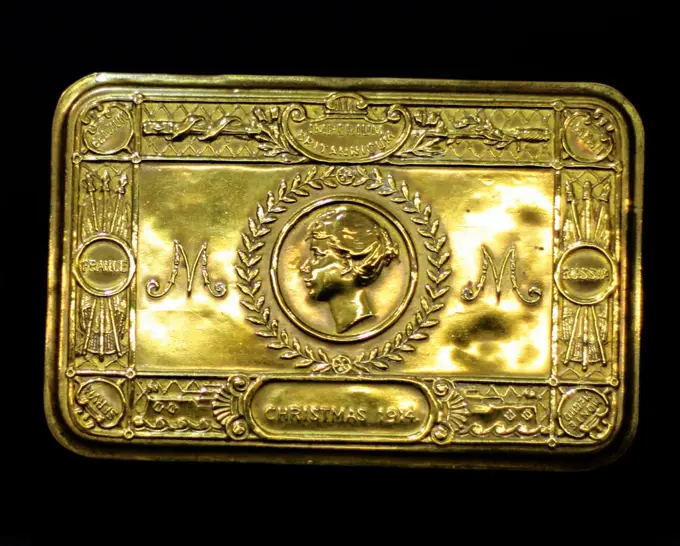
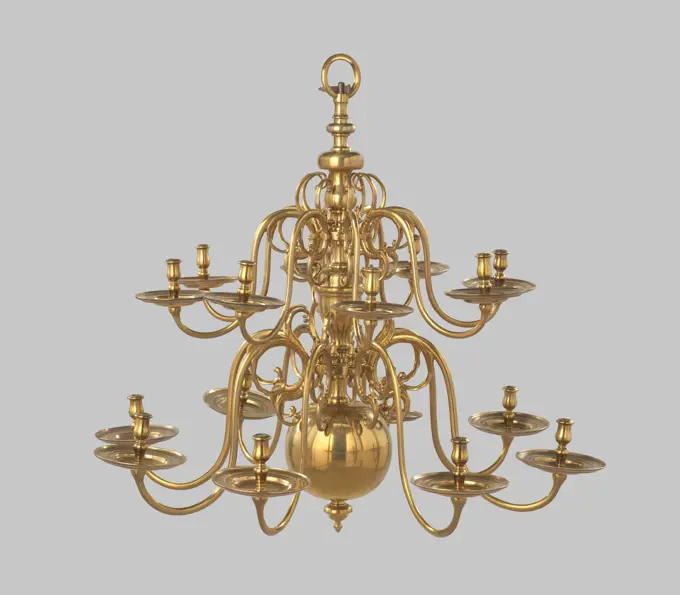
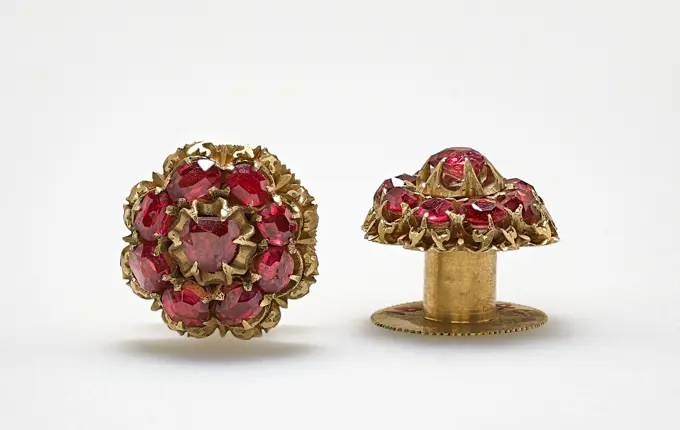
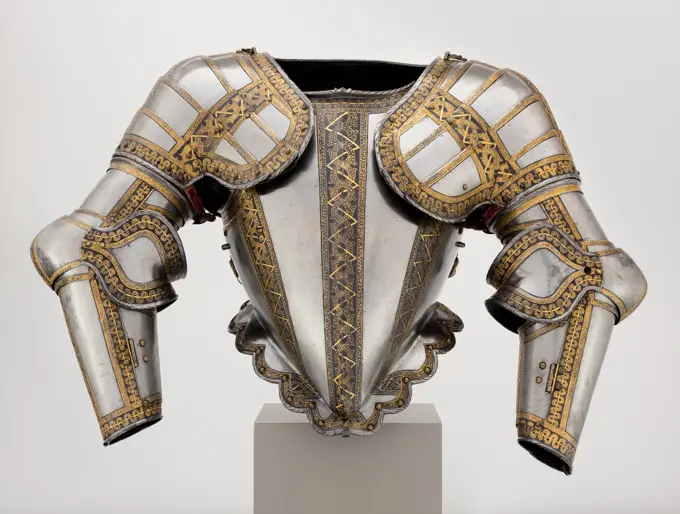
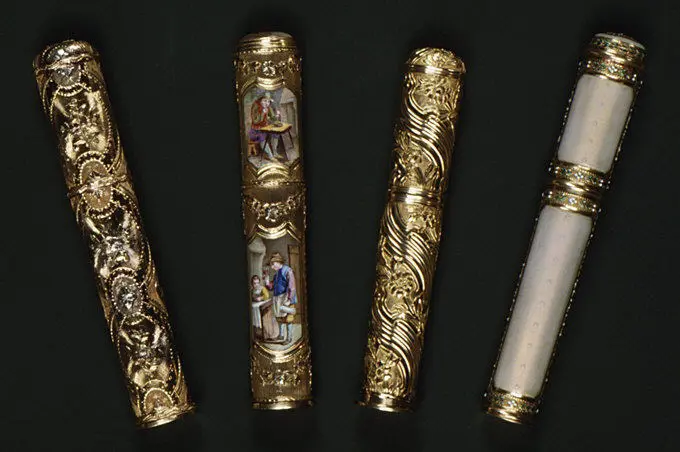
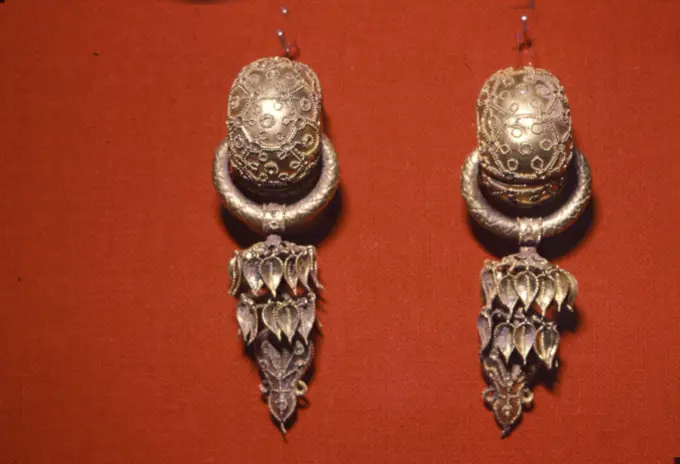
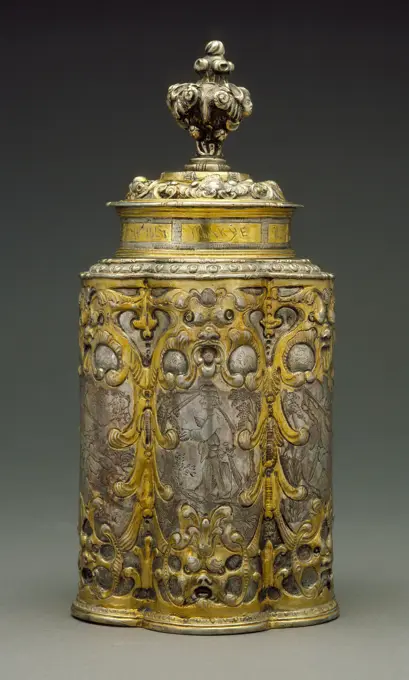
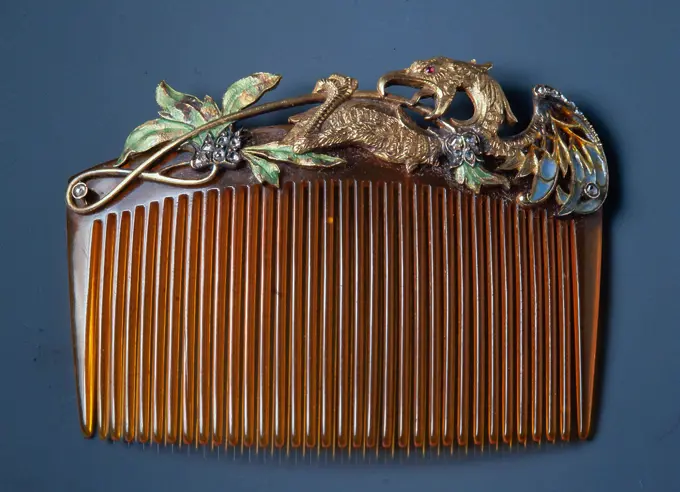
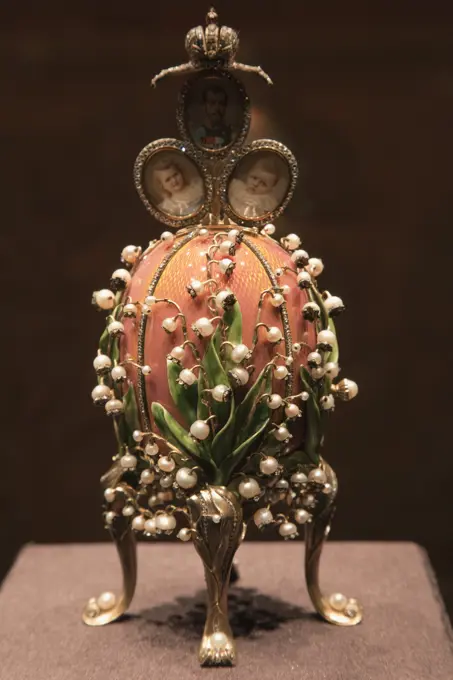
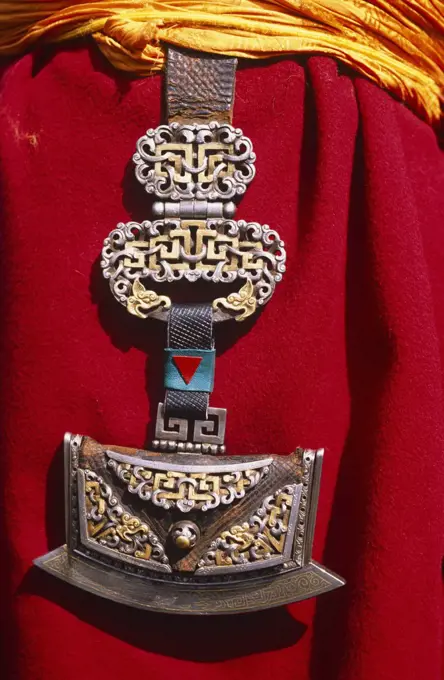
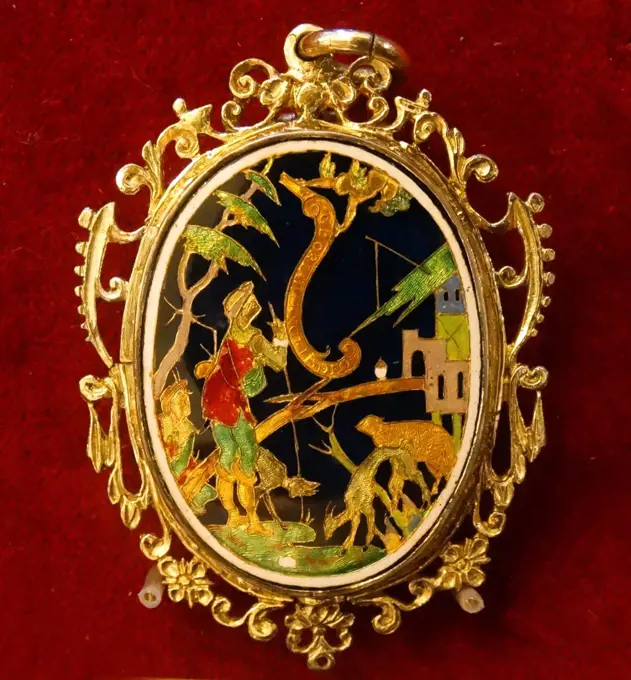
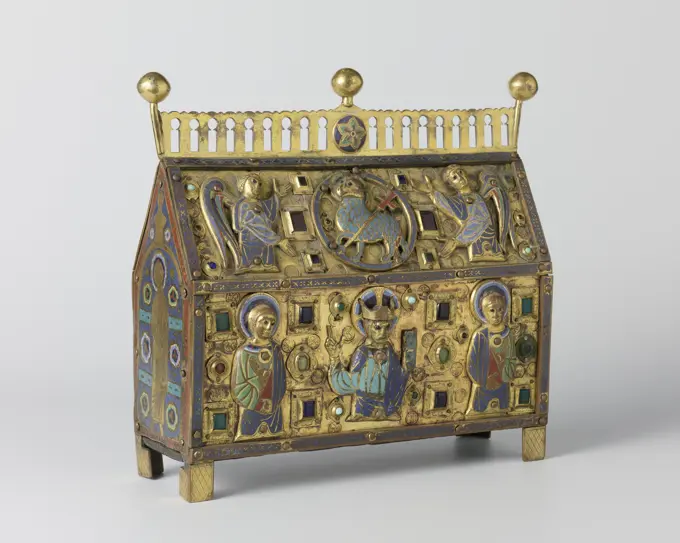
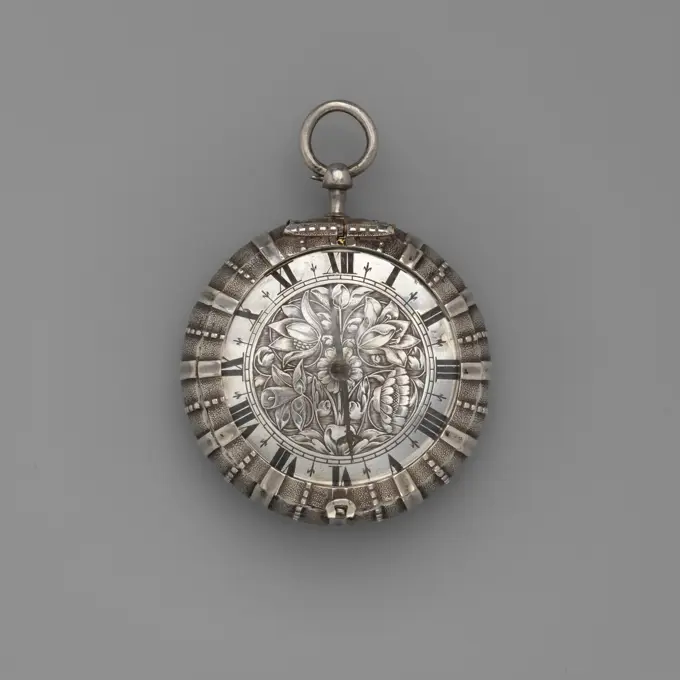
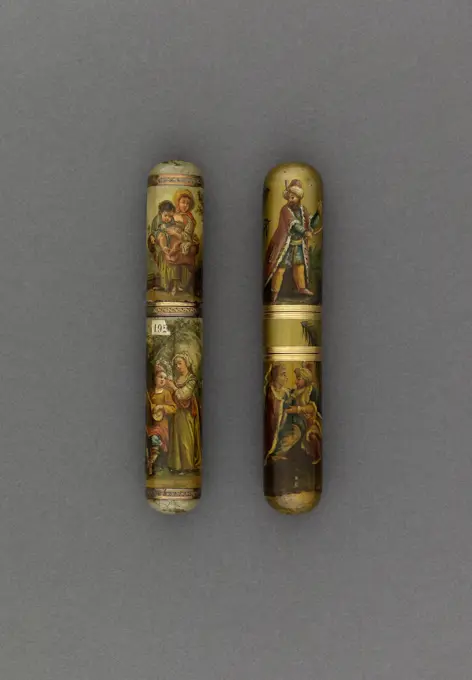
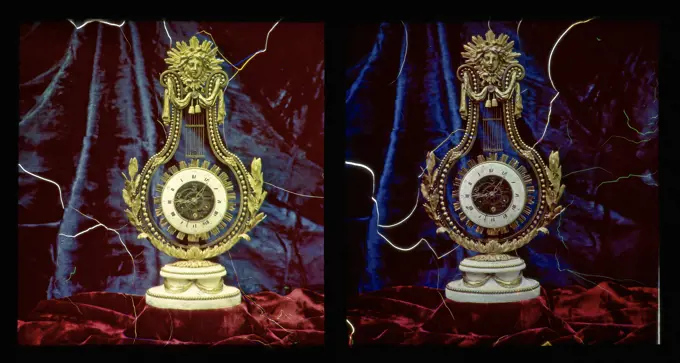
Pair of Disk Pendant Earrings with a Figure of Eros. UnknownGold medallion from Volos (Greece). Goldsmith art, Greek Civilization, 10th Century BC.Arm of a candle crown in two heights, Anonymous, 1630 The S-shaped arm is provided with a ridge on the trunk side with an opening to secure it with a pin in the stand rings. At the trunk the arm is decorated on the end and to the center with two stylized dolphin heads and with three pairs of curls or leaves executed in lobe style. To the outside, the arm ends in a lip, in which a hole provided with a thread is applied, to confirm the candle holder and the fat catcher. The arm is cast using the same model as the other arms of the wreath. The cylindrical candle holder has two profiled ribs, two grooved rings and profiled excellent edge. The fat catcher is deepened twice at the top towards the center. At the bottom it is profiled around the hole on the somewhat spherical middle and ribbed on the edge and with two grooved rings. The fat catcher has been cast using the same model as the other fat catchers of this wreath. The pin is equipped with a vase -shaped button. This is the third arm Mnich na koniu pod drzewem - panneau dekoracyjne. unknown, craftsmanGold needle case with oval medallions with figures, anonymous, 1775 - 1800  Oval needle cooker of gold with transparent email. Oval medallions with figures. In between flower and leaf ornament and precious stones. Brands: RR crowned, and 3 times an oak leaf. France gold (metal).Garuda Finial late 12th-early 13th century Thailand. Garuda Finial 37427Bird Pendant, 900-1550. Colombia, Tairona style, 10th-16th century. Cast gold; overall: 8.1 x 6.3 x 3.6 cm (3 3/16 x 2 1/2 x 1 7/16 in.). Tairona-style pendants are among the most spectacular of all ancient American gold ornaments, in part because of the detail achieved with lost-wax casting. The traits of the figure pendant include a lower lip ornament and a headdress in which two bats hang upside down. Although called caciques (chieftains), that is, ruler portraits, the meaning of such figures is not well understood. Bird imagery was important in the isthmian region in ancient times and remains so today. For instance, among the modern Bribri of Costa Rica, the principal creator deity (Sibo) takes the form of a buzzard or kite who wears a collar. Collars are standard features of ancient bird pendants, like the one shown here.A scepter offered to Jan Matejko by the City Council of Krakow Glixelli, W AdysPediment-shaped gold diadem ca. 330-300 B.C. Greek Pediment-shaped gold diadem, part of the Madytos Jewelry.This group of jewelry is said to have come from a tomb at Madytos on the European side of the Hellespont. The gold diadem is richly worked in repousse with an elaborate floral pattern. Dionysos, the god of wine, and his wife, Ariadne, sit in the center; muses playing musical instruments perch among the vines and along the sides. The tiny figure of a must playing a lyre also appears just above the crescent form on each of the boat-shaped earrings. The seedlike pendants of the earrings are identical to those on the elaborate necklace.. Pediment-shaped gold diadem. Greek. ca. 330-300 B.C.. Gold. Hellenistic. Gold and SilverCruciform Rock Crystal Watch, David Bouquet, c. 1640 - c. 1660 Watch of rock crystal in the shape of a cross. A representation of Christ is engraved on the silver dial. On the arms of the cross, is an engraved copper plate. clockmaker: Londonjeweler: Great Britain silver (metal). copper (metal) engraving Watch of rock crystal in the shape of a cross. A representation of Christ is engraved on the silver dial. On the arms of the cross, is an engraved copper plate. clockmaker: Londonjeweler: Great Britain silver (metal). copper (metal) engravingPair of candlesticks 16th century Italian, Venice. Pair of candlesticks. Italian, Venice. 16th century. Bronze. Metalwork-BronzeDecorative Furniture Mount Mount; France; bronze, goldAtemberaubendes Gold-Barock-Ornament: Exquisites Vintage-Design für luxuriöse Dekoration Atemberaubendes Gold-Barock-Ornament: Exquisites Vintage-Design für luxuriöse Dekoration Copyright: xZoonar.com/GallóxGusztávx 22873215RELICARIO CON LAS LLAVES DE SAN PEDRO. Location: CONVENTO DE LAS CLARISAS / MUSEO DE ARTE SACRO. MONFORTE DE LEMOS. LUGO. SPANIEN.Two Designs for Brooches with a Fruit Garland, c. 1864 - c. 1894   Paris tracing paper. pencil. deck paint brush brooch, agraffe, claspARRACADAS. MUSULMAN. (EXPOSICION :ARTE ISLAMICO ESPAÑOL)(DEPOSITO: MUSEO DE MALLORCA).RELICARIO CRISTAL ROCA CON RELIQUIA DE STO. Location: CONVENTO DE LAS CLARISAS / MUSEO DE ARTE SACRO. MONFORTE DE LEMOS. LUGO. SPANIEN.Bowl or Patera 19th century (original dated 5th century) European. Bowl or Patera 468755Netsuke of Pleasure Boat (Takarabune) early 19th century Japan. Netsuke of Pleasure Boat (Takarabune) 60165Women's Pendant. Culture: Nepal. Dimensions: 3 1/2 x 4 1/2 in. (8.9 x 11.4 cm). Date: 17th-19th century.Precious gemstones became increasingly available in the nineteenth century, and compositions became more elaborate over time. Museum: Metropolitan Museum of Art, New York, USA.Badge of the Günther zum stehenden Löwen lodge, Rudolstadt. unknown, authorState of Qatar, Doha. Interior of Museum of Islamic Art, built 2008. Door knocker exhibit. (Editorial Use Only)Pair of Arm Guards 18th19th century Indian. Pair of Arm Guards. Indian. 18th19th century. Steel, gold, velvet, textile, copper alloy. ArmorFurniture Mount (France); gilt bronzeTurban Helmet 16th century Turkish, in the style of Turkman armor Helmets of this type are usually called turban helmets becuase of their large bulbous shape and the flutings that imitate the folds of a turban. Because certain dervish groups wore turbans wound with a prescribed number of folds to represent an important mystical number, it is likely that turban helmets were regarded not merely as armor but also as a kind of religious insignia, their very shape marking the wearer as a fighter in a Holy War.Turban helmets, together with mail-and-plate armor of matching decoration, were intended for the heavy cavalry and are recorded as early as the fourteenth century. The examples exhibited here appear to have belonged to the dynasty of Aq Quyunlu (White Sheep Turkoman) that ruled northwestern Iran and Anatolia in the fifteenth century. The inscriptions, damascened with gold and silver, glorify temporal rulers, wish the owner well, or give advice on how to attain virtue.. Turban Helmet 2Double-Sided Pendant with the Presentation in the Temple and the Resurrection 1575-1625 Spain. Gold, pearls, and reverse painting (verre ÈglomisÈ) on rock crystal .Two decorative motifs Mehoffer, Józef (1869 1946)Bouquetiere (flower vase). Radziwiłłówna, Anna Katarzyna (1676-1746), factory owner, Biała Podlaska (ośrodek ceramiczny ; 1738-1768), factoryMountain-form brush rest with mythical beasts China 17th century The brush rest exemplifies the sophisticated craftsmanship and artistic creativity of pewter ware in seventeenth century China. Taking the form of an auspicious five-peak mountain, the brush rest principal faces are ornamented with mythical beasts in garden settings. A chimera (qilin) stands beside an ingot and a flaming pearl while a fantastic lion clutches in its mouth and claws a ribbon that is fastened to a coin. This imaginative design was highlighted with meticulously applied paper-thin sheets of brass within the outlines of the expertly engraved design. View more. Mountain-form brush rest with mythical beasts. China. 17th century. Pewter, brass. Late Ming (1368-1644)-early Qing (1644-1911) dynasty. MetalworkLooking Glass 1795-1810 American This looking glass bears motifs characteristic of the work of the Scottish architect Robert Adam (1728-1792), such as paterae, urns, bellflowers, and fans. It reflects the neoclassical taste that swept the United States after the Revolution.. Looking Glass. American. 1795-1810. Gilded gesso, verre eglomise with pine, wire. Made in Boston, Massachusetts, United StatesLamp, Hondo (main hall), Kiyomizu-dera Temple, Kyoto, Kyōto Prefecture, JapanDecorative box made from gold and nacre, also known as, mother of pearl. Dated 18th CenturyJohn H Tercuzzi, Brooch, 1935 1942 BroochGold rhyton from the Panagyurishte treasureFour Enamel Plaques ca. 1300 French An artist of great skill produced these precious enamels for a wealthy patron. They may originally have been set like jewels in an altar or a reliquary or have been sewn to textiles such as altar cloths, bishops' mitres, girdles, or gloves.. Four Enamel Plaques 464502Gold Ornamental Frog, Pre-Columbian Gold Museum (Museo Oro), San Jose, Costa RicaPlaque with Masked Figure 8th-12th century Coclé (Macaracas). Plaque with Masked Figure 309418Reliquary. This miniature bust houses the relics of an unknown bishop saint. The assumption that this was Saint Lambert and that the reliquary came from the treasury of the basilica of Saint Servatius in Maastricht cannot be proven. The small lion feet are later additions.Brooch with Intaglio of an Emperor ca. 950-1000 (setting); 337-50 (intaglio) Ottonian (Rhineland ()) (setting); Byzantine (intaglio) At its center this brooch features a rare, late Roman intaglio sapphire carved with the profile image of one of the sons of Emperor Constantine. The delicate arcade supporting the gem is typical of  goldmsiths’ work created centuries later for the Ottonian emperors, who considered themselves heirs of Constantine’s Christian Roman empire. It seems therefore likely that this piece was created for a member of the Ottonian imperial family, who, by wearing it, affirmed that bond.. Brooch with Intaglio of an Emperor 469908Watch decorated with Swiss mountain landscape, anonymous, c. 1820 - c. 1840 Gold watch. The cupboard is decorated with an image with an enamelled representation of a Swiss mountain landscape. clockmaker: Switzerlandjeweler: Genèvejeweler: Amsterdamjeweler: AmsterdamSwitzerland (possibly) gold (metal). filigree  Switzerland Gold watch. The cupboard is decorated with an image with an enamelled representation of a Swiss mountain landscape. clockmaker: Switzerlandjeweler: Genèvejeweler: Amsterdamjeweler: AmsterdamSwitzerland (possibly) gold (metal). filigree  SwitzerlandWomans Brooch with Monster Mask 17th-19th century Nepal. Womans Brooch with Monster Mask. Nepal. 17th-19th century. Gilt silver, rubies, sapphires, emeralds, coral, pearls, mother-of-pearl, and turquoise. JewelryGoldsmith's art, France, 19th century. E. Hugo, vermeil inkpot with figure of seated Turk wearing a turban, circa 1880.Chimney Ornament 1887 Staffordshire. Glazed earthenware with polychrome enamel decoration .Seven designs for jewelry, including heart-shaped pendant watch on gold anchor with gold chain and cross.. Gerlach, Martin. Prints, Design drawings. 1872 - 1873. The Miriam and Ira D. Wallach Division of Art, Prints and Photographs: Art & Architecture Collection. Jewelry , Design, Bracelets, Rings, Pendants (Jewelry)Taperstick 1848-49 George Reid. Taperstick 232372Light pole decorated with Thai kinaree mythology (half-woman and half-bird )Bouquet Holder with Figures of Adam and Eve. Flanders (now parts of Belgium, France, and the Netherlands), circa 1600. Furnishings; Accessories. Boxwood with metal chainALHAJAS DE ORO DE EPOCA CALIFAL -TESORILLO DE GARRUCHA. Location: INSTITUTO VALENCIA DE DON JUAN-COLECCION. MADRID. SPAIN.MountFragment; silk metallic thread; Bequest of Marian Hague; 1971-50-358Watch with alarm ca. 1660-70 Watchmaker: Abraham Cusin. Watch with alarm 194169Rimmonim (Torah finial) (one of a pair), 20th century, 7 1/2 x 2 5/16 in. (19.05 x 5.87 cm), Silver, gilt, Iraq, 20th century, Rimon is Hebrew for 'pommegranate'. This pair of rimmonim (plural) embody the pommegranate shape in its simplest form. The staves on which the Torah is rolled are often referred to as Etz Hayim or the 'Tree of Life.' The pommegranates, an exotic Mediterranean fruit, represent the fruit of that tree.Pair of Andirons in the form of a Female and Male Herm; Italian (probably active in France); Fontainebleau, France; about 1540 - 1545; Bronze;Jewel Casket, 1850-1885. Gilt, brass and enamel, in the form of an early medieval house reliquary (container for holy relics) and made in Birmingham.Pendant with Violin, c. 1930 - c. 1940 Oval pendant of gold filiger with a violet with a plate eye. Dutch East Indies, The gold (metal) filigree Oval pendant of gold filiger with a violet with a plate eye. Dutch East Indies, The gold (metal) filigreeWindwijzer, 1500 - 1600 A gilded copper wind vane with rooster. Head and tail are damaged.  copper (metal) gilding A gilded copper wind vane with rooster. Head and tail are damaged.  copper (metal) gildingHarness Pendant 13th-early 15th century possibly Spanish Heraldry, or coat-of-arms, were vitally important in Europe throughout the Middle Ages and the Renaissance. Heraldic emblems were used to identify noble families, cities, regions, and even countries. In addition to being displayed on shields and flags, heraldry was incorporated into architectural decoration on the interior and the exterior of buildings, on furniture, works of art, clothing, and horse equipment. Harness pendants, like this example, would have been attached to a headstall, bridle, or other straps making up the tack of a horse ridden by a nobleman or noblewoman, or a member of their household. Many harness pendants also have decoration that is simply ornamental, or have symbols that are not specifically heraldic in nature.. Harness Pendant 25486Goldsmith's art, Italy, 16th century. Horse harness belonged to the Marquis Villena.Glass bonbon dish on silver stand, with inscription Aan de Noble Lady Deborah Petronella van der Pot ..., bonbon dish bowl tableware holder glass silver, Bottom standard: To the Noble Lady Deborah Petronella van der Pot: Citizen Founder of the Society for Women by Women. at the 25th anniversary on the 20th of March 1834 Out of esteem and friendship commissioned by their co-director J.J. van Nijmegen geb: van Stolk Rotterdam women's society emancipation jubilee party 1809-1834 Society for Women by Women RotterdamCast Gold Eagle Pendant. Culture: Chiriquí. Dimensions: H:2 1/2 in. (6.35 cm). Date: 11th-16th century. Museum: Metropolitan Museum of Art, New York, USA.UNA DE LAS CORONAS DE LA VIRGEN DEL SAGRARIO Y EL NIÑO - PLATA DORADA Y PEDRERIA - SIGLO XVI - FOTOGRAFIA EN BLANCO Y NEGRO - AÑOS 50 -. Author: FRANCISCO BECERRIL (1486-1551). Location: CATEDRAL-MUSEO DIOCESANO. BASIN. CUENCA. SPAIN.Sports Medal: Combat sports CebriánDetail of a 19th century Thai table, Thailand, Southeast Asia, AsiaTable decoration in the form of a peacock 1787 Hungarian, Munkács The peacock stands with its head slightly tilted, mischievously observing his surroundings. The artist has capture in silver the temperament and characteristic posture of a mature male peacock, an extremely territorial bird. The objects plain oval base, with its convex frame decorated with Baroque flowers and scrolled leaves, is in sharp contrast to the combination of a terrain plinth and stylized Neoclassical garlands on the stands of the pair of peacocks also in the museum's collection, acc. nos. 2010.110.64a, b and .65a, b.LiteratureWorks of Art. Sale cat., Sothebys, London, December 8, 1983, p. 30, no. 91.Judit H. Kolba. Hungarian Silver: The Nicolas M. Salgo Collection. London, 1996, p. 122, no. 99.ReferencesElemér Kőszeghy. Magyarországi ötvösjegyek a középkortól 1867-ig / Merkzeichen der Goldschmiede Ungarns vom Mittelalter bis 1867. Budapest, 1936, nos. 1255 [town mark, 1256 [town mark.A similar peacock-form Incense Burner and Stand for an Altar Cross, 1150-1175. Germany, Lower Saxony, Hildesheim, Romanesque period, 12th century. Bronze: cast, gilded, engraved, and chased; overall: 18.1 x 12.7 cm (7 1/8 x 5 in.).Miners food tin. Used by a "Bevin Boy" between 1943-1948. Inscribed with the names of 6 countries, "Christmas 1914", as well as the Latin "Imperium Britannicum".Stam of a candle crown in two heights, Anonymous, 1650 - 1675 chandelier The object consists of a round wrought -iron rod, an iron split pin and the next and then parts processed on the lathe: the hanging ring, the strain with the upper position ring, the strain with the lower position ring, the bulb and the button. The round hanging ring turns at the bottom into a profiled convex cylinder. The tribe with the upper position ring is marked there at the arm holes A to h and with usually two grooved rings decorated each time. Above the stand ring, this part has the shape of a mushroom between two hollow -rounded parts. The piece under the stand ring is also profiled holidly. The tribal part with the lower position ring is also marked by the arm holes A to H and decorated with grooved rings. Above this stand ring it has the shape of a profiled baluster to the bottom, under which it has a bulb round contour. The sphere is equipped with a hole on the top and top. The powerfully profiled buttArm of a candle crown in two heights, Anonymous, 1650 - 1675 chandelier The S-shaped arm is equipped with a ridge on the trunk side with an opening to secure it with a pin in the stand ring. At the trunk, the arm is decorated at the end with a stylized dolphin head and with two curls, the design of which is derived from the lobe ornament. To the outside, the arm ends in a thickening, in which a hole provided with a thread is applied to attach the candle holder with the fat catcher. The arm is cast using the same model as the other arms of the wreath and has the same size. The candle holder has a round narrowing upwards and in an excellent edge -transmitting vase shape on the baluster foot with a threaded end, in which the center hole at the bottom. The fat catcher is deepened once at the top to the middle. At the bottom she is profiled on the edge and around the hole on the somewhat spherical center. The fat catcher always has its own size and is cast with the help of the same model asArm of a candle crown in two heights, Anonymous, 1650 - 1675 chandelier The S-shaped arm is equipped with a ridge on the trunk side with an opening to secure it with a pin in the stand ring. At the trunk, the arm is decorated at the end with a stylized dolphin head and with two curls, the design of which is derived from the lobe ornament. To the outside, the arm ends in a thickening, in which a hole provided with a thread is applied to attach the candle holder with the fat catcher. The arm is cast using the same model as the other arms of the wreath and has the same size. The candle holder has a round narrowing upwards and in an excellent edge -transmitting vase shape on the baluster foot with a threaded end, in which the center hole at the bottom. The fat catcher is deepened once at the top to the middle. At the bottom she is profiled on the edge and around the hole on the somewhat spherical center. The fat catcher always has its own size and is cast with the help of the same model asPair of Earrings, 1800s. Burma. Gold and rubies; diameter: 1.8 cm (11/16 in.).Portions of a Field Armor 1585-1600 Greenwich. During the late Middle Ages and Renaissance, some of the finest armorers worked exclusively for royal patrons in the workshops set up to meet their needs. In 1511 King Henry VIII of England established such a workshop at Greenwich Palace outside London, which produced outstanding armor for the English court for over a century. It was staffed largely by German craftsmen, among them Jacob Halder, who was master workman at Greenwich when this half-armor was produced around 1588ñ90. Made for a high-ranking nobleman, it features crisply decorated bands of etching and gilding and a silhouette mimicking fashionable dress. The shape of the breastplate, broad at the shoulders, narrow at the waist, and dipped at the belly, imitates the peasecod (peapod-shaped) cut of a gentlemanís doublet of the same period. Despite the lavish decoration and exaggerated shape, this armor, intended for the field of battle, was capable of withstanding musket fire. IndSilversmith's model, ivory, USA, mid-19th century, models and prototypes, Decorative Arts, Silversmith's modelÉtui 1750-56 French, Paris In eighteenth-century Europe, Paris led the production of high-quality luxury goods. Parisian goldsmiths made a wide range of small, personal articles such as snuffboxes; étuis to hold sealing wax, tweezers, or utensils for sewing; souvenirs, which contained thin ivory tablets for note taking; and shuttles for knotting lace. Gold snuffboxes and boxes decorated with portrait miniatures were prized and frequently given as royal gifts, often to ambassadors or members of the court in lieu of cash payments for their services. Coveted and admired, these boxes were produced from a variety of materials. The best were skillfully made of gold and embellished with diamonds, enameled decoration, lacquer, and other luxurious materials. By the middle of the century, the taking of snuff had become an entrenched social ritual, and the snuffbox, too, had become an important social prop. Snuffboxes were considered highly fashionable accessories, with some merchants advertisingMatch Case, 20th century, 8 1/8 x 6 9/16 x 5/16 in. (20.64 x 16.67 x 0.79 cm) (without dangles or hanger), Beads, cotton, sequins, wood (), United States, 20th centuryLluís Masriera / Colgante con pájaro alado, oro, esmalte, diamantes, zafiros y perla, 1906. Colección privada. Author: LLUÍS MASRIERA I ROSÉS.A golden diadem (crown) from the Turk period on display at the National Museum of Mongolia in Ulaanbaatar, Mongolia.Gold Silla earrings, 5th-7th cent. AD, KOREA.Candle Airter, 1816    wood (plant material)Canister. Germany, probably Augsburg, circa 1640. Furnishings; Accessories. Silver giltPendant ca. 1600 Northern European. Pendant. Northern European. ca. 1600. Gold, enamel, rubies, emeralds, diamonds, pearlsLluís Masriera / Peineta decorada con águila, oro y esmalte, 1901. Colección privada. Author: LLUÍS MASRIERA I ROSÉS.Model for a hookboard of a chatelaine. The triangular model driven from plate for a mold is equipped with a medallion surrounded by Rococo ornament and flowers with a putto and a solar () Flower. On the ends left and right two eyes to confirm links.Italy,Rome,The Vatican,Vatican Museum,Pinacoteca,Lilies of the Valley Egg by FabergeMongolia, Khentii Province. Traditional Decorative Flint.'The 'Lion Jewel', c1595. Artist: Corvinianus Saur.Table Miniature; Italy; silver filigreePendant jewel depcitng the Angel appearing to the Shepherds. Dated 17th CenturyRock crystal reliquary on lion's feet. Rhineland, c. 1200. Germany. Rock crystal, gilt copper studded with gemstones. Museum Schn¬tgen. Cologne, Germany.Mariakroon, Anonymous, c. 1550 - c. 1600 Half crown of a statue of Mary, of gold and email, set with pearls and precious stones. Spain gold (metal). pearl. precious stone (material) Half crown of a statue of Mary, of gold and email, set with pearls and precious stones. Spain gold (metal). pearl. precious stone (material)Earrings late 19th-early 20th century Spanish. Earrings 90231Anonymous, chandelier with six branches, 1601. Crushed and golden bronze. Carnavalet museum, history of Paris.Princess Louise's wedding gifts, 1871. Royal wedding of Princess Louise (fourth daughter of Queen Victoria) and her husband John Campbell, 9th Duke of Argyll. 'Necklace, Brooch, and Earrings given by the Queen Victoria to the Princess'. From "Illustrated London News", 1871.Reliquary decorated with Christ, saints and angels, anonymous, c. 1200 - c. 1250 Reliek shrine of gilded buyer and email champlevé. The front is covered with gold leaf on which stones are attached in rosettes, in addition to smaller rosette -shaped stamps. Furthermore, three imposed, plastic enamelled half figures: Christ between two saints. On the roof surface also covered with golden roof surface, the Agnus dei in circle, between the half figures of two angels. The back is attached with two completely enamelled plates with series of circle motifs in which four -leaf rosettes. On the sides each time a standing gilded saint against a blue, rosetted background. Limoges copper (metal). gilding Reliek shrine of gilded buyer and email champlevé. The front is covered with gold leaf on which stones are attached in rosettes, in addition to smaller rosette -shaped stamps. Furthermore, three imposed, plastic enamelled half figures: Christ between two saints. On the roof surface also covered witBOTIJO DE FILIGRANA VIDRIADO Y DECORADO CON EL TIPICO BORDADO-ARTE POPULAR. Location: ALFARERIA. SPAIN.Watch ca. 1650 Watchmaker: Robert Smith Naturalistic flowers in formal arrangements similar to those engraved on the dial of this watch were introduced by models in engravings of ornament during the middle years of the seventeenth century. The form of the case was inspired by the shell of a sea urchin.. Watch. British, London. ca. 1650. Case and dial: silver and gilded brass; Movement: gilded brass, steel, partly blued, and silver. HorologyReliquary Pendant of Saint Barbara. French or Netherlandish. Date: 1495-1505. Dimensions: 3.5 × 2.9 cm (1 3/8 × 1 1/8 in.). Gold and enamel. Origin: France. Museum: The Chicago Art Institute, Chicago, USA. Author: SPITZER.Anonymous French. Studies. Martin varnish. 18th century. Paris, Cognacq-Jay museum. 56644-1 Etui, Martin varnishhigh angle gleaming carnival maskGoldsmith's art, Germany, 17th century. Carved agate vase with lid and enamelled silver-gilt mount set with diamonds, height cm. 21. Detail: on top lid, statuette of a soldier.Gold Lyre Table Clock; Lumière Brothers; about 1898; All-Chroma autochrome; 7.3 x 6.7 cm (2 7,8 x 2 5,8 in.)