Decorative Boxes and Cases

A variety of ornate decorative boxes from Japan and Europe, showcasing intricate designs, materials like silk and lacquer, and styles from different centuries.
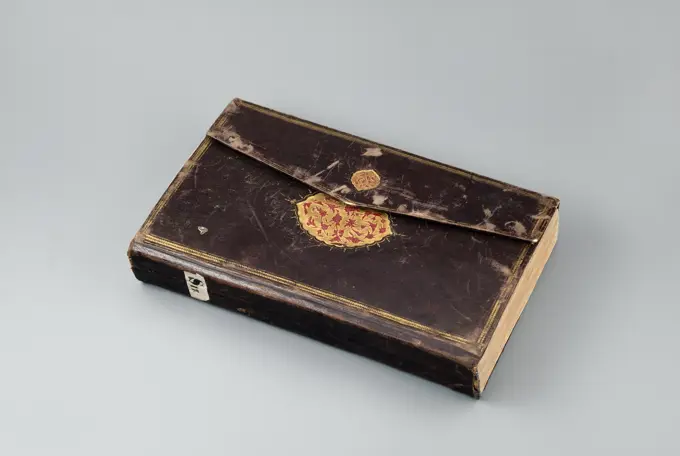
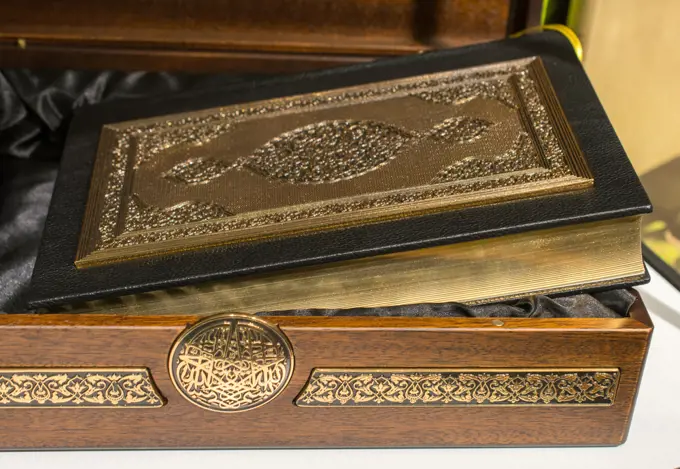
Koran, Osman dynasty (1299-1922), manuscripts, Islamic art
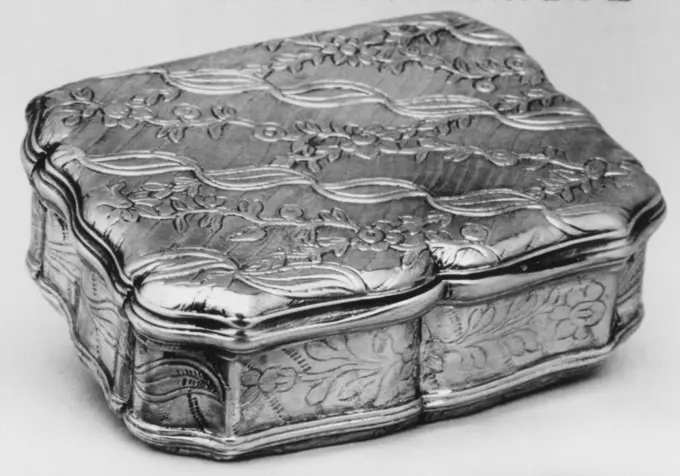
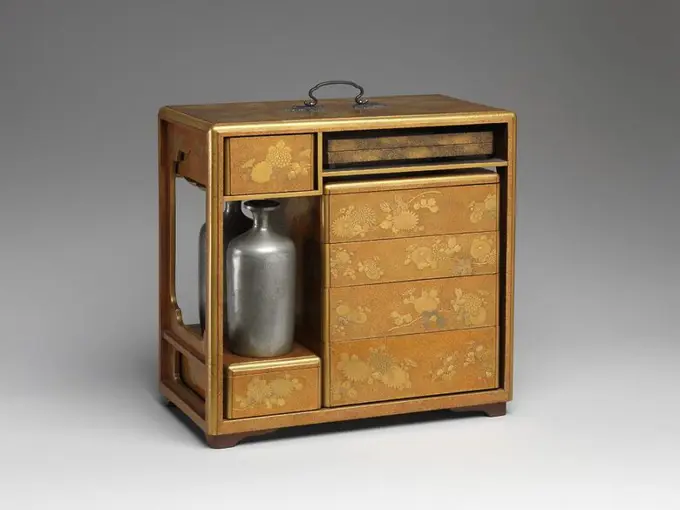
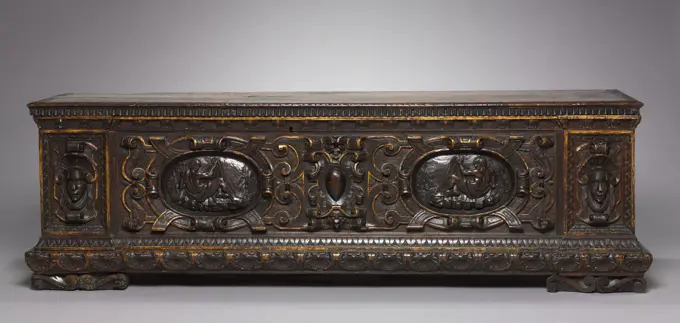
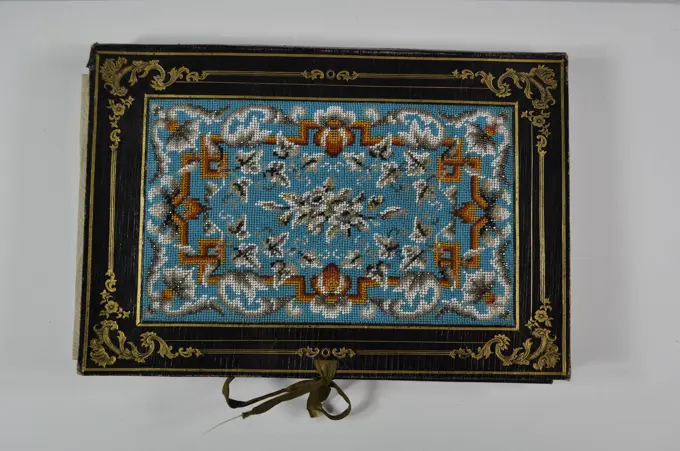
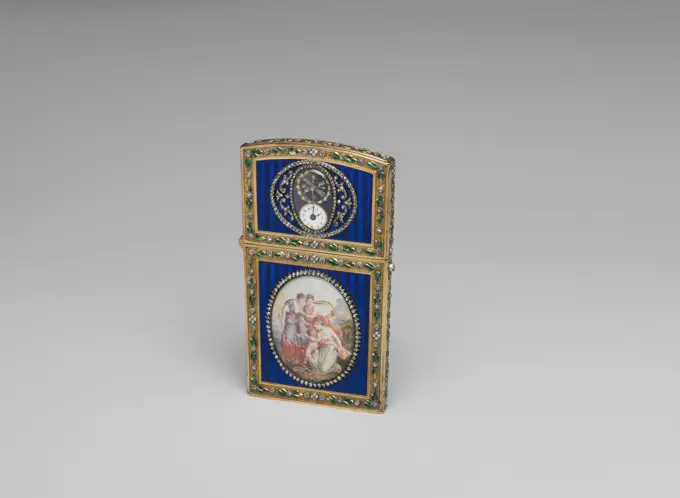
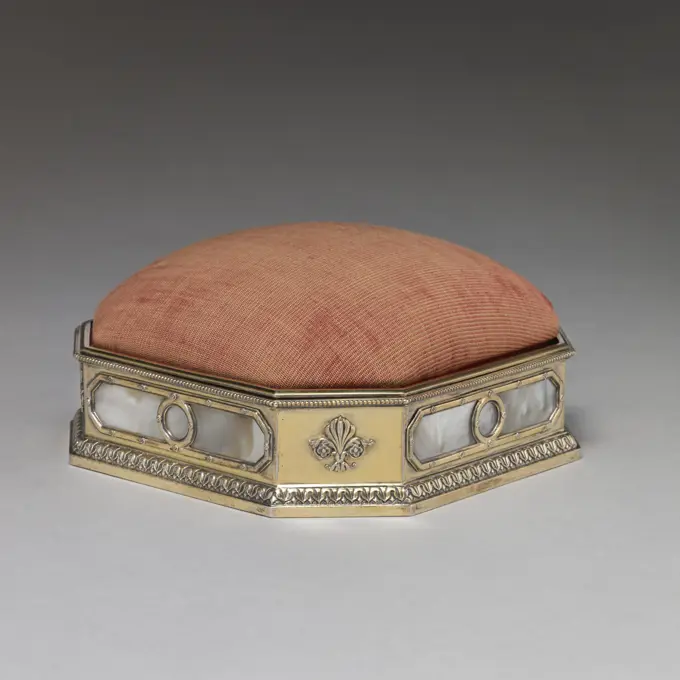
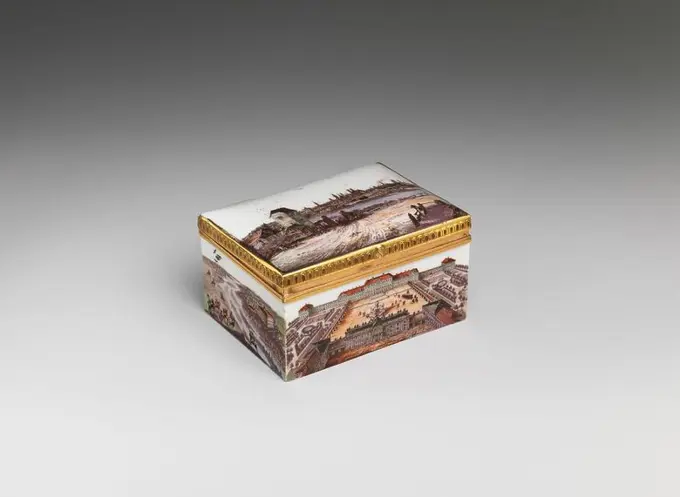
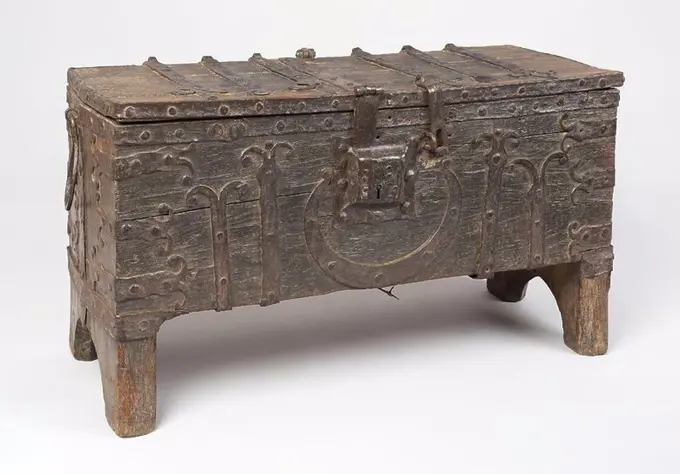
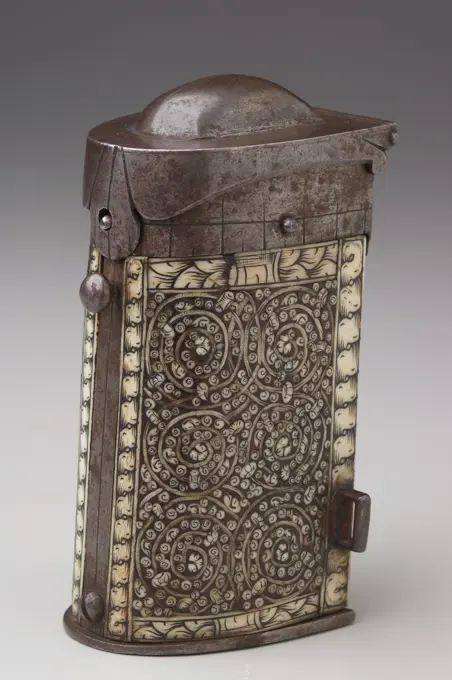
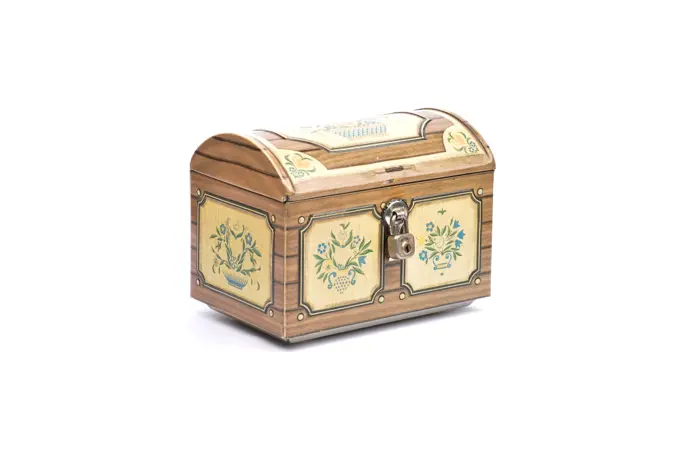
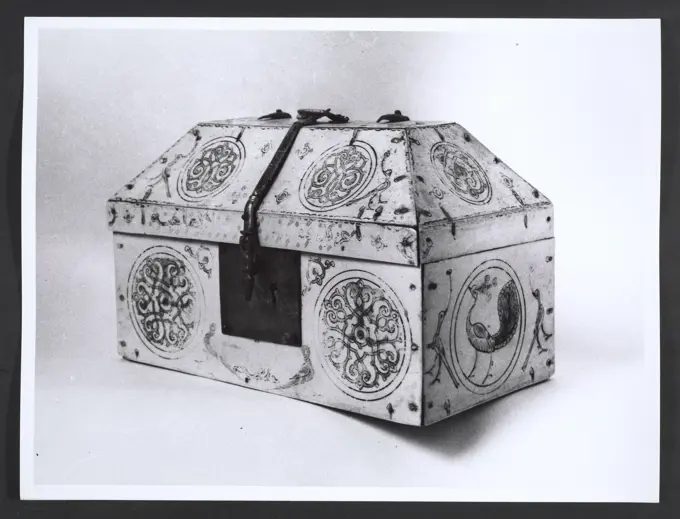
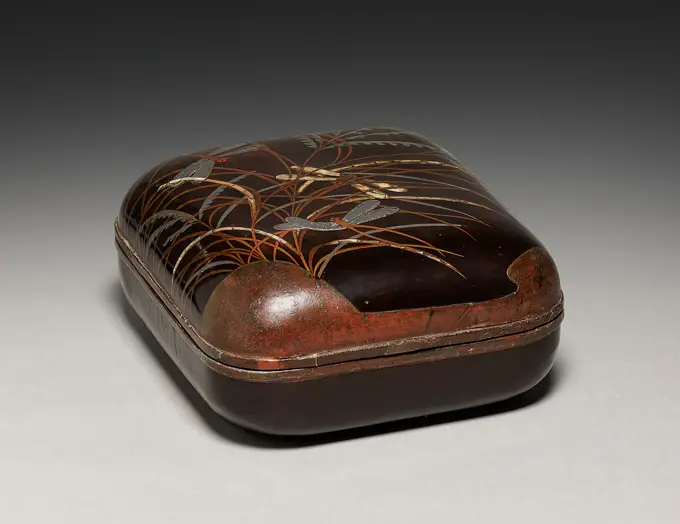
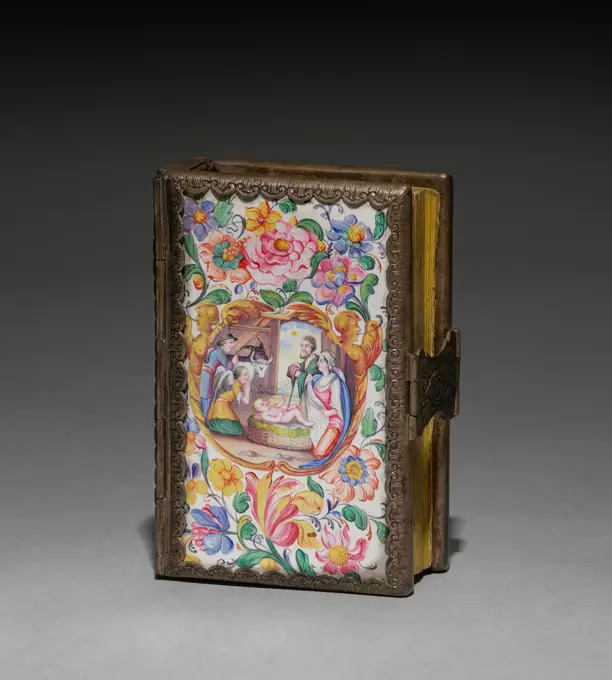
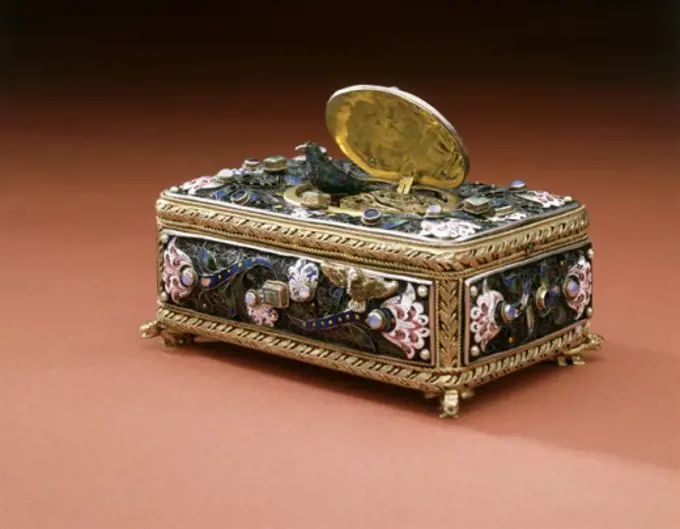
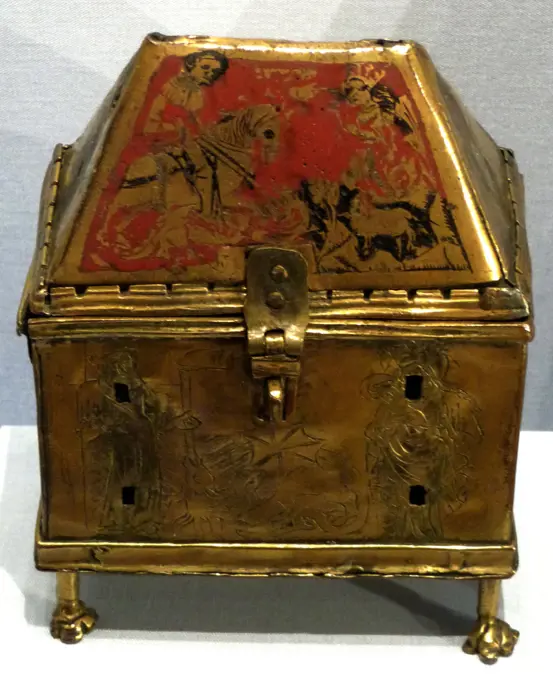
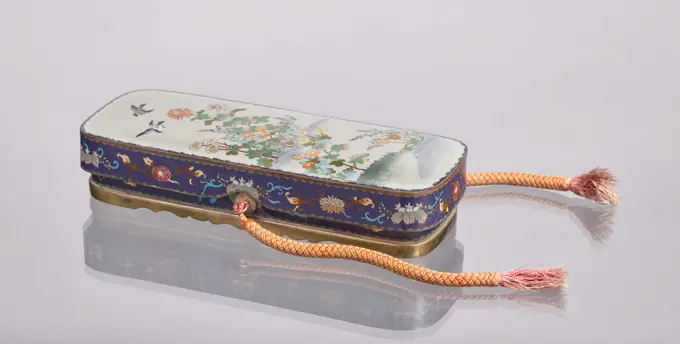
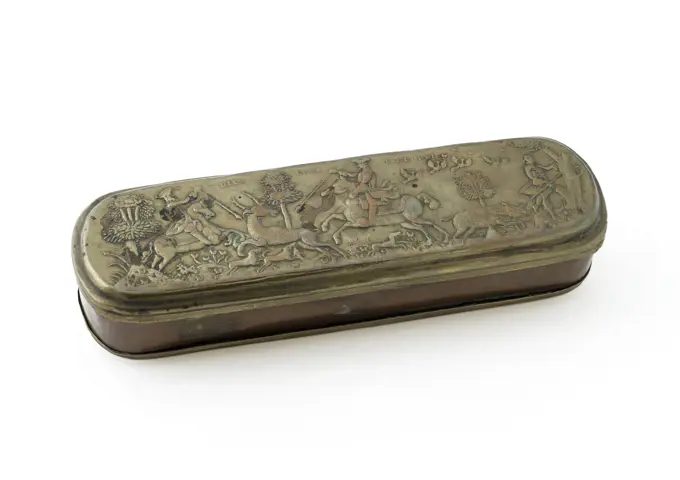
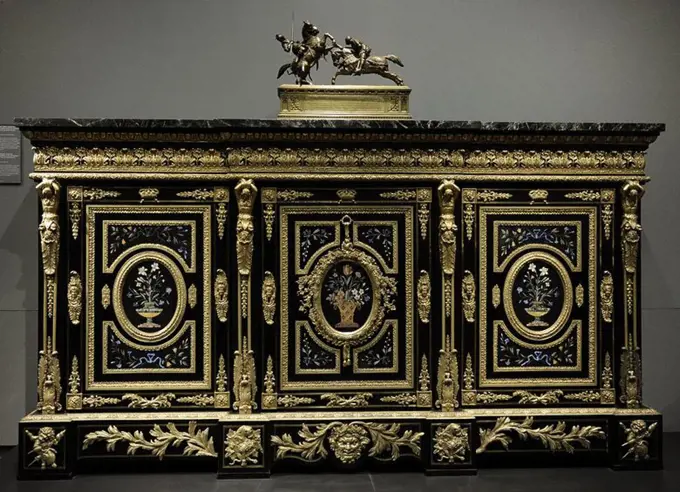
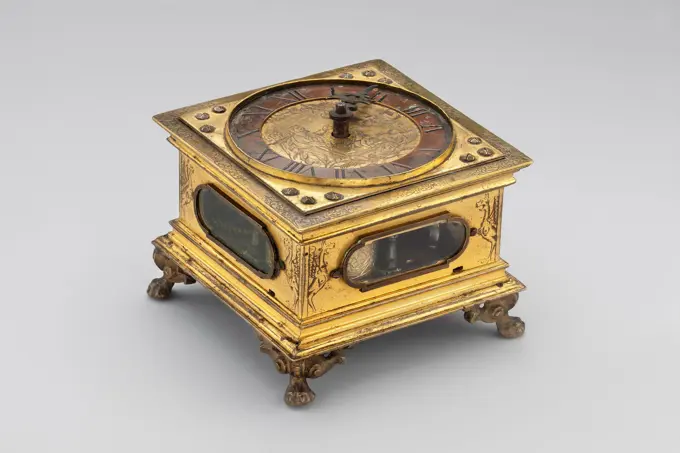
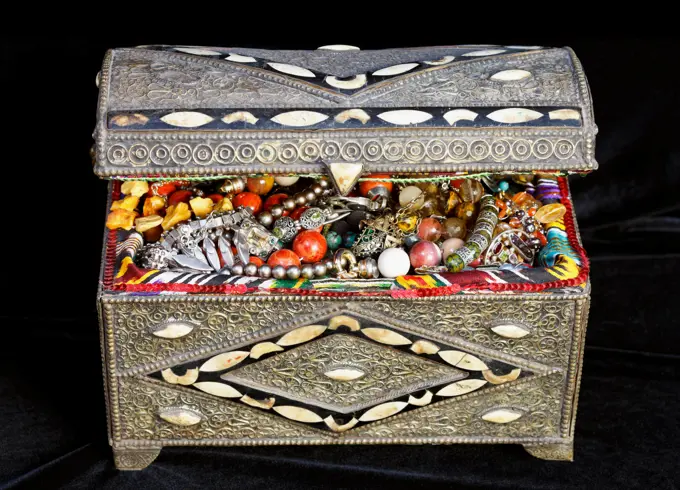
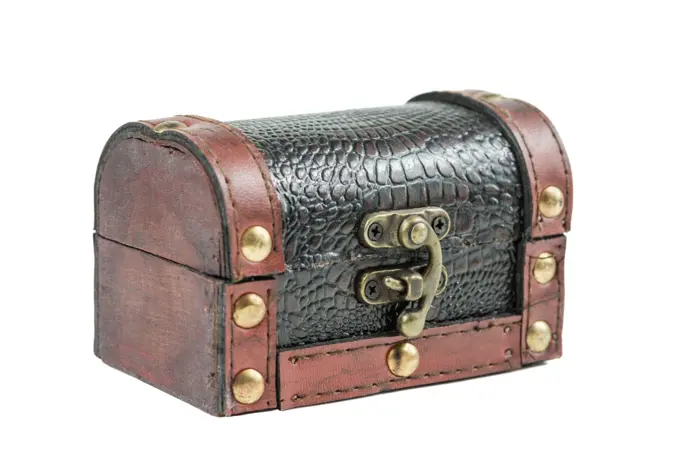
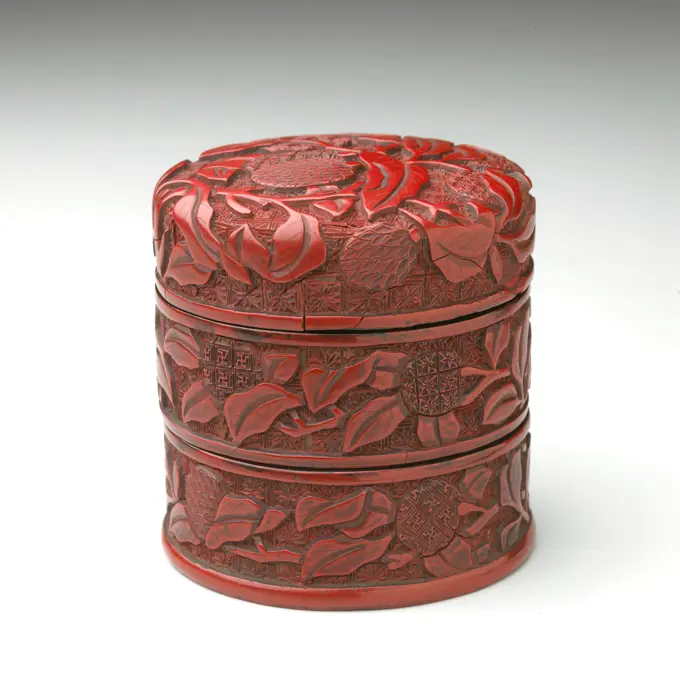
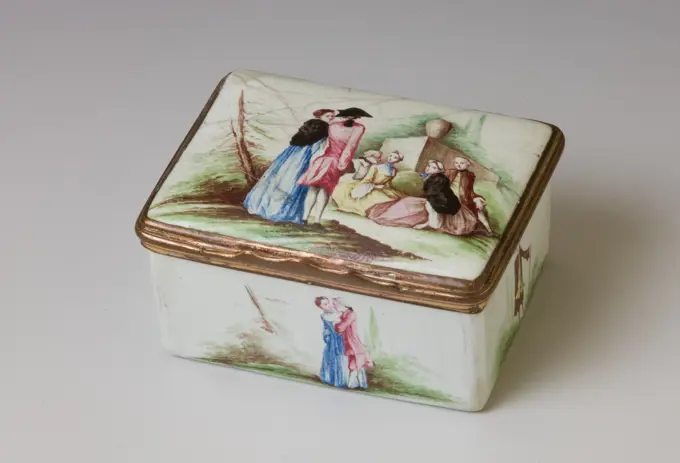
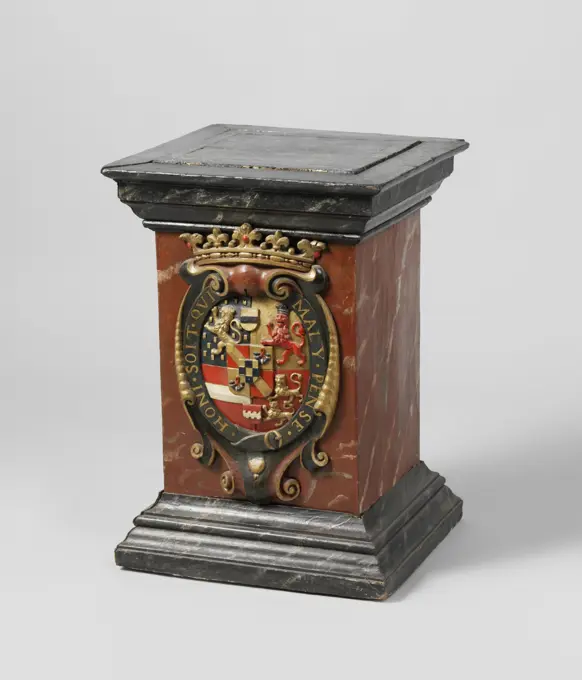
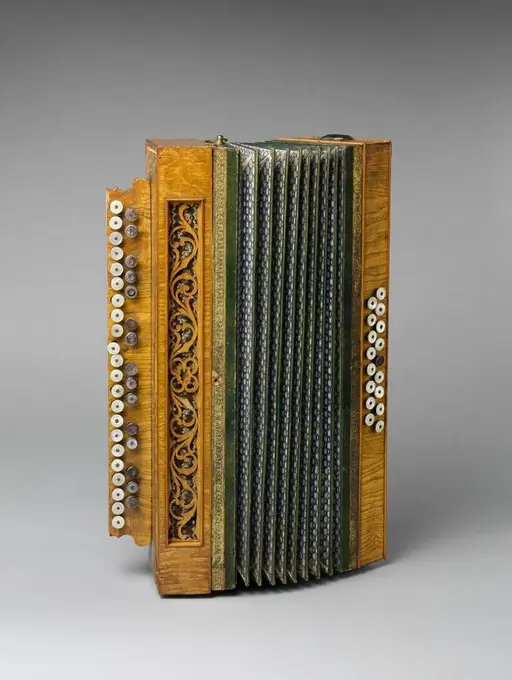
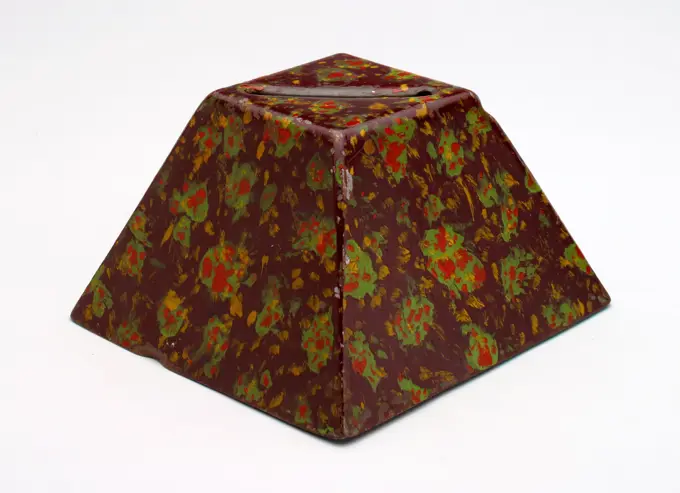
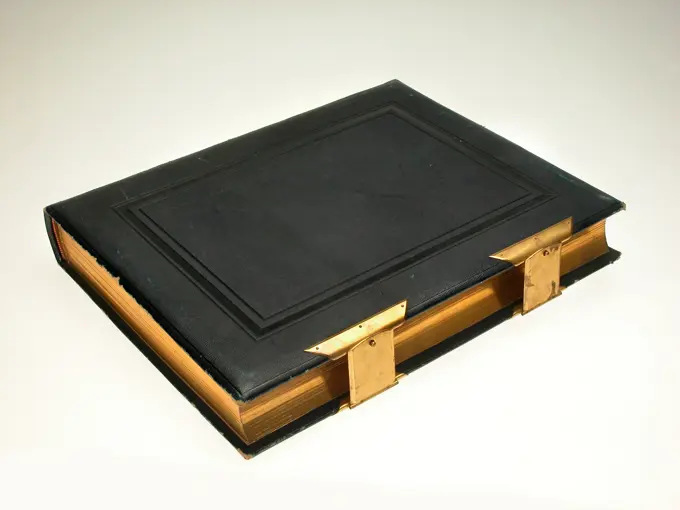
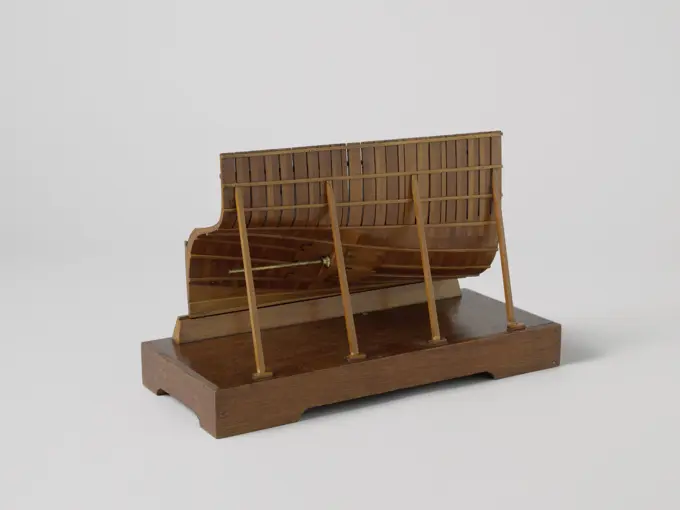
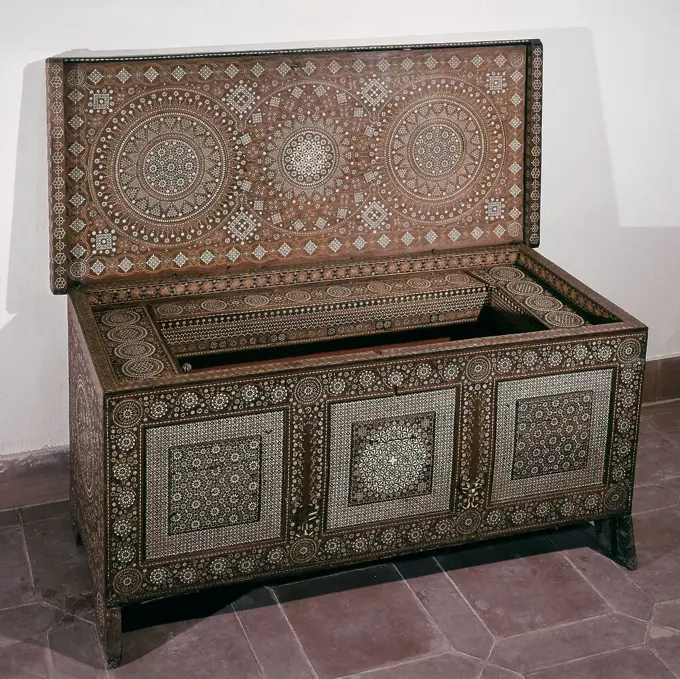
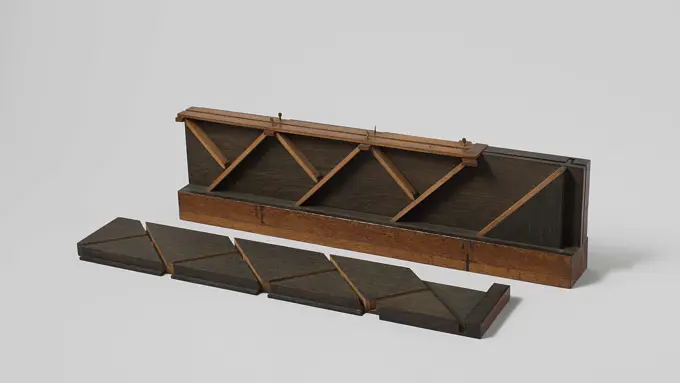
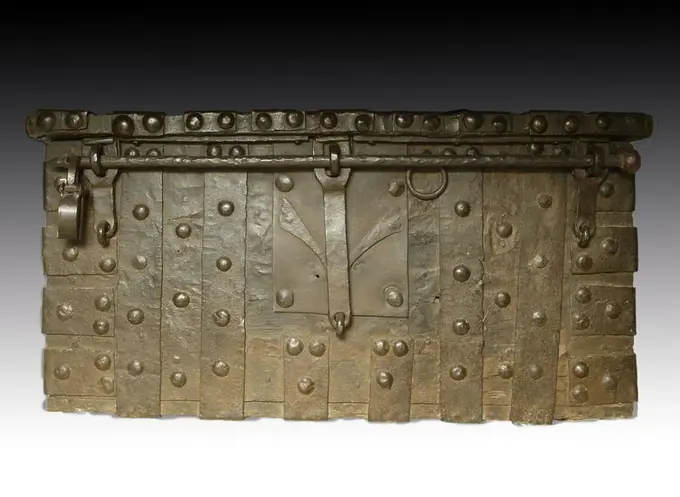
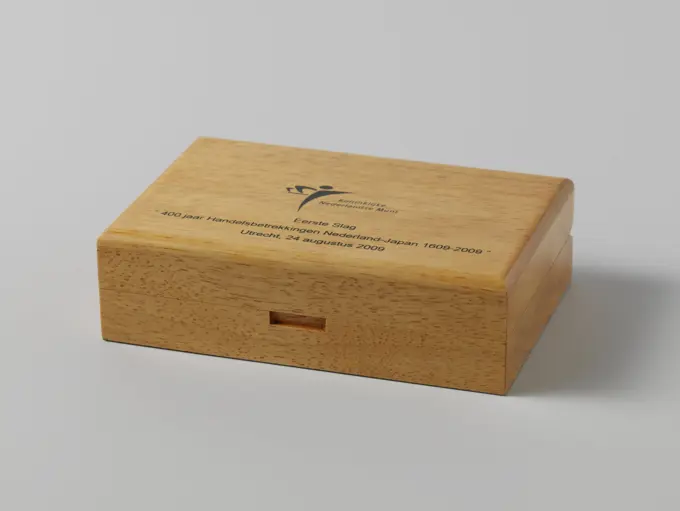
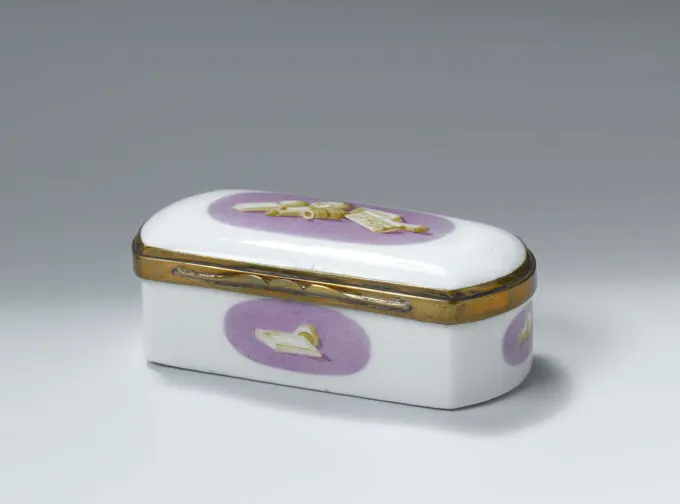
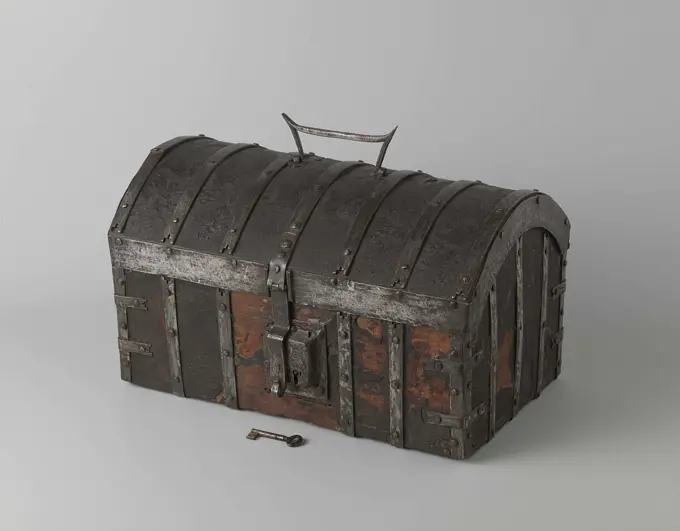
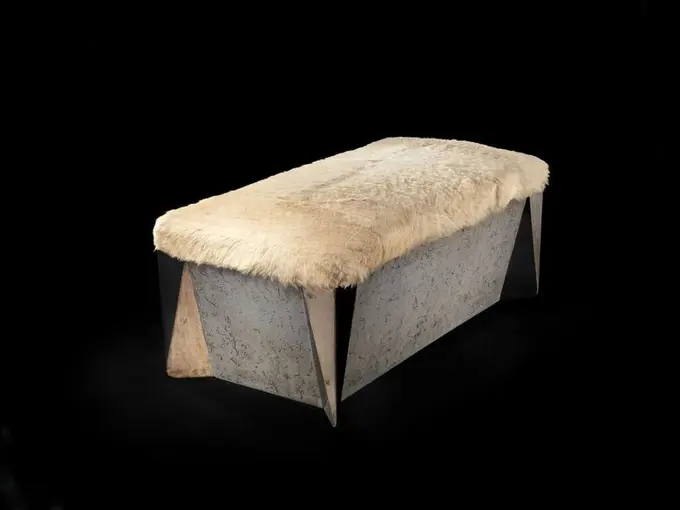
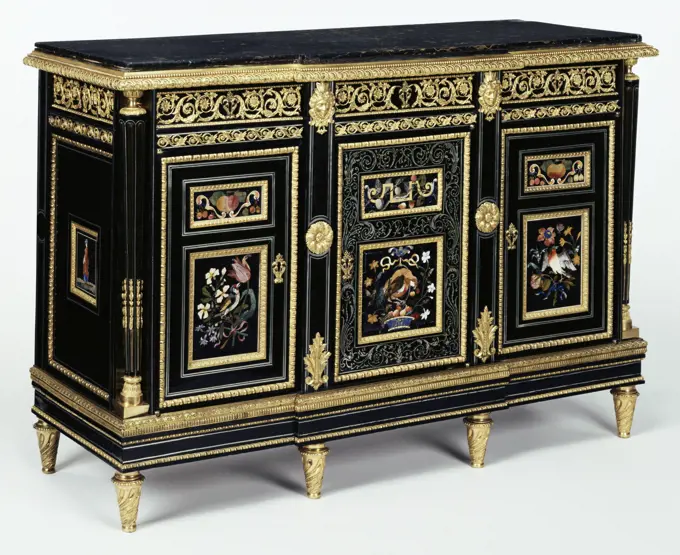
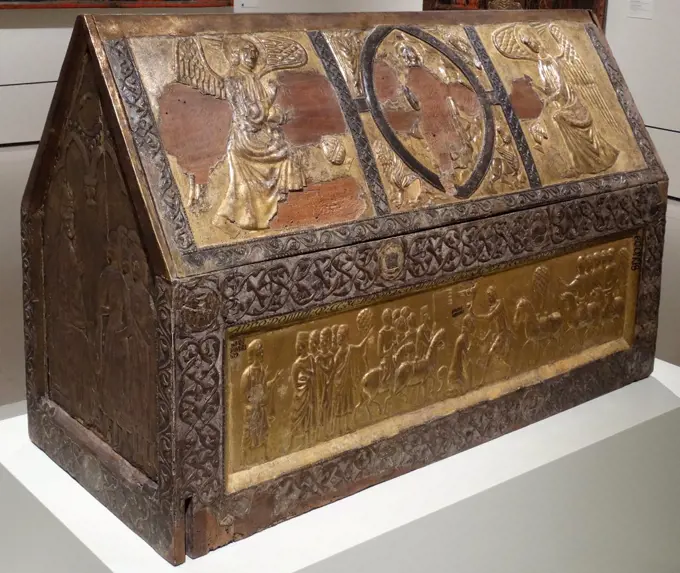
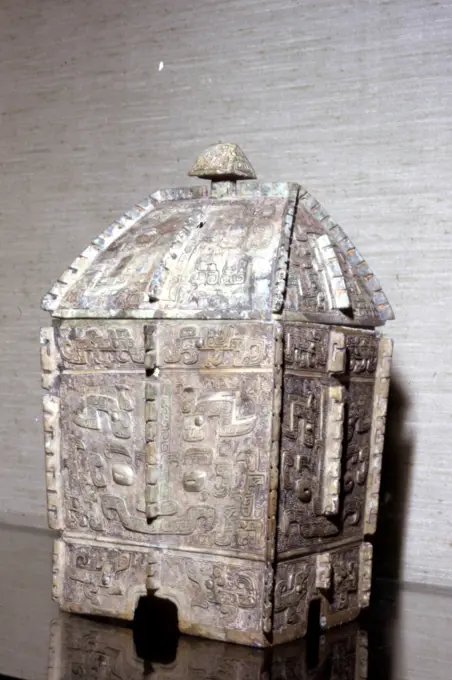
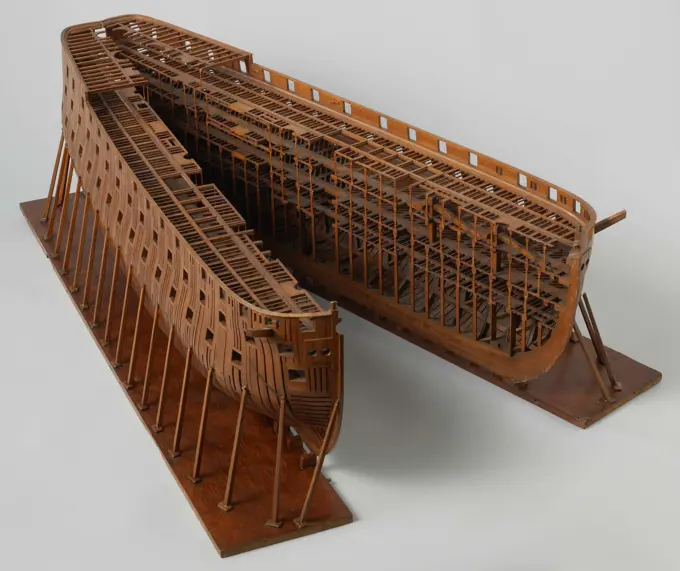
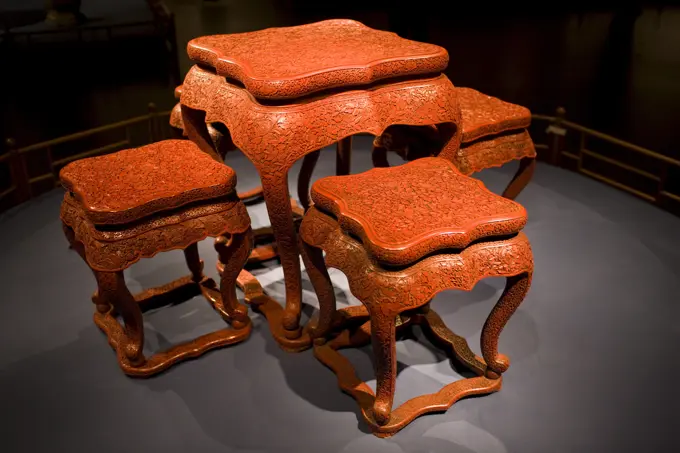
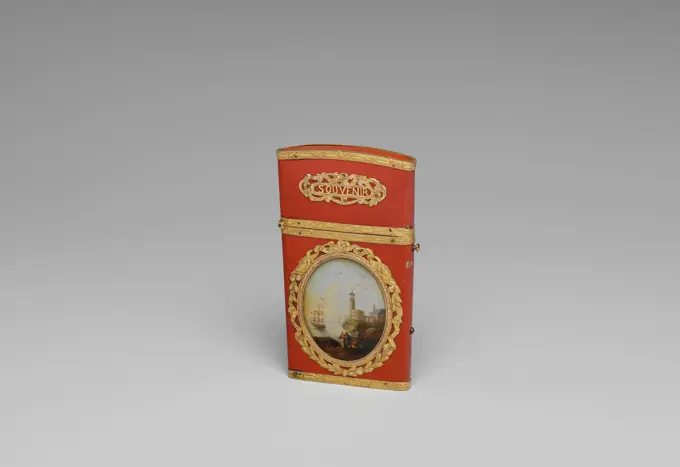
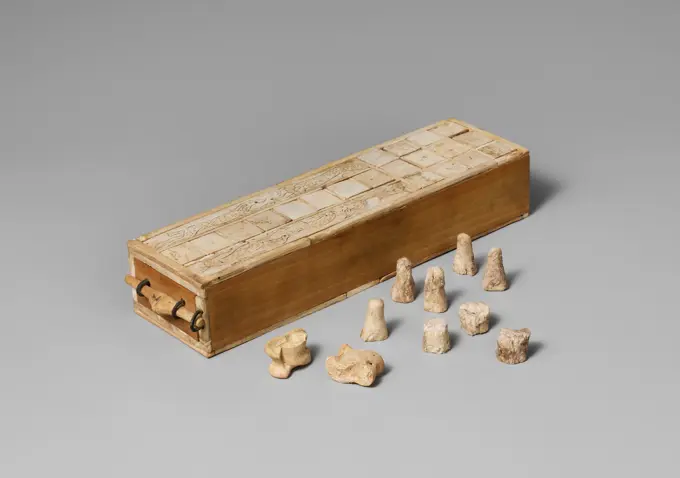
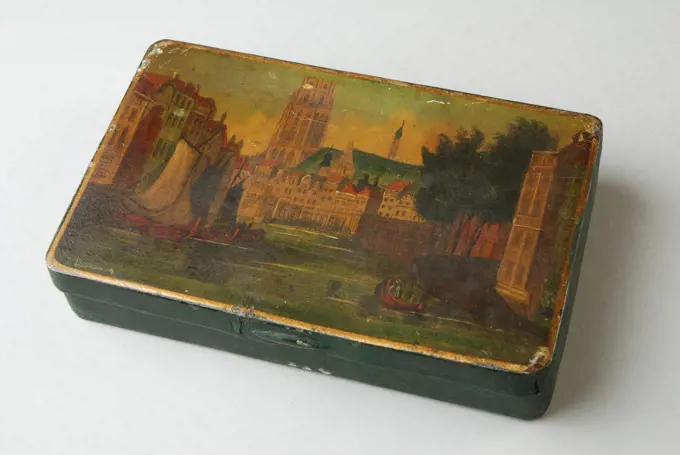
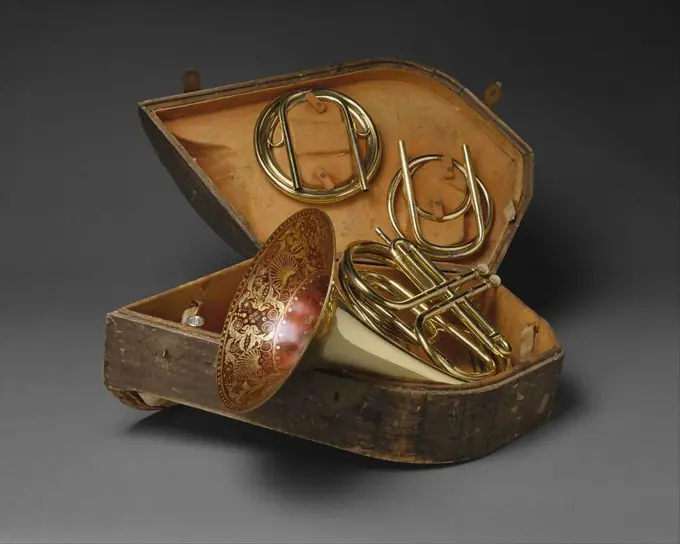
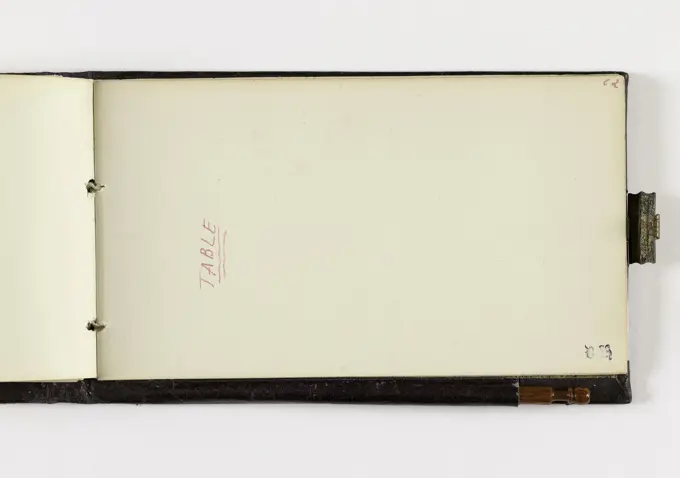
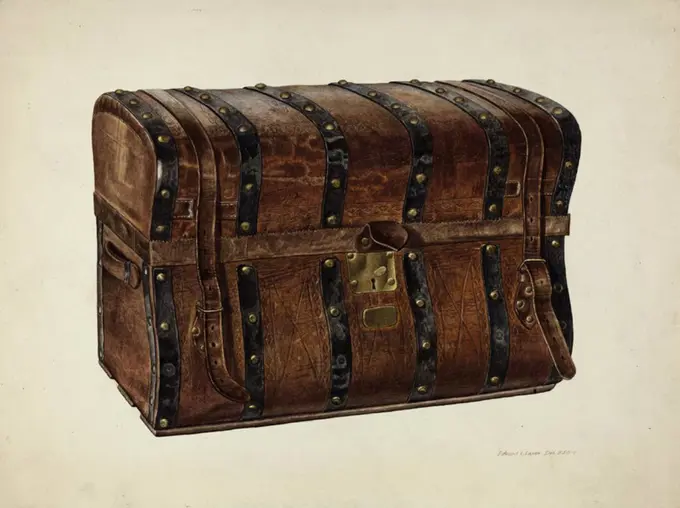
Large Trunk. Dated: c. 1940. Dimensions: overall: 26.6 x 35.4 cm (10 1/2 x 13 15/16 in.). Medium: watercolor and graphite on paperboard. Museum: National Gallery of Art, Washington DC. Author: Edward L. Loper.Wooden coffin with 100 japanese textile jacks. .Snuffbox 1745-46 Antoine Daroux In eighteenth-century Europe, Paris led the production of high-quality luxury goods. Parisian goldsmiths made a wide range of small, personal articles such as snuffboxes; étuis to hold sealing wax, tweezers, or utensils for sewing; souvenirs, which contained thin ivory tablets for note taking; and shuttles for knotting lace. Gold snuffboxes and boxes decorated with portrait miniatures were prized and frequently given as royal gifts, often to ambassadors or members of the court in lieu of cash payments for their services. Coveted and admired, these boxes were produced from a variety of materials. The best were skillfully made of gold and embellished with diamonds, enameled decoration, lacquer, and other luxurious materials. By the middle of the century, the taking of snuff had become an entrenched social ritual, and the snuffbox, too, had become an important social prop. Snuffboxes were considered highly fashionable accessories, with some merchants advertPicnic Set with Design of Chrysanthemum Sprays. Culture: Japan. Dimensions: H. 12 in. (30.5 cm); W. 6 3/4 in. (17.1 cm); D. 12 1/8 in. (30.8 cm). Date: 18th century. Museum: Metropolitan Museum of Art, New York, USA.Cassone, mid-1500s. Italy, Venice, mid-16th century. Walnut; overall: 82.9 x 172.7 x 54 cm (32 5/8 x 68 x 21 1/4 in.).Briefcase with a pile of sheets. unknown, authorSouvenir 1786-89 French, Paris In eighteenth-century Europe, Paris led the production of high-quality luxury goods. Parisian goldsmiths made a wide range of small, personal articles such as snuffboxes; étuis to hold sealing wax, tweezers, or utensils for sewing; souvenirs, which contained thin ivory tablets for note taking; and shuttles for knotting lace. Gold snuffboxes and boxes decorated with portrait miniatures were prized and frequently given as royal gifts, often to ambassadors or members of the court in lieu of cash payments for their services. Coveted and admired, these boxes were produced from a variety of materials. The best were skillfully made of gold and embellished with diamonds, enameled decoration, lacquer, and other luxurious materials. By the middle of the century, the taking of snuff had become an entrenched social ritual, and the snuffbox, too, had become an important social prop. Snuffboxes were considered highly fashionable accessories, with some merchants advertiStrip with embroidery, anonymous, 1700 - 1725 Strip with golden embroidery on karmozijnrode, velvet soil. With an edge of blue silk. Put on window.  velvet (fabric weave). silk. raam: wood (plant material) Strip with golden embroidery on karmozijnrode, velvet soil. With an edge of blue silk. Put on window.  velvet (fabric weave). silk. raam: wood (plant material)Pincushion 1887-1911 André Aucoc. Pincushion. French, Paris. 1887-1911. Silver gilt, mother-of-pearl, red velvet. Metalwork-SilverModel of Foundations with Cross-Piling, Petrus van der Loo, 1855 demonstration model Sketchy patent model of the cross -section of a piece of soil with cross -protection. A part can be removed so that the piles become visible. The piles are flat planks, which become the soil at an angle of 45˚. The long posts have a point end and are all in the same direction. The short posts are lowered in the opposite direction until they hit the long in a right angle; At the end they have two points that penetrate the long posts and prevent shifting. The heads of the piles are connected by a grid of boards that are on the ground and connects both the posts of one row and the rows of posts. The Hague wood (plant material). brass (alloy)Inkwell; leatherAlfred Walbeck, Portable Seat, c 1938 Portable SeatBand for a book, the seven tidal of our L. Lady 't Hantwerpen 1669, Anonymous, c. 1669 Tidal book, 'The seven tidal of our L. Lady' t Hantwerpen 1669, bound in Segrin Band with silver corners, ditches and rings, on which driven children and ornaments. On the paste a silver toothed medallion, on which the crucifixion. On the downside Maria. Antwerp (possibly) shagreen (leather). silver (metal). paper Tidal book, 'The seven tidal of our L. Lady' t Hantwerpen 1669, bound in Segrin Band with silver corners, ditches and rings, on which driven children and ornaments. On the paste a silver toothed medallion, on which the crucifixion. On the downside Maria. Antwerp (possibly) shagreen (leather). silver (metal). paperSnuffbox. Culture: German, Nymphenburg. Dimensions: Overall (confirmed): 1 7/8 × 3 1/8 × 2 7/8 in. (4.8 × 7.9 × 7.3 cm). Factory: Nymphenburg Porcelain Manufactory (German, 1747-present). Date: ca. 1770.This snuffbox is notable for the high quality of its painting and for the ambitiousness of its decorative scheme. The exterior of the cover is painted with a view of Munich copied from a painting by Bernardo Bellotto of 1761, and the sides and bottom of the box are decorated with views of south German castles associated with the Bavarian court. Among the structures depicted are those at Schieissheim, Fürstenried, Dachau, Lichtenberg am Lech, and Nymphenburg, the latter housing the small porcelain manufactory where this snuffbox was made. The castles on the snuffbox are based on water colors by Maximilian de Geer (1690-1768) that in turn were copies of paintings by Franz Joachim Beich (1665-1748), the court painter in Munich. The interior of the box displays a scene of a deer hunt on LaThe Tea Horse Road (Cha Ma Dao) was a network of mule caravan paths winding through the mountains of Yunnan, Sichuan and Tibet in Southwest China. It is also sometimes referred to as the Southern Silk Road and Ancient Tea and Horse Road. From around a thousand years ago, the Ancient Tea Route was a trade link from Yunnan, one of the first tea-producing regions, to India via Burma, to Tibet, and to central China via Sichuan Province. In addition to tea, the mule caravans carried salt. It is believed that it was through this trading network that tea (typically tea bricks) first spread across China and Asia from its presumed origins in Pu'er county, near Simao Prefecture in Yunnan.Caddy with a lidJohann Erhard Heuglin II and others, Breakfast Set, c. 1728-29, Gilded silver, hard-paste porcelain, glass, and original leather case.Toilet set. The principal piece of this toilet set is a small chest of drawers with an attached mirror. This example was made in China, though its mirror follows an English design. It was commissioned by the Canton-based Dutch merchant Andreas Everardus van Braam Houckgeest as a gift for his daughter in the Netherlands; her initials are found on the accompanying toilet boxes.Chest. German; Alsace. Date: 1300-1400. Dimensions: 55.9 × 105.4 × 43.2 cm (22 × 41 1/2 × 17 in.). Oak and iron. Origin: Alsace-Lorraine. Museum: The Chicago Art Institute, Chicago, USA.Casket (India); enamel, metal, goldPatron (cartridge box), c. 1585, 4 3/4 x 2 1/2 x 2 3/4 in. (12.1 x 6.4 x 7 cm), Steel, wood, horn, bone, Germany (Saxony), 16th centuryPILA DE LOS PATOS. Location: MUSEO ARQUEOLOGICO-COLECCION. Sevilla. Seville. SPAIN.Open casketLazio Frosinone Veroli S. Andrea Apostolo, Cathedral0. Hutzel, Max 1960-1990 Views of metalwork objects housed in Treasury of S. Andrea Apostolo, including busts, reliquaries, crosses, polittico, boxes. Antiquities: relief sculpture; busts General Notes: Museum, which contains Treasury, is located in the last chapel of the right nave. Thirteen views of (non-metalwork) sculpture from Museum have been assigned numbers at end of Treasury sequence, but there are no negatives corresponding to these prints, nor is there authoritative evidence that these objects are housed in the Cathedral Museum. German-born photographer and scholar Max Hutzel (1911-1988) photographed in Italy from the early 1960s until his death. The result of this project, referred to by Hutzel as Foto Arte Minore, is thorough documentation of art historical development in Italy up to the 18th century, including objects of the Etruscans and the Romans, as well as early Medieval, Romanesque, Gothic, Renaissance and Baroque Letter Box, 1700s. Manner of Ogata Kōrin (Japanese, 1658-1716). Lacquer with pewter and mother-of-pearl inlay; overall: 24.2 x 21.6 cm (9 1/2 x 8 1/2 in.).Cabinet. Culture: American. Dimensions: 31 3/4 x 28 3/16 x 17 5/16 in. (80.6 x 71.6 x 44 cm). Maker: Attributed to Hennessey Company. Date: 1840-55. Museum: Metropolitan Museum of Art, New York, USA.Carnet, 1863-1865. Sweden, 19th century. Enamel on copper and silver gilt book binding; overall: 10.5 x 6.9 x 3.9 cm (4 1/8 x 2 11/16 x 1 9/16 in.).French Vermeil, Enamel, Emerald, Sapphire and Opal Mechanical Box Antiques Chest with naturalistic flower ornaments of beads, anonymous, c. 1700 - c. 1800 Chest with naturalistic flower ornaments of beads on black fabric. The box is lined with light red fabric. Netherlands pine (wood). glass Chest with naturalistic flower ornaments of beads on black fabric. The box is lined with light red fabric. Netherlands pine (wood). glassTray with Marble Base, 17th century, 1-1/2 x 12-1/16 x 12-1/8 in. (3.8 x 30.6 x 30.8 cm), Marble and tzu-t'an hardwood, China, 17th centuryTea chest. Pieter Adolf Brune (1750-1829) Amsterdam, 1785. Silver, wood, modern covering. Brune was a brother-in-law of Christoffel Mittscherlich, the leading assistant of Johannes Schlotling. This chest contains three canisters, two for tea and one for mixing. Tea was expensive and tea chests were therefore often fitted with a lock. Here the keyhole is covered by a small ribbon-shaped lock plate from which musical instruments are suspended.Old book isolated on a white background.St George Reliquary Casket. A casket containing the relics of St george patron saint of England (depicted on the lid). It also includes relics from St Etheldreda of Ely. English metalwork and enamel decorated object circa 1400-1450Invention horn (orchestral horn), Carl Gottlob Schüster, after 1824 - before 1850 Invention horn in the original wooden box and with 15 interchangeable brackets and mouthpiece. A wreath of Nieuw Zilver has been laid around the cup, in which engraved: 'Carl Gottl. Schüster '. Furthermore, leaf and flower motives. Markneukirchen copper (metal) Invention horn in the original wooden box and with 15 interchangeable brackets and mouthpiece. A wreath of Nieuw Zilver has been laid around the cup, in which engraved: 'Carl Gottl. Schüster '. Furthermore, leaf and flower motives. Markneukirchen copper (metal)Letter case (fubako) with lid. unknown, male artistCopper tobacco box with face on Rotterdam, tobacco box holder metal copper brass, stamped technique inserted Narrow box with flat hinged lid round corners raised sides of red copper top: heraldry cityscape topography Rotterdam Maas hunt trade negotie tobacco smoking store snuffbox Collection AO van Kerkwijk.Music Box, 1800s. Switzerland or Germany, 19th century. Gilt metal, enamel, semi-precious stones; overall: 4.5 x 9.9 x 6.7 cm (1 3/4 x 3 7/8 x 2 5/8 in.).Three-door cabinet, c. 1835-1838. Anonymous. It was once owned by King William II. A French cabinetmaker fitted the piece with hardstone panels inlaid with floral motifs made of costly polished stones. This pietra dura technique dates from at least the 16th century. The many gilt-bronze figures and the cabinetÕs robust model, however, are typical of the 19th century. Rijksmuseum. Amsterdam. Holland.Copper design fitting on antique wooden box, Jodhpur, Rajasthan, India Copyright: xSafatxAli/DinodiaxPhotoxTile clock. Gierke, Jakub (fl. 1616-1664), watchmakerThe outer golden shrine containing the mummy and sarcophagus of Tutankhamen; Egyptian pharaoh of the 18th dynasty (ruled c. 1332-1323 BC). Now on display in the Cairo MuseumModel of a Lifeboat release. Model of a part of a ship wall with a sloop on two nail vits. The model demonstrates the sloop fall in the bottom of the sloop, wherein two hooks are released to the hoist of the davits by means of a lever in the cabin. The sloop is a simpliced double well sloop with flat mirror, the seam almost flat; He has four dulles with rail sticks, fooling for eight rowers and an open cabin. A number of fittings on the model remains unclear.Covered Box. Culture: American. Designer: Designed by Louis Comfort Tiffany (American, New York 1848-1933 New York). Dimensions: 2 1/8 x 6 7/16 x 4 in. (5.4 x 16.4 x 10.2 cm). Maker: Tiffany Studios (1902-32). Date: ca. 1905-20. Museum: Metropolitan Museum of Art, New York, USA.ancient arabic treasure chest ancient east treasure chest with antique jewelry on black velvet Copyright: xZoonar.com/ValeryxVoennyyx 5528690Bandbox And Lid (USA); block-printed on paper, pasteboard support; 27 x 20 x 15 cm (10 5/8 x 7 7/8 x 5 7/8 in.); GIft of Alexander Wilson Drake; 1913-9-5-a,bDelicious fresh colorful Christmas or New Year gingerbread cookies on a ceramic plate on a dark concrete backgroundBox -Closed wooden chest with jewels  isolated on a white backgroundStool. Dynasty: Dynasty 18. Date: ca. 1550-1295 B.C.. Museum: Metropolitan Museum of Art, New York, USA.Round Tiered Box, late 15th-early 16th century, 2 7/8 x 2 3/4 x 2 3/4 in. (7.3 x 7.0 x 7.0 cm), Carved red lacquer (tihong), China, 15th-16th century, Legend has it that the Tang emperor, Minghuang (r. 713-56 CE), had lychee fruit delivered by horseback from southern China to satisfy the cravings of his favorite concubine, Yang Yuhuan. Because of this story, and the fruits general popularity in China, lychee is a frequent motif in the decorative arts and carries associations with romance. The cover and sides of this cylindrical box are deeply carved with fruiting branches of lychee within plain narrow borders. The fruits are sometimes depicted with realistic outer skins and sometimes with a lattice pattern, the whole set against a star pattern background.Tabakierka Chodowiecki, Daniel Nikolaus (1726 1801)Goldsmith's art, 19th century. Malachite cameos in gold setting demi parure consisting of comb, necklace and earrings.Pedimis of image Prince Willem II, François Dieussart (Attributed to), 1650 - 1675  Pedestan of wood, belonging to the image of Prince William II. On the front the cut, covered by a crown and surrounded by the order of the garter (of Oranje-Nassau). Substrate gray and red marbled; The weapon polychromed. Inscription around the weapon. Netherlands wood (plant material). oil paint (paint). gilding (material) gilding coat of arms (symbol of sovereignty)Studio shot of old-fashioned itemAzimuth Compass With Tripod. Azimuth compass in a wooden box. The compass has a fixed monitoring device. The eyepiece of this consists of a prismatic visor to read the rose, combined with a slit visor with a black and green blackout glass; The wire visor on the other side is equipped with a tilting black mirror. The boiler is weighted with a lead weight below. With two mechanics in the boiler, the rose can be fixed: one is a lever with a ring around the pen, which lifts the rose of the pen; The other is a spring pushed against the edge of the rose. The compass has two green compass roses, printed on green paper, one is mounted in the azimuth compass. The second compass rose is stored in a separate wooden box that can accommodate two compass roses under two metal clamps so that the magnetic poles are aimed in such a way that the magnetic properties are stored optimally. The compass rose in the box has a metal border on which the degrees are divided into 20 '. The tripod has a mik in whiAccordion. Culture: Possibly Belgian. Dimensions: Overall: 19.9 x 14.7 x 52.7cm (7 13/16 x 5 13/16 x 20 3/4in.). Date: ca. 1890.An early chromatic accordion with an arrangement of buttons like a piano keyboard and seventeen free basses. Museum: Metropolitan Museum of Art, New York, USA.Pyramid still bank, 20th century, 2 1/8 x 3 3/16 x 3 1/4 in. (5.4 x 8.1 x 8.26 cm), Tin, pigment, 20th centuryPhotograph album - Notman family album, dark blue leather, 1870-1940 William Notman (1826-1891) ,  , Adolphe , James E. Purdy (1858 - 1933)Pa. German Chest. Dated: c. 1940. Dimensions: overall: 37.6 x 45.3 cm (14 13/16 x 17 13/16 in.) Original IAD Object: 8 1/2" high; 10 3/4" deep; 11" wide. Medium: watercolor and graphite on paper. Museum: National Gallery of Art, Washington DC. Author: Carl Strehlau.Model of the Construction of the Screw Aperture for a Twin Screw Steamer, anonymous, 1864 construction model Model of a part of the stern of a wooden ship (starboard side), on a ground board. The model shows the keel, the trusses with sentent and part of the road and the propeller shaft. The trusses just before and just behind the propeller shaft gasket are different in shape to let the axle run in between. The gasket is in a thick wooden block, reinforced on the outside with a toothed metal plate and on the inside with a cross -sheep beam and metal knee. Netherlands wood (plant material). brass (alloy)ARCON DE TARACEA VENECIANA DEL SIGLO XV. Location: CATEDRAL-INTERIOR. Toledo. SPAIN.Singapore, Singapore, Chinatown. Souvenir Chinese chess set.Model or Foundations with cross-pilling.Chetting patent model of the diameter of a piece of land with cruciahythiosis. Part can be removed so that the piles become visible. The piles are flat shelves, which are the ground integrity at an angle of 45˚. The long posts have a padded end and are all in the same direction. The short posts are lowered in the opposite direction until they hit the long in a right angle; At the end they have two points that penetrate long piles and prevent the shifting. The heads of the piles are connected by a float of shelves that lies on the ground and connect both the posts of one row and the rows of poles.Korbeel and key piece with cut representation of a Elector Aartsbishop, Anonymous, c. 1550 - c. 1600 Korbeel of oak wood with cut representation of a Elector Aartsbishop, standing under a canopy. Coming from the broken house Warmoesstraat 145 in Amsterdam. Northern Netherlands oak (wood) Korbeel of oak wood with cut representation of a Elector Aartsbishop, standing under a canopy. Coming from the broken house Warmoesstraat 145 in Amsterdam. Northern Netherlands oak (wood)ARCA DE CAUDALES DE HIERRO (EN EL MUSEO DE SANTA CRUZ).Wooden box at Munt 400 years of Trade relations Nederland-Japan, 2009 medal box Wooden box with inscription, covered on the inside with velvet in which a textbook is stabbed. Utrechtpublisher: The Hague wood (plant material). velvet (fabric weave). paperWooden bed with gold leaves belonged to Queen Hetepheres, wife of Pharaoh Snefru, from Giza. Manufacturing former loose ruderecht, c. 1778-1782Hard-Paste Porcelain, BrassCoffin with black leather. Casket with black leather covered, in which hand-carved ornaments and two coats of arms. Iron fittings and handle. The oldest documents of Thorn's abbey were preserved here.Bench. Artist: Jean Dunand (French (born Switzerland), Lancy 1877-1942 Paris). Dimensions: 18 × 40 × 21 in. (45.7 × 101.6 × 53.3 cm). Date: ca. 1927-28.Although most Art Deco patrons were French, one of the era's most complete, important residential design projects was realized in America: a penthouse apartment in San Francisco designed for Templeton Crocker (1884-1948), the millionaire grandson of the founder of the Union Pacific Railroad Company. Completed in 1928, the apartment contained a master bedroom, dining room, and breakfast room by Dunand; the noted French designers Jean-Michel Frank, Pierre Legrain, and Madame Lipska created the other rooms. The apartment was dismantled and sold in 1959.The "sponged" surface of Dunand's master-bedroom furniture is characteristic of lacque arraché, a technique in which a final coat of lacquer (here, metallic gray) is applied over a roughened layer (black). By polishing the entire surface, the raised peaks of the black lacquer were revealedOne of a Pair of Cabinets; Attributed to Adam Weisweiler (French, 1744 - 1820 (master 1778)); Italy; about 1810; pietra dura plaque mid-17th - late 18th century; Oak, pine and beech veneered with ebony and mahogany; pewter stringing; set with pietra dura plaques and micromosaic roundels; gilt-bronze mounts; portor d'Italie marble top; 101.6 x 150.2 x 54.6 cm (40 x 59 1,8 x 21 1,2 in.)Urn reliquary of St. Candide by Anonymous. Dated 13th CenturyPair of Lacquer Chests with Four Drawers. Japan, 19th century. Lacquer. Gold powder in black lacquerBrass and iron design fitting on antique wooden box, Jodhpur, Rajasthan, India Copyright: xSafatxAli/DinodiaxPhotoxAlbum - sketchbook. unknown, authorBronze Fang Yi vessel, Shang Dyn. 12th cent. BC., China.Model or a 74-gun ship of the line. Construction model, cut lengthwise vertically, supported the halves based on a base board. Skin-or shelling, meant to show the differences in the construction of crossbar according to Sir Robert Seppings (port half) and Cornelis Soetermeer (starboard half). At Soetermeer's system, the towing parts of Seppings' cross bandage are omitted and replaced by metal strips outside on the ground under the skin. The fore ship only has vertical spacers arranged on steering borders to boiler horizontal tires. Round stern with wull and fence of two floors, without details or side galleries. Six and ninety gunposes spread over three decks. Five decks: cow bridge, lower, intermediate and upper deck and upper champion: Under- and intermediate deck have supported a diagonal warp in the web, the deck bars of all decks except the cow bridge are supported by brass knees. The seam runs something on both ends, no bark wood or reehout. Peaked round truss, cut out well. ScalSnuff Box, three-color gold, vitreous enamel, silver, old-mine cut diamonds, Box, oblong with rounded corners; gold with bleu de roi enamel plaque on cover with applied 'N' inlaid with diamonds., Switzerland, 1800-1810, containers, Decorative Arts, snuff box, snuff boxMedieval chest from the 16th century Medieval chest from the 16th century Copyright: xZoonar.com/BartomeuxBalaguerxRotgerx 22568957Puppet stove with five holes. Puppet stove with five holes.Hat, from the Novelties series (N228, Type 3) issued by Kinney Bros. 1889 Issued by Kinney Brothers Tobacco Company Trade cards from the "Novelties" series (N228), issued in 1889 to promote Kinney Tobacco Company. There are five types of card within the series. Type 1 cards are round. Type 2 cards are round with colored borders. Type 3 cards are die cut to the shape of a novelty item. Type 4 are also die cut with embossing. Type 5 depict novelties on a rectangular card. Finally, Type 6 are die cut in the shape of an egg.. Hat, from the Novelties series (N228, Type 3) issued by Kinney Bros.. 1889. Commercial color lithograph. Issued by Kinney Brothers Tobacco Companytattered book isolated on white backgroundThe Ariel Automatic Barrel or Street OrganBox Horning with the Tulips Five, Deniz Seyda Tunca, 2012 box Wooden box, covered with blue velvet on the inside, with lid applied lid with explanation; Learning skin stuck on lid: title with dating and maker. Corning with the tulip five. manufacturer: Utrechtpublisher: The Hague wood (plant material). velvet (fabric weave)Old chest isolated on the white backgroundOld book closeup on white background Leather key chain isolated on white background.Gaming pieces. Dimensions: cones (average): 2.6 × 1.5 cm (1 × 9/16 in.)spools (average): 1.6 × 1.7 cm (5/8 × 11/16 in.)knuckle bones : 1.8 × 2.8 cm (11/16 × 1 1/8 in.). Dynasty: Dynasty 17-Early Dynasty 18. Date: ca. 1635-1458 B.C..This partial set of gaming pieces belong to an ivory game box in the collection. Museum: Metropolitan Museum of Art, New York, USA.Red lacquer square table and stools with carved floral design on display in the Shanghai Museum, ChinaSnuff Box Portrait of Saxon Prince 1770-1785 Dresden. Gold, hardstone, enamel, copper, glass, and pearls . Johann Christian NeuberWooden grain size., Anonymous, 1650 - 1823  Wooden round object with flat bottom. The outside is laid and cramed. On the outside, next to the seam, the stamp (standing lion) is applied. The soil is mounted in the object with nails. Netherlands wood (plant material). metal   NetherlandsBrass and copper design fitting on antique wooden pen box, Jodhpur, Rajasthan, India Copyright: xSafatxAli/DinodiaxPhotoxSouvenir 1774-80 French, Paris In eighteenth-century Europe, Paris led the production of high-quality luxury goods. Parisian goldsmiths made a wide range of small, personal articles such as snuffboxes; étuis to hold sealing wax, tweezers, or utensils for sewing; souvenirs, which contained thin ivory tablets for note taking; and shuttles for knotting lace. Gold snuffboxes and boxes decorated with portrait miniatures were prized and frequently given as royal gifts, often to ambassadors or members of the court in lieu of cash payments for their services. Coveted and admired, these boxes were produced from a variety of materials. The best were skillfully made of gold and embellished with diamonds, enameled decoration, lacquer, and other luxurious materials. By the middle of the century, the taking of snuff had become an entrenched social ritual, and the snuffbox, too, had become an important social prop. Snuffboxes were considered highly fashionable accessories, with some merchants advertiPair of Tea Caddies c 1800-1850 United States. Maple, rosewood, and white pine . Artist unknownGame Box for Playing Senet and Twenty Squares ca. 1635-1458 B.C. Second Intermediate Period-Early New Kingdom The upper and lower surfaces of this box are each configured for a different board game. The side visible in this photograph has twenty squares for a game that was introduced into Egypt from the Ancient Near East. The other side has thirty squares for the Egyptian game known as Senet. These were both games in which two players raced each other for position, using knucklebones or throw sticks as dice to determine each play. For this game box, eight of the original gaming pieces and two bones are preserved. The pieces would have been stored in a drawer that could be closed with an ivory bolt. Only the ivory sections of the box, the ivory bolt, and the copper alloy bands used to hold the bolt in place were preserved when the box was discovered. It has been restored using modern wood. Two other game boxes may be seen in galleries 117 and 118. A facsimile of a scene in the tomb of NIron tobacco box, painted with the Kolk in Rotterdam, tobacco box holder iron base metal metal lacquer, Tobacco box Elongated rounded corners. Completely green lacquered and on the lid with painted cityscape look at the Kolk in Rotterdam in the background the tower of the Laurenskerk personal attribute personal equipment smokehouse pipe tobacco store carry smoke pipe smoking lighting snuffbox the Kolk Stadscentrum Stadsdriehoek Rotterdam Laurenskerk cityscape topographyCor solo. Culture: French. Dimensions: W. 16-5/8 in. (42.2 cm) perpendicular to bell; Bell Diam. 10-15/16 in. (27.8 cm); Case L. ca. 24 in. (61 cm). Maker: Jean Louis Antoine (1788-1861). Date: ca. 1850-55.Stölzel valves. This horn is a late version of the first French valve horn, which Antoine developed in 1829. Cors solo are horns with G as the highest key; as they were usually used by soloists, and most solo pieces called for F or E-flat and D horns, they were thus called cors solo. By exchanging the internal crooks, the horn can be played in the keys of G, F, E, E-flat, D, and C. Museum: Metropolitan Museum of Art, New York, USA.Victor Hugo (1802-1885). "Table". Red ink. Paris, house of Victor Hugo. Notebook, red ink, tableDutch family album with 89 photos and a print, Anonymous, Cornelis Johannes Lodewicus Vermeulen, c. 1900  Photo album with a total of 89 photos and 1 print on 28 pages. The album contains 13 cabinet photos, 53 cartes-de-visiting and 21 photos of other sizes in with golden lines framed passe-partouts. In addition, there are 3 separate photos in the back of the album. Not all passe-partouts in the album are filled. Portraits of unknown men, women and children, some interiors and some photos of gardeners are depicted. The photos were taken by various Dutch photographers, including Cornelis Johannes Lodewicus Vermeulen, Machiel Hendricus Laddé and Albert Greiner. The photographer is anonymous of 32 photos. NetherlandsAmsterdamAmsterdamAmsterdamNetherlands cardboard. paper. photographic support. leather. metal gelatin silver print / albumen print / collotype / decorated paper historical persons. historical persons - BB - woman. child. flower culture Haagse BosIslamic Holy Book Quran with decorative cover. Holy Book Quran with decorative cover and  box