Decorative Boxes Series

An array of decorative storage boxes made from various materials, ranging from leather to lacquer, each with unique designs and historical significance.
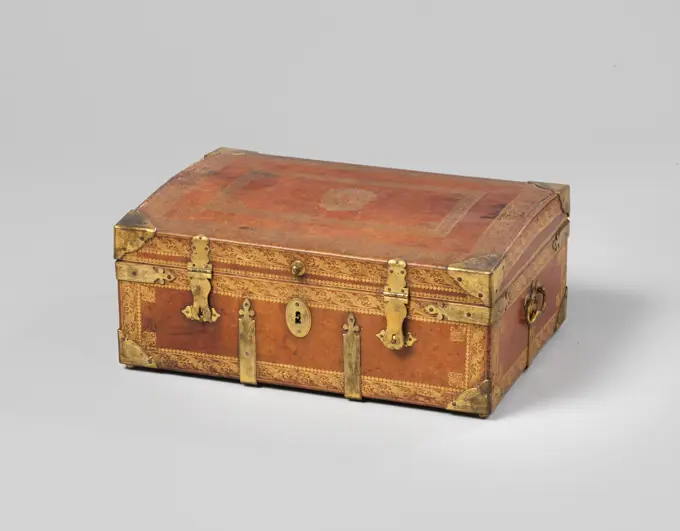
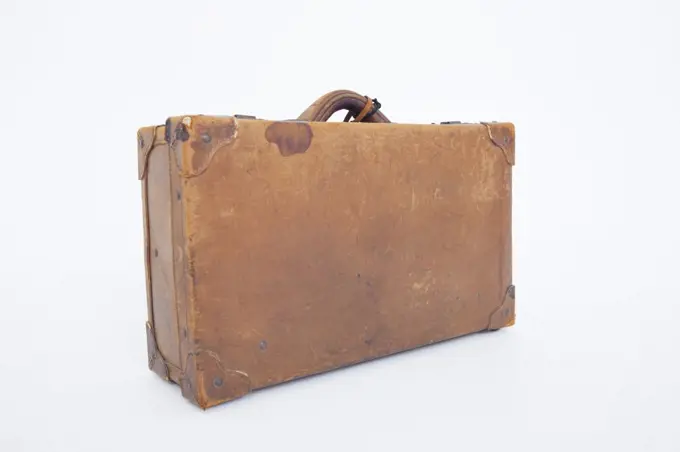
Case, with leather exaggerated in which a crowned shield worn by angels with three lilies, anonymous, 1700 - 1720 Suitcase, exaggerated with Turkish leather in which gilded pressed ornaments. Decorated with a crowned shield with three lilies on top. Hengsels and corners and the like of copper.  leather. gilding (material). wood (plant material). cloth. copper (metal) gilding Suitcase, exaggerated with Turkish leather in which gilded pressed ornaments. Decorated with a crowned shield with three lilies on top. Hengsels and corners and the like of copper.  leather. gilding (material). wood (plant material). cloth. copper (metal) gilding
Case, with leather exaggerated in which a crowned shield worn by angels with three lilies, anonymous, 1700 - 1720 Suitcase, exaggerated with Turkish leather in which gilded pressed ornaments. Decorated with a crowned shield with three lilies on top. Hengsels and corners and the like of copper. leather. gilding (material). wood (plant material). cloth. copper (metal) gilding Suitcase, exaggerated with Turkish leather in which gilded pressed ornaments. Decorated with a crowned shield with three lilies on top. Hengsels and corners and the like of copper. leather. gilding (material). wood (plant material). cloth. copper (metal) gilding
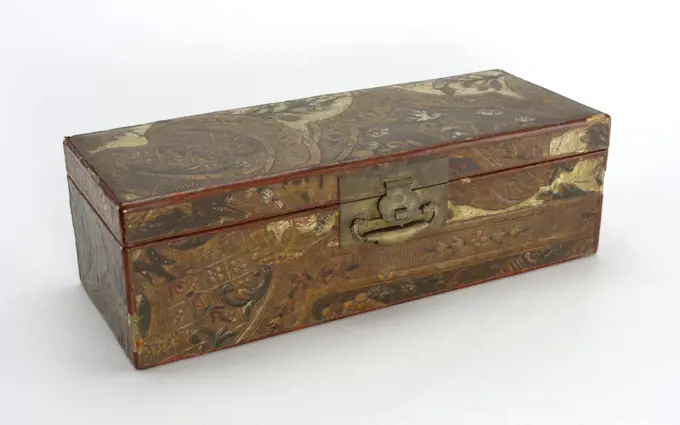
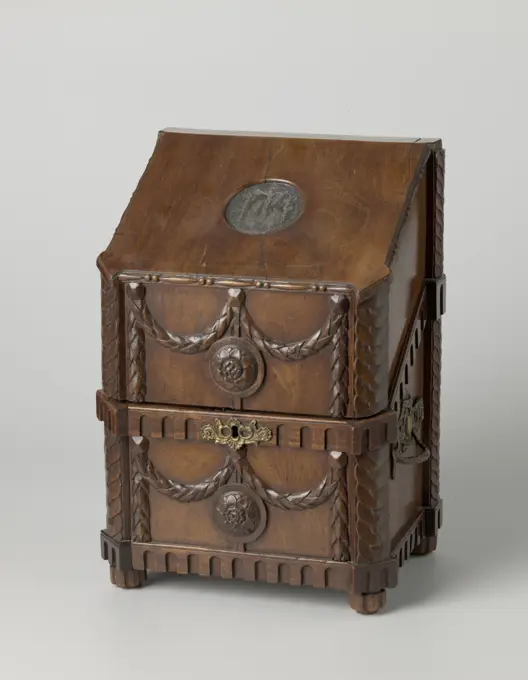
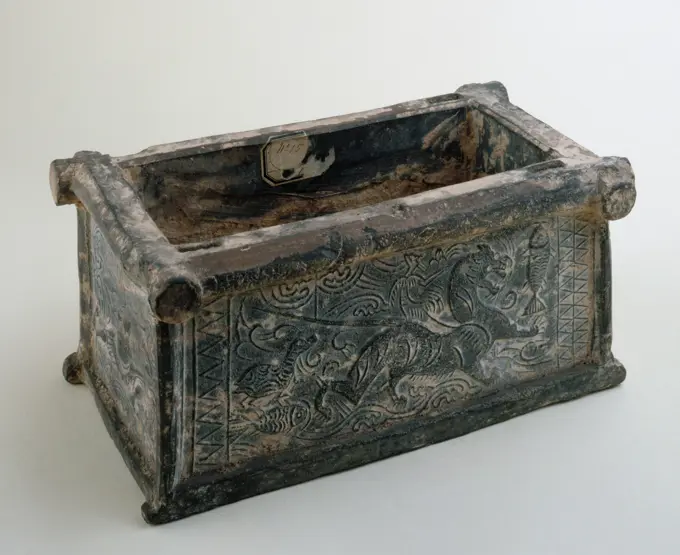
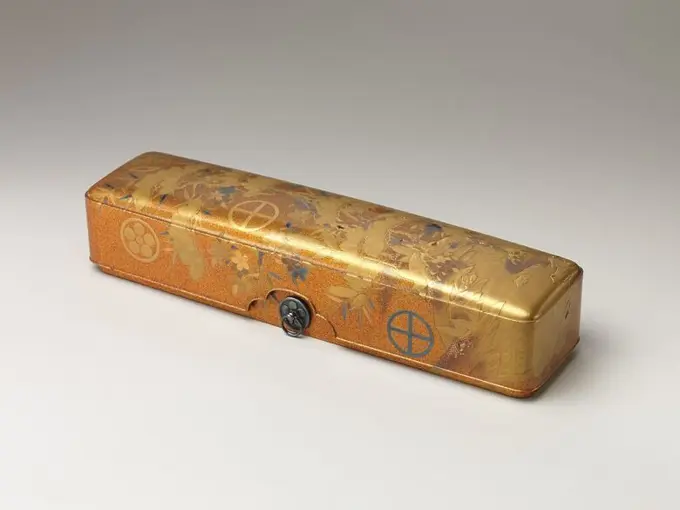
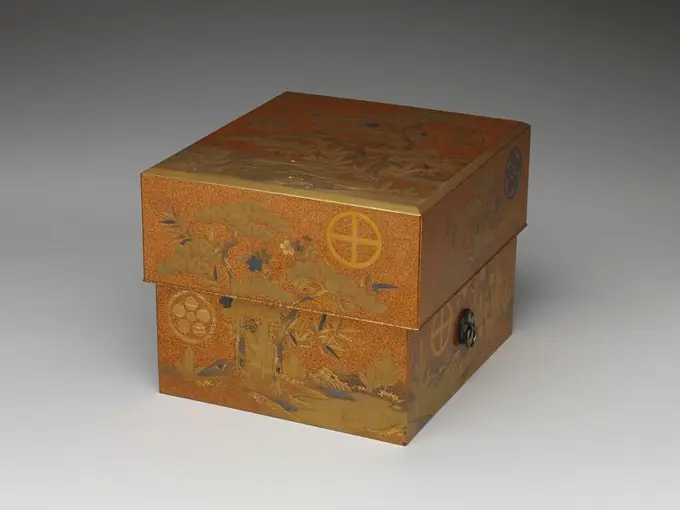
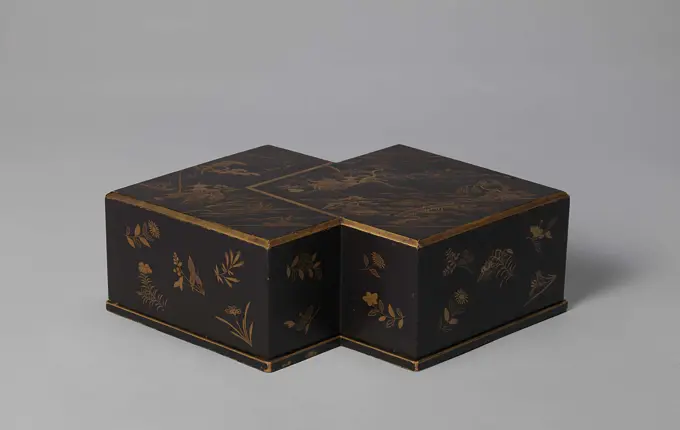
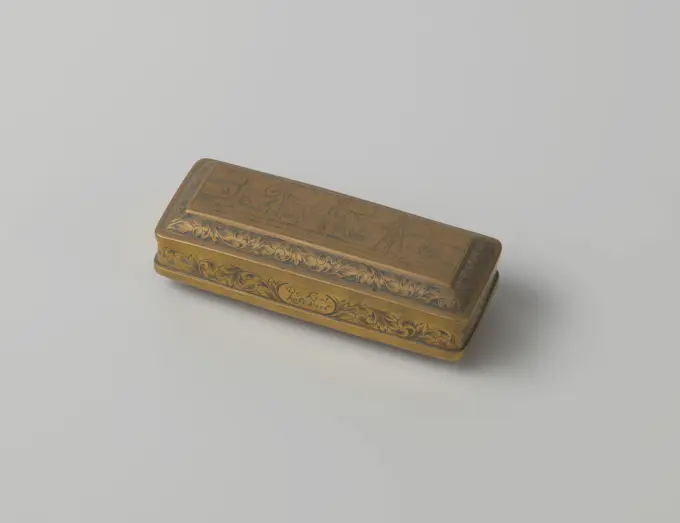
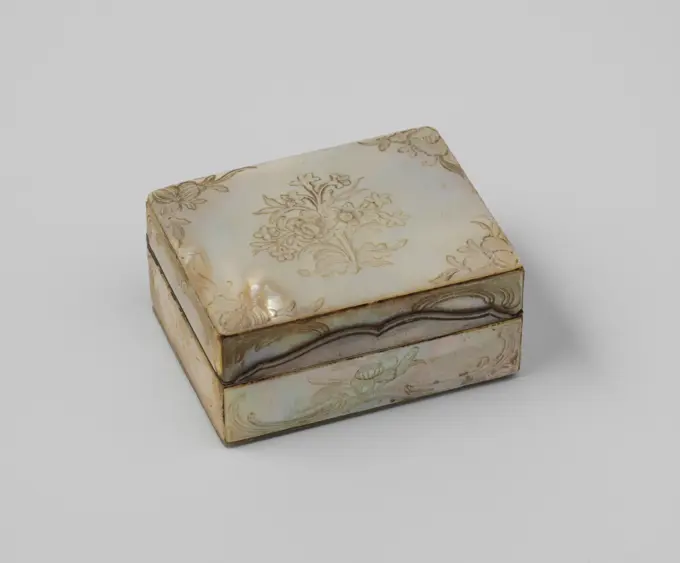
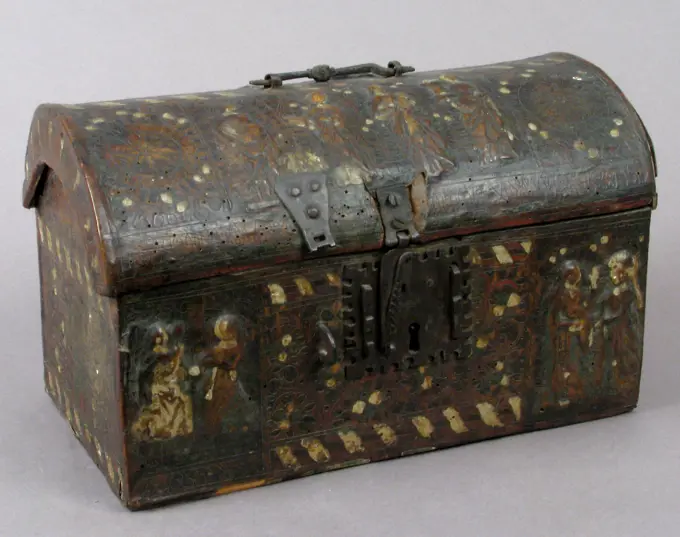
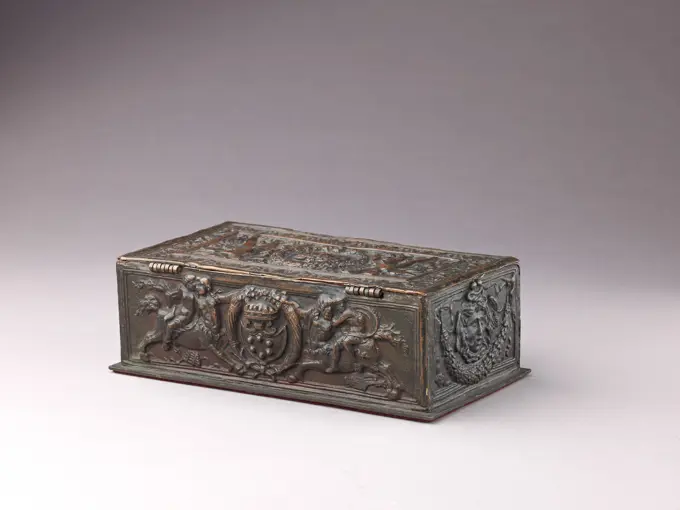
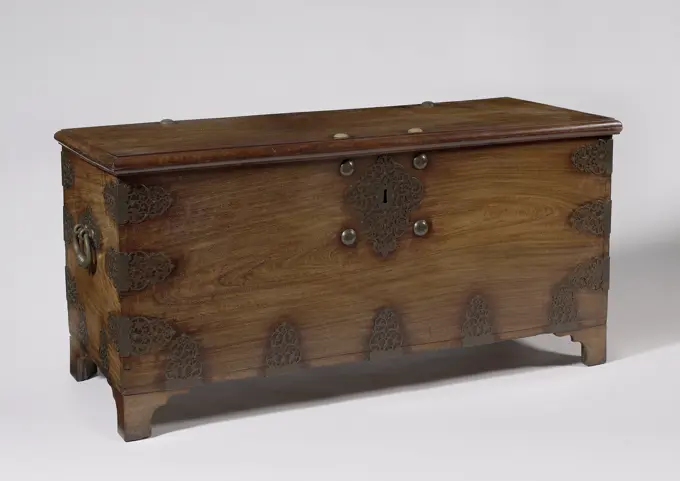
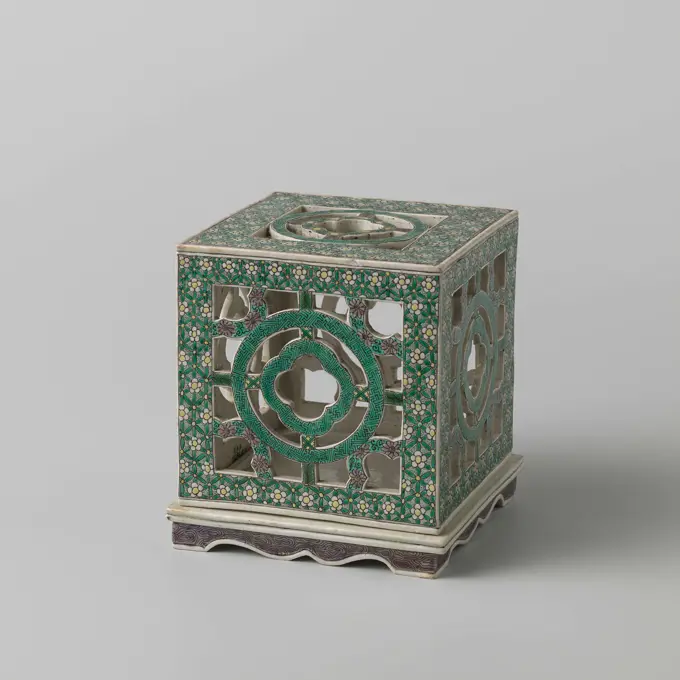
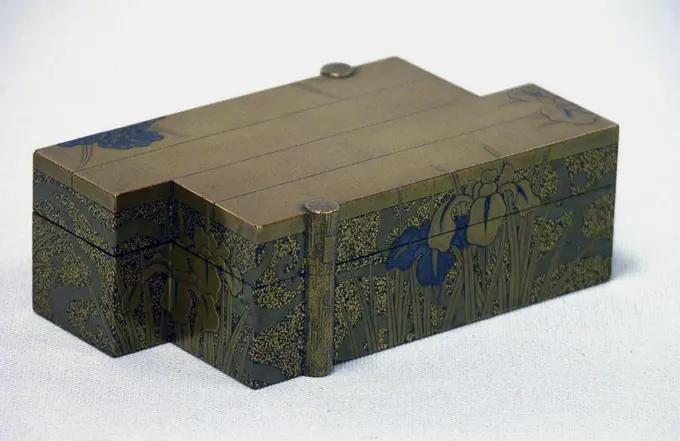
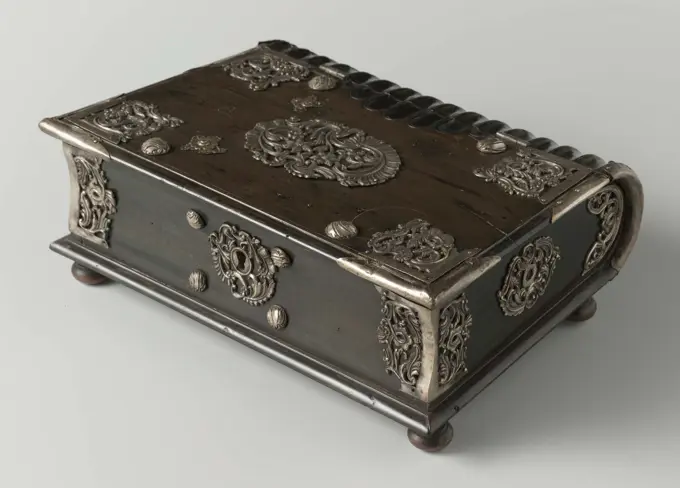
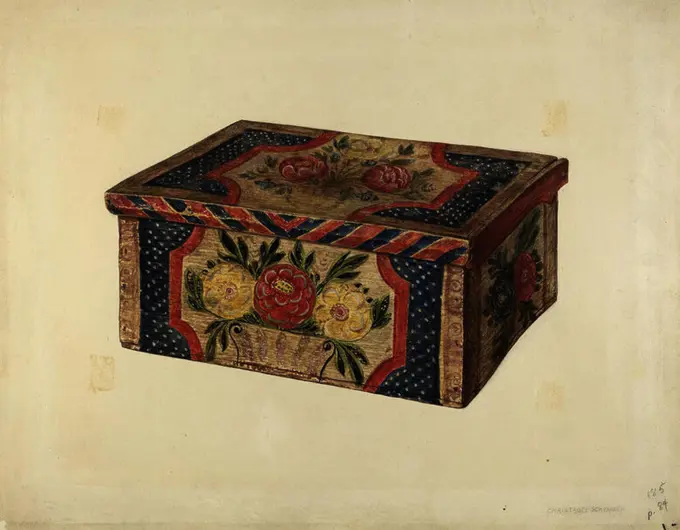
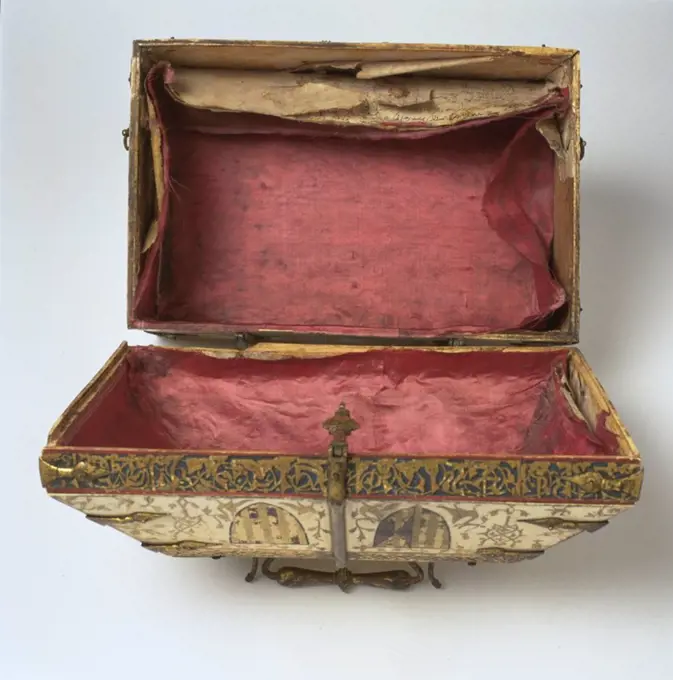
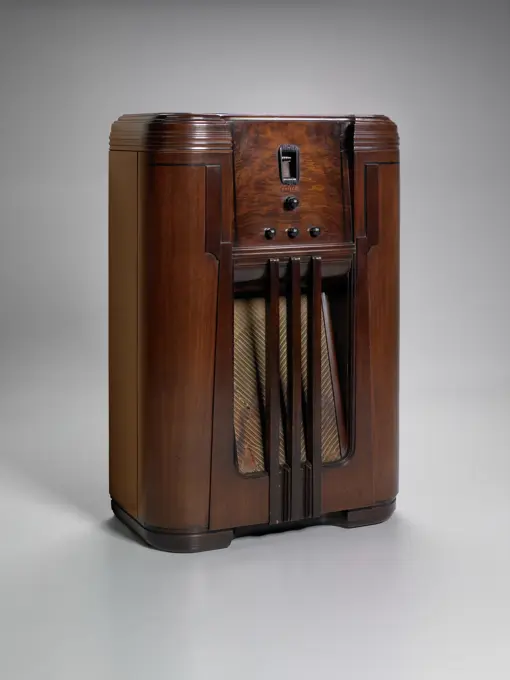
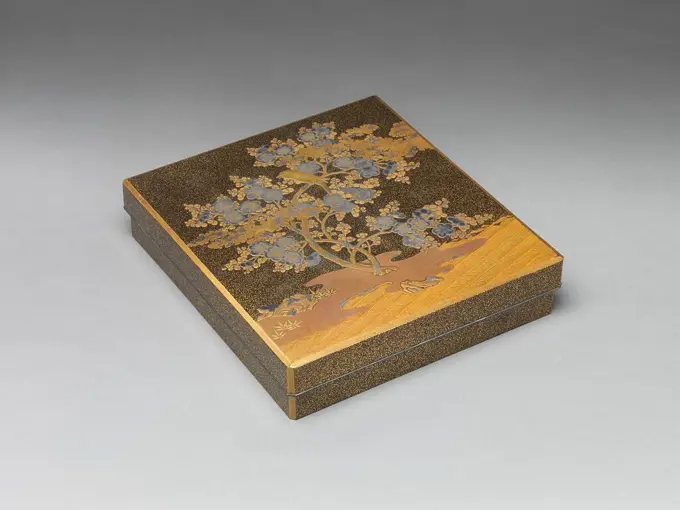
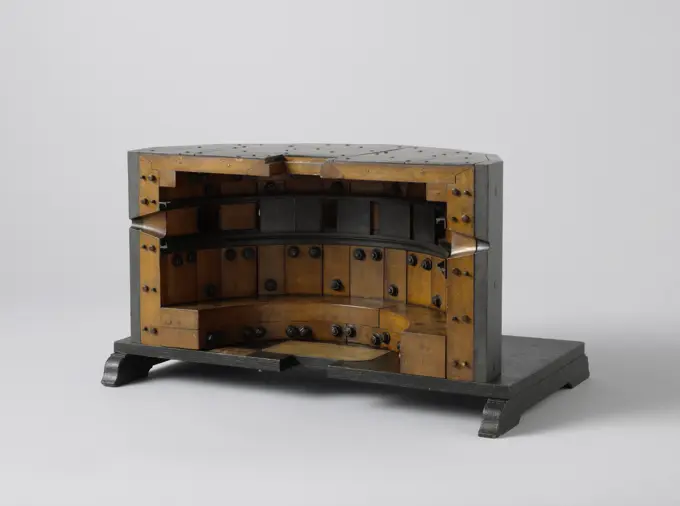
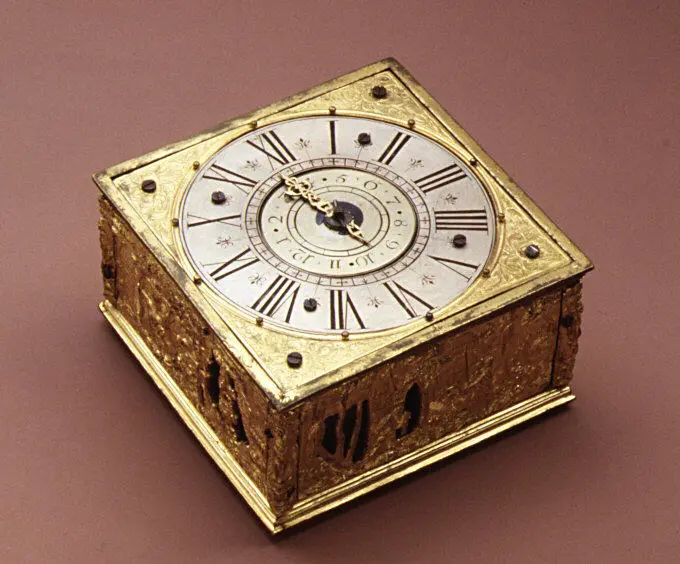
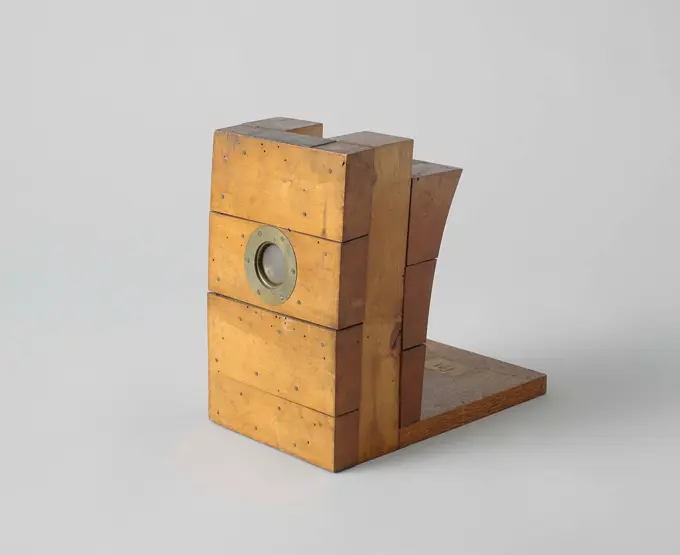
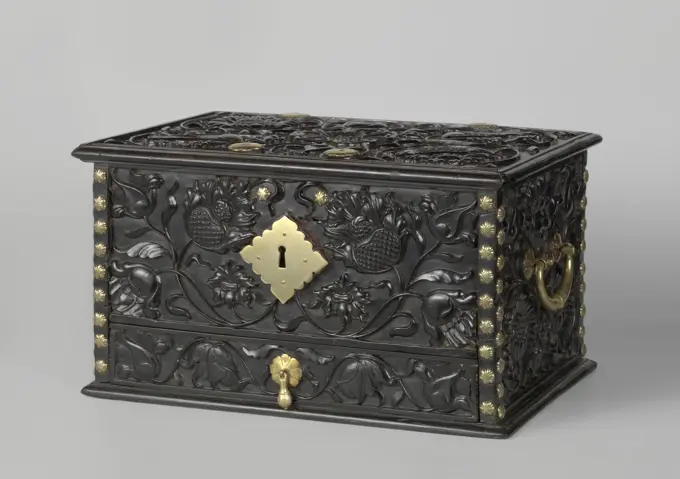
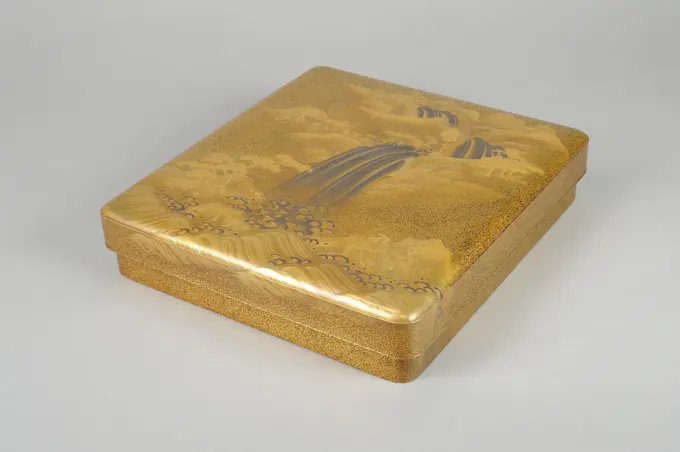
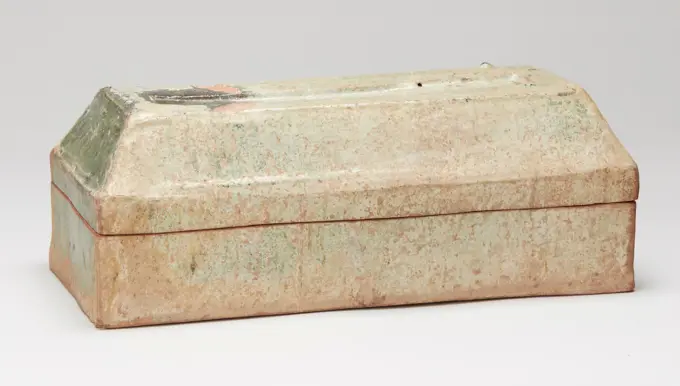
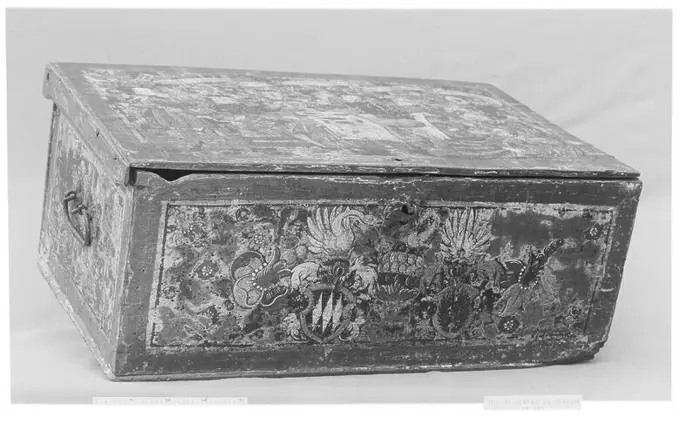
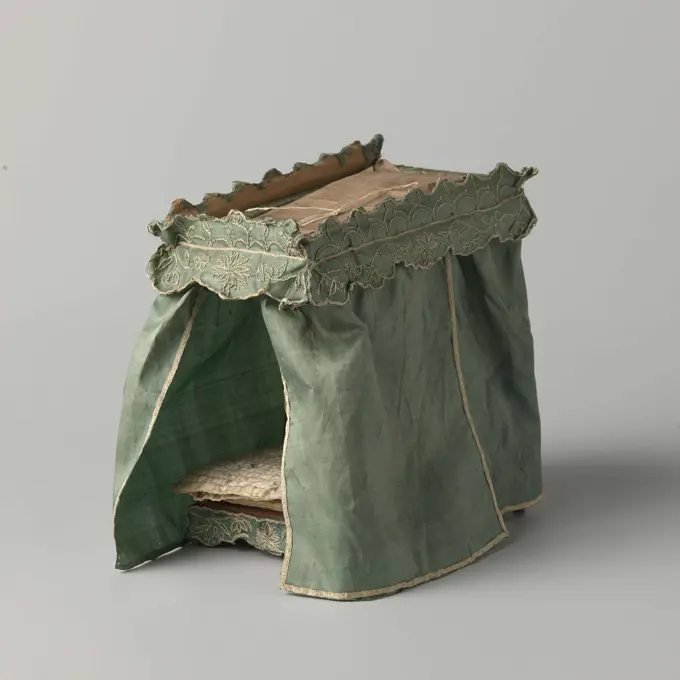
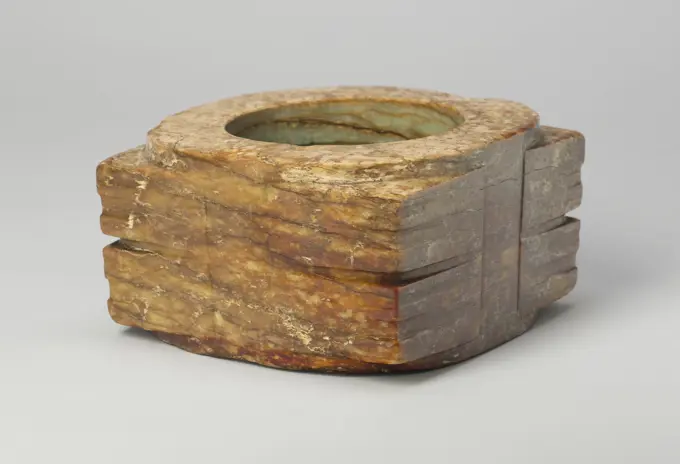
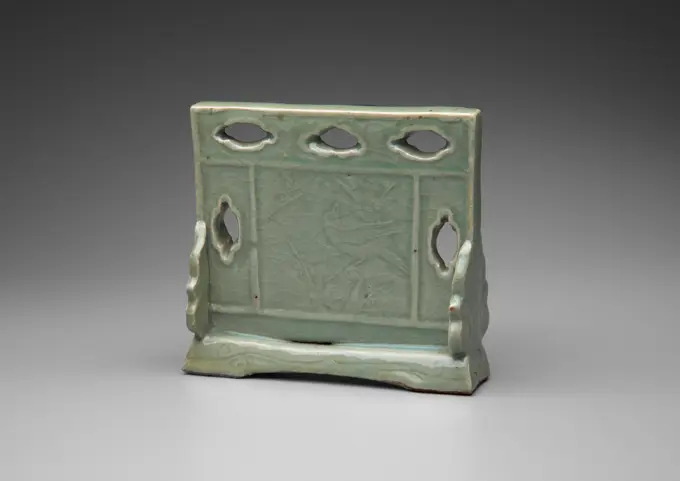
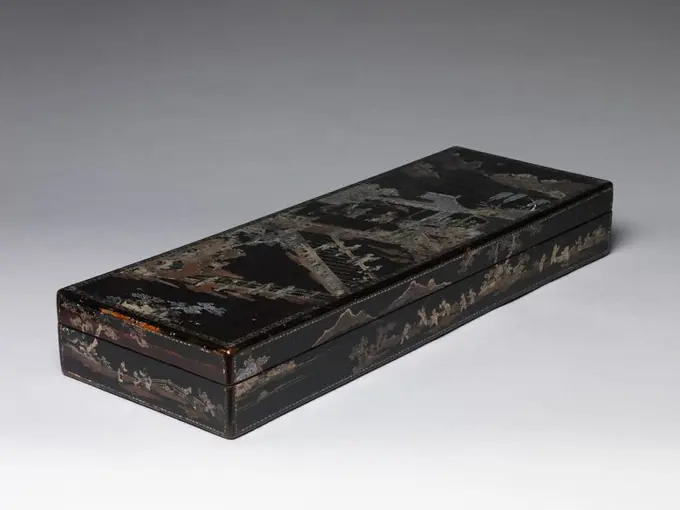
BoxOak box with mementos of Jan van Speijk.Box -Chest with hinged cover, Lacquered wood faced with leather, Rectangular box in red-brown lacquer. Faced with Dutch leather embossed and tooled; decoration of scroll-enclosed diapered fields in gold; flowers on white or brown painted field. Brass hinges, mount and clasp. Yang-Yin design incised on mount; clasp with pair of sea horse heads and scale pattern., Japan, ca. 1675, Decorative Arts, Chest with hinged coverExactation artist of mahogany and oak with a medal with the crucified Christ, Anonymous, c. 1775 - c. 1800 Extrakist of mahogany and oak, veneered with mahogany. Rectangular with beveled front corners and slanted lid, in which a silver medal is entered with the representation of the crucified Christ that is pierced with a lance. On the back of the Penning Adam and Eva. The inside of the lid is covered with green damask. Interior of (new) teak. Netherlands mahogany (wood). oak (wood). teak (wood). silver (metal). brass (alloy) damask Extrakist of mahogany and oak, veneered with mahogany. Rectangular with beveled front corners and slanted lid, in which a silver medal is entered with the representation of the crucified Christ that is pierced with a lance. On the back of the Penning Adam and Eva. The inside of the lid is covered with green damask. Interior of (new) teak. Netherlands mahogany (wood). oak (wood). teak (wood). silver (metal). brass (alloy) damaskCase, with leather exaggerated in which a crowned shield worn by angels with three lilies, anonymous, 1700 - 1720 Suitcase, exaggerated with Turkish leather in which gilded pressed ornaments. Decorated with a crowned shield with three lilies on top. Hengsels and corners and the like of copper.  leather. gilding (material). wood (plant material). cloth. copper (metal) gilding Suitcase, exaggerated with Turkish leather in which gilded pressed ornaments. Decorated with a crowned shield with three lilies on top. Hengsels and corners and the like of copper.  leather. gilding (material). wood (plant material). cloth. copper (metal) gildingBoard Chest 1650-1700 American. Board Chest 1987Trunk with Retinue of Jambhala, the Buddhist God of WealthMuntgewichten met balans.12 copper coin weights with iron balance with copper scales and 7 remedy weight in wooden box, v.z.v. label.1 Guiny 8.25 G½ Guine 4.11 G1 Ryder 9.95 G½ Ryder 4.99 G1 Ducat 6.99 G½ Ducat 4.48 G1 Ducaton 11.03 G½ Ducaton 5.51 G2 Gun 13.46 G1 Pistol 6 , 70 G pistol 3.34 G4 gun 26.91 gWell with tiger pattern, terracotta funeral object (Mingqi), China, Han era. Paris, Cernuschi museum. 36427-1 China Han Dynasty, Mingqi, Tiger pattern, funeral object, fish, well, terracottaBox with Design of Pine, Bamboo, and Cherry Blossom 19th century Japan. Box with Design of Pine, Bamboo, and Cherry Blossom 57892Box for Incense Utensils with Cherry Blossoms in a Landscape 19th century Japan This box with two compartments and an interior tray would have contained incense and the implements used in the traditional game of discriminating different fragrances of incense. Its landscape decoration of rolling hills covered with flowering cherry trees and a swift-flowing stream are motifs associated with the Yoshino mountains south of Nara, long celebrated in Japanese art and poetry.. Box for Incense Utensils with Cherry Blossoms in a Landscape 57956Letter Box with Pine, Bamboo, Plum Blossom, and Family Crests. Culture: Japan. Dimensions: L. 15 3/8 in. (39.1 cm). Date: 19th century.This covered box, part of a wedding trousseau, comprised of thirty-one pieces, represents late Edo-period maki-e (decoration in gold and/or silver sprinkled powder) art at its finest. The Shimazu family, lords of Satsuma in Kyushu, ordered this traditional trousseau most likely for Taka-hime, who was married to Matsudaira Sadakazu, lord of Kuwana (Ise Province), around 1830.The items of the wedding set are decorated with various auspicious motifs. The evergreen pine represents longevity and also symbolizes renewal. The fast-growing, springy, but at the same time very strong and enduring bamboo also stands for longevity and represents endurance and strength. The plum blossoms are the first flowers of spring, representing the renewal of nature. The combination of the "Three Friends of Winter"--originating from China--is associated with celebration, and Box c 1830-1870 United States. White pine and chestnut . Artist unknownFootsteak of brass. .Coffin whose preferred is decorated with gothic traces. Coffin of oak. The preface shows stained decorations formed by gothic traces, with an iron lock plate in the middle. The sides have iron handles. Plinth and bowl in the inside.Travel briefcase. unknown, creator, Wigand, Balthasar (1771-1846), painterBox with Design of Pine, Bamboo, and Plum. Culture: Japan. Dimensions: 7 x 9 1/8 x 8 3/8 in. (17.8 x 23.2 x 21.3 cm). Date: 19th century.Well-born Japanese brides brought elaborate sets of household articles in gold- and silver-sprinkled lacquer to their new homes. Their trousseaux usually contained writing implements, tea utensils, toiletry articles, and equipment for such refined pursuits as incense games and the tea ceremony. Gold, which was carefully rationed by a sumptuary law specifying the permitted amount for various ranks, was lavishly expended on wedding sets. These ensembles were rarely used and, after being displayed at the wedding, were preserved in storerooms and handed down as heirlooms. The lacquer objects on display bear the Maeda and Shimazu family crests, probably those of the influential daimyo lords of the Kaga clan in Kanazawa and the Satsuma clan in Kagoshima. Museum: Metropolitan Museum of Art, New York, USA.Sutra box. In the late 13th century the rulers of Korea started a project to make boxes for sutras, or Buddhist texts. Only a few of these boxes have survived, all decorated with a dense pattern of leafwork, inlaid with silver and mother-of-pearl. Inlaid Chinese characters by one of the handles show which sutra was kept in the box.Doos in de vorm van twee ineengeschoven ruiten.Box with lid with black lacquer and decors in golden lacquer. The box has the shape of two overlapping windows and stands on a wide foot. The lid falls over the box and fully covers the sides. A leaf fits on the top edge of the box. The top of the lid is painted with water landscapes, the leaf and the side of the flower branches lid. The walls of the box and the inside of box and lid in Nashiji.Box with Design of a Plum Tree and Pine. Culture: Japan. Dimensions: W. 3 1/8 in. (7.9 cm); L. 4 1/2 in. (11.4 cm). Date: 18th century. Museum: Metropolitan Museum of Art, New York, USA.Tabaksdoos, anonymous, 1700 - 1725 The object is composed of three parts: the bottom, the wall and the lid. They have an engraved decoration and show. Lid and bottom walk up to the center to the center and are further flat. They are closed by vertical smooth edges, which include the wall of the box. The convex parts of the lid and bottom have engraved ongoing rank ornament. On the lid one scene of a man, a woman with a glass in his hand and a spiritual and the inscription "6 thing that my deer stayed short predicatcijs and long maeltijde." On the bottom a representation of a pair and a man with the inscription "Young meat fresh fish a moije meijt and wine on the dis." The wall has engraved rank ornament and at the front the inscription "The throat costs a lot. Netherlands brass (alloy) striking (metalworking) / engraving The object is composed of three parts: the bottom, the wall and the lid. They have an engraved decoration and show. Lid and bottom walk up to the center to the center Make-up box, rectangular, coated with mother-of-pearl. A smeling box from outside with mother-of-pearl and inside with silver. Flowers and leaves are engraved in the mother-of-pearl. In the inside there are a silver spoon and a mirror in two closed boxes with pearly lids.Coffret 15th century French. Coffret 466647Trictrac board with 28 discs, 2 cups and a dice. Trim tracord of tropical wood (ambon soetra) With walls of coromandel wood, in the form of a square hinged box, both halves in the inside with a total of 24 patched playing fields, alternating from coromandewood and a light type of wood, framed by piping. There are always two stylized lilies between the opposite fields. Batter of copper. 14 light and 14 dark discs, an old and a new leather cup and a die (originally two, one no longer lacks). Dutch East Indies, 18th centuries ().Toilet table andmirrorMoney box still bank, 20th century, 3 3/4 x 7 13/16 x 5 1/4 in. (9.53 x 19.84 x 13.34 cm), Wood, metal, United States (probably), 20th centuryWriting Box ca. 1900 Italian (Manifattura di Signa, Florence) This writing box is decorated with winged putti holding a laurel wreath with a Medusa head, surruonded by a rectangular band of palmettes on the cover. The front and back sides have a pair of centaurs carrying nymphs on their backs (Nessus and Deianeira) and flanking the Medici coat of arms beneath a Tuscan crown on a pelta. This popular type of writing casket exists in various versions and was produced well into the twentieth century. Reproductions were offered by the Manifattura di Signa, Florence, in 1912. This box belongs to that category of late reproductions.. Writing Box 461148Shrapnel shell, W.G. Armstrong & Co, 1868 grenade (ammunition). chest Half a longitudinal sawn-shaped 18 cm grenade cartets in a wooden box. The grenade is 49.2 cm long and has a caliber of 176 mm. The grenade has two rings for a drawn run with three pulling fields, a ballistic hood filled with wood, a tube hole, a fire guide pipe to the spring load in the bottom and a cartet load of 24 mm diameter bullets on top of the spring load, separated from it Through an iron ring. Newcastle upon Tyne iron (metal). bronze (metal). brass (alloy). lead (metal). wood (plant material)Box with Lid c 1790-1860 United States. Maple and pine . Artist unknownPeto wood box with copper batter with on the back VOC and date 1728, Anonymous, 1728 Peto wood box with copper batter. The furniture has flat walls; On the corners, at the bottom, around the keyhole on the front board and on the sides it is decorated with opened copper batter in Moreske ornament. Around the lock plate and on the lid four large copper round nails. The side walls have copper profiled handles. The furniture rests on the front on black wooden bol legs. The lid has a profiled edge. At the rear is the brand V.O.C. and 1728 burned in. Indonesia wood (plant material). copper (metal) Peto wood box with copper batter. The furniture has flat walls; On the corners, at the bottom, around the keyhole on the front board and on the sides it is decorated with opened copper batter in Moreske ornament. Around the lock plate and on the lid four large copper round nails. The side walls have copper profiled handles. The furniture rests on the front on black wooden bol legs. The lid has a prSmall trunk. unknown, creatorCoffin, decorated with pen and thick ink with mythological figures, signs of the zodiac and sitting women's figures. Globe lid .. Casket of yew, decorated with representations with the pen and thick ink drawn, the skies deepened and with inside. The front and rear plate exhibit mythological figures within a circular edge, accompanied by signs of the zodiac. The side walls wear sitting women's figures with compass and globe. On the front a double yellow copper eagle as a key plate. The bulb round with a network with ins stroke. Copper corner tires, hinges with mask cartons and handles.Box, lid ca. 1991-1450 B.C. Second Intermediate Period-Early New Kingdom. Box, lid. ca. 1991-1450 B.C.. Wood, string. Second Intermediate Period-Early New Kingdom. From Egypt, Upper Egypt, Thebes, Deir el-Bahri, Tomb CC 24, Carnarvon/Carter excavations. Dynasty 13-18Casket 14th century French. Casket 467731. The rectangular object is composed of eight parts: the bottom and the lid with the two roast fine-profiled edges, and the four sides. On the lid and at the front and back are by Moresken surrounded medallions with the heads of a man with a crown, a man with a helmet and a woman with a diadem engraved. The sides are equipped with engraved moresken. On the outside of the soil is engraved: 1544 Hans Rensen van Deventer and his own brand.Square Lantern With Pierced Sides. Foot of square lantern of porcelain, painted on biscuit in blue, green, yellow, eggplant and black. The foot with a wood grain pattern. Email sur biscuit with famille verte colors.Incense Box (Kogo) with Design of Iris and Bridge (Yatsuhashi) 19th century Yamada Jkasai (1681-1704) Japanese The shape of the box, in the form of two bridge planks, and the iris designs in sprinkled gold and silver evoke the "Eight Bridges" episode in Chapter 9 of The Tales of Ise.. Incense Box (Kogo) with Design of Iris and Bridge (Yatsuhashi). Yamada Jkasai (1681-1704). Japan. 19th century. Gold-speckled aventurine (nashiji) lacquer with sprinkled and polished design (hiramakie). Edo period (1615-1868). LacquerCassette in boekvorm.Cassette in book shape on 4 round, flattened, legs. The corners have silver fittings in Rococo motif. Similar seizures surrounded by florets. Silver fittings with a shell pattern, O.A. on the lock plate. Backside of cassette is ribbed, as with a book. Key is missing.Box with Unicorn. Culture: Northern European. Dimensions: Overall: 4 7/8 x 13 3/8 x 7 in. (12.4 x 34 x 17.8 cm). Date: 15th century. Museum: Metropolitan Museum of Art, New York, USA.Casket Big brown casket isolated including clipping path Copyright: xZoonar.com/Baloncicix 14240911Utility Box. Dated: c. 1939. Dimensions: overall: 36.8 x 45.6 cm (14 1/2 x 17 15/16 in.) Original IAD Object: 8" deep; 12 3/4" long; 4 3/4" high. Medium: watercolor, graphite, gouache, and colored pencil on paperboard. Museum: National Gallery of Art, Washington DC. Author: Christabel Scrymser.Letter Box, 1615-1868. Japan, Edo period (1615-1868). Lacquer; overall: 23 cm (9 1/16 in.).Decorated Box. Dated: 1935/1942. Dimensions: overall: 33.8 x 46.4 cm (13 5/16 x 18 1/4 in.) Original IAD Object: 4 1/2" hogh; 8 1/2" long; 5" wide. Medium: watercolor, colored pencil, and graphite on paperboard. Museum: National Gallery of Art, Washington DC. Author: Carl Strehlau.ARQUETA: DE SAN MARTIN I EL HUMANO. (DEPOSITO: MUSEO ARQUEOLOGICO NACIONAL).Embossing on antique wooden box, Jodhpur, Rajasthan, India Copyright: xSafatxAli/DinodiaxPhotoxCabinet Radio, Model No.16X.  Manufacturer: Philco Radio and Television Corporation, American, 1892-1961Snuffbox 1753-54 Noël Hardivillers This box is a brilliant example of enamel decoration on gold. The oval scenes on the lid, sides, and base are created by enameling directly on the flat gold surface, the process known as en plein. In contrast, much of the translucent green enamel that surrounds the scenes is applied to small areas of the gold that have been engraved or carved away, the technique referred to as basse taille. The quality of both types of enameling is extremely high and is likely the work of a specialist. Frequently the goldsmith who produced a box turned to another artisan when a highly specialized type of decoration, such as enameling or the incorporation of lacquer, was required.The scenes decorating the lid and the underside of this box are based on works by the French painter François Boucher (1703-1770). The enameler has copied Bouchers painting Pensent-Ils au Raisin? (Nationalmuseum, Stockholm) for the scene on the lid, and La Poésie Pastorale (known only throughBox ca. 1295-1070 B.C. New Kingdom, Ramesside. Box. ca. 1295-1070 B.C.. Wood. New Kingdom, Ramesside. From Egypt. Dynasty 19-20Chest for Storing Garments, 1400s. China, Ming dynasty (1368-1644). Lacquered wood with mother-of-pearl inlay; overall: 43 x 56 x 54.7 cm (16 15/16 x 22 1/16 x 21 9/16 in.).1 Firal from Borculo, Anonymous, 1800  Spans contents measure with metal tires for dry wares of 1 scoop with bridge and style, v.z.v. Labels. Borculo Wood (plant material). Tires: Metal   BorculoWriting Box with Warbler in Plum Tree. Culture: Japan. Dimensions: H. 2 3/8 in. (6 cm); W. 9 3/8 in. (23.8 cm); L. 10 1/4 in. ( 26 cm). Date: 18th century.The writing box contains only a water dropper. The lid is embellished with a flowering plum tree and a warbler singing among the branches. The first song of the warbler is the harbinger of spring and, as an auspicious motif symbolizing a new beginning, is often featured in classical literature. (It is the main theme of chapter 23 of The Tale of Genji, centered on an exchange of New Year's greetings.) The inside of the box is decorated with a frog among fallen plum blossoms and four characters that refer to the murmur of the river (see ill.). The frog is also associated with spring. In the kana preface of the Kokin wakashu by Ki no Tsurayuki, there is an often cited sentence: "The song of the warbler among the blossoms, the voice of the frog dwelling in the water--these teach us that every living creature sings.". Museum: MetropolitaModel of A Section of An Armoured Turret, Rijkswerf Vlissingen, 1864 demonstration model Half -model of a fourteen -sided gun umbrella organization, on a ground board. The outer shell consists of vertical segments that represent armored plates, with a shooting hole at three -quarters height, which is wider inwards. The inner wall is made of wood and has a circular inner diameter. Inside, the shooting holes can be closed with armored plates, which are slid back and forth against the wall between rails. Heavy wooden beams strengthen the top and top of the tower all around. The model shows all bolts that run through armor plates and inner wall. Scale 1:10 (scale on model). model maker: Flushingafter design by: Netherlands wood (plant material). brass (alloy)Table clock late 16th century Johann Reinhold the Elder. Table clock 196392Model or a fan shaft and portlight. Model of an air and light cooker. Model of part of a ship wall, on a base board. The ship's wall consists of the skin, two inhales and the weighting; The space between the inhales is the air sleeve, equipped with a grid. The air sleeve comes out in a deep conical porthole, which is entirely coated with brass. The light of the porthole consists of a round glass with the convex, matte side outside and recessed in the skin. Scale 1: 4 (Scale on model).Lambrizing a coffin from the wreck of the East Indiesman Hollandia. Box, paneling; Fragm, Rectangular, Flat, Rounded Corner, One Side Recessed, 1 Vertical Groove on the Interior.Stoof, anonymous, c. 1700 - c. 1799  Amsterdam (possibly) wood (plant material)  Amsterdam (possibly) wood (plant material)Slip case for a book Case; USA; painted silkBox with Lid 6th-7th century Moche (Loma Negra). Box with Lid 315102Brass design fitting on antique wooden box, Jodhpur, Rajasthan, India Copyright: xSafatxAli/DinodiaxPhotoxChest with sliced decorations, anonymous, 1600 - 1699 Ebony box with a drawer at the front at the bottom. Decorated in high relief with flowers of thin stems and a rosette on the lid in the middle. Slot plate with key and rosettes on the corners and on the copper lid.  ebony (wood). brass (alloy) cutting Ebony box with a drawer at the front at the bottom. Decorated in high relief with flowers of thin stems and a rosette on the lid in the middle. Slot plate with key and rosettes on the corners and on the copper lid.  ebony (wood). brass (alloy) cuttingCoffret à mailles late 15th century French Caskets such as this one must have been produced in large quantities, as numerous examples remain. They were called coffret à mailles or à la manière dEspagne, in connection to the fine iron tracery of the sides and cover. Sometimes referred to as a missal box, this type probably preserved precious objects such as jewelry or small illuminated prayer books. This small box has two suspension rings to carry it, possibly on a girdle. The front is probably an old replacement.. Coffret à mailles 460478Snuffbox last quarter 18th century D. B., Stettin, Germany. Snuffbox 193911. Silver lacquered cabinet with black figures, silver fittings and gold plated hinges.Writing Box (suzuribako) with Waterfall and Auspicious Characters late 18th century Japan The writing box (suzuri-bako) contains an inkstone, a water dropper in the shape of cherry blossoms, and a brush. The design on the front of the lid is dominated by a rapid waterfall; the stream descends through a range of mountains and rocks surrounded by pine trees and bamboo grass. The river is depicted in gold and silver maki-e that has been burnished down until it is completely flat, a technique called togidashi. Fine lines express the fast-flowing water. At the bottom of the waterfall, bubbly waves are executed in silver and are further enhanced with silver-inlaid roundels to express water drops. There are seven gold-inlaid characters that might refer to a poem or express auspicious notions, such as turtle” or thousand years.” Inside the lid the waterfall design is repeated without the characters. The design might refer to the picturesque Miyano-taki falls near Yoshino (Nara Prefecture), aShabti Box of Henettawy (C), Daughter of Isetemkheb. Dimensions: Shabti Box: H. 52.5 x W. 51 cm (20 11/16 x 20 1/16 in.). Dynasty: Dynasty 21. Date: ca. 990-970 B.C.. Museum: Metropolitan Museum of Art, New York, USA.Candle Box. Culture: American. Dimensions: 5 5/8 x 12 x 6 1/4 in. (14.3 x 30.5 x 15.9 cm). Date: 1800-1830. Museum: Metropolitan Museum of Art, New York, USA.Vanity Set (Nécessaire), c. 1750-60. England, London. Gold, agate, interior fitted with gold-mounted implements, mirror;ARQUETA: DE SAN MARTIN I EL HUMANO. (DEPOSITO: MUSEO ARQUEOLOGICO NACIONAL).SuitcaseBox, 1st century BCE - 1st century CE, 4 1/2 x 5 1/4 x 12 3/8 in. (11.43 x 13.34 x 31.43 cm), Earthenware with green glaze, China, 1st century BCE - 1st century CE(Small Box in the Shape of a Firefly Cage), 19th century, Unknown Japanese, 2 x 1 7/8 x 2 3/8 in. (5.08 x 4.76 x 6.03 cm), Lacquer with sprinkled gold and silver designs, Japan, 19th centuryPUME FOR AMULET;  19th century (1801-00-00-1900-00-00);Amulets, inscriptions, Islamic art, MNW collection, boxes, purchaseIncense box late 18th-early 19th century Japan. Incense box. Japan. late 18th-early 19th century. Lacquer with decoration. Edo period (1615-1868). LacquerWooden box for silver bars from the wreck of the East Indies Slot ter Hooghe, Anonymous, c. 1650 - Before 1724 chest Wooden box for silver bars from the wreck of the East Indies Slot ter Hooghe.  wood (plant material)   MadeiraBeverage of gold, decorated with a hundred different stones, a steel card of Saxon rocks. Beverage or gold, decorated with 100 different stones, a handle folder or Saxon Rocks forming. The Pouch is Intended For An Ivory Note Leaf That's Missing.Trinket Box ca. 1780 Henry Bucher. Trinket Box. American. ca. 1780. Cedar. Made in Denver, Pennsylvania, United StatesCOFRE DE MADERA POLICROMADA - ARTE VIRREINAL DE MICHOACAN. Location: MUSEO DE AMERICA-COLECCION. MADRID. SPAIN.Ninsei-style Serving Container (Mukōzuke) 1868-1912 Japan. Ninsei-style Serving Container (Mukōzuke) 56855Reed Gouging Machine, Guillaume Triébert, c. 1840 - c. 1850 Machine of brass and iron for scraping reed, in a box of mahogany. The top is removable. Marked: Fic Triebert / Rue Monmartre 132, / Paris. Below is a wooden container covered with leather for the tools. Of these, only six are left. Under the container and on the sides there are storage space in which 20th century wicker, an Evelop, a knife and a handle for operating the machine are now stored. Paris mahogany (wood). iron (metal). brass (alloy) Machine of brass and iron for scraping reed, in a box of mahogany. The top is removable. Marked: Fic Triebert / Rue Monmartre 132, / Paris. Below is a wooden container covered with leather for the tools. Of these, only six are left. Under the container and on the sides there are storage space in which 20th century wicker, an Evelop, a knife and a handle for operating the machine are now stored. Paris mahogany (wood). iron (metal). brass (alloy)Writing Box (Suzuribako) with Phoenix in Paulownia, late 1500s. Japan, Momoyama period (1573-1615). Lacquer on wood with sprinkled gold and silver powder (maki-e) and gold and silver foil application; 4 x 20.5 x 23.5 cm (1 9/16 x 8 1/16 x 9 1/4 in.). This box--a container for an inkstone, brushes, and ink--is both functional and lavish, its dramatic effects achieved with a pear-skin ground decoration (nashiji), and sprinkled powder decoration in high relief (takamaki-e). In contrast to the bright, celebratory motifs on the exterior, the interior of the box invites a more reflective mood with its autumn moonlit sky over chrysanthemums.ARQUETA DE PALENCIA - MARFIL Y ESMALTE - REALIZADA EN EL SIGLO XI - PROCEDENTE DEL TALLER DE CUENCA - 35x23x23 cm. Author: ABD AL RAHMAN BEN ZEIYAN. Location: MUSEO ARQUEOLOGICO NACIONAL-COLECCION. MADRID. SPAIN.Table clock. Usually a table clock is housed in a case in order to protect the movement from dust and dirt. Without a case, it becomes clear that it is an extremely refined object of vertu. The work thus had not only a practical function, but was meant to be picked up and admired from all sides.Coffret late 15th century French () The Latin inscription on the silver plate set in the top of this box, or coffret, reads, "But passing through the midst of them He went away." This passage from Luke (4:29-30) refers to Christ's passing safely through the crowd that was threatening to throw him from the hill on which Nazareth was built. The passage was often invoked for safety in travel and is appropriate for a box intended for jewelry or other valuables. The origin of the unusual pierced woodwork is uncertain.. Coffret. French (). late 15th century. Boxwood with silver mounts and lock. Woodwork-FurnitureBox at Plaquette of the XVIIIe Interparliamentary Peace Conference The Hague, 1913, 1913 box Rectangular box with round corners with gray paper. A button on the front. Back hinged hinged by means of two hinges and blue silk. On lining in golden letters crowned address. In box blue velvet inlay. Utrecht cardboard. silk. velvet (fabric weave) printing  The HagueAnonymous. Basement. Wood plated with red veined scales, gilded bronze. 1701-1800. Paris, Carnavalet museum. Furniture, furnitureArchitectural Fitting (Gong). China, Qishan county, Shaanxi province. Date: 770 BC-481 BC. Dimensions: . Bronze. Origin: China. Museum: The Chicago Art Institute, Chicago, USA.Toy block still bank, 20th century, 2 15/16 x 2 7/8 x 2 7/8 in. (7.46 x 7.3 x 7.3 cm), Metal, silver plate, China, 20th centuryBox, Iron, wood, red velvet lining, Rectangular, with hinged, flat-domed cover; wood, covered with two thicknesses of sheet iron pierced in parallel rows of repeating tracery patterns, the borders iron over half-round wire; at one end, elaborate iron lock with long hasp; on each of the broader sides, two loose rings for attaching coffret to saddle bow or to the inside of a large trunk or chest; lined with red velvet., possibly Spain, 1501-50, metalwork, Decorative Arts, BoxA travel camera produced around 1910, made of wood, with a 13 x 18 cm plate format designed for portable photography.Model of a Lifeboat release. Polychromed model of a part of a ship wall with a sloop on two nail vits, on a base shelf on which water is simulated, incomplete. The model demonstrates the sloop fall of the sloop, in which two hooks on the hoist of the Davits (which is now missing) are released by removing a locking ring in the middle. The mechanism simultaneously closes a plug hole in the bottom of the sloop with a lever in the back. The sloop is smoother with a flat mirror, the seam towards both ends ascending; He has eight docks.Chest ca. 1981-1640 B.C. Late Middle Kingdom-New Kingdom. Chest 546736Box. Culture: Swiss. Dimensions: 17 x 7 in. (43.2 x 17.8 cm). Date: 16th century. Museum: Metropolitan Museum of Art, New York, USA.Mattress, red-white striped, padded with pink knots. Mattress made of red-white striped silk, filled with down fluff. The mattress is padded with pink silk buttons. The side cover consists of three paths of equal width.Cong 3000 BCE-2000 BCE China. Jade .Table Screen with Bird on aBranchA Boisseau from Utrecht, Anonymous, c. 1800  Spans content measure for dry wares of 1 boisseau with bridge and style and block on the inside, v.z.v. Brand, label on a ribbon and labels. Utrecht wood (plant material)   UtrechtBox with Scene of a Reception and Boys at Play. Culture: China. Dimensions: H. 3 7/8 in. (9.8 cm); W. 9 7/8 in. (25.1 cm); L. 28 1/8 in. (71.4 cm). Date: 17th century.The reception scene on the top of the box suggests the birthday gathering for the general Guo Ziyi, an impression reinforced by the many boys at play on the sides of the box. Guo Ziyi was said to have had one hundred sons and one thousand grandsons. Museum: Metropolitan Museum of Art, New York, USA.Tobacco Box, Ritsuô, 1663 - 1747 Tobacco box with Netsuke in the form of a fish. On the box itself a representation of the appearance of the Spirit of O-Kiku in inlaying. Signed "Ritsuo". Open worked ball to cord and inner box in tobacco box. Japan wood (plant material). lacquer (coating). coral (material). tin (metal). gold (metal) Tobacco box with Netsuke in the form of a fish. On the box itself a representation of the appearance of the Spirit of O-Kiku in inlaying. Signed "Ritsuo". Open worked ball to cord and inner box in tobacco box. Japan wood (plant material). lacquer (coating). coral (material). tin (metal). gold (metal)Box confectioner; Suck, Jan Fryderyk (Fl. CA 1820-Ca 1854); around 1840 (1836-00-00-1845-00-00);