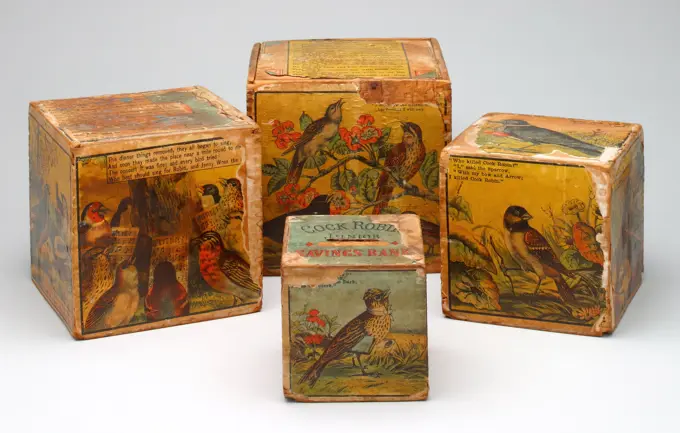
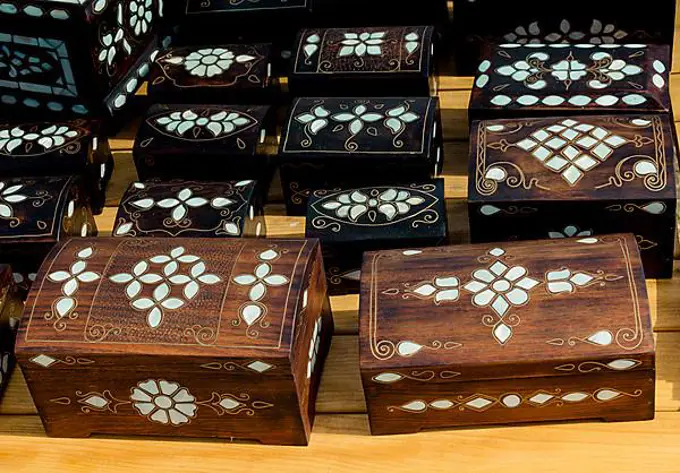
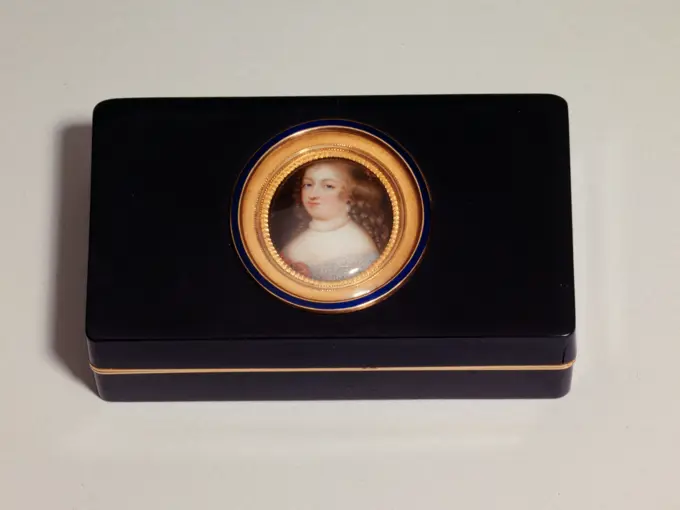
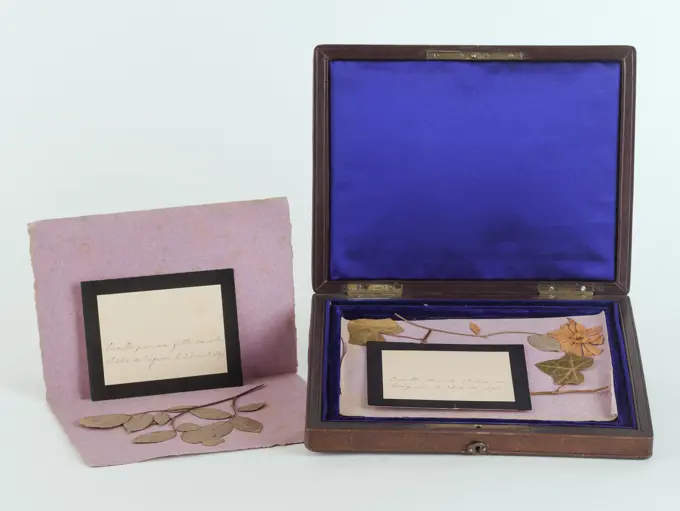
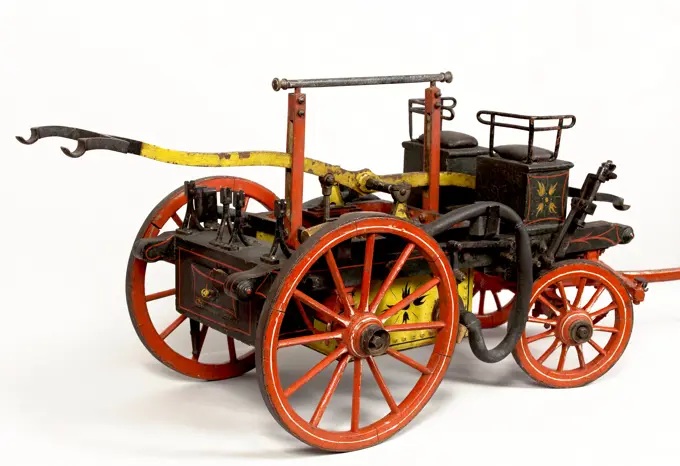
Decorative Boxes Series

An array of decorative storage boxes made from various materials, ranging from leather to lacquer, each with unique designs and historical significance.
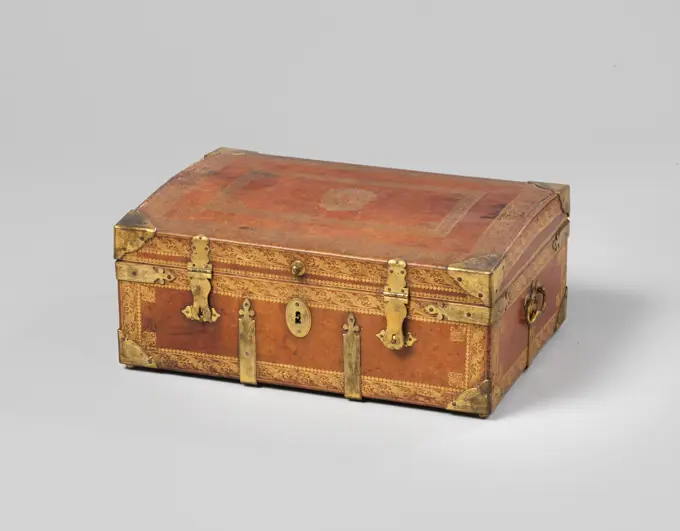
Case, with leather exaggerated in which a crowned shield worn by angels with three lilies, anonymous, 1700 - 1720 Suitcase, exaggerated with Turkish leather in which gilded pressed ornaments. Decorated with a crowned shield with three lilies on top. Hengsels and corners and the like of copper.  leather. gilding (material). wood (plant material). cloth. copper (metal) gilding Suitcase, exaggerated with Turkish leather in which gilded pressed ornaments. Decorated with a crowned shield with three lilies on top. Hengsels and corners and the like of copper.  leather. gilding (material). wood (plant material). cloth. copper (metal) gilding
Case, with leather exaggerated in which a crowned shield worn by angels with three lilies, anonymous, 1700 - 1720 Suitcase, exaggerated with Turkish leather in which gilded pressed ornaments. Decorated with a crowned shield with three lilies on top. Hengsels and corners and the like of copper. leather. gilding (material). wood (plant material). cloth. copper (metal) gilding Suitcase, exaggerated with Turkish leather in which gilded pressed ornaments. Decorated with a crowned shield with three lilies on top. Hengsels and corners and the like of copper. leather. gilding (material). wood (plant material). cloth. copper (metal) gilding
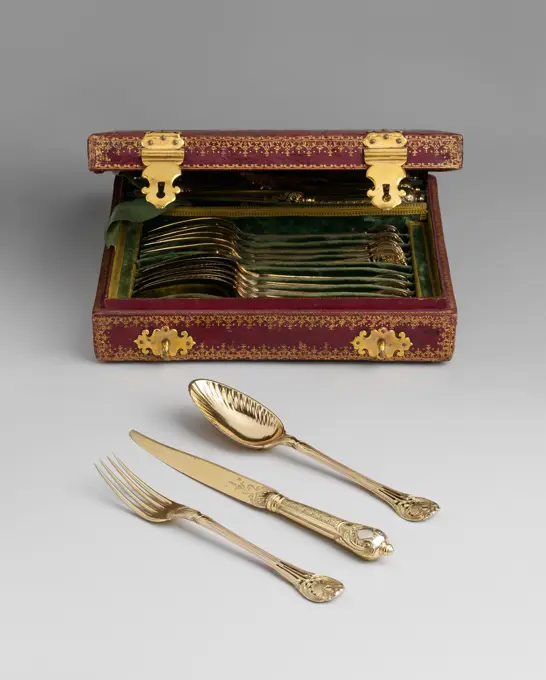
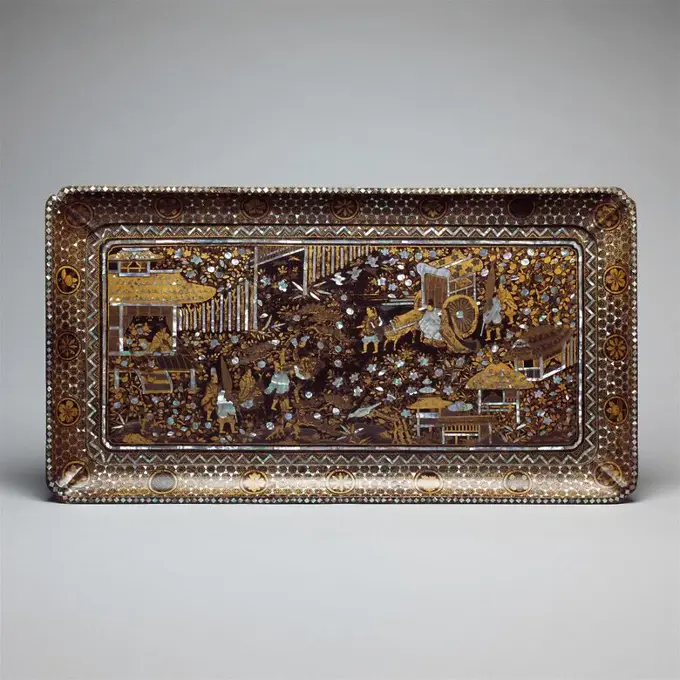
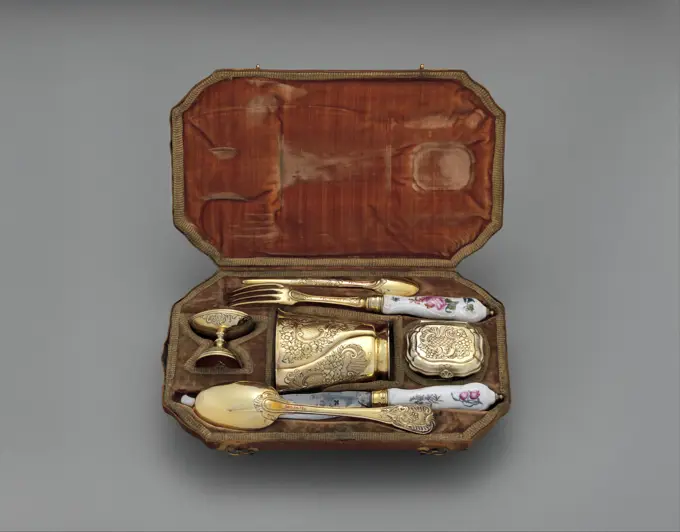
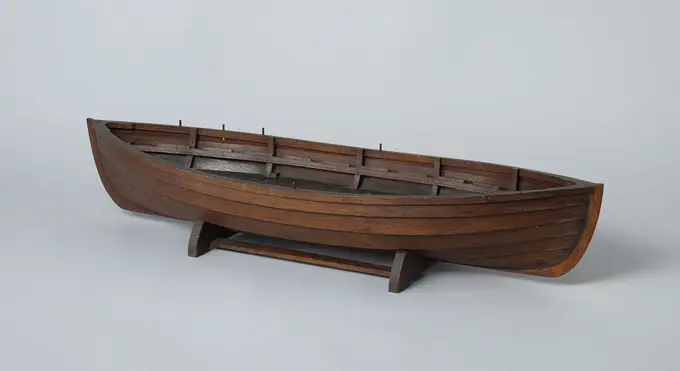
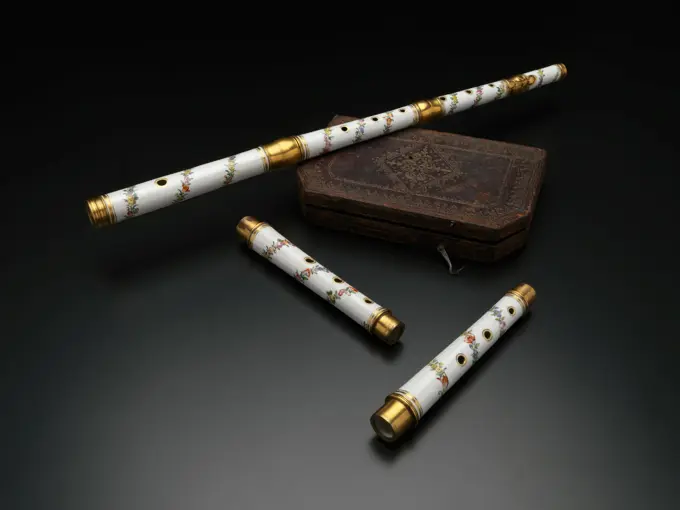
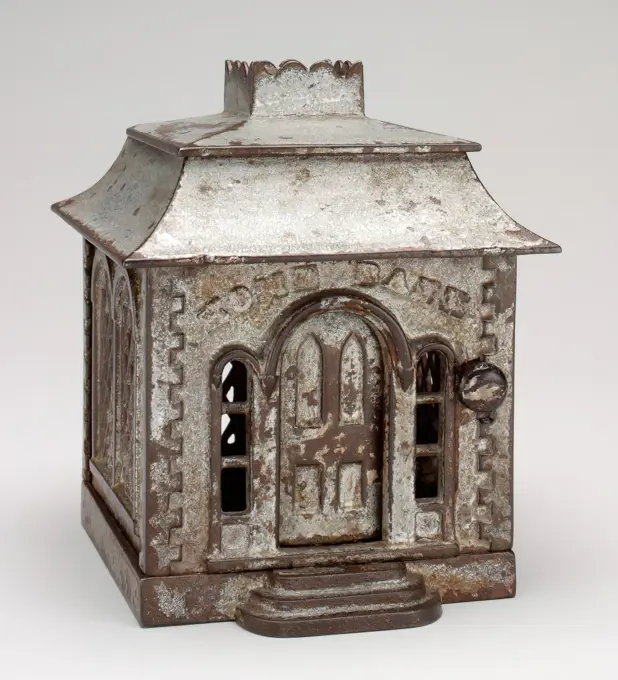
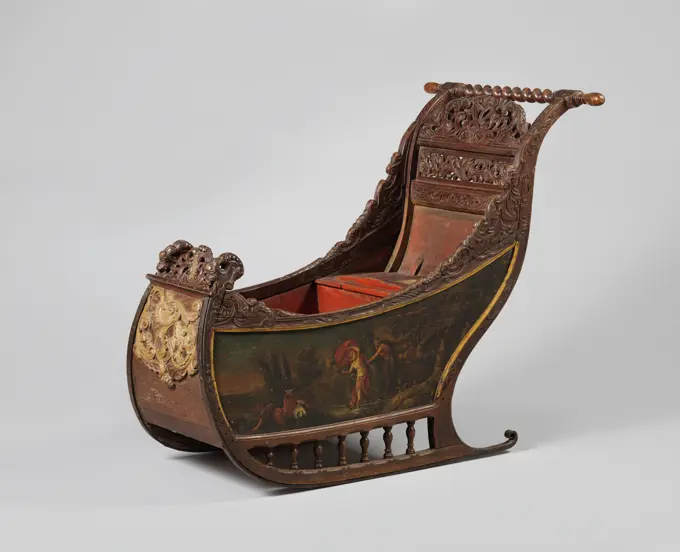
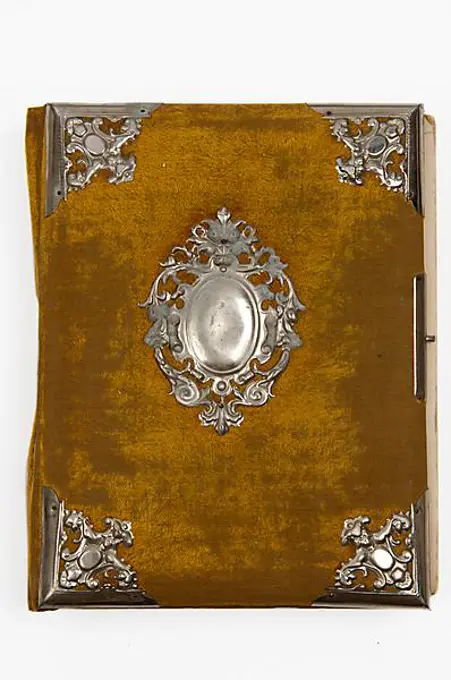
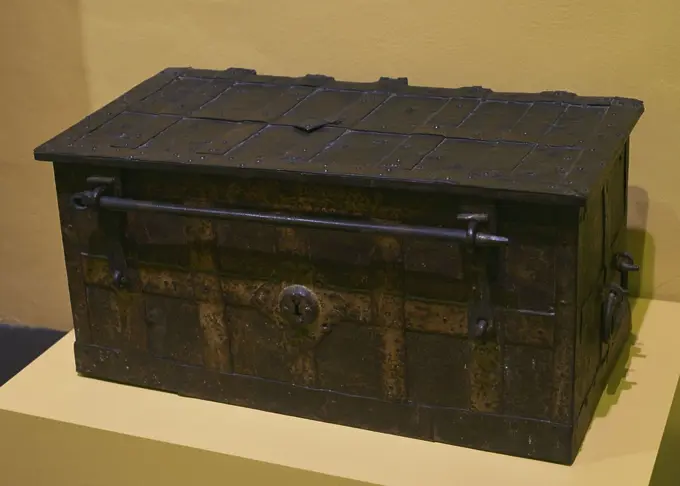
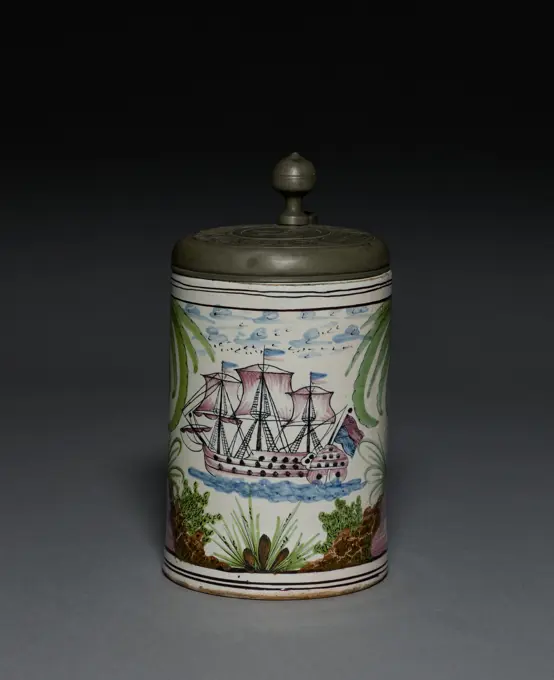
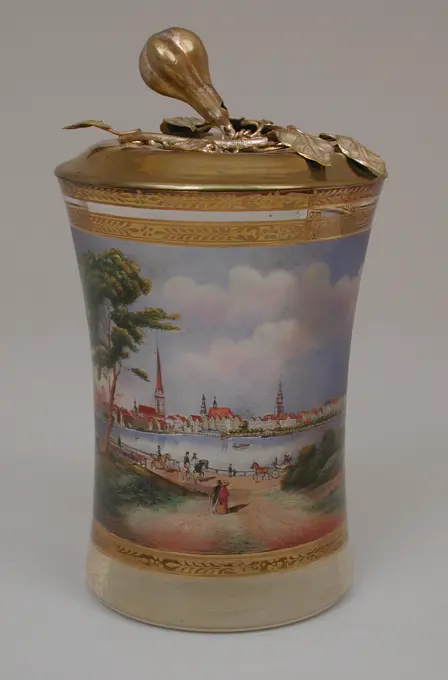
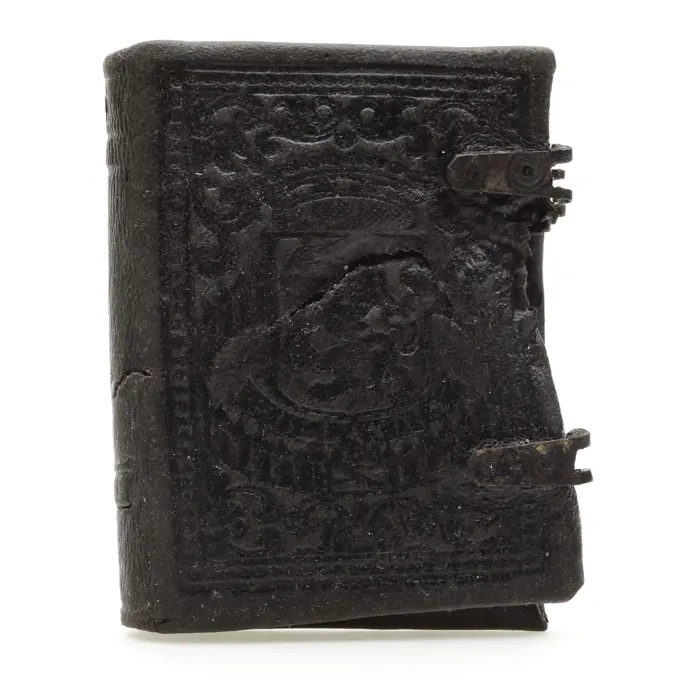
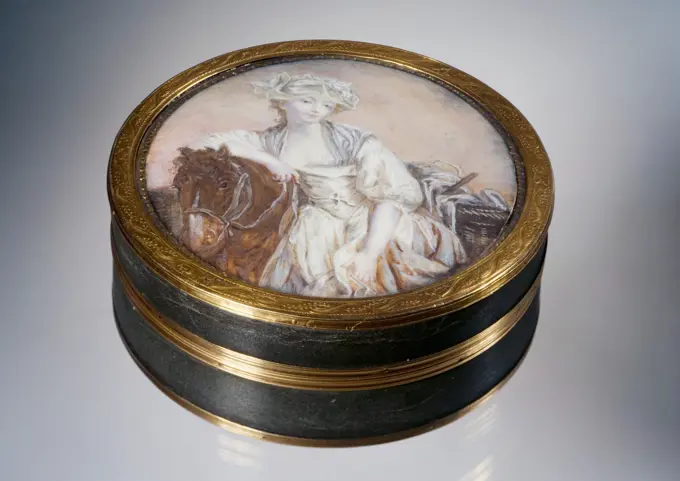
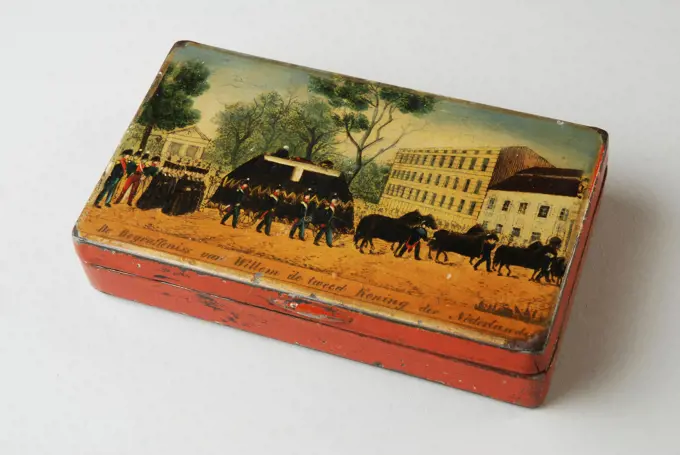
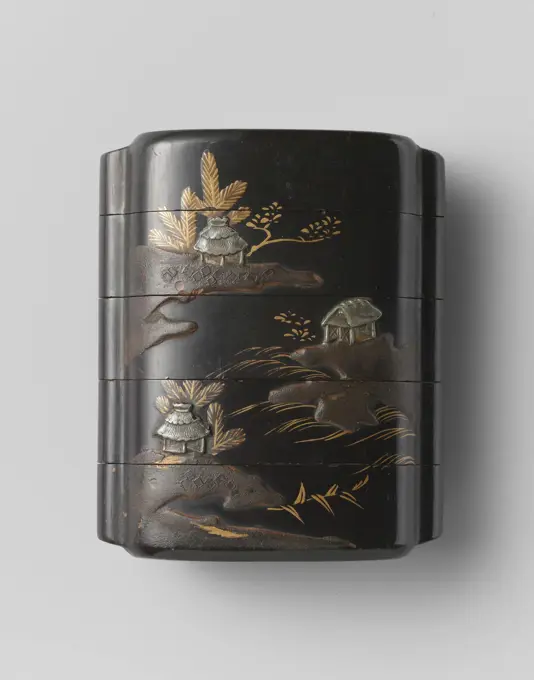
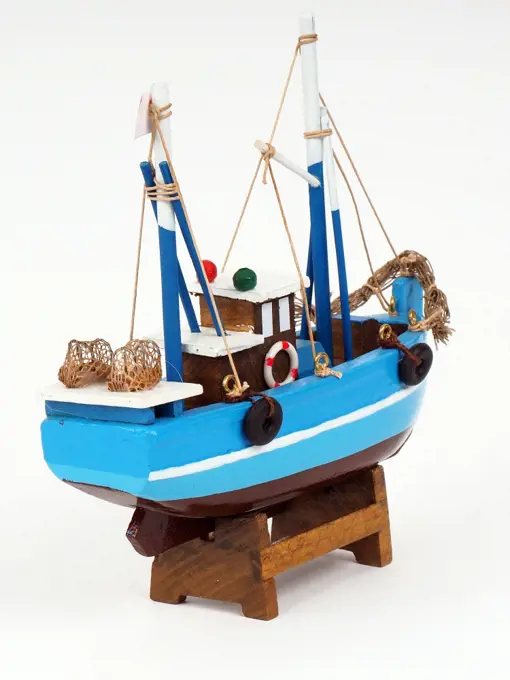
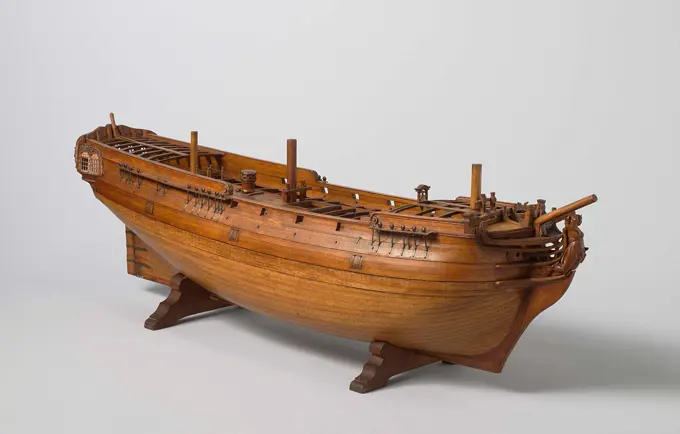
Half Model of a 3-Gun Schooner Gunboat.Polychromed mold model (starboard) of a tweemaster. The skin above the bark wood is closed, the model has a railing. The sheg is low, in addition to the bow priet and breeding is room for a gun in the bow (one on each side). The deck is closed and midship provided with an increase with shutters; Four and twenty rowing tanks (now incomplete), on the bothered four and twenty seating rollers; A cannon can be placed on the back deck, with a direction of it. Flat mirror; Straight stir without a lump, probably served with a steering gradient. Almost close, one bark wood and one Reehout. Peaked round trim, low and flat, sharp in front and stern.Set of six forks (part of a set) 1767-71 Louis-Joseph Lenhendrick The tooled leather box contains six couvertsthe French term for two or more matched pieces of flatwarewhich in this instance each comprise a fork, spoon, and knife. Six identical couverts housed in a similar box are also in the Museum’s collection. It is not known for whom these thirty-six pieces of flatware were made because the coats of arms that decorated each fork, knife, and spoon have been erased. However, the two boxes are decorated on the lids with the Noailles arms, suggesting that a member of that distinguished aristocratic family owned the cutlery in the eighteenth century.The designs of the flatware are unusually elaborate and ambitious, especially in the use of openwork in the stems of the fork and spoon, and in the molded and chased decoration of the knife blades. The amount of work required by the complexity of the designs marks these as especially fine pieces of silver cutlery. The two sets date from thModel of a Cora-Cora. The Cora-Cora is a Moluccan prahu. Eyes have been painted on either side of the prow. The cabin is finely decorated with gilded reliefs of birds. The red-white-andblue stripe adorning the front and back of the hull suggests that the vessel may have been used as a state ship by the colonial government in the Dutch East Indies.Little giftbox in hand on a white backgroundTray with Scene from the Tale of Genji. Culture: Japan. Dimensions: H. 1 5/8 in. (4.1 cm); W. 30 1/8 in. (76.5 cm); D. 16 1/8 in. (41 cm). Date: early 17th century.The size, geometric motifs, and extensive use of pearl shell suggest that this tray may have been intended for trade to Europe. The imagery, however, derives from the Tale of Genji, one of Japan's most famous literary works. Written by Lady Murasaki Shikibu (ca. 978-ca. 1014), this lengthy book traces the customs of the aristocratic society and the tumultuous love life of Hikaru Genji, a distant member of the imperial family. The tray illustrates a moment when Genji (seated in the cart and not visible) passes by a former illicit lover while traveling. Both are assailed by bittersweet memories as they glimpse each other in passing. Museum: Metropolitan Museum of Art, New York, USA.. Coffin, square, of Campechechehout, veneered with coroland wood and decorated with an abstract pattern with arrows in an intaris technique of mother-of-pearl. The coffin with inner bin is on four square low blocks. Hanover, Albert Schulze, to the design of Johan Thorn's prick. At the bottom of the coffin a printed label of Schulze with the data.Traveling set in leather case ca. 1745-50 Johann Ludwig Laminit German Often found in local inventories, the German terms Mundzeug and Besteck originally referred to a case or sheath for holding a personal set of cutlery. These sets contained essential utensilsa knife, fork, and spoonand other implements, and they reflect the aristocratic ceremony of dining in the eighteenth century. A spice box with two containers, a marrow spoon, and a conventional knife, fork, and spoon (here with Meissen handles) were used during the entremets courses. The beaker and egg holder were not always included. The mark “14” points to a patron who provided silver of 14/16 loth purity (the normal was 13 or .8125 pure). Therefore the Augsburg town mark was not applied but only the maker’s mark and the purity of the silver alloy.ReferencesSilber auf Reisen. Exh. cat. Museum Schloss Fasanerie bei Fulda. Eichenzell bei Fulda, 1991.Hildegard Hoos in Messer, Gabel, Löffel. Museum für Kunsthandwerk. Frankfurt amEdward L Loper, Lunch Box, c 1938 Lunch BoxTeam 6 Czarek with saucers, in Puzdra; Koenigliche Porcellain Fabrique, Meissen (1710-1763), Hoeroldt, Johann Gregorius (1696-1775),  around 1723/24 (porcelain); 1740-1750 (Puzdro) (1723-00-00-1724-00-00);Hoeroldt, Johann Gregorius, (1696-1775), Far Eastern flower, hunting sceneModel of a Whaleboat.Model of an overnight twexe poems double banks whaling sloop on standard. The vessel is a pointed codter with raised floor, the middle parts of which are missing. All docks are also missing. On the border twelve dolls and another one side. The middle floor beam has an eye.Transverse Flute in D-flat 1760-90 German Johan Friedrich Böttger's rediscovery of hard-paste porcelain in 1708 was the basis of a new luxury industry. Makers explored all kinds of applications in the new medium. Porcelain musical instruments posed enormous problems since during drying and firing there occurred substantial shrinkage. In the kiln, wet porcelain matter shrinks by a third of its volume so large molds had to be made to guarantee the precise final dimensions of bore, finger- and embouchure hole. Wooden flutes are easily fine-tuned and voiced by drilling; porcelain, however, makes later manipulations problematic. Porcelain flutes and carillons were rare, but ocarinas like one from Dresden in the Museum's collection were more common. After the porcelain sections of this flute, including its decoration, had been fired, a goldsmith completed the metal work, making joints, sockets, cap and key. Porcelain flutes were known only in the circles of high nobility. Another example of Leather-bound books isolated on the white backgroundHome Bank (no Dormer Windows)' mechanical bank, 1872, Doras A. Stiles; Manufacturer: J. & E. Stevens Company, Cromwell, Connecticut, 1843-1950s, American, 5 1/4 x 4 3/8 x 4 7/8 in. (13.34 x 11.11 x 12.38 cm) (approximate), Cast iron, pigment, 19th centuryModel of a ships galley, anonymous, anonymous, c. 1799 - c. 1820 demonstration model Model of a shipy butter on ground board. It is a low rectangular cupboard with a raised smoking cabinet in the middle over the entire length, on which the chimney stands. With small legs the whole is bolted on deck. The two sides on each side of the smoking cabinet are identical except for the hobs: they consist of three fires with grilles and vertically sliding doors. The hobs are simple metal plates with round holes for the pans and surrounded by a railing. Between the two rows of fireplaces under the smoking cabinet, bread ovens with shelves, which are accessible along the short sides. The smoke of the fireplaces goes over the bread ovens the smoking cabinet in and through to the chimney. Ovens are also applied in the short sides of the smoking cabinet. The model has nine small pans, two large and one colander. model maker: Netherlandsafter design by: France wood (plant material). brass (alloy). copIce Slee from Hindelopen with Painting and Cut Work, Anonymous, 1750 - 1800 Ice sled from Hindelopen with painting and cutting. The painted side walls show a representation of Pan that embraces the reeds and Mercury who plays Argus, the Wachter of IO. On the back a representation of Diana and her nymphs; Dance in a 17th-century winter landscape to Hendrik Goltzius. Northern NetherlandsHindeloopen wood (plant material). oak (wood). spruce (wood). elm (wood) Ice sled from Hindelopen with painting and cutting. The painted side walls show a representation of Pan that embraces the reeds and Mercury who plays Argus, the Wachter of IO. On the back a representation of Diana and her nymphs; Dance in a 17th-century winter landscape to Hendrik Goltzius. Northern NetherlandsHindeloopen wood (plant material). oak (wood). spruce (wood). elm (wood)Stack of old books, studio shot, stillStaircase model Double-revolution stairway model, cherry (wood), Double staircase model with double revolutions and banisters., France, 1850-1900, models and prototypes, Decorative Arts, Staircase model Double-revolution stairway modelSnuff Box (Tabatière), 1768-1769; 1776-1778. Pierre-Nicholas Pleyard (French). Gouache miniatures mounted on gold; overall: 2.6 x 5.3 cm (1 x 2 1/16 in.).Old photo albumMoney chest. From Germany or Castile. Late 16th-17th century. Made of iron and wood. Museum of Santa Cruz. Toledo. Spain.Weather vane from a whale hunt. Weather vane with three-master in very with a whale on either side on which fishermen is hunted in a barge. Gold plated.Tankard, c. 1750. Germany, Aumund (Vegesack), 18th century. Faience with pewter cover; overall: 21 x 16.1 x 11.3 cm (8 1/4 x 6 5/16 x 4 7/16 in.).Footstool, Wood, wool, tin, Rectangular wooden stool (a) on bun feet, with hinged lid covered in blue printed wool, mounted with upholstery nails; Rectangular tin liner (b) in stool., USA, 1880-85, furniture, Decorative Arts, FootstoolTransverse Flute in D-flat German 1760-90 Johan Friedrich Böttger's rediscovery of hard-paste porcelain in 1708 was the basis of a new luxury industry. Makers explored all kinds of applications in the new medium. Porcelain musical instruments posed enormous problems since during drying and firing there occurred substantial shrinkage. In the kiln, wet porcelain matter shrinks by a third of its volume so large molds had to be made to guarantee the precise final dimensions of bore, finger- and embouchure hole. Wooden flutes are easily fine-tuned and voiced by drilling; porcelain, however, makes later manipulations problematic. Porcelain flutes and carillons were rare, but ocarinas like one from Dresden in the Museum's collection were more common. After the porcelain sections of this flute, including its decoration, had been fired, a goldsmith completed the metal work, making joints, sockets, cap and key. Porcelain flutes were known only in the circles of high nobility. Another example of Wampanoag woven basket with lid and carrying handle after European contact that influenced the shapes of their basketsJuguete de madera, barco con ruedas, siglo XX. Museu Català de les Arts i Tradicions Populars.Beaker ca. 1820-30 Austrian or Bohemian. Beaker 207889Japanese Lacquers. round box from the 18th century decorated with bamboo branches and a small Hina-Dogu trunk for childrens games. mon of the Aki-moto family. Edo period. Model or a crane for stepping masts. Model of a mast crane on base plank. It is a wooden structure with tilting back, the cup of excellent over the quay. The head is equipped with discs for the hoist, which is missing. On the back to climb the crane and a double railing. On the base behind two capstan and two servants.Snare drum -Art painting on antique wooden box, Jodhpur, Rajasthan, India Copyright: xSafatxAli/DinodiaxPhotoxFork (England), ca. 1720-40; brass, steel; L x W: 13.9 x 1.8 cm (5 1/2 x 11/16 in.); The Robert L. Metzenberg Collection, gift of Eleanor L. Metzenberg; 1985-103-279-jLeather binding, with embossed shields and brass clasp, bookbinding band bottomfound leather brass metal, tanned cut in form pressed colored Prepared binding with on one side coat of arms of the province of Holland with text and on the other side coat of arms of stadholder Willem II or Willem III Aan voor and backside brass hinges of the bookcases Below coat of arms on the front text: HOLLANDIA archeology heraldry indigenous teaching bookbinding reading craft stadholder Willem II Willem IIIModel of a War Galley. Witnessed a barrel model from a platter gun galei with sailing and eight and twenty oars, on standard. The ship has one deck plus a raised behind with a subside for guns. The galleon is very low and a heavy gun is in the bow. Four small pieces in the sides. Flat mirror, hollow wulf, small closed fence; Wide stir with tiller sailing under the carriage of the gun. The seam runs to both ends, one mountain wood, the ship has four swords. The oars lie in aiming outside of railing. The rig is a three-fry logger with bucket sails to the breeding and large mast, with triangular top sails at the front and yield top sails; Club sail on the bowsprit. The druilmast has a logger sail with parrot dock. Scale approx. 1:44 (derived).Dessert Basket with view of Worcester 1840-1850 Worcester. Soft-paste porcelain with polychrome enamels . Worcester Royal Porcelain Company (Manufacturer)Lorenz Rothkranz, Shelf Clock, c 1939 Shelf ClockCircular box in bluish composite material, circulated by gold and lined with scales, adorned on the cover of a miniature in ivory gouache representing the "dairy" after Greuze, Louis XVI era, 18th century. Paris, Cognacq-Jay museum. 39178-2 Circular box, horse, ecaille, Louis XVI time, woman, gouache sur ivory, laitiere, gold, goldsmith, portrait, round, miniatureTobacco box with funeral procession and funeral King William II, tobacco box holder metal base metal tin lacquer, Rectangular tobacco box Red lacquered. On the lid is shown the funeral procession of the funeral of King William II in 1849 Slightly rounded corners Oval lip on the front of the cover text underneath image: The funeral of William the Tweed King of the Netherlands * personal attribute personal equipment smokefree tobacco tobacco store transport smoking pipe smoking snuffbox king king William II William II royal house Oranjehuis Oranje. Five part inro covered with black lacquer on which a river landscape in makie and with mother-of-pearl insert. The Inner Nashiji.Model of a Cart for Rope Making, anonymous, c. 1810 demonstration model Model of a trolley for the rope, consisting of a wooden frame on wheels, with a needlework. The large, double wheel of the needle is set up in the longitudinal direction and has a large number of holes applied in concentric circles for supporting, on which the drive rope is excited. The car is equipped with cracks that drive the needlework. Depending on the type and dimensions of the rope that is beaten, the three hooks for turning strands before in the frame are given a fixed number of turns per foot. The wheels are made of brass; The front wheels can turn, steering is done with a crank with a screw-without-end on a steering quadrant on the front wheels. United Kingdom (possibly) wood (plant material). brass (alloy). iron (metal)   England. Rotterdamhandle dark wooden trunk, chest box nobody isolatedAmmunition backpack, mid 19th century, Unknown Japanese, 15 1/2 × 11 5/8 × 10 3/4 in. (39.37 × 29.53 × 27.31 cm), Lacquered pine and zeklova wood, iron, gold pigment, silk rope, Japan, 19th century, According to the Record of Firearms (Teppō ki) of 1606, firearms were introduced to Japan in 1543 when a Portuguese merchant ship washed ashore after a storm. The introduction of firearms caused a fundamental change in battle strategies and fortress construction in Japan. Due to increased demand brought on by ongoing fights among feudal lords over control of Japan, manyCassette with banknotes. unknownModel of A Gaff-Rigged Gunboat, Rijkswerf Rotterdam, c. 1835 ship model. fully rigged model Testitated eroded block model of a one -mast flat -bottom gun boat, incomplete. Round bow and stern, a gate in the bow, two in the stern, four in the sides. The deck is detailed with a roasting spindle, a chimney in front of the galley, shutters, a roef, a compass house, two pumps, ten cannon balls and two anchors. Around a Schans rug, four forks on the Vertuining and four posts on either side for an elevated Schans rug. Not worked out below deck. Wide stir with decorated roser head and wooden tile stick over the deck. Flat Zeeg, a Barkhout, swords. The model is witnessed with a one -mast fork rig with rolled up sails: the mast has a steng, breefok and top sail, stagfok and jib, mainsail of gaffel and beak, tricolor penny. Scale 1:30 (according to Obreen). Rotterdam wood (plant material). brass (alloy). rope. silk. textile materialsModel of wooden ship on a white background          . Fun bed, made of walnut, completely rigged with curtains and silk falls. The bed consists of a wooden bin with raised headboard, resting on bol legs, in which a construction is mimited with false hinges, as if the two long sides can be folded down. In the bin is a loose bottom, consisting of an oak framework with red white checkered outline tires wound. The square corner styles with imitation crib bolts, walk through in four double-twisted bed styles, on which the sky and the framework rest with the outer falls on four iron pins. Four rods are arranged between the styles to which three red moiré silk curtains hang off with passing with yellow and red brushes. The elevated sky is covered on the inside with a yellow-pink changing side, deposited with ditto. Two yellow curtains are attached to the headboard at the headboard, which originally inclined diagonally, with a cord with brushes around the styles. The inside falls are fixed to heaven; They are made of red silk on three sides, onAparato locomóvil para destilación de vinos. Construido por M. Savalle. Este modelo podía producir 160 hectólitros de vino. Consistía en una columna rectangular, condensador del calentador de vino y regulador del vapor. Disponía también de un depósito equipado con otro regulador de potencia. Dibujo por L. Guiguet. Grabado. Coloreado. La Ilustración Española y Americana, 15 de octubre de 1876.IslamicCapDouble Album of Miniature Landscape Paintings, 1723, Fang Shishu, Chinese, 1692 - 1751, 5 3/4 x 3 5/8 x 13/16 in. (14.61 x 9.21 x 2.06 cm) (closed), Ink and color on paper, China, 18th century, Fang Shishu was born in Anhui province but grew up and worked in Yangzhou. He held the shengyuan civil service degree and, although generally categorized as a Qing orthodox literati artist, he is well known for his unusual refinement and sensitive brushwork. Fang was also recognized as one of the best poets of his generation as well as a calligrapher.Model of an east indiaman.Spant model of the hull of an East India; The model can be explored in two layers. Eighteen guns divided over two decks. Three levels: bottom shade, intermediate deck, baking deck and semi-deck, all draft beams; The floor of the cabin has been lowered, the semi-deck is very short. The sheek image presents Diana with a dog. Wrecked mirror with a port of port, hollow wulf with two gates, fence of a floor with carving of praise, mythological corner figures and the weapons of Amsterdam and the Chamber of the VOC in Amsterdam; Side galleries of a floor with praise. Stir straight with square roofing. On the bin a servant and the ship's bell, a double anchorage, a servant, a capstan and a rise on the main deck. The model is equipped with all rest with labeling blocks, the great tranquility and azust resting. The smoothing skin is omitted to portlets under the bark wood. The seam runs to both ends, two bark woods and a reehout. Running. The laps have been sawn down juHorse Race, Straight Base' mechanical bank, c. 1871, John D. Hall; Manufacturer: J. & E. Stevens Company, Cromwell, Connecticut, 1843-1950s, American, 4 3/4 x 5 5/8 x 5 5/8 in. (12.07 x 14.29 x 14.29 cm), Iron, sheet metal, pigment, thread, 19th centuryDonation box in Chinese templeToy Blocks' nesting set of four still bank, late 19th century, 3 1/8 x 3 3/16 x 3 1/8 in. (7.94 x 8.1 x 7.94 cm), Wood, paper, England, 19th centuryModel of a Color Mill. Model of a double paint grinder that can be served by one man, on a wooden base plank. Scale 1:10 (according to Obeen).Two Models or Floating Beacons. Two virtually identical models of an iron driving beacon in the form of a small boat with a mast with a screen and a bell. The hull is sharp V-shaped, equipped with a keel and with a clear distinction between front and stern; The top is closed and equipped with a manhole and a pump that is closed with a hexagonal screw cap. A harp closure for the anchor chain hangs on the keel, which can be placed in three different places. The masts are stamped with four stains, which are performed in staffiled steel, two front and two. The screens consist of two half circles, which are placed in the plane of the mast and the baking stages. The wind farms have a V-shaped cut-out and the bell is fixedly mounted while the clapper starts the bell through the movement of the buoy on the waves. The buoys have a slightly different hull shape.Korean CakeTools Sculptor Toorenburgh, working for C.A. Lion Cachet and Mr. Th. G. Dentz from Schaick. A collection of 78 gushs and chisels, partly stored in two blue and white striped cotton covers. They come from Harry Toorenburgh (1883-1974), sculptor working for c.A. Lion Cachet and Mr. Th.G. Dentz from Schaick. Toorenburgh worked from 1912-1933 in America.History of navigation. Middle ages. Europe. Viking ship. 9th century. Found in 1880, Norway. Model of A. Twill, 1988. Museum of History and Navigation. Riga. Latvia.Fishing boat Miniature wooden fishing boat Copyright: xZoonar.com/IvonnexWierinkx 7573595Ancient style wooden treasure chest with mother of pearl inlayCube Sundial, 1750-1800. Manufacturer: I G Kleininger..  Pinto Collection, Purchased from Edward H Pinto, 1965.. 1965T5090.. Cube Sundial, 1750-1800. Manufacturer: J G. Kleininger. This cube sundial was made by J.G. Kleininger, a well-known maker of mathematical and scientific instruments in the second half of the 18th century. His work is represented in many museum collections. It is adjustable on a turned beechwood stand, and has printed paper dials to each surface of the cube... Purchased from Edward H Pinto, 1965... .Madrid, 10/09/2024. Virtual exhibition of the Titanic in ship 16 of the Matadero. Photo: Ernesto Agudo. ARCHDC.The 'Dolling' Tool Chest, 1780-1790. Pinto Collection. Large tool chest with hinged lid to top. pine carcass, the interior fitments of oak & pine, veneered with Spanish mahogany, inlaid with various woods.Pierre-André Montauban. Snuffer. But scales and enamel. Museum of Fine Arts of the City of Paris, Petit Palais. Garten, email, bust, woman, gold, portrait, smokingBox containing ivy leaves and dried flowers, and 2 handwritten mourning cards ". Wooden box, dried flowers, Bristol. Paris, Romantic Life Museum. Mourning map, box, handwritten writing, ivy leaf, search flower, woodCollection of minerals in boxed display trays.Spoon (USA (case)), ca. 1890; Made by Pavel Ovchinikov (Russian, 1830 - 1888); Retailed by Theodore B. Starr; enamel (cloisonne), silver-gilt; L x W x D: 13 x 2.7 x 1.3 cm (5 1/8 x 1 1/16 x 1/2 in.)Set of mini size colorful model boatsModel reduced from a firefighter car Anonymous. "Reduced model of a firefighter car". Polychrome wood, iron and leather. Between 1830 and 1840.Tinplate PN200 Motorcycle Toy (with box), 1945-1960. Manufacturer: Philip Niedermeier