Decorative Ceramic Tiles

Colorful ceramic tiles featuring intricate floral patterns and designs, representing various historical artistic styles.

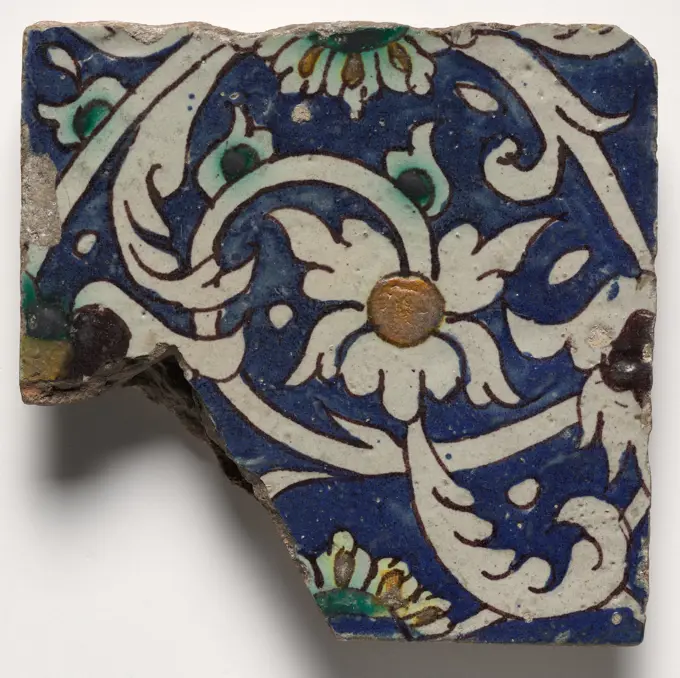
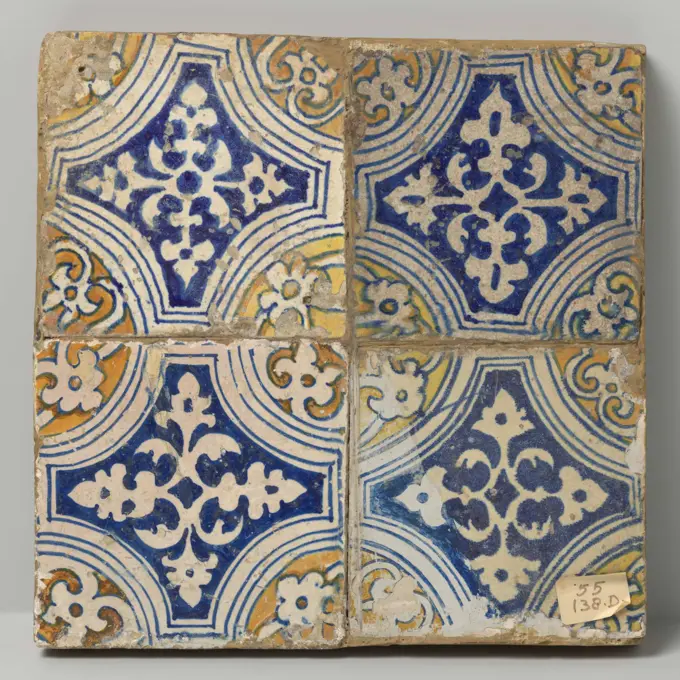
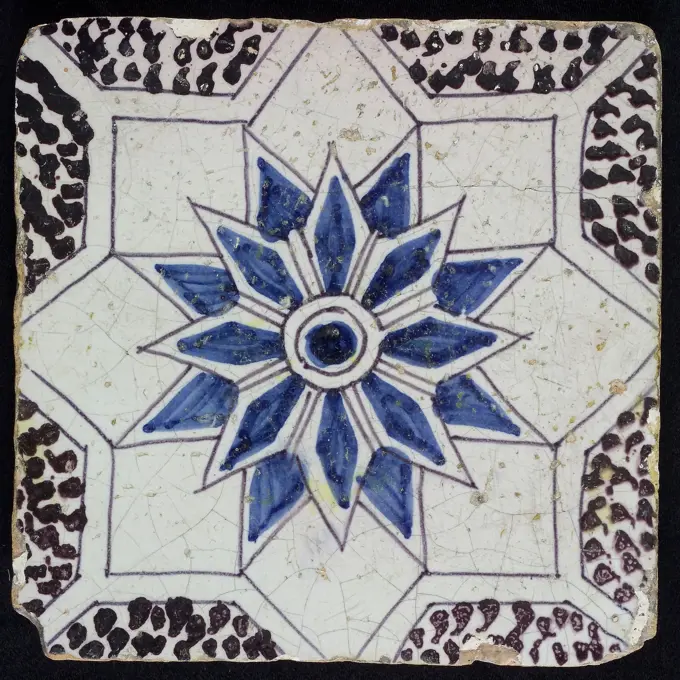
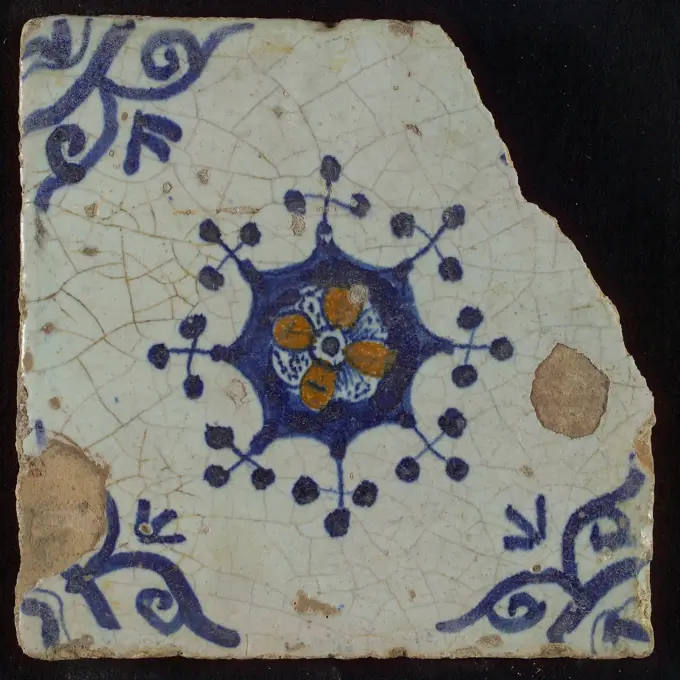
Tile, blue on white, central flower within star shape, three-piece around, half rosette, corner pattern lily, wall tile tile footage ceramic earthenware glaze, baked 2x glazed painted 'Haarlem tile'. Yellow ruddy and red shard square Two or four nail holes. AIb3 Haarlem
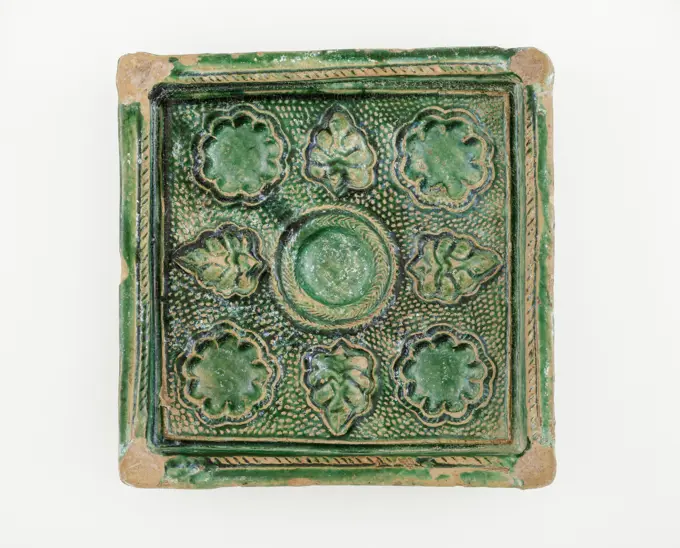
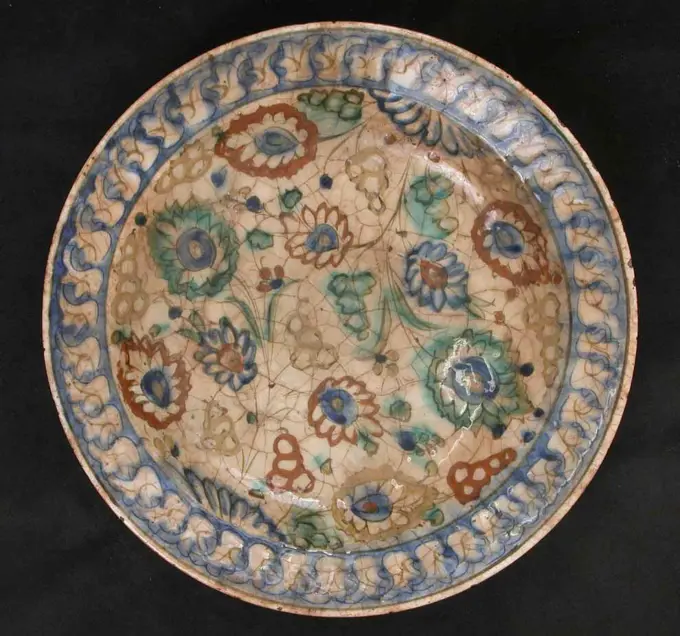
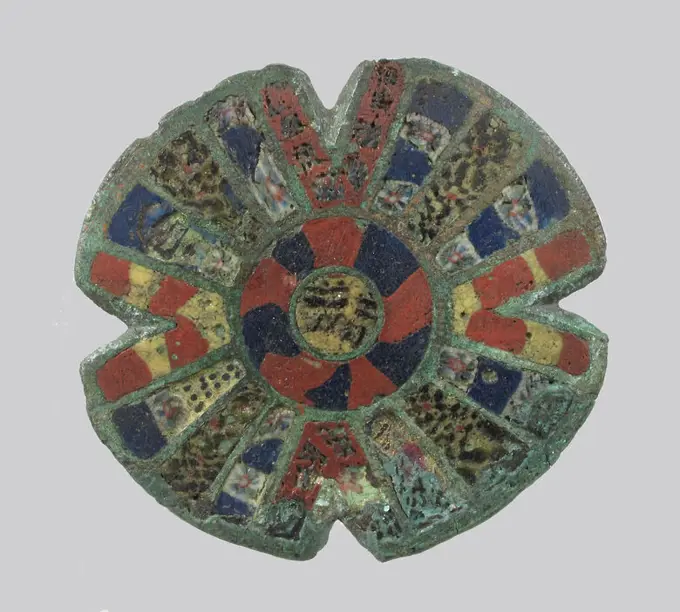
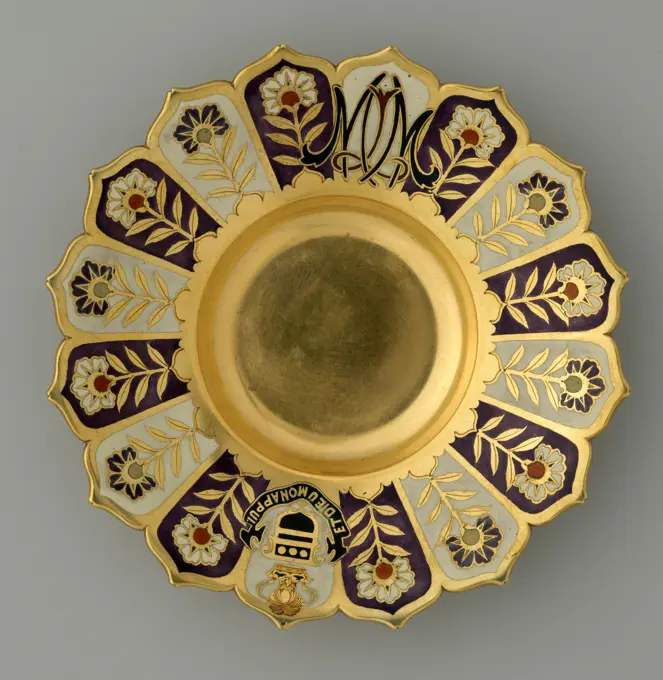
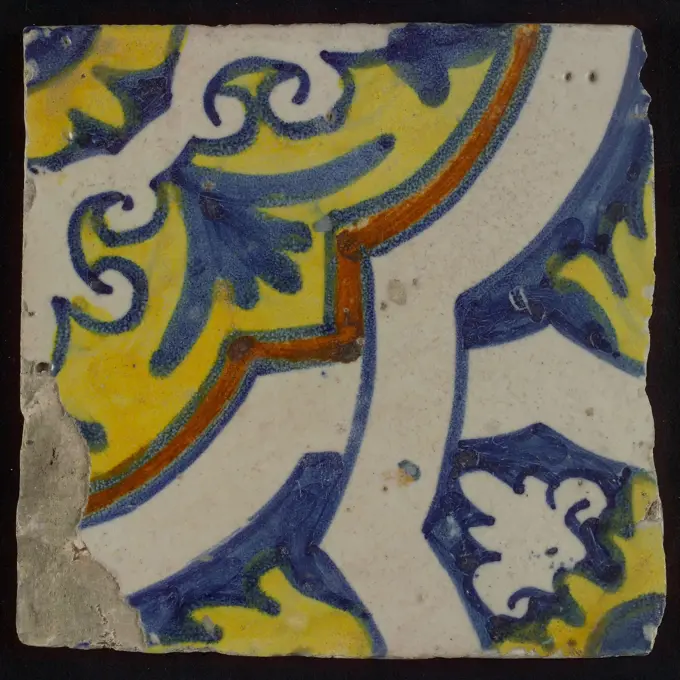
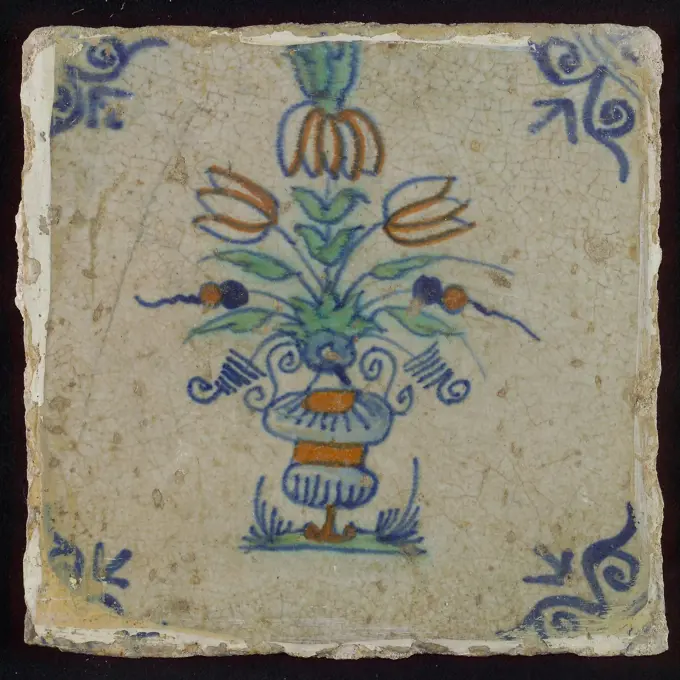
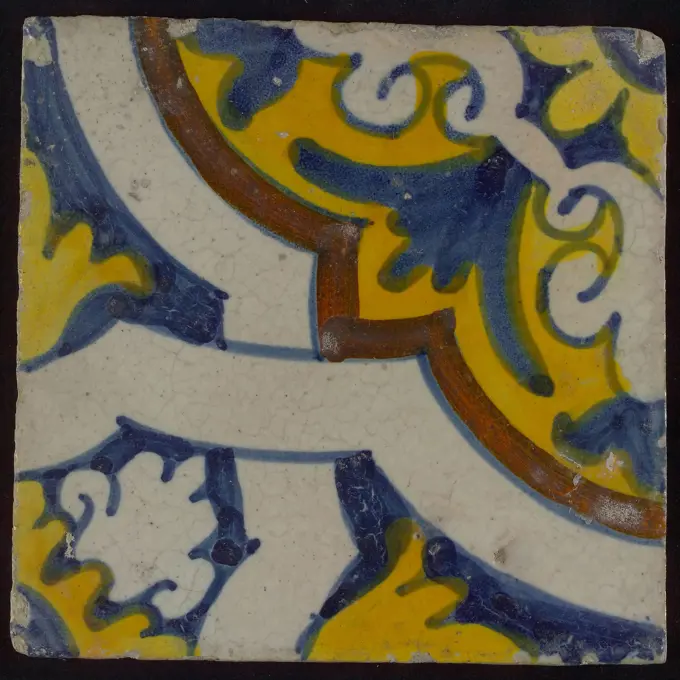
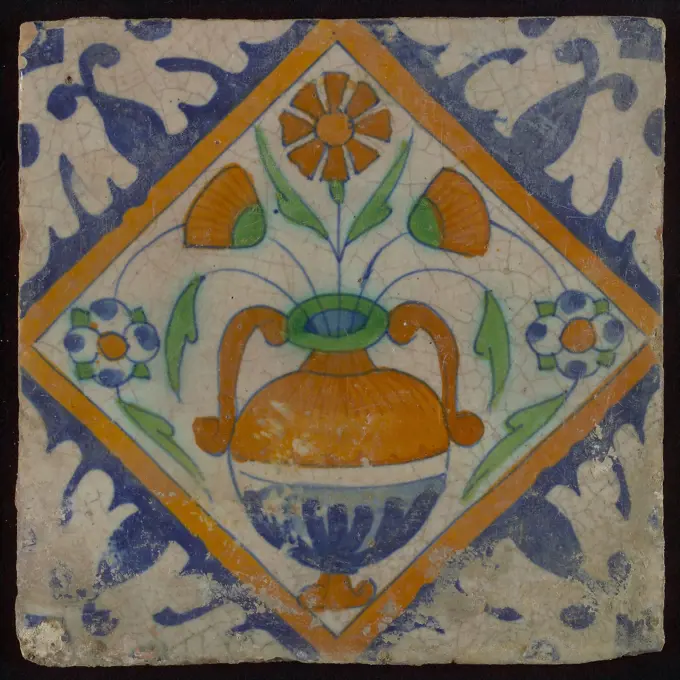
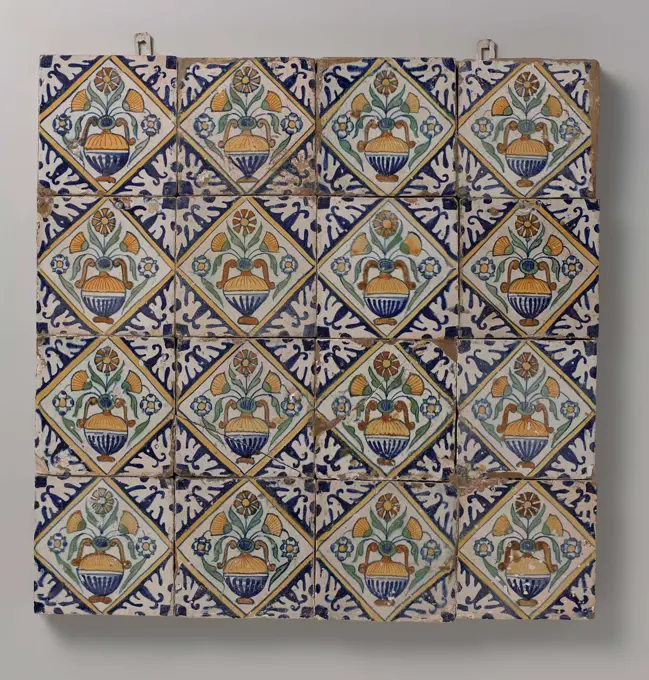
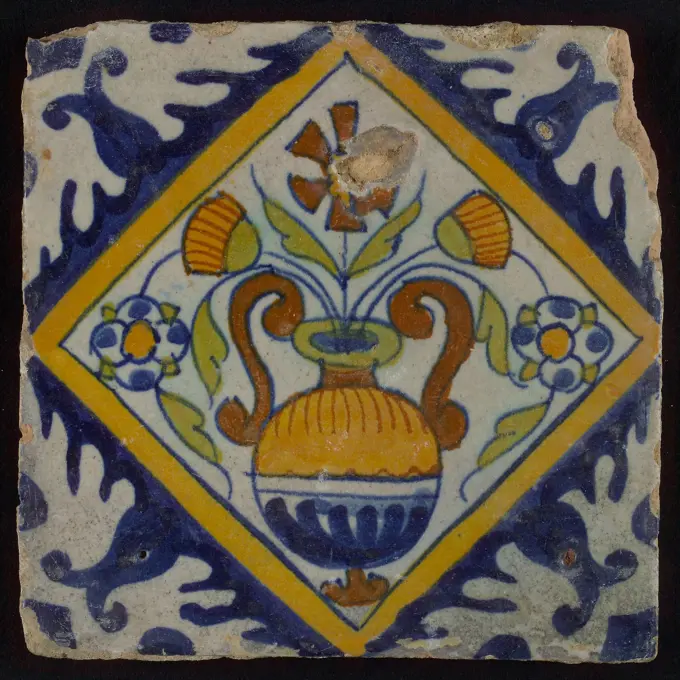
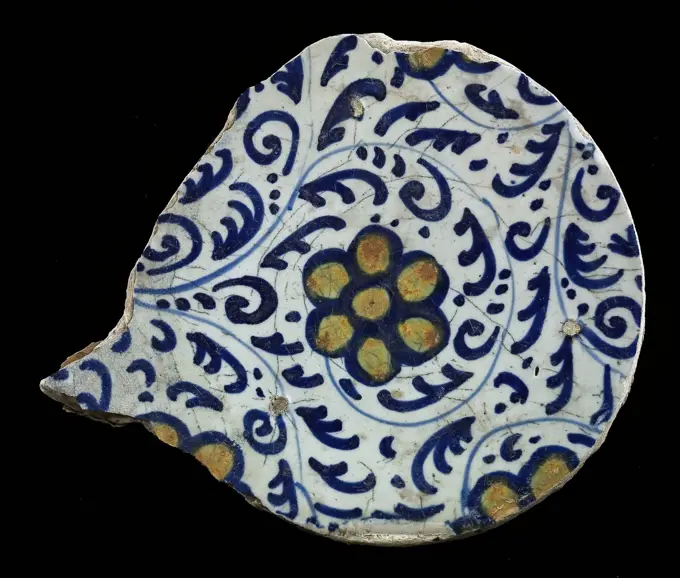
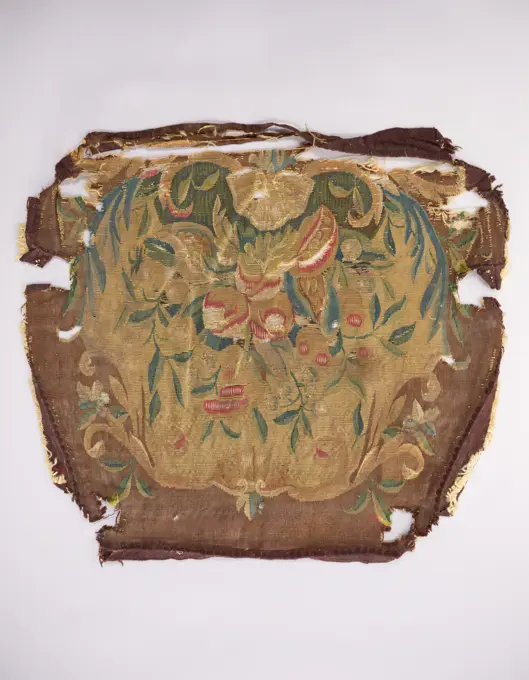
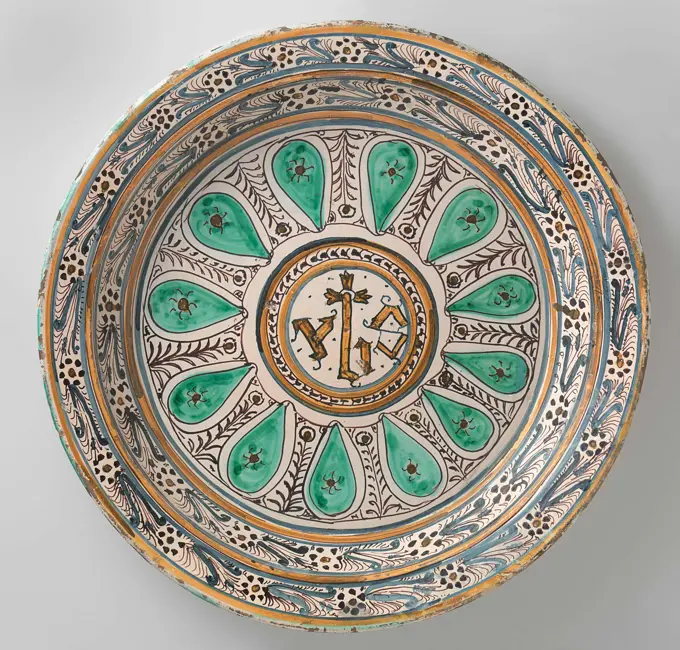
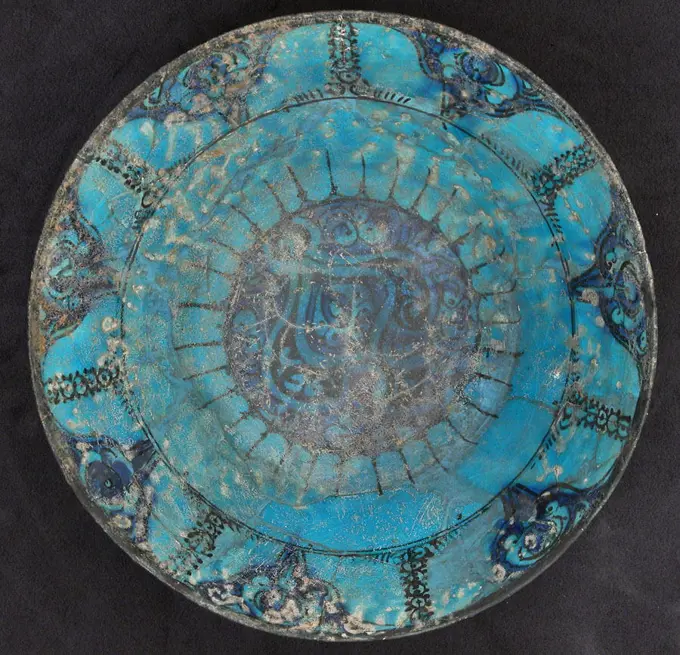
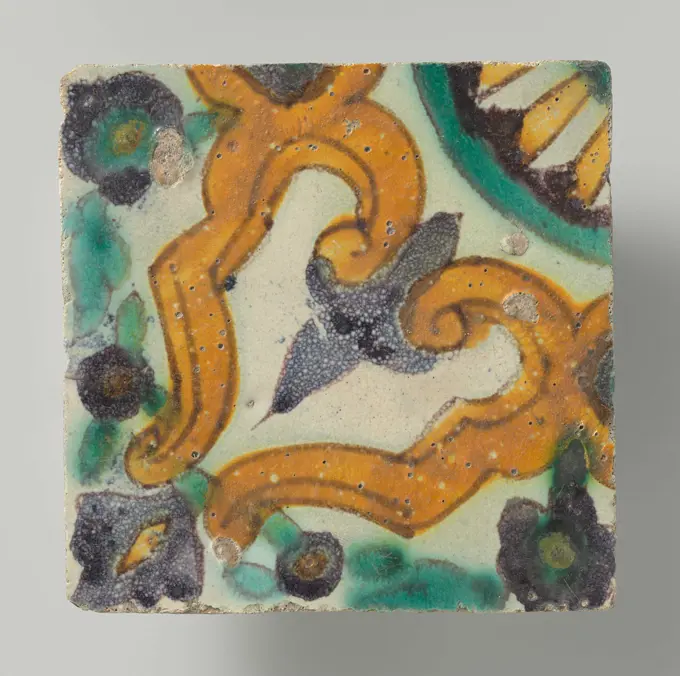
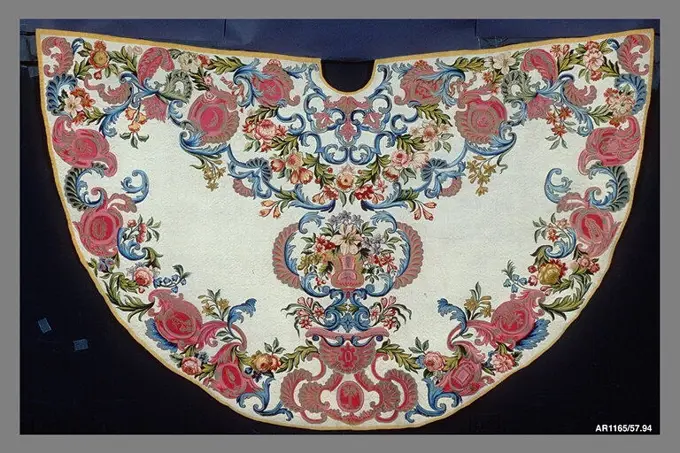
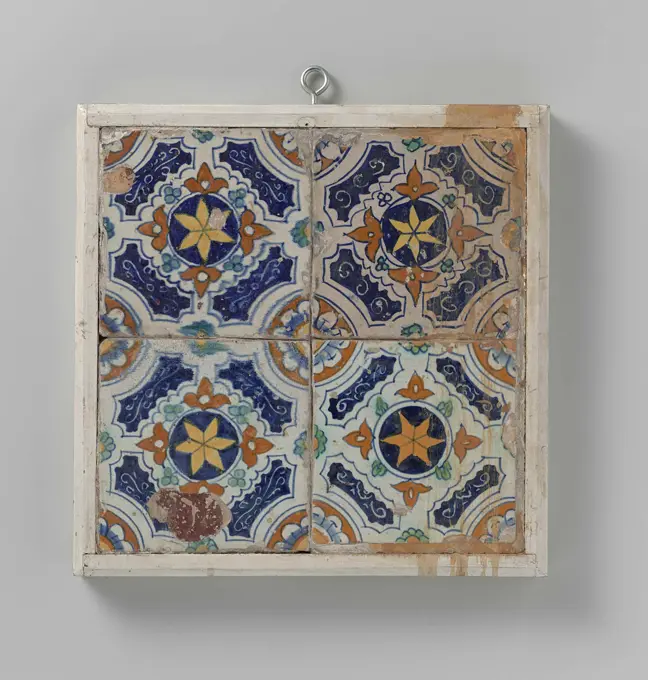
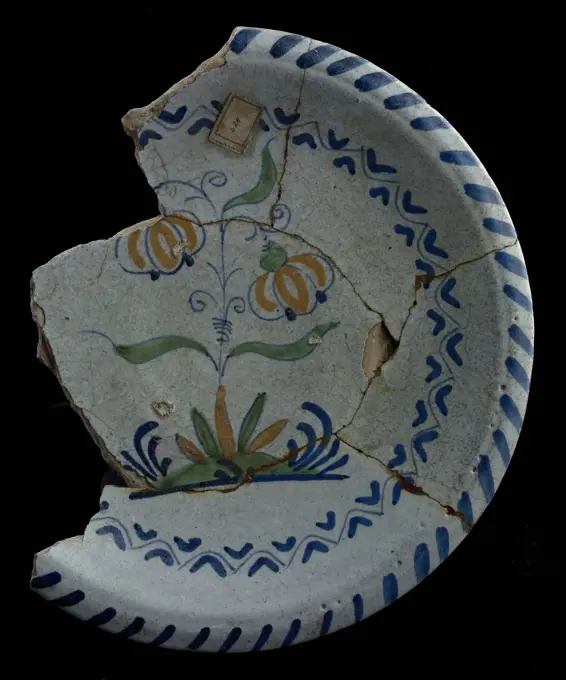
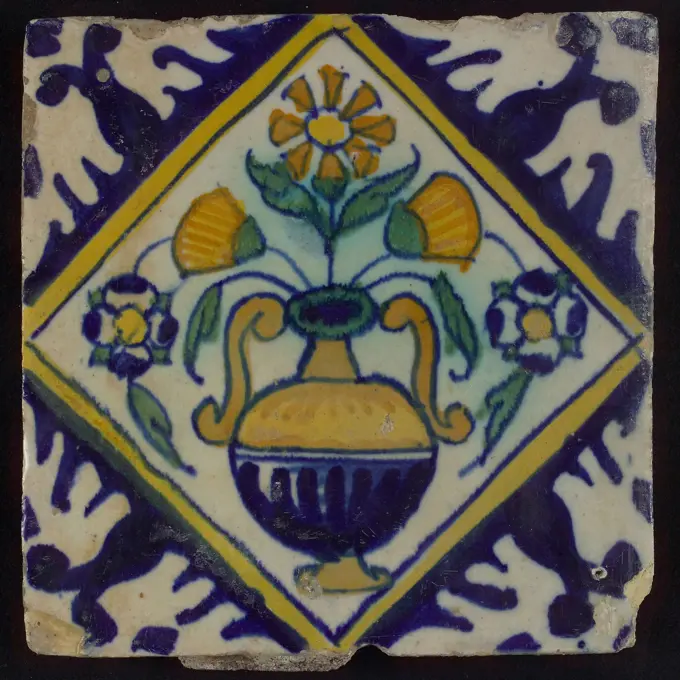
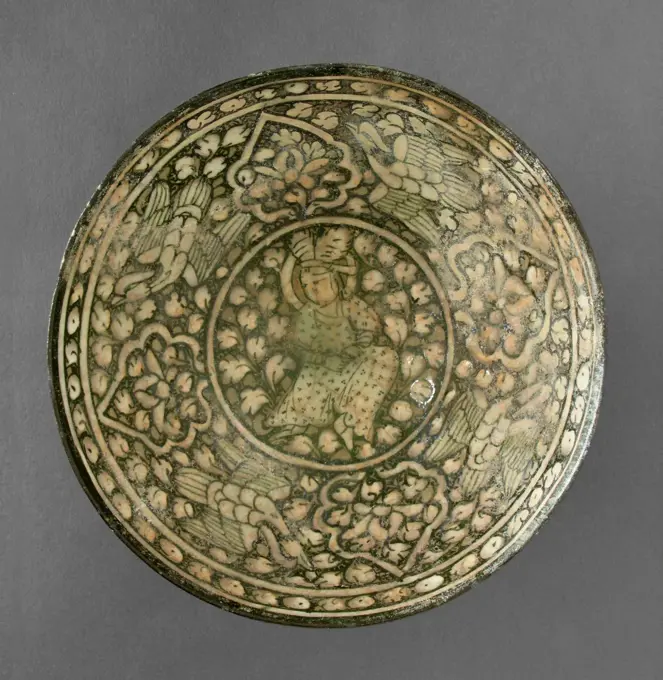
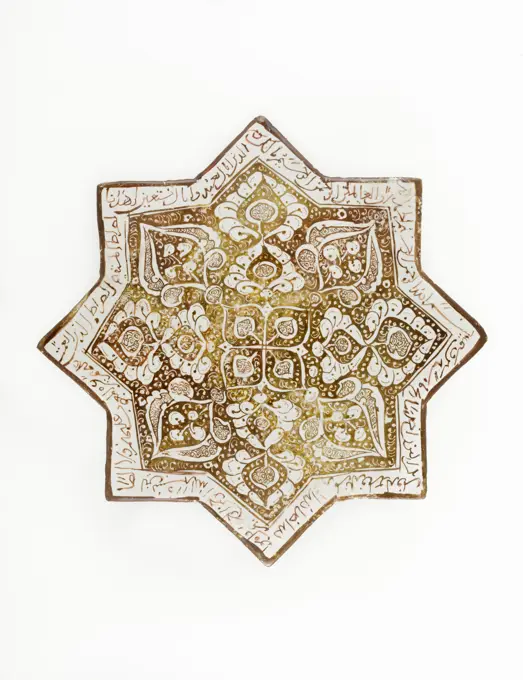
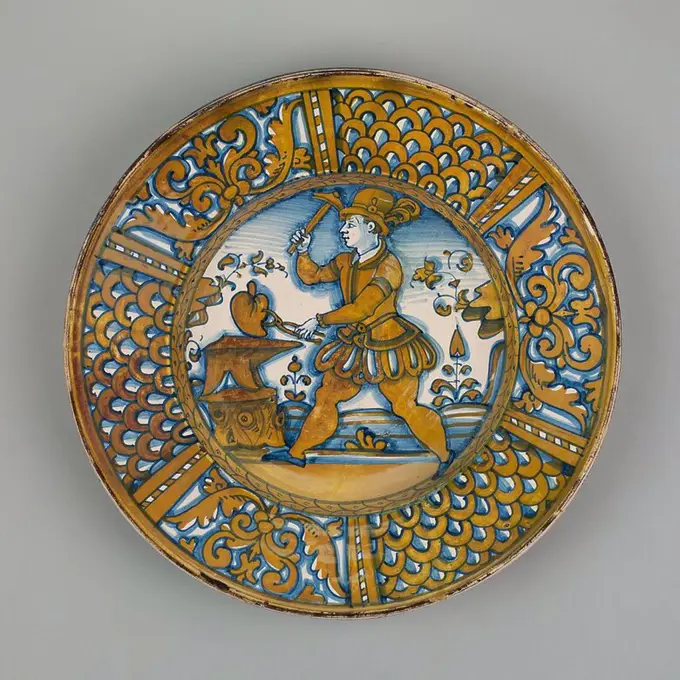
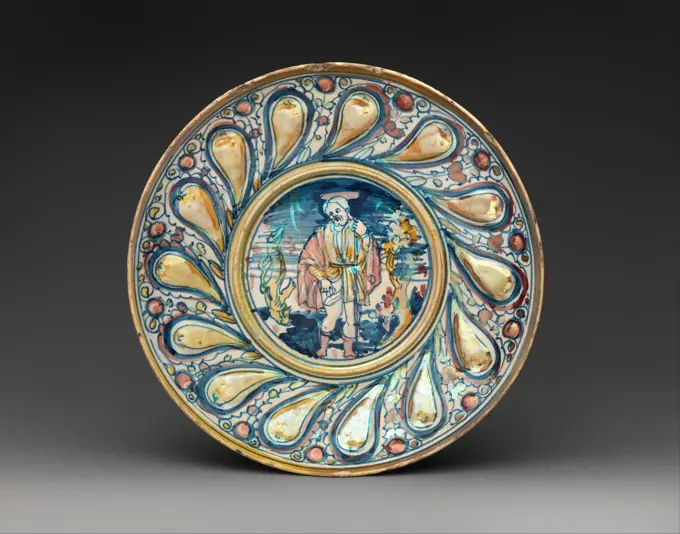
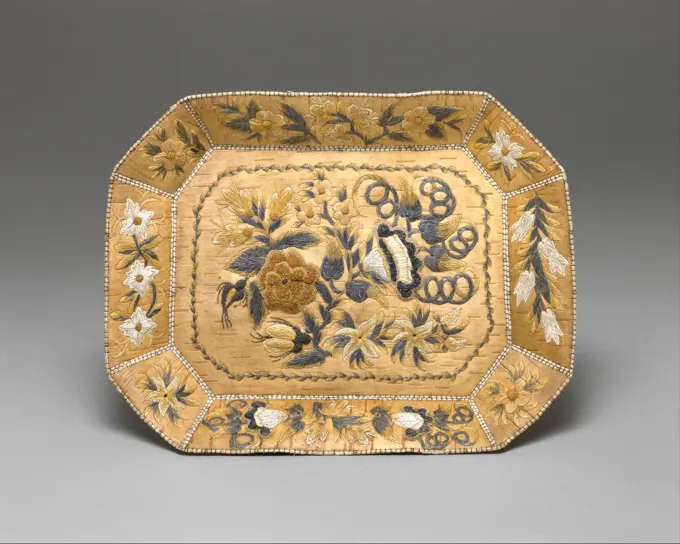
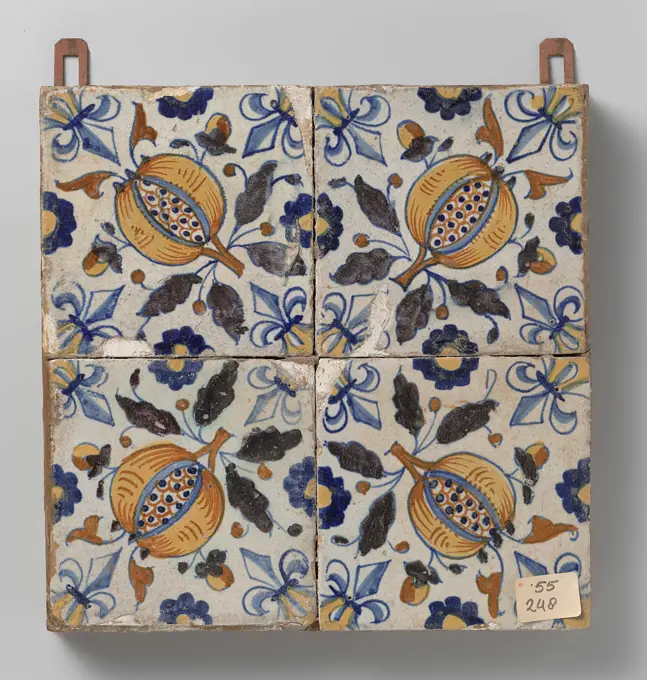
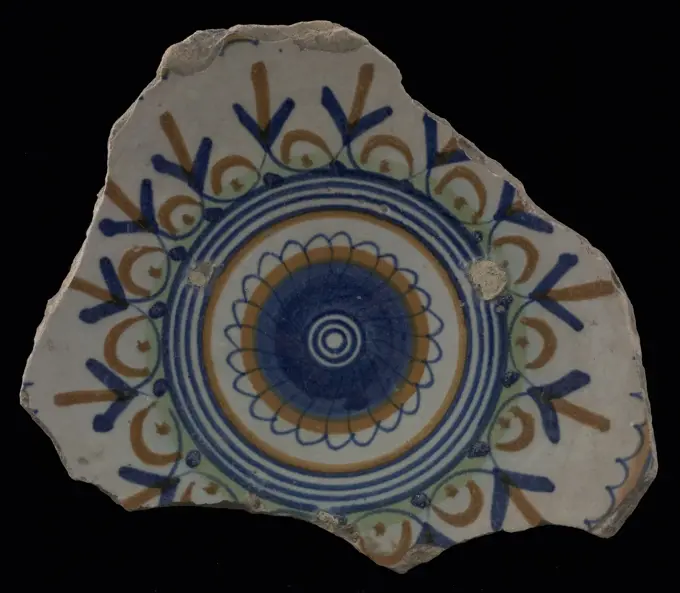
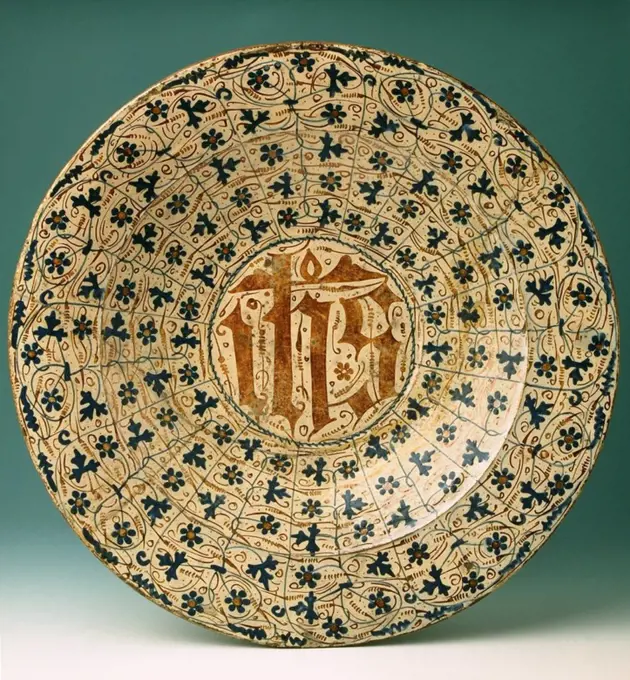
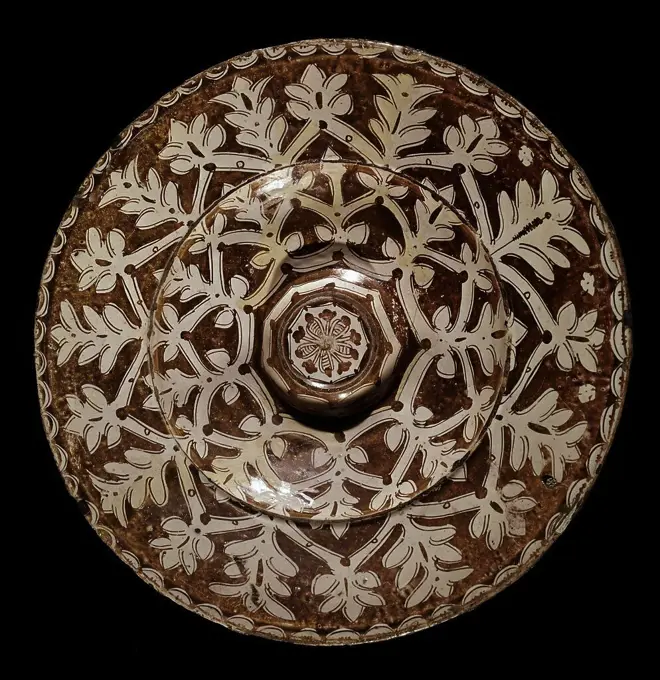
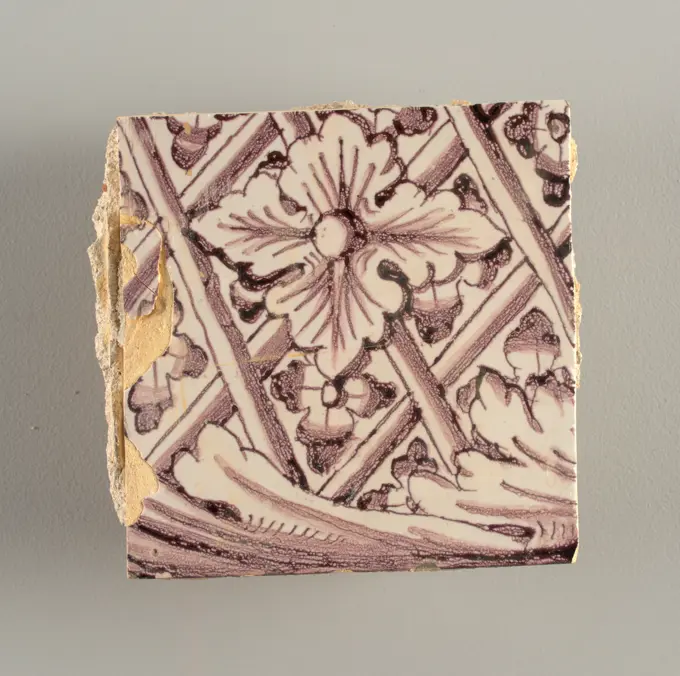
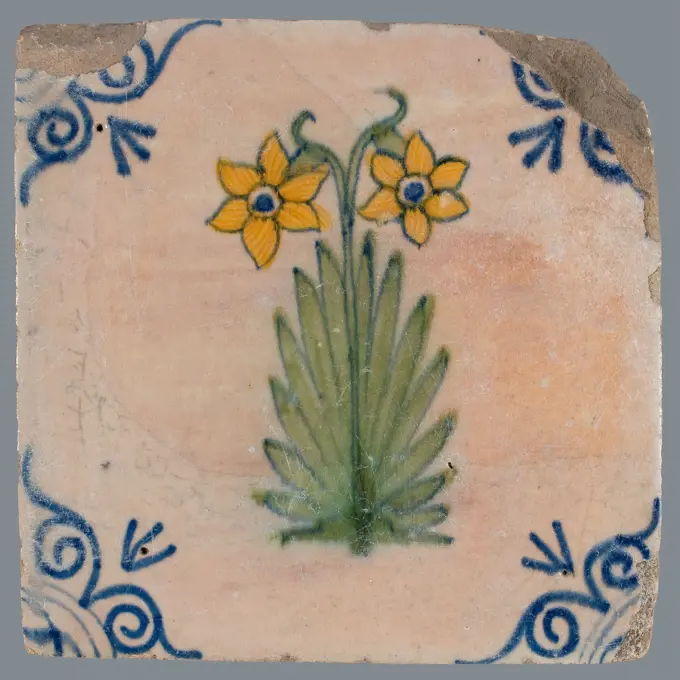
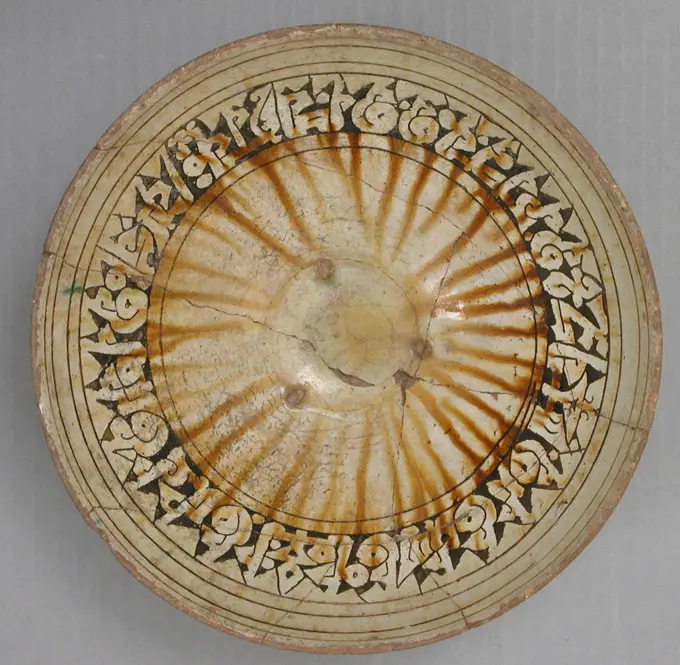
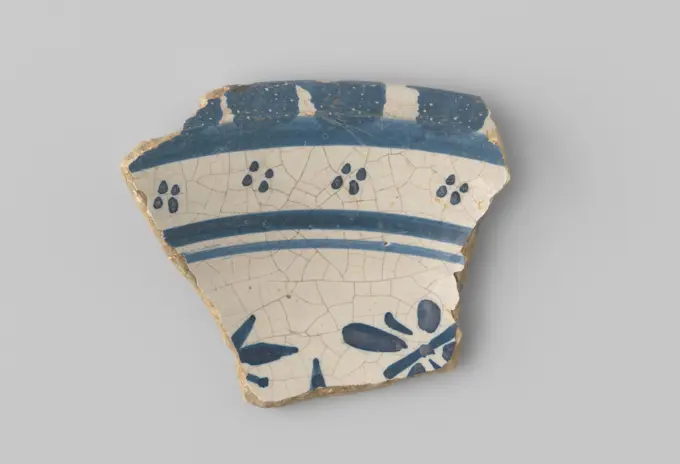
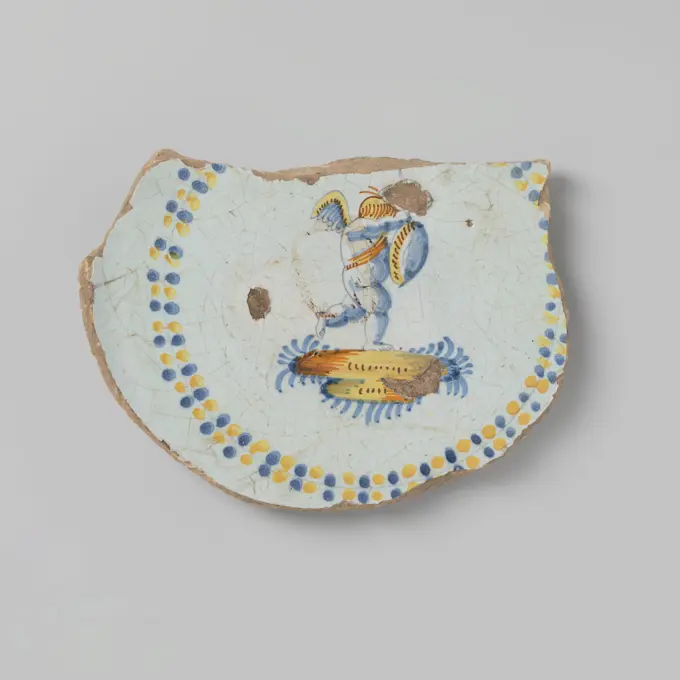
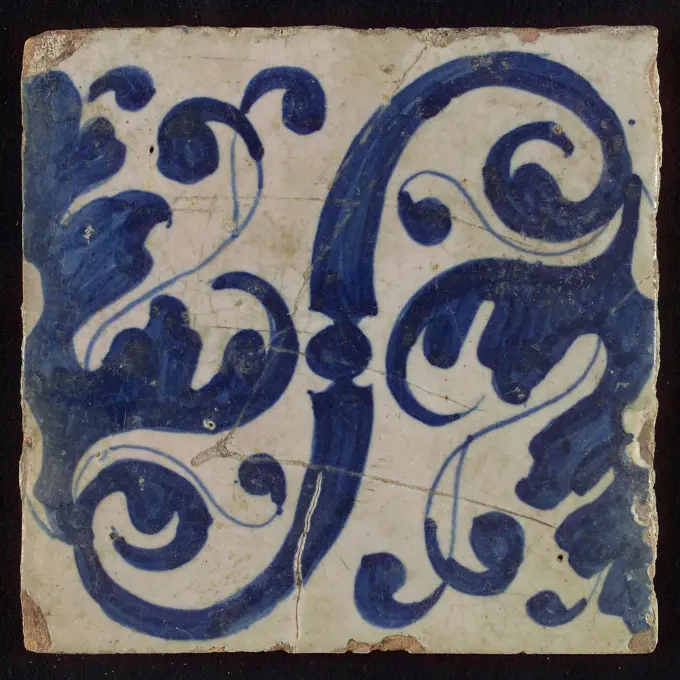
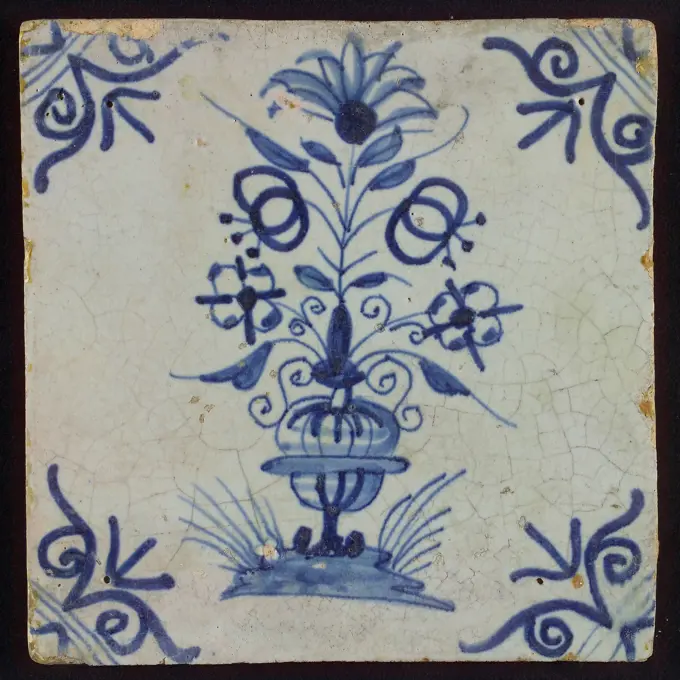
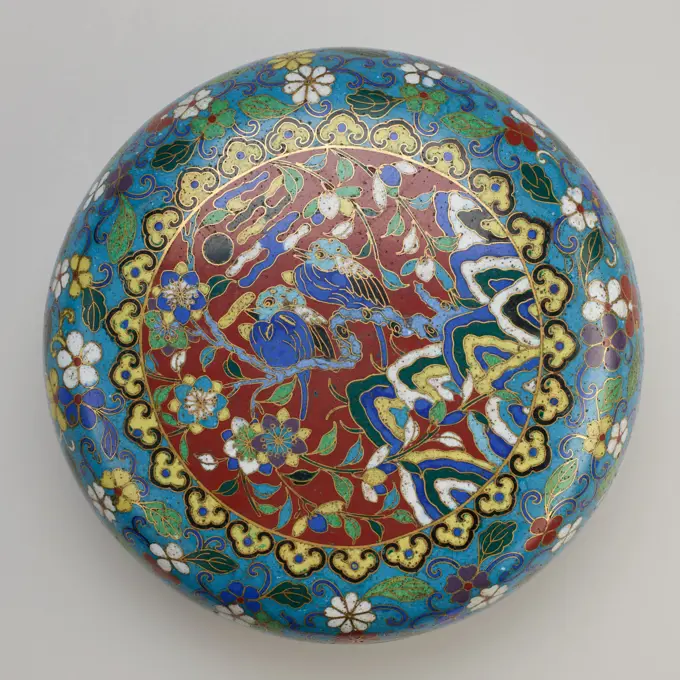
Tile- Foliated Scrolls, c 1700s. Spain, 18th century. Glazed ceramic; overall: 14.9 x 15.2 cm (5 7/8 x 6 in.).Tile, blue on white, central flower within star shape, three-piece around, half rosette, corner pattern lily, wall tile tile sculpture ceramic earthenware glaze, baked 2x glazed painted 'Haarlem tile'. Yellow ruddy and red shard square Two or four nail holes. AIb3 HaarlemDisk Brooch. Culture: Roman. Dimensions: Overall: 1 11/16 x 7/16 in. (4.3 x 1.1 cm). Date: second half 2nd century. Museum: Metropolitan Museum of Art, New York, USA.Tile, blue, green, orange and brown on white, star tulip with quarter rosette, bunches of grapes and orange-apples, wall tile tile sculpture ceramic earthenware glaze, baked 2x glazed painted Yellow shard with red strings square two nail holes. AI1 spring spring bulbOrnament tile, diagonal ornament in quatrefoil with bows in which orange-apples and flowers, palm corner, corner pattern rosette, wall tile tile sculpture ceramics pottery glaze, baked 2x glazed painted Yellow and red square and two nail holes. Multicolored: brown blue green yellow on white ground (variation in light and dark). Saving technique in blue on white.Wall plate due to the 25-year wedding of J.R. Tutein Nolthenius and M.A. Cordes, Carel Adolph Lion Cachet, 1908 Earthware wall plate, for the 25-year wedding of J.R. Tutein Nolthenius and M.A. Cordes. The abstracted flower () Decor is made of brown (saved in the white glaze) and in yellow and blue on the glaze, in the middle a round yellow field with a double shield under crown, again in brown and saved in the white glaze , with the letters N and C in Geel. On the edge in white on brown: MDCCCLXXXIII (left) and McMVIII (right) and below xx September. Delft earthenware Earthware wall plate, for the 25-year wedding of J.R. Tutein Nolthenius and M.A. Cordes. The abstracted flower () Decor is made of brown (saved in the white glaze) and in yellow and blue on the glaze, in the middle a round yellow field with a double shield under crown, again in brown and saved in the white glaze , with the letters N and C in Geel. On the edge in white on brown: MDCCCLXXXIII (left) and McMVIII (right) and Ornament tile corner pattern palmet, wall tile tile sculpture ceramic earthenware glaze, baked 2x glazed painted Square ruddy to yellow shard three to four nail holes.Dish With a Flower Basket, Landscape and Floral Scrolls. Dish of porcelain, painted in underglaze blue and on the glaze red and gold. On the flat a flower vase with a chilong (corneless dragon) and on either side of the vase also a chilong. The wall and edge are divided into six compartments with alternating a landscape with a chicken and a rooster in a fenced garden at a pavilion and flower drinks against a blue background. The back with a band interrupted by cartouches with flower rosettes and plants; To the band three flower branches (Peony, Prunus, Chrysanthemum). On the underside a piona branch in a circle. The dish is caught in a metal frame. The underside with preen. A crack in the edge and wall. Imari.Tile, blue on white, central flower within star shape, three-piece around, half rosette, corner pattern lily, wall tile tile footage ceramic earthenware glaze, baked 2x glazed painted 'Haarlem tile'. Yellow ruddy and red shard square Two or four nail holes. AIb3 HaarlemPompadour tile with flowerpot in four pass. Pompadour tile with a multicolored (blue, orange, green and yellow) flowerpot within a four-pass frame. In the corners, a lily.Field of four tiles with stars and leaves, anonymous, c. 1600 - c. 1625 Field of four tiles (2 x 2) each with a multicolored (blue, yellow, green and orange) painted star in a circle decorated with leaves, surrounded by elongated compartments with tendrils. In the corners, a quarter rosette. Netherlands earthenware. tin glaze majolica Field of four tiles (2 x 2) each with a multicolored (blue, yellow, green and orange) painted star in a circle decorated with leaves, surrounded by elongated compartments with tendrils. In the corners, a quarter rosette. Netherlands earthenware. tin glaze majolicaTile with leaf pattern, anonymous, c. 1560 - c. 1600 Tile with multicolored (blue, orange, yellow and green) leaf patterns in filling technique between geometric lines. Antwerp earthenware. tin glaze majolica Tile with multicolored (blue, orange, yellow and green) leaf patterns in filling technique between geometric lines. Antwerp earthenware. tin glaze majolicaFliesen für Vertäfelungen und Fußböden tile for wainscoting and flooring, edge tile, around 1544, Aragonese Mudejar tile makers, Huesca Diocesan Museum, Aragon community, Spain Copyright: xZoonar.com/TOLOxBALAGUERx 22308015Saucer from the Mackay Service 1878 Tiffany & Co. These gilded and enameled cups and saucers are part of one of the most renowned and lavish dinner services ever created in America. Commissioned in 1877 by John W. (1831-1902) and Marie Louise Hungerford (1843-1928) Mackay, the dinner service for twenty-four consisted of over 1,250 pieces. A poor Irish immigrant with little education, John W. Mackay became one of the wealthiest men in America when he and three partners, James Fair, James Flood, and William OBrien, struck a silver deposit known as "The Big Bonanza" at Nevadas Comstock Lode in 1873. During a visit to the mine, Marie Louise asked her husband for a silver dinner service "made by the finest silversmith in the country." Her husband responded, "You shall have it. I like the notion of eating off silver brought straight from the Comstock." He proceeded to have a half ton of silver delivered from the mine to Tiffany & Co., where two hundred men worked for almost two years to coOrnament tile, diagonally across the tile white braid band motif, corner motif quarter rosette, wall tile tile sculpture ceramic earthenware glaze, baked 2x glazed painted Light yellow shard with fine red dots and square strings. Multicolored: blue (ocher to lemon) yellow and orange on white. Savings technique MoorsSquat tile, multi -colored painted with a tulip on a ground, c. 1640 - c. 1660 tile Late square tile with a serrated edge and four lilies in the corners. Multicolored tulip on a ground. Holland earthenware. tin glaze majolicaTile, flowerpot in blue, green and orange on white, corner motif oxen head, wall tile tile sculpture ceramic earthenware glaze, baked 2x glazed paintedReverse view - Tazza (shallow cup or vase on a pedestal). The Continence of Scipio, 1580. Maiolica, earthenware with tin glaze. Manufactured in Urbino, Italy. Makers: Fontana workshop, Patanazzi workshop.. The bowl of a tin-glazed earthenware tazza. The decoration depicts the famous episode when Scipio Africanus, enthroned right, returns the female captive to her fiance following the capture of New Carthage.. The pedestal is missing.Ornament tile, diagonally across the tile white braid band motif, corner motif quarter rosette, wall tile tile sculpture ceramic earthenware glaze, baked 2x glazed painted Light yellow shard with fine red dots and square strings. Multicolored: blue (ocher to lemon) yellow and orange on white. Savings technique MoorsTile, orange, brown, green, and blue on white, flowerpot in square, corner pattern palm, wall tile tile sculpture ceramic earthenware glaze, baked 2x glazed paintedField of four tiles with flower pots, anonymous, c. 1580 - c. 1625 Field of four tiles (2 x 2) each with a multicolored (blue, orange, green and yellow) flowerpot within a squared frame. In the corners, ornament in Vultechniek. Netherlands earthenware. tin glaze majolica Field of four tiles (2 x 2) each with a multicolored (blue, orange, green and yellow) flowerpot within a squared frame. In the corners, ornament in Vultechniek. Netherlands earthenware. tin glaze majolicaField of sixteen tiles with flower pots. Field of sixteen tiles (4 x 4) each with a multicolored (blue, orange, green and yellow) flowerpot within a square frame. In the corners, ornament in filling technology.Two-tone tile, blue on white background, four circles with white French lily around central ornament with lily, wall tile tile sculpture ceramic earthenware glaze, baked 2x glazed painted Yellow to reddish shard square reverse with marker L Baanstr. 1940Tile, orange, brown, green, and blue on white, flowerpot in square, corner pattern palmet, wall tile tile sculpture ceramic earthenware glaze, baked 2x glazed paintedDish. unknown, craftsmanDeep sign from V.O.C. ship De 'Witte Leeuw', Anonymous, Before 1613 plate (dishes) Deep sign from V.O.C. ship the 'Witte Leeuw', 80 present. Jingdezhen bone china (material)   Sint-HelenaFour field of four tiles with leaf pattern. Four tiles field (2 x 2) each with a multi-colored (blue, yellow and orange-brown) leaf pattern in filling technology. The corners are decorated with a leaf pattern within a quarter circle.Five fragments of one majolica dish, yellow and blue on white, rankendecor with yellow floral motifs, dish plate crockery holder soil find ceramic earthenware glaze largest fragment, smallest fragment, majolica On en baked underside covered with lead glaze. Polychrome. Italian Dutch decor. Yellow shard. Cracking under the glaze along the cracks archeology City Triangle Rotterdam Town Hall City Hall adornment serving food Soil discovery probably from the Rotterdam Council House Rotterdam 1913-1917.Arras upholstery of a chair seat and an armchair backrest. unknown, authorField of four tiles with masks, anonymous, c. 1600 - c. 1630 Field of four tiles (2 x 2) each with a multicolored (blue, purple, yellow, green and orange brown) painted mask surrounded by four diagonally placed ovals with leaf motifs in filling technology. Netherlands earthenware. tin glaze majolica Field of four tiles (2 x 2) each with a multicolored (blue, purple, yellow, green and orange brown) painted mask surrounded by four diagonally placed ovals with leaf motifs in filling technology. Netherlands earthenware. tin glaze majolicaFragment majolica dish, with part of 'Chinese garden' in blue, dish plate tableware holder soil find ceramic earthenware glaze tin glaze lead glaze, ring 9.5 hand turned baked 2x majolica glazed Majolica plate. imprints in the performance. Pierced stand ring. Monochrome decor depicted is 'Chinese garden' with floral leaves and birds. The decor probably dates from the wanli period. underside covered with green tinted strongly retracted lead glaze. Shredded pottery archeology Rotterdam City triangle Schielandshuis indigenous pottery food serving table serve decorate China Soil discovery: Schielandshuis during restoration.Tray. unknown, craftsmanDish, painted multily with on the flat inside a circle the letters IHS. Round dish of multicolored painted majolica. On the flat is a circle painted in the middle within which the letters IHS. Roughly drip-shaped ornaments are painted around the circle, interspersed by a flower rank. Flowers consisting of points are painted with leaves on the wall and the edge.Veld van twaalf veelkleurige tegels.Field of twelve tiles (2 x 6) multicolored (blue, yellow and brown) painted with moresken and a rosette within an oval.Bowl 13th century. Bowl 447153Condiment Dish. Possibly Egypt, Iran, or Iraq, 8th or 9th century. Ceramics. Earthenware, molded and glazedDish 17th century. Dish 446925Tile. Tile, painted in green, yellow, orange, manganese. Two c-volutes to each other are a lily motif. In three corners of flower speakers between them. A quarter of rosette in the fourth corner.Tile, blue draft and orange on white, central flower within star shape, three-spot around, half rosette, corner pattern lily, wall tile tile sculpture ceramic earthenware glaze, baked 2x glazed painted 'Haarlem tile' reddish yellow red shard square Four nail holes. AIb3.Ornament tile, diagonally across the tile white braid band motif, corner motif quarter rosette, wall tile tile sculpture ceramic earthenware glaze, baked 2x glazed painted Light yellow shard with fine red dots and square squares. Multicolored: blue (ocher to lemon) yellow and orange on white. Savings technique MoorsLarge Oval Rustic Dish with Fish and Reptiles. Palissy (after), Bernard (France, 1509-1590). France, 1528-1545. Furnishings; Serviceware. Lead-glazed earthenware, Palissy wareField of four tiles with lilies, pomegranates and grape fees. Field of four tiles (2 x 2) each with a multi-colored (blue, green, yellow and orange) painted presentation with four lilies surrounded in the middle by pomegranates and grape fees. In the corners, a flower decor.Mantle ca. 1755 Probably woven by workshop of Franciszek Glaise. Mantle 227933Field of four tiles. Field of 4 tiles (2 x 2) each with a multi-colored (blue, red-orange, yellow and green) painted star in a circle decorated with lilies surrounded by courses with tendrils. In the corners, a quarter of rosette.Fragment majolica dish, polychrome, tulips on soil, cable edge, plate crockery holder soil find ceramic earthenware enamel, baked underside covered with lead glaze green globs and copper-colored glow Polychrome archeology Rotterdam decorate food tulip variety Bottomvondst Rotterdam 1941.Ornament tile, diagonal ornament in quatrefoil with bows in which orange-apples and flowers, palm corner, corner pattern rosette, wall tile tile sculpture ceramics pottery glaze, baked 2x glazed painted Yellow and reddish shard square two and four nail holes. Multicolored: brown blue green yellow on white ground (variation in light and dark). Saving technique in blue on white.tile fragment with deer among floral scrolls, anonymous, c. 1310 - c. 1311 Square tile fragment of quartz fritry decorated with two deer between flower vines in a star-shaped cartouche in brown luster and blue on a white surface of glaze. A bond with (psueedo) writing around this. The tile was originally eight -pointed. is the earthenware. glaze. luster (textile) painting / vitrification Square tile fragment of quartz fritry decorated with two deer between flower vines in a star-shaped cartouche in brown luster and blue on a white surface of glaze. A bond with (psueedo) writing around this. The tile was originally eight -pointed. is the earthenware. glaze. luster (textile) painting / vitrificationTile, orange, brown, green, and blue on white, flowerpot in square, corner pattern palm, wall tile tile sculpture ceramic earthenware glaze, baked 2x glazed paintedBowl. Iran, first half of 14th century. Ceramics. Fritware, gray slip, and underglaze-paintedStar Shaped Tile. Iran, Kashan, 1261-1262/660 A.H.. Ceramics. Fritware, overglaze luster-paintedDisplay Plate with a Man Striking a Heart on an Anvil. Italian; Deruta. Date: 1545-1555. Dimensions: Diameter: 40 cm (15 3/4 in.), H: 9.5 cm (3 3/4 in.). Tin-glazed earthernware with copper luster (maiolica). Origin: Deruta. Museum: The Chicago Art Institute, Chicago, USA. Author: Italy) Societa anonima cooperativa per la fabbricazione delle maioliche (Deruta.Tile, double flower on ground in orange, green and blue on white, inside serrated square with plume, corner pattern french lily, wall tile tile sculpture ceramic earthenware glaze, baked 2x glazed paintedTile, Anonymous, 1640 - 1660 Tile with a multicolored (blue, green, orange and yellow) flowerpot. In the corners, an Ossekop. Netherlands earthenware. tin glaze majolica Tile with a multicolored (blue, green, orange and yellow) flowerpot. In the corners, an Ossekop. Netherlands earthenware. tin glaze majolicaSprinkled ornament tile, center double circle, double eight-pointed blue star, against background of two white eight-pointed stars, dotted purple corners, black outline, wall tile tile sculpture ceramic earthenware glaze, baked 2x glazed paintedBowl with Saint Roch ca. 1530-40 Workshop of Maestro Giorgio Andreoli. Bowl with Saint Roch 195743Fragment majolica dish, yellow and blue on white, rosette, cable edge, plate crockery holder soil find ceramic earthenware glaze, baked underside covered with white-gray glaze. Polychrome archeology to serve foodTile, blue draft and orange on white, centrally flower within star shape, three-spot around, corner pattern ossenkop, wall tile tile sculpture ceramic earthenware glaze, baked 2x glazed painted 'Haarlem tile' reddish yellow red shard square Four nail holes. AIb3.Wall tile, Lead-glazed earthenware, Similar to 1951-66-9, Ottoman Empire (present day Syria), late 16th-early 17th century, tiles, Decorative Arts, Wall tileTray ca. 1860 Huron. Tray 319129Field of four tiles with pomegranates. Four tiles (2 x 2) each with a multi-colored (blue, green, orange and yellow) painted pomegranate, diagonally placed. Along the edge half a rosette and a lily in the corners.Plate. Iran, 12th-13th century. Ceramics. Earthenware, incised, white slip, underglaze-paintedCERAMICA IRANI-SOLERO DE PIE EN BARRO BLANCO. Location: MUSEO ARQUEOLOGICO NACIONAL-COLECCION. MADRID. SPAIN.Tile. Tile, painted in blue, yellow, manganese and green. Geometric pattern of crossing white tires, four large manganese surfaces.Fragment majolica dish; polychrome, concentric circles containing rosette, plate crockery holder soil find ceramic earthenware glaze, baked underside covered with clear lead glaze. Polychrome archeology to serve foodExcerpt (foot) with reddish shard, with a cross shape in blue and yellow glaze on a white surface, anonymous, 1200 - 1899  Italy earthenware  Italy earthenwareTile, flowerpot in blue on white, corner motif lily, wall tile tile sculpture ceramic earthenware enamel, baked 2x glazed paintedPLATO DECORADO CON TEXTO "IHS". Nº INV. 60423. ALTURA 6,4 CM. DIAMETRO MAXIMO 45,6 CM. MUSULMAN. (EXPOSICION: ARTE ISLAMICO ESPAÑOL) (DEPOSITO: MUSEO ARQUEOLOGICO NACIONAL).PLATO DE MANISES S XVIII-MARRON CON REFLEJOS METALICOS-HOJAS DE HELECHO. Location: PRIVATE COLLECTION, MADRID, SPAIN.Stand for a Cup, c. 1780. Du Paquier Porcelain Manufactory (Austrian, active 1719-1864). Porcelain; overall: 3.2 x 17.3 cm (1 1/4 x 6 13/16 in.).Tile, Tin-enamelled earthenware, Square tile with octofoil rosette centered with double walled circle enclosing landscape with shepherd and staff, facing right, in cobalt blue. Ground stippled manganese violet. Heart-shaped reserves at corners with short curved lines along one side., Holland, 18th century, tiles, Decorative Arts, TileBandbox, Block-printed paper on pasteboard support, From the same bandbox as 1942-19-8. More of the wreath of gray petalled flowers shows and also a portion of a large center flower of gray with dark blue dots for the center., USA, 1765-1818, Wallcoverings, BandboxBowl 12th century. Bowl. 12th century. Stonepaste; underglaze painted. Attributed to Syria, Raqqa. CeramicsTile Wall Facing (Netherlands); tin-glazed earthenware, underglazeTile, double flower on piece of land in yellow, orange, green and blue on white, corner pattern ossenkop, wall tile tile sculpture ceramic earthenware glaze, baked 2x glazed paintedFour tiles that together form one rosette around which tulips, pomegranates and grape fees. Four tiles (2 x 2) each with a multi-colored (blue, green, yellow and orange) painted show. Together they form a rosette surrounded by tulips, pomegranates and grape fees. In the corners, a flower cut.Pearl Button, 1770-1800. Made in Birmingham, maker unknownKenzan-style Dish in the Shape of Chrysanthemum early 19th century Japan. Kenzan-style Dish in the Shape of Chrysanthemum 62913Plate with Vegetal Decoration in a Seven-pointed Star 17th century. Plate with Vegetal Decoration in a Seven-pointed Star 444476Dish with Pommel Scroll Design 14th century China. Dish with Pommel Scroll Design 39692Star-Shaped Tile 1201-1300 Iran. Luster-painted ceramics were popular in Iran prior to the Mongol invasion in the 13th century. The technique continued to be popular under Mongol rule, often using the same forms and patterns as earlier luster ceramics. Additional color is seen in the cobalt and turquoise underglaze painting, which embellishes elements in the design such as the three-part plant at the center of this tile. The presence of figural decoration on this tile indicates that it adorned a secular rather than religious monument, perhaps a palace.. Fritware painted in blue and turquoise in an opaque white glaze, with lustre over the glaze . IslamicBowl 9th-11th century. Bowl 451664Sharf of white -baking earthenware, with a painting in blue on a white surface at the top, c. 1500 - c. 1899 fragment   earthenware. glazeBowl;  XVIII/19th century (1801-00-00-1900-00-00);Dishwarm of earthenware with multicolored drawing of a putto in decorative edge, Anonymous, 1500 - 1799   earthenware. glaze   earthenware. glazeDish 15th century Spanish. Dish 466817Tile, blue on white, diagonally an S-shaped volute and stylized leaf ornaments, tile picture material fragment ceramic pottery glaze, baked 2x glazed painted Yellow and red shard Leaning edges Square Two three or four nail holes Tile was part of edge tile frameFlower Tile, flowerpot in blue on white, corner motif of ox's head, wall tile tile sculpture ceramic earthenware glaze, baked 2x glazed painted Ruddy shard square four nail holes. Blue on white fond.Medallion with Hunting Dog Attacking Boar Crossing Water ca. 1240-60 French. Medallion with Hunting Dog Attacking Boar Crossing Water 464214Tile Tableau with Prince Maurits, c. 1600 - c. 1625 Loose tile belonging to the tile tableau with Prince Maurits. Netherlands earthenware. tin glaze majolica Loose tile belonging to the tile tableau with Prince Maurits. Netherlands earthenware. tin glaze majolicaFragment of a Bowl 15th century. Fragment of a Bowl. 15th century. Stonepaste; white slip; blue underglaze; transparent, colorless glaze. Attributed to Egypt, Kush. CeramicsCloisonné box with cover, 18th century, 3 15/16 × 8 9/16 × 8 9/16 in. (10 × 21.75 × 21.75 cm), Metal, enamel, China, 18th centuryField of nine tiles with fruit scales. Field of nine tiles (3 x 3) each with a multicolored (blue, green, yellow and orange) painted fruit bowl. In the corners, an oxen head.Box with chrysanthemum and praying mantis 16th century China In China, the praying mantis was appreciated for its skillful hunting with its long front legs. The term for praying mantis” has the same pronunciation as the word for handsome man” (lang), and the insect became a popular motif in Chinese art from the sixteenth century on.. Box with chrysanthemum and praying mantis 40233Bowl 10th century. Bowl. 10th century. Earthenware; glazed. Attributed to Iran. CeramicsOctagonal dish with floral pattern late 18th century China. Octagonal dish with floral pattern 46347. Octagonal diaper basket of faience. Blue painted with the image of a circumcision (luk 2:21).Field of sixteen tiles with pattern of grape roses, tulips, pomegranates and stars. Field of sixteen tiles (4 x 4) with a multi-colored (blue, green, yellow, orange and purple) pattern formed by four tiles with pomegranates, grapes of grapes and tulips around a star.Bowl Koszak, JózefSquare Dish with Flared, Scalloped Sides and Floral and Butterfly Design 1000-1099 China. Earthenware with lead green glaze and underglaze molded decoration .Ornament tile, blue draft on white ground, central decor with square frame in which foglie ornament, zigzag lines, wall tile tile sculpture ceramics pottery glaze, baked 2x glazed painted Rough red with square strings Two nail holes. Two-tone: blue on white long distance Italy fogli